Just ten days after the yearly Dutch commemoration, called Dodenherdenking (Remembrance Day) and Bevrijdingsdag (Liberation Day), the inhabitants of Rotterdam have another infamous date to remember — May 14.
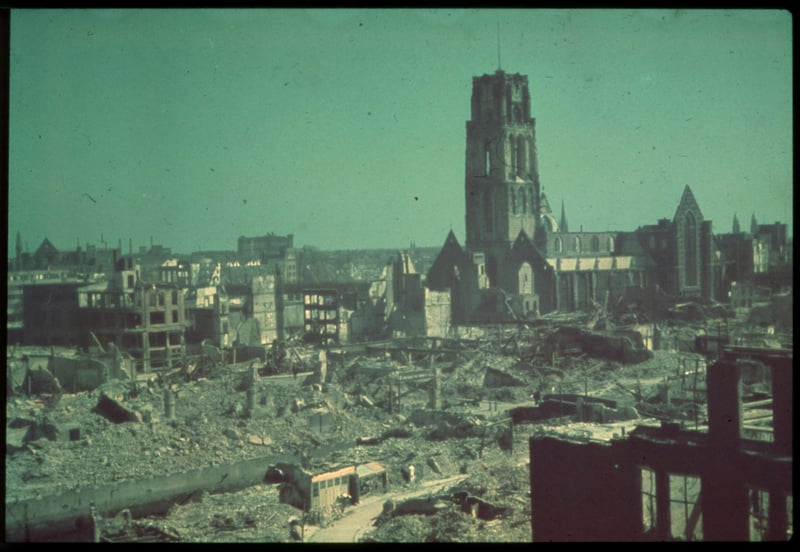
It was on this day, back in 1940, that a Nazi bombardment utterly destroyed the centre of Rotterdam.
The event is internationally known as the Rotterdam Blitz, while in the Netherlands it is referred to as het Bombardement (the bombardment).
The bombing of Rotterdam, aka the Rotterdam Blitz
Call it the Dutch equivalent of Pearl Harbour, if you will — the effect of the bombing of Rotterdam was as decisive as it was horrible.
After several days of fierce fighting, the Nazi invasion of the Netherlands had come to a stalemate in Rotterdam.
Taken by surprise by the fierce resistance of the Dutch army, Hitler knew he had to break the spirit of the Dutch people as a whole.
Rotterdam after the bombing. In the background, we see the remains of the Sint-Laurenskerk on the Grotekerkplein. Image: Hendrik Sutterland/Wikimedia Commons/CC0 1.0
So it was that Nazi bombers dropped incendiary bombs over Rotterdam, quickly starting a fire that destroyed approximately 85,000 homes and ended the lives of nearly 900 people.
The Dutch were, at last, no match for the Nazi war machine.
Yielding to threats that the same fate would await Utrecht and Amsterdam, the Dutch surrendered unconditionally after the bombing of Rotterdam, marking the beginning of five years of Nazi occupation.
The bombing of Rotterdam: the legacy
How can we best keep this part of history preserved for future generations?
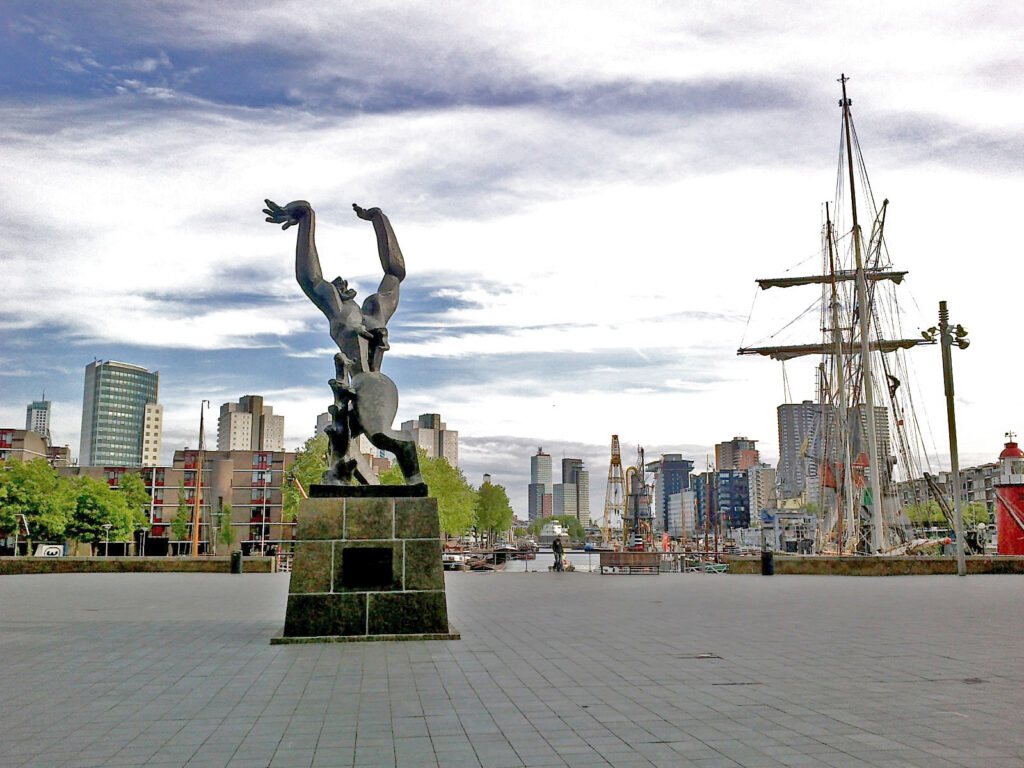
The most confrontational to the bombing of Rotterdam is, without a doubt, Ossip Zadkine’s statue De Verwoeste Stad (The Destroyed City).
A monument to Rotterdam’s tragic history, it can be visited at the main square. Image: Rene Boulay/Wikimedia Commons/CC3.0
Located at a square named after the year 1940, the statue leaves the viewer with a haunting image of a soul in anguish, its heart torn out.
The Forgotten Bombardment of 1943
Though the Netherlands and Germany are BFFs today, het Bombardement has been an important reason why Dutch resentment against the Germans lingered long after World War II.
In this respect, it’s quite telling that another bombardment of Rotterdam took place during the war, which has remained unknown for a long time.
On March 31, 1943, a tragic mistake caused several dozen American B-17 bombers to drop their deadly load on Rotterdam residential areas, rather than at the Nazi military installations.
More than three hundred people lost their lives.
Fittingly named “The Forgotten Bombardment,” this historical event has been shrouded in silence for decades, until the unspoken ban was lifted in the 90s.
Rotterdam today
Rotterdam rose from the ashes to become a beacon of Dutch culture once again. Priding itself on its no-nonsense mentality, Rotterdam is a city teeming with life and innovation.
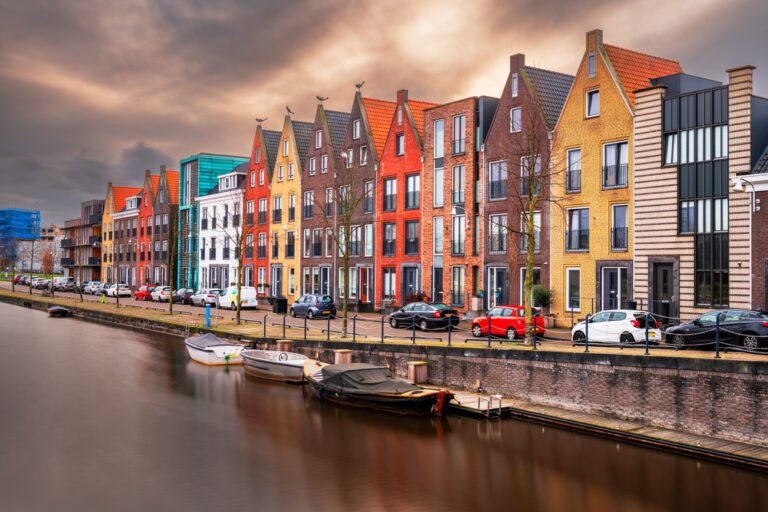
Home to some of the most well-known Dutch architectural pieces, such as the Euromast and the Kubuswoningen, Rotterdam’s skyline is truly iconic.
Sick and tired of savings accounts that offer you barely any interest? Well, we’ve got exciting news for you, as this bank is offering the highest interest rates available in the Netherlands!
German financial organisation Trade Republic has now increased its already generous rates to 3% interest on unlimited cash balances.
With interest calculated daily, you can also set your own withdrawal ranges, whether that’s weekly, bi-weekly, or even monthly.
To put things into perspective, if you save €10,000 in an ordinary Dutch savings account with interest rates at around 1.25%, you’ll earn a measly €125 in 12 months.
At Trade Republic? You’ll earn €300 in the same amount of time.
That sounds great, but is my money going to be safe?
You can rest easy knowing that even if your money is off enjoying a nice pilsner and jägerschnitzel in Germany (and accumulating some deliciously high interest), it won’t give you the slip.
Any amount under €100,000 (or your equivalent local currency) per account holder per bank is protected by EU statutory deposit laws, irrespective of what happens to the bank that’s currently saving your money.
Which means, of course, that your deposits in Trade Republic are fiercely guarded by the law.
Will you be treating yourself to some fabulous interest rates at Trade Republic? Tell us all about it in the comments below!
Nestled near the centre of the Netherlands, you’ll find the lovely city of Amersfoort. If you’re looking to explore its cobblestoned streets, you’re probably asking yourself, well, what is there to do in Amersfoort?
The good news (nee, great news!) is that we have a heel handig list of 16 wonderful things to do in Amersfoort. From ancient water gates to contemporary art museums, Amersfoort has so much to offer.
Plus, being in the middle of the flatlands means that Amersfoort is super easy to get to from most major cities, making it a great option for a day or weekend trip!
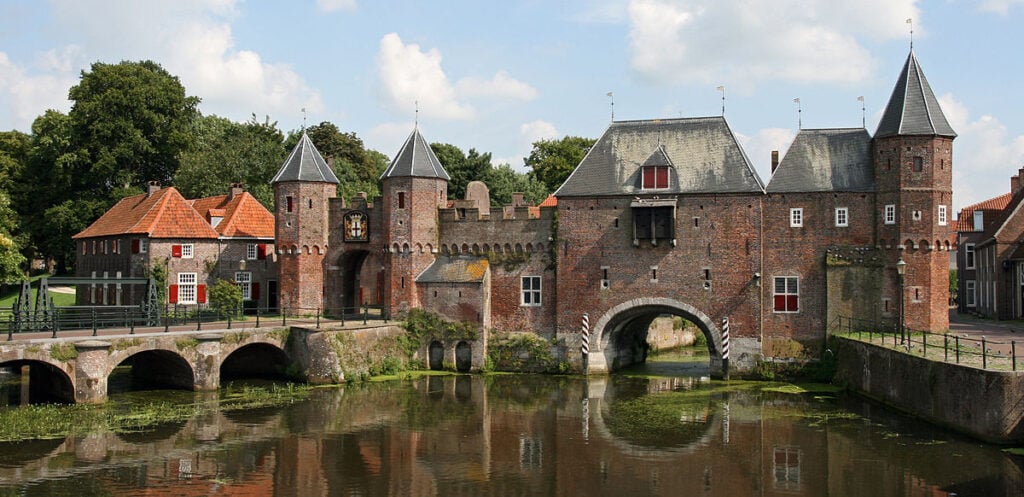
The gate is operated by a treadmill, which is still in place today! In the past, the gates were opened and closed by a team of wheel-turners (raddraaiers) who had to all walk at the same time to open the treadmill.
As they walked, the treadmill would speed up, and it could be potentially fatal. It was a case of walk or die!
💰 Price: €10.50 for adults, €10.50 for children ⏰ Opening hours: Visits are on an appointment basis 📍 Location: Kleine Spui, 3811 BE Amersfoort
2. Get those steps in at Onze Lieve Vrouwetoren
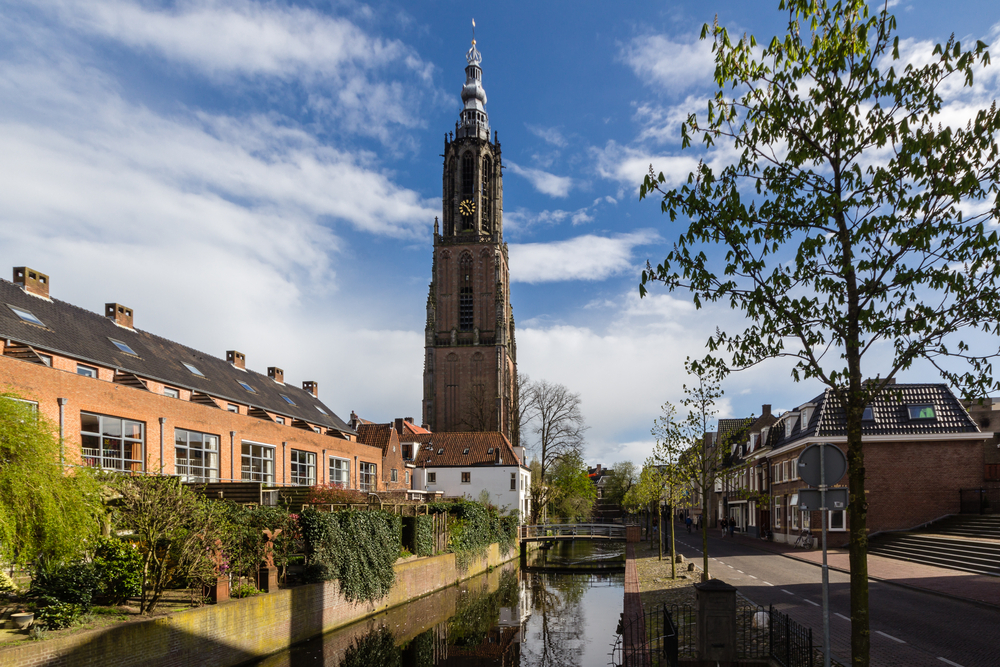
Climb the hundreds of stairs of Our Lady’s Tower and enjoy the view! Image: Depositphotos
‘Our Lady’s Tower’ in Amersfoort measures 98.33 metres tall, and towers over the city. It will leave your neck aching — but it’s an incredible beauty to behold! 🙆♀️
The third-highest church tower in the Netherlands, the chapel building, was built in the 15th century, between around 1450 and 1470. It’s not only tall but also old!
If you’re visiting, you can climb to the top of the tower and even choose between afternoon and evening tours.
Having a browse at the exhibitions in kAdE is a great thing to do in Amersfoort. Image: Kunsthal kAdE/Supplied
At kAdE, you can enjoy live contemporary art with your own eyes. With so many different events and exhibitions, there’s something to do at almost any time of the year.
Being a kunsthal, or kunsthalle, a museum which holds temporary exhibitions on a rolling basis, at kAdE, you can catch the exhibitions changing roughly every 3 months. Meaning, no matter what time of the year you go, there will be something to catch your eye!
And, if you’re looking for a good post-museum shop, you can visit the store inside. Or, if you wanted to make your art, take a peek at the studio on site!
💰 Price: €16 for adults, and free for under 18s ⏰ Opening hours: Tuesday to Sunday, 10 AM to 5 PM 📍 Location: Eemplein 77, 3812 EA Amersfoort
Located in the birth house of Piet Mondrian, a famous Dutch painter from Amersfoort, this museum can teach visitors a lot about art history!
Converted into a museum in 1994, it has been open to the public ever since. The museum is also interactive; you can create your art in the DIY studio.
Or, if you want to drop the paintbrush and let those legs wander, you can go on a city walk with the museum!
💰 Price: €13 for adults, €8 for children (6–17), free under 6 ⏰ Opening hours: Tuesday to Sunday, 10 AM to 5 PM 📍 Location: Kortegracht 11, 3811 KG Amersfoort
5. Make friends with the monkeys at Amersfoort Zoo
Enjoy the adorable lemurs at Amersfoort zoo.Image: Depositphotos
The zoo is great for a relaxing date or even a day-long family activity! Admire the wonder of the graceful lions and playful meerkats while you wander along. 🦁
Fun fact: your own little monkeys (children) can actually climb through the zoo and see the animals from above on the ‘Climb Everything’ route.
💰 Price: €31.50 at the door (€29.50 online) for adults; €27.50 at the door (€25.50 online) for children (tickets are cheaper online!) ⏰ Opening hours: Monday to Sunday, 9 AM to 6 PM 📍 Location: Barchman Wuytierslaan 224, 3819 AC Amersfoort
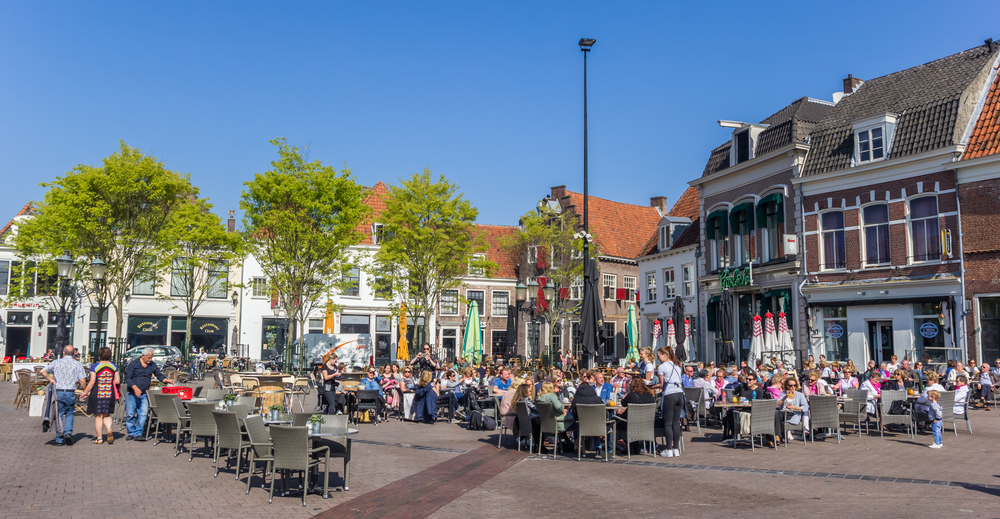
With weekly markets held every Friday and Saturday, you will surely find some goodies at Hof Square!
If you wanted to learn something mystical, there are local legends of a dragon who sits underneath the fountain in the square. Perhaps ask the locals, or find out more on a city tour — just don’t get burned!
💰 Price: Free ⏰ Opening hours: Market open Fridays (8 AM to 1 PM)and Saturdays (9 AM to 5 PM) 📍 Location: 3811 CZ Amersfoort
7. Visit the beautiful Sint Joriskerk
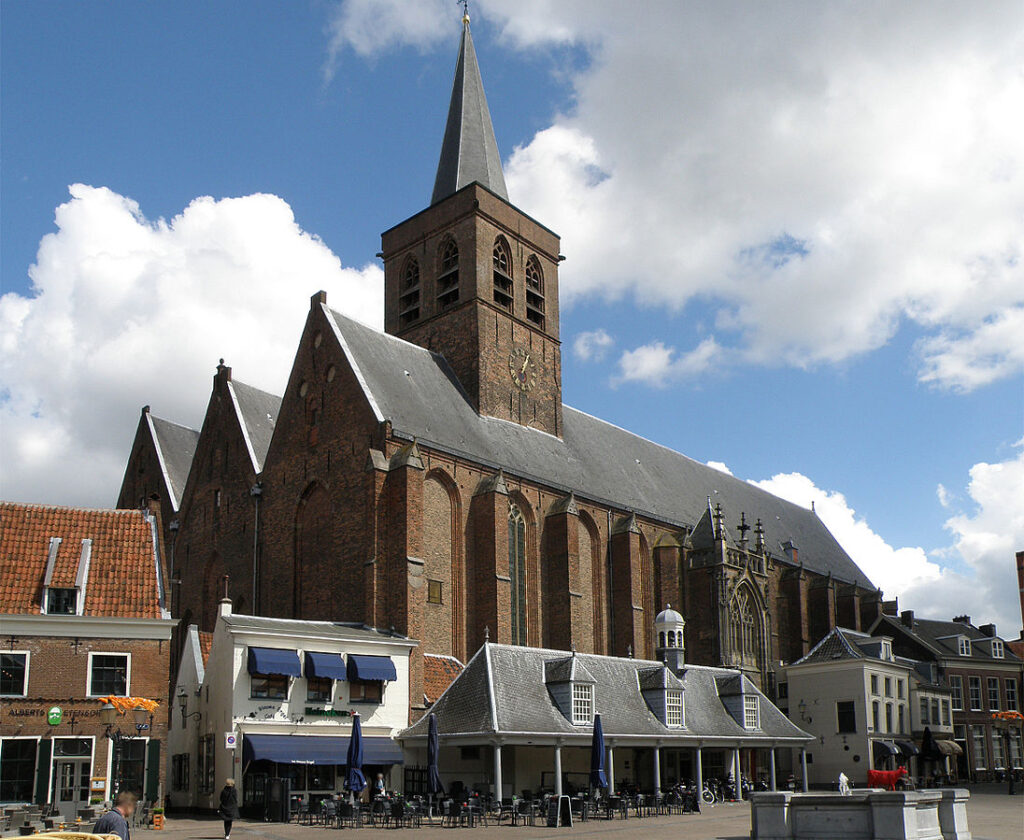
Check out the inside of St. George’s church in Amersfoort. Image: Torsade de Pointes/Wikimedia Commons/CC 4.0
Located right by the Hof Square, you can easily pop into the Sint Joriskerk (otherwise known as St. George’s).
The church is open to tourists between Monday and Saturday. They can come inside and admire the old architecture.
For the kids, there is even an opportunity to play with some LEGO at the church and let their imaginations run wild! 👷♂️
💰 Price: €3 for adults, free for children under the age of 12 ⏰ Opening hours: Varies by season; usually 11 AM to 5 PM 📍 Location: Hof 1, 3811 CJ Amersfoort
8. Wander along the Langegracht canal
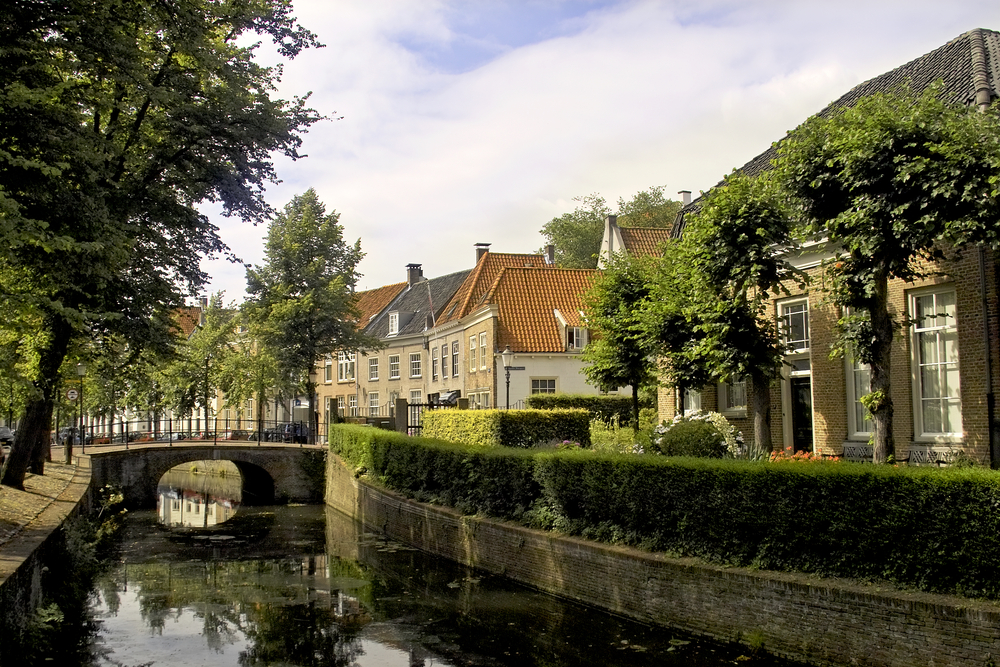
Enjoy a romantic and scenic stroll along the canals in Amersfoort. Image: Depositphotos
Wondering what the best thing to do is for a chill, but romantic, date?
Walk along the historical canals in Amersfoort! Start at the Langegracht canal at the city’s centre, and let your legs carry you away while you admire the beautiful city. 😍
9. Immerse yourself in Dutch history at the Flehite Museum
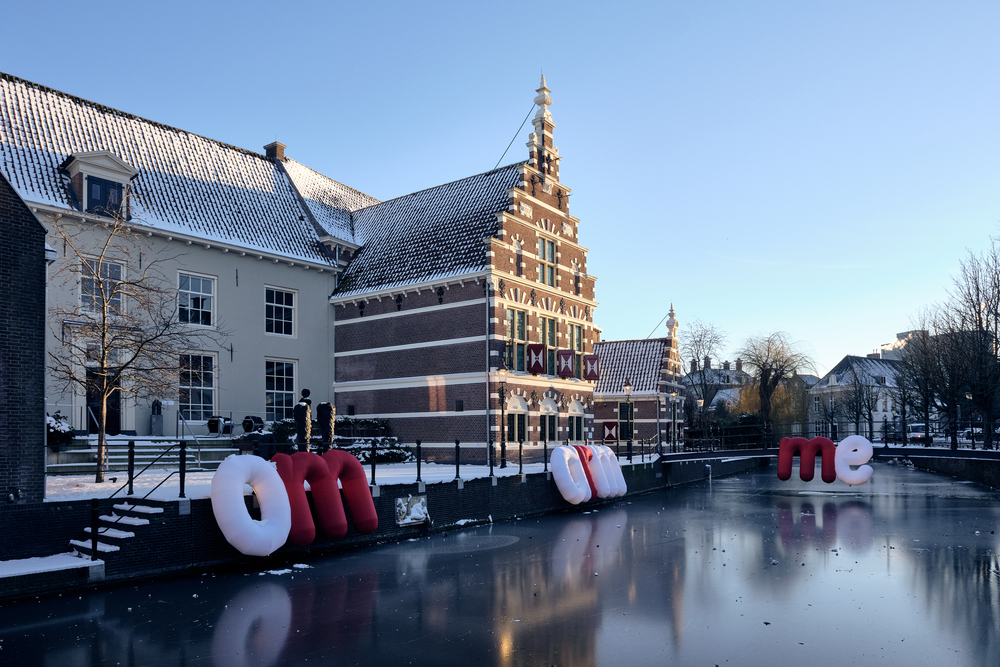
Even in the snowy winter, you can learn some Dutch history at the Flehite Museum. Image: Depositphotos
At the Flehite Museum, you’ll find a permanent exhibition in which eye-witnesses to WWII recount their stories and life tales, to provide insight into the true horror of the past.
Aside from this exhibition, there are lots of exhibitions always running on history and art, so you’re sure to find something engaging!
The museum is located in three historic houses built into the city wall during the Late Middle Ages, so not only will you learn about Dutch history, but you will also see some unique Dutch architecture.
💰 Price: €16 for adults, free for children ⏰ Opening hours: Tuesday to Sunday, 1o AM to 5 PM 📍 Location: Westsingel 50, 3811 BC Amersfoort
10. Marvel at a 14th-century water gate at Monnikendam
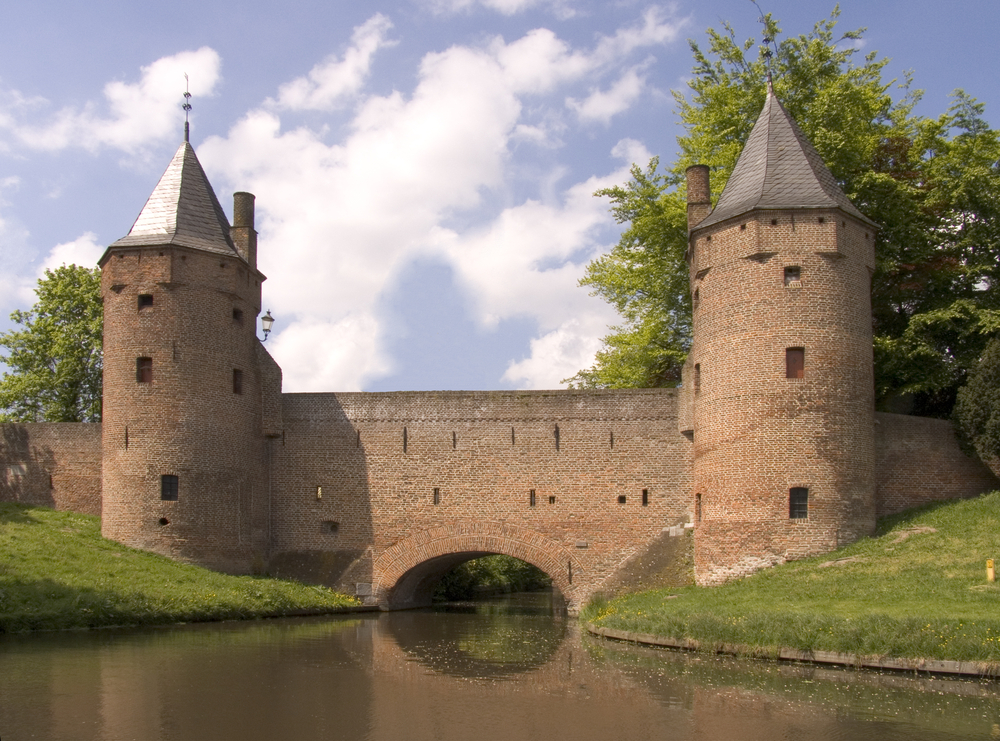
Visit the Monnikendam in Amersfoort and see the past come alive. Image: Depositphotos
Right at the Monnikendam in Amersfoort, you’ll come across an elderly water gate still standing from the 14th-century.
Centuries-old, the water of the Heiligenbergerbeek still flows beneath it, and you can have a look at the gate for yourself!
Though the houses aren’t so young anymore, you can still wander along the stretch of road that they call home. If you look closely, you’ll notice that the Flehite Museum is hidden along this stretch, too. 👀
12. Step back into history at the Mannenzaal van het St Pieters en Bloklands Gasthuis
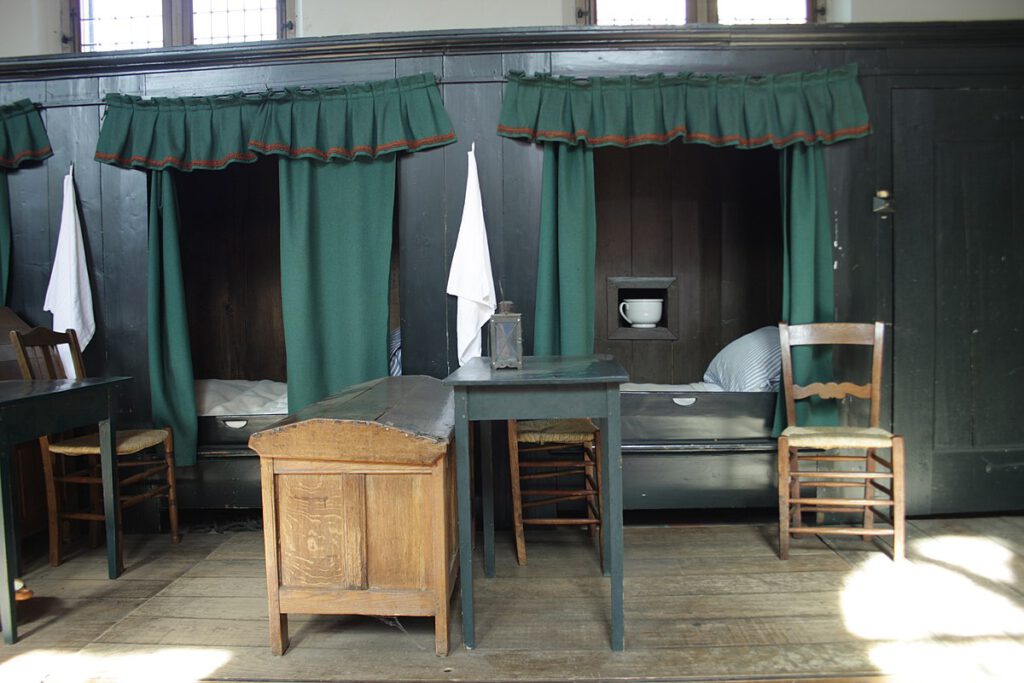
On the inside of the Mannenzaal, you can see the original beds for the old and sick. Image: JohnBoers/WikimediaCommons/CC 3.0
The Mannenzaal van het St Pieters en Bloklands Gasthuis (or Men’s Hall at St. Peter’s) is a remarkably preserved 16th-century almshouse.
The men’s hall was built as part of St. Peter’s church in Amersfoort. Originally a home for the sick and old, the Men’s Hall was open from 1390 and is now a monument to Dutch history.
With 22 preserved box beds and the original headboards, you can step into the past in this museum.
💰 Price: €6 for adults, €3 for children ⏰ Opening hours: Check seasonal availability (usually open in summer/holidays) 📍 Location: Westsingel 47, 3811 BB Amersfoort
13. Visit Sint Jorisplein Shopping Centre to get your fashion fix
Get some shopping in at Emiclaer Shopping Centre. Image: Unsplash
For all your shopping cravings, pop into the Winkelcentrum (shopping centre). Here in Amersfoort, you can shop for anything you need (or desire!).
The shopping centre is very modern, with terraces where you can sit and grab a latté inside. ☕
Take a tour of the brewery, and learn about the history of Dutch beer-making while you sip away. Or, opt for a canal trip while you drink, at only €16.50 per person.
💰 Price: Adults only; €24.50 for the brewery tour ⏰ Opening hours: Wednesday–Saturday 12–8 PM, Sunday 12–7 PM 📍 Location: Kleine Spui 18, 3811 BE Amersfoort
15. Take in some beautiful art at the Musiom
The art inside the Musiom will leave you stunned. Image: Musiom/Supplied
Another museum for contemporary art in the centre of Amersfoort, the Musiom offers lots of sculptures and paintings from Dutch artists born in the 1950s.
The building where Musiom is established has been a church for multiple religions, a residential house, and now — a museum!
💰 Price: €10 for adults, free for children and students ⏰ Opening hours: Friday to Sunday from 12 PM to 5 PM 📍 Location: Stadsring 137, 3817 BA Amersfoort
16. Check out the Cavaleriemuseum
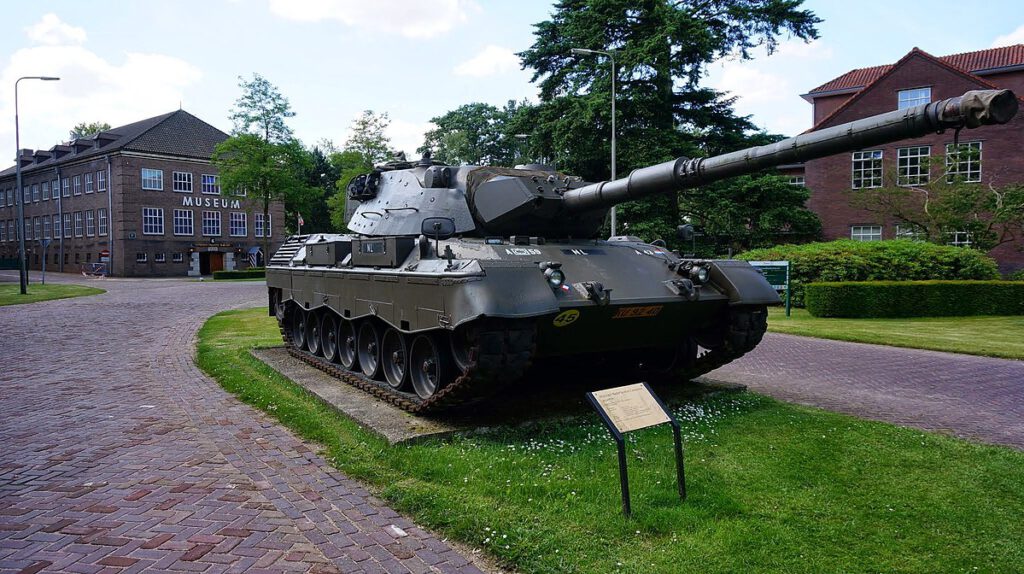
Check out the cavalry vehicles in Amersfoort! Image: Ben Bender/WikimediaCommons/CC 3.0
The Cavaleriemuseum is housed across two buildings in Amersfoort. Showcasing a huge amount of cavalry items and history, there is something for anyone curious about war items here!
The museum also has space for temporary exhibitions, so you can experience both history and art while visiting.
Make sure to check out the cavalry vehicles they have on display when you’re there! 🛺
After a hantavirus patient from the affected MV Hondius cruise ship was admitted to Radboudumc in Nijmegen, an incorrect handling of their blood and urine has led to further risk of infection among staff.
As reported by AD, the staff followed standard procedure in the handling of the patient’s fluids, despite a recognised need for increased precautions and safety controls.
What happened?
Three passengers from the cruise who developed symptoms were evaluated at hospitals across the Netherlands, including the LUMC in Leiden, Amsterdam AMC, and Radboudumc in Nijmegen.
Radboudumc is known for being especially equipped to handle infectious diseases, reports AD. However, in this case, the patient’s fluids were improperly handled.
Firstly, blood was drawn from the patient on admission and processed under standard procedure, when a much stricter protocol should have been used.
Then, on Saturday, it emerged that the disposal of the patient’s urine had also not followed the required heightened precautions.
Now what?
12 staff members have been identified as being at risk of infection. They will be isolating for six weeks and monitoring their symptoms. It is unclear if their isolation will be conducted at home or elsewhere, reports AD.
Bertine Lahuis, Chair of the Executive Board of Radboudumc, stated that Radboudumc “regret[s] that this has happened.”
“We will carefully investigate the course of events to learn from this, so that it is prevented in the future,” he also said.
Human-to-human hantavirus infection spreads through close, prolonged contact. However, according to the WHO, “little evidence is available due to the scarcity of hantavirus outbreak related to human-to-human transmission.”
What are your thoughts on how this case was handled? Let us know in the comments!
A man from Zwaag spent his Saturday evening visiting a friend in Anna Paulowna (and his Sunday morning walking nearly 40 kilometres home after missing the last train).
The man cycled to Anna Paulowna station after a night of drinking, hoping to catch the last train back to Hoorn.
In a nightmare scenario that we have all faced at some point, he realised he had missed it.
However, rather than ring his wife or look for alternatives, he set off on foot into the dark. With his phone switched off, might we add.
Police launched a full search
By Sunday morning, his wife had heard nothing. No call, no message, no sign of him.
She contacted the police, who kicked off a search across the region, checking roadsides, ditches, waterways, and stations in Anna Paulowna. Officers in Hoorn swept the area around that station, too.
At one point, police were even considering whether he’d fallen asleep on a train and woken up in Nijmegen. A reasonable theory, all things considered.
He made it home
After hours of searching, the man’s wife contacted the police again. Her husband had made it back to their house in Zwaag.
He had walked for eight hours on foot, covering roughly 40 kilometres from Anna Paulowna to his front door.
So, you’re looking to get an STD test while living in the Netherlands. Good for you!
There are several different ways to get tested for STDs (or SOAs [Seksueel Overdraagbare Aandoening], as the Dutch say). Let’s answer some of your questions and point you in the right direction. 👇
Where can I get an STD test in the Netherlands?
In the Netherlands, you can get an STD test at your huisarts (GP) or at the GGD (Gemeentelijke Gezondheidsdienst or municipal health services).
If you are not comfortable with either of these options, you can also opt to order an STD test online and take it at home — just make sure they are reliable.
You’re eligible for a free STD test from the GGD if you’re believed to have a higher chance of catching an STD.
This means that you can typically get a free STD test in the Netherlands if:
You’re under 25 years old
You have symptoms that could indicate an STD
You come from a country where many people have STDs. According to the GGD’s questionnaire, these areas include Asia, Africa, South and Central America, Eastern Europe and Russia
You’ve had sex with someone who comes from the above regions
You are a man or trans person who has sex with men
You have sex with people as part of your job
You’ve had sex with someone who has an STD
Do you meet any of the above conditions? Congrats! You can apply for a free STD test on the GGD’s website.
However, you may have to travel far to find an available appointment or wait a while before the next time slot, but it’s worth it.
Note: If you meet the above requirements, you can only get a gratis (free) test from a GGD. If you want to be tested at your local doctor’s office, you’ll need to claim that on your insurance.
I don’t qualify for a free STD test; now what?
Don’t meet the conditions on the above list? Or want a test before you can make an appointment at the GGD? Then you may have to fork out a bit of money.
*Shocked gasp from the audience*
We know, you’d think a country that’s so liberated about sex would supply its entire population with free STD tests, but helaas, this is not the case.
If your situation doesn’t match the above conditions, you’ll have to get tested by your huisarts (GP).
In some cases, you will have to pay for this test yourself, depending on your health insurance deductible.
I have already paid my full health insurance deductible this year. Your health insurance will cover any further medical costs — including your STD test. Rejoice!
I haven’t paid my full health insurance deductible this year. If you haven’t paid your deductible this year or only paid a portion of it, you will have to cover the cost of your STD test until it reaches the limit of your deductible.
For example: Let’s say your health insurance deductible is €395 per year. If you haven’t paid any of this amount so far, your insurance won’t cover the cost of your STD test yet.
Once you spend your full deductible on eligible healthcare covered by insurance, your insurance will begin to cover other health issues — like STD tests.
How expensive are STD tests in the Netherlands?
The cost of an STD test at your GP can vary depending on how many STDs you are getting tested for. For example, a chlamydia test may cost €40.
However, a complete checkup could amount to around €300.
Your sexual health is very important, which means, no matter the cost, it should be prioritised.
Do you think all STD tests should be free in the Netherlands? Tell us your thoughts in the comments below!
Buying and driving a second-hand car in the Netherlands comes with a few advantages. They are usually cheaper to buy, more sustainable, and you might find reduced costs elsewhere.
But like the rest of the Netherlands, getting a car (whether it is new, second-hand, electric, hybrid, or fuel) is not always cheap.
If you are looking for something casual to get around or if you are strapped for cash, a €60,000 Tesla might be a bit too much. Most Dutchies buy second-hand cars, so it may be in the cards to purchase one yourself.
So what are the costs you need to know when buying and driving a second-hand car in the Netherlands?
Looking for a reliable second-hand car in the Netherlands? Carvendo helps you compare trusted listings, check vehicle histories, and find the best deal for your budget. Their team works with certified dealers across the country, making it easy for internationals to find a reliable used car without the guesswork.
Initial purchase costs of your second-hand car in the Netherlands
An obvious cost, but the most prominent one.
The initial purchase cost is likely to be the biggest expense when buying a second-hand car in the Netherlands.
When buying a second-hand car, the price is determined by the vehicle’s condition.
These include the type of engine (internal combustion, hybrid, electric), the size of the car, the age, the mileage, battery health for EVs, and more.
Second-hand cars in the Netherlands can cost anywhere from a few thousand euros to well over €40,000, depending on the model and condition. Market conditions and inflation also influence prices.
Financing your second-hand car
If you are planning on buying and driving a car in the Netherlands but you are unsure of how much everything will cost, there are a few financial aid options for internationals:
Bank loan: Some banks are willing to loan you money to buy and even help maintain a second-hand car in the Netherlands.
Car dealerships: Some car dealerships make adjustments or deals in their pricing to make it easier for customers to buy their cars.
Leasing a car: It’s also possible to lease a car. You pay a fixed monthly fee, which includes maintenance, taxes, and insurance, but the car won’t be your property.
Running costs of your second-hand car in the Netherlands
These are the costs associated with day-to-day driving. While they may not be as hefty as the initial purchase, running costs can rack up over time.
Fuel and charging costs
To make sure your second-hand car actually runs, you will need fuel or electricity.
Fuel prices in the Netherlands remain on the high side and fluctuate frequently. Petrol and diesel currently sit above €2.30 per litre, especially along motorways.
Electric charging costs vary depending on whether you charge at home, at a public charger, or at a fast-charging station, but home charging generally offers the lowest rate.
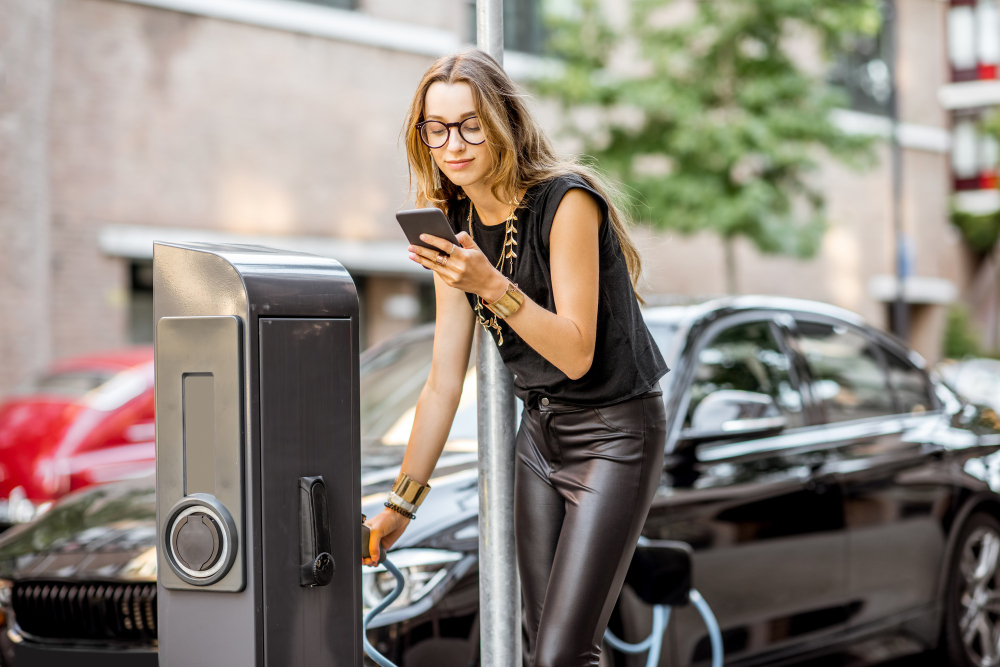
Charging stations are pretty standard across the Netherlands now — it makes charging your electric car a lot more convenient! Image: Freepik
Your monthly fueling/charging costs depend on a lot of things: how often you’re driving in a week, how far you’re driving, where you’re driving and refuelling/recharging your car, and of course, current fuel/electricity prices.
Once you have had your car for a few months, it becomes easier to calculate your average monthly spending.
Tip: If you’re looking for somewhere to refuel or recharge your second-hand car in the Netherlands, there are plenty of handy resources. You can find the cheapest fuel prices and also check for available charging stations all around the country.
Road tax (MRB)
Road tax in the Netherlands is called motorrijtuigenbelasting (MRB). This is the ongoing tax you pay to keep your vehicle legally on the road.
The rate depends on the vehicle’s weight, province, and fuel type. Petrol cars generally pay less than diesel cars, and fully electric cars currently benefit from a reduced rate.
It is important to note that MRB is not the same as BPM (the Dutch private motor vehicle and motorcycle tax).
BPM is a one-time tax paid when a vehicle is first registered in the Netherlands. When you buy a second-hand car already registered in the country, BPM has usually already been paid by the first owner.
Dutch car insurance
Getting the right car insurance is an essential part of buying and driving a second-hand car in the Netherlands. Insurance policies cover the car, not the driver, so anyone with a valid licence may drive your insured vehicle.
By law, you must have third-party insurance (WA-verzekering) to cover any damage or injury to others caused by the car. There are a few requirements for getting insurance for your car:
You must be a Dutch resident
You have a Dutch car or imported a foreign car
The car has a valid licence plate
Because the vehicle is insured rather than the person, it’s only possible to insure one vehicle per insurance policy. Some companies offer discounted insurance rates on extra vehicles.
In the Netherlands, car insurance usually costs between €30 and €100 per month, depending on factors like your age, driving history, postcode, car type, and level of coverage. New drivers and expats without Dutch no-claim years often pay more.
There are three main types of car insurance in the Netherlands:
Third-party liability (WA-verzekering): This is the mandatory, minimum level of vehicle insurance in the Netherlands. It covers damages caused by your car to other vehicles, property, and injuries to others. This insurance works if you drive an old or inexpensive car, or if you don’t drive often.
Extended liability (WA beperkt casco): This insurance covers damages caused by your car (as previously mentioned) and damage to your own vehicle in circumstances beyond your control, like theft, vandalism, fire, storm damage, and collision with animals.
All-risk (allriskverzekering): This is the most comprehensive insurance; it covers all damage done by and to your car. All-risk insurance is a good option if you have a new or expensive car, as the cost of replacement would be too high.
Parking costs in the Netherlands
While it’s not exactly the easiest or cheapest, parking your car in the Netherlands is relatively accessible.
Parking without a permit
If you have a designated parking space or a garage, you may not need a parking permit. But that does mean you’ll have to pay parking fees if you decide to drive to another part of the city or to an entirely different city.
Say, you go for a drive and need to park somewhere in the city. You can choose to park in a parking garage or somewhere on the street in a legal space, of course.
Payment is usually required at a ticket machine or via a mobile app, like Yellowbrick, Parkmobile, Park-line, and ANWB Parkeren.
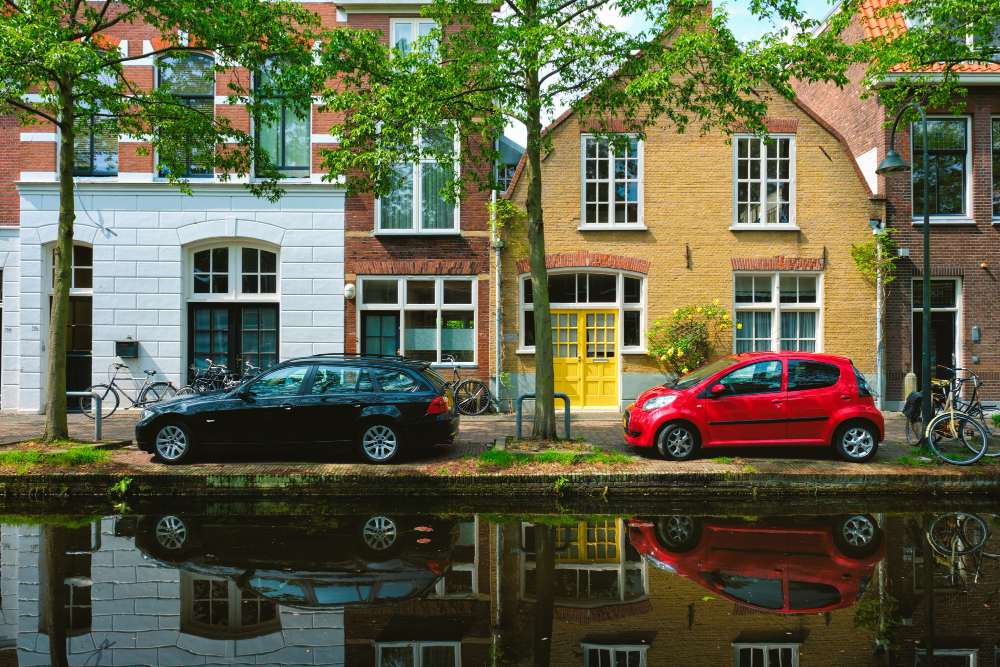
Sometimes you might find yourself parked in the most random spots in the city. Image: Freepik
Parking costs in the Netherlands vary hugely depending on where you are.
In smaller towns, you might pay just €1 to €3 per hour, while larger cities like Utrecht, The Hague, and Rotterdam often charge between €4 and €6 per hour for street parking.
In the busiest parts of Amsterdam, parking can cost as much as €7.50 to €8 per hour! (Highway robbery, if you ask us).
Parking permits in the Netherlands
If you don’t have a permanent car parking space or travel with your car often, getting a parking permit is a convenient payment option. This permit is registered to your specific vehicle’s registration number at your municipality.
The quarterly or yearly payments for a parking permit vary depending on where you live and whether or not there is a waitlist.
For example, a parking permit in The Hague costs €97.05 for one car at one address in 2026, whereas it costs between €41.37 and €160.80 per quarter in Utrecht.
Getting a permit for a second car usually costs even more.
Tip: There are some areas with blue curbs, known as “blue zones”, where the municipality doesn’t enforce paid parking. You just have to display a blue parking disc, which you can buy at gas stations, tobacco stores, and police stations and use for any blue parking zones in the country.
Roadside assistance in the Netherlands
When buying and driving any car in the Netherlands, you may sometimes run into trouble when you’re on the road. If you have car problems, you can ask for roadside assistance anywhere in the country.
There are a few companies that offer towing services and repairs that’ll get your car back into shape for driving.
ANWB offers the most popular roadside assistance service with the following rates for regular membership in 2026:
Basic
Standard
Complete
Per month
€6.50
€10.70
€13.34
Per year
€74.25
€122.25
€152.40
They have other membership offers you might find useful. For example, you can get a youth benefit membership or a partner advantage if you want to have roadside assistance ready for your partner.
There are also membership options for roadside assistance across all of Europe — but of course, this is more expensive.
Buying a second-hand car should feel safe and secure. With Carvendo, every eligible car comes with a 12-month or 12,000-kilometre guarantee, giving you extra peace of mind on the road. It’s a simple and reliable way to make sure your new set of wheels stays in top shape. ⚡️
Maintenance costs of your second-hand car in the Netherlands
These are the costs associated with making sure your second-hand car is fit to drive on a day-to-day basis.
Periodic vehicle inspection (APK)
Algemene periode keuring (APK) or periodic vehicle inspection is an annual or bi-annual maintenance check to make sure your vehicle meets road safety and environmental standards.
APKs are compulsory in Europe and are carried out by professional inspectors (so no worries about doing them yourself). After the APK, you receive an inspection report of your car.
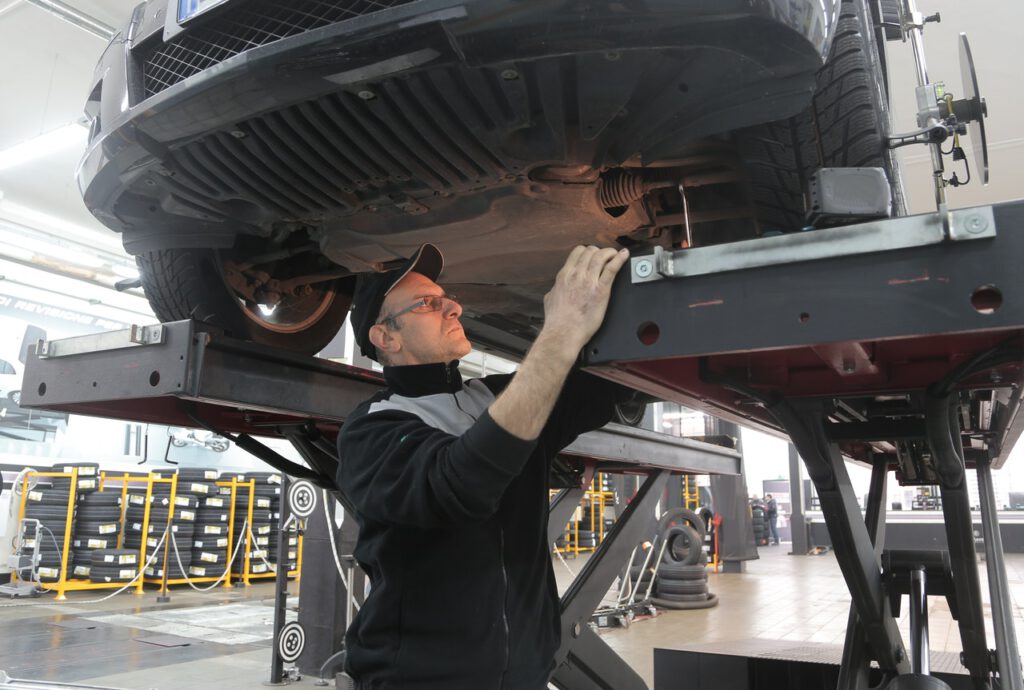
There are plenty of licenced mechanics who can perform an APK on your vehicle — no doubt you’ll find someone on the regular! Image: Pexels
You can check with the Dutch Vehicle Authority (RDW) to see when, how often, and where to get an APK for your second-hand car.
The prices for an APK can vary from as low as €20 to as high as €70 every year or every other year.
However, on average, APK costs fall between €30 and €60, depending on where you can take it.
Most common replacements and maintenance
Part of buying and driving a second-hand car in the Netherlands is maintaining and replacing parts that need a little extra TLC.
Battery replacement
Batteries are essential to second-hand electric and hybrid cars — and sometimes they need maintenance or even replacement.
Depending on your second-hand electric/hybrid car model and its battery, the price of replacements varies.
For example, a battery for a Tesla Model S can cost roughly €13,000 to €20,000, while a battery for a Chevy Volt costs between €3,700 to €9,300 instead.
You can check with your chosen car repair and maintenance shop to see which batteries are available and how much it costs to buy the battery and get it installed in your car.
Tire replacement and maintenance
In the Netherlands, mechanics usually advise drivers to replace all of their tyres every three to four years, even if there aren’t any obvious signs of wear or damage.
You need to get all of your tyres replaced every few years. Better to be safe than sorry! Image: Pexels
Of course, you can get the replacement at your usual car repair and maintenance shop. The tyre replacement cost and services depend on your shop, but it ranges between €60 to €360 per tyre.
Charging system repair and replacement
Likewise, with a car battery, you might find your second-hand car has some hitches with the charging system, especially if the previous owner or you charged the car often.
For example, the wiring could have corroded or loosened, or a fuse could have blown. Whatever the issue is, car mechanics can resolve it. The exact costs depend on your car repair and maintenance shop.
You can also completely replace your charging system.
Cost-wise, the charging system depends on your second-hand car as well. A new charging system could cost between €800 to €2,700, depending on which station fits your car best.
How to estimate total monthly car ownership costs
Before buying a second-hand car, it helps to work out how much you will spend each month. A car comes with several recurring costs, and these can add up quickly.
The main expenses are fuel or charging, road tax, insurance, parking, and general maintenance. Once you know these five figures, you can make a realistic monthly budget.
Fuel or charging costs depend on how far you drive and current prices.
Road tax varies by weight, province, and fuel type, while insurance depends on your car and coverage level.
Parking can be a major cost if you live or travel in busy cities. Maintenance includes the APK inspection and occasional repairs or replacements.
Add these together, and you will get a rough monthly estimate. For many drivers in the Netherlands, this total sits somewhere between €200 and €450 per month.
This was your comprehensive overview of every cost to keep in mind when buying and driving a second-hand car in the Netherlands.
Tips on how to get laid and then make a run for it… a “love ’em and leave ’em” guide to finding love in the Netherlands.
No, not really. If you are that kind of person, then (hopefully someday) you will be slapped by the merciless dating love god and Zeus’ half-brother, Mike.
Unlike in your childhood, in your current adult life, starting a relationship or two is not quite so lemon-squeezy.
Work or commitments can get in the way of your free time. Plus, especially if you aren’t initially from the Netherlands, loneliness can creep up on you if you don’t have a special loved one to go to.
Dating in the Netherlands presents its own share of challenges. Image: Magnific
It can also feel awkward now to ask someone you barely know, “Hey, do you want to hang out?” *queue cricket chirp*
So, my fellow readers, this article is about finding that love. Luckily, love can take shape in many forms, be it an intimate one or just a casual friendship. There’s a two-metre-tall Dutchie out there for everyone. 🥰
1. Dating apps, the classic route
For the more socially inhibited ones, dating apps can help open the door to finding that special someone.
Whether you’re a fan of Tinder or not, in today’s world, apps can be essential for finding your partner.
As it happens, there are now some dating apps in the Netherlands that can help you find your knight (or dame!) in shining armour. Hey, it’s the 21st century! Anything is possible! 😊
First, there is a friendly dating app called Bumble. This is a great one to find friends, dates, and even networks for career building.
Apps are useful for a whole host of things, from delivering your groceries to finding the love of your life. Image: Magnific
Another exciting app is the ‘private’ dating app called Coffee Meets Bagel. It only shows you when the other person is interested in you.
CMB lets you see people who have liked you, so no torturing yourself about “the one that got away.” Time-effective indeed.
Finally, if you’re allergic to texting, we recommend Breeze: a Dutch dating app that, when you match with someone, directly organises your first date for you. Say doei to those awkward online conversations!
If you are interested in a new adventure, these apps can definitely give a boost to your smooch (or friend) life.
2. Join a group and meet someone “in the wild”
To build relationships and to find “true love”, you need consistency. In our younger years, this was simple. You went to school and summer camps and played outside with the other neighbourhood kids until ‘dinner is ready!’ was yelled from the window.
As grown-ups, it is unusual to have that kind of consistency outside of work. One way to solve that is by joining groups that meet regularly, such as associations, networking clubs, book clubs, classes, and workshops.
The best way to meet someone you’ll like? Through shared interests. Image: Magnific
For example, Meetup can help you join groups or clubs based on your interests and vicinity. Talk about practicality done right…
When you join a group, people will show up without you having to invite them. The purpose is to practice doing things together and piece together the common puzzle pieces in your lives.
However, don’t be discouraged, but keep in mind that it might take several practices with someone before you feel like you made a friend.
3. Go to a bar and get out of your comfort zone
Hey, there’s nothing wrong with doing it the old-fashioned way. 😉
The best thing to do is to drag a friend along who can play wingman (or wingwoman), and then you have a backup at hand.
If you’re going it alone, this can be more difficult.
If it’s in the daytime, take a book or a laptop, look like you’re clearly not hanging around to pull, then go in for the kill if the time is right. The number one thing is not appearing creepy. No. Nope. Nee.
Sometimes you’ve got to make the first step. Image: Magnific
If it’s in the evening, you’ve got to play the game a little differently. Sitting in the corner with a book while everyone is being social and having a good time just makes you look unapproachable as hell.
Get talking with people, mingle: if you find someone and offer to buy them a drink, they may just be sold.
4. Make your intentions clear
It’s a common belief that Dutch people aren’t very good at spotting the signs. So, if you do find someone you’re interested in and it’s going well, make your intentions clear — in the most non-creepy way ever, of course.
After all, if you really want to stand out, taking the Dutch trait of directness to your advantage is a good idea.
Again, you’ve got to be blunt to an extent, and you don’t want to come bounding up to the new love of your life saying, “Hi, we might get married and have six children; can we just date now?”
I mean, hey, it could work out, but chances are they’ll be cycling away faster than you can say, “marry….me…”
5. Check our guides to be a real pro
Hopefully, the above thoughts will help you to find that friend or loved one you can be silly with.
But if taking the step to putting yourself out there (or on a dating app *wink wink*) is still too daunting, we have some more detailed advice for you on how to date the Dutch — even in a video format!
Hey, you never know, the new love of your life could have been reading the same guides. 😏
Do you have any tips or funny experiences to share with us? Let us know them in the comments below!
If you own a car in the Netherlands, the APKis one Dutch acronym you absolutely cannot afford to ignore (and not just because forgetting it could cost you hundreds of euros).
The APK, short for Algemene Periodieke Keuring (Periodic Motor Vehicle Test), is the Netherlands’ mandatory vehicle roadworthiness inspection.
You can think of it as the Dutch equivalent of the UK’s MOT or Germany’s TÜV, a regular check to make sure your car is safe to be on the road.
If you’ve just bought a car here or you’re new to driving in the Netherlands, here’s everything you need to know.
Note: The APK is also sometimes referred to as the PTI (Periodic Technical Inspection), these are the same test.
1. It’s compulsory
Every car on Dutch roads must have a current APK. A trained inspector checks that your motor is safe to drive, environmentally compliant, and correctly registered.
Yep, the APK is not optional. Image: Freepik
No certificate? No driving. It’s as simple as that. There are no exceptions and no extensions. If your APK has lapsed, your car should not be moving.
2. When you need to do it depends on your car
When exactly you should bring your car for the APK depends on your vehicle’s fuel type and age. According to the RDW (the Netherlands Vehicle Authority):
Petrol, electric, or alcohol-fuelled cars (registered from 1995) should have their first inspection four years after registration, then every two years, then annually.
Diesel or LPG cars should have their first inspection three years after registration, then every year.
Vehicles aged 30 to 49 years should undergo an inspection every two years.
Vehicles over 50 years old are exempt, unless they’re used for public transport or transporting dangerous goods.
The schedule is based on the vehicle’s first registration date, not when you bought it. Always check this before purchasing a second-hand car.
Still not sure when exactly you need to bring your car in for a test? Geen probleem, the RDW will send you a reminder six weeks before your APK expires.
3. The inspection covers more than you might think
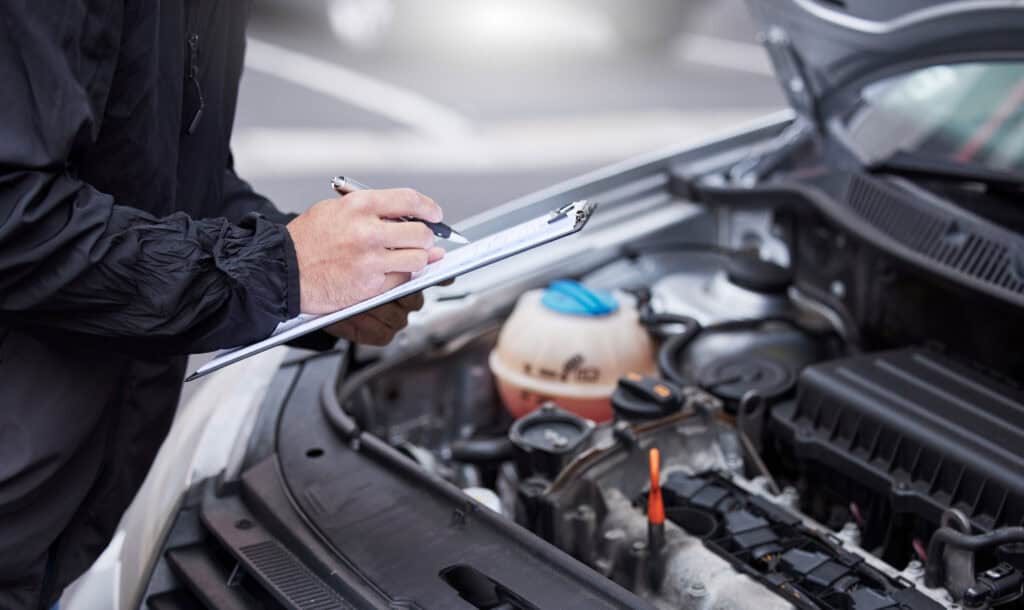
It’s not a quick once-over. An APK inspector works through a detailed checklist covering brakes, tyres, steering, suspension, shock absorbers, lights, and bodywork.
A number of important things will be checked during the APK. Image: Freepik
In other words, they look at all the things that could get someone hurt if they fail on the road.
Your exhaust emissions are tested too, to make sure the car meets environmental standards. From January 2023, all diesel cars fitted with a particulate filter also have to pass a dedicated particulate filter test.
4. Only RDW-approved garages can do it
You can’t just rock up to any mechanic and tick a box.
The inspection has to be carried out at a garage or testing station that holds official RDW approval. Look for the RDW erkend sign and an APKsticker on the premises.
You can find your nearest approved station via the RDW website. Most offer online booking, and availability is generally good.
5. You can book it early without losing time
Here’s an insider’s tip. If you bring your car in up to two months before the expiry date, your new expiry date is calculated from the original deadline, not from the date you walked into the garage.
For example, if your APK expires on October 1, and you get it done early on August 1, your new expiry date will still be set from October 1 — not from August 1.
In other words, you won’t lose any time on your certificate by being organised. Booking ahead is especially smart if your car is older and might need repairs before it passes.
6. Failing isn’t the end of the world (but act fast)
If your car doesn’t pass, you’ll receive a rejection report listing every failure. You then have four weeks to get the issues fixed and return to the same station for a free re-inspection.
Failed your assessment? Act quickly, if you don’t want to pay for a new inspection. Image: Freepik
Miss that window, and you’ll need to pay for an entirely new inspection.
A partial failure (kleine gebreken) means minor defects that must be fixed but don’t immediately prohibit driving.
A full failure (afkeuring) flags serious safety issues, meaning the car cannot go on public roads.
If you think the inspector got it wrong, you can challenge the result. The inspector contacts the RDW, who sends someone for a second opinion, but you cannot move or repair the car in the meantime.
Curious to know what the main problem areas are for brands? Here are some examples.
Brand
Performs well on
Scores less well on
Lexus
Steering
Bodywork
Porsche
Rust, cracks, damage to frame
Battery/wiring
Skoda
Battery/wiring
Shock absorbers
Land Rover
Suspension
Rust, cracks, damage to frame
Kia
Steering
Tyres
Toyota
Gearbox/drivetrain
Suspension
Dacia
Battery and wiring
Bodywork
Mazda
Suspension
Rust, cracks, damage to frame
Audi
Suspension
Gearbox/drivetrain
Subaru
Tyres
Rust, cracks, damage to frame
7. Driving without a valid APK is a serious and expensive mistake
This is where things get very real, very quickly. Fines for an expired APK can land anywhere between €180 and €500, and that’s before any additional police fines if you’re pulled over.
No APK? That’ll cost you. Image: Freepik
Even worse: if you’re involved in an accident in a car that’s failed or lapsed its APK, your insurer can legally refuse to pay out. So it’s not just a bureaucratic headache, but also a huge financial risk.
The only time you’re permitted to drive without a current certificate is on your way directly to your inspection appointment, with proof of booking on you.
8. You don’t need to carry the report while driving (except abroad)
You don’t need to bring any paperwork to the inspection itself, and once your car passes, you don’t need to keep the report in the car for day-to-day driving in the Netherlands.
That changes the moment you cross the border. If you’re taking your car abroad, make sure it has a valid APK for the duration of the trip and carry the inspection report with you in case you’re stopped by the police.
You can also have a Dutch-registered car tested at approved centres in Belgium and Spain if you’re already abroad when it comes due.
Have you had a nightmare APKexperience, or breezed through without a hitch? Let us know in the comments below!