Dating is all fun and games until your dinner date casually mentions, “I’m married.” Yikes.
Let’s back up here a bit.
One of our readers, Ashwin, has been on a fair share of dates. A total of 86 dates over a period of 29 months, to be precise. Just like the job market, it’s sometimes a numbers game.
Ashwin has been in the Netherlands for the past three years. He moved from India to pursue a master’s degree at Leiden University. Now he works in diplomacy (that’s what it takes to survive the dating pool).
What’s a rite of passage for all internationals in the Netherlands? Complaining. In “Expat experiences,” we reach out to our readers and compile the dirty details of their Dutch horror stories.
Enter: tall, blond, blue-eyed Dutch guy
Although he admits to attracting men who are “non-commital,” one particular encounter proved to be a bit of a stretch.
While swiping on Bumble, Ashwin matched with a Dutch guy in his early 30s. You know the type: tall, blond hair, blue eyes, gelled hair, big muscles. Countless expats fall victim to the allure of the basic Dutchie.
The pair decided to meet for a drink before the conversation died out. These matches are quite fleeting.
Note that meeting in person was the match’s idea. He thought our guy, Ashwin, was “interesting.” (Romance is so dead. Even among the gays).
At a decked-out cocktail bar in The Hague, neither party was disappointed. The music, overpriced drinks, and ambient lighting really set the mood.
Enter: the wife…
Ashwin complimented the Dutchie’s jewellery, including a golden finger band wrapped around his ring finger. So much for vintage jewellery, the Dutchie replied: “Thanks, it was an anniversary gift from my wife.”
“Your wife?” Ashwin asked politely.
“We’ve been married for five years and two months,” the Dutchman stated, as though it were obvious.
Ashwin was angry, confused, yet unsurprised. It takes a lot more to faze a city-dweller.
Upon further questioning, Ashwin learned that the Dutchie was in an open marriage. “We can see where things go,” proffered the match.
Despite a couple more drinks, Ashwin refrained from flirting. The biggest turnoff, possibly worse than the sanctioned adultery, was the Dutchie’s political standpoint. Pro-Israel. VVD-voter. Enough said.
Safe to say, that was their first and last date. But perhaps the biggest plot twist of all? The Dutchie paid the tab without a subsequent tikkie.
Throughout history, the Dutch have encouraged innovation, development, and creativity in many arenas.
In fact, the Netherlands is world-renowned for being progressive! So, naturally, I’ve compiled a list of the most forward-thinking things Dutchies do. 😉
1. Restrict single-use plastics
This is a big one! As of July 2021, the Netherlands banned the production, import, and sale of almost all single-use plastics in line with the EU’s Single-Use Plastics (SUP) guidelines.
From cutlery and Q-tips to balloons, these items were all outlawed (although stores are allowed to sell their current stocks).
This isn’t a complete ban. Businesses can’t offer single-use plastics in establishments when customers dine in, but they can offer single-use plastics when offering takeaway (so long as they charge a surcharge). However, it is a step in the right direction.
Want to know what makes things even better? There’s also a 90% collection target in sight for plastic bottles to be tackled next by 2029! ♻
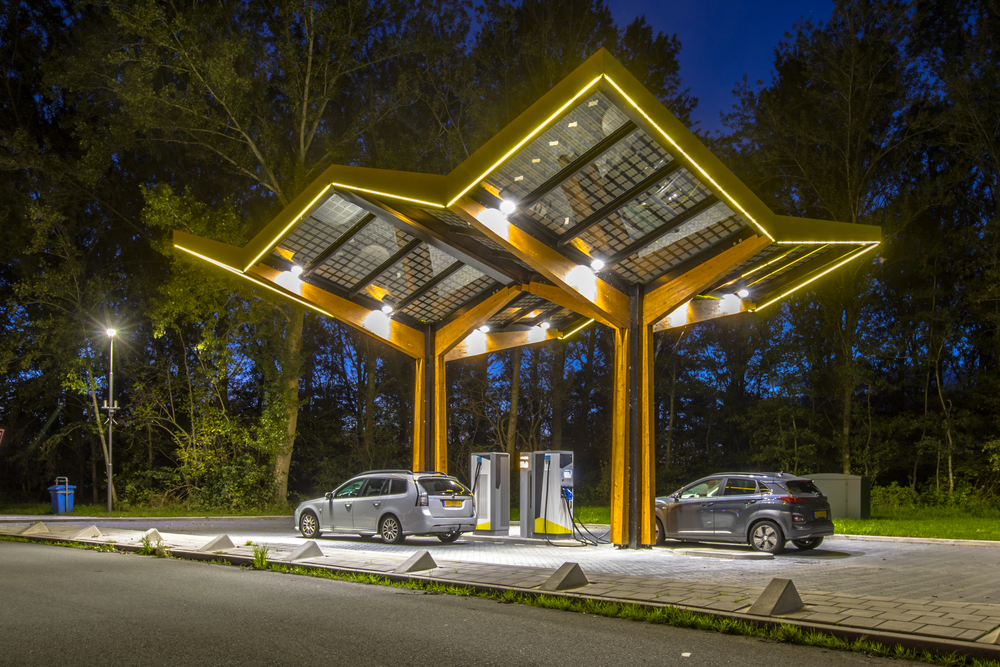
2. Power transport hubs with the sun
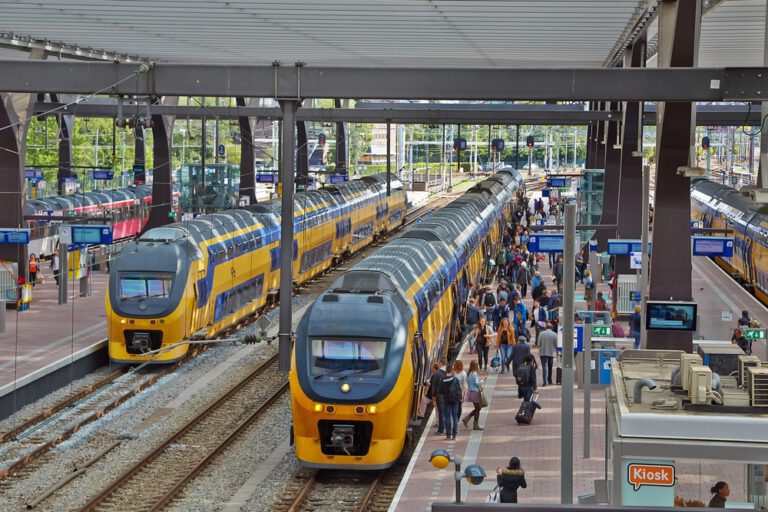
Yep, you read that right. Dutch innovation, baby. Image: Depositphotos
The Netherlands may not see a lot of sunny days — even in the summer — but the Dutch sure are fans of solar-powering their methods of transportation!
3. Rehabilitate criminals rather than imprisoning them
Ter beschikking stelling(TBS) which translates into “detention under hospital orders,” is a system that ensures criminals in the Netherlands are rehabilitated in order to reintegrate into society instead of being locked up for their entire sentence.
The Dutch prison system aims at resolving criminals’ psychiatric problems as part of the sentence, rather than focusing on punishment methods only.
The result? Far more forward-looking verdicts overall. 👩⚖️
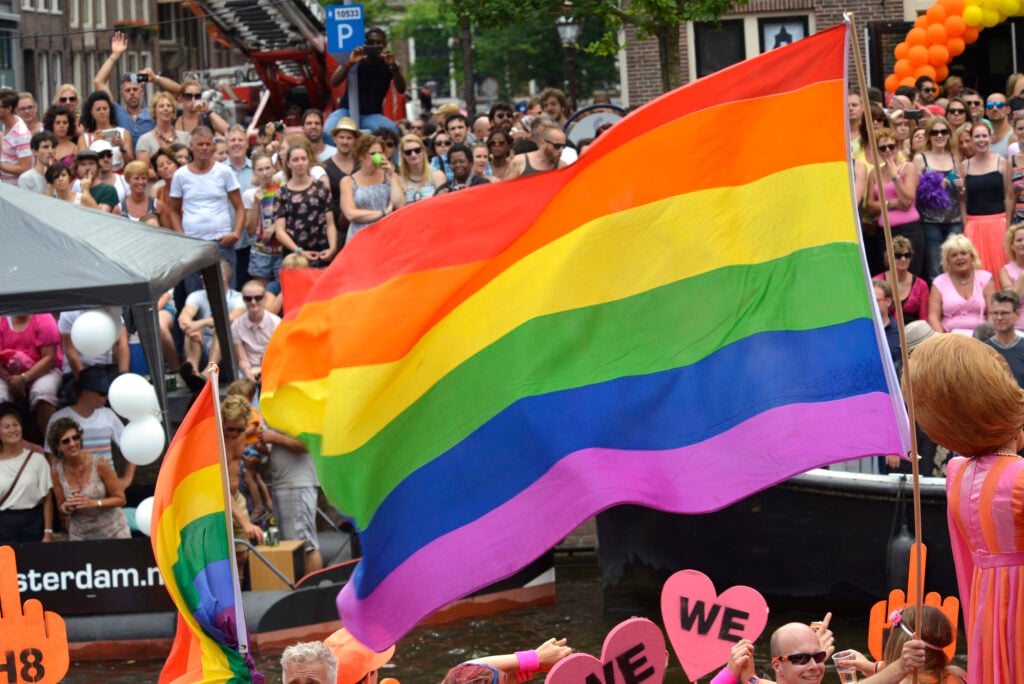
4. Lead the way for same-sex marriage
Amsterdam Pride is the event of the year. Image:Depositphotos
In the spirit of Dutch tolerance, let’s not forget that the biggest gesture of all! That’s when the Netherlands became the first country in the world to legalize same-sex marriage on April 1, 2001.
This step has led to Amsterdam having the biggest share of same-sex marriages, with 45 in every 1,000 married couples being gay. 🌈
5. Offer an at-home nurse to new mothers
Kraamzorg is a postnatal benefit for mothers in the Netherlands, where a nurse will be available to new mothers for up to a week after their baby’s arrival.
We’re sure you can smell this picture of Dutch lavender too, thanks to bees. Image: Unsplash
Whether the Dutchies do this for the environmental impact or just to ultimately train the bees to sniff diseases, with their futuristic vision, the Dutch understood the bee’s crucial role in pollination and food supplies long before it was cool.
The nurse will offer help with baby-related tasks. This is a forward-thinking move on the Dutchies’ side to support new mothers and help them get back on their feet as soon as possible. 🍼
7. Tell people exactly what they think
Yup, it’s that infamous Dutch directness, where you can be asked, “Does that upset you?” on a whim if it seems like you’re unhappy.
The Dutch are mad efficient, so they don’t waste time beating around the bush.
Instead, they’ll tell you exactly what they’re thinking, no matter how rude or abrasive it might be. 📢
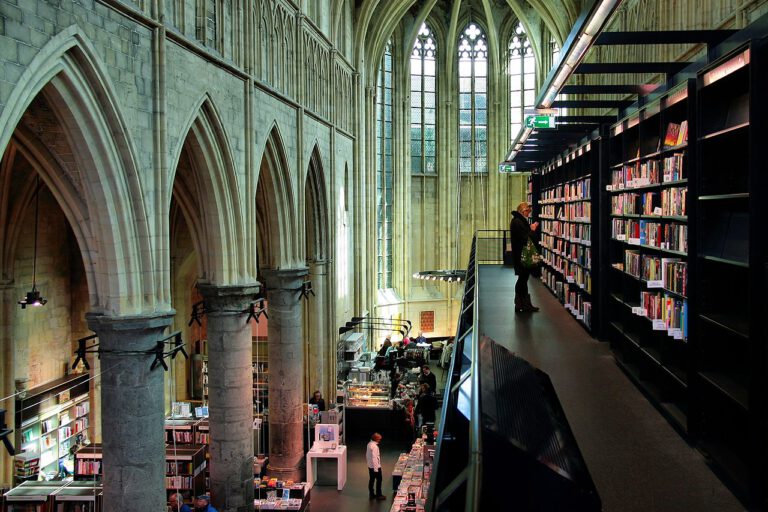
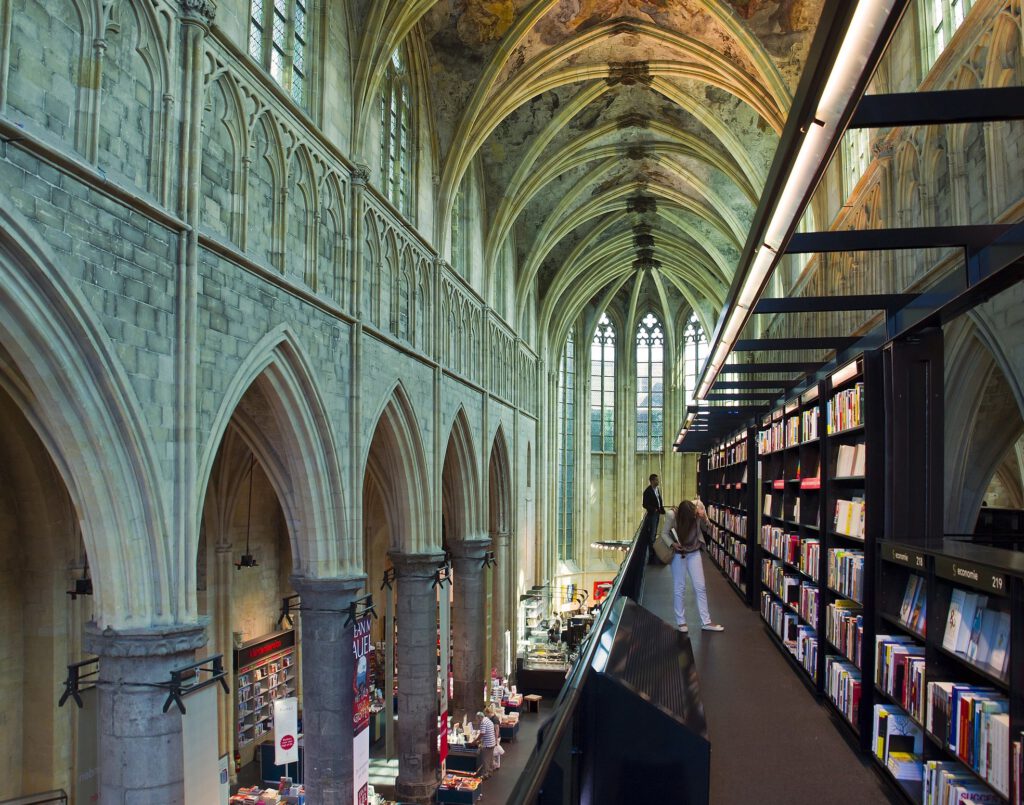
This church has welcomed a new flock of booklovers! Image: Bert Kaufmann/Wikimedia Commons/CC3.0
Dutchies are masters of DIY — their bigger projects involve giving old buildings a makeover into a modern shape!
In Utrecht, a 1924 post office was reconstructed into a modern library, and similarly, a thirteenth-century Maastricht cathedral was turned into a magical bookstore. 📚
Naturally, this is heavily regulated: patients will have to discuss their decision with their physician and the physician will have to follow a list of protocols before they honour the patient’s wish. 👨⚕️👩⚕️
10. Be masters of 3D printing
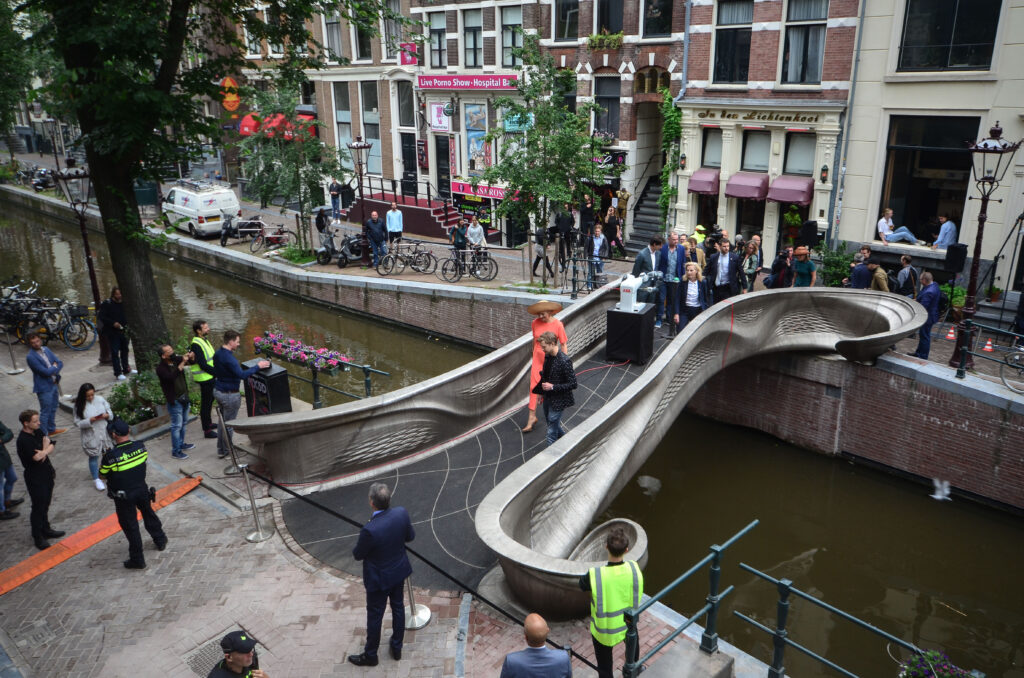
Opening of the world’s first 3D-printed bridge Image: Adriaan de Groot/Supplied.
Maybe it’s the DIY in Dutch blood, or maybe it’s just downright genius creativity — but to 3D print oxygen valves, steel bridges, and even houses is over-the-top forward-thinking by the Dutch. 🖱
But whether you’re a bicycle person or more of a pedestrian you’ll realise that the Dutch almost always weigh in favour of ANY transportation method that doesn’t involve moving in a personal car.
12. Take work-life balance seriously
A good mind and soul balance is not a luxury item. Image: Unsplash
In a fast-paced world, steering society away from workaholism isn’t an easy task to achieve!
But when a country enlists burnout, moving, or even taking an exam as pressing reasons for work leave, then you know the Dutch are looking ahead into the people’s future.
13. Ban diesel vehicles from city centres
What’s the best way to keep Dutch cities’ air clean? Get rid of anything diesel!
The Netherlands has introduced milieuzones, meaning that diesel cars, motorbikes, and trucks can’t enter designated areas — making the air cleaner and fresher to breathe. 🧘♀️🌱
As this list comes to an end, we give Dutchies a super 4.5 stars for their forward-thinking — but we left half a star out because there’s always room for improvement! 😉
What other forward-thinking things do Dutch people do? Tell us in the comments below!
The NS is launching a pilot programme that will let low-income residents of Amersfoort ride the train for free, and if it works, the scheme could eventually roll out across the country.
Starting July 1, residents who qualify can apply to the municipality for the Vooruitpas Amersfoort. This special pass covers all NS train travel at no cost until December 31, 2026.
Who can get it, and how?
The municipality of Amersfoort will contact eligible families directly. In total, 1,000 passes are available. If demand is high, the gemeente will organise a lottery.
This is a pilot, not a permanent scheme. After six months, the NS plans to study how participants used the pass and what they needed from it.
Those findings will inform whether a lasting version can be developed, and whether other municipalities could eventually join.
Why is the NS doing this?
In a press release, NS board member Daan Schut put it plainly: “Travel is freedom. If you can’t afford a train ticket, you’re constantly having to weigh up whether it’s even worth going out and what you’d have to sacrifice to do it.”
It’s a timely move. Dutch train fares rose by 6.5% at the start of 2026, pushing the mode of transport increasingly out of reach for people on tight incomes.
It’s not the first initiative of this kind in the Netherlands. Amsterdam previously trialled free public transport tickets for low-income households, though that scheme covered buses, trams, and metros rather than NS trains.
Let’s hope this trial proves a success.
Do you think free train travel for low-income households should become a permanent, nationwide scheme? Let us know in the comments below.
Eight Dutch passengers from the hantavirus-hit cruise ship MV Hondius landed at Eindhoven air base on Sunday evening.
They arrived on a government-chartered flight from Tenerife and are now heading straight into six weeks of home quarantine.
The flight touched down just before 8:30 PM, carrying not only the eight Dutch nationals but also 18 passengers from 10 other countries.
The Dutch government arranged the evacuation after the Hondius docked at Granadilla de Abona, a municipality in the south of Tenerife, earlier that day.
Six weeks at home, with daily GGD check-ins
The Dutch passengers are now making their way home, where they face a strict six-week thuisquarantaine (home quarantine).
For the next six weeks, they must take their temperature twice daily and keep the GGD (municipal health service) updated by phone each day.
A multinational evacuation
The Dutch were far from the only passengers being repatriated through Eindhoven.
The flight also carried people from Germany, the Philippines, Belgium, India, Argentina, Greece, Guatemala, Montenegro, Portugal, and Ukraine.
German authorities dispatched firefighters with a specialist infectious disease ambulance to collect their four nationals, broadcaster WDR reports.
Two Belgian passengers were taken by a Belgian defence ambulance to a hospital in Antwerp for examination. According to VRT Nieuws, those who test clear will return home for quarantine, while anyone who develops symptoms will remain in hospital isolation.
What happens next?
The Dutch government has another flight scheduled to pick up part of the Hondius crew from Tenerife today. Other crew members will sail the ship back to the Netherlands.
Both the WHO and the RIVM have stated there is no reason to anticipate a wider outbreak.
The Andes variant is only known to spread between people in very rare cases involving prolonged, close contact, and does not naturally occur outside North and South America.
Are you relieved the Dutch passengers are finally home? Share your thoughts in the comments below.
So, you’re looking for a job in the Netherlands. You’re probably wondering: am I going to be stuck in the office Monday to Friday, 9-to-5? Good question. Thankfully, we have all the answers!
The Dutch have a slightly different outlook on working life than other countries. Over the last few years, the Netherlands has consistently ranked very high or even at the top in work-life balance world rankings.
This means that, if you are working in the Netherlands, you can expect a little less work and a little more play.
The average work week in the Netherlands
Across the world, it’s been mostly accepted that the average work week is somewhere between 35 hours and 50 hours a week.
However, in the Netherlands, this number varies between 35 and 40 hours per week.
Looks like people are ready to say goodbye to stuffy office cubicles! Image: Unsplash
That being said, you could actually find yourself working even less! Terrific news for us couch potatoes (and anyone who works to live, not vice versa)! 🥔
Let’s talk about stats, baby
According to Statistics Netherlands (CBS), the average number of hours Dutch people worked in 2023 was 1,439 hours.
Sounds like a lot at first, right? But actually, this works out at around 28.8 hours worked per week, if we take into account a two-week break during the year.
Holiday leave in the Netherlands
We couldn’t forget those holidays! In the Netherlands, the number of leave hours an employee is due is four times the number of weekly working hours.
For example: If you work four days a week from 9 AM to 5 PM, you’ll be owed a grand 128 hours of annual leave!
Get those bags packed, because, with such a good work/life balance, you may well find yourself at the beach a few more times a year. 🏖
However, the thing about averages is that they’re just that: averages. But don’t let your hopes dampen just yet!
Across the board in the Netherlands, most people can expect to be working no more than 33 hours per week.
There’s always an exception — working in Dutch hospitality and retail
Yet, though most Dutch workers can expect to work fewer than the 50-hour workweeks employees in other countries face, there’s one catch to it — hospitality and retail jobs!
The thing with the typical 9-to-5 is that, well, you’re working from nine to five every day. If you’re working in a restaurant, bar, or even a clothes shop, your hours are going to (naturally!) differ.
The dreaded 9-to-5 is a myth to most hospitality workers. Image: Pexels
So, while people in offices might be out by 4 PM on a Thursday, the people working in late-night bars or coffee shops haven’t even clocked in yet.
The nature of hospitality and retail jobs is that they operate on a changing shift schedule.
In the office, you might be scheduled to work 9 AM to 5 PM, Monday to Friday every week, but in these industries, your roster can change from week to week.
In most cases, the normalised 9-to-5 is a myth to employees in these industries, but even if you’re new to the Netherlands, we expect you already know this. 😉
The Dutch and the four-day workweek
Ah, the much-rumoured four-day workweek. An item of jealousy across the world.
But, is it a made-up story fabricated to draw employees to the land of cheese, stroopwafels, and windmills? Or is it a real thing?
Well, we here at DutchReview can confirm that the four-day workweek is a real thing!
Four-day work week plus a longer weekend equals more sociable workers! Image: Pexels
Most of us work on a four-day-a-week basis, and we even have a hybrid working policy. That means we work some days in the office and some days from home!
And we’re not alone in this: while it’s not completely universal, many companies in the Netherlands are now offering a four-day workweek to their employees.
Benefits of the four-day workweek: less work, more play
Why do we work like this? It’s easy. Say hello to a longer weekend and pumped-up, energised writers. 🥂
And we have the receipts to prove it!
According to 2023 research by the Christian National Trade Union Federation (CNV), more than 1 in 5 workers in the Netherlands face burnout due to work stress and overworking.
This increased burnout is a big reason behind practices such as the four-day workweek.
With fewer hours, employees would have more time to rest (😴), which means they come into the office ready and excited for the week ahead!
Less stress, more success
Fewer hours with less stressed employees means a higher productivity rate.
Many companies in the Netherlands have tried and tested this theory, including healthcare platform LUSCII.
When trying out the reduced work week, “productivity went up by 15 to 20%,” LUSCIIfounder Daan Dohmen tells EenVandaag.
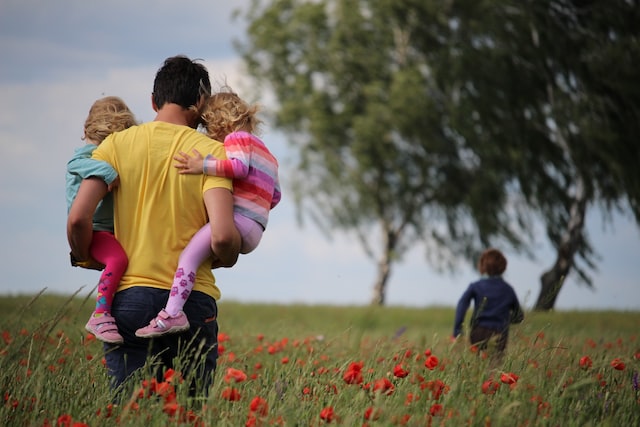
With more time off, the Dutch have the chance to sit back, relax, and enjoy family life. Image: Unsplash
“When we started, we measured the results for 12 weeks. We saw that people were very happy and satisfied. Sickness absence decreased,” Dohmen explains.
Now, they are “happier and more productive than ever” — relatable, Daan!
With such a huge difference in productivity levels, as well as general enthusiasm from employees, it won’t be long until more and more Dutch companies hop on this practice, too!
Countries that offer the four-day workweek
In February 2022, Belgium introduced a new policy that allowed workers to be entitled to a four-day workweek.
COVID-19 changed the way the Dutch (and countries all over the world!) treat remote work
Due to increased awareness of possible health concerns, the Netherlands went into a country-wide lockdown — but the work didn’t stop.
Hundreds of companies moved to remote work in 2020. Now, many of these have kept remote working or hybrid work policies.
This is nothing new to Dutch people, seeing as there have been policy plans for years allowing employees to request to work from home.
Plus, the Dutch seem to really enjoy working from home.
According to a 2020 survey, 60.8% of remote employees considered themselves satisfied with their experience working from the comfort of their home office (or sofa).
How did this affect the Dutch 9-to-5?
Remote work, or hybrid work, also redefines the idea of the usual 9-to-5.
Though you might be technically working from 9 AM to 5 PM, working from home cuts out the dreaded commute from home to the office, making it that much more bearable.
Love working from the comfort of your couch? With the Netherlands’ remote-friendly work culture, you needn’t drag yourself into an office. Image: Freepik
Roll right out of bed and into your office (which is not-so-secretly also your bed 🛌💤) and enjoy all the wonders of working from home.
Be ready to constantly ask yourself questions like “what will I make for lunch today?” and “why are my neighbours always staring at me?”
So, is the 9-to-5 dead in the Netherlands?
The unfortunate answer is no, the 9-to-5 is not dead.
While the four-day workweek and availability for remote work are becoming more and more popular, that doesn’t mean that the 9-to-5 is completely gone.
Most job postings out there still ask for employees to work on a full-time basis of 36-40 hours per week, and, though it’s nice to think our average 28.3-hour work week is the same across the board, this isn’t always the case.
It’s also important to take into account that almost half of those registered as employed in the Netherlands work part-time. That’s 4.5 million people!
So, with so many people working only part-time, that’s sure to throw statistics off a little bit. As the Dutch say, helaas pindakaas.
That being said, the typical dreary nine-to-five is definitely on the way out. With an increased opportunity to personalise working hours and better working conditions, people have more and more options.
Do you think the 9-to-5 in the Netherlands is dead? Let us know in the comments below!
“Why are there three Xs on Amsterdam’s flag?” And “What do they mean?” If you live in Amsterdam, like me, you’ve probably had visitors ask these questions multiple times.
You can’t blame them, the place does have a reputation.
Even before tourists get here, they’re already thinking about a certain area of town. You know it, it’s the one with a red glow and people practising the world’s oldest profession. ❌❌❌
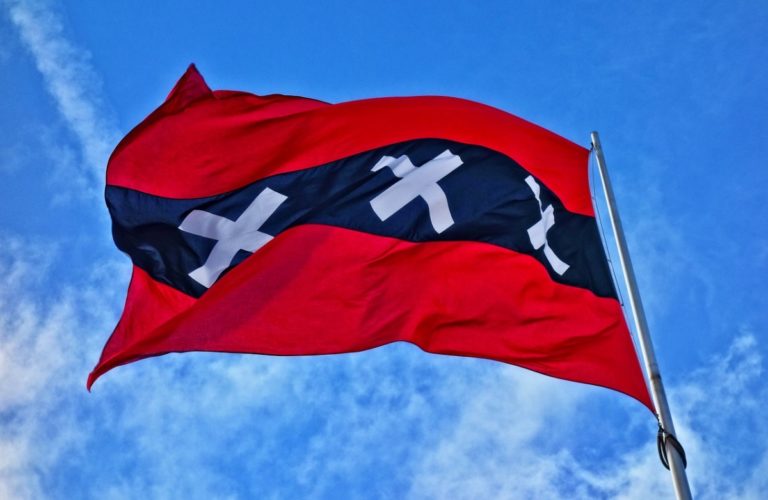
Interestingly, the flag isn’t just a depiction of the triple-X entertainment that Amsterdam usually has to offer. Instead, it’s the official symbol of the Dutch capital.
What does the Amsterdam flag look like?
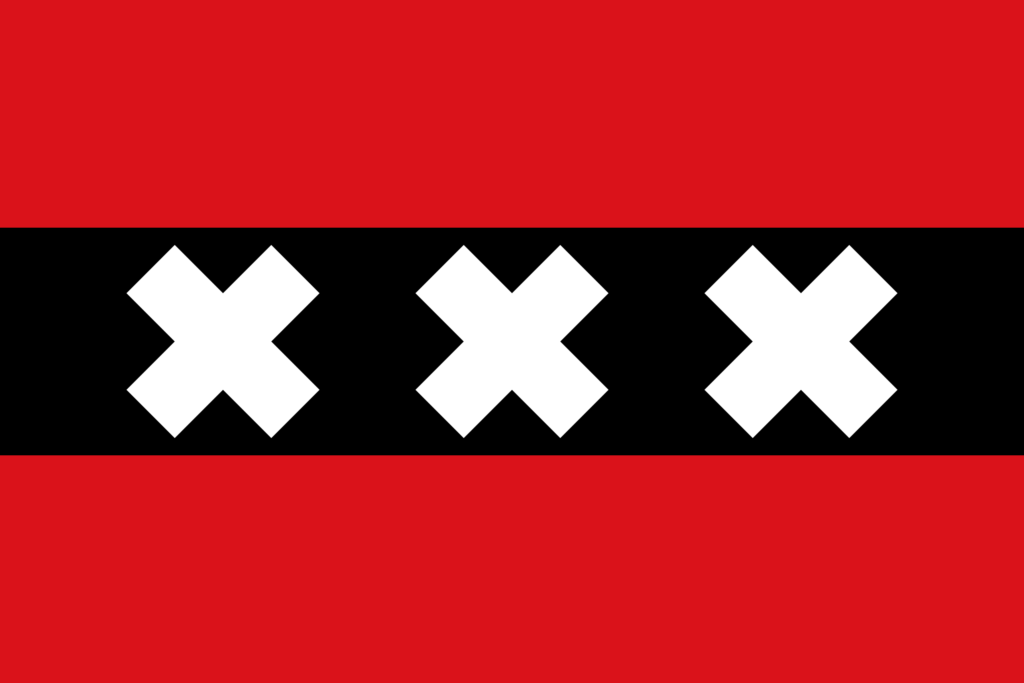
Just in case you’re not familiar with the flag, let’s have a look. It has three horizontal stripes — red, black, and red. The black one is slightly thinner, and it has three white Xs in it.
The Amsterdam flag is very distinctive. Image: Unknown/Wikimedia Commons/Public Domain
Why does Amsterdam’s flag have three crosses?
Depending on whether you have the maturity level of a teenager or not, I have some good news (or bad news): those Xs find their origins in Christianity.
That’s right, the XXX on Amsterdam’s flag is actually representative of St. Andrew’s three crosses, one of Jesus’ apostles, who was crucified on an X-shaped cross.
St. Andrew also used to be a fisherman, that is, during the first century AD. But, it’s interesting to know that, back in 1505, when Amsterdam was a renowned fishing town, all the registered ships that sailed around Amsterdam had this flag hanging on from their boats. 🛶
Unlike what many people may think, it’s actually just a funny (or unfortunate) coincidence that the Amsterdam flag’s triple X symbol is the same as, well, adult entertainment. The flag’s symbols have nothing to do with sex.
Where do the three Xs on the Amsterdam flag come from?
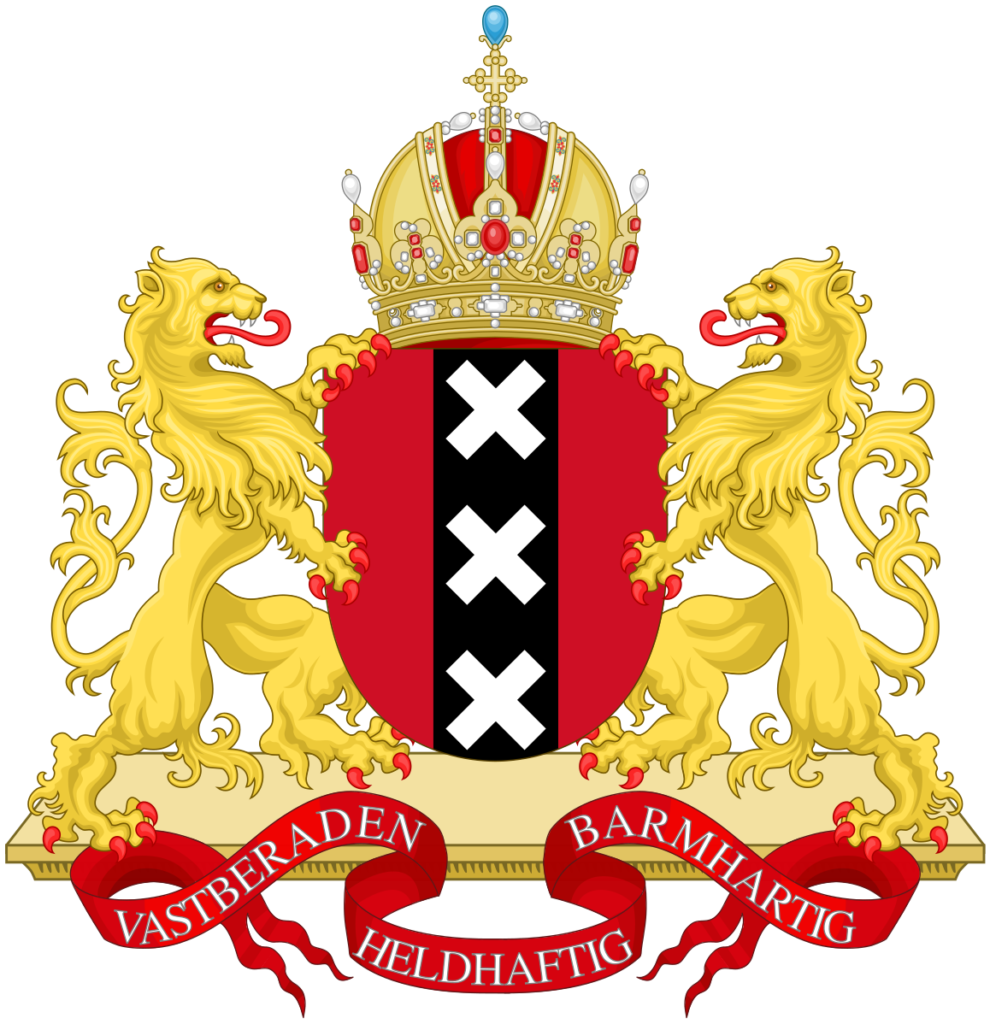
As cool as the flag looks on its own, it doesn’t usually stand on its own. In reality, it’s borrowed from the city’s coat of arms, where the popular red flag rests as the centrepiece.
A common legend about the flag is that the three crosses represent fire, floods, and the black plague. Why? Those are precisely the problems that Amsterdammers had to deal with a little too often back in the day, unfortunately.
But, that theory isn’t true either. 🤷♀️
The meaning and symbolism of the coat of arms symbol are actually still unknown. 🤫
Why are there three crosses everywhere in Amsterdam?
Another thing any visitor to Amsterdam will notice is that the iconic XXX symbol is plastered across nearly every surface in Amsterdam.
Those crosses aren’t just on the flag. They’re carved into the bricks on buildings and sticking out of the little poles that keep cars off the sidewalk. They’re printed on bus stops, museum signs, and even on official letters.
And, they’re also in every single tourist shop, in the “things you don’t need” section (but will probably buy anyway). 🛍
Although I am not a mom (yet), I have always wanted to be one. As I already hear the tick-tock of my biological clock, I cannot think of a better place to raise my future baby than in the Netherlands.
In honour of Mother’s Day, here are the seven reasons why I would want to be a mom in the Netherlands.
1. Happiness of Dutch children
As we already know, Dutch kids and Dutch moms are the happiest.
That’s promising for both me and my kid(s) — and by proxy, my husband, who would be surrounded by me and a possible horde of little gremlins.
Even though our kid would be a Canadian-American raised in the Netherlands, for the rest of this article, I’ll refer to them as a Dutch kiddo.
Dutch kids are among the happiest children in the world. Image: Pexels
One must only watch the Lentekriebels episode from De Luizenmoeder to get a hilarious perspective on the debate about teaching kids about the birds and the bees, which should not be as controversial as they make it out to be in my home country, the USA.
Also, they can cycle around on their own when they’re old enough (that saves me from driving them everywhere in my future Prius).
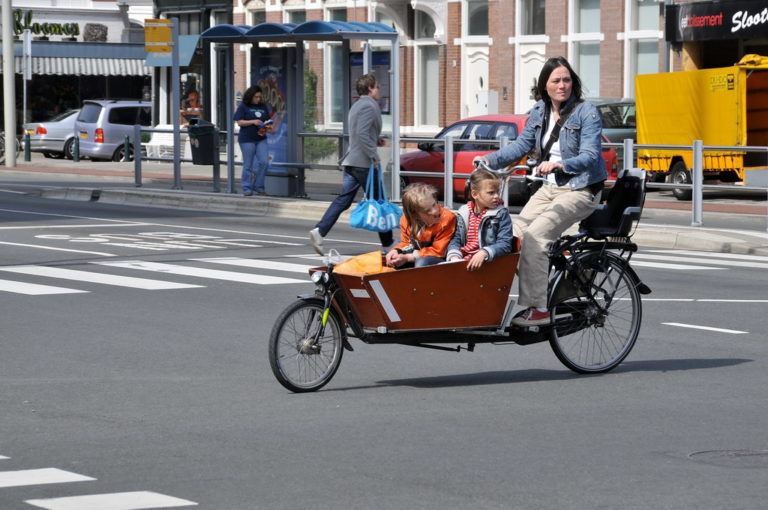
Having said that, I do secretly look forward to cycling in a bakfiets with a kid or two. How gezellig.
3. Children learn multiple languages in the Netherlands
My Dutch kid would learn a gazillion languages. Okay, well, maybe not a gazillion.
However, there are more than 7,000 living languagesin the world, with 23 of them accounting for more than half of the world’s population.
So even if they learned just three of them (English, Dutch, and maybe French —my husband’s mother tongue), they’d be good to go.
Besides, for Europeans, multilingualism is standard in many places, especially for younger generations, not just another set of job skills to develop.
Brainiac child with an all-natural, organically-cultivated, enhanced IQ? Why not?
4. Education in the Netherlands
My Dutch kid would be able to get a college degree without being crushed under the burden of a student loan, as they would have, if I were to raise them in the US.
With tuition fees in the Netherlands being a bit more than €2,000 annually, I wouldn’t need to save tens of thousands of US dollars per year. My plan to pay for my future kiddo’s higher education is therefore greatly simplified — and doesn’t have to start pre-conception.
Affordable tuition fees AND a lot of universities to choose from… Need I say more? Image: Depositphotos
Naturally, the trade-off is that I’m paying higher income tax, but that’s another story.
I could also do what some Dutch (and American) parents do and let my kids figure it out on their own: take on a student loan and get a job, as many young adult Dutchies do.
5. Dutch children are healthier
My Dutch kid would probably not need to consume even half the amount of antibiotics that I did growing up.
Why, you ask? Dutch doctors are notoriously stingy in prescribing antibiotics, prescribing the fewest antibiotics of all countries in the European Union.
By the way, before their 18th birthday, there is no premium to pay for that sniffling kid to have standard health insurance and dental care.
6. Dutch children are tough cookies
As a follow-up to number five, my Dutch kid would grow up tough-as-nails.
A Dutch friend recently told me she got a nasty gash on her leg during an obstacle course, which required a visit to spoedeisende hulp (SEH, or the emergency room) for some stitches.
In the Netherlands, if you need stitches, no biggie. Depositphotos.
And it was no big deal at all. She got the stitches with zero anaesthesia.
Okay, so don’t quote me on this, but in America, I would get sued for child abuse for letting my kid get stitches without any anaesthetic. Plus, I would ask for the lidocaine myself.
But wow, I was definitely shocked and mildly impressed.
7. Health care in the Netherlands
Finally, let’s say that in seeking an older first-timer pregnancy status, I encounter fertility problems. Thankfully, I would not need to shell out thousands of dollars for fertility care and treatment.
Fertility treatments are part of the Dutch standard health insurance package, with some eigen risicoor co-payment needed, which is far less than in the US.
Maternity care is part of a standard health insurance package. Image: Depositphotos
When the time comes for maternity care, midwifery services, and then popping that baby out of the womb and into the world (birth care), these services are also part of the standard insurance package.
So, Happy Mother’s Day to all the moms and moms-to-be, for when you give birth to a Dutch-born kid who is happier, more independent, smarter, tougher, and more insured against a lot of health issues.
Would you want to be a mom in the Netherlands? Let us know in the comments below!
Health authorities are monitoring around 60 people for potential exposure to the Andes virus (a variant of the hantavirus) after a Dutch woman who died of the disease was briefly aboard a KLM flight to Amsterdam.
The 69-year-old woman was removed from KLM flight KL592, en route to Amsterdam from Johannesburg, on April 25 after the crew determined she was too ill to fly. Sadly, she died in a Johannesburg hospital the following day.
Now, a contact tracing investigation is being led by the GGD Kennemerland, the regional public health service covering the area around Schiphol.
Who is being monitored (and how)?
GGD Kennemerland has divided passengers into three groups based on proximity to the woman.
The five people who had direct, intensive contact with her (including the flight attendant who assisted her) are being actively monitored by the GGD with daily calls. Their condition will be monitored until June 1.
Group two consists of about 50 passengers who were seated in the same row as the woman or in the two rows directly in front of or behind her. They have been asked to watch for symptoms until June 1 and to contact their local GGD if any develop.
Everyone else on the plane is not considered to be at risk. Passengers on connecting flights are being informed separately by the RIVM (Dutch Health Institute).
If you were in one of the monitored groups and are feeling unwell, please contact your huisarts (GP) or local GGD.
According to the RIVM, two results have come back negative, while the third is still being analysed. All three continue to be monitored by the GGD.
Meanwhile, the WHO has now confirmed five cases linked to the outbreak on board the cruise ship MV Hondius, three of whom have died — including two Dutch nationals.
Have you ever struggled to impress your friends that Dutch culture goes far beyond a love of kaas and broodjes? Fear no more, this expat’s viral videos perfectly encapsulate the Dutchies’ weird and wonderful cultural quirks.
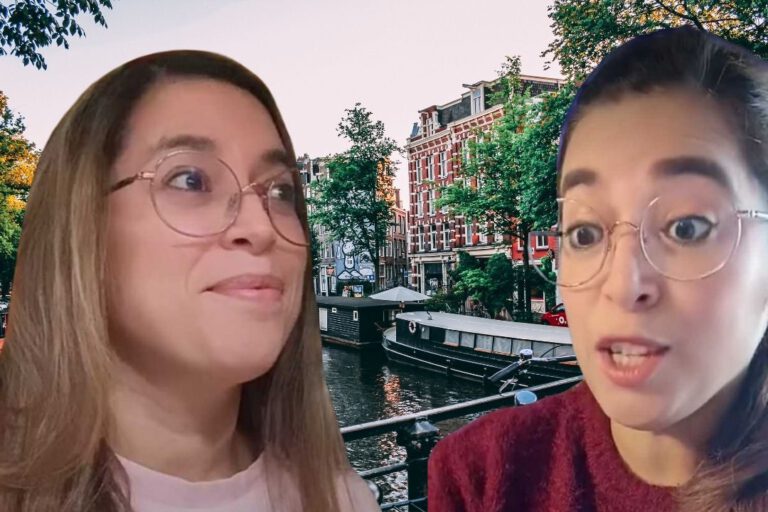
Claudia Arroyo originally comes from Peru, but as her TikTok videos will tell you, she fell for a Dutchie like many of us expats.
Life as a lovepat and mother in the Netherlands certainly has its challenges.
Thankfully, Claudia has risen to them, and she has shared some of her hilarious observations with the world along the way. 👇
As with anyone’s TikTok profile, there’s a lot to unpack when you visit Claudia’s page — but let’s start with some interesting Dutch obsessions she’s noticed…
The Dutch obsession with Buienradar…
I’m glad I’m not only confused by the Dutch’s unyielding trust in this rain radar app.
For example, anyone who has been living in the Netherlands for some time either has heard of (and maybe even experienced — if so, we’re so sorry) the anxiety-inducing circle of death at Dutch birthday parties…
Even more obscure is the Dutch toilet calendar. Is this a thing? Honestly, it doesn’t surprise me when you consider how closely some Dutchies cling to their agendas.
With all that scheduling, it’s probably best to keep yourself and others updated on future business whilst attending to, ahem, toilet business.
While expats certainly experience the Netherlands in different ways, I think there is one aspect of Dutch culture that we all collectively struggle with — is it “de” or “het“????
Some wholesome takes
While Claudia enjoys poking fun at Dutchies, you can also see from her videos that she loves her life as an international in the Netherlands.
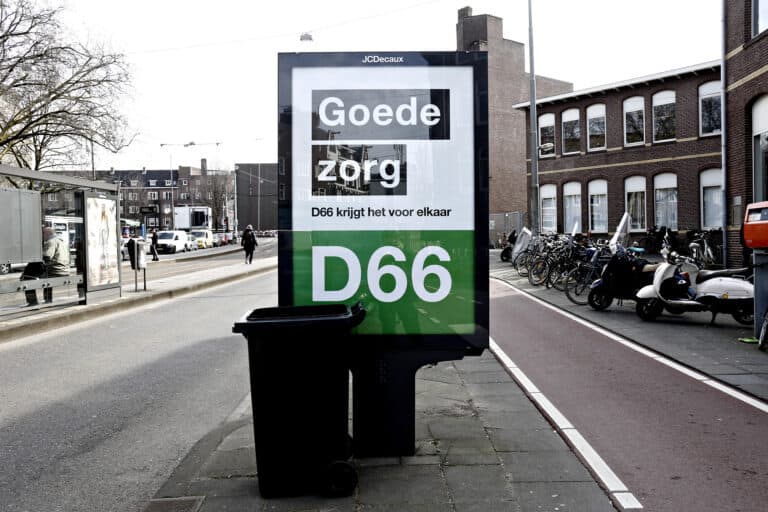
The D66 party headquarters in The Hague was targeted with a firework bomb late last night, leaving the building on Lange Houtstraat visibly damaged.
No one was injured, despite around thirty people being inside at the time, and police have since arrested a suspect, reports RTL Nieuws.
Those present were members of the party’s youth branch, the Jonge Democraten (Young Democrats). They escaped through a rear emergency exit.
‘A cowardly act of intimidation’
Prime Minister and D66 leader Rob Jetten described the attack in an X post as “a cowardly act of intimidation,” adding that a democratic society “will never allow itself to be silenced by violence.”
Een vuurwerkbom door de brievenbus van het partijbureau van D66. Een laffe daad van intimidatie. Voor wie denkt angst aan te kunnen jagen, heb ik een boodschap: wij laten ons in democratisch Nederland nooit het zwijgen opleggen door geweld. Veel dank aan politie en brandweer voor… https://t.co/F9DMMtQ5Td
Translation: A firework bomb was thrown through the letterbox of the D66 party office. A cowardly act of intimidation. To those who think they can instil fear, I have a message: in a democratic country like the Netherlands, we will never allow violence to silence us. Many thanks to the police and fire service for their swift response.
Mayor of The Hague Jan van Zanen called the violence “unacceptable,” saying that “in a democracy, you disagree with words.” He said he was in touch with both Jetten and parliamentary leader Paternotte in the wake of the attack, RTL Nieuws reports.
The Lange Houtstraat office has been targeted before. Last autumn’s far-right riots (triggered by a demonstration on the Malieveld) left the building with smashed windows and €34,000 in damage.
Speaking on the television program Pauw & De Wit, Minister of Foreign Trade and Development Cooperation Sjoerd Sjoerdsma, D66, described the latest perpetrators as “scum of the earth.”
At this time, the police have confirmed one arrest, and the investigation is ongoing.
What are your thoughts on this latest political violence in the Netherlands? Share your thoughts below.