The current number of coronavirus patients in the Netherlands stands at 2994 after RIVM published the latest count of coronavirus cases in the Netherlands for Friday the 20th of March.
This is an increase of 534 patients since the last count. Sadly, 30 people have also died since yesterday. All deaths to date are reported to be between 63 and 95 years of age. It’s likely the number of cases is far higher, however, these are the official figures reported by health officials.
Martin van Rijn is the new Minister for Medical Care
Former PvdA Secretary of State Martin van Rijn will be the new Minister for Medical Care, Prime Minister Rutte announced.It is just for three months and at the request of the cabinet.Van Rijn joins the cabinet on a personal basis, since his party the PvdA isn’t part of the current government (good to see our political parties work together though).
Suspects of criminal offences in the Netherlands have a lower chance of being arrested unless it is absolutely necessary, according to NRC. These measures are taken in response to the coronavirus outbreak.
Necessity would rely on the severity of the offence as well as whether it poses a ‘threat to the legal order.’ The judiciary hopes that these measures will limit risks of the virus spreading, particularly the spread of the virus in penitentiary institutions such as prisons. These measures are described in greater depth in a ‘national continuity plan’ that is circulated through the Public Prosecution Service.
Preparing for a potential lockdown
Additionally, forces are needed in case of a total lockdown. Although Prime Minister Rutte stated on Monday in his speech to the public that a lockdown is currently not in the books, things change each day, and indeed a lockdown may occur — in which case the police force needs to be prepared.
The Rule of Law will be under strain
Especially in times like these, states often resort to a declaration of national emergency (the US has already done so in response to the coronavirus outbreak), in which certain human rights standards can be set aside. The rationale? Protecting the public. However, it is important that these human rights limitations are kept to an absolute minimum.
The National Police notes that for the arrests that do take place, ‘safety on the street’ and an adherence to the ‘rule of law’ are fundamental principles that must be taken into account at all times. This means that an arbitrary exercise of power should not take place and that the law should still be followed.
However, the chairman of the Dutch Police Association, Jan Struijs notes that ‘the rule of law will be under great pressure from the coronavirus in the near future’ as choices will have to be made and vulnerable victims will become the main priority.
And in the courts…
Only the most pressing cases will be heard in court. Most other cases have been stalled. The Public Prosecution Service also iterates that priority will be given to cases concerning issues such as serious violence and those concerning vulnerable victims.
Furthermore, penalties were halted Monday, meaning that community service notices are postponed.
In prisons, leave is no longer possible for the time being
Leave is suspended for soon-to-be-released prisoners who would normally be allowed to return home for the weekend in order to re-adjust to society. This is to prevent people from going back and forth too much, which causes risk of infection. Furthermore, prisoners who are expected to serve short sentences will not be brought to prison for the time being.
As of now, no infections have been reported in prisons. In case this does happen, prisons are planning for containment scenarios to limit the spread of the virus.
Unlike a lot of industries that have been put on pause, prison work has not come to a halt so that prisoners still have activities to partake in to stay occupied.
Follow DutchReview on Facebook for all information about the coronavirus in the Netherlands.
The Dutch King, Willem-Alexander will address the nation tonight at 19.00 in light of the coronavirus outbreak. The last time the King spoke like this was during the MH17 disaster in 2014. The King’s speech will be broadcasted live by NPO 1, NPO Radio 1, NPO and other news platforms including NOS.
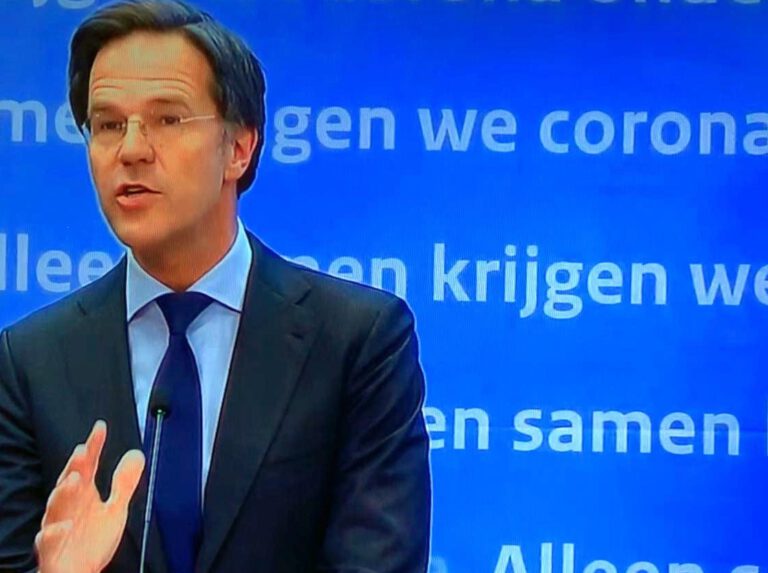
Similarly, Prime Minister Mark Rutte is the first to give a television speech (on Monday) about the pandemic that has swept through the Netherlands since 1973, according to NOS.
In his speech, Rutte told the public that a large part of the public would become infected by the virus, and that the Netherlands as an open country would likely not be under complete lockdown, since realistically the virus will be around for a lot longer and a total lockdown may result in a second wave.
Work visits cancelled
According to the Government Information Service (RVD), the King and Queen (Maxima) had cancelled all their visits till March 21 (though seeing how things are going it is likely that this period might be lengthened). A trip to Lech, Austria for winter sports was also cancelled, RTLNieuws reports.
Although the King’s family is currently in social isolation – like most of us here in the Netherlands, they took a moment to clap for the nationwide applause organised in tribute to healthcare workers in the Netherlands:
Applaus van Koning Willem-Alexander, Koningin Máxima en de Prinsessen Amalia, Alexia en Ariane voor alle zorgmedewerkers, om hen een hart onder de riem te steken in hun strijd tegen het coronavirus en hun inzet voor de gezondheid van iedereen in Nederland. #applausvoordezorgpic.twitter.com/M1gVBmH22e
We’ve created a guide with everything you need to know about the coronavirus in the Netherlands, answering most, if not all questions you might have about the virus. You can also check out our video on the topic.
Follow DutchReview on Facebook for all information about the coronavirus in the Netherlands.
Albert Heijn supermarkets will open from 7-8am each weekday from next week onwards, in order to allow people who are over 70 years of age to do their groceries in safety. The grocery store will not be open to other people during these hours, NOS reports. Other supermarkets have been recommended to do the same by the Minister of Economic Affairs.
Special shopping hour will protect older people from the virus and allow them to get their groceries
Minister Eric Wiebes of Economic Affairs recommended supermarkets in the Netherlands to follow Belgian ones in implementing a special shopping hour for elderly people yesterday, and this morning they have agreed to do so. Not only will this reduce social contact for a group vulnerable to the coronavirus, it will also ensure that older people will be able to get the groceries that they need. That has been made difficult over the past week by our faves, the toilet roll hoarders.
Campaign set up to get healthcare workers some fresh bread (and other groceries)
Relatedly, there has been a campaign set up by Dutch actor Thomas Acda to make sure that healthcare workers get the groceries they need. Their long hours mean that often, supermarkets are closed when they go to work and their shelves are empty when they come back. Acda set up a campaign at his local supermarket, the Jumbo on Weseterstraat in Amsterdam, after a nurse tweeted that he had been unable to get fresh bread for five days. Now, healthcare workers in the area can send an email to the email address in Acda’s tweet below, and volunteers will make sure that their groceries are set aside for them.
Yesterday, Rutte made international news when he visited a supermarket in The Hague and assured fellow shoppers that the Netherlands had enough toilet paper to suffice for ten years of pooping. So, thank goodness for that.
What else could the Netherlands do to make grocery shopping better for the vulnerable in society? Let us know your ideas in the comments below.
To prevent the spread of the coronavirus, schools and daycare centres have been closed for the time being. Children have to stay at home with their parents, who may try to homeschool them as much as possible and also help them with their homework. To so many children out there, these are fun and exciting times, but for some, it is a scary and very unsafe situation.
For children who are emotionally or physically abused, school is a safe haven. Moreover, the school has an important signalling function when children are abused. Signs like bruises and children who withdraw or have difficulty with physical contact always catch the eye of teachers. With strong suspicions of child abuse, it is not uncommon for the teacher to report to Veilig Thuis. With the closure of the schools, the safe harbour and the signal function have now disappeared.
As a society, we now have an obligation, even more so than usual, to keep an eye on this group of children.
Scary times for vulnerable kids
Schools and daycare centres have been closed since 16 March, provided that both parents are not in any of those sectors that are keeping the Netherlands afloat in these difficult times. There may also be a chance of a lockdown in the future but the Prime Minister says that, for now, it is not necessary.
For children who experience domestic violence or abuse, every place that isn’t home such as schools, hobby clubs, the homes of their friends, are generally of great importance. Most children see these places as their “safe” places where they can be carefree children, play and not experience constant tension as they do at home. Now that these places are closed, these kids may feel like their safe havens have been taken from them.
Society has come to a standstill
Try to imagine for a moment that you are a kid with a parent who has an addiction. Now imagine your parent no longer having access to drugs because of the fact that society has come to a standstill. Also try to imagine that you have a parent who is suffering from depression, fear of contamination, anxiety or other psychiatric issues, and their psychologist is absent for a long time due to the coronavirus and can not offer help from a distance. Imagine that recently your parents have been fighting a lot and as a result, decided to get a divorce, but due to the standstill, can only argue, and are forced to tolerate each other since they can’t leave the house.
It is going to be a tough time for the parents and children mentioned above and in some cases it will be an outright hell. For children who already experience violence in the ‘normal’ home situation, the chances are particularly high that in this time of crisis and increased stress, where all resources and ‘escapes’ such as school are out of the question, the violence will increase.
There is so much stress, fear, and uncertainty in the air right now, and still, families have to survive all of this together. Unfortunately, not all families are loving and peaceful havens for their children. In times like these, regular healthcare professionals may not even be an option. Additionally, even if they are available, they may be less accessible than usual. For many people, this period will also bring financial stress. The usual stress relief outlets like the gym, coffee shops and pubs are out of the question, and some parents may turn to the use of violence as a coping strategy. In fact, all the protective factors that can stem the risk of violence are currently off the table.
What can be done to help these kids?
Think about how we can all be there for each other. A small gesture can go a long way. Social distancing is important, but it doesn’t mean that we can not check on our neighbours and loved ones. Offer each other help in the form of a listening ear on the phone, send a message via WhatsApp, or even Facetime. If possible, host the neighbourhood children via FaceTime and tell a story or read them a book. All of this can help relieve a parent of a crucial hour a day. In this way, you can still be there for a child or parent and perhaps reduce the risk of the children being mentally and/or physically abused by their parents.
Furthermore, I hope that the professionals out there, whether therapists or social workers can continue the important work they do via phone calls, video calls, and if their home situation permits, home calls.
If you are seriously worried that your neighbour may be abusing their children, please call Veilig Thuis on 0800-2000. Even from a distance, we can still watch out for each other. While we must all practise social distancing in order to reduce the spread of this virus and also to keep it from getting to friends and relatives who are high-risk, we must also not forget to watch out for the vulnerable members of our community.
And finally, a tribute to everyone who has been working hard and doing their best to keep this wonderful country from drowning. You are the heart of our society and we are eternally grateful to you. Thank you.
Please stay safe and take care of each other. This too will pass.
Minister Bruno Bruins of the Ministry of Health, Welfare and Sports has resigned and handed his letter of resignation to the King. Minister De Jonge, of the same ministry, will temporarily take over his duties.
Minister Bruins was unwell yesterday
Yesterday he became unwell during the debate about the corona crisis. He said afterwards that it was from exhaustion.
His ministry announced earlier today that he would be working from home for the next few days because he needed his rest. Later, doctors advised him to step down from his post.
Since Bruins (VVD) has to rest for a few weeks. He decided to step down ‘in the national interest’ because the corona crisis requires full commitment.
New American research shows that the coronavirus can survive for several days on certain surfaces under ideal conditions.
For example, on stainless steel and plastic, the virus can survive for up to 72 hours, reports NOS.
The research was done by the National Institute of Allergy and Infectious Disease, and it measured, in a laboratory setting, how long can the virus survive on different surfaces, such as copper, stainless steel, cardboard, plastic, as well as in its airborne form. By survival, the scientists mean if the virus can continue to multiply cells.
Eric Van Gorp, virologist at the Erasmus Medical Centre, states that the research confirms what is already known, namely that the virus can spread through direct contact. This information is also on the RIVM website, which confirms that the virus can survive for hours or up to days, depending on the different circumstances and surfaces it is on.
Main infection route is airborne
Van Gorp states that despite its survival on certain surfaces, the virus is nevertheless spread the most through the air. He recommends sneezing in the elbow, social distancing and of course, washing your hands.
Outside of a laboratory setting, it is not known for certain how long does the virus survive on surfaces such as shopping carts, light switches or door handles. Van Gorp says that there are certain factors in play, such as higher temperature, low humidity and wind that can decrease the life-span of the virus.
It’s unknown, however, based on the American research, just how much the virus survives outside of the body compared to the flu or the common cold, as the research focused strictly on a comparison with the SARS virus.
Check out our coronavirus guide and video
If you have any questions about the coronavirus in the Netherlands, you can check out our guide, updated daily. You can also check out our informational video on the topic.
The RIVM has just published the latest count of coronavirus cases in the Netherlands for Thursday the 19th of March, the current number stands at 2460. This is an increase of 409 patients since the last count. Sadly, 18 people have also perished since yesterday (aged between 63 and 95 years as is reported).*
Next week, 500 to 1000 coronavirus patients are expected to be taken into intensive care units at Dutch hospitals
Preparations are currently underway to prepare hospitals for this surge. The majority of these patients are expected to be admitted to hospitals in Brabant, NOS reports.
As of last night, there were 177 patients in the Netherlands in intensive care units as a result of coronavirus, but following the patterns that have been observed in other countries, the Netherlands can expect a large increase in this number next week.
Majority of coronavirus patients will need intensive care in North-Brabant
Because the majority of these cases is expected to occur in North-Brabant, hospitals in the province have begun to prepare for the surge by transferring patients with coronavirus who are in intensive care to other hospitals outside the region. The Amphia hospital in Breda has transferred five of its thirteen coronavirus patients to a hospital outside of Brabant, and the Elisabeth-TweeSteden Hospital in Tilburg is also looking into transferring more patients to hospitals outside the province.
Patients transferred to other hospitals to make room for an expected surge in coronavirus patients
It’s not that these hospitals don’t currently have enough resources to treat patients with coronavirus: instead, this is a preventative measure before next week’s expected surge in patients. Because most of the increase is expected in Brabant, it makes sense to free up beds there. “We do this as a precaution. It’s not that we can’t take it anymore, but we expect a new wave of patients to come next week,” says Diederik Gommers in an interview with NOS, a representative from the Dutch Association for Intensive Care.
Does the Netherlands have enough intensive care beds to deal with coronavirus?
Currently, there are 575 intensive care places ready for coronavirus patients in the Netherlands. This can be expanded to 1500 during the crisis phase of the outbreak- at least in theory. However, over 500 respiratory machines need to be found in order for that plan to come to fruition.
Follow DutchReview on Facebook for more information about the coronavirus in the Netherlands.
*As we’ve reported earlier, the actual number of cases is actually higher in reality. Why will DutchReview keep reporting the official number then? Well, it signals a trend and direction of the pandemic, that’s one thing. The number of deaths also is relevant. And we’re also attaching other news about coronavirus in the Netherlands to these articles, so you know you’re getting an update from DutchReview somewhere between 14 and 15 pm.
We can’t vaccinate against coronavirus, but we can give you a good old-fashioned dose of good news! In these difficult times, there are little nuggets of positivity to remind you that it’s not all dark and gloomy. There are always nice things happening — and this virus isn’t going to last forever.
Coronavirus is ubiquitous around the globe — its worrisome numbers are slapped across all media outlets, it dominates conversations, and is the only thought on everyone’s mind. COVID-19 tore open the door and become a part of our daily lives.
Unsurprisingly, the current mood is pretty low: anxiety, worry and fear have seemingly plagued the world. But in such times, it’s comforting to know that there are good things still happening.
Like the fact that over 85,000 people confirmed to have the virus have been cured — and counting. That’s not even taking into account everyone with symptoms so mild they were never tested.
Let’s jump into some of the good news around coronavirus!
Progress is being made
There’s a lot of work being done behind the scenes to limit the damage of the virus in this unprecedented situation. Globally, pharmaceutical companies around the world are joining forces to develop a vaccine against COVID-19. Vaccines are being developed, treatment options are being discovered: the scientific community have turned to fight the situation at large.
Meanwhile, in the Netherlands, there have also been scientific developments:
A group of 10 scientists at Erasmus MC and Utrecht University claim to have discovered an antibodyagainst COVID-19. This antibody has not as yet been tested on humans, and this process could take months. We don’t know as yet whether it will be effective, but it is a promising step in the right direction.
Een wereldprimeur van het Erasmus MC en de Universiteit Utrecht: zij vonden een antilichaam tegen COVID-19. https://t.co/VCEMbC8WvL A human monoclonal 1 antibody blocking SARS-CoV-2 infection https://t.co/AHdQmnuv7b
And it’s nice to see both the community (whether it’s on a local, national or global level) coming together and helping out. Take #CoronaHulp as an example.
In the Netherlands, people have taken to Twitter with the hashtag #CoronaHulp, where you can make a call for help or offer it over the coronavirus outbreak and the measures taken to prevent it from spreading.
Ik ben trots hoe liefdevol en vlot m’n irl en online omgeving reageert op de nieuwe anti-corona-maatregelen. De clubs van m’n dochters gelastten meteen alles af. Vrienden vroegen of ik hulp nodig had (superlief maar nu niet nodig). En er is #coronahulp. We zijn ons beste zelf 💕
And last Tuesday in the Netherlands, a message spread on social media calling upon people to applaud at 8 PM for those whose collective efforts have allowed society to continue to function in the times of the coronavirus outbreak. A standing ovation could be heard over in multiple cities. In one word: heartwarming.
A moving moment: The 'national applause' for health care workers in the Netherlands. I hope the solidarity will last when things get tougher. pic.twitter.com/4j7cSkkZ8S
And although a lot of stores and businesses had to close in adherence to measures implemented to prevent the spread of the virus, some good was still done. The flower industry took a hit from these measures — but unsold flowers didn’t go to waste. They are being delivered to hospitals and care homes to workers for all that they are doing to keep society functioning in light of all the complications that have arisen.
Also, three Chinese airlines pitched in anddonated tens of thousands of mouth masksand gloves to KLM. These items were then distributed throughout hospitals in the Netherlands. It just goes to show that international cooperation is actually possible.
Hopefully, a read through this article gave you a few good vibes to get through another day.
Seen any other positive things happening during these dark days? We love to hear about them!
Are you reading and checking every single news update on coronavirus and all the illness it’s causing? Thinking of locking your front door and not re-emerging until all this is over? Feeling worried about loved ones?
While being cautious is definitely a well-founded reaction to the current situation, developing anxiety over coronavirus is not. Here’s what you can do to overcome this anxiety and keep your mental health in control.
Remind yourself of the statistics
The first thing you need to keep in mind is that most coronavirus patients recover. In the Netherlands the mortality rate is just over 2.5% — that means 97.5% of patients recover.
Furthermore, it’s likely that the recovery rate is even higher because a number of patients have such mild symptoms that they are not tested. Additionally, this virus appears to be relatively rare and mild in children – so heave a breath of relief for that.
Be aware, but not suspicious
Remember if someone is coughing doesn’t mean they are suffering from coronavirus. The disease appearing in the Netherlands doesn’t mean that common colds have disappeared.
RIVM advises that coronavirus has the symptoms of a cold. Everyone should be self-isolating anyway, but just because you have these symptoms doesn’t mean you’re infected. Continue to stay at home, keep your distance from others, and let the illness run its course.
At this stage, you don’t even need to call a GP unless your fever is higher than 38 degrees Celsius, or you are coughing or having difficulty breathing.
Stay informed, but limit your news consumption
Staying informed of the situation is necessary, so read numbers and check which areas are most affected. But set boundaries and limit how often you tune in. Do not click and read everything you see with the word coronavirus. And make sure you are checking only reliable sources like the ones below, so you’re not seeing sensationalised news.
And let’s face it, it’s not fun either. Keep reminding yourself that you are fully prepared to help yourself and your family members in the worst situation. Try to take deep breaths and relax, or use distraction techniques to keep coronavirus off your mind. Remember, there’s no correlation between how worried you are and how at-risk you are.
How to de-stress in the face of coronavirus
Practice yoga or any physical exercise at home. Simple body stretching exercises can help you to relax your muscles.
Try meditation or breathing exercises. Meditation is said to be the best exercise for when you need to simply shut down your thoughts.
Live in the present — try not to overthink anything. Instead, look at the beautiful plant or listen to your favourite song with full concentration.
Do your hobby, or find time to do something that you love to do. It could be reading a book, gardening, painting, playing music, etc.
Connect with family and friends over text, call, and video chats. Reinforce connections and stay in touch.
Channel your worries into three actionable goals
Protecting yourself
Wash your hands with soap and water often. Keep an alcohol-based sanitizer when soap and water are not available. Never touch your eyes, mouth or nose with unclean hands. Follow no-touch greetings, like waving instead of shaking hands, to avoid sharing germs.
Protecting your loved ones and others
Do sneeze or cough into your elbows to reduce the spread of germs. Clean your house regularly and try to sanitise surfaces as much as possible.
Protecting your community
Avoid travelling or visiting crowded places whether you’re sick or healthy. Practice self-isolation and only go out where absolutely necessary, like for grocery-shopping. If you have any symptoms, don’t go out at all — ask others for help instead. Do not spread misinformation.
If you do have symptoms, call your GP and follow their advice. Do not go to the doctor’s office unless you have been advised toby your GP. This reduces the risk of you contaminating others, including healthcare professionals.
Let us take the initiative to give awesome ideas to people around the world to stay happy. Post your pictures dealing with your worries and anxieties to spread awareness #saynotocoronaworry. Positive mental composure boosts immunity, and that helps.
Have you been experiencing anxiety around coronavirus in the Netherlands? What techniques have helped you? Tell us in the comments below!
While you’re at it, follow DutchReview on Facebook for up-to-date information about coronavirus in the Netherlands.