A 9-year-old boy from Zeeland fell into a coma for three days last month — now, the cause for his sudden decline in health may be linked to cannabis found in Haribos.
On May 23, what began as a normal, carefree day for the boy quickly spiralled into nausea, dizziness, and the feeling he might pass out.
According toRTL, doctors ran scans and tests but the cause of his symptoms remained a total mystery until test results revealed something unexpected in his urine: cannabis.
Three days in a coma
The child spent three days in a coma, unresponsive in intensive care. Thankfully, he woke up and was discharged on Monday, May 26.
But there was still one burning question: how did cannabis get into his system? His mum was baffled as the only people around him were his grandfather and aunt.
Enter: the Haribo plot twist
Fast-forward to May 29 and everything suddenly clicked.
The NVWA (that’s the Dutch Food and Consumer Product Safety Authority) issued a warning: a batch of Haribo Happy Cola F!ZZ candy was found to contain, you guessed it: cannabis.
This came after two children and an adult in Twente also fell ill. One of the children had also ended up in a coma.
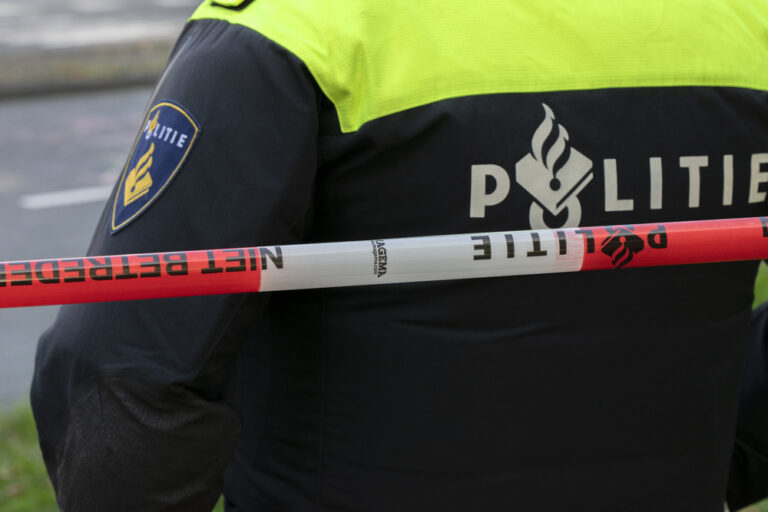
The boy’s mum suddenly had a lightbulb moment, her son had eaten Haribos the afternoon he fell ill. She rang the police again, but by then, the sweets were long gone, the wrappers tossed, and stomachs emptied.
Haribo responds with a firm ‘not us’
The boy is back in school but still battling nightmares and trauma. His mum is shaken and demanding answers. In her words to RTL, “Drugs in children’s candy is too absurd for words.”
Haribo says the Zeeland case wasn’t on their radar. They have since sent a batch of suspect sweets off for independent testing but received an all-clear.
Now, they’re teaming up with the authorities to get to the bottom of this mystery.
Meanwhile, the NVWA says it’s received more reports from across the country. But due to privacy rules, they’re staying tight-lipped on the details.
Why should refugees have to take integration courses, but not expats? This is the question Amsterdam’s city council wants to address this week.
And how will they do this? By voting on whether or not expats (highly-skilled migrants) in Amsterdam should have to take a “citizenship course.”
According to the NRC, the course has been proposed by PvdA member Lian Heinhuis and will be voted on by the council this week.
What would this course even look like?
The idea is that participants in the course would receive Dutch language lessons, explanations about Dutch culture, and how to navigate practical matters such as going to the doctor and traffic rules — to be fair, that sounds pretty helpful.
The course would also be somehow linked to neighbourhood initiatives and volunteer organisations in order to further encourage integration with the local community.
Who would have to take the course?
So far, it sounds like the course would be specifically targeted at highly-skilled expats who receive the 30% ruling.
These are migrants who are hired by Dutch companies and brought to the Netherlands due to their specific skill set.
In conversation with the NRC, Heinhuis questions why these specific expats should benefit from the 30% ruling, without also being expected to integrate:
“Why should migrants who fled a war be required to integrate and migrants with a generous salary not? Nothing is expected of expats, in fact: they get a 30% tax reduction for five years.”
To “protect the social character of Amsterdam”
As of 2022, there were at least 90,000 highly-skilled migrants in Amsterdam, and according to research agency Decisio, this number increases by 10% each year.
This amounts to ten times more expats living in the city than asylum seekers or status holders, reports the NRC.
Heinhuis believes a “citizenship course” for these expats will help “protect the social character of Amsterdam and ensure that people really have contact. The expat is also a human being, with more needs than work and income.”
And Amsterdam’s local residents agree — at least when it comes to “protecting the social character.”
In a 2023 survey carried out by AT5, expats were described as “a plague” and “parasites” who “drive up house prices” and “refuse to learn Dutch.”
The question is, would a course be able to fix these issues? Let’s see what the city decides.
What do you think, should expats in Amsterdam follow such a course? Tell us your thoughts in the comments below.
Like with most things, the Dutch have adopted a direct, no-nonsense approach tosex education in the Netherlands. Of course, that’s very different from sex education in America.
The Dutch are generally open and liberal when it comes to these sorts of subjects, and sex is definitely not taboo here. The approach to sexual education in America can be quite a shock when compared to the more liberal Dutch one.
America’s sex education is rather… unique
I remember, at about age 12, being herded into the school auditorium, along with all the other girls my age, and shown a sex education film.
It was about how a girl’s body matures, explaining the menstrual cycle, and how pregnancy occurs. It was all very technical, and it was easy to think the entire thing was something that took place in a lab somewhere. 🔬
Yup, it’s just like in the movies. Image: Depositphotos
We were also instructed on the dangers of sex, especially how it could lead to acquiring any one of a number of nasty diseases. Naturally, I was horrified.
Let me tell you: The American approach is not exactly inspiring to early pubescent youth beginning to explore their sexuality andthose awkward first relationships. But that’s how things were taught in the US (if at all).
So, how about sex education in the Netherlands?
The Netherlands has a different attitude toward sex — one that emphasises teaching children that sex is about loving relationships, both with others and with themselves.
Not only that, it can actually be fun — an idea that would shock most US school boards and cause all the Karens to start freaking out.
Either way, sex education in the Netherlands starts at the ripe old age of four, during kindergarten, when children are taught about things such as their bodies, respect, and consent.
Of course, this all happens in an age-appropriate manner: with lots of books, images, and great teachers. 👇
Needless to say, when I got a notice from my 7-year-old daughter’s Dutch school that the following week’s theme was to be Lentekriebels (Spring Fever), I was excited. It reminded me of one more reason I love living in the Netherlands.
Rather than sticking their heads in the sand and advocating abstinence-only — a policy that has been proven to be a dismal failure — the Dutch realise that human sexuality is a perfectly natural part of life.
They also realise that the more resources children are equipped with, the better off they will be. That’s why open conversations are encouraged across all ages, in and outside of the classroom. 🤗
Dutch parenting and views on sex education at home
Sex education in the Netherlands is viewed as a combined effort between the youth’s school and the parents.
Unlike the days of my youth, most Dutch teens feel able to speak openly with their parents about sex.
They do not have to resort to sneaking around behind their parents’ backs, reduced to awkward fumbling in the back of Dad’s car.
Most Dutch parents will happily let their teenager spend time with their partner. Image: Depositphotos
It’s also not uncommon in a Dutch household to find your daughter or son’s partner sitting at the breakfast table in the morning.
Two-thirds of teens between 15 and 17 report that their parents allow their steady partners to share their bedroom for an overnight stay.
As one parent I spoke with put it, “I’d rather have my daughter at home where I can be there for her if she needs me, and I can get to know her boyfriend better.”
Teenage pregnancy rates in the Netherlands
You guessed it: The teenage pregnancy and birth rates in the Netherlands are very low.
In 2020 alone, the Netherlands had one of the lowest teen birth rates in the European Union, and only around 2.5 girls per 1,000 aged 15-19 had a baby that year.
In the USA, which has the highest teenage birth rate in the developed world, it is more than 6 times higher than the Netherlands, with 15.4 births for every 1,000 girls aged 15-19.
So yes, it’s obvious that the Dutch approach to sex education is the one that works. 👏🏼
Dutch teens mature at a healthier rate. Image: Freepik
Dutch teens also tend to have their first sexual experience slightly later than their American counterparts. When they do finally have sex, the majority of Dutch report it as having been a positive, fun experience.
In contrast, nearly 70% of American teens say they felt they should have waited longer before having sex.
Why is that? Well, Dutch sex education classes teach children to respect others’ boundaries, stressing the importance of sex in the context of a respectful, loving relationship. One of the earliest lessons revolves around consent.
Children are also taught how to say “no” until they feel they are ready for sex, to decide what and how much they want, to tell their partner what feels good to them, and to act responsibly both in terms of contraception and respect for their partner.
Easy access to contraception and birth control
The Dutch youth is instructed on the use of contraceptives from an early age, and condoms are readily available from vending machines in many public bathrooms, in stores and schools.
The result? Teens here have considerably lower rates of sexually transmitted infections compared with the US and Britain. In addition, the contraceptive pill is available for free to any girl under age 21.
Dutch teens are given the freedom to talk about safe sex. Image: Freepik
Two different views of teenage sexuality
Amy T. Schalet, author of “Not Under My Roof: Parents, Teens, and the Culture of Sex“, a book about the differences between American and Dutch norms regarding teenage sexuality, indicates the cultural differences between the two countries have something to do with a more mature view of sexuality.
“There’s a real gender component there, and that’s also where the Dutch, I think, do things differently,” she says.
“They leave room for boys to think of themselves as romantic, of having feelings. And it’s not that American boys aren’t romantic, it’s that everything in their culture tells them that they shouldn’t be.”
Dutch sex education also includes topics such as gender identity and homosexuality. Children here learn early that it is perfectly natural for two men or two women to be in love.
I can’t help but think that this type of early training can help prevent the many hate crimes and acts of violence against the LGBTQIA+ community.
In addition to this, no subject regarding sex is taboo in Dutch sex ed classes, particularly in the later grades, where it is not unusual to find discussions on subjects such as masturbation and oral sex.
Girls are not expected to take a passive role in sexual negotiations either. They are taught they can make choices about their own sexuality, and not to feel pressured by boys or their friends.
In fact, Dutch women are known to be very forthright about what it is they want in bed. Girls learn their sexual desires are perfectly natural, and boys are encouraged to embrace their emotions and romantic feelings.
The Dutch model of sex education is a great example of how to deal with the topic. While it might not be applicable everywhere due to cultural barriers, it can still serve as an inspiring example for other nations.
If this sex education model were adopted in other countries, I can only think the world would be a healthier, more satisfying place.
What do you think of all of this? Tell us all about it in the comments below!
The Netherlands is famously known for being a die-hard football nation, but did you know that the country also offers a plethora of international sports?
Every country has at least one sport that is considered to be an intrinsic part of its culture and society.
You’d actually be surprised to know that your local sports club will offer more than your usual mix of physical activities!
From rugby to floorball (yes, floorball), here are 15 international sports that any superjock or rookie can find in the Netherlands. 👇
1. Netball
Believe it or not, the good feeling you get when you sink a shot into a hoop isn’t exclusive to basketball.
Netball involves two teams of seven players who pass a ball around with the ultimate goal of shooting it into a net.
Sound familiar? Well, there’s a slight alteration. With this sport, there’s no dribbling, no backboard, no wild Stephen Curry fans, and a little less bumping and shoving. 😉
The general rule of the game is that players can take one step before passing and must shoot within three seconds. Super challenging!
📍Where can I play netball in the Netherlands? The Netherlands is currently booming with netball clubs. In fact, four major cities offer the sport: Rotterdam, Utrecht, The Hague, and Amsterdam.
2. Gridiron (American football)
Hut! Hut! Hut! What? Image: Pixabay
If you’ve watched at least one All-American Hollywood film from the 2000s, then you should already be acquainted with American football — or at least the concept of it. 🏈
Gridiron football became a leading spectator sport in the United States and Canada. It achieved peak popularity, particularly amongst the US crowd, and is now a forever favourite for colleges and universities in the country.
While gridiron has not yet been taken up by the rest of the world to the same extent as other sports, it certainly caught the eye of the Dutch.
📍 Where can I play gridiron in the Netherlands? These days, you can find a number of clubs across the country that offer American Football, from the capital city of Amsterdam all the way to Maastricht.
3. Rugby
Rugby in the Netherlands is no joke… Image: Pixabay
Are you not averse to being pushed, tossed, and kicked around like a beach ball? Or, in simpler terms, do you like pain? Then you’ll find pleasure in playing rugby. 😬
As any non-athletic, sissy-ish girl would describe the British sport (aka, the writer), it involves two teams of 15 players who run to opposite sides of a massive arena with the ultimate goal of flinging the ball to the ground.
A long-lost child of rugby and American football, Australian football or “footy”, is one of the fastest-paced games in the world — and the Dutch love to play it! 🤩
It’s a contact sport that requires two teams of 18 players, and the general objective is to score by kicking the ball between four goalposts.
So, if you’re one to enjoy the familiar, ruthless ways of rugby and American football, then chances are you’d like footy as well! It continues to grow amongst the Dutch crowd.
📍 Where can I play Australian football in the Netherlands? If you’re looking to join a team and get to know the sport, there are several cities to consider.
5. Hurling
Who would’ve thought hurling would be an admired sport in the Netherlands? Image: Depositphotos
Most commonly recognised as an Irish pastime, hurling is quite the ancient sport, with Irishmen playing it as far back as 1272 BC! 😲
Hurling scratches a similar itch to field hockey and lacrosse, with it being a stick-and-ball sport.
It calls for two teams of 15 players, who compete to score by driving the ball (concrete in weight and texture) through a goal across a large field.
While it’s certainly long in the tooth, it’s also said to be the world’s fastest field game. The ball can travel up to a whopping 180 km per hour in a single match!
Despite cricket’s polite reputation, quite some sledging goes on. Image: Pixabay
Ah, cricket. Not quite yet the ultimate global sport — but still the second most popular in the world. In fact, in the few countries where it is played (the Netherlands included), cricket is worshipped like a religion.
Introduced by the Brits, it’s a strategic game played by two teams of 11 players, with one side batting a ball to score runs and the other on the field trying to stop their opponent from scoring.
📍 Where can I play cricket in the Netherlands? The Dutch adopted the sport from the Brits, and it can now be found in various clubs across the country. So, if you’re seriously considering playing it, it’s high time to catch up on all the latest Cricket jargon.
7. Lacrosse
Lacrosse and hockey go hand in hand, hence why it’s so popular in the Netherlands! Image: Depositphotos
A sport that’s swiftly taking the world by storm, lacrosse requires as much finesse and trickery as it does strength and agility.
Many parts of lacrosse are akin to hockey, so much so that it’s often said to be “hockey on land”. It originated as a Native American sport, where it used to be a battle between hundreds of tribesmen in the days of yore.
Now, it’s competitively played by two teams of ten players who master a racket-like stick (or crosse) to throw, catch, and carry a ball down a large field and into the opposing goal.
Back in the day, floorball had quite a popular rep amongst Dutch high schools. Commonly called “uni-hockey”, it was often played in P.E. classes during the cold season.
However, the sport never quite gained the same traction in the Netherlands as it did with its Swedish founders. It’s almost equivalent to ball or floor hockey, but is slightly easier to learn and requires lighter equipment.
📍 Where can I play floorball in the Netherlands? Whether you’re looking to relive your days as a floorball top dog or simply want to become one, you might be interested to know the Netherlands is heaving with floorball clubs.
9. Softball
The Netherlands even has their own national softball team! Image: Pixabay
Many people often wonder why baseball is such a crowd-pleaser. In short, the sport perfectly embodies that light-hearted team spirit, and softball easily echoes this.
While softball may not be as mainstream as baseball, it’s still a respected sport in its own right.
First introduced in the US, the game requires two teams of nine players, and the objective is almost the same as baseball, with a few minor differences.
Softballs are larger than baseballs, the pitches are always thrown underhand instead of overhand, and a softball field is generally smaller than that of baseball.
📍 Where can I play softball in the Netherlands? In Europe, the Netherlands is a top-ranked country in softball leagues. That being said, clubs can be found literally anywhere, so it’s time to grab a bat and swing for the fences.
The speed of the game, the intense reflex and skills, and the supreme feeling of doing a jump smash — there are so many reasons why badminton is such a fashionable sport.
It’s a game that doesn’t dominate for being the biggest, but more for its control and technique. It’s one of the only sports out there where you can go from defending to attacking in a matter of seconds. 😎
Played in either doubles or singles, the object is to score points by striking a shuttlecock with a racket over the net. You’re deemed the winner once the shuttlecock lands on the ground of the opposing courtside.
📍 Where can I play badminton in the Netherlands? Last year marked 90 years of badminton in the Netherlands, and the fact that this is publicly known shows how much the Dutch love the game. Regardless of your city, there’s sure to be at least one badminton club nearby.
11. Field Hockey
In the Netherlands, field hockey isn’t just a sport anymore. It’s a way of life. Image: Depositphotos
Despite little sports coverage, field hockey is actually the second most popular sport in the Netherlands, right after football, of course. In fact, about 350,000 Dutch people enjoy playing the sport, which is staggering for such a small country.
Field hockey is an outdoor game played by two teams of 11 players, who each use sticks to hit and aim a ball into their opponent’s goal across the field.
Considering its reputation for being one of the most skill-based games out there, it’s no wonder that it’s so popular, and the Dutch know that feeling of scoring a goal and the buzz of the crowd all too well. 🤙
📍 Where can I play field hockey in the Netherlands? While you might not see much of the sport in action on your television screen, the Netherlands does offer heaps of field hockey clubs to attend in person, 320 to be exact.
It’s widely known that boating is a sought-after pastime amongst the Dutch. One particular time when they make great use of their inextricable link to water is through rowing!
Rowing is one of the oldest and most prestigious sports worldwide, first introduced by the Egyptians as early as 1430 BC.
While the concept of it is quite simple, actually doing it is anything but. It involves pushing a boat from one point to another as fast as you can using wooden paddles (or oars).
The Netherlands is bursting at the seams when it comes to rowing clubs — and it’s not the least bit surprising. Navigating the ways of the water just seems to be in their blood. 🚣
📍 Where can I do rowing in the Netherlands? There are 68 rowing clubs in the Netherlands, with 20 specifically made for students!
13. Capoeira
Capoeira is quite the crowd-pleaser in the Netherlands! Image: Depositphotos
It’s not often that you get to combine your love for dancing with some sort of self-defence, so one might be thrilled to discover the Netherlands offers just that. 💃
Capoeira is a Brazilian martial art disguised as a dance that’s performed to musical instruments and traditional songs from Brazil. It consists of specific offensive and defensive movements, from kicks to sweeps, as well as acrobatics.
Unlike in other martial arts, the person doing it is constantly in motion. So, let’s just say you’re sure to get a really good workout from it.
📍 Where can I do capoeira in the Netherlands? While capoeira groups in the country can be scarce, there are a number of places for you to enhance your dance-fighting skills.
14. Judo
Fun fact: The Japanese named the sport Judo because it means “gentle”. Image: Depositphotos
While we’re on the topic of self-defence, Judo is a universally practised Japanese martial art that helps people develop strength, flexibility, agility, balance, and endurance.
There are several competitive moves used in Judo, some include throwing, pinning down, and forcing a submission through a joint lock or a choke.
One of the sport’s most notable benefits is that it covers techniques that can be performed by any average person. You don’t see many 70-year-olds wrestling, but you do see them doing Judo! 😉
📍 Where can I do judo in the Netherlands? The sport continues to gain an international reputation, and the Netherlands, in particular, has a rich history of Judo Olympic champions. It’s been popular in the country since the ’60s and continues to fill up the yellow pages to this day.
15. Motocross
The Dutch have mastered the art of motocross! Image: Depositphotos
While motocross isn’t as accessible to the general public as mainstream sports, like basketball or football, it still holds a special place for the small community of rad racers.
In motocross, participants ride motorcycles, typically over dirt terrain, on courses that stretch from one to three miles long. It’s a physically demanding sport that requires you to throw down all the biggest and gnarliest tricks. 🏍️
New talent in the Netherlands continues to push the sport forward, with some of the world’s most elite dirt bike racers being Dutch.
As a country that breeds some of the most talented athletes in the world, it’s no wonder the Dutch love sports as much as they do. Naturally, we have internationals to thank for bringing such a diverse sporting world to the land of orange.
Have you played any of these sports in the Netherlands? Tell us in the comments below! 👇
If you’re still reeling from this week’s nationwide train strike, we’ve got more bad news chugging down the tracks: there’s another strike scheduled for this Friday (June 13). 😬
According to the NOS, the planned strike will see NS workers in the north and south of the Netherlands walking off the job at 4 AM on Friday morning.
Here’s what you can expect. 👇
Some trains will be cancelled
While this strike officially targets the northern and southern regions of the Netherlands, don’t be fooled by the “regional” label.
Unlike Tuesday’s regional strike, which quickly escalated into a nationwide shutdown, Friday’s strike is expected to follow a set timetable. However, disruption is still likely.
Plus, when strikes affect key regions, the NS often chooses a total cancellation over trying to wrangle in the rail chaos.
Friday the strike will affect the provinces of Groningen, Friesland, Drenthe, Overijssel, Flevoland and part of Gelderland. In the southern Netherlands, there are no trains in the provinces of Zeeland, North Brabant and Limburg.
For internationals experiencing their first combo of Dutch transport strikes and Dutch heatwaves: stock up on water, charge your phone for endless route-checking, and maybe reconsider any Friday travel plans.
The good news? NS expects normal service from Saturday onwards.
No NS trains in the North and South of the Netherlands on June 13
In their latest update on 11 June 2025 at 8:45 PM, NS announced that due to a regional strike, no trains will run in large parts of the north and south of the Netherlands on Friday, 13 June. This is an official update from NS, and it remains to be seen how the situation will actually unfold.
For the rest of the Netherlands, NS will try to run the normal timetable as much as possible. The travel planner was updated on Thursday evening for travel on Friday. Therefore, check the travel planner in the NS app for up-to-date travel information.
International trains
NS also states that international trains will run on 13 June, although they expect fewer EuroCity services than usual. According to NS, EuroCity will only be accessible to passengers with an international ticket on that day.
Travel snobs rejoice, the Eurostar train service between Amsterdam and London is getting a serious upgrade. 💪
From September 9, Eurostar will step up its game, offering four direct trips per day from Amsterdam Centraal to London St Pancras.
And mark your calendars, because by mid‑December, a fifth daily service is expected to kick off.
But that’s not all
According to the NOS, the demand for greener, cross‑border train travel is surging, and the numbers don’t lie. In 2024 alone, Eurostar carried a whopping 19.5 million passengers.
This means that the company is investing big in rail, aiming to roll out an Amsterdam–Brussels–Geneva route for us lucky ducks by 2030.
Those living in London will also benefit, with direct services from London to Frankfurt and Geneva also in the works.
More routes also mean more trains. By 2030, the company plans to expand its fleet from 50 to 67 trains, gearing up for even more frequent trips.
So, planning a trip to see Big Ben this year? Forget the planes, it’s time for trains to shine. 😎
If there’s one thing you can be certain about in the Netherlands, it’s that if anyone is inconvenienced by a train issue, refund requests are going to be made. 💰
And with strikes essentially shutting down trains across the country yesterday and last Friday, the NS is feeling the burn.
In a move that is typically Dutch, tens of thousands of people across the country are sticking out a hand and demanding compensation.
Ok, so… how can I make a claim?
You may not be Dutch, but you’re certainly trying to integrate, right? Here’s what we know about how to make a claim:
If you were unable to take a train due to the strike and instead had to travel by car, bus, or taxi, then you are eligible to make a claim using this form.
(Just know that you can only receive a maximum of €25 back. 👀💸)
However, that’s not all, because you can also ask for a refund on your ticket if you’ve already paid for one.
Was your delay longer than 60 minutes? We’re going to say yes, given there was a nationwide strike. In this case, you can get your ticket refunded using the Geld Terug bij Vertraging (money back for delays) scheme.
Thousands of claims, thousands in euros
Speaking with RTL Nieuws, a spokesperson for the NS has confirmed that the company has indeed received thousands of declarations so far.
Right now, with refund requests still flowing in, the company can’t give any concrete numbers; however, they do share a foreboding message: “People can submit the claims on the strike days, and there may be more strikes coming.”
Yikes. Keep those refund links handy and perhaps look into carpool options.
Want more juicy Dutch tidbits, quirky culture bites, and behind-the-scenes snippets? 🎉 Follow us on Instagram and TikTok — we’ve got plenty more where that came from. 👀🇳🇱💃
You’re about to go from needing a jumper to desperately searching for that one fan you bought from Blokker last summer.
A “Spanish plume” is bringing scorching temperatures to the Netherlands — and it’s a peak Dutch summer experience.
After days of cool, changeable weather, the Netherlands is about to enjoy (or endure) a heatwave, with temperatures potentially hitting 30 degrees on Friday. 🥵
A Spanish what now?
Meteorologists are calling it the “Spanish plume” — a bubble of warm air travelling northward from Spain towards the Netherlands.
Because apparently, even our weather needs a dramatic European backstory.
Wednesday will ease us in gently with dry conditions, sunny spells, and temperatures reaching 18 to 24 degrees.
Thursday cranks things up with temperatures sitting between 23 and 29 degrees and plenty of sunshine, though there’s a small chance of thunderstorms in the southwest.
On Friday, 30 degrees hits
Friday is when things will get properly toasty. Inland areas could see 30 degrees or higher, creating muggy, sweltering conditions.
However, if you decide to ride it out on a terrace, just know that this heat might trigger some late afternoon thunderstorms. After all, the Netherlands can’t just have nice weather without adding some drama.
This heat wave is quintessentially Dutch — intense but brief.
Saturday will be slightly less scorching but still uncomfortably humid, with more showers and potential thunderstorms rolling across the country.
By Sunday, temperatures will drop back to a more civilised 22 degrees with mostly dry conditions and regular sunshine. Many will find this far more pleasant than Friday and Saturday’s sticky heat.
For internationals experiencing their first Dutch heatwave, a heads-up: most Dutch homes lack air conditioning.
Stock up on fans and cold drinks, prepare for every terrace in the country to be absolutely packed, and know that it’s all part of the authentic Dutch summer experience.
If you’re considering buying a house in the Netherlands, one of the first things you’ll probably wonder is: how much deposit do I need?
The good news is, you might not need as much as you think.
In the Netherlands, it’s possible to finance up to 100% of the purchase price of a property through a mortgage. This means that, technically, you don’t need a deposit to buy a house.
Sounds great, right? But before you get too excited, there’s still something important to keep in mind: buyer’s costs.
What are “buyer’s costs”?
While banks in the Netherlands may offer you a mortgage that covers the full cost of your new home, the buyer’s costs — which are typically around 4-6% of the purchase price — still have to come out of your pocket.
Buyer’s costs are usually referred to by the abbreviation “k.k.”, which stands for kosten koper (costs for the buyer). They typically cover:
Transfer tax (overdrachtsbelasting): This is a tax you pay when transferring ownership of the property. It’s currently 2% for most owner-occupied properties. However, if you’re 35 years old or younger and your purchase price is less than €510,000, you might be eligible for a transfer tax exemption.
Notary fees (notariskosten)
Mortgage consultant and real estate agent fees
Appraisal costs (taxatiekosten): Costs to have the property’s prices appraised for the mortgage.
Other fees: Things like land registry costs and legal fees. You might also get a structural survey (bouwkundige keuring).
Buyer’s costs breakdown: A quick guide
Curious about how much cash you might need in the bank? See below for a quick overview.
TIP: Need to make your house more sustainable? You can now borrow up to 106% of the purchase price to improve your new home’s energy rating. If you have an energy label of C or lower, you can borrow an additional €20,000!
I don’t have savings, can I still buy a house in the Netherlands?
If you don’t have much in savings, don’t panic. While most buyers are expected to cover their own buyer’s costs, there are a few exceptions:
Selling a property: If you’re selling a home in the Netherlands, you can often use the proceeds to cover your buyer’s costs.
New builds: If you’re buying a newly constructed property, the buyer’s costs are generally lower. This is because the transfer tax doesn’t apply to new-build homes.
Value of the property: If the property valuation is higher than the purchase price, you might be able to finance part of the costs.
Get some parental help: Through the gift tax exemption (belastingvrij schenken), parents can give you up to €32,195 tax-free (in 2025). This can only be done once in a lifetime.
However, if none of these applies to you, then you’ll likely need to finance the buyer’s costs yourself.
While you might not need a deposit to buy a house in the Netherlands, the buyer’s costs are an important consideration when planning your purchase.
In a political plot twist that many saw coming, VVD leader Dilan Yesilgöz has just ruled out joining forces with Geert Wilders’ PVV party.
Calling Wilders “an incredibly unreliable partner” in an interview with De Telegraaf, Yesilgöz basically said: “Thanks, but no thanks.”
Door shut, Wilders out
In addition to calling Wilders reckless and irresponsible, AD reports that Yesilgöz also blames him for helping bring down the last cabinet. (Not exactly the résumé you want in a coalition buddy. 👀)
Translation: A vote for the VVD is therefore a vote for the PvdA and you get GroenLinks for free. What a betrayal by Yesilgöz to the right-wing voter and to the Netherlands. I stood firm for on asylum, but she runs to the left for more asylum. Only a big #PVV can save the Netherlands!
Coalition: still looking for “just right”
Meanwhile, a poll by I&O Research shows that while most VVD voters are not keen on Wilders, 34% wouldn’t exclude his party from negotiations.
At the same time, many in the VVD are also nervous about jumping into bed with the left, fearing higher taxes and an open-door policy on migration.
It’s a bit of a coalition Goldilocks situation: too far right? Too far left? Nothing seems just right.
Marleen de Rooy, a political editor for the NOS, says, “It was Yesilgöz herself who opened the door to the PVV just before the last election. Today she closes that door again, and she blames Wilders.”
And here’s the political punchline: according to current polls, the next government might need both the VVD and GroenLinks-PvdA to form a majority.
What do you think about these recent developments? Tell us in the comments.