A Dutch court has ruled that Meta must offer Instagram and Facebook users in the Netherlands the option to choose a chronological feed that can be set as default over a feed based on an algorithm.
The tech giant has two weeks to comply, or face fines of €100,000 per day. Spoiler: that’s pocket change for a company worth over $1 trillion.
The ruling comes after digital rights organisation Bits of Freedom took Meta to court, arguing the company violated the EU’s Digital Services Act by burying the chronological feed option so deep in settings that most users don’t even know it exists.
Yes, you can technically view posts in chronological order on both platforms right now, but good luck finding that option without a treasure map.
And even if you do locate it, you can’t set it as your default, meaning the algorithm sneaks back in every time you open the app.
What the court actually ruled
According to the NOS, the Amsterdam court sided with Bits of Freedom, ruling that Meta must make the algorithm-free feed easily accessible and allow users to set it as their permanent default.
No more being force-fed content based on what Meta’s algorithm thinks you want to see.
Meta now has two weeks to roll out these changes for Dutch users. Miss the deadline, and they’ll owe Bits of Freedom €100,000 per day, capped at €5 million total.
Evelyn Austin, director of Bits of Freedom has reacted to the ruling, saying “Fantastic, really a boost for everyone trying to rein in Meta’s power,” the NOS reports.
The election angle (and why this matters beyond voting day)
Bits of Freedom originally filed the lawsuit because of concerns about algorithmic content influencing the Dutch elections set to take place on October 29.
“Elections are coming, so it’s important that people have control over their information diet,” director Evelyn Austin tells the NOS.
The idea? When an algorithm curates your feed based on engagement, it can create echo chambers and amplify divisive content, particularly around politically charged topics.
Even once we’re through the election period, the court has ruled that the algorithm-free option must remain available permanently.
Will Meta actually comply, or just pay the fine?
Here’s where things get interesting. The maximum penalty is €5 million, which sounds like a lot until you remember that, according to Variety, Meta made $164.5 billion in revenue in 2024.
That makes €5 million roughly 0.003% of their annual income. To put it in perspective, if you earn €50,000 a year, this fine would be equivalent to about €1.50.
So will Meta bother complying, or just pay what amounts to a rounding error in their quarterly earnings? The company wasn’t available for comment when NOS reached out, which doesn’t exactly inspire confidence.
The ruling only applies to the Netherlands for now, since that’s the jurisdiction of the Amsterdam court.
However, as Austin pointed out, the Digital Services Act is an EU-wide regulation. If other European courts follow suit, Meta might actually have to take this seriously.
If Meta does comply (big if), instead of Meta deciding you need to see your uncle’s conspiracy theories because they get lots of comments, you’ll just see posts from accounts you follow, in order, like the good old days.
Will you switch to a chronological feed if Meta actually makes it available, or have you already abandoned these platforms entirely? Let us know in the comments.
The Dutch vessel Mohammed Bhar, part of the international “Freedom Flotilla” carrying humanitarian aid for Gaza, was intercepted by the Israeli navy last night.
All crew members, including six Dutch nationals and one French national, were taken into custody.
Four other members of the Dutch delegation, who had been sailing on other boats in the convoy, were also arrested.
Vessels intercepted
The NOS reports that in total, at least 13 boats from the flotilla were stopped 200 kilometres from the coast of Gaza.
However, taking to X last night, the Global Sumud Flotilla reports that 43 of the boats continue to make their way to Gaza, with some managing to come within 50 kilometres of the coastline.
Five Dutch delegation members remain at sea, according to organisers.
Among those arrested was Swedish climate activist Greta Thunberg, whose presence drew global attention to the operation.
Videos of the arrest are circulating online on every major social media platform.
International fallout
The arrests have sparked swift and widespread reactions.
Turkey denounced Israel’s actions as “an act of terror,” while Colombia escalated tensions by expelling the remaining Israeli diplomats in Bogotá after two Colombian nationals were detained.
Protests in solidarity with the flotilla broke out in cities worldwide, including Rome, Athens, Istanbul, Berlin, Madrid, and Buenos Aires.
A small group of protesters also gathered outside the Ministry of Foreign Affairs in Den Haag.
Israel’s response
Israel defended the interceptions, claiming the flotilla had violated a lawful naval blockade around Gaza, which it describes as an “active combat zone” on X.
Officials argued the flotilla’s attempt was a “provocation” rather than a genuine humanitarian mission.
The sole purpose of the Hamas-Sumud flotilla is provocation. Israel, Italy, Greece, and the Latin Patriarchate of Jerusalem have all offered and continue to offer the flotilla a way to peacefully deliver any aid they might have to Gaza. The flotilla refused because they are not… pic.twitter.com/pLQj1FLIPA
The Freedom Flotilla departed Barcelona on August 31, with dozens of boats and about 500 people on board, including activists, journalists, and politicians.
The convoy carries food, water, and medicine, with organisers emphasising the urgent humanitarian crisis in Gaza as the reason for their mission.
The fate of those arrested remains uncertain, as diplomatic tensions and protests continue to mount around the world.
You can support the Freedom Flotilla’s mission by donating to help provide aid for Gaza.
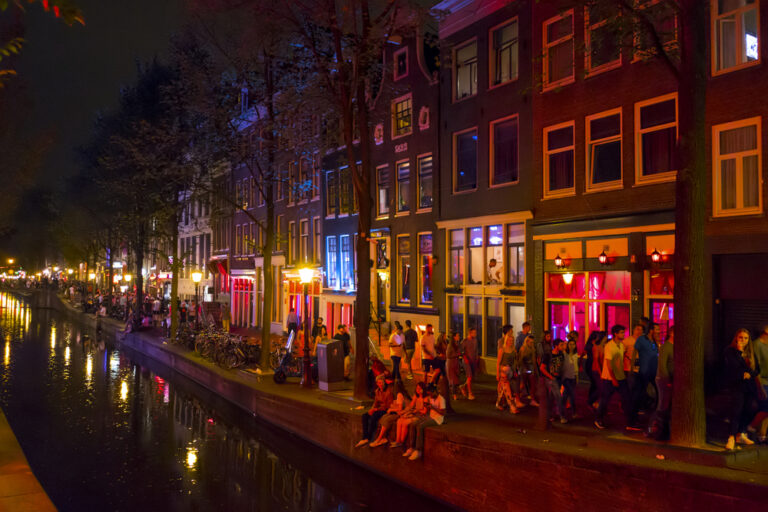
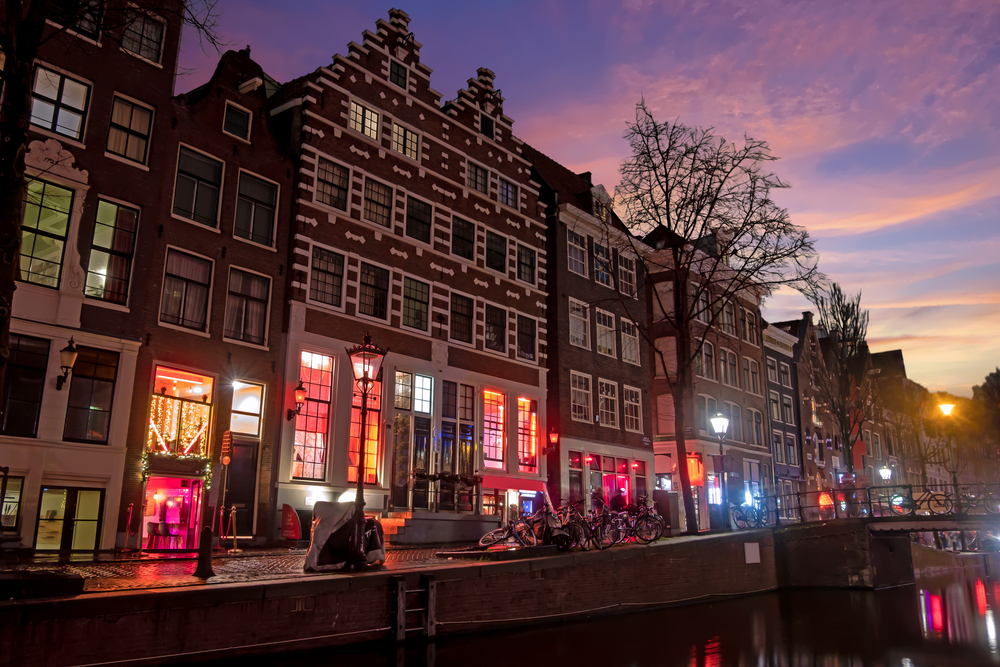
Amsterdam’s Red Light District is one of the most famous neighbourhoods in the world — but there’s even more to it than it seems.
Today, the neighbourhood is packed with tourists who walk around with awe and fascination daily. They want to know: do the women really just stand there naked? Can you just walk in? Who are these women behind the windows?
The Red Light District has a rich history, dating back to the 13th century.
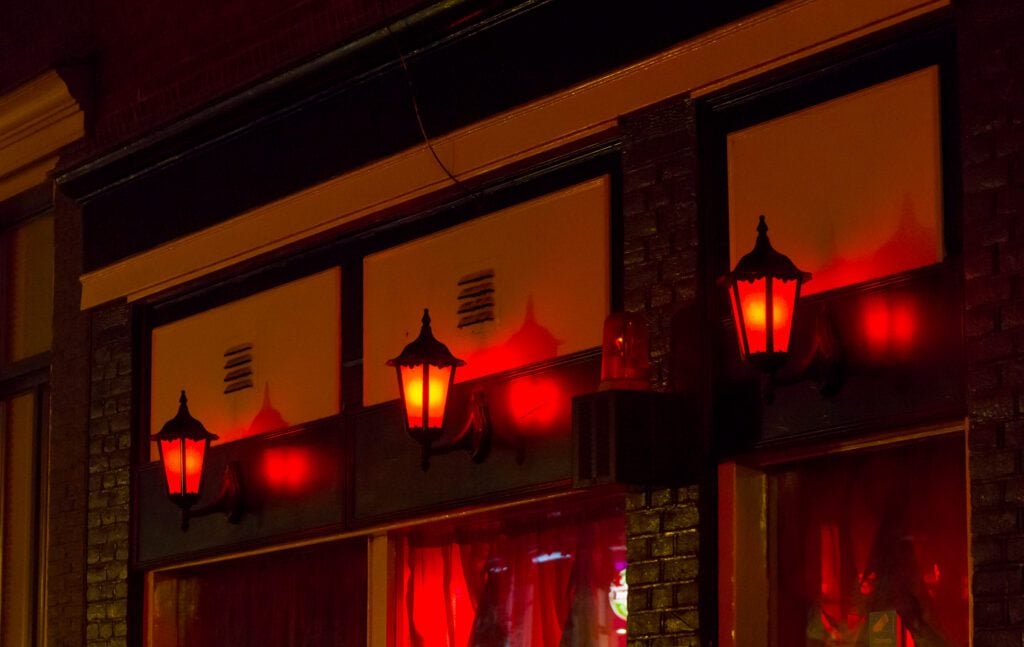
And boy, is it an interesting one, from the deliberate choice of lighting, the convenient location leading to its fame, to the centuries-old tug of war to legalise sex work.
Get ready as we dive into its history of STDs, sailors, and, best of all, sin.
Red Light District: What’s in a name?
The term “red light district” isn’t just used for the famous area in Amsterdam. Any place with prostitutes is considered a red light district, regardless of the country or legality.
The name of the main neighbourhood where Amsterdam’s red light district is located is actually de Wallen.
There isn’t just one red light district; it’s a global thing! Image: Depositphotos
So, there are more red-light districts than the famous one in Amsterdam. But why did this one become the Red Light District, capital letters and everything?
Well, that was a combination of two things: first, Amsterdam was a major trading port because it was so close to the harbour. This also made it easier for sailors (the ones who were doing the trading) to get into the city and enjoy its… entertainment.
Second, the city was relatively laid back regarding prostitution in general. In fact, it was legal until the 16th century, then illegal, then legal, and so on (but we’ll get to that later).
So the accessible location and the relatively open-minded attitude towards prostitution was the perfect combination to make Amsterdam’s Red Light District so famous — and earn it the capital letters.
The back and forth of legalising prostitution in Amsterdam
Cast your mind back to 1270, a time so long ago that it doesn’t even sound like a real year. Despite Amsterdam’s then-tiny size, its popularity as a trading port meant there were plenty of sailors, all of whom had needs.
At the time, prostitution was tolerated in the Netherlands. By this, we mean that sex workers weren’t punished for their profession, but weren’t particularly respected either.
Regardless, the concept of “honour” was very important in the Middle Ages; sex workers were seen as “dishonourable” and deprived of some rights, such as marriage.
Legalising prostitution has been an emotional roller coaster for centuries. Image: Depositphotos
To shelter their precious society from these dishonourable women, city governments in the Netherlands restricted sex work to certain areas — one of which was de Wallen in Amsterdam.
But in the 16th century, with the Spanish occupation and the rise of Protestantism (a branch of Christianity), everyone got more uptight. Church and state blended, and anything “sinful” was also illegal.
— Amsterdam Red Light District (@AmsterdamRLDT) March 26, 2023
By the turn of the 18th century, everything was quite strict and in line with the morals preached by the church. On top of this, there was a growing middle class that wanted to avoid being associated with the lower class — which included sex workers.
The middle class did so by not only restraining from sex (it was seen as sinful) but also by moving to different neighbourhoods to distance themselves physically from these “loose” people.
Although prostitution was still decriminalised at the time, the working conditions of prostitutes were very poor. They had no proper birth control, condoms, or cures for STIs. The workers were neglected and looked down upon.
Then came Napoleon and his army. He was not the nicest guy, but his approach to prostitution was more progressive than in many first-world countries today.
Under his rule, sex workers reported twice weekly to the police for a medical checkup. If they were sick, they received free treatments and stopped working until they recovered.
But before you go rewarding Napoleon for his open-mindedness, he wasn’t doing this out of respect for women. This health regulation was done in order to protect soldiers from diseases.
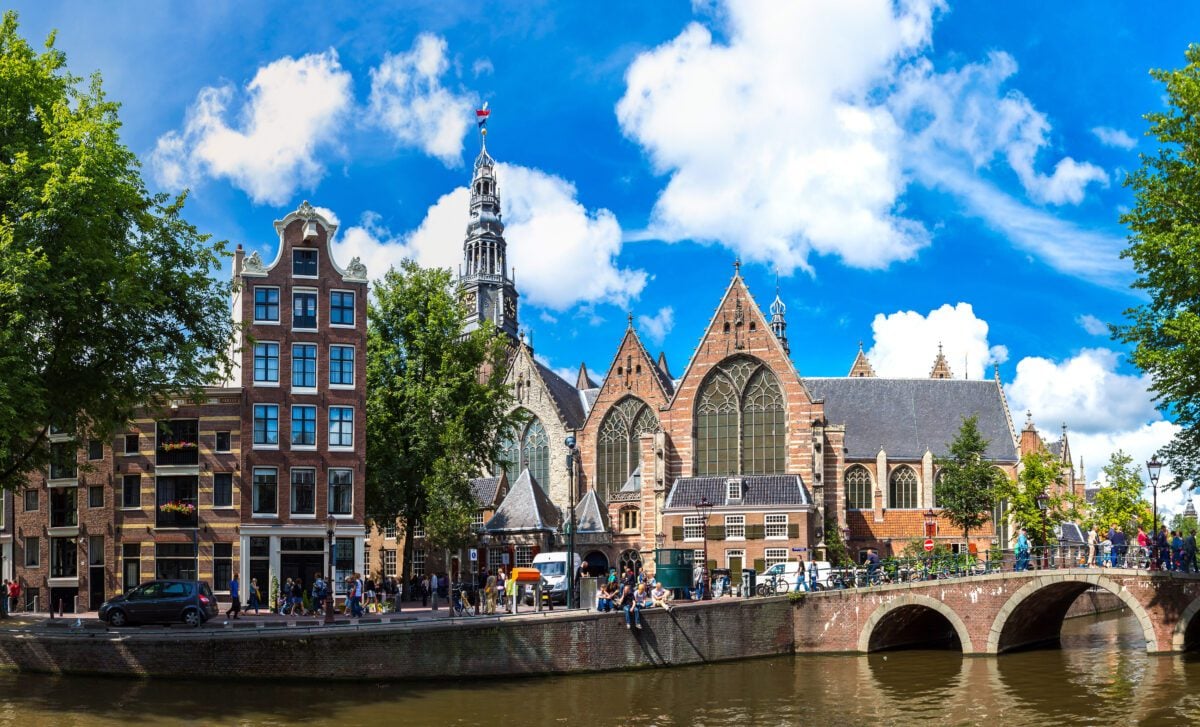
The Oude Kerk is the oldest building in Amsterdam, built so sailors could ask for forgiveness shortly after seeing a prostitute. Image: Depositphotos
After Napoleon’s occupation, the Netherlands became Christian again and — you guessed it — less tolerant of sexual openness.
Religious representatives would actively try to change attitudes about prostitution by reciting the Bible and singing religious songs to sex workers and clients.
Because of this, it became illegal for sex workers to stand in doorways to seduce men. However, they could still solicit men through their windows — leading to the start of window prostitution as we know it today.
And finally, finally, sex work was decriminalised in the second half of the 20th century. In 1999, prostitution in the Netherlands was defined as a legal profession by the Dutch government.
What a whirlwind. 😮💨
Amsterdam: Europe’s rebellious child
As we’ve established, Amsterdam doesn’t have the world’s most innocent reputation. For instance, it was known as the City of Sin as early as the 1900s, and priests and married men weren’t allowed in the Red Light District for fear of being corrupted.
Of course, it didn’t help that the lights in the Red Light District were red to hide symptoms of STIs or that the Oude Kerk was built there so sailors could repent for their freshly-committed sins.
the red lights district is like a haunted house for gay men
This cemented Amsterdam’s reputation as a party city, brimming with temptation and sin. Everything you weren’t meant to do could be found in this city — especially in the neighbourhood of de Wallen.
This reputation lives on today; just look at the mass of tourists and the global fascination with the neighbourhood. It is cemented into the city, inseparable from the start, from the centuries of controversy until today.
Amsterdam’s Red Light District today
Of course, such a strong and polarising reputation doesn’t die so easily. It has survived attempts to restrict or ban prostitution for centuries.
The attempts weren’t limited to the Middle Ages. In 2007, the municipality of Amsterdam funded a project to restrict prostitution in Amsterdam to a limited number of streets — much like when society was meant to be protected from “dishonourable” women.
Naturally, De Wallen was one of the streets where prostitution would be allowed. Meanwhile, 126 other windows operating around the city were closed as a result of this project.
But people have been fighting it. More recently, there have been several protests in Amsterdam against moving the Red Light District to somewhere else.
“We don’t want to be moved, not to an erotic centre or anywhere else. We want to do something about the problems in the area,” a sex worker at a protest told the NOS. “Moving us is not a solution.”
So where do we go from here? These talks about moving sex workers or restricting prostitution have been happening for centuries. Today, the debates continue, ranging from restricting the sex workers themselves or the tourists.
Here’s a hot take: maybe sex workers are just normal people who should be allowed wherever they want? Something to think about.
What is your favourite historical fact or part of de Wallen? Tell us in the comments below!
The Dutch are internationally known for their innovation skills, but the latest innovation might be taking things a bit too far. Tilly Norwood is an up-and-coming actress; she’s also AI.
Speaking with Broadcast Now last summer, Norwood’s creator, Dutch actress Eline van der Velden, said, “We want Norwood to be the next Scarlett Johansson or Natalie Portman, that’s the goal.”
And while you may think this is delusional, Van der Velden tells the NOS that Norwood is “in talks” with talent agencies and will soon be able to audition.
The news has hit Hollywood, and actors are getting angry.
“Please don’t do this”
One actress who has become acquainted with the latest Dutch creation is Emily Blunt.
Speaking on a Variety podcast, Blunt made her thoughts on Tilly Norwood clear:
“Is this AI? God, we’re in trouble. This is really, really bad. Come on, talent agencies, please don’t do this. Stop taking away human connection.”
According to the NOS, Orange is the New Black actress Natasha Lyonne also let her opinion on the AI actress be known, saying, “Any talent agency involved in this should be boycotted.”
Not a replacement for human actors
Van der Velden explains on LinkedIn that Tilly was made using 10 different programs.
And while some of us with a trained eye may recognise her as AI, many wouldn’t (think of your oma, for example).
That being said, the actors’ union, SAG-AFTRA, warns that studios will face major problems if they actually “hire” Norwood.
In a statement, the union says that Norwood is “not an actor; she’s a character generated by a computer program trained on the work of countless professional artists.”
“She has no life experience to draw on, no emotion. The audience isn’t interested in watching computer-generated content that’s divorced from human experience.”
In fact, the union warns that rather than solving problems, Norwood will only cause more for studios “because stolen performances are used to put actors out of work. This jeopardises the livelihoods of artists and undermines human artistry.”
Dutch police are looking for information on the suspect of an attempted rape after a man followed a woman off an Amsterdam bus and attempted to sexually assault her.
Both parties are alleged to have got off at the same bus stop (Burgemeester Fockstraat) at around 2:30 AM on Friday, June 20.
The suspect stalked her before striking
Initially unaware that the suspect was following her, the woman dialled her boyfriend and chatted to him on her way home.
According to Dutch police, the man continued to follow the woman and acted suspiciously, including hiding behind a planter to spy on her.
Once she reached the end of the Burgemeester Fockstraat, the woman noticed the man and told her boyfriend, who was still on the phone with her.
Undeterred, the suspect attacked the victim on a side street near Marsmanstraat, grabbing her by the throat and attempting to sexually assault her.
Hearing the woman’s screams, several residents rushed to help, while the woman’s boyfriend alerted the police.
An investigation is ongoing, so any information counts
Although officers rushed to the scene, the suspect managed to evade capture.
In the months following the attack, extensive investigations have been carried out to determine the suspect’s identity, but they have failed to turn up a positive ID.
Amsterdam police are now asking for the public’s assistance in bringing this alleged assaulter to justice.
Anyone who recognises the suspect or has any relevant information on the incident is urged to contact the police immediately.
You can submit tips via the Crime Stoppers hotline at 0800 6070. Prefer being anonymous? You can do this by contacting Meld Misdaad Anoniem (Report Crime Anonymously) at 0800 7000 or via this form.
Have you seen this man, or have you experienced similar behaviour in the area? Please report this to the police.
Does Dutch seem like a nightmare of a language to you? Then our tips on how to learn Dutch fast and easy might just be what you need!
Even if some people argue that you can live in the Netherlands and never learn Dutch, which is technically true, many still believe that if you are going to live anywhere, learning the local culture and making an effort to reach the locals in their own language goes a long way.
In that case, you will have to learn Dutch at some point and maybe even pass the NT2 (Nederlands als tweede taal) exam.
Here’s a list of resources that helped me pass the NT2-II, and some that didn’t so much (so you can avoid wasting your valuable time and money). Perhaps it can be useful for someone out there.
The Delftse Methode
My first formal contact with the Dutch language (other than the loose words that my then-boyfriend and his family taught me) was “De Delftse method“.
This is a class that was developed and takes place at TU Delft (though it is taught in other centres), of which we had only heard amazing stories.
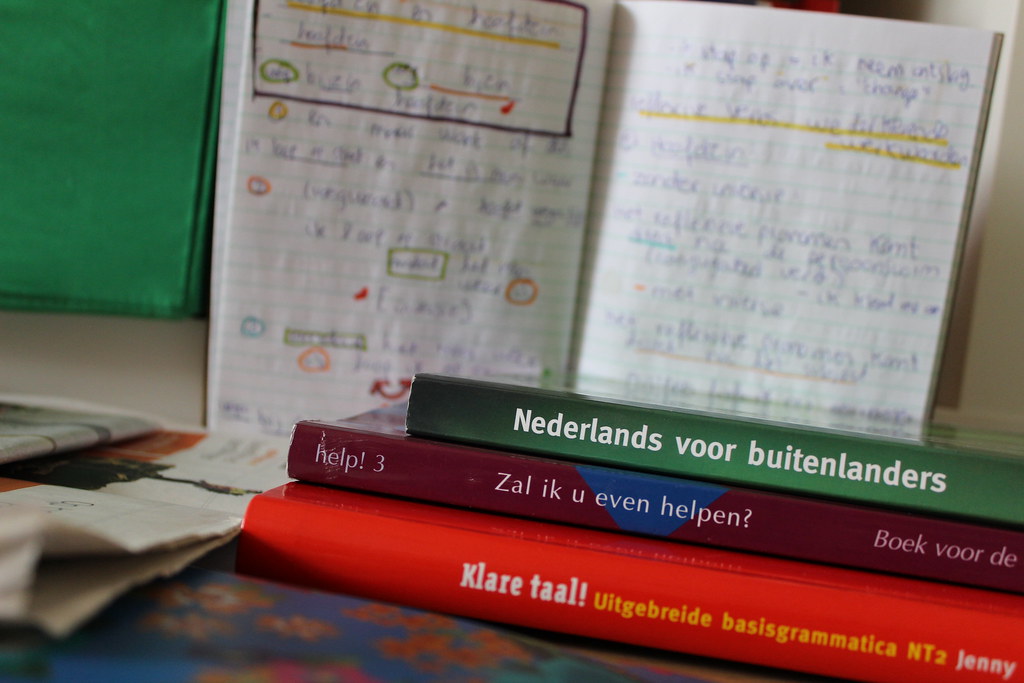
My Dutch notes came in handy when I was studying. Image: Amanda Steck/Supplied
People raved about it, about how great it was, about how people went from not saying a word to being able to maintain full conversations after the intensive three-month course.
So I took it. It ended up being a waste of money and not just a small amount. The method is based on the premise that small children learn a language by listening and then repeating what they hear, like parrots.
So that’s what you will have to do. You get a book with CDs, a list of words and written conversations, one per chapter.
You listen to these conversations, and your task is to memorise them (word by word), understand the meaning of these words, and write them down, literally.
This is not a bad exercise per se, if it were not all there was. The method ignores that children are sent to school to learn things such as grammar, syntax, spelling…
I have to say that personal experience with the Delftse Methode is going to highly depend on the professor you get.
I know some professors (the one who developed the method, for instance) are very good and take their time to explain things.
The Delfste method wasn’t for me, but I had other methods! Image: Freepik
But most of them just focus on making the students repeat the texts like parrots (which isn’t my cup of tea), and they do not explain basic things like, say, the conjugation of the verb “to be”, the use of auxiliary verbs, or the basic structure of the sentence.
Sure, at the back of the course’s book you’ll find a section on grammar, but this is never covered or explained in the classes.
Dutch grammar is not so straightforward that it is understandable only by reading some random conversations.
My recommendation for this method, as a first approach only, is to get the book, listen to the CDs and study it by yourself.
But by no means pay the money for a course that won’t give you any added value or teach you anything else than what is already in the book.
The silver lining is that I made some good friends in that class, and I liked going to campus every day for three months.
Buy a good dictionary
Invest in some good dictionaries. If you can afford it, don’t even bother with a pocket or medium-sized dictionary and splurge on the biggest, thickest dictionary you can get (the Van Dale’s are the best). You will keep on using them.
As an extra, I got the “Van Dale groot 4 talig beeld woord & boek”, which is basically a Pictionary. It is full of drawings of things, and it is named in 4 languages (English, French, German and Dutch).
Also, get yourself a book of conjugations. It is very handy to have a little book where all verbs in all tenses are easy to find, and it helps you understand how the rules and exceptions of conjugations work.
Attend classes
Yes, that’s right, go to classes. To good ones. I took several courses: an intermediate, advanced and NT2-II preparation class.
Your mileage may vary, and you may need more or fewer classes depending on your style of learning.
There are many schools and many methods, so find something that suits you and follow through, as I believe Dutch is not a language that you can self-learn (unless maybe your native language is a German or Nordic one).
In order to learn Dutch, you will have to attend lots of Dutch lessons. Image: Depositphotos
Immerse yourself in the culture
Get immersed in the culture. Watch TV. Listen to the radio. Visit museums and art galleries. Even seemingly “silly” stuff can help.
I got a good deal for a 4-month subscription to Grazia magazine, and I read all of it. If celebrity gossip and fashion aren’t your thing, choose something that appeals to you instead.
I also found the videos from schooltv.nl very helpful. Sure, they are meant for kids from grades 1-8, but they are simple, easily understandable, and cover a wide range of subjects that you can choose from.
Even the ones for the junior-high school kids are very interesting and often take 15 minutes, which is a good length. Not too long, not too short.
I also loved learning some songs from the Dutch children’s singing competition: “kinderen voor kinderen”. Libraries also regularly organise readings for children; if you can attend those, it could help as well.
And some of the biggest libraries have specially dedicated areas for learning Dutch and also promote “tandems”: setting you up with a buddy to practice your conversation skills.
Another fun exercise is listening to Dutch music and trying to write down the lyrics.
And, again, the newspaperDe Volkskrant has a series called “Der Nederlanden”, which talks about all kinds of subjects around “Dutch-ness”, from the use of the bike to the food they like.
Read books!
Finally, one book that I found helpful was Help! 3 Zal ik u even helpen (which we used in the preparatory class for the NT2-II).
The intertaal grammar summary (which looks like a simple plastic folder) was extremely useful, concise and helpful. (The name of this booklet is “Grammaticawijzer”, produced by Intertaal and is available in many different languages.)
Dutch grammar
At first, Dutch sounds very different, and the order of the sentences is confusing (many times, you will only find the verb at the end of the sentence, and inversion of the subject is common).
But slowly, you will see that it is in ways similar to English, French, even Spanish (some words are the same) and of course to German and Nordic languages.
You will often get frustrated because, at the beginning, the learning process is fast, and then you seem to reach a point where you are stuck.
Just imagine how many new friends you’ll make using your newfound Dutch. Image: Freepik
I think this is where you absorb and really learn. Because after that, I promise you, if you keep your efforts, there’ll be a click, and suddenly you will find it easier to start talking, you will notice you understand people around you, and you will lose the fear.
I am not saying I am fluent here. I still have a lot to learn. I want to be able to write, manipulate and twist language to make pretty sentences like I am able to do in my native tongue.
Currently, I am not there yet, far from it. But from here, it is a matter of keeping at it, reading books, and making an effort to speak Dutch everywhere you go.
What are the levels of Dutch?
Now, don’t get confused with all the levels: you have A1, A2, B1, B2, C1, and C2, which follow a classification called “Common European Framework of Reference for languages”.
Simply speaking at an A level means Basic Knowledge, B level means Independent User and a C level means Proficiency.
Meanwhile, the NT2 exams have two levels: NT2-I, which is equal to B1 (enough for simpler jobs, up to MBO level 3 or 4) and NT2-II, equal to B2.
This is what you would need for pursuing higher education (WO) and work situations of that level.
Do you have any tips on how to learn Dutch? Tell us in the comments!
As the seasons change and the leaves turn red, we want to let you know how to make the most of autumn in the Netherlands! 🍂
If you arrived in the Netherlands during the summer, you may have been given a deceiving viewpoint regarding Dutch weather.
Be prepared because once the leaves start falling, the weather can be nasty and catch you off guard!
However, just because the air is becoming crisper and light is basically non-existent, it doesn’t mean enjoying life here is impossible. The Dutch know how to enjoy every season to the maximum.
Here are some local things you can do to get through this season.
1. Go au naturale at the sauna
The Netherlands has amazing wellness, sauna, and spa facilities all over the country.
They’re like a ‘fun’ water park for adults with all sorts of attractions, such as floating sea salt pools, saunas of various temperatures, steam baths, sauna shows, ice bucket showers… the list goes on. 🧖
On top of these awesome water attractions, there are beds, a restaurant to drink wine, and even a place to lay outside to work on your tan!
And, yes, people get naked in a Dutch sauna… Even if you’re a prude regarding nudity, this experience is not to be missed!
Relax and unwind in the nuddy in a Dutch sauna. Image: Pixabay
2. Have a sleepover in a Dutch castle
Want to live like a royal for a night? Well, you can in this Dutch castle! 🏰
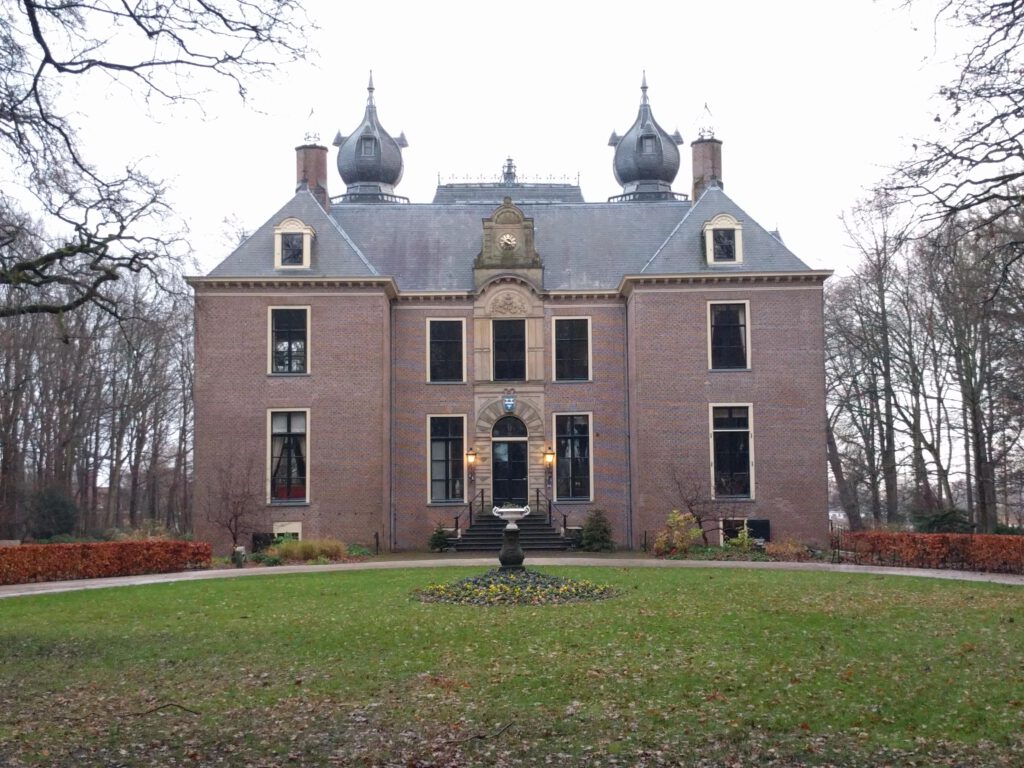
This is what dreams are made of! Image: Rudolphous/Wikimedia Commons/CC4.0
Believe it or not, Kasteel Oud Poelgeest is a 17th-century castle nestled in Oegstgeest, just north of Leiden. It was the former home of Dutch scientist Herman Boerhaave. Fancy! 👑
You can book a room for the night and have a glass of wine in their atmospheric lounge. You can also dine like a royal with a three-course dinner and a breakfast buffet! 🥞
3. Visit a brown café
There is nothing more lovely than leaving the cold street for a Brown Café. It is essentially a traditional bar and is full of Dutch culture at its best!
They are generally cosy and dark, and some even have a warm fireplace! Most importantly, they have many types of beer on tap to choose from.
We would suggest trying the herfst bokbier (autumn beer). These beers often have an extra touch of spice. Yum! 🍻
One beer over here, please! Image: Freepik
4. Attend a bunch of museums in one night
In the autumn, Amsterdam hosts an annual Museumnacht (night of the museums) where you can visit all 50 of its famous museums in one night! 🌃
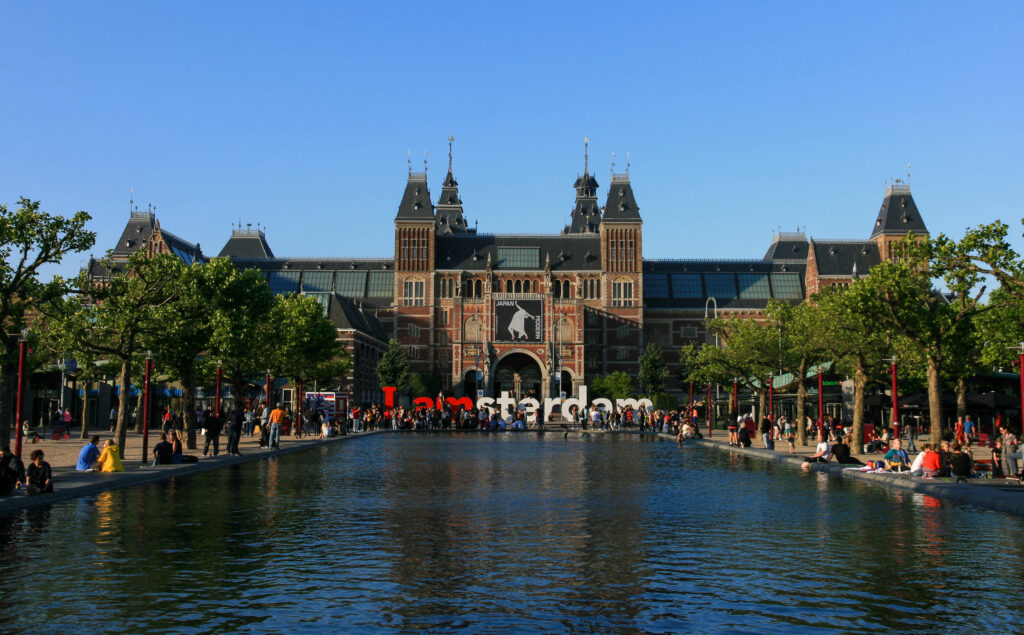
Some museums you can visit include the Anne Frank House, the Van Gogh Museum, the Rijksmuseum and more!
Get your museum fix in one night. Image: Marco Almbauer/Wikimedia Commons/CC3.0
There are also special exhibitions, live music, and other fun activities during this event. 💃
The Museumnacht in Amsterdam takes place this year on Saturday, November 2, 2024.
Other Dutch cities such as Leiden, Groningen, and Den Haag also have their own museumnacht that you can attend!
5. Bike through some Dutch forests
There is no better way to experience the Dutch autumn than to take a bike and ride through the forests, which have an incredible array of spectacular colours and freshness.
Wild mushrooms are known to grow in Dutch forests, and there’s sometimes even wildlife to be spotted. 🦌
Is this even a real place? And it hits so much better in autumn! Image: Pixabay
Of course, it is no trip to the forest without visiting a traditional Dutch pancake restaurant. Order a pannenkoek topped with cheese, and cover it with as much syrup and icing sugar as possible.
Then, for dessert, a Dutch delight is apple pie served with cream —echt lekker (really delicious)!
You can also visit theHoge Veluwe National Park in Gelderland. There’s gorgeous nature, cycling paths, cute animals and even a museum there!
6. Treat yourself to some Dutch autumn soup
What better way to warm up than to make a rich bowl of soup? Erwtensoep (pea soup) is an easy recipe that is a traditional staple in many Dutch households.
This soup is also called snert, which does not sound appealing but is worth a try, right?! 🍲
7. Visit a Dutch island
The Netherlands has some pretty cool islands located in the north. Autumn is a lovely time to visit because it is less busy, and you can probably find some cheap deals on accommodation.
There is also something refreshing about being at the beach when it is a bit cooler. 🌊
Dutch beaches can also be enjoyed in the autumn, but it’s best to keep the bikini at home. Image: Dutch Review Crew/Supplied
Get hot chocolate from the local café, go bird-watching, or read a book in a bathrobe. The Dutch islands will not be a disappointment during this cooler season.
So that was it: a guide to autumn in the Netherlands! There are many other amazing things to do during this time. Try not to hate the cold, enjoy some fun activities, and have a happy herfst (autumn)!
What’s your favourite thing to do during autumn in the Netherlands? Tell us in the comments below!
Police and family are urgently searching for 24-year-old Luna Rijken, who was last seen running away from the AMC hospital in Amsterdam on September 26.
Later that day, at approximately 2 PM, Luna was spotted at Dieren station and was last seen in the vicinity of Imboslaan. Since then, no one has heard from her.
Details of her last known appearance
According to the police report, Luna is described as being 172 centimetres tall, of slim build, with shoulder-length dark blonde hair and blue eyes.
At the time of her disappearance, she was wearing black trousers, a black and white striped long-sleeve shirt, a black coat with chalk stripes, and black Adidas shoes with a white stripe.
Her disappearance has caused great concern for her loved ones, who are appealing to the public for any information that might help trace her whereabouts.
If you have seen Luna or have any information about her movements after leaving Dieren station, please contact the police immediately.
Have you seen her? You can call the tip line or report anonymously. You can also use this tip form.
Caught without a ticket on a Dutch train, tram, metro, or bus? That fine is about to hit your wallet €20 harder.
From today (October 1) onwards, the NS reports that various public transport services will be deploying stricter action against passengers who travel without a valid ticket.
Citing the fact that fare dodgers are often “a source of nuisance and aggression”, NS Director of Operations, Eelco van Asch, hopes the latest measures make public transport “safe and fair for everyone.”
Fines are rising, both in value and quantity
The fine for travelling on Dutch trains, buses, trams, and metros without a valid ticket has now jumped from €50 to €70.
While this figure hasn’t been adjusted since 2016, the number of offenders on Dutch trains alone has increased astronomically.
In 2022, nearly 181,000 rail passengers were fined for dodging fares. Just two years later, that number almost doubled, with a whopping 353,000 passengers receiving a fine for not having a valid ticket. NS projections expect that number to jump to 400,000 by the end of this year.
Combined with more frequent checks, this could see longer commuting times. Image: Depositphotos
And let op: if you’re an NS commuter and fail to pay your fine within 14 days, administrative costs have also increased. You’ll now pay an extra €20 for late payments.
Good to know: If you’ve mistakenly boarded an NS train without a ticket, you can get a €20 discount on your fine if you pay it directly by debit card while on board.
AI rail predictions will also join the fight
But steeper fines aren’t the only tool in the NS’ arsenal.
Thanks to AI, the NS can predict the routes and times most commonly chosen by fare dodgers.
From today onwards, you can likely expect plainclothes Safety & Service staff to conduct more frequent checks along troublesome routes or at certain stations.
This may also include “stop and go” operations, where a train is stopped at a platform and every passenger’s ticket is scanned. Helaas, for some of us, this will likely involve even longer commuting times.
Do you agree with the NS’ latest measures against fare evasion? Tell us your thoughts in the comments below!
There are very few things in the news these past weeks that call for celebration, but thanks to one Dutchman and his fries, we can take out the party hats (and our plates.)
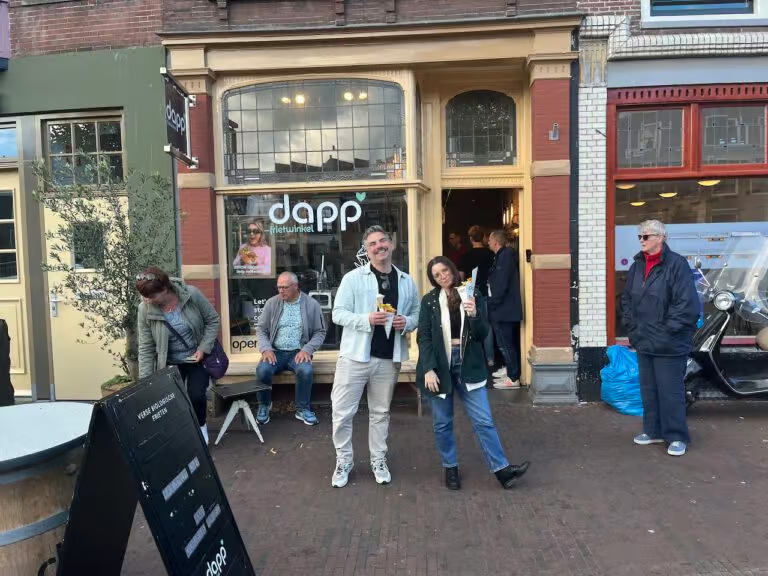
Siem van Bruggen, owner of Dapp Frietwinkel, has won the world French fry championship, with his frietjes (fries) crowned the lekkerste (tastiest) in the world.
The competition, which took place in Arras, France, saw 33 chefs compete across five different categories, such as the “fries sauce” and “creative.”
And Siem? His frietjes won what many would consider the most important prize: the tastiest fries.
The secret lies in the oil
So, what makes the tastiest fries? Siem’s secret is to use organic potatoes and fry them with rosemary in vegetable oil.
But that’s not all, because he also uses the triple-fry method, which (as its name suggests) involves cooking the fries three separate times.