Alarmingly, we’re already halfway through 2023. If you weren’t feeling existential enough already, July 1 is here to bring you some less-than-stellar updates. (Let’s just say that you’re going to feel them where it hurts — in your wallet. 😬)
RTL Nieuws just released a list outlining the major changes that will take place in the Netherlands.
These include (but are not limited to) higher taxes for petrol and diesel, increased student rent, preparation for road pricing, and inflation of internet costs. Wat leuk! 🙄
1. The silver lining? Minimum wage will increase
Okay, do you want the good news or the bad news first? The good news is, statutory minimum wage will increase by 3%, along with government benefits (which are dependent on minimum wage). The same goes for the minimum wage for employed youth. 🎉
Unfortunately, that may be the only silver lining. The bad news? Well, statutory interest will increase by 4 to 6%, and subsequently, borrowing money could get even more pricey.
2. Stricter childcare allowance
In addition to a much stricter childcare allowance, child benefits will also be cut down by roughly 3%. Curious about what this means for you? Check out the new rates according to age group here.
Kids under the age of five are losing out on €8, while those aged six to 11 will be missing €9 from their adorable little piggy banks starting next term. Won’t someone please think of the children? 😢
3. Another car-owning downside: petrol inflation
You might want to get used to riding that fiets (bicycle) of yours more regularly, since petrol and diesel will reportedly get hit by inflation in the next six months.
Petrol prices per litre will increase by €0.14, while diesel prices will also shoot up by €0.10. Public transport is starting to look really appealing. 😮💨
4. Kiss caravan trips goodbye! Thanks, road pricing
Motorists beware because it’s a bad year for cars. Roughly half of all car owners in the Netherlands are going to end up losing money depending on the incoming road pricing, reports RTL Nieuws.
Working Netherlands, D66 has nothing to do with that. With rosé-drinking e-cargo bike folk. Road pricing hangs like a thundercloud over the working Netherlands
Though, before you go drowning your sorrows at an after-work borrel, there’s still a tiny sliver of good news left: we have a few more years to prepare.
Road pricing, which taxes you on the use of roads as opposed to owning the car, won’t be fully implemented until 2030.
For those of us who love travelling by car or are partial to road trips, this definitely puts a damper on the holidays. Especially considering how much the Dutch pride themselves on frugal caravan trips.
5. As if student housing couldn’t get more expensive
July 1 will also be a solemn day for any university students out there, as student housing rent is predicted to increase by up to 3.1% for those who pay over €300 monthly.
If you’re somehow fortunate enough to be paying less than that, you won’t be let off the hook either — you’ll be charged up to €25 more than that.
On the bright side, however, lower-income housing will experience a much-needed decrease in rent, which is said to help out half a million people.
6. No wifi? Build a treehouse like it’s the 80s…said no one ever
Do you, like the rest of us, need the internet to function? Well, internet prices will also increase for many people this summer, along with cable television and the phone bill.
Beloved telecom providers KPN and Ziggo will also be struck by inflation on July 1. KPN packages will rise by 6%, while Ziggo’s will climb up by 8.5%. Oof. 😬
7. “Life in plastic”? It’s expensive, not “fantastic”
To top it all off, that Starbucks cappuccino you like to get in a to-go cup at the station every morning could cost more.
With the incoming plastic tax, you could be left wondering whether the price is worth it, or whether you should just bring coffee in a thermos from home.
Which one of these changes will hurt your wallet the most? Let us know in the comments below!
Hearing that thousands of new apartments are for sale might spark excitement (and maybe even a wave of relief) in you. Helaas, you probably won’t even get the chance with the €1.7 billion price tag.
The Canadian real estate investment trust, European Residential Reit (Eres), wants to sell 6,900 apartments and terraced houses throughout the Netherlands. Yes, that is a lot of housing, and we all know how valuable housing is.
So, you’re probably wondering why they’re letting go of their investment? Well, according to Eres CEO Mark Kenney, measures taken by the Dutch government mean that the tax climate in the Netherlands has become less favourable for the company.
Basically, Eres needs money
Capreit, Eres’ parent company, bought houses from other real estate funds throughout the Netherlands in 2016. However, current interest rates mean borrowing is difficult for the company. (Isn’t it for all of us? 👀)
The sale of thousands of apartments in the Netherlands valued at €1.7 billion will allow Capreit to fill their not-so-little piggy bank with enough coin to invest in it’s home market in Canada. 💰
Apartment complexes owned by Eres, such as De Generaal in Rijswijk, will most likely be among the large number of apartments sold, reports AD. However, it’s not known whether private individuals like us mere mortals will be allowed to buy apartments separately.
Foreign investors discouraged
Transfer tax for investors has increased from 6 to 10.4%, which is a major reason why investors are being discouraged from investing in property in the Netherlands.
Another is the new rent regulation set by Dutch housing minister Hugo de Jonge. The regulation that will have landlords of private sector rental homes lowering rent will be put into place next year.
In May, prices of existing owner-occupied homes were on average 5.6% lower than in May 2022. In April, owner-occupied homes were… pic.twitter.com/sdVe2bUHjp
— Apostolos Klitsoyiannis (@apostolos_kl) June 22, 2023
While this may be music to our ears, investors aren’t too chuffed about it — which, we guess, is kind of the point.
You know those absurd housing prices that we all despise? Well, foreign investors are partly to blame. “They’re playing Monopoly with our houses and they’re just getting started. Houses are seen as an investment object to make a profit instead of something to live in,” said MEP Kim van Sparrentak last year.
Various countries, including the Netherlands, are taking measures to stop this so that private individuals have more of a chance of being able to afford their dream homes.
What do you think of the apartments being sold in one transaction? Tell us in the comments!
So you’re moving to a new house (verhuizen) within the Netherlands? In need of a checklist because you can’t be bothered to make your own? Don’t worry, we’ve got you covered. 💪
Let’s cut right to the chase, here are 9 things you need to do before you move to a new house in the Netherlands.
1. Let your previous landlord know you’re moving
The first thing you need to do is check your rental agreement. It most likely says you need to give at least one month’s notice to leave the property (in some cases, this can be as much as three!) If you break this agreement, your landlord will get to keep your deposit.
The best thing you can do is let the landlord know as soon as possible, to ensure that everything goes smoothly. Once this is done and once you have left, you should follow up with your deposit and make sure you have got it back (if you haven’t trashed the place, of course).
2. Update your address with the gemeente
This is important as they need an up-to-date address if you want to be legally registered. This means that, if you have a residence permit, it will be invalid if the change of address is not noted.
Gemeentes are town halls in the Netherlands. Image: Depositphotos
Note: You also need to do this quickly! If you do not register your change of address within 5 days of moving, you could be fined.
If you are verhuizen within your municipality, you will need to notify Afdeling Burgerzaken (the department of civil affairs) in your municipality.
In some cases, it’s now possible to register this move online. However, if a visit to the municipality is required, you will need to bring an official ID and offer proof of your new address.
If you are moving to a different municipality, you need to register all over again.
Yep, it’s time to book that town hall appointment and head on over there with the necessities: your passport, birth certificate and tenancy agreement. This is also necessary if you claim benefits.
Note: In some municipalities, it is possible to register yourself online or via the post if you cannot make it to the appointment in person. However, the procedure varies depending on the municipality.
3. Update your utility companies
Another important step is that you tell your utility companies that you are moving so you stop getting charged once you’ve paid your final bill and handed over your keys!
Remember that, unless you have a package deal, you need to call your gas, electric, and phone suppliers, as well as any insurance you may have.
Also, to make way for the new tenants, make sure to call them up and inform them — you don’t want them using your electricity now, do you? 😉
Once you’ve disconnected from one home, you’re going to have to get reconnected in your new house.
TIP: We would recommend opting for a package deal where possible, this way, the entire process of setting up your utilities can be done through one company — meaning less room for miscommunications or misunderstandings.
4. Sort out your WiFi — in advance!
Setting up your WiFi in the Netherlands comes with its own trials and tribulations. The best thing you can do in order to make the transition as smooth as possible is to arrange it well in advance of your moving-in date.
Setting up your WiFi is an important step in the process of moving house in the Netherlands. Image: Freepik
While you may be able to leave sorting your other utilities until the last minute, we wouldn’t recommend doing this with your WiFi.
In the Netherlands, it can sometimes take a number of weeks before a router is delivered and an engineer can come over to install it.
Once you know where you will be moving, figure out what the internet situation is (will you be sharing with someone else?) and hop to it!
If you have to set up your own WiFi, organise with your supplier in advance in order to get your router installed before or as soon as you move in!
5. Tell your employer, bank, doctor, school…
Don’t forget to tell anyone who provides a service to you about your move. Think accountants, doctors, dentists, therapists, and your local pharmacy. In fact, it may even be necessary to let your gym know. Basically, be as vocal about the move as your aunt Terry on Facebook.
Why? You may need to switch doctors, dentists and schools, so this is something that should be a priority to sort out. Even if you don’t need to switch providers, you should still let everyone know. If not, you may miss out on important mail.
6. Arrange for your post to be forwarded to your new address
Speaking of mail, you’re going to need to update your address! PostNL will do this for free, all you need to do is fill in this form on their website.
Just don’t forget to let them know. It’s best to do this a few weeks before the big move, or some may still stray to your old address.
The last thing you want is for an important envelope to go missing! Image: PostNL
However, by now, you have informed all the insurance and utility companies of your new address (right? 👀), so important letters won’t get into the wrong hands. 😉
7. Update your car details
Yep, even Joris, who manages your car insurance, needs to get involved in your life update. If you have a car in the Netherlands, then you need to inform your insurance if you change your address. Your vehicle registration should also be changed.
In some instances (if you have a Dutch driving licence, or you have been using your foreign licence for over 10 years), you will need to tell the Department of Road Transport to get it updated on your driving licence.
8. Determine whether your furniture will fit
Moving to a new house can be an exciting time, and sometimes you forget to factor in some very practical and important logistics.
Is your bright purple velvet couch going to fit up your gorgeous (but very narrow) new staircase? If not, you may need to hoist it up through your window — but does your new place have a hoisting hook? 😳
Think about those staircases and narrow hallways folks, will your furniture actually make it inside the door? Image: Depositphotos
Perhaps the couch and all your other belongings will fit inside your new home but you also need to consider how much you need to move. Do you have your own car to transport everything? Or will you be needing a moving van?
It’s also important to consider how you will be moving everything into your house. Believe it or not, in the Netherlands, if you need to block a road or street with your car/van while moving, you may need to apply for a street permit (straat vergunning) from the municipality!
Yep, you’ll even have to sketch out what the situation is going to look like for consideration — very Dutch.
9. Do a final check of your old house!
Before you close the door and leave the keys (Friends style), make sure your house is clean, and all of the appliances are turned off. This includes the fridge/freezer, and even the gas, which should be disconnected from the property.
How have you experienced moving to the Netherlands? Tell us about them in the comments below!
Editor’s Note: This article was originally published in September 2021, and was fully updated in June 2023 for your reading pleasure.
When we turn 18, most of us look forward to a yummy cake, some gifts, and a party with our nearest and dearest. However, when Dutch Princess Alexia turned 18, she also found herself the proud owner of two new titles AND a royal flag. 🙌🇳🇱
At a quiet celebration at the royal family’s home in The Hague on Monday 26 June, Princess Alexia ushered in her special day with some pretty exceptional royal presents.
The princess received several new titles
To mark the occasion, King Willem-Alexander appointed the princess a Knight Grand Cross of the Order of the Netherlands Lion and a Knight of the House Order of the Golden Lion.
While most people get a special gift on their 18th birthday, birthdays are just a little extra special for the children of the Dutch royal family. Since 1898, all children of the Dutch head of state are appointed Knight Grand Cross of the Order of the Netherlands Lion when they turn 18.
Not only did the King gift the Princess two new (very royal!) titles, but also her own flag of honour. Alexia enters adulthood with an honourary flag with the National coat of arms, the Royal coat of arms and, of course, a dash of orange.
Latest royal portraits released, hoera!
Maybe, like us, you can’t believe that the little Princess Alexia we know is all grown up already? Well, not only did she hit a landmark birthday, but the royal palace also released stunning new portraits of the young princess. 👇
The Dutch Princess took her first adult portraits at the royal family’s home. Image: Koninklijkhuis
The portraits taken at the royal family’s home, Huis ten Bosch in The Hague, capture the Dutch Princess’ maturity and readiness to take on the life of an adult Dutch royal.
Princess Alexia’s new portraits for her 18th birthday. Image: Koninklijkhuis
Meanwhile, we’re waiting to hear what the Princess will do after the summer once she gets the results from her high school exams.
Will she join her sister, Princess Amalia, at a Dutch university? Or will she take a different path? Either way, we wish her the best and are excited to see how this new chapter in her life unfolds! ✨
What do you think of Princess Alexia’s birthday gifts? Tell us your thoughts in the comments below!
Dutch cuisine? Yes, it truly does exist, and you can experience the best of it on this mouth-watering Dutch street food tour that has us drooling in our office chairs. 😋
This guided tour through an Amsterdam food market will have you crunching on golden crispy kibbeling, toasting locally-brewed craft beer, and rounding it all off with a chocolate-glazed stroopwafel for dessert that makes you feel warm inside. Ugh, delish.
This post might have affiliate links that help us write the articles you love, at no extra cost to you. Read our statement.
You are what you eat — it’s time to turn Dutch 🇳🇱
Want a tour that’s easygoing and casual, instead of trailing after someone wearing a neon vest, holding up a flag and barking orders at a large group?
This experience lets amble along with friends in a relaxed posse of maximum of 12 people, while you’re in the capable hands of a friendly “foodie guide” escorting you through Albert Cuyp — Amsterdam’s most famous food market that’s been around since 1905.
The English-speaking foodie is happy to answer any of the burning questions you’re afraid to ask, not only about Dutch gastronomy but also about Dutch culture in general.
They’ll also advise you about the other best places to vacation and eat at in Amsterdam — finally, you can confidently recommend a decent restaurant when friends ask, “Where the heck do we want to eat?”
If the best way for a culture to enter your heart is through your stomach, you’ll find yourself blurting out “lekker” between mouthfuls of cheese, wondering what came over you.
Dutchies at food stalls will chuckle knowingly, and say, “Welcome, you’re a part of us now. You can run, but you can’t hide”. 🇳🇱
Where do we sign up? 🙋♂️
Considering the endless Dutch and Indonesian dishes up for grabs, you’re instructed to bring an empty stomach. Feel free to go on a juice-cleansing fast for days beforehand to ensure total appreciation on the day — okay, maybe not.
There’s also craft beer tasting and, to top it all off, some sharp, tangy, freshly squeezed orange juice. Is anyone else’s mouth watering at the thought of it? 🥲
The tour lasts a comfortable two hours, so there is no need to rush — please chew your food properly.
What are you waiting for? You can make reservations right now without paying upfront, and cancel up to 24 hours beforehand for a full refund.
Do you hear that? That’s the sound of your stomach growling in anticipation. Maybe it’s time to give it what it wants and book this shindig now. ☝️We’ll see you over there!
Here’s the deal: when you signed your energy contract, you likely signed up for a variable rate — so now that energy prices are high, your wallet is empty.
But not all energy providers charge the same fees. That means that switching can save you a ton of cash — if you can find a great new utility contract, of course.
After all, taking charge of your expenses can be more complicated than it sounds, especially if you’ve just moved to a new place, or if you struggle with language barriers. Need some help?
What is a contract coach, anyway?
Believe it or not, asking for help every once in a while is smart, although it might seem scary.
We know, asking for help can feel like losing control, but thankfully, Partner Pete’s contract coach is designed to help you take charge of your own expenses.
Sometimes, a bit of guidance goes a long way. Image: Depositphotos
With a bit of guidance, your contract coach will help you safely navigate the maze of papers, deals, and expenses. Before you know it, you won’t just have a neat overview of your utilities — you’ll also likely have some extra cash saved from the process.
Whether you need to be reminded to do the yearly update of your utility contracts, or you’d like to get your current contract cancelled free of charge — your coach will keep track of things, so you don’t have to.
How much does a contract coach cost?
If you’re still a bit sceptical about hiring someone to help you save money, we get it. It might sound like you’re about to spend a bunch of cash in the name of saving a few bucks — but, you’re not.
A Partner Pete contract coach subscription will only cost you about €4.95 a month.
A Partner Pete contract coach costs less than you’d expect. Image: Depositphotos
In other words, you can pay about the same as you would for a vanilla latte with oat milk, and get useful money-saving tips, instead of just a caffeine addiction.
Speaking of saving money, one of the best hacks you get for this price is the brand-new price alert service.
Picture this: whenever the energy rates drop below the amount you’re paying with your current contract, Partner Pete will inform you, giving you the chance to save tons of money, (almost) without lifting a finger.
Yep! Your contract coach speaks English
Whether you’re an expat, an international student, or just an adventurous soul looking for new experiences, you’ll be familiar with the frustration connected to language barriers.
Managing your utility contracts is just a tiny bit easier in English. Image: Depositphotos
It can be quite the challenge to navigate a whole new system (ugh, that infamous Dutch bureaucracy), and receiving important-looking letters in a foreign language can be stressful enough, without the added worry about having your water or electricity cut off, just because you don’t understand the fine print.
That’s why it’s so handy that Partner Pete’s contract coach will help you not only interpret the confusing lingo of utility contracts into understandable content but also literally translate it from one language to another.
Oh, and the Partner Pete website is in English, too — so you can give that Google Translate button a rest.
Have you tried changing your utility contracts to save money? Tell us about your experience in the comments below!
Editor’s Note: This article was originally published in September 2022 and was fully updated in June 2023 for your reading pleasure.
Wait, isn’t the Netherlands one of the happiest countries in the world? Well… not so much, as the country dropped a whole SIXTEEN places this year in the children’s rights ranking.
For the first time in a long time, the Netherlands lost out on its usual top 10 position and now ranks a shocking 20th place in the KidsRights Index, reports NU.nl.
A loss for Dutch children
The Dutch are known to give their kids lots of freedom, such as letting them bike to school alone from the time they’re 10 years old and letting them have a job from the age of 13.
However, it looks like Dutch kids are now left to their own devices a little too frequently, as the Netherlands has taken a sharp drop from fourth place in the children’s rights rankings to 20th.
The Netherlands is falling hard in the ranking of children's performs below average in terms of compliance with children's rights. the KidsRights Index report for 2023. Our country has dropped no less than sixteen places in the global ranking and has ended up in 20th position.
— Vader vecht tegen handboeien bij kinderen!!! (@VaderMenno) June 26, 2023
The Dutch government has been criticised for allocating a very low percentage of the government budget to helping children’s well-being. The result? Children in need of youth care and protection see themselves without help at the very end of long waiting lists.
Vulnerable children, especially those living in poverty or in asylum seeker centres, especially bear the brunt of this without the necessary care or protection needed for many of them.
In fact, according to KidsRights chairman Marc Dullaert, the Netherlands is not meeting standards “across the board,” writes NU.nl. Dullaert goes on to say: “The Netherlands is one of the richest countries in the world, but underperforms when it comes to children’s rights.”
Worldwide trends in children’s rights
The KidsRights Index measures to what extent 193 countries are committed to respecting children’s rights, based on the UN Convention on the Rights of the Child. The ranking is based on five points:
Right to Life
Right to Health
Right to Education
Right to Protection
Enabling Environment for Child Rights
Sweden and Finland are in the lead, with long-term visions and knowledge of children’s needs in their respective countries.
Further down the list, however, it’s not such a pretty picture. Researchers expect one in four children worldwide will live below the poverty line this year.
There seem to be countless factors putting children at risk all over the world, from increased costs of living, wars in Ukraine and Sudan, risk of environmental disasters, and low vaccination rates.
Are you surprised by the Netherlands’ ranking for children’s rights? Tell us your thoughts in the comments below!
Thankfully, after tossing, turning, and sweating through last night, today is expected to be a breeze and bring us some much-needed relief, reports RTL Nieuws.
A chill Monday
Travellers in the northern parts of the country are advised to keep their umbrellas at the ready, as the region will get some rain. A thunderstorm may even be on the cards, with rain clouds moving over the country towards Germany.
While you’re at it, you may want to grab your favourite cardigan too, because a moderate westerly wind is also making its way across the Netherlands. These gusts will bring the temperatures down to a cool 20 to 23 degrees Celsius.
According to NU.nl, nighttime temperatures will even drop to a chilly 11 to 14 degrees Celsius. So you might want to skip the evening stroll and cosy up inside with a glass of wine. 🍷
A volatile week ahead
The rest of the week will a perfect example of typical Dutch weather: complete unpredictability.
Will it be cloudy? Will it be sunny? Yes and yes. Will we know when? Not necessarily, as sun and clouds will alternate, and there’s also a chance of some rain.
It’ll be like playing Dutch weather Wordle, where you’ll quite never know what you’re going to get. With any luck we’ll hit the jackpot and get some sunshine, but you’d best be prepared for every possibility and carry that raincoat with you.
Are you relieved to be having cooler weather? Tell us in the comments!
Renewable energy in the Netherlands has been a hot topic for years. With the impacts of climate change becoming ever more real, the Dutch — and the rest of the world — need to seize every opportunity to create a more sustainable and resilient future.
Renewable energy in homes is just one piece of the puzzle, as tackling all of the climate change as an individual is pretty daunting.
But getting green energy to your own home in the Netherlands doesn’t have to be a hassle, and it can be a great way to contribute to a greener world.
So how is the land of a thousand windmills doing in its transition to a low-carbon economy? And what can you do to contribute to the Netherlands’ move away from fossil fuels towards green energy?
Here’s what you need to know about green and renewable energy in the Netherlands. 🙌
Renewable energy comes from self-renewing natural sources and processes, such as sunlight or wind.
Unlike fossil fuels, renewable energy sources are constantly being replenished and can, therefore, in theory, never be depleted.
Green energy (a subgroup of renewable energy that doesn’t harm the environment) is the most environmentally friendly kind.
Renewable energy share in the Netherlands
As great as the Dutch are in many other things, renewable energy uptake is not (yet) their forte. Currently, the Dutch energy supply is still dominated by natural gas and coal. In 2021, natural gas made up 47% of the country’s primary energy supply. It is also one of the largest gas producers in Europe, however, renewable energy production is slowly rising in the Netherlands.
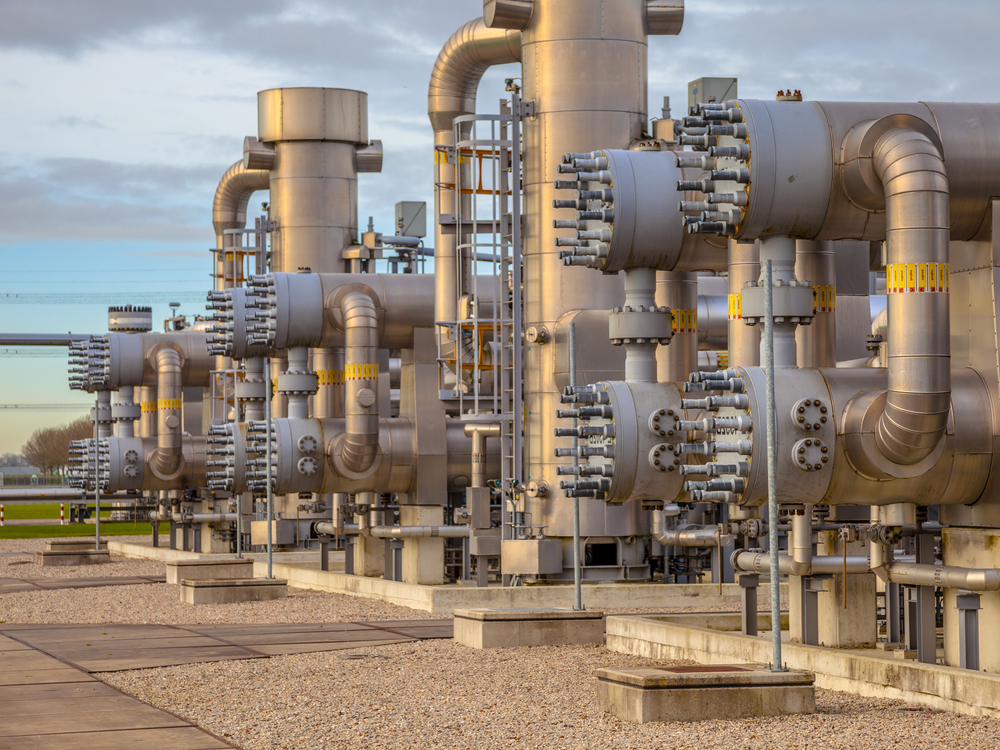
Groningen hosts a gas plant — the surrounding land is rich in natural gas deposits. plant Image: Depositphotos
Despite the Netherlands’ rich history of windmills and a stellar ability to fight off the seas, the country falls behind the majority of other EU countries when it comes to adopting renewables.
In 2019, the share of energy from renewable sources in the Netherlands was only 8.8%, according to Eurostat. This was the third-lowest share in Europe after Luxembourg and Malta.
The Netherlands’ clean energy ambitions for the future
While that may leave you feeling slightly pessimistic, there’s no need to fall into complete desperation just yet.
The deployment of renewable energy in the Netherlands has been rapidly progressing, and in 2020, it grew by 40% compared to a year earlier.
On its path to becoming a low-carbon economy, the Netherlands intends to make 16% of all its energy sustainable by 2023.
By 2050, the country’s carbon dioxide (CO2) emissions should reach zero. We have yet to see whether these ambitious low-carbon-economy goals will be met.
However, for now, the Dutch government is placing a large emphasis on energy efficiency and energy savings.
These steps reflect the world’s broader efforts to combat climate change, such as the EU’s ambitious plan to become the first climate-neutral continent by 2050, or the Paris Climate Agreement.
Dutch technology & innovation in green energy
While the Netherlands doesn’t have much to be proud of in terms of carbon emissions, the country does run the show when it comes to innovation and technology. For one, the Netherlands is a global leader in the deployment of electric vehicles, according to the International Energy Agency.
There are a few ways the Netherlands produces renewable energy, the most common forms being wind, biomass, and solar.
Wind energy
Being the land of a thousand windmills, it is no surprise that wind energy is the key renewable energy in the Netherlands.
With its large potential, wind energy is what the Netherlands depends on to achieve its climate goals.
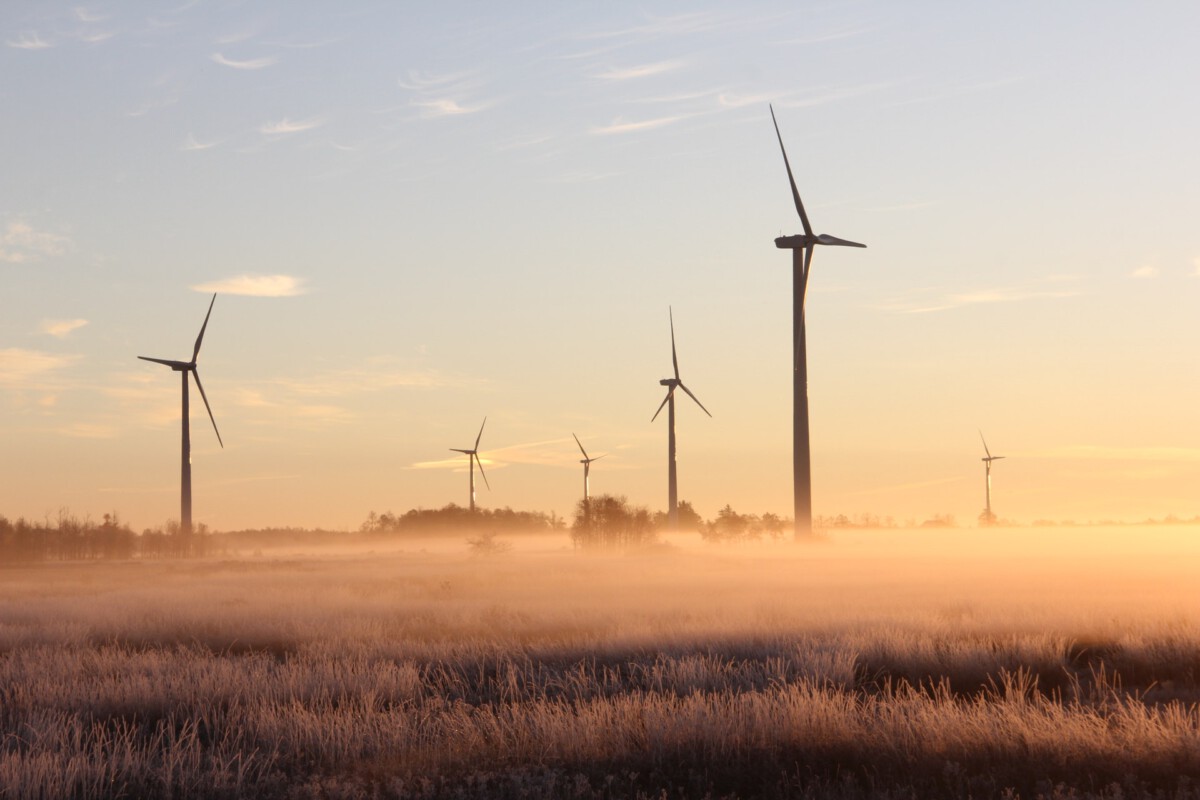
Wind energy is the most common type of green energy in the Netherlands. Image: Pexels
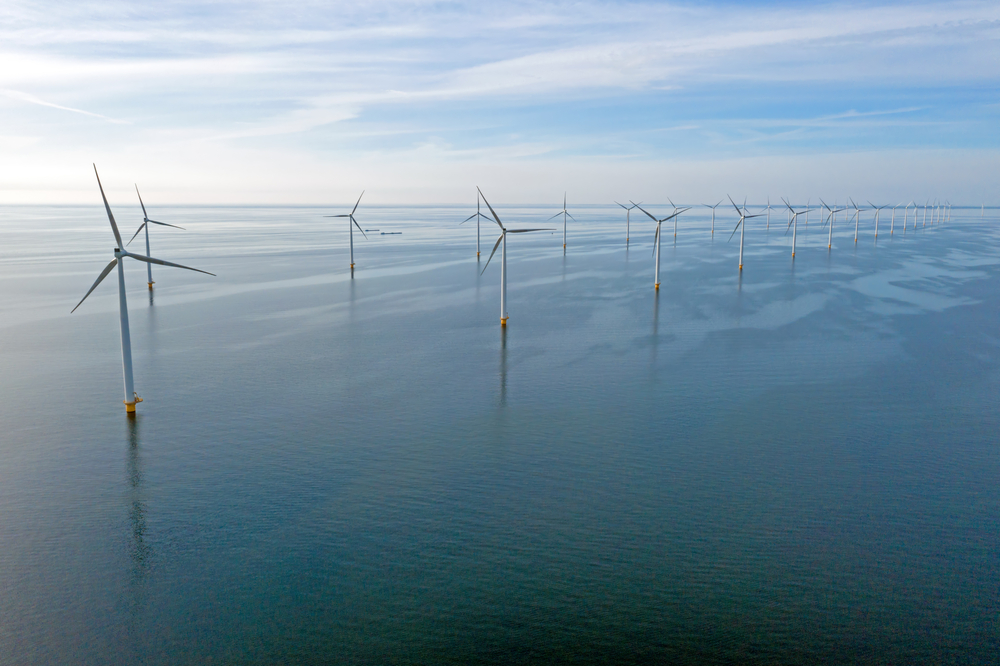
The country currently has over 2,500 onshore wind turbines but has also been increasingly putting emphasis on offshore wind.
This is especially because offshore wind energy is becoming increasingly cheaper, and the shallow waters of the Dutch seas and local wind climates present favourable conditions for implementing them.
Biomass
Biomass is the second biggest renewable source of energy in the Netherlands and comes from plant material or organic waste.
In the Netherlands, biomass is combusted in, for example, coal-fired power plants — this generates heat and electricity.
In line with the EU Directive on Renewable Energy, biofuel also has to make up at least 10% of all transport fuels.
Solar energy
Solar energy has a large potential in the lowlands. The technology needed for its large-scale use is still rather expensive, but the Dutch government is dedicated to boosting its growth.
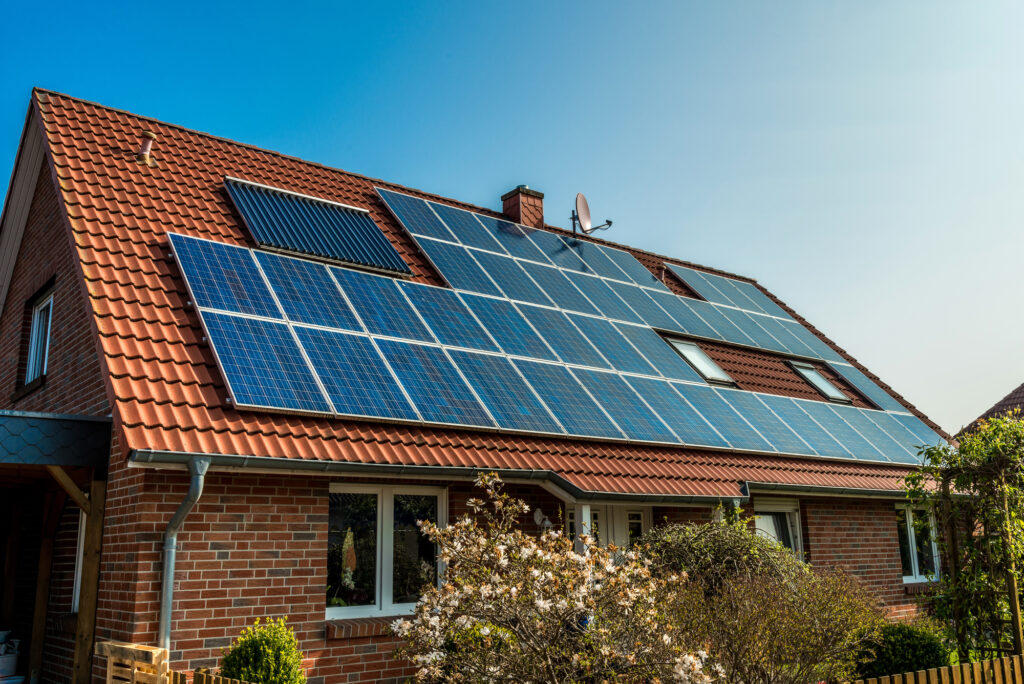
You’ll see quite a few Dutch houses with solar panels installed. Image: Depositphotos
As a consequence, people generating their own electricity through, for example, solar panels, can get discounts on their energy taxes or benefits from sending their excess energy back to the grid.
The government also has a subsidy scheme for businesses and nonprofits producing renewable energy.
Getting renewable energy to your home in the Netherlands
Setting up the infrastructure needed to produce renewable energy across the country is costly, as it involves large-scale projects like wind turbine installation or the building of solar farms.
However, at a consumer level, green energy will actually cost you the same as (or less than!) grey energy. While innovation is increasingly bringing the costs of renewables down, the Dutch government also heavily subsidises green energy, making it more and more affordable.
Many green energy providers also offer promotional packages with high discounts to switchers from grey energy in an effort to attract new customers.
Green energy providers in the Netherlands
The energy market in the Netherlands is competitive, and there are currently over 30 companies that supply green energy. However, one supplier can be greener than the other, and not everything that’s ‘green’ is actually green.
Why is that? An energy supplier can call itself green when it invests in green development, for example.
Similarly, you can also get a ‘green’ deal from a company that guarantees to supply wind energy to you but also builds coal power plants on the side.
Carefully review all of these companies if you’re considering green energy providers. Image: Pexels
One thing you should keep in mind, though, is that all types of energy in the Netherlands are transported through the same power grid. To truly distinguish between green and grey, the Netherlands works with so-called GvOs (Guarantees of Origin, or Garantie van Oorsprong in Dutch).
Making your Dutch house greener
Whether you’ve already bought a house in the Netherlands or are just taking the first steps towards getting a mortgage, there are a couple of things you may consider if you want to make your home greener.
Solar panels
Having solar panels installed on your roof is not only a relatively simple thing to do but also a financially beneficial one, thanks to the Netherlands’ net metering system.
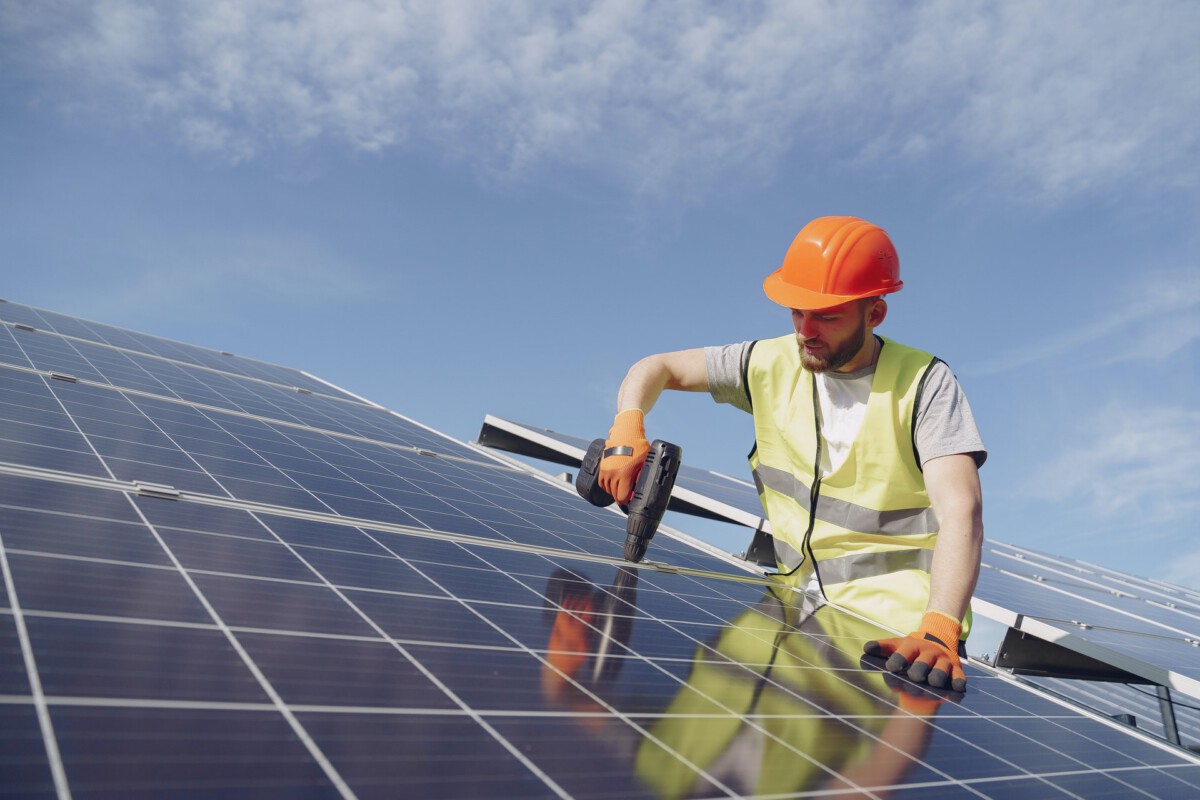
Getting solar panels installed in your house in the Netherlands can lower your electricity bill. Image: Pexels
How does it work? If you generate more energy than you consume, you can send the excess energy back to the public grid.
Your energy supplier is then obliged to deduct the energy you sent to the grid from your energy consumption bill.
This regulation will remain in place until the end of 2022. After that, the Dutch government wants to slowly phase out the system.
From 2023 onwards, only 91% of your excess energy will be subject to net metering, and the percentage will gradually drop to 0% in 2031. So what better time to invest in your solar panels than now? 😉
Smart energy manager
A smart energy manager is a device that monitors how you use your energy and subsequently makes the use more efficient.
This can ultimately lower your electricity bill. Smart energy managers look at how much power goes in and out of your house and basically match the electricity consumption of your appliances with the supply at the right moment.
Heat pumps
A heat pump is another device that can be installed in your house. It works by transforming heat from the ground or heat from the air outside into heat in your house.
It’s powered by electricity, so if you pair one with solar panels to power it, you can reduce your bills even further!
As a homeowner, you may be eligible for a grant or a low-interest loan from the Dutch government for some of these energy-saving measures.
Other tips to have a greener home in the Netherlands
Switching to a green energy provider can be a great first step to more environmentally-friendly living. However, here are a few more simple things you can do to make your home, and your life, in the Netherlands more green:
Make sure your house is properly insulated in order to reduce heat loss. This includes better insulation of the roof, cavity walls, floors, and windows.
Use energy-efficient appliances. Electrical household appliances such as fridges or washing machines are all required to have an energy label.
Recycle. In most Dutch cities, you can separate green waste, paper, glass, plastics, metals and drink packaging (PMD), and residual waste. In some cities, including Amsterdam and Rotterdam, PMDs no longer have to be separated by consumers but are separated more efficiently in waste facilities by special technology.
Waste less food. Food waste is responsible for a significant proportion of the world’s CO2 emissions. Apart from wasting less food in your home, you can also help reduce the food waste from supermarkets and restaurants by using apps such as Too Good To Go.
Compost at home. If you do end up having some scraps, or are just looking for a better way to get rid of your avocado peels, give composting a go. You can get a specific bin for this purpose from your municipality, or just arrange this yourself and use the compost for your own garden.
The goal is to focus primarily on solar energy, and alongside this plan, Amsterdam aims to stop using natural gas completely by 2040.
If you are a homeowner in Amsterdam and you want to take some measures to make your house more sustainable, you may be eligible for free energy advice from the Gemeente.
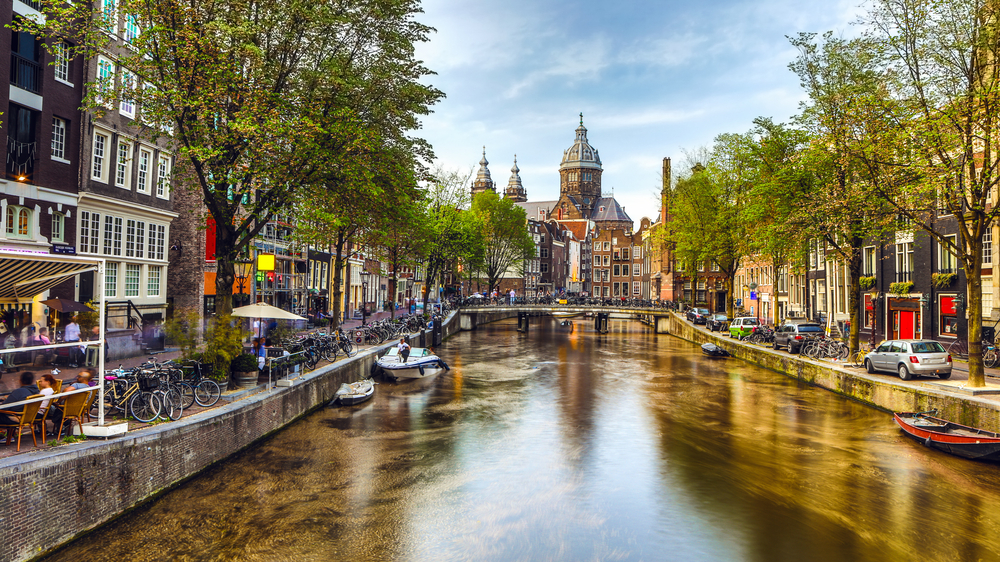
Cultural buildings, trendy restaurants, AND renewable energy development!? What’s not to love about Amsterdam? Image: Depositphotos
Over the past few years, the city has been working on introducing various marvellous innovations in order to try to adapt to climate change.
In 2018, Amsterdam made plans to install 10,000 square meters of smart blue-green roofs in four of its major areas, protecting its residents from extreme heat and drought, as well as heavy rainfall.
Besides, Amsterdam residents may be able to contribute to green energy generation through cycling sometime in the future, thanks to the S-Park bike rack system.
Green energy in Rotterdam
The Netherlands’ second-biggest city is not far behind when it comes to adopting renewable energy.
To become fully independent of fossil fuels, Rotterdam also created the largest solar island in Europe. The 4,800 solar panels on the island follow the sun, making their energy yield much higher than regular solar panels.
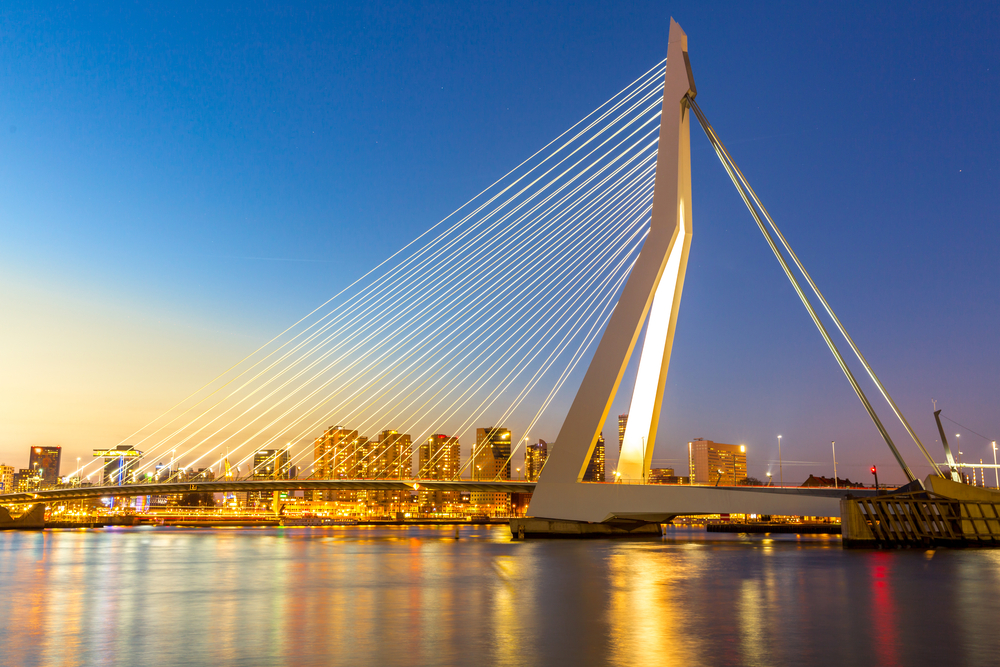
Rotterdam is both modern in the city skyline and renewable energy plans. Image: Depositphotos
The city aspires to become a true leader in clean energy, so if you’re living in or moving to Rotterdam, maybe now is your chance to pitch in!
Doomsday climate change scenarios have been dominating mass media headlines for a few years now, and it’s not without a reason.
The threat of climate change is very real, and we can take action now to adapt to it and mitigate its impacts in the future.
Switching to a green renewable energy provider in the Netherlands or implementing changes to make your Dutch home greener and more sustainable can be small, but nonetheless very important, parts of this process.
What’s your experience with renewable energy in the Netherlands? Share your experience in the comments below!
Inside you there is a sophisticated, chic, tax-paying person just dying to come out. This summer you can reveal it to the world by embarking on an Amsterdam wine and cheese cruise — for only €32. 😮
Imagine breezing past Amsterdam’s busiest tourist attractions without having to budge from the comfort of your boat. — (And man, don’t those cushions look comfortable!).
Now’s your chance to cradle a glass of French Syrah or Spanish Tempranillo, sniffing it twice the way you learned to at that one wine-tasting class.
Complete with a tour guide/skipper/hostess — whose brain you can pick for tips and little-known facts about Amsterdam — your boat will greet you at either the Anne Frank House or Central Station (depending on which is more convenient for you, because everything’s all about you on this trip).
This post might have affiliate links that help us write the articles you love, at no extra cost to you. Read our statement.
Photo ops and bragging rights
Want to convince that Tinder date you have your act together, pick an original venue for your book club, or just indulge in some well-deserved me-time? This canal cruise can be whatever you want it to be.
Basically, it’s an hour of wine-and-cheese-fuelled bliss spent cruising through sites including Prinsengracht, Amsterdam’s Dancing Houses, the Red Light District, and The Skinny Bridge, where you’re meant to kiss the person beside you — it’s tradition, we don’t make the rules *cough*.
The canals you glide across will be the UNESCO Heritage listed GoldenAge ones — only the best — for either a standard tour, retailing at €19.95, or a tour with bottomless cheese, beer, wine, or soda, if you tack on an extra €12.
Just don’t blast music from a boombox
Do keep in mind though, this type of classy excursion isn’t catering to so-called “party people” (you know who you are).
It’s for those among us with palates refined enough to detect subtle hints of melon in a Sauvignon Blanc. 🧐
…It’s also for those of us who want to feel like connoisseurs for one tasteful, wholesome hour, before happily venturing into a three-day bender when we hit the town afterwards.
Are your commitment issues being triggered by the unpredictable weather? Don’t panic.
You’re allowed a free, fully-refundable cancellation up to 24 hours in advance, should the rain decide to strike again.
(Although, who knows, maybe some light drizzling could be romantic 👉👈).