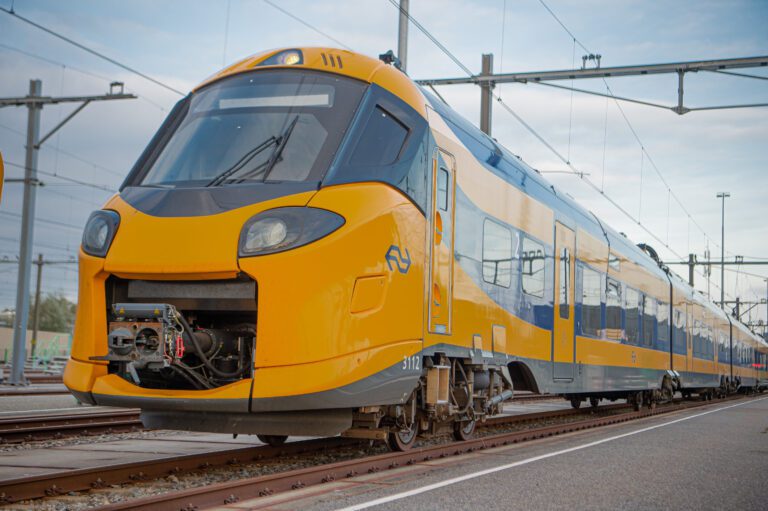
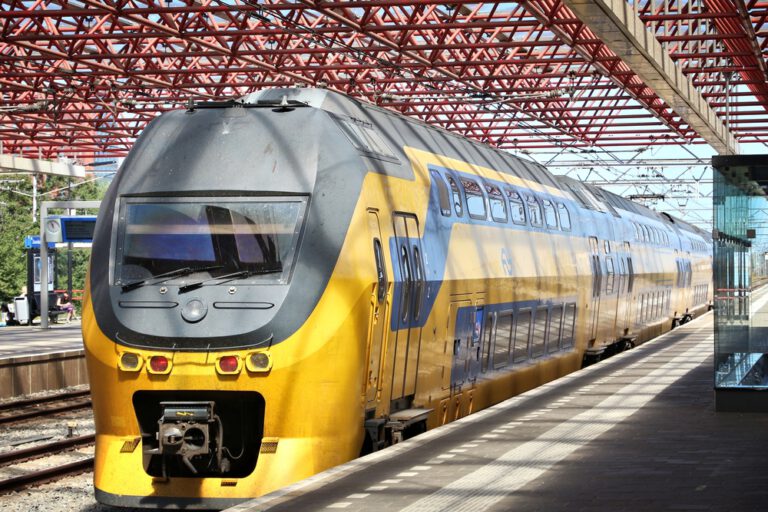
Remember the snazzy-looking new Intercity that the NS unveiled on Wednesday? Well, after a day of hard work, the train had enough — it has officially returned to the workshop. We feel ya, little choo-choo.
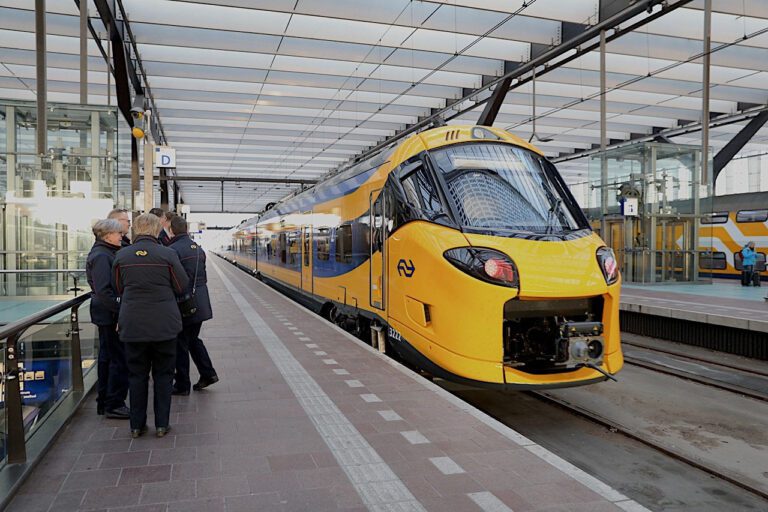
As an NS spokesperson confirms with AD, the doors of the Intercity New Generation (ICNG) are not working optimally, so the test rides between Amsterdam and Rotterdam have officially hit the brakes.
Not fit for the job (yet)
Let’s be honest, we’d be surprised if all had gone smoothly during the ICNG’s test rides — it’s the NS, after all. 😉
After its first few test runs up and down the A’dam-R’dam line, it turned out that there was a little problem with the train’s doors. Uh-oh.
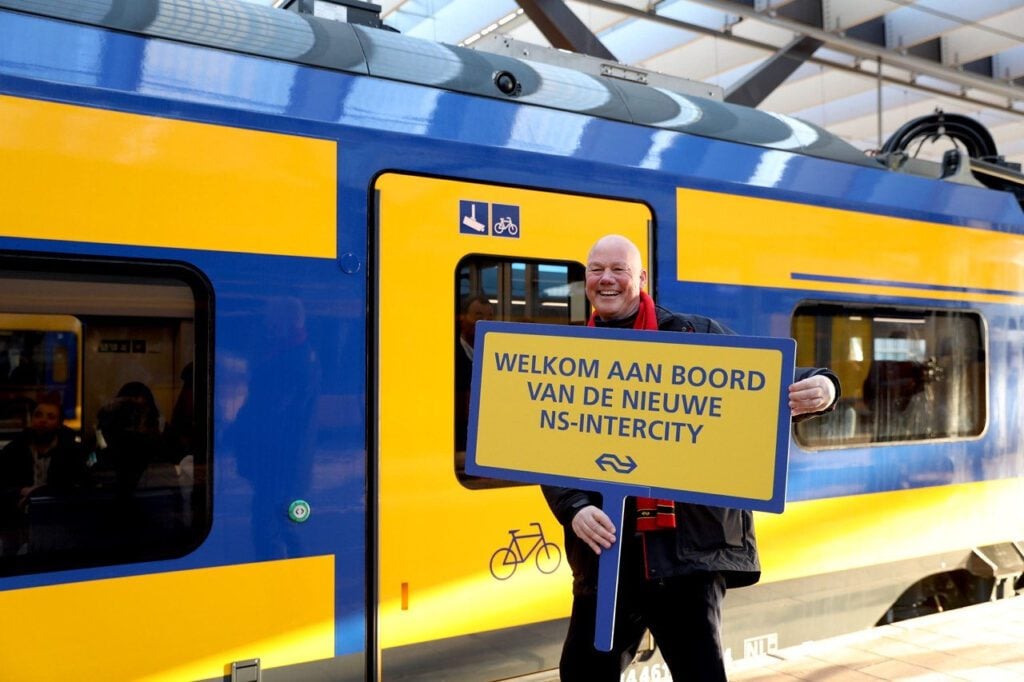
“Welcome on board the new NS-Intercity” — but not yet. 😢 Image: NS
More specifically, the issue was that the train operator could not see whether or not the train’s doors were completely shut. That’s because a sensor wasn’t working as it should (it was probably on strike… 💅).
The good news? This is all a completely normal part of the test phase, and the NS’s pride and joy will be back on the tracks next Thursday for further test rounds. 🥳
Delays, delays, delays
Delayed trains are nothing unusual in the Netherlands — but the ICNG is breaking all records with a delay of over a year! Yup, the train was initially meant to start running in 2022.
Due to delivery problems caused by the pandemic (sorry to bring up bad memories), the launch of the NS’s superstar had to be postponed.
But hey, all good things take time, right? 🌟
Will you check out the ICNG when it hits the tracks again next week? Tell us in the comments!
Gone but never forgotten: sweet cat, Brammetje, from the train station Purmerend Weidevenne, has passed away.
The four-legged friend, who was the regular face of the NS station for years, was hit by a car on Tuesday evening and sadly died as a result of the collision, reports the NOS.
Not just your regular orange cat
Some cats like to chill by the window, while others like to bask outside in the sun in the garden, and then there was Brammetje. 🐈
Little Bram’s go-to spot, where he was spotted since 2016, was under a metal bench in the Purmerend Weidevenne train station.
While he did have a home, he would only stay with his owner when it got really cold, preferring to spend his days on the NS platform.
Translation: ‘Saw my friend again, it’s been a while. Always a good start to the day!’
He was regularly petted by train passengers who would pass him by and has since then become known as Brammetje De Stationskat (the station cat).
Brammetje quickly turned into a cat superstar, becoming so famous that he had his own Facebook page dedicated to him, and he was frequently photographed.
Brammetje’s life was anything but ordinary. The little fellow was kidnapped twice by strangers, and he was previously hit and abused. It’s no wonder that many people were touched by his story.
A loss for the community
Brammetje’s sudden death was the talk of the day at the station.
“It’s a shock, I thought: it’s not true. He was so cuddly,’ says a train passenger to the broadcasting station, NH Nieuws.
“He has had many adventures. He was a beloved cat, and we will miss him,” says another traveller.
Jongens; wat erg; stationskat Brammetje is aangereden en over de regenboog gegaan. Zo verdrietig!😢 pic.twitter.com/SAQmz4A50H
To remember him, votes and an initiative to raise money to have a memorial spot or figurine of Brammetje at the station have been requested on Facebook.
This way, Brammetje can forever remain in his favourite spot in the city. ❤️
What do you think about Brammetje’s story? Tell us in the comments below!
A new version of NS’s Intercity train is here, and she’s quite the looker! Under the name of Intercity New Generation (ICNG), the train welcomed its first passengers on the Amsterdam-Rotterdam line on Wednesday.
The ultimate goal of the new train? To make travellers’ lives a tad bit more pleasant. How? With a fancy new look and high-speed velocity. 🚄
Zoomin’ through the Netherlands in style
So, what does the new Intercity bring to the table? Let’s have a look.
First and foremost, this new train is snel (fast). While the current Intercity travels at 160 kilometres per hour, its new and improved version can reach a speed of up to 200.
Besides that, travellers who had the chance to ride the ICNG on Wednesday are especially enthusiastic about the snazzy new interior. “What a wonderful train it is,” one of them tells De Telegraaf.
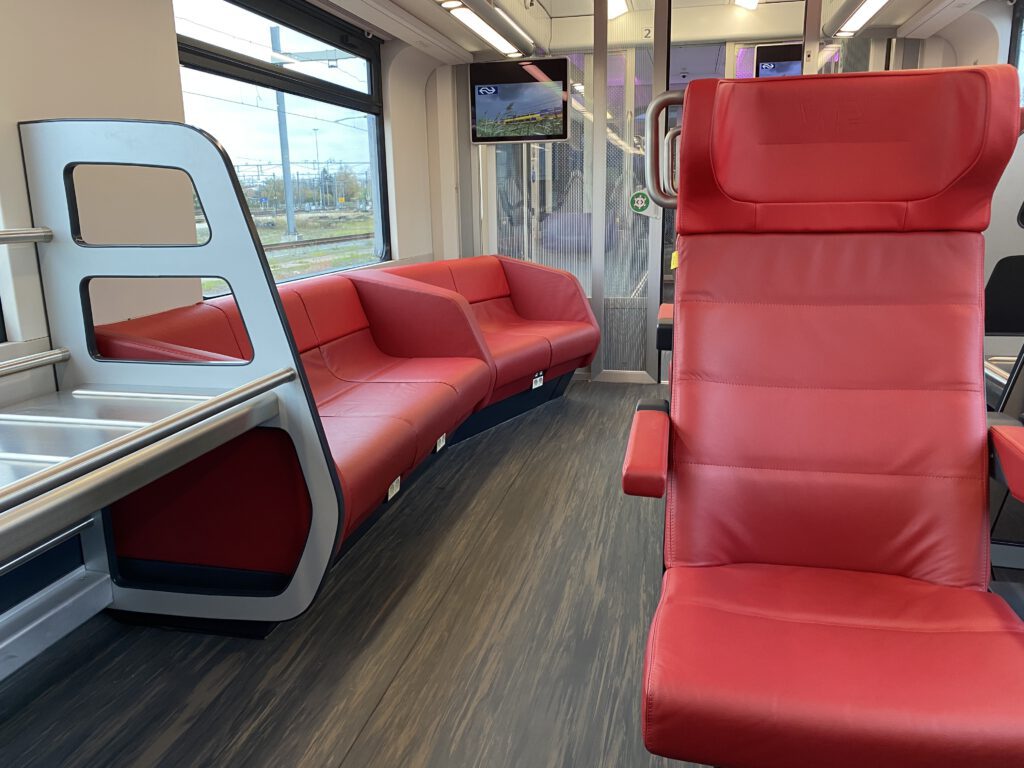
The new ICNG also provides travellers with more power outlets. Image: NS
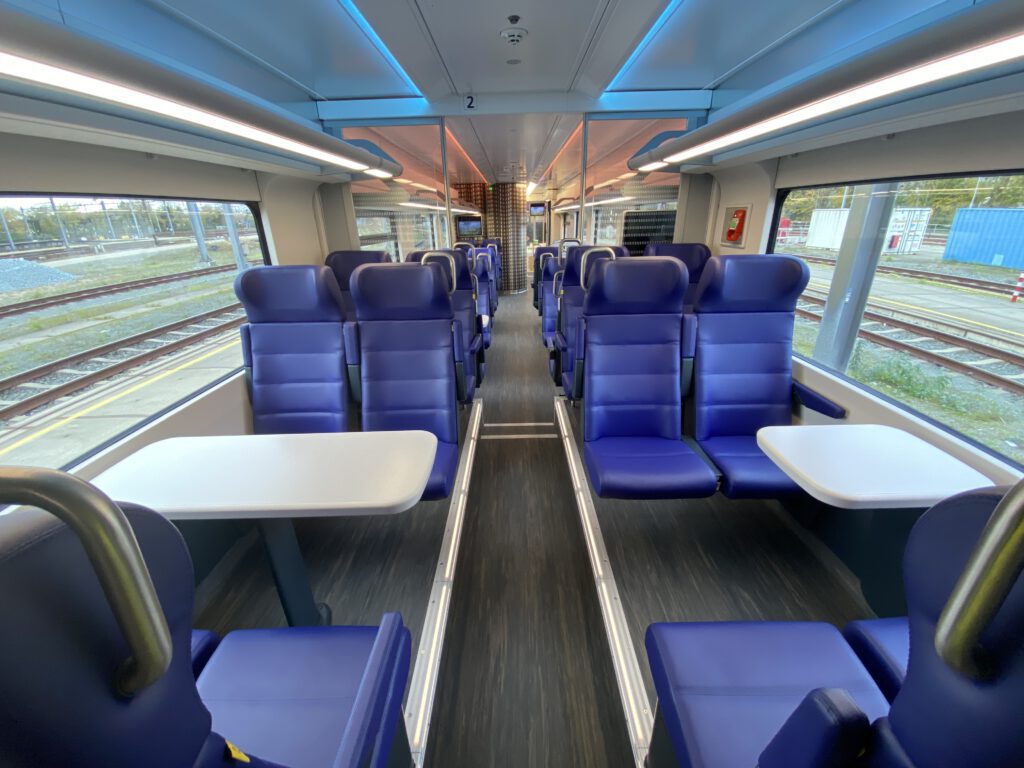
Indeed, the train boasts beautiful new seats in NS’s signature blue, with more legroom and more room for luggage.
Both the second and the first class have also been equipped with sleek lounge sofas (perfect for that late-night, slightly-tipsy journey back home 😉).
Doesn’t that look comfortable?! Image: NS
A final test phase
As the president-director of the NS group, Wouter Koolmees, tells De Telegraaf: “We see this as the final test phase that can only be done in the timetable with real travellers. When we are satisfied with everything, we will use more of these fast trains.”
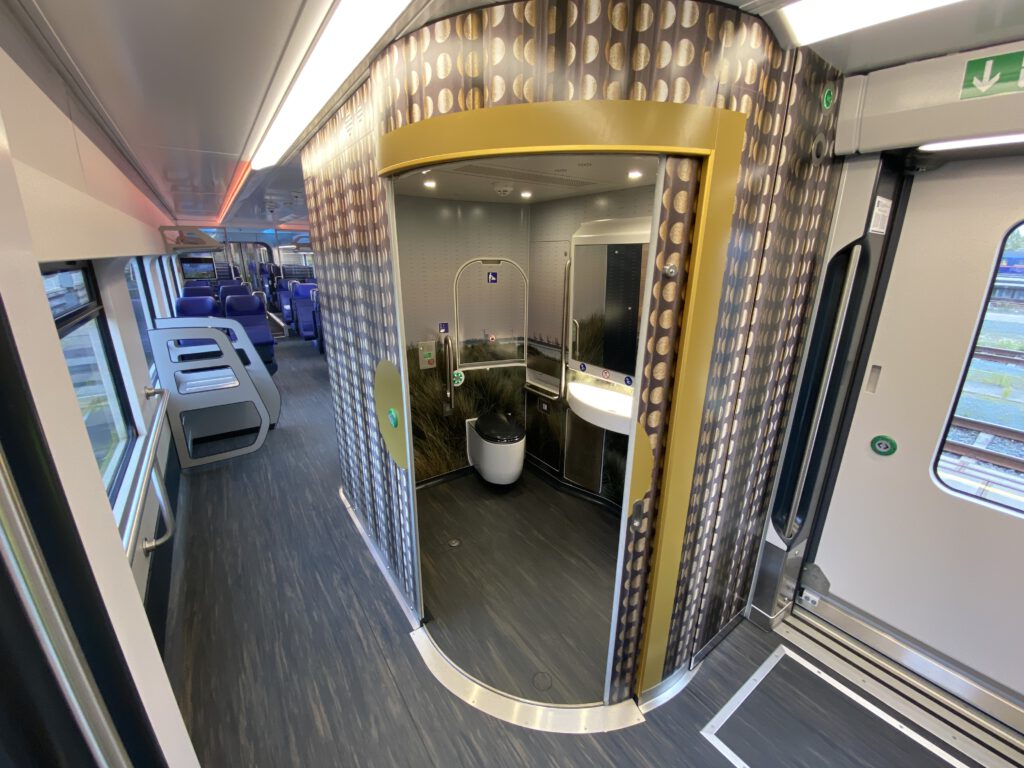
Doing your business with a view of the Dutch dunes? Hell yeah, says NS. Image: NS
The NS has ordered 99 of the new ICNG, and soon enough, they could be travelling across the country.
To start with, the NS envisions using the new model on the lines connecting Groningen, Leeuwarden and Enschede to Amsterdam, as well as between The Hague and Eindhoven.
Some are also being prepared to ride on the Belgian and German tracks. When exactly this can all happen is unclear.
What do you think about the new NS intercity? Tell us in the comments!
Extra staff and better pay may have solved Schiphol’s problems in security, but those in baggage handling have only gotten worse. The result? A new round of strikes, hoera!
The stars of this season of Schiphol Drama (our favourite reality TV show!): Baggage handlers, passenger handlers, and platform staff. 🌟
As AD reports, their strikes will be taking place under the slogan, “wages up, work pressure down” — and workers are planning a “wild action” at Schiphol Airport.
Messy business
Many are not happy to hear the news of an upcoming strike, especially in light of the upcoming Meivakantie (May vacation) on April 29.
“It’s very messy in the baggage basements and on the platforms,” an anonymous baggage officer tells AD.
As baggage is piling up in the baggage basements, handlers are becoming more and more impatient. Image: Freepik
“A date had already been set for a wild action. But Schiphol and the handling companies got wind of that. They threatened that salaries will not be paid, and even with dismissals. So, we postponed it.”
When exactly the new strike will take place, has not yet been announced.
Copycat strike action
In 2022, on the first Saturday of the May vacation, KLM’s baggage handlers spontaneously decided to put down their work. And their strike had its desired outcome: more staff was hired, and the working conditions at KLM improved.
The five other handling companies working at Schiphol, however, did not follow suit with similar measures — a decision that their staff has not forgotten.
Within these companies, low wages and moderate working conditions remain an issue and are creating a structural deficit of hundreds of workers.
While pressure on airlines and handling companies is increasing, they are unable to pay higher salaries. This is due to tight budgets and enormous losses during the pandemic, they announced in the autumn of last year.
Labour unions cannot take action either. Last year, they signed a “peace agreement” with Schiphol Airport.
“We also made financial agreements at that time,” FMV Aviation director Jaap de Bie tells AD, “but they were never applied.” Therefore, the Schiphol Agreement is now under great pressure.
What does Schiphol say?
The airport’s hands and feet are bound, according to a spokesperson.
While Schiphol itself was directly involved in the security staff problems as a client, it now merely stands on the sideline. The clients of handling companies, after all, are the airlines, not the airport.
Despite attempts to persuade handling companies and airlines to go through with the previously agreed upon CAO wage increase, and even offering them a loan to do so, “it has not been addressed.”
“The ball is in their court,” the Schiphol spokesperson tells AD.
Pointing fingers
So, while all involved parties are looking to each other for a solution, the chaos behind the scenes of the Netherlands’ busiest airport continues to unfold.
“I wouldn’t be surprised if the unrest comes to the surface in the coming weeks,” says union leader De Bie. Oh jeetje. 😳
In that case, us passengers will once again be the ones bearing the burden.
Are you planning on flying from Schiphol this May? Tell us in the comments!
A 56-year-old woman unleashed chaos on the A12 on Tuesday morning after causing two separate collisions and THEN getting hit by a car herself. She was taken to the hospital with minor injuries.
Yesterday at around 7:20 AM, the woman collided with one car. She then walked several times across the A12 highway near Zoetermeer, causing a further collision before she was struck by a car, reports NU.nl.
Walking on foot across the highway
You may be wondering how on earth one woman can cause so much chaos — the answer is simple: she walked where people really shouldn’t walk. Let’s break this all down.
The woman first drove into another vehicle while on the A12 slip road in the direction of Utrecht. However, she then continued by car onto the highway straight after the accident.
According to the police, the woman then stopped her car on the left side of the highway and got out of the car. She then tried to walk across the road in the direction of The Hague, causing another collision between two cars.
Luckily, the woman wasn’t hit and walked away without injuries. She then tried to walk back to her car — now on the other side of the road.
After walking a few hundred meters on the highway, she was hit by a car. Luckily, she only sustained minor injuries.
Delays on the A12
The result of the accidents? As the police say: “chaos”, writes NU.nl.
Op de #A12 bij Zoetermeer zijn in beide richtingen ongelukken gebeurd. In de richting van Utrecht is de weg dicht. Verkeer wordt vanaf knp. Prins Clausplein omgeleid via de A4/A3/A20. In dit artikel lees je meer 👇 https://t.co/f3jO1G8cSb
— Rijkswaterstaat Verkeersinformatie (@RWSverkeersinfo) April 18, 2023
Translation: Accidents have occurred in both directions on the #A12 near Zoetermeer. The road is closed in the direction of Utrecht. Traffic starts from knp. Prins Clausplein diverted via the A4/A3/A20. You can read more in this article.
The A12 side in the direction of Utrecht and the left lane in the opposite direction were closed until about 9 AM that morning — during peak travel times.
Once the woman’s treatment at the hospital is completed, she will be considered a suspect by the police.
Folks, you can officially commute again! This upcoming Thursday, trains will rev up their engines and run once more between Leiden and The Hague.
Following a horrific accident in Voorschoten that occurred two weeks ago, the tracks between Leiden and The Hague were severely damaged.
As a result, trains were halted between the two cities, and many train routes could travel no farther than Leiden. Passengers resorted to cramped buses to get between the two cities.
Thankfully, this traffic chaos will now come to an end on April 20.
What happened again?
While the chaotic traffic has been a bit of a nightmare, for those involved in the accident, it was far worse.
During the train crash, a freight train collided with a construction crane. As a result, dozens were injured, and the operator of the crane lost his life.
How did this happen? An investigation by ProRail showed that the crane had driven over the track too early. While a request had been made for the train traffic to halt, it was also believed the crane had already crossed.
While initially it was announced that recovery of the tracks would last until Friday, April 21, ProRail has announced that trains will resume back to their normal schedules early morning this Thursday, reports NOS.
Time to call your boss to let them know that you can make it to the office on Thursday again. 😉
How has the train accident affected your daily commute? Tell us in the comments below!
According to a recent survey on working conditions in the Netherlands, 10% of employees felt discriminated against in 2022.
The National Survey on Working Conditions or Nationale Enquête Arbeidsomstandigheden (NEA), of the statistics agency CBS and research organisation TNO, is based on 61,000 employees who completed the survey.
According to NU.nl, the main reasons for discrimination against employees were origin, race, age, and gender.
Survey results reveal the truth
Figures from the NEA show that discrimination is still present in workplaces. Of the employees who felt discriminated against:
35% said they experienced discriminatory remarks, disregard or exclusion
25% felt that they had less chance of promotion
17% said they were paid less than they should be
6% experienced threats, violence or aggressive behaviour
Hoe bereiken we een inclusieve arbeidsmarkt? Resultaten TNO-programma inclusive work 2018-2021 #TNOhttps://t.co/5pz9dtYI53
Translation: How do we achieve an inclusive labour market? The results of the TNO programme on inclusive work 2018-2021 #TNO http://ow.ly/ghB450Lzx1I
Gender discrimination is still showing up, with 4% of women feeling discriminated against because of their gender, in contrast to the less than 1% of men that reported feeling this way.
Different professions experience more discrimination than others, with the transport and storage sector encountering discrimination more at 12%. Construction and agriculture sectors, on the other hand, are less likely to have discrimination at 6%.
Discrimination has an effect
CBS statistical researcher Luuk Hovius, says that it is difficult to compare results with previous years because different questions were asked in 2022.
Hovius also noted that employees who experienced discrimination were more likely to report sick, and it’s important to take the number of people affected into consideration.
“One in ten employees may not sound like much, but we are talking about 800,000 people,” explains Hovius. “As an employer, you should at least think about this, talk about it and raise it.”
Some actions to prevent discrimination in place
With trainees experiencing discrimination at the start of their careers, a possible solution to end this would be removing the need to apply for internships. This possible solution, however, is still being investigated by the government.
— CBS.nl Statistics Netherlands (@statisticscbs) March 16, 2023
In hopes of reducing age and disability discrimination, the government provides discounts and subsidies for employers who do hire older people and those with disabilities.
Doetinchem locals were in for a surprise on Monday morning when they were greeted by the sight of a wolf that thought their backyard was cosy enough to doze in.
Yup, you read that right. 😳 Sometimes you’ll find a squirrel or a cat in your backyard in the Netherlands, or in this case — a wolf chilling outside your home.
Once the residents discovered the wolf, they immediately alerted the police. A police spokesperson stated that they “received a report that a sleeping wolf was sleeping in a backyard,” reported the NOS. (Not exactly your typical 112 emergency call.)
The police called in a veterinarian and a wolf expert, who anaesthetised the animal and transported it to a veterinarian clinic. Since the wolf appeared to be in good shape, it was later released back into the wild.
Not the first time the wolf was spotted
Earlier that day, several residents of a Facebook page called “You are a Doetinchemmer if…” had come forward to report that a wolf was walking around in the centre of Doetinchem.
A wolf was also seen on the Bleek, a lawn near the city’s shopping centre, not far from where the previous wolf was spotted. Chances are high that it was probably the same animal.
Resident Silvia de Wolf-de Wolff was enjoying a casual morning walk with her dog when she locked eyes with the big bad wolf. “At first, I thought it was a shepherd, but then the animal looked at me, and I knew: this is a wolf,” she told the NOS.
The wolf just needed a nap
While it is not clear why the wolf went to sleep in the middle of a residential area in Doetinchem, ecologist Glenn Lelieveld thinks that the animal was worn out and needed to lie down.
“It could be that the animal was looking for a place to rest, couldn’t find it and kept running until it couldn’t anymore and laid down exhausted in a backyard to recover,” Lelieveld told the NOS.
Based on its teeth, Lelieveld concludes that it was likely a young, wandering wolf. As it was uninjured, the animal was taken to a veterinary clinic, where it was allowed to recover until its release.
What would you think if you found a lying wolf in your backyard? Tell us in the comments below!
A man was found dead in the landing gear of a KLM plane at Schiphol Airport on Monday, April 17. This was confirmed by the Royal Netherlands Marechaussee.
As the AD reports, the man was hiding in the aircraft’s wheel arch and is believed to have died of hypothermia. The Marechaussee rules out a crime.
The Dutch Koninklijke Marechaussee (Royal Marechaussee) is the national gendarmerie force of the Netherlands, performing military and civilian police duties.
Origin unclear
The aircraft on which the victim was found had flown from Canada to Amsterdam.
Before that, the plane had made a stop in Lagos, Nigeria, among other places.
It remains unclear where the man climbed into the plane’s wheel arch, but further investigation is being done to find out the exact circumstances of the case.
Incidents like this one often have the same outcome, a spokesperson from the Marechaussee tells AD, and most stowaways don’t survive their journeys.
On long flights like the one from Canada to Schiphol, the wheel well can reach a temperature of -50 degrees Celsius and, due to the high altitude, there is too little oxygen to survive.
Not a singular incident
While this may sound like an extraordinary occurrence, it’s sadly more common than you would think. To flee from their country of origin, more and more people hide in planes’ landing gear.
In fact, two similar accidents have occurred in the Netherlands in recent years. In 2021, a deceased man was found dead in the wheel well of a plane from Nigeria to Schiphol.
In 2022, a man survived an 11-hour flight from South Africa to Schiphol Airport. He was taken to the hospital with severe symptoms of hypothermia and later applied for asylum in the Netherlands.
Is there a way to get out of paying for public transportation? Yes. Is it worth the risk that comes with the scam? That’s for you to decide. 🚆
OVpay, a new system where you check in with your smartphone, can easily be cheated. How, you ask? By using an app to make disposable digital cards. RTL Nieuws tested this out and proved that it is indeed true.
A free ticket to ride
When OVpay is used to travel, transport costs are only debited at the end of the day. If a physical card is used and payments do not go through at night, then the card is blocked.
A free mobile application allows disposable digital cards to be deleted before the payments have to be made. The digital card then doesn’t exist anymore, which means it can’t be blocked by OVpay when the payment is unsuccessful. Helaas pindakaas!
These travellers could then make a new disposable card for every trip, and continue riding for free.
Will scammers get caught by conductors? The answer is nee. If train conductors check, it only shows that the traveller has checked in and where.
This means that they have a valid ticket — or so the conductors think. 👀
The move to OVpay
Transport companies have invested €100 million for OVpay to replace the ov-chipkaart (public transport chip card). OVpay allows travellers to check in with a bank card or a smartphone.
#OVpay is coming to town! It seems that trams and busses of @RETRotterdam are the only ones who still do not support OVpay. Metro was integrated two days ago. 👍 pic.twitter.com/ss7DT089sa
Whilst Translink knows about disposable digital cards being used to abuse OVpay, they aren’t doing anything to stop it.
“Fortunately, most travellers are in good faith,” Translink tells RTL Nieuws, “but we are not naive and, as with all other payment systems and industries, there are, unfortunately, attempts at fraud.”
Warning to scammers
Translink and the Betaalvereniging (Payments Association), which represents the banks, warn that scammers could face consequences.
“Ultimately, the damage will still be recovered from those cardholders,” the organisations write. “They can be banned for a long time by banks from most of their services.”