Home Blog Page 349

Holy smokes! Flavoured e-cigarettes to be banned from Dutch markets starting October 2023

Starting in October 2023, some flavoured e-cigarettes will be banished from markets in the Netherlands. 🚬

Vaping has become a growing trend that’s particularly used for aesthetic purposes by the youth. 

Though, what many fail to realise is that a Juul pod has as much nicotine as almost two packs of cigarettes, hence why the Dutch government wants to deter youngsters from using it by taking away its flavour.

A New Year resolution

Folks can expect the ban to take place from October 1 of next year, covering many flavours of the vape.

By January 2023, stores selling the substance will have nine months to get rid of their existing stocks.

The ban will also include any packaging that contains images of e-cigarettes, as well as the liquids that are sold under incognito names, such as “bad boy fuel” or “chillin”.

A step towards healthier habits

Expert Esther Croes from the Dutch research institution, Trimbos, says that the ban is a step in the right direction, considering how addicting the flavourful e-cigarette can be for young people.

Oftentimes, a unique selling point about e-cigarettes is that the substance helps tobacco smokers quit their unhealthy habit — but in truth, it only worsens it. 

READ MORE | What Amsterdam bars can I smoke weed in (that aren’t coffeeshops)?

“And if you consider that one in five adults smoke, using something that should be the solution to stop smoking is quite disappointing”, Croes tells the NOS.

The addiction is all in the flavouring

In addition to the copious amounts of nicotine, e-cigarettes also come with 16 different flavours, and it’s one of the main reasons why youngsters are super hooked on them.

This is why the RIVM wants to ensure that a taste ban is implemented on the device, making it less appealing to the public. 

READ MORE | Visiting a coffeeshop in Amsterdam: etiquette, tips and tricks for first timers

“Essential parts are missing to get the taste right. With this, the Secretary of State goes beyond just a taste ban, because no tobacco can be made with these ingredients”, Emil ‘t Hart of the trade association, Esigbond, tells the NOS.

The plan was in the air for awhile 

According to the NOS, the plan to ban vape flavours was already set in motion back in 2020, when State Secretary Blokhuis brought its harmful effects on teens to light.

Several websites that sell them have already put up a last-call notice for folks to order their Juuls before it sells out completely. 

READ MORE | Amsterdam’s best weed: guide to coffeeshops and cannabis [2022]

“The expectation is that hoarding will occur before the taste ban comes into force. Since the expected hectic pace at the wholesalers, we cannot give any guarantees”, one seller’s website tells the NOS.

What do you think about e-cigarettes being banned? Tell us in the comments below! 👇
Amsterdam says no to rowdy stag parties and overexcited tourists; introduces new measures

Visiting Amsterdam for a weekend of boozing, smoking, and pre-wedding nonsense? You may have to rethink that party, as the municipality is making plans to limit the number of tourists in the coming years.

Amsterdam is officially tired of raucous stag parties and tourists visiting to ‘go wild’. The number of tourists staying overnight in Amsterdam grew to an outstanding 14.6 million in the third quarter of 2022.

And, the municipality has decided this is simply too many people. The council has decided that if the expected number of tourists rises to over 18 million in 2023, measures will be taken, reports NOS.

Earlier closing times and smoking bans

To curb the attraction of tourists coming to Amsterdam, the council has proposed a number of anti-fun rules.

Alderman Sofyan Mbarki of Economic Affairs proposed restrictions to the city council, though they have yet to decide.

Mbarki has targeted the Red Light District in particular, a popular destination for incoming tourists looking to attend strip clubs or experience the Netherlands’ open-minded attitude to sex work.

It has been proposed that catering establishments must close at 2 AM and window prostitution should end at 3 AM.

Other proposed measures to limit the number of tourists in Amsterdam were;

  • a new smoking ban in parts of the city centre
  • ban on selling weed after 4 PM
  • limiting the number of boarding places for party boats
  • encouraging hotels to host tourists for longer stays
  • increase tourist tax on river cruises and in certain areas of the city

Increase in tourism since the pandemic

Since the coronavirus pandemic, the number of tourists has reached higher than before the lockdowns.

Amsterdam residents launched an initiative called ‘Amsterdam has a choice’ out of concern for noise and public nuisance.

As Mbarki says in his letter, “We want to get rid of commercial parties who earn their money from vulgar tourist entertainment in the already scarce public space in the city centre.”

Many commercial businesses make massive profits from tourists, but this does not accommodate for Amsterdam citizens.

According to Mbarki, this “entertainment does not account for Amsterdammers who live or work in the city.”

Does this impact your plans to visit Amsterdam in 2023? Tell us in the comments below! 👇
The Dutch government wants to build two new nuclear power plants by 2035

The Netherlands will most likely host two brand-new nuclear power plants, based in the Zeeland village of Borssele by 2035. The project has broad support from the Dutch House of Representatives.

The Dutch government will ultimately contribute to construction costs. So far, €5 billion has been allocated to kick-start the project, writes RTL Nieuws.

A nuclear village

Borssele is fit for the task of being a nuclear village, well, because it already is. There’s been a nuclear power station in the area since 1973, meaning the space and infrastructure is already present for the two new plants.

Although the project depends on local support to go ahead, the Dutch government is optimistic about the prospects.

Costly, but forward-looking

The construction of two new nuclear power plants is not a cheap affair. However, additional subsidies will likely be made available to help the process.

Nuclear energy is seen as a sustainable alternative, and the new plants are expected to produce up to 15% of Dutch energy consumption in the coming years.

That’s more than five times as much as the current Borssele plant produces.

What do you think of the Dutch nuclear plans? Tell us in the comments below!
A sustainable success! No compensation for Dutch coal-fired power stations

The German energy companies RWE and Uniper have just lost their lawsuit, claiming the right to billions in compensation because of the Coal Prohibition Act.

The Act bans all coal burning in the Netherlands from 2030, in a Dutch effort to limit the country’s CO2 emissions, and fight climate change.

And, you guessed it, coal-based power stations in the Netherlands are fuming with rage. 😬

A big investment

While some companies choose to put their money towards climate-friendly projects, RWE is an example of completely opposite behaviour.

The company recently splurged €3.2 billion on a coal-burning power station in Eemshaven, writes RTL Nieuws. And they are not alone.

READ MORE | 9 surprisingly unsustainable Dutch habits 

With the Coal Prohibition Act, however, stations like that in Eemshaven will have two options: find a more future-proof revenue model, or shut down.

Well, RWE and Uniper went for a third option: sue the government and hope for the best. But, despite how the saying goes, three wasn’t their lucky number.

No right to compensation

Honouring its name as the “City of Peace and Justice“, the judge in The Hague recently announced that the companies had no right to compensation, as they were given plenty of time to restructure before being forced to close down.

READ MORE | 17 ideas that make the Dutch sustainability super-heroes

Minister of Climate and Energy, Rob Jetten, has described the ruling as an important precedent for future climate conflicts between the Dutch government and large polluting corporations.

In a statement to RTL, RWE claims it is currently considering appealing the ruling, claiming the company’s property rights to be infringed.

The decision is nevertheless seen as a sustainability victory and an important symbol of the Dutch government’s climate priorities.

What do you think of the ruling? Tell us in the comments below!

Challenge ahead: The Dutch to meet the U.S. in World Cup round of 16

The team of orange meets the Americans in the round of 16 of the football World Cup this Saturday, the first knockout round. Rumour has it they’re in for a rough ride.

The coach of the Dutch national team, Van Gaal, speaks from experience when he says that his orange players should expect a challenge this weekend, writes the NOS.

The stakes on Doha’s fields have increased, as the 2022 World Cup moves towards the round of 16.

Undefeated

The U.S. team has so far been undefeated in Qatar, with one draw against Wales, and their latest win against Iran, 1-0.

The Dutch victory over host-country Qatar last night sealed the deal for a Dutch spot in the round of 16. But, despite being a good team, the Dutch are up for a challenge.

So far, the men in orange have beaten the Americans four out of five times the two teams met on the field. So, let’s hope we’re in for a long winning streak!

READ MORE | Dutch supporter kicked out of Qatar stadium over “OneLove” armband

Fans are on edge across the Atlantic Ocean, as the U.S. team had to send one of its top players, Christian Pulisic, to the hospital for an abdominal injury caused during yesterday’s match against Iran.

Tensions are rising

After the 2015 game, where the Dutch lost to the Americans 3-4, tensions and expectations quickly rose as Saturday’s match was confirmed on the agenda.

READ MORE | Dutch cities riot after Morocco’s World Cup win over Belgium

The U.S. team has not gotten this far in a World Cup since 2014, but fans on both sides of the Atlantic are shaking in their soccer shoes.

What do you expect of Saturday’s game against the U.S.? Tell us your predictions in the comments below!

Freezing temperatures? Meteorologists predict a relatively cold Dutch winter

1

As days get darker, leaves turn brown, and arctic chills sweep across the lowlands, it’s clear that winter is here — but how cold will it actually get?

Dutch meteorologists are tracking the extreme cold that’s set to hit the Netherlands in the coming months. ❄️️

While the latest predictions showed that the weekend just before Sinterklaas will bring a particularly cold wave, it’s the weeks following that many must look out for. 

A freezing weekend

According to the KNMI, a bout of freezing air will surge across the country over the weekend of December 10, reinforcing temperatures of below five degrees. Brrr! 🥶

Though, weather fanatics predicted that the following weekend would bring an even colder front. “An increasing chance of freezing rain and snow, just like the winter of 1977”, a spokesperson tells RTL Nieuws.

We can feel the chills coming through the screen. 🥶 But that view, though. 😍

It’ll be cold… but not that cold

In light of the climate crisis, extreme temperatures were also foretold last summer, when lowlanders experienced record-breaking heat waves of 45 degrees.

These drastic changes in the climate surely affect the icy temperatures set to approach the Netherlands in the coming weeks.

READ MORE | Wintertime on ice: 6 spectacular ice rinks in the Netherlands

However, for now, Dutchies can rest easy knowing that meteorologists, still, do not expect super cold (we’re talking, bone-chilling Canadian-winter type of cold) weather for the time being. 😮‍💨

“There may be some freezing cold locally tonight, but then it will be just at or below freezing point. Until Saturday, it will certainly remain above zero degrees during the day.”

READ MORE | How to survive the Dutch winter: weather, clothing, and more

“At night, there is a chance of light frost, with a maximum of three degrees below zero”, Meteorologist Martijn Dorrestein of Buienradar tells RTL Nieuws.

What about snow?

On the weekend before Sinterklaas, Nederlanders can expect to see some frost, and, if we’re lucky, perhaps even a wee bit of snow flurries. 🌨️

Considering that our next-door German neighbours are set to have snow that weekend, there’s a big chance that we will too.

READ MORE | Sinterklaas for expats: all the Dutch you need to make it through the holiday season

While meteorologists can’t predict whether it will snow in the distant future, temperatures will be slightly colder than average — and that, in itself, is a special thing for the Netherlands.

How will you deal with the cold front coming to the Netherlands? Tell us in the comments below! 👇

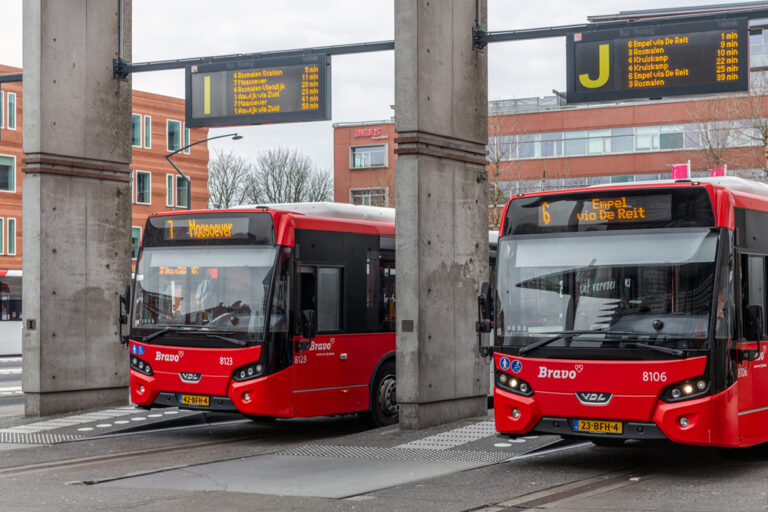
Amsterdammers! You can finally use your bank card to check into Dutch public transport

Say goodbye to your little friend, because your blue or yellow chipkaart will no longer be needed to check in for public transport in Amsterdam.

Hoorah! By the end of the year, the OV-Chipkaart will become obsolete as the Dutch transport system advances to a new payment method — OV-Pay.

Rather than needing your chipkaart to check in, you can now do so with your bank card, reports Het Parool.

Travel from Amsterdam with ease

Forgot your OV-Chipkaart? No, trouble, because now you can check in with your bank card.

How does it work? Well, very similar to how the chipkaart works.

To check in using your bank card, hold your phone, smartwatch, or contactless card against the device. Later, the fare will be deducted from your account under the name NLOV (Nederlands Openbaar Vervoer).

Yes, you heard that right! Not only can you use your contactless bank card, but if your card is linked to your phone or smartwatch, you can also use those to check-in.

READ MORE | Public transport in the Netherlands: the complete guide

And, don’t fear; just like with the chipkaart, you won’t be charged for going in and out of the gates at the stations without travelling.

Translation: OV-pay is indeed a new way to pay for your train, bus, tram or metro ticket. For business trips you still use your NS Business Card so that they can be invoiced to your company or employer.

An added plus to OV-Pay is that there is no minimum balance needed, so you can say doei to having to top up your chipkaart while your train pulls in. 🚅

OV-Pay not loaded with discounts

However, the one catch to using your card is that you can’t avail yourself of any subscriptions or discounts you might have for public transport.

So, for now, those of us who have the handy dandy Dal Voordel, we’ll have to keep track of those OV-Chipkaarts. 💳

Will you use OV-Pay? Tell us in a comment below! 👇

It’s a miracle: this Dutch energy company is lowering its prices in January

Consumers of one Dutch energy company will have a cadeautje (small present) this holiday season: lowered energy rates! 🎁

Unlike big Dutch energy providers Vattenfall and Essent, Eneco will reduce their variable rates from January 1, reports RTL Nieuws.

What does this mean for consumers?

Those that receive a new variable rate in January will be paying 10% less per month.

With 67% of all Dutch households holding variable energy contracts, this news definitely sounds like an early Christmas present for Eneco customers! 👀

Eneco’s reduced rates will apply to consumption above the governmental price cap.

What is the price cap?

The price cap sets a price ceiling of €1.45 for the first 1200m3 of gas and €0.40 for the first 2900kWh of electricity used, in order to protect consumers from being bombarded by sky-high energy costs.

READ MORE | All you need to know about the Dutch energy subsidy and price cap

At present, the current rate for gas and power are €3.04 per m3 and €0.76 per kWh, respectively (factoring in energy taxes for 2023 and 21% VAT).

Enjoying that price cap? There’s a catch

In order to account for the current price cap, the government will raise taxes in 2023.

VAT cuts will go from 9% to 21%, and tax credits (the amount of money that taxpayers can expect to see back) will take a nosedive.

Meanwhile, De Autoriteit Consument&Markt (the Dutch Authority for Consumers and Markets) recently announced that grid management costs are increasing by ten euros on average, which consumers are also expected to foot the bill for.

What do you think of Eneco’s decision? Tell us all about it in the comments below!

Dutch cinemas forced to raise ticket prices to survive the energy crisis

Cinemas in the Netherlands are hiking up their ticket prices in order to compensate for their sky-high energy bills.

While we may witness plenty of magic on those screens, even cinemas can’t escape the reality of the Dutch energy crisis.

From projectors to heating, movie theatres require a lot of energy to operate, ergo why their monthly bills are becoming a very real problem.

More expensive? Why?

A large reason behind these high builds is, well, the large and old buildings in which Dutch cinemas are located.

Take the Rialto theatre in Amsterdam, for instance. Located in a one-hundred-year-old, poorly insulated building, a hefty energy bill for the heating is inevitable.

READ MORE | Amsterdam’s Pathé Tuschinski snatches top spot as most beautiful cinema in the world

Plus, considering its age, the building regularly needs fixes and repairs to remain intact. As a result, they had to boost their ticket prices.

“Our building in the De Pijp district is a hundred years old. That is why we are currently in the process of replacing the last windows with double glazing,” head of operations Jennie Zijlmans tells NU.nl.

Fortunately, the price hike doesn’t apply to children and students.

READ MORE | 11 movies about Dutch culture to watch

Taking a similar route, the Lumière Cinema in Maastricht raised its ticket prices a few months ago to combat the high energy bills.

“We are now gathering all the cost items together to see where we can still cut costs. The main concern is, of course, that energy prices will continue to rise and thus become an unmanageable and unaffordable cost item”, director Nico Haenen tells NU.nl.

Unless the Dutch government steps in to offer financial aid, they see no other choice but to raise their ticket prices for customers.

Needless to say, the pandemic changed the way people view movie theatres for good. It’s no longer a luxury most are interested in taking advantage of.

A stepping stone to cutting costs 

Movie theatres have been looking at ways to cut costs as much as possible, such as by turning off projectors in rooms that aren’t being used, and by turning down the heating a few degrees.

However, this won’t make much of a difference, particularly because of how big the buildings are, and how much energy they guzzle on a daily basis.

READ MORE | 8 unmissable movies about the Netherlands in WWII

“We buy the energy with the other organisations and are therefore large consumers. For us, it means that next year we will go from €400,000 to €1.2 million in energy costs,” CEO Dirk Nijdam tells NU.nl.

Looking to the Dutch government for support

Movie theatres will try everything in their power to limit the increase in ticket prices and ensure that it remains a place where one can escape the house for a cheap night out.

“We do what we can, but we don’t have that many options. For a solution to the high energy costs, we look to the government. They must step in”, Nijdam of Forum Groningen tells NU.nl

What do you think of the increase in cinema ticket prices? Tell us in the comments below! 👇

Dutch sports minister leaves during budget debate… to fly to Qatar

Sports Minister Conny Helder is under fire from her fellow Members of Parliament due to her decision to leave during an unfinished debate about last year’s sport budget. The reason? To fly to Qatar.

The Dutch MP has been met with backlash after she decided to leave the debate early, reports RTL Nieuws.

Got a flight to catch

After a grand six hours of debate, at 11.30 PM, Helder departed from the cabinet in order to catch her flight to Qatar, determined not to jeopardise preparations.

But, according to the Socialist Party (SP), the Labour Party (PvdA), and the Party for Freedom (PVV), the debate was far from over, and they insisted that Helder should have finished the debate before departing.

READ MORE | Dutch cities riot after Morocco’s World Cup win over Belgium

On top of this, other MPs have made it clear they don’t want Helder to attend the matches in Qatar. SP member Michiel van Nispen says, “If the minister leaves this debate now, I don’t want her to come back. We want a real sports minister.”

“You don’t care, but I do”

However, Helder hit back with the words “you don’t care, but I do,”, and insisted that her departure was not about an unwillingness to continue the debate.

As VVD member Rudmer Heerema pointed out, it is quite normal that debates are suspended due to time.

Yet, Helder’s choice to go to Qatar is clearly unpleasing to the Chamber. The location for the FIFA World Cup has come with huge backlash due to Qatar’s stance on major political and human rights issues, such as LBGTQ+ rights and worker’s rights.

What is next for Helder, is uncertain. The debate is set to resume on Thursday.

Keep up to date with everything Dutch on the DutchReview FaceBook Page!