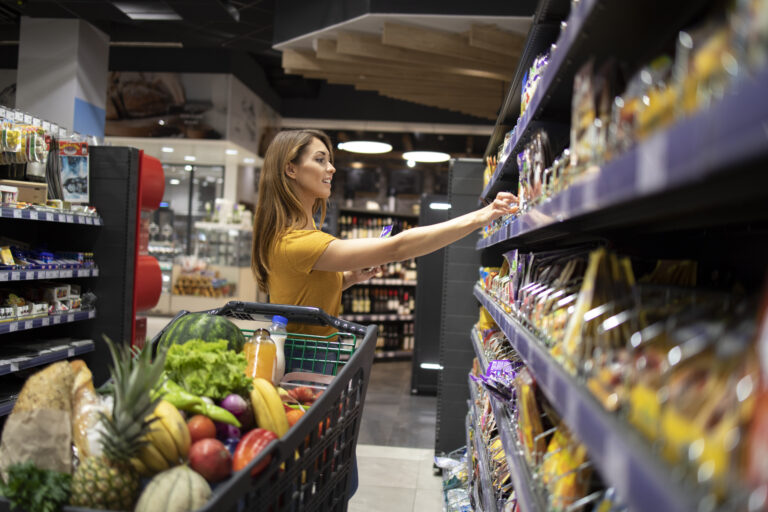
Who knew the delightful Dutch cuisine would make it all the way to Canada? Dutch specialities have made an appearance in a Canadian supermarket.
The supermarket has included an entire section that consists only of Dutch foods such as stroopwafels, hagelslag, appelstroop, and even specific Dutch brands like sambal oelek from Conimex.
The find was posted by user u/life to the r/dutch subreddit this week.
Yep, it seems that Dutch food is just that lekker.
The selling prices are also high: relatively cheap products in the Netherlands are almost double the price in this Canadian supermarket.
Dutch people have responded to this all over Twitter and Reddit, and the responses are divided.
On the one hand, it seems that the Dutchies are quite impressed and proud to see their favourite foods make it to a supermarket 6,450 km away from the Netherlands. 🎉
Other Dutch people are less dazzled by the Dutch foods chosen and have been pointing out crucial Dutch specialities that seem to be missing on the shelves.
Translation: What? They have biscuits but not coloured hagelslag?
A heated discussion
It wouldn’t be Reddit without a heated discussion going on between people. Ah, the internet! 😄
Multiple people made a statement about how Dutch Conimex products actually are. The question remains: are they really Dutch or not?
What are your thoughts on Dutch foods being added to a Canadian supermarket? Tell us in the comments below!
Customs found more than a thousand kilograms of cocaine in a shipment at a port in Vlissingen in South Holland.
During the check, 1279 kilograms of cocaine was found hidden in two containers filled with bananas. According to the Public Prosecution Service, its street value was worth more than €95 million.
The bunches of bananas came from Ecuador and were transported to Vlissingen port via Antwerp, but there was a slight slip-up along the way. 🍌
The drugs have since been destroyed, reports Omroep Zeeland.
Quiet in Rotterdam
For this to occur in Vlissingen is uncommon; usually, these large drug seizures occur in Rotterdam’s port. One shipment was worth over €200 million just last month. 😱
As a result, new legislation was introduced on January 1 to hold suspected offenders accountable for their crimes.
The accused could face several months behind bars or receive a hefty fine depending on the gravity of the offence.
What do you think about the port being used as an illicit drug depot? Tell us in the comments below.
Who doesn’t love a bargain? Getting a personal OV chipkaart for travelling the Netherlands is fast, relatively easy, and can save you a lot of money — after a bit of Dutch bureaucracy, of course. 😉
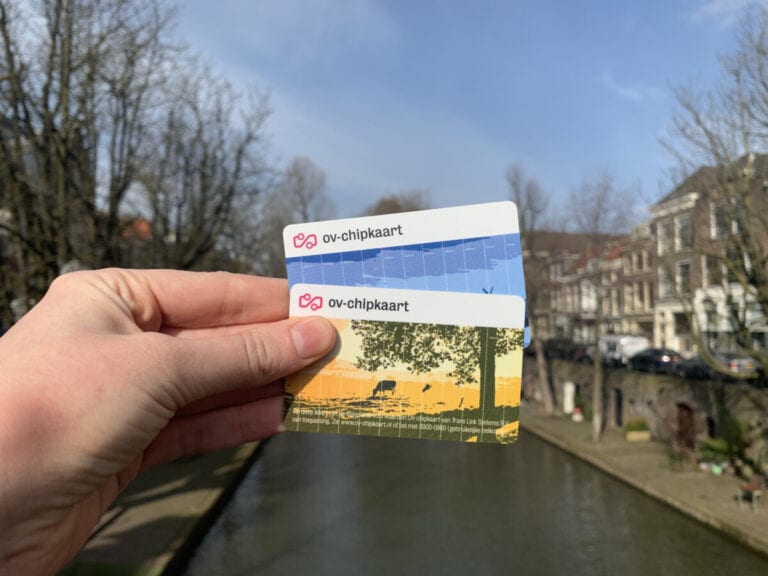
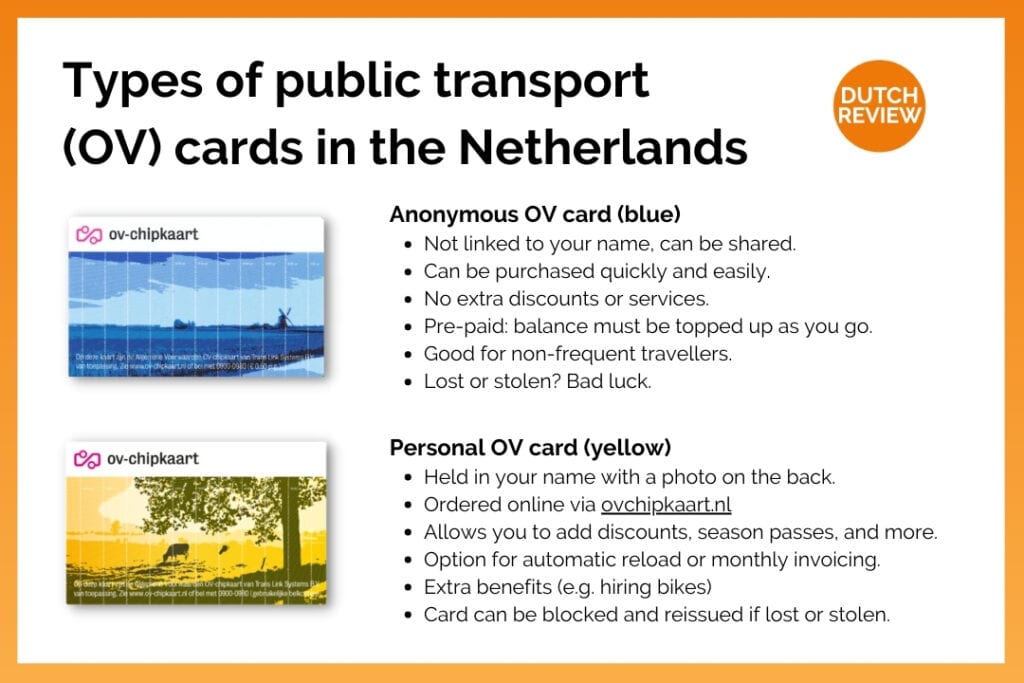
When you first arrive in the Netherlands, you’re most likely to stumble across the regular blue, anonymous OV (Openbaar Vervoer, a.k.a public transport) card.
This type of card works perfectly well on public transport and lasts for five whole years (as long as you don’t drop it in a canal).
But what you may not know is that upgrading to the yellow, personal OV card can get you loads of extra perks.
You can choose either an anonymous or personal OV card for Dutch public transport. Image: DutchReview
The process of getting a personal OV chip card is only a little bit more labour-intensive than the anonymous OV card. You’d have to register for one on the OV-chipkaart website.
On the bright side, it gives you loads of benefits. Here are just a few:
7. Save a stack of cash using subscription discounts
Whoever you are, with a personal OV chip card, you can get a subscription that gives you huge discounts on travel.
Depending on your choice, you can enjoy unlimited weekend travel, 40% off all off-peak travel (that’s pretty much any time except rush hour), unlimited travel all month long — or a range of other discounts depending on your situation. What a korting! 💰
6. Bring your friends along for cheap with group discounts
Want to share your discount with a friend? Samenreiskorting is a combined travel discount.
If your friend only has the blue OV card, but you’re blessed with a personal OV card and a subscription, your friend can load on the samenreiskorting at the station and enjoy 40% off their ticket too. Now there’s no excuse for your friends to bail on day trips!
When you’re travelling the Netherlands any money saved is a godsend. Use the samenreiskorting! Image: Depositphotos
5. Never have a low balance
Hit that snooze button because you can save precious minutes queueing to reload money on your anonymous card. You can choose to link your personal OV chip card directly to your Dutch bank account.
Then, there are a couple of ways you can choose to pay your NS balance for your personal card:
Receive an invoice at the end of each month, which is taken out automatically by direct debit, OR
Set the OV card to automatically top up at €10, €20 — €50 if you’re a baller 💰
Alright, technically this can all be done using a blue OV card too, but not only do you miss having a card with your very own face on it, but you’ll also miss out on all those great discounts. And, perhaps even better, armed with a personal OV card in those cities you can…
3. Cycle the streets on an OV bike
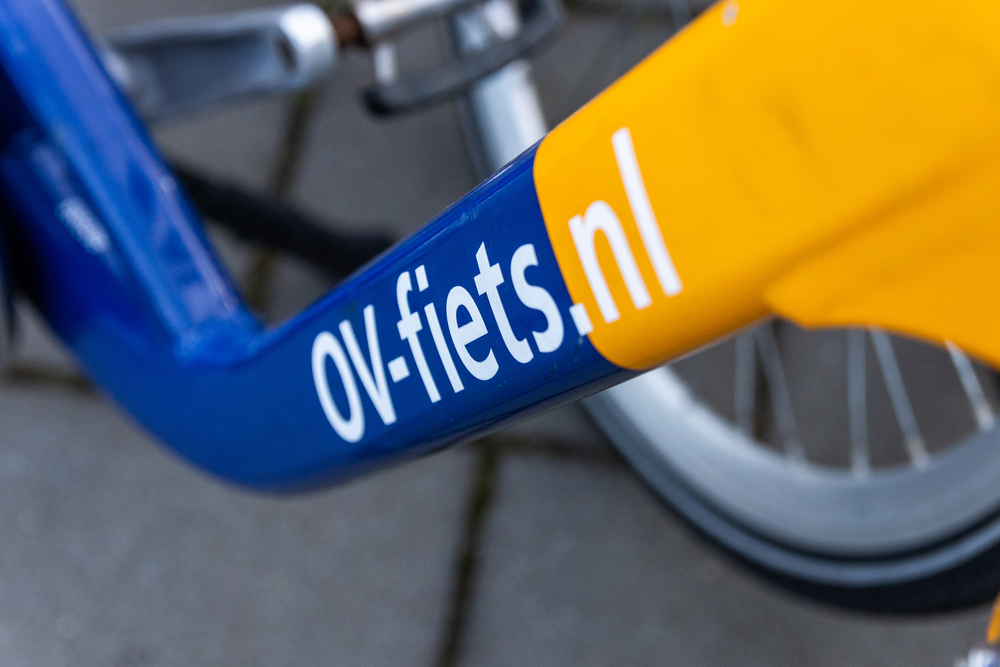
The personal OV card’s use isn’t limited to public transport, so explore a city like a true native by hiring out an OV bike. You can hire a bike for €3 for 24 hours, which is WAY cheaper than any bike shop.
Just grab a bike at the train station, cycle to your heart’s content, and return it to the same station you picked it up from (or a different one for an additional fee). It’s as simple as that.
On top of that, you can even hire an additional bike on your personal OV card — perfect if your friends or family are coming for a visit.
Get around in any city using an OV bike! Image: Depositphotos
2. Stow your personal bike securely (for free!)
Want to store your bike safely and pick it up at 2 AM after a biertje or two? The NS bike-storage facilities let you do just that.
Fietsenstallingen (bike parking) can be found at most train stations in the Netherlands. With a personal OV chip card, you can store your bike for free for up to 24 hours at many stations.
You can also pay to leave it there for longer if you’re visiting a friend for a few days (or a week) — just pay at the desk on the way out.
All you need to do to use this service is walk your bike in, scan your OV card, and choose a bike rack. When you come back, grab your bike, scan your card on the way out, and voila! You can also use an anonymous OV card for this, but you’ll need to pay as you go.
1. Take a jaunt through the station — just because!
Here’s a conundrum: you want to wave goodbye to your sweetheart as their train pulls away, but you don’t have the minimum balance of €20 on your anonymous OV card you need to get past the gate.
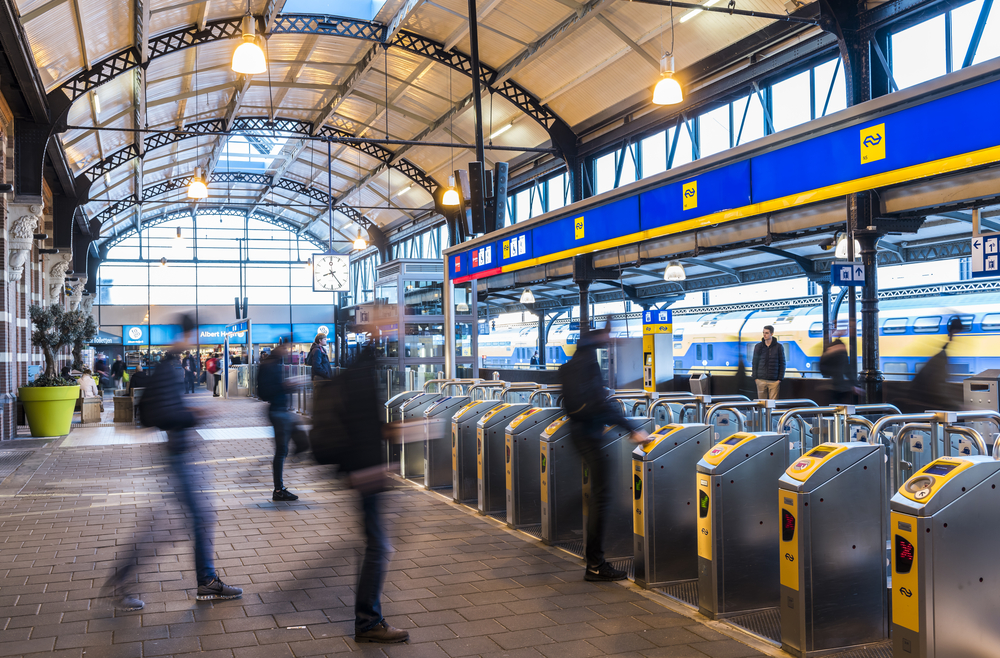
Well, with a personal OV chip card with a season ticket, you can check in and out freely and wander beyond the turnstile — as long as you check out at the same station within 60 minutes of checking in, of course!
Drop your “schat” off on the platform and enjoy an extra two minutes with them. Image: Depositphotos
Saving money, borrowing bikes, storing your bike for free — there are a lot of reasons to opt for the personal OV chip card.
The €7.50 pays for itself pretty quickly, but if the discounts aren’t enough to get your heart racing, the OV bikes will really do the trick!
What do you think about the personal OV chip card? Worth the investment? Tell us what you think in the comments!
Editor’s Note: This article was originally published in February 2021 and was fully updated in December 2022 for your reading pleasure.
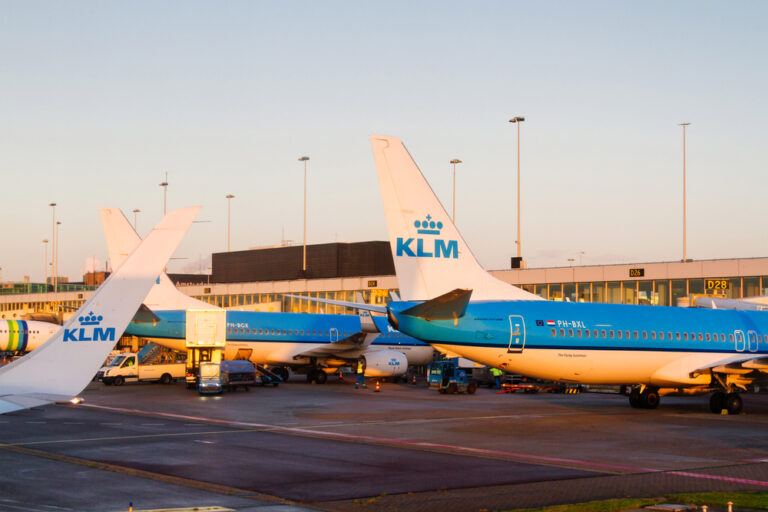
The 170-strong team will be tasked with making sure that even on the busiest of days (December 17 and 18, and January 3), passengers won’t have to come to the airport more than two or three hours before their flight.
We may need to see it to believe it, though, as this was the state of the queues two weeks ago:
However, from March 24, Sondag says that the airport will be looking forward to processing its usual number of passengers.
Tuck your fruit away when you travel
Despite the uptick in the number of security guards, more suitcases still have to pass through security machines.
These machines, however, aren’t without their flaws.
Often, a banana, an apple, or an issue of LINDA (a Dutch women’s magazine) is enough to set off the alarm. This means that the bags containing the “offending” items have to be manually searched — resulting in a waste of time and money.
Sondag admits that the present system needs to increase the airport’s ability to search luggage without hiccups. (Ya think? 👀)
What do you think of Sondag’s guarantee? Tell us all about it in the comments below!
Underdogs Morocco suffered defeat at the hands of France last night, ending their World Cup conquestand sparking unrest in major cities across the world.
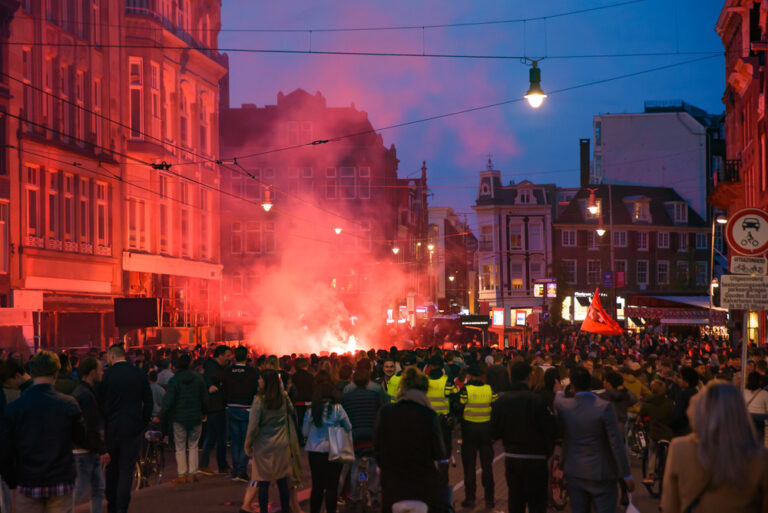
Despite the decision to stop public screenings of the match in cities such as Amsterdam and The Hague, supporters still took to the streets after the loss, causing havoc.
Supports set off fireworks across the Netherlands
In Osdorp in Amsterdam, more than 100 people were involved in a confrontation with the politie due to fireworks being set off, and an emergency unit was deployed in the area.
Three young people were arrested following the incident.
However, in areas such as Mercatorplein in Amsterdam West, it remained calm. There has been lots of unrest in this area following matches during the World Cup, and police were proactive. In fact, there were more police officers than supporters to be seen in the vicinity, reports the NOS.
In Rotterdam, there was also chaos, with fireworks and smoke bombs set off on the West-Kruiskade. So far, 14 arrests have been made for setting off fireworks and talking back to police.
Two more arrests were made in The Hague for setting off fireworks, but the city remained relatively quiet throughout the aftermath.
At least supporters were a bit more chill about the loss than they were about Morocco’s win last week:
In Utrecht, hundreds of people gathered, singing, dancing, and setting off fireworks in the city. Dozens of police officers were present to ensure the safety of everyone involved, and no rests have yet been reported.
Young boy killed in Montpellier
In Montpellier, France, a 14-year-old boy has died after being hit by a car, despite best efforts being made to save him.
Following celebrations from French supporters after their win in the cup, a young boy was killed after he was hit by a car.
Footage on social media shows a car driving recklessly through a group of pedestrians and supporters, though it is unclear if this is the car that hit the boy.
⚠️ Trigger Warning: violence, person being hit by car in crowded street.
La vidéo totale montre bien des jeunes qui tentent d'encercler la voiture de ce conducteur Vous pensez qu'ils se seraient arrêter juste a arracher le drapeau du passager ? Bien sûr que non ! C'est triste mais tout conducteur aurait eu le même reflex#Montpellierpic.twitter.com/zbbBLLBCjh
Translation: The total video shows many young people trying to surround this driver’s car. Do you think they would have stopped just ripping the flag off the passenger? Of course not! It’s sad, but any driver would have had the same reflex.
The final match for Morocco, and their last chance to secure a place in the World Cup, will take place on Saturday, December 17, against Croatia.
Come April of next year, Amsterdam residents earning up to 130% of the minimum income can apply for up to eight free OV (“Openbaar Vervoer” or public transport) tickets per household.
As Het Parool reports, this comes as an initiative by the Amsterdam vervoerregio (transport authority) to compensate “people who desperately need [it]” for the rising public transport rates.
Did someone say free OV?
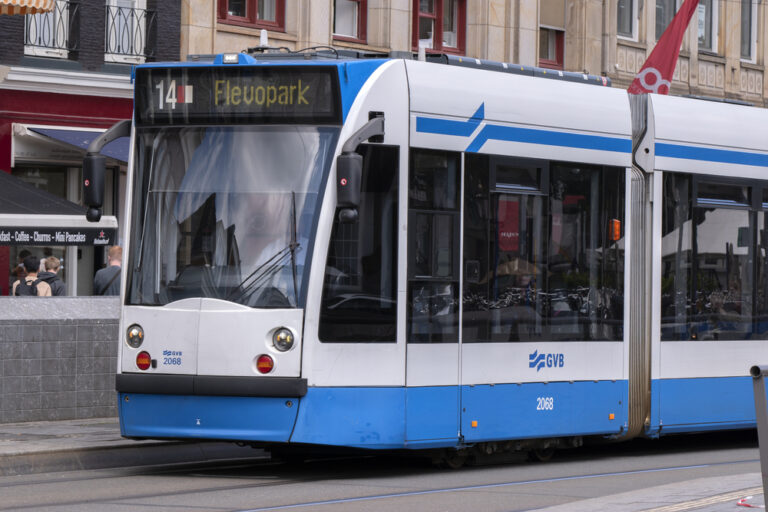
Yes! The tickets in question will allow an hour and a half of free use of all forms of public transport that are operative within the Amsterdam region — meaning buses, trams, and metros of the GVB, EBS and Conexxion. 🚌
While trains are not included in this initiative, the Amsterdam Transport Authority believes that the offered tickets will be sufficient to allow households to travel to and from all destinations within the Amsterdam region.
The plan still needs to be approved at the Regional Council meeting, which will take place on 20 December. This meeting, along with other necessary preparations, is the reason why the tickets won’t be given out until spring of 2023. 🎟️
Rising cost of public transport
Similar to the price increase of NS’ train tickets in 2023, prices for regional public transport will also rise sharply in the coming year. 📈
While they are set to rise at an average of 7.24%, Amsterdam and its surrounding areas are preparing to see an increase of 8.4%! Reasons for this sharp price increase include the rising energy cost, and inflation.
Future plans
The city council of Amsterdam may introduce other plans to make public transport even more accessible for the public.
For instance, it previously announced that it is planning to make public transport free on Saturdays for all children up to age 11. Fingers crossed! 🤞🏼
What do you think of Amsterdam’s public transport plans? Tell us in the comments!
No longer will you have to order your vibrators from online stores discreetly. That’s right, ladies! As of now, many HEMA stores will be selling vibrators in collaboration with sex toy makers, EasyToys.
The new line at HEMA focuses on sexual pleasure “without embarrassment,” reports De Telegraaf.
Apart from lubricants, vibrating eggs, gift sets, condoms, massage oil, and vibrators will be found on the beauty and self-care shelves at HEMA.
Normalising sexual pleasure
HEMA has taken a playful direction by selling sex toys at their stores with the goal of normalising sexual pleasure.
Face masks, makeup, and shower products contribute to making women feel good about themselves, so why stop there?
Unit manager of the store department, Tamara van Geest, explains that “sexual pleasure is part of feeling beautiful and healthy. It’s something we at HEMA see as something very normal and should be made accessible.”
Eroticism group, EQOM, the parent company of EasyToys, stands with HEMA, stating that “sex toys are now a socially accepted phenomenon.”
Mixed reviews
While we’re all for sexual freedom in 2022, there are divided reviews about it, leaving a lot of people wondering if HEMA is crossing a line.
Ik weet nog niet wat ik hier precies van moet vinden. Ik neig naar WTF omdat de Hema een family friendly winkel is. Dus ik vraag me wel af of deze units ook fysiek in de winkels komen.
Translation: “I don’t know exactly what to think of this yet. I tend to WTF because the Hema is a family-friendly store. So I do wonder if these units will also be physically available in stores.”
People are finding it strange that HEMA would sell vibrators as a ‘family-friendly’ store.
Others are not fully against the idea but think that HEMA should sell these sex toys online rather than in person or make a special +18 department where toddlers won’t come across.
What do you think about HEMA selling sex toys from now on? Tell us in the comments below!
Just a few minutes’ walk from Blaak station and the Markthal, you’ll find a cosy but delicious restaurant serving you godly Italian food.
This fun-sized restaurant climbed to the top three of TripAdvisor’s best restaurants in Rotterdam. So, what sets it apart from your local Italian eatery?
Say you’re in the mood for Italian food, but — and this happens — not just for classic pizza and pasta. Instead, you’re on the hunt for:
Fresh and classic great food
Italian food by actual Italians
An affordable and awesome journey into flavour country
Can’t be that hard to find such a place in a big city, right? You’d be surprised! Thankfully, we found Panzerò.
Real Pugliese food
My expat experience consisted of a short year in Italy — this was during a time when Facebook was still cool, and Mark Rutte wasn’t prime minister.
Much has changed since then, but I’ve never lost the love (or resulting kilos) for all that good food my Pugliese roommates served me.
Food doesn’t get more Italian than this! Image: DutchReview
While Rotterdam may not have my old housemates, it does have Luigi, our passionate host from Puglia and the proud owner of Panzerò. Upon founding Panzerò, the team had a few goals:
Get almost all ingredients as fresh as possible from Puglia,
Introduce the people of Rotterdam to Italian food beyond just pizza and pasta
Focus on the staple of Panzerò, the so-called Panzerotti. These doughy delights resemble a mini calzone but are fried and oh-so-good.
A little bustling Italian holiday
Sitting down in Luigi’s restaurant makes you feel like you’re on a holiday in Southern Italy for a moment. Adding to the good vibes are the international staff, who you can tell really enjoy working there.
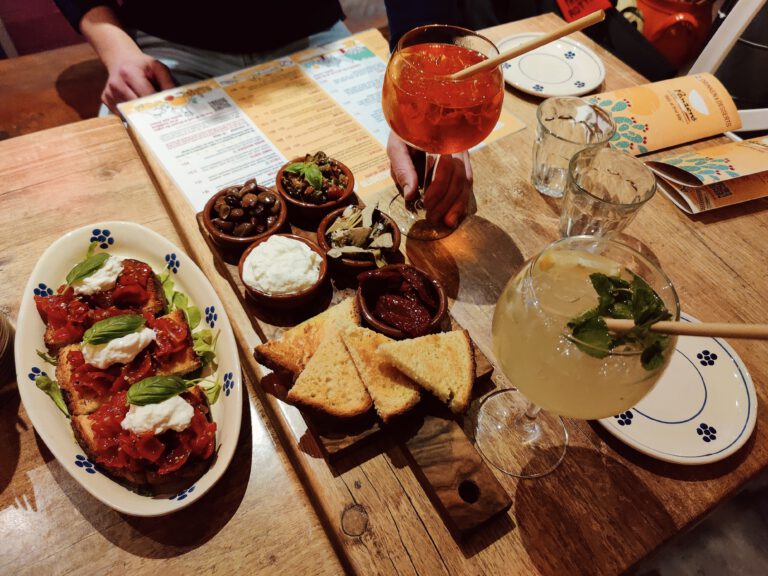
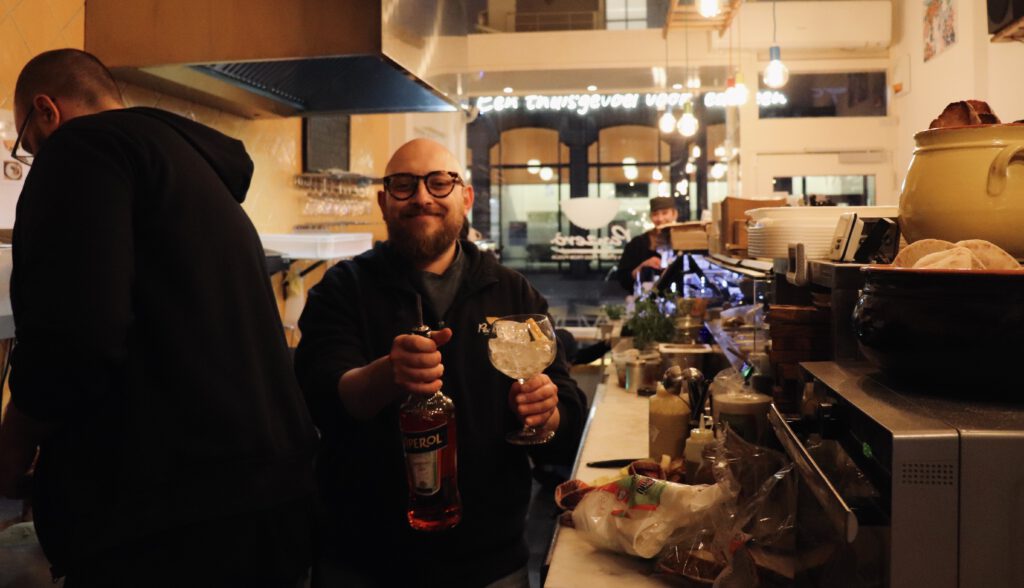
Now it’s time to really lean into that holiday feeling and start your food journey with a giant spritz and some starters.
Luigi preparing some refreshing Aperol Spritz. 🍹 Image: DutchReview
The freshness of it all
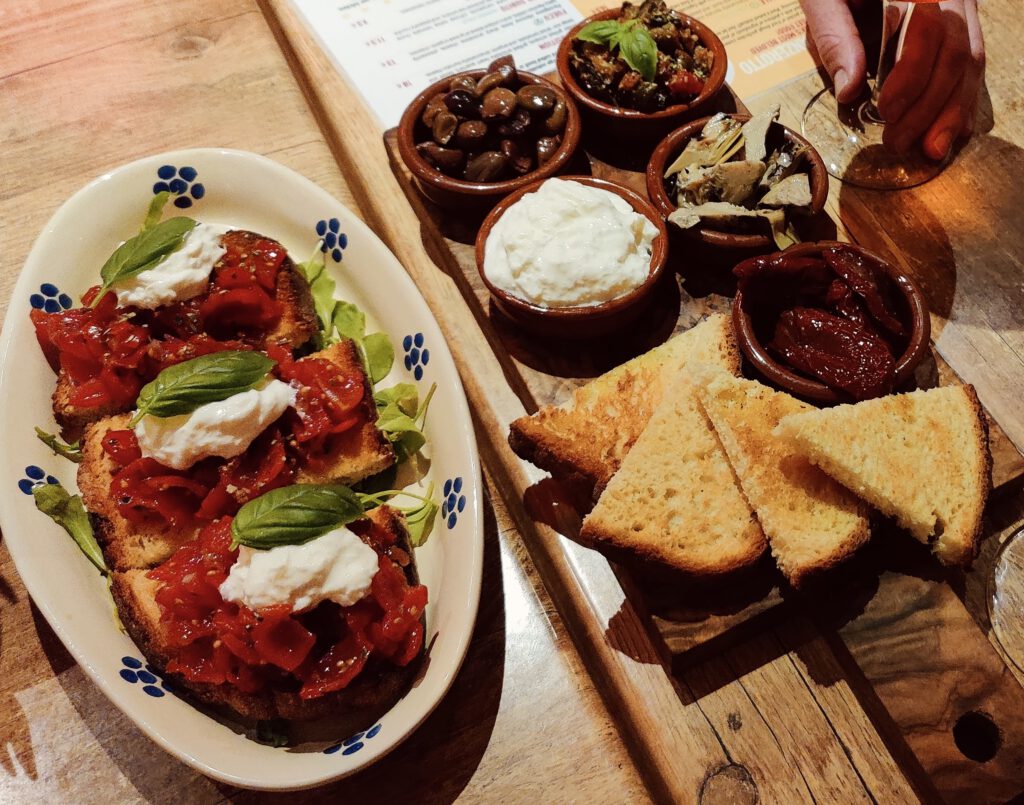
It’s here when you can really taste the difference. Olives, burrata and sun-dried tomatoes — the flavours hit harder than normal, and you can feel the Italian sunshine in your mouth.
Sun-dried tomatoes, olives, and burrata as part of our starters. 😋 Image: DutchReview
Did I mention that it’s totally suitable for vegetarians too? There was no meat in sight during our meal, and the sumptuous menu is well balanced with tons of great non-meat options.
If you’re feeling extra fancy — or it’s just a Tuesday evening — treat yourself and order a glass or bottle of Primitivo as well.
A tale of Panzerotti, Polposition, and Parmigiana
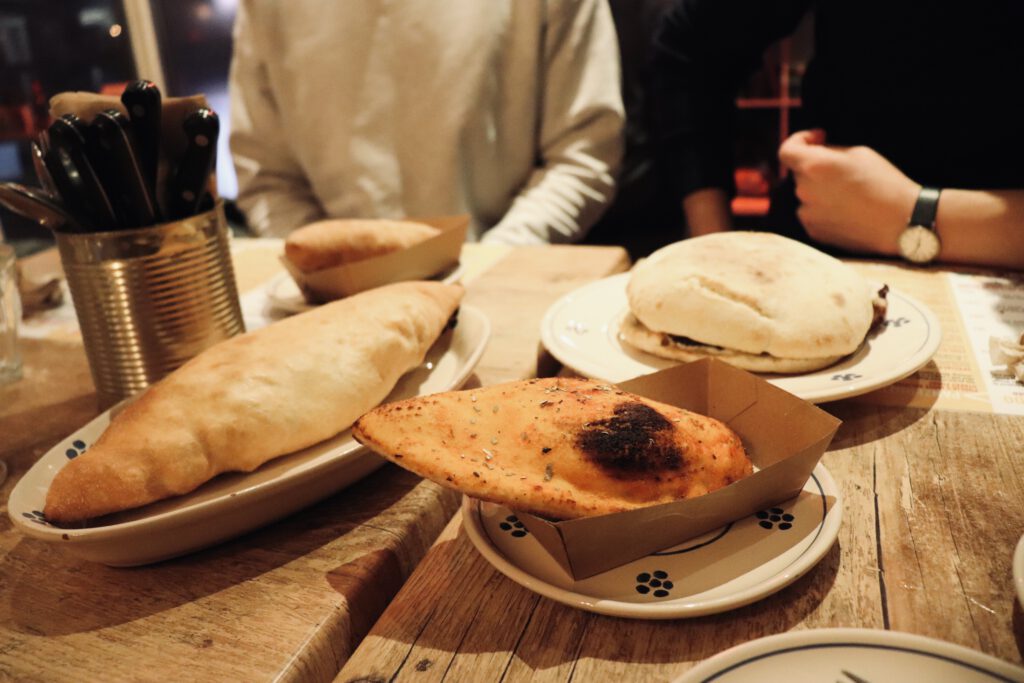
Second serving, Panzerotti time! The difference (and beauty) is in the dough. With just one bite of a Panzerotti, you can immediately tell the dough is different from a regular pizza and that it’s ultra-fresh.
Some ‘delizioso’ Panzerotti! Image: DutchReview
I fell in love with the Alberobello because of the used ‘Nduja (a spicy spreadable salami-like substance). My friend found the Tonnato one a bit unconventional, but I loved the combo of tuna and citrus-like salsa — I’d suggest you give it a try!
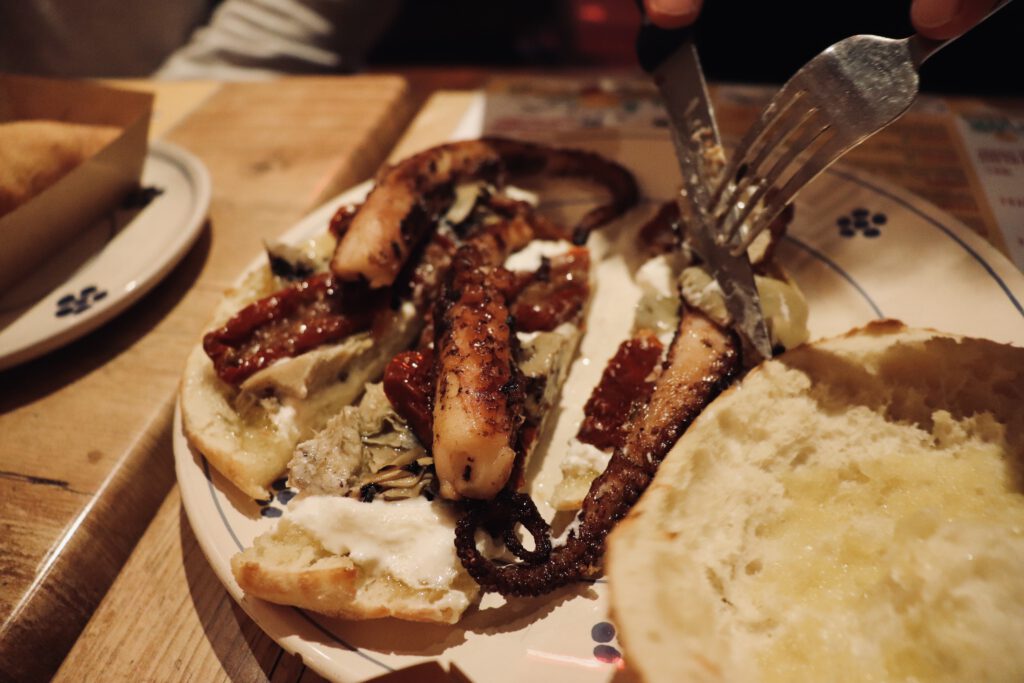
A special mention goes to anything with octopus on the menu. We tried the Polposition sandwich, and everybody agreed that this was some amazing grilled octopus. If you’re a fan of a good eight-legged meal, it’s not to be missed.
Polposition: seafood at its Italian best! 🇮🇹 Image: DutchReview
The Parmigiana, which is without pasta, brought the same feeling to my veggie friend (but by all means, share all those dishes with each other, everything goes here).
And yes, they make a mean lasagna
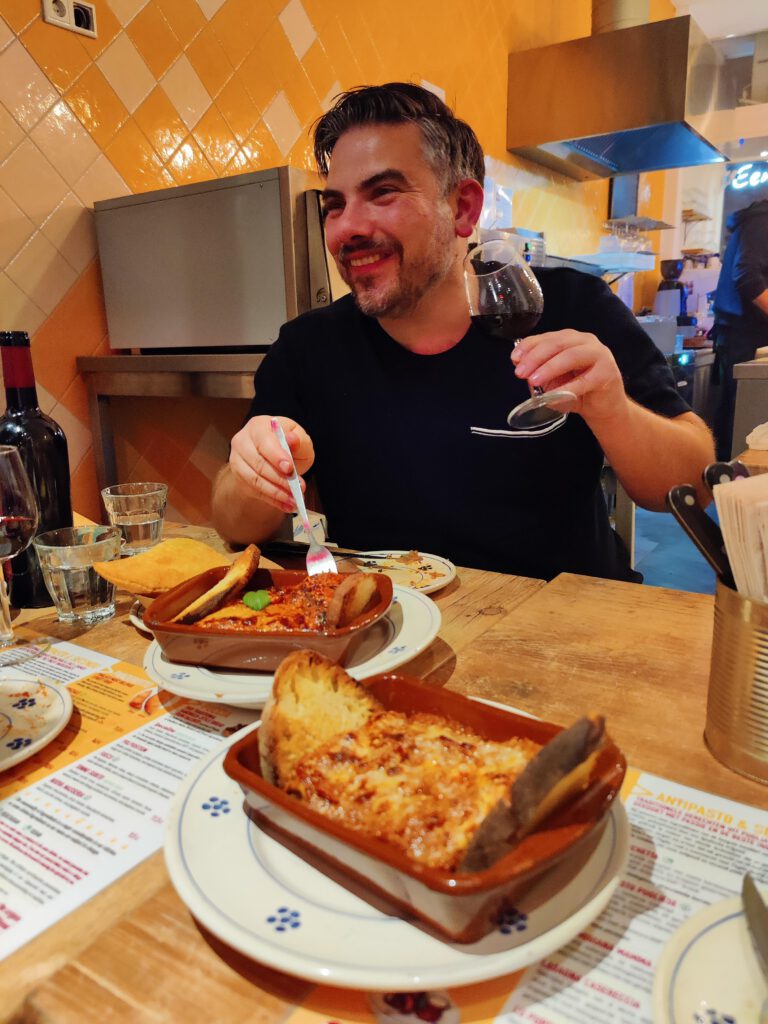
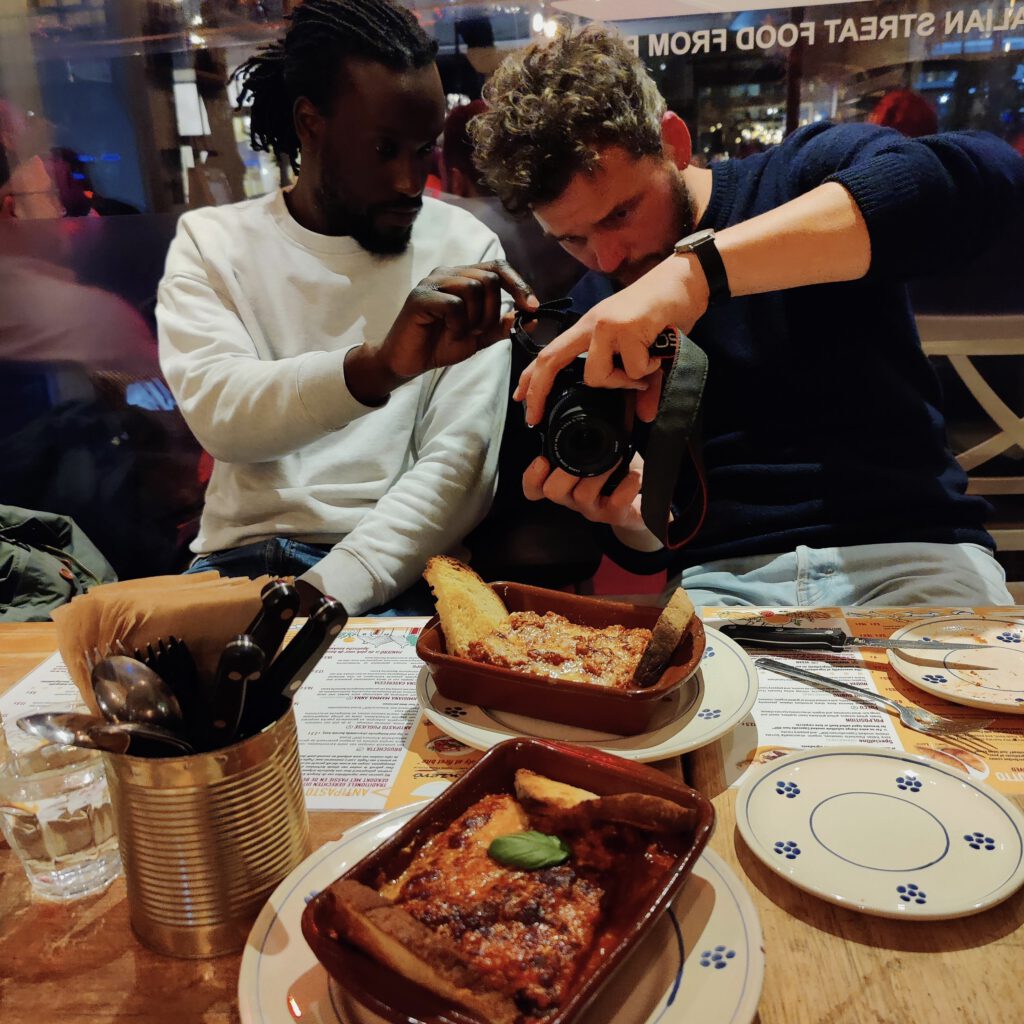
This Italian restaurant still smuggles in some pasta — how could it not?? Luigi and his crew can bake you a few oven dishes that will soothe any Garfield-like lasagna fiend such as myself.
Getting the right angle on that delicious lasagna! Image: DutchReview
I’ve already thrown heaps of deserved praise on the Parmigiana, but there’s more. The lasagna caserecce is the comfort food you need in life, and actually a steal for just €18.
Book that holiday
While we were completely stuffed after all this good food, we did manage to devour some desserts. And boy, do we have some recommendations for you.
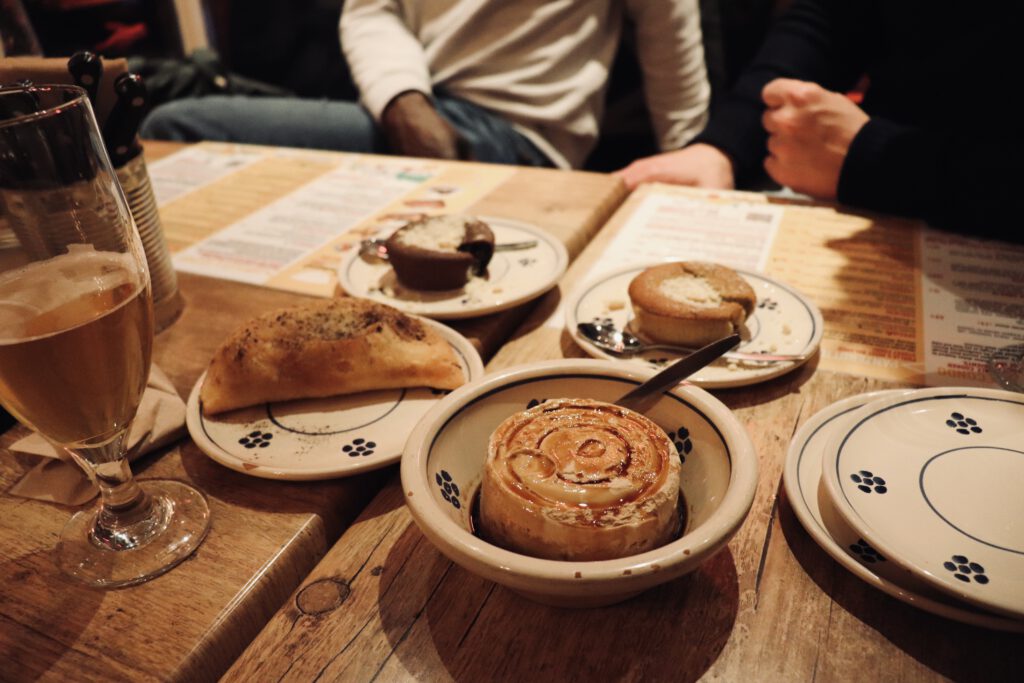
The pistachio lava cake is their best-selling pastry, and you can see why; who doesn’t love pistachio creme in a pastry, after all?
Is this the best way to finish off a meal? We think so! Image: DutchReview
Combine it with an espresso and/or a limoncello, and you’re all good to go back into the Dutch streets — a bit heavier — but also much happier. 😉
If you’re looking for fresh food, something different than your classic Italian menu or just want to taste some of that passion that Luigi and his colleagues are bringing to the plate, then say no more.
A Dutch cocoa factory has been mixing in ammonia with Oreo cookies, which was kept as a dirty little secret for years. 🤫
Cocoa factory Olam, located in a small town in North Holland, has been mixing large amounts of harmful toxins into ground cocoa beans for years to darken these beloved cookies, writes Leidsch Dagblad.
Why is it harmful? Ammonia is one of the largest environmental pollutants in the Netherlands, though the factory claimed that the substance was naturally released when cocoa beans were treated.
Of course, the obscene amounts that they mixed in on top of that were not shared with the public. Wat jammer! This vegan-friendly cookie is not so environmentally-friendly, after all.
A toxic secret
About tens of thousands of kilograms of ammonia are assumed to have been used over the years.
“The environment? That does not interest the top of the company. The black cocoa powder and what they earn with it,” tells a whistleblower to Leidsch Dagblad.
Research by Noordhollands Dagblad found that the government’s Environmental Agency knew all about it but kept their mouths sealed at the request of Olam.
Lick, twist, and chuck
Thinking of cosying up with a cup of warm milk and some Oreos. Well, think again!
“The use of ammonium carbonate in food does not affect the quality or safety of the product,” explains Oreo maker Annick Verdege of Mondelez (one of the largest snack companies).
But, its effect on the environment might make you have second thoughts.
What do you think about this not-so-secret secret? Tell us in the comments below.
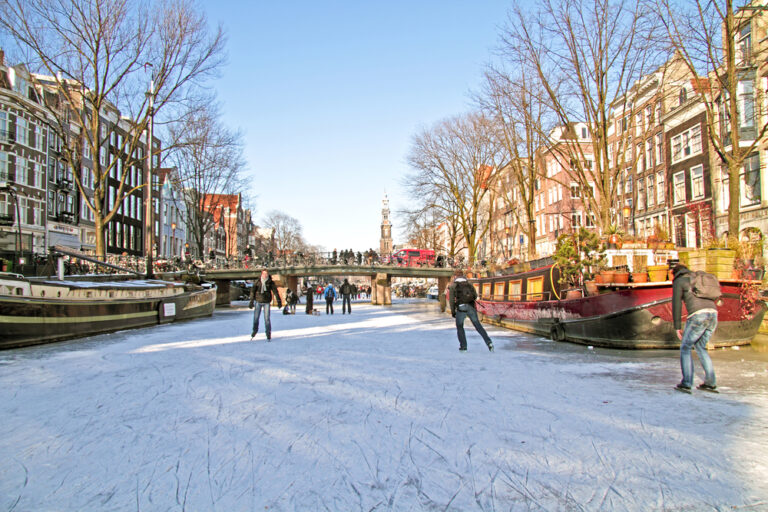
It’s time to grab those skates and enjoy the ice and cry over the energy bills — the winter is officially here! ❄️
Yesterday was the first ice day in De Bilt, with the highest temperature rising to a mere -1.4 degrees.
This is earlier than average for this time of year; usually, the hardcore winter only comes to the Netherlands after Christmas, around December 27, according to NU.nl.
We’re looking at frost, ice, and bone-chilling air! The temperature rises slightly on Wednesday morning, but it will stay below zero. 🥶
While the weather is perfect for ice skating, only the northwestern coastal area has a chance of having some snow. The northern part of the Netherlands will be sunny, with stronger winds.
While the center of the country will be even cooler with many veil clouds. Most of the country will remain dry, so we won’t use our sled on the nonexisting Dutch hills.
It’s time to ice skate!
In the Netherlands, it’s pretty rare when the weather freezes for more than 24 hours. On average, there are only about six ice days per year, so if you are into skating, your chance to shine is near! 🥶⛸️