Home Blog Page 363

The easy guide to the Dutch nitrogen crisis, farmers’ protests, and more

You’ve probably heard of the Dutch nitrogen crisis and understood that something major is changing in Dutch agriculture. Or is it the economy? Or the environment? Or… what’s it all about, really?

Blocked roads, empty supermarket shelves, and hay bales set on fire in the centre of The Hague — the Dutch strategy for tackling the dire nitrogen situation and the resulting farmers’ protests has caused quite a bit of drama. 

Here’s all you need to know about the nitrogen crisis in the Netherlands, and how the Dutch government is working on tackling it.  

mark-rutte-biking-in-the-hague-dutch-nitrogen-crisis
Do like PM Rutte and bike to work — it’ll save the earth tons of emissions! Image: Depositphotos

A quick summary of the Dutch nitrogen crisis

The thing is, the Netherlands is one of the largest greenhouse gas emitters in the European Union, and it has one of the highest nitrogen balances in the region. In fact, this little land has a nitrogen balance of nearly twice the European average. 

In this case, nitrogen balance refers to the ratio between nitrogen added into an agricultural system, and the nitrogen removed from the agricultural system, per hectare of the land in question. 

And this isn’t good for the environment, or us

Too much of the nitrogen compounds ammonia and NOx is harmful to the environment, as they lead to acidification, pollute the soil, and disturb the natural balance in the ecosystem by interfering with the biodiversity of plants and animals. 

child-in-polluted-city-with-dying-plant-nitrogen-crisis-the-netherlands
Both humans and plants need the same thing to thrive: nutrients, water, and clean air! Image: Depositphotos

On top of this, excess amounts of ammonia and NOx (commonly just referred to as “nitrogen”) can also be harmful to humans in a more direct sense, as it pollutes the air

The Dutch government decided it’s time to reduce

As the Netherlands has committed to protecting the so-called Natura 2000 areas within its territory, it’s obliged by the EU to limit its emissions of nitrogen to an acceptable level. 

Natura 2000 is a network of nature reserves in Europe. The protected areas function as a safe haven for threatened species and habitats, where human activity is prohibited. The Netherlands has over 160 Natura 2000 areas within its state borders, which (perhaps surprisingly) is not a lot, relative to many other countries.

By 2030, the Dutch government wants to (and has to) reduce the country’s nitrogen emissions by 50%. 

This will hopefully contribute to curbing the dangerous effects of climate change, and promote healthy and sustainable biodiversity in Dutch nature.

The result? Dutch farmers are upset

The reason why Dutch farmers aren’t too happy about this is simple. Almost half of all nitrogen emissions in the Netherlands stem from agriculture. 

In other words, slashing nitrogen emissions means significant changes are needed on Dutch farms — and if they’re not willing to adapt, their businesses will suffer. 

dairy-cows-on-dutch-farms-nitrogen-emissions
The Netherlands is a massive player on the global agriculture field. Image: Depositphotos

The Dutch government’s strategy to tackle the nitrogen crisis

After decades of insufficient policies to tackle the Dutch nitrogen problem, a drastic and comprehensive strategy has been developed out of pure necessity. A strategy worth a baffling €24.3 billion, in fact.

READ MORE | Farming for the future: why the Netherlands is the second largest food exporter in the world

As permits are paused, awaiting clarity on the implementation of the new measures, farms are refused expansion, building projects are stopped, and the construction of new roads is denied the green light. 

In fact, the government’s nitrogen plans will cost Dutch farms, construction companies, and others, around €14 billion.  

Main sectors affected by the new nitrogen policies 

Since it’s no secret that today’s large-scale industrialised farming is based on unsustainable practices, the Dutch government is hard at work targeting the agricultural sector. 

However, there are also several other sectors hard hit by the new strategy, such as construction, and transportation. 

Agriculture and the Dutch nitrogen strategy

A large portion of the nitrogen management strategy for agriculture is based on the proper management of livestock manure, but there are tons of other areas for improvement too.

industrial-farm-in-the-netherlands
A big chunk of Dutch agriculture needs to be slashed if the Netherlands is to reach its emission goals. Image: Depositphotos

In other words, several changes in barn structure and organisation must be made on Dutch farms. For example, the level of protein in animal feed must gradually be reduced, livestock must spend more time outdoors, and that manure needs to be diluted, to limit its impact on soil and air.

READ MORE | If everyone in the world went vegan it would solve world hunger: Dutch research

More generally, Dutch farmers will have to invest in fresh, sustainable agriculture solutions, cut down production significantly, and/or simply quit farming altogether. 

If you think all this sounds like it’ll be time-consuming, expensive, and/or fatal for Dutch farmers’ businesses, it’s because it will be. 

Construction, transport, and the nitrogen strategy

The construction sector has also been heavily hit by the nitrogen strategy, placing thousands of building projects either on hold or at risk of being scrapped completely. 

Going forward, the construction industry will, to an increasing extent, be required to update its equipment, and invest in sustainable alternatives. A subsidy to aid this transition has been established, to make both climate-friendly equipment and building materials more accessible. 

construction-workers-in-the-netherlands-relaxing
Many construction projects are on hold until the industry finds a way to comply with the government’s nitrogen policy. Image: Depositphotos

Transportation is another sector in the spotlight of the Dutch government’s nitrogen policy. The industry will have to adapt to new standards for fuel efficiency, electrification, and road expansion. 

On top of this, specific initiatives are already in place to limit the nitrogen emissions in the transport sector, such as stricter speed limits on highways, and electrification changes at major Dutch airports. 

Why are farmers protesting in the Netherlands?

Although other sectors also have to make changes to help curb the nitrogen crisis, the agriculture industry faces some of the biggest major changes. 

Even though plans and promises to invest in sustainable solutions for the future of agriculture are important, it won’t be enough to slash nitrogen emissions to the extent that the Dutch government wants (needs) to. 

farmer-protests-in-the-hague-the-netherlands-nitrogen-crisis
Not everyone approves of the Dutch government’s nitrogen strategy. Image: Depositphotos

The truth is simple: the entire agriculture sector will have to shrink — quite drastically. More specifically, the Dutch livestock herd will likely have to be reduced by one-third if the Dutch want to have a chance of reaching their emissions goal. 

According to some estimates, such drastic shrinkage will lead to as many as 11,200 farms being forced to close down. As part of this drastic change, the Dutch government is planning to buy out farmers as a measure to reduce emissions. 

Theoretically, farmers will only be bought out voluntarily, but the government and mediator Remkes (more on him later) have not ruled out buying out farms by force, if that’s what’s needed to reach the goals. 

So, a hefty government budget is set aside for the costly affair it is to buy up Dutch farms. The Netherlands is big on agriculture and livestock, making many Dutch farms large companies with millions to their name. 

So, why are the farmers protesting, if they stand to receive millions for closing the farm? Well, a chunk of the anger stems from the fact that the government knew about the nitrogen issue for a long time, but never brought it up on a legal level. Additionally, there’s a general sense of distrust of the political elite in The Hague dominating the farmer population of the Netherlands — which naturally does not help the government’s attempts at taking over Dutch farms. 

More specifically, many farmers are hesitant to sell because they recently invested heavily in expanding the scope of their operations, often upon advice from public officials. Further, many farms have been with the same family for decades (if not centuries), bringing with it a strong tradition of transferring the operation of the farm from generation to generation. Disturbing this tradition is not a popular move among most farmers. 

Disruptions caused by the Dutch farmers’ protests

Needless to say, many Dutch farmers are less than amused by the new reality. The past years have seen massive protests from folks who feel that their livelihood is being snatched away. 

READ MORE | Dutch farmers set fires, block ambulances, and march on The Hague

The protesters have obstructed traffic in and out of major cities with tractors, causing intense traffic jams, blocking everything from everyday commuters to ambulances on emergency alert. 

They have also blocked food distribution centres, resulting in empty supermarket shelves across the country.

Main highways across the country have also been decorated with hay bails and manure lit on fire — quite the sight on your way to work. 

farmer-protests-in-the-hague-the-netherlands
It’s fair to say, The Hague is rarely this full of tractors… Image: Depositphotos

The classic protest site, Malieveld in The Hague, has been filled to the brim with angry farmers multiple times. Upside-down Dutch flags hang from houses as a symbol of opposition against the government’s policy decisions. 

More recently, authorities in The Hague implemented an emergency ordinance to limit farmers from disrupting peace and order during Prinsjesdag (Budget Day). 

As a result, four tractors were confiscated by police, but that was about the extent of the drama during Budget Day 2022. 

READ MORE | It’s officially Prinsjesdag (Prince’s day) 2022: here’s what went down today

The Dutch farmers’ protests have also gained international attention, notably from the far-right community in the US. Former President, Donald Trump, and political commentator Tucker Carlson are among those who have shown support for Dutch farmers.

Recent developments: Remkes’ new report 

Johan Remkes is the appointed mediator on behalf of the government, guiding talks with Dutch farmers. He recently came out with a new report, placing more focus on so-called “peak-polluters”, and creating more flexibility for the 50% by 2030 goal. 

The latter was intended to give farmers some peace of mind (although it is questionable how successful this attempt has been). 

aerial-photo-of-agriculture-field
Remkes’ new report might allow for more flexibility, but the nitrogen emissions will still require the agriculture sector to cut down a lot. Image: Depositphotos

Specifically, deviations from the sharp 2030 deadline can be granted if companies have already managed to realise “a large part of the objective”, but still need a bit more time to complete their goals. However, this won’t be a relevant issue until toward the end of the 2020s. 

Extra measures for tackling the climate crisis in the Netherlands

The Dutch nitrogen crisis is a very real problem at the moment, after years (if not decades) of failed policies. 

Under pressure from its own commitments, global sustainability agreements, and tension from most corners of society, the time has come for drastic and rapid action. The Dutch government has (at long last) gone ahead with several sustainability projects

aerial-photo-of-dutch-windmills-and-ocean
The Netherlands is a leader in renewable energy. Image: Depositphotos

Examples include extensive sustainable agriculture subsidies, a great mission to boost renewable energy production and consumption, and large-scale efforts to greenify Amsterdam airport, Schiphol. 

That being said, a lot is yet to be done if the Netherlands wants to reach its climate goals and stick to its nitrogen-reducing commitments. 


The Dutch farmers represent a significant opposition to the sweeping policy needed to kick the Netherlands towards a greener future, and it remains to be seen which side of the battle will remain victorious. 

What do you think about the Dutch strategy to tackle the nitrogen crisis? Tell us your thoughts in the comments below!

This Instagram posts Dutch couples wearing twin clothing and we can’t look away

This account has reeled in over 50,000 followers with its uniquely humorous content, and let’s just say we’re hooked. 🎣

Kopie Koppels (Copy Couples) is an Instagram account that posts examples of Dutch people dressed alike, and the internet is eating it right up.

But…wait, how is that funny?

It’s got the right amount of wholesome and awww, with some bad fashion moments thrown in there for some extra spice. 👌

What? Don’t you usually coordinate your look with your man before you leave the house? 💁🏻‍♀️

And it’s not only couples

They’ve got everything from families dressed in more leopard print than a nature reserve, to people that take blending into the scenery a little too seriously.

Even our beloved Dutch PM Mark Rutte makes a surprise appearance!

It’s like they took “your loved ones should be cut from the same cloth” and ran with it — and we’re HERE for that.

What do you think of Kopie Koppels’ cute and sassy posts? Tell us all about it in the comments below!

Not to brag, but 7 Dutch universities just ranked among the top in the world

A bit of good news for prospective students looking to study in the Netherlands; seven Dutch universities have landed in the Top 100 World University Rankings. 

With the announcement that numerous Dutch colleges are amongst the best in the world from the Times Higher Education, the Netherlands is surely an attractive country for the studious and knowledge-eager. 

On top? Wageningen University

Standing at a steady 53rd place was Wageningen University & Research — making it the top university in the Netherlands. 

A public university, students at Wageningen can expect to focus on agricultural, technical, and engineering studies. 

Plus, in 2015, Wageningen University & Research went 100% carbon neutral, so is surely the place for the environmentally conscious to learn. 

Next up: UvA, of course

Quickly following is the University of Amsterdam in 65th place. With over 200 English-speaking programmes, this university caters heavily to international students. 

university-of-amsterdam
With a campus right in the centre of Amsterdam, this university is the place to go to meet people from all over. Image: Depositphotos

Better get your study caps on, though, as universities such as University of Amsterdam have a very low selection rate for international students — currently standing at a meagre 4%

Third best in the Netherlands: Utrecht University

Close behind in 69th place, is Utrecht University. One of Europe’s leading research universities, this university is based in a much-underappreciated Dutch city. 

With tonnes of student organisations and societies, there is something for everyone to do at Utrecht University. 

And they’re not alone

Following these universities is: Leiden University in 71st place, Erasmus University Rotterdam in 72nd place, Delft University of Technology in 75th place, and, finally, the University of Groningen in 80th place

Attending any of these brilliant universities? Now’s the time to feel a little pride! 🥳

So many universities, so many options

With the choice of so many brilliant universities, it can be hard for students to pick both a subject and a college. 

Perhaps go to Utrecht University for a degree in Literary Studies? Or Delft University of Technology to expand your knowledge of Aerospace Engineering? 🚀

As Dutch universities rank so high, the number of students in the Netherlands is also high. 

In 2020, there were 329,000 students living and studying in the Netherlands. That’s a lot of people — but with so many people, there was a huge stress on housing associations to accommodate. 

If any of these universities do catch your eye, we’ll say two things: great choice! And: be prepared. 

Which of these seven incredibly universities would you like to study at? Tell us in a comment below! 👇

11 hacks to learn Dutch at turbo speed

The Netherlands has crazy-impressive standards of English — but still, there are times when you wish you’d speak, or at least understand, Dutch. What if we told you that you could? And quickly. 

We’ve all been there: a co-worker just cracked a hilarious Dutch joke, you’re ordering dinner at a Dutch restaurant with a hot date, or you’re wondering (for the 100th time) what the letter from the belastingdienst actually says… 

READ MORE | The 11 crucial moments you wish you could speak fluent Dutch

However hard it might be to face it: Dutch can be very useful. Here are our top tips for learning Nederlands

1. Dutch has many things in common with English

The first lesson you should learn, is that many Dutch words are almost identical to English, making for convenient cheat codes when you first start out. 

Some are simple: werk = work, slaap = sleep, drink = drink, and so on. But often, you can also use your excellent logical sense, and think your way to the correct Dutch word.

For example: the Dutch word for “mountain”; berg. First, think of the word berg, then of the word iceberg. What is an iceberg? It’s a mountain of ice. Now, you’ll never forget that berg = mountain, in Dutch. 

See, Dutch is easy-peasy. 😉

2. If your sentence is too much like an English sentence, try again

Okay, “easy-peasy” might be a bit of an exaggeration — you shouldn’t stay too confidently in your English corner when trying to learn Dutch. In fact, you should try to move more in the direction of German, when constructing your Dutch sentences!

students-learning-dutch-fast-and-easy
Oh, if only all languages had the same syntax… Image: Depositphotos

For example, if you don’t have much Dutch knowledge under your belt, the sentence ik wil eten stroopwafels might look perfectly normal to you. 

But alas, if you want to properly impress upon your Dutch friends that you want to eat syrup waffles, you should instead construct your sentence like this: ik wil stroopwafels eten. 

READ MORE | 7 ways to learn Dutch fast and easy: our best tips to learn ‘Nederlands’ in life

The latter is more similar to the German way of structuring sentences, and less like the English way — a useful rule of thumb when you’re first starting out.  

If you want an idea of how headache-inducing the wrong word order can sound, consider if someone said this in English: “I want stroopwafels to eat”. Now feel for your poor Dutch friends and think about word order!

If you spend a few hours learning the basics, you’ll likely see that your Dutch quickly reaches slightly more advanced levels. 

3. Don’t study too hard

We get it, the awkward situations where you’re the only non-Dutch speaker in the room have pushed you to become a hyper-enthusiastic Dutch student. 

woman-grocery-shopping-learn-dutch
Dutch is all around you! Image: Depositphotos

But still, you shouldn’t only bury yourself in the books — most of the information you need to become a confident Dutch speaker is in the world around you. 

READ MORE | 11 Dutch songs to learn the language (and culture!) 

Read the ingredients on your groceries, listen to the travel advice over the speakers at the train station, and learn the basic phrases the lady at the kassa throws at you when you’re shopping. Bonnetje? Nee, bedankt. 

4. Keep it simple, it’s alright 

If you’ve moved to the Netherlands, chances are you have good taste. And naturally, people with good taste like to sound intelligent, well-educated, and interesting. But at the beginning of your Dutch journey, we promise you, it’s better to just… not. 

READ MORE | How to speak Dutch in seven words or less

Dutch quickly gets overwhelming and complicated, so if you want to make conversational progress fast, you’re better off taking the easy route at first.

For an English example, you could choose to say: “the pen that I write with does not write well”, but it’s way simpler to simply go: “My pen doesn’t work”.

5. Speak as much Dutch as you can, as often as you can. 

The trick to learning a language is to immerse yourself in it. Physically, mentally, spiritually, you name it. No matter how non-Dutch you feel, throw yourself in at the deep end, and start with short, simple, exchanges wherever you go. 

At the grocery store? Ik heb een bonuskaart. At the shoe store? Ik heb schoenen nodig. 

Don’t worry if/when you make mistakes — that’s what learning a new language is for. The most important thing is that you form a habit of speaking Dutch, so it stops being scary.

6. Pretend you don’t understand English

This is a bit of a tricky one, but trust us, it’s the best way to learn Dutch quickly! Native or not, simply pretend you do not understand a word of English, and order your conversation partner to address you in Dutch, and Dutch only. 

woman-doesn't-speak-english-only-dutch-at-cafe-in-the-netherlands
Forget it! From today on, you’re no longer an English speaker! Image: Depositphotos

It might be easiest to practice this technique with complete strangers. Why? Because if you mess up, you mess up and you never have to see that person again. 

But who knows, perhaps ordering “een koffie” from that hip barista may lead to a blossoming long-lasting affair full of foutjes and friendship. 

7. Learn words strategically 

If you only have a limited amount of time, you’ll be pleased to hear that many Dutch words allow you to kill two birds with one stone. 

Yepp, tons of Dutch words can mean more than one thing, making for both confusion and convenience for new Dutch learners. 

learn-dutch-fast-office-talk
Sometimes the lazy way is the smart way. Image: Depositphotos

Our favourite examples include alsjeblieft, meaning both please and here you go, and dag, meaning both hello and goodbye. Why make it complicated, when you can just reuse words? Other languages should take notes!

8. Embrace humour

Being funny in a different language is a challenge known to most students of talen. You can be an absolute pro at business jargon and textbook grammar, but without humour, you’ll likely continue to feel isolated and estranged in Dutch settings. 

READ MORE | 21 YouTubers that’ll help you learn Dutch super fast

That’s why our best tip on the topic is this: do not underestimate the importance of learning to crack (and understand) jokes in Dutch. 

And although the genre is silliness, you should make no mistake: being funny in Dutch, and understanding Dutch humour, requires you to understand the structure of the language, be flexible in your interpretation skills, and be submerged in Dutch culture. 

9. A dirty mind learns fast

This might be counter-intuitive to anyone who grew up with strict French teachers who’d kick you out of class if you as much as thought of a bad word. 

That being said, whether you like it or not, Dutch people use profanities all the time — and it’s an integral part of the language. 

Photo-of-couple-laughing
Believe us, some of those swear words are creative… Image: ArturVerkhovetskiy/Depositphotos

If your goal is to understand everyday conversations, workplace gossip, or cool-kid street slang, you should not underestimate the power of filthy words. 

Plus, it’s a useful way of learning the (sometimes creative and alternative) names of body parts and diseases in Dutch!

10. Start with nonsense 

Some people focus on memorising the most necessary sentences and phrases when first learning a new language, but a far faster route to fluency is far more creative. 

Don’t wait for a situation to occur when you really need to speak Dutch before you embark on your Dutch sentences. 

Rather, play around with the words you know at any time of the day, even if the sentences they form make little to no sense.

For example: when you’re cooking dinner, try explaining to yourself what you’re doing, in Dutch. Or, when you’re walking the dog, why not point at everything you pass that you know the name of in Dutch, and tell your four-legged friend exactly how to pronounce them?

11. Make it fun!

People learn in different ways, but a common misconception is that learning a language has to start with old-fashioned textbooks. Sure, these will obviously help, but what’s more important is to find a method that makes learning fun for you

Photo-of-couple-discussing-data-while-sitting-at-laptop-in-cafe
Chatting, studying, playing games online, practising at the grocery store: it’s up to you. Image: Freepik

The more you laugh, the faster you’ll learn — and the more you’re going to want to learn, too. 

READ MORE | 5 top-tier books by Dutch authors to read when discovering the Netherlands

So, if you’re wondering why your two-hours-a-week on Tuesday evening Dutch classes aren’t paying off, it might be because you’re not enjoying it, and you’re not getting long-lasting motivation from it. 

Once you’re having fun, and practicing Dutch a couple of days in a row, you’ll find that you make progress much faster. Immerse yourself in Dutch on a daily basis, and you’ll see results quicker than you can say helaas pindakaas!


Learning a new language can be a struggle, but thankfully, the journey of learning Dutch has been travelled by many an international in the Netherlands. In other words, it’s easy to find peers to practice with, or experienced Dutch speakers who can teach you all the best Dutch life hacks.

Focus on the fun, and enjoy the thrill of opening up a whole new world of knowledge and experiences — through learning this strange and funny language!

What’s your best tip for learning Dutch fast? Tell us in the comments below!

The NS needs to improve its train repair system “urgently”, report finds

Ah, our beloved NS. The Dutch train system that runs ever so smoothly – wait, what’s that? The repair system is in need of repair? Yeah, that’s about right. 🤷‍♀️

Yes, you heard that right. The Dutch national railway service’s train repair system itself needs repairing “urgently,” the NOS reports. 

According to a file retrieved from a whistleblower at the NS, the repair system for Dutch trains needs a serious revamping.

The Human Environment and Transport Inspectorate (ILT) also agrees and informed the NS of their need to make some important changes in a letter. 

Delays, cancellations, and more delays

While you may not realise it, we’re all feeling the effects of this. The NS is regularly underestimating the number of train parts that need servicing, contributing even more to the endless train delays and cancellations we’ve all become accustomed to. 

Remember that time a man got stuck in a train door?

It’s not just delays that we have to learn to live with, either. 

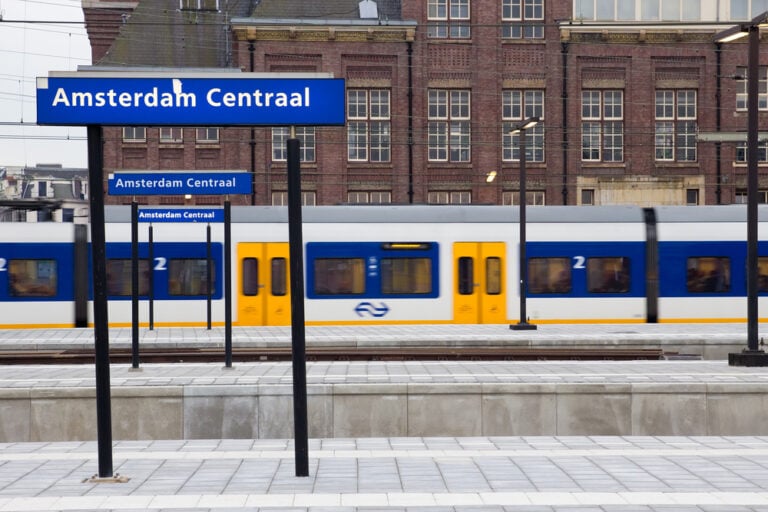
Picture this; you’re boarding the train at Amsterdam Centraal. Amongst the rush of Dutchies trying to climb onto the train (have we forgotten how trains work — people get off, and then we get on after?), when you notice someone has actually got caught in the door. 

READ MORE | Packed NS trains: complaints rise as number of trains drop

Well, this happened in August 2021, when a tourist got dangerously stuck with his arm and bag in the door and remained there until the train stopped in Sloterdijk, where other passengers helped him to safety. 

Did we know this could happen? No. Do we have a new train fear? Yes. Horrifying stuff! 

READ MORE | 10 things you’ll notice your first week in the Netherlands

The NS concluded this incident was due to bad judgement on the part of the conductor, while the whistleblower maintains that it was actually due to a technical fault in the train. 

dutch-train-repair-system
A man was horrified when he got trapped in the door of an NS train at Amsterdam Centraal. Image: Depositphotos

Hard to figure out who’s right in this instance, but we imagine that poor tourist left Amsterdam feeling a bit put out by Dutch transport. 😓

Not the only technical fault

NS trains have been known to have issues with improperly working doors and brakes for years. For example, a train derailed in The Hague in 2020 due to the brakes being worn down. 

The train, which was intended as an intercity train, was used on a local line, and the breaks were damaged from the constant stopping and starting. 

NS wastes budget

But the company has a strategy in place for ensuring everything is fixed once a problem is flagged, right? 

Nee. According to a whistleblower report from 2019, the NS consistently wastes money in its attempts to keep trains running. 

This is due to a lack of awareness about what trains are made from what parts, as well as refusing to perform well-needed fixes until things are, literally, at breaking point. 

READ MORE | Getting a cheap Dutch train ticket: 7 tips for the best deals

The NS has also been quite unorganised regarding keeping track of which trainsets have new or renewed parts. This means that, if one part needs to be recalled, almost every train must be checked to locate this part. 

So, between all the train strikes, train schedules being cut down, and staff shortages, you’re telling us that you’re also wasting precious time and money on this?

Please. The NS may as well call itself Schiphol II at this stage. 

What do you think of the NS’s repair system? Tell us your thoughts in the comments belows!

Dutch health minister warns of rising coronavirus cases, yet again

0

Miss Rona is making the rounds in Dutch hospitals, with an average of 913 patients being treated just this week. As a result, the Minister of Public Health, Ernst Kuipers, has delivered a warning. 😷

And with good reason. This week, the number of coronavirus cases jumped by almost 40% compared to the week before.

Such a swift rise led Kuipers to raise the alarm level of the Dutch coronavirus thermometer from “low” to “raised.” 

An uptick in coronavirus cases and hospitalisations

The fall wave continues to hit Dutchies at a slow, yet alarming pace. Last week, an average of 874 coronavirus patients were treated in Dutch hospitals daily. The week before? There were 621. 🦠

By and large, 39 coronavirus patients were treated in the ICU last week, which was 4 more than the week before, writes RTL Nieuws.

What the heck is a coronavirus thermometer? 

To be fair, it’s a relatively new term. The coronavirus thermometer is used to measure the pressure on society and healthcare in the Netherlands caused by the virus. It shows the Dutch, at a glance, how serious the pandemic is at a given moment.

READ MORE | Test yourself, we’ll check the poop: Dutch adopt a new approach to coronavirus

As cases continue to rise sharply, health officials decided to move the thermometer from step 1 to step 2, indicating that the impact on society and healthcare has increased.

Does this mean we have to go into lockdown again?

Even so, new measures against the virus won’t have to be taken just yet.

Instead, Kuipers asks that all vulnerable people follow basic hygiene rules, and get the repeat booster shot to prolong their level of protection.

That being said, if the number of cases continues to climb, we might just be seeing another coronacation consisting of making quarantinis in the future. 😬

Stay up to date with all the news in the Netherlands by following DutchReview on Facebook.

The cast of Selling the OC just tried to speak Dutch and it was as awful as it sounds

One of the most famous American reality shows challenged its members to speak in Dutch. 

Selling the OC is one of the most popular shows on Netflix, and it is beloved by the Dutch. 

People love to watch their first-world problem fights, but a few days ago, they gave us something a little different.

They published a video on Instagram where they try to improve their Nederlands vocabulary, and yes, you more or less know what is coming.

READ MORE | How to learn Dutch: the ultimate guide (by people who learned!)

The leading faces of the show tried to pronounce some Dutch words, and they definitely need some extra time to practice. 

READ MORE: How to speak Dutch in seven words or less

If you are also just learning, you can join them and guess the meaning of the words! There is no better way to learn some Dutch vocabulary. 

Can you pronounce these dutch words? Tell us in the comments!

King Willem-Alexander will celebrate King’s Day 2023 in Rotterdam

It’s official! King Willem-Alexander and his family will join Rotterdammers in celebrating his 56th birthday and 10 years on the throne next year! 👑

Every year on King’s Day (April 27), the Royal Family visits a city in the Netherlands and participates in all the endearing, patriotic, and grand festivities that take place.

This year, the Royal Family celebrated in the wonderful city of Maastricht, and some 40,000 people came to see them at Vrijthof square.

READ MORE | One big party: a round-up of King’s Day 2022

In 2023, they will grace Rotterdammers with their presence — and the city’s mayor, Ahmed Aboutaleb, is especially honoured. 

King’s Day 2023: It’s going to be extra special

“The municipal council is happy and honoured with the choice of Rotterdam. The ties with the royal family have always been strong.”

“Rotterdam has always been able to count on the warm interest of our monarchs, for better and for worse”, the mayor of Rotterdam, Ahmed Aboutaleb, tells RTL Nieuws.

Considering that next year marks the King’s 10-year anniversary on the throne, woners of the city have created a program with crafted ideas on how to make the day unforgettable. 🧡

Now, we all know how crazy Dutchies can get when it comes to the annual King’s Day blowout, but considering that Rotterdam is the second-largest city in the Netherlands, it’s safe to say we can expect double the craze in 2023.

Will you visit Rotterdam to see the Dutch Royal Family on King’s Day next year? Tell us in the comments below! 👇

Dutch insurers reported half a billion euros in extreme weather damage last year

Dutch insurance companies paid up record sums for extreme weather cases last year. The damage, worth €465 million in insurance cash, is caused by a rapidly changing climate.

Climate change has taken over headlines all year, with storms and other forms of extreme weather getting more frequent. Last year was no exception, as floods, droughts, and wildfires dominated the weather picture, writes RTL Nieuws.

Nearly half went to one incident

Hundreds of deaths and damage to homes and belongings dominated the summer of 2021, which became a costly affair.

READ MORE | The effect of climate change on the Netherlands: what’s going to happen?

Nearly half of all Dutch insurance costs for extreme weather were linked to the floods in Limburg — €210 million, to be exact.

The floods were a clear example of how climate change might affect wealthy countries — a shocking realisation to many.

Zuid Holland and Noord-Brabant were hit hardest by the storm damage last year.

READ MORE | Climate report warns of acutely rising sea levels along the Dutch coast

Some damage is avoidable

The dangerous effects of climate change won’t get any less devastating. However, according to the Dutch Association of Insurers, Dutchie can do more to prevent damage.

With appropriate preventative measures, it’s possible to avoid up to 20% of all damage. Naturally, this is not a recipe for solving the climate crisis, but it is an important part of preparing for what’s to come.

Have you been affected by climate change? Tell us your experience in the comments below!

5 steps to stay sane when looking for a job in the Netherlands

Looking for a job is tough no matter what — but when you’re an international looking for work in the Netherlands, the challenge can feel even more, well, infuriating.

Unless you have a technical background, then you probably have an unopened Linkedin message with a job offer you should go look at right now. 😉

Nevertheless, we’ve thought about some steps you can take to make sure you stay sane and healthy as you push through this stage of your life. You got this!

1. Set your objectives and expectations straight

Woman-getting-ready-to-sign-a-contract-in-her-office
Set realistic goals for yourself when looking for a job in the Netherlands. Image: Depositphotos

Looking for a job in the Netherlands? Think about a weekly objective of how many jobs you want to apply to or maybe the number of people you’ll send your resume to.

Think about how many jobs you’ll have applied to by the end of the month and work towards that every day. Know that around 50% of the companies will never get back to you and expect to hear “NO” on a daily basis.

Give yourself time to understand the market, the jobs you’re applying to, and keep up the work.

2. Invest time in activating your network

people-shaking-hands
Networking is an essential but tedious aspect of job hunting. Image: Unsplash

Work your network, not your CV. This is not to say that your CV is not important, because it obviously is (in case you need some help on how to create a resume).

But think about the fact that many jobs never get posted because they’ve filled it internally or by finding someone through recommendations.

Reach out to people over coffee, Facebook messenger or LinkedIn and tell them you’re available for new opportunities. List what kind of roles you’re interested in and your favourite industry.

It’s always a nice surprise when people recommend you further on, and, personally, I’ve found that most friends and acquaintances are more than happy to help where they can.

Good to know: a lot of companies offer bonuses to their employees when a job is filled in via recommendation so it’s a win-win situation.

3. Go out with friends and work out

Group-of-university-students-having-drinks
Don’t forget to take a break from the job hunt. Image: Depositphotos

Think about getting a job as a full-time job. So if you’re into to it 24/7, you’ll soon feel overwhelmed and unaccomplished.

Make a routine that works for you, make it your crunch time to find the best opportunity out there that fits you and then try to detach from it at the end of the day.

Make sure you keep your social life alive so you can get out of your head and share your struggles with people around you. A lot of the time, you’ll get a bit of inspiration for extra things you can tweak to improve your search.

If you can, work out just to lower your stress levels. Even if it’s just a long walk in the park or a bike ride around the city, let your brain breathe in and breathe out before you get back to work. Don’t underestimate the power of endorphins.

4. Learn how to be patient

frustrated-woman-swearing-in-dutch-at-phone
Patience is a virtue when job-seeking. Image: Freepik

This might have been my biggest learning curve in looking for a job in the Netherlands. Sadly, getting a job doesn’t happen overnight. Or better yet, finding the best opportunity for you doesn’t happen overnight.

Ask others in your field how they found their job, and get a vibe of how fast things move. I found out that anything between three and six months is normal for job seekers in Marketing/Communication.

That sounds like an awfully long amount of time to me but it also allowed me to relax a little two weeks into my job search when it felt like it was the end of the world for not getting a job yet.

If anything, it’s a great thing to be looking for a job in the Netherlands, where most companies are not bureaucratic and a lot of hiring processes move fast enough.

5. Looking for a job in the Netherlands: don’t take it personal

Photo-of-woman-sitting-in-chair-in-front-of-table-with-interviewers-at-job-interview-in-the-Netherlands
Most people face a number of rejections before they finally score the job — and that’s completely normal. Image: Depositphotos

When a company says no, it’s not saying no to all of you. Beyond skills and qualifications, it could be a million other things that are not a good fit.

Whenever possible, try to get feedback but understand it’s not you versus the world. You’re not less of a good professional because one or five or 20 companies said no, it just means it’s not a match yet. Chin up, eyes on the prize, you got this.

How have you found the job hunt in the Netherlands? Tell us about your experience in the comments below!

This article was originally published in January 2020 and updated in October 2022 for your reading pleasure.