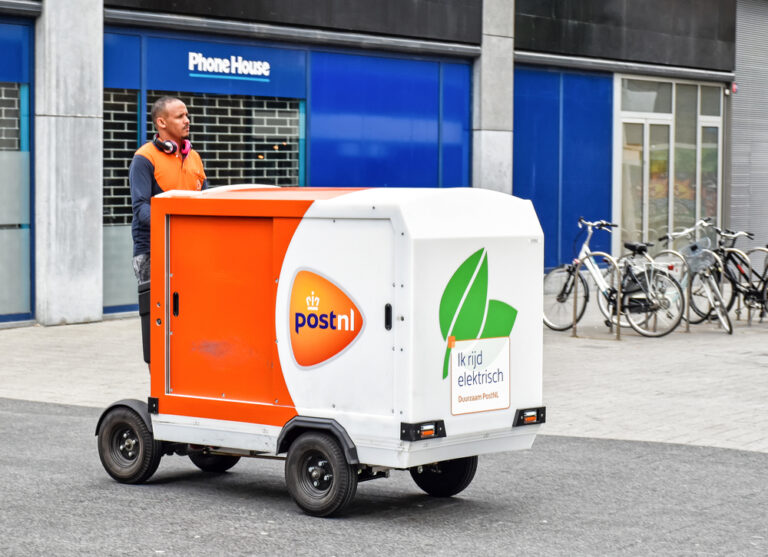
Due to a lack of staff, PostNL struggles to deliver mail five days a week. How are they solving this? By issuing permanent contracts and employing students! 📦
The labour crisis continues to take its toll on companies across the Netherlands — and to avoid the slump, one of the Dutch’s favourite parcel services has been busy cooking up an action plan. 🤔
So, what’s the plan?
PostNL faces huge pressure to keep up with its own delivery schedule. With very few people to do the job, it’s not the least bit surprising. 🙄
It’s also becoming increasingly difficult to get deliverers in a market that’s in bad condition.
However, the company has a plan underway: to issue permanent contracts to its delivery staff and experiment with evening deliveries using students.
PostNL believes that offering their services in the evenings should make the job more appealing to students — thus bringing in more chances for hiring staff (and higher odds to finally get our packages on time 🙄).
“It is, in any case, a side job, which can therefore be done between 5 pm and 8 pm. Students and school pupils are busy during the day with the most important thing they have to do: study”, the director of PostNL, Bob van Ireland, told NU.nl.
When and where will the plan commence?
PostNL plans to conduct a trial run in ten cities across the Netherlands, where students and staff members will start delivering mail in the evenings.
Plans for a new OV chip card have been cooking for a while now — but the project has been delayed until next year. We hope they didn’t lose their train of thought! 🚊
The good news is that you’ll be able to check in and out for the train using nothing but your debit or credit card by the end of this year!
From then on, people who travel via public transport occasionally won’t have to rely on buying an hourly ticket each time they get on a bus, tram, train or metro. 🚈
New things coming
OVpay, the new system, will be the new way of getting in and out of public transport in the Netherlands.
There will also be an app for it, writes RTL Nieuws, so that travellers won’t even need to carry their wallets to get on board. Leuk!
And while you’ll have to wait until next year to pay through the app itself, payments with a credit or debit card will be possible from the end of 2022.
Wait until next year
Plans for the new OV chip card began in early 2021, which had projected that the card would be usable this summer. 🙈
The delay is due to technical difficulties, which have lengthened the process for six more months, explained Bas van Weele, the program director for public transport payments, to the AD.
Van Weele even projects that the system may only become available in 2024 since they first have to ensure that it’s completely functional and reliable before going to the public.
For now, they are adapting 60,000 gates in various stations and other vehicle card-readers like trams and buses for the new system. So, it seems like they’re right on track. 😉
What do you think of this new system? Do you prefer this or the current one? Tell us why in the comments below!
The Netherlands is officially in a state of water shortage, as of Wednesday. Here is what the situation means for you.
The warm weather this summer has led to a long-lasting drought in the Netherlands. That means that what was an “imminent water shortage” in July has developed into an “actual water shortage” now in August.
Dutch government declares water shortage due to #drought.
As strange as it sounds, the country of dikes, canals, rain, and reclaimed land, is lacking water. Climate change is upon us, and even the (usually) soaking wet Nederland is feeling the consequences.
Drought means that the supply of fresh water is lower than it should be, but it can also influence the quality of the drinking water.
With less water flowing, the chance of unhealthy bacteria growing increases, creating a risk of lower quality drinking water.
Another risk connected to drought is that salt water might start rising into the groundwater, and the soil, which is a challenge for Dutch agriculture.
Drought phase 2
In crisis times, new and confusing terms come up, and it’s not always easy to know what they all mean. Nowadays, “drought phase 2” can be heard everywhere, and you might be wondering what it means.
The Netherlands, of all places, is suffering with a water shortage now. As a Dutch person, I can't believe I need to say this: WE NEED RAIN.
In short, it means that a crisis team will be set up to deal with the situation. The team will be in charge of deciding where our precious fresh water goes.
It’s been four years since the last time drought phase 2 was announced, so although there’s no need for panic, the situation should definitely be taken seriously.
What can you do about it?
So far, there is no imminent danger of your taps running dry. That being said, the general advice is now to limit your freshwater consumption as much as you can.
That means; prioritising important things like personal hygiene and hydration, and skipping less crucial things like having a clean car and watering your lawn.
How will you help combat the drought? Tell us all about it in the comments below!
You’ve just arrived in the Netherlands and are about to board a train for the first time. But wait! Do you have a ticket? And have you tapped in with it? Dutch trains are a minefield with some pretty expensive mines ready to explode if you get things wrong.
Here’s our ultimate guide to taking a train in the Netherlands for the first time — with everything you need to know about OV chip cards, train conductors, and rush hour.
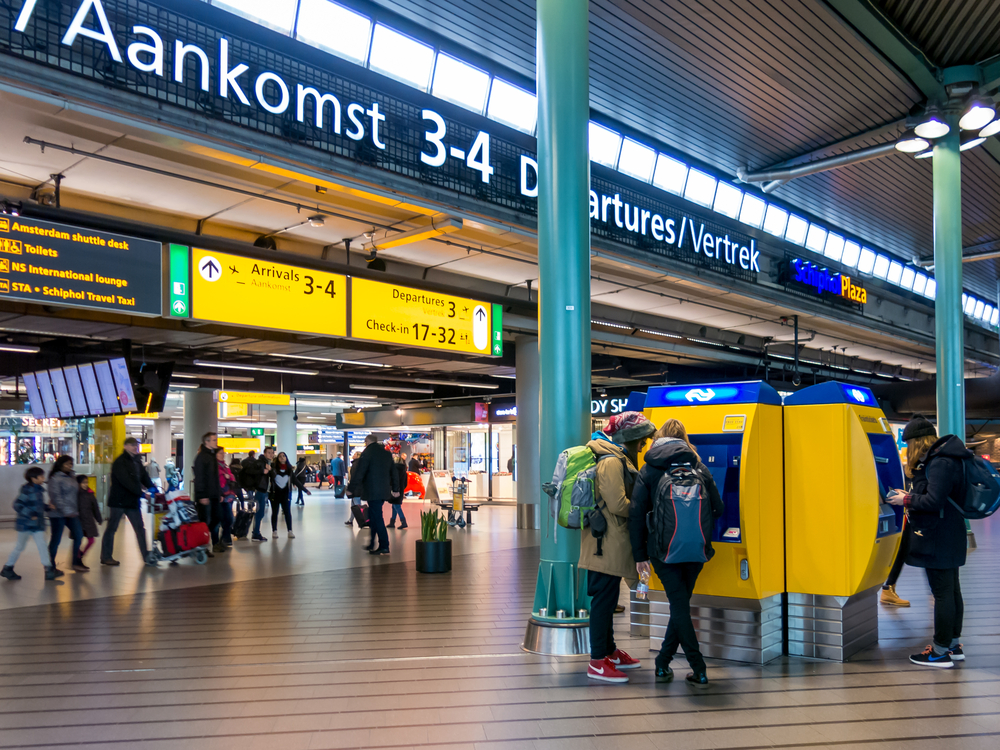
So, let’s start at the very beginning. You land in Schiphol, make your way to the plaza, and start figuring out which train to take. First things first, it’s time to get a ticket. You’ll spot the machines easily: they’re yellow and blue. Here, you can buy a ticket or top up your OV chipkaart.
Taking a train in the Netherlands: what to watch out for with tickets
If you’re just in the Netherlands for a holiday, you likely won’t want to buy an OV chipkaart. You’ll be using tickets instead.
There are a couple of things you should know before you do this. First of all, if you’re looking to save some money, consider buying tickets online rather than at the machines in the station. You’ll save €1 per ticket, which can definitely add up if you’re taking the train frequently while you’re here.
Whether you go with a physical or digital ticket, you need to check in. This might seem counterintuitive — after all, these tickets are single-use, right? The thing is, checking in puts a timestamp on when you took the train. Otherwise, you could reuse the same ticket forever, basically.
So, if you don’t check in at the machines that lead onto the platform, you don’t have a valid ticket in your hand, and you will be fined by the ticket conductor if you’re caught.
Trains in the Netherlands: your ticket will be checked
There is a strong chance that you will be caught if you don’t have a valid ticket. Almost every time I take a train in the Netherlands, my OV card or ticket is checked.
And nope, there are no exceptions made if you’re a tourist and were confused about how the trains in the Netherlands work: you will be fined if you don’t have a valid ticket.
Fines are usually €50, which is quite a chunk of money for anyone. You will spot the train conductors in advance, as they do not wear casual clothes but rather the uniform of the NS (navy and red).
What is an OV chipkaart?
An OV chipkaart measures how far you travel and charges you based on that — eliminating the need for you to buy a ticket for every journey. Now, in order for this to work, you need to check in and check out at the beginning and end of every journey.
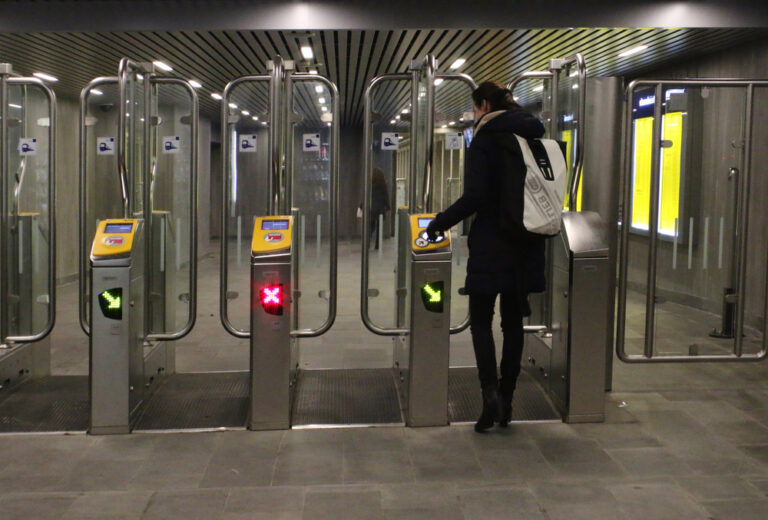
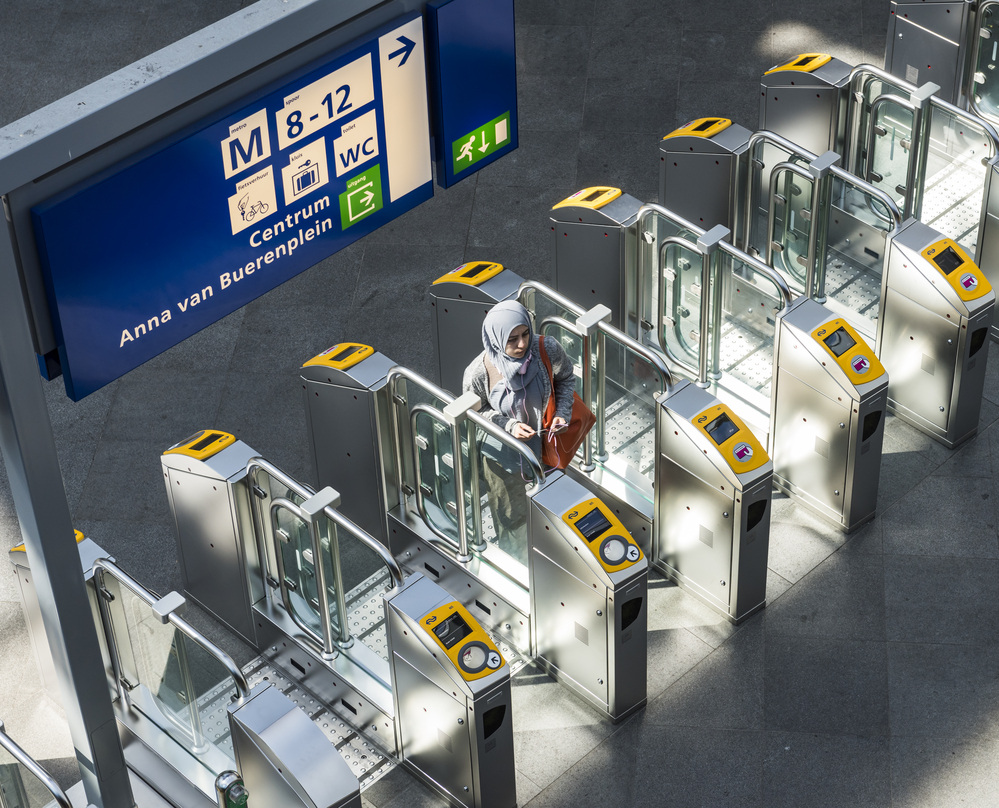
Some stations have barriers that physically remind you of this requirement, but others — especially smaller ones — do not. Even if there is no barrier, you still absolutely have to check in and out.
You’ll find gates at most larger train stations in the Netherlands. Image: Depositphotos
What happens if you check in but forget to check out?
If you don’t check out, you’ll be charged €10 automatically — a pretty pricey mistake.
You can get this money back by going to an OV store in the larger stations or requesting a refund online, but that’s a bit of a mission — so it’s much better to get into the habit of checking in and checking out automatically.
I taught myself to do this by simply always having my OV chipkaart in my hand. You can’t forget to check out with the card in your hand reminding you — or at least, doing this will reduce the frequency of the mistake happening.
The most annoying part of taking a train in the Netherlands: the €20 limit on your OV chipkaart
If I had to name the most annoying part of taking a train in the Netherlands, this would be it. If you’re using an OV chipkaart, the balance on your card needs to be at least €20 before you can step on board a train.
Thankfully, for trams and buses which you access with the same card, the necessary balance is a lot lower, just €4. The idea behind this rule is that you’ll never end up checking out at the other end of your journey with a negative balance on your OV card.
That seems reasonable, right? Well, yes — except if you’re doing a ten-minute commute from Leiden to The Hague every day, and EVERY DAY you have to bring your balance back up to €20, even though the journey costs less than €4. It’s frustrating, to say the least. But there’s a solution: a personal OV chipkaart!
What is a personal OV chipkaart?
If you’re living in the Netherlands long enough to have a fixed address, then you should absolutely invest in a personal OV chipkaart.
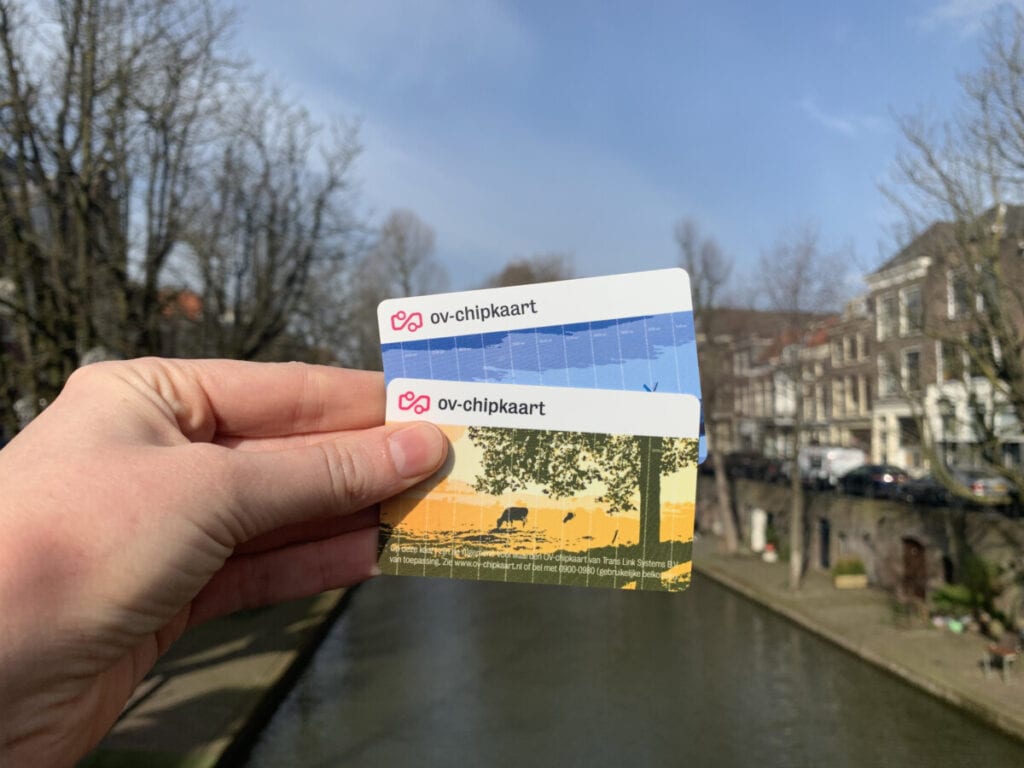
You have to request this from ovchipkaart.nl. The card will have your name, date of birth and picture on it. There are two massive advantages to having this sort of card. Firstly, you can eliminate the topping-up fiasco as it can be linked to your bank account. Every time your card needs a top-up, it happens automatically. Brilliant!
The second advantage of having a personal OV is that you can buy an annual discount. For €50 or thereabouts, you can nab a 40% discount on train travel outside of rush hour. If you’re going somewhere by train more than twice a week, this discount is a must. This has been so worth it for me as a frequent traveller.
The blue card is anonymous, the yellow is personal. Image: Samantha Dixon/Supplied
Rush hour: when not to take a train in the Netherlands
Rush hour in the Netherlands occurs each morning between 6:30 and 9:00 AM and every evening between 4:00 and 6:30 PM. Basically, the times when everyone working a job with regular hours will want to commute. It makes sense, but it’s a pain to pay those extra few euros when you want to travel at a convenient time.
How do I find out where I’m going?
Figuring out which train you need to take is always a struggle in the beginning. If you’re here for a short amount of time, I would recommend using the NS app or website.
It’ll show you the fastest route to your destination at the time you want to leave and will also tell you which platform the train is departing from. So you won’t need to stare at screens in confusion for 20 minutes — by which time you’ve missed the train you wanted to take in the first place.
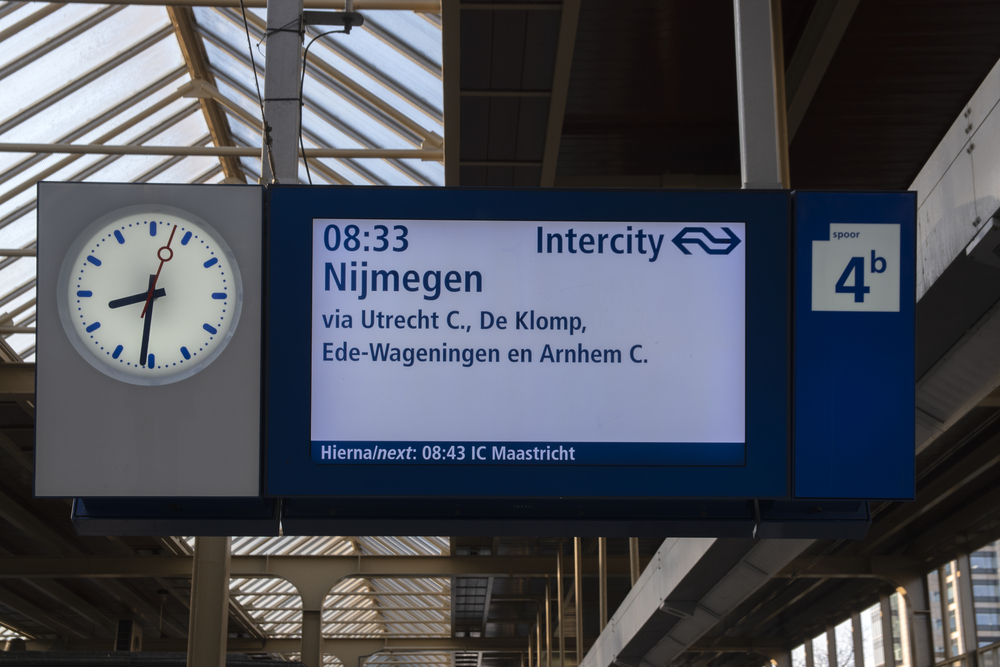
But, if you do want to do it the old-fashioned way — the screens showing train departures are, of course, your best bet.
These will display the time of departure, the number of minutes until the train leaves the platform, as well as the final destination of the train in question.
If you’re heading to a place that is not the final destination — for example, if you’re travelling from The Hague to Leiden — then you need to look at the smaller writing underneath the final destination, which will list all the stops the train will make on its journey. And, of course, you can always just ask the information desk: they’re always happy to help lost and confused tourists.
Cheaper options for taking a train in the Netherlands
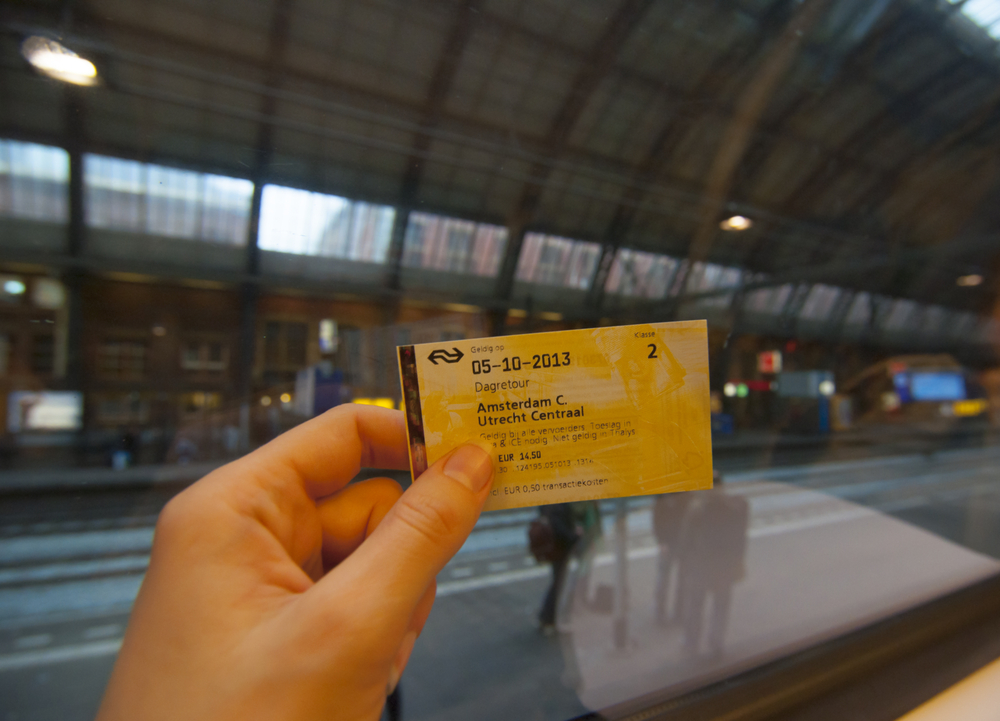
Trains in the Netherlands are expensive, there’s no doubt about it. Although, there are some ways to make it cheaper for yourself. The main ones are buying a day ticket (dagkaart), especially when they’re on sale — travelling anywhere in the Netherlands for €15 is a pretty good deal.
These tickets are available at Kruidvat usually, but they do sell out pretty fast. Otherwise, try to travel with a Dutchie who has a discount card — they can transfer their 40 % discount to you if you travel together. Other good options include travelling with a group.
You can load a 40% discount onto your card at the ticket machine if travelling with the owner of a discount card. Image: Depositphotos
What is this NS that everyone keeps talking about?
If you’re taking the train in the Netherlands, it’s pretty much inevitable that you’ll hear these two letters: NS. In fact, I’ve used the name of the Dutch railway operation company several times already in this article. The NS is the company that runs the trains in the Netherlands, to put it simply.
The Netherlands has landed in 13th place this year among the European countries that progress in LGBTQIA+ rights. Echt?! 😯
Every year, the human rights organisation, Ilga Europe, publishes the Rainbow Europe Index to examine the legislation and policies that countries put in place to protect the LGBTQIA+ community.
In a country that was once named the most gay-friendly place to visit and the first in the world to legalise gay marriage, we can’t help but wonder why the Netherlands is falling behind. 😔
Why is the Netherlands falling behind?
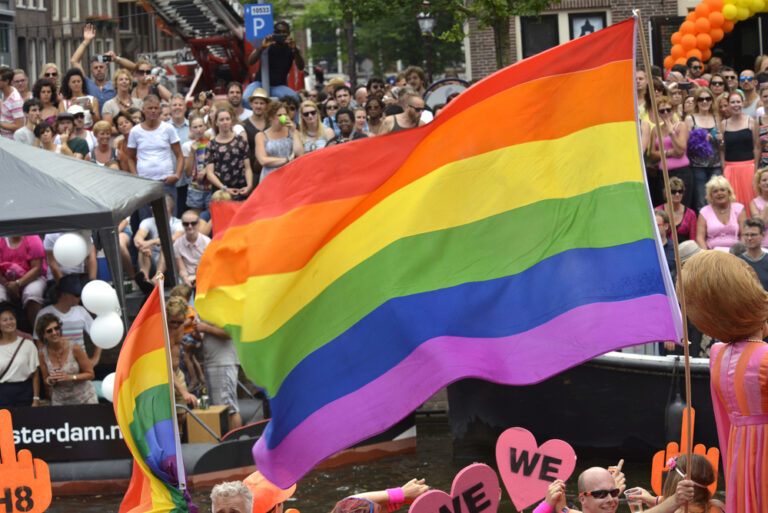
The Netherlands has long since been known as a bedrock for gay freedom — being one of the best countries in the world for LGBTQIA+ folks to live and visit. 🌈
However, the lowlands has now lost their high-ranking title and are actually lagging behind quite a bit compared to other European countries, reports NU.nl.
For example, Iceland rose on the list this year after they recognised the parenthood of transgender people, and France has taken an extra leap by restricting conversion therapy.
Both of these laws have not yet been regulated in the Netherlands.
Fortunately, Dutch coalition parties have signed an agreement promising citizens that the Netherlands will take back the throne — but putting this into effect is taking more time than they anticipated.
New laws will be carried out
The aim of the agreement is to implement the following new laws that will help bring the Netherlands back on top and further protect the LGBTQIA+ community:
There will be a statutory regulation for multiple parenthood,
school rejections of LGBTQIA+ people will end,
there will be a ban on unnecessary medical treatment of intersex children and adults,
anyone can put an ‘X’ in their passport without court intervention.
In particular, the Netherlands has promised to work towards tackling discriminatory violence against LGBTQIA+ people.
Combatting violence is an important step toward securing the rights of LGBTQIA+ people in the Netherlands. Unfortunately, while it’s a big problem that the community faces, only a select few of the perpetrators are actually convicted each year.
Who rose to the top this year?
The European countries that grabbed a spot in the top five this year are:
Malta
Denmark
Belgium
Norway
Luxembourg
In particular, Denmark moved up the most on the Rainbow Index, climbing a whopping seven places as they made great strides to implement new laws for the LGBTQIA+ community. Give yourselves a round of applause! 👏
What do you think about the Netherlands ranking 13th this year? Tell us in the comments below!👇
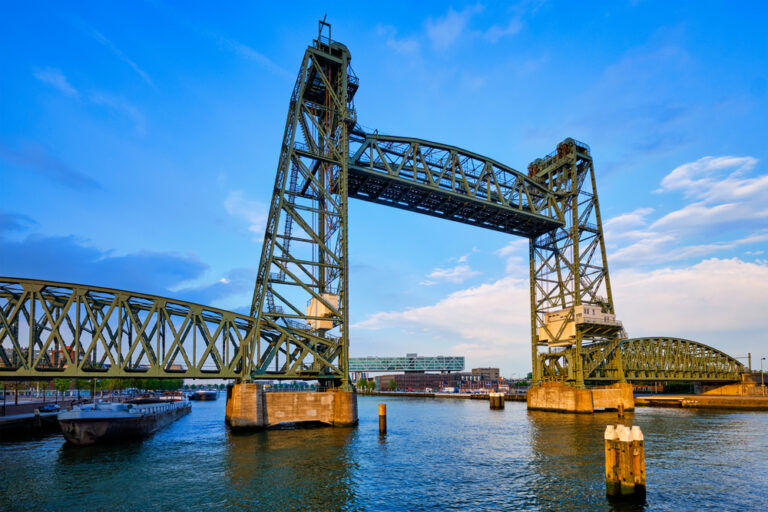
Mr. Amazon has yet again made his way to Rotterdam on his superyacht. This time, the Koningshaven (or De Hef)Bridge didn’t have to be dismantled for His Highness.
Why? Simply so he could fit his ultra-expensive superyacht while sailing to Rotterdam. And, as you can imagine, many people got rightfully angry at this.
While they didn’t end up dismantling it for Bezos, many residents made plans via a Facebook campaign to throw eggs at the ship if it did sail past the bridge. 🌉
However, the superyacht “Project Y721” managed to make its way to the port city without disrupting the bridge’s historical stature.
It did so by sailing from the construction site in Alblasserdam to Rotterdam via a different route and without its masts, writes the NOS.
No dismantling in site
Since 2017, De Hef Bridge, which had gone through renovations, had said that it would never be dismantled again. It is a national monument, after all, so it’s kind of what we expect. 🤷♂️
De Hef Bridge was built in 1878 and finds its place in the maritime capital, so it’s a bit of an entitled suggestion to ask for it to be temporarily dismantled for your boat to pass through.
Now, the €430 million water vessel must drop its three 70-meter-high masts at the Greenport Rotterdam shipyard and sail into the North Sea without disrupting any bridges.
How do you feel about Bezos asking for the historical bridge to be temporarily dismantled? Tell us in the comments below!
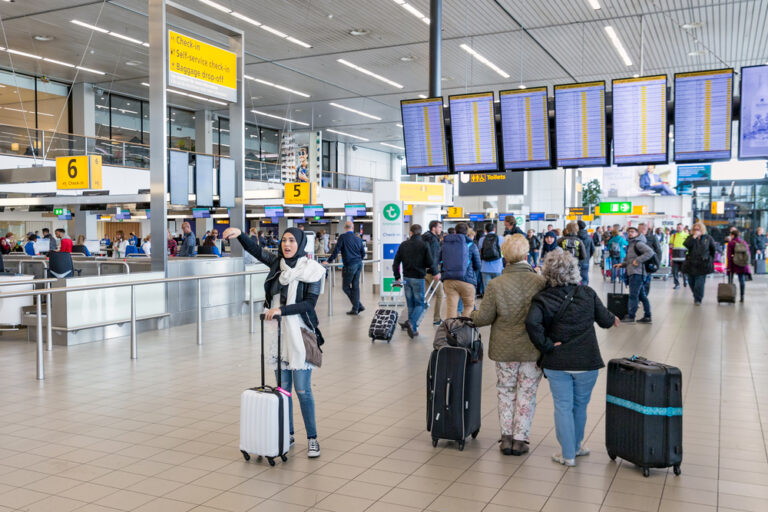
While the optimists among us thought Schiphol’s current chaotic state would be a summer spectacle only, it looks like the Amsterdam airport has its work cut out for autumn.
Already expecting problems ahead, the Netherlands’ biggest airport has decided to limit the number of travellers that can pass through its gates in September and October.
In September, Schiphol will permit 67,500 per day before raising the number slightly to 69,500 per day in October, reports RTL Nieuws.
Despite efforts to manage the situation over the summer, Schiphol is still suffering from a severe lack of security personnel.
And while 300 security guards will be hired over the coming months, it still won’t be enough to man the security belts during the impending autumn holidays.
During the two-week-long school holiday in October, Schiphol is expecting an average of 3,500 extra passengers per day at the airport.
Autumn wardrobes cause longer queues
By continuing this summer’s measures, the airport is hoping to prevent queues and cancelled flights in autumn. But not even capping the number of travellers in September and October will be enough to guarantee a problem-free autumn holiday.
Schiphol explains that, even with extra staff, fewer people will be able to board their flights in autumn than in August.
Why? Well, it’s a seasonal effect. 🍂
In autumn, people simply wear more clothes, and the more coats, boots, and scarves that have to be put in the security bins, the longer the whole ordeal will take. 🤷
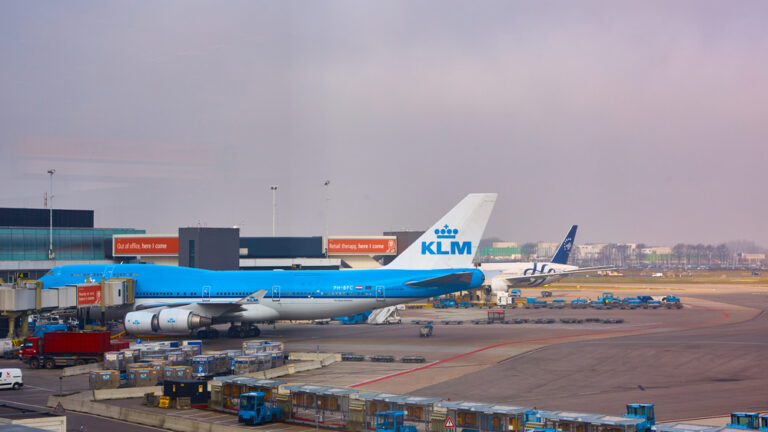
Instead, the Dutch royal airline is planning to sell fewer seats in autumn. They’re hoping that by booking fewer people onto their planes, they can avoid cancelling entire flights.
Well, good luck, we say. 😅
What do you think of Schiphol’s plan to cap passenger numbers in September and October? Tell us in the comments!
Three wolf cubs were spotted outside Veluwe in the Netherlands for the first time.Here’s all you need to know about the new arrivals.
The happy news was delivered by the organisation Wolvenmeldpunt, which works with the implementation of nature policies here in the lowlands.
They had already established that two grown wolves, a male and a female, inhabited the area. Now it seems they’ve welcomed three little ones to the world! 😍
No cuddles allowed!
The little baby wolves are only 3 months old and cannot do anything on their own yet. Their parents are fully responsible for providing food, and the cubs don’t leave the house much at all.
That’s why Wolvenmeldpunt has issued a warning for Dutchies who might want to see this natural wonder: don’t approach the wolves! ⛔
Not only can you scare the cubs with your terrifying human-ness and stanky human smell, but the far less cute grown-up wolves are likely close by — and they do NOT like it when strangers touch their babies.
Should we be scared?
We get it, wolves sound dangerous. And it’s smart to be a little scared of the wolves and stay as far away from them as possible.
As NOS reports, Dutch farmers, in particular, have been very vocal about their concerns for their sheep, now that tons of wolves are roaming the Dutch countryside (calm down, folks, it’s only three packs and a few solo roamers).
The experts are very clear, however: don’t stress too much. The wolves rarely eat sheep, and if they do, it’s usually not the packs that hunt them but the solo-roaming ones.
So, if you’re a sheep farmer in the Veluwe area, you can sleep relatively tight at night. 😅
The main danger connected to the arrival of the new little ones is that if humans approach the cubs (you know, for the ‘gram), the grown-up wolves might panic.
The wolves might get themselves onto roads and other places they really shouldn’t be.
So, in case that wasn’t clear already: PLEASE don’t cuddle the wolf babies. 😭
Are you excited about the furry newcomers? Tell us how much in the comments below!
The mess at Schiphol continues to pile up with huge crowds, missed flights, and abandoned baggage. As a result, thousands of travellers are requesting compensation — and claim clubs are reaping the big bucks. 💸
Claim agencies, such as Aviclaim, EUclaim, and Vlucht-verraagd.nl, have been receiving thousands of requests to arrange compensation for those missing their flights at Schiphol airport. 🛫
Since the beginning of April, the three agencies accepted more than €38 million in claims from these passengers. Echt?! 😯
How much are claim companies acquiring?
Flight-delayed.nl, which mainly received claims for KLM, Transavia, and Easyjet, will submit close to 70,000 claims (worth a whopping €23 million 🤯) to the airline companies!
EUclaim is asking for €10 million in compensation from airlines and €1 million for refunds on cancelled flights.
As for Aviclaim, they’re currently requesting a total of €4.5 million.
Why are passengers resorting to the claim agencies?
The three big airlines, Transavia, KLM, and EasyJet, are having a hard time dealing with the sweeping number of claim applications.
In particular, EasyJet sees an increase in pressure on customer service due to the problems at the Dutch airport.
“We have therefore hired more staff and extended our opening hours. We always pay compensation when customers are entitled to it”, a spokesperson for EasyJet told the NOS.
Travellers are tired of endlessly waiting for airlines to process their compensations — and as a result, they turn to claim agencies in hopes of getting at least some of what they are entitled to.
Are you entitled to air passenger rights?
Is your flight delayed or cancelled? Has your baggage been damaged or abandoned? Then you’re entitled to air passenger rights if you’re flying under these conditions:
Your flight is within the EU and is operated either by an EU or a non-EU airline,
Your flight arrives in the EU from outside the EU and is operated by an EU airline,
Your flight departs from the EU to a non-EU country operated by an EU or a non-EU airline,
You have not already received benefits (compensation, re-routing, assistance from the airline) for flight-related problems for this journey under the relevant law of a non-EU country.
The rules on air passenger rights do not apply in the case of denied boarding, cancellations, or delays to flights from the UK to the EU if your flight was operated by a UK carrier or another non-EU airline.
Are you awaiting compensation due to the chaos at Schiphol? Tell us in the comments below!👇
If you’ve just welcomed a little one into your life, the Dutch have just introduced a special treat for you. From August 2nd (hey, that’s today), you’re entitled to 9 weeks of paid parental leave. 👩🍼
In total, parents have the right to 26 weeks of unpaid leave after having kids, which can be used until the child is 8 years old.
Now, 9 out of these 26 weeks will be paid, which is an improvement from the previous arrangement. 🤷♀️
The catch(es)
But, it wouldn’t be the Netherlands without some bureaucratic catches and fine print. 🙄
The first catch is: If you want your 9 weeks of paid leave, you have to take them within the first year of your child’s life.
If you don’t want to, or if you’re not able to, the 9 weeks can still be used later — but they will be unpaid.
This brings us to the second significant catch to the new Dutch parental leave arrangement: you’ll only get 70% of your wage paid during your paid time off.
Now, 70% might be plenty for some — at least if you’re a parent in a double-income household.
Though, for many low/single income households, 9 weeks on 70% income might just not be feasible.
The advantages
On a more positive note, these rules apply to biological and non-biological parents alike, and they apply to parents of children born before August 2nd 2022.
Another positive development is that parents of twins are entitled to twice as much (quick maths tells us that is 18 weeks of paid parental leave). Makes sense if you ask us; double the work = double the need for time off.
Although many will say the new system is an improvement on the previous one, the Netherlands is still lagging behind many other European countries when it comes to parental leave benefits.
What do you think of the new system? Should we celebrate the improvement or call for better terms? Tell us in the comments below!