Home Blog Page 523

“Help I’ve been kidnapped” note sparks highway pursuit by Dutch police

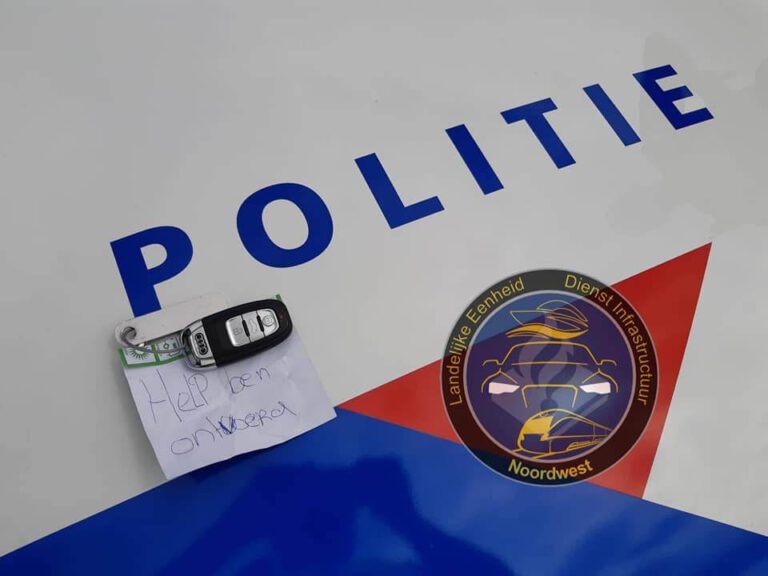
The Dutch police were on high alert this Saturday afternoon when a motorcyclist spotted a note on the window of a car which read “help, I’ve been kidnapped.”

The motorcyclist decided to follow the car with two adults and two young children along the A6 highway until police cars could take over the chase. Once the police stepped in, officers were able to stop the car, reports NU.nl.

An ingenious plan…or not

Several units were involved in the operation — but this turned out to be overkill to say the least. Once stopped, it was discovered that the people in the car were a family on their way to go furniture shopping (wait, what!?)

The officers quickly established that there was, in fact, no kidnapping — only a dissatisfied kid who didn’t want to go shopping. As it turns out, the eldest daughter had come up with the brilliant 🙃 idea to stage a kidnapping all in order to avoid this horrendous family activity.

After a conversation with the officers (perhaps about wasting police resources?), the family continued on their way, though perhaps a little shocked.

Have you ever wanted to get out of shopping with the family this badly? Tell us in the comments below!

Feature Image: Landelijke Eenheid Noordwest/Facebook

Train traffic at a standstill in almost all of the Netherlands — NS urges travellers to postpone their trips

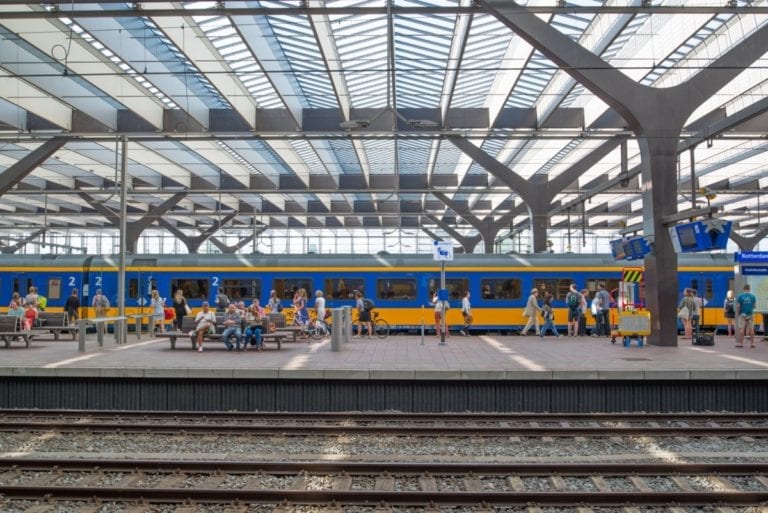
In large parts of the Netherlands, train traffic has currently stopped due to a nationwide outage of a telephone system that ensures a smooth operation of railway signals and switches.

All NS trains most likely won’t be running until 4 PM. The NS is working on providing further information for impatient travelers and advises everyone to postpone any train journeys until further notice.

Trains of regional carriers will probably continue to run despite the outage. However, Arriva is currently not running any trains between Nijmegen and Roermond, writes the railway operator NS.

Follow DutchReview on Facebook for the latest news and updates.

Feature Image: Skitterphoto/Pexels

Watch out for those floaters! High levels of poo bacteria measured in Dutch beach water

Are you thinking of going to the beach to soak up some of that “vitamin sea”? Before grabbing your swimwear and sunhat, check the level of poo bacteria at your local beach — yup. 🙃

An excessive amount of faecal bacteria has been measured at more than 50 beaches, lakes, and rivers over the past year, according to RTL Niuews.

Swimming in sewage water

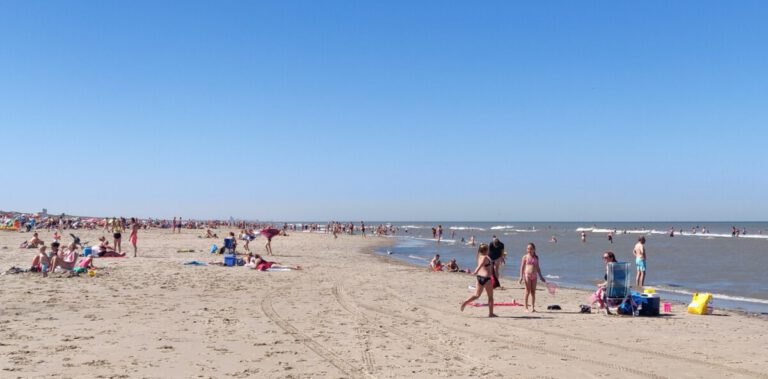
Katwijk in South Holland attracts many sun-bathers, surfers, and vacationers during the summer due to its (normally) lovely beaches. However, measurements from the Rijkswaterstaat (Directorate-General for Public Works and Water Management) show that it’s one of the beaches where excess levels of poo bacteria are regularly found.

The persistently high levels of bacteria occur because sewage waste is sometimes disposed of in the sea (sorry, what?). A beach-comber at Katwijk reports that cotton swabs, tampons, and toothbrushes, are all common occurrences at the beach.

The sewage water washes into the sea exactly where swimmers and surfers enjoy the waves. 🤢

Surfing: sick — but not in a good way

Excess poo bacteria is not only a problem for cleanliness. It’s also a health concern.

The faecal bacteria E.coli and Enterococcen can cause you to vomit or have diarrhoea which can be particularly dangerous for children and the elderly.

Several surfers have fallen ill after a surfing session at Katwijk. One surfer shared this experience online: “Just had an evening surfing session in Katwijk. The sea was littered with garbage.” He goes on to say that “after a surf session, rushing hard to get home on time…yep, diarrhoea again. What is it with that surf spot in Katwijk? Definitely not recommended!”

Because of difficulties with measuring the levels of poo bacteria in the water on a regular basis, the Rijkswaterstaat urge sick surfers report their experiences. 🤙

Challenges with measurements

At the moment, the Rijkswaterstaat measures the levels of E.coli and Enterococcen twice a month. Microbiologist and bathing water expert Anniek de Jong from the research institute Deltares in Delft says that the bacteria levels should be measured much more often.

Because the results of the tests take two-three days to come in, the water quality can change by the time swimming advice can be given.

However, Deltares is currently developing a new system to measure the levels of faeces in the water. This system will allow people to check the levels the same day that they want to go swimming.

However, until the new system is operating, swimmers are often unaware of the bacteria in the water.

Reluctance to close beaches

According to the province of South Holland, it’s not necessary to close a beach due to high levels of E.coli and Enterococcen.

The province consulted the GGD (municipal health services) about the need for a swimming ban on the beach in Katwijk but was advised not to impose one.

The beach in Katwijk is monitored by the Rijkswaterstaat and if sewage water is detected then swimmers are advised to avoid the water for 24 hours.

Summer is saved! Overall, Dutch beaches are safe to swim at

Currently, there is almost no warning about the sometimes dangerous levels of faecal bacteria. However, Marleen van Rijswick (Professor of European and National Water Law at Utrecht University), sees a swimming ban in serious situations as a necessary evil.

Overall, the beaches in the Netherlands are safe to swim in. Therefore, she emphasises that a swimming ban is only for “structural causes that cannot be solved”.

One issue that the professor predicts if beaches were to close due to a swimming ban is that people might not adhere to it. She states that “it is also typically Dutch to go swimming where it is not allowed.” 😂

How’s the water at your beach?

The places with the most frequent findings of poo bacteria are at the Noord-Holland beach Oud Valkeveen; the Groningse Zeestrand Termunten; the Oude Pol in Gelderland; and the Zuid-Holland beach Katwijk aan Zee Boulevard Noord.

RTL Nieuws provides an interactive map where you can see the measurements for your area over the past two years.

Do you have any experiences with this at Katwijk or any of the other beaches? Tell us in the comments below!

Feature Image: Abuzer van Leeuwen/Supplied

Restriction-free autumn? This could be a reality in the Netherlands from September

Do you remember the days when we didn’t have to wear face masks and could hug all our friends? Neither do we. 

Fortunately, we may be able to return to the old “normal” this September, according to the Dutch Minister for Health, Hugo de Jonge. 

De Jonge claims that relaxing even basic coronavirus restrictions, such as wearing a face mask and keeping a 1.5-metre distance, around September 1 could be a “real scenario.”

Fully vaccinated by September

Everything, however, will depend on the vaccination rate as well as mutations of the virus. If all goes well, any adult in the Netherlands who wants the vaccine should be fully vaccinated before the end of August, according to the Health Minister.

While De Jonge previously said that all adults would be able to get their first jab by July, the cabinet now moved this date to mid-July. This is due to problems delivering the vaccine, according to the NOS.

End of lockdown?

In the meantime, the Netherlands will see more coronavirus restrictions relaxed on June 5. While the basic restrictions of keeping your distance and wearing a face mask stay, the latests relaxations mark the end of lockdown in the Netherlands.

Do you think we’ll be back to normal in September? What do you look forward to the most? Let us know in the comments!

Feature Image: Priscilla du Preez/Unsplash

Rutte announces new, relaxed measures, could be the “end of lockdown”

Tonight, Prime Minister, Mark Rutte and Outgoing Minister for Health, Hugo de Jonge stepped up to the podium and offered us some good news — infections are going down enough for the Netherlands to bring in further relaxations to coronavirus measures.

In fact, things are going so well that step three of the five-step plan to reopening the Netherlands will begin sooner than initially planned. Instead of introducing relaxations on June 9, they will begin on June 5. Rutte went so far as to say that these relaxations will “mean the end of lockdown.”

Rutte explained that the government wants cafés, restaurants, cinemas, and theatres to benefit from an extra weekend of being open.

The relaxations will mark another huge step towards reopening the Netherlands with Rutte saying “in principle, almost all locations will reopen under certain conditions. That’s a big change.” 

Due to a drop in numbers

Rutte explained that this is due to the fact that infection and hospitalisation numbers are continuing to drop and vaccinations are steadily climbing. However, he warned that people must continue to follow safety measures such as washing your hands, keeping your distance, and quarantining when you have symptoms.

Indoor dining to resume

No need to bring an umbrella to dinner anymore! As of June 5, restaurants and cafés will be allowed to open their doors and set the tables for indoor dining. However, this does not mean sitting indoors for a couple of biertjes. For now, this only applies to dining.

Dining indoors will be limited to one person or household per 10m2 and a maximum of 50 people inside. As with sitting out on a terrace, you must make a reservation to dine indoors.

Extended opening hours for terraces

It’s good news for those that prefer dining al fresco, from June 5, outdoor terraces can stay open until 10 PM.

However, there will also be a limit on the number of people who may be on an outdoor terrace — a maximum of 50 people.

Even if you’re not on a terrace, you may now buy alcohol from shops and licenses up until 10PM instead of 8PM.

Exceptions to this rule

However, there will be exceptions where more than 50 people may gather. These include funerals (with a maximum of 100 guests), large venues that usually seat up to 1000 people may contain 250 people, and in cases where you are tested before entering an event.

In all of the above cases, you must continue to maintain a 1.5-meter distance from others.

Relaxations for the cultural sector

The arts sector can breathe a sigh of relief. Museums, theatres and cinemas will be able to open their doors for visitors. Visitors must make a reservation and museums must maintain one visitor per 10m2.

You will also have to make a reservation for cinemas, music venues and theatres with all reservations being for a maximum of four people over the age of 12 (children will not be counted.)

Speaking of visitors, from June 5, you may have up to four visitors in your home per day instead of two.

Indoor sports

Adults will be able to exercise together in groups of maximum 50 people without social distancing. Youth competitions (those up to the age of 17) will also be allowed again. However, members of the public will be allowed to attend.

Competitions between those above 18 remain off the table for now, but athletes from the same club may compete against each other.

Indoor sports facilities such as changing rooms, showers, canteens and saunas will be allowed to reopen again but you must make a reservation and a health check. Whilst walking around the facilities you must wear a mask but may take it off when exercising.

A delay in the vaccination strategy

Whilst more and more people are getting vaccinated, the Dutch vaccination strategy has encountered another hiccup.

Producers of the Janssen vaccine have halted distribution of the vaccine to anyone over the age of 18. This means that it will likely be mid-July — not July 1 — by the time all adults in the Netherlands who want a vaccine, may receive their first jab.

What are your thoughts on the Dutch government’s relaxation plan? Tell us in the comments below!

Feature Image: Elina Sazonova/Pexels

More protection for tenants: the majority of Dutch politicians are in favour

It’s no news that residents of the Netherlands suffer under extortionate rental prices — but now the majority of the House of Representatives are in favour of actually doing something about it.

As it turns out, 80 of 150 seats in the House of Representatives are in favour of raising the “liberalisation limit” — the limit at which your rent can be protected.

Currently, if you’re paying rent of up to €750 per month, your rent is protected using a points system. Here’s a quick breakdown:

The Dutch points system

If you’re paying rent of up to €750, then you are protected against paying an unfairly high rent. No matter how much your landlord wants to charge you, what you pay should be based on a points system.

Points are rewarded based on a number of factors such as the size of your space, the number of heated rooms, the energy efficiency, and whether or not you have a garden. All the points are then added up and will determine the maximum amount that your landlord can charge you.

For example: if your space scores 100 points your landlord can charge you a maximum of €509.59 per month!

However, you are only protected if your rent is below €750 — or 145 points. If your space scores above this amount, your landlord is able to charge whatever they like.

The majority of the House of Representatives now agrees that the limit at which rents are protected should be raised — all agree that the new limit should be at least €1000, according to RTL Nieuws.

Slight differences but overall agreement

While they agree on the €1000 minimum, how high the new limit should depend on which political party you ask. For example, Groenlinks (Green left) wants this limit to be as high as €1400 per month.

Other political parties such as Partij voor de Dieren (Party for the Animals), DENK, the ChristenUnie (Christian Union), and Volt are also in favour of raising the limit.

Penalties for greedy landlords

Meanwhile, the PvDA (The Labour Party) has also proposed that a “landlord fine” should be introduced. Landlords who violate the law — by unfairly hiking the price of protected rent for example — will be fined heavily. If they continue to break the law, their permit will be taken away.

The SP (Socialist Party) proposes something similar, suggesting that a “blacklist” of landlords be brought in. Sandra Beckerman of the SP spoke at the House of Representatives, arguing that “it is anti-social when landlords consciously and illegally enrich at the expense of tenants trapped because of the housing crisis.”

Largest political parties against raising the limit

While a majority in parliament are in agreement about raising the limit, there’s one — or should we say two issues. The largest political parties in the Dutch cabinet, the VVD (People’s Party for Freedom and Democracy) and D66 (Democrats 66) are against increasing the limit.

READ MORE|Why is there a housing shortage in the Netherlands? The Dutch housing crisis explained

Whilst both parties recognise that it’s becoming increasingly difficult for people to find reasonable rental prices, they claim that they don’t see how increasing the protected rent threshold will help.

Daniel Koerhuis of the VVD argues that raising the limit will actually make the situation worse. “Something similar has been tried in Berlin and we see the housing supply collapsing and prices in other sectors shooting through the roof. We’re really not waiting for that here.”

Instead, the country’s largest political parties believe the solution lies in building more housing.

What are your thoughts on the Dutch cabinet’s handling of the housing crisis?

Feature Image: Andrew Neel/Pexels

How sustainable are your groceries? Dutch supermarkets flake on sustainability promises

The Netherlands is all green innovation and windmills, right? Although the country generally scores high on overall sustainability rankings, new research shows that Dutch supermarkets are not implementing their sustainability goals.

The Questionmark foundation is an independent research institution that investigates supermarkets in the Netherlands. Albert Heijn, Jumbo, Lidl, Aldi, Plus, Dirk, Coop, and Ekoplaza were all part of the round-up in their latest half-yearly publication. The results were…disappointing, to say the least.

Falling short on promises

Dutch supermarkets have promised to make eco-friendly grocery shopping easier for consumers. This includes offering more organic food, using less plastic packaging, promoting less red meat, and paying more attention to where their products come from.

However, RTL Nieuws reports that things which the supermarkets promised to do aren’t being implemented.

In fact, only Ecoplaza and Albert Heijn seem to be on the right track. Ecoplaza gets credit for having very little meat in its brochures, while Albert Heijn is acknowledged for its transparency about the origin of its products. Albert Heijn is also celebrated as one of the only supermarkets which “provides important insights into the origin and sale of (un)sustainable products.” 

READ MORE | The ultimate guide to the cheapest supermarkets in the Netherlands

Sustainability sinner: red meat

We get it, who doesn’t love a good steak? Summer BBQs are finally be around the corner, but if you were planning on having a steak, then you might want to consider this: red meat has the biggest ecological footprint of all animal products.

Therefore, the Questionmark foundation would like to see less meat advertised by the supermarkets. However, supermarkets promote red meat in 92% of their advertising brochures. 😬

Getting rid of discounts?!

Dutchies want to eat less meat but they also love a good bargain. Seeing red meat in the supermarket discount is therefore not helpful in the quest to consume fewer animal products.

According to Rob van Tilburg from Nature and Environment, “we challenge supermarkets to make a more plant-based diet the new normal. Concrete goals and stopping stunt prices for meat are the first steps.” He believes that supermarkets should take more responsibility for the choices they offer consumers.

Where’s the results?

In 2019, Dutch supermarkets promised to use less plastic packaging. However, only seven or eight actually made any effort towards fulfilling this promise.

According to RTL Nieuws, Albert Heijn is the only supermarket that provides concrete numbers about its use of plastic packaging. The supermarket giant can brag of having reduced its plastic use by almost 7% over the last few years.

Response from the Dutch association of supermarkets

The association agrees that it’s necessary to make a transition towards a more sustainable food supply. It emphasises that “significant steps” have been taken over the past years to make the food chain more sustainable. The association “does not recognize itself” in the claims about insufficient promotion of sustainable grocery shopping.

What do you think about the sustainability of Dutch supermarkets? Tell us in the comments below!

Feature Image: Anna Shvets/Pexels

Jumping the queue: dozens of Dutch students fake high-risk illnesses to get vaccinated

Daydreaming about how you can play the system to get your vaccine early? Well, that’s exactly what a group of Dutch students have done. Dozens of students in the Netherlands have been able to get an early coronavirus vaccination by pretending they have a high-risk medical condition.

Young people with certain medical conditions have started receiving invitations for their vaccinations. Since the beginning of May, this includes any adult who usually would receive the flu vaccine as well as anyone with a chronic heart conditions; chronic kidney conditions; conditions that affect your lungs or airways (including some forms of asthma); and diabetes.

These were the medical issues that some young people were claiming to have in order to jump the vaccine queue.

No proof needed

Some individuals who did this told de Volkskrant that it was easier than expected to pretend to have a pre-existing condition. They said that the GGD didn’t require them to provide any proof of a medical condition when making their appointments.

Despite this cheating of the system, the GGD has said that it isn’t going to change its working methods. It claims that the system must remain “low threshold,” and there are only a handful of fraudulent health claims for the vaccine.

Instructions via WhatsApp

“Don’t you have a vaccination yet? It is super easy to arrange,” is a message that has been circulating in WhatsApp groups. The messages provide young people with instructions on how to claim they have a medical condition. Students are also assured that the GDD won’t check whether they really have the claimed condition.

Expense of PCR tests

A 22-year-old student in Amsterdam told de Volkskrant that the price of PCR tests was his reason for wanting to skip the queue. He said “such a test costs at least 85 euros. If you want to travel during the summer holidays, that’s bullshit.”

A 28-year-old government worker said that he skipped the queue because he had waited long enough for a vaccine.

Several young people also cited the low turnout for vaccine appointments as a reason to push ahead. One individual claims that this is a way of speeding up the vaccination programme in the Netherlands since many of the called age groups are afraid of getting the vaccine.

A spokesperson from the GGD said the fact that people pushing ahead of the queue is “very annoying”, but overall it’s a “calculated risk.” They claim that GGD employees will be urged to ask for invitation letters and corresponding papers in the future.

What do you think about young people jumping the queue? Tell us your thoughts in the comments below!

Feature Image: IgorVetushko/Deposit Photos

New malware plunders Dutch Android users’ bank accounts

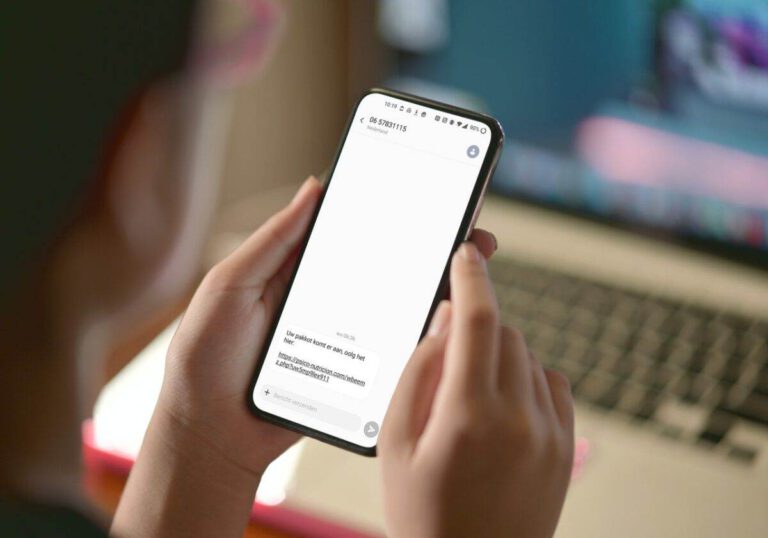
Tens of thousands of Android smartphones in the Netherlands have been infected with malware that tries to steal money from bank accounts. The virus is being spread by text messages with information for tracking packages.

The message states that a package has been sent to you and that you can track it using an app. However, this app is not available in the Google app store. This means that you must install it manually, which results in your smartphone being infected with the malware.

Tens of thousands of Dutch Android users have recently installed these fake UPS and DHL apps, according to RTL Nieuws.

Stealing your money

The malware then tries to steal money from your bank account by secretly adjusting the amount and account number on existing transactions in your banking app. You think you’re transferring €50 to your friend but instead, you’re wiring thousands of euros to a foreign bank account. The malware also checks whether you have an app for cryptocurrencies and loots those accounts as well.

If the malware is on your phone, there is a strong chance that your bank account will be plundered, says cybersecurity expert Cengiz Han Sahin. The only way to know whether you’ve been affected is to check your bank balance.

Where did they get my phone number?

If an Android phone has been infected with the malware, it will collect all ‘06’ numbers from the contact list. These phone numbers will then also receive an SMS inviting them to track a package. This has allowed the virus to become very widespread.

Has my phone been infected?

If you don’t remember downloading a UPS or DHL app, you can check this in the settings of your phone. The malware blocks access to your list of apps, so if under “view all apps” in your settings the list is blocked, it is likely that your phone has been infected.

The only way to get rid of the malware is by resetting your smartphone to the factory settings. While this means that you may lose some data, such as photos and WhatsApp messages if you haven’t backed them up, the reset is necessary. According to Sahin, “it’s quite difficult to get the malware off your phone completely without the reset.”

The malware only infects Android phones. Whilst people with an iPhone can receive this text message, their device will not be at risk even if they download the app. For Android users, the only danger is actually downloading the app. Clicking the link in the text message will not put their phone at risk.

Crazy spelling errors

Many of the text messages are not written in correct Dutch and contain errors, such as “follow your package hore” instead of “follow your package here.” Despite this, tens of thousands of people have still fallen for the scam.

In a world where we are increasingly reliant on online ordering and using apps from delivery companies, it is understandable that this scam has been so far-reaching. However, Sahin cautions that “it is important that you always install such apps from Google’s app store, Google Play.”

Have you been affected by this virus? Tell us in the comments below!

Image: Abuzer van Leeuwen/SmartMockups

Theatres, museums, and indoor dining: next round of relaxations expected on June 5

Outgoing Minister of Health, Hugo de Jonge has announced that from Saturday, June 5 new relaxations in the coronavirus policy will come into effect. Restaurants will be able to offer indoor seating, and theatres, museums, and cinemas will also reopen, reports NOS.

On Friday, the cabinet will finalise their plans for this phase of relaxations. The details will be presented by prime minister Rutte and outgoing minister of health De Jonge at a press conference on Friday night.

Missed eating out?

It is reported that from next Saturday, June 5, restaurants and cafes will be able to offer indoor seating to a maximum of 30 guests. In line with these new relaxations, catering venues will be able to stay open until 10 PM. Reservations will be essential and there will be fixed seat allocations.

This will level the playing field for Horeca (hotels, restaurants, cafés) and get rid of the distinction between indoor and outdoor catering.

Fancy a glass of wine?

According to the new measures, alcohol may be sold in restaurants and cafes until 10 PM. It will also be possible to buy alcohol in supermarkets until this time. The sale of alcohol is currently prohibited after 8 PM.  

Wait, there’s more to get excited about

If the lockdown has left you feeling a bit uncultured, never fear! Museums, cinemas, and indoor theatres will also reopen from June 5. If you do plan to go, remember that you will need to book a time slot.

If these new relaxations come into effect, you will also be allowed to have up to four guests visit you at home. Currently the regulations only allow two. Additionally, new advice will be issued for sports ­­­­— so get those hockey sticks out.

Ahead of schedule

These relaxations were originally planned to take place on June 9, but because the coronavirus figures are falling steadily in the Netherlands, the date has been brought forward to June 5 — woohoo!

This early opening has been assisted by the increased number of vaccinations that have been administered. In reference to the number of infections, hospital admissions, and vaccinations, minister de Jonge says that “all numbers that need to fall are falling and all numbers that need to rise are rising.”

What part of these new relaxations are you most excited about? Tell us in the comments below!

Feature Image: Sandra Seitamaa/Unsplash