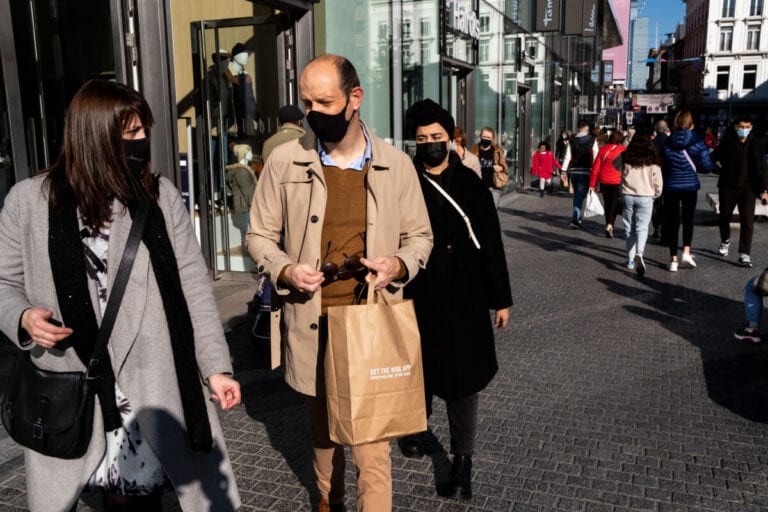
The cabinet is planning to enforce a strict lockdown in the Netherlands. The lockdown is expected to last until January 19 and will involve the closure of almost everything.
The news comes from sources in The Hague who told the NOS the lockdown will close all non-essential shops, hairdressers, museums, theatres and schools.
Closure at midnight
In order to prevent a rush to the shops, the new measures will come into effect tonight at midnight. Non-healthcare contact professions such as hairdressers will also be asked to discontinue service after this time.
Schools will be expected to close their doors on Wednesday and people will be asked to stay at home as much as possible. This will also be expected during the holidays as the government asks that people discourage house guests.
Numbers too high
The government has decided to implement these drastic new measures due to the sharp rise in coronavirus numbers across the Netherlands this past week. On Saturday, 9182 people tested positive for the virus, and a further 9924 on Sunday.
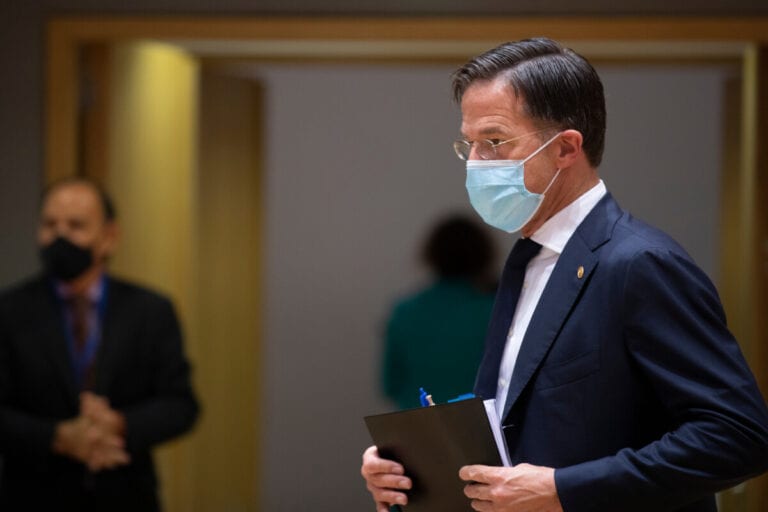
Prime Minister Mark Rutte will address the nation tonight at 7 PM when he will clarify the Dutch government’s new measures.
Follow DutchReview for tonight’s press conference, live.
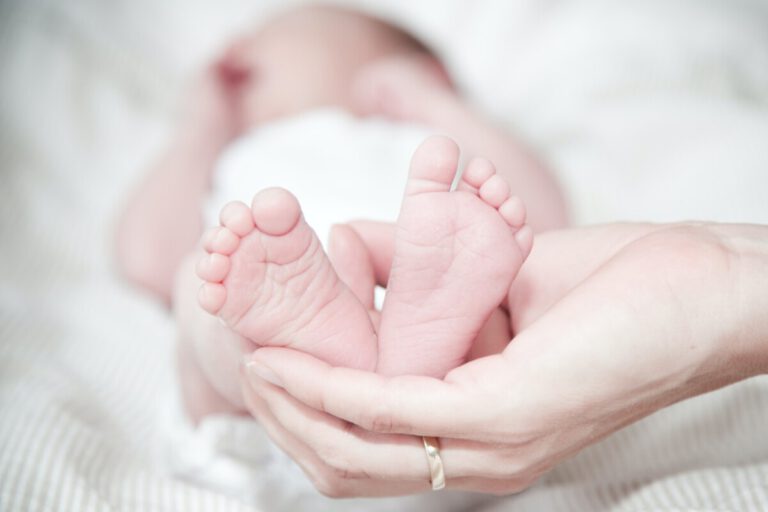
Homebirth culture has been added to the list of Dutch intangible heritage. According to the Netherlands Intangible Heritage Knowledge Centre (KIEN), there is nowhere else in the Western world that do at-home deliveries on such a large scale.
Nominated by the Royal Dutch Organisation of Midwives (KNOV) and the Dutch Professional Association for Maternity Nurses (NBvK), the organisations see homebirths as a part of the Dutch identity and culture.
These midwives, maternity nurses, and expectant parents want to safeguard the practice of Dutch homebirths for cultural and medical reasons. Their objective is “to prevent a natural process from being unnecessarily medicalized and to interpret the medical and cultural values of the home birth.”
The distinctiveness of homebirths in the Netherlands
Today’s popularity of homebirth culture in the Netherlands stems from “a series of legal-medical decisions, which enabled a separate branch of obstetrics and maternity care to be guaranteed.” This combination of care ensures that a woman is properly guided from the start of the pregnancy until well after birth.
The KIEN says that although it’s possible to give birth at home safely in other parts of the world, in the Netherlands, the freedom to choose where the delivery takes place is a core value based on “a number of immaterial cultural values such as ‘autonomy/we determine ourselves’, a ‘natural process’, and ‘being at home’.”
Early in the twentieth century, Dutch law established the autonomous power of the midwife. They were trained as independent medical practitioners. This allowed them the freedom to supervise deliveries at home, whereas in other Western countries, birthing care fell under the responsibility of doctors.
Safeguarding the cultural heritage
According to the KIEN, the popularity of homebirths in the Netherlands has been dwindling in recent years. To protect the cultural integrity of delivering at home, they’ve developed a set of security actions. They aim to counterbalance fear among expectant parents and provide accurate information about the home delivery process.
They also wish to promote homebirth as “part of the Dutch immaterial culture and indicate the importance of the underlying values, namely: freedom of choice, autonomy, ‘being at home’ and not medicalising unnecessarily.”
Additionally, KIEN says that the maternity care profession has a “somewhat dusty image” and they want to make it more attractive to the new generation by improving the perception around it.
What do you think of homebirth culture in the Netherlands? Tell us your thoughts in the comments below!
Time to pull out your beach body, everyone: temperatures in the Netherlands are set to go back into the double digits!
Of course, by “double digits”, we mean “11.12 degrees Celsius”, and by “beach body” we mean “slightly fewer layers of clothing” but hey, we’re still pumped!
After a particularly chilly week last week (did anyone else step outside into one-degree weather?), we’re being gifted a short reprieve.
The average temperature in the Netherlands at this time of year is only six degrees, but some parts of the Netherlands may rise above 12 degrees today. This is “exceptionally warm,” according to Buienradar weatherman, Leander de Wit.
We can thank a supply of warm air over the ocean for the rise in temperatures. Of course, it’s not all good news: we’re still in the Netherlands after all. Despite the warmer air, the weather will be moody and unpredictable.
Tuesday
If you’re in a stay-inside-and-drink-hot-chocolate mood, you’re in luck! Rainy weather is coming our way on Tuesday, beginning overnight and peaking Tuesday morning. De Wit has claimed that it will be the “wettest day of the week.”
The Netherlands is expecting 5-10 millimetres, so don’t forget your umbrella if you dare venture outside.
Wednesday
Are you a sun-lover? Then don’t sleep through Wednesday. The morning will be sunny (what a foreign word at the moment!), while some clouds will come over in the afternoon.
Luckily, it should be dry all day long with max temperatures of ten degrees about three degrees higher than average for this time of year.
Thursday
From Wednesday evening a cold front will pass over the Netherlands, bringing rain with it. By Thursday morning it will be more dry, but the weather will remain temperamental. By afternoon, we’ll see temperatures of about 10 degrees.
Are you loving the Dutch weather and would never leave? Tell us in the comments below!
Prime Minister Mark Rutte is expected to announce stricter coronavirus measures for the Netherlands at 7 PM.
Following a crisis meeting yesterday, cabinet sources have told RTL Nieuws that the measures are expected to be very tough. This may include the closure of all non-essential shops and transit locations such as museums and zoos.
The crisis meeting was called due to rising coronavirus numbers throughout the Netherlands and will continue this morning.
This evening’s measures will be announced from Rutte’s office The Torentje, the Dutch equivelant of the Oval Office.
Retail must be targeted
One political source has told AD that the cabinet now sees it as “logical to look at the retail trade” when considering where to close. Reports of packed shopping streets have been concerning for the RIVM with 9924 people reported as testing positive yesterday, and 9182 on Saturday.
If retail shops are closed, it’s likely that only essential stores, such as supermarkets, will remain open in the lead-up to Christmas. It will be the first time since the beginning of the coronavirus pandemic that the Netherlands has fully closed the non-essential retail industry.
Education
In yesterday’s meeting, the cabinet also turned to the question of education. The expected measures remain uncertain. However, an additional week of Christmas break is a possibility.
Whilst secondary school education can be performed primarily online, this is a much more difficult task when it comes to primary education.
Transfer locations and contact professions
The cabinet is also looking to close “transfer locations.” These include places such as museums, zoos and swimming pools. The cabinet fears that people are no longer willing to abide by necessary restrictions such as social distancing.
“It is quite sad that the current package of measures does nothing anymore, the Dutch simply don’t stick to it anymore. Shops and streets are overcrowded, no distance is kept and people with complaints no longer stay at home. The pressure on healthcare is just getting too great” one cabinet source tells AD.
Contact professions such as hairdressers will also be discussed in today’s meeting. These professions were closed during the first lockdown.
Announcement tonight
It is expected that the Prime Minister, Mark Rutte, and Health Minister, Hugo De Jonge, will announce the latest measures tonight in a press conference. This will be following this morning’s meeting and one further meeting later today.
The new measures are expected to last from the last weeks in December into — and potentially through — January.
Do you think stricter measures are needed? Let us know your thoughts in the comments below!
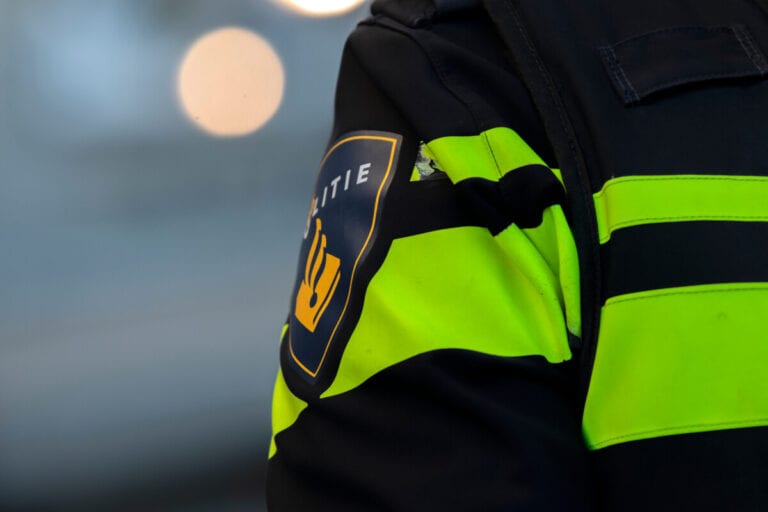
A spokesperson for the National Police has announced that there will be “a lot more police” out on the streets this New Year’s Eve. This is because coronavirus restrictions and the fireworks ban will have to be enforced.
The spokesperson explains that New Year’s Eve “is always a high-risk event.” However, this year will be extra challenging for police, RTL Nieuws reports.
But the fireworks ban will be the least of their problems. The real issue will be the enforcement of coronavirus restrictions. They believe people will be socially discontent due to the measures.
“People are tired of corona restrictions and need an outlet. The events that normally provide entertainment and distraction, such as the countdown moments and the bonfires, cannot continue and the catering industry is closed.”
Twice as many police officers in Amsterdam
Amsterdam’s Chief of Police, Frank Paauw, has claimed that there will be twice as many police officers on the capital’s streets this New Year’s.
He believes that the city will be under considerable risk this year because people will be unable to celebrate in bars or restaurants. Instead, the fear is that people will take to the streets. “It will be a difficult night”, he says.
Varies between municipalities
However, while Amsterdam will deploy twice as many police officers, cities such as Rotterdam and Utrecht will not.
Rotterdam will see the usual number of police deployed this New Year’s. A spokesperson for the municipality tells RTL that since the shops, bars and restaurants will be closed, there will be no nightlife and therefore, no need for extra officers.
Similarly, Utrecht will not be deploying extra officers, however the force is trying to determine potential hotspots for fireworks in order to respond quickly if necessary.
For healthcare
The National Police Chief has emphasised that these steps are necessary in order to prevent the further spread of coronavirus throughout the Netherlands. “We do it together so that healthcare is not overburdened.”
What do you think about this announcement? Let us know your thoughts in the comments below!
The Dutch government have been actively discouraging dual citizenship for years now, in other words— enjoying another official citizenship in addition to your Dutch one.
If you have dual citizenship, it may be time to get in contact with your local branch of the Dutch authorities and find out whether or not you are still eligible for Dutch citizenship.
Dual citizenship and the Netherlands: what is double nationality — and why is it controversial?
We almost all have a nationality at birth, which is usually the country your parents had (permanent) residence in.
Some countries extend this ‘privilege’ to anyone on their soil, or within their borders, even if they or their parents weren’t actually living there. In the US, for example, many women have given birth within US borders, whether purposely or purely by coincidence, and the child is eligible for US citizenship.
Other countries will allow a child to be a citizen based on their parents’ nationality or ethnic background, even if the parents are no longer in that country, one of those nations is Turkey.
For others, after registration, and meeting the requirements necessary, you are then given ‘citizenship’ — meaning you are now officially Dutch, American, Japanese or anything in between.
Dutch citizenship means you can enjoy all the privileges that come with being a Dutchie. You have the exact same rights as everyone from the country — including diplomatic aid (say, you’d get in trouble on vacation — your embassy may step in), social services (unemployment benefits or student grants) as well as being able to cast your vote in elections.
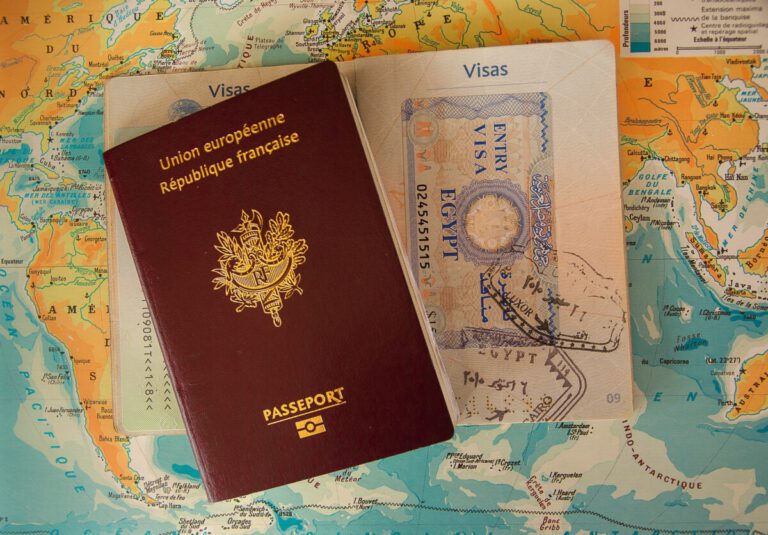
It also means you’ll probably be given your very own passport, or at least some sort of official documents that prove your citizenship and allow you to travel.
Why has dual citizenship and the Netherlands become an issue?
The reason this has become controversial is that certain people are enjoying the benefits of both, doubling up their personal privileges over those other citizens who merely have one citizenship.
In some cases, people with dual citizenship are enjoying social benefits from both countries. For example, working in the Netherlands for years — returning to their home country but continuing to receive those benefits while no longer part of Dutch society and also receiving benefits locally from that country. This, in particular, has happened a lot in Morocco, where some (former) migrants now live “luxurious” lives, at least in comparison to if they had had merely one nationality.
In other cases people are involved in political dealings in a ‘country of heritage’. In other words, they have never lived there, sometimes not even vacationed there, but are actively rallying others in their country of residence (where they currently live) to influence politics of the other nationality.
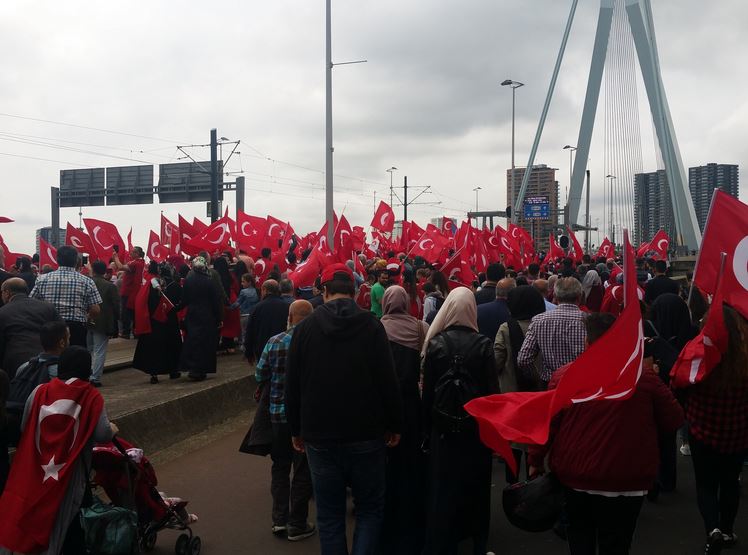
This happened in Turkey, where controversial PM Recep Tayyip Erdogan sought the presidency. Instead of concentrating on Turkish citizens in Turkey, Erdogan branched out all over Europe and rallied Turks to vote in favour of his reforms. He also began actively campaigning in those countries, which is extremely diplomatically controversial, sending out Turkish political figures to rallies around Europe. In the Netherlands the situation escalated when a Turkish minister was rejected and riots broke out in Rotterdam and Amsterdam.
Make Turkey in the Netherlands great again”. Image: DutchReview/Supplied
Last but not least, some people are using their dual citizenship to ‘hide’ from the consequences of their actions. Some countries do not extradite their citizens and so, if you have their citizenship, you can commit acts of crime in one country and flee there to avoid prosecution.
Worse perhaps is that some figures are using their dual citizenship for terrorism. Many, for example, crossed into Islamic State-territory from neighbouring countries of which they were also citizens, and because they still have Dutch (or other) passports they may return at will to that country — potentially plotting terrorist attacks.
Now what? Go see your local embassy or hire an immigration lawyer!
The Dutch cabinet, Rutte III, is actively banning dual citizenship of new immigrants, with certain exceptions. This means you will be informed of having to make a choice — do you wish to remain or become a Dutch citizen, keeping your benefits and passport, or will you renounce it for your new/old nationality and lose them but keep your ‘current’ rights and benefits there?
Some people may automatically lose their citizenship, for example, because they were merely children when they migrated elsewhere and came of age in their new country, never having actively been part of Dutch society as adults. Others, as stated before, will have to make a choice sooner or later.
On the upside, it may also make the Netherlands safer, as certain people (like criminals abusing their citizenship and terrorists) will now also lose their citizenship and may not return to the country or be promptly arrested upon arrival as an ‘unwanted alien’.
You can, however, likely make a case out of your situation, asking to speak to the Dutch Naturalization and Immigration Service (IND) and/or lawyering up with an Immigration Lawyer who should be able to give you a clear picture of what your options are.
For everyone else little will change — so don’t worry too much just yet! The Dutch aren’t after you or trying to ruin your life, rather it’s trying to keep oversight of where the overseas money flows and who’s being a citizen of where. When in doubt, write to your local Dutch branch of the government, or just check the websites and give them a call!
What do you think of the Dutch government’s discouragement of duel citizenship? Tell us your thoughts in the comments below.
Feature Image: jacqueline macou/Pixabay
Editor’s note: This article was originally published in December 2017 but was fully updated in December 2020 for your reading pleasure.
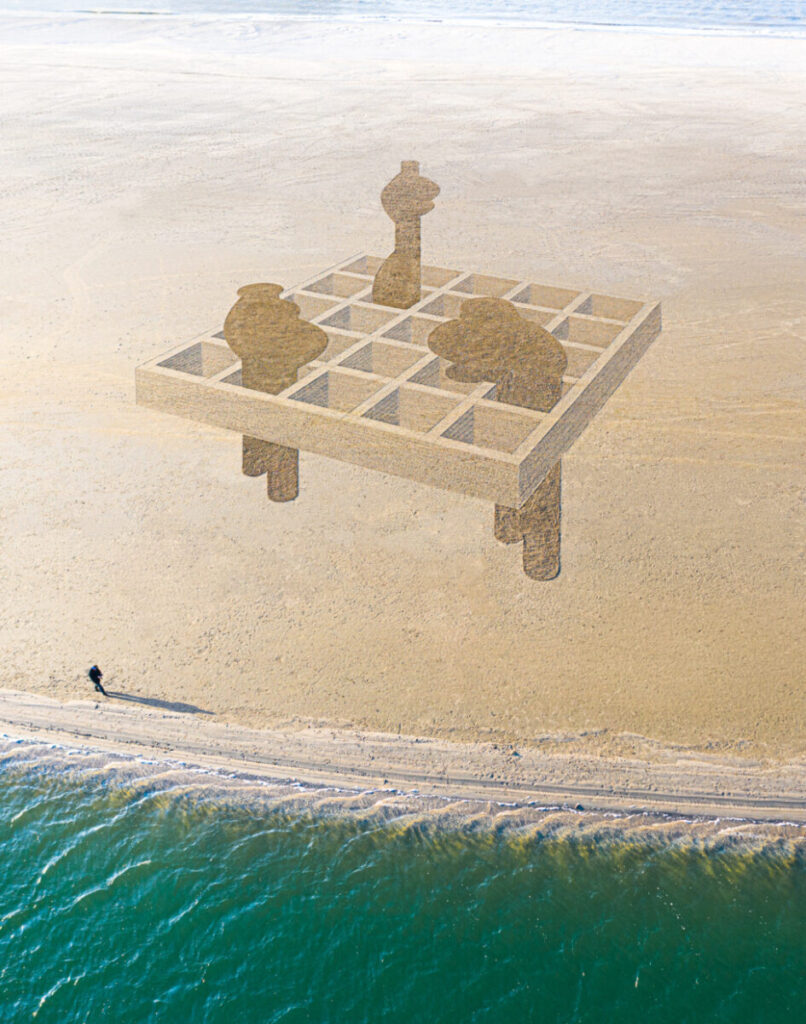
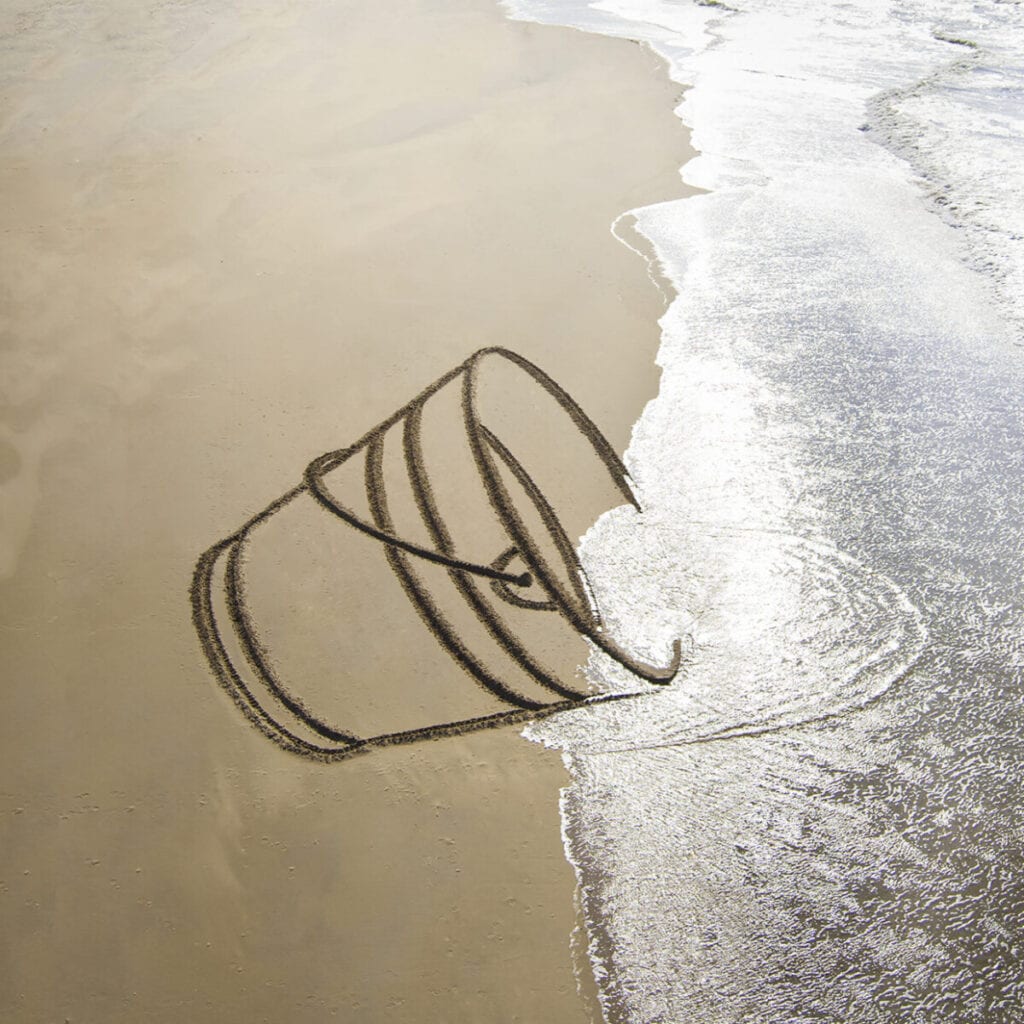
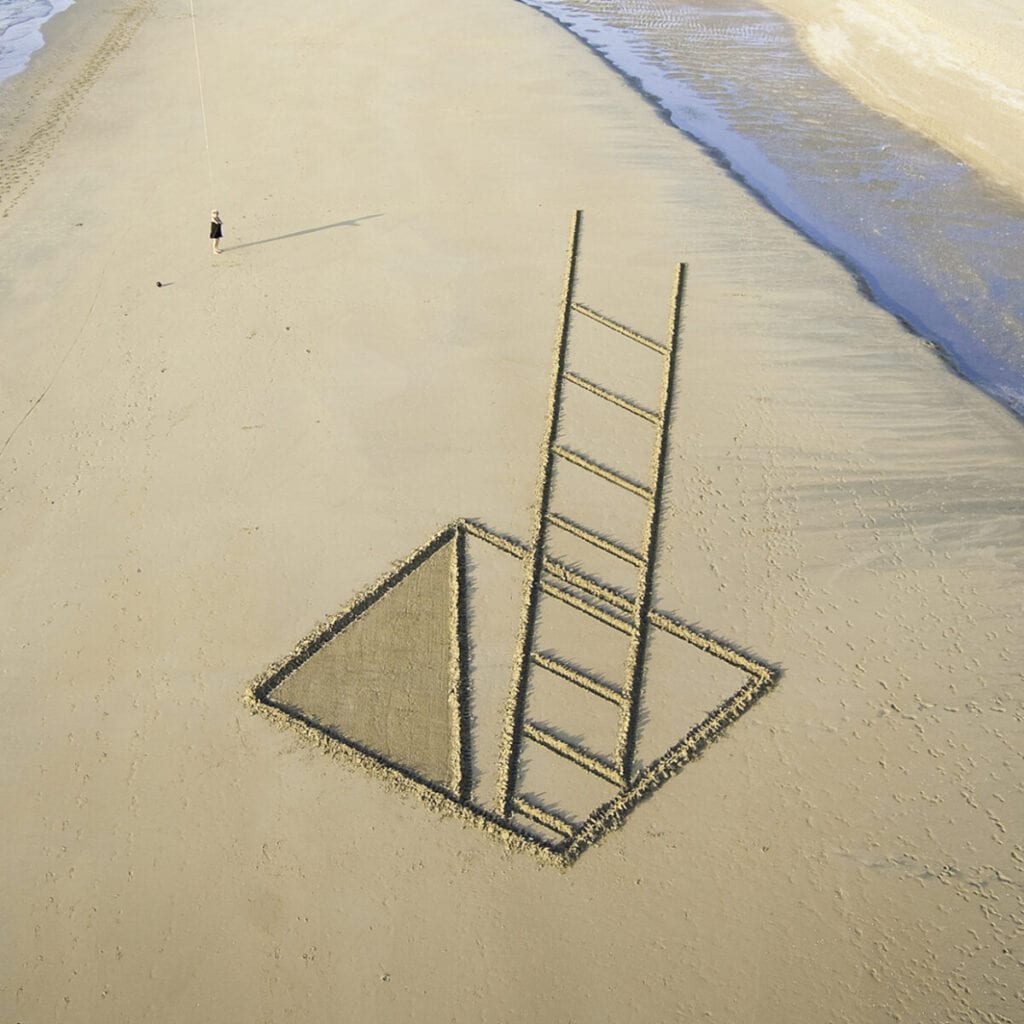
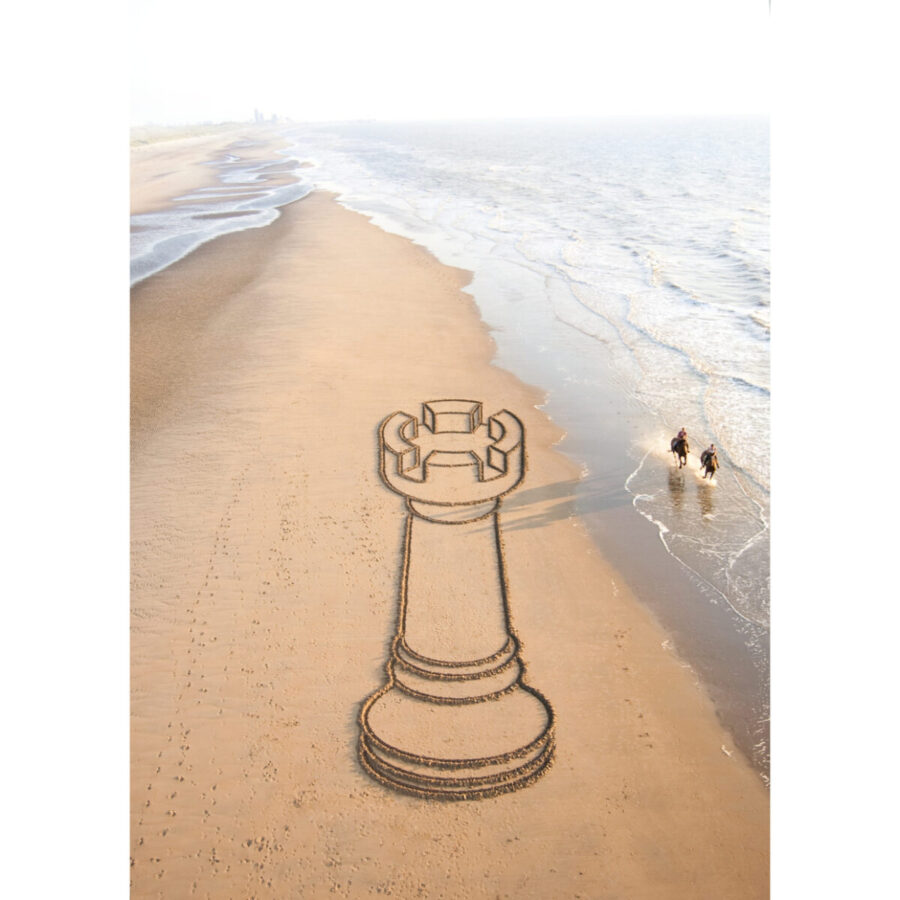
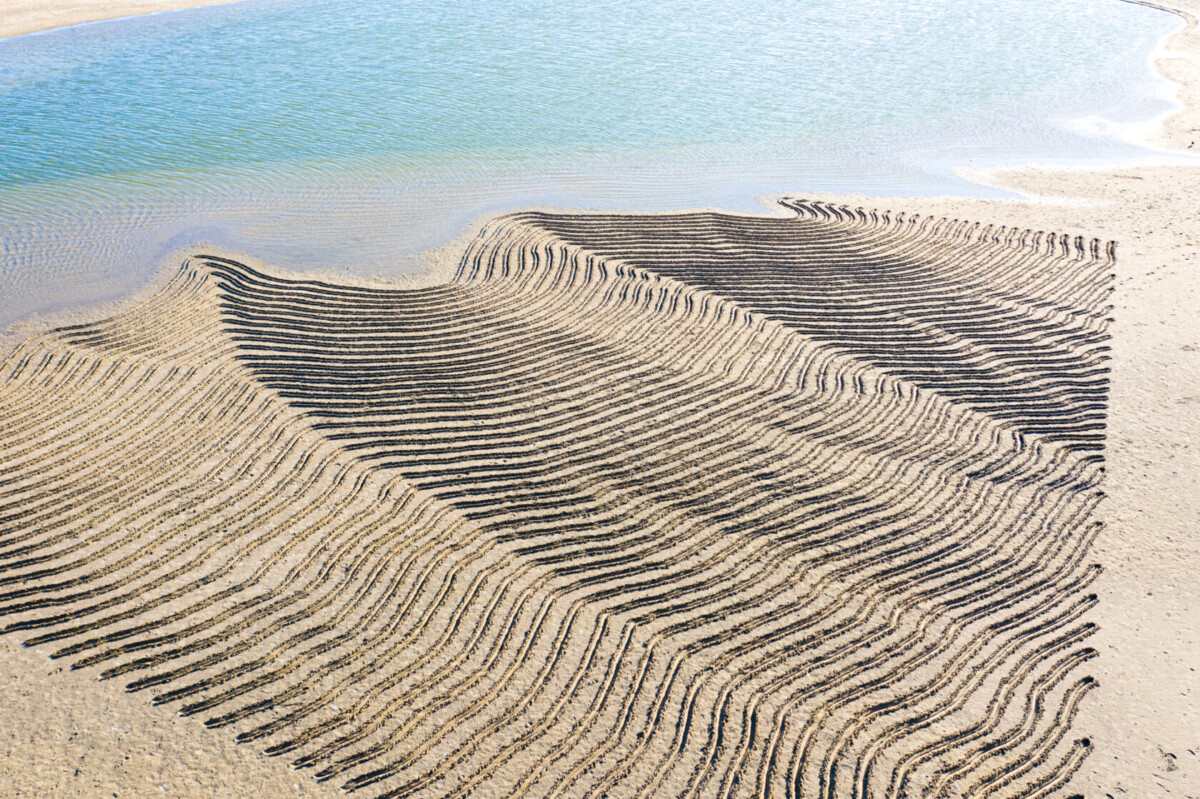
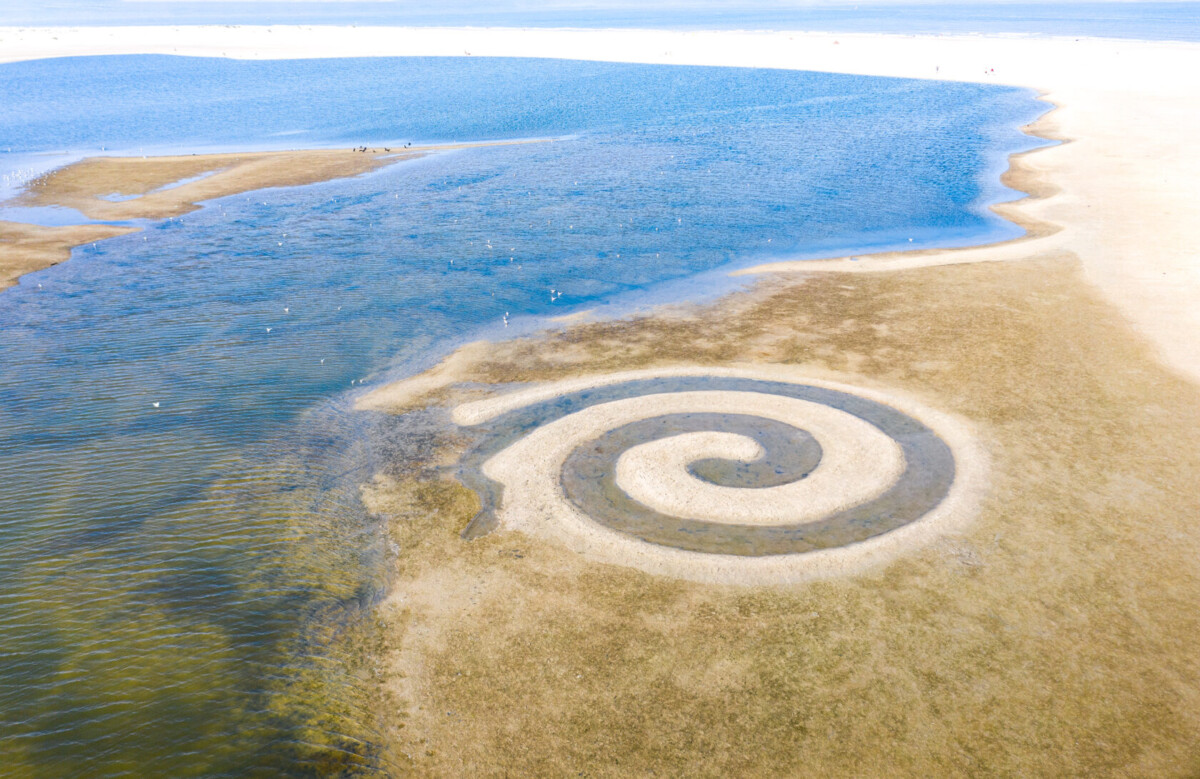
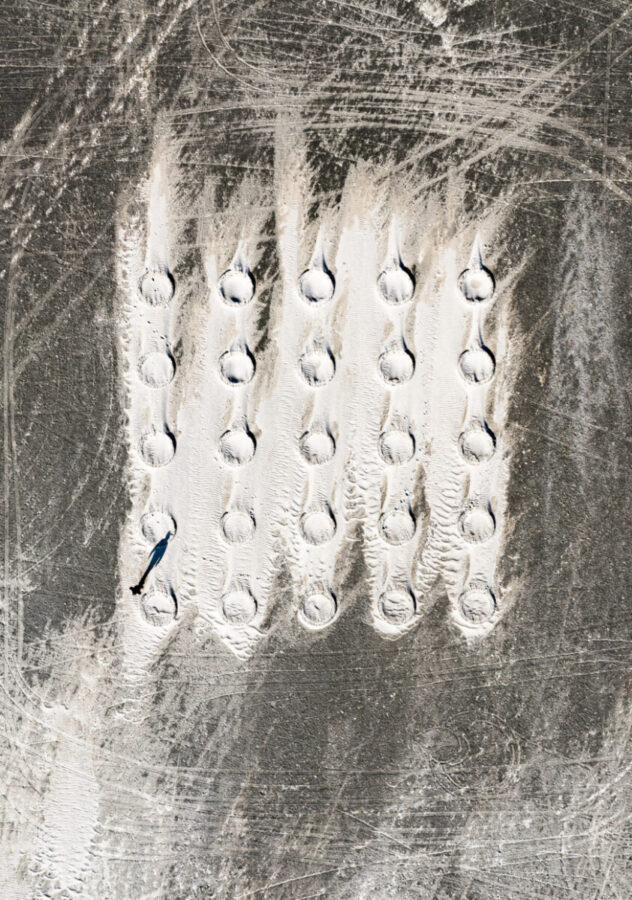
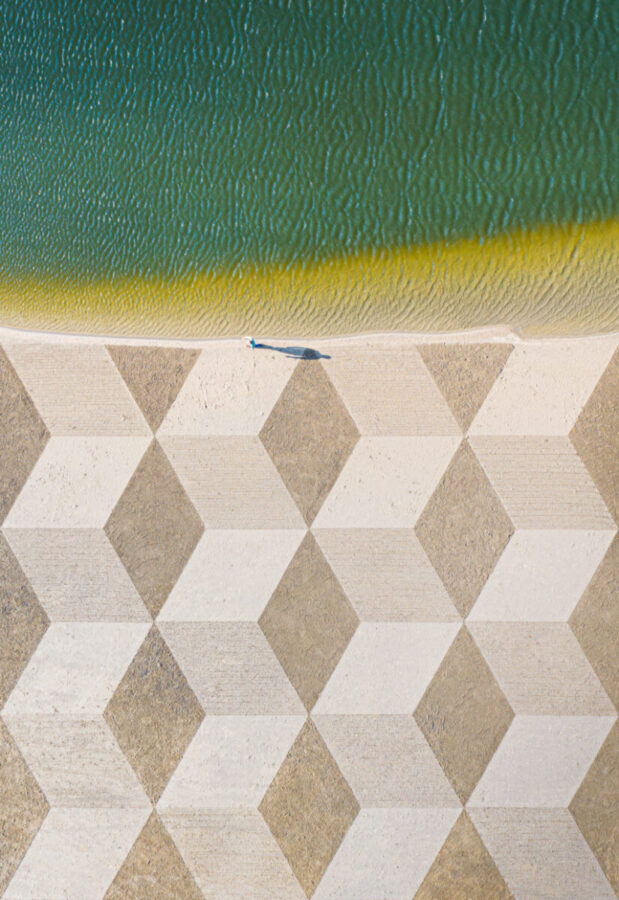
Enormous sand drawings and sculptures have been popping up all along the Dutch coastline, thanks to the handiwork of artist Nico Laan.
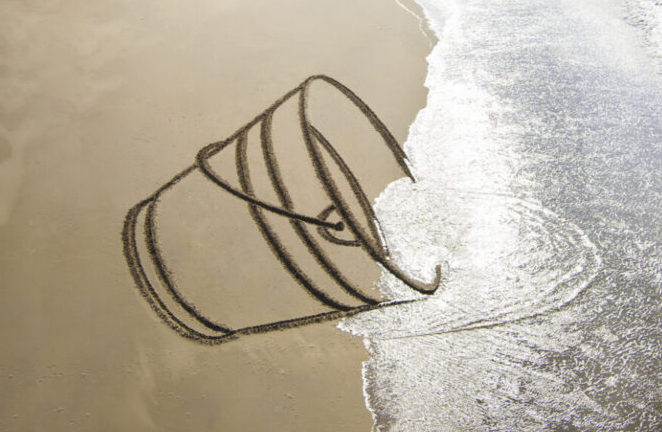
Laan loves playing with perspective and optical illusions, incorporating a technique known as anamorphosis. On the ground, his works may appear random and confusing, but when photographed from the air Laan’s unique vision comes into view.
Incredible perspective drawing on a Dutch beach. Image: Nico Laan/Supplied
It all began when the art teacher took some of his school students out to draw in the sand on the beach. “One of the students drew a cube that seemed to stand out from the rest of the work,” he says. This gave him the idea to explore how far he could take the concept of anamorphosis himself.
A great example of art engaging with nature. Image: Nico Laan/Supplied
His first sand drawing went for a “pop up” look, playing with illusion and dimensions. The drawings take between four hours and three days to complete.
“Below Sea Level”. Image: Nico Laan/Supplied“Tower by the Sea”. Image: Nico Laan/Supplied
The width and position of each line must be carefully planned out beforehand, which Laan does on his computer. Once at the beach, he uses ropes and measuring equipment to realize his design on a much larger scale.
“I don’t want to bring other materials into it,” he says. “I only move and change the elements that are already there.”
“Coastline”. Image: Nico Laan/Supplied
Initially, Laan believed his pieces would be destroyed once nature had had its way. But after seeing how his pieces changed and remained visible after becoming submerged underwater, he began designing works to intentionally change with nature.
“Coastline”. Image: Nico Laan/SuppliedThese rings of sand were fully submerged and when the tides pulled away it created this interesting effect. Image: Nico Laan/Supplied“Sand and Water”. Image: Nico Laan/Supplied
Next time you’re visiting the Dutch coastline, keep your eyes peeled! You may just spot one of Laan’s sand pieces.
Did you enjoy Laan’s creations as much as we did? Share your thoughts in the comments below, head over to his website, or follow him on Instagram!
Two Russian diplomats in the Netherlands have been exposed as spies by the Dutch intelligence service AIVD.
The spies worked undercover as accredited diplomats at the Russian embassy in The Hague. However, in reality, they were Russian intelligence officers dispatched to hunt down sensitive information from Dutch technology companies and institutions, says AIVD.
The Dutch Ministry of Foreign Affairs has withdrawn the Russians’ diplomatic immunity by declaring them persona non grata. The diplomats will now be forced to leave the country, reports the NOS.
One of the spies reportedly created a substantial network of sources, while the other had a supporting role. They searched for information on civil and military technology, like artificial intelligence, semiconductors and nanotechnology, and others.
The targeted companies have not been released by AIVD to the public, but have been informed of the breaches.
Punishment for sources
The spies paid the sources for the information. At least one source was a foreigner who will now be deported by the IND under immigration law.
The other sources will not be punished by the Public Prosecution Service because it is not illegal to have contact with someone from a foreign service. However, their employers will be responsible to determine if secret information was shared with the spies and report it if necessary, said an intelligence spokesman.
Retaliation from Russia
In response, Russia will likely tell two Dutch diplomats in Russia to leave. The Russian embassy in The Hague told Tass news agency that the Netherlands should expect countermeasures and that the Dutch ministry “has not provided evidence of illegal activities by Russian diplomats.”
Russia and the Netherlands have a difficult relationship at present. This is partially because of Russia’s refusal to cooperate with the MH17 investigation and criminal proceedings.
Four Russian officers were caught in 2018 while hacking into the computer systems of the OPCW, an organization for banning chemical weapons. However, Russia has also claimed that tracking equipment was found on the car of a Russian military attache in the Netherlands in August this year.
British citizens may be banned from non-essential travel to the Netherlands once Brexit is finalised on January 1.
This is because the EU commission no longer allows non-essential travel from countries outside of the EU, with the exception of those with low levels of COVID-19 like New Zealand and South Korea.
It’s unlikely that an exemption will be extended to the UK post-Brexit, the EU commission has indicated according to The Guardian. Instead, that decision will fall to the Council of the European Union, said an EU Commission spokesman last week.
Who can still travel to and from the Netherlands?
If the block goes through, this will not affect UK nationals already living in the Netherlands. Likewise, EU citizens can return from the UK without any problems.
In certain cases, those travelling for work may also enter the Netherlands and EU, for example aid workers, care workers, diplomats, healthcare professionals, military personnel, seasonal farm workers and transport workers. Travelling for study, transit and urgent family matters will also be permitted.
In addition, Northern Ireland residents will still be allowed to travel to the Republic of Ireland.
Travelling to the UK
Meanwhile, the Netherlands maintains that travel to the UK should be strictly necessary, and not for tourism. The Dutch Embassy in London hasupdated their travel advice regarding the new ‘tier’ system in the UK.
From December 15, those traveling to Britain from the EU will need to quarantine upon arrival for just five days instead of 14, granted they can show a recent negative corona test.
People returning to the Netherlands from the UK will need to quarantine for 10 days. New rules will come into effect from January 1, according to the Dutch Foreign Office, but these are still being determined.
Will this new ban affect you if it is implemented? Tell us in the comments below.
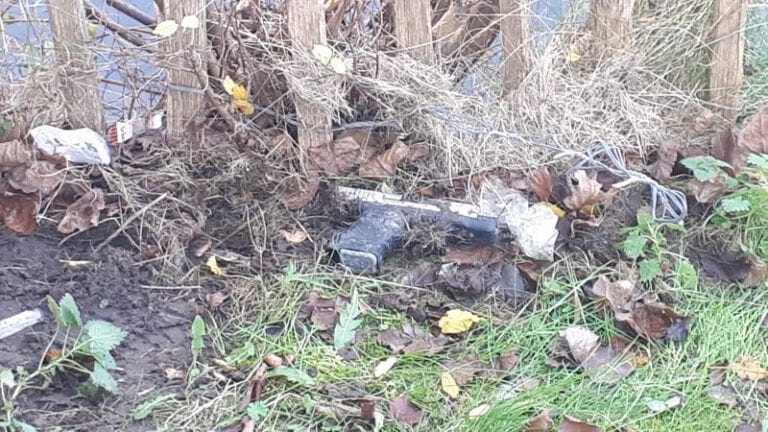
A loaded firearm was found by a primary school pupil as they played during recess in their school yard. Thankfully, the child did not touch the gun but instead told school teachers.
The school, located in Vlaardingen, quickly called all the children back inside the building and alerted the police. Upon arrival at the scene, one officer picked up the gun and found that it was fully loaded.
A wise student
A police spokesperson has said that the school was very fortunate that the children did not touch the weapon. “Suppose the children had started playing with it, it could have turned out very differently” they tell Rijnmond.
Gun to be tested
The gun has been removed from the scene and will be forensically tested by police. The weapon will be checked for fingerprints and DNA. The police will also perform a “shooting test” — a method through which the gun is shot and the spent bullets are checked for the unique scratches that the barrel has left behind.
The police spokesperson explains to Rijnmond that in performing these tests and sharing an image of the weapon, the police are investigating whether the gun may have been used in a crime.
“Each weapon leaves a unique trail of scratches on ammunition. When we do such a shooting test, we can compare the shells with shells found in previous crimes” they say.
Follow DutchReview on Facebook for the latest news and updates.