The RIVM has published the latest count of coronavirus cases in the Netherlands, for today, June 4.
As of Monday this week, access to tests became more readily available for all people who have corona-related complaints.
With this in mind, 209 more cases of coronavirus have been reported in the Netherlands, reaching a total of 46,492 cases ever since the outbreak began back in February.
Severe cases of coronavirus lead to 12 people ending up in the hospital. Unfortunately, the virus continues to claim lives. 13 more people have passed away due to the virus, leading to 5,990 casualties throughout the country.
Hague primary school closed after teachers test positive for coronavirus
Primary schools have been reopened for a while, yet the coronavirus still poses a real threat. A primary school in the Hague had to close down after two teachers were tested positive for coronavirus this week.
The teachers stopped teaching last week after having some health complaints and were tested earlier this week. The school has around 500 students, and seven of them have also reported having health complaints that resemble the coronavirus. They will get tested to check if they truly have the virus, and so far, it is unknown when the school will reopen.
Vacation in the Netherlands and Europe this summer, but not the UK, Sweden or the rest of the world
Dutch people, or internationals living here, will be able to go on vacation internally throughout the Netherlands, as long as they respect the current measures.
When it comes to other European countries, it depends on the coloured code they have, which shows the level of threat they have due to the coronavirus. The Netherlands hopes to change the code orange to yellow for some countries, which will allow tourists to go to these countries.
From June 15, a code yellow will be given to twelve countries, including Germany, Belgium, Italy, Croatia, and the six ‘Dutch’ Caribbean islands. By July 5, Rutte hopes to be able to add Switzerland, Spain, France, and Austria to that list.
But not for all EU countries; at least for the UK and Sweden, Rutte has said that the situation is still too dangerous to travel there.
Follow DutchReview on Facebook for the latest coronavirus news in the Netherlands.
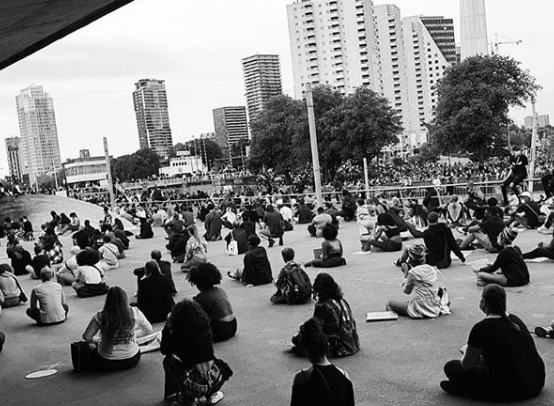
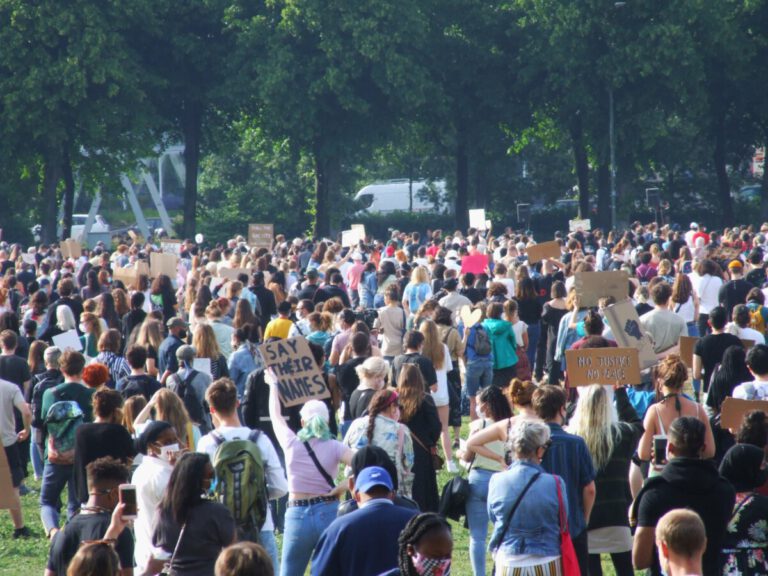
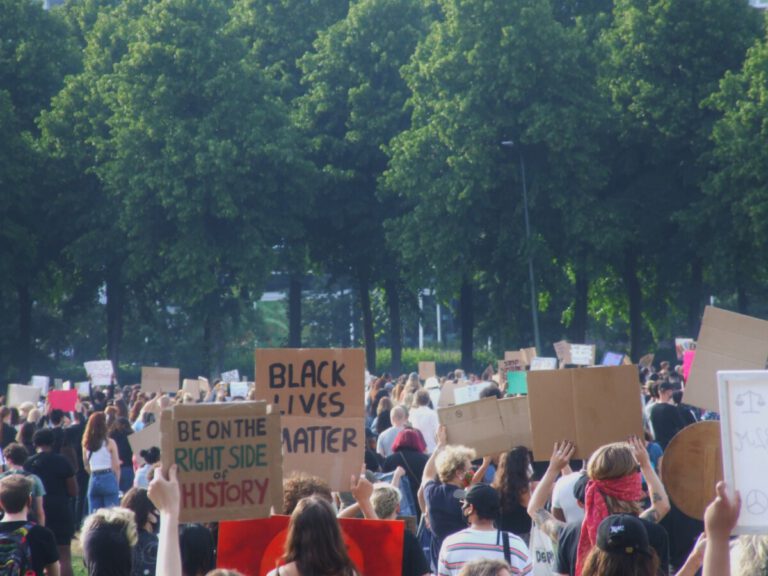
Yesterday evening, thousands of people turned out in Rotterdam to protest against racism and police brutality in the US and EU.
They gathered on Willemsplein, near the Erasmus bridge, and unfortunately were not able to keep 1.5m distance from each other, at least at the centre of the crowd. Most protestors outside the centre did keep a distance. The protest was broken up half an hour earlier than scheduled by the mayor.
According to Mayor Aboutaleb, the problem was not that there was not enough space, but that people were packed too closely around the stage. There were crosses sprayed on the ground to encourage people to keep sufficient distance.
— Salwa van der Gaag (@SalwavanderGaag) June 3, 2020
Protestors did not keep enough distance
The mayor also first asked the organisers to encourage the protestors to keep a distance, which the organisers did do. However, the protestors did not split up enough, so Aboutaleb decided that the best thing to do would be to call off the protest.
According to police, most protestors left quietly, but there was understandably some resistance. In some places, fences were thrown, and the mounted police also got involved. Two people were arrested: one for throwing a firework, and another for insulting a police officer.
The organisers have stated that the premature ending of the protest was the cause for the unrest. According to Aboutaleb, the early ending was not a justification for “anything”.
Did you attend the Rotterdam protest? What was your experience? Let us know in the comments below.
Het is zo ver! Terrasjes, cafes en restaurants zijn weer open! On June 1, the Dutch government gave the all-clear for Dutch cafes and restaurants to open again as long as specific social distancing measures were taken.
With outdoor seating a staple of Dutch eating out culture, the famous terraces will most likely be the most common form of getting together for many Dutchies ready for their first beer with friends since lockdown began, especially with this glorious weather. On top of that, most cafes and restaurants are finally taking reservations again so that they can keep their capacity within the Dutch guidelines.
If you remember my first post, Leeuwarden: exploring the unmissable Dutch north, way back in February, I talked about Friesland’s capital and exactly why you should visit. Well, there’s more to it than its glorious cobbled roads and fantastic street art scene — its eateries. So today I’m bringing you a round-up of the best cafes in Leeuwarden.
Let’s dive in and take a look at some of the places you need to discover when you visit the capital of the north.
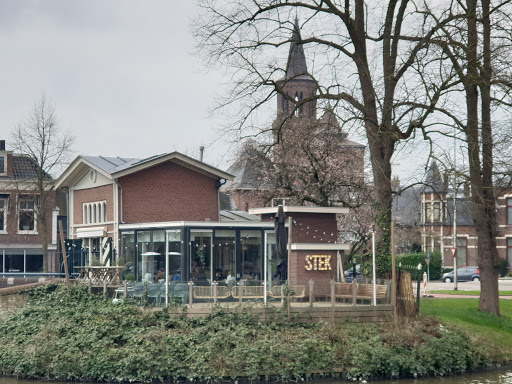
Stek is a fairly new café and sits on the waterfront, where you can relax and boat watch for hours on end. Inside is picture perfect and definitely Insta worthy (take that as an invitation or a warning!), and their food is a health nut’s paradise. Homemade soups, tarts, cakes and smoothies are available daily, as well as delicious salad bowls and wraps bursting with veggies. Sweet potato or normal fries on the side? You decide.
They even have plenty of choice for vegetarians and vegans, including switching up the ingredients on menu favourites, so there’s something for everyone. Stek is a fantastic spot to enjoy a get together with your closest gal pals, and a popular day date destination.
🍴 I’m eating: a thick slice of their fresh Banana Bread, after a steaming bowl of their soup of the day (with a side of fries of course).
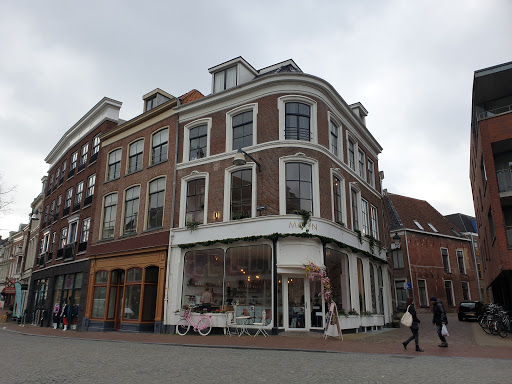
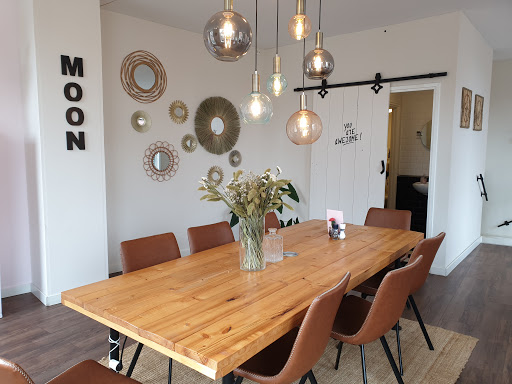
Moon is only a year or so old and takes pride of place on the corner, overlooking the canal, with its flower-covered pink bicycle out front. Another highly sought out ‘Insta Spot’, the inside squeals wistful, candy-coloured dreams, and their food is the same; all homemade cakes, pastries and sandwiches.
Image: Simone Kynaston/Supplied
They pride themselves on their healthy and hearty food, and their alternative lattes match the theme of Moon to a tee. Turmeric, beetroot, matcha, blue sapphire — there’s a latte for every taste and Instagram feed. Their freakshakes are well known too. Regular coffees and teas are also served, but they’re definitely not as pretty.
🍴 I’m eating: Honey Apple Toast, with a Chai Latte on the side.
For all those meat lovers out there, ROAST is the place to go for sumptuous and juicy cuts of meat with all the trimmings. Sitting proudly on Leeuwarden’s Niewestad, ROAST is kitted out in that super-hip industrial style that’s so popular nowadays. From the front, it looks unassuming, but take a look inside the tardis and you’ll see that it appears to go on for miles. The ambience is chilled, their bar has every sort of drink you could wish for and their food is simply delicious.
Whilst ROAST gives you all the trimmings, it’s a little on the pricey side, which isn’t a problem of course, but I’d leave it for a special occasion rather than heading in and hoping for a light lunch for ten euros. Plus, veggies and vegans beware, you won’t get the full spectrum of choice here, unfortunately.
🍴 I’m eating: the Smoked Duck Salad with figs, hazelnuts, pink pepper and sherry dressing.
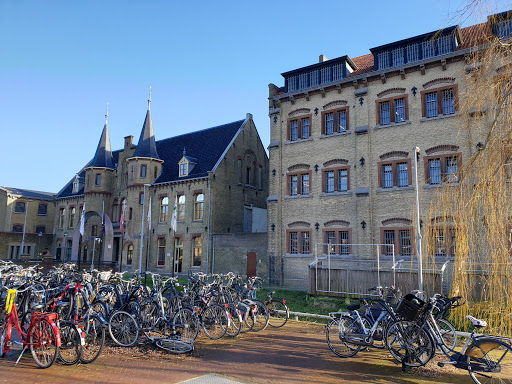
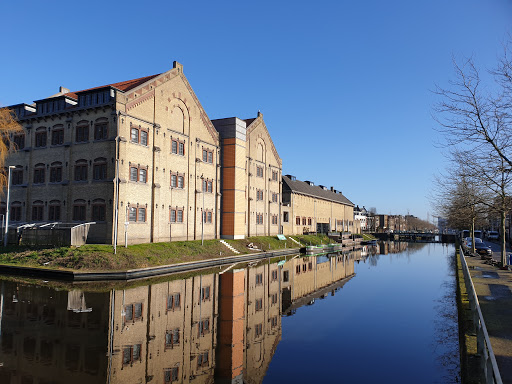
If you’re looking for a unique dining experience, heading into Leeuwarden’s oldest prison and dining within the cell walls has gotta be up there right? Proefverlof has the perfect old school and modern mix of ambience and low lighting, with similar industrial fittings as in Roast. If you choose to sit outside, you’ll find yourself directly on the water, where you can watch boats and people to your heart’s content whilst marvelling at the prison building itself.
As far as food goes, it’s delicious and homemade, and with a choice of brunch, lunch, finger food and dinner, there’s never a better time to head into Proefverlof than right this second. With a dedicated vegetarian menu too and vegan options on top of that, you’ll be sure to find something to dig into whatever your tastes.
🍴 I’m eating: Terschellinger Croquettes with bread and mustard – a proper Dutch lunch.
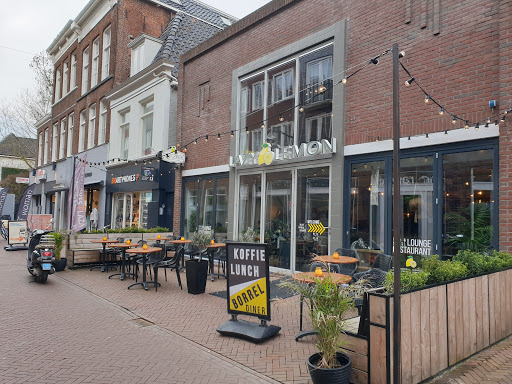
In the centre of a busy market street, you’ll find yet another industrial styled restaurant with high ceilings and a killer ambience. Not only is Lazy Lemon the perfect stop for lunch, dinner or a borrel with friends, it’s the perfect spot to take your laptop and get some work done. This place screams gezellig and is even kitted out with a mini library and an array of board games — perfect right?
Their food is homemade and delicious, and you get a fat stukje cake on the side of every hot drink. Live music and cocktails are served fresh daily, and there’s even a kids corner to keep the little ones entertained.
🍴 I’m eating: Cheese Onion Burger, which comes with all the trimmings, and a slice of Granny’s Apple Pie for afters.
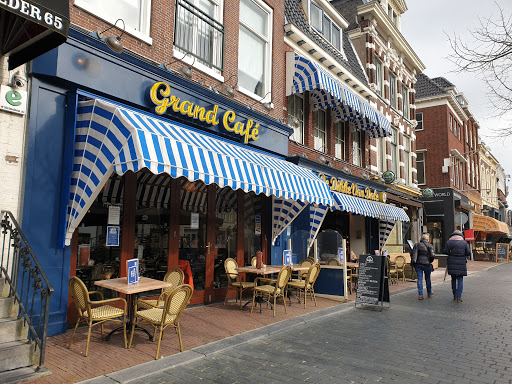
The inside of the Dikke van Dale is like stepping back in time in the best way possible. Mahogany wood bar, tables and chairs, and old school trinkets sat above the fireplace: this place is old school Dutch. Another tardis-like building, you’re certain to find a spot even when it’s busy, and naturally, on those hot sunny Dutch days, their terrace sits along the canal for the perfect people-watching lunch.
Ideal for your afternoon beer and a borrelhapje or even lunch, you’ll find the menu is mostly fried snacks and toasties or sandwiches (although you can get a salad if you really must) during the day, with a larger assortment of main meals served in the evening. The menu is mostly fish and meat, and for vegetarians, you’ll only find two options, which is a shame, but their food is cooked with love.
🍴 I’m eating: a serving of bitterballen alongside my rose Hoegaarden, proost!
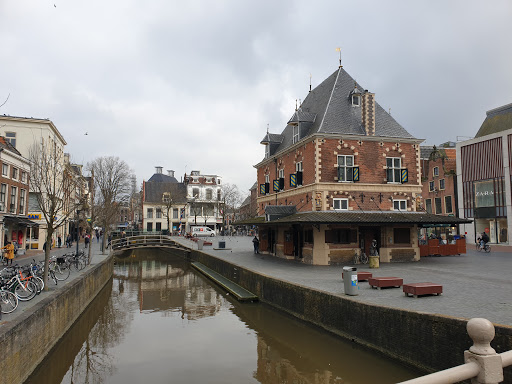
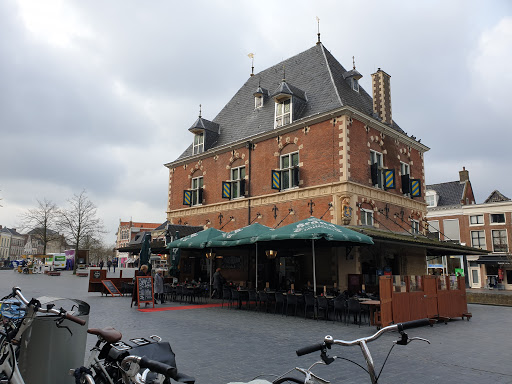
Sat in the centre of Leeuwarden’s main shopping street, you’ll find the old weighing house from 1596, a cultural monument that’s been turned into an eetcafe. I feel like there’s a definite theme running through these buildings: the inside of this café is industrially decorated, with high tables and chairs and a wall of beers. It’s small and cosy, and the very definition of gezellig. This eetcafe has all the atmosphere you could want, and a menu to match.
Offering all students a daily hangover brunch to bring them back to life, as well as lunch and hapjes for beside your beer, De Stadswaag really gets it. They’re very ‘bready’ though, so if you’re looking to branch out past fried snacks, toasties, wraps, and sandwiches, you won’t necessarily find that here.
🍴 I’m eating: a Tosti Kip Kerrie and a cold cider!
Hidden down one of Leeuwarden’s many side streets, you’ll find Bistro De Yserman. Known to all the students of the city in particular, Yserman is a classically decorated French and Asian bistro that boasts a new menu with fresh products every week. With a one-price = 3 or 4-course menu kind of deal, you get a hearty feast when you step through these doors.
With a fresh menu each week, you never know what to expect, apart from it being utterly delicious, which is part of the beauty of this fantastic little bistro.
🍴I’m eating: Rode Curry van Derk and the Rabarber Parfait met Vanille for dessert.
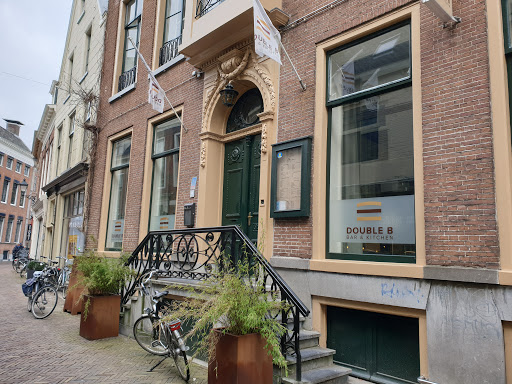
Hands up if you love burgers! Double B’s is an awesome burger bar where you top your own burger with a choice of a million (slight exaggeration there, sorry) toppings. Instead of a menu, you’ll be presented with a little clipboard where you can decide everything about your meal, from the bread it’s served on, to the number of patties (cooked to your preference), to the sides, and of course, all of those delicious toppings.
This restaurant is a busy, eclectic, American style burger joint that gets filled quickly, so it’s well worth reserving a spot to build your own burger. With lively music from the 60s and 70s, you can enjoy your burger with some old school classics, whilst washing it down with your favourite beer, wine, or frisdrank.
Vegans and vegetarians are welcome, with a vegan patty up for grabs, so there’s something for everyone here.
🍴 I’m eating: a double bacon cheeseburger with pickles, onions, and onion rings, with a little extra aioli sauce on the side.
Humphreys are a chain of restaurants that can be found around the Netherlands. They’re stylish, with a little bit of old school décor, and often do specific theatre menus that are served to theatregoers before their show starts.
Another unexpectedly huge building, Humphreys goes on for miles. Once you’re seated, you’ll be given the menu, which is massive (literally. It has a regular amount of food on it, but trying to talk to your partner from behind a Humphreys menu is impossible). Best for evening meals, you’ll choose from a 3 course a la carte set menu, much like Bistro de Yserman, and you’ll often find a few Specials of the Day tucked in amongst the regulars.
Veggies and vegans are catered for in this place, so get down to Humphreys ASAP!
🍴 I’m eating: the Pulled Lamb Moroccan Bulgar Salad and the Spicy Indian Korma, washed down with the Homemade Tiramisu.
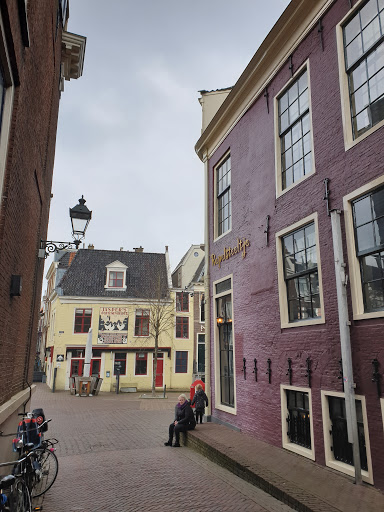
Repelsteetje (or Rumplestiltskin in English!) is a little different from the other picks on this guide because it’s first and foremost a coffee shop that sells joints, space cakes, bonbons, as well as a killer chai latte.
Built across 3 floors (with the steepest steps you’ll ever ascend in your life), Repelsteeltje is old school. Like proper old school. Naked wooden floors, old mismatched furniture, a piano in the corner — this place is awesome.
Their drinks list is expansive, and you can enjoy a treat (whether that be sugary or weedy) whilst you chill out, transported back in time with the uniquely furnished surroundings.
🍴 I’m eating: a vanilla chai latte and literally whatever cake they have.
So there you go: these are the best places to dine on your trip to the north of the Netherlands. Looks like you’ll have to make it a long weekend so you can make your way through this list though.
For now, don’t forget to stay on top of social distancing rules and stay 1.5 metres from everyone at all times! And don’t forget to reserve a table if you want to be sure to get a space. Enjoy!
Have you checked out these top cafes for Leeuwarden? Got another one that should be on the list? Drop it in the comments below!
Clouds of tear gas, burning police cars, broken store windows, and thousands of people shouting and marching in the streets. If you’ve been tuning in to the news (or even if you haven’t) you’ve probably heard about the civil unrest in the U.S. right now.
In cities all over the country, people are gathering in protest against America’s police brutality, racial inequalities, and deep-seated systems of racial oppression. The Netherlands has joined in the protests, bringing a new awareness to the racism that exists all too commonly here as well.
Breaking point
The video of George Floyd’s death at the hands of police was shocking to see, but sadly, not as surprising as it should have been. We hear stories and know that incidents like this take place, but more often than not, these cases go largely unnoticed. In this instance, the video evidence was so clearly inhumane it couldn’t be ignored, and it catalysed a movement that had been building for some time.
And there have been too many other cases like these. From February’s shooting of Ahmaud Arbery at the hand of two white vigilantes to Breonna Taylor, an innocent, black emergency medical technician who, in March, was shot at least eight times by police officers in her own home. So often we’re blind to the racism all around us, but in these cases, there was harsh evidence and such an uproar it was impossible not to take notice. The protests happening now may have been awakened by these recent events, but they’re the result of having had to suffer too much for too long.
Systemic racism
These U.S. protests are often being categorized in the media simply as “anti-police brutality.” While this is a large part of it, to assume that the protests are just about addressing police brutality would be a disservice to the movement. The violent behaviour of police officers is just one symptom of the systemic racism that maintains inequities for people of colour.
The sameinstitutional racism that bred the unacceptable police behaviour that resulted in George Floyd’s death is also reflected in other systems through disparities in income, employment, health care, education, and criminal justice, to name a few. It’s no coincidence that the timing of these protests coincides with the coronavirus pandemic. Since COVID-19 took hold of the U.S., the country’s already marginalized communities have suffered the most with disproportionately higher rates ofinfection and death, as well asjob loss and wage cuts. Reaching a breaking point was inevitable.
It’s not unique to the U.S.
As people all over the world are standing with American citizens, joining in their own protests of solidarity, each nation’s past racial injustices are rekindled. It’s an important reminder that racial inequities aren’t confined to the US. Racism isn’t an American issue, it’s a human issue.
For the Netherlands, a country whose pride is built on ideals of tolerance and acceptance, it’s still a place where racism is a subject not easily broached. The denial and outrage that result from suggestions of racism indicate that people are afraid of confronting their own complicity in these systems of oppression (this is precisely where and why I won’t mention Zwarte Piet, because we’ll get stuck there, and this is something bigger). It makes sense that the idea of racism isn’t compatible with a culturally-accepting and tolerant self-image, but this idea, and the resulting defensiveness, only serves to maintain racial inequities and preserve the status quo from which white people benefit while others are marginalized.
White privilege and unconscious bias
An important conversation being brought to light during this movement is that of white privilege and the deeply rooted racism that is ingrained in our cultures and everyday thinking at a systems level. From our laws and regulations to our unquestioned social structures, systemic racism assumes white superiority both consciously and unconsciously, rewarding those privileged with better resources and opportunities.
Part of understanding institutionalised racism is realising that it’s about more than individual morals and that we are not born racist, nor can we simply choose not to be. Most of us white folks don’t walk around every day choosing to be racist, but we do have pre-programmed biases that are generations deep. We need to broaden our understanding of racism, recognising it as more than simply deliberate discrimination, but more commonly, subconscious associations.
In her book, ‘White Fragility,’ Robin DiAngelo writes, “We whites who position ourselves as liberal often opt to protect what we perceive as our moral reputations rather than recognize or change our participation in systems of inequity and domination.” In the Netherlands, perhaps the pride that goes along with being a widely accepted leader in cultural liberalism and tolerance gets in the way of identifying the ways in which racial discrimination exists here too.
Where racial biases come from
Remove for a moment the individual moral burden and see that we’re raised in societies where racism lingers in educational and financial institutions, hides in unequal access to employment, housing, and healthcare, buries its face in the criminal justice system, and thrives in the media. But it’s not just around us — it’s inside of us, instilled through generations of normalised discrimination, and built on the foundation of history too unpleasant to properly recount in our history books.
The history lessons we received growing up in the U.S. were most often white-washed tales of heroic discovery and pilgrimage in a land of freedom and opportunity. The stories have been sanitised in such a way that they de-emphasis controversial topics, teaching complex issues like slavery as almost a short-lived mishap of the times. By minimising the representation of slavery and other injustices throughout history, the suffering that was associated is thereby trivialised, and discrimination remains the norm.
Slavery shaped the very core of American life. From its politics, rooted in the capitalism that viewed slaves a legal form of property — a commodity that could be traded for other kinds of goods and services; to its economies, which were dependent on enslaved African labour for their survival. And slavery didn’t exist in a shadow, rather, it defined the social landscape with ideals of white superiority that are still all too common today.
And this dark history of racial oppression that was glossed over by tales of white heroism in the US holds stark similarities to the Netherlands. The Dutch history shared today most widely involves stories of the extravagant Golden Age, impressive world trade operations, and Nazi resistance during WWII. Less commonly discussed are the ruthless colonialism and slavery of the 17th and 18th centuries, which played an enormous role in driving the Dutch trade economy.
In a country that was one of the last to abolish slavery, in 1863, it would be ignorant to presume that all traces of discrimination have simply vanished. While it might not show up in all the same ways here, it takes only willingness to see the vulnerabilities of a society built on age-old racism.
“Never forget that we were enslaved in this country longer than we have been free. Never forget that for 250 years black people were born into chains — whole generations followed by more generations who knew nothing but chains,” Ta-Nehisi Coates, “Letter to My Son,” The Atlantic.
Break the cycle
Authorities have to take the lead in shifting the existing power imbalances to weigh equally in favour of all humans, regardless of skin colour, but it’s up to everyone to take part in listening, learning, and acting in favour of racial equality. We have to be willing to talk about race, even though we don’t always know the answers or have the right words. The topic of racism is uncomfortable, and that’s okay. It should be because change doesn’t come from feeling comfortable.
Substantive discussions on racial inequalities can’t begin from a place of denial and indignation. “Denial is the heartbeat of racism, beating across ideologies, races, and nations. It is beating within us,” Ibram X. Kendi writes in ‘How to Be an Antiracist.’ I would love to sit here today and say that I’m an exception to the influence of systemic racism, that I fully understand my white privilege and I don’t bear any implicit biases, but I can’t. I was raised as a white person in the same society that bred the police brutality that killed George Floyd. As difficult as it is to recognize and accept, I have inherent prejudices, and I will have to continually work to unravel them. I can never fully understand what it’s like to be a person of colour, but I can try to empathise, listen, and learn.
Treading water in a sea of white guilt gets us nowhere. It’s not our fault, but it’s our responsibility. It can’t be left exclusively up to people of colour to change the system that is inherently stacked against them. White complacency won’t lead to progress or reform. Institutional racism was constructed by white people; it’s our problem and we have to be the ones to dismantle it.
Recognising the existence of racial discrimination is the first step. And then we listen — which is not the same as staying silent — we listen first, so we can better understand, and use our privilege to amplify the voices of those who are silenced or marginalised.
And with that, I leave you with a few resources from folks who can say it much better than I:
Read
White Fragility: Why It’s So Hard for White People to Talk About Racism, Robin DiAngelo
How to Be an Antiracist, Ibram X Kendi
Between the World and Me, Ta-Nehisi Coates
White Rage: The Unspoken Truth of Our Racial Divide, Carol Anderson
There are many other resources for navigating racial discrimination, and countless other voices that need to be heard — do you have any recommendations to add?
While the Netherlands is undergoing a transition period of easing measures, it’s important not to neglect the real threat the virus still poses.
A primary school in the Hague was shut down after two of its teachers tested positive for the coronavirus, reports NOS.
Tests confirmed yesterday
The two teachers were tested on Monday and received their results two days later. Both of them had health complaints since last week, at which point they stopped teaching.
The school affected is De Springbok. There are around 500 students in the school, and seven of them have symptoms that might indicate coronavirus. They are being tested to see if the concerns are well-founded.
Parents and children were announced of the school’s closure yesterday, and the students will resume home-schooling until the situation becomes clearer.
According to a spokesperson from the school, given the high number of students, it’s better to be cautious rather than risk the health of teachers and students.
Were primary schools too rushed in their decision to reopen? Let us know your thoughts in the comments!
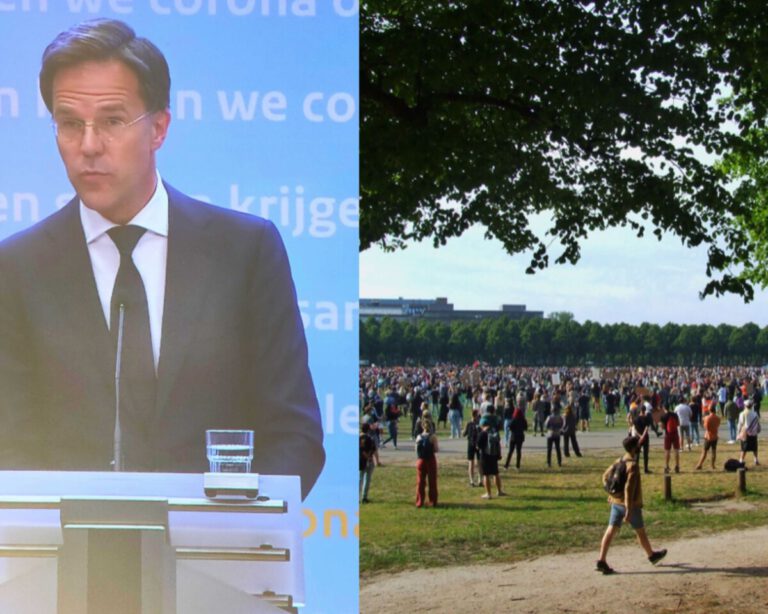
At yesterday’s press conference, in which the main topic was whether Dutchies could go on a foreign holiday this year, Prime Minister Rutte also commented on the situation in the US and the recent anti-racism protests in the Netherlands.
Following the death of George Floyd in Minneapolis, after a police officer knelt on his neck for several minutes, protests have erupted across the US and in many other countries across the world. In the Netherlands, people have gathered in public to protest against racism and police brutality in the US and EU.
On Monday, several thousand people gathered on Dam Square, where concerns were raised about the lack of social distancing at the protest. In The Hague, Breda, and Groningen, on Tuesday, social distance was successfully kept. And last night, in Rotterdam, the protest was broken up, again because of a lack of social distancing.
Death of George Floyd “unacceptable”, says Rutte
The Prime Minister was asked to comment on the protests last night at the press conference. He said that the death of George Floyd was “unacceptable”, and emphasised that racism was a problem in the Netherlands as well as the US. He called discrimination in the Netherlands a “systemic problem” and said, “Here too, people are judged on their origin.”
Mark Rutte, PM of the Netherlands, also had a message for all those that are protesting against racism and the death of George Floyd. "These problems we see in America are also present here, protesting is important – but social distancing needs to be respected"#BlackLivesMatterpic.twitter.com/Y7CpkEE8in
However, he also said that it was irresponsible to gather without social distancing, as happened in Amsterdam. He did not comment on Rotterdam, as he did not have enough information at that stage. And he was also hesitant to comment on the use of tear gas and rubber bullets by police against protestors in the US, though he said he was shocked by the images.
Rutte’s commitment to anti-racism questioned
We can only hope that this marks the beginning of a change for Rutte’s angle on racism in the Netherlands: after all, it is not so long ago that he published the “Doe normaal of ga weg” letter, which among other things, told people who called “ordinary Dutch people” racist should leave the country.
And, as others have pointed out, it remains to be seen if Rutte’s new awareness of racism being present in the Netherlands will carry over to the Zwarte Piet discussion this year.
nou hop MinPres, spreek je actief uit tegen zwarte Piet dit jaar. practice what you preach. https://t.co/LPhNtDc7tr
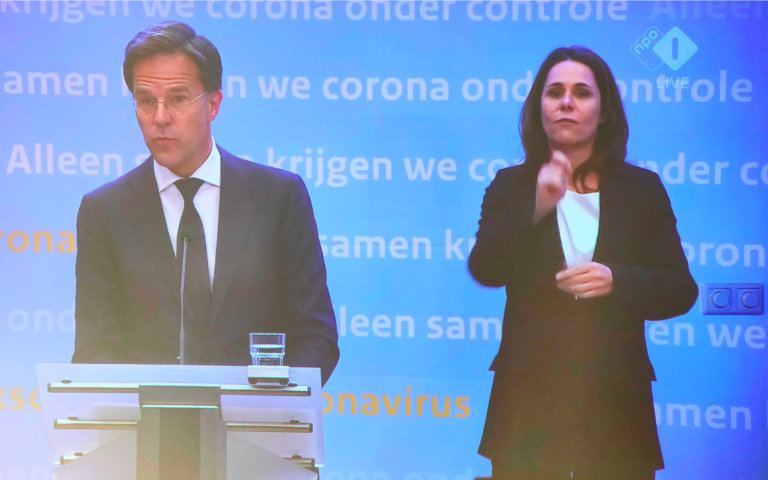
This evening, Prime Minister Rutte and Minister for Health Hugo de Jonge gave a press conference in which they answered the question we’ve all been wondering: can you go on holiday this year?
PM Rutte split his answer into three parts: holidays in the Netherlands, holidays in Europe, and holidays outside of Europe. He also quickly confirmed at the start of the press conference that primary schools would fully reopen on 8 June, as expected.
Holidays in the Netherlands
Holidays in the Netherlands are permitted. Obviously, you need to keep to the regular rules while doing so. You also shouldn’t take public transport to get there, instead go with car or bike.
Holidays in Europe
Holidays in Europe are a more complicated situation. The Netherlands is hoping to change its travel advice from code orange to code yellow for as many European countries as possible from 15 June. This will be the case for countries where the situation is comparable to that in the Netherlands, which, Rutte says, is true for most European countries.
From 15 June, a code yellow will be given to twelve countries, including Germany, Belgium, Italy, Croatia, and the six Caribbean islands. By 5 July, Rutte hopes to be able to add Switzerland, Spain, France, and Austria to that list. This also depends on whether other countries want to accept Dutch tourists. If they do not, the travel advice for that country will be kept at orange.
The travel advice for these countries, and for any others in Europe, can change quickly, Rutte warned, and holidaymakers should keep a close eye on the Nederlandwereldwijd website for up to date travel information.
The UK and Sweden cannot be visited by Dutch tourists
Rutte said that Dutch tourists cannot visit the UK and Sweden, as the situation there is too dangerous. This may change as the summer goes on. Rutte advised vacationers to keep to the rules in the country they visit, and at a minimum to keep to the Dutch rules. All travel is undertaken at the traveller’s own risk, and no repatriation will be offered if the travel advice changes while a person is on holiday.
Rutte also made it clear that EU and Schengen tourists are welcome in the Netherlands from 15 June onwards, with the exception of tourists from the UK and Sweden.
“Protest on the Dam was irresponsible,” says Rutte
Finally, Rutte made a brief comment about the anti-racism protest in Amsterdam on Monday. People in the Netherlands have the right to protest, he said, but also the obligation to keep to the coronavirus rules. “The death of George Floyd was unacceptable, but the protest on the Dam was irresponsible,” he said.
Here are Mark Rutte's comments on George Floyd and the protests. It comes down to "George Floyd's death was unacceptable, we're all shocked by the images from America, systemic racism is real in NL too and should be protested against – but at a distance' #BlackLivesMatterpic.twitter.com/K5Tt0h2OLw
As demand for coronavirus tests increase, 86 people have returned positive readings in the past day in the Netherlands.
The latest statistics from RIVM show that the Netherlands now has confirmed 46,773 cases. In the past day, 10 people have died from the virus, while 9 people have been hospitalised.
The cabinet is expected to announce tonight that a summer holiday may just be a possibility, with travel advice for most European countries relaxed from June 15 onwards.
It’s a trend that most other European countries are following. However, it remains unclear how the Netherlands will apply this to the United Kingdom. It’s also speculated that if a country does not allow Dutch tourists, the Netherlands will probably not relax travel restrictions in that country. READ MORE.
The elderly have been some of the most affected by social distancing rules meant to protect them, but severely impacting their happiness. The 82-year-old Cees de Leeuw penned a letter to the King — and managed to get a response. READ MORE.
Coronavirus testing appointments skyrocket on second-day
The number of appointments made on the special corona line almost doubled in comparison to the first day. On Monday, 5,478 appointments were scheduled, while 10, 364 were made yesterday before 8:00pm.
It comes as testing opened to the general public from June 1. Previously, testing was only available to certain community members, such as healthcare of educational staff. Now, anyone in the Netherlands can call the special 0800-1202 number to request a test.
Netherlands nowhere close to herd immunity
Only 5.5% of Dutch blood donors have been found to have antibodies against coronavirus. A study of 7000 volunteers was conducted by Sanquin blood bank. The same study was conducted in early April, when the results were just 3%.
Social media has been full of posts asking people, especially white people, to really work on understanding racism and acting against it: to learn more, to protest, and to be aware of racism in everyday life.
We’ve put together a list of ways you can do this, from books to read to Dutch anti-racism organisations you can donate to. But there is always more to learn, so please do let us know if we’ve missed something: we’d be happy to add it and we want to be better allies too.
Learn as much as you can
Anyone active on social media over the past weeks will have seen a wealth of wonderful resources being shared there. In this article, we’ll mention a few books and videos that are excellent places to start, but there are so many more than what we’ll share here. A good rule of thumb, though, is that you definitely shouldn’t ask the people of colour in your life to explain racism to you personally: you can do that research by yourself and take that burden off them.
Books:
Why I’m No Longer Talking to White People About Race – Reni Eddo-Lodge
White Innocence – Gloria Wekker
So You Want To Talk About Race – Ijeoma Oluo
White Fragility – Robin DiAngelo
Me and White Supremacy – Layla F Saad
Documentaries and series:
13th (2016)
I am Not Your Negro (2016)
When They See Us (2019)
Dear White People (2017-present)
Donate money to anti-racism organisations
If you can, donate money to anti-racism organisations led by people of colour. You can find a list of organisations in the US that fit this criteria here, but there are also some Dutch organisations that do the same thing. Given that police brutality and institutional racism are also present in the Netherlands, these are also excellent places for your money to go.
There have been many protests over the past few days in the Netherlands, and more are occurring this week: this evening in Rotterdam, and on Friday in Utrecht. Some people might be immunocompromised, or have family members who are vulnerable, and so cannot attend. In that case, doing the rest of the things in this article is a great option.
But if you can get out and protest, do so, especially if you would have had a beer on a terrace, gone to the park or beach with your friends, or taken public transport. Racism is also a global public health risk, and one that has been with us for far longer than coronavirus.
If you’re really not comfortable going right now, then make sure you do go when the risk of coronavirus decreases. There are always protests against Zwarte Piet in November and December, so you can also attend these events if the pandemic has eased at that point.
Keep your eyes open in daily life
Racism is present in the Netherlands, but it can be easy for white people to close their eyes and pretend it does not exist. Part of being an ally in this movement is reacting to racism when you see it occur.
Does a friend of yours make racist jokes? Don’t awkwardly laugh or ignore them next time; instead call them out on it. Have conversations with your friends, family and coworkers about this, even though it may be uncomfortable.
If you see a person of colour being treated differently by an authority figure, whether that’s a teacher or a police officer, do what you can to help, whether by intervening, or just staying nearby and keeping an eye on what happens.
Got any further suggestions for us? Leave them in the comments below and we’ll add them to the list.
While the pandemic has taken its toll globally, senior citizens are some of the hardest hit. Social isolation measures and fear of catching the virus have forced them inside, removing social contact with families and friends.
82-year-old Cees de Leeuw felt the impact hard. His wife of 57-years, Nellie, passed away two years ago. He’s experienced the deaths of his brother, cousins, neighbours, and friends in just the past few years.
“And then came Corona,” he told AD. “Dangerous for people my age. And I really don’t want to die yet.”
“I actually need home care, but I cancelled it. That organization did not have any protection for their personnel. They approached me unprotected and it frightened me. I am diabetic and because of my age, I belong to the risk group. Irresponsible.”
Being lonely
The circumstances meant that his three children and three grandchildren could no longer visit.
“Nobody came by for weeks and I had nowhere to go, no more food in the nursing home. I now cook my own food, and it works better one day than the other.”
The King’s speech
King Willem-Alexander made a moving address to the nation early in the pandemic addressing the ‘loneliness virus.’
“We cannot stop the coronavirus. What we can do is stop the loneliness virus! Let’s make sure together that nobody feels abandoned,” said the King during his speech.
The speech prompted De Leeuw to write to the King about how the loneliness virus works in practice. He found the address on Google.
“April 22 the letter went to the mail, May 14 I received a neat answer from his general secretary of the king and queen.”
Wekenlang kwam er door het coronavirus niemand over de vloer bij Cees de Leeuw (Premium)https://t.co/jnVgFqvYhY
“Then I have to stay inside again with the shutters closed to keep it a little cool in the house, and then you sit on your own in the dark. Then there are no sports on television. No football, cycling or tennis. And the kids go on vacation.”
Research shows that hundreds of thousands of elderly people don’t look forward to the summer. One-third expect negative feelings like loneliness and gloom, found the KBO-PCOB Association for the Elderly. This year, loneliness will be compounded by social distancing, and not being able to go away on holiday.
There are methods in place to relieve loneliness for elderly people in the Netherlands. Belmaatjes or ‘telephone friends’ can be paired up for calls during the week. Cees benefits from a penpal through KBO-PCOB who he writes to every week. Cees also has his bird, Petro.
“He’s my friend in the house. Petro calls out his own name and mine. For weeks, Petro was the only one I saw. Fortunately, my children can now come again.”



.jpg)