Home Blog Page 100

Why didn’t they tell me? A guide for visiting the Netherlands

4

I’ve been frequenting the lowlands for a good many years now, and when I first came over, I had little idea of what to expect.

In this post, I am going to share with you the things that I wish they had told me from day one.

Let’s face it: the Netherlands doesn’t come with a handbook, so read on for everything you need to know!

1. Casual is always okay

Generally, my wardrobe varies from a combination of jeans and a blazer, the occasional statement scarf and the need for ‘office dress’, which is some variation of a suit and shirt, etc.

The summer will see me in the odd flowery dress too. So there is a lot of variation in my wardrobe, and I can dress for any occasion.

If I’m going out for dinner or to the pub, I try to ‘make an effort’ and glam up a little; it’s just what we do here in England.

In Holland, however, casual is always okay. You can wear jeans to literally any event or occasion.

group-of-international-friends-drinking-beer-and-laughing
Going out? Wear whatever you’re comfortable with! Image: Depositphotos

This is something I wish someone had explained to me from the start. It would have made my luggage much lighter to carry! I love my jeans and comfy shoes; this is not a problem for me if someone had told me.

Another thing worth noting is that brown shoes will go with EVERYTHING in Holland. They are a fan of the humble leather brogue, as am I.

This love for worn-out denim and soft leather handmade shoes is the backbone of what makes the Netherlands and me so compatible.

2. Everyone speaks English

They’ll tell you, ‘my English isn’t very good’, but it is. They lie — it is better than you can imagine. What they think ‘isn’t very good’ is like Higher Level language to us.

Even the people who say they don’t speak English know what you are saying to some extent.

The reason for this, in my opinion, is that many TV shows and films are in English, the business world negotiates in English too, and schools teach English to Dutch children from a very young age.

Photo-of-two-friends-at-bar-talking
Learning Dutch doesn’t have to be the first thing on your to-do list. Image: Freepik

One of my Dutch friends told me how much they enjoyed listening to the English people’s conversations on holiday and how they could openly talk about people at the adjoining table because very few people who aren’t Dutch speak Dutch. Cheeky right?!

3. They are too honest

Do you think you look a bit fat in that top? They’ll tell you. Are you questioning your actions? They’ll ask you to your face.

The Dutch are honest and direct. I admire them for that, but take heed of my warning. There is no sugarcoating done on their behalf.

photo-three-colleaugues-talking-in-office
Get used to those direct meetings! Image: Depositphotos

I think travellers venturing there for the first time need to know. They will be honest with you and upfront about it. Have you overdone the perfume? Yep, they’ll point that out too. It’s great.

4. If in doubt…fry it

I thought we British fried random things like Mars bars and bananas, but it appears that the Dutch have taken it one step further from the humble Fish and Chip Supper and made fried foods one of their main delicacies: fried meat.

photo-bitterballen-things-the-dutch-don't-talk-about-but-should
The Dutch are good at fried food. Image: Pixabay

I’m quite free with my taste buds; I’ll try anything, and my goodness, you need that approach over here. I think food and bonding overeating seem to be an important part of their culture.

The Dutch eat a lot, and considering they are all tall and beautiful, it goes against nature for all the fried food they eat:

  • Kroketten — Not my thing. I’ve tried them out and didn’t like them. I tried some that were homemade, and they were in a different league! Super lekker!
  • Frikandellen — These are good. I am more of a ketchup girl than a mayonnaise fan, but still, they are good.
  • Chips/Vlaamse Frites — Who likes chips? And they come in a paper cone, not Styrofoam. Their chips are leagues better than ours. Apparently, the trick is frying them twice. Please note that if you say yes to the sauce, they will pump a gallon of it over your food. I am a minimal-sauce kind of gal!

One of my English friends had never had mayonnaise with chips before…Amsterdam changed her! (see 1:29 on the video!) Vincent (John Travolta) tells Jules (Samuel L. Jackson) about the little differences regarding life in Europe — note the mayonnaise reference.

Whilst we are on the subject of food, let’s talk about Garlic Bread. Their version of garlic bread is not my version of garlic bread.

Again, carbs, bread, and fried stuff are all they eat, but their version of Garlic Bread consists of a slice or chunk of baguette with an inch-thick slice of butter mixed with garlic on top.

One of the major things that put me off living in Holland would be the amount of weight I would gain!

I can’t look at too much fried stuff without bloating up to the size of a house. I just couldn’t do it! Maybe it’s the cycling that counteracts it?! Yep, definitely the bicycles!

Have you experienced these Dutch phenomena? What would you add to a handbook for the Netherlands? Let us know in the comments below!

Dutch Quirk 29: Wave goodbye until they can’t see someone anymore

Picture this; the wonderful dinner party you’ve been lucky enough to attend at a Dutch person’s house has just ended, and you’re on your way home.

You climb into the taxi, and say goodbye — but your host is still standing at the doorway, waving, waving, waving…

You pause, uncertain if they need something. Perhaps you forgot your coat? But no, it’s an endless wave of goodbye.

In fact, you’re not sure exactly when they will stop waving as the taxi pulls around the corner, and they’re still there, shouting doei

Legend has it, they’re still waving to this day. 

What is it?

Well, it’s a part of Dutch culture. Amongst other funny social quirks, the Dutch also take a long, long time to say goodbye at the end of the night. 

You’ll often see it in Amsterdam; a group of Dutch people breaking up after an evening of casual drinks, all waving to each other as they wander off their separate ways. 

Alternatively, a Dutch oma waving goodbye to her grandkids from the front garden, lovingly watching them be carted off until the next time they visit — and steal all of her hagelslag

Have they disappeared from the garden? Been packed into the car? Driven down the street? Halfway to France? Oma is still there, dutifully waving because that’s the Dutch way. 

Why do they do it?

Perhaps for the same reason, Dutch people like to leave their curtains open, or shake hands with every person they meet; it’s just a Dutch custom.

Many parts of Dutch culture have been heavily influenced by Dutch history and its connection to Calvinism

Although it’s hard to pinpoint the exact reason why the Dutch seem to be so overly enthusiastic about waving goodbye, one could presume it is due to a long history of maintaining relationships. 

With so many people living in one relatively small country (which, to many internationals, seems to be floating on water 99% of the time), it has also been important for Dutch people to maintain good relationships with their neighbours. 

That’s also why the toilet birthday calendar exists — god forbid you forget someone’s verjaardag.

woman-waving-goodbye-to-server-in-cafe
Even when being served, Dutch people take ages to say goodbye. Image: Depositphotos

Plus, we have to say, it does feel extra caring knowing that someone is making such a big effort to say goodbye. 

Surely, that means they enjoyed hanging out with you and are sorry to see you go. 👋😭

Why is it quirky? 

Let’s compare this to other cultures where it’s more common to disappear without saying goodbye than it is to spend ages waving people off. 

Take the example of the ‘Irish Goodbye’. Instead of saying goodbye at all, it’s more common for people to simply leave without saying anything, and maybe send a belated goodbye text after departure. 

And, if you think about it, the idea of someone spending ten extra minutes waving goodbye is rather quirky indeed. 🥴

Should you join in? 

For sure!

The next time you attend a gathering with some Dutch people, test it out. You can see who can spend the most time waving goodbye, as you each get smaller and smaller and disappear into the horizon. 👀

Or, introduce it to your international friends and confuse them by shouting doei as they leave the house, cross the street, get onto the bus, sit down, and ride off into the distance… 👋

What do you think of this Dutch quirk? Have you experienced it? Tell us in the comments below!

This free webinar will tell you how to buy a house in the Netherlands (without losing your mind)

Thinking of buying a home in the Netherlands but feeling completely overwhelmed by the Dutch housing market? You’re not alone, and help is coming your way.

Picture this: you’re scrolling through Funda, dreaming of your perfect Dutch home, when reality hits. Mortgages, notaris (notary) appointments, taxatie reports.

Suddenly, you’re drowning in unfamiliar terms and processes that make zero sense. The good news is that you don’t have to navigate this maze alone.

Welocate and ABN AMRO are joining forces to host a free housing webinar designed specifically for expats who want to buy a home in the Netherlands.

What’s actually covered?

The webinar walks you through the entire home-buying journey step by step, from understanding how Dutch mortgages actually work to that final moment when you’re signing papers at the notaris.

The session is tailored specifically for internationals, meaning they’ll address those burning questions you’ve been too embarrassed to ask.

Like why everyone keeps mentioning this mysterious taxatie and whether you really need to understand all those Dutch banking terms.

Whether you’re just starting to consider buying or you’re already knee-deep in Funda listings, Welocate’s webinar promises to bring you up to speed with guidance from industry experts who actually know what they’re talking about.

The nitty-gritty details

Let’s get to the practical stuff:

💶 Cost: Absolutely free (yes, really).

🙅‍♀️ Commitment: Zero obligation. You can attend, learn, and leave.

🔍 Focus: The complete A-Z of buying property in the Netherlands.

🧑‍🤝‍🧑 Audience: Designed specifically for expats navigating unfamiliar territory.

👩🏻‍💼 Hosts: Welocate and ABN AMRO — two names you can actually trust in this industry.

By the end of the session, you’ll walk away with a clear understanding of how the Dutch property market works and, more importantly, the confidence to make informed decisions without second-guessing every move.

Why should you attend?

Buying a home anywhere is stressful, but doing it in a foreign country where you don’t fully grasp the language or the system? That’s next-level overwhelming.

The Dutch housing market has its own quirks, rules, and cultural expectations that can trip up even the most prepared expat. Understanding these nuances isn’t just helpful, it’s essential if you want to avoid costly mistakes or missed opportunities.

Sign me up! What do I need to know?

Ready to tackle the beast that is the Dutch housing market? Great. Here’s what you need to know. 👇

📍 Where? Online

When? October 7, 2025, from 3 PM until 4 PM

🤔 How? Easy, you can sign up for free on Welocate’s website using this link.

Have you bought a house in the Netherlands? Tell us about your experience in the comments below.

Get ready for extra stormy Dutch weather this Prinsjesdag

Prinsjesdag (Prince’s day, or the Dutch annual Budget Day) is usually a day of pomp, pageantry, and precariously balanced hats, but it comes with a blustery twist this year.

Today (September 16), The Hague will not only play host to the royal procession and King Willem-Alexander’s Speech from the Throne, but also winds gusts up to 70 km/h.

Hats versus hurricane

If there’s ever been a year to add bobby pins to your Prinsjesdag kit, this is it.

With Weeronline predicting numerous showers across the north and centre of the country, guests are being warned that the traditional parade of extravagant hats may turn into a battle against the breeze.

The Royal Theatre, where the king delivers his speech, even had to tape down the red carpet to stop it from flying away.

What’s Prinsjesdag?

Every third Tuesday of September, the Netherlands polishes its Glazen Koets (Glass Carriage), rolls out the red carpet, and gets ready for one of the most popular political events of the year: Prinsjesdag.

In particular, this is when the cabinet presents its Miljoenennota (Budget Memorandum), in which they announce the government’s main financial plans for the following year. 

READ MORE | The Dutch and their monarchy, a two-sided coin

However, this Prinsjesdag is unlike any other.

For starters, the NOS points out that the outgoing Schoof cabinet has lost half its coalition: first the PVV in June, then the NSC in August, leaving only VVD and BBB with just 32 of 150 seats.

This marks the first time that an entire party quit an already fallen cabinet.

Adding insult to injury, Prime Minister Schoof has described the Budget Memorandum as “policy-poor” with no radical measures, since every proposal must be crafted to win support from opposition parties.

Here’s what to expect from the new Budget Memorandum

The unstable political climate means that big issues such as the nitrogen crisis and the housing shortage remain unresolved, even though the economy continues to perform steadily.

From leaked documents obtained by the NOS, several policies are currently on the table:

  • A rise of €3 per month in health insurance premiums
  • An extension of the discounted excise duty for petrol, diesel, and LPG
  • Scrapping proposed budget cuts to public transport in the Amsterdam, Rotterdam, and Hague regions
  • A 1.2% rise in income, 1.3% rise in benefits, and 1.5% in pensions

However, we can expect to know more when the official decisions are released this afternoon.

READ MORE | Do the royals pay taxes in the Netherlands?

So, whether you’re tuning in for the political message, the hats (or lack thereof), or the sheer spectacle of keeping tradition alive in stormy weather, Prinsjesdag 2025 promises to be an unforgettable show.

Do you plan on going, or will you enjoy it from the sofa without the wind? Tell us in the comments below!

Dutch Quirk #121: Hate on the King and all of his blunders

Ah, King Willem-Alexander: a character both admired and hated throughout the Kingdom of the Netherlands. The Dutch certainly love criticising him and his many slip-ups!

In a geographically tiny country like the Netherlands, it’s no surprise that news and gossip travel fast.

So, when the King messes up, the Dutch quickly take part in one of their favourite national sports: hating on the royals. 🤴🏽

What is it?

The Dutch don’t like it when the King messes up, and they will certainly let their opinions be heard.

Especially during the pandemic, when Willem-Alexander suffered from backlash after quite a few whoopsie-doopsies in the area of “following the regulations”. 

Dutch-royal-family-waving-on-balcony
Here’s a lovely throwback picture of the often controversial Dutch royal family from 2013. Image: Floris Looijesteijn/Wikimedia Commons/CC2.0

Just one example was when the Dutch really didn’t like it when the royal family decided to take a lovely little vacation from the pandemic-ridden Dutch society in 2020 and headed off to Greece!

READ MORE | The king’s speech: Royal House releases video of the king apologising for Greek holiday

People also got mad when the future queen of the Netherlands, Princess Amalia, was allowed to have 21 people over for her birthday party — and we regular folks were only allowed four… 😒

Tsk tsk tsk, the King has received tons of hate over the years… But if he wants to climb on the popularity ladder in the future, it might be an idea to work on learning from his mistakes. 

The Dutch love to keep criticising him, and he’s not exactly working hard to make them stop. 

But hey, all PR is good PR, right? … Right? 😅

Why do they do it?

People have been hating on their kings for as long as the concept of kings has been a thing, to a more or less public extent. But why is it such a noticeable thing in Dutch society?

One explanation could be that the Dutch, being a well-developed and well-functioning democracy, value keeping their rulers in check. Some might even say it’s healthy to hate on the ruling elite a little bit. 

People don’t tend to like it when politicians and other authority figures place themselves above regular people, and the Dutch are especially notorious for this attitude. 

READ MORE | That time the Dutch ate their prime minister

That’s why Dutchies loved it when former Prime Minister Mark Rutte showed his “just a regular guy” side and biked to work. Or when Princess Amalia turned down her royal allowance to get more in tune with the normal Dutch folks on the street. How adorable. 

Or perhaps the Dutch just really like to come across as cool, hip, following with the times, reading the (political) room, etc. 

In times of democracy, it’s just not that hot to have a monarchy anymore, and everyone knows how much the Dutch like being seen as progressive and fresh. 😎

Why is it quirky? 

If you’re from a country with less freedom of speech than the Netherlands, you might view the outspokenness of the Dutch as quirky and bold. 

However, it’s not dangerous, frowned upon, or unpopular to hate on the King and all his blunders. Quite the opposite, in fact! 

But the Dutch hatred for their king is even more quirky when you realise that they don’t seem to want to get rid of the royal family anytime soon… 🤷🏽‍♂️

For starters, the King’s birthday is celebrated like crazy every single year. There’s no holiday more intensely Dutch and monarchical at the same time.

It also seems to be a general perception that the monarchy is here to stay, for God knows what reason. 

Should you join in? 

If you want to blend into Dutch society, you should definitely practice some King-dissing jokes and get on with the trend of disliking Willy-boy. 

That is, as long as you don’t mind the hypocrisy that comes with it, because you’ll also have to be very excited about the King’s birthday if you want to be taken for a real Dutchie.

What do you think of this Dutch quirk? Have you experienced it? Tell us in the comments below!

Amsterdam-based Booking.com faces employee revolt over Israeli settlement listings

More than 220 employees at Amsterdam-based Booking.com have signed a new petition calling on their employer to stop profiting from accommodations in illegal Israeli settlements.

However, CEO Glenn Fogel shows no signs of budging, despite mounting internal pressure and international criticism.

Employees are clear: “Booking must choose”

The latest internal petition, distributed last Thursday and seen by NRC, demands that the company immediately stop offering accommodations in the West Bank.

It’s just the latest chapter in a years-long internal battle that’s creating what staff describe as “serious reputational damage, burn-outs and disillusionment” within the tech giant.

READ MORE | Over 10,000 European hotels are now suing Booking.com: Here’s why

The petition writers didn’t mince words: “This is a matter of integrity, legality and protecting the future of our company. Booking must choose. Show dignity or be remembered as the company that profited from one of the greatest crimes of the 21st century.”

Internal battles and corporate censorship

The employee unrest at Booking.com goes back to 2018, but tensions had already escalated dramatically since Hamas’s attack on 7 October 2023.

What’s making tensions worse is that Booking opened an important office in Tel Aviv in 2021. According to sources, the Tel Aviv office is gaining influence, giving pro-Israeli employees a more prominent role within the company.

READ MORE | Booking.com to lay off hundreds of employees in the Netherlands

Two weeks after the war began, Booking management sent an email to all staff asking them to keep non-work-related messages “to a minimum.”

Since then, Booking has been attempting to manage internal discussions, which many employees perceive as outright censorship. The company’s compliance department now closely monitors Booking’s internal forum Blink and removes posts that violate guidelines.

When profit meets principle

Despite the internal pressure, CEO Glenn Fogel remains unmoved. During a Q&A with employees on 5 September last year, he made his position crystal clear: Booking offers services everywhere the law allows.

“Our mission is to make it easier for everyone to experience the world,” Fogel told his workforce. “We have never said we won’t do business somewhere because we disagree with something.”

The company also took note of Airbnb’s experience. In 2018, Airbnb decided to remove all listings in the West Bank but reversed its decision within six months after legal challenges.

The expat workplace dilemma

As one of the Netherlands’ largest tech employers, Booking.com’s Amsterdam office houses thousands of international workers from across the globe.

For many expats, it has been a reliable employer in a notoriously competitive Dutch job market, especially for those who don’t yet speak Dutch.

The internal protests highlight a broader question for expats working at major Dutch companies: what happens when your employer’s decisions conflict with your personal values, especially when you’re building a life in a new country?

Are you working at booking in Amsterdam and want to give us an insider-perspective? Send us a private message on one of our channels!

The 7 most scenic bike routes for a day trip in and around Amsterdam

There’s no better way to soak up the beauty of Amsterdam than by hopping on your fiets (bike) for a day of adventure. 

With flat landscapes, charming villages, and stunning waterways, cycling is not only a budget-friendly way to explore but also a quintessentially Dutch experience. But… where should you go?

There are many popular cycling routes in and around the beloved Dutch capital, so get your cycling gear on and let’s hit the road!

Ready to see the Netherlands beyond Amsterdam? We highly recommend checking out the Zaan Region! Just north of the capital, it offers a perfect blend of history, culture, and nature.

Check out Zaans.nl to learn more. 

1. Follow the Amstel River for endless canal views

Amstel-river-in-amsterdam-on-scenic-bike
The most famous river in the Netherlands. Image: Depositphotos

The Amstel River route is the perfect Amsterdam adventure, weaving through peaceful canals lined with iconic windmills and historic sights. 

The Amstel River is one of the most significant rivers in the Netherlands, flowing through the heart of Amsterdam and into the IJ River. 

On this route, you’ll come across sights such as the historic Magere Brug, the Amstel Hotel, and the Riekermolen windmill. You’ll also cross through various charming villages, giving you that picture-perfect Dutch experience.

🚴‍♂️ Distance: 43.5 kilometres
Duration: 2 hours and 31 minutes
💪 Difficulty: Medium
🗺️ Get the route here.

2. Delve into history by visiting the castles surrounding the city

muiderslot-castle-things-to-do-in-amsterdam
What a sight to behold! Image: Depositphotos

If you venture a little outside the city, you’ll discover the many majestic castles, fortresses and gardens that surround Amsterdam, such as the Muiderslot and the Slot Zuylen.

Some of them used to be part of the Defence Line of Amsterdam (a UNESCO World Heritage Site!), while others were privately owned by wealthy merchants from the Golden Age.

Each castle has its own story, and they all reflect centuries of Dutch history. We highly recommend making a day out of this route, with stops for guided tours along the way.

🚴‍♂️ Distance: 51.6 kilometres
Duration: 3 hours and 4 minutes
💪 Difficulty: Medium
🗺️ Get the route here.

3. Explore quintessential Dutch culture in the Zaan region


people-cycling-around-the-zaanstreek-on-bike-tour-around-amsterdam
The perfect mix of nature and city. Image: Zaans.nl/Supplied

No trip to Amsterdam is complete without visiting the Zaan region (Zaanstreek) and the iconic Zaanse Schans. 

This area is a living museum of Dutch culture, featuring historic windmills, traditional wooden houses, and artisanal workshops.

This route takes you past the wonderful city of Zaandam, and we highly recommend checking it out for a mid-cycle stop. There’s heaps to explore here, from local shops to great food and plenty of history.

READ MORE | Hiking around the Zaanstreek: 9 perfect walks in the ultimate Dutch region

After seeing the glorious Zaanse Schans, the way back to Amsterdam takes you through Het Twiske — a 630-hectare recreational area that offers a relaxing end to the day. (And pssst… you might even spot some wildlife!)

Want to know what’s going on in the Zaanstreek? What spots can you absolutely not miss? Or where should you grab lunch while in the area? Head to Zaans.nl for tips from the locals! 

🚴‍♂️ Distance: 43.8 kilometres
Duration: 2 hours and 36 minutes
💪 Difficulty: Medium
🗺️ Get the route here.

4. Take a round-trip to the Marken lighthouse

marken-lighthouse-on-scenic-bike-route-around-amsterdam
Get that sailor feeling! Image: Depositphotos

Time to see a lighthouse! Start this trip on the iconic Magere Brug, a traditional wooden drawbridge over the Amstel River. 

From here, you’ll slowly make your way into the wetlands that capture the tranquillity of Amsterdam’s countryside.

The route then brings you to the famous harbour towns of Marken and Volendam, where you can take a break to explore cosy shops and taste Dutch snacks along the waterfront. 

A major highlight of this loop is the Vuurtoren van Marken (Marken Lighthouse), a historical lighthouse standing proudly on the tip of Marken since 1839.

🚴‍♂️ Distance: 57.7 kilometres
Duration: 3 hours and 19 minutes
💪 Difficulty: Medium
🗺️ Get the route here.

5. Get your sweat on, then go for a dip in Bloemendaal aan Zee 

Photo_of_Bloemendaal_aan_Zee_on_a_sunn_day_one_of_the_Best_Beaches_in_the_Netherlands
Beach day, anyone? Image: Fabimaru/Wikimedia/CC BY-SA 4.0

While this route is one of the longest on our list, the good news is that your efforts will be rewarded with a refreshing dip in the sea (so don’t forget your swim trunks!). 

The ride takes you through Haarlem to the scenic dunes and along the coast, where you can enjoy breathtaking views of the North Sea. 

After a good workout, unwind on the beach with delicious ice cream or enjoy a beachside café. This route is perfect for those looking to combine exercise with relaxation. ⛱️

🚴‍♂️ Distance: 51.6 kilometres
Duration: 3 hours and 10 minutes
💪 Difficulty: Medium
🗺️ Get the route here.

6. Discover art and history in glorious Haarlem

places-to-live-near-amsterdam-haarlem-windmill-on-canal
Welkom to Haarlem! Image: Depositphotos

Amsterdam’s little brother, Haarlem, is a perfect spot to visit on a scenic bike route from Amsterdam. The city boasts an impressive array of art and history, so don’t be afraid to hop off your bike and explore. 

READ MORE | 18 charming things to do in Haarlem

You could, for example, explore the famous Grote Kerk, with its towering spire visible from miles away. If you feel like taking it easy, just stroll through the streets lined with quirky shops and charming cafés.

On the way there, you’ll come by the impressive Fort bij de Liebrug, while the way back takes you past the Polderbaan, the longest landing strip at Schiphol Airport (perfect for plane enthusiasts!).

🚴‍♂️ Distance: 56.1 kilometres
Duration: 3 hours and 19 minutes
💪 Difficulty: Medium
🗺️ Get the route here.

7. Go up north and fall in love with Amsterdam’s Waterland


monickendam-amsterdam-waterland-on-scenic-bike-route-in-the-netherlands
Can it get any more charming? Image: Depositphotos

Waterland is the name of the green countryside just north of Amsterdam’s city centre. The area is a cyclist’s paradise, featuring peaceful waterways and landscapes as the backdrop for your adventure.

On your way, you’ll come by several waterfront villages and houseboat communities until you end up in Monnickendam. Founded by monks, this is an old fishing village and a true hidden gem. We highly recommend a visit!

🚴‍♂️ Distance: 44.6 kilometres
Duration: 2 hours and 34 minutes
💪 Difficulty: Medium
🗺️ Get the route here.


Ready to pedal your way through Amsterdam’s surroundings on these scenic routes? Grab your fiets and off you go!

Do you have any other recommendations for scenic bike routes for day trips from Amsterdam? Share them in the comments!

Watch out, KLM travellers: Schiphol’s cancelling dozens of flights this Wednesday

If you’re flying to or from Schiphol with KLM this Wednesday (September 17), you may want to double-check your travel plans, because some major cancellations are headed your way.

According to flight information on Schiphol’s website, dozens of KLM flights have already been cancelled, with the fate of many others as yet uncertain.

These disruptions affect both domestic and international flights, primarily between the hours of 8 AM and 12 PM (CEST).

Is your flight affected?

Check KLM’s flight information on arrivals and departures scheduled for this Wednesday.

Why are KLM flights being cancelled?

The string of cancellations is in response to an upcoming strike, organised by KLM ground staff for this Wednesday, September 17.

Protesting the “inequality at KLM”, the Federation of Dutch Trade Unions (FNV) seeks to highlight the discrepancy between KLM’s “luxury deal with pilots” and the “crumbs” offered to the ground crew.

“The people on the ground are lugging, dragging, and ensuring that KLM keeps operating 24/7,” John van Dorland, Director of FNV’s Aviation Federation, explains. “And they’re just given the crumbs, while the management and the pilots walk away with a generous deal.”

KLM has yet to offer a statement on the upcoming strike.

Want the latest Dutch news to come zooming through the internet to your inbox? Dat kan! Subscribe to DutchReview’s weekly roundup 📮

Dutch Quirk #3: Cycle more than they walk

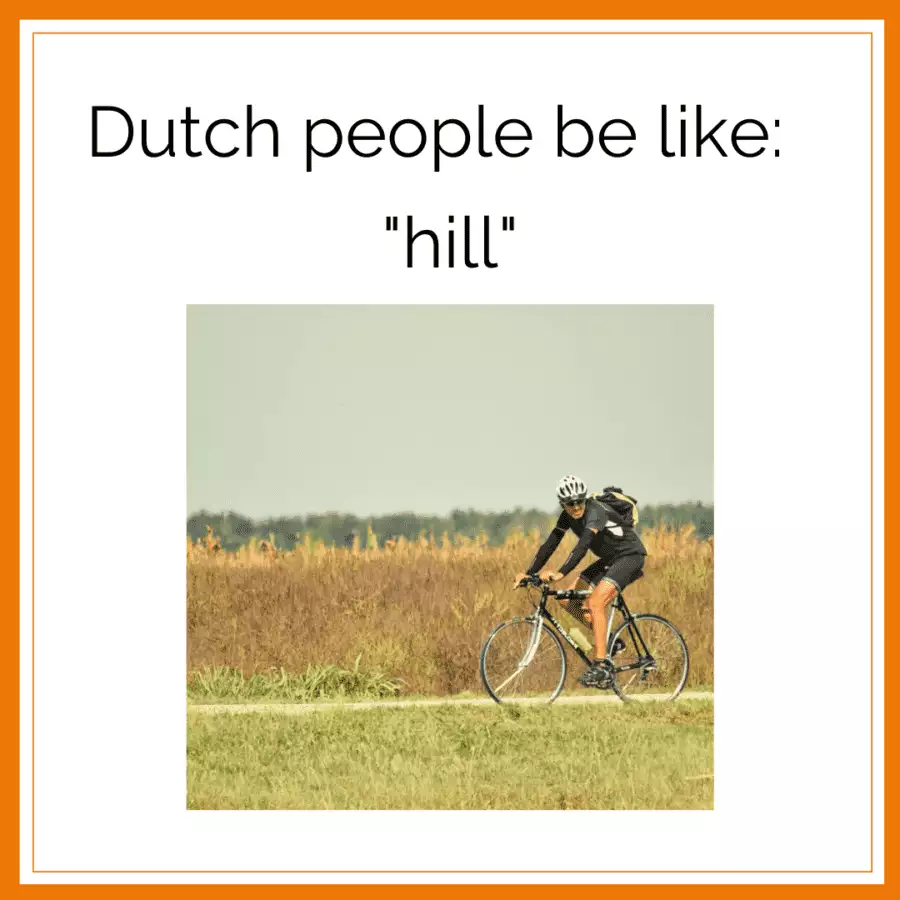
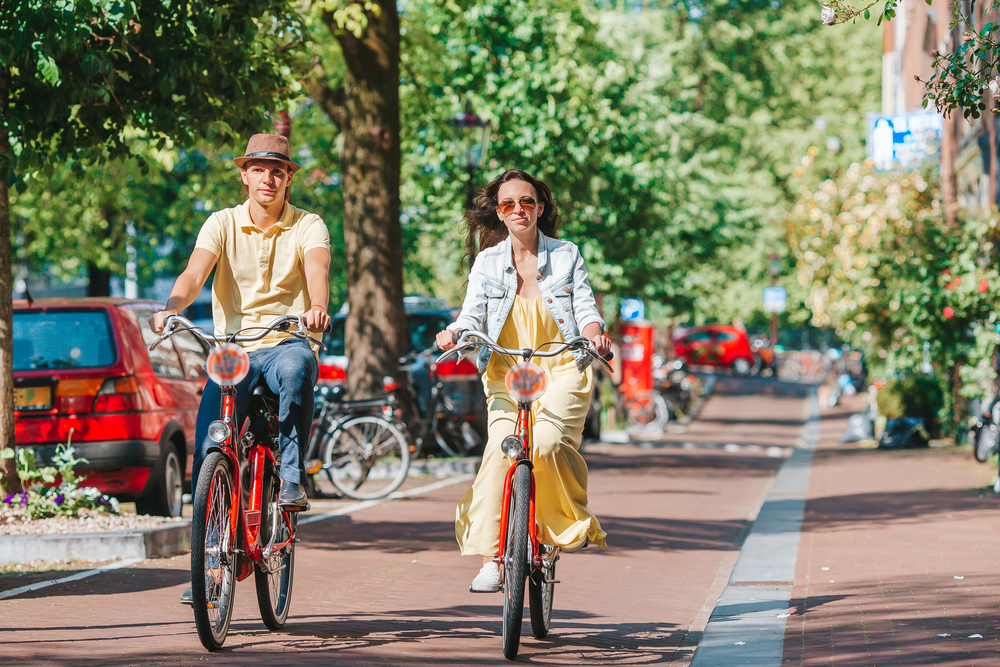
Welcome to the Netherlands, where bicycles outnumber people. The Dutch are so crazy about their fiets that they would much rather bike than walk.

And who can blame them? Cycling is ingrained in Dutch culture — you can’t walk around in the Netherlands without having at least one near-death experience with a 70-year-old on an e-bike. 🤡

What is it?

Have you ever tried to walk to a restaurant or café with a Dutch person? If you ever have, they may have just hit you with, “Where’s your bike?”

If you don’t have one or aren’t feeling like it, they will just stare at you in abject horror.

READ MORE | 19 things the Dutch did to make cycling easy and attractive

All jokes aside, Dutchies are just plain obsessed with cycling everywhere. They definitely prefer it over walking, any day of the week. 🚲

Why do they do it?

Dutch people are all about efficiency and punctuality, and cycling is simply the fastest way to get around in most Dutch cities.

The Netherlands is a small, flat country, so if you’re just doing groceries or running errands in your town, biking is the way to go. 🤗

READ MORE | 22 TikToks explaining why Dutch biking culture is wheely ahead of its time

While the Netherlands has excellent public transportation, sometimes you don’t want to wait for a train or be near other people. So, the bike is (once again) the superior option.

Plus, other cyclists and automobile drivers are (usually) very cautious with cyclists taking priority on Dutch roads.

Why is it quirky? 

Other countries aren’t as fanatic about cycling as the Dutch are. Even in nearby European countries like Germany and England, the dedication to cycling as a mode of transportation is less present.

@oliwiandoskar It’s not that far they said… #netherlands #bike #amsterdam ♬ original sound – AZIZA | Italy

They’re also bigger countries, so it’s harder to make cycling cool there. 💁🏼‍♀️

Should you join in?

YES. Cycling is a way of life here in the Netherlands, and it’s way faster than walking. You’ll still be getting your exercise in, but you’ll also have to deal with angry cyclists and some ferocious winds sometimes.

Cycling is also better for the environment and for your health in general — so grab a fiets and get those pedals moving. 🌱💖

What do you think of this Dutch quirk? Have you experienced it? Tell us in the comments below!

Bob Vylan’s controversial Amsterdam gig has the Netherlands talking (and it’s messy)

British punk-rap duo Bob Vylan sparked outrage during their Sunday performance at Paradiso in Amsterdam, where they shouted “Death to the IDF” and appeared to praise the murder of American right-wing commentator Charlie Kirk.

Politicians from every side condemned the concert, with some describing it as “an orgy of hatred against Jews and dissidents”.

Meanwhile, the Farmer-Citizen Movement (BBB) went as far as demanding the duo’s expulsion from the country.

Even D66 leader Rob Jetten strongly criticised Bob Vylan’s comments about Kirk’s death: “You don’t understand anything about freedom of speech and how you can disagree with each other if you’re here cheering on someone’s murder.

The legal debate may be in Bob Vylan’s favour

According to the NOS, despite the outrage, prosecution may prove difficult.

Attorney Willem Jebbink explained that the statement “Death to the IDF” could be interpreted as “away with the IDF,” framing it as part of the public debate on Gaza.

This view is supported by the rap duo’s well-documented criticism of atrocities happening in Gaza and how world governments are not doing enough.

Furthermore, the European Court of Human Rights protects freedom of expression, even when statements are shocking or offensive.

Still, limits do exist

In 2011, Dutch rapper Hozny was punished after releasing a video depicting the execution of a Geert Wilders lookalike, showing that courts can restrict artistic freedom when it crosses into incitement.

To make matters worse, the bulk of the controversy is centred around Bob Vylan’s decision to urge the audience to “find them and meet them on the streets” (in reference to fascists and Zionists).

READ MORE | The Netherlands will pull out of Eurovision if Israel participates

Jewish advocacy group CIDI considers the remarks a call to violence, and they are filing a complaint.

Dutch authorities are now weighing possible charges. Police have confirmed that they will consult with prosecutors, while Amsterdam’s mayor stressed that although artistic freedom is a fundamental right, it cannot endanger residents or be used to incite hatred and violence.

This fallout extends to the Dutch music scene

Tilburg venue 013 cancelled Bob Vylan’s upcoming performance, accusing the duo of “trivialising political murder”.

Paradiso, however, stood by its decision to host the concert.

Do you think this is an attempt to silence opposition to the war in Gaza, or is the language itself to be condemned? Tell us your thoughts in the comments below!

Image: Stefan Bollman/Wikimedia Commons/Own work