Tech companies in the Netherlands are feeling discouraged by the caretaker government’s plans to disincentivise hiring ‘knowledge migrants.’ Should internationals be worried?
Global talent has been flocking to the Netherlands for some time; this small country offers more than just canals and tulips. There are also plenty of opportunities in the job market!
According to 2024 data collected by the CBS (Statistics Netherlands), sixteen thousand knowledge migrants chose to come here in that year alone.
Clearly, there is work to be had — and to hear the experts tell it, not enough Dutchies to take it on.
In reality, the problem is more complicated. Let’s dive in.
What is the plan?
According to the Dutch government, there is a need “to further strengthen the knowledge economy and reduce migration to the Netherlands.”
The plan, therefore, is geared towards deterring companies from hiring internationals in several ways.
For one, companies would be required to pay higher wages to knowledge migrants.
This might sound like a good deal for expats, but in reality, it discourages companies from hiring them at all due to the extra expense.
Permits for employer sponsorship will also be harder to obtain. Companies hiring expats will face stricter requirements to meet the standards for continuing to sponsor expats.
With more constraints on hiring expats, the Dutch government hopes to clamp down on the number of knowledge migrants. Image: Freepik
Essentially, the plan proposes adding more violations to the list of grounds for revoking a company’s employer sponsorship permit.
The permitting restrictions also widely favour larger companies with a history of employing internationals.
For instance, if a company hasn’t employed an expat in the past two years, this could now work against the acceptance of its permit.
Seems counterintuitive…but ok.
The response
D66 and VVD have debated the plans, fearing business consequences and the ills of scapegoating expats for a larger issue.
Tech companies feel targeted by the plans, as their workforce is often international by necessity, they say.
Speaking to NU.nl, several companies, specifically NLtech, Booking.com, and Just Eat Takeaway, described the country’s “scarce” talent in “software, data, and product development.”
These kinds of businesses, also including ASML, Bol.com, and Marktplaats (to name a few), are worried. The sentiment among these companies is that the tight labour market has made it necessary to look outside for highly skilled workers.
Others think the concerns are slightly overblown. Speaking with NU.nl, the CEO of labour market researcher Intelligence Group, Geert-Jan Waasdorp, says these requirements won’t make quite the splash as feared.
He says, “Large corporations already pay a lot for talent; money is not an issue there.”
Of course, for smaller companies, start-ups, and companies hiring their first international employees, they might not even get the chance.
Because the permitting process is restrictive, these types of (often smaller) businesses are at a disadvantage compared to larger companies with a history of hiring internationals.
But is this really the best approach to addressing a weak Dutch knowledge economy?
What if there was another way?
Waasdorp had a different suggestion. Again speaking with NU.nl, he believes “The government should…encourage employers to invest. For every knowledge migrant, you train a person for the same position.”
This approach seems favourable in the long-term attempts to resolve the issue.
Knowledge migrants cannot be occupationally demonised for coming to the Netherlands when the government doesn’t properly stimulate expertise development within its borders.
After all, closing the door doesn’t teach anyone how to code.
What do you think of the proposed plans? Let us know in the comments.
AI-based startups have taken the world by storm, and the Netherlands is no different. In the minds of some young entrepreneurs, this controversial new tool could even be used to help tackle one of the country’s stickiest problems.
The land of clogs has been at the centre of housing debates for years now, thanks to acute shortages and steep prices.
The Dutch housing crisis has a variety of causes, and what’s most relevant depends on who you ask. The only consistently clear element, though? Too much demand, too little supply.
So if you ask most national policymakers, the solution to this nationwide issue has to involve building new homes.
That’s where AI startups want to lend a hand. But should they?
Bureaucracy… Always a mess, right?
While there are a million reasons why housing is difficult to build in the Netherlands, the frustratingly slow process often comes down to permit and regulatory issues.
According to Politico, in some cases, work takes years to begin. In their report, a project in Veldhoven (hi ASML!) saw actual construction start seven years after the first permit submission.
The reality is, these regulations and reviews often exist for very good reasons. Environmental reports need to be prepared, and impact research must be conducted to create housing within the guardrails of sustainability and convenience.
But at the current rate of demand increase, most places in the Netherlands simply can’t afford to wait that long, RTL reports.
So, some startups have approached the problem from a new angle: greasing the gears of efficiency with a little AI.
How does this work?
Startups like Struck and Haaven advertise their services as solutions to navigating the complex process of building in the Netherlands.
Struck focuses on “simplifying compliance,” according to their website. They’re using AI to decode zoning plans and navigate local and national regulations, depending on what you want to build (and where).
Haaven functions more as a guided platform that integrates different actors and customers in the construction field.
Here, AI is used to review regulations and to retain user data. As a result, they can identify what is needed to move a project forward. This also makes it easier to connect the right people.
It’s highly innovative — often bringing together architects, city planners, construction companies, and legal teams into one hub.
Their approaches might come from different angles, but the desired result is similar: easier construction processes in the Netherlands.
So what’s controversial about it?
A band-(AI)d on a bigger issue
These AI start-ups certainly address the short-term need to build more quickly, but do they get to the root of the problem?
The continued stimulation of housing demand and the shift away from direct state-led housing construction toward market mechanisms have created an unsustainable environment in the Netherlands that goes beyond a general supply shortage.
What happens once the housing is built? How is affordability maintained? And how do we ensure the right people have access to these new living spaces?
While these companies can help guide customers through the process, they don’t have any interest in the welfare aspects of the housing crisis.
There’s also an issue of over-permitting: according to RTL, actual construction is struggling to keep up with the number of accepted building proposals.
Not to mention, even if new housing is built more quickly, if it’s done unsustainably or constructed poorly, we’re all worse off.
It seems that until the government returns to a more involved role in the housing market, it’s unlikely these startups will solve the long-term issues facing the Netherlands.
So is AI just being over-hyped once again?
What do you think of these startups? Let us know in the comments.
Is your pantry filled with Lay’s and Coca-Cola? Next time you’re at the Appies, don’t be surprised if you see people screening their grocery lists for anything “Made in the USA.”
Since Donald Trump’s threat of military invasion in Greenland looms large, Danes are increasingly using a mobile app to boycott American imports.
The app “UdenUSA” (Danish for “Without USA”) has gone viral, becoming the most downloaded title on the Danish App Store.
And the Dutch are quickly following their lead, reports Trouw.
A recent survey by onderneming.nl highlights growing frustration with the US in the Netherlands, finding that 40% of respondents plan to buy fewer American products in the future.
How the app works
Created by 21-year-old Jonas Pipper and 22-year-old Malthe Hensberg, the app is easy to use.
Simply scan a product’s barcode: if it comes from the US, a large red cross flashes across your screen. If it’s from anywhere else in the world, you’re met with a reassuring green checkmark.
As Yankeephobia plagues the Netherlands, too, the app has already added Dutch language support.
The real challenge, however, lies in avoiding the everyday staples that many don’t realise are American-owned.
The omnipresence of American goodies
When you start your day with some good ol’ cereal, Quaker and Kellogg’s (firmly American brands) are the most popular.
Want to sprinkle some hagelslag on your toast? These chocolate sprinkles sold their soul to the Americans, too. Trusted brands De Ruyter and Venz are owned by the American conglomerate Kraft Heinz.
Aside from territorial invasions, Americans are known to be pioneers in calorie-rich snacks.
Since Lay’s is a clear no-go, you grab a Dutch delicacy: borrelnootjes. The unsuspecting Dutch brand Duyvis somehow gets a CROSS. Much to your surprise, Duyvis is owned by PepsiCo.
The soft drinks aisle is perhaps the most difficult place to escape the jarring red crosses of the UdenUSA app.
Coca-Cola, Pepsi, Fanta, Sprite, 7Up, and Dr Pepper are met with UdenUSA’s disapproval.
The cleaning aisle, too. The brands Dreft, Ariel, and even Ajax (not the football team) are owned by American giants Procter & Gamble.
While there is little evidence that boycotting really helps politics, they serve as a powerful social statement. Moreover, choosing local or smaller businesses is almost always the better, greener decision.
And if you don’t have the budget to be environmentally conscious, there is a dearth of store-brand alternatives at Albert Heijn, Jumbo, or Lidl that can help you bypass the American giants.
Trying to naturalise as a full-on Dutch citizen? Go for it, at least then your passport would finally be among the strongest in the world.
The Henley Passport Index for 2026 is out, and the Netherlands has been ranked in fourth place for the world’s “strongest” passport.
Being a Dutch national now means you can waltz into 185 countries without a prior visa.
However, this is no surprise
Last year, the Netherlands also ranked in fourth place. The Dutch passport has been in the top five of this index since 2006.
And anyone travelling with a Dutch partner has witnessed this privilege when it’s time to enter the queue for passport control at Schiphol.
For those of us with “weaker” passports, the queue starts about a kilometre away from the immigration officer. Meanwhile, our partners may breeze through self-service passport control.
You may have even had the following conversation with a Dutchie:
“My family has to apply for a visa to visit me in the Netherlands.”
The Dutchie looks totally confused and replies, “What’s a visa?”
This disparity may make you wonder: how exactly did this ranking come to be?
What’s the index based on, anyway?
Compiled annually by Henley & Partners, this index ranks 199 passports against 227 destinations using data from the International Air Transport Association.
The scoring is simple: one point for every country you can enter visa-free, with a visa on arrival, or via an electronic visa. Do you have to deal with government approval or pre-arranged paperwork? Zero points.
The law firm launched this index in 2006 to track the evolution of travel freedom and global mobility over the years.
And what have we learned? Contrary to the idea that the “West is the best,” we are witnesses to a changing narrative. Perhaps global mobility has more to do with diplomacy, pro-business governance, and small borders.
Winners and losers
While the US and UK used to wear the crown, the top of the podium has gone to the East.
Singapore ranked first on the list, with visa-free access to a whopping 192 countries. Japan and South Korea share second place with easy access to 188 countries.
According to a Henley & Partners press release, this “reinforces Asia’s long-standing leadership at the top of the global mobility rankings.”
Meanwhile, both the US and UK have seen a slump in passport power since their first-place position in 2014.
The US dropped from 4th to 10th place, while the UK fell from 3rd to 7th — marking some of the biggest declines.
Despite where you’re from, for the authorities, all of us are just “passport holders.”
So here’s a little summary of the passport rankings of 2026.
At the top:
Rank
Country
Access
1
Singapore
192
2
Japan, South Korea
188
3
Denmark, Luxembourg, Spain, Sweden, Switzerland
186
4
Austria, Belgium, Finland, France, Germany, Greece, Ireland, Italy, the Netherlands, Norway
185
5
Hungary, Portugal, Slovakia, Slovenia, and the United Arab Emirates
184
At the bottom:
Rank
Country
Access
97
Somalia
33
98
Yemen, Pakistan
31
99
Iraq
29
100
Syria
26
101
Afghanistan
24
Where does your country rank? Tell us in the comments!
I honestly can’t remember what it felt like to live outside the Netherlands. There are so many unique aspects of the country that you can only understand if you have experienced it for yourself.
This article is mainly for you lot out there who decided to move to the Netherlands from your home country. However, I bet your fellow internationals can relate — whether you’ve stayed or moved away!
1. They have delicious snacks, but a healthy lifestyle
The second I arrived in the Netherlands, it was immediately noticeable that almost everybody was in shape! My first thought was, “Well, everything must be healthy”. Oh, how wrong I was. 🥲
Then, of course, there are the amazing Christmas/New Year snacks, like oliebollen, chocoladeletters, speculaas, and kruidnoten. I could go on and on.
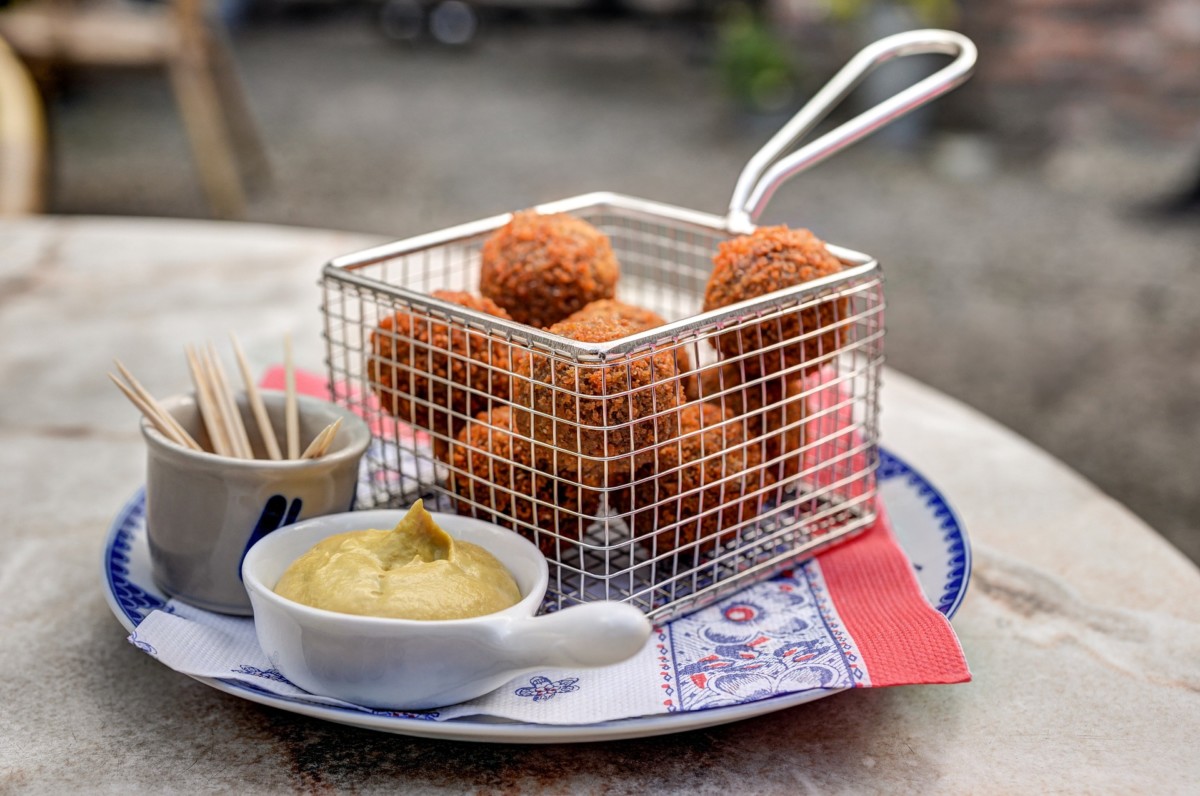
Some classic bitterballen and mustard. Image: Pixabay
I’m not going to pretend I haven’t binged on any of these. My partner and I must have eaten about 20 chocoladeletters last year, just because we could. 🤷🏻♀️
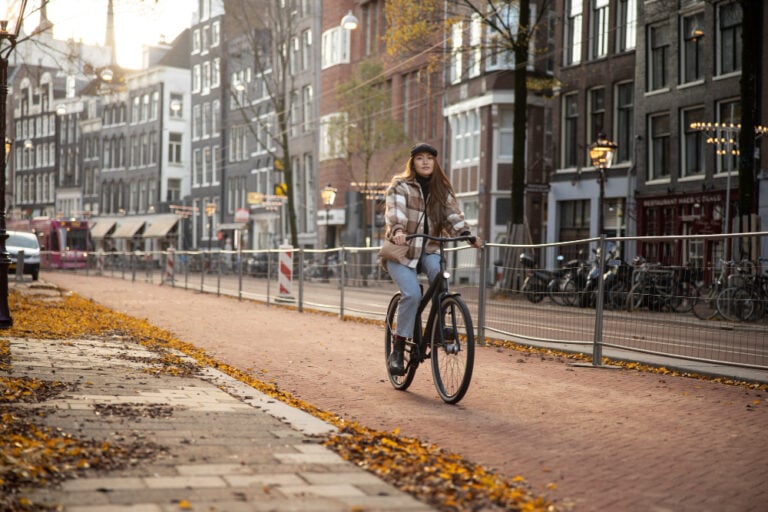
But what’s the best way to combat all of that? Biking! The Dutch do it so well. The bike lanes make cycling safe and easy.
It makes you get out by cycling or walking to work, the shops, or anywhere, really, even for no reason other than enjoyment.
2. The language is learnable but still challenging
Immersing yourself in a different language is quite an experience. This is especially true if you’re trying to learn Dutch.
It honestly took me months just to master the “g” sound, like clearing your throat, as I’d never had to do it before.
Going to a shop was scary at first, not knowing what the labels said or what the shop assistant was asking me. It’s really rewarding when you finally get your head around some of it.
Just make sure you master, “Sorry, ik spreek geen Nederlands.” 😉
The rest can come later.
3. It gives you a new perspective on traditions and culture
Forgive my ignorance; I assumed that most of Europe celebrated Christmas the same way. I had never heard of Sinterklaas before moving here.
For those of you who may be reading this, intending to move here, and have no idea what I’m talking about, Sinterklaas arrives in the Netherlands by steamboat in mid-November from Spain. Makes sense, right?
He comes with his helpers, the Zwarte Piet (yes, it’s a heavily debated tradition — let’s not go there today). The official Sinterklaas celebration is on the night of December 5.
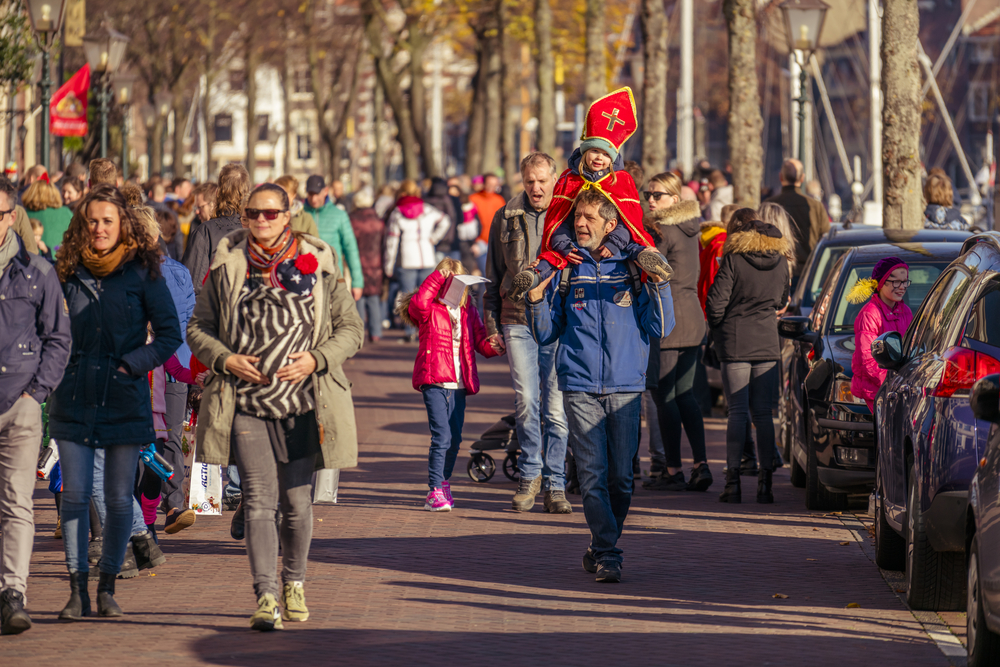
Sinterklaas’ arrival in the Netherlands is especially exciting for kids. Image: Depositphotos
Christmas Day is sometimes still celebrated, but it’s not the main gift-giving occasion.
Why is this cool? For me, it’s because celebrations start early! Really, it reminds me to get excited about Christmas.
Dutch people also celebrate two days of Christmas on December 25 (Eerste Kerstdag) and December 26 (Tweede Kerstdag). Who can complain about a longer festive period?
It’s all a great way of doing things, and it ensures that Christmas itself isn’t ALL about the gifts (which can sometimes happen in other countries).
4. They have stunning outdoors (but also great city life!)
The Netherlands is a very picturesque country, too. Whether it’s walking along the canals of cities like Amsterdam or biking through the tulip fields in spring, there is always something nice to look at. 😍
Beautiful forest walk in the Netherlands. Image: Carmen Monge/Supplied
When visiting cities like Rotterdam and Eindhoven, you can appreciate the unique architecture and modern living if that’s your thing. In general, it’s just a beautiful place to be.
5. Their work-life balance is unlike any other place
Apart from living in the Netherlands, working can be different as well. People tend to work fewer hours here than in other countries and value home time as much as work time. 🧘
No work without some relaxation! Image: Depositphotos
The pay and, therefore, the standard of living tend to be better. In fact, the work-life balance in the Netherlands is among the best in the world!
6. They often have a more liberal approach to law
Another difference (depending on where you are in the world) is the law. As we all know, cannabis in the Netherlands is decriminalised.
Where I’m from, cannabis possession alone can carry a prison sentence. People buy from backstreet dealers, who usually grow their own in attics. There is an absolute zero tolerance for cannabis, and it’s not considered a “soft” drug.
What has my experience in the Netherlands taught me? Different drug policies can work — but they’re definitely not without their faults.
7. It’s easy to travel and explore
The Netherlands is a small country, making it easy to travel from one side to the other.
Say what you will about train costs, but the fact that the ticket cost is the same whether you buy it two months away or 20 minutes away means that you can travel where you want, when you want, and not get caught out with extortionate prices.
I’m used to having to book three months in advance for a specific time for a single-day trip and still paying ridiculous prices.
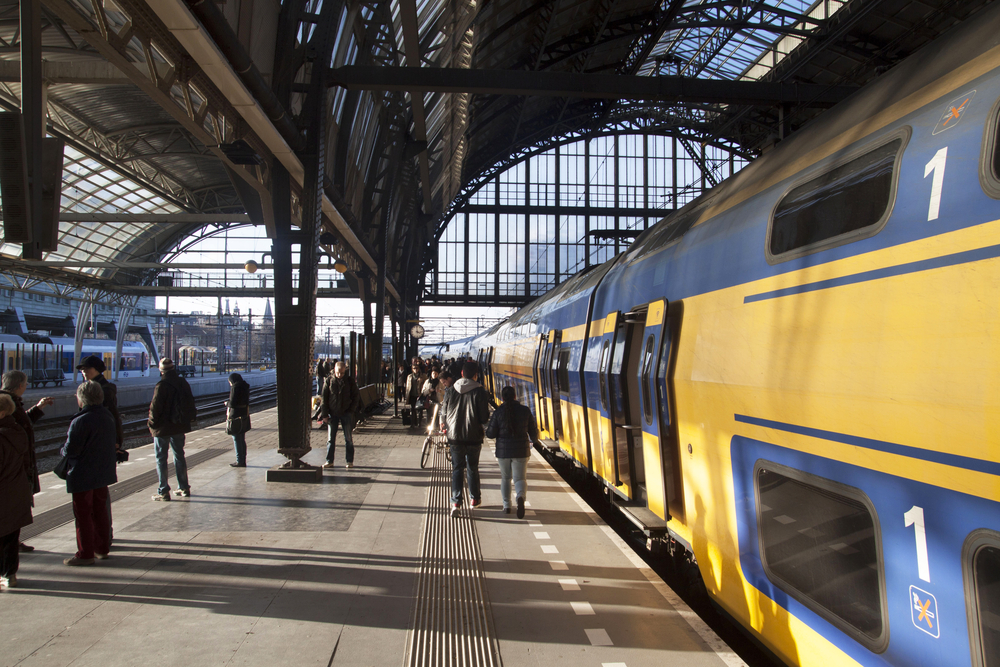
Easy train travel in the Netherlands. Image: Depositphotos
Waiting until the day can set you back hundreds, even if the journey is only a couple of hours. The Dutch system is definitely not perfect, but it generally allows everyone to travel much more.
Also, as it’s sandwiched between Germany and Belgium and lies within easy driving distance of France and Luxembourg, it’s possible to go further afield (but why would you leave the Netherlands anyway?).
Are you in love yet?
In the Netherlands, you’ll live in a world with delicious Dutch treats, rekindling your love of cycling and the outdoors. 🚲
You will immerse yourself in traditions that you may not have known existed.
You will experience a country with a different way of doing things, different laws, different work and spending habits — overall, you’ll become more knowledgeable on what works and what doesn’t (who doesn’t love healthy debate?).
Aren’t we a lucky bunch?!
How has living in the Netherlands changed you? Tell us in the comments below!
In a mind-blowing (no pun intended) effort to reduce dependence on domineering powers such as Russia and the United States, the Dutch and some of their EU allies are working together to increase energy production in the North Sea. The US president, however, thought this plan was… less than amazing.
Last week in Switzerland, one of his usual meandering speeches delved into the topic. He declared, reports CNBC, “I’ve noticed…that the more windmills a country has…the worse that country is doing.”
Additionally, he called the countries that have dedicated themselves to wind energy “losers.”
Nothing like a little name-calling to convince your diplomatic fellows, eh?
However, despite Donald Trump’s repeated negative comments about the plan, the Hamburg Declaration was signed into effect yesterday.
How are they doing this?
A long list of countries (including Belgium, Denmark, France, Germany, Iceland, Ireland, Luxembourg, the Netherlands, Norway, and the UK) signed the historic Hamburg Declaration alongside Dutch Climate and Energy Minister Sophie Hermans.
In an unprecedented show of unity and energy responsibility, the declaration commits these countries to a major production plan: 100GW of joint offshore wind farms in the frigid North Sea by 2050.
According to NU.nl, the project will also be financed jointly.
Donald Trump might not like it, but the Dutch and their neighbours are going all-in for the win(d).
What’s different about this plan?
In 2023, the Ostend Declaration committed the North Sea nations to a net goal of 300GW of energy production by 2050: so what’s different about this plan?
Well, the 2026 declaration specifically instructs the countries to work together toward the goal (at least in part).
100 GW of the 2023 target is now to be generated through joint developments — a less-than-easy-breezy aim.
This is the first time that wind farms will have a direct link to multiple countries.
Stimulating a waning industry
In the Netherlands, wind farms, while popular in theory, have not attracted the enthusiasm or investment they deserve.
Speaking to NU.nl, Minister Hermans expressed hopes that the declaration can bring back wind in the sails of this energy sector.
Officials are hoping the joint €9.5 billion agreement can do the trick, along with expedited permit processes and dedicated job creation in the wind sector.
Why now?
The original agreement, back in 2023, was a response to Russia’s incursions and aggression, and an effort by the EU to become more independent in its energy needs.
Russia’s hostilities are still a major reason for the latest declaration. However, the instability and threats made by the US towards the EU in recent months are also a major contributing element.
So, you want to join the e-bike craze. This makes sense: sophisticated, healthy, and environmentally green, many Dutchies are ditching their rusty old bikes for the one and only e-bike.
However, the e-bike isn’t exactly the cheapest pair of wheels out there, which leads many Dutch people to take the route of buying a refurbished bike as opposed to a brand new one — it’s a sustainable, smart, and wallet-friendly move.
There are many perks involved in owning these snazzy contraptions. However, to stay on the safe side, here are 7 things to look out for before buying a refurbished e-bike. 🚴🏻♀️
1. Check for damage and tears
What kind of shape is the bike in right now? This is an important question that shouldn’t be skipped.
When buying a refurbished electric bike, there are many telltale signs that will say a lot about how the electric bike was treated and cared for in the past — which will also give you an idea of what to expect later on.
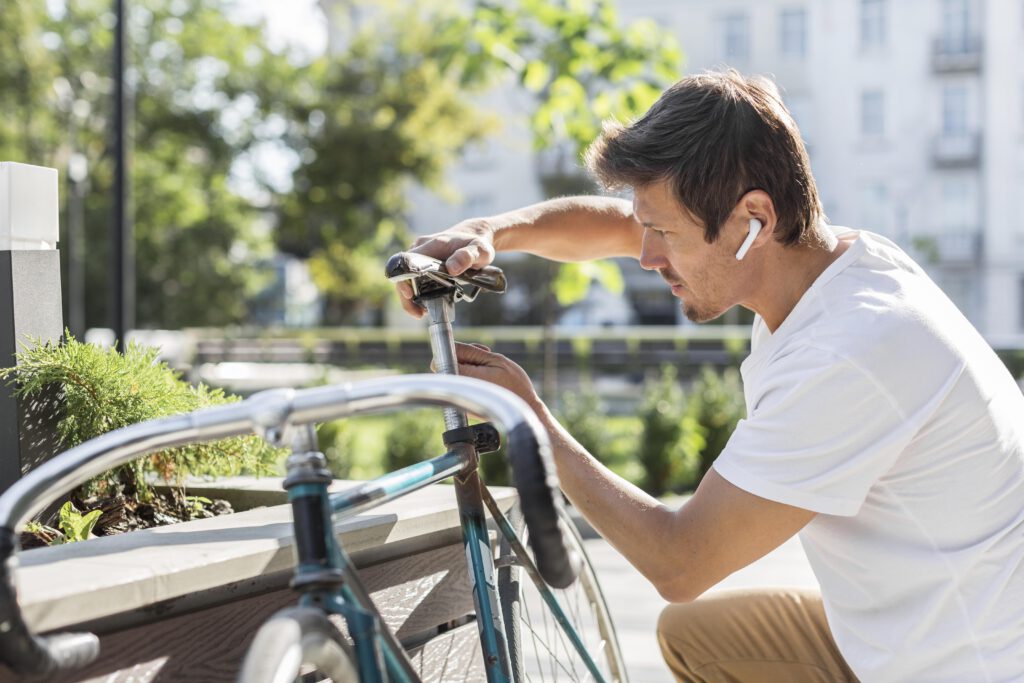
Before you can enjoy the perks of your e-bike, it’s important to check if everything is still working properly! Image: Freepik
Take out your notepad and check your potential e-bike for the following red flags 🚩:
rough scratches,
rusty spots,
dents,
or flat tires
These elements are all signs of misuse and could mean additional repair costs will be needed down the line — niet fijn!
Make sure to also check the components that are prone to tears, such as:
tires,
brakes,
chains,
gears,
and sprockets
2. Consider the battery status
Repeat after me: battery quality and remaining battery life are echt belangrijk (very important) factors in determining the value of any e-bike.
Much like how you don’t want to buy a MacBook with a heavily used battery, you don’t want to buy a refurbished e-bike with a battery that’s on its last legs.
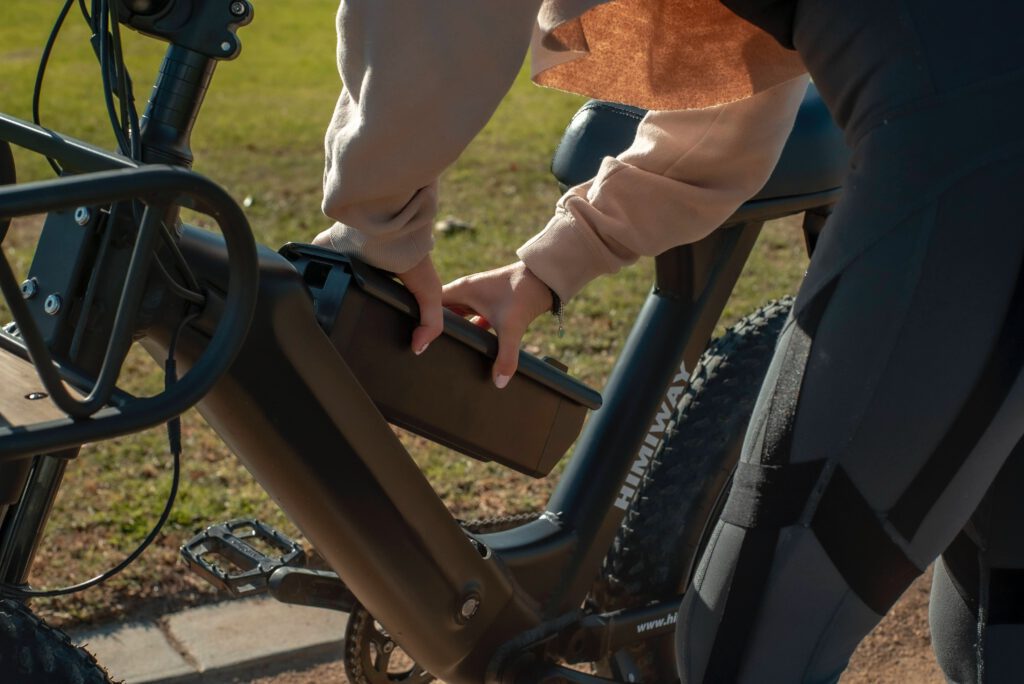
Checking the battery’s status is a key factor when purchasing a refurbished e-bike! Image: Unsplash
While e-bikes might make you look and feel like you’re living in the year 3000, its battery won’t live forever.
We’re not going to get too specific about it, but the gist of it is this: as batteries get older, they won’t hold a charge as well as if they were brand new. This means that battery capacity drops and drains faster.
New batteries are anything but cheap, so be careful to check up on the bike’s battery health when buying a refurbished e-bike.
You don’t want to end up coughing up the cash and then paying half of the price of a new bike to replace the battery after one month.
Tip: If you want to avoid dealing with shady sellers, online marketplaces like Upway are a great option for refurbished electric bicycles. In addition to giving you a warranty, these platforms fully evaluate the state of an e-bike’s battery and will replace or recondition it if needed.
3. Understand mileage vs. age
Your bike’s overall state will affect every aspect of its performance, especially the mileage. Wear and tear after long-time use will not only affect your bike’s performance but will also require you to use more energy to pedal.
Hold on, what’s mileage? 🤷♀️ For those of you who don’t know e-bike terms just yet, the mileage of your e-bike’s battery refers to the distance it can travel on a full charge before it needs to be recharged.
This means that if you want to know how much the e-bike has been used by the original owner, the easiest way to do this is by checking the mileage.
Most e-bikes have a built-in speedometer, which gives you an idea of how many kilometres the e-bike has left to give.
This is an important factor for the overall condition of the bike and should be reflected in the asking price — so make sure to check it.
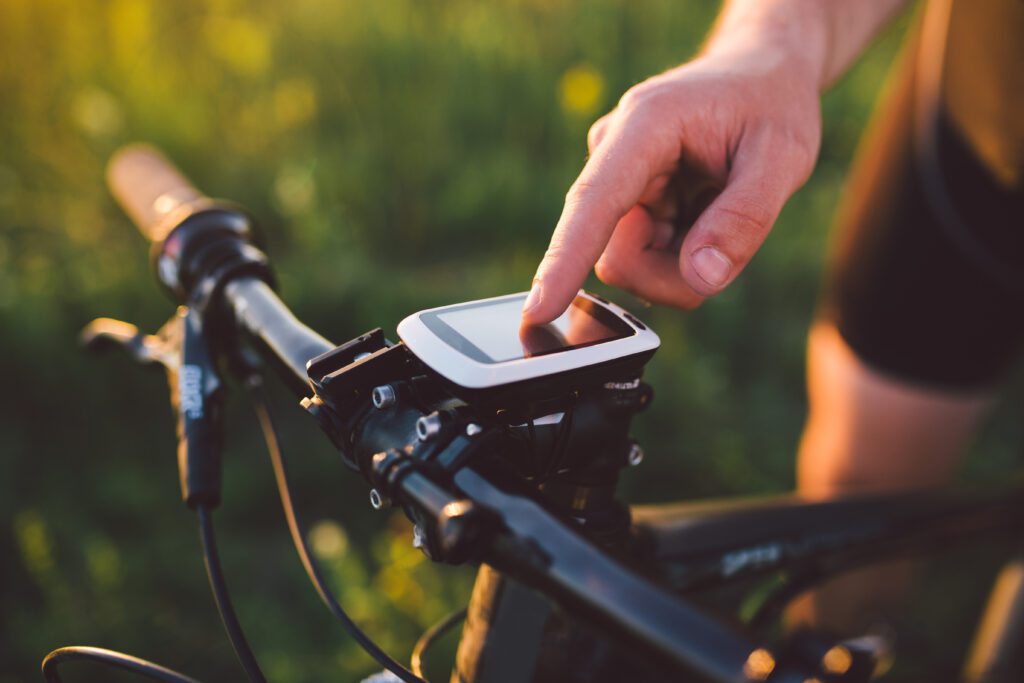
Not sure how many kilometres you have left on your refurbished e-bike? Check out the speedometer display! Image: Freepik
You should also consider the age of the bike. Age before beauty? Kind of — don’t be discouraged from buying an older e-bike. Instead, consider age and mileage together to evaluate how ‘used’ the bike is.
If you observe that your e-bike’s battery isn’t getting decent mileage anymore, that’s a sign that you will need a replacement in the near future, meaning you’ll have to cough up the cash.
4. Determine what kind of e-bike best suits your needs
Time for the fun part: choosing what kind of e-bike you want to ride every day! There are a ton of styles, ranges, and sizes to choose from, which can get overwhelming.
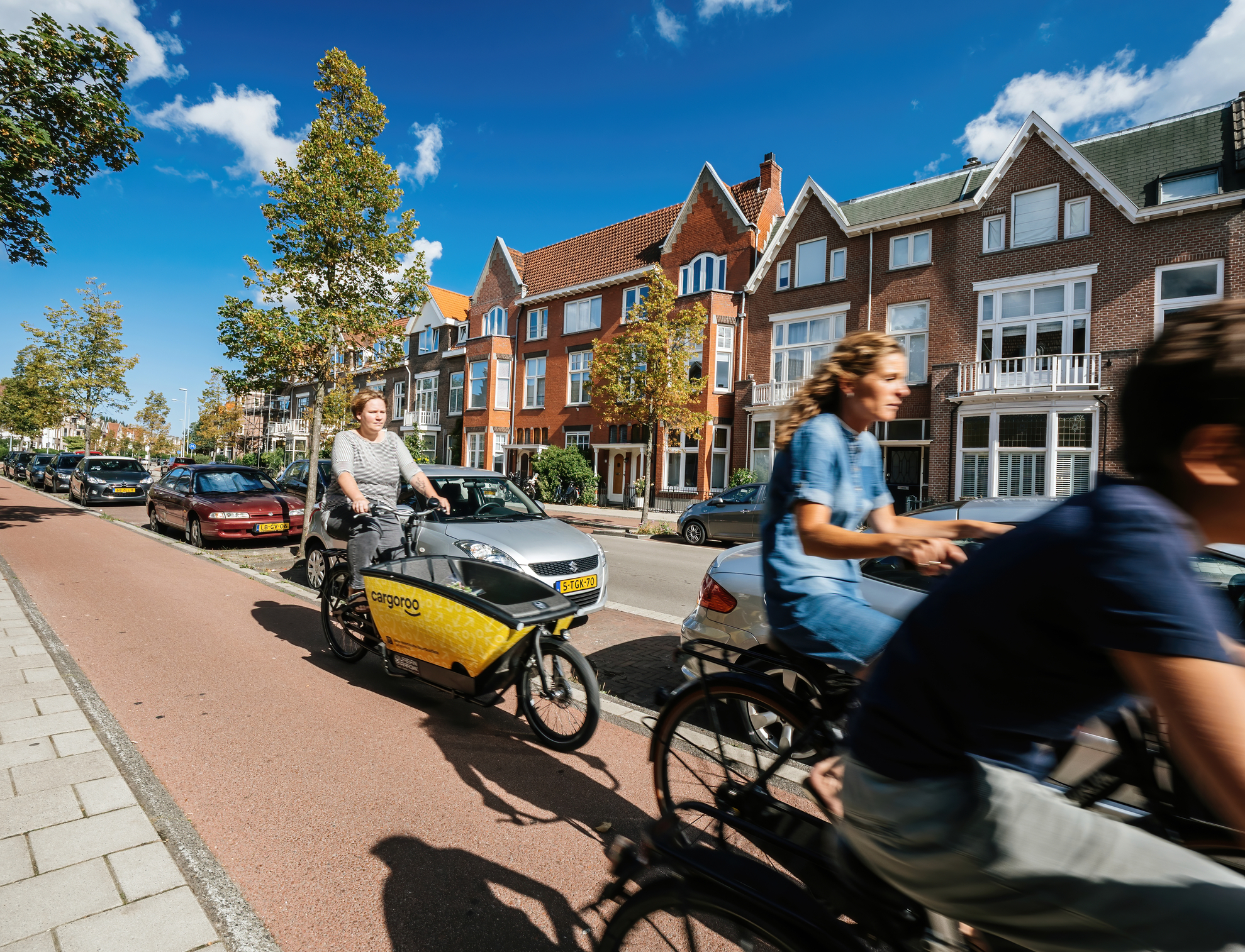
What sort of bike do you need most? Image: Dreamstime
Here are a few questions to help you narrow down your search:
Do you need to travel far and get there fast?
We recommend the Hybrid/City E-bikes. Built for balance, this type of e-bike provides extra power with each pedal stroke, speeding up your daily commutes, even in the worst crowded city streets.
Do you need an upright seating position for comfort? Or support for older people?
We recommend the Comfort/Cruiser e-bikes. True to its name, this model allows users to cycle in an upright riding position, it has swept-back handlebars, and a comfy seat, making cycling a relaxed and laid-back experience for any age.
Do you frequently have to carry a lot of cargo?
Then you should opt for Cargo e-bikes. These are perfect for those needing to transport children to school or carry heavy groceries. This type of model makes it an easy ride by providing a large trunk in the front and a platform in the back.
It’s important to find a refurbished e-bike that fits your needs! Image: Freepik
Do you want to be able to take your e-bike on the metro or train?
Then opt for folding e-bikes. Their convenient design that folds in half makes them practical to transport and can also fit in small spaces.
Do you need a lot of gear to make it easier to ride in the great outdoors?
We recommend mountain/off-road e-bikes. If you plan on cycling on dirt trails, uneven paths, or steep inclines, this bike features multiple gears, rugged tires, and a powerful motor to make your next outdoor adventure a good one.
By asking yourself these questions, you can determine which category of e-bikes is made for your needs.
Tip! Another thing to consider before you decide on your purchase is brand reputation. Does the e-bike brand have a solid track record with good reviews? Top!
5. Consider the availability of spare parts and services
Will you be able to get your hands on spare parts when needed? This is something important to consider.
Life happens, which means chances are that at one point or another, you’ll need to replace or repair a part of your e-bike, such as your brake rotors or battery pack. These repairs are difficult to pull off and are certainly not cheap.
If you regularly take your e-bike with you, make sure to get it expertly checked once in a while to make sure it’s still in good condition! Image: Freepik
This is why it’s key to purchase your e-bike from a trustworthy and well-known source. If an e-bike’s components were made by reputable manufacturers, there shouldn’t be a problem in getting new parts.
Your refurbished e-bike should be expertly checked and serviced regularly, this greatly reduces the chances of major damage.
6. Take the e-bike out for a test ride
To see if a refurbished e-bike is your long-lasting partner, you should first try to take it out for a test spin.
This way, you’ll be able to feel if it’s comfortable, supportive, and does what it needs to do.
Do you hear something click, rattle, or drag while you’re cycling? Are the brakes working properly? Is the saddle in proportion to your height? All these things can be answered by riding the e-bike yourself.
Make sure to give your e-bike a test drive before you commit! Image: Unsplash
If possible, go to your nearest park or car park and give it a go, while mentally taking note of your riding position.
You should try switching the engine on and off a couple of times, ride the bike with different levels of assistance, and see if you’re comfortable with how the components interact.
Ask yourself a simple question: would you feel safe riding the e-bike if there were a lot of cars on the highway or if you were to cycle in the rain?
Your e-bike is supposed to make you feel comfortable in any type of situation, so consider this before you fully commit. Ready? Set, go!
7. Always get that warranty
So, you’re cruising with your e-bike when your chain suddenly wears out, or your brakes stop working, leaving you stranded.
That’s not an ideal situation, but when it comes to e-bikes, it’s important to factor in that, much like regular ol’ bikes, they have some parts that are prone to wear and tear.
For example, it can be very easy for rocks, mud, or sticks to get tangled and lock up your electric bike. With Dutch rainy weather, it’s safe to say this can happen quite often.
If you’re buying an e-bike, make sure you get a warranty to go with it! Image: Depositphotos
This is where your warranty comes in to save you from spending unnecessary big bucks and bring your e-bike back to life.
When you buy a used e-bike from a private person, you’re not necessarily going to get a warranty alongside your purchase. However, trustworthy services that stand behind their products will offer them.
By having a warranty at arm’s reach, there is no need to panic next time something happens to your e-bike.
When done right, buying a refurbished e-bike is a great way to cut back on expenses and remains a sustainable option while living in the Netherlands. So arm yourself with these tips, and find yourself your dream wheels. 👀
What is your experience with buying a refurbished e-bike? Tell us in the comments below!
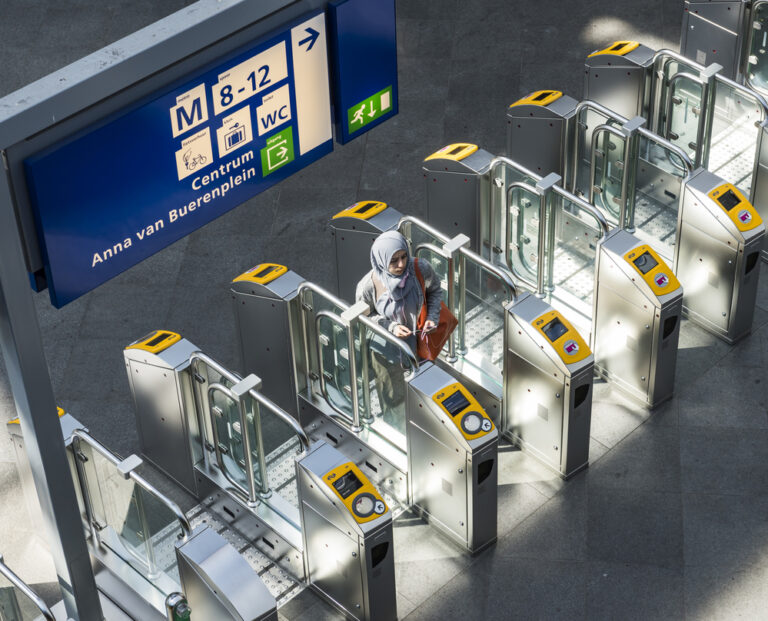
Beste reizigers, the digital revolution has found its way into your morning commute. Soon, your OV-chipkaart will be replaced with the new “OV-pas.”
The original OV-chipkaart, a shiny yellow travel card with your face on it, will be completely phased out by the end of 2026.
The OV-pas, which can currently be used for buses, trams, and metros, will instead take its place. According to the NS, it will add a digital edge to how we access public transport.
Ok, so what’s changing?
The biggest change? Unlike the Ov-chipkaart, you will be able to add your OV-pas to your Apple Wallet or smartphone. Gone are the days of rushing home in a frenzy because you left your card behind.
Aside from this, there are a few other small differences, according to Nu.nl:
Your travel information is no longer stored on the card itself but in a secure online database. This means you can easily access your balance and travel history using the MyNS or OVpay apps.
This also means there’s no need to fuss at the ticket kiosks or machines to top up and manage your card.
You check in and out just like you would with your OV-chipkaart. However, your balance and travel costs won’t flash at the gates anymore.
What stays the same?
However, if you’re wary of change, fear not. There are also plenty of things that will stay the same:
The OV-pas is still a physical card, you do not have to add it to your digital wallet.
No subscription? You still have to keep at least €20 on your travel pass before checking in. Forget this, and you might find yourself stuck at the gate, or worse, hopping on a train you can’t pay for.
If you don’t have an OV-pas, you can keep checking in and out with your bank card. This does not make you eligible for any discounts, however.
If you’ve ever stood in a bedding shop staring at 600 varieties of pillows, you’ll understand why I was excited to try OnePillow.
When I moved house last year, I bought a full set of IKEA pillows and had no idea if I had chosen the right ones.
So when the Dutch-created OnePillow arrived at the DutchReview office promising customised support, adjustable height, cooling tech, and a better night’s sleep, I was curious. Would this finally be the pillow that fits me — instead of me trying to fit it?
I tested it alongside my colleagues, Jana and Sarah. Here’s how it went.
One pillow, endless foam
OnePillow’s big promise is that it’s customisable, so you can make it the perfect height for your sleep position. In the box is the pillow and two covers: a cooling cover and a hotel-style cover.
It comes ultra-compressed, but when it springs from the plastic packaging, it fattens itself into an ultra-stuffed cushion. Your job? Remove the foam until it’s your perfect pillow.
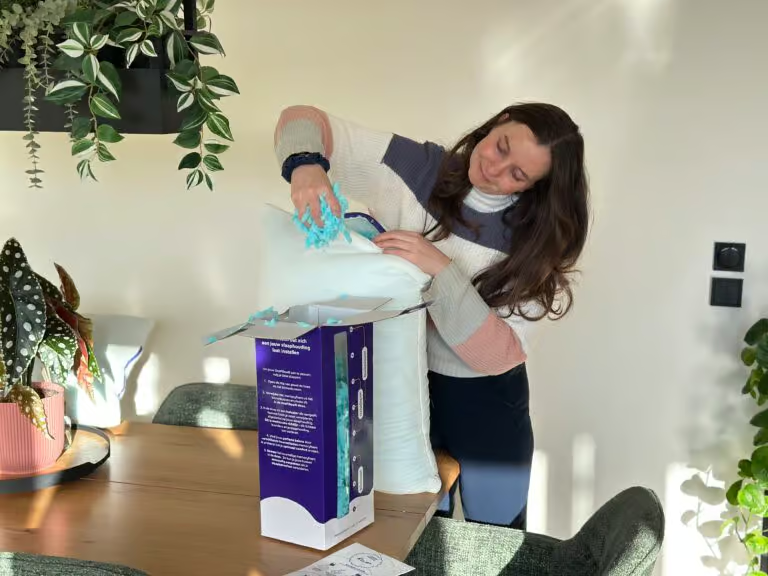
Once mine arrived, curiosity got the better of me. I opened the box and immediately got busy.
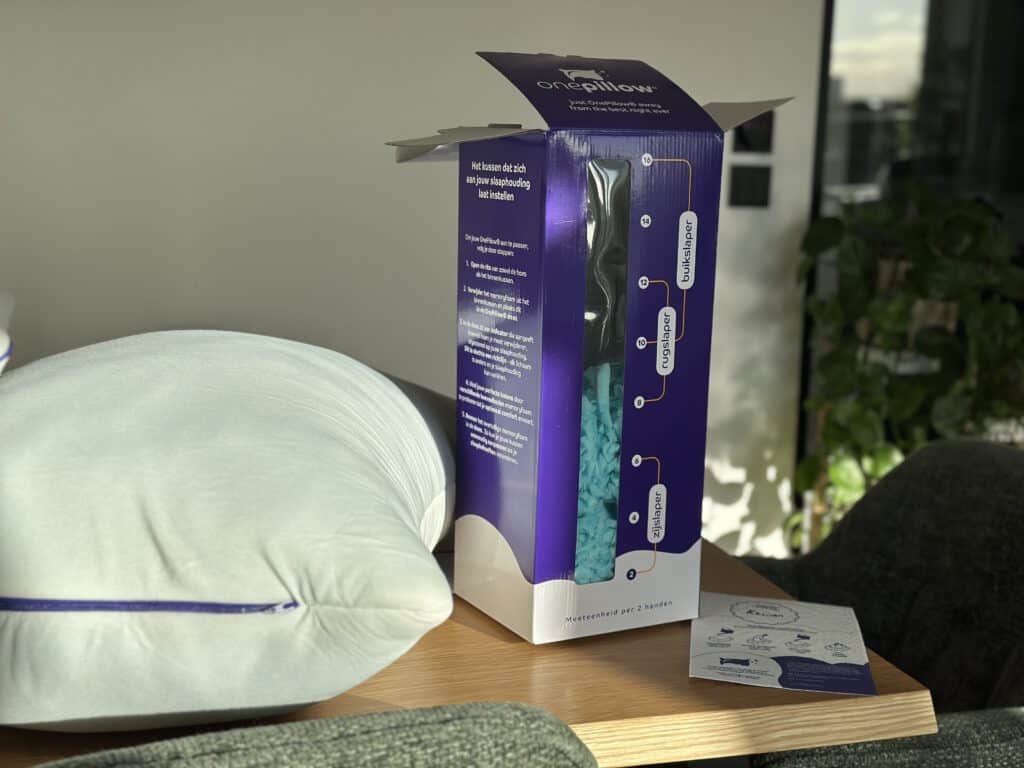
One very handy detail that some of our team missed: the box has a transparent side panel with a fill indicator. You pull stuffing out of the pillow and put it into the box until the foam reaches the line that matches your sleeping style. No guessing, no eyeballing, just scoop, stuff, and zip.
Now, it definitely felt strange removing the guts of a brand-new pillow, but the instructions were clear enough once I scanned the QR code on the packaging.
The biggest question at first was whether to remove foam down to the indicator line or start with everything in and work backwards. For me, the latter made sense.
Image: DutchReview
The result? Once I adjusted the filling, the pillow stopped feeling like I would be sleeping upright, and more like a fluffy cloud.
Now don’t make the mistake Jana did. She grabbed her pillow, ignored every instruction, and slept on it straight out of the box. The next morning was… not a success. In real Goldlocks style, it was too tall, too firm, and just too much pillow.
“Then Sarah told me you can take the stuffing out,” she said the next day, surrounded by tiny pieces of foam. “I pulled some out based on feel alone, and it was immediately better. I’ll probably tweak it again with the indicator.”
She also pointed out something I had not noticed: OnePillow is brilliant for sitting up in bed. It is firm enough to prop you up without collapsing.
Sarah also began with confusion, then improvement.
“I didn’t really know where the instructions were,” she admitted. “I ended up stuffing all the removed foam into the plastic bag it came in. But once I took enough out, it got very comfortable.”
A paper guide in English (or, let’s face it, a bit more patience on our part) would have been useful, but hey, we got there.
Support and comfort: firm, structured, and reliable
OnePillow is not a soft pancake pillow. It does not sink into your mattress or disappear during the night. It stays exactly the shape you give it.
I tend to sleep on my side and back, and liked how it keeps my head and neck in place. I wasn’t waking up with that weird kink in my shoulder that I sometimes get from softer pillows.
Jana, who often deals with shoulder and arm pain, said she noticed the neutral alignment it gave her joints when she lay on her back. She thinks it may help long-term, but admitted it was too early to call it life-changing.
Sarah says she is still adjusting to the firmness, but she’s feeling optimistic. There’s a good reason too: OnePillow is the best-reviewed pillow in the Netherlands on Bol.com with a 4.8/5 rating.
Hot on one side, cool on the other: surprisingly effective
OnePillow’s party trick is its reversible hot–cold cover — one side made from cooling fibres, the other from warmer, softer fabric.
I’ll admit, I expected absolutely nothing from it and thought it was marketing fluff. Then I flipped the pillow and instantly felt a temperature difference.
Jana was even more impressed. She is famously anti-overheated pillows, and this feature won her over immediately. “I hate when pillows get too warm,” she told me. “This actually regulates temperature really well.”
Sarah did mention that getting the pillow into the cover took some extra stuffing and smoothing, but once it was on, she was pleased with the feel.
So, should you try it?
If you are expecting instant sleep perfection, you might be confused at first. You need to adjust the filling. You need to experiment. You will remove foam from a pillow with your bare hands.
But if you are open to one or two nights of trial and error, it pays off — and you have 60 nights of sleeping on it to decide if it’s really the pillow of your dreams.
Now, OnePillow isn’t the simplest pillow I have ever tried. But it is one of the smartest. Once I figured out how much filling to remove, it became genuinely comfortable, supportive, and reliably consistent.
If you are fussy, curious, or simply tired of guessing which pillow to buy, OnePillow is worth trying. Just be prepared to vacuum your floor after the setup. 😉
Would you try a customisable pillow? Share your thoughts in the comments below!
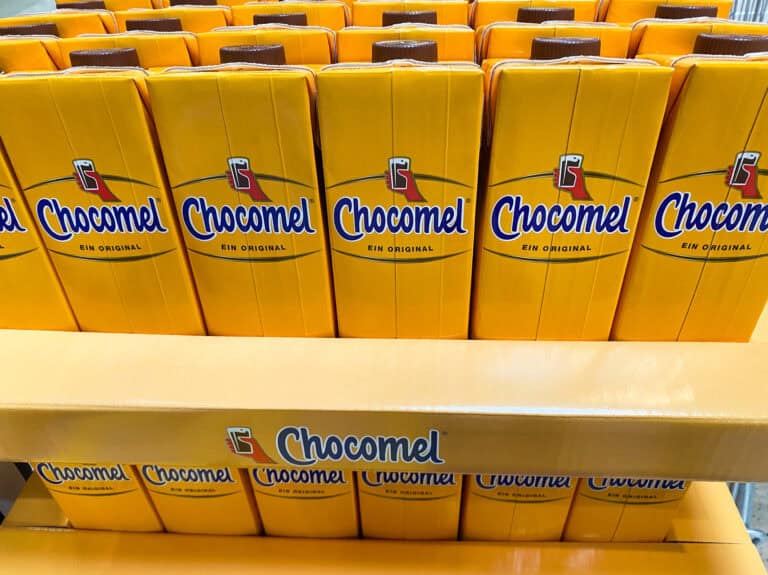
The Dutchies have the perfect solution for when they feel overwhelmed. Or excited. Or thirsty. Or just about any emotion: Chocomel.
On some cold Dutch days, you look outside the window, and as the raindrops trickle down, you wonder if you’ll ever feel happy again.
Enter: a chocolatey liquid delight.
For Dutchies and anyone faintly acquainted with the Netherlands, Chocomel has become the ultimate solution for making these moments ultra-gezellig in just a few minutes!
What is it?
Forget weed. Some Dutchies use Chocomel like a booster drug for dark and rainy afternoons.
This hot chocolate drink takes you to the cosiest place in your heart and makes you feel like everything will be just fine.
To combat the Netherlands’ notoriously gloomy weather, locals created Chocomel as the ultimate comforting fix.
Once they are done complaining about the weather, they use this drink to warm themselves up and to bring the gezellig-ness to a whole new level.
Why is it quirky?
Picture a high-profile professional who plays the superhero all day, only to return home at sunset and let a glass of Chocomel transport them back to the warmth of their grandmother’s kitchen.
Other cultures have alcohol or tea to wind down at the end of a long day — but the Dutch? Don’t be surprised if they opt for a sugary chocolate bevvie that’s enjoyed by children and adults alike.
Should you join in?
Ja! For internationals, this is one of the easiest ways to learn how to turn any situation into something gezellig in a matter of seconds.
You go to the closest Albert Heijn, buy a bottle of Chocomel, microwave it in your favourite mug (or just pour yourself a cold one), and voilà!
You’ve got your ticket to the island of zen — and you’re one step closer to integrating.
What do you think of this Dutch quirk? Have you experienced it? Tell us in the comments below!