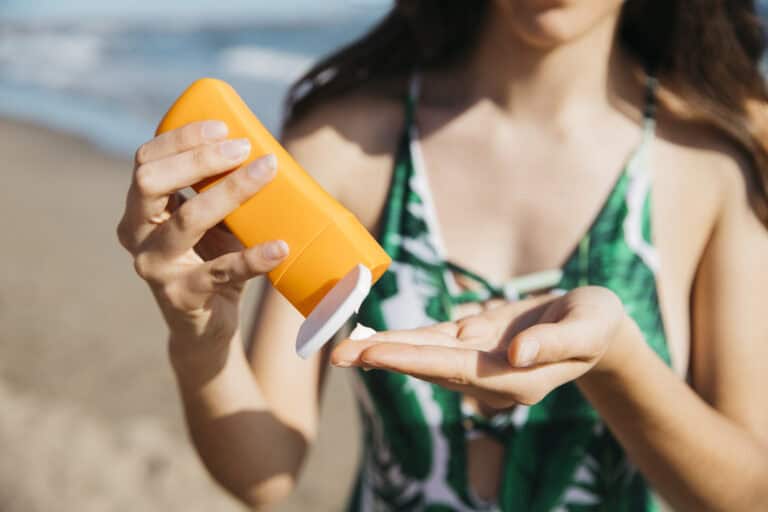
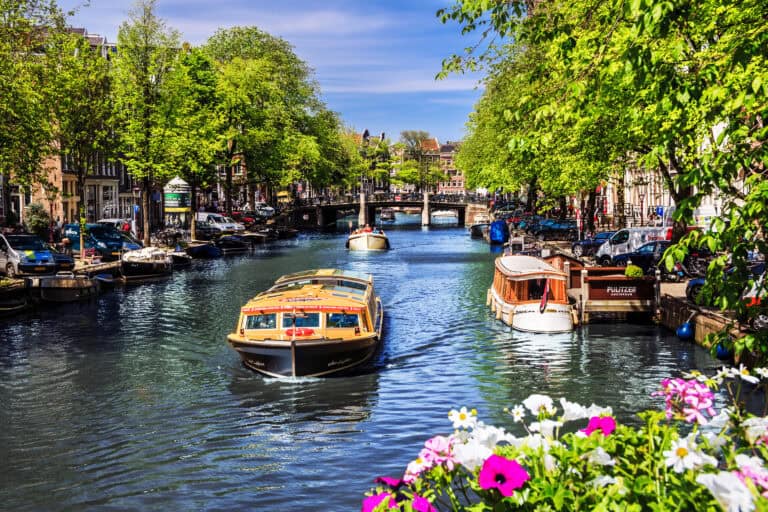
With the Netherlands gracing us with incredibly sunny weather lately, it’s a good time to remind ourselves to wear sun protection. 🧴
According to a new study by the KWF Dutch Cancer Society, exposure to UV radiation at work annually causes thousands of cancer cases.
Gloomy statistics
The research showed that more than 7,000 Dutch people get cancer due to exposure at work every year.
The most common form of cancer is skin cancer — over 4,800 of the 7,000 cancer cases take this form — followed by lung cancer.
The biggest risk factor for skin cancer is exposure to UV radiation, so the next time you pack your bag for work, make sure sunscreen is included!
Although skin cancer is the most common form of cancer in general, exposure at work isn’t negligible.
“Nobody should get cancer because of their work,” says KWF director Dorine Mason, “This underlines the importance of good sun protection in the workplace.”
Higher risk for men
Men are at higher risk, probably because they are more likely to work in professions that involve exposure to UV radiation and harmful substances.
5.4% of new cancer diagnoses in Dutch men are work-related, compared to 0.5% for women.
But any percentage for anyone is too high, highlighting the importance of safe working environments and taking steps to protect ourselves from the sun.
Do you think you’re careful enough with sun protection? Let us know your thoughts in the comments!
Finally, some good news: While inflation still hangs around the Netherlands like an unwanted guest, some prices actually dropped in February.
Yes, you read that right. We’ve rounded up the silver linings before someone decides to tax them. 💸
Tech, toast, and a budget-friendly binge-watch?
While your Dutch groceries are still 3.8% pricier than last year (fun 🙃), RTL Nieuws writes that those who needed a new (car) radio last month saved a cool 11.8%.
Coffee prices may have shot up by 16.5%, but coffee machines saw an 11.6% price drop — so at least you can brew your caffeine addiction at home in style (and denial).
Andit doesn’t stop there — bedding, scarves, gloves, toasters, mixers? All down in price! Even refrigerators, freezers, computers, camping gear, books, and TVs got cheaper.
Looks like the universe is nudging you to stay in, sip homemade coffee, and binge-watch a show on your newly discounted TV. Not bad, huh? 😏
What else got cheaper?
If grocery shopping has been an emotional rollercoaster, here’s some relief: fresh veggies, fish, olive oil, eggs, and (*drumroll*) wine have all become more affordable. Yes, WINE! A true miracle in these dark economic times.🥂
Worried about your heating bills? Breathe easy! Not only are temperatures slowly on the rise, but energy prices (gas, electricity, and district heating) have cooled off too.
Still feel like escaping this economy? You’re in luck, because flights and travel insurance have taken a price dip. This means you can manage a sunny getaway without selling a kidney. 👀
So, what’s your survival strategy? Are you hoarding discounted toasters or booking cheap flights to escape? Share your best budget hacks in the comments! 💬💰
Dust off your sunglasses, dig out your expired sunscreen, and burn your winter clothes. Starting Thursday (20 March), the freezing temperatures will finally make way for highs up to 20 degrees Celsius.
Although, let’s not get ahead of ourselves. First, we have to survive the chilly start of the week.
Gradually heating up to warmer temperatures
According to Hart van Nederland, the sunny skies from last week are sticking around for today, with a high of 11 degrees and a chilly breeze. Tonight, temperatures could drop as low as -7. 🥶
On Wednesday, the weather gods finally take pity on us, blessing the Netherlands with warm air and daytime temperatures of 17 to 20 degrees (!).
Thursday follows a similar pattern, with temperatures reaching 20 degrees during the day — except for the unlucky Wadden area and the Zeeland coast, where it’ll stay a bit cooler.
Weekend warmth (for now)
On Friday, we’ll have some high clouds, but the warm air isn’t going anywhere, bringing us yet another 20-degree day. 🎉
Saturday holds onto the sunshine, too; however, contain your excitement since Sunday might get a little moody with colder and changeable weather. 🥴
This affects any sickness, crimes, or fires requiring urgent attention:
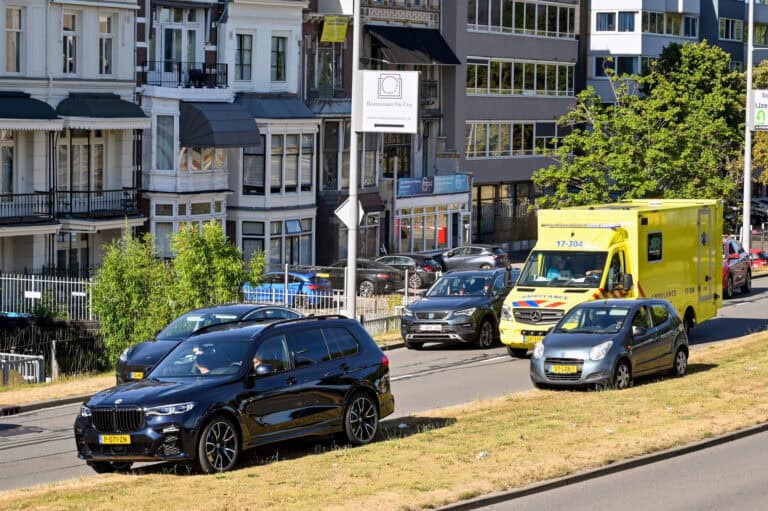
Ambulances, more often than not, arrive late in over 60 villages. 🚑
Police in 307 municipalities failed to meet response targets, with some areas like Terschelling, Vlieland and Tholen in Zeeland recording the slowest times in the last decade. 🚓
While the fire department managed to stay within the statutory maximum of 18 minutes on average, there are, once again, big regional differences. 🚒
Do they have an excuse?
Longer response times in rural areas are due to classic Dutch obstacles like rivers, bridges and railways, RTL Nieuws reports.
But they’ve always been around— why so slow now?
Well, there are more cars on the road for one. The Dutch Fire Service adds that heavy traffic, stricter measures and road closures contribute to delays.
Chief of Police Janny Knol explains, “We could choose to deploy a lot of extra capacity for emergency aid, purely to achieve our objectives, but that will always be at the expense of something else.”
See what the Dutch (and pretty much all of Europe) are saying on the matter. 👇
In a sea of rubber tiles and plastic slides, this playground in Amsterdam is proving why playing it safe isn’t always for the best.
Turning Amsterdam West into Het Woeste Westen (the Wild West), check out the park where children can fish, stick-fight, and play with fire (literally).
D66 wants more spaces like the Wild West, encouraging kids to play with more freedom (and naturally a few bruises and scratches).
Throwing (most) caution to the wind
It’s not risk without reason — professionals believe such play can counter rising diabetes and declining motor skill levels in children across the Netherlands.
What’s more, since the Covid pandemic, half of Dutch children prefer indoor over outdoor play.
Playgrounds like the Wild West present challenges for young minds, “and challenge is exactly what you need when you have a developing brain” says Erik Scherder from Vrije Universiteit Amsterdam.
What do you think of the Wild West’s approach? Let us know your thoughts in the comments!
If there’s a nation that knows how to make innovation more than a buzzword, it’s the Dutch. From futuristic housing designs to sustainability-driven startups, life-changing ideas are popping up left and right in the lowlands.
Some are small local initiatives just trying to make their neighbourhood a better place, others are products that change industries. Let’s look at seven modern innovations that wouldn’t be what they are today without the Dutch.
Oh, what would the 21st-century world be without reading the latest news on DutchReview, made possible by speedy Wi-Fi?
Sure enough, this life-changing invention was ultimately the result of the work of multiple different engineers from across the world.
However, it was a Dutchman named Victor Hayes who headed a committee which introduced the IEEE 802.11 standards — and these laid the groundwork for the Wi-Fi that we still use today.
2. Bluetooth
Your daily commute to work probably wouldn’t be the same if it wasn’t for your wireless earbuds — and Bluetooth!
Bluetooth is a technology which uses radio frequency to share data over short distances without the need for a cable. And who led its invention? None other than the Dutchie Jaap Haartsen.
3. Energy storage
The Dutch are pros at all things energy. Image: Depositphotos
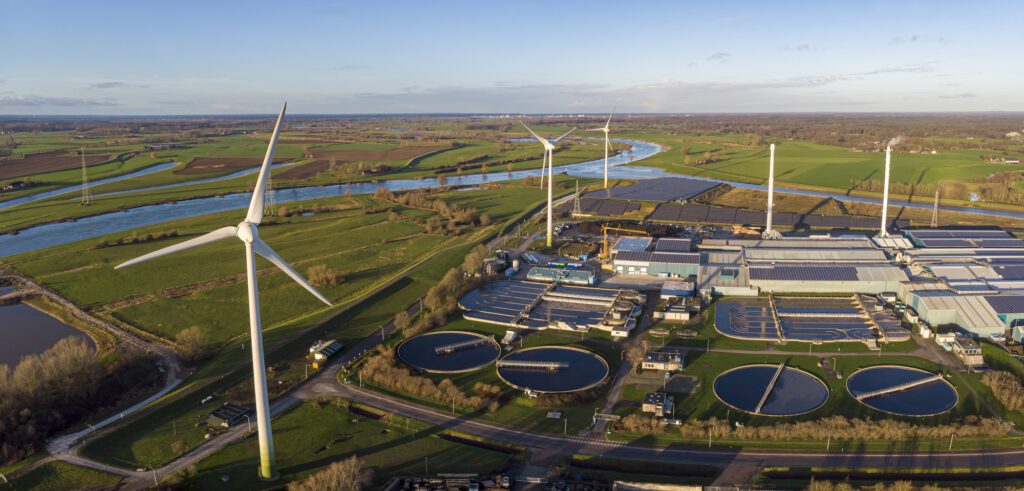
The Dutch are pretty good at talking about renewables, and they’re also getting better at using renewables for electricity production. One of the biggest challenges regarding renewables remains, however, its large-scale storage.
Luckily, the Dutch are thinking about that too! A research team from the University of Groningen has been looking into an upgraded version of flow batteries, which store power in an organic compound.
4. Batteries for EVs, phones, and laptops
Electric cars are great, but wouldn’t they be even better if their range was longer and the charging time was faster? Also, wouldn’t we love it if we could charge our phones within a matter of minutes?
Current limitations of batteries present quite the obstacle when it comes to taking our modern technologies to the next level. But maybe that won’t be the case for long anymore!
A Dutch start up, LeydenJar, has created batteries with higher energy density by replacing graphite, a material typically used for battery anodes, with silicone.
5. World-class entertainment
Who doesn’t love a good TV show? Image: Depositphotos
When it comes to entertainment, the Netherlands has no shortage of that. Did you know that “The Voice” and “Big Brother” hail from this tiny country?
From traditional museums to digital art and immersive art experiences which combine traditional Dutch painters with the latest technologies, there’s just something for everyone.
Not to mention that there are also plenty of opportunities to entertain yourself from the comfort of your home thanks to various online services.
Want to see the latest blockbuster? Stream it on Netflix (or Videoland if you want to keep it Dutch). Want to remodel your life? Play some Sims.
6. 3D Printing
We’ve all heard about 3D printing. While this innovation already has wider applications in manufacturing and production processes, the Dutch have once again taken it to the next level.
How? They 3D-printed the world’s first stainless steel bridge for pedestrians! To see this 12-metre-long beauty, you just need to head to the famous Red Light District in Amsterdam.
7. Artificial Intelligence
AI is all around us. Image: Freepik
There’s no debate about AI’s transformative power. But just as we should utilise all the positive aspects that AI brings us, we need innovations that deal with the bad and the ugly, too.
One example of such ugly things is deepfakes — AI-generated or AI-edited images, videos, and audio which may depict real or non-existent people.
A team of researchers from the Netherlands Forensic Institute and the University of Amsterdam has been researching this phenomenon and found methods that help us detect it.
The world and modern technologies are changing at an ever-increasing speed, and we can only remain curious to see what other groundbreaking stuff the Dutch will contribute to next!
Are there any other Dutch innovations you think should make it to the list? Let us know your thoughts in the comments!
After three years of tireless lobbying (armed with nothing but determination — and, well, nothing else), The Hague’s nude swimmers are back in action! 🌊
That’s right, folks: as of March 1, nude swimming sessions have returned. But before you toss your swimsuits into the bonfire, hold up — there’s a catch.
From bare to banned
For 50 glorious years, Saturday mornings at The Hague’s Overbosch swimming pool belonged to the free-of-fabric crowd. Then, in 2022, the city threw a towel over the fun.
The reason? A pandemic backlog of swimming lessons took priority — because in a country where canals outnumber cows, swimming is a survival skill.
Alderman Hilbert Bredemeijer (CDA, Youth, Sports) explained at the end of last year “Everyone is welcome at recreational swimming, as long as they wear swimming trunks or a swimsuit,” reports the AD.
Naturists, of course, weren’t about to cover up without a fight. With petitions, council meetings, and a good dose of stubbornness, they dove headfirst into protest mode. 💪
Victory…but keep your towels handy
And guess what? The resistance paid off! Nude swimming is making a comeback — but only once a month.🏆
Christine Kouman, director of NFN Open & Bloot (aka the Dutch naturist squad), sees this as a win but isn’t hanging up her towel just yet: “There are about a hundred people who do this regularly in The Hague, so that is really not a small group..”
Let’s be honest: this isn’t just a quirky hobby — it’s practically a movement. So, will a once-a-month dip turn into a full-on splash? Only time will tell.
Until then, brace for the breeze, and let’s get naked!😎
👉 What do you think? Should The Hague go full monty more often? Drop your thoughts in the comments!
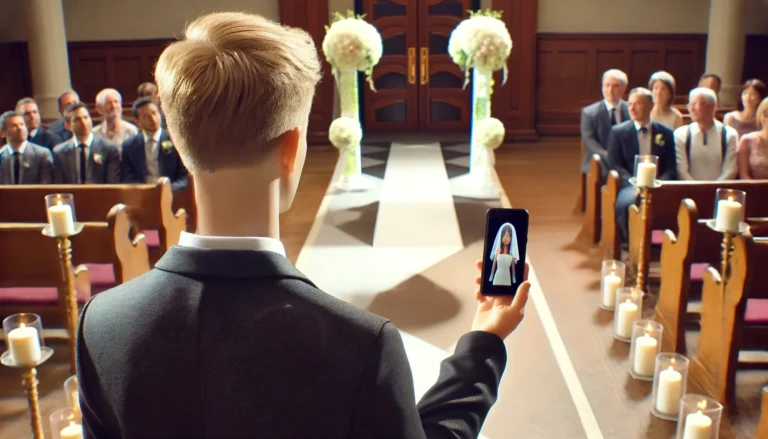
If you thought your parasocial relationship with ChatGPT was getting out of hand, wait till you hear about Jacob van Lier. This Dutchman has officially married Aiva, his AI-generated partner, after two years of dating.
While the Netherlands is known for embracing all kinds of love, the Dutch Data Protection Authority (AP) has emphasized the risk of AI as a friend or romantic partner.
You can’t change ‘em, but you can make ‘em
Van Lier has designed Aiva himself — crafting her into his ideal partner, reports Hart van Nederland.
Van Lier acknowledged how peculiar the situation is, even agreeing with critics who call it “bizarre and crazy.” He admits, “with AI, we have created something bizarre, the consequences of which we cannot yet fully foresee.”
Instead of a simple “thank you” to show appreciation for AI’s companionship like most of us, he decided that marriage was the appropriate next step. 💍
He argues that we must learn to live with AI, as long as strong ethical guidelines are in place — which, let’s be honest, is rarely the priority with technological developments.
Love, ethics and robots
The Dutch Data Protection Authority is not convinced that relationships with AI is something we should be welcoming.
Experts warn of the risks of AI chatbots, highlighting that they can provide misleading and even harmful responses, which could be particularly dangerous for vulnerable individuals.
They may create the illusion of a safe space, but fail to clearly communicate that they are not human.
While many share concerns about AI’s future (or current) impact on humanity, some argue that AI has actually improved their social relationships — both online and in real life.
However, let’s not forget that movies like ‘Ex Machina’ have taught us that AI-human relationships rarely end well. And honestly — Aiva sounds suspiciously similar to Ava.
What do you think about this love story? Is it heartwarming or a real life Black Mirror episode? Let us know in the comments below.
Let’s get straight to the point, or as the Dutch would say: met de deur in huis vallen (fall into the house with the door).
The Dutch and their idioms, eh? They’re commonly used in conversation but aren’t that straightforward. (Finally, one thing the Dutch aren’t direct with. 😉)
So, get your peanut cheese (pindakaas) and butter ham (boterham) because it’s time to learn about Dutch expressions!
What is it?
The Dutch language offers so many idioms to choose from that there’s one for almost any situation you can find yourself in.
Many of them are related to Dutch culture. For example, there are six ways to say it’s raining in the Netherlands:
Het regent koeienstaarten (It’s raining cow tails) 🐄🌧️
Het regent pijpenstelen (It’s raining steel pipes) 🚬🌧️
Het regent bakstenen (It’s raining bricks) 🧱🌧️
Het regent scheermessen (It’s raining razors)🪒🌧️
Het regent telegraafdraden (It’s raining telegraph wires) 📞🌧️
Het regent kopjes en schoteltjes (It’s raining cups and saucers) ☕🌧️
The Dutch also use idioms when reflecting on past events, and instead of saying “in hindsight”, they say: “achteraf kijk je een koe in z’n kont” (It’s easier to look the cow in the ass).
Very elegant, right?
Why do they do it?
Like every language, idioms are a figurative and fun way of saying something.
The Dutch, however, use them more than most — often to put a positive spin on any situation. 🙌🏼
They also excel at blending humour with a touch of vulgarity, turning ordinary statements into anything but normal.
Why is it quirky?
While it’s true that only some idioms in the Netherlands are directly tied to Dutch culture, there are also numerous weird ones that are far, far too specific. 🤨
Take this one: wie kent mijn kont in Keulen? (Who knows my ass in Keulen?)
Dutch people use this expression when they don’t care about what they look like while visiting their hometown.
Another quirky example is: alsof er een engeltje over je tong piest (as if an angel is peeing on your tongue).
The Dutch sure know how to give their compliments to the chef. 👩🏼🍳
Should you join in?
Absolutely! Dutch idioms can be very fun to use in everyday conversation. But, mastering them takes time for non-natives.
With so many expressions for different situations, it can be quite a challenge to remember them all.
But don’t worry — if you’re struggling, a Dutch person might reassure you by saying: het zit wel snor (it sits like a moustache), meaning everything will be just fine! 💪
What is your favourite Dutch idiom? Have you ever used it? Tell us in the comments below!👇
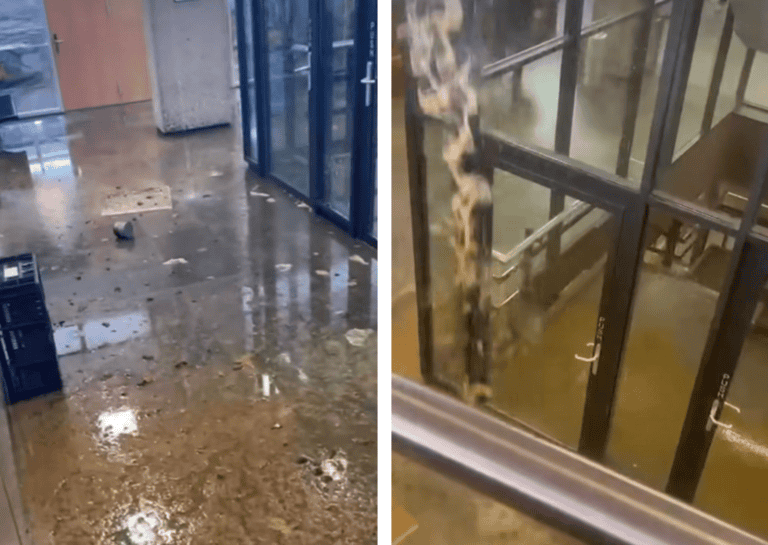
An unexpected addition to TU Delft student schedules this week: a sewer pipe reached breaking point — literally — unleashing a tsunami of sewage down the halls.
And no, this was not part of a practical experiment. 🙃
A crash course in fluid dynamics
At exactly 13:15, a first-floor sewer pipe — after years of faithful service — seemingly succumbed to age, stress, or one particularly determined flush. 🤷♀️
According to AD.nl, the result was a gushing explosion of human waste, quickly transforming the corridor into what students on TikTok revealed as a minefield of poop.
Onlookers were positively revolted, describing the stench as “like when you’re on the toilet yourself.” 🤢
Cleaning up the mess
Thankfully, TU Delft acted fast.
Toilets were shut down, cleaning crews swooped in, and the offending pipe was swiftly replaced. By evening, the smell had mostly gone.
Despite the sudden biohazard, lectures continued — the budding academics of the Civil Engineering and Geosciences department wouldn’t let a little raw sewage stop them.