Don’t listen to Dutch food haters! The Netherlands is full of good food — you just have to know where to find it.
Sure, this country might be more famous for its mills than its meals, but its culinary potential shouldn’t be underestimated.
With the right guidance, Dutch cities can offer a feast for both your taste buds and your eyes.
How do we know? Because we joined the Rotterdam BiteMe food tour to find out for ourselves!
Tasting and sightseeing at once
BiteMe food tours provide walking culinary and touristic itineraries in Rotterdam, Delft, The Hague, and Den Bosch, taking you to all the must-see and must-eat spots of each city.
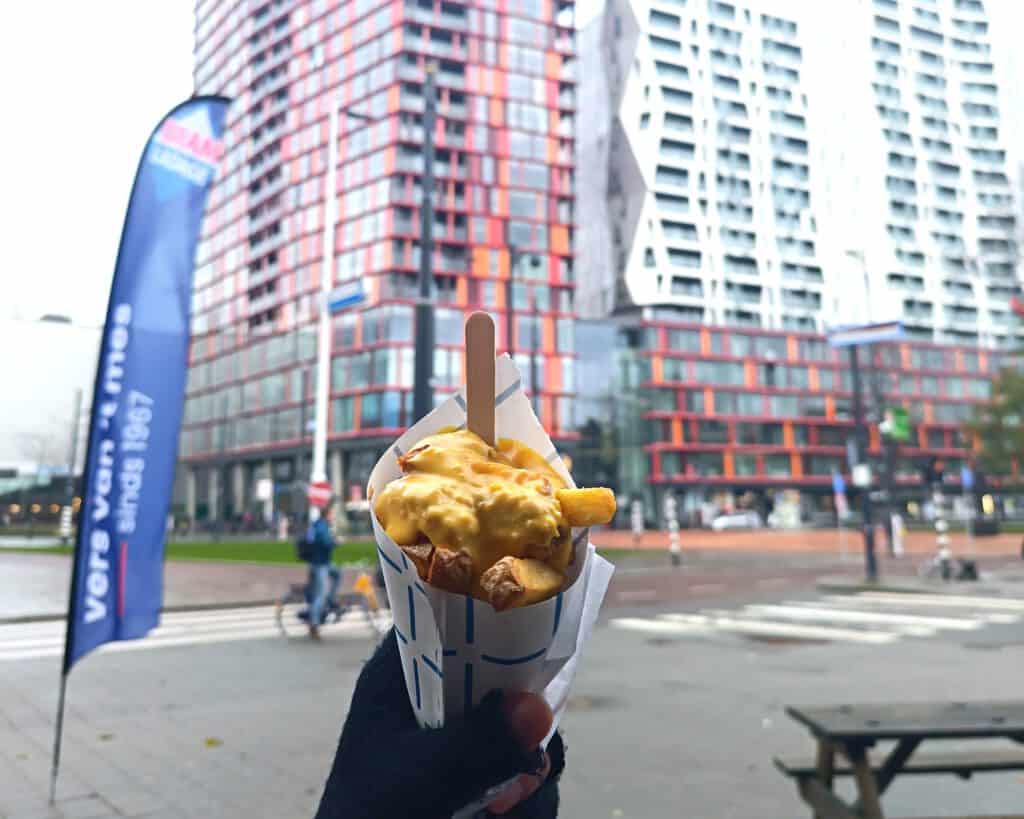
You haven’t had good Dutch fries until you’ve had GOOD Dutch fries from Rotterdam’s best friet spot. Image: Beatrice Scali/DutchReview
Their tours feel like taking a walk with a passionate local who is eager to show you all their favourite places — except that they move at your pace, and only tell you about the spots you’re truly interested in.
That’s right, the tours are self-guided! Or, technically, guided by a very special helper: the super intuitive BiteMe App.
Take your taste buds on a journey
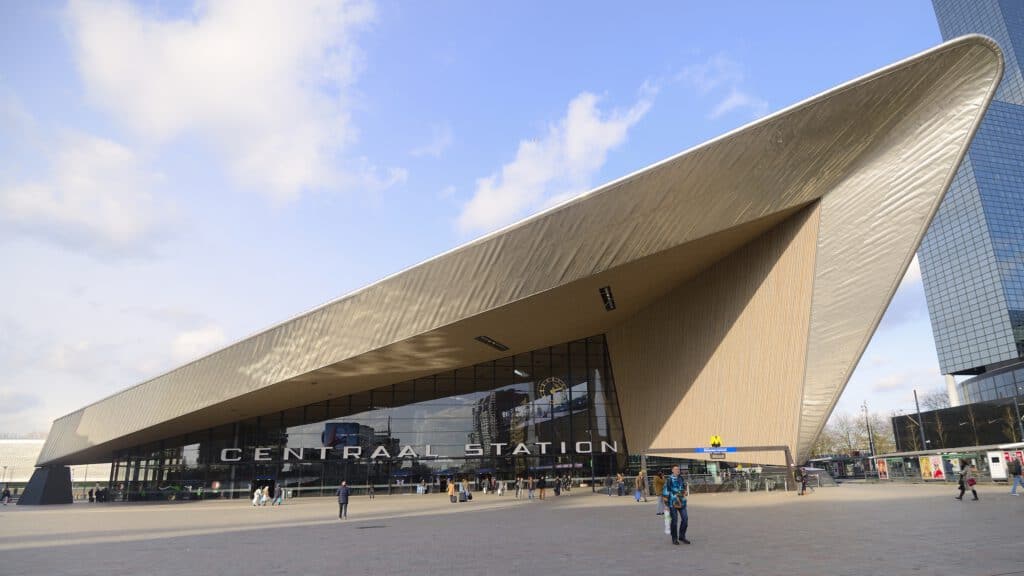
The tour we chose, the Rotterdam tour, lasts about four hours and features six culinary stops and many more cultural ones. It begins at Rotterdam Centraal, with a recommended start time between 11:30 AM and 1:30 PM.
At each stop along the way, you are handed a delicious bite of a dish representing Rotterdam.
Yep, this crunchy delight is part of the tour. Image: Beatrice Scali/DutchReview
Perfectly capturing the city’s multicultural vibe, the bites include both Dutch classics and favourites from all over the world. Together, the bites add up to the equivalent of a full meal, keeping your belly as busy as your feet.
To give the liver some work, the last stop also includes an (alcoholic) drink.
👀 Hoera! The Rotterdam tour is vegetarian- and halal-friendly, and can accommodate allergies and other dietary needs.
Discover Rotterdam’s most iconic spots
While food is the protagonist, Rotterdam’s BiteMe food tour is also a great way of getting to know the beautiful port city.
Featuring a mix of iconic landmarks and lesser-known gems, the tour is guaranteed to take up space in your phone’s gallery, too (and not just in your stomach).
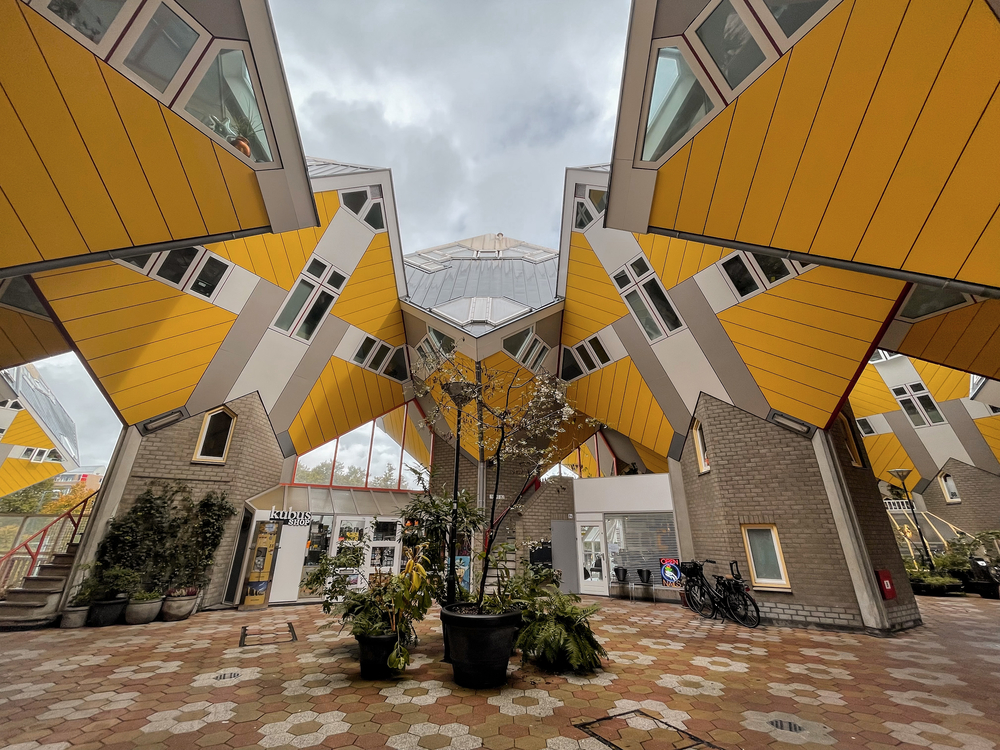
Do you know the story behind Rotterdam’s quirkiest houses? Image: DepositPhotos.com
Remember those interesting-looking cube houses you’ve seen on postcards? Well, get ready for the BiteMe App to spill the beans about them.
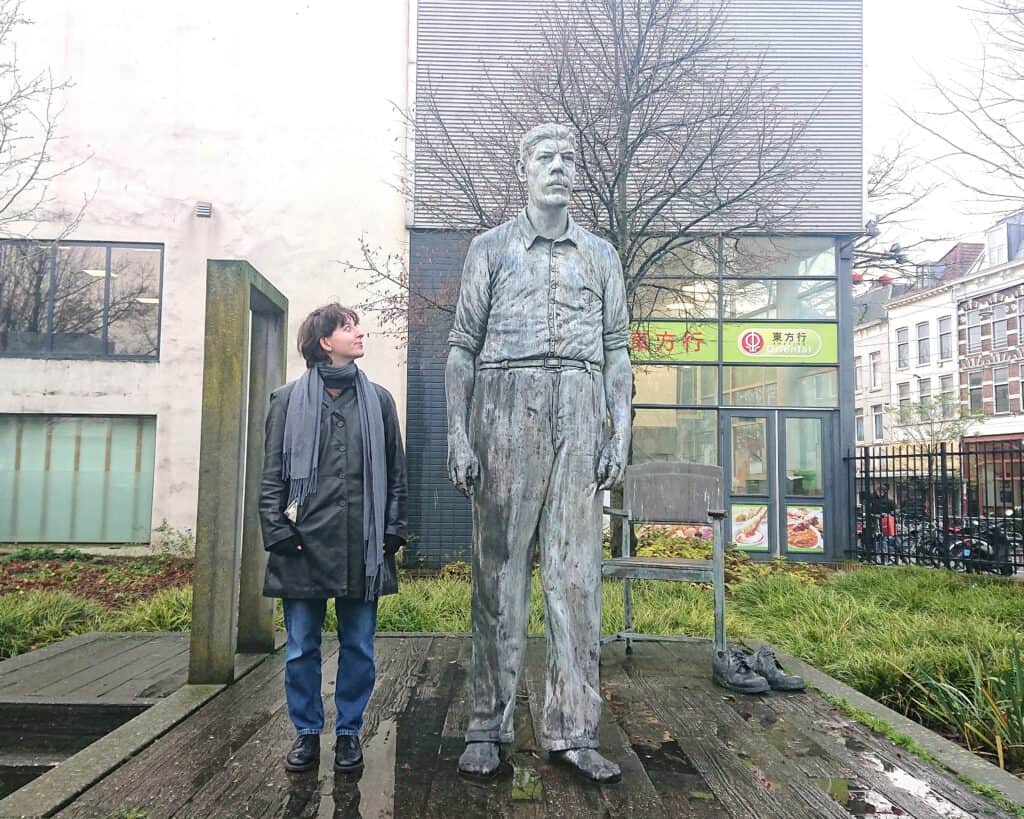
But the tour features more than just the classics: for example, you’ll also learn about this real-life giant. 👇🤯
He’s not called “the giant of Rotterdam” for nothing. Image: Beatrice Scali/DutchReview
How do I sign up?
Ready to embark on your culinary journey through Rotterdam? Signing up for the BiteMe food tour is super easy.
All you need to do is reserve a spot by choosing your preferred city and date on the website, indicate any special dietary needs you may have, and pay the €49 fee.
Once booked, you’ll receive an e-mail with more detailed information about your tour, including instructions on how to use the BiteMe App.
Does a self-guided tour sound too lonely for you? Geen probleem, BiteMe Food Tours also offers guided tours, and not just walking ones! Check their website to find out more.
The BiteMe App
While on your tour, the BiteMe App will be your personal guide.
It’s light, fast, and easy to use, integrating a map of the city you’re exploring and insight into each stop.
As you walk around, you’ll be able to locate yourself on the map, getting more and more knowledgeable about Rotterdam (and full of good food) as you go.
The tour’s starting point could not be easier to find. Image: Dreamstime
The app is also your ticket to collect the tour’s bites. As you enter each restaurant, show it to the staff, and they’ll know exactly what you’re there for, what to serve you, what to tell you, what lottery numbers will make you a millionaire…
Okay, maybe the BiteMe App can’t help with everything, but it’s guaranteed to help you spend an unforgettable day out.
Have you ever explored a new city by taking a food tour? Tell us about your experience in the comments below.
At first glance, Italians and the Dutch seem worlds apart, shaped by different histories, climates, and habits, but what’s less often explored is what unites them.
Because yes, the differences are obvious. But the common ground? Now that’s the juicy part no one talks about.
So what connects them? Let’s take a closer look at the things Italians and the Dutch have in common, and yes, it’s more than just a mutual love of coffee.
1. They’re both serious about sport (and even more serious about winning)
When it comes to sport, especially football, some people watch it. Others live it. And no one does “living it’’ quite like the folks from Italy and the Netherlands.
Italians don’t sit through matches quietly. They stand, pace, and passionately shout at the television as if the referee were personally ignoring their advice.
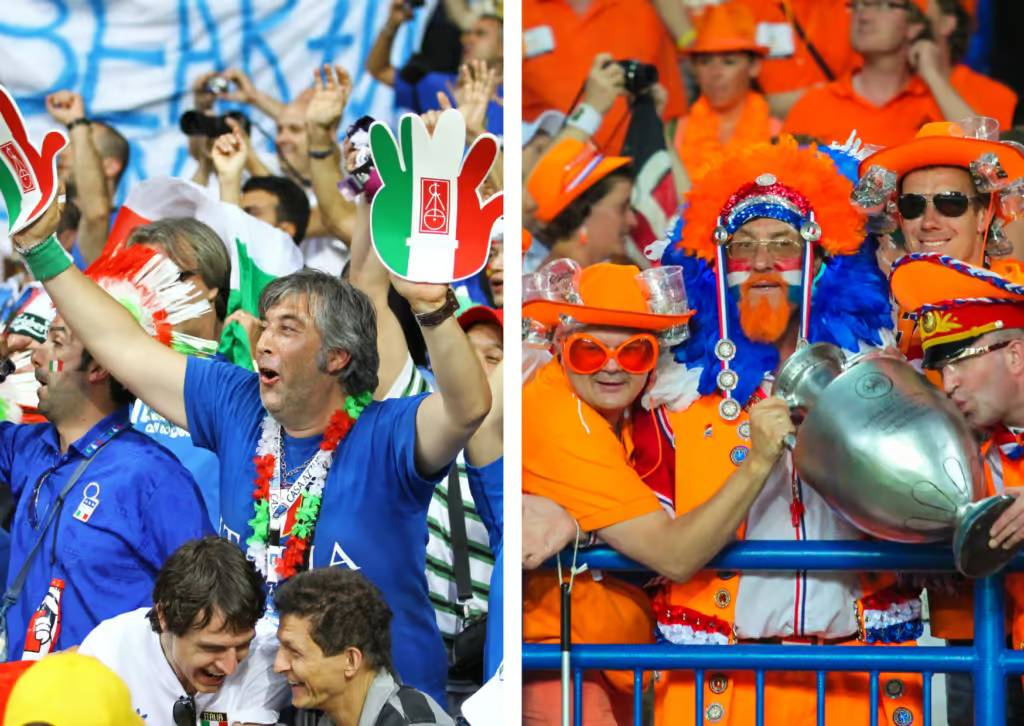
Italian and Dutch football fans at their very best! Image: DutchReview
Over in the Netherlands, things are no less intense. Streets flood with fans dressed in vibrant outfits, and even the most low-key neighbour suddenly goes wild with Oranje fever.
What unites them? Passion, absolutely, but also a fierce determination to win. Neither side is fit for a friendly match.
2. There’s no chatting without food and drink
Different cuisines, same unspoken truth: nobody’s starting a proper chat with an empty stomach. Call it an aperitivo or a borrel; either way, bites are the social glue.
In Italy, the table overflows with wine, olives, and enough cured meats to make dinner feel optional.
Meanwhile, in the Netherlands, it’s a more relaxed affair, a borrelplank with cheese cubes, bitterballen, and biertjes that turn even the quietest guest into a storyteller.
Whether it’s a sunlit piazza (read: Italian square)or a canal-side terrasje, the rule holds strong: once the snacks show up, the conversation gets real.
3. Everything’s a reason to party
If there’s one thing these two countries know how to do, it’s celebrate anything. A royal birthday? Absolutely. A successful harvest? Break out the confetti.
In the Netherlands, King’s Day turns the country into a sea of orange, with street DJS playing everything from house music to those unexplainable Dutch tunes everyone knows by heart.
Down in Italy, it’s all about the sagra: a local festival where food is the guest of honour, wine flows like water, and there’s a 98% chance of clapping along to a folk dance led by your aunt’s neighbour’s cousin.
The setting may differ, but the spirit’s the same. You can eat, dance, and make memories you’ll only half-remember.
4 . They’re both from “the best place ever”
Ask an Italian or a Dutchie where the best place is, and you’ll get a passionate TED Talk, with food tips and strong opinions, mostly about how everywhere else in their own country gets it wrong.
Tuscans boast about their Renaissance art and throw some shade at Rome being “a bit much.” Campanians keep it simple: they gave the world pizza and nonna’s legendary glare.
The Dutch get just as proud. Limburgers praise their white gold (yes, asparagus) and rare Dutch hills. The Frisians point to Friesland, proudly apart, with its language and more lakes than you can count.
Wherever you land, every local swears they’ve won the postcode lottery.
5. Small talk is not their love language
Pleasantries? Pass. Let’s skip to the good stuff.
A conversation in Italy might start with warm greetings, but it will quickly shift to existential matters, family gossip, and what you’re doing wrong with your tomato sauce. Politeness is there, but so is plenty of unsolicited advice.
Dutch and Italians suck at small talk, but you’ll know exactly what they think. Image: Magnific
In the Netherlands, small talk gets skipped entirely. “You look tired” isn’t rude; it’s just… accurate. Opinions fly freely, feedback is unfiltered, and silence? Totally allowed, sometimes even preferred.
Turns out, the Dutch and Italians are just two sides of the same straightforward coin — one delivers it with emotion, the other with precision, but both always keep it real.
6. Their stubbornness should be studied
Another thing they share? Being convinced they’re right, and no, they’re not here for your counterpoints.
In Italy, this comes loud and proud. Bring up politics, football, or the right way to make ragù, and prepare for a passionate lecture with dramatic hand gestures and a slightly raised voice. 🤌
In the Netherlands, the delivery is calmer but no less confident. They’ll hear you out, nod thoughtfully, then carry on as planned, fully equipped with facts, charts, and confidence.
The Dutch treat complaining about the weather like a national pastime. Rain, wind, or suspicious sunshine spark nonstop Buienradar checks. People bike through storms, arrive soaked, and still complain about the drizzle.
When the sky acts up, both countries are emotionally invested in its betrayal.
Are you a Dutchie with an Italian enemy? Or an Italian trying to mesh your Dutch friends with your Italian friends? Well, here are seven reasons they might just get along.
From dramatic weather obsessions to the fine art of digging in their heels, these two cultures share more quirks than most would guess beneath all their evident differences.
Admitting it, though? That might take a bit longer… on both sides.
Spotted more unexpected connections? Drop it in the comments; we’re all ears.
Moving to the Netherlands offers several challenges: from navigating the housing crisisto registering yourself, and you’ve beaten them all! But now, there’s one more challenge. How do you set up your mobile phone in the Netherlands?
Do you really need a Dutch SIM card? Are there expat-friendly mobile phone providers? And what sort of phone package should you get? These are the questions you’re likely asking, and we have the answers.
Here’s all you need to know about mobile phones and SIM cards in the Netherlands.
This post might have affiliate links that help us write the articles you love, at no extra cost to you. Read our statement.
Do I need a Dutch SIM card?
Even if your international mobile phone is working fine upon arrival in the Netherlands, it may be worth your while to switch to a Dutch SIM card. This is for several reasons. 👇
Firstly, if you plan on signing up for certain services (such as an IKEA delivery or even a food delivery) you are often asked to provide a Dutch phone number.
Dying for some piping hot food delivered right to your doorstep? Helaas, you’ll need to have a Dutch number first! Image: Dreamstime
This is also the case if you want to join your fellow Dutchies in sending a Tikkie, or even if you want to set up more important services, such as certain health insurance policies or hospital appointments.
Secondly, if you want to register a business, you should always use a Dutch number. If potential clients see that your number is international, they may doubt the legitimacy of your business.
Finally, the Dutch mobile phone market is flooded with various providers, with fierce competition keeping prices low and plans feature-rich.
Mobile phone plans in the Netherlands
In the Netherlands, expats have three options to choose from:
Mobile phone contracts (with phone) in the Netherlands
With a mobile phone contract, you purchase a new phone and a fixed monthly subscription for calls, texts, and data. You can generally choose to pay for the phone itself upfront, or bit by bit each month, along with your monthly subscription cost.
However, getting a mobile phone contract in the Netherlands can be tricky for expats.
Mobile phone contracts are generally for long-term use. Image: Magnific
Signing up for a contract also means signing up for a certain contract duration (usually at least one to two years). This can be difficult as many internationals arrive in the Netherlands without a clear idea of how long they will be staying.
For the same reason, some mobile phone providers are reluctant to offer mobile contracts to expats.
Plus, without a few months of payslips to prove to the provider that you can pay your bills, you may be turned away on the spot.
💰 Price range: starting from €20 per month for a very basic phone, up to €62 per month for a top-line phone with unlimited calls and data. ✍️ Contract length: generally 12-24 months.
SIM-only subscriptions in the Netherlands
If you are happy with your current phone and you just want to switch to a Dutch provider, then your best bet is to opt for the SIM-only subscription (SIM-only aanbieding)!
Don’t let the name fool you; with a SIM-only subscription, you will pay for your Dutch SIM card and a monthly subscription for a designated period.
When you apply for a SIM-only subscription, you will be given the option to select a plan that works best for you. Perhaps you need a lot of data, or want to call home as cheaply as possible — the price you pay and the deal you get depend on your choice!
SIM-only contracts generally offer much more flexibility than mobile contracts. Firstly, if needed, you can opt for a month-to-month (maandelijks opzegbare) subscription.
This means that you can choose to cancel your subscription whenever you like, though you may have to pay an additional fee for this feature.
SIM-only contracts tend to offer more flexibility than mobile phone contracts. Image: Magnific
Secondly, you can also adjust your subscription if you find that you call your mother a bit more than you expected or if you’re eating up far too much data on your daily walks.
For those of you who simply live and breathe your life online, SIM-only subscriptions with unlimited datamight be the best choice.
Offering you huge daily bundles, with the option to extend your data even further with additional GBs, they’re a must-have for every data-hungry user.
This option is great for expats who need to work out a plan that suits them best and who don’t want to commit to any long-term fixed contracts.
💰 Price range: varies according to provider, from €6 to €50 per month. ✍️ Contract length: from one to 24 months.
Prepaid mobile phone SIM cards in the Netherlands
If you’re looking for something cheap and cheerful that will do the job, then a prepaid mobile phone contract is the one for you.
The cheapest option of the three, prepaid plans are ideal for commitment-phobes. 😉 Image: Magnific
For this, you buy a Dutch SIM card and then top up your balance whenever you want. Your credit will usually go towards a fixed amount of data, calls, and texts (you choose a package that suits you best).
If you leave the Netherlands, no problem! You just stop topping up your credit — just make sure you don’t set up your account to auto-renew. 😉
💰 Price range: varies according to provider, with monthly plans starting from €4 and day plans from €1. ✍️ Contract length: however long you want!
Mobile phone providers in the Netherlands
So, you want to get yourself set up with a phone provider? Great! Here is a comprehensive list of Dutch telephone providers for you to peruse:
The big three mobile phone companies in the Netherlands
There are three major telephone providers in the Netherlands: KPN, Vodafone, and Odido (which merged telecommunication giants T-Mobile and Tele2).
One of the largest and best-known mobile data providers in the Netherlands, KPN is the perfect choice if you’re looking for a subscription with extensive coverage, no matter where in the country you are.
In addition to this, KPN also offers a wide range of different mobile phone contracts as well as prepaid, eSIM, and SIM-only deals. Let op: these packages don’t come cheap, but you certainly do get what you pay for!
With a range of mobile subscriptions, SIM-only contracts and eSIMs, Vodafone is a household name! The only snag? I found Vodafone’s rock-solid network connection and flexible packages a bit pricey.
But don’t let that scare you — in my opinion, whether you prefer heading to brick-and-mortar stores or ordering your subscription online, Vodafone’s customer service and products consistently rank highly.
Rounding up the “big three”, Odido is a merger between two of the most-awarded mobile data providers in the Netherlands: T-Mobile and Tele2. With its blazing-fast SIM-only data subscriptions and widespread coverage, it’s a rock-solid choice for internationals in the Netherlands.
However, like Vodafone and KPN, many of their packages can be rather expensive. One major pro, though? I’ve found that the service you get for the price is excellent.
The majority of people in the Netherlands use these three above services, but here’s a tip: many subsidiaries and MVNOs (mobile virtual network operators) run their service on the big three’s networks.
Simyoruns its network through KPN and offers SIM-only and prepaid packages. One aspect I really liked about this provider is that they also offer an eSIM alternative to their packages, which not all Dutch data providers do.
This means that, if your phone supports this, no physical SIM card is needed. Under the eSIM package, you can choose an eSIM SIM-only contract or an eSIM prepaid contract.
As an expat in the Netherlands, I like that Lebara is extremely international-friendly. They offer their site in English, give useful explanations of the different packages, and offer solid SIM-only and prepaid deals.
They also offer one of the cheapest deals on the market — you can pay as little as €4 per month when you go SIM-only!
Simpel also offers cheap SIM-only deals, starting at just €3.50 per month. Despite its low prices, I’ve found Simpel to be a reliable provider with flexible deals, depending on how many GBs or call minutes I want.
The one downside? You can only choose between one- or two-year subscriptions, so commitment-phobes beware.
When it comes to flexible and competitively priced SIM bundles, I found Hollandsnieuwe a solid option.
With monthly fees starting at €7.50, it isn’t quite as cheap as some other options on this list, but it makes up for it with excellent service and handy combo packages with Ziggo Internet.
What do I need to sign up for a Dutch mobile phone contract?
Found your match made in mobile heaven? Great! Let’s run through what you should have before you claim that beauty.
Formal identification
Formal identification means an official document, like a driver’s license, government ID card, or passport.
If you’ve made it this far in life in the Netherlands without a formal ID, we salute you — but you’ve officially hit a bureaucratic brick wall.
Signing up for a new mobile subscription doesn’t have to be stressful. Image: Magnific
Unsurprisingly, mobile phone providers will ask for proof of identity before you can sign up for a new phone subscription — unless it’s a prepaid plan.
Proof of address
Several Dutch mobile providers may also ask you for some official proof of address, so it’s always a good idea to jot down your BSN number somewhere.
Also known as your Citizen Service Number, this is a unique personal number issued by the Dutch government to every registered resident of the Netherlands.
A Dutch bank account
In general, you will need to pay for your mobile phone package using a Dutch bank account. However, some expat-oriented providers (such as Expat Mobile) do not require this.
Most likely, you’ll need a Dutch bank account to pay for your mobile data plan. Image: DepositPhotos.com
That being said, life in the Netherlands can become quite difficult without a Dutch bank account. No need to panic, though; setting up a bank account in the Netherlandscan be nice and easy!
Dutch mobile phone insurance
Now, this one is not compulsory — but highly recommended. While most phones come with a two-year warranty, it doesn’t cover incidents such as theft or even accidental breakage.
That is why it’s always worth considering taking out mobile phone insurance when you opt to buy a phone in the Netherlands. Many Dutch mobile phone providers offer the option to take out mobile phone insurance as part of your package.
Good to know: You can also insure your phone independently of your subscription. Companies such as Revolutand Univé offer simple, affordable mobile phone insurance.
Will my mobile phone work in the Netherlands?
Whether or not your international mobile phone will work in the Netherlands depends on the type of mobile network your country uses.
However, in most cases, your foreign phone should work fine upon arrival in the Netherlands.
Why is this? In the Netherlands, the entire country uses a GSM mobile network. The GSM network is essentially a common telephone system that was initially shared by EU countries but later expanded to other foreign countries.
Provided your mobile phone uses a GSM network, you won’t have any trouble getting connected in the Netherlands. Image: DepositPhotos.com
This means that anyone who arrives in the Netherlands from a country that also uses GSM should be able to use their phone without a problem.
However, certain regions of the world do not use the same network, meaning that internationals arriving from these regions will find their phones are not compatible with the Dutch infrastructure network.
These areas include parts of the US, Canada, Latin America, Japan, and some African countries.
If you’re coming from these areas, you will most likely need a Dutch SIM in the long run, but you’re unlikely to find yourself completely cut off from communication. After all, free Wi-Fi does exist in the Netherlands. 😉
Mobile phones and SIM cards in the Netherlands: Frequently asked questions
What do I need to get a Dutch SIM?
In order to sign up for a Dutch mobile data subscription, you’re likely going to need some kind of formal identification (like a driver’s licence or passport), a Dutch bank account, and some proof of address.
Can I keep my old number if I switch providers in the Netherlands?
If you already have a Dutch number, then many providers will allow you to keep your old number (or charge you a minimal cost for the process). On the other hand, if you have a foreign number, you will likely need to change it.
Will my mobile phone work in the Netherlands?
In most cases, your foreign mobile phone will continue to work fabulously once you land. The only exception is if your data provider uses a different mobile network to the GSM network in use in the Netherlands.
Do Dutch SIM bundles come with unlimited data?
Yes, there are a range of mobile data providers like KPN, Odido, and Vodafone (among others) that provide unlimited mobile data subscriptions.
Look at you go, stocking up on all you need to know about mobile phones in the Netherlands — and now you’re ready to make your choice, hit up some friends, and enjoy life in the lowlands!
Got a recommendation for a great mobile phone package in the Netherlands? Tell us in the comments below!
If you’re tired of low Dutch savings rates, these are the best and fastest ways to grow your funds, from high-yield savings accounts to fixed-term deposits and investing.
If you’ve got a standard savings account in the Netherlands, chances are you’re leaving a significant amount of money on the table without realising it.
Here are three ways to grow your savings faster in the Netherlands, from the lowest-risk option to the highest potential return.
1. Open a high-yield savings account
Many digital savings platforms peg their savings rate directly to the ECB deposit facility rate (currently at 2.25%), while traditional banks typically offer a fraction of that.
Some may even offer higher promotional rates to welcome new customers, giving your initial deposit a much-needed boost.
In practice, high-yield accounts work exactly like a standard spaarrekening (savings account): your money is accessible whenever you need it, and deposits up to €100,000 are protected under the EU depositogarantiestelsel (deposit guarantee scheme).
Not all savings accounts are equal — some will give you a much higher return on your deposits. Image: Magnific
The only difference is that you’re earning much higher interest per month, instead of letting inflation lower the overall value of what you’ve saved up.
Sick of watching your savings flatline? Investment platform Trade Republic is currently paying new customers in the Netherlands 3% per year on their cash up to €50,000, with cash above this continuing to receive the ECB rate of 2.25% on unlimited balances.
Want to enjoy higher interest for longer? Their fixed-income products let you lock in interest above the ECB rate for years from just €1, with quarterly payments on your investments. And for long-term growth, you can access thousands of stocks and ETFs for a flat €1 trading fee.
2. Lock in a better rate with a fixed-term deposit
A termijndeposito (or fixed-term deposit) pays a fixed, guaranteed rate in exchange for leaving your money untouched for a set period.
Many internationals in the Netherlands assume that means locking your money away for years, possibly even a decade.
However, the reality is that terms can start from as little as one to three months, with many providers allowing you to choose how long you’d prefer to set your money aside.
Current rates on fixed-term deposits available in the Netherlands may reach upwards of 3% per year. Just pick a term that matches when you’ll actually need the money — one month, three months, or even twelve — and lock in your interest rate.
Your money stays protected under the same EU deposit guarantee scheme throughout the term.
3. Put your money to work by investing it
When you invest in a broad index fund or ETF, your money isn’t earning a fixed rate. It’s tracking the performance of various companies at once, giving you the chance to earn more than the measly 1.5% or so that you’d earn from a traditional Dutch savings account.
You just set an amount, choose a fund, and let it compound.
Most apps are so user-friendly that you can even start investing while on your coffee break. Image: Magnific
And there’s a practical upside, too, as you can start small. Many platforms available in the Netherlands let you invest from €1, and automated monthly plans mean you don’t need to think about timing.
If you need your money within the next year or two, a high-yield savings account or short-term termijndeposito is likely to be a more practical fit.
However, if you don’t mind setting aside a chunk of cash for a couple of years and want the highest potential return on your funds, investing is a solid option.
Do you have any handy tips for growing your savings? Share them in the comments below.
This post might have affiliate links that help us write the articles you love, at no extra cost to you. Read our statement.
Best mobile banking apps in the Netherlands
Combining ease of use, handy money management features, and flexible BSN requirements, these banking apps are perfect for internationals in the Netherlands. 💪
From one of the biggest and most popular banks in the Netherlands, the ING app is a solid all-in-one banking tool. Even better, their latest welcome bonus gives new customers a generous €100 for saving and spending over eight weeks.
Whether you’d like to schedule payments, arrange insurance, or track your investments, it’s only a swipe (or intuitive widget) away with this highly-rated mobile app.
With its user-friendly design and host of useful features (looking at you, personalised budgeting insights!), the bunqapp is a perfect money-management platform for those new to the Netherlands.
Even better, you can open and use your Dutch bank account for up to 90 days before getting your BSN!
Thanks to its speedy and competitively priced global money transfers in over 70 currencies, the Revolut banking app is a major asset for internationals in the Netherlands.
Plus, the app lets you hold a balance in multiple currencies, so you’re saved the hassle of needing separate bank accounts.
Unlike most banks in the Netherlands, N26will never require you to submit a BSN while you’re registering for a Dutch bank account. The one downside? You’ll receive a German IBAN, not a Dutch one.
The app is also ideal for joint account holders, with handy overviews of shared expenses and powerful money management features.
When it comes to business bank accounts for freelancers in the Netherlands, Finomis an absolute must-have.
Chock-full of powerful tools like automated invoicing features, expense management, and accounting software integrations, Finom is like having a mini accountant in your pocket.
Outgrown your existing banking setup? Qonto slots in alongside to plug in the gaps: make and receive payments, send customised invoices, and connect to the business tools you already use, from WhatsApp, Gmail, and ChatGPT to Dutch accounting platforms.
It’ll also wrangle your team’s expenses for you by automating receipt capture and expense submissions, setting team budgets, building custom approval flows, and more.
No matter your desire, the Netherlands has a banking app that will suit your needs and wallet.
What’s your most-used banking app in the Netherlands? Share it in the comments below!
Dutch banking apps: Frequently asked questions
With a lot of apps and information to sift through, it’s only natural that you’d have some burning questions! Let’s run through them together:
What is the best online payment app in the Netherlands?
When it comes to making basic transactions, the best payment app is your own bank app.
In the Netherlands, the best banking apps include ING, bunq, Revolut, and N26.
Which bank is best for expats in the Netherlands?
Several banks, such as bunq and N26, are geared towards internationals in the Netherlands.
Our top pick for an expat bank is ING, which offers features ranging from payment scheduling to in-depth investment analyses and future overviews of income and expenses.
Which is the best online bank in Europe?
Some of the best fully online banks in the EU include bunq, Revolut, and N26.
Is it safer to bank online or with an app?
Using a banking app is generally safer than banking via your internet browser.
This is because online banking portals are sensitive to websites infected with malware and lack many of the layers of security that banking apps have built in.
Which bank mobile app is the best in the Netherlands?
Although most Dutch banks also have mobile banking apps, one of the handiest and most functional apps on the market is ING’s.
From futuristic face-recognition software and intuitive widgets to everything you’re used to from a traditional banking app, it’s a seamless blend of modern and traditional.
If you need to take the Dutch inburgering (integration) exams, congrats! You’re about to go on a whirlwind adventure.
But fear not, young Dutchie-to-be: the inburgering process is challenging but far from impossible.
This guide will explain everything you need to know about the integration exams — from me, Sam, a real person who passed!
Like the integration exams, writing this article required careful preparation, so we were stoked to team up with InburgeringOnline. The courses on InburgeringOnline.nl teach you everything you need to know for the integration exams — affordably and in the comfort of your own home. See the courses.
The Dutch inburgeringsexamen (integration exams) are a series of tests and tasks required to receive an inburgeringsdiploma (integration certificate).
An integration certificate is often required for people applying for Dutch citizenship or permanent residency.
The entire process is called inburgering (integrating), and at the end, you’ll officially be able to say you are geïntegreerd (integrated) — congratulations! 🎉
The exams, while sometimes frustrating, make a lot of sense. They mean that new permanent residents or citizens in the Netherlands will always have a basic level of Dutch and a good understanding of Dutch society.
You’ll also receive a fancy inburgeringsdiploma to hang on your wall or show random people in the street. Super!
🧍🏻♀️ Who has to take the Dutch inburgering exams?
Some people must take the Dutch inburgering exams. Other people choose to do the exams voluntarily.
You will likely have to take the inburgering exams if you:
Are in the Netherlands on a relationship visa (compulsory)
Are in the Netherlands on a refugee visa (compulsory)
Are in the Netherlands on another visa type but want to become a Permanent Resident (voluntary)
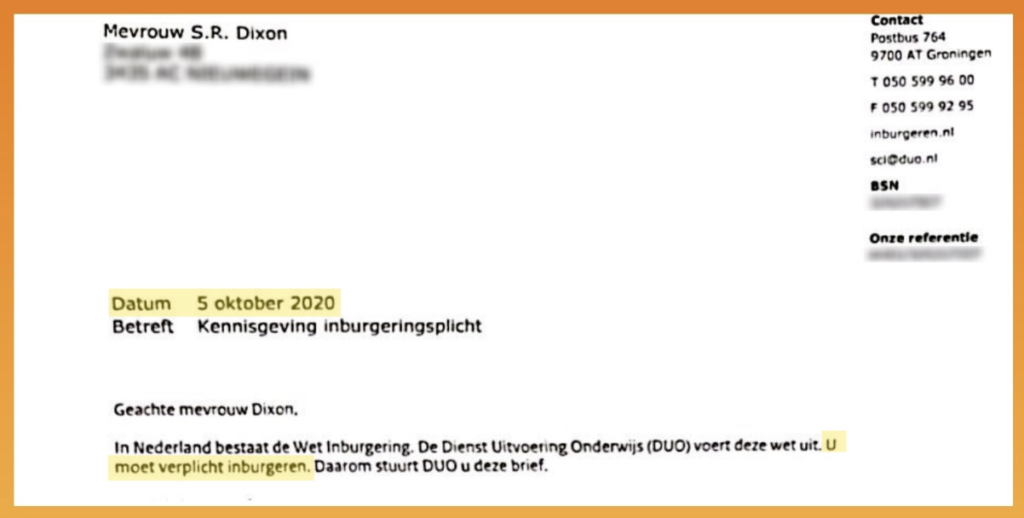
If it is compulsory for you to integrate (for example, because you are on a relationship or refugee visa), you will receive a formal letter advising you of this with a deadline.
The deadline to have your inburgering certificate is typically three years from the letter, or three years from signing your integration plan (more on this later). This gives you time to take lessons and prepare.
I received a letter shortly after receiving my relationship visa stating that I must take the inburgering exams. Image: Samantha Dixon
Who is making me take the exams?
The obligation to integrate in the Netherlands is part of Dutch law — specifically the Wet Inburgering (Integration Law).
Which inburgering law?
It’s important to note that there are two Wet Inburgering: 2013 and 2021. Which law you fall under is determined by when you became obliged to integrate.
If you became obliged to integrate before January 1, 2022 you come under the 2013 law.
If you became obliged to integrate on January 1, 2022 or later or are integrating voluntarily, you fall under the 2021 law.
The integration process is covered by DUO (Dienst Uitvoering Onderwijs) or the Dutch Ministry of Education. Through DUO, you can book exams, take practice tests, and (if eligible) take out study loans.
Finally, your local municipality also plays a role. They help create a personal plan for your integration process and are often the first step in your journey towards integrating.
✨ Benefits of taking the Dutch integration exams
Alright, it all sounds like a lot of boring information and exams. But, believe it or not, there are big benefits to the inburgering process, including:
🇳🇱 Speaking, reading, writing, and understanding Dutch 🛂 Being able to apply for a Dutch passport or permanent residency 🚲 Understanding Dutch culture and processes 🎓 The self-satisfaction of knowing you have integrated into a foreign country
💰 How much do the Dutch inburgering exams cost?
Unfortunately, the Dutch integration process is not free. In 2026, you’ll have to cough up the following costs:
Exam
Cost
Writing exam
€50
Reading exam
€50
Listening exam
€50
Speaking exam
€50
Knowledge of Dutch Society
€50
Participation Statement
€0 – €150*
You may also need to pay for study materials, lessons, or to retake the exams if you don’t pass.
*The participation statement is free for people who fall under the 2021 inburgering law. If you were obliged to integrate before January 2021, you might need to pay €150 for the workshop. Some municipalities choose to cover this fee.
Financial assistance for integration in the Netherlands
A bit stunned by the costs (or looking at the price of Dutch lessons?). No problem. It is possible to take a Dutch student loan for the inburgering process.
Most people are eligible for a loan, but you can use the loan money only to:
Pay forthe exams, or
Take a Dutch course at an approved school.
If you borrow money, you have a six-month grace period after integrating before you need to start making repayments. You then have 10 years to pay back the loan.
Not keen on also shelling out hundreds of euros and going into debt for a Dutch school? At InburgeringOnline, you can learn Dutch up to a B1 level for less than €9 a month. Plus, the lessons are entirely online and self-paced. Want to study every day? Once a week? The choice is yours! See the options.
📊 What language level is the Dutch integration exam?
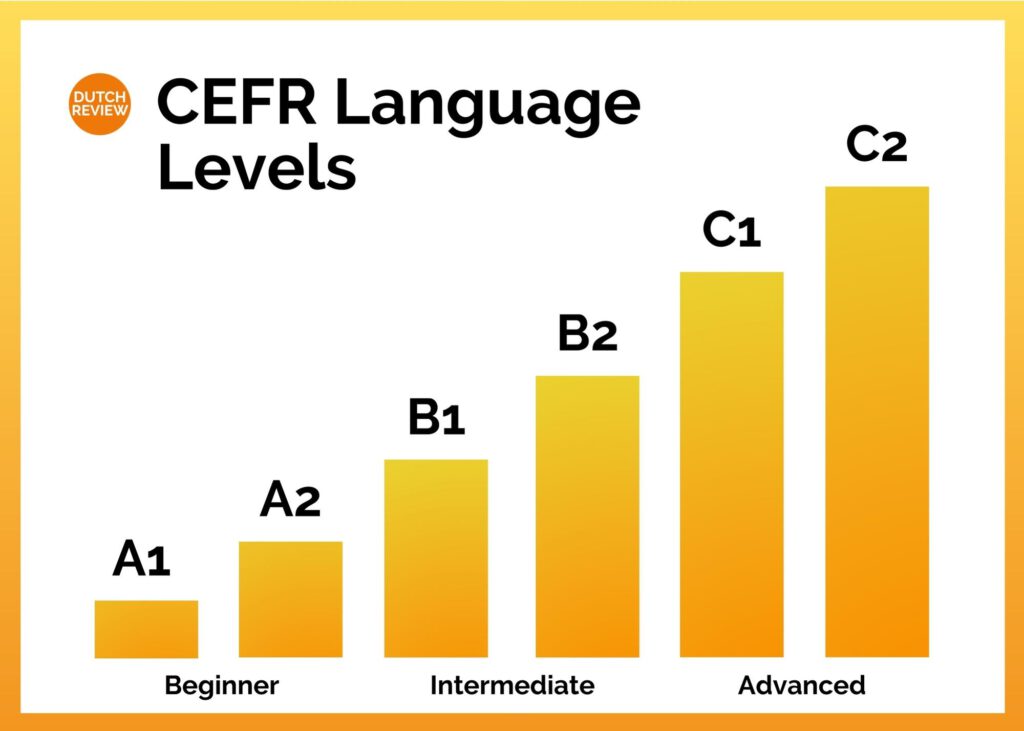
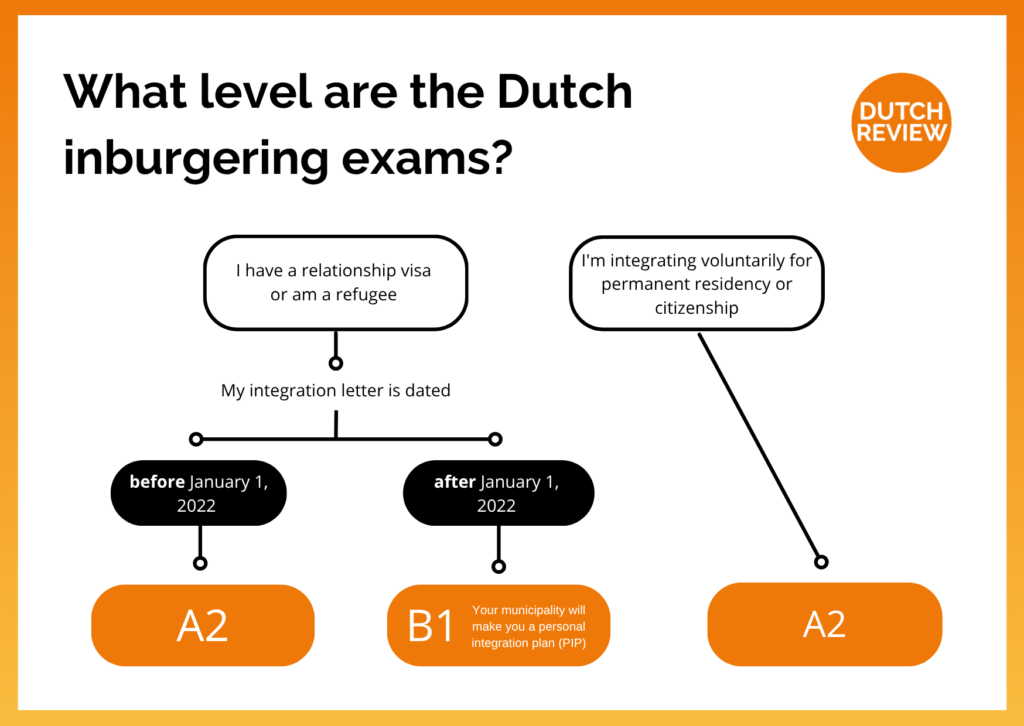
Your inburgering exams can be one of two possible language levels: A2 or B1. This is because the integration law changed in 2021.
Pay careful attention here because your personal circumstances impact the level at which you must speak Dutch to integrate.
Image: DutchReview
First, which group do you belong to?
I am in the Netherlands on an asylum or family reunification (relationship) visa and am required to integrate.
I am in the Netherlands on a work or other visa and am choosing to integrate to obtain permanent residency.
If you’re in Group 1, skip the next paragraph and read on below.
If you’re in Group 2, congrats! Your language level for the Dutch integration exams is A2.
Now, for those in Group 1, the biggest question is: When did you receive your letter advising that you must integrate?
If the letter you received advising you to integrate is:
dated before January 1, 2022, you fall under the old law: your language level will likely be A2. You can book your exams on the inburgeren website.
dated after January 1, 2022, you fall under the new law: your language level will likely be B1. You’ll need to create an integration plan with your municipality before you can book exams. More on this below.
Under the new integration law, those who are required to integrate after January 1, 2022, must create an integration plan with their municipality.
Here’s what you can expect:
You’ll receive a letter from DUO stating that you must integrate
You’ll receive an invitation from your municipality for an intake interview and a short assessment (that you don’t need to study for).
The municipality will prepare your Personal Integration and Participation plan (PIP), including what language level you need
You’ll receive another letter from DUO advising you that you have officially started your integration process.
✅ Requirements to get the Dutch inburgeringdiploma (integration certificate)
To receive an inburgeringdiploma, most people must pass a collection of:
Dutch language tasks (reading, writing, listening, speaking)
Culture tasks (a Dutch society exam, a participation workshop, and proof of understanding working in the Netherlands).
Passing the inburgering exams takes a fair bit of studying, but it’s achievable! Image: Magnific
What do they involve? Let’s take a look!
Language exams
The Dutch language exams test whether you have achieved a basic level of Dutch. You will have to pass the exam on either an A2 or a B1 level, depending on your personal circumstances (see above if you’re confused about this).
Writing exam (schrijfexamen)
In the writing exam, you will be asked to write short paragraphs based on the scenarios given. For example, you might be asked to write a note to your neighbour to ask them to borrow an item.
Speaking exam (spreekexamen)
The speaking exam lets you show off how well you can praten (talk). The focus here is on grammar, word choice, and pronunciation.
You’ll have to listen to video scenarios and then respond.
Listening exam (luisterexamen)
During the listening exam, you’ll be presented with video clips of different scenarios. You’ll then answer multiple-choice questions about what happened and choose appropriate responses.
Reading exam (leesexamen)
The reading exam tests how well you can understand texts in Dutch.
The majority of the exam consists of being given a short text to read. You must then answer multiple-choice questions about the information given.
Other exams and requirements
Knowledge of Dutch Society (KNM) exam
This exam measures what you know about how things work in the Netherlands. You can expect multiple-choice questions on a variety of topics, including geography, education, going to the doctor, holidays, government and politics, history, and more.
In 2025, the content of the exam was overhauled. Now, it focuses more on your factual knowledge of life in the Netherlands, as opposed to how you should act in certain scenarios.
Participatieverklaring Workshop
The Participatieverklaring Workshop is only for those who are on an asylum residence permit or a family reunification permit.
The workshop discusses the values of Dutch society. Things like equality, tolerance, and rights are all discussed. At the end, you sign a document agreeing to uphold those values while living in the Netherlands.
Orientation on the Dutch Labour Market
This exam tests your knowledge of working in the Netherlands. For this, you must prepare a portfolio of work and complete either a final interview or a 64-hour course.
However, only people who became obliged to integrate before 2022 must take this. More importantly, there are exemptions available for people who fall under the 2021 law, such as if you have worked in the Netherlands.
🙇♀️ How to prepare for the Dutch inburgering exams
Preparing for the inburgering exams is no easy feat. For the language exams, an A2 level means knowing approximately 2000 Dutch words, while for B1, you need to know over 4000.
Add to that grammar and knowledge of the Dutch society, and you can easily spend anywhere from one to 12 months studying to integrate.
Most people choose to prepare for the integration exams by using a variety of resources: a Dutch school, online preparation programs, textbooks, YouTube, and more.
We recommend starting by building up the fundamentals of the Dutch language. Work towards A1 and A2 Dutch by working through in-person or online courses.
When you’re ready, begin to take the practice exams available on the Inburgering website. These will give you a good indication of what areas you need to work on!
Want to pass the inburgering exams without even needing to set foot in a classroom? Dat kan! At InburgeringOnline, you can learn Dutch all the way from A1 to B2 entirely online, in your own time. Find out more.
Resources to prepare for the Dutch inburgering exams
Ready to get studying? Here are some of the best places to get started:
Websites
InburgeringOnline: online Dutch courses on your own schedule from beginner level (A0) to B1.
Inburgeren.nl: the official Dutch government website offers useful official practice exams, but doesn’t offer preparation for the exams.
Textbooks
There are a variety of textbooks available to learn Dutch. You can find some at your local Dutch library (bibliotheek) or in Dutch bookstores. However, most of them are less focused on self-study and are more designed to be used in Dutch schools with a teacher’s guidance.
However, for the KNM exam, the textbook Welkom in Nederland is considered a great way to study.
YouTube
Learn Dutch With Kim: a series of grammar and vocabulary videos that explain Dutch in an easy manner.
Dutch With Niels:more grammar and vocabulary videos, this time with Dutch teacher Niels.
You can also find various old integration exam videos on YouTube that can help you prepare further.
🤔 What to expect when attending an exam
All of the language exams and the KNM exam are taken in person at a DUO test facility. You’ll make a booking for each exam ahead of time via the Inburgering website.
When you arrive, you’ll have your ID checked, be given a locker for your belongings, and be advised which room you need to attend. Other people will be taking the same exam at the same time. You’ll wait outside until you’re permitted to enter.
For each exam, you’ll walk in, have your ID confirmed again, and then you will need to wait until the test begins. You’ll receive a short orientation on the computer, will wear headphones, and will work in complete silence — except for the speaking exam, naturally.
For most exams, you’ll answer questions on the computer. For those taking the A2 writing exam, you’ll answer using pen and paper. Meanwhile, the B1-B2 writing exam will be computer-based.
Importantly, the content of the exams is always randomised (so no two tests are the same) and secret. That means that when you leave the exam room, you can’t talk about any questions you encountered. Kinda like Fight Club — without the fighting, of course.
⭐️ Tips to pass your inburgering exams
Nervous about passing? These tips and tricks should help.
Start preparing early and consistently. Learning a language is tricky, so don’t leave things to the last minute.
Keep your sentences short, simple, and accurate. I always wanted to impress my examiners with complex sentences. However, I learned that longer, more complex sentences just give more options to make mistakes. A simple, perfectly accurate sentence like “I like cats” will score you higher than a complicated sentence with errors.
Don’t book too many exams in one day. It might be tempting to try to book all of your exams at once, but give yourself a break. Take them over at least a week, if not longer. They can be exhausting!
Don’t stress about de and het words. Yes, you do need to learn these. But in your exam, try to use the indefinite articles (een huis vs het huis) or plurals, which always use de (de huizen).
Don’t know a word? Don’t panic. In my writing exam, I found I really needed to use a word similar to “sleeve”. One problem: I had no idea what the word was! Instead, I worked around the issue by creating a funny scenario that avoided mentioning sleeves at all. Your Dutch has to be accurate, but the situation doesn’t have to be believable.
💯 Receiving the results of your inburgering exams
Alright, you’ve done your best, turned in some stellar Dutch, and left the exams. Now what?
Fulfil that crushing emptiness by keeping yourself busy for a few weeks. Then:
If you took an A2 exam, your results will be posted to you and placed online within eight weeks of the exam date.
If you took a B1 exam, your results will be available online exactly five weeks after your exam date, after 3 PM. They’ll also be posted to you after six weeks.
For each exam, you’ll receive a score from 1 to 10, with 10 being the highest possible mark. You require at least a 6 to pass.
Passed? Gefeliciteerd! Unlucky this time? No problem, it happens — pick yourself up, dust yourself off, and try again!
🕣 How long do I have to get my integration certificate in the Netherlands?
If you’re required to integrate in the Netherlands, you’ll have three years from receiving your letter to integrate.
If you’re voluntarily integrating in the Netherlands, you can integrate whenever you like — as long as your visa is valid, of course.
However, you should note that in order to apply for permanent residency and a Dutch passport, you must have had a valid residence permit in the Netherlands for at least five consecutive years (unless you meet these exceptions).
🚲 What to do after receiving your inburgeringdiploma
You did it! You passed every exam, received your results, and did a little dance. Well done!
You’ll soon receive a fancy letter in the mail containing a snazzy diploma. You can hang it on your wall and reminisce about those long nights studying.
However, even better, you can also apply for permanent residency or citizenship if you fulfil the other necessary conditions.
The inburgering exam is a bizarre rite of passage for many foreigners in the Netherlands, but once you have that shiny inburgeringdiploma, it will all be worth it — promise!
Do you need to take the Dutch integration exams? Tell us in the comments below!
🙋♀️ The Dutch inburgering exam: frequently asked questions
What is the inburgering exam?
The Dutch inburgering exams are a series of tests on the Dutch language and society. There are five exams (reading, writing, listening, speaking, and knowledge of Dutch society). There are also some other individual requirements to integrate.
What level is the Dutch inburgering exam in 2026?
The Dutch integration exam language level in 2026 depends on your personal situation. If you became obliged to integrate after January 1, 2022, your language level is B1. For everyone else (including those voluntarily integrating), the level is currently A2.
How much do the inburgering exams cost?
The inburgering exam is a series of exams, each costing around €50. You can expect to pay anywhere between €250 and €400 for the integration process, depending on where you live, not including preparation costs.
What is a passing grade for the Dutch integration exam?
A pass for the Dutch integration exam is 6/10. That means you need at least 60% on each exam to qualify for a pass.
How hard is the inburgering exam?
The Dutch integration exams are not difficult, but they do require a lot of preparation. You must speak and understand Dutch to an A2 or B1 level (depending on your situation). If you have achieved this level and you prepare carefully for the exams, they are not difficult to pass.
Found yourself paying for a taxi during a train strike day last year? Well, at least you could claim up to €25 in compensation. From now on, you’ll get nothing (and you’ll still be late for work).
The NS has announced that compensation will be scrapped for anyone who has to pay for alternative transport during a train strike.
Speaking with RTL Nieuws, Bertien Braak, Director of Commerce and IT at NS, describes the scheme as “complicated, labour-intensive, and, most importantly, susceptible to abuse.”
Yep, let’s blame it on those cheeky people who remain at home in their pyjamas while claiming €25 for the taxi they never took.
Claims can take months to check
However, it’s not just the worry that people are taking advantage of the scheme that has led to this decision. It’s also just a lot of work for the NS.
“Due to our checks, travellers sometimes have to wait months for their claim, while it is difficult to determine whether all those claims are legitimate,” Braak tells the outlet.
And with previous strikes, such as those in June 2025 bringing in 180,000 compensation requests, and more strikes on the horizon for 2026, it makes sense that the company would opt to scrap the compensation now.
Not to mention, the NS had to fork out €2.8 million in compensation for June’s strikes alone.
No compensation for upcoming strikes
This means that if you were hoping to get compensation for the upcoming train strikes on September 9, you might want to opt for a bike instead.
The NS tries to give this development a positive spin, writing that the money they would have lost to compensation claims in September should be put towards improving travellers’ experience instead.
“The strike is not directed against NS. At the same time, such a strike does lead to high costs for NS. The money involved is ultimately paid by the travellers. NS would rather spend that on things that improve the journey for travellers,” they write.
However, while they may be scrapping compensation in case of strikes, you don’t have to worry about compensation in case of delays. Thankfully, that one small mercy remains for now.
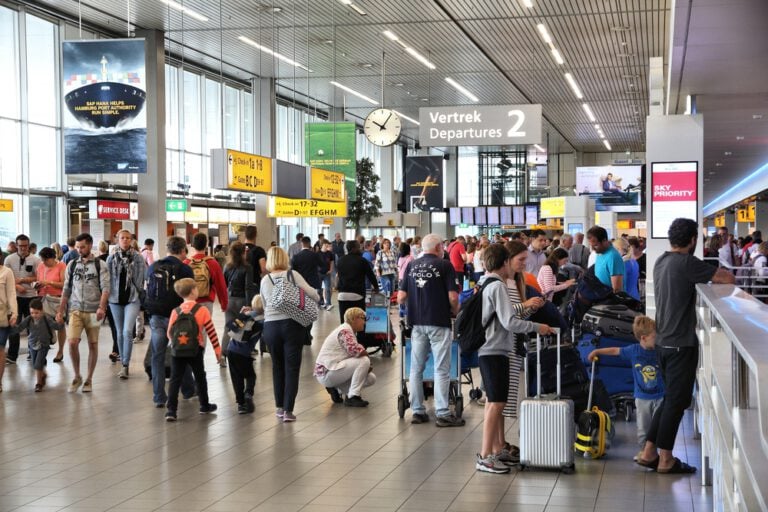
If you’re flying soon, be prepared. Schiphol’s security staff have said enough is enough and will carry out a series of strikes in the coming period.
And what does that mean? Extra-long queues and overall chaos at Schiphol Airport.
CNV has announced that the first of the strikes will take place “shortly”, but they have not indicated a date. This is because the strike will only be announced a few hours before it takes place.
The union indicates that several strikes are coming our way; the only good news is that they say, at first, the strikes will be “short-term.”
Why are they striking?
André Quist of the CNV writes that these strikes come after months of chaos for security staff at Schiphol. Back in March and May, Schiphol switched security contracts, bringing the number of companies responsible for security down from six to three.
For many security staff, this meant they suddenly had a new employer — and worse working conditions.
According to the CNV, staff have been struggling for months under this new regime, facing “high work pressure, rising absenteeism, and insufficient opportunities to recover.”
AD writes that there is also a shortage of seasoned security staff available, meaning that the few authorised security staff must sit behind screens for hours, potentially missing “unsafe situations.”
The CNV approached Schiphol with an ultimatum, requesting better breaks, better part-time schedules, more scope for leave, and better measures for working in high temperatures.
They also requested more female security staff, as there currently aren’t enough to frisk female passengers, resulting in longer waiting times.
⚠️ Security Wait Times at Amsterdam Schiphol Airport (AMS) are longer than usual!
📍 Location: (Terminal Departures 1A) Current: 53 min Typical: 13 min Difference: +40 min
— Qsensor – Airport & Flight Status (@TravelQsensor) August 20, 2026
Nothing from Schiphol
According to Quist, Schiphol is well aware of these issues — it’s just not doing anything about them.
“Schiphol and the security companies acknowledge that there are problems. That is precisely why it is so disappointing and frustrating that concrete measures are not forthcoming,” he says.
Schiphol has told the staff that it is looking into a solution, but after months, nothing has materialised.
“Talking alone is no longer enough,” Quist says. “If employers are unwilling to deliver, our members will make it clear that the limit has been reached. And yes, travellers may notice the consequences of that as well. But that is the choice Schiphol is making.”
The savings platform Raisin has been active for a couple of years now in the Netherlands — but what is Raisin? And what can it do for your savings?
We’ve answered some of your top questions about using Raisin from the Netherlands. 👇
This post might have affiliate links that help us write the articles you love, at no extra cost to you. Read our statement.
1. Why should I opt for Raisin over a Dutch bank?
For the most part, life in the Netherlands is good. The country has great infrastructure, plenty of bustling cities, and a liberal lifestyle.
However, one thing it really doesn’t offer is good interest rates on savings accounts.
Even the largest banks in the Netherlands offer low interest rates compared to their international counterparts.
That’s where Raisin steps in. Raisin offers residents of the Netherlands access to international banks with savings accounts that offer much higher interest rates.
Raisin offers access to multiple international banks, all through one account. Image: Magnific
Just how much higher are we talking? For example, ABN AMRO, one of the Netherlands’ biggest banks, offers just 1.5% interest on its savings accounts.
By comparison, you can access savings accounts with interest rates as high as 2.83% on a flexible savings account and up to 2.95% on a term deposit through Raisin.
By opening an account through Raisin, you will have access to a savings account that will allow your savings to grow in value and tackle inflation.
What’s more, Raisin offers you access to 40+ banks, all through one login, meaning you will never need another savings account outside of the Raisin platform.
Once you open your central Raisin account, you can choose from as many flexible savings accounts and term deposits as you want.
2. What are the best interest rates that Raisin is offering right now?
The best fixed-term and variable interest rates in August 2024 that you can enjoy with Raisin are below.
Fixed-term savings accounts
Savings accounts with a fixed term are not freely withdrawable. This means you must keep the money you deposit in the account for a fixed period of time.
While you can’t freely withdraw money whenever you want, you do benefit from fixed high interest rates. Here are some of the most popular fixed-term interest rates offered by Raisin:
Bank
Duration
Fixed-term interest rates on savings accounts
BluOr Bank
1 year
3.37% per year
sme Bank
1 year
3.30% per year
Fjord Bank
1 year
3.10% per year
Raisin makes it easier ot access high-interest fixed-term savings options beyond Dutch borders. Image: Magnific
Freely withdrawable savings accounts
If you need more flexibility with your savings and want to be able to withdraw money whenever you like, then you can opt for a freely withdrawable savings account with a variable interest rate.
This means the interest rate is not fixed, but it’s still strong — and you can take out money from the account as you see fit.
Good to know: In addition to a range of high-interest providers, Raisin also offers all new customers a 3.05% introductory rate, valid for the first three months.
3. Is my money safe at Raisin?
Raisin works exclusively with banks that fall under national deposit guarantee schemes.
This means that any money you save using the bank accounts offered through Raisin is guaranteed up to €100,000 (or an equivalent in the local currency).
Thanks to the Deposit Guarantee Scheme, you can rest easy knowing your money is safe with Raisin. Image: Magnific
As of January 1, 2024, in the case where a Deposit Scheme refund takes place, the payback is completed within seven working days.
4. Can I transfer money between my Raisin account and my Dutch account?
Yes! When you set up an account with Raisin, you will be asked to choose one external bank account to link to Raisin.
Through this external account, you will make withdrawals and deposits to your savings accounts.
What does this mean? For example, if you link your ABN AMRO account to your Raisin account, you will be able to transfer money from your Dutch account to your savings account at the French bank Distingo — all through Raisin’s platform.
Once you transfer money to or from your international savings account, it will take one to three days for funds to appear in your other account.
5. Does Raisin charge a fee?
Nope, Raisin doesn’t charge any fees to its customers!
6. Why is Raisin free?
Instead of charging customers a fee, Raisin earns money by receiving a fee from banks and credit unions for marketing its products.
Raisin makes its money by accepting fees from banks and credit unions. Image: Magnific
And you know what’s better than the average Joe’s money? A bank’s money. 💶
7. What do I need to sign up for Raisin?
The requirements for signing up for Raisin are pretty simple. Once you fill out their registration form, you will be asked to:
Supply your personal details (including your full name, address, and BSN)
Upload proof of your address
Verify your identity online
Supply details of the external bank account you would like to link to
Raisin offers one way for internationals based in the Netherlands to avoid low savings interest rates, all while your money is protected by the Deposit Guarantee Scheme — and for that, we say dankjewel. 💪
Have you used Raisin before? Tell us about your experience in the comments below!
* Residents of the United States of America (USA), so-called Permanent Residents, as well as holders of a Green Card (anyone who is considered a “US person”) are not entitled to access the offers due to extensive regulations regarding the transfer of data under FATCA regulations. * The interest rates mentioned in the article represent interest rates from 16.08.2024 and are subject to change; check out the Raisin website for the current offers.
Maybe the hectic driving experience it’s not the first thing that comes into your mind when thinking about the Netherlands, but it’s a factor that you need to consider!
What’s so stressful about it, you ask? Well, put your seatbelts on, because it’s about to be a stressful ride. 👇
Driving in the Netherlands
Like many other people, I imported my car to the Netherlands when I moved here.
Excited to explore my new home on four wheels, I was quickly discouraged: the more I drove, the more I understood why Dutchies like to stick to their fiets.
He is not stressing too much about driving! Image: DepositPhotos.com
Without a mental map of the streets in my head, I often got lost and did sightseeing tours through all the streets of the village where I live now.
I often did some bigger detours — but thanks to Google Maps, I always found my way back home (probably 20 minutes later than I wanted to).
Further, I want to mention that since I grew up in a city with two million inhabitants (Vienna), I acquired a quite “aggressive” way of driving.
I was lucky that I started working towards my driver’s license at 16, so I could gain a lot of driving experience.
I learned how to drive on crowded streets, how to switch lanes the Viennese way, and I can parallel park in the tiniest spot available — but I was not prepared to take on these Dutch streets.
So, what’s driving in the Netherlands like?
So, coming to the Netherlands, I did not expect a lot of differences. I imagined it to be the little boring kind of countryside driving, with lots of cows, no cars, and straight roads.
Boy, was I wrong. Since then, I have identified many sources of stress on Dutch streets. 😰
Sharing the streets with bikes, trams, and people
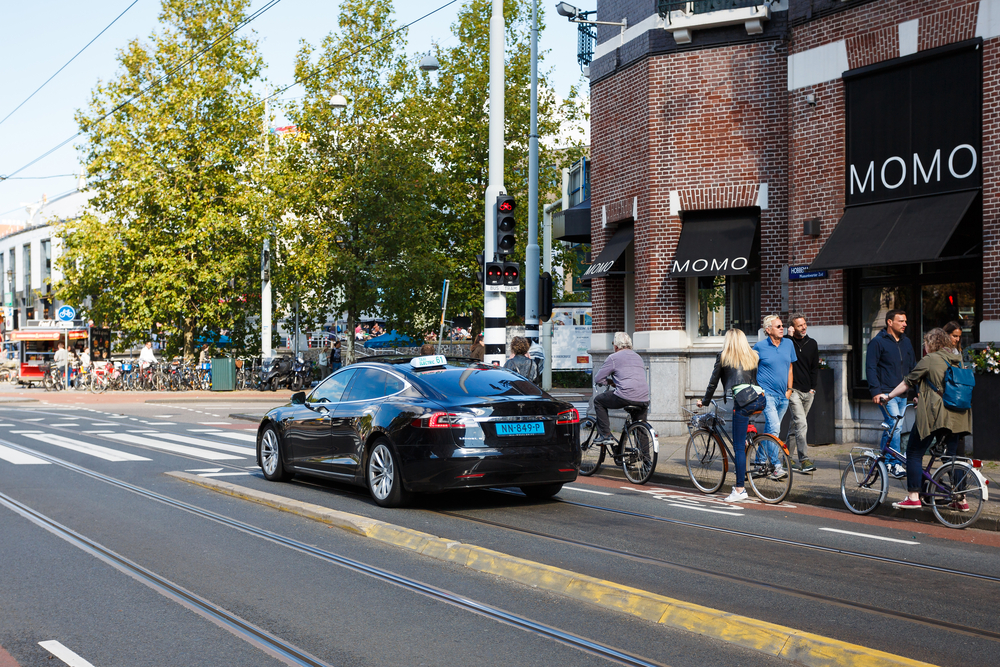
When driving in a city like Amsterdam or Utrecht, you’ll never be the only person on the road. Instead, you’ll share the streets with cyclists, mopeds, buses, and trams.
No matter how used you are to busy streets, the Netherlands will have you sweating.
While bikes are cutting ahead of you to your right, trams are “ding”-ing to your left — and all you want is to get out of the madness.
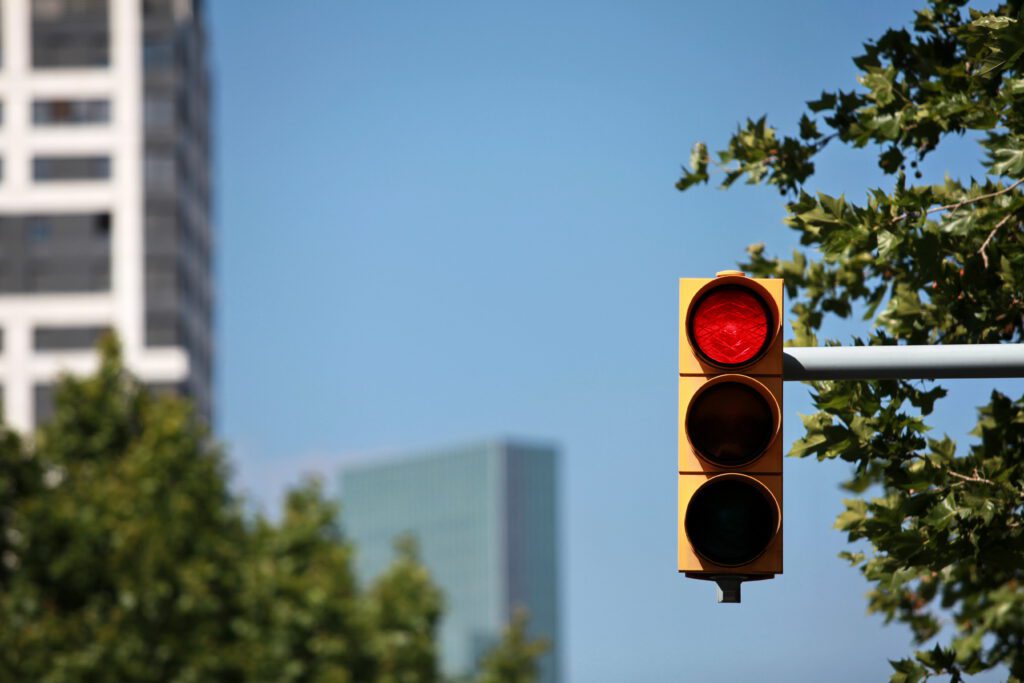
Traffic lights in the Netherlands
In Austria, traffic lights jump from red to yellow to green. When the light is yellow, you press your gas pedal to the ground because the people behind you will start honking as soon as the light turns green.
Still having in the back of my head that everybody honks like mad once it is green, I try to sprint away from the traffic light as soon as I can.
At first, I really missed the two seconds of the traffic light being yellow, but after a while, I figured out that my time delay did not make people mad. Still, the stress of waiting for the light to turn green never went away.
Driving on Dutch highways
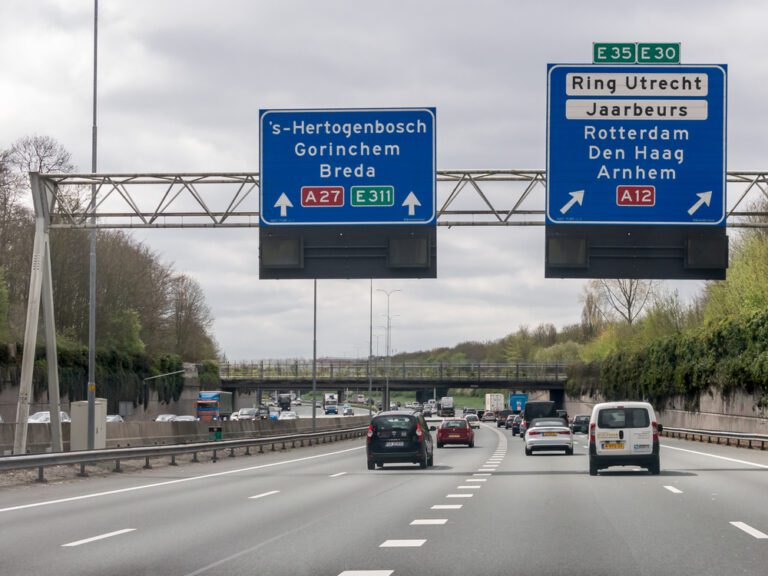
The aggressive driving style of Dutch people is evident once you are on the highway. People will pass you at 160km/h, because you drive too slow at 130km/h (while the speed limit is 100 km/h).
Five meters further down, cars are stuck behind a truck, and you can kind of wave to them as you drive past — IF they don’t just hit their blinker at the last second and crash into your lane.
No wonder they like Formula 1 so much. 😉 Image: Magnific
I have learned that the blinker is used to show people that you want to go in a different direction or on the highway if you want to switch lanes. You show people your intention to drive and wait if people let you do so.
In the Netherlands, the blinker is there to show the other drivers that “I am coming NOW.” People rush in between two cars, then one has to brake heavily, causing a chain reaction of braking, causing, guess what… jams.
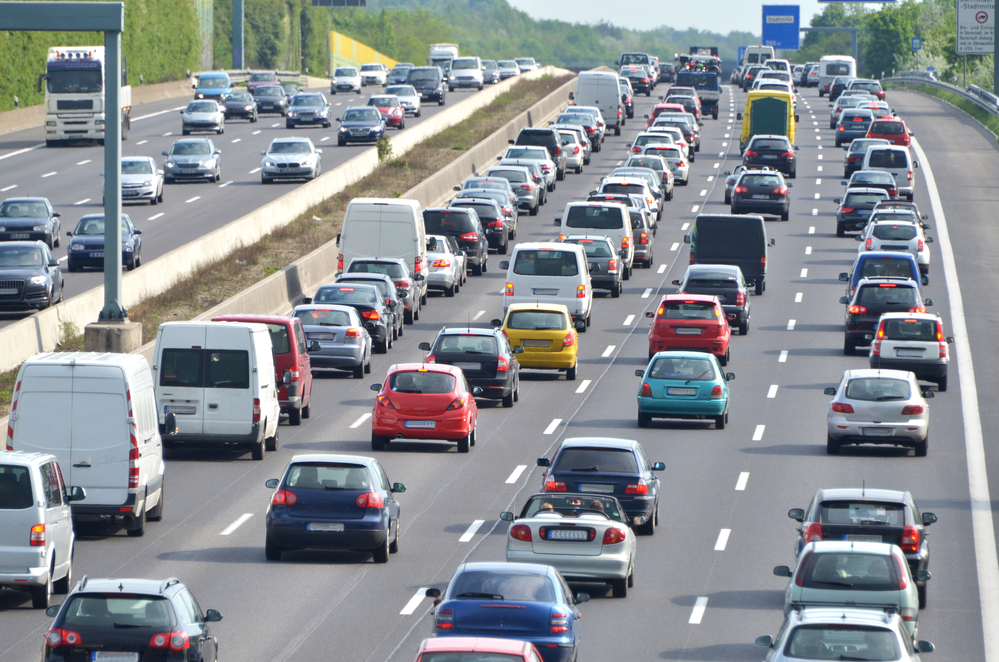
Traffic jams in the Netherlands
Did I mention Dutch traffic jams? I’ve always experienced jams as an accumulation of cars because something happened (like an accident or roadworks).
In the Netherlands, it’s not rare to suddenly stand on the highway for ten minutes for no reason — just because of congestion, or… because somebody switched lanes and everybody had to brake hard.
Phew, who knew writing an article could give you so much road rage? 😡
Trust me, as someone who drives on one of the busiest Dutch roads daily, I come across all these points every single day.
I started to accept the traffic lights after a few months, but the traffic jams still cause quite some frustration, and the lane switching will always stress me out.
Do you agree with these notes about driving in the Netherlands? What are your experiences? Tell us in the comments!