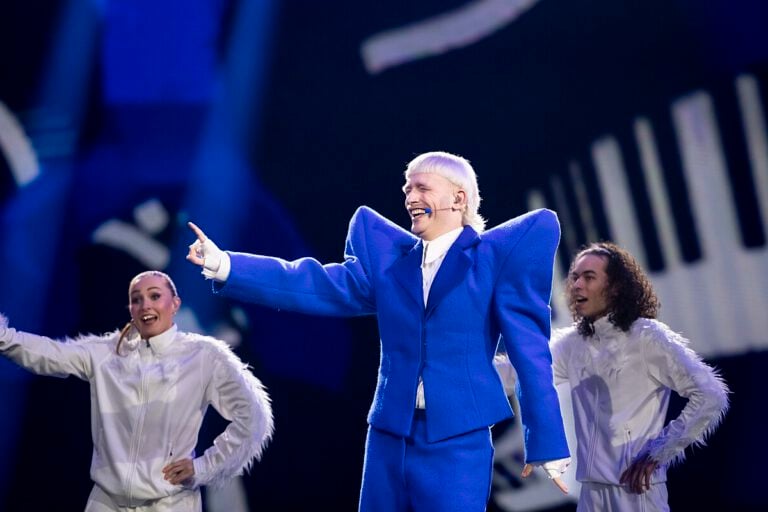
Joost Klein, the mulleted Dutch pop icon, has racked up 52 million views on YouTube, making his outrageously fabulous music video the most-watched video in the Netherlands this year.
Forget Rembrandt, we’ve got a new national treasure. 👇
From Klein to groot (big)
The whimsical song that stole all the views on YouTube was Klein’s 2024 Eurovision entry, which had already been growing popularity before his controversial disqualification for “inappropriate behaviour” boosted its views even more.
But, in all honesty — who needs a trophy when you’ve got the entire nation humming your song?
Not so close runner-ups
In second place, with 12 million views, was “Dada Die Dada Daa” by Kinderen voor Kinderen for the King’s Games.
Third place went to “Brommers Kieken” by Boer Harm, with 6.6 million views.
Honourable mentions include “Sugardaddy” by Roxy Dekker, “Pretty Girls by Frenna, and “Entourage” by Bankzitters.
Still, Klein’s passion for Europe(papa) has touched the hearts of countless fans, beating toddlers and tractors by a long shot.
What do you think about Klein’s music video? Have you heard of him before? Let us know in the comments below.
The Dutch government has just dropped an update on how much your rent might increase next year. Surprise, surprise: it’s a lot! 💸
According to the government bulletin, both the private and social sectors will see a jump in the maximum rent allowed.
Mid-range rents on the rise
Rents that will be hit the hardest are those that fall in the mid-range category, meaning relatively small apartments where the landlord is not allowed to determine the rent themselves.
Although landlords can’t determine the maximum rent increase each year, it’s required to be (somewhat) proportional to wage increases.
Since the wage increase this year was 6.7%, landlords were allowed to increase the rent by 7.7%. This means that your €1800 apartment could cost you an eye-watering €1938.6 per month next year.
(Apparently, making wage increases actually proportional to a jump in rent would just be a step too far. 🙄)
Free rent will be far from free
New leases in the private sector, meanwhile, still leave it up to the landlord to determine the rent (and Dutch landlords can count pretty high).
However, if the tenant doesn’t change, there is a maximum increase that is determined by the government as well.
The good news? Although free rent will still see a spike in price, the expected price hike is lower than that of mid-range rents — 4.1%.
Even with less of an increase, the change is significant. You could expect to see your base rent of €1800 turn into €1873.8 per month, as of 2025. 😬
The Woonbond tried to negotiate to adjust that increase to inflation, which would mean a maximum of 3.1% — but their offer was shot down by the Dutch Ministry of Housing.
While the government didn’t agree to make social housing more affordable, they did offer to build more of it.
However, the Woonbond saw this as putting the burden of the housing crisis on the tenant and did not sign the agreement.
What do you think of these rent increases? Will you be spared? Let us know your thoughts!
Considering Dutch people’s stereotypical laid-back, carefree attitude, it’s not very often that you’ll see them act a little crazy. But New Year’s Eve is one of the few moments where they really let loose. 🎊
Many people love a good party to ring in the New Year, but some might say the Dutch take their love for it a little too far.
What is it?
Every year between December 26 and December 31, residents of The Hague build bonfires in the neighbourhoods of Scheveningen and Duindorp to see who can build the biggest one. Around midnight on New Year’s Eve, the bonfires are lit. 🔥
Each year gets crazier and crazier, with previous bonfires holding height records between 45 and 47 metres tall. 🤯
The municipalities keep a height restriction of 35 metres, but the Dutch certainly don’t mind ignoring these rules — we suppose tall people love tall things.
Why do they do it?
The beach bonfires originate from illegal Christmas tree burnings back in the 1950s and 60s. 🎄
After Christmas, Dutchies were eager to get rid of their trees, and young people made a game out of it by hunting down as many Christmas trees as possible to burn.
These fires grew bigger and bigger each year, and people were beginning to fight, steal, and vandalise trees from other people’s yards and homes — wait, what!?
So the municipality of The Hague eventually banned these tree burnings, but not without another solution.
Why is it quirky?
Ever since then, building these insanely tall (and still illegal) bonfires has become one of the most beloved traditions of the Dutch.
This event is super gezellig in how it brings residents of all ages together to build these wooden skyscrapers in hopes of making them taller than the last.
This Dutch tradition is truly unique and heart-warming (no pun intended 😉), so if you get a chance to go see the wooden skyscrapers being lit on New Year’s Eve, we encourage you to do so.
What do you think of this Dutch quirk? Have you experienced it? Tell us in the comments below!
Pornhub has finally released its annual trends for the Netherlands, revealing deep, dark and awkwardly specific fantasies.
The wait is over, and it’s time to dive in deep (but not too deep).
Moms are still working overtime
While “MILFs” remained top of this year’s search terms in the Netherlands, “big asses” jiggled their way to 2nd place and “hentai” scooched to 3rd.
Meanwhile, the term “lesbian” was rudely dropped down to 4th place. Not much further down on the naughty list were:
Anal
Latina
Dutch
Turkish
Indian
Massage
Before judging, the Dutch seem kinda… romantic?
Sure, the top search terms aren’t exactly creative, but the Dutch also enjoyed certain things significantly more this year — and what do they say about the Netherlands? People are looking for love.
For example, “passionate missionary” saw its searches rise by 720% in 2024. Meanwhile, “Dutch amateur homemade” enjoyed 457% more searches, and “first date” 316% more.
Awwww — that being said, “Dutch anal” also saw its search traffic increase by 356%.
The bedroom? Nah, that’s too boring
As for some others, they were satisfying some more magical desires.
While Pornhub’s stats don’t reveal this data, some porn creators believe the Dutch have an interest in their local attractions, namely the Fairytale Forest of Efteling.
Two weeks ago, a video was uploaded to the site with a peculiar backdrop — a beloved Efteling attraction, scandalising the innocent rollercoaster park for the second time since 2020.
Whatever floats your boat, right? But let’s perhaps leave the Efteling out of this.
Did any of these findings come as a surprise to you? Let us know in the comments below.
The Netherlands is close to breaking records — but not the kind most of us would be excited about.
Is the country nearing the record for having the most comforting Christmas treats? We think so (but it’s not official). What is official, is that we’ve just experienced the most sunless days in a row since 1993.
It’s been over a week of doom and gloom
If seasonal depression has been hitting extra hard this past week, at least you can feel it’s justified.
As of last night, the Netherlands has gone eight days without seeing the sun. The country hasn’t experienced such a lack of sunshine since 1993, during which the Dutch went 10 days without seeing the sun, reports Weeronline.
But if there’s one thing this country excels at, it’s being gloomy — so we may even break the 1993 record.
Three more days, and we’ve beaten 1993
The last time we got some vitamin D was December 8, so if the sun stays hidden today, Wednesday, and Thursday, we’ll live through record-breaking times, beating the 1993 lack-of-sun streak.
We believe you can do it, Nederland! But we really hope you don’t. 😐
We also really hope the Netherlands doesn’t go after first place for the longest sunless period ever recorded.
That title still belongs to the year 1959, when Dutchies didn’t see the sun for a whopping 14 days.
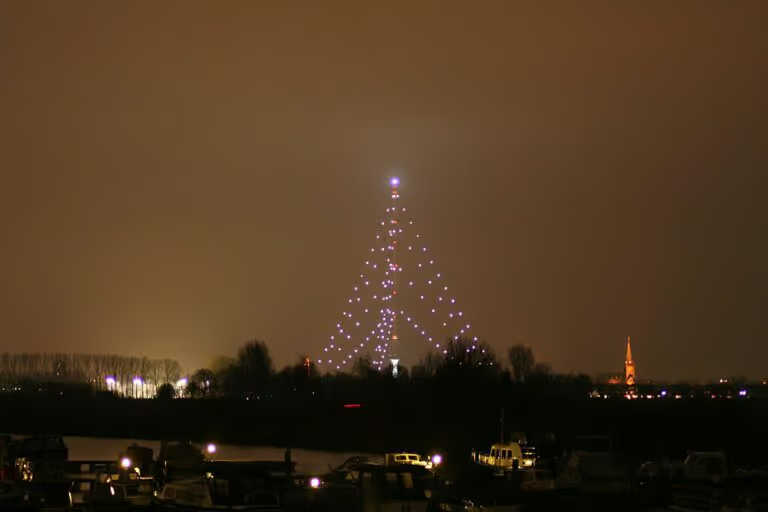
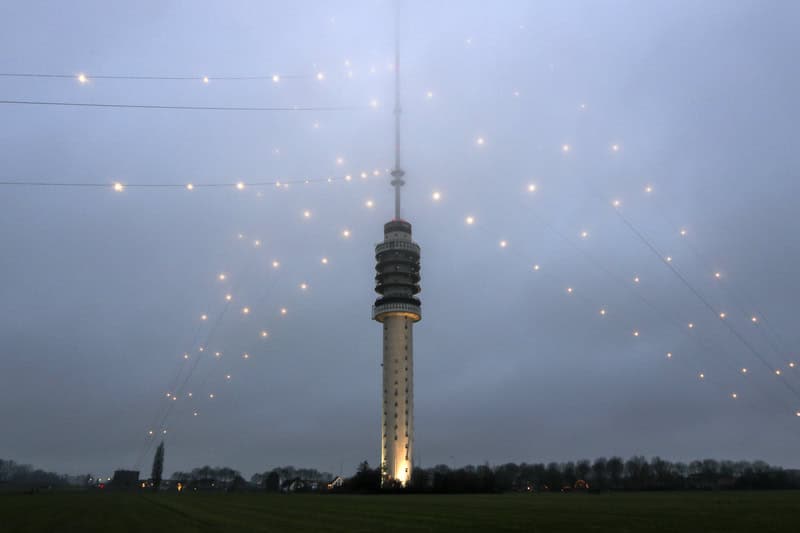
The city of IJsselstein, in the Utrecht province, has once again decorated and lit up its record-breaking Christmas “tree”: the Gerbrandytoren, a 366-metre-high communications tower.
The Grootste Kerstboom (Biggest Christmas Tree), as people call it, will stay illuminated and festive-looking until Three Kings’ Day on January 6, writes De Telegraaf. 🎄
The highlight of Christmas
DeGrootste Kerstboom is “literally and figuratively the highlight” of IJsselstein’s Christmas celebrations, mayor, Patrick van Domburg, tells De Telegraaf.
Two Sundays ago, around a thousand spectators braved the rain to watch as he pressed the large button that turns a simple communications tower into a beloved Christmas landmark.
For Van Domburg, this was the tenth time he had the honour of re-enacting this cherished tradition, but the tree has been lit up a total of 26 times, starting in 1992.
Technically not a tree
“But it’s not a t-” yes, yes, we can hear the objection forming in your head.
Technically, De Grootste Kerstboom is, of course, a tower, not a tree in the traditional sense.
The “tree” is still quite impressive from up close. 🎄Image: Dreamstime
From a distance, however, the lights really do make it look like a giant Christmas tree — so giant, in fact, that on a clear night, it can be seen from Rotterdam and Amsterdam!
For this reason, the Guinness Book of Records recognizes IJsselstein’s tree as the tallest Christmas tree in the world. 🌍
A complex and costly operation
Decorating a 366-metre-high tower with Christmas lights is no easy feat: just placing the 120 LED lights along the four-kilometre rope that holds them in place requires 24 volunteers.
Once that is done, the huge rope still needs to be lowered from above and fixed along the cables holding the tower in place.
Mission kerstboom gone wrong
Sometimes, this complicated operation goes wrong.
Due to different misfortunes ranging from funding and organisational issues to a fire (!) and a lightning strike (!!), on seven occasions, the city has remained tree-less.
Finding sponsors, in particular, is always challenging. To alleviate this problem, this year, the city came up with a quirky incentive for companies: ten employees chosen from the sponsors will have the opportunity to climb up the illuminated tower.
If you start nagging your boss early enough, you could be one of them next year. 😉
What’s the quirkiest Christmas tradition in your city? Tell us all about it in the comments below!
As we head into a new year, the Dutch housing market is continuing its well-known tradition of getting pricier — and 2025 is no exception.
According to De Nederlandsche Bank (Bank of the Netherlands) predictions, Dutch house prices are expected to rise by a whopping 7.5% next year, making the average house even costlier. 😬
Prices are through the roof
If you’re planning to buy a house in 2025, prepare yourself to come up with more than half a million euros.
Yes, you read that right: The average price of a Dutch house in 2025 is predicted to be €520.000.
As NU.nl writes, this unsurprising development comes down to multiple factors, including higher wages, house shortages and falling mortgage rates.
Rising prices will likely also result in more overbidding, so get ready for a fight if you want to secure a home within the next year. 🥊
Solving the crisis… unsuccessfully
While more building permits have been issued in recent times, there are still not nearly enough houses being built to reach the government goal of 100.000 new homes per year.
That considered, new homes alone are not enough to solve the Dutch housing crisis, according to the Bank of the Netherlands.
Instead, the government should also think about reducing tax benefits for homebuyers to lower the demand.
Furthermore, a well-functioning renting market would be necessary to reduce the pressure on home buying.
But, as anyone who has lived in the Netherlands will tell you, ‘well-functioning’ and ‘renting market’ are not four words you’re likely to encounter in the same sentence.
The very thin silver lining
The only positive? Buying your first Dutch home probably won’t become more difficult in the next few years. This is due to the fact that borrowing capacity increases at a similar rate as house prices.
Yesterday, in his first major speech as NATO chief, Mark Rutte told the citizens of Europe and Canada that “it is time to shift to a wartime mindset” — and Dutch experts agree.
The speech, delivered at a Brussels event by think tank Carnegie Europe, also urged politicians to increase military spending to “prevent the next big war on NATO territory” and “preserve our way of life,” according to NATO’s website.
“The security situation does not look good”
Stressing how NATO politicians need the people’s support to make “difficult decisions,” Rutte framed his speech as a wake-up call to Europeans.
“The security situation does not look good,” he warned. “It’s undoubtedly the worst in my lifetime. And I suspect in yours, too.”
“They’re testing us”
The NATO chief spoke at length about the situation in Ukraine, about which “we should be profoundly concerned.”
He thinks that “Russia is preparing for long-term confrontation. With Ukraine, and with us.”
In his view, this is all part of a larger threat posed by Russia, China, Iran, and North Korea, which are “hard at work to try to weaken North America and Europe, to chip away at our freedom,” and “reshape the global order.”
According to Rutte, “they’re testing us, and the rest of the world is watching.”
This means that, while there is no imminent military threat, “we are not at war. But we are certainly not at peace either.”
Increasing military spending to prevent war
According to Rutte, NATO countries “are not ready for what is coming our way in four to five years.”
As such, they need to ramp up military spending, even if it means cutting spending on healthcare and social welfare.
Rutte urged governments to “give our industries the big orders and long-term contracts they need,” and citizens to “tell your banks and pension funds it is simply unacceptable that they refuse to invest in the defence industry.”
He is convinced that this is the only way to prevent war because “without strong defence, there is no lasting security. And without security, there is no freedom.”
“If we don’t spend more together now to prevent war, we will pay a much, much, much higher price later to fight it,” he concluded.
Dutch experts agree
The scariest part? Dutch experts seem to agree with Rutte’s views.
Speaking to NU.nl, both Irregular Warfare and Special Operations professor Martijn Kitzen and War Studies professor Frans Ozinga doubled down on Rutte’s speech.
“People do see that there is a lot of conflict and threat, but that does not translate into urgency so quickly,” says Kitzen.
“To defend us against war, you have to be able to deter [enemies] credibly. You do that with a credible army and credible investments,” he adds.
“It’s about changing our mindset. We’re so used to everything working,” says Osinga, “but we have to be prepared to make certain sacrifices, prepared to invest in critical infrastructure.”
These expert opinions are not a complete surprise. After all, the news that the Netherlands is considering reintroducing full military conscription is about ten days old.
The Dutch crown princess is growing up and preparing to one day take the crown. But what do people actually think of future Queen Amalia?
RTL conducted a survey about the popularity of the princess, and the results are (mostly) in her favour. 👸
What a queen
It’s no secret that the 21st birthday is important for many Dutch people, but for Amalia it also meant essentially getting a promotion.
Since her birthday on December 7, she has been slowly preparing for her royal duties as a queen.
We’re seeing more of what the future with her as the queen will look like, and apparently, most Dutch people like the view.
Trust in her abilities is high, the survey found, sitting at 38%. Royal expert Annemarie de Kunder tells RTL that Amalia scores particularly well with young people, possibly because they respect how she handles living under criminal threat.
However, it’s not all praise
A slightly smaller portion of respondents feel differently when it comes to their trust in the princess: 20% want her to prove herself a bit more, and 16% have no trust in her.
The survey also reveals that while the largest group of respondents has trust in the future queen, for many, she’s not exactly their biggest concern.
A large part of the Dutch population expresses indifference, with 26% of people saying they don’t feel any particular way about her abilities.
Meanwhile, even more (37%) say they don’t care when asked if she should keep her life private.
De Kunder explains this is bad news for the royals. “A monarchy has a right to exist because it is supported by the people. As soon as interest decreases, this could mean the end of the monarchy in the long term.”
Might we suggest a good scandal or two to boost engagement? It might not get support, but it’s sure to keep people interested!
The money issue isn’t helping
What else does the future queen’s promotion entail? A higher salary, of course!
As of next year, Amalia will receive an annual allowance of €1.6 million. The sum could have been higher, but she has humbly refused or, rather, postponed the increase until she completes her studies.
The allowance can’t be spent on just anything, though. She needs to set up her own secretariat and take care of her home and work accommodation.
On second thought, she did move to Amsterdam, so 1.6 million might be just enough to get a room with several windows and her very own private sink!
As you can imagine, money is a sensitive topic. Over half of the country (54%) believes Amalia’s allowance should be discussed.
A smaller portion of respondents (21%) say they understand she needs to financially prepare herself, and an even smaller one (11%) believes the allowance is a good idea.
The rest (14%) — you’ve guessed it — don’t care.
What do you think of the future Dutch queen? Let us know in the comments!
Your neighbour’s dog, your newborn, and drunk tourists under your window could soon be in legal trouble — if residents near Schiphol Airport prove that sleep deprivation counts as abuse.
As the AD writes, they are filing an assault case against Schiphol Airport, claiming years of noise pollution have robbed them of their precious sleep and, as a result, their health.
Ready for battle (and good sleep)
Schiphol residents claim the airport’s noise pollution has caused a lack of sleep that is detrimental to their physical and mental health. They also claim that this constitutes abuse.
They say that the nature of this abuse is no accident, but systemic and driven by — you guessed it: money. 💰
The residents, united under the Right to Protection against Aircraft Nuisance Foundation (RBV), already won a civil case against the Dutch state earlier this year.
The court ruled that the government had systematically ignored the residents’ interests, but there was no punishment involved and, therefore, no proper enforcement.
The result? The Netherlands’ most tired citizens have decided to take on all the big players in a criminal case this time around: Schiphol Airport, KLM, Transavia, and the Dutch state itself (since that is Schiphol’s largest shareholder).
The first of its kind
There has never been an abuse conviction due to noise pollution in the Netherlands, so this case would set precedence.
How do Schiphol residents intend to win such an important case? By hiring Bénédicte Ficq, a big-time lawyer who previously filed cases against the tobacco industry, Tata Steel and Chemours.
She’s hopeful about the case: “The aviation decree from 2008 stipulates that the damage caused may not worsen compared to the damage that was already there. And that has indeed happened.”
This, combined with the civil case victory and the fact that sleep is a human right, and it might be the Schiphol CEO’s turn to lose some sleep — in this case due to worry. 👀
On the one hand, taking on the state and three powerful companies in a criminal case might sound like biting off a bit more than you can chew.
On the other hand, there are few opponents we would like to face in court less than an army of cranky, tired people fighting for fundamental human rights.
How do you think this case will play out? Let us know your thoughts below!