You’re at work and the clock strikes 12.30: lunchtime! Time for your leftover pasta — mmm 🤤. Meanwhile, your Dutch colleague shows up holding half a loaf of bread and a jar of peanut butter.
That’s right, anyone who’s spent a certain amount of time around Dutchies will notice that they’re pretty obsessed with the jars of nutty goodness.
They can even be found carrying around the peanut cheese (pindakaas), as it’s known in the Netherlands, around with them in their bag. 🥜
What is it?
The Dutch obsession with peanut butter is culturally and historically ingrained — yeah, Calvé peanut butter has a bit of a cult following in the Netherlands.
Dutchies, it seems, are much more die-hard fans of peanut butter than other Europeans.
This may be because modern Dutch cuisine is so intertwined with that of its former colonies, Indonesia and Suriname.
Another reason for this obsession may be literal indoctrination — yep, every Dutchie will remember those Calvé commercials on TV.
Infamous annual camping holidays to France are accompanied by the seemingly superior Dutch pindakaas (peanut butter).
If it were us, we’d be smearing a different nutty spread (Nutella 🤤) on our baguettes — just saying. 🥖
Why do they do it?
With their reputation for being a bit stingy and ever so efficient, it’s safe to say that peanut butter is a Dutch superfood — it’s quick, nutritious, and cheap.
In July of 2023, the Netherlands imposed a ban on advertising gambling out in the open, on our TV screens, in magazines, and over the radio. However, online advertisements are still allowed — at least for now.
The Dutch parliament has since voted in favour of banning online advertisements for gambling sites, which means even our phones and computers may soon be safe from gambling adverts.
In April of 2024, a majority in the Dutch House of Representatives supported a motion to completely ban online advertisements for gambling. This will result in a total ban on gambling advertisements in the Netherlands.
So, what does this mean for Dutch online casinos?
Should this motion be brought into law, even the best Dutch online casinos, presented at iGaming.com, won’t be allowed to advertise online.
Currently, online casinos are allowed to advertise online as long as these ads meet certain requirements implemented in 2023.
In 2023, the Dutch government imposed a ban on untargeted advertising by gambling sites — meaning their adverts cannot be seen by just anyone (such as 18-year-old boys).
Many people became addicted to online gambling. Image: Freepik
According to this restriction, ads are still allowed online, but gambling sites are required to take “the best available measures” to avoid advertising to people under the age of 24 or vulnerable groups such as gambling addicts.
As part of this, they have to prove “using the best available techniques” that 95% of people reached through online advertising were above the age of 24. They also had to give people who would see these online advertisements the choice to opt out of being shown them.
However, in 2024, many members of the House of Representatives believe these restrictions aren’t enough, and an outright ban may soon be implemented.
SP and others are against online advertising for gambling
The motion to completely ban online advertising for the gambling industry was brought forward by a member of the SP.
According to this member, “the market is sick through and through”, and something needs to change.
Indeed, in 2021, the Dutch loosened the reigns on advertisements for Dutch gambling services. Online gambling sites were allowed to advertise across television, radio, online, and outdoor posters.
The result? Companies went overboard, spending nearly a quarter of a billion on advertising during this time period. The Netherlands became inundated with gambling advertisements — and surprise, surprise, this was a problem.
The cabinet wants to put an end to this. Image: Freepik
Waarom (why)? Many vulnerable people in the Netherlands became addicted to gambling.
The argument was made that the results of this deluge of advertisements that started in 2021 still live on — even after new restrictions were brought in 2023 and 2024.
One way to put a complete end to it is by extending the ban to the realm of online advertising. (No less than six motions regarding the Dutch gambling industry were voted on.)
The motion to ban online advertising for the gambling industry has received support from a majority of the House of Representatives, with GroenLinks-PvdA, NSC, CDA and CU voting in favour of the motion.
Not everyone was in favour
However, not everyone supported his motion.
In fact, the previous Minister for Legal Protection — the outgoing minister at the time of the vote — wanted to wait and see if the current and impending restrictions would be enough in the long run.
These impending restrictions include the ban on event sponsorship, implemented in July 2024, and an upcoming ban on sports sponsorship in July 2025.
A majority is in favour of the ban. Image: Depositphotos
The SP member argued that there was no need to wait. The damage from 2021’s era of wild advertising offered enough justification for the motion to be passed — and the rest of parliament agreed.
Not the only successful motion
As we mentioned, no less than six motions regarding the gambling industry were submitted, with many supported by the parliament.
One notable motion was a ban on “online gambling with a demonstrably high risk.” This includes online slot machines, which were used as an example in this motion.
According to the motion, gambling games such as online slot machines are games of chance that leave players with no control over the outcome. It was also argued that they are highly addictive because the time you have to wait to see if your gamble is worthwhile is very short.
Should this ban be implemented, online casinos must brace for a lot of change (and not the monetary kind.) Recent statistics have shown that as much as 77% of turnover for online gambling companies is generated by online casino games such as online slot machines.
Should a ban on such games be implemented, that turnover may take a significant hit.
The industry reacts
Members of the gambling industry argue that a total ban on online advertising would have adverse effects.
They argue that by placing such heavy restrictions on legal gambling sites, they may instead push Dutch gamblers to illegal sites.
Some experts are already reporting that they are seeing a slow drop in the number of customers channelling into the legal Dutch market — which means they must be going elsewhere.
The experts have other opinions. Image: Freepik
Instead, they have some suggestions for how things should be handled.
They argue that the government should focus on penalising those who run illegal gambling sites as opposed to placing restrictions on legal avenues.
They also believe that legal channels offering gambling information should be allowed.
Why? Because people who find these sources of info don’t stumble across them, they usually want to gamble. At least this way, they argue, they will be guided towards legal options.
Are you affected by online gambling advertisements? Tell us your thoughts in the comments below!
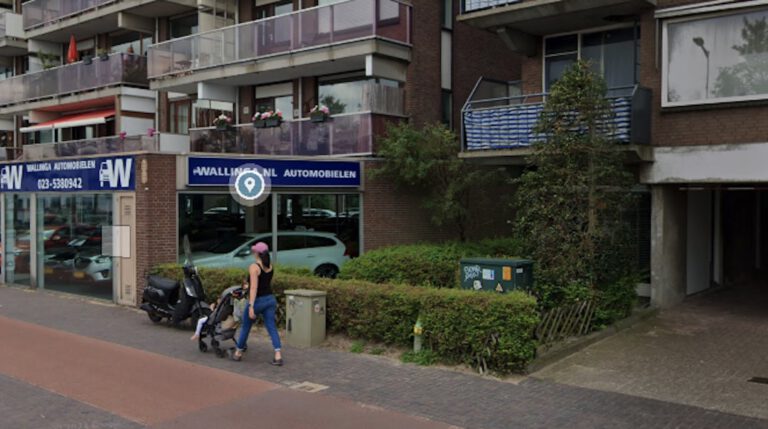
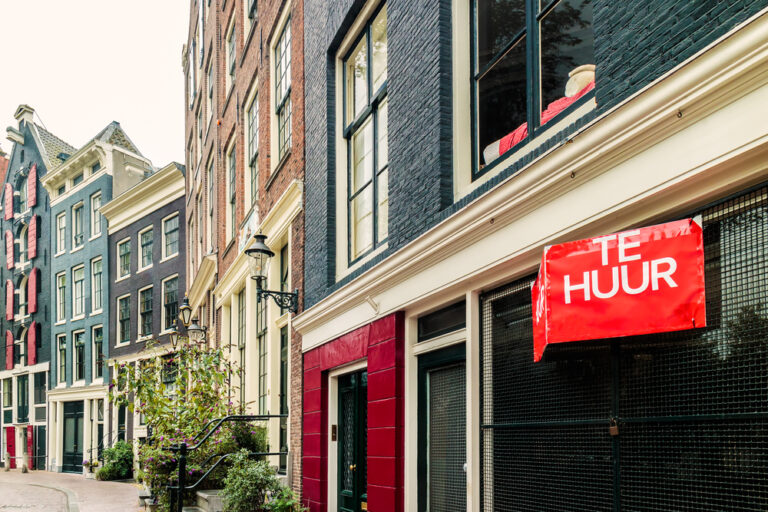
Do you remember that old magician’s trick where Houdini would emerge from a sealed box? For just €200,000, you could relive it daily when exiting your 14-square-metre flat in Haarlem.
That’s right: the apartment of 4.04 metres by 2.74 metres, plus a generous few metres of terrace and storage space, is on the market for a whopping €198,500 — that’s €14,179 per square metre.
The magic behind this special trick is called ✨ the Dutch housing market ✨.
Even the agent is not convinced
The “house” (we use the term loosely) offers its own kitchen, bathroom, toilet, and even overlooks the Spaarne river — but it was literally a storage room.
The agent selling the apartment, André van Regteren, doesn’t sound particularly enthusiastic about the space, either.
The asking price for this Haarlem listing is “a try-out,” Van Regteren tells RTL.
After all, the property has been sold at an unusually high price before.
Just three months ago, the current owner bought it for €145,000, more than 11% more than the original asking price of €130,000.
It was meant for his daughter, who was supposed to start her studies in Haarlem this September.
However, he decided to sell after a change of plans, and this charming all-in-one living (surviving?) space is back on the market.
Not an isolated case
These numbers would have been unimaginable in the past, but with the current housing crisis, they are not too far off the average asking price in big Dutch cities.
In places like Amsterdam or Utrecht, paying €12,000 to €14,000 per square metre is not unusual.
Apparently, this new normal is spreading to mid-sized cities like Haarlem as well.
Have you come across outrageous housing ads in the Netherlands? Our comment section is spacious enough to fit all your stories.
Normally, when the train on a night out is a spinning, thumping, loud experience, it’s because you’re making your tipsy way home—but at this festival next month, it’s an intentional event.
You can hop on the Amsterdam Dance Event (ADE) 50HERTZ Club Train and enjoy special performances all night long.
Tracks on the tracks
Big names like Martin Garrix are headlining the festival, which takes place from 16 to 20 October in various locations across the Dutch capital.
For the 300 festival goers (or passengers) boogying on board the Club Train, there will be more great DJs and artists.
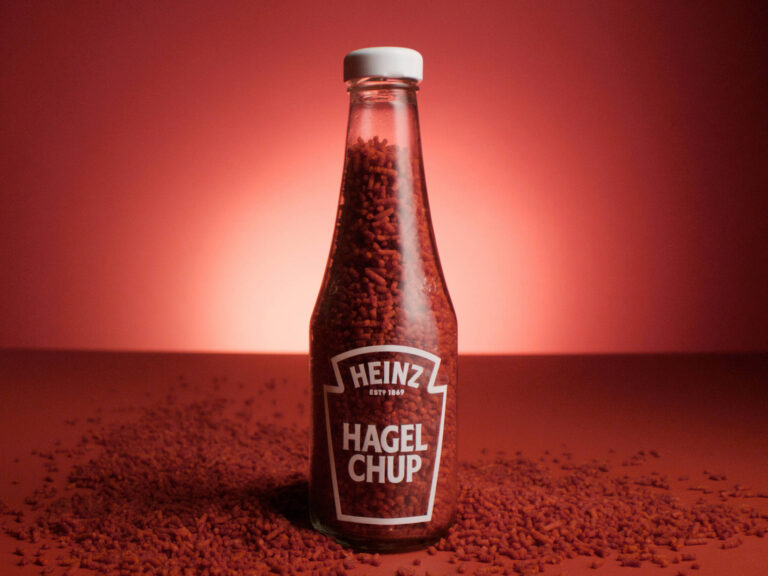
Tired of the usual patatje met mayo? You’re in luck, because Heinz is trying to win the Dutchies’ hearts with a new, bold invention: ketchup sprinkles, or “Hagelchup”. It launches today!
It’s exactly what you think it is: hagelslag, but made with ketchup.
Heinz even Dutchified their slogan for the occasion, turning it into “even if you sprinkle it, it has to be Heinz.”
Does it, though? You have three days to help the country decide. 👀
Between September 6 and 9, you can try Hagelchup at the pop-up Heertje Friet snack-bar, in Amsterdam.
Hagel-what?
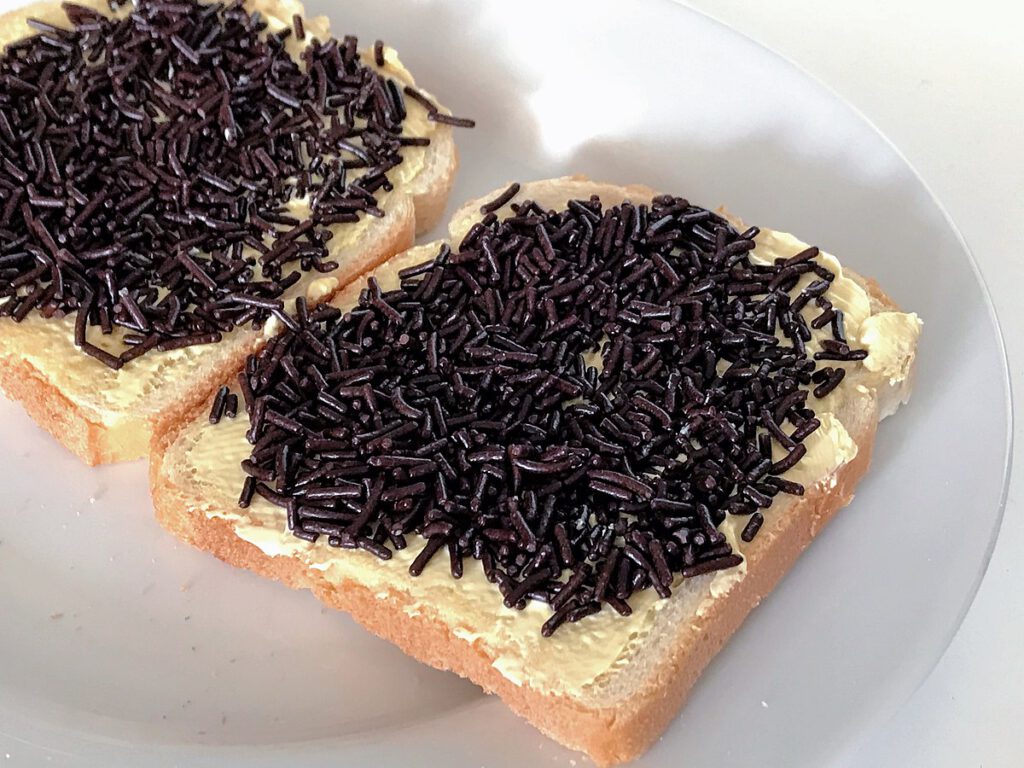
For those of you unfamiliar with Dutch cuisine, the “hagel” part of the new product stands for hagelslag, a staple in the Dutch diet.
It consists of chocolate sprinkles, usually consumed on a slice of bread covered in a thick layer of butter.
The Dutch consume this sweet goodness by the tonnes / Image: Amin/Wikimedia Commons/CC4.0
Hagelchup, is the fusion between this Dutch breakfast icon and Heinz’s signature ketchup sauce: ketchup-flavoured sprinkles!
A bold move
Sounds mad? Well, that’s kind of the point.
Hagelchup is the result of a collaboration between Amsterdam-based creative agency GUT and Heinz.
They knew that selling ketchup to a mayo-loving people like the Dutch would require a sprinkle of madness.
Dutch households are placing more and more of their money in savings accounts outside the Netherlands, with no less than €15 billion in savings held within banks in the Eurozone.
In fact, according to De Nederlandsche Bank (DNB) and the European Central Bank (ECB), the amount of savings in foreign accounts in the euro area has doubled compared to June 2022.
But why?
This post might have affiliate links that help us write the articles you love, at no extra cost to you. Read our statement.
Why are people moving their savings to foreign banks?
The cause for this is simple: Dutch savings rates are not as good as what some foreign banks can offer.
For example, ABN AMRO currently offers interest rates of 1.50% on its savings accounts. By comparison, German bank, Trade Republic, offers interest of 2.5%.
Savings platforms such as Raisin also offer similarly high rates to Dutch customers, allowing them to open multiple savings accounts with a variety of foreign banks.
As a result, NU.nl reports that while the amount of money remaining in the Netherlands is still the larger sum (by far), deposits at Dutch banks rose by only 7.8% while foreign figures soared.
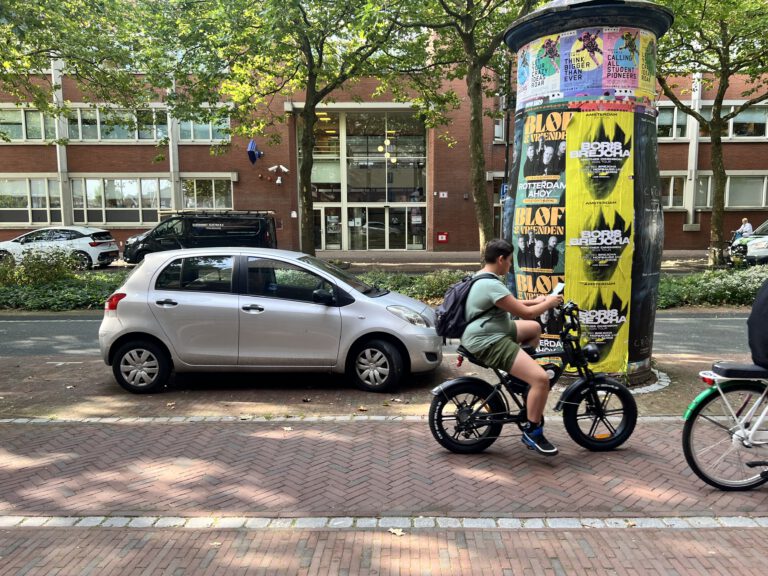
The days of embarrassing near-death experiences with pre-teens who cut you off at the speed of light on their fatbikes may soon be over — instead, they’ll be 14-year-olds.
The Dutch government is seriously eyeing the possibility of imposing an age limit of 14 years for riding fatbikes. They’re also looking to introduce a helmet requirement.
Which will majorly cramp riders’ style, we might add.
Almost a done deal
The new regulation was proposed by the VVD and NSC, and a majority of the House of Representatives has voted in favour.
While this is not enough to make the decision final, the Minister of Infrastructure Barry Madlener (PVV) has expressed that he intends to carry out the wishes of the cabinet, reports RTL.
With the minister’s approval, it shouldn’t take long before this change comes into effect.
Too many accidents
The wide support behind the regulation of fatbikes is due to the bad name they’ve made for themselves.
The stats about this year’s rent increase are in, and they’re looking bad. In 2024, rents went up by an average 5.4% in the Netherlands — that’s the highest increase since 1993.
The data, published on September 4 by Statistics Netherlands (CBS), also shows variations across cities and provinces, with some surprising results.
Also trouble outside of the Randstad
The podium for the cities with the highest rent increases is entirely occupied by Randstad cities — few surprises there.
Rotterdam saw the sharpest increase, with rents rising by a whopping 5.9% in just one year.
This was followed by Utrecht, which saw an increase of 5.8%, The Hague with 5.3% and Amsterdam with 5.2%
However, the grass isn’t greener outside of the Randstad.
Data shows that, believe it or not, the fastest growing provinces in the Netherlands were actually Drenthe (5.8%), Overijssel (5.7%), and Gelderland (5.6%).
Yep, not North Holland.
Social housing sees the highest increases
Interestingly, those of us looking to rent in the social housing sector saw the sharpest increase.
In this sector, rents rose by an average 5.7% compared to 2023. This is an increase of 0.7% more than rents for privately owned homes.
In a country where two-thirds of homes for rent are owned by social landlords, this means that many tenants were hit by an even worse price increase than suggested by the general statistics.
And what’s worse is, social housing tenants are expected to be hit even harder next year. Data forecasts a 6.5% rent increase for social housing in 2025, reports NOS.
How is this allowed?
According to the Ministry of Housing and Spatial Planning (VRO) this year’s staggering rent increase is “not unexpected”.
Rather, it is a natural consequence of this year’s particularly high average wage increase.
However, it is also partially the product of a legal loophole. While Dutch law protects current tenants by setting yearly increase limits, this mechanism doesn’t apply to new contracts.
Have you been affected by this year’s rent increase? Tell us about your experience in the comments below.
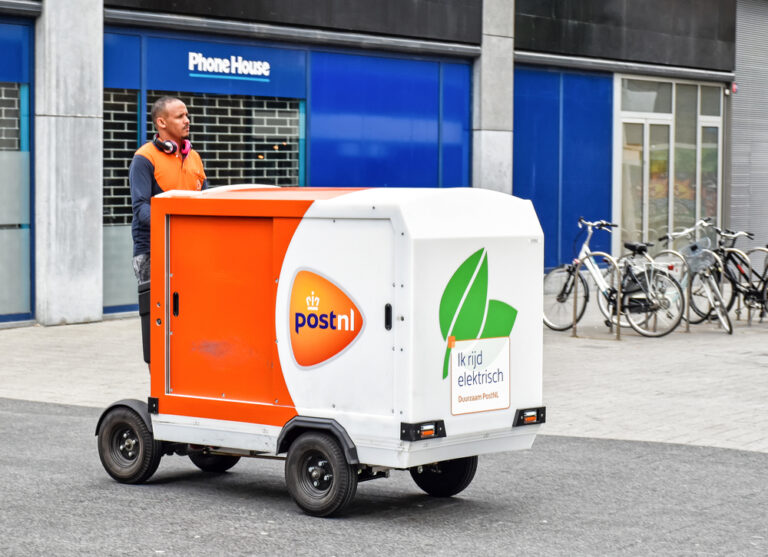
If you receive a parcel next year from anyone other than yourself (or maybe including yourself), be assured you are very loved. The sender thought reaching you was worth the high pay and lengthy delay.
Well, that’s our romantic take on the news that PostNL is now free to increase rates for sending post next year, and business mail taking not one but two days to arrive.
First, check the costs with concern
Just like we wait longingly at the window for our deliveries, we will have to wait to see the exact rates for individual services that PostNL determines for next year, nu.nl shares.
But here’s why rises are expected: the Dutch regulator ACM has allowed PostNL to charge more for regular mail, parcels and registered letters.
That’s because we send less post, but employees earn more than before.
So, the maximum weighted average cost of these services will increase more than 8%, from the current €2.69 to almost €2.91.
Currently, businesses using PostNL can expect their mail to be delivered within 24 hours. However, PostNL says this will have to be increased to two days.
If businesses still want to receive their post within 24 hours, geen probleem. They just have to pay a fee.
This majorly affects businesses, but normal letter mail is not exactly in the clear either.
In the long term, PostNL also wants to increase normal mail delivery to two or even three days. But at least that has to wait until they can adjust the postal law.
How do you feel about the rising costs and delivery times for mail? Let us know in the comments.
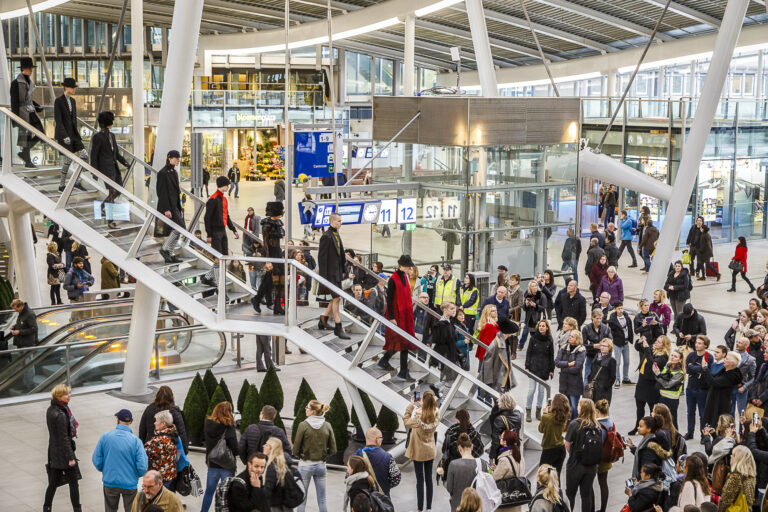
The latest European Railway Station Index is out (yes, that’s a thing), and Utrecht Centraal is celebrating a big win, claiming third place in the 2024 rankings.
How did we get here? Contrary to what you may think, the Consumer Choice Center (CCC), the organisation behind the index, didn’t just throw darts at a map to get these results.
They meticulously ranked the 50 busiest train stations across Europe, judging them on everything from in-station services like restaurants and Wi-Fi to the number of delays that make you question your life choices.
Switzerland on top 👑
In a plot twist that surprises absolutely no one who has ever stepped foot in Switzerland, two Swiss stations, Zurich and Bern, took the top two spots.
But let’s talk about Utrecht Centraal, which is not just the only Dutch station in the top 10, but also jumped two spots from last year to get third place.
How did it do that? If you ask us, we’re not quite sure. But if you asked the researchers from the CCC, they would say it’s largely due to the station’s great variety of shops and food options.
“Commuters do not just want to grab a meal on the way to work but also want to save time, reduce stress, and enjoy doing their shopping at the station,” the report reads.
Who else made the top 10?
Curious how the rest of Europe scored? Check out the top 10 best European train stations. 👇
1
🇨🇭 Zürich Hauptbahnhof
2
🇨🇭 Bahnhof Bern
3
🇳🇱 Utrecht Centraal
4
🇫🇷 Paris Gare du Nord
5
🇫🇷 Paris Gare de Lyon
6
🇫🇷 Paris Gare Montparnasse
7
🇦🇹 Wien Hauptbahnhof (Vienna)
8
🇮🇹 Roma Termini (Rome)
9
🇫🇷 Paris Gare Saint-Lazare
= 10
🏴 London Bridge
= 10
🇩🇪 Leipzig Hauptbahnhof
Are you surprised by the CCC’s findings? Share your thoughts in the comments.