But how could you describe borrelen to a non-Dutchie? It’s more than an after-work drink. It’s almost like a gathering of professionals collectively winding down after a long workweek with a drink.
This is what Wikipedia defines as borrelen:
an informal designation for a small glass of spirits
an informal social gathering of a select (invited) group, often with a theme
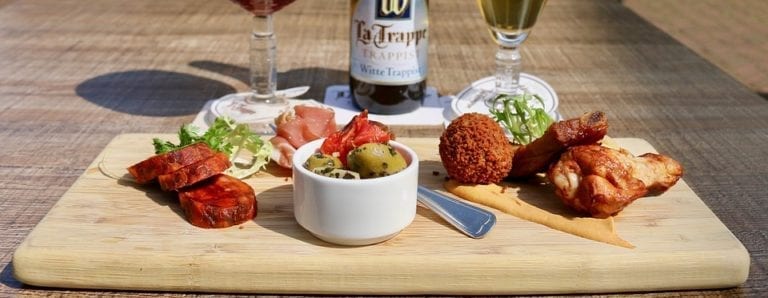
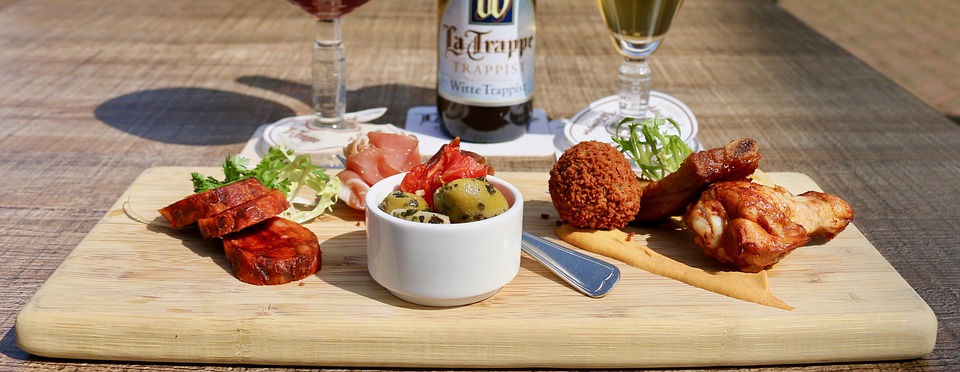
Typically, you’ll order a biertje or a glass of wine and have some snacks (borrelhapjes) with it, like bitterballen — the famous deep-fried meatballs, kaasstengels — deep-fried cheese sticks, or borrelnootjes, which are, you guessed it, deep-fried nuts. I see a pattern here.
Bitterballen can’t be missing when you’re borreling. Image: Pixabay
While some might be sceptical about the offer of mainly oily, fatty snacks to accompany their drink, I’ll say the Dutch are on to something here. It’s pretty smart.
Before you start digging out your Albert Heijn pre-washed and neatly cut baby carrots, let me say this: you want something substantial to snack on during a borrel. Sticks of raw veggies are simply not cutting it.
Be smart — enjoy some borrelhapjes
Lunch is already digested (well, almost anyway). Your stomach feels empty, and those beers/wines go down way too easily.
Before you know it, you’ll feel a little tipsy and if you’re not careful, you’re lying under the table before the clock hits 8 PM.
You don’t want this to happen at your office borrel. Image: Pixabay
Since borrelen doesn’t mean getting totally out of control wasted as you’re still in an office-type setting, do what the Dutch are doing, and enjoy some deep-fried snacks while drinking and socialising and you’ll keep your alcohol level under control without a problem.
The end of the workweek calls for a celebration
I had my fair share of borrels or vrijmibos (short for vrjidag middag borrel aka Friday afternoon drink) during my time working in various offices in Amsterdam.
And I have to say that I don’t miss a lot of things from my time pre-freelancing but borrelen is definitely one of them.
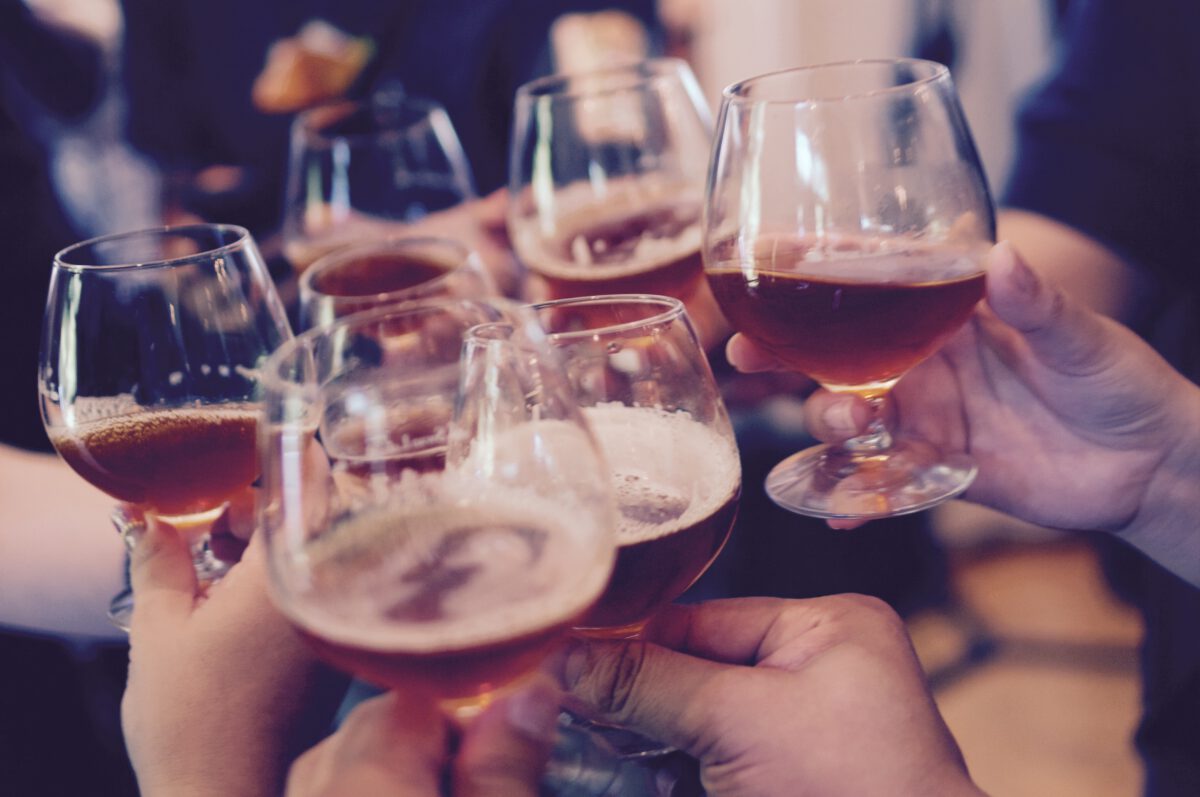
Nothing beats a well-deserved drink or two with colleagues after a long work week. Image: Unsplash
Sharing a well-deserved drink or two (or three..) with your colleagues at the end of a long week is a highly enjoyable bonding experience and it gives you a clean cut between the end of work and the start of the weekend.
So, next time your Dutch colleague invites you to a borrel, you know exactly what he or she is talking about and you can enthusiastically answer: Gezellig! Let’s go!
Have experienced the art of borrelen? How did you find it? Let us know in the comments below!
Just as we were feeling smug about late summer here in the Netherlands with a balmy start to the month, Code Yellow showers are about to rain on our parade.
And the heavens are truly open; in the west, the rainfall in the period from September 11 to 12 is close to the average amount for the whole month. ☔
As a result of this, a Code Yellow weather warning is currently in effect across the country, the NOS reports.
A stormy start to September
We’ve already spotted some suspiciously festive kruidnoten in the shops, so it’s no surprise the Dutch weather is also putting us in a wintery mood.
There will be heavy showers and thunderstorms, with a chance of hail, particularly in the west and north today.
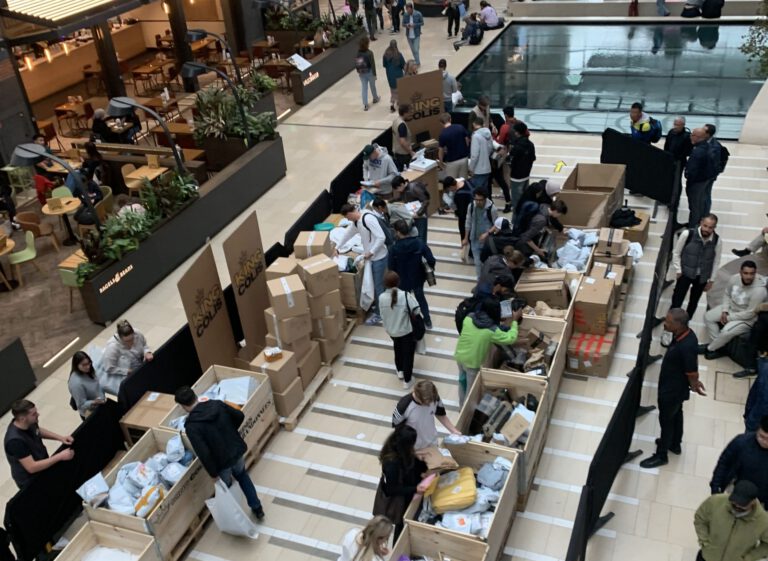
Surprise, surprise! You don’t need to wait until Christmas to open packages this year. A pop-up store in Utrecht is selling very cheap, very mysterious lost packages — but only until Saturday!
For as little as €1.99, you can buy a parcel that never reached its destination and finally give its mysterious contents a home. Anything could be in there — exciting, right?
How does it work?
If you’ve ever been to a thrift store, shopping at the King Colis pop-up will be quite a familiar experience for you.
The rules are simple: you wait in line for your turn, and then you have ten minutes to pick and weigh any package you want — only, you are not allowed to see what’s inside.
After taking your pick, you pay for your chosen parcels according to their weight and type: €1.99 per 100 grams for standard packages and €2.79 per 100 grams for Amazon packages.
That’s when you’re finally allowed to open your treasures, and find out whether you’ve struck gold — sometimes, literally.
People have found all sorts of stuff, including clothes, video games, sex toys… and an actual gold bar.
That is also why you must be an adult to shop at King Colis, or be accompanied by one.
Who’s behind this?
Every year, thousands of parcels somehow miss their destination and remain unclaimed. Usually, they are destroyed — unless someone has an idea like the King Colis initiative.
King Colis was set up by two French men, Killian Denis (44) and Alexis Faure (44), who decided to buy lost parcels and re-sell them, putting them back into the economy.
That way, not only do they not get wasted or contribute to polluting the planet, but they also have the chance to make someone happy.
Yes, that someone could be you 👀
What do you think of this initiative? Tell us in the comments below.
The leaders of PVV and VVD, two of the four political parties in the Dutch government coalition, have expressed that they wish to introduce border controls in the Netherlands.
The remarks follow Germany’s recent decision to introduce passport checks along its borders as of September 16.
A long-harboured desire
According to the NOS, PVV leader Geert Wilders and VVD faction leader Dilan Yesilgöz both claim that the intention to introduce border checks actually predates Germany’s recent move.
They maintain that, in fact, the idea was already part of the current Dutch government’s coalition agreement, which the NSC and BBB have also signed.
However, according to Wilders, the plan seemed too complicated to execute.
That was until he witnessed Germany’s move, which made him think, “‘Gosh, we could have done it too’”.
Now, he wants to follow in Germany’s footsteps — “the sooner the better,” in his words.
What exactly these border checks would look like if implemented has not been elaborated on.
The Netherlands already carries out some border control using random or targeted checks related to specific intelligence. However, making the checks even more regular would require special permission from the EU Commission.
Not everyone is as enthusiastic
Regardless of what was or wasn’t written in the agreement, the third biggest party in the coalition, the NSC, might be pulling the brakes.
NSC MP Diederik Boomsma agrees that the Netherlands could have implemented border checks long before they were brought in by Germany. After all, France has also been doing the same thing.
However, crucially, he also thinks that implementing border checks “is not the ultimate solution,” and the Netherlands should actually focus on strengthening “the EU’s external borders.”
Unsurprisingly, the opposition is also voicing concerns over the PVV and VVD’s intentions, with GL-PvdA arguing that Germany’s move, far from being an example, might be illegitimate.
For now, the debate rages on.
What do you think of the Netherlands potentially also introducing border checks? Let us know in the comments below.
Before checking out your groceries, you cannow check out the singles in the supermarket too. A new Dutch “flirting hour” is here and ready to matchmake.
It all started with a viral TikTok in which a Spanish woman explains that between 7 and 8 PM in her local supermarket is the perfect window of opportunity for flirting.
The sign you’re on the market? Placing a pineapple upside down in your trolley.
Now we have the Dutch answer, so it’s time to shop ’til you drop (some serious game). 🔥
Let Jumbo jump-start your love life
The Romans had Cupid, the Greeks had Eros, and the Dutch have Jumbo. 💘
The big yellow supermarket is brightening up your weekly shop with its own variation on flirting hour, so forget the pineapples real quick.
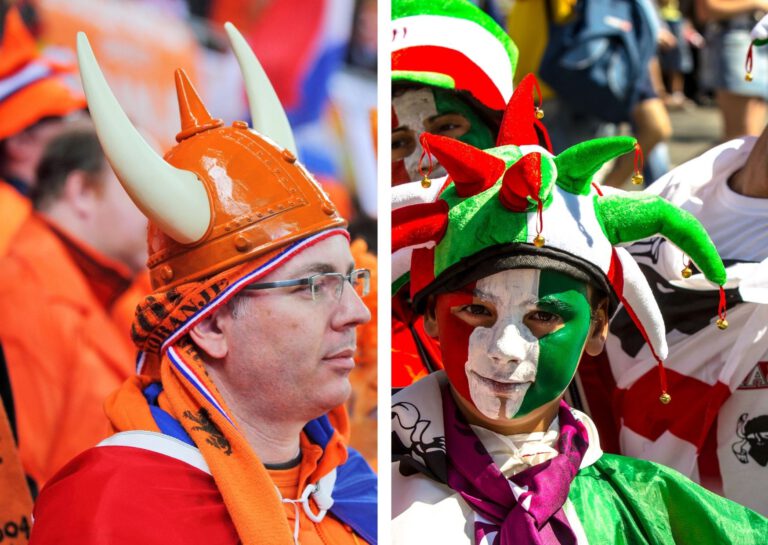
When I left Italy for the Netherlands, I packed my belongings (Parmesan and pesto included) and one big assumption: that the culture shock would be minimal.
After all, I was just moving a two-hour flight away. How different could Italian and Dutch people really be?
Very, it turns out. In at least nine ways.
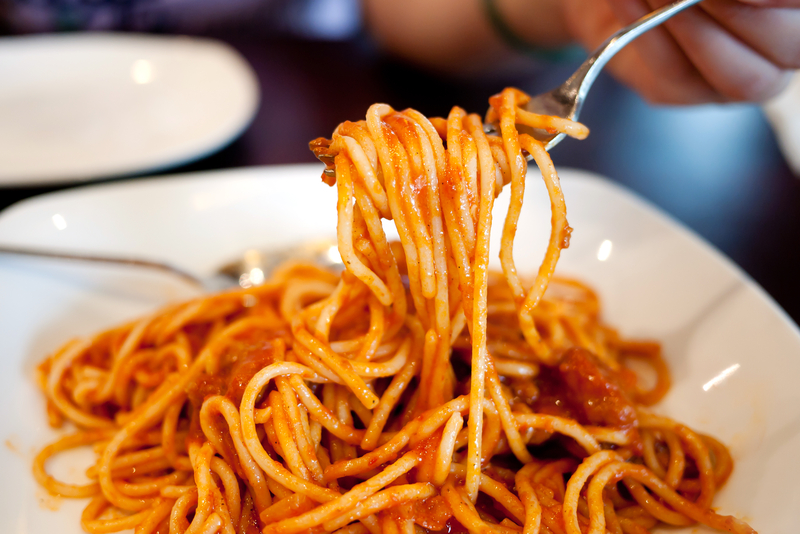
1. Italians eat a minimum of two “warm meals” per day
What the Dutch mean by a “warm meal” has little to do with temperature, and more to do with the amount of food that is consumed, and the effort dedicated to the consumption ritual.
One plate of pasta a day keeps il dottore away 😋 Image: Dreamstime
In their kaasbroodje-powered minds, one “warm” meal per day is enough. So, they push through one sad, small sandwich at a time until about 5:30 PM, when they finally allow their famished selves a proper meal.
The concept of only having one full meal per day is not only offensive to our stomachs, but also to our agendas: all of our plans revolve around food.
In Italy, things don’t happen in the early or late afternoon, they happen “after lunch” or “before dinner”.
I know, that’s hard to understand when the event that’s meant to split your day into a “before” and “after” consists of just shotting down half a mug of mushroom soup at your desk. 🤦♀️
2. Dutchies make plans in advance — only to often cancel them
Dutch people are all cool and spontaan (spontaneous) until you hit them with a vague, last-minute invitation. What time is “after dinner”? Pure paniek.
For the Dutch, the correct way of making plans is sending a DatumPrikker link at least one month in advance so that everyone can fill in their availability — very efficient.
Except, having so much time to think actually results in way more cancellations.
Italians don’t plan anything months ahead. Maybe medical appointments and weddings, but the list ends there. When they do make a plan, they consider it official, with no need for further communication.
Dutchies, on the other hand, need reassurance. If you don’t double-check with them, chances are that they will assume the plan is off and fill that 37-minute time slot with another activity.
At least they will show up for it on time, though. Yes, that chill you’re feeling is from the shade I’ve just thrown at you, amici. 👀
3. Italians are physically compelled to enter every church
Trust me when I tell you that all Italians abroad “grew up Catholic but not really practicing”…until they spot a church. They simply have to go in.
No, silly, not to pray! To sightsee.
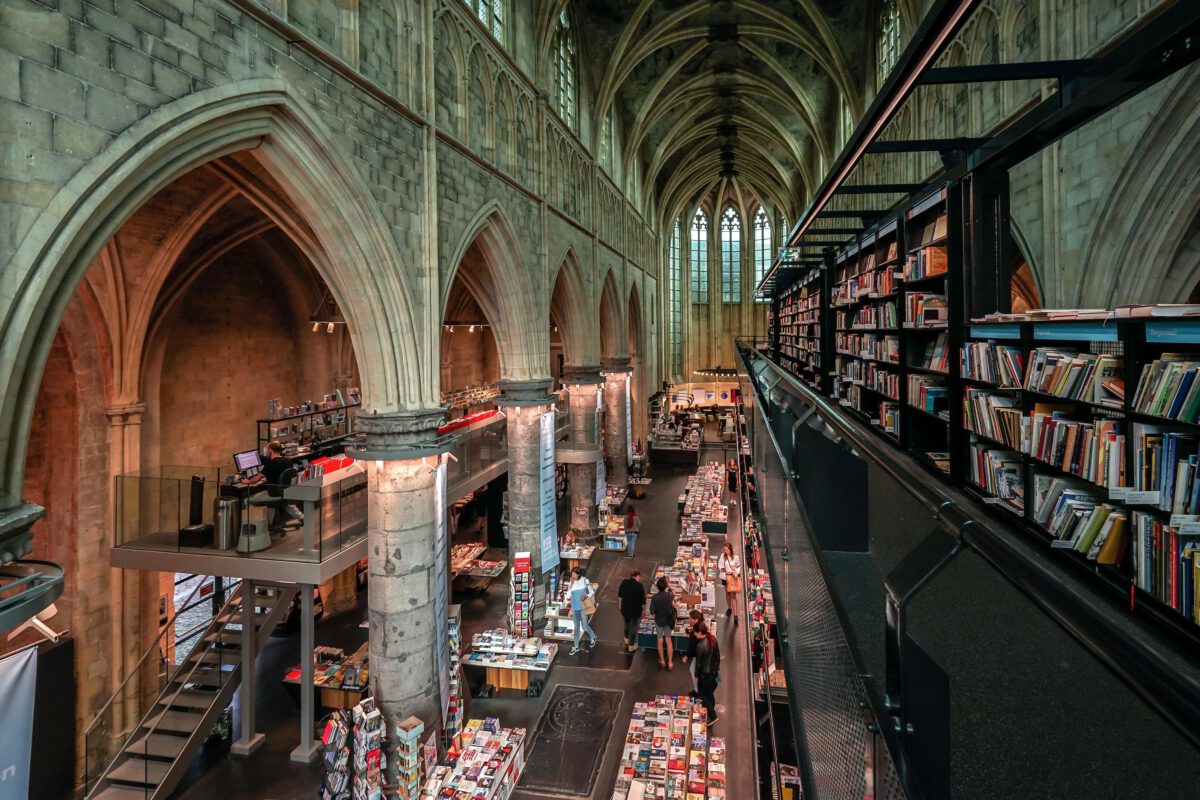
Dutch people don’t understand the Italian urge to enter churches for touristic purposes. They either enter a church for religious reasons, because it’s now a swimming pool (yes, that happens), or not at all.
Imagine an Italian’s face entering this Dutch church-turned-bookstore in Maastricht 🤯 Image: Bettina Miera/Wikimedia Commons/CC4.0
Meanwhile, Italians are used to treating churches as free art museums at best and free indoor seating at worst. Regardless, they will always check them out.
Helaas, the Catholic opulence they are anticipating is rarely found in this Calvinist land.
4. Dutchies are very quiet on public transport — before midnight
Dutchies take their stilte (silence) areas on trains very seriously, and will guard them fiercely by staring down whoever dares open their mouth.
Italians, on the other hand, see every commute as a chance for yapping and are not easily discouraged by a sign.
After all, are you even Italian if you don’t call mamma from the train?
However, something strange happens to the Dutchies who find themselves on trains after midnight.
No, they don’t grow fangs and start howling at the NS monitor. It’s much more sinister.
They grow huge lungs capable of singing traditional songs for hours on end, loud enough to wake their ancestors from their farmer’s sleep.
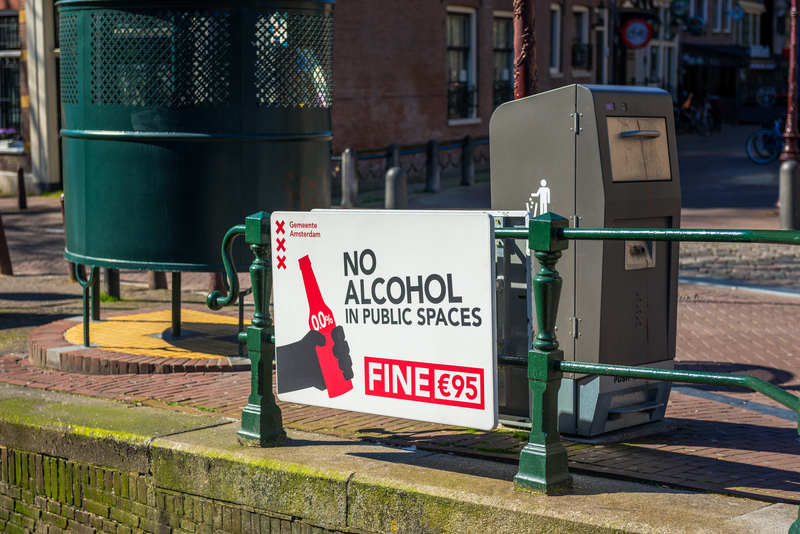
5. Italians insist on drinking outdoors — and the politie hates it
Italians prefer drinking outside but don’t picture the Dutch terrasjes, with their neat little designated spaces on the curb.
Think of a random public surface, like the middle of a square, with ten people plopped down on the ground. Or church steps, providing the perfect people-watching angle on said square.
In this country, however, that simple pleasure is denied. Does it stop us? No. 😎 But does it result in us pathetically apologising to the politie like they’re our parents? Sì. 😞
6. Dutchies call professors by their first name
In the Netherlands, most administrative correspondence does end in the passive-aggressive “I trust to have informed you sufficiently”. People-to-people exchanges, however, are mostly pleasant, even between students and professors.
Meanwhile, in Italy, the perfect student email entails a 90% honorific titles to 10% actual content ratio. All for the Dear, Distinguished, Esteemed dude in question to reply “ok”.
You can imagine our discomfort when a Dutch professor asks us to call them by their first name or replies in a friendly and timely manner. What do you mean I should “enjoy my weekend”?
The Catholic guilt is real.
7. Dutchies think beer is perfect for every occasion
Italians have a different go-to drink for each setting. Is it an afternoon hang-out? Espresso. An aperitivo? Aperol spritz. A night out? Mixed drinks it is.
Dutchies, however, only have one mode: biertje mode.
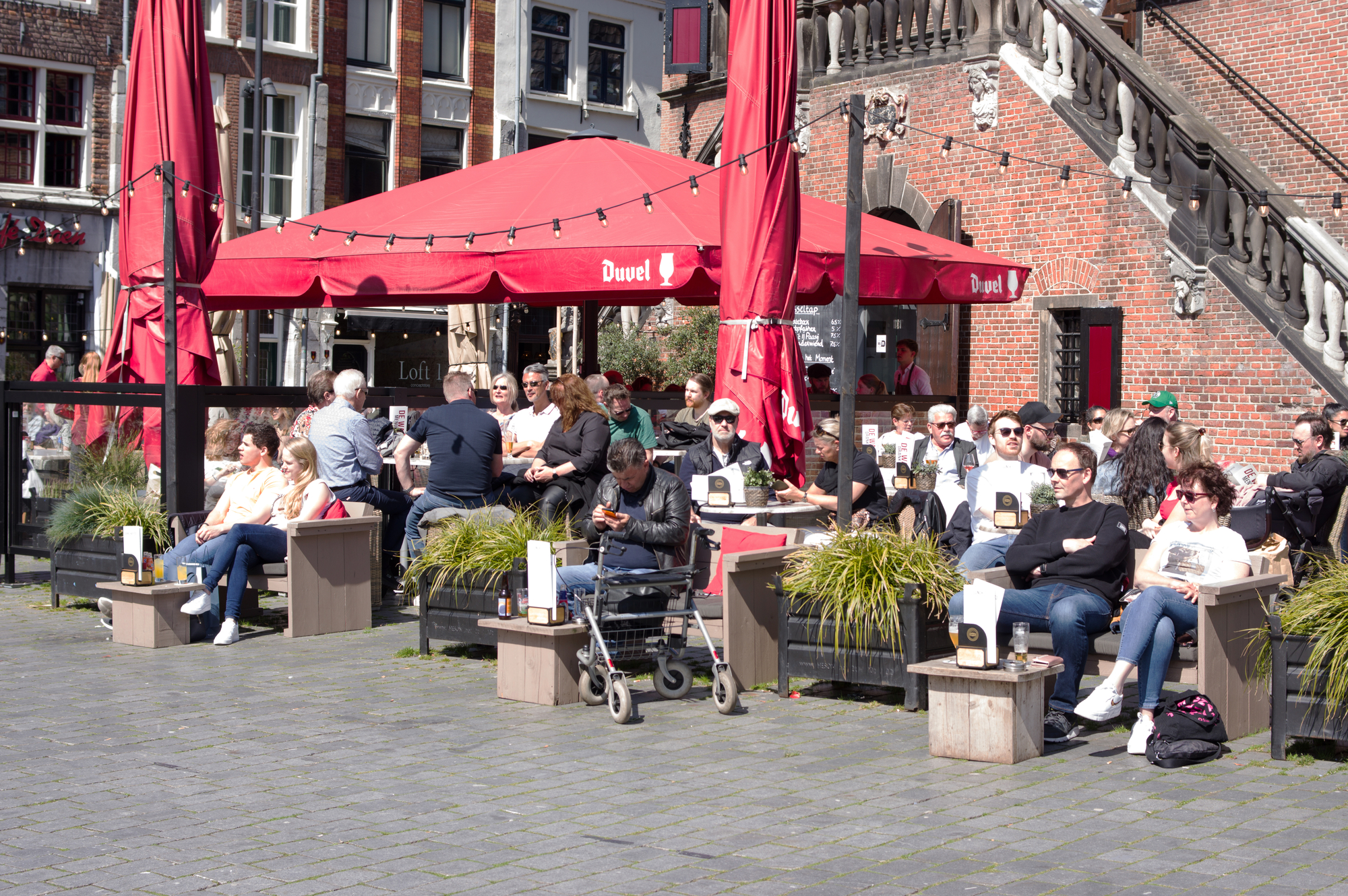
Dutchies never miss out on an occasion to drink beer while sitting in the sun (when it’s there!) ☀️ Image: Depositphotos
Even while clubbing, buying 13 tiny Heinekens will somehow seem like a wiser investment than buying two gin and tonics to them. Call it Dutch math!
8. Italians will go to the ER for every small health scare
Complicated insurance policies and an obscenely long waiting list can often discourage Dutch people from seeking a professional opinion on their health scares.
Add to that the Dutch doctors’ infamous habit of dismissing their patients’ symptoms, and people will often just decide to save themselves a trip, pop a paracetamol pill and hope for the best.
Italians, however, are built different. Less robustly, you’d guess, judging by our number of visits to the ER — but also more stubborn.
Hair dryers are our best friends. No matter the temperature, we will blow-dry our hair, lest we catch the infamous “colpo d’aria” (air blow) — the culprit of all Italian ailments.
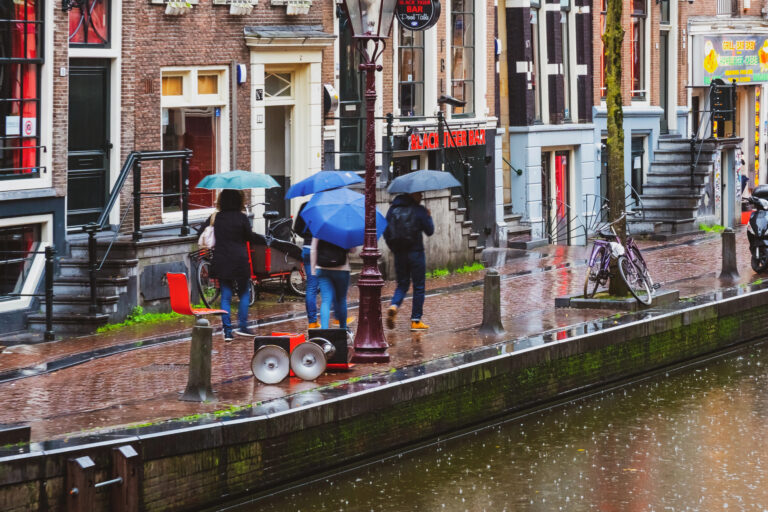
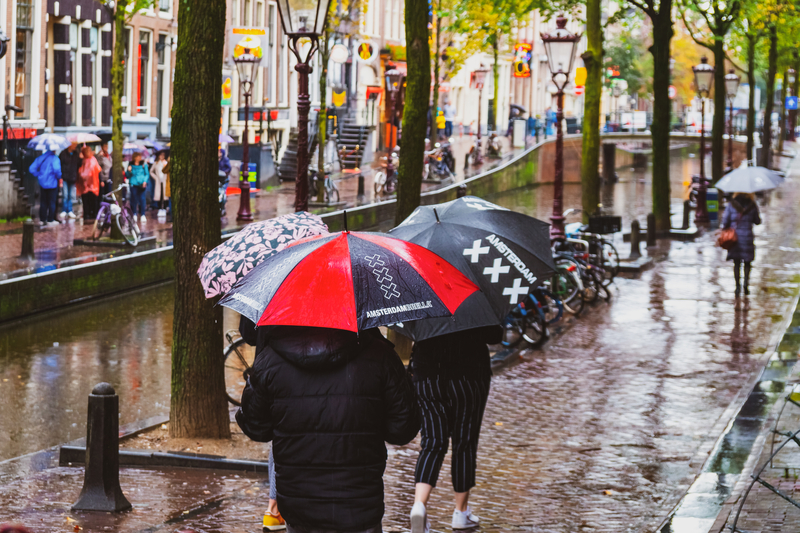
Italian law prevents us from leaving Amsterdam without at least one souvenir umbrella ☂️ Image: Dreamstime
We also carry an umbrella everywhere, and we’re not ashamed of opening it after (1) drop of rain.
However, there is something faster than an Italian’s movement to whip out their umbrella: the Dutch passersby’s urge to comment “je bent niet van suiker gemaakt”, you are not made of sugar.
What if I am, Joost? Will you make me warm milk and tuck me in when I catch a fatal cold? Will you, though? Please, I’m lonely. 🥺
These were just nine differences between Dutchies and Italians that I’ve noticed so far. Are there more? Natuurlijk. Are there enough to put us off interacting with each other? Never. 🥰
After all, if there is one thing Dutch and Italian people have in common, it’s that we never miss out on a chance to complain.
Deep down, we love bickering over these tiny cultural clashes, especially in front of a good Prosecco. Or beer? 😉
What other differences between Italian and Dutch culture can you think of? Tell us all about it in the comments below.
Like many in the Netherlands, I spend a lot of my working hours working from home.
However, I too often find myself hunched over my dining table, cramping at a too-small desk, or shifting awkwardly at my kitchen counter.
So when the chance came to review Flexispot’s E7 Pro Standing Desk and BS12 Pro Ergonomic Chair, I (and my back) said, “Hell yes.”
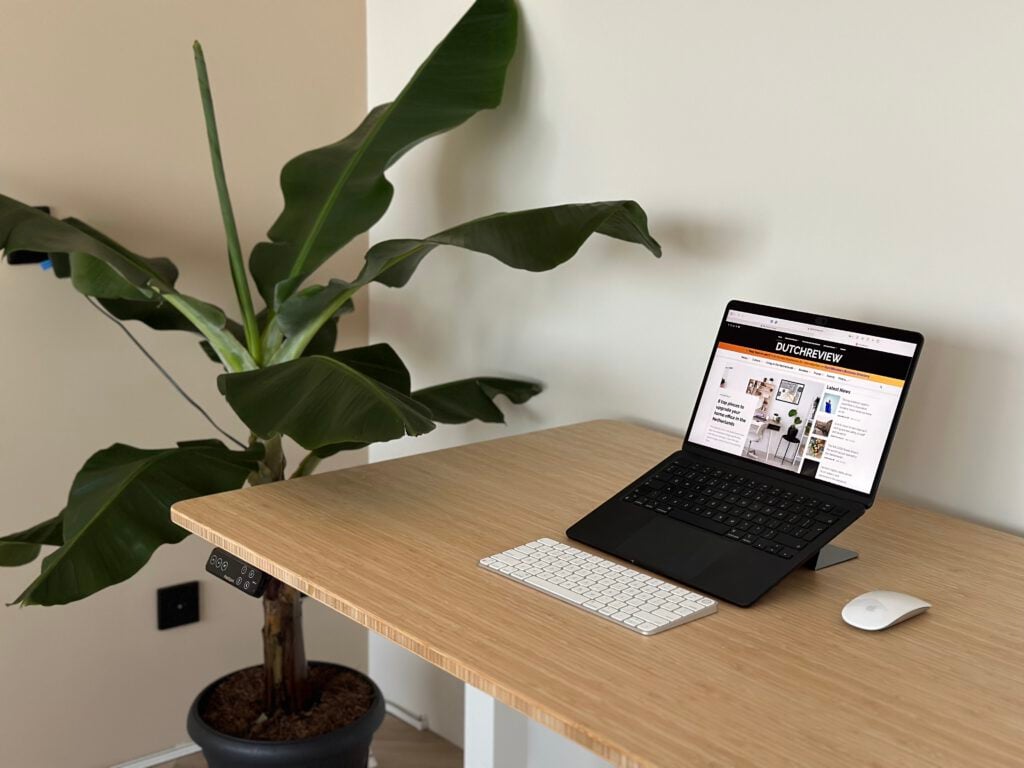
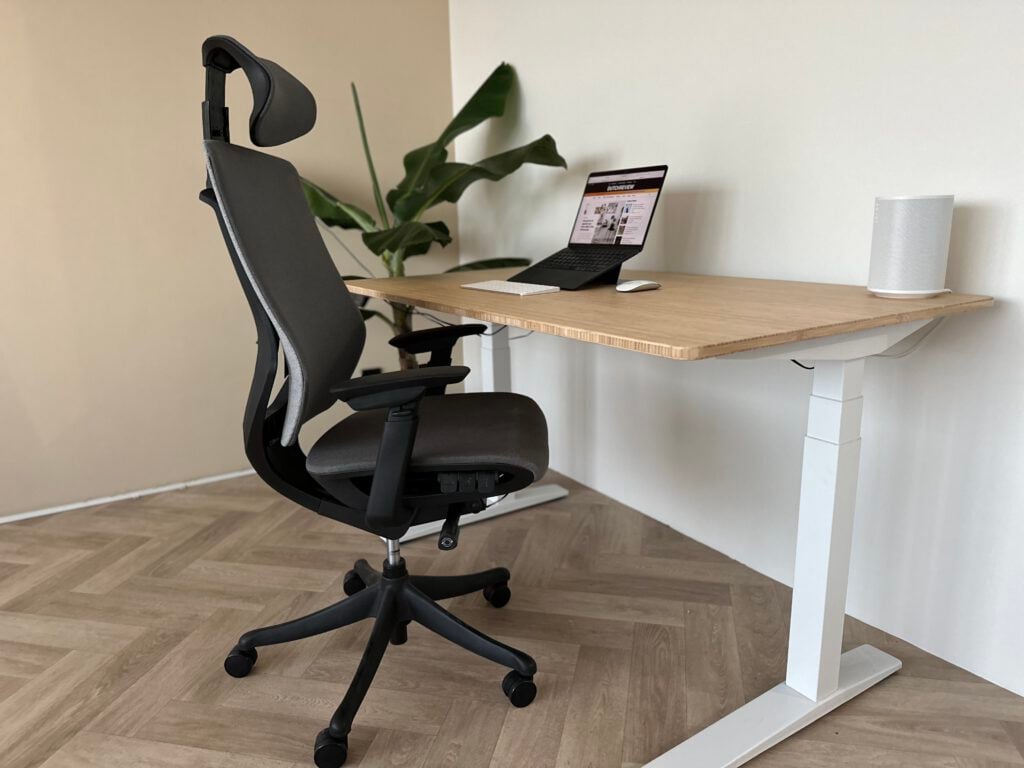
Firstly, can we appreciate how sleek it looks? Image: Samantha Dixon
I’ll disclose here that I was gifted these items in return for my unbiased review: the good, the bad, and the ugly.
The lowdown on the E7 Pro
Flexispot’s E7 Pro is one in a formidable line-up of standing desks. The website boasts that it:
is aesthetic (I can’t deny this one) with C-shaped legs that allow plenty of leg space
includes a magnetic, hidden cable organiser that installs in one second
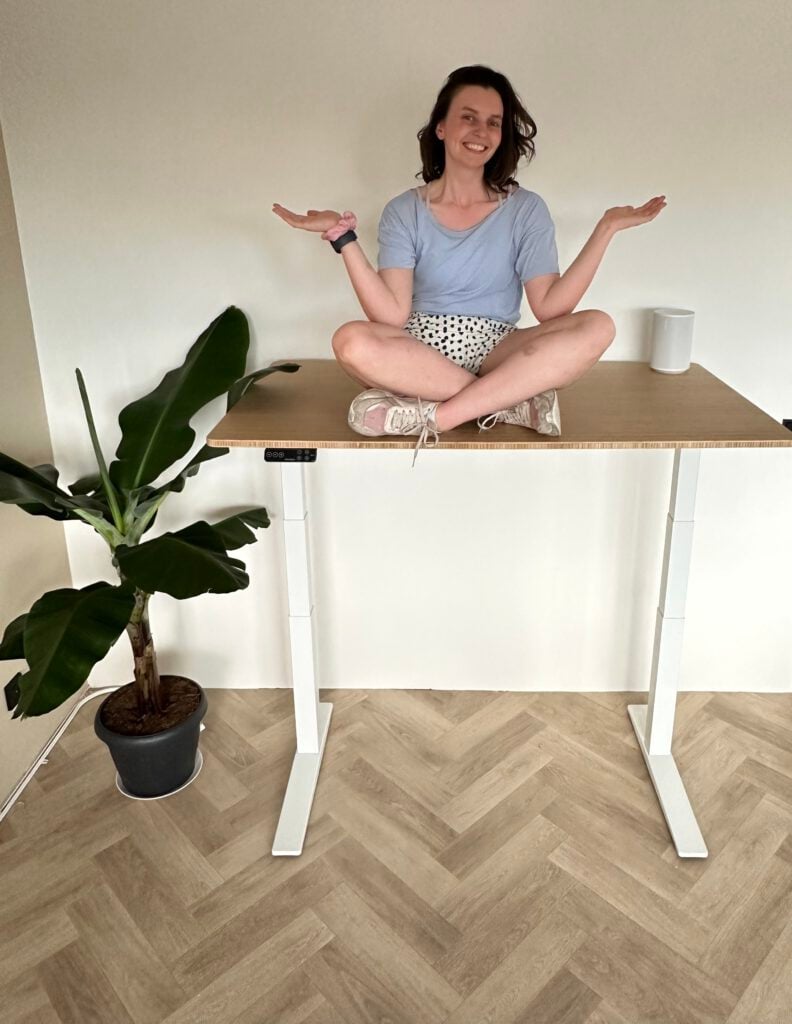
contains an improved motor, with a load capacity of 160 kilograms and an anti-collision system
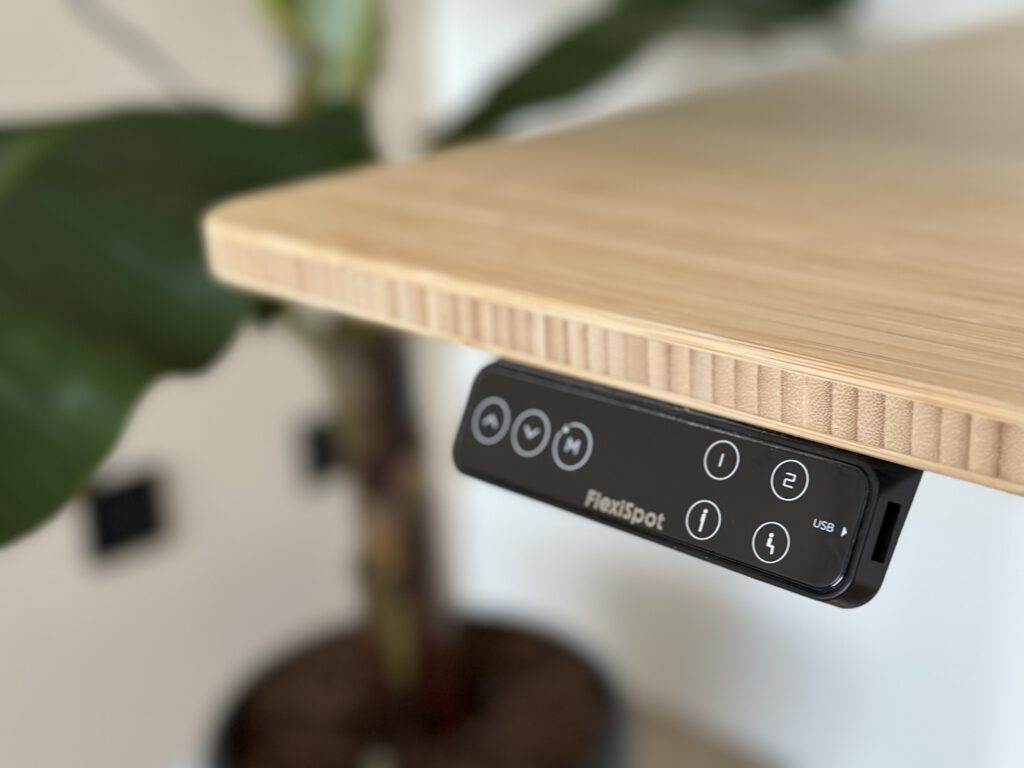
has an LED screen with four preset heights and a USB charger
So did it live up the the claims? Let’s take a look.
It’s aesthetic, for sure
While ordering, I was given the option on the website to choose the desk’s frame (white or black), the material and colour of the desktop, and finally, the size.
Wanting to keep my apartment light and airy, I chose white legs and a bamboo benchtop — and what a choice.
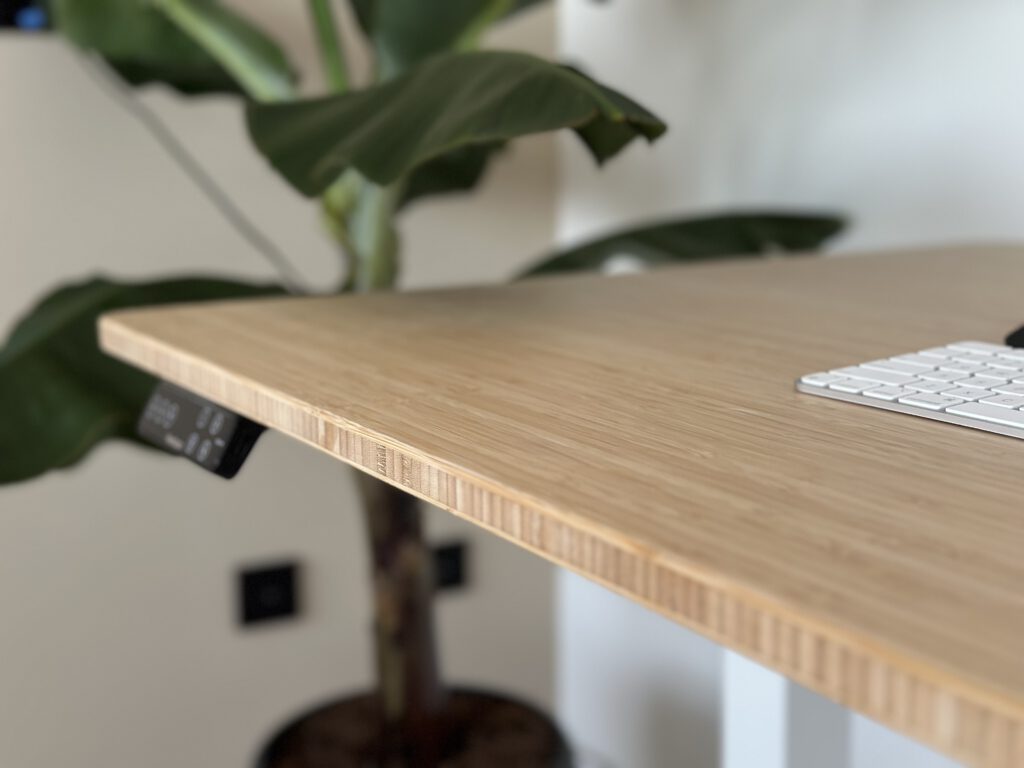
The legs are heavy-duty metal, which means they’re a little heavy but incredibly solid. Combined with the bamboo top, which is smooth, natural-looking, and a definite vibe, I was happy. The bamboo detailing on the edge is a really nice touch.
The finishes are smooth, and the coffee cups leave no stains — what a win. Image: Samantha Dixon
I chose the 140×80 centimetre option because I wanted some space to spread out. To be honest, for my little office space, I could have gone smaller — but hey, I’ve got desktop for days, and my empty coffee cups love to spread out.
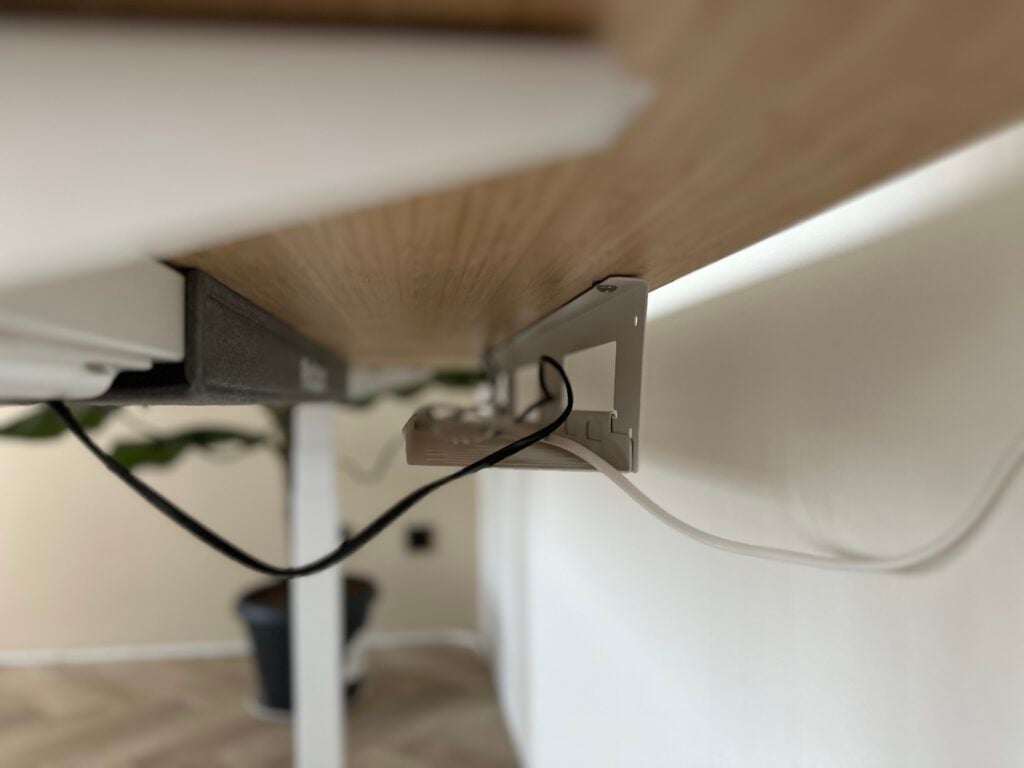
The magnetic cable organiser is the bomb
I’m a fan of pretending that everything, including literal cable chargers, are wireless — so tucking them away in the cable organiser was a natural fit.
The cable organiser can be installed facing either way. Image: Samantha Dixon
The organiser also lives up to the claim that it installs in one second. I know, because I accidentally kicked it off at one point and was tasked with putting it back.
The motor leaves nothing to be desired
I’m a regular user, not a standing desk expert: but I can say that I would ask nothing more from a standing desk.
I’ve previously tested desks that are manual with a handle you have to crank to go up and down. Let me tell you, this desk is a breeze.
You can pile up to 160 kilos on this thing, so obviously, I had to climb on board. Image: Samantha Dixon
The motor is incredibly quiet, runs smoothly, and is fast enough that you don’t get bored and have to put on TikTok while you wait.
And does the anti-collision work? You betcha. When I bumped the desk up against my windowsill and pushed the Up button, as soon as it hit an immovable surface, it stopped in a second (with a little jolt, but hey, it stopped!).
The controls are easy to use
Finally, the controls. I was really impressed at how responsive they are. There are seven touch buttons: Up, Down, Sit, Stand, Preset 1, Preset 2, and Memory (M). The exact height is shown on an LED display.
While the controls initially look a bit confusing, they’re unexpectedly simple to set and use. Image: Samantha Dixon
It took me two clicks to save my favourite heights by clicking “Memory” and then the preset I wanted to save it to. From there, it was just one click of the preset for the desk to rise or lower to my favourite spot.
Delivery and installation
The desk was delivered by a courier and, through pure luck, they were ridiculously friendly. They even waited while I biked frantically to receive the parcel. These results aren’t typical, but shout-out to my delivery driver, what a smile.
I’ll admit that I pawned off installation to my father-in-law, so I asked him for his thoughts on the process. Here’s what he said:
“Het is makkelijk,” (It’s easy), he said, as a man of few words. When pressed, he expanded:
“All the tools were included, I could understand the instructions, and it took about half an hour to put together.”
I highly recommend making it in the room you are going to use it in. It was heavy to shuffle around the house and a bit awkward to fit through doorways, but at least it was a good workout.
In a separate package came potentially the best desk chair I have ever used (and again, I’ve promised an unbiased review and am sticking to that).
The BS12 Pro Ergonomic Desk Chair looks like something a villain would sit on — a villain that cares about their spine health.
Basically a La-Z-Boy. Image: Samantha Dixon
This chair features height, back angle, and seat depth adjustment. The armrests can be adjusted up and down, backwards and forwards, or pivot inwards and outwards.
It’s a dream to sit on, my only gripe is that I wish it came in more colours. It’s currently available in grey or black, but hey, villains can’t be choosy.
So you just moved to the Netherlands, and you need to sort out your finances. Picking and opening a bank account in a new country doesn’t have to be a hassle — not with bunq, at least.
This Dutch bank is shaking up the banking and finance sector, so here are eight reasons why we believe bunq is the ideal bank for expats in the Netherlands.
This post might have affiliate links that help us write the articles you love, at no extra cost to you. Read our statement.
1. bunq is THE easiest bank to sign up to
bunq is a completely digital bank, so there’s no need to go to a physical building — which is incredibly convenient for digital nomads and people who often travel for work and school.
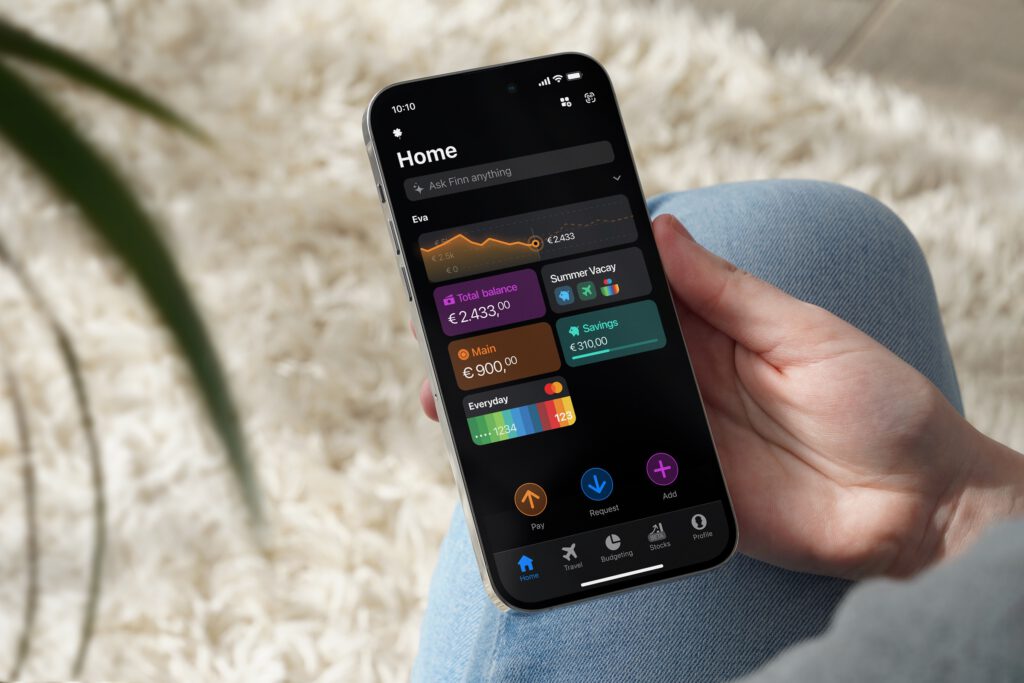
You can access all of bunq’s services on your phone from the comfort of your home, including signing up.
Keep track of all your finances in one place. Image: bunq
You can set up your account with bunq in just a few steps, and while most Dutch banks won’t let you sign up without a BSN (which can take weeks to get), bunq lets you open an account before you get this crucial number.
2. bunq offers different types of accounts for different needs
Whether you’re an expat with a family or an easy-going freelancer, bunq has all kinds of plans for your financial needs.
All bunq accounts come with a digital or physical debit card (or both!). Image: bunq
The most common account, bunq Pro, is perfect for users who want the best exchange rates, a local IBAN, and 24/7 online support — for just €9.99 per month.
Tip: bunq has four main types of accounts: bunq Free, bunq Core, bunq Pro, and bunq Elite. Each one has different perks and features, including access to physical and digital bank cards, ATM withdrawals, invoicing, and travel insurance, among other needs.
You can also open a subaccount to enjoy a high interest rate on your savings, now a whopping 2.01% in the Netherlands. Who doesn’t want to save a little extra money nowadays?
Speaking of extra money, let’s get to the good stuff: cashback! With a bunq Elite account, you can get 1% cashback on restaurants and bars (perfect for that Dutch beer you’ll be drinking) and 2% cashback on public transport. 💸
3. You can pay for things abroad with a bunq account
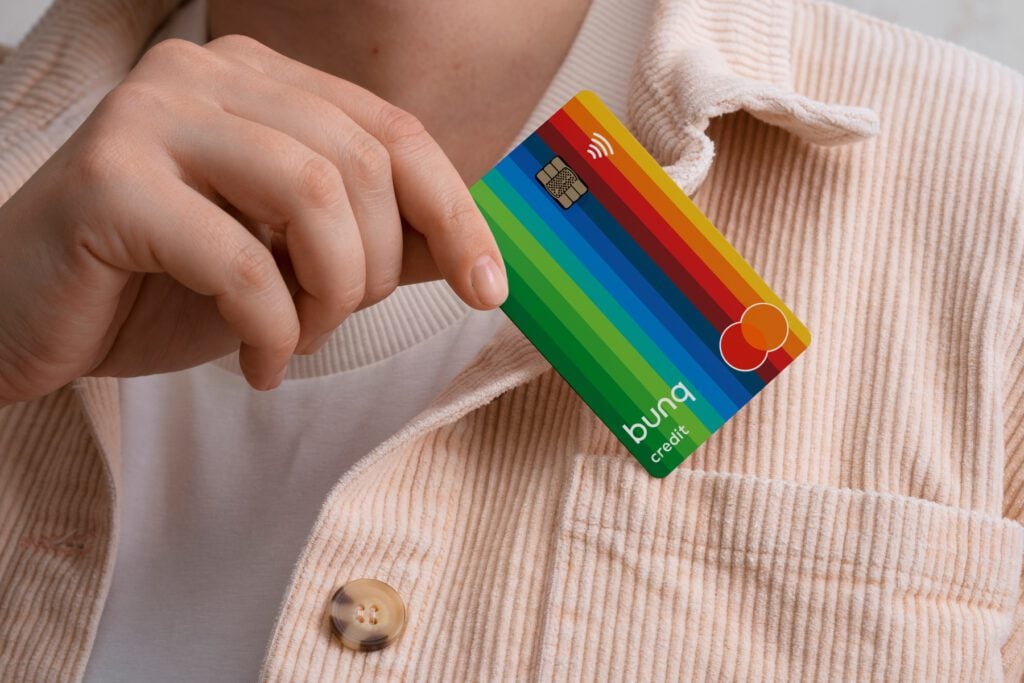
bunq makes travel expenses a lot easier too. Offering both a debit or credit Mastercard, bunq makes sure you’ll have worldwide coverage — but what’s the difference?
First, both Mastercard Debit and Mastercard Credit don’t offer spending credits, so it’s easy to keep track of the money coming in and out of your accounts.
You can access your Mastercard Debit easily via your bunq accounts, which makes it super easy to pay for things like meals and souvenirs when travelling abroad.
Pay for your holidays and travel, stress-free. Image: Freepik
Got a bigger travel expense coming up, such as a car rental or your hotel room? Then you’ll likely be asked to pay a deposit ahead of time. That’s where your credit card comes in.
With your Mastercard credit card from bunq, you enjoy the full extent, perks, and acceptability of a normal credit card — without the risk of accumulating debt. Win-win!
4. You can save money when exchanging currencies with bunq
Sending money home is a common thing to do when you’re living and working abroad. Luckily, transferring money has never been easier.
Currently, bunq allows you to send money in 39 different currencies without charge. The only thing you need to take into account is the real exchange rate.
Transferring money across the world is so much easier now! Image: Depositphotos
You can save up to 3% on each transaction, which is perfect for someone who travels a lot or needs to transfer money often.
5. bunq’s app and customer service operate in seven languages
When it comes to complicated questions about your finances, you want to be able to understand everything clearly.
That’s why bunq offers you the ability to read their website and operate the app in seven languages: English, French, Spanish, Italian, German, Portuguese and, of course, Dutch.
Your app, your language. Image: bunq
If you need help from bunq’s customer service team, you can also talk to them in any of the seven languages above.
Tip: If you would rather talk to someone in a language other than the seven offered in the app, that’s also possible. The customer service chat feature is enabled through Google Translate, so you can get your questions answered and problems solved in a language you’re comfortable in.
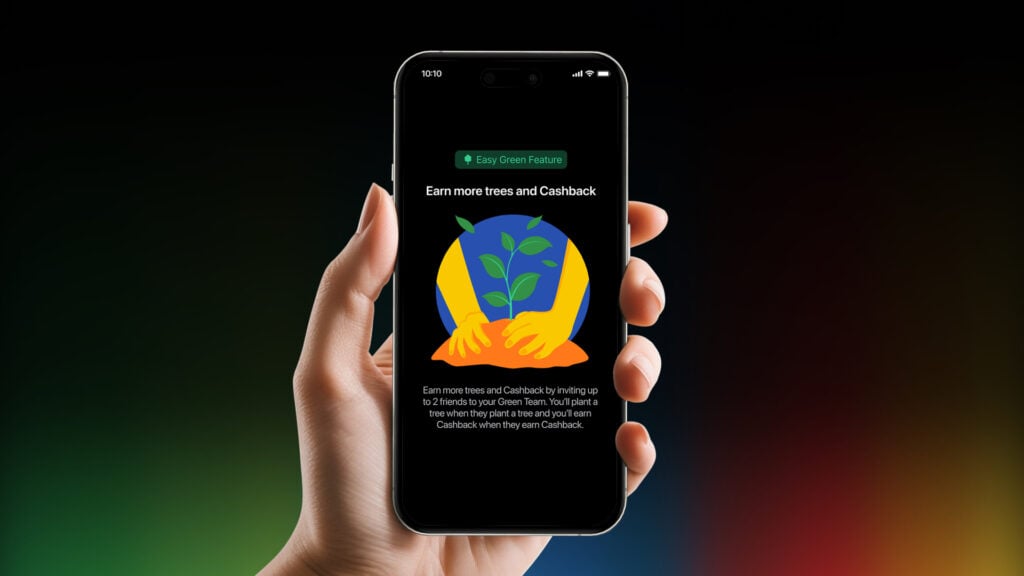
6. You can plant trees by spending money with bunq
People are becoming more conscious of the environment, and it is especially important for us to try to lessen our impact on the climate. bunq allows you to do just that.
By simply spending money with bunq, you contribute to a greener planet. How so, you ask? Well, for every €100 you spend with your bunq Elite account, bunq plants a tree. 🌳
Banking made sustainable! Image: bunq
(We’re not encouraging financial irresponsibility, of course — but even if you’re bad with money, you won’t be bad for the planet with your bunq Elite account. 👀)
Don’t have an Elite account? No worries! bunq also plants one tree for every €1,000 spent with any other subscription.
It won’t singlehandedly save the planet, of course — but luckily, bunq also lets you choose how the company’s money is invested. No coal mining or gambling companies? No problem!
7. bunq will help you with fraud detection and resolution on-the-go
It’s basically everyone’s worst nightmare to realise you’ve lost your bank card or that you’ve been the subject of fraud.
With bunq, it’s easy to protect your money. If you realise you left your card in a restaurant or shop, then you can instantly freeze it on the app — no need to make calls and listen to Muzak hold music.
Even better, bunq’s optional localised card protection feature gives extra protection by only letting card payments be authorised if they happen within a 100-kilometre distance of your device.
Quickly find out what’s going on with your bank account with bunq’s customer service and fraud detection services. Image: Freepik
You can also opt to get a notification each time your card is used so that any suspicious payments will be obvious to you instantly.
8. You can get travel insurance for you and your family
Travelling is great — but it’s even better when you can enjoy it knowing you’re insured if anything should go wrong. With bunq, you can do just that.
With an Elite subscription, you can take advantage of bunq’s travel insurance of up to €2,500,000.
The best part? If you’re travelling with your family, the insurance applies not only to you but also to your loved ones who are joining your adventure. Does it get any better than this? We think not.
Be under 75 years old at the start of your trip; and
Comply with the requirements of your public transport carrier while travelling.
Ready for bunq? Here are your account options
Everything about bunq feels like the future. If you’ve decided that this is the bank for you, then all that’s left to do is to decide what sort of account you want with them.
Consider different banking options to find the one that suits you best. Image: Freepik
bunq for the people
A personal account at bunq has loads of advantages, but the two that stuck out to us were the high-interest rates you get on your money — up to nine times what you get at other banks, paid monthly.
On top of that, bunq only invests ethically, so your money won’t end up funding climate change.
Review your personal finances easily. You can even share accounts with a partner! Image: Freepik
You can have up to 25 sub-accounts so you can save money for a house, that trip abroad, or plane tickets to see your family.
bunq for businesses
bunq does also have options for business bank accounts if you want to get extra perks for your company or freelance business, or if you just want to keep your business expenses on a separate account away from your personal finances.
Say goodbye to confusing jargon and language barriers! Equipped with a simple, sleek interface, innovative features, and an easy-to-use banking system, bunq is the perfect bank for anyone’s financial needs. Now go forth with a new sense of financial freedom!
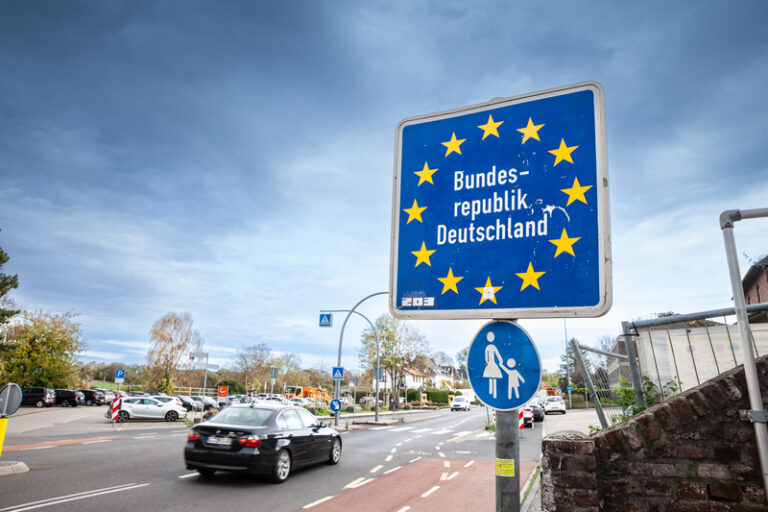
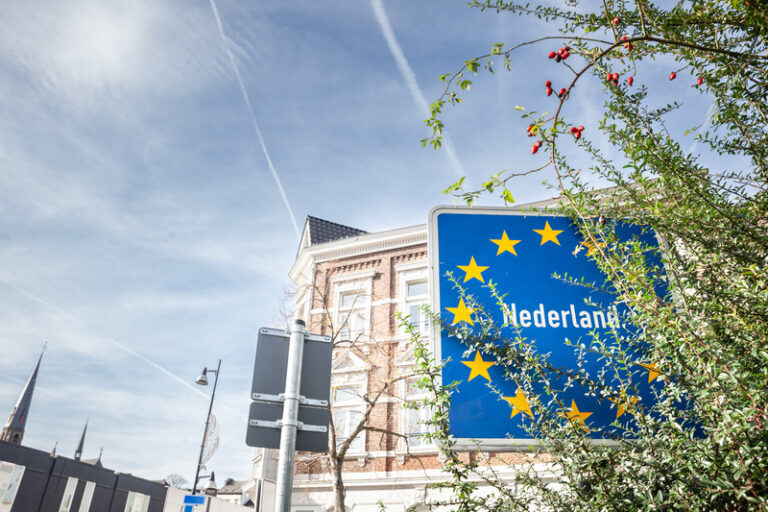
Starting next Monday, September 16, Germany will enforce passport controls along all of its land borders for at least six months. Helaas, that includes the Dutch-German border, too.
Through this drastic measure, the German government hopes to reduce the number of people entering the country without a valid visa, the NOS reports.
What changes for the Dutch?
How exactly Germany plans to implement checks along the entirety of its 3,767-kilometre land border remains unclear.
The practical implications for neighbouring countries are also yet to be defined.
However, the Dutch Minister of Asylum and Migration, Marjolein Faber (PVV), has already stated that she understands Germany’s decision.
In fact, Faber wishes to cooperate with Germany to strengthen border control not only between the two countries, but also in the rest of the EU.
As such, individuals travelling to Germany from the Netherlands are likely to be affected.
Goods travelling across the border, however, may be spared the hassle. Faber has announced that she will work with Germany to minimise the measure’s impact on trade.
What about the Schengen treaty?
You might be wondering how this is legal, considering that EU rules are supposed to guarantee freedom of movement across Schengen countries.
Well… it is! Apparently, if a country has good reason to implement border checks, does so extraordinarily and temporarily, and requests the European Commission’s permission beforehand, the measure is allowed.
Germany has complied with all of the above, citing social and political pressure caused by terrorism and cross-border crime threats as the reason for tightening its borders.
It is not the first country to obtain permission to disregard Schengen rules, either: Sweden, Denmark, France, Austria, Slovenia, and Italy have also done it recently.
Just how temporary and extraordinary this measure will be, then, remains to be seen.
What do you think of Germany’s decision? Let us know in the comments below.
It’s not just commuting that will be almost impossible at points this week — large-scale strikes by vital professions across the country will cause major disruptions.
Job strikers want their early retirement scheme, which expires next year, to become permanent — and the FNV trade union supports their action.
Editor’s note: An earlier version of this article incorrectly reports that public transport would not run between 4 AM and 8 PM on Wednesday, September 11. The correct timeframe would have been between 4 AM and 8 AM, and the article has been updated to reflect this.
Multiple industries will take action
In addition to the urban and regional transport strikes which started today, several other industries — including the police construction, and cleaning companies — are also taking action.
These are all heavy professions affected by the expiring retirement measure, so here’s a breakdown of the key actions you should note. 👇
In addition to several regional transport providers going on strike, buses, trams, and trains from NS, Arriva, Transdev (Connexxion), Keolis, EBS, Qbuzz will also not run between 4 AM and 8 AM.



![Is this desk and chair combo the ultimate Dutch home office setup? [Flexispot E7 Pro and BS12 Pro Review]](https://dutchreview.com/wp-content/uploads/IMG_5148-copy-768x576.jpg "Is this desk and chair combo the ultimate Dutch home office setup? [Flexispot E7 Pro and BS12 Pro Review]")