This is because there is a common misconception that weed is legal in the Netherlands. However, this is not actually the case.
BARBZ , NICKI MINAJ HAS JUST BEEN ARRESTED BY THE ROYAL MARECHAUSSEE IN THE NETHERLANDS FOR POSSESSION OF DRUGS DESPITE THE FACT MARIJUANA BEING LEGAL WE GOTTA DO EVERYTHING WE CAN TO HELP HER 🙏🏽 #FREENICKIpic.twitter.com/BYQAKlQw59
As a result, you can possess up to five grams of weed without getting in trouble.
However, as soon as you go above this amount or try to leave the country with it, you’re committing a crime — and unfortunately for Barbz, Minaj’s party did both.
On X, the singer explained that the joints actually belonged to her security guard.
However, according to the NOS, a fine, which Minaj paid, will go to her and not the security guard.
This also means that the offence will be on her Dutch criminal record.
It’s worth noting that Minaj’s arrest doesn’t mean her wardrobe will consist of prison orange for the next few tours. In fact, the matter is already done and dusted.
While she was whisked away in a police van and detained, in the end, Minaj only had to pay a €350 fine.
Still welcome in the Netherlands
As the fine is now paid, as far as the Dutch police are concerned, the case is closed.
However, Minaj will have to be on her best behaviour should she ever want to come to the Netherlands again — if she ever will. 😬
Speaking with the NOS, a spokesperson for the Public Prosecution Service explains that “She is still welcome in the Netherlands, but it is important that it does not happen again. Then the penalties will be higher.”
The last week of spring is off to a relatively warm and sunny start, but the high chance of afternoon showers means your brolly should never be too far. ☔👀
Monday, May 27, is forecast to kick off a rather balmy week, with a daily high of 17 degrees Celsius in the west and 20 degrees in the east.
Monday: expect a bright morning, but heavy rain at night
Whilst the morning may alluringly whisper “summer weather’s coming” in your ear, the KNMI (Dutch meteorological institute) warns you to be wary of rain at night.
Come afternoon, most regions (save the west coast!) may see the odd shower.
Several areas, such as the east and southeast of the country, are expected to see moderate to heavy rain at night — but the lucky ducks living elsewhere will likely be spared the brunt of this downpour.
Tuesday: rain, rain, and more rain
They say you can’t have too much of a good thing and Dutch weather wholeheartedly agrees, so Tuesday (May 28) is predicted to be as wet as the North Sea. 🌊
The morning and afternoon may even see occasional bouts of sunshine and balmy temperatures of 18 degrees Celsius, but don’t be fooled — this will give way to clouds during late afternoon and evening.
If you’re living near coastal areas, you may also want to watch out for strong winds, which are expected to reach wind force 5 to 6.
Wednesday, Thursday, and Friday: pleasant temperatures, but plenty of rain
So, that leaves us with sun, rain and wind so far — what’s next?
Well, the rest of the week is forecast to follow much of the same template, with daytime highs of 17 to 19 degrees Celsius and a high chance of precipitation.
If you’re looking for a bit of relief, Friday will likely be the driest and sunniest overall.
But guys, summer is coming
And the last two days of spring? They’re actually looking good!
Offering slightly high max temperatures of 17 to 20 degrees Celsius on Saturday and 18 to 21 degrees on Sunday, this weekend is expected to stay relatively dry.
We’ll take that as a good sign for what’s to come.🤞
How will you be enjoying the warmer temperatures this week? Tell us your thoughts in the comments!
Limiting the number of international students at universities in the Netherlands has been a hotly-debated topic for quite a while now — but here’s how the Dutch actually plan to go about things. 👇
The bill outlines various possible solutions to curb the growth of foreign students, the most important of which are listed below. 👀
Capping student numbers
In a letter to the Senate last month, Dijkgraaf pointed out the importance of introducing a numerus fixus on popular foreign-language courses.
What is a numerus fixus?
This is a quota on the number of students who will be accepted to popular degree programmes at Dutch universities.
In a bid to keep university education more accessible to countless Dutch students vying for a place amid the surge in international student numbers, many English-language courses may face quota restrictions.
However, noting that the Netherlands “cannot do without international talent, whether for science, the labour market or the quality of the programmes themselves”, Dijkgraaf stresses that this isn’t an all-or-nothing decision.
Individual institutions will need to weigh the importance of numeri fixi and establish if “less drastic measures” could be implemented instead.
Promoting the Dutch language
With legal obligations to promote language skills to Dutch-speaking students faltering — and 7 in 10 foreign students expressing frustration at the language barrier when entering the job market — it’s clear that something needs to be done.
However, it’s not all doom and gloom for us internationals.
In response to their findings, the government also intends to make educational institutions prioritise the promotion of Dutch language skills. (Yes, even to us internationals. 🥳)
This could make Dutch language courses more accessible to internationals, which we’ll never say no to!
What do you think of the new bill? Shoot us your thoughts in the comments below!
Ahhh Friday, it’s time to finally unwind, stretch out your arms — and enjoy the sound of torrential rain and thunder.
Yep, forget basking in the sunshine that was teasing many of us yesterday, this week’s forecast is as follows:
Either leave your home and embrace a runny nose, soggy clothes, and a 1 in 775,000 chance of getting hit by lightning — or stay indoors where it’s dry and enjoy some loud thunder ASMR. ⛈
Thunderstorms throughout the country
In fact, NU.nl reports that no matter where you are in the Netherlands, you have a high chance of enjoying the rumble of thunder today, with a code yellow due to thunderstorms in place for the entire country.
However, those of us in the southeast will be the first to enjoy the soothing sounds, with storms set to start in the morning.
Don’t forget the rain and hail
Of course, with it nearing the end of May, we can’t forget the chance of rain — and even the odd sprinkling of hail!
This is in spite of temperatures sitting between 17 and 22 degrees. 🤷♀️
Heading out after work? Don’t forget your umbrella, as the showers are set to last throughout the evening, night and even into Saturday morning for those of us in the north.
Don’t throw your whole weekend away, however. Once the code yellow ends after today, the weather is expected to be delightfully changeable for the rest of the weekend.
Oh, Dutch weather — it’ll always keep you guessing!
The competition for student housing in the Netherlands is fiercer than ever, and prices are only getting steeper. Now, the capital city has been overtaken as the location with the most expensive rooms.
While the student housing crisis isn’t anything new, the rental platform Kamernet’s figures show it’s only getting worse in 2024, NU.nl reports.
But the biggest shock? Haarlem is now even more expensive than Amsterdam when it comes to price per square metre, at a whopping €51.
Where do these increases come from?
Simply put (but no less shocking), there are too many students for the rooms available.
Last year, each available student room had an average of 18 applicants. Now, it’s 20 (!).
But affordable rooms are increasingly hard to find. Kamernet CEO Djordy Seelmann believes the government’s current housing policy is not sufficiently focused on adding rooms and apartments.
He told NU.nl, “Repurposing existing spaces such as office buildings or vacant buildings into residential spaces is a sensible strategy that increases supply and can improve affordability in the long term.”
What are your thoughts on rising student housing prices in the Netherlands? Tell us in the comments below!
If you live in the Netherlands, you know how hard it can be to get an appointment with your (slightly intimidating) Dutch General Practitioner (GP).
Well, part of the reason for this is that there are too many people for too few physicians, and more and more of them have a tendency to not show up for their appointments.
So, healthcare professionals in Amsterdam are getting frustrated.
According to the AD, to set an end to this trend, some Dutch GPs are now imposing fines on patients who fail to show up for their appointments or don’t cancel in a timely manner.
The no-show fine
Healthcare providers already experience a lot of pressure in the Netherlands, “so a no-show is very annoying,” says Paulien van Hessen, director of the Amsterdam Physicians’ Alliance.
Naturally, patients who don’t cancel their appointments in time keep slots occupied that could have been used to tend to other patients. That’s why a fine is meant to have a preventative effect.
“We do our best to help everyone as quickly and as well as possible. As a patient, you can help us with that by cancelling in time when the demand is no longer needed.”
How much is the fine?
While more Amsterdam GPs have begun introducing no-show fines, there are not (yet) any fixed rules regarding them.
Fines are set by physicians themselves and dealt with outside of health insurers. They mostly range from €10 to €30, but they may double in price if a patient is a repeat offender or misses a longer consultation.
Not everyone’s in favour
The Dutch Patient Federation, which represents patients’ interests, is not a fan of a fine system for missed appointments. As spokesperson Tijmen Hendriksen tells the AD, “We think that these fines do not benefit the relationship between doctor and patient.”
“Reasons why patients do not show up can vary widely. For example, this can also arise from a fear of treatment or costs. You don’t want to punish people with a fine for that,” he says.
Many doctors agree, arguing that the time and effort spent chasing a €10 fine are not worth it. As Van Hessen puts it: “We really have better things to do: we need to provide care. It’s busy enough.”
What do you think of a no-show fine for missed doctor’s appointments? Share your thoughts in the comments.
Say hoi to exciting cashback deals and Dutch interest rates that may actually make saving money worthwhile. (Yes, we’re shocked, too. 😳)
For most internationals, one of the first steps when moving to the Netherlands is opening a Dutch bank account. Amongst a sea of banking institutions, it can be hard to determine which one will give you the most bang for your buck.
But while most banks seem fond of taking money, one Dutch bank now gives us money — in the form of cashback!
Wait a second, what’s cashback?
Simply put, cashback refers to a reward system where cardholders get a certain percentage of money back when they make purchases.
Did you spend €100 on public transport last week? bunq says, “Here’s €2 back!” — and trust us, that adds up pretty quickly!
Earn money by spending it? “Ja, hoor!” says bunq
If that sounds too good to be true… (drumroll, please), it isn’t! Dutch banking heavyweight bunq just updated the rules around this handy dandy feature.
How does it work? All you need to do is be an Elite subscriber, which gives you 1% cashback at restaurants and bars AND 2% cashback on public transportation!
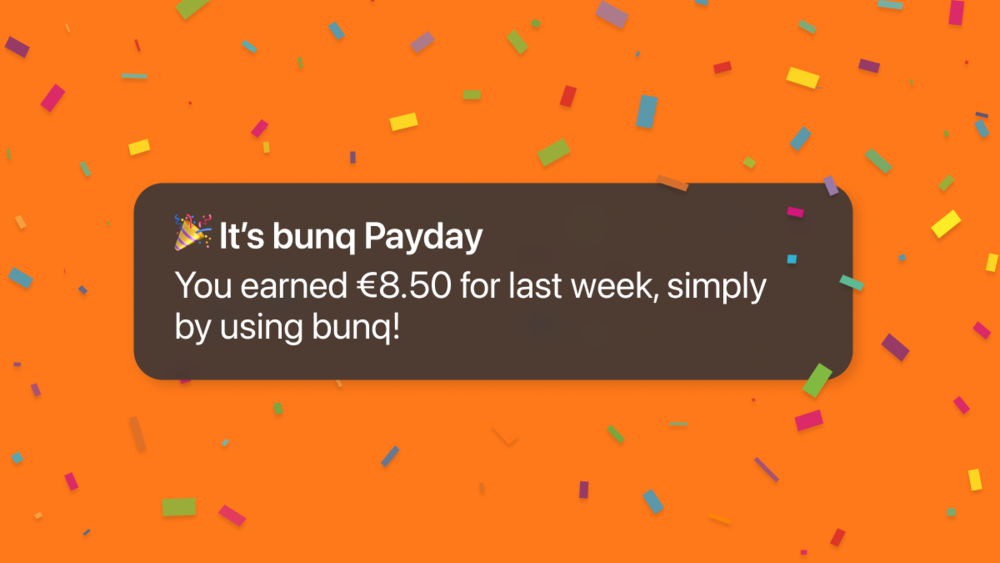
Free. Money. Need we say more? Image: bunq
You’ll need to use your Credit Mastercard (not Maestro) to be eligible for cashback, but the good news on that is that the Netherlands is phasing out Maestro cards — so you can get stacks of cash back!
Money back in your pocket? In THIS economy? Lekkerrrr. 👏
Frustratingly, however, Dutch banks often treat interest rates like a game of limbo: trying to see how low they can go. (And yes, they’re winning!)
Meanwhile, bunq’s healthy 3.01% interest rate means the bank offers some of the best savings interest rates currently on offer in the Dutch market.
But that’s not all! 👇
We may have found your banking BFF
As romantic as the idea of living abroad is, the lifestyle comes with its share of questions. What’s the best bank in the Netherlands? Will I need to pay a fortune in extra fees? How can I stay within budget?
Getting paid at the end of the week for just using bunq? Sure, sign us right up! Image: bunq
With bunq, internationals have access to all the great features that put the ‘cash’ in ‘cashback’. A bunq Elite account gets you:
ZERO added fees when travelling abroad,
Travel insurance for you and your family while travelling,
Spending and saving features in up to 14 currencies,
Hassle-free international transfers straight from your bunq app,
Up to 25 virtual Mastercards for secure online shopping,
3.01% interest on your savings (with seamless withdrawals!).
Ever wish you’d packed something to help your rumbling stomach mid-train journey, like an apple or an extra sandwich? This Dutch woman takes it one step further and makes the carriage her kitchen.
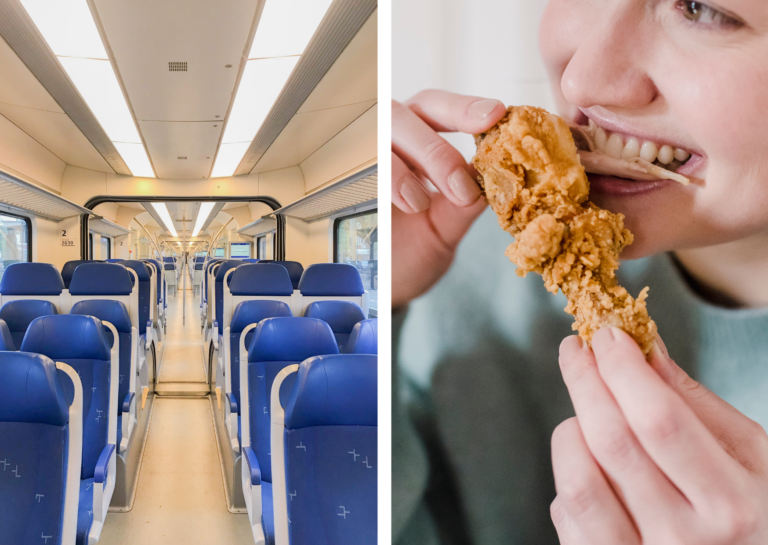
When TikTokker Isabelle Joëlla gets hungry on the train, she whips out her electric pots and pans and cooks anything from chicken drumsticks to spicy noodles, RTL shares.
But before she hits reheat, she makes sure to hit record. 🤳
Just for hen-tertainment?
Isabelle’s TikToks might be different from other non-transport-based cooking content, but that doesn’t stop her going viral.
While Isabelle believes she is doing nothing wrong because there are no rules to stop her, passengers and professionals alike are appalled.
Chicken frying, conductor sighing
It’s not just the “anti-social” smell or the potential fire hazard that makes Isabelle’s choice of train snack not so finger-lickin’ good for those around her. 🍗
For NS spokesperson Oscar van Elferen, it’s about not being a burden to others and knowing that “you should not create unsafe situations or nuisances” — as he tells RTL.
If Isabelle is already planning her next instalment (turkey on the tram or BBQ on the bus?), she might have to think again.
While there might not be any explicit rules against frying a chicken leg on the train, van Elferen suggests it “crosses the border” because most people understand it’s not the right thing to do.
Some people find Isabelle’s actions funny, but clearly, others think this is the behaviour of a bad egg. 🐣
How would you react if you saw someone frying chicken on the train? Let us know your thoughts in the comments below.
So, it’s officially happened: Dutch house prices have just reached their all-time high — in the history of Dutch housing. With this, we’ve surpassed the previous record from two years ago. (Hoo… ray? 🥲)
According to the Central Bureau of Statistics (CBS) in the Netherlands, the price of homes for sale reached a record high in April.
Unfortunately, what feels like a sick April Fools’ joke is actually a reality. According to the AD, the average transaction price for a home is now a whopping €453,984.
This is 7.5% higher than last year and 0.7% higher than the previous record from July 2022.
Why… oh why?
Why do we have this issue? You guessed it: there are too few available homes in the Netherlands and too many people looking to buy one.
On top of that, over the past year, mortgage interest rates have slightly dropped while wages have increased, causing chaos in the Dutch housing market.
With around 300,000 homes too few, competition among home buyers is tough. Young first-time buyers are mostly affected by this.
In fact, as a single starter in the Netherlands, you currently have access to only about 3% of the housing market.
Looking for the perfect spot for a summer getaway from the Netherlands? Look no further than Oostende, a Belgian gem sitting on the coast of the Flemish North Sea.
For those craving more than sun-soaked beaches and traditional tourist attractions, Oostende offers a world of edgy art, cultural entertainment, and plenty of fun activities to do with the whole fam.
How do I know this? Because I visited Oostende! So stroll along with me on this written tour of Oostende as I tell you about all the things you absolutely cannot miss.
Discover unique street art with the Crystal Ship tour
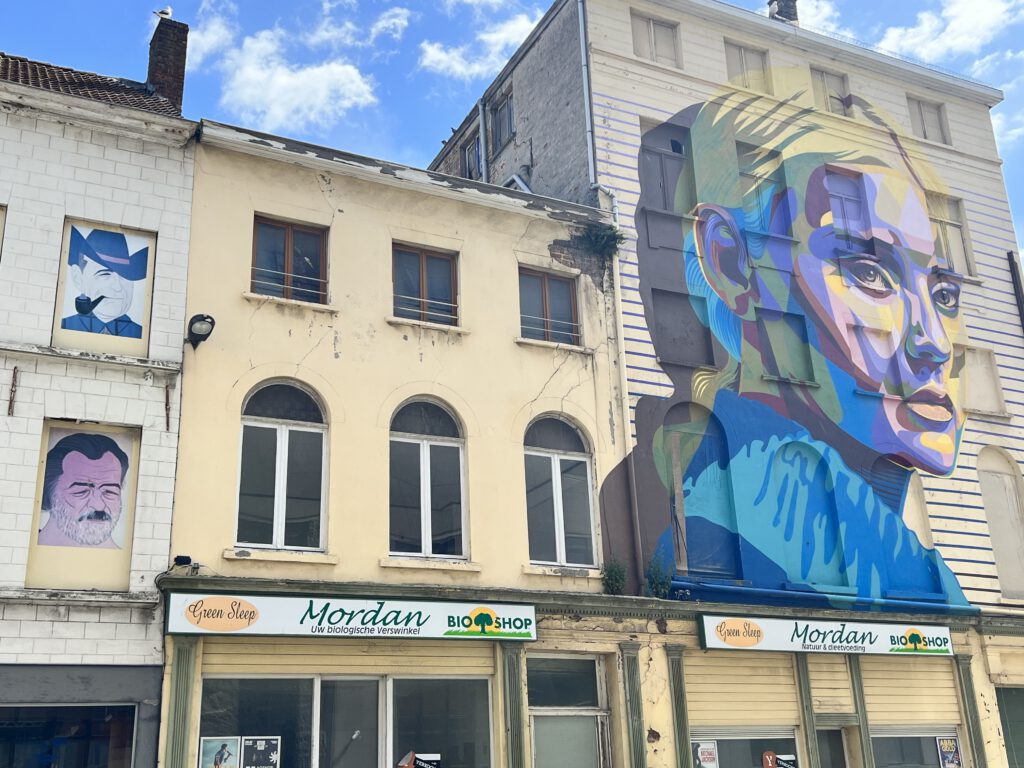
Crystal Ship turns the streets of Oostende into a giant open-air museum with some of the most impressive street art I’ve ever come across.
What used to be mundane city walls are now canvases for graffiti art by artists from around the globe. Every corner has a story to tell, and each piece of art is bigger and bolder than the previous one. 👇
Street art big and small — anywhere you look! Image: Abuzer van Leeuwen
The town offers a handy dandy app or booklet for visitors, which allows you to guide yourself past the impressive art. It boasts quite a few different routes, so you can make your tour as crazy as you want it to be. ⚡️
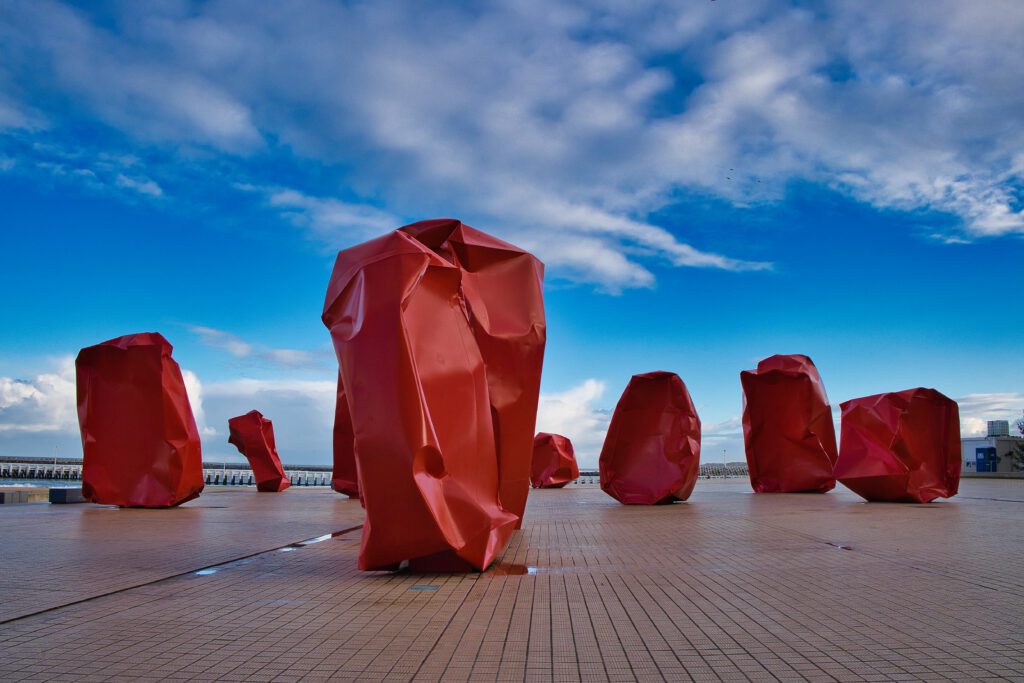
And speaking of art: one piece you can’t miss (partly because it’s red, giant, and right on the beach promenade) is ‘Rock Strangers’ by Arne Quinze!
Wanna see even more art? Oostende has got your back!
Right now, Oostende is part of the Beaufort art festival, a three-yearly art event for which international artists create exciting installations in 10 Flemish coastal cities, always in close relationship with the sea and the coast. 🌊
In each of the participating coastal cities, one large work and one smaller project are on display until November 3. Dutch artist Femmy Otten is shining with her installation in Oostende. 👇
What a sight! Image: Beeldbank West-Vlaanderen
Live out your sailing dreams on the Mercator ship
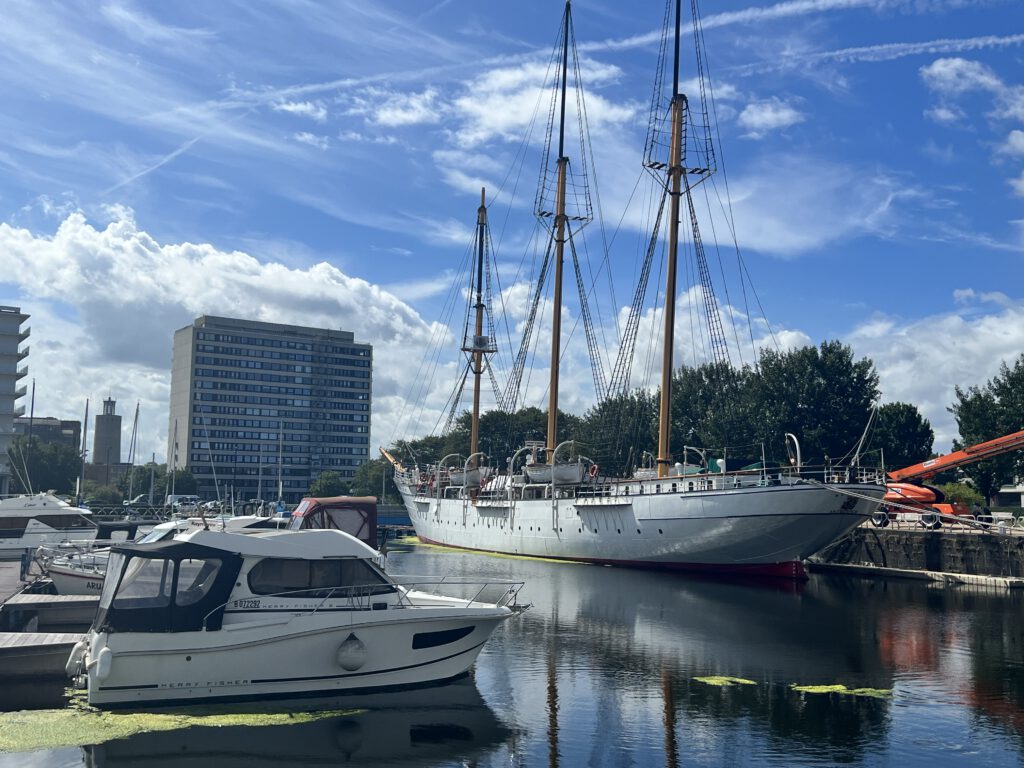
For those seeking a more immersive experience, I recommend a visit to the Mercator ship. This huge ship stands tall as a symbol of Oostende’s maritime past. ⚓️
Once a training ship for the Belgian merchant navy, the Mercator is now a floating museum, welcoming visitors to relive its legacy. It’s permanently docked in the Oostende yacht port, an area you’ll want to check out when visiting anyways.
What a sight to see! Image: Abuzer van Leeuwen
Climb up the gangway and you’ll find yourself transported back in time, tracing the steps of sailors who once ventured into the vast unknown. Mercator offers a unique experience and truly gives a feel of what life was like on such a vessel.
Get a glimpse into Oostende’s past at Fort Napoleon
A short journey from the city centre, Fort Napoleon stands on top of a dune, guarding the secrets of Oostende’s history. As the name suggests, this fortified structure was commissioned by Napoleon himself — but it’s more than just an imposing facade.
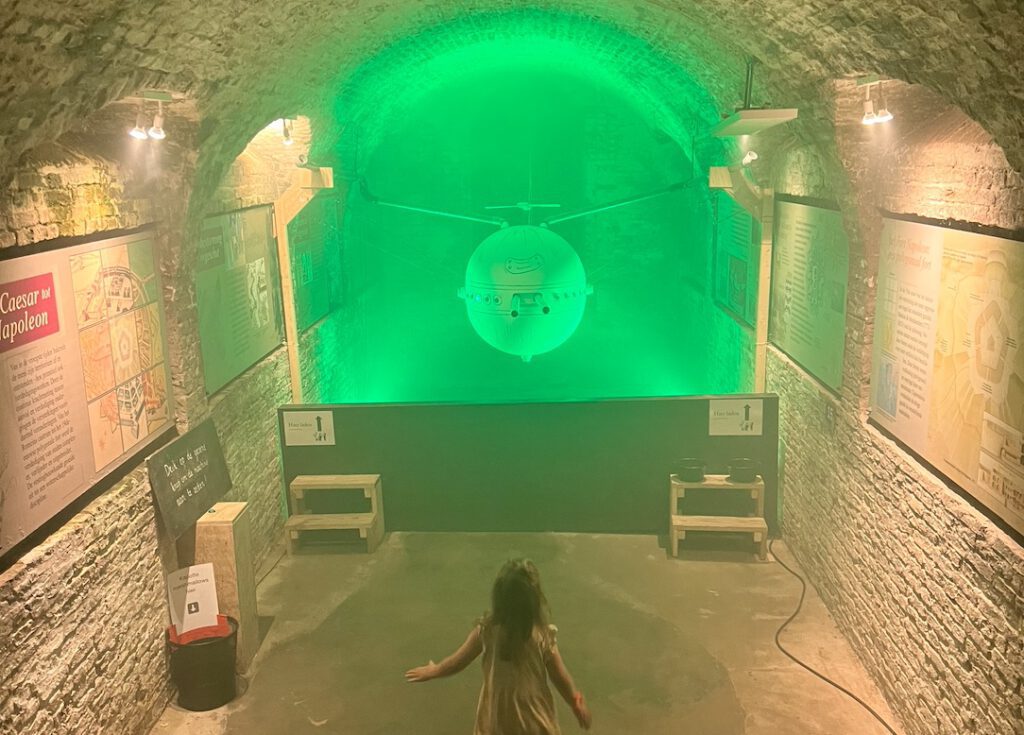
Fort Napoleon offers a glimpse into a time of war and strategic defence, letting you venture through underground passageways and peer through narrow slits used by soldiers in the past.
A blast from the past. Image: DutchReview
Believe it or not: this is also a surprisingly good place to visit with kids. At the time of our visit, they had a nice interactive children’s exhibit set up.
It’s also a great idea to enjoy lunch here, as the attached restaurant was heellekker (as so often is the case in Flanders)!
On a less romantic but more practical note: there’s a free parking lot next to Fort Napoleon with ample space, making it perfect for your first or last stop when visiting Oostende. 😉
Be inspired by the art of the Belgian master James Ensor
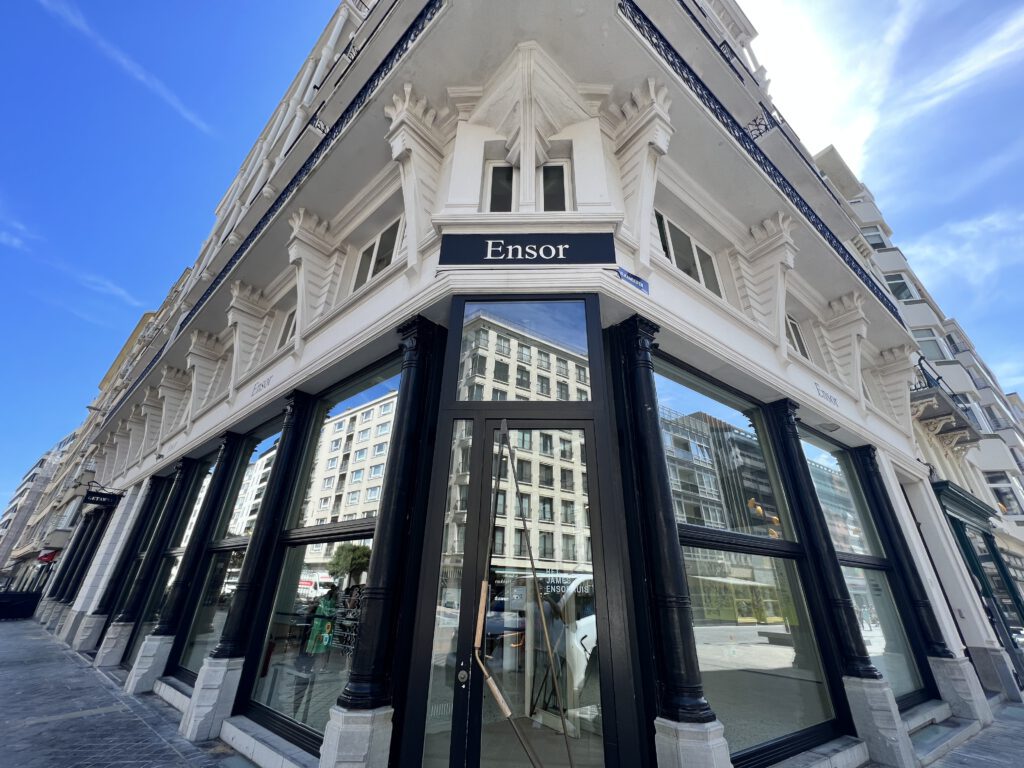
Back in the heart of the city, the Ensor House celebrates the works of the renowned Belgian artist, James Ensor, who is famous for his unconventional (and sometimes bizarre) paintings. 🎨
The museum houses an extensive collection of his masterpieces, each revealing a new layer of eccentricity and complexity. A must-see for art enthusiasts!
Even the architecture is artsy! Image: DutchReview
Tip: Time for food? Just five minutes away from the James Ensor House, you’ll find the rooftop terrace at the ‘Grote Post’ building. I recommend this place for excellent food and some of the best views Oostende has to offer!
Oostende’s Ensor year
James Ensor’s artistic brilliance is not only on display at the James Ensor House. In fact, the entire city is currently celebrating the “Ensor Year”, as 2024 marks 75 years since the artist’s passing.
The year-long event hosts an array of exhibitions, performances, and festivities that pay homage to the Ensor’s avant-garde spirit. More info about all of this can be found here.
Take a stroll along the beach and promenade
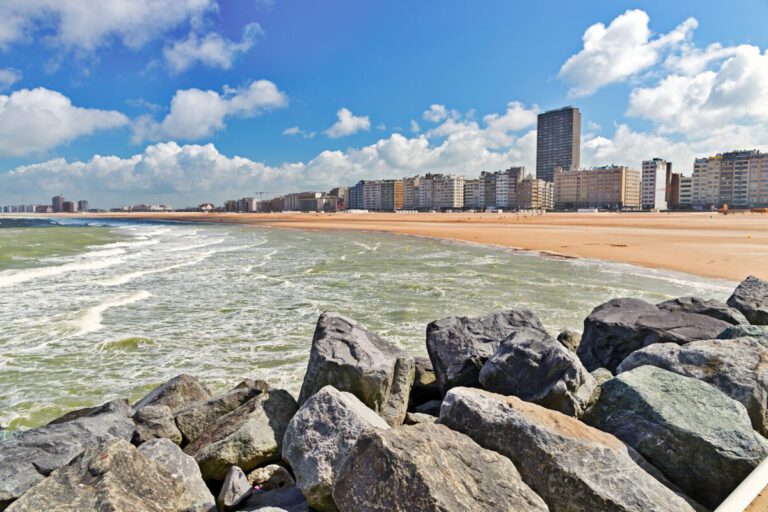
Of course, a visit to Oostende isn’t complete without a stroll along the shores of its pristine beach and promenade. 🌊
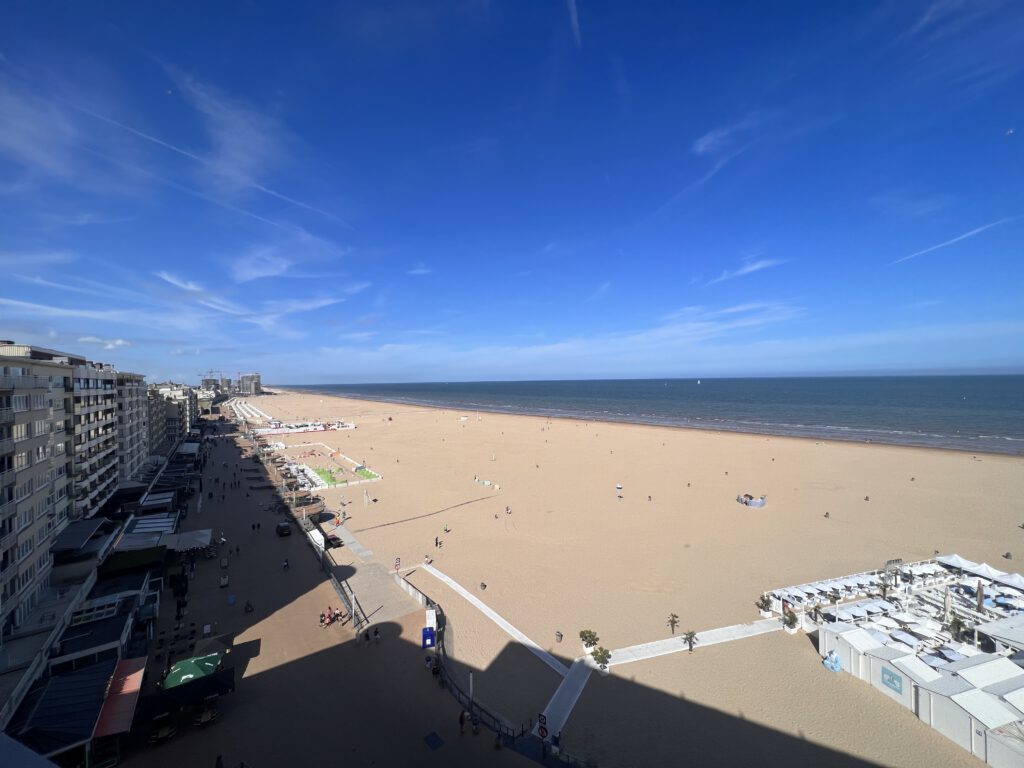
Sink your toes into the sand, breathe in the salty air, and enjoy your well-deserved break. The Oostende beach is long and wide, so it’s easy to secure yourself a stay with a stunning beach view.
We stayed at the Andromeda Hotel and were treated to this glorious view. Image: Abuzer van Leeuwen
There are the Venetian galleries (nicely dubbed ‘gaanderijen’ in Flemish) and the grand Thermea Palace Hotel to stroll past.
And if you want to treat your kids and yourself to more than walking, then you can rent a 4-person skelter and cruise the promenade in style!
They see me rollin’… 😎 Image: Abuzer van Leeuwen
How to get to Oostende from the Netherlands?
Now that you’ve been enticed let’s tell you how to get here, shall we? If you’re travelling to Oostende from Amsterdam, there are two easy options: by car or by train.
Travelling to Oostende by car
The drive from Amsterdam to Oostende takes approximately three hours, offering you the freedom to explore the picturesque landscapes of Belgium along the way (or honestly, if timed wrong, get stuck in the Antwerp rush hour, don’t do that).
Travelling to Oostende by train
On the other hand, the train journey is also convenient. High-speed trains connect Amsterdam Central Station to Oostende in around three hours, providing a comfortable and somewhat stress-free experience.
A trip to Oostende is not just another standard Flemish city trip. It’s good in the summer for the beach-lovers, but it’s just as great in the winter, as it’s much more than just a beach town.
This place truly has something to offer for everyone: from urban art to maritime history and the good ol’ beach (oh, and tons of delicious food and drinks).
For more info and the Oostende activity calendar, check out Visit Ostend. Veel plezier!
Have you ever visited Oostende? What’s your favourite Belgian town to trip to? Let us know in the comments!