While some unions seem thrilled about the House of Representatives’ recent decision, other organisations, universities, and companies would beg to differ.
On Thursday night, the House of Representatives voted in favour of making cuts in the expat scheme. Turns out, the Netherlands Trade Union Confederation (FNV) is in full support of this decision.
The main reason why? The FNV weren’t fond of the tax benefits it granted expats.
They also worried it would create “unfair competition” between foreign employees and Dutch nationals, the NOS reports.
Top salaries for top talent
Not every organisation is as enthusiastic about the votes, though. The Employers’ organization VNO-NCW, for example, claims that binning the 30% rule will ward off international talent.
Yup, according to the VNO-NCW, skilled foreigners are in high demand, particularly for high-tech companies and research institutions based in the Netherlands.
Not only that, but Minister Adriaansens of Economic Affairs chimed in with the VNO-NCW’s concerns, saying this new tax scheme will put a dent in how “attractive” the Netherlands is for outsiders. After all, “top talent expect top salaries”.
One company, Just Eat Takeaway, blames the fact that there isn’t enough of a labour supply in the Netherlands to fill all the available data and tech roles, leading companies to seek workers from overseas.
Several universities and colleges across the country teamed up and also jumped on the disapproving bandwagon — which is no surprise, considering 10,000 of their employees rely on this scheme.
Are you in favour of cutting the 30% ruling or not? Share your reasoning in the comments below!
Amsterdam’s football club has dropped to the bottom of the Dutch Eredivisie ladder for the first time in 59 years after yet another crushing defeat.
Alright, internationals, here’s the best way to make small talk with Dutchies this week. Just say: “Ajax, hé?”.
The former darling of the Dutch football world (read: darling = untouchable behemoth) has suffered loss after loss this season.
So what the hell happened?
Picture this: It’s May 2022, and your football team finish at the top of the ladder for the fourth consecutive year. That was Ajax. 🏆
Then, just before that last grand finish, Ajax’s football director, Marc Overmars, got caught with his pants down.
(Literally: he was sending unwanted 🍆 pics to a female employee.)
It turned out this behaviour wasn’t uncommon, so he left in February 2022, triggering a series of coach and player departures that led to Ajax’s demise.
Why is it such a big deal?
Well, Dutchies love their football. City rivalries are huge, especially those between Ajax (Amsterdam), Feyenoord (Rotterdam), and PSV (Eindhoven).
And when we say rivalries, we mean rivalries. A recent match between Amsterdam and Feyenoord was suspended mid-game after supporters began throwing flares and fireworks onto the field.
Once the game was halted, supporters turned to the streets to riot, leading to the mobilisation of anti-riot police.
For Ajax, once the Goliath of the Dutch football world, to be brought to the bottom is, quite simply, crushing for their supporters and Amsterdammers in general.
One Amsterdammer reporter blatantly said in the post-match interview after Ajax’s 5-2 loss to PSV on Sunday: “This means a lot to people. An inky black day. Also for Amsterdam.”
There are plenty of rehab clinics in the Netherlands to recover from addiction — and often, they’re covered by insurance.
The Netherlands is known for its open-minded and progressive approach to various aspects of life, including drugs. While many substances remain criminalised, drugs are often approached with a level of acceptance and normalisation that can sometimes lead to misuse.
For some people, what might start innocently can spiral into addiction. It’s a scenario that can catch anyone off guard, and when the realisation hits that they’re battling addiction, the journey to recovery begins.
Recovery is a long and challenging process, but it can be navigated with resilience and the help of professional assistance.
What is addiction?
The topic of addiction can be daunting, and we sometimes don’t even understand the full scope. The truth is that addiction is a mental and physical disease.
Addiction is a serious disease. Image: Depositphotos
Not only that, but addiction isn’t limited to substances. People can also be addicted to things such as gaming or shopping.
But the good news is that’s why many rehabilitation clinics offer support and supervision for patients. The clinics have dedicated psychological professionals to assist individuals with recovery.
So now that we have a quick rundown of the basics, what is there to know about rehab clinics in the Netherlands?
How much does rehab cost in the Netherlands?
As with any service, the price of rehab in the Netherlands can vary. Most in-house rehab clinics in the Netherlands will charge at least a few thousand euros for a short stay.
The cost of rehab can vary quite a bit. Image: Depositphotos
However, one good thing? Dutch health insurance almost always covers rehab in the Netherlands. Read on to find out more.
Does health insurance cover rehab?
In the Netherlands, rehab clinics are often at least partially covered by insurance. That being said, it depends on the individual’s insurance plan. Make sure to double-check if an insurance provider covers addiction treatment.
Make sure to check if your health insurance covers rehab. Image: Freepik
A referral from a huisarts (general practitioner) is almost always needed for a health insurance policy to cover the cost of a rehab clinic in the Netherlands.
If covered by insurance, all that needs to be paid is the eigen risico (“own risk” or “excess”).
How can someone get help for addiction in the Netherlands?
The traditional route for going to a rehab centre in the Netherlands is through a huisarts (general practitioner). They should refer the person to a professional who can provide the care needed.
There are several measures that can be taken to help addiction. Image: Depositphotos
Sometimes, unfortunately, a huisarts might not take an addiction situation as seriously as hoped. In that case, people can contact the praktijkondersteuner (practice assistant) rather than their huisarts.
The praktijkondersteuner is usually more qualified to deal with mental health issues and often falls under the same insurance as a huisarts.
It’s important to note that being admitted into an institution is almost always voluntary. Someone can be forced to be admitted to a Dutch rehab facility only if they are considered a danger to themselves or those around them.
Can sick leave from work be used to go to rehab in the Netherlands?
Yes, sick leave can be used to leave work to go to rehab in the Netherlands. Addiction is recognised as an illness in the Netherlands, so it’s treated in the same way as a physical illness.
How can I take sick leave from work without saying why? Image: Depositphotos
That being said, note that the details of the illness do not have to be disclosed to someone’s boss or HR. An addicted person can call in sick and say they would like to talk to the bedrijfsarts (company doctor).
Any conversation with the bedrijfsarts is confidential, so no one has to know exactly why they’re taking sick leave. All that the bedrijfsarts will do is help and hopefully conclude that they’re too sick to work.
Because addiction is an illness, the company has to comply with means to rehabilitate and reintegrate a person when they come back from their leave. So, by talking to their bedrijfsarts, time can be taken off, and the person can come back while keeping the safety of their job.
If a company doesn’t have a bedrijfsarts, their employees will be referred to a preferred huisarts that the company deals with. If that’s not satisfactory, of course, each patient can go to their own huisarts.
Dutch rehab clinics and privacy
The Dutch are masters of discretion, and just like the process of asking for sick leave from work, the clinics themselves don’t disclose the identity of their patients. That way, a person with addiction can stay anonymous and ensure complete privacy during recovery.
Most clinics will keep your information strictly confidential. Image: Depositphotos
Additionally, there are plenty of rehab clinics in the Netherlands. Whether a person needs a rehab clinic in Amsterdam, The Hague, Rotterdam, Groningen, or beyond, there is likely one nearby — or far away, if that’s wanted.
What types of rehab clinics are in the Netherlands?
There is a large overlap between addiction and mental illnesses. That’s why clinics have professionals fit to care not only for their patients’ physical health but also offer psychologists and psychiatrists.
Rehab clinics will have all the help you need. Image: Depositphotos
That’s why rehab centres in the Netherlands aren’t limited to substance abuse; some clinics in the Netherlands are focused specifically on mental health.
Most likely, every substance abuse clinic will tackle mental health, but the same can’t be guaranteed the other way around.
Have you had any experiences with rehab clinics in the Netherlands? Tell us in the comments!
Considering moving to the Netherlands as a skilled expat? Things are about to change for you. The House of Representatives has voted to eventually scrap the 30% ruling for expats.
The 30% ruling is meant to offer an incentive for skilled expats to move to the Netherlands. It’s a tax credit scheme that means 30% of an expat’s salary is not taxed for the first five years of their stay in the Netherlands.
However, last night, the House of Representatives voted to phase out the favourable ruling, NOS reports.
New expat tax credit scheme
As of January 2024, the 30% ruling as we know it will be no more.
Instead, the tax credit will be slowly phased out for highly-skilled expats entering the country — although current ones in the NL will not be affected.
It will be replaced by the following scheme:
For 20 months, a highly-skilled expat won’t have to pay tax on 30% of their salary.
For 20 months after that, they won’t have to pay tax on 20% of their salary.
For 20 months after that, they won’t have to pay tax on 10% of their salary.
This is all part of Peter Omtzigt’s plan (dubbed the Omtzigt amendment).
Why are they doing this?
The Dutch government has chosen to do this in order to reduce interest on Dutch student loans.
Members of the “unfortunate generation” who had to take out loans to study were also expected to be saddled with interest on their loans. This has been met with plenty of backlash.
In order to reduce this interest, the Dutch government has to get money from elsewhere — the solution? Get rid of the 30% ruling.
Have you ever been so frustrated by a politician that you just wait for them to make a public appearance and then smack them over the head with your umbrella? No? Well, Thierry Baudet has driven one man to do so.
Baudet, a controversial conservative politician in the Netherlands who once described Putin as a “wonderful guy”, was given a mighty whack to the head as he entered Ghent University (Belgium) to give a lecture.
And the entire thing was captured on video. 👀
Nederlands politicus @thierrybaudet aangevallen nav toespraak aan @ugent… Politie staat erbij en kijkt ernaar. Hoe dikwijls hebben we dit al meegemaakt? Na #IS-aanslag weeral blamage voor onze veiligheidsdiensten. Rechtse politici zijn opgejaagd wild… pic.twitter.com/6MbJaTWKj5
Translation: Dutch politician Thierry Baudet attacked following speech to @ugent … Police stand by and watch. How many times have we experienced this? After #IS attack, yet another disgrace for our security services. Right-wing politicians are hunted game…
Many Dutch politicians have taken to X, describing the attack as “unacceptable.”
What exactly happened?
As far as investigators can tell, this was no attack by a terrorist organisation, however — just a man shouting in Ukrainian, the NOS reports.
After hitting Baudet with a foldable umbrella, the man began shouting: “No to fascism, no to Putinism.” Baudet let out a pained shout but continued into the building.
While both his head (and probably his ego) were bruised, Baudet was still able to give his planned lecture.
Speaking to NPO Radio 1 after the incident, Baudet explained that he had “a significant bump” on his head but “was able to give my lecture after having a glass of water. But it is, of course, very unfortunate that this happened.”
You’ve landed, two-footed and nervous in the Netherlands, hoisted your suitcase up the narrow Dutch stairs, and now there’s just one question on your mind: “Where can I buy a bike?”
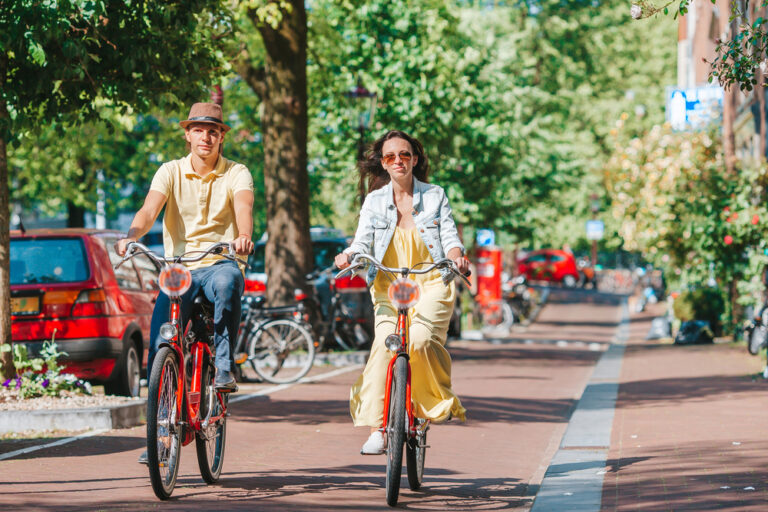
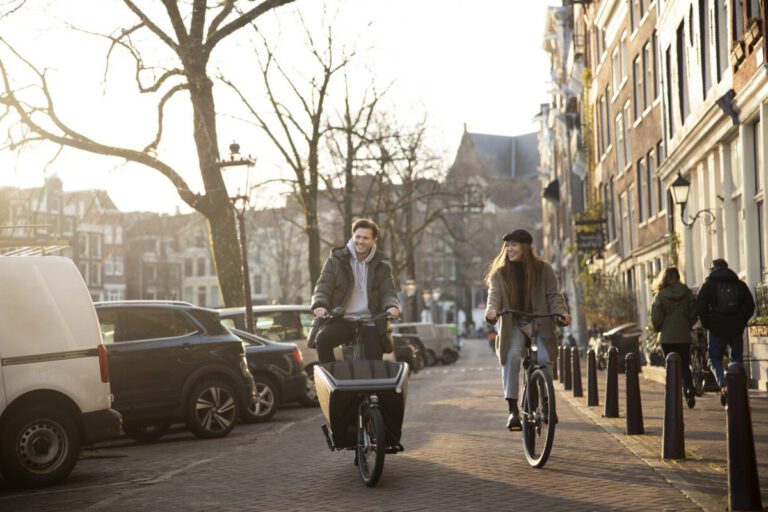
Perhaps one of the most important things you need for life in the Netherlands is a bike — or in Dutch, a fiets. It might take you a while to get used to Dutch cycling culture, but in the meantime, here’s where you can buy a bike in the Netherlands.
Wait, wait, wait! Where are you going? Before you decide where to buy a bike in the Netherlands, you’ve got to figure out what type of bike you need.
Here are the most popular contenders:
Oma-fiets (granny bike): a light-weight bike that looks like the classical ‘Dutch bike’ you might be picturing.
City bike: these are pretty typical looking and are great for just getting out and about.
Bakfiets:these are cargo bikes; you’ll usually see parents cycling around with their children in the massive baskets at the front of these.
Mamafiets: similar to the oma-fiets, these bikes have an attachment for a child’s seat.
E-bikes: these bikes are motorised, and make for easy travel especially when fighting the Dutch wind.
Road bike: this one will take you speedily down the bike lanes!
Folding bike: if you need a bike you can take with you easily on the train, go for this one.
Mountain bike: designed for mountaineering, you might not make this kind of bike your number one choice in the Netherlands.
Hybrid bike: these bikes are combination road bike and mountain bike. Great for a bit of on- and off-roading!
Choose your weapon. Image: DutchReview
Do you know what kind of bike you might need based on these bikes?
Good! Now we can get the real work done. 👷♂️
How much does a bike in the Netherlands cost?
The thing is, there’s a bit of nuance to this question. How much you spend is dependent on the type of bike you get.
As a general guide, most people spend between €75 and €200 on their first Dutch bike. This is secondhand, and probably a little rusty, but it’s ideal to get you from A to B.
If you want to buy new and are eyeing a pretty basic oma-fiets, you can expect to drop around €200 to €500.
Specialist bikes often cost a lot more. A brand-new bakfiets, for example,could cost you up to €2,000, depending on the model. And if you want an electric one? Better get saving, because you could spend double that! 💶
The Dutch have come up with some inventive ways to bring their kids around. Image: Depositphotos
Where should I buy a bike in the Netherlands?
Just like the rest of the Netherlands, bikes aren’t part of a hierarchy. That person riding the squeaky rust-mobile? They might be a CEO.
Basically, no one’s going to judge you based on the quality of your bike.
That being said, there are a number of options when buying a bike in the Netherlands.
Buying a brand-new bike in the Netherlands
If you’re the kind of person who’s willing to take the very likely risk of having your wonderful set of wheels stolen right from under you, a first-hand bike is surely the way to go.
But there are benefits! While a first-hand bike is certainly a luxury purchase (and a dream for thieves), it can also mean no squeaky brakes or stuttering lights. But, where should you buy a brand-new bike?
Once that you’ve got the cost of the bike down, and an understanding of what you’re looking for, you’ve got to climb the final hurdle — where to get it from!
Aside from these stores, you can always get a bike in one of the many thousands of stores across the wetlands. You can go in and look for more established brands, such as Gazelle or Cortina. Plus, some bike brands have their own stores — such as Trek.
But, always check reviews first, and make sure to compare before you spend your hard-earned moolah. 💰
Buying a second-hand bike in the Netherlands
Perhaps the more popular choice, buying a second-hand bike in the Netherlands can also be a bit of a challenge.
But, once you have all the details, going out into the world to retrieve the fiets of your dreams can be an easy task.
Facebook Marketplace and buy-and-sell groups
Buying from Facebook Marketplace and other online buy-and-sell groups can be a great option when buying a bike in the Netherlands.
But, do be careful of buying a stolen bike; this is illegal and could end up leaving you in a bit of a mess.
That brand-new ‘second-hand’ bike you’re looking at might actually be stolen. Image: Depositphotos
Does the bike look too good to be true? A brand-new pink beauty with a shining basket and not a speck of rust for a measly €60? Perhaps think again, for that might be some poor soul’s birthday present, snatched off the street.
A little bit of caution goes a long way — does the person seem trustworthy? Is their Facebook profile legitimate? Are they posting 20 different bikes for sale, claiming they’ve been riding them for two years? No? Then you’re likely good to go!
Marktplaats
Marktplaats, the Dutch holy ground for secondhand goods!
This is an excellent place to go if you want to buy a bike. Dust off those Dutch skills, and see if you can grab yourself a good deal.
Lots of people on Marktplaats will also sell more expensive bikes, such as e-bikes or bakfiets, so if you desire either of those at a cheaper cost, be sure to download the app and search away.
Second-hand bike store
Just as thousands of bike shops sell brand-new bikes, there are also many stores selling second-hand ones.
Many stores will sell both, so pop into a store and ask around. They’ll let you test-drive them, and they often come with a limited warranty or a buy-back guarantee.
Flea markets
Flea markets are also a great resource when buying a bike.
If you’re in Amsterdam, major markets such as IJ-Hallen will have a massive selection of bikes by different vendors, giving you the chance to wander around and barter before you settle on a bike.
You can even find bikes for sale at major flea markets in Dutch cities. Image: Depositphotos
The market at Waterlooplein in Amsterdam is also an excellent place to buy a bike in the Netherlands. Open Monday to Saturday from 9.30 AM to 6 PM, you’ll find lots of secondhand bikes on sale here too.
Ask your friends and co-workers
Though it might seem nerve-wracking if you’re new to the Netherlands, asking the people around you if they have a bike they’re selling on, or know of someone trying to get rid of their beloved fiets, is a good option.
You’d be surprised just how much movement one bike goes through in its lifetime in the Netherlands!
Under a bridge (just kidding!)
“Buying a bike under a bridge” refers to buying an exceptionally cheap bike, usually from a seller that looks like they’re about to bound away once the sale is done. This is often literally done under a bridge or by a railway station.
Clouded by nerves and a sense of rushing, buying a €5 bike from a person on the side of the street is never a good idea.
Although good for the wallet, the bike is most likely stolen, and the thief is trying to pass it off before they get caught.
Beware of buying a super cheap bike! It may be stolen, and you might be the person to blame if caught.
What should you check for when buying a bike in the Netherlands?
Buying a bike in the Netherlands is a serious duty. Similar to buying a car, you need to check lots of things before you buy your bike and take it home.
The last thing you want to have to do with a new bike is to bring it for repairs just after buying it. Image: Pexels
The major things you should check for on your new bike are;
Do both the front and back brakes work?
The type of brakes: are they back-pedal brakes or hand brakes?
Is it the right height for you to get comfortably on and off? If not, can the seat be adjusted.
Is it comfortable? Do you see yourself being able to cycle for long stretches?
There are, of course, other things to check for, but these are more to do with personal needs and wants than the plain basics. As for accessories, we’ll get to it! 😎
How to avoid scams or buying a broken or stolen bike
Just like with most secondhand purchases, there’s always an underlying fear that the item you’re buying isn’t as good as it seems.
Our best recommendation is always to always look at the bike in person. And no, we don’t mean taking it for a quick spin; we mean giving it a good, close-up inspection.
Make sure the gears work, and that both the back and front brakes are in good condition.
It might be a scam if the bike looks freshly painted, as this is a way for thieves to resell stolen bikes.
Is it a bit too good to be true? Less than €100 for a really nice blue bike with a brown leather seat with 21 gears and in perfect condition? If it’s too cheap, too pristine, or looks like it’s been done up very recently, we’d recommend approaching with caution. 🚫
Short-term bike rentals are also available. These are ideal if you’re in Amsterdam for a handful of days and you want to get the chance to cycle around the beautiful city. Or, you’re halfway along your commute home and have to choose between a 40-minute walk or a 20-minute cycle.
There are hundreds of short-term bikes to rent in the Netherlands. Image: Depositphotos
This is where short-term bike rentals come in! These bikes are usually rented on a day-to-day basis and are relatively cheap (although they can rack up costs over time).
In almost every city, however, you’re sure to find a bike rental shop. Just walk in, ask if they rent bikes, and double-check the rate. You can expect to pay around €10 for a full day. Then, you can whizz away.
Other things to consider when buying a bike in the Netherlands
Congratulations! You’ve found the Dutch bike of your dreams. But, now’s the other hard part; all those extra things you’ll need.
Before you can journey off in peace, you’ll need to consider a few things, such as:
Some popular examples of accessories when buying a bike in the Netherlands are:
Basket: perfect for internationals who aren’t ready to cycle home holding five bags of groceries, unlike the rest of the Dutchies
Pannier: a bag that can be attached to the back of your bike for easy storage and carrying.
Mobile phone holder: good for those of us who are a bit directionally challenged but don’t want to risk unnecessary fines for using our phones while cycling.
A bell: important for alerting everyone in a hundred-metre radius that you are, in fact, on the bike path and they should get out of your way.
Something to distinguish it as your bike: because if it’s a basic black bike, it’s bound to get lost amongst the hundreds of other black bikes.
Where to buy a bike in the Netherlands: frequently asked questions
Where can I buy a bike in the Netherlands?
You can buy a bike online, or at an in-person retailer. There are many bike stores in Dutch cities, but you can also go to flea markets to buy secondhand.
It’s also possible to buy second-hand from Facebook Marketplace or Dutch reselling sites such as Marktplaats; the options are endless!
How much does it cost to buy a bike in the Netherlands?
For a secondhand bike, it can cost anywhere between €50-180 on average.
For a first-hand bike, it can cost anywhere between €200-500, with the price going up for additional qualities such as e-bikes or cargo bikes.
How can I get a cheap bike in the Netherlands?
Your best bet is to buy a bike secondhand if you want to keep costs low. Asking coworkers and friends if they know anyone selling a bike on is always a good bet, alongside scouring the secondhand markets.
What is the most popular bike in the Netherlands?
The most popular bike in the Netherlands is the omafiets, or the ‘grandma bike’.
Is it better to rent or buy a bike in the Netherlands?
The answer to this depends on the person! The benefits of a rented bike mean that you are not liable to cover the cost of fixing the bike, nor do you have to pay to replace it if it’s stolen.
However, you have more freedom with a bike of your own, and if you plan on staying long-term in the Netherlands, it’s cheaper to buy a bike once off than to have to pay subscription fees over time.
So, now that you’ve got the tips, tricks and knowledge, you can go out into the world and find your perfect bike! 🚲
Did you buy a bike in the Netherlands? If so, tell us about your experience in a comment!
Editor’s note: This article was originally published in December 2022, and was fully updated in October 2023 for your reading pleasure.
Thinking about working from home in the Netherlands? There’s nothing more ideal than snuggling up with a house-made coffee, turning on your laptop, and working like a boss in your underwear (it’s okay, we won’t tell).
Among other things, the Act stated that after an employee has been working for more than six months, they can ask to adjust their hours or place of working. The employer can only deny the request if they have a good reason.
The Netherlands is relatively progressive in this arrangement. But, companies may not always be in favour.
Working from home lets you multitask! Image: Depositphotos
Computer giant IBM became the first multinational this century to encourage its workers to work from home. Ever since then, the company has had 21 quarters of falling profits and ordered thousands of employees to return to the office “or else leave the company.”
They’re not alone: Yahoo, Honeywell, and Bank of America also brought their employees back to the office.
If you’re hoping to find a job that easily allows for remote work, we suggest you search for IT jobs, virtual assistant roles, and software engineering positions.
Is working from home all it’s cracked up to be?
It sounds like a dream, right? No commute time, no office clothing, and the ability to ignore annoying colleagues if they message you. Yep, working from home sounds great — and it will make you more productive, right?
But in reality, working from home can dramatically affect your productivity. In the US, the benefits of working from home have been called “the big lie.”
Problem with trying to #WorkFromHome is one moment you are clacking away at your computer and the next you are washing curtains
Despite employees promising their bosses (and themselves) that they’ll be up early, tapping away on their computer at their kitchen table, that’s not always what happens.
A Dutch study from 2018 found that employees have too little self-discipline. They are often distracted at home by laundry or catching up on Netflix.
The same study found that combining work and family can make you more exhausted, leading to more arguments at home.
Succeeding at working from home in the Netherlands
Determined to nail the Dutch work-life balance and thrive in your home office? Here are our tips.
Get into a routine
Sometimes, it’s a little hard to separate home life from work life — and it’s easy to lose focus on work and instead revert to doing chores. But, of course, it’s hard to concentrate if you’re constantly getting distracted.
Also, keep in mind that you don’t have a boss coming and monitoring your screen every now and then, so it’s easy to let your mind wander.
Don’t eat lunch at your desk; set a proper break time! Image: Freepik
It helps to wake up at a certain time in the morning and set hours for yourself when you’re going to work.
Decide when your lunch break will be, if you’ll have a designated time to do chores, and how you will make up that work time later in the day.
And, remember not to lounge around in your pyjamas: getting dressed, brushing your teeth and wearing proper clothes can make a big difference to how productive you feel.
Don’t isolate yourself completely
Although the idea of working from home is pretty appealing, keep in mind that human beings were made for social interaction — that’s why some people prefer to work in an office.
Physical contact has been linked to better ideas, communication and decision-making. In this case, it might be nice to have a balance between working from home and working in an office
Don’t be afraid to work outside of home
Working from home doesn’t have to be taken literally — especially as Dutch houses and apartments can be notoriously small.
Get out in the world and check out some coworking spaces if you need a bit more of a routine.
Don’t be afraid to get out of the house to work! Image: Freepik
Fortunately, because working from home in the Netherlands is so widespread, there are plenty of coworking spaces available. While the majority of them are paid, some municipalities also fund some that are completely free.
Coworking spaces offer a great opportunity to network, have a great working space, and often have ultra-fast internet and complimentary tea and coffee. Check out coworker.com to find one near you.
Or, if you’re feeling a little extra, there are plenty of super gezellig cafés in each Dutch city that you can work from.
Good Wi-Fi is key
If you’re working from home, you’ll likely be communicating frequently with your company or organisation. It’s absolutely essential to have fast WiFi.
Trust us, you won’t regret putting the time into getting good wifi! Image: Depositphotos
Added bonus? Ultra-fast streaming for when the workday is over!
Make sure everyone is on the same page
If you are making the shift to working from home make sure you are upfront and clear with your bosses about what is expected.
Make sure to talk to your boss so everything is clear. Image: Freepik
Do you need to keep working your normal hours, or can you be flexible and work in the evening? Do you need to be available for calls?
Can you work from another country? Do you ever need to show up to the office? How will your success be measured in the future?
Remote working relies on mutual trust to be effective. Discuss the ‘what’ and ‘how’ with your boss and talk about whether you need to come to an agreement in writing.
Know when to call it quits
Working from home isn’t for everyone — and few people find it to be a natural and easy adaptation. Give yourself some time to settle in and focus on making it work.
Just because you’ve set up your home office doesn’t mean you’re tied to it forever! Image: Freepik
But, sometimes, it doesn’t work out. Think about how long you’ll try it out and when you may think about returning to the office. It doesn’t mean you failed — it just means you tried.
What do you think are the benefits of working at home? Tell us in the comments!
This article was co-authored by Vedika Luthra and Samantha Dixon Editor’s Note: This article was originally published in March 2020, and was fully updated in October 2023 for your reading pleasure.
The results are in! With the help of 12,000 participants, TimeOut has officially determined the 40 coolest neighbourhoods in the world. Anyone who’s anyone will be there. 😎
Where will you have the most fun if you go out? Where is everyone flocking to?
What neighbourhood has the most brand-new openings? What spots have the most “green spaces” that actually let you touch grass and, well, breathe? 🌿
These questions, among other criteria, are what determined the results by TimeOut. Let’s see how well our beloved Dutch capital did…
Amsterdam’s West ranks 9th
Trusty old Amsterdam, with its robust nightlife and highly cultured canals, was a force to be reckoned with. The Venice of the North stole the ninth place on the list thanks to its West Amsterdam neighbourhood.
But it’s not just the Red Light District and boisterous clubs such as De School — which is one of Europe’s premier nightclubs — that earned West this title.
Food critics and “local experts” commended the area for its museums (including Museum Het Schip) and the many boutiques, hip cafés, and “multicultural eateries” found in streets like De Clercqstraat, Kinkerstraat, and Overtoom.
A diverse set of neighbourhoods
At the very front of the pack was Laureles in Medellín, Colombia — and, let’s face it, no one could compete with its many “parks, tree-lined streets, yoga studios and countless coffee shops” (not the Dutch kind).
The “most wanted man in the Netherlands” proved no match for this Amsterdam-based toilet. After he came out of the W.C. in a hotel yesterday morning, he was arrested on the spot.
The entire country was on a collective manhunt to track down the 24-year-old criminal Bretly D., who was dubbed the Netherlands’ most wanted man.
Up until yesterday, Dutch police were being flooded with hundreds of tips regarding the whereabouts of the alleged serial killer, the NOS reports.
Plus, the fact that the reward for turning him in was a whopping great €25,000 didn’t hurt either.
Receptionist mistook him for a hotel employee
The alleged murderer was taking a discreet stroll through Amsterdam yesterday morning when he snuck into a hotel toilet to avoid arrest and…relieve his bladder?
According to the hotel receptionist, allowing randomers off the street to use the bathroom is a rare occurrence.
But since there was construction happening at the hotel, the suspect was in luck — the receptionist let him in, assuming he was a construction employee.
Altered appearance
And who could blame her, considering the fact that D. had supposedly given his appearance a makeover to avoid arrest?
Apparently, he had ditched his “bad boy” looks and was donning a black jacket and freshly sheered bald head, with a cap in hand. Still, his “rushed” manner may have given him away.
Translation: “Firearms-dangerous Bretly D. arrested after manhunt.”
A construction worker recognised him nonetheless and pointed out the direction of where D. had gone (that is, the Gents) when the police arrived at the scene.
After his trip to the powder room, D. was greeted by a team of police officers.
Bretly D. is suspected of participating in the recent shooting of a psychiatrist and had a history of stabbing. He is currently in police custody.
It’s officially spooky season! A code yellow warning was issued for a large part of the Netherlands due to dense fog covering our surroundings in some season-appropriate mist.
Code yellow is often used for thunderstorms or heavy rainfall, but heavy fog can transform our daily routines (even if it’s not as dramatic as lightning or showers).
Is it really that serious?
The code yellow was issued mostly due to limited visibility. According to NU.nl, visibility can be less than 200 metres in some areas.
Dense fog can create challenges for commuters and travellers — with less visibility, it’s a good idea to increase your following distance and go a bit slower than usual while driving.
The fog can also lead to temporary disruptions in public transportation. Make sure to double-check your train times for this morning’s commute to work!
The fog will be short-lived
Groningen, Drenthe, Overijssel and Limburg will be spared of the foggy mysticism. As for the rest of us, the fog will disappear in the second half of the morning.
When the fog clears in the coming days, there’s even a chance that the sun will show itself. But don’t count on it too much; the clouds will soon come back and possibly bring us some rain.
It might be time to embrace the gloomy weather vibes because it’s looking like rainy, chilly weather is here to stay for a while.
Do you think the fog is worth a code yellow warning? Tell us in the comments!