Done with Tinder? Adopt a dog! And then download a Tinder for them instead. Yes, one Dutch vet has made this possible.
However, unlike human Tinder, the “Tinder for dogs”, Fit2Breed, cuts right to the chase…
No more sick puppies
Hille Fieten, the creator of Fit2Breed, is a veterinarian and geneticist at Utrecht University who is sick of seeing overbred and sick dogs in her office.
From tiny snouts to curled ears, her work often has her treating dogs who are suffering due to overbreeding — so she decided it’s time that dog breeders make sure the dogs they are breeding are actually a good match.
It’s a match!
So, how does one dog match with another on Fit2Breed? Smart bios and seductive paw pics have nothing to do with it.
Instead, the app will display the hereditary diseases of various dogs. If two dogs carry the same disease, they will likely pass it on to their puppies — so no match.
If the two dogs can avoid passing on a hereditary disease and produce healthy puppies, then ta-daaa it’s a match!
For now, the app is only available for the Kooikerhondje breed specifically.
Kerstin Ueckert of the Dutch Association for Kooikerhondjes tells the AD “In the past, it was often said that breeding is gambling. This system takes away a lot of that gambling.”
The next step is to make the app available to more dog breeds. 🐶
After living in a certain place for long enough, you often start catching yourself becoming one with the people and the culture.
How do I know this? Because I’ve come to the point where I started considering plain bread with a slice of cheese a decent meal — a lekker broodje met kaas!
Okay, let me paraphrase: after living in the Netherlands for almost four years, I’ve become a little Dutch — maybe even more Dutch than some Dutchies themselves.
Or, as my roommate likes to call it, I’ve been “Dutchified”.
Many things have changed over the years, including me, but my soft spot for this charming country has stayed the same (despite its questionable food culture, extremely moody weather and high taxes).
How do I know that I have been Dutchified? There are some telltale signs, and today, we’ll be going through them all. 👇
How to tell if you’ve been Dutchified
Living in the Netherlands is an adventure on its own, and sometimes, without even realising it, you start embracing the Dutch way of life.
I have been collecting these 14 signs of Dutchness for some time now, to ensure that both quality and accuracy are on point — and whether you’re a newbie or a seasoned expat, I am sure this article will make you giggle.
You can thank me later. 😉
1. You’ve given up on umbrellas
Feel the rain on your skin; no one else can feel it for you… 🎶 Image: Depositphotos
It’s no secret that the Netherlands is a wet country — so naturally, how you handle rain is a dead giveaway on your degree of Dutchness.
If you’ve successfully been Dutchified, you have ditched the umbrella and started accepting the defeat by wind and rain.
You’re now rocking the natural look, with raindrops gently (and sometimes not so gently) rolling down your face and taking care of your daily hairstyle.
Does it look good? Not really. But do you care? Nah.
2. You’re zen with Dutch directness
“Wearing denim on denim just makes you look old!” — I really don’t care, Marianne. Image: Depositphotos
Okay, let’s be real: we have all faced the infamous Dutch directness at some point in the Netherlands.
But as you become Dutchified, you just get used to it at some point, and you stop taking everything your Dutch friends say personally. It’s not just liberating, but it also marks the exact moment you unlock a new level of Dutchness. Gefeliciteerd! 🇳🇱
Coming from Bulgaria, where people tend to be quite upfront too, yet in a more polite way — I also needed some time to get used to the direct ways of the Dutch.
That being said, I still agree that sometimes Dutch directness is quite unfiltered and lacks some general social manners. 👀 But, to my lovely Dutchies, I still like you — alles goed.
3. You’ve become used to the fact that churches and prisons don’t always serve their intended purpose
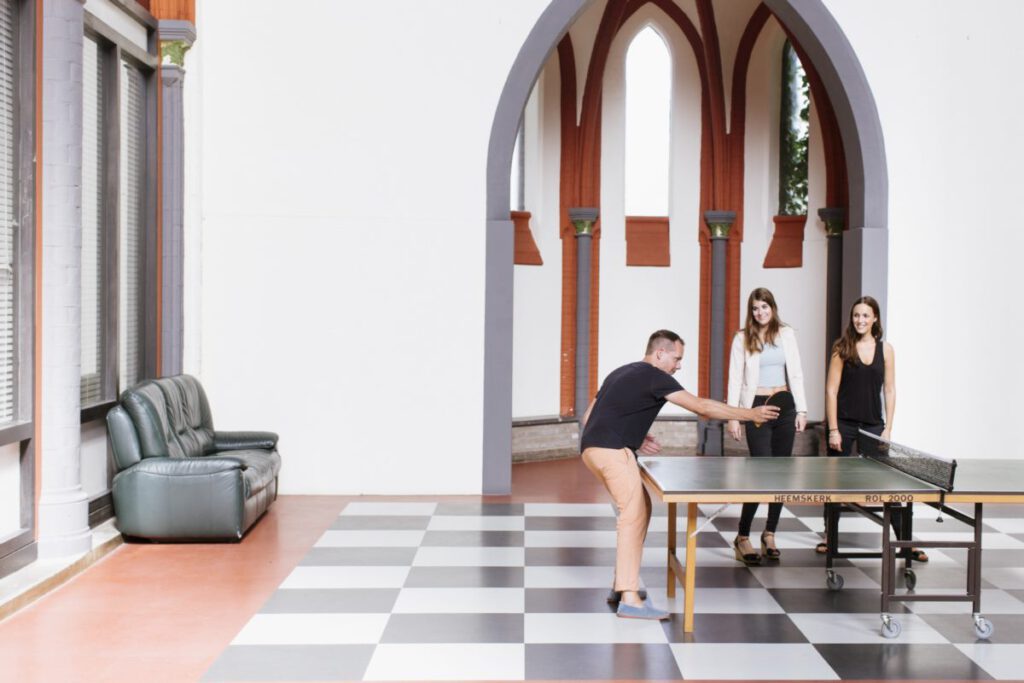
From student halls to gyms, party places and art galleries: you name it, the Dutch have done it. Fun fact: my current workplace is actually located inside a church.
Oh, and let’s not forget the prisons turned into escape rooms and student dorms!
Those are the moments in which you get reminded about the ingenuity and practicality of Dutch people.
4. You’re lost without your planner
“Grab a coffee? Sure! I’m free on Thursday three weeks from now!” Image: Depositphotos
Another rite of passage in your Dutchification is buying your first physical planner or agenda. (Bonus points if you got it from HEMA.)
Once you notice yourself falling into a routine, be it at work or home, you’ll find yourself sticking to a strict schedule and noting everything down in your handy-dandy agenda.
Catchups with friends? You now plan it a week or two in advance. Spontaneity? It’s dead.
5. You know (and secretly love) your Dutch music
This one is quite specific, but it’s certainly true. You might even have a dedicated playlist with your favourite Dutch songs on your Spotify.
And yes, your knowledge of Nederlandse muziek goes beyond the basics like Drank and Drugs.
Instead, your playlist features questionable (but catchy!) Dutch bops like Broodje van Kootje and Guus Meeuwis’ Het is Een Nacht. And, not to forget, you can sing along to all of them. 🎤
6. You would sell your soul for a 1+1 deal
And you never forget your bonuskaart! Image: Depositphotos
I may have gone too far with this one, but let me put it another way: you get heel excited when you see signs that say actie, korting, or op = op.
… Maybe a bit too excited, but hey, that just means you’re being smart with your money.
Shoutout to the Dutchies for that!
7. Sun’s up, and so is your mood
Sunny weather means terrace weather! Image: Depositphotos
Have you ever seen a Dutch person sit on a park bench, head tilted back up, and soaking up the sun rays? Yup, if you’ve been Dutchified, you’ve caught yourself doing that too.
It doesn’t matter if it’s only 14 degrees Celsius outside; the sun is out, and you know that means: buns out.
Okay, not literally, but you put on a T-shirt and tend to forget about the existence of a jacket. Oh, and you feel happy for the first time in weeks.
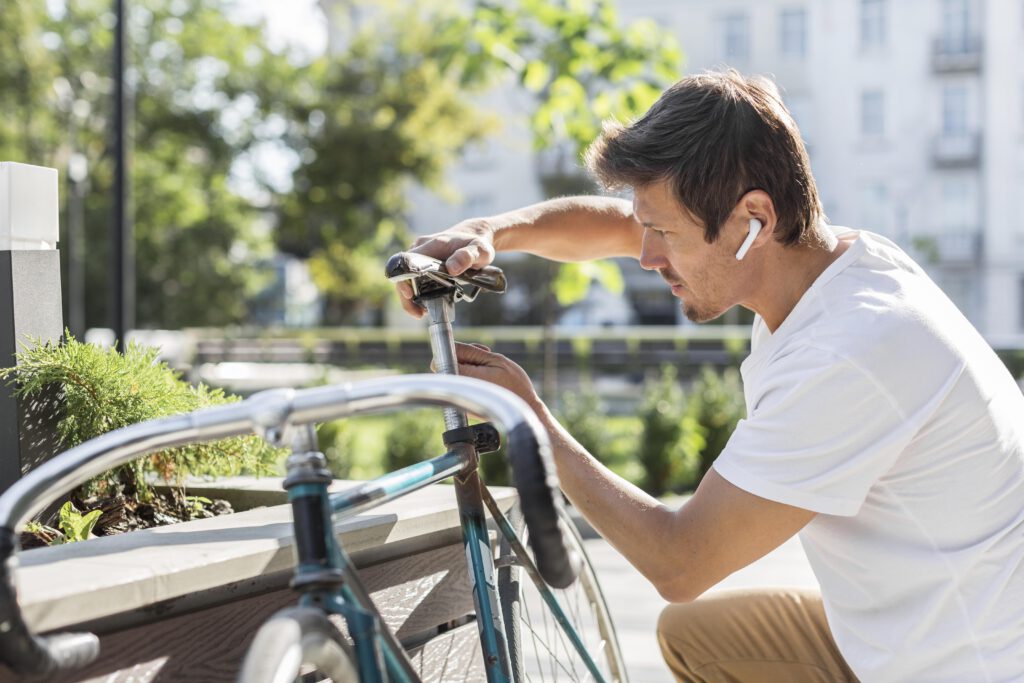
8. You want your bike to look as ugly as possible
Does your rusty ol’ bike need maintenance every other week? Perfect! Image: Freepik
I’m speaking from experience on this one.
As someone whose bike has been stolen multiple times — which may or may not have had to do with the fact that it was parked in front of a student house — I have quickly learned that the less appealing to the eye, the better the bike.
9. You get used to seeing people carrying fridges on their bikes
The first time you see a Dutchie transport outrageously big things on their bike you’re impressed. After a few years, you’re still very impressed — but also used to it.
They could certainly find an easier way of transporting furniture and large appliances, yet I’m fascinated by their creativity.
10. You have acquired some questionable but decent Dutch language proficiency
Of course, you can order your coffee in Dutch! “Een koffie verkeerd, alsjeblieft.” Image: Freepik
Once you’ve been in the Netherlands long enough, you’ll find that you have reached that Dutch level that can’t be labelled with a particular proficiency level.
It’s good enough to jump into conversations and make people nervous, but not quite enough to be considered fluent.
That being said, it’s a great way to soften Dutchies’ hearts (a very hard task)! Just spill some Dutch phrases into the conversation, greet them, wish them a nice day, complain about the weather, add -je to the end of words — you know the drill.
Another thing you find yourself doing is including random Dutch words in your sentences, just like the Dutchies tend to do with English.
And last but not least, you have acquired enough curse words to be able to tell when a stranger is, well, mad. I may or may not have crossed a motorbike’s path some time ago, and I definitely got to expand my curse word dictionary, so um, thank you, random guy.
11. You know how to scare a Dutchie
“And then, my mummy pulled out… her credit card!” 😱 Image: Depositphotos
Alright, now we’re entering the spicy area.
From my experience, there are few ways to freak out a Dutch person. I’m not sure when or how you will need to know about them, but see it as a friendly gesture that I’m telling you.
For example, you could tell them you like Brinta (a brand of porridge) with feta cheese, or better, yoghurt with hagelslag. Dutchies will be shocked, but let me tell you: both taste great and have even been approved by my Dutch friends!
Some other ways to scare a Dutch person include:
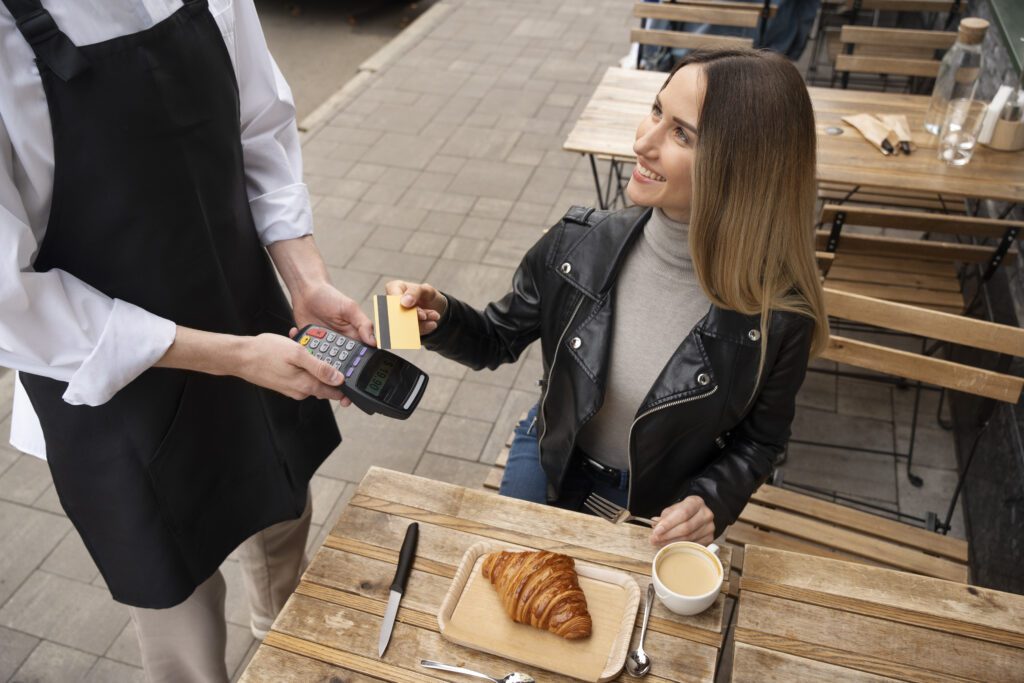
Using a credit card
Being as direct as they are
Closing your curtains
Mentioning the existence of mountains
Jumping into a conversation that you only half-understand
Paying them a surprise visit
12. You have written a poem for Sinterklaas at least once
It may have taken you hours, but you did it! Image: Depositphotos
As a Dutchified international, you now get excited about pepernoten and Sinterklaas, even more than the Dutch themselves sometimes (apparently, they think it’s not that cool if you’re not a kid?).
You have written a poem for Sinterklaas once or twice, and yes, you know the debate around Zwarte Piet.
13. You start to differentiate between provinces’ accents
You really have an ear for that “zachte G”. Image: Freepik
You know you have been Dutchified when you start being able to tell the difference between different Dutch accents.
You can tell by the softness or the lack thereof, the emphasis on the ‘g’ sound and more.
From Limburg to Friesland, even Noord Brabant, you always know who you’re talking to. The first time I noticed this, I felt that weird feeling of accomplishment, accompanied by an odd sense of power.
14. Your food choices become questionable
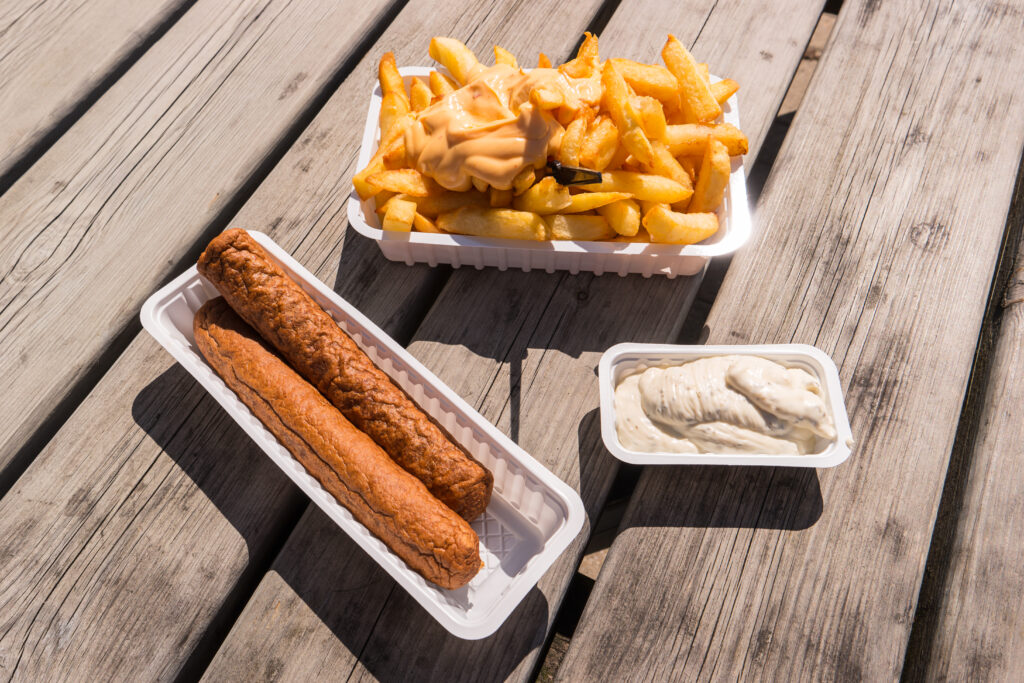
Does this look good to you? You’ve definitely been Dutchified. Image: Freepik
Coming from a family with an appreciation for international cuisine and a (dare I say) exquisite taste in food, I have now earned my family’s medal of the black sheep.
Somehow in between plain boterhammen and bitterballen, salt and pepper became the go-to spices in my menu. Is that bad? Not necessarily, but it’s bland — especially considering the Dutch’s trading history.
Also, bread with cheese and nothing else doesn’t sound too bad to me any more. Lettuce, tomatoes, mayonnaise? Ah, who needs those? Not me, apparently — not anymore.
Oh, and the fried snacks culture! There was a time when I was already familiar with bitterballen, yet never did I expect noodles in my fried ball — and that, ladies and gentlemen, is a bamischijf.
So those were just a few moments that have shown me I have been Dutchified, all taken from my modest experience. Thank me later when (or if) they come into practice in your life.
So, what’s the verdict: have you successfully been Dutchified? Let us know in the comments!
Carnival in the Netherlands in 2026: all you need to know about the drinking, weird language, when and where, costumes, partying and history behind the Dutch carnival
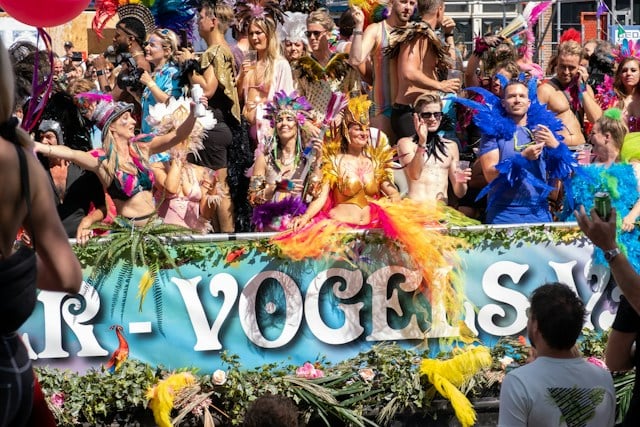
Apart from celebrations like King’s Day and Sinterklaas; the southern provinces of the Netherlands (Limburg and Brabant but also some parts of Drenthe) have something else going on: Vastelaovend, also known as Carnival in the Netherlands.
And I’d strongly recommend that you take part in the celebration.
The History behind Carnival in the Netherlands
The first Dutch Carnival was celebrated in Den Bosch as early as the 14th century with the mention of games, dressing up, cockfights and gambling.
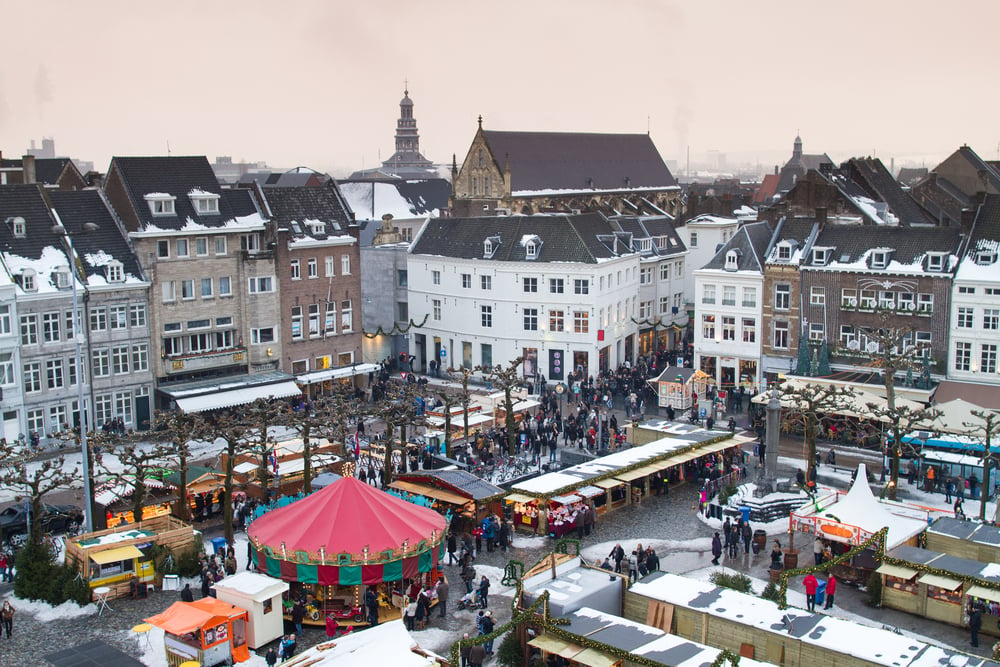
Maastricht during its carnival season. 🎡 Image: Depositphotos
By the time the 16th century had arrived, the excessive big and glorious days of the Carnival were long gone but were later revived in the early 19th century.
This celebration was also a way for people to hold on to their roots and culture while the Netherlands was under French rule.
Even though Carnival has not been celebrated in the Netherlands for much of recent history long (only since the end of World War II), it is a tradition loved by many.
Mainly celebrate in the predominantly Catholic southern provinces, as Carnival was originally celebrated as a religious festival.
Carnival in the Netherlands is all about reversing rituals, social roles and everything else you can think of (genders included).
Even city names can change during the celebrations. To give an example, in 2016 Amsterdam joined the fun by calling itself Gròòtgragtegat – rough translation: ‘big place with canals’.
Another thing to know about is the Prince Carnival, where the mayor symbolically gives the keys of the city to the Prince.
For the upcoming three days, the Carnival Prince has control of the city and their Kingdom of Fools. There is one important rule: you have to cheer with “Alaaf”.
Next comes the music, after World War II, Carnival developed its own type of music. Often accompanied by a marching band, the songs include some comical and almost vulgar lyrics.
Costumes at Carnival in the Netherlands
No matter where you end up celebrating Carnival, costumes go without saying.
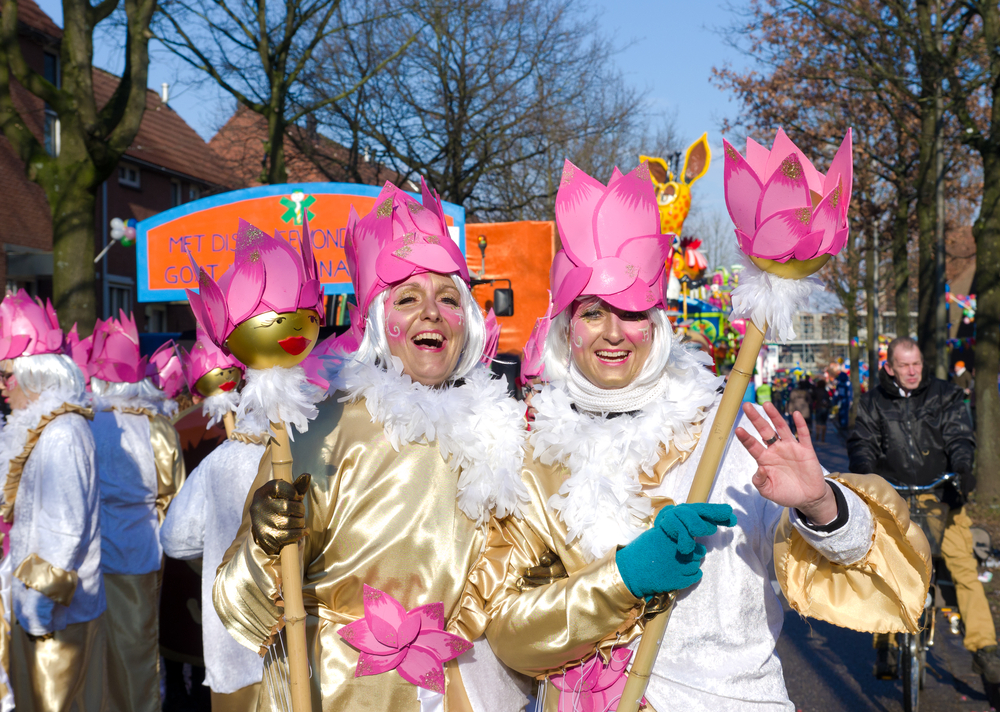
Think of masks, city colours, cross-dressing (why not?), mocking authorities with your outfit and anything else you can think of.
In this particular case, the more colour, the better. So, get creative and go wild this year!
Carnival in the Netherlands: when and where?
If you would like to join the fun, here are some of the biggest Carnivals happening in the country:
1. Maastricht Carnival
If you want to see the biggest Carnival in the Netherlands, then Maastricht is the place to be!
The celebrations kick off on Sunday, February 15, to Tuesday, February 17.
Like all the others, Carnival is an outside event celebrated all around the city. If you would like to read more about it, you can visit their official website.
2. Venlo Carnival
With its new name Vasteloavend in Venlo, the city plans to party hard from Sunday, February 15, to Tuesday, February 17 with a series of parades and concerts. Some events and fesitivities start as early as Saturday the 14th.
If Limburg is your place to experience this event, you can find all the information you need on their official agenda.
3. Eindhoven Carnival
There’s plenty to do for anyone at the Eindhoven Carnival.
Celebrations span from the 15th to 17th of February with different events taking place in a huge tent located on the Market Square.
Want to see the parade (duh!)? Then don’t miss out on the parade route. For the detailed route, you can check their official site.
Oh and the name of the city? It is Lampegaste!
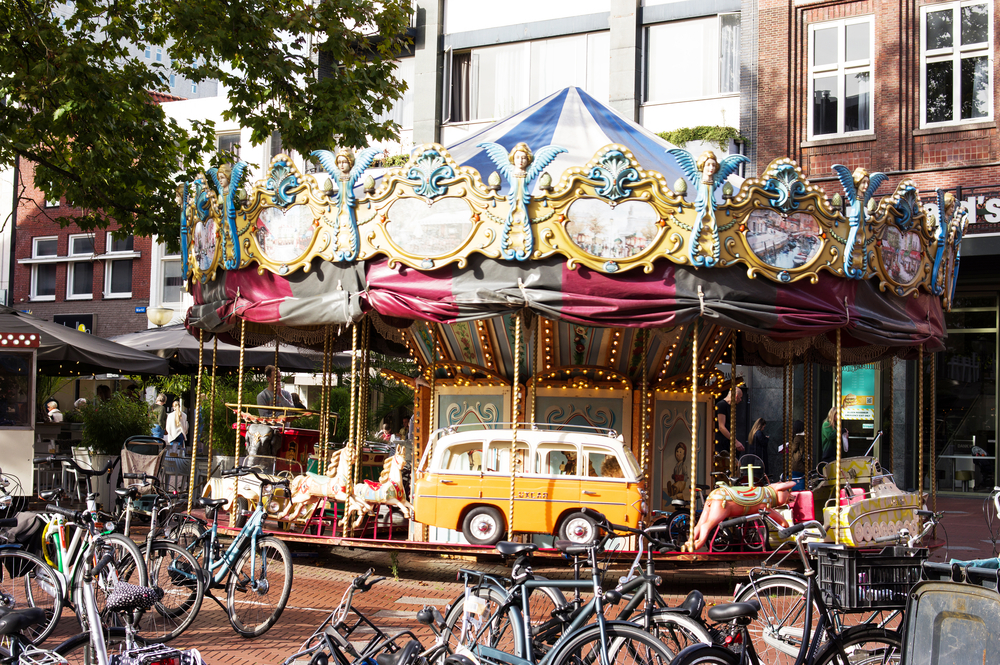
Carousels all around the city! 🎠 Image: Depositphotos
Popular spots in Lampegaste during Carnival include the Stationsplein, Market Square, Hotel Pullman Cocagne, Wilheminaplein and the famed Stratumseind.
4. Tilburg Carnival
Ah Tilburg! Finally you can visit this wonderful city during one of the many events and festivals that it organizes.
Plus, this year, Tilburg is kicking off their first edition of Doetertoe Fist, a party just for school-aged party animals! According to the website, it’s “a mini-festival for the youth of Kruikenstad.”
But don’t worry, there’s plenty of fun for the grown-ups too. You can read more about the Kruikenstad Carnival agenda on their website.
5. Den Bosch Carnival
Den Bosch (or should we say Oeteldonk?) kicks off its Carnival celebrations on 15 February with the arrival of Prince Amadeiro at 11:55 at Oeteldonk Station.
After several ceremonies, they make their way gloriously towards the Market Square.
Followed by many other events, the parties go on until the last days, and the full agenda for Den Bosch Carnival can be found on their website.
6. Nijmegen Carnival
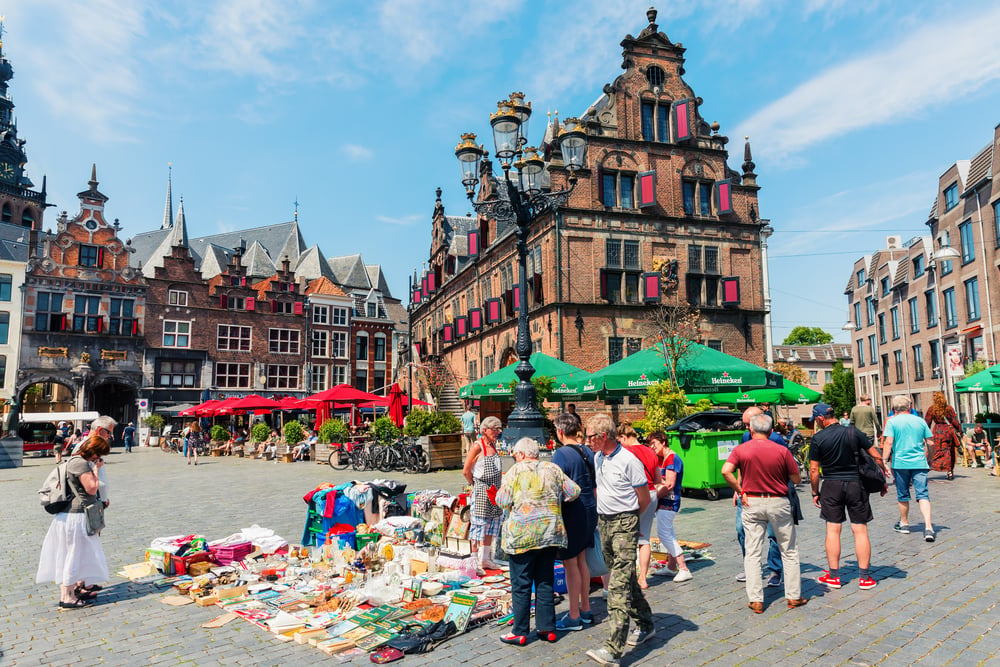
The people of Nijmegen know how to party regardless of the time of the year but trust us when we say it’s better to see the city during Carnival.
This square is filled with parades and fair rides during the carnivals! 🎡 Image: Depositphotos
The Nijmegen (or Knotsenburg) leg of Carnival starts on Friday evening, February 13th with the court ball. 💃
The real fun begins when the people hand over the city’s keys to the Carnival Prince and tap the first beer keg to celebrate the next day, on the 14th (don’t miss it).
In the upcoming days, there will be other events all over the city which you can see on their website’s agenda.
Carnival is perhaps the only time of year when the nationwide euphoria is similar to when the Dutch football team is competing in a tournament. Dutch people celebrate in a vibrant, carnival-like atmosphere filled with orange-clad fans, festive parades, joyous street parties, and perhaps enjoying a beer or two-(hundred).
Get, set and “Alaaf”!
Properly equipped with all the necessary knowledge regarding Carnival in the Netherlands, we saved the best tip till for last: which is to go out there and have fun!
Have you celebrated Carnival in the Netherlands? Tell us about your experiences in the comments below!
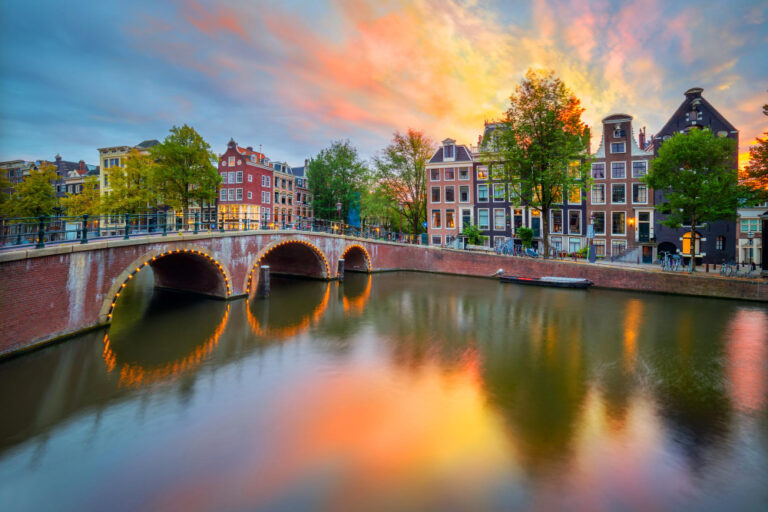
Great news, Amsterdam residents, you have yet another reason to be smug. According to TimeOut’s latest survey, Amsterdam is among the best cities in the world to live in.
According to thousands of locals surveyed by TimeOut, Amsterdam is among the top 20 greatest cities to live in 2024, sitting pretty in 18th place.
The top spot three positions were taken by New York, Capetown, and Berlin.
What is the survey based on?
So, what exactly is TimeOut basing these results on?
TimeOut bases these results on a number of factors, such as access to green areas, the number of galleries and museums, the happiness of the locals and the sense of community.
They also asked all the important questions to all the right people: the cities’ locals.
Locals from each of the cities were asked questions such as: How does the city make them feel? Is it easy to make social connections? How are the quality and affordability of food?
So, what did they have to say about our beloved Amsterdam?
It’s easy to find love
Yep, it’s not the coffeeshops or the cute canals that are most popular about the Dutch capital, it’s the L-O-V-E.
A whopping 88% of respondents said that finding love in Amsterdam is pretty “dam” easy.
In other words, if you’ve got a friend in desperate need of a partner, send them to Amsterdam.
That being said, TimeOut also praises the city for its mix of both quaint, classic Dutchness, and alternative subculture, writing:
“What separates Amsterdam from the rest is how these two sides aren’t contradictory. In fact, they complement each other, forming a collective whole unlike anywhere else in the world.”
Farmers protested across the Netherlands last night, causing major disruptions on Dutch highways — and the aftermath has left some Dutch roads in chaos.
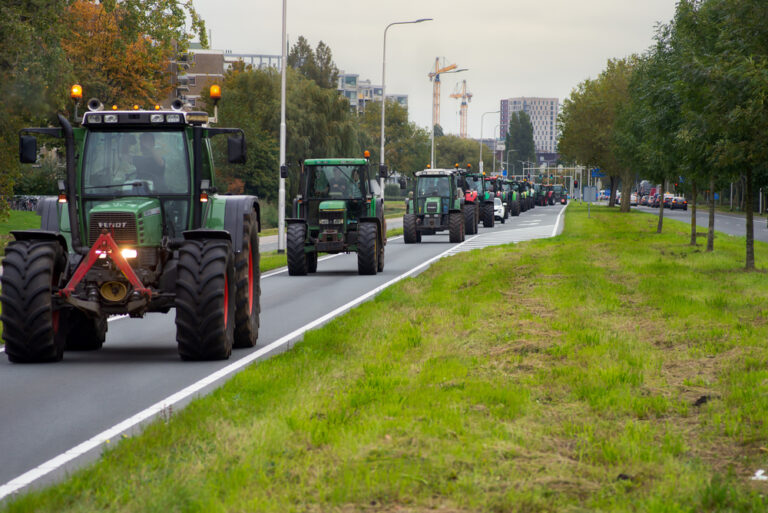
Last night, Dutch farmers set hay bales and wood on fire, set off fireworks, and drove farm vehicles across the highways in the north and east of the Netherlands, reports the NOS.
Dutch police have said that it was not possible to intervene in all protests, but they sent personnel to Gelderland and Overijssel in particular.
The affected highways
Many highways were blocked off or set on fire and, at the time of writing, are still closed or being cleaned up.
The A1 motorway around Oldenzaal was closed this morning as the road was blocked with debris and waste. The driveway at Hengelo is also closed further east towards Hengelo due to farmer demonstrations on the road.
Police also report protestors setting asbestos on fire on the A50 highway near Beekbergen. The road is partially closed for cleanup.
— Brandweer-ambulance-politienieuws (@Brandweer2020) February 5, 2024
Protestors also lit fires on the A28 highway exit of ‘t Harde bij Nunspeet, A15 near Vuren, A12 near Veenendaal, and A28 by Staphorst.
They also demonstrated on the A2 highway around Breukelen, the A7 near Purmerend, and the A23 near Steenwik.
Accidents on the road
The protests were not without a few injuries.
At least two motorists were injured on the A15 near Herwijnen after their cars collided near where the farmers had lit a fire, reports RTL Nieuws. Two people were taken to the hospital.
Vehicles also collided on the Citadel road in Veenendaal, parallel to the A12 highway. One person was trapped in the car and had to be removed from the vehicle by emergency services. They were also taken to the hospital with serious injuries.
This time, Dutch farmers are protesting a slew of issues, including low prices for their produce, rising costs, EU environmental regulations, and cheap imports, reports Reuters.
And this isn’t just the case in The Netherlands. Farmers in Germany, Belgium, and France have taken to the streets (or should we say highways?) to protest their dissatisfaction with the European Union.
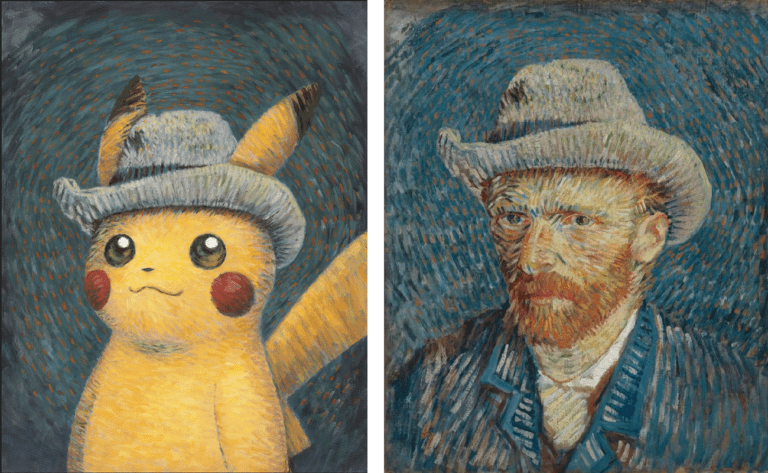
Few collector’s items have wreaked as much havoc as the Pokémon card depicting Pikachu’s Van Gogh-style “Self-portrait”. The good news: it will be available for purchase at select Dutch stores from January 10 onwards!
The card, inspired by Vincent van Gogh’s Self-Portrait with Grey Felt Hat, was released in 2023 as a collaboration between The Pokémon Company and the Amsterdam-based Van Gogh Museum.
Originally given away as part of a scavenger hunt at the museum, it was pulled from the shelves in October after crowds stormed the gift shop’s cash register, and four museum employees were fired for misconduct over the exhibition.
Meanwhile, as collector’s items do, the cards were being resold on eBay and Marktplaats for as much as €600. 😳
Pikachu is back, baby!
Online resellers will soon see a dip in their revenue, as select Dutch stores will be giving away the popular card with any purchase of Pokémon Merch over €29.99.
This starts on Saturday, February 10, and goes on as long as supplies last, writes the AD.
Wondering where you can snag a cute Pikachu self-portrait? They will be given away at the following Dutch stores:
Intertoys
Game Mania
Top1Toys
Primera
Bruna
MediaMarkt
Smyths Toys Superstores
Various games specialty stores
Will you try to get the popular Pikachu card? Share your thoughts in the comments!
Police have reported that a drug lab could have caused the deadly explosion of a Rotterdam apartment complex on January 30.
Debris from the explosion shows evidence of materials that could be used to produce narcotic drugs, reports the NOS.
The police have now arrested a 34-year-old Rotterdam man, who is suspected of producing the drugs. Sources report that he was also a tenant of the apartment complex.
The suspect in question
The suspect, Jalal O., was still in the building just before the explosion, along with his nephew and a friend.
After the incident, he stated that he knew nothing about its cause: “We made tea electrically. It looks like a gas explosion. I don’t know. I am going crazy.”
The Rotterdammer was also one of the people who jumped over the fence to retrieve the remains of one of the three victims, his nephew, from under the rubble.
Evidence of drug production
On the scene, journalists spotted jerrycans with acetone and hydrochloric acid in the debris, substances that could be used in drug production.
The investigation of the debris was temporarily stopped after they found barrels leaking an unknown liquid that began to smoke.
The fire brigade has since continued the investigation into the cause of the explosion and the fire.
All victims recovered
Until a few days ago, it was not safe for emergency services to enter the area due to unstable debris that could lead the building to further collapse.
Authorities decided to demolish the building from top to bottom, but this caused some unrest among residents, who were worried that the missing bodies would be disfigured in the process.
In the meantime, all three victims have been recovered from the rubble.
With costs skyrocketing all over the Netherlands and salaries unable to catch up, saving money can feel like a Herculean task.
Thankfully, however, there are tips and tricks to help you get the most bang for your buck — some that’ll even help you save your way to greater financial freedom.
Here are some of our favourite Dutch websites and apps for saving some money while you live your life. 💪
This post might have affiliate links that help us write the articles you love, at no extra cost to you. Read our statement.
Schapr: for a more affordable grocery bill
Founded in 2022 by a group of Dutch students, Schapr.nl is a website (and soon-to-be app!) that allows users to compare the prices of groceries at popular supermarkets across the Netherlands.
If, for example, you’re really craving some Coolbest blood orange juice, the website will show you that a one-litre bottle is a whole euro cheaper at PLUS compared to Albert Heijn (€2.24 at PLUS, versus €3.29 at Albert Heijn).
Handig (handy), eh?
Figuring out how to slim down the cost of your grocery bill just got a whole lot easier! Image: Freepik
Woolsocks: for powerful savings options
With a bevvy of savings and money-management tools, the Woolsocks app is like having a mini price-slashing ninja in your pocket.
After adding your bank account to the app, it will monitor your spending habits, generating a useful report of where your money is going.
The major pro? Woolsocks makes it easier to say doei (bye) to wallet-draining splurges — and choose how you’ll save the money you would have spent.
Do you also dig cashback deals on your groceries? Woolsocks shows you which products will help put cash back in your wallet — and the supermarkets currently offering those deals.
When Michel Brinkhuis was scouring the net for discounted train tickets, all he saw was a cluster of websites offering reductions for plane tickets, AD reports.
Determined to do something about it, Brinkhuis subsequently founded the rail price-comparison website Locomocheap.
Whether you’re looking for regular Intercity tickets or you’re in the midst of planning a weekend trip to another European city, the website will help you find the cheapest rail deal available.
Saving money doesn’t necessarily mean locking yourself indoors and never doing anything again.
You can also save money by using smart tools that help you save when you decide to spend.
What are your favourite websites and apps to help save costs in the Netherlands? Tell us all about them in the comments below!
A quick glance around the shops in 2024 will often have us gawking at rising prices — but does your shopping day include a trip to the Action or IKEA? If so, you’re going to be pleasantly surprised.
Both Action and IKEA Netherlands have announced that they are going to reduce their prices in 2024.
Surely they meant raise, right? Nee, that’s no spelling error. Customers will enjoy lower prices this year.
Thousands of products
Unlike what feels like every other store in the Netherlands, Action is actually reducing the costs of nearly 40% of its stock — which counts for a whopping 2,500 products.
Similarly, IKEA also plans to reduce the prices of over a quarter of its products.
The price reduction will be seen among 2,700 of IKEA’s products, with costs reduced by an average of 20%, De Telagraaf reports.
Lower costs for raw materials and transport
How is this possible?
According to RTL Nieuws, Action can reduce its prices due to lower costs for transportation and raw materials.
Instead of pocketing that extra cash themselves, the chain has decided to, in turn, reduce the selling prices of the products.
It’s a similar story for IKEA. According to De Telegraaf, the company is enjoying lower costs for transportation and raw materials. This, in turn, means that they can charge less for their products in 2024.
I don’t know about you, but my apartment is about to experience a major glow-up. ✨
The rich are getting richer, the globe is getting hotter, and wars are getting bloodier — yet one thing stays the same: Amsterdam tourists hopping on the latest food trend that TikTok says they should try.
As suggested in a deep-dive by Het Parool journalist Hans van der Beek, the latest sensation gripping the nation (or, well… Amsterdam) is stroopwafels.
Dress (your stroopwafels) for success
Make no mistake — these are not your average €2.45 twelve-pack stroopwafels from Albert Heijn.
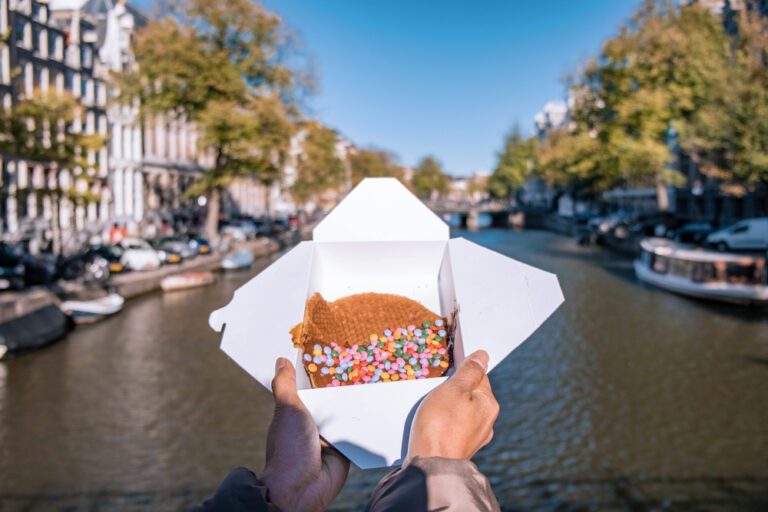
Costing around €13 a pop, these sweet treats are from Amsterdam’s internet-famous Van Wonderen Stroopwafels.
Featuring a variety of delicious toppings, from chocolate shavings to tiny blocks of caramel fudge, it’s clear that Van Wonderen’s fare has massive social media appeal.
In the words of one stroopwafel enthusiast interviewed by Het Parool, she was prompted to visit the store after seeing an “incredibly aesthetic and cute video on TikTok”.
Off TikTok, however, people were singing an entirely different song.
€39 for three stroopwafels
A tweet by a self-dubbed “stroopwafel-influencer” recently went viral for exposing a €39 bill… for three stroopwafels.
Yes, three. 😳
For the few of you who still doubted: the world has gone mad. Some TikTok influencer posted about a bakery in Amsterdam where you can buy stroopwafels. Day in, day out there are rows to buy them….for €13 a piece! Tip: go to any Dutch supermarket to buy high quality stroopwafels pic.twitter.com/w7mTiL1O8u
Twitter/X users were quick to point out the hilarity of the situation, with one even noting that you can head to the store’s website and “buy a whole pack of 10 for €8.50”.
Oh, and not to mention that similar stroopwafels, with toppings and all, cost you about €3.50 at the local Albert Cuyp street market.
Time is clearly not of the essence
And how long does one have to wait in line for the chance to plonk down a casual €13 for just one stroopwafel, you might be wondering?
Well, according to another tourist interviewed by Het Parool, sampling this particular TikTok trend could involve an hour-and-a-half-long wait to place your order.
Yes, you read that right: wait times can take over an hour, as every TikTok enthusiast in the city rushes to board the stroop-filled hype train.
What’s your verdict on €13 stroopwafels? Tell us all your thoughts in the comments below!