The process of getting a mortgage involves some key steps that you’ll see no matter where you want to buy a home. However, there are certain aspects of buying a house in the Netherlands that may surprise you.
Or maybe not. You’ve heard all about the cooling-off period, right? And you know what happens with your student debt of course. No? That’s ok. That’s what you’re reading this for!
We teamed up with experts at Expat Mortgage Platform to bring you this article. After all, they know all the ins and outs of getting a mortgage as an international in the Netherlands.
Here are seven things you probably didn’t know (but should!) about buying a house in the Netherlands.
1. You get three days to change your mind
Imagine this: you’ve spotted the home of your dreams, placed your bid, and success! Your offer has been accepted. You pop the champagne and begin to plan your life in your new home. 🍾
However, the next day, amid a terrible hangover, you realise that this actually isn’t your dream home. It’s too far from your work, or it’s not suitable for that big future family. You’ve made a mistake.
Geen probleem. In the Netherlands, you have what’s called the cooling-off period (afkoelperiode). This means that you can pull out of your agreement to buy a house within three working days without paying a cent.
Essentially, if you pull out within the cooling-off period, there will be no financial or legal implications. You can walk away from your initial decision with no strings attached.
2. The Dutch have a National Mortgage Guarantee
In the Netherlands, you can also benefit from what is called the Nationale Hypotheek Garantie (National Mortgage Guarantee).
The NHG is basically a protection against any debt that still stands if you can’t pay your mortgage due to involuntary unemployment, divorce, or the inability to work. If you do find yourself in this situation, the NHG will work with the bank to try to help you keep your home.
One thing you perhaps didn’t know about buying a house in the Netherlands is that the Dutch have a National Mortgage Guarantee! Image: Freepik
However, if you have to bite the bullet and sell your home for less than the remaining mortgage, the NHG will cover any residual debt for you.
When you opt for a mortgage with the NHG, you can also enjoy lower mortgage rates — meaning it’s a great option for hopeful homeowners who want a bit more security and support in their mortgage.
Note: In order to benefit from the NHG in 2022, your mortgage cannot exceed €355,000.
3. It’s surprisingly easy to get a mortgage as an international in the Netherlands
The prospect of buying a house in a foreign country is always going to be a bit daunting.
However, while there are certain requirements that you must meet in order to qualify for a Dutch mortgage, overall, the process should be mostly the same as it would be for a Dutch person.
In order to qualify for a mortgage in the Netherlands, you must:
Live in the Netherlands
Have a BSN
Be registered in the Netherlands
Once you have met the above requirements, your status as an international really doesn’t matter! The banks and mortgage providers will treat you the same as any Dutch person who applies for a mortgage.
You should know: While it may be easy to get a mortgage as an international in the Netherlands, finding a house to buy is a whole new ballgame.
4. Your student debt doesn’t always stop you from getting a mortgage
Student debt — many of us have it, and yet, many people in the Netherlands are still able to buy a house. How?
People often think that student debt is an immediate no when it comes to a mortgage. Luckily, in the Netherlands, that just ‘aint true!
Having student debt will not prevent you from getting a mortgage in the Netherlands. Image: Freepik
When you apply for a Dutch mortgage, you will be asked about any outstanding debts, including any student debt.
The higher your debt, the lower your borrowing power — but unless your student debt is quite significant, you’re not going to be denied a mortgage purely because of this.
5. Sometimes you can buy a house — but not own the land it’s on
Yep, you read that right. In the Netherlands, especially in larger cities such as Amsterdam, Rotterdam and The Hague, you can buy a house but not necessarily own the land it’s built on. Why? This comes down to something called the erfpacht.
Erfpacht is essentially a leasehold for thelandthat the home is situated on. You can think of it as a long-term rent that you pay to the municipality.
And yes, you pay it on top of the cost of buying the house. It’s important to factor this in when calculating your borrowing power.
6. Mortgage interest is tax-deductible
Back in the day, there were a number of different mortgage models that you could choose from when buying a house in the Netherlands. Some of these would allow you to deduct mortgage interest from your taxable income, and some not.
In the Netherlands, your mortgage interest is often tax deductible. Image: Freepik
However, if you’re looking to get a Dutch mortgage in 2022, then you now have two options: you can either go for alinear mortgage or an annuity mortgage — and under both models, mortgage interest is tax deductible.
This means that, for example, if you pay €100 in mortgage interest each month, you can deduct €100 from your taxable income — a huge plus.
7. The length of time that you’ve lived in the Netherlands doesn’t matter
While some may think that the longer you live in the Netherlands, the better your chances of securing a Dutch mortgage, this simply isn’t the case.
If you arrive in the Netherlands and immediately decide that this is the country for you, we have some good news: many mortgage advisors and providers are happy to start the process of setting up your mortgage from day one. That can save you a stack of cash on rent!
Ready to find your dream home, calculate your borrowing power, and secure a Dutch mortgage? Great! The team at Expat Mortgage Platform knows how it can be for an international to make the jump. Reach out and their experts will take you through the entire process, geen stress.
How else did the Dutch mortgage process surprise you? Tell us in the comments below!
You’ve heard of refugees, internationals, and travellers, but have you heard of millionaire migrants? This year, more than 350 richies will find their way to the Lowlands, and we’re not really sure why…
This is clear from figures released by the migration consultancy group Henley & Partners, who make a living advising rich people on how to invest their money.
That typically means guiding them towards areas where “gold visas” or “gold passports” are available for people who invest a certain amount into the country. 💎
The Netherlands? Really?
Yeah, we don’t get it either. The land of bikes and potatoes is not generally known for its attractive power toward millionaires, and it doesn’t even have a proper investment migration program.
That means that the Netherlands doesn’t have one of those “gold visa” schemes many other millionaire-prone countries offer. So why do they come at all? 🤷🏽♀️
First of all, it’s worth noting that many (at least more than normal) of these millionaire migrants have moved from the UK, thanks to Brexit. The brits seem to have had enough of their own land!
The second reason why the super-rich might want to have a change of scenery, is that the Netherlands offers a three-year residence permit to people who invest a minimum of €1,250,000 into a Dutch business. 💸
After that, you can extend the permit to last five years, and try to go down the citizenship route (if you wanna go all the way and become a dutchie).
Unpopular arrangements
While the Dutch treatment of the super-rich sounds nice, the Netherlands isn’t really the most attractive country to move to — if you have a few million to protect.
Why? The Netherlands actually has a very strict process before granting these millionaire permits. In fact, only 20 applications were filed between 2013 and 2019 (10 of which were approved)! 😅
Instead, countries such as Portugal and Greece attract the most millionaires in Europe, while Russian richies have tended to move to Dubai (especially since the invasion).
After getting a “gold visa”, rich people can travel around the Schengen area for five years — cheat the system much? In Malta, you can even get a Maltese passport directly upon investing, to the great dismay of the European Commission… 🙄
In other words, there are way better places to move if you’re a millionaire — but the super-rich seem to like the Netherlands enough to come here anyway! We won’t complain.
What do you think of these odd findings?? Tell us in the comments below!
The English language has a wacky and obscure assortment of idioms containing “Dutch.”
Some are purely descriptive, like “Dutch barn” or “Dutch clover”. Some describe mildly unconventional concepts, like “Dutch auction”. However, many are disparaging, such as “Dutch oven”.
There are probably countless times throughout the week that you use an English idiom that contains a Dutch reference. Why are there so many? What are the origins of such phrases?
All’s fair in love and war (including snarky idioms)
So, why does the English language take the mick out of the Dutch? Well, it has to do with great historical battles between two eminent, emerging world powers. Plus, a little name-calling.
During the 17th century, the Netherlands and Britain squabbled for control of maritime trade routes. They waged three wars against each other over 20 years.
This consequently allowed plenty of time for the British to develop some choice words and snarky remarks about the Dutch.
They did this by adding ‘Dutch’ to words or phrases, not to indicate actual Dutch things or ideas. Rather, ‘Dutch’ came to mean anything strange, irregular or unpleasant.
Dutch Courage
There are a plethora of sayings relating to alcohol and the Dutch. The most well-known is undoubtedly Dutch courage.
This saying is a relic from the Thirty Years’ War. British soldiers fighting in the low countries would take a swig of gin to warm up and get going. They also noticed the Dutch side bolstered by the infamous tipple.
William of Orange — the Dutch turned British King — popularised the boozy beverage even further in the UK. Hence gin also became known colloquially as Dutch courage.
Drinking to instil bravery. Image: Pixabay
Going Dutch
This phrase refers to the act of splitting the bill when you go out for dinner, as opposed to one person covering the entire bill.
Some have suggested that going Dutch derives from a Dutch door, which is split in half in the middle.
More plausible though, is the allusion to the tight-fisted nature of the lowlanders. Comparable phrases include “Dutch date” and “Dutch treat” — both of which imply you shelling out.
Similarly, A “Dutch party” is where everyone brings their own snacks and drinks. Now, that’s some Dutch generosity (stinginess) right there!
Stingy or just saving? Image: Pexels
Dutch Uncle
“Uncle” conjures up thoughts of an affable, wise, maybe humorous man. A less serious version of your old man — “Dad lite,” if you will. But, if you add “Dutch” to the word, everything changes.
A Dutch Uncle, therefore, is someone who issues frank, often harsh comments and criticism. Evidently, this is a reference to the frank nature of the Dutch. This uncle, then, is likely not someone you would share a beer with.
Taking Dutch Leave
Ever been at a party and wanted to slip out quietly? That’s taking Dutch leave! When you do this, you skip saying goodbye to everyone and make a quick departure instead.
This is most popular when you know a lot of people at the party and know that saying goodbye will take the sacred time that you could spend at home watching Netflix in your pyjamas.
The phrase likely originates once again from those pesky British soldiers — to take Dutch leave was to desert your military post without warning. Harsh!
Dutch Oven
You may have been subjected to this prank and know what it is. But for those of you that don’t, a Dutch oven refers to when you fart in bed and then pull the blankets over your bed-mates head to seal in the smell.
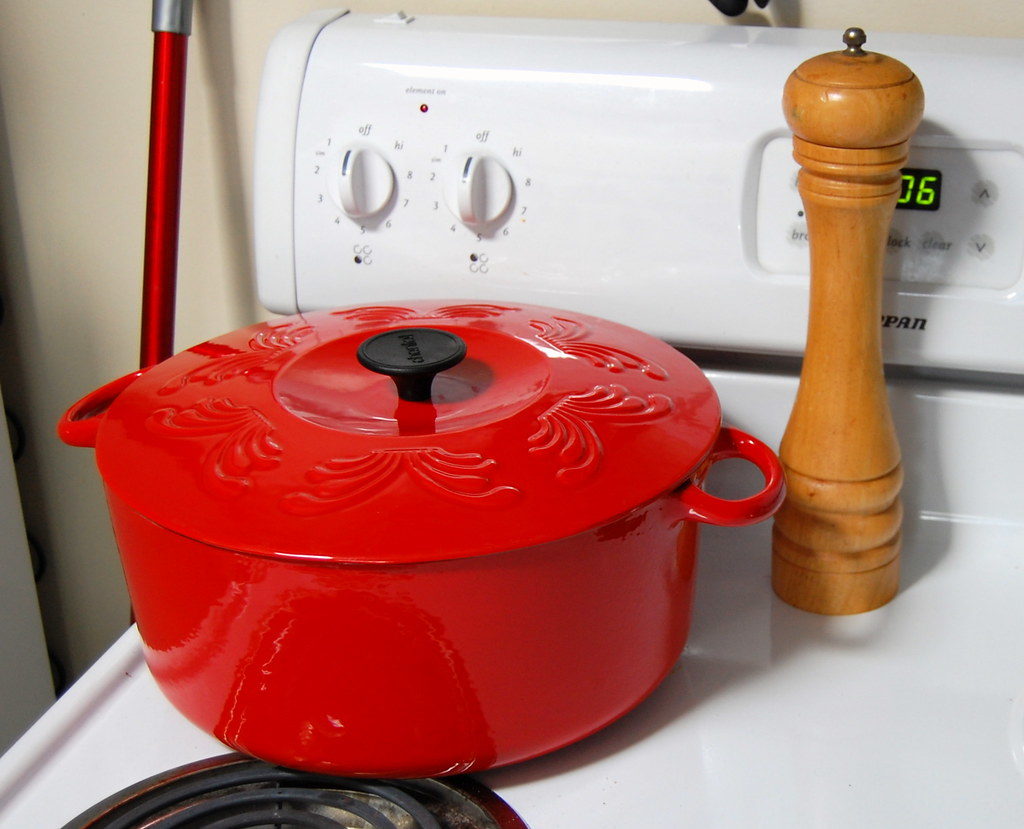
The only pot you’ll ever need: a Dutch oven. Image: John Verive/Flickr/CC2.0
The phrase does have some legitimacy — although in a less immature form. A real Dutch oven is a fantastic cooking device that has a secure and well-fitted lid. The lids don’t just sit on top but have an edge that helps to retain heat. 🔥
There you have it — a bunch of English expressions that reference the Dutch in one way or another. Whether they find their origins in history or simple name-calling, they’re bound to lighten up your conversation!
Which of these idiomsis your favourite? Do you know any others? Tell us in the comments below!
Feature Image: Pixabay
Editor’s Note: This article was originally published in October 2016, and was fully updated in July 2022 for your reading pleasure.
It is finally here, the ultimate guide to immigrating to the Netherlands, which we had to limit to 12 steps in order to prevent ourselves from creating a never-ending list consisting of titles such as “#87 saving coupons in the supermarket.”
So what does it really take to become Dutch? We’ve devised the ultimate guide for immigrating to the Netherlands! Here goes…
Immigrating to the Netherlands: becoming Dutch in 12 steps
Thinking of Immigrating to the Netherlands? Moving to Amsterdam? A great choice, and a huge leap. There’s some red tape to untangle, depending on where you’re coming from, if you applied for your visa before arriving, and what visa you decided upon.
Don’t be disheartened if you apply for a visa and don’t hear back for months. Contacting the IND won’t speed the process up, which leads us to…
Contacting the IND
So for whatever reason, the Netherlands is your new intended home — you’ve gotta call up the IND and let them know you’re coming. This is the first step when immigrating to the Netherlands. Say it with me, “Ik wil graag een afspraak maken”, I would like to make an appointment.”
When you first contact the IND (immigration and naturalizations dept), a representative will answer the phone — after 45 minutes — to handle your call.
Even if the IND characteristically switches to English to handle the call it matters that we at least try to incorporate the Dutch language, the sooner, the better.
Are you ready for the white knuckle thrill ride that is the IND? Ha! Neither am I. Painful emotional anxiety builds up as you wait in line or finally hear the results of your application.
The place is an ordeal, walking up there and displaying your passport and relevant information, hands getting clammy at the idea of getting your prints being taken by a biometric scanner… “Geen paniek!”Don’t panic.
In this scenario, arriving earlier won’t speed up the process,
this isn’t really a “can you squeeze me in if you have ten minutes?” type of deal. They’ll tell you to wait, even if a big queue of people gathers and you need to see the receptionist again, you’ll make your way to the back of the line no sooner than five minutes before and then finally you will be processed. Leading us to our first step!
Send the IND an email or give them a call: 088 043 04 30
Registering in the Netherlands
“Inschrijven als inwoner (ingezetene) van Nederland”, or registering as a resident of the Netherlands, is fairly straight forward.
They say to register at town hall five days after your first day in the Netherlands — but don’t worry, almost nobody finds a place that quickly. This is another important step when immigrating to the Netherlands, so we have written an entire guide about it if you want to know all the details!
Registration is free, and you will need to take everyone from your family who lives with you. What to bring? A valid passport (for all family members living with you), a rental agreement (“huurovereenkomst“) and your birth certificate (“geboorteakte”) or marriage certificate (“huwelijksakte”).
Citizenship in the Netherlands
You need to visit your “gemeente“ (city council) if you want to apply for Dutch citizenship. There is a fee for this: a family costs €1.091 and €855 for a single individual.
The process is long but bear with us. Image: Unsplash
Obtaining citizenship in a foreign country is an incredible step in the immigration process. To make this dream a reality, you are required to pass a civic integration exam or “Inburgeringsexamen“, as well as provide documentation (passport, birth certificate, residence permit).
Having these means of evidence legalized or provided with an apostille stamp can take a long time (months) and costs $80AUD or $100USD. You can get the stamp on your birth certificate but it must be the original document.
Once you are a Dutch citizen, you gain these rights:
A Dutch passport
Ability to vote in all Dutch elections and stand for election
Your children can become Dutch citizens
EU citizenship — freedom to travel and live in the EU (good for you Brits)
You can vote for the European Parliament
Enter and travel throughout the Netherlands freely
Getting a residence permit in the Netherlands
Once you begin the process of obtaining a residence permit, you’re issued with a V-number, your “vreemdeling”. Not to be confused with your residence permit, or “Verblijfsvergunning” (VVR).
Your V-number is your listing as a foreign national. You’ll find the number as a reference in letters from the IND and on the back of your residence document.
Your Residence Permit or “verblijfsvergunning nodig” can be applied for on the immigration website.
MVV authorization (Long Stay Visa)
Okay, so now you’re here and you intend to work and live a chill semi-Dutch life. To remain in the Netherlands for a period longer than 90 days (three months) you will need a “Long Stay Visa” or “Machtiging Voorlopig Verblijf” — for more information about this visa and your eligibility, click here.
When immigrating a long-stay visa is a good way of ensuring you have enough time to organize gainful employment and successfully crack the Dutch housing market.
Work Permit (GVVA)
The Single Permit (GVVA) was abbreviated for a reason, the Dutch translation is “gecombineerde vergunning voor verblijf en arbeid”, meaning combined permit for residence and work. It combines your residence permit and your TWV.
Either you or your employer will apply for the permit. In many situations, you don’t usually need to do it yourself. However, when you leave this job, your work permit is no longer valid. It’s on a job-by-job basis.
Work permits include:
Orientation year — for people who have a Master’s or PhD within three years, at a university in the top 150 worldwide. They can apply to find work in the Netherlands for a year.
Entrepreneur permit — for people who want to start their own business and must have personal experience with it and would add to the Dutch market.
Single permit — for workers and trainees of over three months.
Highly skilled migrant permits — for highly skilled workers that are needed. These people need to also be specialised, have a degree, passport, health insurance and work experience.
Anyways, part of becoming Dutch might be actually learning Dutch to speak on the job, is it really necessary though?
Work Contract “Arbeidscontract“
Be sure to get a formal written Arbeidscontract because verbal agreements can also be entered into, and employees end up with no proof of the terms. Work contracts are important, employers in the Netherlands can be pretty flexible.
Some more information about working in the Netherlands can be found here. Also, if you fall ill or are unable to work, your employer is obligated to pay up to 70% of your wages, although sometimes the first two days of sick leave are unpaid. (Loondoorbetaling).
Tax return or “belastingaangifte“
As an employee, or if you receive a benefit, you must pay tax while working in the Netherlands, the tax authorities require you to file a tax return (like ripping off a band-aid). As an entrepreneur, you must file an annual declaration with the tax authorities. You then state how much you have earned. The declaration must always be done before 1 May.
For more information call the Tax Information Line: PH: 0800 05 43. Or visit their website in English or Dutch. Here is a direct link to file a tax return.
Health insurance or “ziektekostenverzekering“
Health insurance or “Ziekte-kosten-verze-kering” (seriously what is with this language) usually runs at about a hundred euros a month, this covers bigger things but if you’re used to bulk-billing or the occasional deductable, Dutch health insurance might surprise you. The more expensive the more is covered.
Health insurance will charge you for all months worked without being paid, this can really bite if you’ve taken up your expat medical insurance too late. They’ll still require you to be covered for all your worked hours while uninsured.
Health insurance is mandatory for almost all expats. Image: Pixabay
Integration or “inburgering“
Inburgering, what does it mean? It translates to “integration.” The Inburgering exam is held by DUO (the same company that issues student loans). DUO receives your contact details from the municipality or “gemeente” (town hall) when you register at your home address.
You have only a year after registering in which to adapt your language and literacy skills.
The fine for not completing the exam on time is no higher than €1,250. DUO even created another fine for “not signing the participation agreement” even threatening to cut off the student loans for foreign students.
Who needs to learn Dutch and when?
DUO fines are based on the number of hours that you’ve studied an integration course. If you have studied absolutely none of the Dutch language, then you’re risking a fine of up to 1,250 euros (so you might want to start learning Dutch fast.)
The number decreases per hundred hours studied minus about €200 for each 100. It will still cost you a stack, but here’s the strange thing — if you fail your exam twice but you’ve studied over 300 hours of an integration course, DUO will issue no fine. It’s assumed you picked up “enough” in those 300 hours, even if you fail their exam for the second time.
Did you fail, and you want to learn more Dutch?
Have you completed the exam, but it was simply too difficult? Taking Dutch as a Second Language (NT2) courses certified by Blik de Werk (Dutch is hard and weird sometimes) and bulking your hours spent learning will contribute to the forwarding of your integration status.
If all goes to plan, the IND will send a confirmation in the post and invite you to your citizenship ceremony (compulsory).
After this, you can officially apply for a Dutch passport. If things don’t go to plan, you will receive a letter stating why. You can contest the decision if you have a strong case.
Here is a list of all the criteria you would have to meet in order to not take your inburgering. Spoiler alert, you’d have to be fluent in Dutch plus have the papers to prove it.
Can I be a dual national in the Netherlands?
This is a controversial one because most people can’t. This means that you need to give up your nationality in order to become Dutch (a big and sometimes risky move).
Once you renounce your nationality, you need to submit an application and declaration signifying leaving your country and entering another. There are exceptions to this rule, and you must declare and prove them during your application. You can be a dual national IF:
You are not allowed to give up your nationality in your home country
You are officially registered as a refugee
You are a married or registered partner of a Dutch citizen
It’s impossible to contact the authorities in your home country
You cannot revoke your nationality for a special reason — needs to be accepted
If your nationality is not recognized in the Netherlands
If you will lose important rights in your country if you were to give up your nationality
If you were born in the Netherlands or Dutch Caribbean and you’re still currently residing there
If you have to complete military service to give up your nationality
If you have to pay a considerable amount of money to give up your nationality
There’s a rigorous process to go through, and the demands are quite steep, weigh the options carefully with this one. The official statement is that “the Dutch government wants to limit dual nationality as much as possible”.
Permanent residency
If you’re really in it for the long haul, you’re looking for that “permanente residentie.”The true way of immigrating to the Netherlands.
No one is relinquishing their nationality, so the pemanente residentie can be applied for. You can stay in the Netherlands indefinitely with this, however, you cannot vote in Dutch elections (apart from municipal elections).
It can also be revoked if you spend too long outside of the Netherlands, you also need to renew it every five years. Those are the conditions!
An “inburgering” diploma is needed to apply for permanent residency, showing full integration over a five year period. The diploma, as we know can be expensive to avoid… You are required to take the exam one year after registering in the Netherlands.
Becoming a Dutchie is a long and tedious process, but there are also many benefits to life in the Netherlands.
What was your experience immigrating to the Netherlands? Tell us in the comments below!
Feature Image: Abuzer van Leeuwen/DutchReview Editor’s Note: This article was originally published in March 2019, and was fully updated in July 2022 for your reading pleasure.
The Netherlands has ranked as having the seventh highest disposable income in Europe. 💶
That’s higher than Sweden guys
Yep, you read that right. According to a survey carried out by the FSO, while Luxembourg, Norway, and Switzerland enjoy the top three highest disposable incomes — and let’s face it, we’re not surprised there — the Dutch actually managed quite well.
Standing proud in seventh place, the Netherlands beat other countries such as Sweden (!), Denmark (!!), and even Finland (!!!).
Ok, so how much are we talking?
Before we get to the numbers, let’s talk about where they came from. 👇
The FSO’s findings are based on a survey of 30 different European countries. As part of this study, no less than 130,000 international households and 270,000 different people were surveyed about their income.
In order to calculate disposable income, compulsory payments such as tax, health insurance, and welfare were subtracted from the participant’s gross income
This remaining number was then divided by the number of people in the household who needed to rely on the income (i.e. the family members).
And while the Netherlands is certainly dealing with a high cost of living, we’re still one of the lucky ones.
Why? Because the survey found that the Netherlands offers an average disposable income of €21,379 (spits out coffee and pats down pockets searching for mine).
How did other countries do?
Curious as to who we beat? Fair enough, see for yourself.
Ranking for disposable income
Country
1
Luxembourg
2
Norway
3
Switzerland
4
Germany
5
Austria
6
Belgium
7
Netherlands
8
Denmark
9
Finland
10
Sweden
Are you surprised by this survey’s findings? Tell us your thoughts in the comments below!
It’s time to make last-minute preparations for the sweltering heat that’s coming our way. Got your ijslollies? Your portable air cooler? You’re going to need them. It may hit 40 degrees in the Netherlands today.
You know it’s bad when even Albert Heijn plans to skip out on grocery deliveries after 2 PM — and we don’t blame them! 🥵
Where was code orange issued?
Dutchies can expect high temperatures in the south, east, and centre of the country (so basically most of it) from 11 AM onwards, reports RTL Nieuws.
How hot can it possibly get? Well, the weather forecast predicts that temperatures are likely to hit 38 or 39 degrees, with a good chance it might even hit a devilish 40. 🔥
The weather gods have brought a slightly better fortune for the northern folks, though, where temperatures are expected to reach 32 to 36 degrees.
It’s going to burn
The Royal Dutch Meteorological Institute (KNMI) warns against the bright sun as we’ll probably be experiencing a UV index of 7.
So if you need to go outside today, you might want to start walking around in nothing more than a spaghetti-strapped tank top and some shorts. Oh, and sunscreen. Lots and lots of sunscreen. 😳
Utrecht is opening its first Aldi supermarket, which won’t have self-scanners or employees sitting at cash desks waiting to scan your groceries. We know what you’re wondering: how do I pay? 🤔
Opening on July 20, this Aldi supermarket will serve as a test location for a new shopping system where customers will be automatically charged for products they have in their cart.
How will they do this exactly? Well, by installing sensors and cameras that register which products customers place in their shopping carts, reports RTL Nieuws.
What if I change my mind?
Decided to be good and remove that XL pack of chocolate-covered Oreos? We praise you. Also, that’s no, problem.
If a customer removes an item from their cart and puts it back on the shelves, the costs will be automatically removed.
Though, imagine grabbing the wrong product and then seeing “ERROR” when putting it back. Looks like you’ll have to keep the Oreos. 😥
Speaking of digital downsides, customers who want to shop at this Aldi supermarket must go through a number of steps. You’re going to have to:
Install an app
Create an account
Link it to a credit card (which is supposedly already registered on your phone)
Wait. A credit card? The Netherlands is notorious for not accepting anything but a pin pass, yet the automatic payment via the app only works via credit cards. 🤨
What will the groceries of the future look like?
After setting up the app, customers are expected to scan a QR code upon entering the store. When they’re done, the receipt of all the groceries is sent to their email. Explain THAT to your grandma. 🙄
The supermarket branch claims it won’t use any facial recognition but will track customer and product movements.
Thankfully, there will still be some working human employees to stock the shelves, bake bread, and answer customer questions. So maybe you won’t have to explain anything at all to your grandma. 🤷♀️
Do you enjoy the idea of a checkout-free supermarket? Tell us in the comments below!
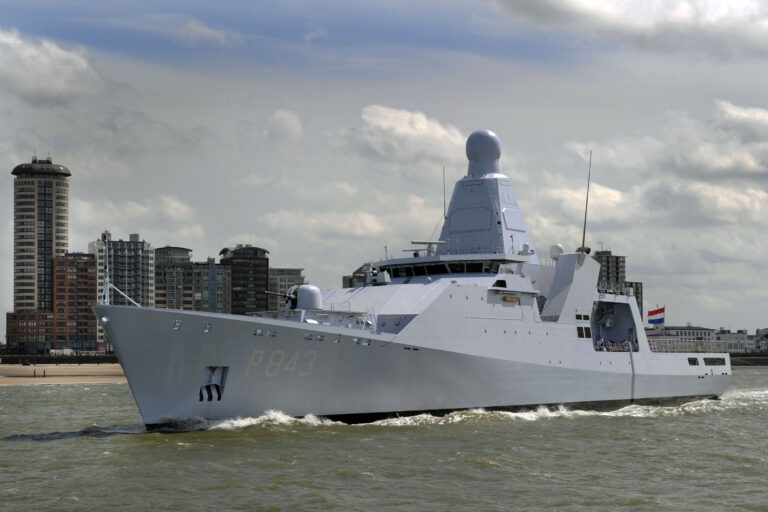
Holy moly! Fresh out of training, the new crew on the Dutch naval vessel, Zr. Ms. Groningen, made a huge drug bust in the south of Curaçao last week.
On the very same day that the crew completed their final training session, they intercepted a speedboat containing more than 650 kilos of cocaine in the Caribbean Sea. Talk about a job well done! 👏
According to the Ministry of Defense, this has never happened so soon after a new crew has been launched, NOS reports.
Patrouilleschip https://t.co/USGoMggkjo. Groningen heeft gisternacht in opdracht van de Kustwacht Caribisch gebied een drugstransport onderschept in het Caribisch gebied. De vangst betrof meer dan 650 kilo cocaïne.💥
— Defensie Caribisch gebied (@DefensieCarib) July 15, 2022
Coast guard and naval ship were quick to act
After the speedboat holding the drugs was discovered by a coast guard, the Dutch navy ship and a helicopter were sent to take care of the matter.
The navy ship launched two fast boats that tried to stop the speedboat — but with the drug smugglers refusing to obey orders, warning shots were fired.
If you’re hiding inside your Dutch home today, we don’t blame ya. Dutch temperatures are jumping to a possible 35 degrees.
Ever wanted to live that tropical life? Well, you can! The weather in the Netherlands is hot, hot, hot, thanks to a warm blast from the south of France. Hand us that mojito, can you? 🍹🏝
With forecasts of at least 30 degrees throughout the majority of the Netherlands today and tomorrow, the people over at Rijskwaterstaat said “Uh-oh!” and announced a Code Yellow, otherwise known as “dangerous weather”.
Meanwhile the National Heat Plan warns against fatigue, headaches, concentration problems, dehydration, and heat stroke, particularly for those in risk groups.
To make matters worse, there’s a heat smog warning over most of Europe, leading to poor air quality.
Anyway, it’s no problem, right? Blast that AC, jump in your backyard pool — oh, sorry, I forgot, we live in the Netherlands and have — well, none of those things.
Sooo, I guess stock up on some ijsjes from Albert Heijn, head inside, and wait for this all to blow over. Succes!
How are you surviving the heat? Tell us in the comments below! 👇
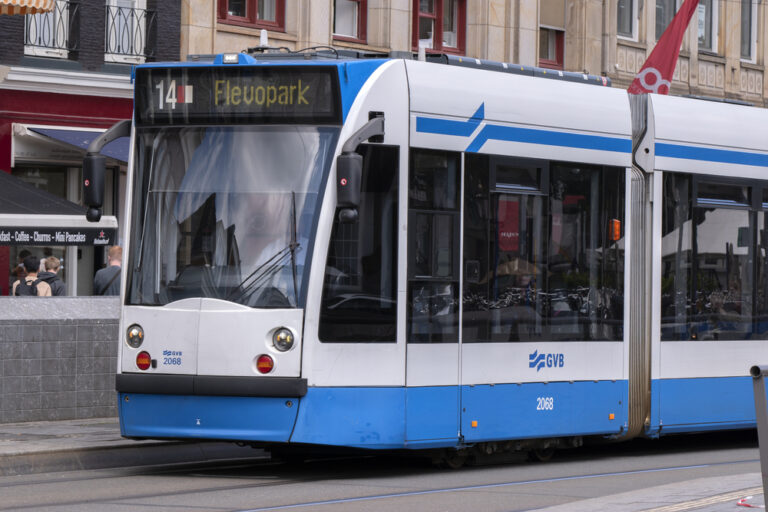
Taking the tram, bus, or metro in Amsterdam? It’s about to get a whole lot cheaper. The Dutch public transport service, GVB, is offering day tickets for just €1!
With the coronavirus pandemic taking its toll on the number of people on public transport over the years, GVB has been struggling with a lack of income.
Now, the company hopes to win back some customers by giving folks 24 hours of unlimited travel for just a crumb of cash. 🤩
The catch? The day ticket is only available for Dutchies and internationals who work or reside in the GVB region: Amsterdam, Diemen, Duivendrecht, Amstelveen, and the Schiphol area, reports Het Parool.
How will it work?
Until August 26, woners (residents) can request a promotional code from the GVB, which can be redeemed for a day ticket until September 30.
There’s a limited number of €1 day tickets available, and you can only request one promotional code per person — so be sure to snag yours before time runs out. 😉
Cheaper than car parking
The commercial director of the GVB, Ellen Swinkels, calls the campaign a “renewed introduction to public transport” for Amsterdammers.
“We are getting more and more electric buses, brand new trams are driving, and a lot has changed for the better in public transport over the past period. Time to try it again for a whole day. For one euro, you can travel criss-cross through Amsterdam for 24 hours. You can’t park for that”, Swinkels told Het Parool.
GVB has been struggling
Customers who used to travel with GVB before the pandemic happened have still not returned to the Netherlands. As a result, fewer trams, night buses, and metros will run in the coming period.
The Amsterdam transport region has also been facing a huge shortfall of around 60 million euros due to this.
After a failed plan to secure enough extra cash from the government, there’s still a possibility that Amsterdam’s favourite public transport will be reduced further, but more will be known about this after the summer holidays.
In the meantime, forget the car and jump on a bus, tram, or metro — your wallet will thank you!
Will you be grabbing a ticket for yourself? Tell us in the comments below! 👇