Americans took to Twitter to discuss a peculiar Dutch practice: dropping.
Much like their fascination with other European concepts, including Dutch niksen and the so-called ‘Dutch-reach,’ they’re all weighing in with their opinion — for the good of their children.
Twitter exploded a few years ago after the New York Times published an article detailing the “peculiarly Dutch summer rite” of dropping.
What is dropping?
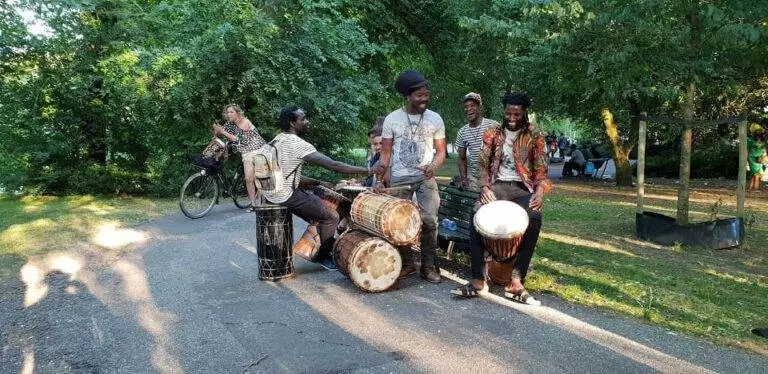
Dropping is the practice of taking children, typically pre-teens, and leaving them in a forested area to make their way back to either their home or campsite. 🏕
This is a favoured exercise among scout groups, although it can extend to any age. It can be done privately, as part of a school group, or even in a sports team.
The children are typically armed with a compass and an emergency mobile phone — only to be used in emergencies. 🆘
Doesn’t this look like such an inviting place for kids to stay overnight? Image: Depositphotos
Then, using their instincts, brains, and a good old dose of teamwork, they (hopefully) make it out. 🤞
The advantage? Children are taught to think for themselves, work as a team while still being independent, and the parents get a night off. 😴
The Dutch approach to raising children often makes its way into international media. It’s no surprise that the country consistently appears at the top of the list for happiest children in the world.
What did X-users have to say?
If there’s one thing we can count on in this world, it’s that if it’s something about raising children, the internet will have a response. 💬
Some people from outside of Europe were in support of the Dutch ways:
In America, we drop kids off at school and then pray they don’t get killed in yet another mass shooting.
It’s safe to say the U.S. does childhood differently.
I once got dropped in a forest & had to find my own way back, I got raised by squirrels & had the best time. But nuts aren’t that great for my insides so eventually I had to leave. It broke my heart.
And then the Dutchies started chiming in with some history.
Yes it is! It is based on the Dutch fairy tail (sprookje) Hansel and Gretel (Hans en Grietje). The Dutch are very poor people and so some have to drop their kids in the woods. Those kids who dare to come back are beaten up by black face (zwarte piet) with his roe. We're very bad! pic.twitter.com/FubIrBZ9MW
Disclaimer: we asked the Dutchies in our office, and they didn’t know about this origin story, so take it with a grain of salt (or breadcrumbs).
And other Dutchies joined in to reminisce on the good old days of being dropped in a forest:
It’s an awesome (and supervised; they’re never out of sight) adventure that I have very fond memories of. It’s fun and exciting while you learn to work together as a team, read maps, use a compass and solve problems along the way. At the end you feel really badass.
While data roaming can be a sneaky holiday-budget killer, these handy tips and tricks will help you navigate roaming in Europe like a boss. 💪
Let’s set the scene: you open Google Maps to find your way down the maze of quaint canals and… boom, you get a notification that you’re being charged €50 for out-of-bundle data costs.
Oeps, it looks like you may have forgotten to activate your data roaming.
What is data roaming, and how does it work?
In short, data roaming is the process of connecting to a network outside of your home country (or the country in which your mobile data provider is located).
Instead of using your regular data provider’s network, your mobile “roams” by connecting to local networks in the country you’re visiting. However, let op: while super convenient, roaming fees are usually quite a bit higher than your usual mobile data charges.
On the other hand, if you’ve got a Dutch or other European SIM card and you’re travelling around the EU, you’re in luck!
Thanks to the EU’s “roam like at home” policy, you’ll be charged domestic prices for all the calls you make, messages you send, and data you use.
Travelling around the EU and need a reliable mobile data connection? Look no further than Simyo, with its range of affordable and expat-friendly SIM plans.
Even better: with all of these coming in eSIM form, you can even get connected while you’re on the road!
Where EU data roaming applies (and where it doesn’t)
Before you rush off to buy a European SIM card, it’s important to zoom in on the fine print.
Most EU mobile data operators keep a watchful eye on how much time you spend abroad, versus at home.
If, over a four-month period, you’ve spent more time abroad than “at home” (i.e. in your mobile carrier’s country) and used a significant amount of roaming data, then you’ll be served a warning about extra data charges.
You’ll then have two weeks to adjust your usage and avoid extra charges. Still roaming? Helaas, your mobile bills will get considerably more expensive. 😬
No one likes to see that they have been charged while roaming in the EU. Image: Depositphotos
Even if you don’t spend more time abroad than you do “at home”, EU roaming laws have some tricky grey areas. In particular, the “roam like at home” policy only applies to terrestrial (i.e. land-based) mobile networks.
That means that if you’re sailing around the Mediterranean on a cruise liner, don’t be surprised if you incur some shocking out-of-bundle costs. This is because your cellular service might be provided through other networks that aren’t subject to the EU’s data policy, like your ship’s satellite connection.
So, should your vacation take you away from the mainland, it’s better to rely on onboard Wi-Fi and turn your mobile data off.
5 tips to avoid unexpected data roaming costs in the EU
While the EU’s “roam like at home” policy is super handy for your wallet, there are ways to make those mobile data charges even more budget-friendly. 👇
1. Make sure you have a Dutch SIM card
When it comes to slashing data costs, the best option is getting a Dutch SIM card.
Not only will you get access to the EU’s “roam like at home” services, but if you’re moving to the Netherlands, it’ll make the process much smoother. Whether you’re ordering food from a Dutch delivery service or signing up for essential services like a GP, a local mobile number is often preferred.
However, short-term visitors and tourists needn’t feel left out, either. Prepaid SIMs are sold at a variety of locations, from airports to supermarkets, and you don’t need a Dutch bank account or BSN (citizen service number) to buy one.
Prefer buying a prepaid SIM online? Dat kan! Simyo’s handy mobile app lets you sign up for a Dutch SIM card within minutes, with eSIM options available for their award-winning prepaid data plans.
2. Check your provider’s roaming limits
Also, make sure to keep an eye out for SMS alerts from your provider. Most carriers will notify you when you’ve used up 80% and 100% of your data to prevent you from incurring pricey out-of-bundle costs.
On the off-chance that your provider doesn’t send you one of these messages, you can also track your mobile data usage in your phone’s settings.
3. Set a data usage cap, if you can
Between sun, surf, and sangrias, even the most cautious mobile user might underestimate their data usage while on holiday.
Depending on your provider, this might incur costs of €50 (or more!) before you’re finally cut off from their cellular services.
If you’re baulking at the thought of paying such a huge sum on top of your existing data costs, there’s a simple solution: opting for a data cap.
A holiday is always better when you don’t have roaming charges. Image: Freepik
As its name suggests, this is a hard cap on your data usage, ensuring that your mobile data shuts off as soon as your data limit has been reached, avoiding hefty out-of-bundle costs.
4. Use Wi-Fi whenever possible
Most hotels, cafés, and public transport services in popular European travel destinations offer free Wi-Fi, and it’s an absolute lifesaver.
With free public Wi-Fi, you needn’t rely on your mobile connection to download data-heavy content like maps, Netflix episodes, or playlists. This saves you a big chunk of your data allowance — or some major cash, if you’re using your non-EU provider’s roaming services.
Good to know: While free Wi-Fi comes with its own share of challenges (*cough* hackers *cough*), a lot of these can be mitigated by a good VPN.
5. Turn off your mobile data when it’s not needed
It’s super annoying, but even when you’re not actively scrolling on your mobile phone, your device might be happily munching through your data allowance.
The culprits are often sneaky background processes, such as app refreshes, auto-updates, and even location services. If you think you’ve turned them all off, another one might pop up on your data usage graph to say “hoi”.
In most cases, the easiest option is just to switch off your mobile data when you’re not using it.
Have you travelled around the EU with a Dutch or foreign SIM card? Share your experiences in the comments below!
This coming Tuesday (March 3), civil servants across the Netherlands will strike for 24 hours, protesting a pay freeze that is leaving more than 165,000 government workers worse off.
If you need to call the tax office or deal with DUO, plan ahead.
The action is the latest escalation in a collective bargaining dispute (cao-conflict) that has been simmering for months.
Earlier protests have already seen customs officers at Schiphol Airport take action, and civil servants in the east of the country have previously gone on strike.
Tuesday’s nationwide walkout is the next step — and it’s a big one.
Which government services will be affected?
Two agencies that internationals regularly rely on will take a direct hit.
DUO — the agency that handles student loans and education benefits — will be less accessible or potentially unreachable on Tuesday.
Although the Belastingdienst (tax office) will still keep its helpline running, waiting times are expected to be longer than usual. You can check current wait times on the Belastingdienst’s website during the day.
The timing is particularly awkward: the tax filing season (aangifteperiode) opens this Sunday, March 1, meaning the phones were already going to be busy.
If you have an in-person appointment at a tax office, it may be cancelled — in which case you’ll be offered the option to reschedule or switch to a phone or video call instead.
Why are they striking?
This year, civil servants will receive no pay rise and no inflation correction — meaning that in real terms, every government worker is taking home less than before.
For context, the previous cao — which covered July 2024 through to the end of 2025 — gave civil servants an 8.5% pay rise, an extra €50 per month, and a one-time inflation compensation payment.
The current freeze, however, means all of that momentum has come to a halt.
Trade union FNV argues this is simply unacceptable for the people who keep the country functioning.
Speaking with NU.nl, FNV official Marcelle Buitendam puts it plainly: “Civil servants are the people who keep the Netherlands running every day.”
After all, these are the people who ensure safe roads, guard prisons, control borders, and process benefits, allowances, and permits — and this is what they get in return.
Buitendam (along with the rest of the strikers) is calling on the new cabinet to come forward with a proper wage offer, and has warned that if the government remains unyielding, further action will follow.
What should you do?
If you were planning to call the Belastingdienst on Tuesday, it’s worth trying before or after the strike day.
Keep an eye on the tax office website for live waiting time updates if you do call. If you have an appointment that gets cancelled, expect to hear from them about rescheduling options.
Do you think the government should be offering civil servants a pay rise? Let us know what you think in the comments below.
One innovative response to the housing crisis hitting students in Amsterdam was to convert a former prison into student living quarters.
Yes, you read that right. I was an inmate of the Bijlmerbajes as a first-year university student — and no, I did not commit a crime.
Unless you can count being a homeless international student in the Netherlands as a violation of Dutch law (some people seem to think it is).
Here’s my first-hand experience of living in a former Dutch prison.
What are the Bijlmerbajes?
Built in 1978, Bijlmerbajes was a six-tower, 14-story prison complex that loomed high in east Amsterdam, close to the Amsterdam Amstel railway station.
In its heyday, Bijlmerbajes housed around 700 prisoners, including many psychiatric patients.
The prison started out with a reputation of being a “humane” prison system with no bars on the windows or barbed wire on the fences — where the goal was rehabilitation rather than detention.
Except, the Bijlmerbajes had to scrap their plans of being a “humane” prison and ended up placing bars and barbed wires around the facility after prisoners kept trying to escape.
Around the year 2016, the Dutch government began shutting down prisons due to the lack of prisoners in the country. In turn, the Bijmerbajes shut its doors to prisoners for the last time.
The view from our cells wasn’t half-bad. Image: Supplied/zlmn
When one door shuts, another opens. After the inmates were removed, asylum seekers and international students took their place to aid them in adjusting to the Dutch way of life.
(What a funny way to do so, but I suppose beggars can’t be choosers.)
How did I, an innocent international student, end up living in a former Dutch prison?
The summer of 2017 rolled around and, alongside thousands of eager students who moved to Amsterdam ready to experience the “best days of their lives,” I began my search for a roof over my head.
Like many international students, countless doors were shut firmly in my face. I always seemed to be about number 100 in the queue for rooms, and on top of that, I also didn’t fit the categorisation of “Dutch speaking only”.
When I was starting to lose all hope, feeling defeated and lost, out of the blue, an email popped up in my inbox.
I clicked it in desperation, crossing my fingers that I hadn’t left it too late, hoping that there was still a spot for me to fill.
“Now that sounds interesting,” I thought to myself. A hall of residence type accommodation, lots of students piled on top of each other, no privacy, but lots of fun.
Little did we know just what was in store for us.
Sentenced to five months in prison
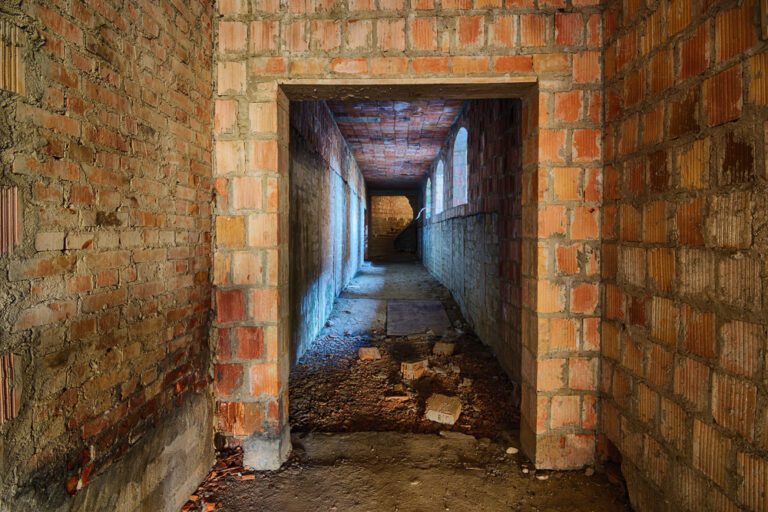
Upon signing my lease, I discovered I would be confined to a 10m2 cell with a doorless ensuite toilet and windows with bars on them. Yes, bars.
What we were confronted with when we entered our cells. Image: Eva Lakeman/DutchReview
For just €550 per month, including gas, water, and electricity, I would also share two showers and a kitchen with eight other innocent inmates — a bargain for Amsterdam prices.
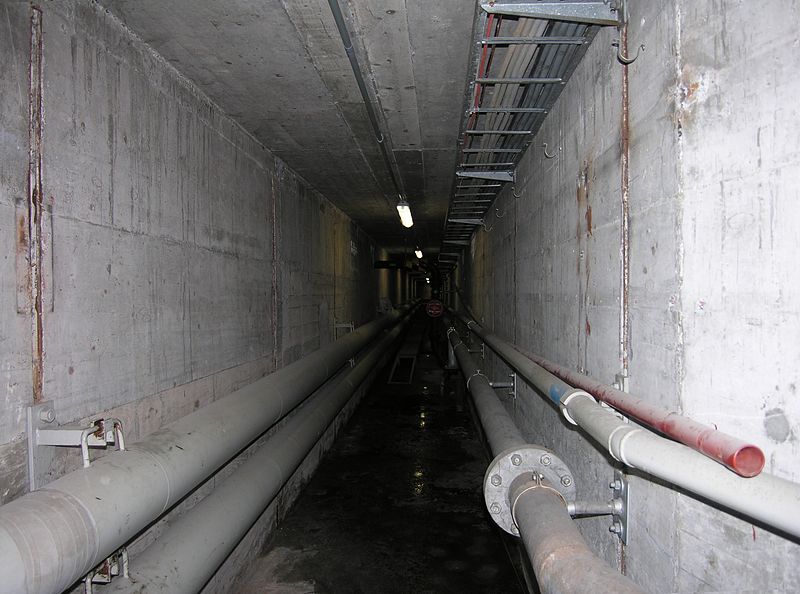
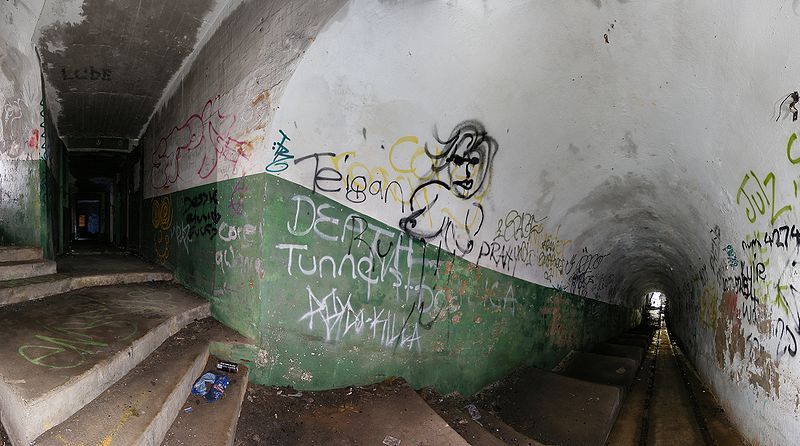
The tunnel we walked through to get to each of our prison cells. Image: Rijksvastgoedbedrijf/Wikimedia Commons/CC3.0
What is it like living in a former prison?
Upon arrival, I was confronted by the 14-storey taunting towers above me, a nervous wreck after moving 10,000 kilometres from my childhood bedroom.
Like inmates, the check-in staff had us line up to be given our keys and instructions for our stay. Thankfully, we could skip the strip search. 😉
The prison blocks tower above. Image: Supplied/zlmn
But nothing was going to put me off. I was determined that living in prison would be an experience like no other I would have in my life, and I felt adrenalised by the prospect that I would be living like a con.
When I look back on the time I served within the walls of Bijlmerbajes, I have many memories that won’t leave me — even if I wanted them to. To name a few…
🚨 Daily fire alarms
Almost every other night, the fire alarms would begin to shriek at 2 AM. The smoke from someone’s joint or someone’s burnt leftovers (the former probably influencing the latter) would set them off.
A comment left by a resident online. Image: Screenshot/Bilmerbaje’s Facebook group
Surely the smokers were able to open a window? Nope, those were all glued shut — they couldn’t be opened even an inch.
To begin with, for each alarm, we would all dutifully scramble around in the dark, bleary-eyed and head out of our cells to determine whether we should go downstairs in case of a fire.
The fear created in our souls by each of these trips was only compounded by the etchings on the elevator’s walls, scratched mirrors, and flickering light.
👮♀️ Prison warden
Smoking inside the prison was technically banned.
Instead, the smokers were supposed to make their way to the bottom floor, where there was a courtyard surrounded by high concrete walls.
The courtyard was surrounded by high concrete walls. Image: Corne Bastiaansen/Wikimedia Commons/CC3.0
In the beginning, the smokers dutifully made their way downstairs.
However, after a few months, laziness got the better of them, and they began smoking in the stairwell where the windows opened.
If the smokers were caught, the prison wardens, who called themselves resident assistants, would slap the smokers with a hefty €30 fine.
Bad inmates meant the rest of us lost courtyard privileges. Image: Screenshot/Bilmerbaje’s Facebook group
It became a kind of cat-and-mouse chase between the two. The smokers had their ears pricked just quick enough to race away from the wardens, who would slink up the stairs silently.
No more courtyard for the smokers. Image: Eva Gabriella/DutchReview
🚿 Freezing showers
I know what you’re thinking: “I hope you didn’t drop the soap!”
A comment left by the Resident Assistant on Bijlmerbaje’s Facebook Group. Image: Bilmerbaje’s Facebook group/Screenshot
Thankfully, the Bijlmerbajes showers were made into cubicles, so we weren’t welcomed by any sorry sights when we entered.
On the other hand, the cubicle walls didn’t reach the floor, so you could tell which one of your fellow inmates was in there by the look of their feet.
And that didn’t stop some of them from striking up a conversation on the other side of the wall as you tried to bury your squeals caused by the freezing water gushing from the ceiling hole.
Freezing water is coming from a hole in the ceiling. Image: Eva Gabriella/DutchReview
Finally freed
By the end of the five months, I felt sad to leave. I had formed lasting friendships made stronger by such a bizarre experience.
Although many things could’ve been improved, like the hot showers, for example, we made the most of our sentences.
Doors to our cells were left open for our final exit. Image: Depositphotos
We all had to make the best out of a bad situation, and the fun we had together far outweighed having to walk up 12 flights of stairs daily.
A little bit more luscious than when it was student accommodation. Image: Bajeskwartier
The rubble from its demolition is transforming into a green, sustainable neighbourhood with around 1,350 homes, a fresh market, a health centre, and many more facilities.
By 2026, the Bajeskwartier is expected to be up and running at full steam. But don’t worry — we former Bijlmerbajes residents will hold our memories under lock and key.
Would you spend a night in an abandoned former prison? Tell us in the comments below!
Feature Image: ErikSW/Wikimedia Commons/CC4.0 (Modified) and Eva Gabriella
Dutch police are urgently appealing to the public for information after three teenagers went missing from the North Brabant village of Sleeuwijk on Wednesday evening.
The police say there has been no trace of the trio since they were last seen leaving the village together on foot.
Who is missing?
The group consists of a boy named Jesse and two girls, one of whom is named Zoë.
The police appeal also described what the missing minors were last wearing.
Jesse is around 1.60 metres tall with a slim build and brown curly hair. He was last seen wearing a dark jacket, black jeans, and light-coloured shoes.
Zoë is shorter than Jesse, also of slight build, with short blonde curly hair, and was also dressed in dark clothing when she disappeared.
The second girl, whose name has not been released, was wearing a dark blue hoodie over a white T-shirt, a blue jacket, light blue jeans, and white trainers.
She was also carrying a black backpack.
No trace since Wednesday
NOS reports that police have classified this as an urgente vermissing — an urgent missing persons case.
It’s known that at least one of the three comes from Hardinxveld-Giessendam in South Holland, though their current whereabouts remain entirely unknown.

Police shared a late-night appeal on social media Thursday evening, urging anyone with information to call the non-emergency police line on 0900-8844.
If you spot any of the three teenagers, you’re asked to call 112 immediately.
Have you seen Jesse, Zoë, or their companion? Please don’t hesitate — call 112 if you spot them, or share any tips with police via 0900-8844.
Prepaid credit cards in the Netherlands give you the benefits of a credit card, like shopping online and paying abroad, with zero risk of debt and no income requirements.
Ready to make every cent count? We’ve found and ranked the best Dutch prepaid credit cards for personal and business use in terms of features, fees, and overall value.
With ZeroFX enabled, the bunq Mastercard always offers you the best exchange rate while you’re abroad with no conversion fees. Even better? You can spend (and save!) in up to 20 currencies.
Although bunq’s paid tiers give you 1 to 3 physical cards, its basic plan offers you handy money-management features and a virtual Mastercard — completely free.
Thanks to features like cashback, airport lounge access, and easy breezy currency exchanges, the Revolut Mastercard is our top pick for a perk-filled prepaid credit card.
Whilst a paid banking plan offers the most features for your wallet, all free accounts come with a virtual card — giving you access to a wealth of Revolut’s financial tools, for zero cost.
Trade Republic’s snazzy new prepaid banking card is the best way to earn money while you’re spending it, thanks to its handy Saveback feature, investment opportunities, and lack of monthly fees.
Even better, building your portfolio is as seamless as can be. By manually rounding up your card payments to the next euro, Trade Republic lets you invest the balance in a stock or ETF of your choice.
Dubbed the “most international card on the planet”, the Wise card lets you pay and withdraw in over 40 currencies and 160 countries, with no hidden costs.
Although a physical card costs a one-off fee of €7, all virtual cards are free, and there are zero monthly account fees.
Best business prepaid credit cards in the Netherlands
For business banking, these credit cards offer a host of handy features, from spending insights to integrations for accounting software, and more! 🧑🏻💼
Freelancers looking for an affordable bank card will love N26’s Business Mastercard, which offers in-depth spending insights, cashback rewards, and zero foreign transaction fees.
A paid N26 plan delivers all the pros of a credit card, from travel and baggage insurance to purchase protection and handy discounts on premium brands.
Offering easy-breezy banking across borders, the Revolut Business Mastercard lets you spend in 130+ currencies, manually set spend limits, and seamlessly sync accounting software.
Working in a different timezone? This Mastercard also offers handy expense automation and in-depth financial overviews to ensure you don’t miss that important deal.
What’s the difference between a prepaid credit card and a regular credit card?
A prepaid credit card requires you to have adequate funds loaded onto it before making transactions, as it offers no overdraft facilities once you’ve exhausted your funds, similar to a debit card.
As the terms ‘prepaid credit card’ and ‘debit card’ are often used interchangeably, we’ve treated them as one entity in this article.
On the other hand, a regular credit card operates on credit (hence the name).
You sign a contract with a card-issuing financial institution and agree on a monthly credit ceiling for your expenses, with the expectation that you’ll pay any debts back within a set period.
Have you used any of the cards on this list? Tell us what you thought of it in the comments below!
Prepaid credit cards in the Netherlands: Frequently asked questions
What is a prepaid credit card?
A prepaid credit card is a type of banking card that works like a credit card, without needing to borrow money. They can be connected to a transaction account, or operate completely independently by loading funds online or at shops.
What are some disadvantages of prepaid credit cards?
Although prepaid credit cards are excellent at managing your finances, they don’t offer you the overdraft facilities that credit cards do. This is because they require you to have funds already loaded onto the card before making transactions, unlike credit cards (which operate on credit).
Additionally, some prepaid credit cards may also set limits on the amount of withdrawals you can make or how much money you can load onto your card.
How much does a prepaid credit card cost?
Although many prepaid credit cards can be requested for free in a virtual form, the cost of a physical card varies according to the provider.
Many providers (such as bunq, Revolut, and N26) offer complimentary physical cards for several tiers of their paid plans. Others (such as the Trade Republic and Wise cards) have no monthly fees, but do require a one-time issuance charge for their physical cards.
Do prepaid credit cards work in Europe?
Yes, prepaid credit cards are accepted in Europe.
What credit cards work in the Netherlands?
Although credit cards aren’t as popular as debit cards in the Netherlands, many major establishments accept Mastercard, Visa, and American Express. For day-to-day transactions, however, most Dutch people rely on debit or prepaid credit cards.
Why are credit cards not often accepted in the Netherlands?
As regular credit cards involve buying items with “credit” (i.e. owing money to a financial institution), the debt-averse Dutch aren’t big fans. Debit cards are the most popular bank cards in the Netherlands, with prepaid credit cards steadily growing in popularity.
It’s raining, it’s pouring… and you might be looking for an easy way to get a delicious meal delivered right to your doorstep. Luckily, the Netherlands has a bunch of food delivery apps that make the process an absolute breeze!
Despite the generally high prices of food delivery or getting takeaway in the Netherlands, they’re a great relief on those days when you just can’t be bothered to cook.
(Or when you’re all out of groceries and a ferocious Dutch rainstorm is raging outside.)
Feeling peckish already? Let’s run through the two best apps for ordering food in the Netherlands! 👇
This post might have affiliate links that help us write the articles you love, at no extra cost to you. Read our statement.
Ordering food via an app
With Deliveroo exiting the Dutch market, the two main food delivery apps in the Netherlands are Thuisbezorgd and Uber Eats.
If you’re craving good, old-fashioned comfort food like burgers, pizza, or Chinese and Surinamese food, then you’ll probably enjoy the selection on this app.
If, however, you’re looking for trendier restaurants — like niche vegan places or fancy steak joints — then you may not have as much luck.
Hungry for a late-night snack? Thuisbezorgd has loads of options. Image: Thuisbezorgd/Supplied
Range of eateries aside, Thuisbezorgd has a handy feature that lets you track when your food is in the process of being made and when it’s been collected by the delivery driver.
With an estimate of how long the process will take, you can feel free to slip into the shower or pop on a Netflix show, knowing you won’t miss your order.
I also like the fact that if I order five times from specific restaurants, I can receive a certain percentage off my next meal from them. Depending on the price of your orders, this can range from €6 to €15 or higher.
In contrast to Thuisbezorgd, Uber Eats often has slightly more expensive restaurants for you to choose from.
However, you get what you pay for, as Uber Eats partners with certain restaurants to be their ‘exclusive’ delivery partner.
What this means is that some restaurants will only deliver through Uber Eats, making the somewhat higher price a good deal if you want access to a far wider range of restaurants than its competitors.
If you’re looking for trendier restaurants, Uber Eats will probably deliver. (No pun intended!) Image: Uber Eats/Supplied
Uber Eats also has a fantastic tracking system that lets you watch your food hurry its way to you. (So you’ll probably not have to dash to the door in your undies if your order arrives a whole half hour before it’s supposed to! 😉)
However, one of my favourite parts about Uber Eats has to be how functional and easy to navigate its app is. It ‘learns’ your preferences and suggests new restaurants to you based on the selection you already enjoy.
Some restaurants in the Netherlands choose not to partner with a third-party delivery service like Uber Eats or Thuisbezorgd. This means that you’ll have to place your order through the restaurant’s website or just call them.
Whilst this may not sound super convenient, it may actually help you save money! 💸
I’ve found that several delivery services will add a percentage to your order price for service costs (not delivery fees), which isn’t the case when ordering directly from a restaurant.
If you feel like taking a page from the Dutch’s book and saving like a pro, this is the way to go. 😉
What’s your go-to choice for getting food delivered in the Netherlands? Tell us in the comments below!
If you’re heading to the Netherlands, chances are you want to smoke weed in Amsterdam — right?
Of course, before you light up your green and enjoy all those good vibes, it’s important that you know smoking weed in Amsterdam might not be quite what you expect.
For example, did you know that weed in Amsterdam isn’t technically legal — despite what you may have heard?
Yep. So listen up, weed-desiring folks: here’s everything you need to know when it comes to getting high in Amsterdam.
Surprised? I was too! In most of the Netherlands, weed is only decriminalised, not legal.
There are only ten cities in the whole country, where weed is fully legal as part of an ongoing regulation experiment.
This means that consuming weed in Amsterdam and the rest of the country is only tolerated — unlike other countries like Canada, Mexico, and Uruguay, where it is legal.
Essentially, you’re able to walk into a coffeeshop, purchase less than five grams of weed, and smoke it. All is good as long as you’re not being a pain in the butt.
Basically, weed is neither legal nor illegal in the Netherlands: it’s a smoky grey area.
🙋♂️ But how do Amsterdam coffeeshop owners get their stock?
Great question! This is where it gets fun. Stocking a coffeeshop is technically illegal because it requires a person to transport more than the allowed five grams of weed at once, and leads to people growing more than the allowed maximum of five plants.
As a result, each day, many coffeeshop owners swap tens of thousands of euros in cash for a few kilos of cannabis. A coffeeshop is only allowed 500 grams on-site at any time, leading to multiple deliveries during daily business.
So can you legally smoke weed in Amsterdam?
Technically? No. In practice? Yes, you can smoke weed in Amsterdam in public or in private.
However, make sure you’re abiding by the rules, namely:
You’re over 18,
You don’t have more than five grams of weed in your possession,
You’re not causing a public disturbance, and
You’re smoking in an area of Amsterdam where it is not banned.
See this sign? That means you’re in a part of Amsterdam where smoking weed is not allowed. Image: DutchReview
Where in Amsterdam am I allowed to smoke weed?
In February 2023, the municipality of Amsterdam announced a partial smoking ban in the city, the so-called blowverbod. They did this as part of an attempt to scare off rowdy tourists who would cause trouble after consuming drugs and alcohol.
The weed ban counts only for some of the most central areas of Amsterdam, namely: de Wallen (the Red Light District), the Dam, the Damrak, and the Nieuwmarkt. 🚭
Blazing it up in one of these areas could land you a juicy €100 fine. Ouch! That being said, according to various Dutch sources, the Dutch police often let you get away with a warning at first.
👉 How to order weed at an Amsterdam coffeeshop
Ordering weed at an Amsterdam coffeeshop is just as easy as ordering a coffee at Starbucks: once you know how to do it, it’s simple!
1. Walk inside and look at the menu
Most coffeeshops have a menu near the register with the types of weed available and the prices. You can either take a look at this and make a decision for yourself or ask the person at the register for a recommendation.
You’ll need to decide:
what variety and strain of weed you would like, and
how you would like to consume it
The main categories of weed are pure weed (just the leaves), weed mixed with tobacco (the most common option in the Netherlands), and hashish (a more concentrated form of weed, typically with higher amounts of THC).
You will also be asked to decide between Indica weed (for a more relaxing body high) or Sativa weed (for an uplifting head high).
Which one will you go for? Image: DutchReview
Finally, you’ll be asked to choose your delivery method. Would you prefer to:
roll your own joints by buying loose buds?
buy a pre-rolled joint?
eat it via an edible?
If it’s your first time smoking weed in Amsterdam, my advice is to go for a pre-roll of pure Sativa or Indica.
If you’re entirely new to smoking and feel a bit nervous, an edible might be for you. Be aware that edibles should be consumed in small quantities (share a muffin with a couple of friends) because their effects take a while to activate and sneak up on you.
2. Order at the counter with your ID ready
You can place your order (almost always in English!) at the counter. Ask them for what you decided, or ask for a recommendation. E.g. you could ask for:
“A pre-rolled joint that will make me relaxed.”
“An edible for a first-timer.”
“One gram of bud that I can use in a bong at a party.”
You might be asked for your ID before you’re allowed to purchase anything. You need to be at least 18 years old to buy and smoke weed in the Netherlands, so make sure you have an identification card or your passport at easy access.
The budtender will weigh your choice of weed on scales if you took a loose option, or hand you your pre-rolled joints or edibles.
3. Request anything else you need and pay
Do you need a lighter? Rolling papers? A grinder? (If you’re rolling your own joint). These items are almost always available at the counter or in a nearby vending machine.
If your coffeeshop only has rather pricey grinders (e.g. the metal ones), you can head over to a nearby kiosk or tourist shop for a cheaper option. I managed to snag a plastic one for just €5 there!
Some coffeeshops have complimentary rolling papers and filters available at the counter when you’re buying weed, so take advantage of this where possible.
Finally, you need to cough up your cash. The attendant will tell you your total and you can make the payment.
⚠️ Warning! Some coffeeshops in Amsterdam only accept cash and others only accept card payments. It’s best to have both on hand before you make your order. Be careful, because some bank cards don’t work in the Netherlands.
4. Choose where you will smoke and light up!
Many coffeeshops in Amsterdam have an indoor area. If you’ve bought weed from the coffeeshop you can head through and smoke inside or on their terrace.
Plenty of coffeeshops nowadays have drinks or even some light bar snacks available. There may also be a TV or music going so you can fully chill out.
If you’d prefer not to get high with other people around you, you’re just as welcome to pocket your weed and head to a private location: a private household, a park, whatever your choice.
However, make sure you’re allowed to smoke wherever you end up; many hotels and Airbnbs won’t allow it, and there are some places in Amsterdam where it is forbidden.
The cost of weed in Amsterdam is dependent on a number of things, including:
strain and variet
strength
location of the coffeeshop
As a general guide, you can expect to pay:
Item
Cost
One gram of weed
Between €8 and €20
A pre-rolled joint
Between €7 and €12 (or even as little as three joints for €12)
An edible brownie, cookie, or similar
Between €8 and €20
👍 Some of the best coffeeshop options in Amsterdam
When you smoke weed in Amsterdam, you want option with high-quality weed — but also a great atmosphere.
There are some major tourist hotspots that tourists flock to, but if you want the best coffeeshop experience, I’ve had good luck with Boerejongens. Their workers have stacks of knowledge about types of weed and are happy to offer suggestions, and the coffeeshops’ interiors are pure class.
If you’re all about that authentic feel, head to the old-world charm of Tweede Kamer. The coffeeshop is a slice of Dutch history after being opened in 1985, and the range of strains is top-notch.
7 best coffeeshops to visit to smoke weed in Amsterdam
Coffeeshop
The best parts
Location
Website
Boerejongens
Great vibe, high-quality staff, two locations, best spacecakes
🧳 YSK: Smoking weed in Amsterdam is mainly a tourist activity
Walk into any coffeeshop in Amsterdam — no, not a café where you get good coffee and cold drinks, a coffeeshop where you get weed and bad coffee — and you will instantly notice something: the people behind the counter are all Dutch, and most customers are foreigners.
This is because, despite what you may have heard about the Netherlands being a weed paradise, the Dutch don’t actually smoke that much weed. In fact, less than 25% of Dutchies admit that they’ve tried a cannabis product in their lifetime.
⚠️ Knowing your limits when smoking weed in Amsterdam
This is the part where we warn you that you should be careful when consuming marijuana, especially if you’re doing it for the first time.
Smoking weed allows you to control how high you get by smoking just a little or a lot. Hopefully, you’re getting high with a friend, in which case you two can share a one-gram pre-roll to start with.
We don’t want to sound like your Mum, but make sure to:
💧 Stay hydrated, 🚲 Be careful with bikes when roaming the city, and ❌ Never buy weed from any place that isn’t a coffeeshop.
If it’s your first time smoking weed in Amsterdam, it’s also a good idea to take a close friend with you. Image: Depositphotos
If you don’t know how your body (or mind) will react to marijuana, take it slow and stay in a safe place with friends until the high has worn off. Smoking weed in Amsterdam is very safe — but smoke responsibly, kids. 😉
🍄 Other trippy experiences in Amsterdam
If you’re looking for something a bit more trippy or want to make Van Gogh’s starry night come to life, then perhaps consider trying truffles.
In Amsterdam, truffles are sold in smart shops and are actually legal — so if you’ve ever wanted to give them a go, this could be your sign.
Alternatively, perhaps you want to spend your whole holiday getting to know the epic club scene in the Netherlands?
If you’re interested in harder drugs, then make sure you read up on ecstasy use in the Netherlands. The pills have a higher concentration here than in other countries, so be wary.
There is much more to smoking weed in Amsterdam than just hopping into the nearest coffeeshop near your hotel and asking for a joint.
It’s important to know what you’re getting, understand your own limits, and be in a safe environment when you are trying something for the first time. But — it is a stack of fun and a quintessential aspect of visiting Amsterdam and the Netherlands.
What tips do you have when it comes to smoking weed in Amsterdam? Tell us in the comments below!
The hacking group responsible for Odido’s recent data breach, known as ShinyHunters, has made good on its threat. The cybercriminal group has published the first batch of stolen customer data on the dark web.
This is after the telecom provider refused to pay a ransom of over €1 million. More leaks are promised every day for the next sixteen days.
The data was analysed and verified by RTL Nieuws, which first identified ShinyHunters as the group behind the major Odido breach.
What’s actually been published
The first release covers data belonging to around 430,000 individuals and 290,000 companies — including former customers who cut ties with Odido years ago.
Notably, the dataset also contains information on roughly 700 businesses that were never customers at all, only ever approached as potential clients.
What’s in there, you ask? Oh, only full names, home addresses, phone numbers, email addresses, IBANs, and internal customer service notes.
Those notes are particularly sensitive, revealing whether someone receives payment reminders or formal notices, holds a BKR debt registration, has a court-appointed administrator (bewindvoerder).
Essentially, this data, in combination with the release of financial information, tells criminals which customers are going to be easiest to exploit or scam.
The 275,000 IBANs are considered especially valuable, as they can be used for a wide range of financial fraud.
Passport, driver’s licence, and ID card numbers are not included in this first batch — but ShinyHunters has warned that more is coming.
Odido says no to the ransom
Odido has confirmed they have no intention of paying.
“On the advice of leading cybersecurity advisors and relevant government agencies, Odido has decided not to negotiate with these criminals and not to be blackmailed by them,” the provider said in a statement.
ShinyHunters wasn’t impressed. “Enjoy the daily data leaks in the coming days,” the group told RTL Nieuws. “More sensitive data will appear every day.”
The hackers claim to hold data on more than 10 million current and former customers. This is significantly above Odido’s confirmed figure of 6.2 million.
What this means for you
Right now, there’s no legal way for Odido customers to check whether their specific data has been included in the leak.
Given how accessible dark web markets have become, the published data could be misused for months to come — particularly for highly personalised phishing attempts and financial fraud.
It is possible to spot Dutch architecture in South Africa, thanks to the long and complicated history between these nations.
In many ways, the influence of Dutch colonialism has shaped the multi-cultural demographics of South Africa. It even produced the Afrikaans language.
But what is lesser known is that the Dutch settlers left behind an architectural legacy in South Africa that you can still see today. 🏠
Wine estates with Cape Dutch architecture
South African wine is world-renowned, with the hills and valleys of the Cape providing the perfect landscape and climate for excellent grapes.
Many of these farms were established in the 1600s by retired Dutch East India (VOC)employees — Dutchmen tired of the merchant life and ready to settle down under the warm African sun. ☀️
A typical Cape Dutch wine estate near Cape Town. Image:Pixabay
This style is known as Cape Dutch architecture, and the Dutch influence can be seen in the facades and roofs of the buildings.
Of course, these are wider than the skinny Amsterdam houses you’ll find in the Netherlands and were painted white to help keep them cool under the boiling heat.
The Dutch fort in Cape Town
The Dutch East India Company built Kasteel de Goede Hoop (Castle of Good Hope) in what is now Cape Town. Built between 1666 and 1679, the castle is the oldest surviving building in South Africa.
But this was not the first military structure built by the Dutch here.
In 1652, Jan van Riebeeck, commander of the Cape, built Fort de Goede Hoop upon his arrival. As Dutch settlers built the fort with just clay and timber, plans to build Kasteel de Goede Hoop in stone quickly materialised.
A closer look at the Castle’s striking star-shaped structure. Image: Dreamstime
Notice the star shape of the fort? The triangular bastions are typical of other Dutch forts like Fort Bourtange in Groningen.
Over the years, the restoration of this site has been deeply controversial. The castle represents colonial powers, which uprooted the Khoekhoe peoplefrom their homeland and forced many to become serfs on Dutch farms.
On the other hand, many Afrikaans people see Jan van Riebeeck as the founding father of South Africa.
Dutch-inspired Stellenbosch University
Below is an image of the old administrative building of Stellenbosch University (SU), which should remind you of a certain government building in The Hague. 🤔
The facade of the faculty of Theology at Stellenbosch University! Image: Depositphotos
In 1679, the Dutch Governor of the Cape Colony, Simon van der Stel, established the town of Stellenbosch. He named it after himself and the bos (forest) that once stood there.
But it was only in 1866 that a secondary school known as Het Stellenbossche Gymnasiumwas built there. It was transformed into Stellenbosch University much later. 🎓
Stellenbosch is the oldest university in South Africa and is consistently one of the highest-ranking universities in Africa.
Fishermen’s cottages in the Eastern Cape
These humble homes along the eastern coastline of the Cape are simpler than the grand wine estates we saw earlier. The natural harbours drew Dutch fishers to the area, who built settlements like Struisbaai.
Struisbaai has the longest beach in the Southern Hemisphere at 14 kilometres long. It was a notoriously hazardous area to sail through, with at least 30 vessels wrecking there since 1673.
Fishermen’s cottage in South Africa. Image: Pixabay
Today, Struisbaai remains a fishing town mostly untouched by the perils of urbanisation.
Looking at the houses, you’ll see echoes of traditional Dutch cottages, but again, painted white for the heat. Thatched roofs also help to keep the interior cool.
Bo-Kaap’s colourful houses
Bo-Kaap (meaning “above the Cape” in Afrikaans) is a residential area in Cape Town with a history of vibrant houses. It sits on a hill overlooking the city centre.
It was formerly known as the Malay Quarter because enslaved people brought from Indonesia and Malaysia by the Dutch lived here.
A mixture of Cape Dutch and Cape Georgian styles, the houses were originally painted white. But when slavery in the British colonies was abolished in 1833, and ex-slaves were finally permitted to buy property, they painted these houses in every colour of the rainbow to celebrate their freedom.
Can you see the Dutch influence in these houses? Image: Freepik
Today, Bo-Kaap is the birthplace of Cape Malay culture.
According to the South African Heritage Resources Agency, this is the oldest surviving residential neighbourhood in Cape Town. It was declared a National Heritage Site in 2019.
Whilst South African architecture is certainly unique, the Dutch influence is undeniable. These are just a few of our favourite examples of Dutch architecture in South Africa, but there are many more!
Do you know any more examples of Dutch architecture in South Africa? Tell us in the comments below! 💬