Just when you thought you’d survived it, the tropical heat is plotting a comeback next week.
Forecaster Weeronline reckons widespread tropical temperatures could return to the Netherlands in early July, only days after the country survived its hottest stretch in years.
The good news is that we get a brief spell of gentler weather first.
So if you spent last week glued to your office chair in a puddle of sweat, take the breather while you can.
Where the next burst of heat comes from
A fresh pool of warm air is currently gathering over southwestern Europe. There’s a good chance it will drift towards the Netherlands around the weekend.
If it does, tropical temperatures could be back on a large scale by the early part of next week.
In other words: the sweating is on pause, not finished.
Your few days of relief
Right now things feel far kinder than the furnace we just lived through, with daytime highs down by 10 to 15 degrees from last week’s peaks.
The reason is a northwesterly wind dragging cooler, drier air across the country. That lower humidity is what makes it feel pleasant rather than punishing.
Weeronline meteorologist Berend van Straaten sums up the coming days as ordinary Dutch summer weather. That means around 22 degrees by the sea, 23 to 24 in the centre of the country, and a warmer 25 to 28 in the southeast.
The rest of the working week should stay dry too, with sun and cloud taking turns and maximums sitting between 20 and 25 degrees.
Make the most of the open windows and cool nights while they’re here.
Are you dreading the return of the tropical heat, or quietly thrilled at another excuse to hit the beach? Tell us how you’re coping in the comments.
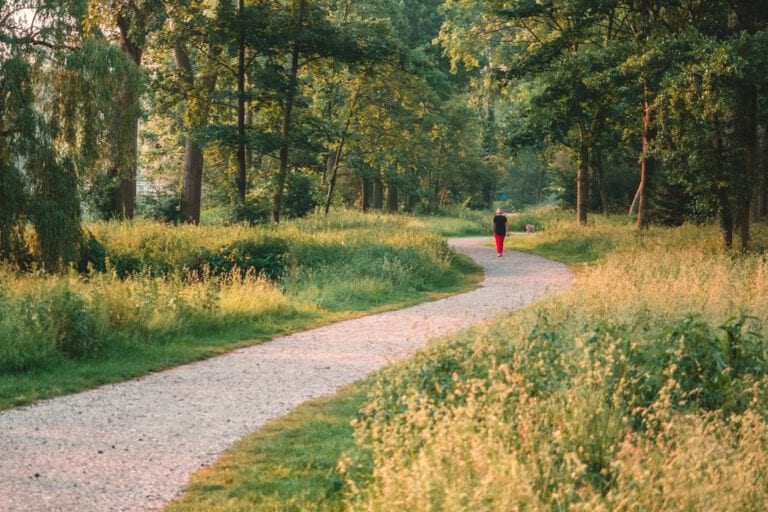
Loving the busy city that is The Hague, but still craving a wander in the great outdoors every now and then? Well, you’re in luck! There is a wide range of hiking routes and nature spots right at your doorstep. 🌿
We’ve got the ultimate guide for nature lovers, whether you’re looking to do a hike through the forest, or a ramble through The Hague’s beautiful gardens —you’ve come to the right place!
Look at this little cutie observing you on your dune walk. Image: Depositphotos
This is one for those that like a challenge, Westduinpark is known for its natural beauty and hilly terrain. Located on the west coast of The Hague, it can be found between the beachy shores of Scheveningen and Kijkduin.
The area used to be a favourite hunting ground for the royal House of Orange. Nowadays, its main inhabitants are Scottish highland cows and sheep that roam freely through the dunes. 🐮
As the city’s largest nature reserve, Westduinpark makes up 235 hectares of open space along with the Bosjes van Poot. It’s perfect for the outdoor adventurer as it offers a range of hiking, walking, and cycling routes.
If you’re looking for a historical hike, you can follow the extensive system of underground passageways and bunkers left from the Second World War.
Otherwise, you can follow the Nederlands Kustpad (The Dutch Coastal Path) for a beautiful hike with a view of the sea.
📏 Walk distance: 13+ kilometres (round trip). 🚲 How to get there: 20-minute cycle from the centre of The Hague. 📍 Starting point: Kranenburgweg. 🗺 Route: There are many routes you can take around Westduinpark, but we recommend starting in the Bosjes van Poot to easily get in from the south of the city.
2. Park Clingendael: English landscape in the Netherlands
It almost looks too good to be true… Image: Magnific
Sitting between The Hague and Wassenaar, is one of the most beautiful country estates in the Netherlands.
Known for its blend of English and Dutch landscaping, the national park is also home to a Japanese Garden.
Accessible all year round, this park makes for a great day trip destination with its open landscape and winding walking routes.
This park provides paths for the leisurely wanderer, as well as experienced hikers.
Take a stroll through the picturesque grounds passing embassies and stately homes, or extend your hike out to the rugged dunes of Meijendel or Westduinpark that frame The Hague.
📏 Walk distance: 15+ kilometres each way. 🚲 How to get there: 20-minute cycle from the centre of The Hague. 📍 Starting point: Embassy of the United States of America. 🗺 Route: We recommend you take the scenic route through the park, past Duinzigt, and perhaps extend the walk towards Meijendel if you’re feeling adventurous.
3. Meijendel: the more dunes, the merrier
Even the deer are up for a hike in The Hague. Image: Unsplash
After a lovely lunch in Park Clingendael, you might decide to walk it off in some slightly wilder scenery. If this sounds like the perfect afternoon to you, you’ll love Meijendel, just across the freeway on the western side of Clingendael.
Meijendel is the largest area of dunes in South Holland, stretching across Scheveningen, The Hague, and Wassenaar.
It boasts miles of forests, beaches, and water features. Because of its close proximity to the bustling city, it’s a favourite for Hague-dwelling hikers.
📏 Walk distance: 10+ kilometres (round trip). 🚲 How to get there: 15-minute cycle from the centre of The Hague. 📍 Starting point: Duinzigt. 🗺 Route: As you come out from Park Clingendael, you head north through Duinzgit towards Museum Voorlinden. From there, you can circle back around, heading towards Duttendel to get back into the city centre.
4. Scheveningen: The Hague’s very own beach
What could be better than a city with a beach? Maybe cocktails on said beach.
But if you’re not feeling a drink, there is plenty to do on this kilometre-long stretch of sand.
This is the perfect spot if you fancy a sandy stroll, or want to watch the sunset beyond the sea. (We would highly recommend doing this, even in winter!)
From the harbour to Oestduinpark, there is a nice short route for a midday stroll.
If you are looking for a more challenging trail, you can extend your hike out to the Meijendel area, where you can follow the coastline all the way to Noordwijk.
5. Scheveningse Bosje: a forest in the centre of The Hague
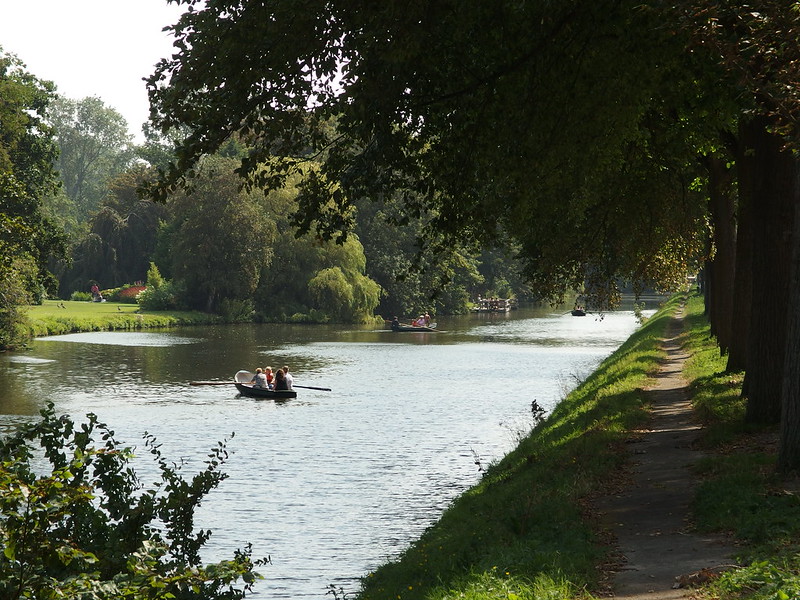
Marvel at the Dutch love for boating as soon as there is any sun. Image: Guilhem Vellut/Flickr/CC2.0
Would love a walk in the forest but don’t want to trek too far from the city centre? Scheveningse Bosje has got you covered.
It is part of the Cityduinpark initiative, aimed at connecting various green areas around the city. Perfect for a stroll while you’re on your lunch break or a longer hiking route if you’ve got more time to spare.
📏 Walk distance: 8 kilometres (round trip) 🚲 How to get there: The edge of the natural area is less than a 20-minute cycle from the centre of The Hague 📍 Starting point:Zorgvliet 🗺 Route: Starting off at the edge of this gorgeous estate will lead you into the inner city forest. Working your way up to Wesbroekpark, you can end your hike by relaxing next to the water.
6. Palace gardens: a very royal walk
These gardens are a great spot if you fancy a short walk. Originally known as the Princess Gardens, this is the King’s backyard.
Next to the Noordeinde Palace, the gardens are the perfect place for an afternoon stroll or for a spot of sunbathing.
If you want to take advantage of a sunny day and have a picnic, you can even buy picnic baskets at the Hofkwartier (Court Quarter) if you’re feeling fancy. 🎩
7. Malieveld: a walk with the best pancakes in The Hague
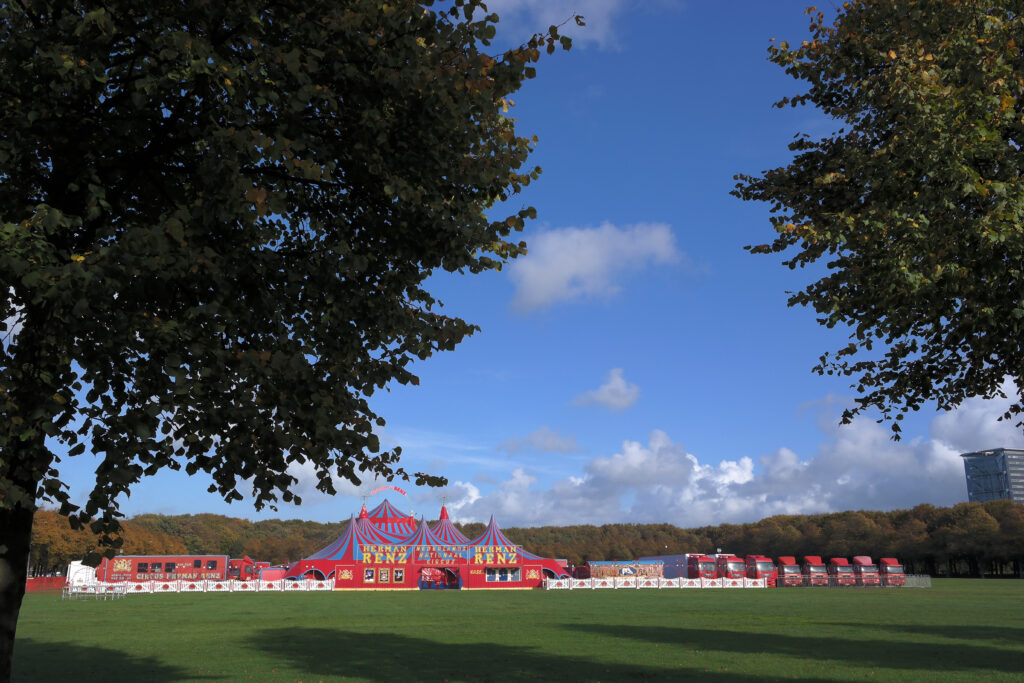
Malieveld in The Hague is home to a variety of circuses and festivals all year round. Image: Steven Lek/Wikimedia Commons/CC4.0
Don’t have time to venture out of town? Malieveld is the place for you. With ten hectares of lawn space, it’s the largest outdoor space in the centre of The Hague.
Not only is it the site known for hosting multiple music festivals and holiday events, but it also houses the famous Pavillion Malieveld.
Standing since 1941, the eatery is known for its range of traditional Dutch pancakes and sweet treats, from poffertjes to Old-Dutch waffles.
As well as a great spot for pancakes in the park, Malevield poses as the perfect place for experienced hikers to break off from the leisurely strollers.
If you’re looking for more than a midday wander, it’s a great starting point for a long walk through the Haagse Bos.
8. Haagse Bos: a wander through fresh forests
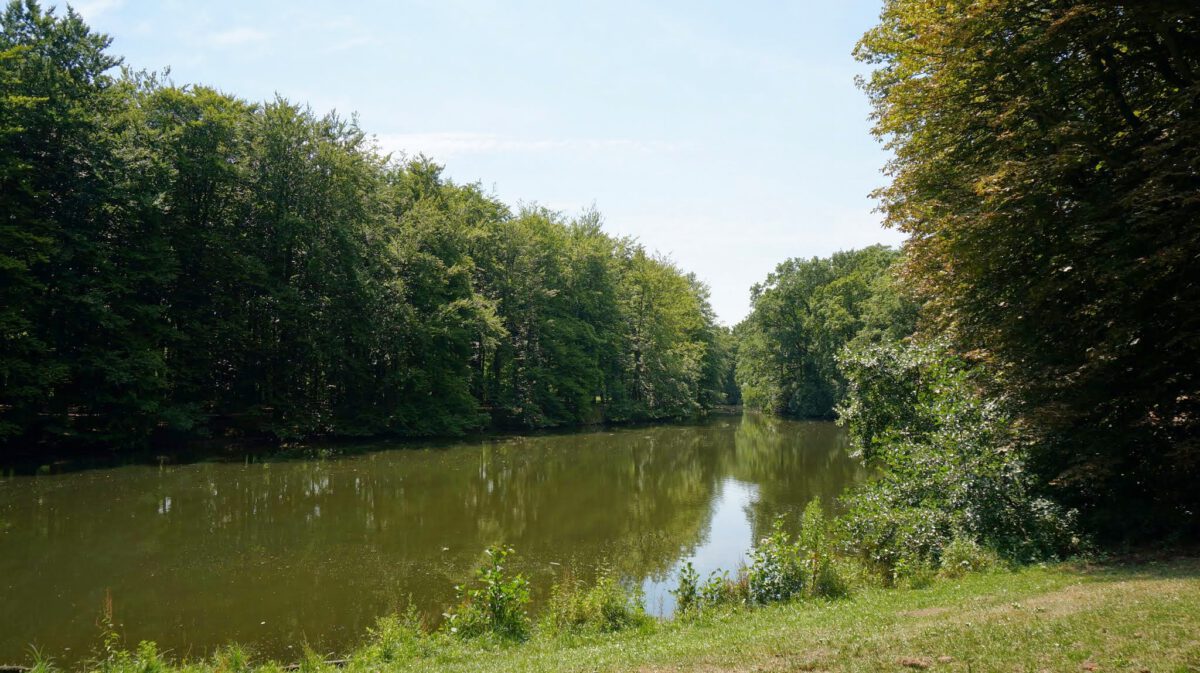
Fancy a swim in the middle of a forest? Image: Ben Bender/Wikimedia Commons/CC3.0
Originally part of Malieveld, the Haagse Bos forest sits right on the park’s border.
It’s one of the oldest forests in the Netherlands and is closely linked to the history of The Hague.
Being about 100 hectares in size, it stretches from Malieveld to the municipality where the King used to hang his hat, Wassenaar. It’s perfect for a run, a walk, or maybe even a paddle.
📏 Walk distance: 5+ kilometres (round trip) 🚲 How to get there: The entrance of the forest is within walking distance from Den Haag Central 📍 Starting point: Boslaan, in the southeast corner of the Haagse Bos 🗺 Route: A full loop of the forest will set you up for at least a 5-kilometre hike. We recommend you start in the south, so you can end your hike by taking a visit to the royal residence of Huis Ten Bosch in the north of the forest.
9. Wassenaar: a town fit for kings
Check out the King’s old stomping ground. Image: Kasteelbeer/Wikimedia Commons/CC3.0
Think the town of Wassenaar is beautiful? You’re in good company. King Willem-Alexander and Queen Maxima lived in the Eikenhorst estate in Voorschoten until 2019, which is only a stone’s throw away.
The village itself houses a classic Dutch windmill and is perfect for a gezellig day trip, but it’s also surrounded by woodland areas ready for the seasoned rambler.
South of the town centre of Wassenaar, you can find a vast stretch of forests and nature reserves around the Landgoed De Horsten area — perfect for the avid hiker.
This luscious patch of natural beauty stretches almost 10 kilometres, including the designated hiking area of Molenpad.
There are so many hidden gems to discover, including a nordic hut blasting classical music for the pleasure of passers-by.
📏 Walk distance: 15+ kilometres (round trip) 🚲 How to get there: The edge of the natural area is under a 20-minute cycle from the centre of The Hague 📍 Starting point:Van der Valk Hotel Den Haag 🗺 Route: If you want to get the full range of the natural beauty of this area, we recommend you head north towards Park Langoed Ter Horst, which you can follow to do the full route of the Royal Estates of Den Horsten.
10. Zuiderpark: go for a walk, a swim, or a skate
Zuiderpark is perfect for a good break in nature. Image: Pimvantend/Wikimedia Commons/CC3.0
Another spot that’s perfect for a lunchtime stroll. One of the most popular parks in The Hague, Zuiderpark has been providing fun for the whole family since the 1920s.
But serious walkers can pick up the pace as a loop around the park will set you up for a good six-kilometre hike.
Not only does it contain a state-of-the-art skate park, but also has great facilities for children.
A prime place to take the little ones for a walk, Zuiderpark contains a nature playground, where kids can let off steam while getting to grips with the natural landscape.
Whether that’s playing in the mud, or building a treehouse in the forest. There is also a stream that is safe to walk in, so get those wellies out!
📏 Walk distance: 6+ kilometres (round trip). 🚲 How to get there: The entrance of the park is less than a 20-minute bike from the centre of The Hague. 📍 Starting point:Melis Stokelaan. 🗺 Route: Taking on a loop of the park will give you at least a 6-kilometre ramble. If you head west through the park, you can visit the Kinderboerderij Herweijerhoeve (a petting zoo), where some farmyard animals can distract you from the daily grind.
11. Vlietland: visit the Randstad’s riviera
Wouldn’t you want to end a walk with this beauty? Image: Vincent van Zeijst/Wikimedia Commons/CC3.0
If you want to get away from the crowds and are a watersports enthusiast, we present Vlietland. The park is a 20-minute cycle from The Hague, making it the perfect location for a day trip.
With 300 hectares of space, it’s the largest water-based natural area in the Netherlands.
If swimming is not your thing, never fear, as Vlietland is surrounded by forests and spots for sunbathing (when you’re lucky enough to catch the Dutch sun).
📏 Walk distance: 20+ kilometres route (roundtrip) 🚲 How to get there: 30-minute cycle from the northeast of The Hague 📍 Starting point:Leidschendammerhout 🗺 Route: If you head north towards De Vogelknip, you can hit both of the main lakes and the surrounding forest area.
Know any other good spots for a hike around The Hague? Tell us in the comments below!
From Wednesday, July 1, a fresh batch of Dutch rules kicks in, and your wallet will feel several: a minimum wage rise, more expensive parcels from outside the EU, and another social housing rent hike.
Every January and July, the Dutch government rolls out new laws and tax tweaks.
This summer’s changes offer a mixed bag, so here’s what may affect your wallet this time round.
Firstly, the minimum wage goes up
The gross minimum wage rises from €14.71 to €14.99 per hour for everyone aged 21 and over, NOS reports.
You could argue it’s not life-changing, but over a full-time month it adds up. And every little helps in this economy.
Pensions and benefits rise too
Because Dutch benefits are tied to the minimum wage, they climb alongside it.
The AOW (the Dutch state pension) for people living alone goes from €1,558.15 to €1,581.55 net per month. Benefits like bijstand (social assistance), WIA and Wajong also rise.
Rents climb again for those of us in social housing
Social housing rents can go up by a maximum of 4.1% from July 1, and your landlord may take advantage of this.
Housing corporations certainly will, according to NOS, they have said they’ll raise rents by 3.6%, bringing the average rent to €666.
If you earn a high income, your increase could be steeper, either €50 or €100 extra depending on what you make.
Note: Social housing involves properties that cost no more than €932.93 in basic rent.
Parcels from outside the EU cost more
Your Temu and Shein habit is about to get pricier. Parcels from outside the EU under €150 used to arrive free of import charges. From July 1, you’ll pay €3 per type of product.
This means if you order two bottles of moisturiser, it’ll cost you an extra €3 in postage, but those moisturisers plus the latest labubu will set you back an extra €6.
Next-day post needs a pricier stamp
Posting a letter is changing too. From July 12, PostNL is allowed two days to deliver domestic mail. Want it there the next day? A standard stamp won’t cut it.
You’ll need a so-called priozegel (priority stamp), which costs €3.95.
A home charging point could land you on a waiting list
While this change may not cost you directly, it could throw a spanner in your plans to cut costs.
In parts of the country, the electricity grid is full. Until now, only large businesses faced waiting lists for power connections.
From July 1, however, households and small businesses can land on those lists too.
For example, if you apply for a higher-capacity connection to install a home charging point or heat pump.
In Noord-Brabant and much of Utrecht province, it’s already clear that new requests will be put on hold.
Which of these stings the most for you? Tell us in the comments.
Like mice and Dutch cafés, housing crises and the Netherlands seem to go hand in hand. However, one hurdle internationals looking for accommodation face is this: “No internationals.”
More often than not, when internationals are looking for a roof over their heads, they’re met with these words — and left with very few housing options.
In the Netherlands, the lack of student housing, in particular, has been an ongoing issue for many (many, many) years.
However, unlike Dutch students who can weather the storm by living with their parents, international students are left with no life raft in the squall.
What does “no internationals” mean in a Dutch housing advert?
I’m sure you’ve encountered the phrase in your search for any place to live that isn’t a cardboard box.
For those who haven’t encountered it, it’s a slogan usually found at the top of a Dutch housing advert that proudly states: No internationals(often accompanied by two more words; not sorry).
A hip alternative to “no internationals” is the equally common “Dutch only.”
my cousin is looking for a place in rotterdam and they keep slapping her with the “no internationals” label so here’s a fun lil 🧵:
The Twitter thread above contains some brilliant examples of this leuk Dutch phenomenon.
According to a survey by the Erasmus Student Network, 57% of international students in the Netherlands have encountered advertisements saying “no internationals.”
And more than 25% of them have been rejected for accommodation on this basis.
Given that foreign students generate far more income for the Dutch economy than they cost, you’d think they’d try caring for their “cash cows” a little better. 🤔
So if I learn Dutch, I’ll be fine… right?
I mean, you’d think so.
There is an abundance of complaints about internationals not speaking Dutch. In fact, finding one in the wild is like finding a bakfietsmoeder or ten outside your local Albert Heijn.
NL’se ouders betalen schokkend veel belasting, ook voor onderwijs. Hun kinderen worden verdrongen bij studentenhuisvesting, fixusstudies en zelfs gediscrimineerd op hun moedertaal omdat ‘internationals’ geen Nederlands willen/hoeven leren. Gaat u niks aan doen, hè, @RHDijkgraaf. https://t.co/IulqLBAtVD
Translation: Dutch parents pay a shocking amount of taxes, including for education. Their children are pushed out of student housing, fixus studies and even discriminated against on the basis of their mother tongue because ‘internationals’ do not want/need to learn Dutch. Not going to do anything about it, eh, @RHDijkgraaf.
And look, we get that it’s annoying when people set up shop in your country and don’t even make an attempt to learn your language.
Which, of course, may tempt you to think, “Oh, so if I learn Dutch, I’ll be fine!”
It sounds like an easy fix, doesn’t it? LeerNederlands (learn Dutch) and a room will magically materialise in some Dutch frat house. Leuk! ✨
Except, it’ll take most internationals 6-10 weeks to reach A1/A2 level in Dutch, which will only take you to basic conversations.
That’s nowhere near fluent enough to make witty grapjes (jokes) with your housemates the minute you land in the Netherlands.
Sorry folks, fluency isn’t just handed out when you step off the plane. 🤷🏻♀️ Image: Depositphotos
According to a report by ESN, more than half of respondents were denied housing based on being international students — even those learning Dutch!
The reason? Tenants were waiting for Dutchies to apply!
Learning the language wasn’t enough, as only “natives” were accepted. 😑
And it’s not just the tenants
Despite all the noise about Dutch tolerance, some landlords in the Netherlands freely discriminate based on nationality. And a few that rent to internationals have even been reported to be significantly over-charging them.
In fact, over 25% of respondents in the 2021 ESN survey faced paying higher prices than their Dutch counterparts for the same rooms.
Paying more for the same cramped room really makes one feel welcome! Image: Depositphotos
As a fun fact to tenants and landlords alike: such discrimination is illegal in the Netherlands.
Yet that doesn’t stop some Dutch landlords from risking (legal) fire and flames to pat themselves on the back for their “no internationals” labels and money-grabbing schemes.
Geen allochtonen, hoor (no immigrants/foreigners)
Landlords aren’t the only ones who are hesitant about interacting with internationals.
Some Dutchies aren’t exactly the most welcoming of people when it comes to sharing accommodation with internationals — despite all the waffle about the Netherlands’ inclusivity and tolerance.
And, of course, the general Dutch response to any hints of racism is: “Dat is niet de bedoeling (that’s not the intention).”
So what is the “bedoeling” (intention)?
The general consensus from the Dutchies we’ve spoken to is that there are several valid reasons why they’d only want to live with their “own people”.
God forbid an orange-hating buitenlander (foreigner) moves in! 😱 Image: Depositphotos
Some would rather only speak their own language at home (rather surprising, given that a quarter of all people in the Netherlands don’t even speak Dutch at home).
Some want the comfort of a familiar culture to come home to.
Others don’t want to be assaulted by the smell of foreign cooking.
And, of course, there’s the old chestnut: foreigners don’t understand Dutch normen en waarden (norms and values). You might — shock and horror! — actually invite people to stay for dinner if they haven’t left by 6 PM sharp.
Sprinkle in the 30% ruling for some extra bitterness
This raises more hackles than showing a full moon to a werewolf.
This ruling allows highly skilled internationals who move to the Netherlands for work to keep 30% of their income from being taxed for up to five years.
Unleash the horde…of 30% ruling haters! Image: Depositphotos
It smells like discriminatie (discrimination) against the Dutch, doesn’t it? 🤔 Except… it isn’t.
The 30% ruling isn’t a miraculous tax break with internationals buying up properties, then cackling and rubbing their hands like a swarm of evil flies.
Getting a mortgage isn’t as easy as scoffing down bitterballen — and that’s the same for those eligible for the ruling.
What does this mean for internationals?
“No internationals” and co. paints a picture of the discrimination internationals will face in the Netherlands.
And what can’t be attributed to discrimination can (generally) be attributed to ignorance.
Prepare to hear generalisations like: “Your university has rooms saved for you, unlike Dutch students”, or “Your employer will provide you accommodation, unlike Dutch employees who have to find it themselves!”.
Or the lovely “All foreigners that come to the Netherlands are rich, so you can afford to pay thrice as much as Dutch people.” 💸
Even some politicians use their public platforms (such as Twitter) to display “tolerance” to those that aren’t Dutcher than pannenkoeken.
Onze ziekenhuizen liggen vol met niet-westerse allochtonen. De linkse journaille schrijft het nu zelf. Toen ik het vorig jaar riep was de wereld te klein.
Translation: Our hospitals are full of non-Western immigrants. The left-wing news is now writing it itself. When I said it last year the world was too small. “About half of them have a non-Western background.”
See above: a brilliant example of the kind of Dutch tolerance often supported by those that insist there’s geen racisme (no racism) in the Netherlands! Expect to have such people writing housing advertisements.
What can we do about it?
The most beneficial path forward involves holding the right people responsible.
Ok, we’ve got sky-high prices that no one besides Elon Musk could afford and a dire housing shortage.
Who do we blame: the greedy landlords, the Dutch house hunters, or those blasted internationals? Hmmm…that’s a hard one. 🤔
Looking for some pesky internationals to blame, hoor! Image: Depositphotos
Jokes aside, we’re pleased to say that the government has (finally) taken matters into their own hands.
They have started cracking down on naughty landlords that let their empty, inordinately expensive properties sit around like a sack of potatoes (during a housing crisis, mind you!)
Landlords in Amsterdam who don’t report their properties as unoccupied for over six months will be forced to reduce their rental prices.
Yes, it’s the weakest step in the right direction, especially after repeated calls for universities to be more involved with disseminating housing information — but better (many, many, many years) late than never, right?
Of course, things aren’t all bleak.
For every Dutchie that sees internationals as pests, there are equally as many that won’t treat you as a buitenbeentje (outcast).
Several internationals have Dutch friends or significant others (the writer of this piece is thrilled to have both). And, of course, many Dutch landlords treat internationals with basic respect.
Have you been hit with a “no internationals” label or a Dutchie that feels your views haven’t been properly represented? Tell us about it in the comments!
While starting a business in the Netherlands is fairly straightforward, a few financial surprises catch expat entrepreneurs off guard every year… and most of them are entirely avoidable.
This guide covers the seven financial hurdles most likely to trip up internationals starting a business in the Netherlands in 2026, from choosing the right legal structure to protecting your income when there’s no employer safety net.
The good news is that most of these pitfalls are entirely manageable once you know what you’re dealing with.
1. The wrong legal structure will cost you more than you think
If you’re setting up a business in the Netherlands, the first decision you’ll make is choosing between an eenmanszaak (sole proprietorship) and a BV (besloten vennootschap or private limited company).
Not sure what the difference is between the two? Let’s take a closer look:
One common mistake that internationals make is choosing their business structure based on upfront costs. While an eenmanszaak is cheaper to start with, personal income tax rates can easily outweigh any cost-saving at higher profit levels.
Here’s what to do instead: Book an appointment with an accountant or business financial advisor before registering your company.
Thinking about freelancing or setting up a BV? Revolut Business gives you a Dutch IBAN, multi-currency accounts in more than 30 currencies, virtual and physical cards with spend controls, and automated expense management — all in one place.
Even better: new customers get a €80 welcome bonus when they open an account online. (T&Cs apply.)
2. You aren’t claiming all the tax deductions you’re entitled to
Most new entrepreneurs in the Netherlands claim one or two deductions and stop there. The Dutch tax system actually offers several, and missing them means paying more tax than you need to.
It definitely pays to familiarise yourself with Dutch tax rules and deductions. Image: Magnific
Here’s what to do instead: Make sure you explore other deductions that you may be entitled to. These may include:
Zelfstandigenaftrek (self-employed deduction): This deduction reduces your taxable profit by €1,200 in 2026. To claim it, you must spend at least 1,225 hours per year on your business, and more time on your business than on any other work.
Startersaftrek (start-up deduction): If you’re in your first five years of running a business, you can reduce your taxable profit by an additional €2,123 on top of the zelfstandigenaftrek.
KIA (small-scale investment deduction): If you invest between €2,901 and €398,236 in business assets in a single year (think: equipment, tools, and hardware), you can deduct a percentage of that investment from your taxable profit.
MKB-winstvrijstelling (SME profit exemption): Once you’ve applied all your other deductions, this exemption automatically removes a further 12.7% of your remaining profit from your taxable income.
In addition to this, costs directly related to running your business (such as software subscriptions, professional training, a work phone, and travel expenses) are deductible from your profit.
3. You don’t have a clear picture of your VAT obligations
VAT, known in Dutch as BTW (belasting over de toegevoegde waarde), trips up a lot of new entrepreneurs. While the rules for Dutch taxes aren’t complicated, some obligations can cost you money if you get them wrong.
Here’s what to do instead: Get familiar with the tax system here before you set your company up.
The standard BTW rate in the Netherlands is 21%, with a reduced rate of 9% for things like food, books, and medicine.
Below that threshold, the KOR (Kleine Ondernemers Regeling, small business VAT exemption) lets you opt out. However, you lose the right to reclaim VAT on business purchases.
4. You leave it too late to open a business bank account
Most new entrepreneurs assume that opening a business bank account is quick. In the Netherlands, however, it often isn’t.
Traditional Dutch banks can take two to eight weeks for their KYC (Know Your Customer) review, according to business.gov.nl. And, if you’re setting up a BV, you’ll also need to complete a UBO (Ultimate Beneficial Owner) registration with the KVK before most banks will even begin your application.
Dutch business bank accounts can be handy, but don’t leave your sign-up too late! Image: Magnific
These delays can hold up everything from sending your first invoice to processing VAT.
Here’s what to do instead: Start your banking application as soon as you’ve completed your KVK registration. If you need a bank ASAP, explore neobanks or fintech options.
Don’t let Dutch bureaucracy hold up your business. Revolut Business gets you a Dutch IBAN and a fully operational account in as little as 48 hours, so nothing stands between you and your first invoice.
5. You don’t realise you could be reclassified as an employee
The Wet DBA (or the Dutch Employment Relationships Deregulation Assessment Act) is the law that governs how the Belastingdienst classifies working relationships.
If your freelancing setup looks more like employment than a genuine ZZP’er structure, you could be reclassified — and face retroactive tax assessments going back to January 2025 and, from 2026, fines.
Here’s what to do instead: Use the Belastingdienst’s free employment relationship assessment tool (webmodule beoordeling arbeidsrelatie) before signing contracts.
Working with multiple clients and ensuring your contracts reflect genuine independence significantly reduces the likelihood of being fined.
6. You assume the 30% ruling follows you into self-employment
The 30% ruling (30%-regeling) is one of the most valuable financial benefits available to expats working in the Netherlands.
It allows eligible employees to receive up to 30% of their salary tax-free, intended to offset the extra costs of relocating here. However, the key word here is “employees”.
If you leave employment to go freelance as a ZZP’er (zelfstandige zonder personeel, self-employed professional), you lose this tax break.
If in doubt, consult with an accountant who can assess your eligibility for the ruling. Image: Magnific
Here’s what to do instead: If you currently hold the ruling and are considering going freelance, explore the DGA route before handing in your notice.
Set up a BV and pay yourself a qualifying salary as a directeur-grootaandeelhouder (DGA, director-shareholder). As you’re technically an employee of your own company, the ruling still applies.
7. You underestimate how much the lack of a safety net will cost you
When you go self-employed, you step outside the Dutch employee social security system.
This means you aren’t entitled to any unemployment benefits, employer-funded sick pay, or long-term disability benefits. And, while your meagre AOW (state pension) continues to grow, there’s no employer-funded pension added to it; either you build it yourself, or it doesn’t get built.
Here’s what to do instead: Budget from day one for three things.
Going freelance in the Netherlands is an appealing move for many internationals — flexible hours, being your own boss, and no more awkward office birthday cakes.
But being a ZZP’er (zelfstandige zonder personeel, or self-employed person without staff) also comes with a non-negotiable side effect: administration.
The Dutch tax office expects you to maintain a clear and organised set of business records at all times.
This is not just for your own sanity, but because you’ll need these documents to file your VAT returns, your annual income tax, and to justify any deductions you claim.
Here’s exactly what you need to hold on to.
While it’s totally possible to do all the administration yourself, a handy bookkeeping tool can save you a lot of headache. Being the only accounting softward available fully in English, Taxmo was built specifically for freelancers and internationals in the Netherlands. It can not only help you create invoices, but also track expenses, prepare VAT returns, and keep all your records organised in one place.
Invoices are your bread and butter as a freelancer. Every time you deliver a service or product to a client, you must send an invoice and store it in the same form in which it was sent.
What does this mean exactly? If, for example, you emailed a PDF, you need to save the PDF. Don’t edit it after the fact, don’t rework the formatting, and definitely don’t delete it once you’ve been paid.
Having a handy accounting tool can save you a lot of headaches. Image: Magnific
Your invoices are how the Belastingdienst verifies your declared turnover and the VAT (i.e. the BTW or omzetbelasting) you’ve charged, so these are essential for your VAT returns.
If you work with clients outside the Netherlands, make sure your invoices correctly reflect the applicable VAT, as different rules may apply for EU and non-EU customers.
💡 Good to know: In the Netherlands, you must file VAT returns every quarter. For Q2, you can file your VAT starting on July 1 and no later than July 31, so now is a good moment to make sure your records are complete and organised.
2. Purchase invoices and receipts
As a ZZP’er, you can deduct legitimate business expenses such as software subscriptions, office supplies, professional training, or a work laptop. But only if you can prove they happened.
The proof? Purchase invoices and receipts. After all, you need to be able to show what goes out as well as what goes in. This applies to purchases made with both card and cash.
Losing a receipt for a cash payment doesn’t make the expense disappear in the eyes of the tax office — it just means you can no longer claim it.
Keep a folder (physical or digital) and make a habit of filing receipts immediately. Leaving it until the last moment to find six months’ worth of crumpled paper at the bottom of your bag is not a strategy.
One common mistake: mixing personal and business expenses on the same account. It makes your bookkeeping far more complicated and raises unnecessary questions during a tax review. A separate business bank account isn’t per se mandatory, but it does help keep things organised.
3. Bookkeeping records
Your bookkeeping records are the bird’s-eye view of your business finances: income, expenses, VAT collected, VAT paid, and the calculations that show it all adds up.
Your VAT and income tax declarations must match, and any significant differences can result in hefty fines.
This is where bookkeeping software becomes particularly valuable. Instead of manually updating spreadsheets and calculating VAT yourself, tools like Taxmo automatically organise your income and expenses, track VAT owed and paid, and keep your financial records up to date throughout the year.
Rather than scrambling to gather information before every quarterly filing deadline, you always have a real-time overview of your business finances, which reduces the chance of errors and gives you a better understanding of your profitability and cash flow.
A spreadsheet might seem sufficient at first, but it quickly becomes error-prone and harder to verify during a tax audit. Plus, if your financial records are a mess, so will be your quarterly VAT returns and your annual income tax returns.
4. Contracts, agreements, and correspondence
Every agreement you make with a client or supplier should be documented and kept on file. That includes formal contracts, but also emails confirming the scope of a project, agreed rates, or delivery timelines.
Essentially, anything that establishes what was agreed, with whom, and when.
How long you need to keep your records is as important as what records you need to keep. Image: Magnific
The Belastingdienst wants you to keep sevenyears of financial records, including invoices, receipts, bank statements, and business contracts.
Beyond the legal requirement, contracts protect you if a client disputes payment or questions the work delivered.
5. Bank statements
Your bank statements confirm that the income you’ve declared actually landed in your account, and that the expenses you’ve claimed were actually paid out. You could think of it as an independent verification layer.
You can store them digitally, but make sure they’re backed up somewhere reliable and easy to find. “My old laptop crashed” is not an excuse the tax office will accept warmly.
6. A record of how many hours you’ve worked
This one isn’t legally required in the same way as invoices or receipts, but it can be worth a significant amount of money.
To benefit from certain tax schemes aimed at self-employed people in the Netherlands, you need to have spent at least 1,225 hours on your business in a calendar year. This is known as the urencriterium, or hours criterion.
Indirect hours count too: managing your website, acquiring new clients, and even keeping records all go towards your total.
Tracking your hours as a freelancer can help you get certain tax deductions. Image: Magnific
If you meet the hours, you may be eligible for deductions such as the zelfstandigenaftrek and, in some cases, the startersaftrek. However, always check which decucion apply to your specific situation in any given year.
Keeping your client work, administration, and business activities organised throughout the year makes it much easier to support your hours registration if needed, so don’t leave this to guesswork at the end of the year.
7. Your mileage and travel expenses
Travel costs fall under business expenses, but how you record them depends on how you travel.
If you use your own private car, motorbike, or even bicycle for business trips, you can deduct a fixed rate of €0.23 per kilometre from your profit in 2026. Note that costs like fuel, insurance, and parking are already included in this rate, so you cannot deduct them separately.
If you travel by public transport, save your tickets or OV-chipkaart statements as proof.
Either way, a clear mileage log noting the date, destination, purpose, and kilometres travelled is essential. Without it, you have nothing to show the Belastingdienst.
What else should you remember?
A few final reminders that apply across all of the above:
Keep everything for seven years. This is the standard retention period for business records in the Netherlands. Got records related to real estate? You need to hold on to those for 10 years.
Digital records are fine. Storing receipts, invoices, and statements digitally is perfectly fine, as long as they’re backed up and easy to find. No need to print everything out.
Separate your finances. Having business and personal expenses on different accounts from day one saves hours of untangling later.
Don’t wait until the last minute to organise everything. Filing quarterly is far easier when your records are already neat.
Dutch administration can feel overwhelming at first, especially if you’re navigating it in a second language.
But staying on top of things, and having tools and systems you use consistently, mean smoother tax returns, knowing where you stand, and the peace of mind that comes from knowing that the Belastingdienst won’t find any unpleasant surprises.
Are you a ZZP’er in the Netherlands? Let us know which part of your administration you find most challenging!
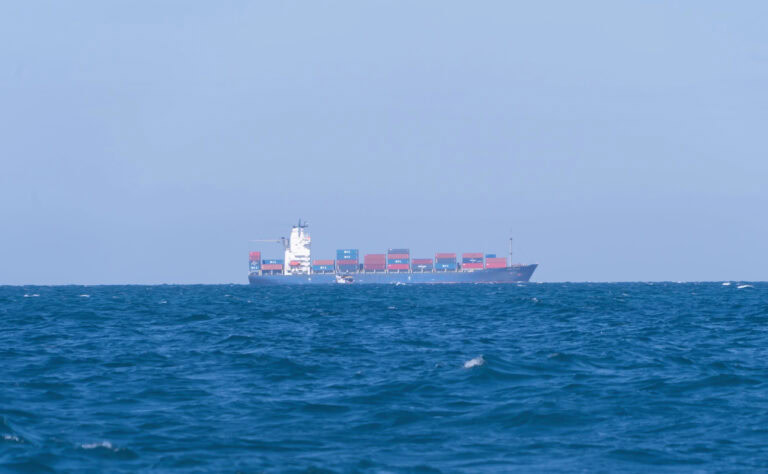
After almost four months of being effectively stuck, a handful of Dutch-flagged ships have managed to safely cross the Strait of Hormuz.
As reported by KVNR (the Royal Association of Dutch Shipowners), this is the first real sign of movement since the Strait was thrown into chaos by the US-Iran conflict.
The Strait of Hormuz is one of the world’s most important shipping routes, sitting between the Persian Gulf and the open ocean. Needless to say, its closure has been a huge factor in your skyrocketing petrol and energy bills.
The fact that ships can move again is, at the very least, a small step in the right direction.
Several ships managed to pass through
According to the KVNR, the signing of a memorandum of understanding (a formal agreement) between the US and Iran created short windows of time where vessels could leave the Gulf safely.
A few Dutch-flagged ships used those windows to get through. However, a large chunk of the Dutch fleet is staying put in the Persian Gulf for now, carrying on with offshore work contracts there.
Don’t celebrate just yet
While KVNR director Annet Koster called the passage a relief for crews, their families, and shipowners, she made it clear that we’re still not out of the woods.
“It is now important that calm returns to the area for a longer period,” she states. “This will allow ships to operate safely and enable transit to resume.”
Given the volatility still present in the region, it remains to be seen if this movement is a brief moment of calm amidst the storm or the first step towards conflict resolution.
For safety reasons, the KVNR won’t say which companies, ships, or routes were involved. Crews are watching the situation constantly and making decisions based on the very latest information.
Do you think the conflict in the Strait of Hormuz will settle down soon? Share your thoughts in the comments below.
A basic human right or plain gross? Business casual or just letting yourself go? Dutch readers of NU.nl endeavoured to answer the question: Should employees be allowed to wear shorts at the office?
As the home to Europe’s official “drug capital” and the world-renowned red light district, it’s no secret that Nederlanders are fairly liberal and progressive in their ways.
So if we’re amid a scorching hot heat wave, and want to be spared the discomfort of feeling sweat trickle down our thighs, surely it’s acceptable to replace the usual suit pants with shorts at work? (Especially considering the lack of air conditioning in some of these places.)
Or is that an unprofessional move, damaging to the group morale, and a bad look for the company?
NU.nl posed the question “to do or not to do” to their online readers, and was met with a mix of responses. 👇
The answer? Yes and no
One commenter says that despite “never” wearing shorts themselves — “not even on vacation” (um, what??) — they think dressy or “nice” shorts should be tolerable in a corporate space, while “sports” ones shouldn’t be.
Someone else, who is decidedly team shorts, believes the stigma surrounding them is a “culture thing” that should be abolished. How they will “behave” at work has nothing to do with whether trousers are long or short.
Others are advising to just go for normal-length trousers with “thin fabric” for warmer temperatures, with someone else referring to shorts as “a piece of clothing for camping”. Ouch. 😮💨
Double standards between genders?
Another reader believes a sexist “gap in the market for” male leg “hair removal” is to blame for this phenomenon. Okay… Men out there better start the painful process of waxing their legs and hope it starts a revolution.
meanwhile I would commit murder for shorts to be acceptable in the workplace https://t.co/JVnkLMyjMq
They also point out that “women wear all kinds of clothing styles”, ranging from dresses to “short skirts”, so in light of equal opportunities, men should be allowed to do the same.
So long as they’re not alarmingly tight/short (we know it’s Europe, but, please, no Speedos), covered in palm trees — or worse, hemp leaves — wearing shorts during a hot summer day feels like a reasonable solution. Just make sure you’re leaving something to your colleagues’ imaginations.
After all, it’s the Netherlands; how hot can the temperature really get? Famous last words…
Are you for or against shorts in the workplace? Share your thoughts in the comments below!
From July 1, the EU is scrapping the duty-free exemption on cheap parcels from outside its borders and replacing it with a temporary €3 customs duty per item.
Your cheap hauls from Shein and TEMU will soon become far less cheap as the EU implements what it calls a “flat fee on low-value imports”.
The European Commission confirmed the change this June, publishing both the legal text and a guidance document for businesses. This marks the end of a long-standing rule that let parcels under €150 slip into the EU without any customs duty at all.
So if you’ve grown fond of ordering €4 phone cases and €6 dresses from abroad, here’s what’s actually changing, and how much lighter your wallet might get.
What exactly is changing on July 1?
Until now, low-value parcels under €150 entered the EU duty-free, thanks to an exemption known as the de minimis rule (a threshold below which customs duties weren’t charged).
However, from July 1, that exemption disappears.
In its place comes a flat €3 customs duty, which the European Commission (EC) has confirmed will stay in force until July 1, 2028. After which, normal customs tariffs kick in, depending on the type of product you’ve ordered.
How much more will your order cost?
Because the duty is charged per unique item, what you order matters more than how much.
Your cost all depends on the specific mix of items in your order. Image: Magnific
The EC offers two handy examples:
A parcel containing five identical T-shirts counts as one item, so it’s charged €3.
However, a parcel with one T-shirt and one watch counts as two items, bringing the total duty to €6.
The takeaway? Ordering several of the same thing is cheaper than mixing your basket.
Wait, is this new tax levied on me?
Well… technically, no.
The European Commission is adamant that the €3 is a customs duty on businesses, not a tax on consumers. Officially, the people responsible for paying are the sellers, importers, or their representatives, and only in rare cases would a consumer be billed directly.
In practice, we all know how businesses love passing the buck along, so don’t be shocked if that €3 customs duty pops up while you’re at the checkout.
Why is the EU implementing a new customs duty?
According to the EC, almost 5.9 billion “low-value items” were shipped directly to EU consumers from non-EU countries in 2025 alone — all without paying customs duty.
But, financial aspect aside, there’s also an argument to be made about safety.
Targeted inspections on cosmetics, toys, electronics, food supplements, and protective equipment imported from outside the EU in 2025 found that over 60% of these products failed to meet EU standards. In addition to minor issues like missing labels, some products also contained banned ingredients and lacked safety paperwork.
To help customs spot dodgy goods, product identifiers will become mandatory from November 1, 2026, though sellers can start using them voluntarily from July 1.
Want to make sure DutchReview pops up on your news feed more often? Just add us as a preferred news provider, and we’ll handle the rest.
Several Dutch cities are opening up free “cooling spots”, where anyone can step inside, drink water, use a toilet, and escape the worst of the heat.
These spots are called koelteplekken (literally “cool places”), and they’re exactly what they sound like: locations across the country that throw open their doors when a national heat plan is in effect.
You don’t need to buy anything or sign up. Visitors can cool off, drink water, sit down, use the toilet, and sometimes pass the time with a game or a book.
So, if your house makes you feel like you’re being boiled alive, read on to find a koelteplek near you.
Where can I find koelteplekken in my city?
Not all Dutch municipalities have rolled out cooling spots, but we’ll be updating our list as soon as any are publicly available.
As of June 25, Amsterdam has just opened its first-ever set of koelteplekken, while Den Haag has expanded its network for the summer.
Koelteplekken in Amsterdam
Almost 40 locations across Amsterdam are participating in their pilot programme for cooling spots, and they include:
Stadsboerderij Osdorp (a city farm),
Albert Heijn XL, Osdorpplein,
Amstelring de Venser,
Stayokay Amsterdam Oost (a hostel),
Theatre De Meervaart,
Hotel Nicolaas Witsen (a hotel),
Kerk De Opgang, Osdorp (a church),
Kerk de Ark (a church),
Leonardo Royal (a hotel),
OBA Slotermeer, OBA Postjesweg, OBA Javaplein, OBA Molenwijk, and OBA Geuzenveld (public libraries),
Albert Heijn, Bijlmerplein,
and Kerk De Nieuwe Stad (a church)
The full, up-to-date list lives on GGD Amsterdam’s Koeltekaart (cool map), which is worth checking regularly, as new spots get added when more organisations sign up.
Koelteplekken in The Hague
Meanwhile, The Hague has around 14 cooling spots available, which include:
Haagse Hogeschool (The Hague University of Applied Sciences),
Wijkcentrum Lindenkwadrant (a community centre),
Wijkcentrum Mariahoeve (a community centre),
Wijkcentrum Piet Vink (a community centre),
Wijkcentrum Bouwlust (a community centre),
Here and Now – Salvation Army, Wagenstraat,
Salvation Army, Koperwerf,
and Welzijn Scheveningen Couvéehuis.
The full, up-to-date list is on the GGD Haaglanden website, along with more information for residents of The Hague.
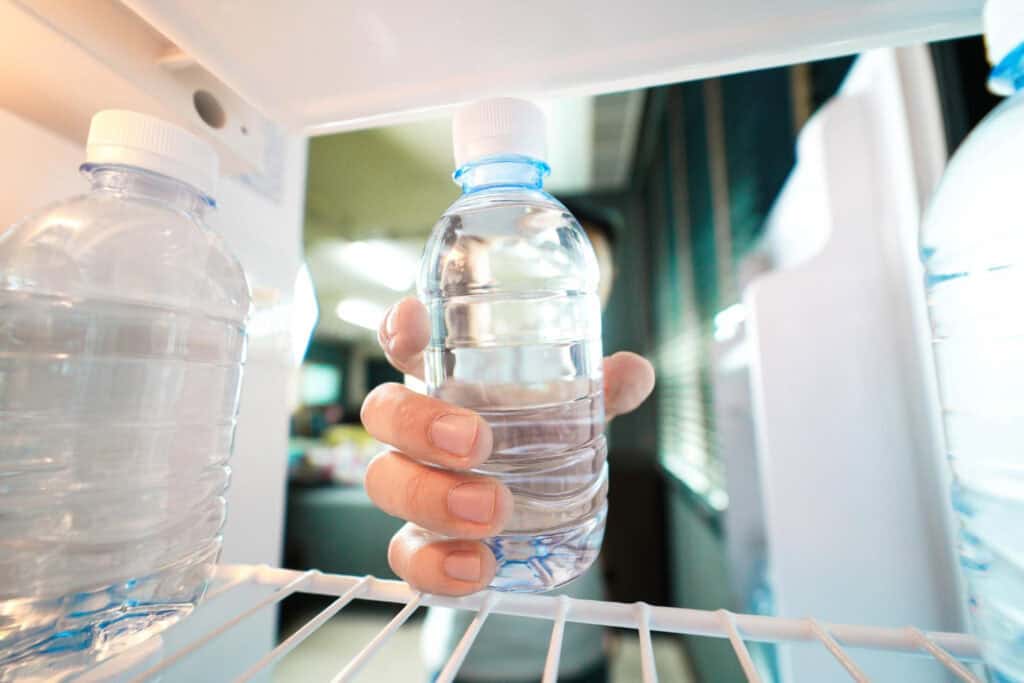
If you haven’t already, ensure you have a water bottle (even a disposable one!), so you can fill up at these koelteplekken. Image: Magnific
Koelteplekken in Rotterdam
Rotterdam has oodles of cooling spots dotted across the city, including:
Henegouwerplein,
Station library,
Oostervantstraat,
Zuiderpark,
Noordgouwepad,
and Kamperlandsingel.
Check Rotterdam’s Koelekaart (Cool Card) for more information on outdoor spots, indoor spots, and free drinking water fountains.
When are koelteplekken actually open?
Needless to say, koelteplekken aren’t open all summer; they’re only designated as such when a national heat plan is triggered.
The RIVM (the Dutch public health institute) activates that plan during sustained hot spells in consultation with the KNMI (the Dutch weather institute). At that point, the KNMI issues either a code geel (code yellow) or code oranje (code orange) weather warning for heat.
Beat the heat, and head to a koelteplek instead. Image: Magnific
If you’re sweltering under the current heatwave, you’ll know that the entire country is bathed in a code oranje, so these spots are open and waiting for you.
What does this mean for you?
If you live in an older or poorly insulated rental with no air conditioning, a koelteplek gives you somewhere genuinely cool to retreat to — completely gratis (free).
However, there are a few practical things to keep in mind:
Check the map first: Facilities vary by location, and some spots are aimed at specific groups (such as the elderly or people who are homeless).
Bring a refillable bottle with you: Many spots have water stations, and Dutch cities also have public drinking fountains dotted around. It’s easier to refill a water bottle than hunt around for disposable cups.
Keep an eye on opening and closing times: Most cooling spots adhere to their existing opening times, so you won’t have access to them outside of their operating hours.
Some locations are NOT free: Certain koelteplekken (like Rotterdam’s Odeon) do not have free entry. While we’ve done our best to vet these locations for pricing, always double-check before visiting.
For more ways to survive the current summer blaze, our guide on how to beat the Dutch heat has you covered. 🙌
Have you popped into a koelteplek before? Are cooling spots available in more Dutch cities? Let us know in the comments!