Home Blog Page 459

Christmas decorations are arriving late and Dutchies are freaking out

When is it too early to put up your Christmas decorations and start eating pepernoten? Honestly, we don’t know, but we always think it’s way too soon!

Not this year though, there’s trouble in paradise. Or as manufacturers would say — problems in production.

Originally set for late September

“Most Christmas items are normally delivered before October 1 or sometimes even earlier,” Frank van der Heide, director of Tuinbranche Nederland (an umbrella organisation for garden centres in the Netherlands) tells NU.nl.

Hold up, what did he just say? 😳 At this rate, we’ll be seeing Christmas decorations in March before too long… 🙄

A Christmas light at the end of the tunnel

Luckily, Tuinbranche Nederland says that 95-99% of these festive items will still be delivered in the first week of December — Christmas is saved! 🎄

But to be fair, surely people still have their decorations from the previous years — unless they throw them out and replace them each year? Bad for the environment and bad for your bank balance. 🤷

Logistical problems in China

As previously mentioned, the Christmas decorations are usually delivered around September (still shocked). However, “due to coronavirus, there is less production in China and there are still problems with container transport from that region”, says Van der Heide.

A boost for real Christmas trees

The fact that the artificial Christmas trees are late to the party isn’t all bad news — the Association of Dutch Christmas Tree Growers are literally doing a happy dance right now. 👯 According to chairman Gerard Krol, “The sale of real trees will really benefit from this.”

What are your thoughts on the late arrival of Christmas decorations? Tell us in the comments below!

Feature Image: prometeus/Depositphotos

New COVID measures, ahoy! Your questions on the new restrictions, answered

Our blissful, coronavirus measure-free existence was short-lived, with Prime Minister Mark Rutte and Minister for Health Hugo de Jonge back on our TV screens last night with a whole new range of measures for the Netherlands from November 6.

So what’s happening — and what’s the nitty-gritty? Today, we’re answering your questions on the latest coronavirus measures in the Netherlands.

Hol’ up: what are the new measures?

The new measures are pretty simple, with Rutte claiming that they’re mainly for the unvaccinated. However, a few rules will apply to almost everyone.

  • Everyone should, once again, stay 1.5 metres from each other.
  • QR codes will have to be shown for outdoor terraces, and more venues and workplaces will also be encouraged to scan.
  • Face masks will become compulsory in indoor areas where a corona pass isn’t used.
  • We’re encouraged to work from home as much as possible and, preferably, at least half of the time.

The Netherlands will also finally get on the booster shot train. Over-60s and healthcare workers are first in line.

7 questions about the latest measures, answered

1. Help, I’m a new arrival! How can I get a Dutch QR code?

Internationals, you’re our people. It is possible to get a Dutch QR code with an international vaccination, but only in some cases — and you need to make a trip to Utrecht to make it happen. Check out our complete guide for all the use cases below.

READ MORE | How to get your vaccination from abroad registered in the Netherlands

2. Do I need to be vaccinated to get access to public spaces?

You don’t need to be vaccinated to access most areas — but you do need a valid Dutch corona pass for a QR code to enter some public spaces. You can get a QR code with:

  • A valid vaccination that has been administered or registered in the Netherlands
  • Have proof of a positive test in the last 180 days
  • Have a negative test result from the previous 24 hours

3. When can I get my booster shot?

A booster vaccination rollout will begin in December for everyone over 80 years old and people in care institutions with their own medical service.

From January, 60 years olds will be next in line, with invitations going to the oldest people first. Healthcare workers with direct patient contact will also be invited at this time.

The Dutch government remains tight-lipped on when booster shots for the remaining population will be given, with the RIVM reporting that “A booster for the entire population is not yet necessary.”

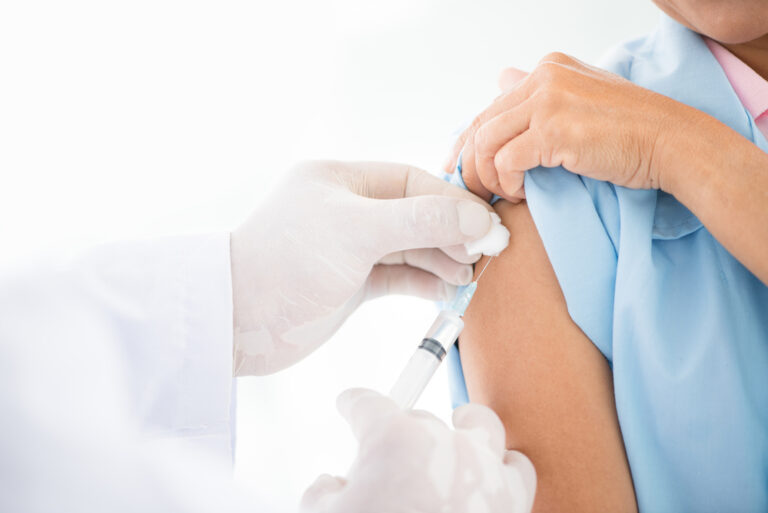
photo-child-getting-vaccinated-in-the-netherlands
Young, healthy people will need to wait for their booster shot. Image: halfpoint/Depositphotos

4. Where do I need to wear a face mask?

From November 6, a face mask will be mandatory in all indoor locations where a corona pass is not required. This can include:

  • supermarkets, shops, libraries, amusement parks, play venues
  • on public transport, at stations, on platforms, and at bus and tram stops
  • at airports and on aircraft
  • when moving around high schools and universities (but not when seated)
  • in contact-based professions, like hairdressers, for both the client and the worker.

So can you say “Whatever” and skip the face mask? We guess — but the fine is €95 (and we’ll frown at you). 💸

5. Am I allowed to work from the office?

Effective Wednesday, November 3, everyone is advised to work from home for at least half of their normal hours.

However, this is only advice — not a rule. That means if your employer requests you to come into the office, they technically can.

6. Where do I now need to show a corona pass?

Charge up your phones — that friendly QR code is about to be requested a lot more often. From November 6, you’ll need to show your code to:

  • go to restaurants where you want to sit down, including outside (but not for takeaway).
  • casinos
  • attend theatres, music venues, cinemas and other cultural locations
  • visit museums, historic buildings, and anywhere where there is a continuous flow of visitors
  • go to events with a constant flow of visitors where there is not an assigned seat, like funfairs and some sport events
  • watch at professional and amateur sports events when over the age of 18
  • participate in inside or outside organised sports, including gyms, group lessons, football, and swimming, and at sports canteens and clubhouses for 18-year olds+.
  • attend business events, like trade fairs and conferences
  • take part in things like music, painting, singing, dance, and theatre lessons or rehearsals from the age of 18.

7. Can I still travel or return to my home country?

The Dutch government hasn’t yet announced any further restrictions for travel, so that’s good news for those of you wanting to go home for Christmas.

However, the Netherlands is already classified as red on the ECDC Coronavirus Map — so other countries may respond to the high Dutch infections and impose their own restrictions on travellers from the Netherlands.

Do you have more questions about the latest measures? Leave them in the comments below!

Feature Image: Puhimec/Depositphotos

Press conference: QR-codes now needed for terraces and more

We here at DutchReview hoped our evenings of huddling behind our home desks watching the birth and growth of Hugo de Jonge’s beard were a thing of the past.

Perhaps there would be one or two more press conferences that would be summarised as “we’re done!” and “bye-rona!” but we were ultimately finished with announcing the latest measures.

But oh — we were so naive.

Tonight, following the sharp rise in coronavirus infections throughout the Netherlands, Prime Minister Mark Rutte and Minister of Health, Hugo de Jonge, have returned to the podium with new coronavirus restrictions in hand.

Six new measures will apply as of Saturday November 6. Let’s run through them.

Face masks are making a strong comeback

The wearing of a face mask will once again be mandatory in public indoor spaces such as town halls and shops as well as in contact professions such as hairdressers.

However, if the indoor space has a setup where you can show a corona pass QR code (like for a special event), you will not have to wear a mask.

Stricter use of corona pass — now needed on terraces

The use of corona passes will also increase. Many of us have grown used to showing our QR-codes before enjoying an indoor meal at a restaurant — but many of us have also gotten used to the fact that we’re sometimes simply not asked to.

The Dutch government wants to crack down on this and bring in stricter regulations regarding the use of a corona pass. What will this look like?

As of Saturday, anyone who wishes to enjoy a coffee or biertje on the terrace will also be required to show a corona pass QR code. Up until now, this was only required when sitting indoors.

Starting this Saturday it will also be obligated to show your QR-code at the gym and at amateur sports, even the spectators, when ages of 18 and over are participating.

QR codes may be asked in other venues and the workplace

The future may also see further expansion of the use of corona passes. The Dutch government is considering taking legislative action to include the corona pass check process in other public venues such as zoos, higher education, middle-level applied education and also the workplace. 🏫 

Speaking on this, De Jonge pointed out that if you are going to ask hospitality to request QR-codes from guests, you should also ask employers to request QR-codes from their staff. However, this will not be an obligation.

If this does become a reality, it won’t be anytime soon. De Jonge pointed out that the process of doing this is a long one and a decision on all of this will be taken on November 12.

A return to the home office

We hope you haven’t converted your makeshift at-home office back to its original state just yet. The Dutch cabinet is once again urging people to work from home as much as possible and at least half of the time.

This comes as no surprise given that more and more people in the Netherlands are contracting coronavirus at the office.

1.5 metre is also back

During the last press conference, we were told that 1.5-metre distancing was no longer a basic rule — but guess who’s back?

Rutte has asked that everyone start following the basic rules again. Sneeze into your elbow, limit your movement if you have symptoms and keep your distance from others. As often with the Dutch government, it’s urgent advice, not a hard rule.

Booster shots will be offered to all

A third booster shot of the coronavirus vaccine will be offered to everyone in the Netherlands once it has been received by over 60s. This process will begin in December.

De Jonge made a plea once again to those who are still unvaccinated to receive the vaccine.

Prime minister Rutte also made a plea to all residents of the Netherlands. “Our own behaviour remains crucial,” he said, “that makes or breaks the entire corona approach.”

Follow DutchReview on Facebook for the latest coronavirus news and updates in the Netherlands.

Feature Image: Screenshot/Press Conference

Health Council advises booster shots for those over 60 and in care institutions

The Dutch Health Council is advising that people over 60 or living in care institutions in the Netherlands be given a third vaccination. 💉

According to the NOS, the Health Council believes that while the vaccines are effective, their effectiveness may be slightly decreasing in older people.

They are advising that people in these groups receive booster shots before the number of serious infections increases due to the lowered effectiveness of the vaccines.

Booster can be given after six months

A booster can be given six months after receiving the second dose of Pfizer, Moderna, or AstraZeneca and after the first and only dose of Janssen.

Those who first received AstraZeneca or Janssen will get a Pfizer or Moderna booster.

READ MORE | Weekly update: get your masks on and buckle up for tonight’s presser

The current cabinet will have to make a decision on whether the Health Council’s advice should be followed or not.

Booster may not help during the current wave of infections

The Health Council doesn’t think that giving the entire population a booster will help the current spike in infections or reduce pressure on the ICU — at least not without any further measures. This is mainly because the rise in infections is mainly affecting unvaccinated people.

Better booster on the way?

The Health Council also believes it’s good for most of the population to wait for Pfizer and Moderna to come out with boosters that tackle the more recent coronavirus variants.

However, it’s unknown when those boosters will be ready.

Those with a weakened immune system have already received an extra shot in the Netherlands. But if vaccine effectiveness reduces in this group, then another booster may be needed.

More information regarding the coronavirus may come after tonight’s press conference.

What do you think of booster shots in the Netherlands? Tell us in the comments below!

Feature Image: Goodluz/Depositphotos

Weekly update: get your masks on and buckle up for tonight’s presser

The RIVM has released its weekly coronavirus figures from October 26 to November 2. The number of hospitalisations and ICU admissions have soared, while the number of deaths also climbed in the past week.

Over the past week, the RIVM has reported 53.979 new infections in the Netherlands. This is a significant increase compared to last week’s report of 38,733 infections.

The percentage of positive tests also increased to 16.7% compared to 15.3% the week before.

Deaths

The number of patients who have died from coronavirus-related complications has increased in the past week. This week, 102 people passed away, compared to 78 people the previous week.

Hospitalisations

Both the number of admissions to the nursing ward and the ICU has gone up. The past week saw 694 new admissions to the nursing ward and 140 new patients in the ICU. The week before, there were 474 and 110, respectively.

Leaked measures in anticipation of tonights conference

This evening, the Dutch Prime Minister will step on the podium once again to bring us the government’s decisions regarding new coronavirus measures. However, the expected measures have already been leaked.

From Friday, we’re looking at a return to wearing facemasks in public indoor spaces. The government also wants a stricter working from home policy — so wave goodbye to office coffees and hello to half a week of working from the couch.

There have also been discussions about expanding the scope of the coronavirus pass.

RIVM traces infections to the office and catering establishments

Numbers from the Dutch National Institute for Public Health and the Environment (RIVM) show that more people are contracting coronavirus at Dutch catering establishments and workplaces.

In fact, those locations were identified as the source of infection for 4 in 10 who tested positive in the Netherlands last week. Overall, such cases almost doubled in October compared to September.

The Netherlands turns red… again

Every Thursday the European Centre for Disease Prevention and Control (ECDC) publishes a coronavirus map indicating the risk level of European countries by looking at the number and percentage of positive tests in the previous two calendar weeks.

Last week, the Netherlands lit up the map with bright red colours — meaning that the country is now sitting at the second-highest warning level.

The whole country is now deemed high-risk, in contrast with the previous weeks when the provinces of North Holland, North Brabant, Groningen, and Drenthe were still orange.

Follow DutchReview on Facebook for the latest news and coronavirus updates.

Feature Image: halfpoint/Depositphotos

All aboard: travel from the Netherlands to Norway by ferry in 2022!

From April next year, the Netherlands will once again have a direct ferry connection with Norway. 🛳  

The ship will sail three times a week from Eemshaven in the province of Groningen to Kristiansand in Norway, Nu.nl reports.

A special quay and infrastructure are to be constructed in Eemshaven for the ferry. According to the shipping company, Holland Norway Lines (HNL), the project will immediately create at least 50 jobs.

Bring your boardgames

Bring your snacks, books, and board games because this crossing is a long one — 18 hours. 😱  But the ticket price includes a sleeping cabin, and we’re sure the scenery is beautiful — a nice change to the flat, grassy Netherlands anyway. 🐄

Interested in making the trip? Return tickets cost €225 — including that sleeping cabin we mentioned. 😴 If you want to bring your auto (car), it’ll cost you an extra €25. Way cheaper than hiring a car there! 🚗

A more sustainable option

In the years pre the 2000s, there were several daily ferry connections between the Netherlands and Scandinavia. For example, large passenger ships sailed from Amsterdam to Gothenburg in Sweden, and Bergen and Kristiansand in Norway.

The rise of low-cost air travel (we’re looking at you RyanAir) made the boat a less attractive option, and unfortunately, these services disappeared. But now that people are thinking more sustainably, ferry connections are being restored. 🌳

A market for Norwegian tourists

HNL expects that this new service will mainly be embraced by Norwegian tourists who want to travel to the Netherlands and other countries in the region. 👯 But they expect that there will be interest in the other direction too.

A ferry was also planned between Eemshaven and Scotland, but this idea has sadly been scrapped.

What are your thoughts on this new ferry service? Tell us in the comments below!

Feature Image: valery/Depositphotos

No more hotels: Amsterdam municipality to prioritise the welfare of locals

If you’re dreaming of moving to Amsterdam to open up a snazzy new hotel (and make bank on tourists), you’ve snoozed too long. The capital’s municipality doesn’t want any more hotels in the city. 🙅‍♀️

Until now, only a few Amsterdam neighbourhoods have fallen under the ban on new hotels. The new plan, however, is to encompass almost the entire capital, the NOS reports.

Protecting Amsterdammers quality of life

Previously, the municipality allowed new hotels to be opened if there was a place for them in the zoning plan (which specifies the rules for how a certain plot of land can be used).

So, all a person would have to do to open a hotel on their property was adjust the terms of their ground lease at the municipal leasehold office — et voila, social entrepreneurship and more tourists. 😅

Now, things are looking different. The municipality has decided not to cooperate with the previous rules in the interest of quality of life for locals.

READ MORE | Looking to book an Airbnb in Amsterdam? Maybe think again

The alderman for Economic Affairs in Amsterdam says: “New hotels add nothing for the people of Amsterdam.” 🤷‍♂️

New standards

Is this the end then? Amsterdam’s tourist industry will freeze at 533 hotels?

Not quite.

New hotels are still welcomed by the municipality if they are built in neighbourhoods under development — places where it’s felt they can provide added value.

The Amsterdam hotels of the future will also have to meet criteria pertaining to neighbourhood involvement, sustainability, and social entrepreneurship. 🙌

Considering that we’re in the midst of a housing crisis that literally leaves locals and internationals homeless — and that there already are about 40,000 hotel rooms in the crowded capital — some increased responsibility for hotel owners may not be such a bad idea. 👀

What do you think of the municipality’s decision? Tell us in the comments below!

Image: kruwt/Depositphotos

Den Haag police officers caught on video assaulting protestor

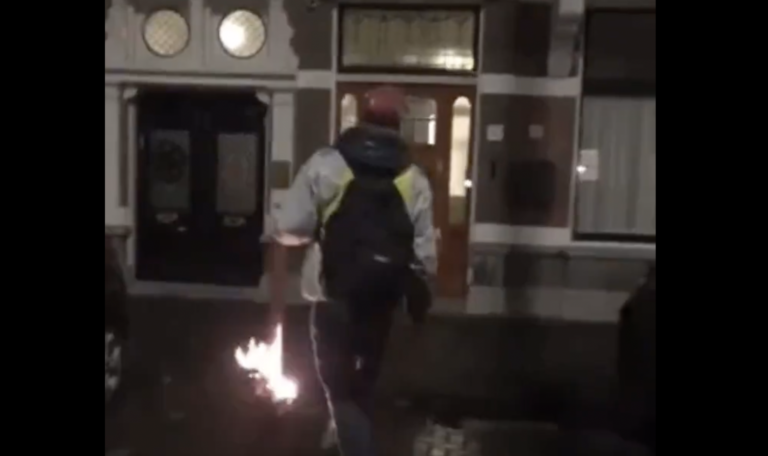
On Sunday, police officers were spotted in the Transvaal district of Den Haag violently assaulting a protestor. The Public Prosecution Services and police in Den Haag are currently investigating the actions.

According to Omroep West, several videos were taken of the act of police brutality and shared across social media. The protestor was part of a protest against coronavirus measures.

The already-restrained person can be seen lying down on the ground as police officers shouted at him and beat him with a baton. A video also showed that an officer kicked the protestor in the head, swearing and yelling, “Cancer here, leave the city alone!” 😔

Public Prosecution Service and police to look into the issue

The Public Prosecution Service has tweeted that they will be investigating the actions of the officers in the video.

Further, Hart voor Den Haag, the largest city council party in The Hague, is also questioning the police over their actions.

“You can see officers using an excessive amount of force here. I want to know when these images were taken, where they were recorded and what the circumstances are for this explosive act,” says council member Arjen Dubbelaar.

The police respond

The police have said that officers were attacked by more than 50 protestors during the protest. They claim illegal fireworks were used against the police and that some of the protestors carried bats. 😱

Nine people were arrested as a result.

Den Haag police chief Paul van Musscher says, “This is not how we want to be as police.”

What do you think about the actions of the police? Tell us your thoughts in the comments!

Feature Image: Screenshot/SimoneSays123

Leaked measures: masks and working from home expected again

As of Friday, the Dutch government will be bringing back mandatory face masks to several activities, along with an expected expansion of the use of the corona pass checks and the return of working from home.

In anticipation of tomorrow’s coronavirus press conference by the Dutch outgoing Prime Minister Mark Rutte, NOS reported some key points to be announced.

Due to the sharp rise in infections in the Netherlands for the past weeks, face masks are making a comeback in public indoor spaces. Shops with contact professions such as hairdressers and spas may also require a similar mandate. Time to bring out those spare masks. 😷

In addition to face coverings, the outgoing cabinet is aiming for a stricter working from home policy to combat the coronavirus spread in workplaces. The anticipated measures are headed towards having people work from home half of the time. All in for that one! 🛋️

Corona pass expansion

While the corona pass is currently mandatory for a lot of indoor venues throughout the Netherlands such as restaurants, bars, and clubs — the Dutch House of Representatives is reported to expand on those existing regulations tomorrow evening.

If you’re not vaccinated, you might want to reconsider some planned trips and activities as the corona admission ticket will be required for entry to gyms, swimming pools, and high-transfer locations like amusement parks, museums, and zoos.

Further expansions are expected in the future once legislation action is taken to include the corona pass check process in higher education and middle-level applied education. 🏫 

Follow DutchReview on Facebook and Instagram for the latest on Dutch coronavirus measures

Feature Image: Anna Shvets/Pexels

Where to find a job in the Netherlands: 9 places to start the hunt

Starting your career in the Netherlands is all about finding the right job — but how do you know where to look?

Whether you’re considering making the move to the country or have already made it your home, you likely know one thing: it’s an expensive place. 

That means you’ll certainly need a job — and preferably one with great pay, top benefits, and that will set you on an excellent career path. Here’s where to start your hunt!

1. Check out online job boards (here are the best)

It’s not surprising that the most popular job boards in the Netherlands could also be the same as the ones you use in your home country. Indeed.nl and LinkedIn are kings of the castle (or koningen van het kasteel in Dutch 😉).

Indeed.nl has the lion’s share of job postings, with 54% of job-hunters using the platform. It has a good mix of blue-collar and white-collar postings, but — even handier — you can filter out results from languages you don’t speak, so if your Dutch isn’t yet up to scratch, you can easily skip all those listings.

READ MORE | Do I need to speak Dutch to work in the Netherlands?

Check out these job boards, which have the most jobs for internationals in the Netherlands — who knows; you might find your droombaan (dream job)!

2. Sign up with a recruitment agency

The hardest thing about a job board is that it’s you and your resume against the world — or in this case, a competitive job agency. That’s where a recruiter can really shine. A recruitment company is tasked with finding great candidates (like you!) for companies. 

If you sign up with a recruitment agency, they can do the hard work of finding a fantastic job vacancy that suits you — then help you put your best foot forward to sign on the dotted line. The Dutch job market is competitive, so having someone in your corner can be a huge help!

You can try:

3. Go direct to companies that already hire internationals

Did you know the Netherlands is a hub for international company headquarters? It’s one of the drawcards of moving to the lowlands (along with that amazing work-life balance). That means that sometimes to find an English-speaking job in the Netherlands, you’re best off going straight to the source!

Look for companies that hire internationals in the Netherlands and go direct to their job boards. It’s not the Dutch directness we all know and love — but it could get you earning some serious moolah to spend on all that cheese you’ll be eating. 🧀

4. Find employers to target via the Dutch Immigration Department

Now it’s time to pull out the magnifying glass and fake moustache — get snooping, detective! Impress your future employer with your research skills by taking the previous tip a step further and combing through the IND Recognised Sponsor list

The list is full of employers the IND has approved to sponsor internationals for residence permits — a.k.a, a list full of companies that have hired internationals and may still do. 

And, you know, if they feel like sponsoring your resident permit (or even helping you qualify for the 30% ruling), that’s just a bonus!

high-angle-view-of-people-working-in-dutch-office
The Netherlands speaks some of the best non-native English in the world, making it a popular country for international job hunters. Image: AllaSerebrina/Depositphotos

5. See what’s on offer at EURES

If you feel like you’ve turned over all the stones in the Netherlands, it could be worth broadening your job search to the entire European Union. EURES is the European Job Mobility Portal and has thousands of jobs all over the EU. 

You can try searching for jobs in the Netherlands whilst here or from other countries in the EU. You never know which company might be open to a bit of working from home or occasional travel!

6. View the Dutch government’s job board, Werk.nl

If the above options haven’t fulfilled your career aspirations yet, it might be time to turn to the government. The Dutch government hosts their own job board, Werk.nl. It doesn’t have the same breadth as some other options, but you may just strike gold!

A quick search from us showed some handy jobs there, including some government jobs that hadn’t popped up elsewhere, so it could be worth a look. 👍

7. Attend a job fair

Prefer a ‘boots-on-the-ground approach’? It’s time to suit up, put your confident face on, and show up at a job fair. A job fair is full of recruiters and human resources personnel who are all looking for the next great talent — hey, that’s you! 💁‍♀️

You also don’t need to go to a mega job fair — sometimes events tailored to your industry or even a single company can be more fruitful. Naturally, the downside of this option is you need to wait around for a job fair to be held before you can get to work. 

Tip: Search for upcoming job fairs on websites like Eventbrite, Facebook Events, or with a quick Google search of “Job fair [city]”. 

8. Ask around your network

You’ve had the benefits of networking rammed down your throat since you were old enough to have a job, and while it can seem intimidating, here’s the tea: networking works. 

In fact, research shows a whopping 85% of jobs are filled by networking — and most of them are never even advertised!

That means finding a job in the Netherlands could be as simple as asking your network. Jump onto LinkedIn and show people you are #OpenToWork or start connecting with people in your industry. Ask, and ye shall receive, right? 

9. Consider becoming self-employed instead

Not having any luck finding a job in the Netherlands? Perhaps it’s time to consider becoming self-employed — hear us out. Over 12% of the Dutch labour force is self-employed, the sixth-highest amount in the EU

If you feel skilled in your career, perhaps it’s time to consider reaping the profits — now, all you need to do is find some clients. 😉


Now that you’re armed with all of the places you can find your brand new Dutch job, what the hell are you still reading for? Get out there and start your hunt — we believe in you! 🏆

Feature Image: HayDmitriy/Depositphotos