Home Blog Page 106

This Dutch bank lets you open a bank account without a BSN (and you can use it immediately!)

Moving to the Netherlands, as exciting as it is, comes with many unexpected hurdles. One of them is opening a bank account before you have a BSN.

Your BSN (Burgerservicenummer) is your Dutch social security number, used for various administrative and governmental purposes. 

You receive this crucial nine-digit number when you register at your local municipality, but there’s a catch. During busy times, like when many international students arrive in the Netherlands, getting an appointment for that BSN can take weeks. 

This inevitably slows down tasks like opening a bank account, which delays finding a job, securing an apartment, or simply starting your new life.

Why does it matter?

In the Netherlands, having a Dutch bank account is crucial for many everyday tasks. Whether you’re signing up for a gym membership, shopping at your local supermarket, or getting a Dutch SIM card, a local bank account makes life much easier.

On top of that, companies or housing corporations may require you to have a Dutch bank account to receive your salary or pay your rent.

young-woman-with-yellow-raincoat-biking-in-amsterdam-netherlands-cycling-culture
Once you get a local bank account, your new Dutch life can truly start. Image: Freepik

There’s just one small issue: To get a bank account with most traditional banks, you’ll have to provide your BSN (AKA, a little number that can sometimes take weeks to get). 

READ MORE | Can I open a Dutch bank account before I move to the Netherlands?

To make things even more frustrating, international cards sometimes don’t work in the Netherlands, and when they do, you might face unfavourable conversion rates, high FX fees, and charges for withdrawing cash.

That’s where ING comes in.

How to open an ING account without a BSN

So, how do you go about opening your ING account before you have a BSN? It’s simple!

You can open an ING bank account without a BSN, the same way as if you had a BSN. The only difference is that you provide your BSN number within 90 days of opening the account. 

Online

Do you like to do things from the comfort of your couch? Open your brand-new Dutch bank account with just a few taps on your phone! Here’s how:

  1. Download the ING app for Android or iOS.
  2. Choose your preferred type of account.
  3. Provide a valid form of identification, i.e. a European ID card, a resident permit, or a passport, and supply some basic personal details.

    Note: If you are onboarding with your international passport from a non-EEA country, you may have to upload your MVV document.
  4. Choose your payment package, either the normal Orange Package or the Orange Package with a discount. 
  5. Get banking! You can start using your account right away, and you’ll have your debit card sent to your home within five business days.
photo-of-expat-woman-relaxing-sofa-using-cell-phone-to-open-ing-bank-account-without-bsn
Opening a bank account has never been easier! Image: Freepik

In person

If you prefer to handle your finances in person or can’t be helped from a distance, going to an ING branch is your best bet. Here’s how:

  1. Find an ING branch in your area using ING’s branch locator tool, if you haven’t already come across one while exploring your new home. Simply type in your postcode, and you’re good to go.

    💡 Tip: Make sure you’re looking for an “ING kantoor” (office), not a service desk!
  2. Make an appointment with ING using the online chat function or by contacting customer support by phone. You can call ING at 020 22 888 88 (on weekdays between 8.30 AM and 5 PM).
  3. Prepare the necessary documents to take to the branch with you. You’ll need valid proof of identity, proof that you live, work, or study in the Netherlands, and (if applicable) an MVV document.
  4. Head to your appointment and let ING’s experts help you set up your account.

When (and how) do you need to submit my BSN?

Although you can open an ING account before you get your BSN, you will eventually have to submit it to them. 

This is necessary because your BSN needs to be linked to your bank account since you will be paying Dutch tax.

READ MORE | Do I need a Dutch bank account to work in the Netherlands?

You can inform ING of your BSN as soon as you receive it, but you’ll have a generous 90-day window to do so. 

If you fail to provide your BSN in the given timeframe, your account will, unfortunately, have to be blocked. But don’t worry, 90 days should be able time to get your municipality appointment sorted and receive that shiny new BSN. 

Once you have those nine digits in hand, you can provide them to ING by simply heading to the personal information tab in your ING app.


Thanks to ING’s new feature, there’s no more waiting for bureaucracy to drag on and on. Instead, you can get a head start on your Dutch finances — and your new life in the Netherlands. ✨

Do you already have your BSN in the Netherlands? How long did you wait for it? Share your experience in the comments.

Hiking around the Zaanstreek: 9 perfect walks in the ultimate Dutch region

Sure, the classics like Amsterdam, The Hague and Utrecht are nice (and well worth a visit!), but why not go beyond tourist attractions and check out the Zaan region?

The Zaanstreek, just north of Amsterdam, is made up of Zaandam and its surrounding villages — each with its own distinct character and charm.

This place is about as Dutch as it gets, with its industrial and cultural history still echoing through its streets today.

Easily connected by train stations, the Zaan region is a breeze to explore. Whether you prefer hopping on a bike, taking a scenic drive, or strolling along on your feet, this picturesque area offers a perfect mix of nature, history, and modern convenience.

Let’s check out nine glorious walks around the Zaan region. 👣

For the best insider tips on what to do, see, or eat, you can check out Zaans.nl. Their website has the best information on how to get a taste of the Zaan region — all in English. ☀️ 

1. Feel the city vibes (and do some shopping) in Zaandam Centre

unique-architecture-while-on-a-walk-through-zaandam-city-centre
These colours will instantly put you in a good mood — even on a gloomy day! Image: DutchReview

Want some action? Then why not walk through the centre of Zaandam? This area used to be bustling with lumber mills and shipyards along the Zaan River. Later on, it became famous for its food industry, especially Verkade’s cacao and chocolate. 🍫

In the past decade, Zaandam’s centre has undergone quite a makeover. The buildings have a playful modern twist but still echo the traditional style of the area. You’ll still find some iconic green wooden houses among the new shops.

The centre is a fun mix of old and new, with cosy cafes and cute shops selling Zaan-themed goodies everywhere you look. This blend of history and modern vibes makes a walk through Zaandam’s centre a fun experience for the whole family.

📍 Starting point: Zaandam Centraal Station 
🗺️ No specific route, just explore!

2. Walk in the footsteps of Monet and Tsar Peter the Great 

Tsar-Peter-house-from-outside-in-zaandam
Pssttt… there’s a whole house INSIDE this building! Image: DutchReview

In the city centre and fancy a walk through history? This is your best bet. Russian Tsar Peter the Great and French painter Claude Monet both spent significant time in Zaandam, the main city of the Zaan region — and their legacy lives on to this day. 

On this walk, you’ll stroll alongside centuries-old homes and alleys, seeing the inspiration behind Monet’s 25 famous Zaan paintings. If you want to learn more about the art he produced in the area, I highly recommend you check out the Monet Atelier. 🎨 

Want to travel even further back in time? You can walk in Tsar Peter the Great’s footsteps (literally!) by entering the small wooden house he used to lodge in in 1697. It’s a true sight to behold!

🚶‍♀️‍➡️ Distance: 5 kilometres
📍 Starting point: Zaandam Centraal Station 
🗺️ Get the route here.

3. Dive into culture at the HEMbrug terrain

woman-on-walk-near-zaans-port-at-hembrug-site-walking-to-cafe
We recommend Café BIND for your mid-day pick-me-up! Image: DutchReview

The Hembrug terrain is a unique cultural hotspot that combines history, creativity, and nature. It was home to the Dutch ammunition and weapons factory for over a hundred years, where weapons and ammunition were secretly produced, tested, and stored.

Today, you can explore its industrial heritage through restored buildings and learn about the roles each played during its time as a weapons factory. QR codes on various buildings allow visitors to scan and discover more about the terrain’s history.

With art studios, galleries, and local food spots, Hembrugterrein offers a vibrant experience, blending the old and new for anyone interested in history, culture, or a relaxing day out.

📍 Starting point: Hembrug Museum
🗺️ No specific route, just explore!

4. Spot some wildlife in Het Twiske

sunrise-over-bridge-and-water-on-hike-through-zaanstreek-in-twiske-nature-reserve
Just wow! Image: Dreamstime

Het Twiske is a huge recreational area covering roughly 650 hectares of land and water. The best part about this walk is the wildlife — so we recommended you bring along some binoculars on your trek! 

You may spot typical woodland birds such as jays, sparrowhawks, spotted woodpeckers, and even some Scottish Highland cows. 🐮 

A walk through Het Twiske is the ideal way to reconnect with nature. Strolling through woods and waterfront fields is guaranteed to leave you feeling recharged and refreshed, surrounded by the tranquillity and beauty of the natural surroundings.

🚶‍♀️‍➡️ Distance: 3.5 kilometres
📍 Starting point: Recreatieschap Twiske-Waterland 
🗺️ Get the route here.

5. Explore the quaint neighbourhoods of Gortershoek and Domineestuin

Zaans-bakery-in-the-zaan-region-in-quiant-neighbourhoods-of-Gortershoek-and-domnineestuin
Sweet treat, anyone? Image: Zaans.nl/Supplied

Not that interested in Zaandam’s shipbuilding history? A neighbourhood walk it is. And these aren’t just any ol’ neighbourhoods; they’re referred to as the “pearl of the Zaan region”. 

Gortershoek and Demoineestuin are two old, picturesque neighbourhoods boasting beautiful traditional Dutch homes, lush parks and oozing with history. It’s a great spot to stroll around, grab a drink and take the odd photo for the ‘gram.

Curious to learn more? The local Het Honig Breethuis museum lets you step into the gorgeous estate of a prosperous paper manufacturer’s family and imagine what their life used to be like in 1830.

🚶‍♀️‍➡️ Distance: 3.5 kilometres
📍 Starting point: Zaansche Schans car park 
🗺️ Get the route here.

Need help finding your way around? Want a souvenir? Or chat with a friendly local? We recommend heading to the Zaanstore. Located in the city centre, the store sells the cutest Zaan-themed items, while also being a tourist information centre

6. Get quintessential Dutch windmill views at the Zaanse Schans

Image-of-historic-windmills-in-zaanse-schans
Peak Dutchness. Image: Depositphotos

If you’ve ever seen a photo of traditional Dutch windmills, chances are high that it was taken at the Zaanse Schans. As one of the Netherlands’ most popular tourist attractions, this place perfectly encapsulates everything Dutch.

It was originally opened in 1972 to preserve the green wooden buildings. Today, it’s home to 13 stunning green windmills — half of which are still fully operable and function as museums for tourists.

READ MORE | The ultimate guide to Zaanse Schans: visiting the windmills of Holland

This area has likely been inhabited since the 13th century, so on this walk, you’ll not only come across these famous mills but also stroll along historic houses, quaint streets, and lush fields. 

📍 Starting point: Zaansche Schans car park 
🗺️ No specific route, just explore!

7. Follow the Zaan banks to understand the city’s industrial heritage

Lassie-factory-in-the-zaan-region-reflecting-the-areas-industrial-heritage-and-history
This is where our rice comes from! Image: Zaans.nl/Supplied

Yes, the Zaan region was essential for the Dutch shipbuilding industry. But there’s a lot more to its industrial history — and this walk lets you explore it all.

As you follow the banks of Zaandam, you will come across old factories, the villas of manufacturers, and worker’s houses. You can easily imagine what life used to be like here, especially because some of the factories have been redeveloped and continue to produce goods today.

Of course, this walk also features many stunning waterside views along the Zaan, so get your cameras ready. 📸

🚶‍♀️‍➡️ Distance: 5 kilometres
📍 Starting point: Beatrix Bridge Zaandam
🗺️ Get the route here.

8. Stroll the 750-year-old town of Krommenie

photo-of-an-old-wooden-house-on-walk-through-old-zaans-town-of-krommenie
This place has plenty of traditional Dutch homes. Image: Zaans.nl/Supplied

Krommenie is an old town in the Zaanstreek that used to be known for its sailcloth industry, and today, is a great place to walk in the Zaan region.

Many of the village’s old homes have stood the test of time and are now national heritage sites, sporting the gorgeous and quintessentially Dutch wooden facades.

Fancy a quick break on your walk? Head to the Agathepark! Not only does it offer lush greenery but also free-roaming chickens. 🐓

🚶‍♀️‍➡️ Distance: 5 kilometres
📍 Starting point: Krommenie-Assendelft train station
🗺️ Get the route here.

9. See it all in and around Wormer’s meadow area

peaceful-meadow-area-near-the-town-of-Wormer-in-the-zaan-region
The perfect place for some deep breaths. Image: Dreamstime

If you’re unsure what type of walk you’re after (or you’re just in the mood for some variety), a walk around Wormer is just right for you. 

This walk will take you past panoramic views and heritage sites until you finally arrive at the glorious Zaan River.

You’ll start in the Wormer and Jisperveld, consisting of hundreds of narrow islands surrounded by ditches and canals. As you make your way through the town, you’ll pass through typical Dutch residential neighbourhoods until finally, you reach the river.

This area is a perfect mix of nature, historic sites, and modern architecture — ideal for anyone who’s craving some variety.

🚶‍♀️‍➡️ Distance: 7.5 kilometres
📍 Starting point: Visitor centre De Poelboederij 
🗺️ Get the route here.


Ready to get your walking boots on? Whatever hike you may choose to go on, I can guarantee that the Zaan region has something for everyone.

So, take your time, stroll along, check out the local cafés and, most importantly, enjoy! We’ll see you there. 😉

Have you ever been to the Zaanstreek? Share your tips in the comments!

Dutch Quirk #59: Wear way less make-up than people in other countries

Dutchies are direct people — no need to beat around the bush here — but could it be that their no-bullshit attitude extends to choices about personal appearance too?

Certainly, one thing you’ll notice after spending some time in the Netherlands is that people (well, Dutch women mostly) wear way less makeup than what you’re used to.

That doesn’t mean they don’t take care of themselves — simply that there isn’t the same culture surrounding makeup as in many other countries. 💁‍♀️

So, getting dolled up for a night out? Or frantically putting on mascara on your way to work? You do you! But don’t feel like you have to wear it — others likely won’t.

What is it?

Well, it’s a choice, really. 👏

However, for internationals who might come from cultures where most women wear makeup every day, it can be a bit of a shock to see Dutchies rock up to the club without the faintest glimmer of a highlighter.

So, instead of spending money on makeup, Dutchies spend it on skincare. ✨

Why do they do it?

One answer is directness — after all, what’s more upfront than a person’s bare skin?

Another hypothesis is the Dutch weather.

READ MORE | The Dutch beauty standard is just… different: Here’s why

Imagine putting on a full face of makeup just to venture out on your bike and have it all washed off by the rainno thanks!

In all honesty, though, no one knows precisely why except for the person who chooses whether to wear it or not.

Why is it quirky? 

Many of us are simply used to at least covering the dark circles from the night before prior to showing up to work.

@nikkietutorials where my Dutchies at? #foryou #fyp #transformation @molchanovamua ♬ original sound – nikkietutorials

However, in the Netherlands, you can be staring into your female boss’s makeup-free face during the morning meeting — and no one bats an eyelash.

Should you join in? 

If you want to!

Whether you wear makeup daily, occasionally, or never, it’s a personal choice. The great thing about living in the Netherlands is that people likely won’t comment and just respect your decision!

What do you think of this Dutch quirk? Have you experienced it? Tell us in the comments below!

It’s official: Dutch teens will likely need helmets on fatbikes and e-bikes from 2027

Zooming around on fatbikes and e-bikes has become a popular way for Dutch teens to get around, but those rides will soon come with a little extra gear.

From 2027, anyone under 18 will likely need to strap on a helmet when cruising electric wheels.

More safety, fewer hospital visits

The Dutch House of Representatives originally toyed with separate rules for fatbikes versus regular e-bikes and the imposition of a legal minimum age for riding a fatbike. However, both of those measures proved to be legal tangles that would take years to implement.

READ MORE | Move over, fatbikes: This Dutch city wants to be the first to ban these bulky e-bikes

@santanamath If you see a dutch kid with a fat bike? RUN AWAY! #livinginthenetherlands #nederland🇳🇱 #dutchculture ♬ original sound – orianevansygent

So, what’s the quickest and least legally complex solution? A helmet rule.

But helmets are just the tip of the iceberg, as the Dutch government also wants to promote safer riding habits, reports the NOS. Meanwhile, e-bike manufacturers are now preparing to introduce a quality mark.

Accidents are on the rise

A study by VeiligheidNL for the Dutch government found that between 2020 and 2024, ER visits for young e-bikers doubled. In the same period, brain injuries in 12- to 18-year-olds who ride e-bikes increased sixfold.

Fatbike accidents, once unheard of, shot up to over 300 cases since 2020. Research also shows e-bikers are twice as likely to end up seriously hurt compared to regular cyclists.

Hospitals have been ringing alarm bells for years, and this move is finally a solid step towards keeping young riders’ heads protected.

Are you a fatbike rider, or do you hate them like everyone else? Tell us in the comments below! 

Dutch university issues warning after student nearly abducted while cycling home

Don’t cycle home alone: Nijmegen’s Radboud University has just issued an official warning to all students, following a horrific encounter near Goffert Park.

According to VOX, Radboud University’s official magazine, the incident involved an incoming student from the Faculty of Arts.

While she was cycling home from one of Radboud’s orientation week activities, there was an attempt to force her into a car and carry her off. Thankfully, the victim was able to escape.

There’s safety in numbers, says orientation coordinators

“Our concerns are with the victim,” Radboud orientation coordinator Elke Moser Melis tells VOX. “She is also getting support in filing a report, and a confidential advisor has been called in.”

Fearing a repeat attempt by the same aspiring kidnapper(s), Melis and other members of the introduction team sent out a WhatsApp message to all the orientation committees:

“Unfortunately, yesterday we almost had a situation where one of our students was involuntarily taken in a car on the way back from an activity. I’m asking you to ensure that students don’t cycle home alone and to pay extra attention to ensuring everyone gets home safely.”

Radboud students want more practical measures

“Never cycling alone is difficult,” one student tells Omroep Gelderland. They point out that most students live in different locations, making it unfeasible to cycle together for the entirety of a journey.

One solution that students have landed on is the “toothbrush selfie”, which is a picture of yourself brushing your teeth, so that your friends know you’ve got home safely.

However, as highlighted by police chief Gert Veurink, this doesn’t solve the crux of the issue and puts the burden of safety solely on potential victims (typically women).

“I was raised with the idea: you don’t let girls cycle home alone. You make sure they get home safely,” Veurink says in an interview with Omroep Gelderland.

“Yet, the question increasingly being asked on social media is: isn’t that also a kind of victim-blaming? Why shouldn’t women be allowed to cycle home alone? Those are conversations we need to have together.”

What solutions would you propose for incidents like this? Tell us your thoughts in the comments below!

Dutch Quirk #105: Always be on time for every meeting and appointment

Did you know that the Dutchies are ALWAYS on time? No? Well, get used to it. 

Without being overdramatic, let us give you a pro trip to survive life in the Netherlands: if you want to have an appointment, a job, or any human relationship with a Dutch person, you need to learn to be on time. 

What is it?

There is a concept behind everything in the Netherlands.

The Dutch infrastructure, architecture, and services are always well-planned and organised (and typically overly bureaucratic). 

So it probably won’t surprise you that the Dutchies themselves are no exception.

In fact, their calendar is almost as well planned as their train syst… life under the sea level. 

Why do they do it?

Well, why not? That’s also a valid question, right?

Being late to a personal meeting is simply disrespectful, and you can never give back the time for those waiting for you. 

READ MORE: The Dutch and time: how their language shows they are planning maniacs

While the Dutch probably won’t think bad things about you if it happens occasionally (or if you say that you got stuck waiting for an open bridge), it’s better to try not to be late.  

Why is it quirky? 

The unwritten rule of being 10 minutes late without any bad looks when you arrive is simply not a thing here (yes, we’re sorry, Southern Europeans).

If you’re five minutes late to a doctor’s appointment, there’s a good chance that they’ll just… cancel your appointment.

It’s a fact of life that in the Netherlands, you always need to be on time. The only legitimate excuse to be late is to have a flat tyre. 

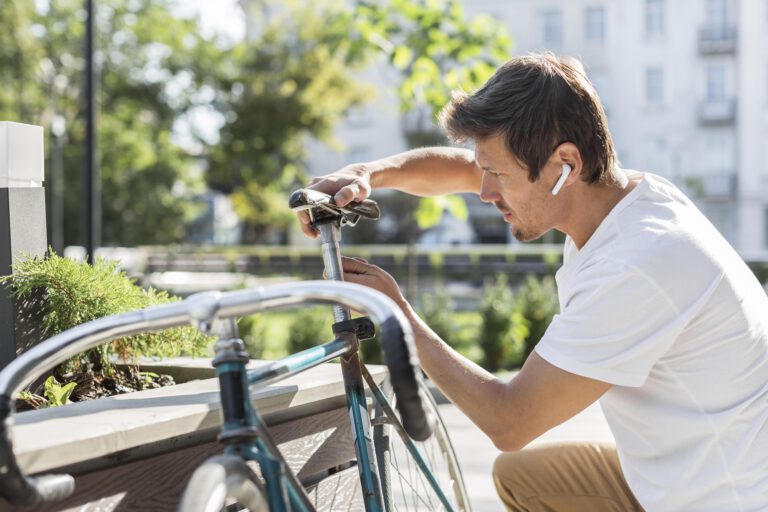
repairman fixing bike
If it’s about bikes, you can always find a helping hand. Image: Depositphotos

For some reason, having a non-functioning bike immediately makes it completely fine to be late from anywhere.

You can be late for your own funeral; the Dutchies will still give you their DIY tips on how to fix your fiets (bike) without any tools

But, credit where credit is due: the Dutch approach to timeliness has nothing on the Germans. 

Should you join in? 

Jaa! While at first, it might feel like overplanning your days can kill all the spontaneity, it won’t.

It can be quite relaxing to organise your schedule and simply be on time.

If you are one of those people (🙋🏻‍♂️) who can be late even if you have all the time in the world, then I suggest turning your clock a bit forward to make sure to have functioning human relationships while living in the Netherlands. 

What do you think of this Dutch quirk? Have you experienced it? Tell us in the comments below!

Is this the end of Dutch summer? Rain and low temperatures are on the way

Brace yourselves for typical Dutch weather, with lower temperatures, rain, and some moderate wind.

If you’ve had enough of sweating all the way through summer, RTL Nieuws has a very welcome update for you: from today (August 28) onwards, we’ll be saying doei to 25+ degree Celsius weather.

And hello to rain showers.

A healthy mix of rain and shine

While the day might kick things off with a few morning showers, skies are expected to clear up by mid-morning.

Reflecting this burst of sunshine, regions to the west and east of the Netherlands will get lightly toasted under temperatures of 21 to 24 degrees Celsius. The southwest is forecast to remain more moderate, with temperatures of 17 to 18 degrees.

Meanwhile, lucky ducks along the eastern border will cling to some traces of summer weather, with temperatures of up to 25 degrees Celsius.

By afternoon, typical Dutch wind and rain will pick up again, with strong gusts expected along the coast and a chance of thunderstorms in the southwest.

Come nighttime, skies will clear once again, and temperatures will drop to around 12 to 17 degrees.

Tomorrow is expected to be much of the same, with slightly more cloud cover.

So, is Dutch summer really over?

With Buienradar reporting temperatures as low 0 degrees at night over the past week, it certainly seems as though our summer fun may have reached its end.

However, given that the main culprit behind our spell of changeable weather is the now-dissipated Hurricane Erin, we could always be in for a surprise.

Dig what you’re reading? Get more of it! Join our WhatsApp channel or Instagram broadcast to get the latest news straight to your pocket.

How Amsterdam became a bicycle paradise (videos inside!)

0

The Dutch capital is one wheel-whizzing, bell-dinging whirlwind of bicycles. But did you know you are around 20 times more likely to get injured while cycling in the US than in Holland?

That’s because it’s truly built for bikes here—almost a quarter of the population cycles every day, most residents own a bike, and kids are practically born pedalling.

READ MORE | 17 reasons why biking is king in the Netherlands

It’s great that cycling, a fun, healthy and cheap activity, holds mighty high significance in this country. But how exactly did Amsterdam become THE bicycle paradise?

To bike or not to bike (it’s not even a question)

If you recently moved to the Netherlands, you might be considering buying a bike. And don’t hesitate! Riding a bike is good for your body AND the environment. But also, you don’t exactly have much choice.

It’s just the way the Dutch do things: pedal power is ALWAYS preferred.

READ MORE: Do’s and don’ts of riding a bicycle in the Netherlands

As someone who came here from England, I can certainly say that I have never felt safer on a bike. We often joke about cyclists having the highest status on the roads here, but it’s true.

Was it always this way?

Not at all. After WWII, cars were all the rage. The Dutchies (like many others) were scrambling to get their paws on shiny modern motors that they could brag about to their neighbours.

READ MORE | 7 types of cyclists found when biking in the Netherlands

It is sad now to think how many bikes were left to rust away in garden sheds just so traffic could jam up the city’s lovely narrow lanes. They even proposed filling in the canals with concrete!?

I can hardly imagine it these days, Amsterdam without bikes is like, well, Amsterdam without rain. Check out the origins of this wonderfully whizzy bike city. 👇

The concept of ‘Living Streets’ (or Woonerf), was realised in the Netherlands to restrict traffic casualties, and the video makes a good point; it’s not just safety in numbers, it’s power!

Bikes n’ beyond

If you also love how accommodating the Netherlands is for bikes — especially expats like me, who know it’s miles better than cycling in our home country — then you’ll be pleased to know it’s not going anywhere anytime soon.

READ MORE | 24 TikToks explaining why Dutch biking culture is wheely ahead of its time

The Netherlands knows that cycling is special, it’s sacred and it’s here to STAY. 👇

Do you enjoy the biking paradise this country has managed to create? Let us know in the comments!

These Dutch train routes will be jam-packed this September, but here’s how to snag a seat

With Dutch rail chaos looming on the horizon, you’ll want to stock up on all the tips and tricks to avoid being crammed like sweaty sardines in a can.

Thankfully, the NS has just revealed some clever ways to make your commute less of a squeeze. Let’s dive in!

Opt for these alternative routes

NS points out various alternative routes that passengers can take to avoid heavy crowds on routes that are predicted to be the busiest.

  • Instead of the 8:23 AM Intercity from Breda to Rotterdam, take the 8:26 AM Eurocity to Rotterdam
  • Instead of the 08:08 or 08:38 AM Sprinters from Driebergen-Zeist to Utrecht Centraal, take the Sprinter 15 minutes earlier or 20 minutes later
  • Instead of the 07:39 AM Intercity from ‘s-Hertogenbosch to Utrecht Centraal, take the train 10 minutes earlier or later
  • Instead of the 08:41 AM Intercity from Rotterdam to Schiphol (via HSL), take the train 10 minutes later
  • Instead of the 08:18 AM Sprinter from Meppel to Zwolle, take the 08:22 AM Sprinter

Check how crowded your commute will be

If you’ve noticed those little druktepoppetjes or crowd indicators in your NS app, they’re not just cute, they’re your secret weapon.

These tiny icons show how crowded each train is, helping you dodge the sardine-can experience.

  • 1 green doll: quiet, plenty of seats available
  • 2 orange dolls: moderately crowded, some seats still free
  • 3 red dolls: busy, there may not be seats

READ MORE | Checking in with a digital card? Sorry, the NS may have blocked it

And if you need an extra nudge, NS will even send you push notifications pointing you toward quieter trains (which also have a discount 👀).

Travel smart this autumn

The best tip? Just avoid rush hour altogether. The NS advises that if your working schedule is flexible, avoid taking the train on Tuesdays and Thursdays altogether.

However, autumn train chaos is about to get even more chaotic, as ProRail (the Dutch national railway network) has a full schedule of renovation planned for The Hague in September, Vught in October, and Schiphol in November.

Does your regular commute run through any of these locations? While the NS will provide replacement transport, their buses have limited capacity, so arranging an alternative route or a different mode of transport beforehand is a great idea.

Will you switch to a quieter train or brave the rush-hour crush? Share your choice in the comments below!

Dutch VVD party plummets to just 15 seats in polls as Bontenbal’s CDA surges

If you’ve been following Dutch politics lately, you’ll know that political stability isn’t exactly the Netherlands’ strongest suit right now.

According to the latest EenVandaag poll, the VVD has plummeted to just 15 seats, a dramatic eight-seat drop from their previous 23… and their worst performance in decades.

What’s happening to the VVD?

The liberal party that once dominated Dutch politics under Mark Rutte is experiencing a spectacular collapse.

Party leader Dilan Yeşilgöz is facing mounting criticism, with only 31% of former VVD voters expressing confidence in her leadership, down from 77% just two months ago.

Adding insult to injury, over half of past VVD voters (56%) now think Yeşilgöz should step down. Her current supporters are a little more forgiving, with 64% backing her to stay, but they’re advising her to be “less populist” and focus more on traditional VVD policies.

The bigger political picture

Meanwhile, the PVV has regained its position as the largest party with 33 seats, followed by GroenLinks-PvdA at 26 seats. The CDA continues its steady rise to 22 seats, making it the third-largest party and potentially crucial for any future Dutch coalition.

The political trend is clear: the CDA is rising while the VVD is falling.

But why is the CDA so popular? Well, the party’s popularity can largely be attributed to its leader, Henri Bontenbal, who has emerged as the preferred choice for prime minister with 44% support according to an RTL Nieuws poll.

Bontenbal significantly outpaces his rivals and is seen as someone who “chooses his words carefully” and comes across as “sympathetic” to voters.

What this means for coalition building in the Netherlands

With these numbers, forming a stable government after the upcoming October 29 elections becomes increasingly challenging.

A centrist coalition would require all five major parties (GroenLinks-PvdA, CDA, VVD, D66, and ChristenUnie) to reach the 76-seat majority needed to govern, a complicated arrangement that could lead to months of negotiations.

The Dutch coalition system means that even significant polling shifts don’t guarantee quick political solutions, as we’ve seen with the lengthy cabinet formation processes in recent years.

A government in chaos

The political landscape has become even more fragmented after the NSC left the cabinet last week following disagreements over the Netherlands’ response to the Gaza conflict.

This departure came just months after the PVV pulled out in June over asylum policy disputes, leaving Prime Minister Dick Schoof’s government with only two parties (VVD and BBB) holding just 32 of the 150 parliamentary seats.

Currently, the VVD and BBB are figuring out how to continue governing with something that resembles a cabinet.

Can you vote in the upcoming elections? Let us know in the comments!