There are so many food traditions when celebrating a child’s birth. Some countries have rice pudding or cake, but the Dutch have a special way of doing things! And by special, I mean pink and blue sprinkles.
The Dutch have pretty weird ways to celebrate birthdays. When a baby is born, they eat sprinkles on a rusk, a type of dry biscuit.
Then, the kid has to live with the traditional Dutch circle of death on their birthday for the rest of their life. 🧑🏻🍼
What is it?
These sprinkles (or muisjes) are typically served on rusk biscuits with a spread of butter or margarine between them. Lekker toch?
Muisjes (literally meaning little mice) are little pieces of candied anise seeds, and they get their name from their round and slightly pointed shape.
Muisjes existed for about a century before they infiltrated every Dutch baby’s party.
They only became popular after 1938, when the future Queen Beatrix was born.
The company that makes these sprinkles, De Ruijter, created an orange version (the national colour of the Netherlands) of the muisjes in honour of her birth.
Why is it quirky?
Let’s be real. Have you really ever seen anyone other than the Dutch celebrate their kid’s birth with some sprinkles?
In other cultures, people tend to celebrate in less colourful ways when their baby is born.
For example, in my home country of Lebanon, people eat Meghli, which is basically a brown rice pudding with anise, caraway, and cinnamon spices.
In the Netherlands, it’s customary for the family to see the baby at home while the parents serve the beschuiten met muisjes (rusks with sprinkles) to everyone.
Should you join in?
Absolutely, you should! That is, if you like sprinkles on rusk… and babies.
If your friend has just given birth, organised a celebration, and prepared some traditional snacks, then you might as well have a little piece of that dry biscuit sprinkle concoction!
What do you think of this Dutch quirk? Have you experienced it? Tell us in the comments below!
Everyone knows that the Netherlands is home to millions of bicycles. And with plenty of bikes, you’re also going to find a lot of parking spaces to put them in! 🚲
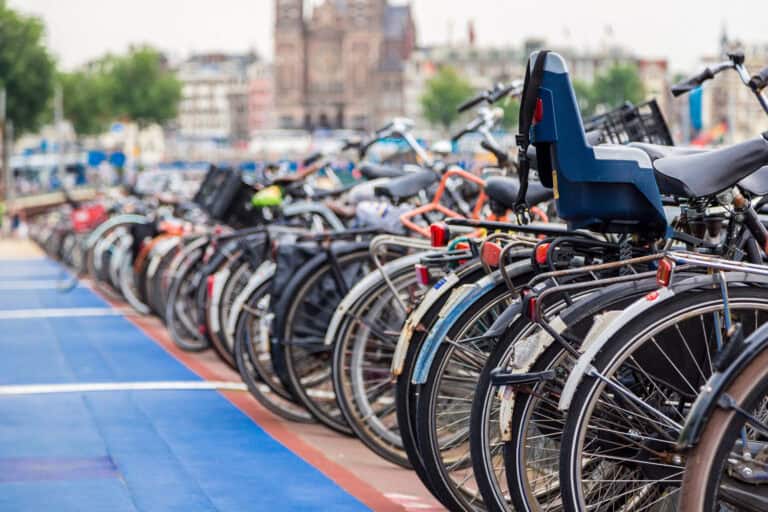
While there are bike racks on almost every street sidewalk in the Netherlands (and many sidewalks to be colonised), there are plenty of parking lots made specifically for your bicycle — potentially even under the ground you’re walking on. 😉
What is it?
Cycling is a very popular mode of transportation in the Netherlands, with hundreds of bike lanes spanning across the cities and countryside.
Many Dutch people use their two-wheel drives to get around regularly. But, of course, people have to eventually park their bikes somewhere when they reach those places — and ta-daa, bike parking lots were born!
Why do they do it?
Bike parking lots can be very beneficial for cyclists in the Netherlands. For one, it creates an efficient system where bikes can be stationed closely together.
The bike parking lots consist of both a bottom and a top bike rack, which helps reduce the amount of space needed.
Another great perk is that underground parking lots help reduce the chances of bikes being stolen because there are usually people working there to make sure all goes well.
Also, having bike parking lots helps clear a lot of space on pedestrian lanes and near houses in the city.
You’ll find many signs on city streets that say: “geen fietsen tegen het raam” (no bikes against the window). So, make sure to look out for those! ⚠️
Why is it quirky?
While other countries mostly have enormous car parking lots, the Dutch prioritise huge bike parking spaces.
This is because the Dutch have so many bikes! Without the necessary parking lots, the streets would be LITTERED with them.
Bike parking garage in Utrecht, Netherlands.
Largest covered bike parking in the world, room for 16,500 bikes and usually full. Finding your bike is easy, just scan the QR when you park and an app will guide you. First 24 hours are free, after that it’s very cheap. pic.twitter.com/Xg2eBvsJBk
— Graphite Czech 🇨🇿🇩🇪🇺🇸 (@CzechArtGirl) May 27, 2023
The biggest bike parking lot in the world is right here, in the city of Utrecht. It opened in Stationsplein in August 2019 and has more than 12,500 parking places. 🤯
Should you join in?
Of course! While you’ll find bikes scattered around the country, you actually can’t park your bike just anywhere in the Netherlands.
The 1994 Road Act says it’s legal to park your bike anywhere on public roads, but municipalities still have the power to restrict parking your bike in terms of how long or where you can park it.
So, let op! Bikes that are either left too long or parked outside of designated bike rack areas can be taken — and not by thieves!
If you ask us, it’s best to make use of the parking lots.
Have you ever parked your bicycle in a bike parking lot? What was your experience? Tell us in the comments below!
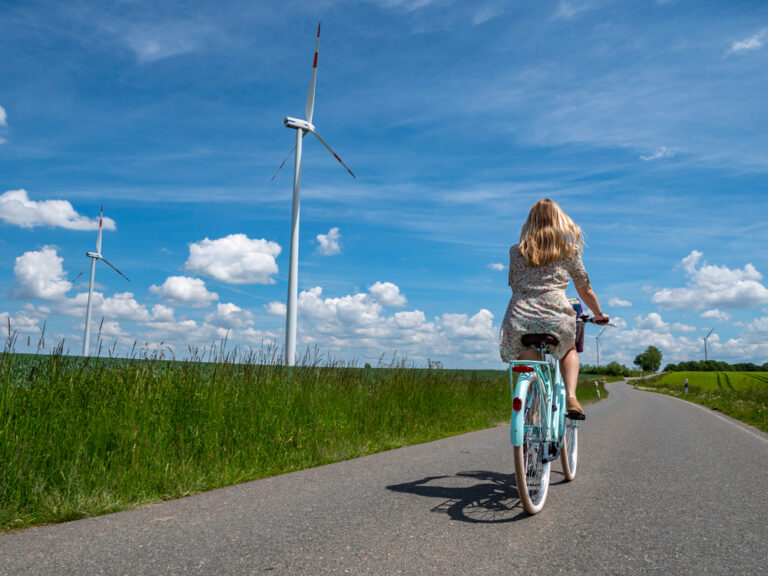
In 2024, the Netherlands hit a major milestone: for the first time ever, more than half of its electricity came from renewable sources.
And almost all of this green energy (45%) comes from sunshine and wind, reports the website Our World in Data.
This marks a major turnaround from 2018, when more than 80% of the Netherlands’ electricity still came from fossil fuels.
How did this happen?
Well, it didn’t come from a single brilliant government plan or a wave of climate protests. Instead, it came from something deeply Dutch: the concept of polderen. (AKA, the fine art of getting things done through cooperation, compromise, and a lot of meetings. 🤝)
In June 2019, the Dutch Climate Agreement (Klimaatakkoord) was presented to the government. Its goal? To reduce the Netherlands’ greenhouse gas emissions by 49% compared to 1990 levels.
Most electricity in the Netherlands now comes from renewables.
More than 100 organisations took part, including businesses, NGOs, industry leaders, and local governments. Together, they came up with over 600 specific agreements aimed at cutting emissions by 2030.
The bigger picture
This milestone shows that fast and meaningful energy transitions don’t always have to come from top-down government mandates.
When different groups come together, share responsibilities, and commit to a common goal, real change is possible.
Are you as excited about this milestone as we are? Let us know in the comments what you think the Netherlands could cut down on to become even more sustainable.
Several Dutch citizens were unknowingly targeted for murder through a dark web hitman site. In four cases, the killings were even paid for.
The data comes from a hacked source, which RTL Nieuws has shared with the police’s National Investigation and Interventions Unit.
Ordinary people on a kill list
Between 2016 and 2022, murder-for-hire requests were placed on everyday Dutch citizens.
These were people with steady jobs and families, and no ties to organised crime, yet they were targeted in disturbing detail. One client wrote: ”I want you to burn him alive and I want him to die.”
In total, seven contracts named Dutch victims, and in four of those, the clients paid between €1,000 and €10,000.
Dutch police are now investigating 14 separate plots. “We’ve already informed several victims, and we’re still investigating the perpetrators,” police spokesperson Thomas Aling tells RTL Nieuws.
Murder-for-hire site was a scam
The orders were placed on a dark website operating under names like Besa Mafia and Camorra Hitmen. It claimed to offer international contract killings for bitcoin, but it was all fake.
London hacker Chris Monteiro infiltrated the site in 2016 and later gave authorities data on hundreds of fake murder plots. He tells RTL Nieuws the scammers earned more than a million euros.
Although no murders were carried out, the orders remain criminal. “Issuing a murder order is a serious offence,” says Aling. Tracking bitcoin payments is complex, but investigations continue.
Some clients, unaware they’d been scammed, even demanded refunds when their targets weren’t harmed.
So far, just one Dutch client has been convicted. In 2021, Imran M. from The Hague received an eight-year prison sentence for twice trying to have his ex-wife killed.
He sent her photo, address, car details, and offered a bonus if the job was done quickly. His ex-wife and children were forced into hiding for six months.
“The psychological damage is still visible today,” she told the court. “I will never forget the tears of our children as they clung to my parents and sister, so afraid of what was to come.”
It’s a reminder that even fake murder plots can leave very real scars.
Letters and postcards now join tobacco, gasoline, and groceries on the growing list of things that are cheaper just across the Dutch border. 👀📨
According to RTL Nieuws, sending a basic letter or postcard to a Dutch address now costs six cents less in Germany than mailing from a PostNL office.
Better to post your card from across the border
A standard letter or postcard (under 20 grams) sent from Germany to the Netherlands costs €1.25, while the same letter posted within the Netherlands will cost you €1.31.
That six-cent difference might not seem huge for occasional letters, but if you’re regularly using postal services, it adds up.
And these price increases reflect a dramatic trend: Dutch stamp prices have skyrocketed from just 69 cents ten years ago to a whopping €1.31 today.
For those living in regions like Zeeland and Noord-Brabant, popping across the border for a shopping trip is just another addition to their money-saving arsenal.
Why are stamps getting so expensive?
Despite increasing stamp prices, PostNL continues to lose money on mail delivery. The company recently requested €30 million in government subsidies to cover their losses.
When the government refused, the company found itself in a challenging position, as they’re legally required to provide postal services throughout the Netherlands.
Have you discovered any other surprising cross-border savings? Share your money-saving tips in the comments below!
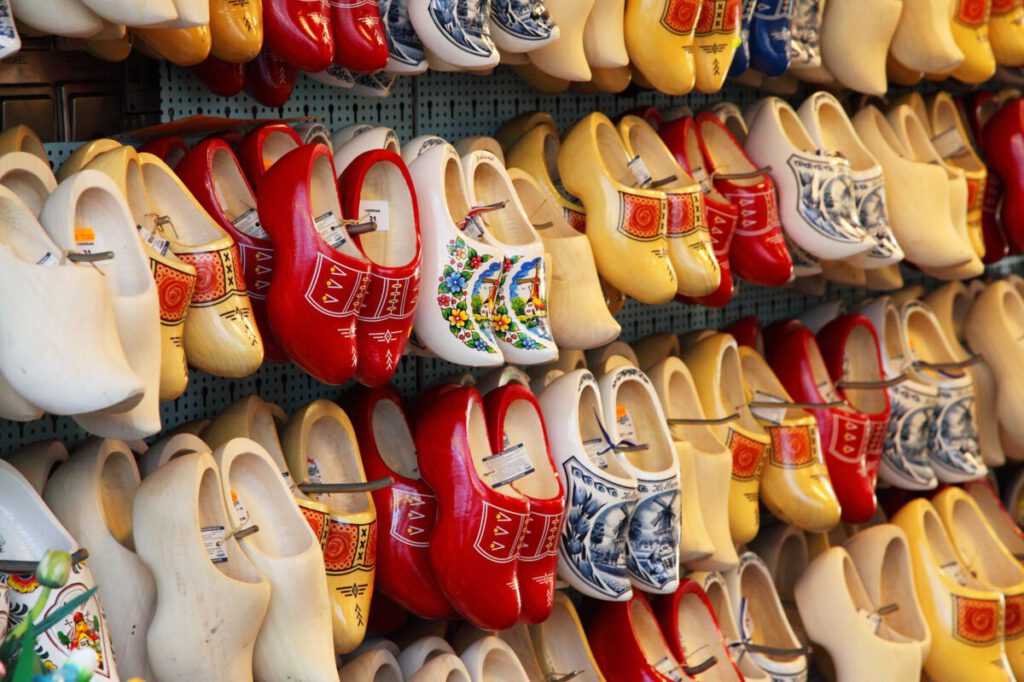
Visit any Dutch tourist shop and you’ll see this national symbol on keychains, magnets, clothes — you name it. So what’s the big deal with clogs?
Clogs, or wooden shoes, are known as klompen in Dutch, and have been used in the Netherlands since medieval times.
Various forms of clogs are used around the world, such as the “geta” in Japan and “albarcas” in Spain, but the pointed toe and hand-painted wooden shoes are recognised as typically Dutch clogs.
The shoe is deeply ingrained in Dutch culture and some people in rural areasstill wear them today!
The history of Dutch clogs
Clogs date back to the early 13th century in the Netherlands. They were designed to protect the feet of factory workers, artisans, farmers, fishermen, and other labourers — something you might also learn about in privéles nederlands (private Dutch class), where even everyday objects are tied to Dutch history and culture.
Clogs were not originally made entirely from wood but had only a wooden sole with leather strapped over the top. But these were not very protective and soon the entire shoe was carved out from willow or poplar.
Nails, hooks, and sharp objects cannot penetrate the wood and muddy fields are easier to navigate in clogs than in regular boots. The European Union has even declared it an official safety shoe — now that’s hardcore!
Different professions had slightly different shaped clogs.
Those who dug out peat on farms would have a larger, squarer nose on the clog to stop them from sinking into the mud.
Fishermen would have sharp, pointy clog-noses to help sort out fishing wires. Worker clogs, meanwhile, were plain and undecorated.
A clog proposal? How can she say no?! Image: DutchReview/Canva
But clogs weren’t only about hard work. Wooden shoes were also made for wearing around the house and the more lavishly decorated clogs were even worn to churches and weddings.
At one point, it was customary for men to propose to their fiancé with a pair of beautifully carved shoes!
Clogs today
If you imagine hoards of Dutch people click-clacking around in wooden shoes across the canals and cobbled streets of the Netherlands, I’m afraid I must burst your bubble.
The only clogs you’ll see in Dutch cities these days are brightly painted tourist shop editions, which locals would never buy.
But if you’re lucky, you may spot the endangered species that is the traditional Dutch farmer, wooden clogs included. Some Dutch people also still like to wear clogs when gardening.
Those who still wear these lumbering feet holders claim they’re warm in the winter and cool in the summer, making them the perfect year-round shoe.
The wood also easily absorbs sweat, allowing the foot to breathe. Perhaps they’re not as uncomfortable as they look?
How wooden shoes are made in the Netherlands
Traditionally, a hunk of wood was given the rough shape of a shoe with a special axe. The wood was dunked in water since wet wood doesn’t splinter so easily.
The clog maker would then take a sharp knife to refine the outside of the shoe before gutting a hollow shape on the inside.
Drying the carved shoes took about three weeks before the design was finally painted on.
These days, however, the process has been sped up with machines that carve out the perfect shoe shapes. Each clog maker has its own signature design.
But, sadly, there are now only approximately 10 official clog makers still operating in the Netherlands.
Traditional Dutch clog makers you can visit
Zaanse Schans is a popular tourist destination for traditional Dutch culture, including windmills, cheese, and of course — clogs!
You can watch clogs being made for free at the workshop there and buy some straight from the manufacturer. The village is 17 minutes from Amsterdam by train but you can also get there by boat.
Simonehoeve is also not too far from Amsterdam and is a traditional cheese and clog factory.
Here you can follow a guided tour of how clogs and cheese are made, and you can even decorate your own clogs at the workshop.
The guided tour includes free cheese tasting, wine tasting, and traditional Dutch biscuits — yes, please!
Where can you buy clogs in Holland?
All major cities in the Netherlands will have oodles of clogs spilling out from tourist shops — trust me, they won’t be hard to find.
But if you’re looking for something a little unique, there is a range of stores in Rotterdam, The Hague, and more, including the factories mentioned above.
Rows and rows of clogs can be found in stores in the Netherlands. Image: Pixabay
Or, if you’d prefer not to clomp around the Netherlands looking for the perfect wooden shoes, The Dutch Clog Shop in North Brabant has a wide range of options that you can order online.
So there you have it, the simple beauty of klompen explained.
For generations, these shoes have been a part of Dutch culture, and despite the Dutch turning to more fashionable footwear, tourists are making sure the Dutch don’t forget their heritage.
Would you wear a pair of clogs? Share your thoughts with us in the comments!
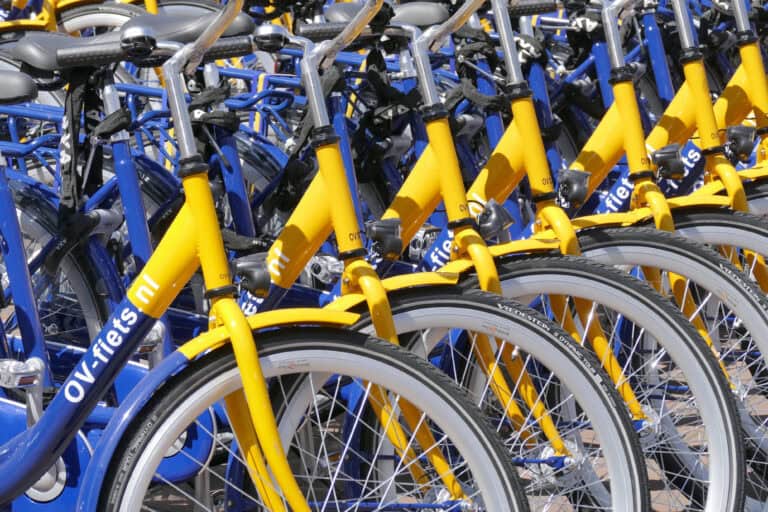
Imagine this: You grab an OV-fiets for a quick spin, cycle home like a responsible human, and return the bike dutifully to their return locations. All good, right?
Wrong.
Because in the magical world of the NS, your properly returned bike may still be marked as “missing”, and a few days later, you’re slapped with a €350 fine. Surprise! 🎉
Locked in… but not really
RTL reports that since 2021, the NS has been rolling out shiny new electronic locks on their OV-fiets. Fancy? Sure. Foolproof? Not even close.
In just the past six months, NS has issued over 4,300 fines for supposedly unreturned bikes.
Out of those, at least 300 each month were wrongly charged — meaning hundreds of innocent travellers are paying the price for a system flaw.
Here’s the catch: you use your OV-chipkaart to unlock the bike, but locking it again? That’s a whole different ritual.
You have to manually close the lock, no card required. If you forget, or it doesn’t click quite right, NS’s system acts like you’ve stolen the bike.
Next thing you know, your supposedly “missing” bike is chilling safely in NS’s own storage shed, while your inbox welcomes a €350 fine.
Oh, and if you don’t pay right away? Your transport card gets blocked and collection agencies come knocking. Cosy.
How do you fix it?
Well, you don’t. Instead, you have to:
Call NS customer service (maybe multiple times)
File a false theft report at the police (yes, really)
Wait weeks for a refund
Still be down €350 in the meantime
All for returning a bike on time. 🧘
NS says: “Oops, we see your point”
Responding to RTL, the NS admits that “the electronic lock is new and works very differently than what everyone is used to from home. This will take some getting used to for passengers, but also for NS.”
They’ve promised to improve things. They’ve even said there’s a “leniency scheme”, though they admit that “this hasn’t always gone smoothly recently.”
Despite all the chaos, NS is doubling down and continuing to roll out more electronic locks. Because what’s a little public outrage when you can go fully digital?
Have you ever had a fine to pay because of these annoying locks? Tell us in the comments below.
NS is hitting the brakes on digital payment tricks — some cards just got kicked off the train. In other words, your digital debit card may no longer work when checking in.
According to NOS, since July 1, the NS has said a firm doei to digital cards from services such as Revolut, Paysafe, and Vivid, after a sneaky loophole let some passengers ride without paying.
Let’s break it down. 👇
Tap in, ride free, delete the evidence
Here’s where the problem lies. Many digital card services give you the option of creating temporary virtual cards when completing transactions.
This means that NS passengers could check in and out using these temporary cards, ride the train as normal, then delete the card before the fare was charged.
Because OVpay only processes payments AFTER checkout, NS found that it couldn’t collect the fare. Everything looked valid on the surface, but the money? Gone. 💨
The flaw isn’t new. This kind of fare-dodging has been possible for years. But this is the first time any payment services have been blocked over it.
In May, Translink — the company behind OVpay — warned Revolut, Paysafe, and Vivid that their cards would be blocked unless they took action. No fixes were made, so here we are.
NS says enough is enough
The NS tells NOS that the issue has gotten too big to ignore. A spokesperson calls it ”serious abuse,” and says the company didn’t make this decision lightly.
As for the financial damage? That’s still unclear. Translink, which handles OVpay transactions, declines to say how much money couldn’t be collected.
Revolut isn’t exactly thrilled. A spokesperson tells NOS the company disagrees with the decision and is figuring out the best way to respond for its Dutch users.
Translink, meanwhile, stands by the way OVpay is set up. Charging fares instantly, they explain, would slow everything down.
Vivid says it’s working on a technical fix, expected to launch in September. Paysafe, on the other hand, remains completely silent. 👀
Was NS right to shut the gates — or should they have found a fix that didn’t hit everyone? Let us know in the comments below! 💬
Ever look at a space and think, I want to squeeze my body in there? No? Well, one man did. And the space in question was inside a Zeeland bridge.
Taking to Instagram, Dutch police described the incident, which belongs “in the special reports category.”
According to the post, a passerby heard someone calling for help and alerted police. Once they arrived on the scene, they were shocked to see a man’s hand sticking out from between two sections of the bridge.
Once the police were able to contact the person attached to the hand, they discovered that the man had been trapped in his precarious position for no less than 12 hours.
The man told police he had forced himself through a door — which then slammed shut behind him.
According to the post, the man “stated that he wanted to look inside out of curiosity.”
Thankfully, he was in good health (although perhaps a little embarrassed) when he was rescued.
If you checked Buienradar in recent days and saw temperatures of 40°C and hurricane-force winds forecast for August 15, you weren’t alone. But no, the Netherlands isn’t about to turn into a subtropical disaster zone.
This, the weather agency has confirmed, was just a good old-fashioned tech glitch.
Thanks to a hiccup in Buienradar’s automated forecasting system, the weather predictions for August 15 went completely off the rails.
The app and website showed extreme conditions that had many people blinking twice (and maybe reconsidering their BBQ plans).
In reality, we can expect quite a nice Dutch summer day with temperatures of around 25°C.
Where did 40 degrees come from?
So, what happened? Automated weather systems pull data from a mix of global models. They’re fast and powerful, but not flawless.
Especially near the end of forecast periods, minor data delivery issues can cause major visual chaos. It’s a bit like the weather equivalent of autocorrect gone rogue.
The error only affected the final day in the forecast window, and it’s already been corrected. All other days showed an accurate forecast.
So if you’re still seeing tropical doom, give your app a refresh.
The dramatic forecast was a short-lived digital blip, not a real-life weather apocalypse. It’s fixed, the skies are calm, and if you want the most reliable info going forward, always read the written forecasts along with the graphs.
It’s been a bit of a meh summer in the Netherlands, hot and cold, cloudy, and just unpredictable enough to ruin your picnic plans.
According to Nu.nl, this Friday brings more showers (and maybe a cheeky thunderstorm inland), while Saturday stays soggy in the northeast but turns sunnier elsewhere. Sunday starts dry before the clouds crash the party later on.
But don’t pack your flip-flops away just yet, from Wednesday of next week, things are looking much better. Expect dry days, more sun, and temperatures hitting 25°C or more by Thursday, especially in the south.
Still waiting for that real summer feeling? Drop a comment and let us know how you’re spending the break.