What was first thought to be a targeted cyberattack on the Dutch cervical cancer screening program has turned out to be far worse — and far broader.
According to an investigation by RTL Nieuws, data from patients who underwent skin, urine, and penis examinations were also stolen.
What does this mean? A large number of people who received medical tests in the Netherlands have had their data stolen. Let’s look at what is known so far. 👇
Half a million cervical screening patients
When the breach first came to light, it was thought to involve no less than 485,000 patients who had taken part in the cervical cancer screening program, either through a Pap smear or a self-test.
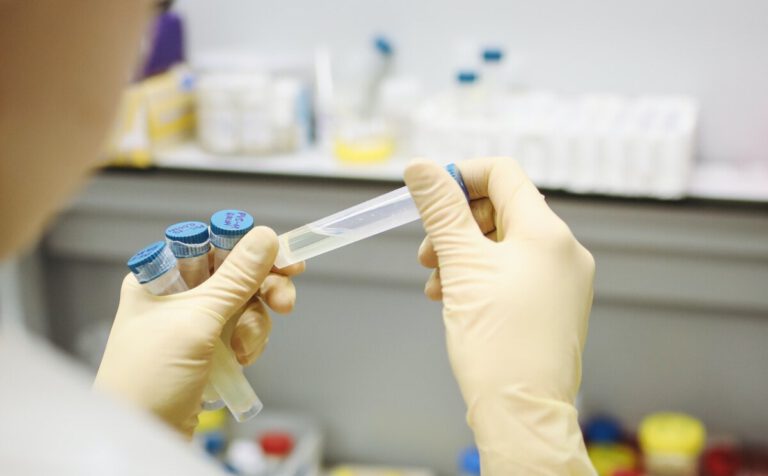
The data was leaked after one of the testing labs, Clinical Diagnostics in Rijswijk, was hacked.
NOS reports that the stolen data included the patients’ names, addresses, healthcare provider information, GP referrals, and research data going back to 2016.
Those affected will receive a letter in the coming weeks and be warned about possible targeted phishing attempts. The laboratory has since had its collaboration with the program suspended.
More hospitals and tests involved
However, RTL Nieuws’ investigation reveals that the breach at Clinical Diagnostics also includes results and advice from tests on urine, skin, vagina, penis, anus, and wound fluid.
The stolen records belong to patients whose samples were sent to the laboratory by healthcare providers and independent clinics.
Affected institutions include Leiden University Medical Center, Amphia Hospital, Alrijne Hospital, and numerous GP practices.
Data already on the dark web
A portion of the stolen data has already surfaced on the dark web.
RTL Nieuws confirmed that 53,516 people are named in the files currently online, while the hackers claim to have stolen 300 gigabytes of data.
Only 100 megabytes have been published so far, but the leaked material covers the years 2022 to 2025, meaning many recent tests are included.
Do you think Dutch authorities are doing enough to protect sensitive medical data, or should stronger measures be put in place? Share your thoughts with us. 💬
If you woke up this morning and felt that the heat was even more oppressive than usual, that’s because it is. Today, a National Heat Plan will be in place across the entire country.
With temperatures expected to reach as high as 34 degrees in the south, the RIVM is taking no chances and wants everyone to know that they need to take extra care.
A National Heat Plan will be in effect from 10 AM this morning.
What is the National Heat Plan? Essentially, it is a warning to anyone who is or who is caring for someone in a vulnerable group. For example, the elderly or young children. According to the RIVM:
“The aim of this activation is to send a signal to informal caregivers and (healthcare) professionals that hot weather is on the way. This will help them be aware of the need to pay extra attention to the people they care for.”
Keep the curtains closed, it’s getting hot
Even those of us in the north will feel the heat today, with 29 degrees forecast for the region.
And what does this mean for people in the centre and south? Highs of 31 and 34 degrees respectively.
According to RTL Nieuws, only those who are basking along the coast will have a bit of relief, with temperatures of around 25 degrees expected there.
Tomorrow, you’ll need to take it just as easy. The heat is set to get even more oppressive thanks to a wave of moist air that will hit the country.
Temperatures will remain high on Wednesday, with up to 35 degrees forecast for the southeast. Thursday will be a similar story, with a chance of thunderstorms and temperatures as high as 33 degrees.
Potentially a second nationwide heatwave
These high temperatures mean one thing: we may be about to see the second nationwide heatwave of the summer.
According to RTL Nieuws, a regional heatwave is certain for the southeast and east of the country. However, the rest of us may very well see a nationwide heatwave too.
Yep, it’s about to get oppressively hot in the Netherlands — so take that extra work-from-home day if you can, and maybe skip doing a 10k run.
A Reddit user expecting a refreshing gulp of water in a Dutch hotel recently had an unfortunate surprise when the bottle was filled with a, well, pee-like substance.
FatDevilicious made the report on the r/Netherlands subreddit, writing “One of the “sealed” complimentary water bottles in our room smelled strongly like urine and was yellow.”
The hotel guest clarified that he’s not sure it was sealed, but it appeared to be and was placed in the correct position.
Unfortunately, the guest’s wife reportedly had a sip “before realizing something was very wrong and [spitting] it out immediately.”
Hotel reacts
According to FatDevilicious, the night manager first dismissed the concern as “probably a factory error.”
Thankfully, a manager the following morning recognised the severity of the issue and launched an investigation, sending the bottle to an independent lab for testing.
The hotel, which was not named in the post, told the guest that a “strict standard procedure” is followed for replacing water bottles.
“This procedure states that all bottles — whether open or closed — are replaced during the cleaning of the room and upon preparation for new guests.”
FatDevilicious kept a small sample for his own testing, stating on Reddit that he had already researched potential contamination from the plastic bottle, but concluded it was different.
“The smell is extremely strong, and similar to pee,” they wrote in their post, seeking advice on the next steps.
Reddit is, well, Reddit
Users of r/Netherlands were, understandably, pretty disgusted by the report.
“I think they don’t replace the water every night and somebody indeed peed in it,” is the current top comment from lord_de_heer, with 797 upvotes on the platform.
User Icedrive agreed. “It’s quite clearly piss, either someone at the hotel pissed in it or it happened at the factory (the latter seems a lot less likely).”
Other Reddit users were less sympathetic, advising the original poster to stick to tap water.
Some users were more helpful, advising the guest to contact the municipal health service, the police, or the Netherlands Food and Consumer Product Safety Authority.
Time to lug out your trusty HEMA fan that you bought three years ago and plonk it next to your bed again — summer temperatures are returning to the Netherlands this week.
And no, we don’t mean 20 degrees and sunshine, we mean potential heatwave temperatures.
Starting today, it’s isje time
We hope you’re wearing a light shirt, because the heat will hit by the end of this morning.
Temperatures will reach up to a chill 23 degrees in the north, a balmy 27 degrees in the centre of the country, and a sizzling 30 degrees in the south today.
Aside from a few scattered clouds in the north, it will remain dry in most parts (so it’s time to pull a sicky and head to the beach).
And it’s only getting hotter on Tuesday
Beach babies rejoice — and those of us from a colder climate, hang in there — because Tuesday will be even hotter.
While there may be a few scattered showers in the west, tomorrow is going to be hot everywhere with temperatures of 29 degrees forecast for the north, 31 degrees in the centre, and 34 degrees in the south.
We formally give you permission to pay €6 for an iced coffee if you really need it.
In RTL Nieuws‘ own words, Wednesday and Thursday will be “tropically hot” for those of us living inland.
While there may be some thunderstorms on Wednesday morning, we’ll still be Googling air conditioning units. Temperatures between 30 and 34 degrees are expected on both Wednesday and Thursday.
Those of us in the south will experience the highest temperatures. However, anyone who flees to the coastline can enjoy slightly cooler temperatures of between 24 and 27 degrees.
And Friday? You can finish up your work week with a biertje on a terrasje, as temperatures will remain between 23 and 29 degrees.
Luxury gym Saints & Stars is at the centre of a growing scandal, as former cleaners allege they were offered money to deny they were mistreated.
The case is already being investigated for labour exploitation, but recent developments now raise concerns about a possible attempt to cover up the abuse.
Cleaners say the gym tried to buy their silence
According to Het Parool, five cleaners from the Philippines were each offered €5,000 by Saints & Stars. After taxes, the amount would have been around €3,000.
In return, they were asked to sign a statement saying they had “always been treated well” during their time at the gym.
The offer came after the workers had already filed a lawsuit seeking €60,000 each in damages, which they say is a clear attempt to silence them and cover up their experiences.
Saints & Stars denies that a formal settlement was ever made. The gym says the figure was fair, especially for workers who were only employed for a short time.
The cleaners disagree, insisting that the length of their contracts does not justify the conditions they faced, which they describe as part of a “toxic work culture” at the gym.
Their case is now moving through the legal system, though a court date has not yet been set.
Long hours and overcrowded housing
The case first drew attention in July, when Het Parool published testimonies from cleaners who spoke of extremely poor working and living conditions.
Some reported shifts lasting up to 17 hours a day and said they were forced to hand over their passports.
Many were housed in a villa owned by gym founder Tom Moos, where up to four people had to share one bed.
Saints & Stars denies the allegations of exploitation. The gym says it is cooperating fully with the investigation by the Dutch Labour Inspectorate and has suspended the cleaning management team.
Can Saints & Stars recover from this scandal, or has the damage already been done? Tell us your thoughts in the comments below!
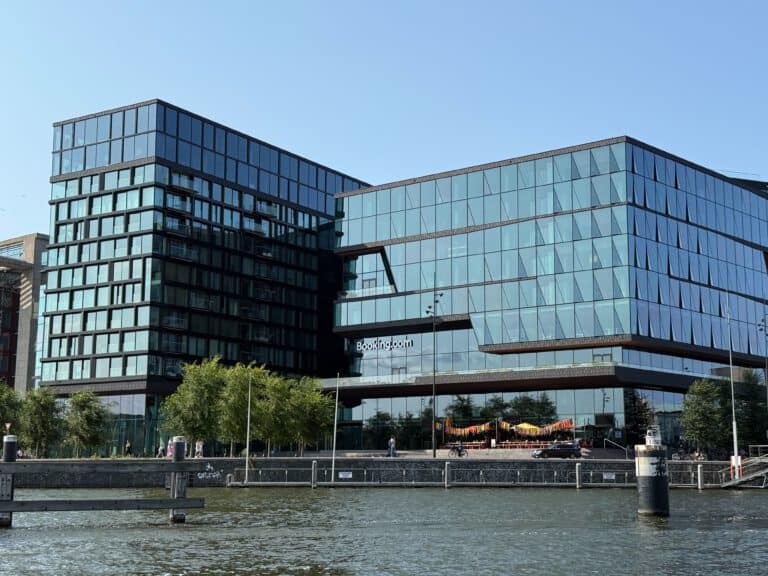
Hot on the heels of its previous scandal, Booking.com is now facing one of the largest class action lawsuits in the EU hospitality sector. 👇
And with thousands of hotels across Europe now planning to sue the multinational company for violating EU competition rules, Booking.com has landed in even hotter water this time around.
Lower than low prices? Not really, hotels say
Sure, those super-low prices on Booking.com look handy, but HOTREC (the European hospitality association) isn’t a fan.
Booking.com’s original contractual terms prevented partner hotels from offering lower prices on any other platform, even the hotel’s own website.
Following a ruling by the European Court of Justice in September 2024, it was determined that these terms violated EU competition laws… a claim that Booking.com now brands “incorrect”. 👀
While the multinational company has since removed the so-called “parity clauses” from its terms and conditions, the affected hotels intend to claim compensation for the financial losses suffered.
Hotels across Europe have joined forces
Now, over 10,000 European hotels and 30 hotel associations will join HOTREC in bringing their claims to the Amsterdam District Court.
“European hoteliers have long endured unfair conditions and inflated costs. Now is the time to stand together and seek redress,” says HOTREC President Alexandros Vassilikos.
According to Vassilikos, this strong stance is intended to send a strong message to large companies like Booking.com: “abusive practices in the digital marketplace will not go unchallenged.”
The Netherlands is known for many things, from tulips to cheese, but something that everyone notices while living here is its vulnerability to the rain.
Even though it’s no secret that the Netherlands is prone to overcast weather and cold temperatures, you may still be surprised how often it rains for hours on end. 🌧
What is it?
For any newcomers to the Netherlands, you’ve probably never heard of a Dutch weather app called Buienradar — but trust us, it’s a holy grail.
It may not be what you had in mind, but Dutchies are constantly using a simple weather app.🌡Buienradar tracks the usual things like temperature and wind directions.
And the worst part is, sometimes you just can’t escape the rain, no matter how well you time it. 😪
Should you join in?
Yes, definitely!
Buienradar is one of the most useful apps to have while living in the Netherlands, and you can definitely save yourself a load of laundry if you keep it on your phone with the notifications on.
But do keep in mind that a weather app will probably not be able to keep you dry every time.
Make sure you’re prepped with a raincoat and an umbrella at a minimum. ☔️
What do you think of this Dutch quirk? Have you experienced it? Tell us in the comments below!
Everyone in the Netherlands knows the iconic yellow of Jumbo — but did you know that its former CEO has landed in some very hot water?
Frits van Eerd, the supermarket chain’s former CEO, has just been sentenced to two years in prison following a conviction for money laundering.
The Van Eerd family, who previously acquired HEMA and built Jumbo into a supermarket powerhouse, now faces serious reputational damage.
€450,000 found in his home
According to the NOS, police carrying out a search of Van Eerd’s home came across no less than €450,000 — now that’s not an amount you casually lose between the couch cushions.
During his trial, friends and family members of the disgraced CEO submitted statements about where Van Eerd received this money from, claiming it was because Van Eerd was wealthy and had expensive racing hobbies, but the judge didn’t buy it.
The statements were found to be unreliable and unverifiable. This wasn’t helped by the fact that some were even found to be falsified.
The judge also noted the money included suspicious €200 and €500 notes and was never declared to tax authorities.
Originated from crime
A court in Groningen ruled today that the money, which Van Eerd received from a car dealer (only named as E.) originated from criminal activity.
According to the NOS, the judge ruled that the money “originated from some crime… And Van Eerd knew that.”
The court also found that Van Eerd defrauded his own company through document falsification — yikes.
Well, that’s some Jumbo lore you can consider next time you’re waiting in line at checkout.
As an expat in the Netherlands, I’m juggling many balls at once: I need to keep up with family back home, learn a new language, get enough sleep, watch my posture — oh, and make sure I start investing while I’m still young.
Honestly, I don’t have time to worry so much about what my Dutch savings are doing, but it’s important that I’m smart with them.
So, instead of letting my money sit around and lose its value, I’ve decided it’s time to let it grow — with Scalable Capital.
Here’s why I think Scalable Capital is a great option for expats in the Netherlands who are looking to start investing, much like myself.
Note: It goes without saying that there are risks associated with investing.
This post might have affiliate links that help us write the articles you love, at no extra cost to you. Read our statement.
Firstly, it’s one of the most affordable options out there
Scalable Capital is one of the most affordable online financial brokers out there, which is a big plus for me.
If I’m just getting into investing, I don’t want to be paying big bucks just to try something out. Scalable Capital offers free and affordable plans that I can enjoy without making any big financial commitments.
With a free subscription option and a paid plan starting at just €4.99 per month, Scalable Capital doesn’t ask for much from you as a customer.
Depending on your preferred investment strategy or the amount of money you want to put into stocks, Scalable Capital offers different plans:
Free Broker — This is the best option if you’re just dipping your toes into the world of investing. You pay zero subscription fees and instead pay €0.99 per trade you make. You’ll also benefit from an interest rate of 2% on non-invested cash up to €50,000.
PRIME+ Broker — At just €4.99 per month, you can also currently enjoy an interest rate of 2% on non-invested cash up to €500,000.
What’s more, if you opt for the PRIME+ subscription, Scalable Capital lets you invest commission-free for order volumes over €250. Opted for the FREE plan? No problem, savings plans starting at €1 are also commission-free — other orders are just €0.99.
It provides a wide variety of investment opportunities
If you’re not new to the world of investing and want to have a taste of different investment options, you’ll be happy to know that you can do a lot with your money using Scalable Capital.
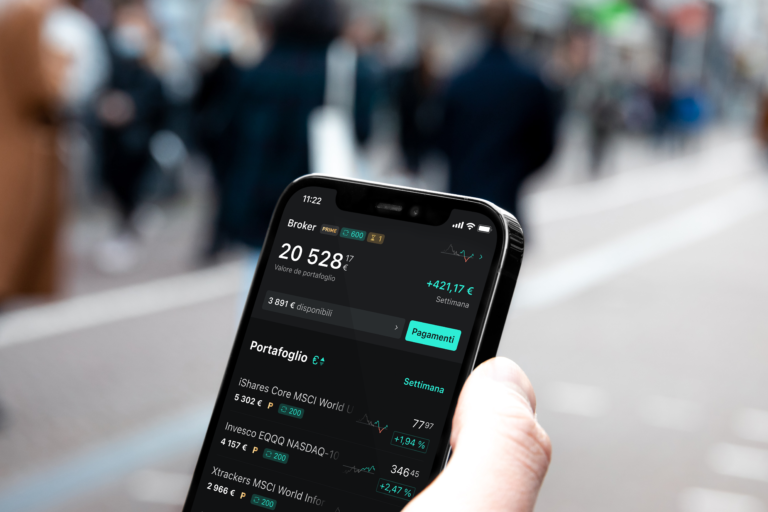
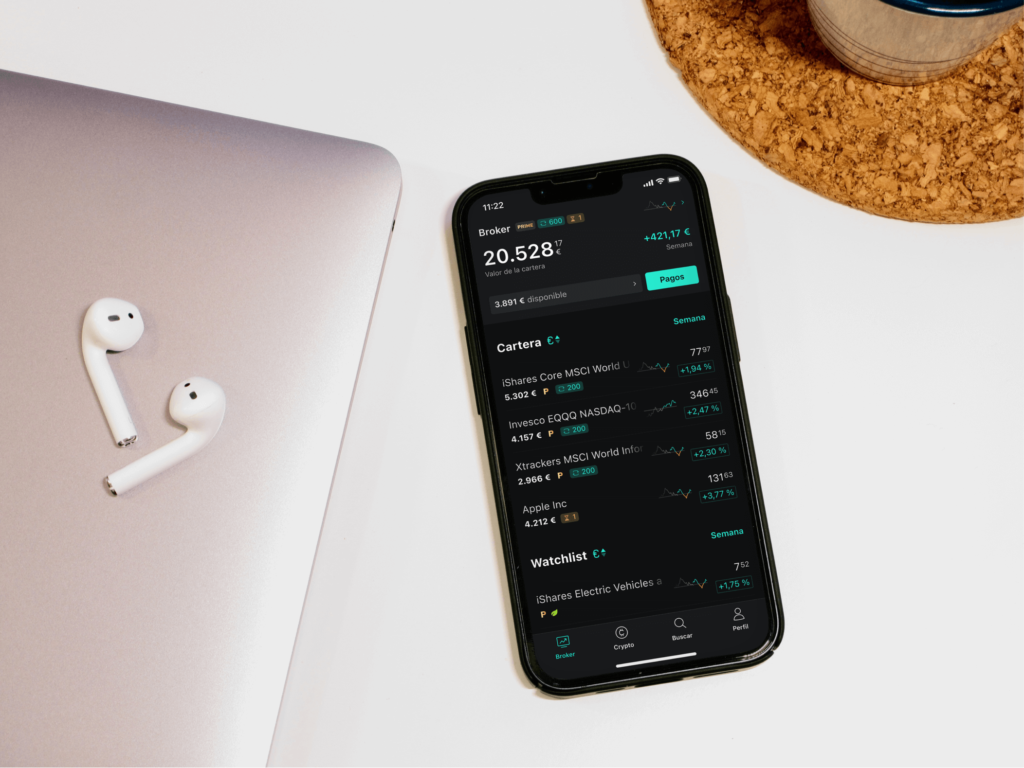
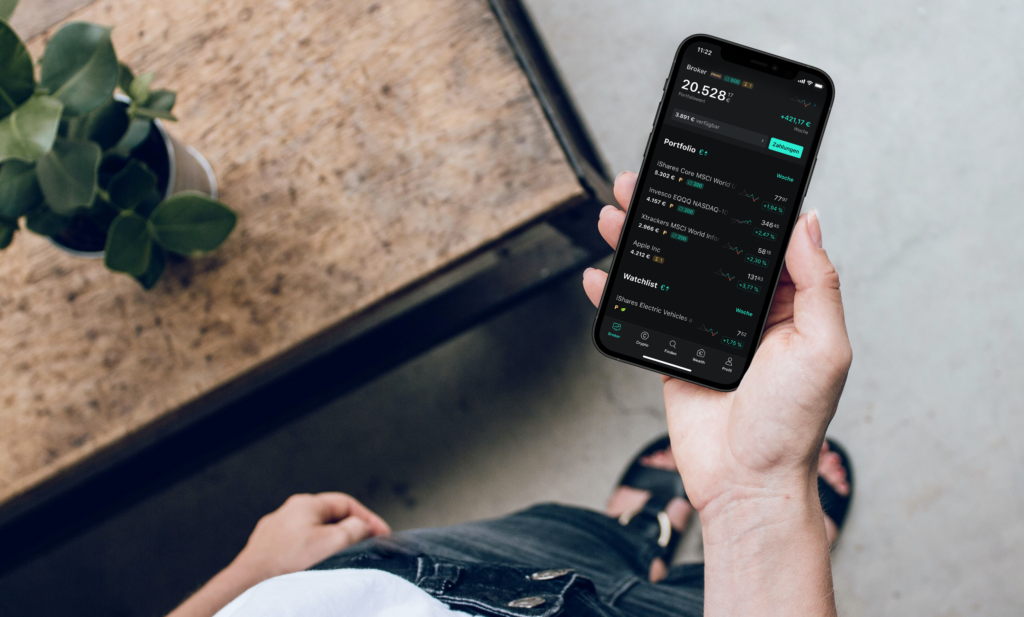
The Scalable Capital app allows you to invest in not only individual stocks but also ETFs, cryptocurrencies, commodities and funds — all from one account.
Scalable Capital has a huge array of investment opportunities and methods. Image: Scalable Capital/Supplied
The power of Scalable Capital in the first instance is in its simplicity. Besides showing you stocks, you also get the option to buy crypto, check your watchlist of stocks and your recent transactions.
Depending on the plan you choose to take out, you can enjoy several smart tools in order to easily invest in a number of ways — but more on this below!
Note: Scalable Capital is available in the Netherlands and five other European countries, but not globally.
It makes investing simple with smart tools
Unless you’ve studied finance, investing can feel like unchartered territory — especially when you’re doing it from a country that you may be unfamiliar with.
That’s why it’s important to invest using a platform that can protect you from making risky investment decisions.
Scalable Capital can help you out in this by providing you with all the tools you need to make smart investments.
For example, if you’re not sure whether you want to invest in a particular stock, no problem: you can use Scalable Capital’s Watchlist tool. With this, you can keep an eye on how things develop and invest when you feel confident.
You can also make use of Scalable Capital’s Securities lists, which give you insight into the latest investment trends and point you to popular savings plans. This makes sure you’re not going in blind.
You can opt for an automated savings plan when life gets busy
Speaking of savings plans, this is a big selling point of Scalable Capital for me.
My life in the Netherlands is busy; I don’t have time to read three books on the stock market.
Sometimes I just need someone to lay all the information out in front of me, simplify it, and give me the tools to take action if I want to.
Scalable Capital can do this for me with its automated savings plans.
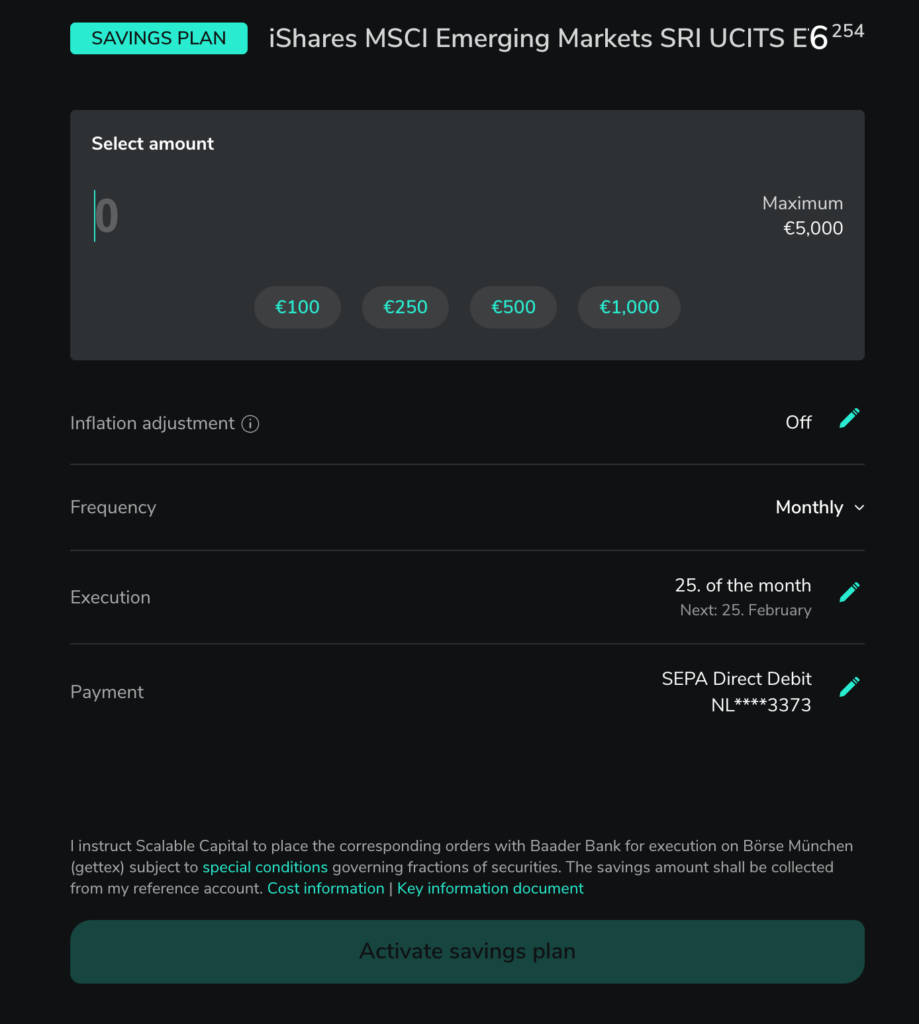
A big plus for me is their savings plans. Image: Scalable Capital/Supplied
With these plans, you can arrange to automatically invest as little as €1 per month in ETFs, stocks, funds, or crypto. The amount will be automatically deducted from your account every month and invested in a preselected portfolio.
Want to do it all yourself? You can make use of Scalable Capital’s helpful features, such as price alerts, financial ratios, and watchlists, to decide how and when you want to invest.
It gives you the chance to try out investing — without risking it all
While you can do a lot with your money on Scalable Capital, the good news is that you also don’t have to.
Scalable Capital is a great way to try your hand at investing by starting off small — and paying low prices in return.
You can also invest as little as €1 per month, which I like. Image: Scalable Capital/Supplied
With Scalable Capital, you can invest as little as €1 per month if you’re a bit apprehensive and would first like to dip your toes into the world of investing.
Another big selling point for me is the fact that with Scalable Capital, your money is protected under the European Deposit Guarantee Scheme. This means any money that you deposit with Scalable Capital is protected up to €100,000.
Note: This scheme doesn’t cover money lost through investments made on Scalable Capital.
It offers decent interest rates for your hard-earned savings
In the Netherlands, it’s hard to find somewhere to put your money where it will actually have the chance to grow.
Not only can Scalable Capital offer you the chance to invest your money, but if you sign up for their PRIME+ Broker account, it also allows you to deposit your money with 2% interest.
This is much better than ABN AMRO’s 1.25% interest savings rates, for example.
Note: Scalable Capital’s offer of 2% interest rate is variable.
It’s a trusted service
If there’s one thing you need when you decide to start investing, it’s a trusted service with good reviews.
Of the 600,000 users across Europe that use Scalable Capital, many seem to be happy with the service, with over 40% of users rating it with 5 stars on Trustpilot — that’s what I like to see.
During my research, I also came across a service called justETF. Acquired by Scalable Capital in 2021, this platform offers access to an ETF screener as well as to an Academy, both very helpful for people who are new to investing — and it’s all for free!
In this economy, it’s important as an expat in the Netherlands to do what you can to help your savings grow. In my case, Scalable Capital is one way I can try this out.
Are you ready to give Scalable Capital a try? Great. Simply pick a package and sign up on their website.
Have you invested using Scalable Capital before? Tell us about your thoughts in the comments below!
The Dutch summer has finally remembered it exists — and it’s coming in hot. ☀️
According to RTL Nieuws, the Netherlands is about to step into a gorgeous stretch of proper summer weather, with rising temperatures and possibly even a heatwave on the horizon.
But first, let’s talk about what the skies are doing today. 👇
Today brings warmth with a touch of cloud
Today will stay dry across the country, with temperatures slowly climbing to around 20 degrees Celsius near the Wadden Sea and reaching a pleasant 24 degrees in the south.
By the afternoon, the sun and clouds will take turns rearing their heads, with temperatures reaching up to 26 degrees in the east and southeast. A southwesterly breeze will pick up, making things gusty along the northwest coast. 💨
As evening approaches, cloud cover returns, and the north might see a few light showers, but nothing worth panicking over.
The night will stay warm and a bit muggy, with inland temperatures sticking around 16 degrees and coastal areas holding steady near 19 degrees.
Friday starts grey but the weekend is a summer dream
Friday morning will begin with clouds and a slight chance of drizzle up north. Limburg might sneak in some sunshine early on, because of course it does. 💅
As the day unfolds, skies will clear up and most of the country will stay dry by the afternoon, with temperatures ranging from a breezy 22 degrees at the coast to a warm 27 degrees in southern Limburg.
And then the real reward arrives: a weekend made for sun lovers. Both Saturday and Sunday will be dry and bright, with temperatures steadily rising.
By Sunday, the coast can look forward to 23 degrees while the southeast could bask in a full 30 degrees. It’s the perfect forecast for beach outings, garden lounging, and spontaneous barbecues.
Next week could bring a proper heatwave
If you think the weekend sounds warm, next week is turning things up a notch. Expect full sunshine and soaring highs between 25 and 32 degrees.
The east and southeast could see a regional heatwave, with several consecutive days of sizzling weather and barely a cloud in sight.