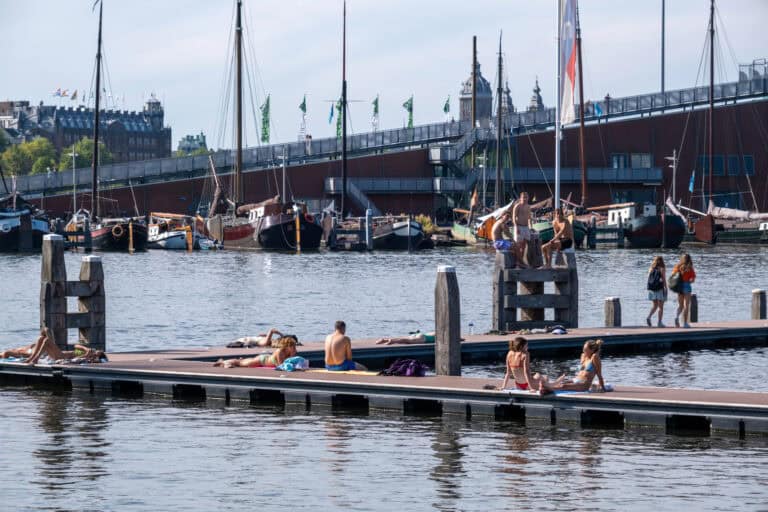
The Netherlands has an incredibly rich student life, where everyone is encouraged and welcome to take on extracurricular activities. These are mostly in the form of student associations (studentenverenigingen), sometimes known as student societies.
For those of you fresh off the plane and settling into your new student life in the Netherlands, you may have already experienced the Dutch introduction week known as introductieweek.
It’s basically a bombardment of banners, leaflets, and free pens, during which tall local students convince you to sign up for student clubs.
This can be quite overwhelming, and you might find yourself walking away wondering what exactly you signed up for. Was that an academic club, an association, or some kind of sorority or fraternity?
What kind of student associations are in the Netherlands?
Student associations in the Netherlands exist for almost everything. From soccer, politics, rowing, LGBTQ+, history, art, street dance, debating, a religious group, vegans, international students, nationalities, and more!
Generally, Dutch student societies are divided into five different groups:
Social associations (Gezelligheidsverenigingen) — exist primarily to socialise and make the most out of student years. 🎉
Study associations (Studieverenigingen) — with a focus on your degree area. 📚
Sports associations (Sportverenigingen) — for a particular sport. 🏑
Religious associations (Religieuzestudentenverenigingen) — for members of certain religions or faiths. 🛐
Other associations (Overigestudentenverenigingen) — anything else you can think of! 💡
What are the perks of joining a Dutch student association?
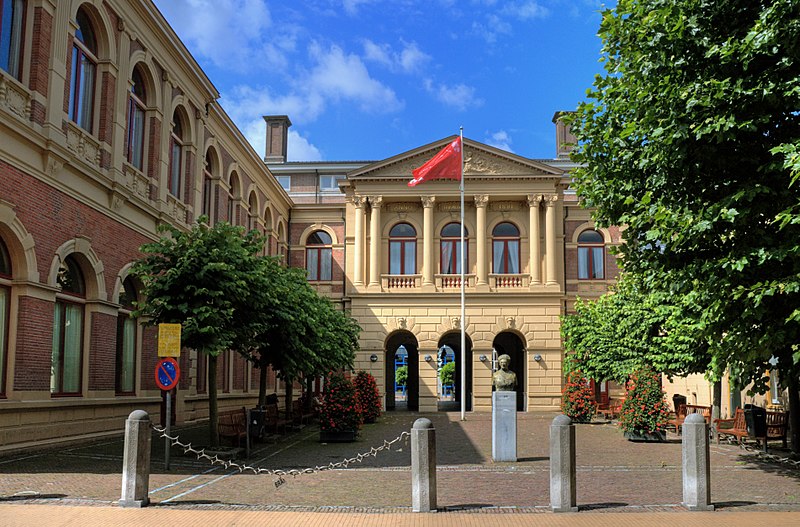
This could be your new home! Image: Bert Kaufmann/Wikimedia Commons/CC3.0
If you want to integrate into Dutch life while studying in the Netherlands, joining a society is a great idea.
Of course, it’s not without challenges. But in general, you can take advantage of some sweet benefits. Here are just a few!
Networking and student life
Student associations are a quick way to meet people and make friends. You’ll have to be up for learning a new language and willing to throw yourself into all the parties and activities.
If that’s the case, then student associations will be a great way to meet some friendly people.
Of course, for international students, breaking into those tight Dutch circles can be a little more complicated. Many internationals are Master’s students and are only around for a year or so.
They have a reputation for taking their studies more seriously — I mean, none of us flew across the planet to fail — so they tend to have lower commitment levels to societies than local students.
The result is that student associations sometimes put less effort into attracting internationals. Unfortunately, this can create a bit of an anti-international vibe.
It’s also natural that many societies in the Netherlands operate in Dutch, making it difficult for internationals to feel included.
If you would like the benefits of joining a student association with a bit less pressure, opt into an international student association like ESN. Most of the students will be in the same boat as you, but there will also be some Dutchies floating around who love hanging with foreigners.
Housing
As you may know already, there’s a nationwide housing crisis in the Netherlands, especially in student cities.
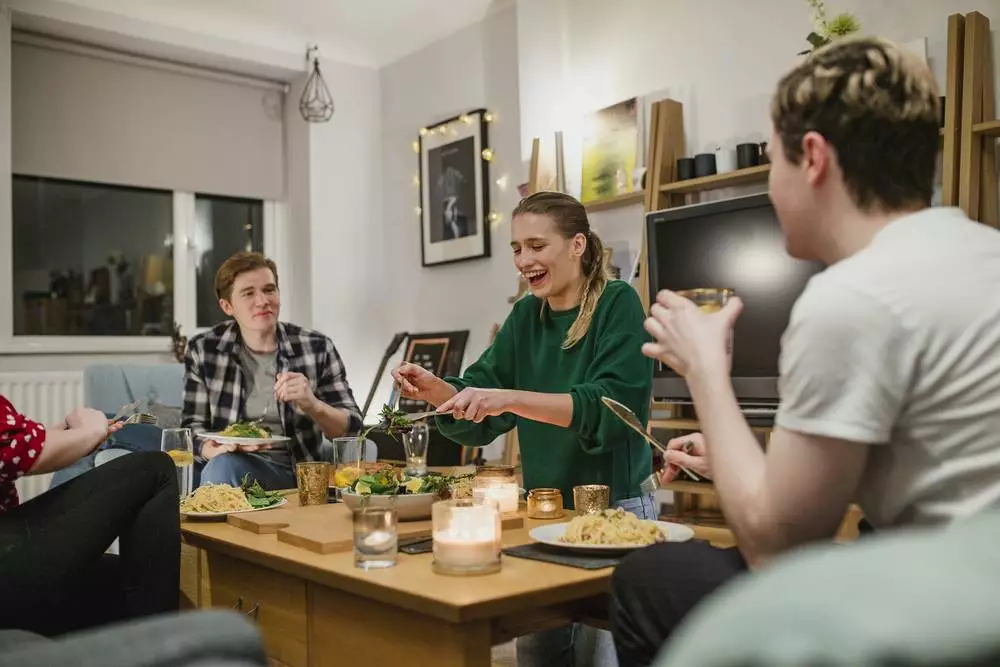
Who knows, you might even meet your future housemates! Image: Depositphotos
Now we’re not here to say that joining a student association will score you an awesome place to live. However, finding a place to stay is easier when you’ve built up a network — especially if you have some Dutchies mixed into your social circles.
Meanwhile, some fraternities and sororities have student houses that will only accept members.
Job market
In the student community, joining a student society is said to seriously help your career.
I’ve heard stories of internships and other jobs being made possible because of a shared society membership with the employer (which many still boast about long after graduating).
How do I join a student association in the Netherlands?
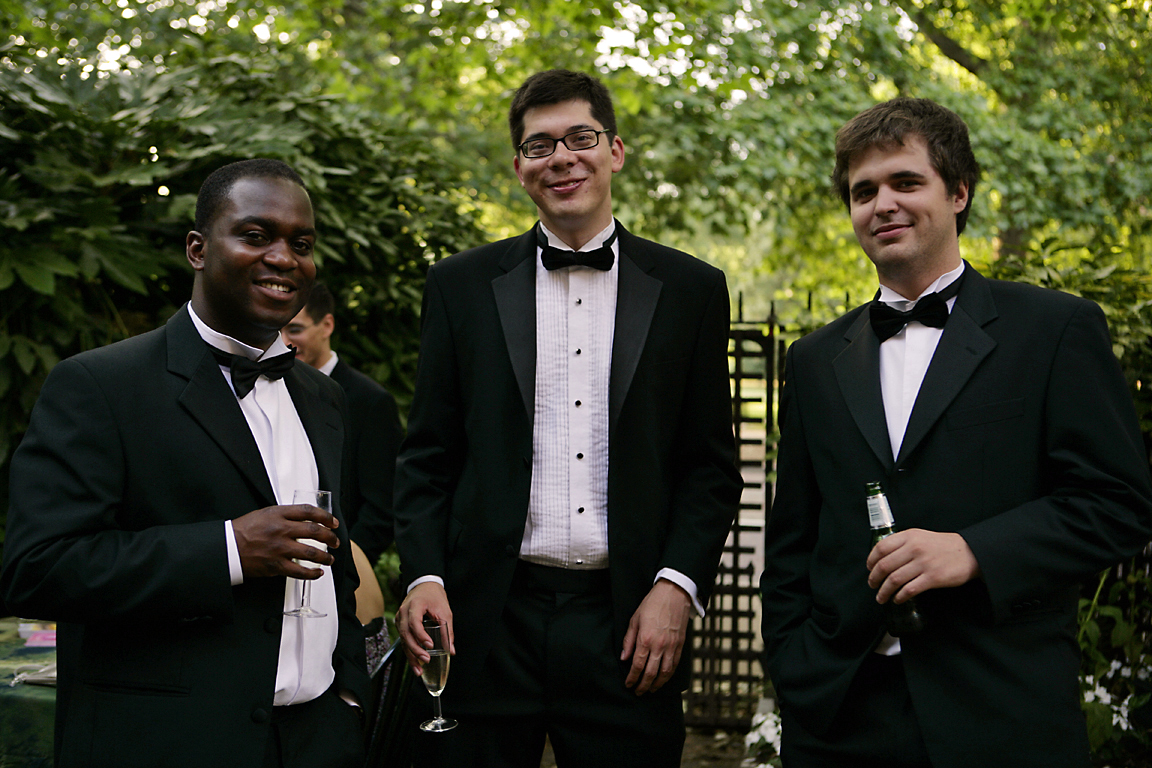
A great way to make friends and a guaranteed party invite. Image: mild_swearwords/Wikimedia Commons/CC2.5
The easiest way to take part in a student association is by showing up to introductieweek (introduction week). Here, almost all student societies will be represented and looking for new members — like yourself!
If you happen to miss introductieweek, check in with your university to see if it has a list of student societies, or do a quick Google search.
You never know what student association will catch your eye — and you may just end up making some friends for life along the way. 😉
Are you, or were you, part of a student association while studying in the Netherlands? Tell us in the comments below!
Amsterdam may be small, but its art and culture scene is anything but. With a wealth of art museums spread across its charming streets, this city feels like an open-air museum.
After five years of living here, I can tell you: Amsterdam seriously spoils you. World-famous masterpieces and quirky hidden gems are never more than a short bike or walk away.
Whether you’re visiting or just settling in, this guide is where your art museum journey begins. 👇
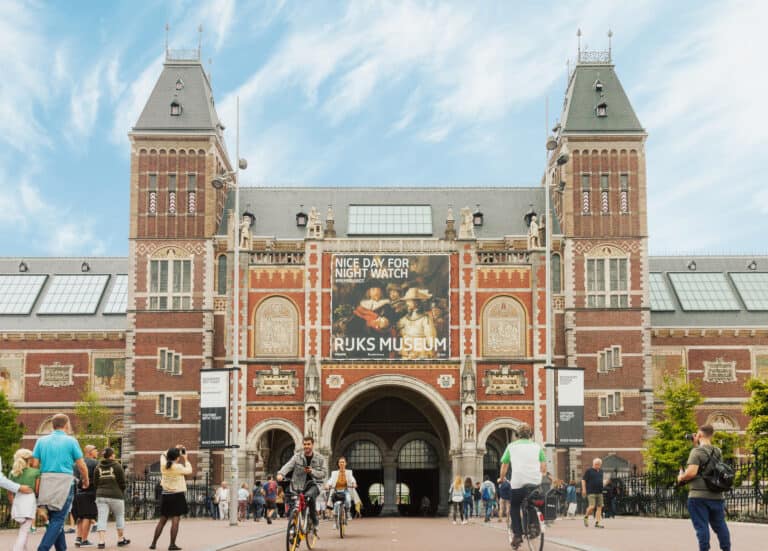
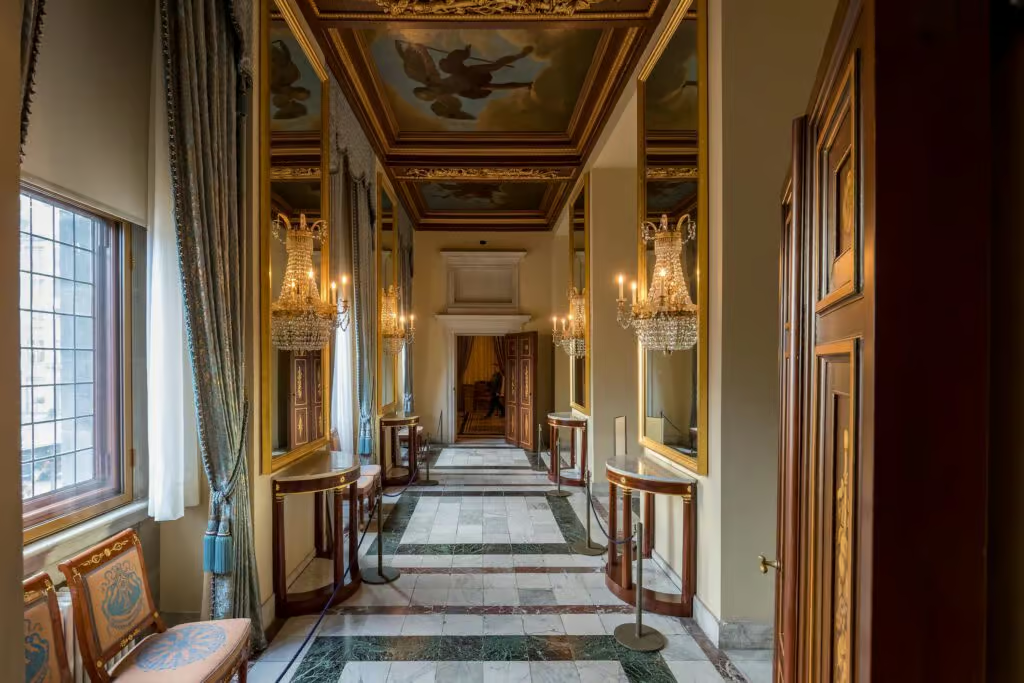
The granddaddy of all museums in Amsterdam? That would be the Rijksmuseum, and yes, it lives up to the hype. 😍
Step inside and you’re surrounded by 800 years of Dutch art and history, from Rembrandt’s “The Night Watch’’ to Vermeer’s “The Milkmaid.’’
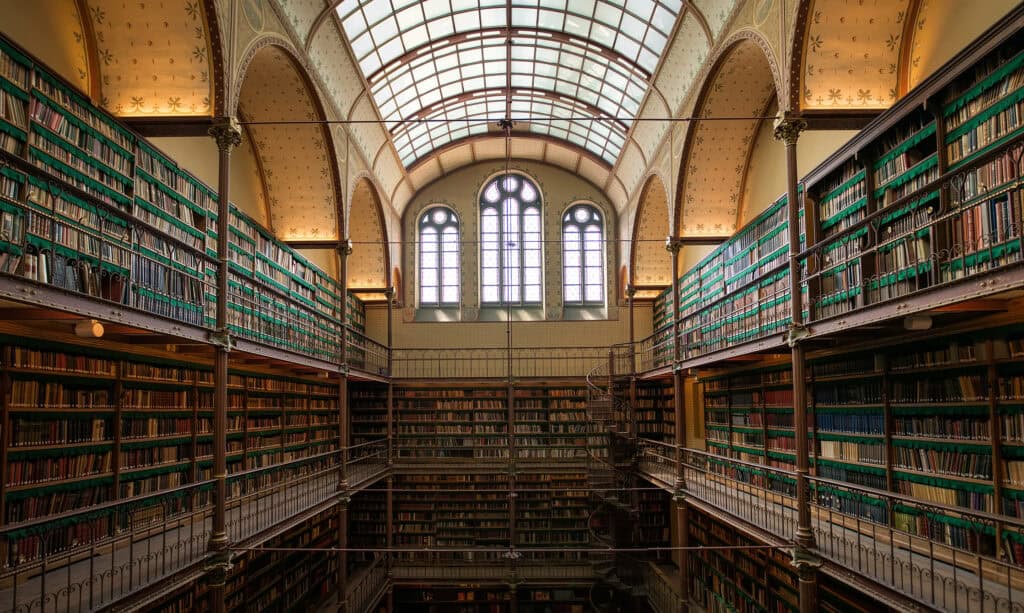
Rijksmuseum tip? Don’t miss the library. Image: Dreamstime
It’s not just paintings: think Delft blue pottery, gleaming weapons, and intricate dollhouses that once showed off the wealth of 17th-century merchant families.
The museum is massive, so give yourself a few hours. And don’t skip the gardens, they’re free to enter and change with the seasons.
Tip: Visit early in the morning or late in the afternoon to dodge the crowds, and treat yourself to a meal at RIJKS, the museum’s Michelin-starred restaurant.
📍 Location:Museumstraat 1, Amsterdam 💰 Price: €25 for adults, free under 18 ⏰ Hours: 9 AM to 5 PM daily (booking with a time slot required)
2. Van Gogh Museum
Home to the world’s largest Van Gogh collection, this museum takes you on an emotional deep dive into the artist’s life and work. 🌻
Van Gogh’s story is told chronologically, so as you move through the rooms, you follow the artist’s life, from his hopeful beginnings to his final, troubled years. Highlights include his self-portraits, “Sunflowers,’’ and The Bedroom.’’
The museum also explores his artistic influences and features personal letters to his brother Theo, offering powerful insight into his creative mind.
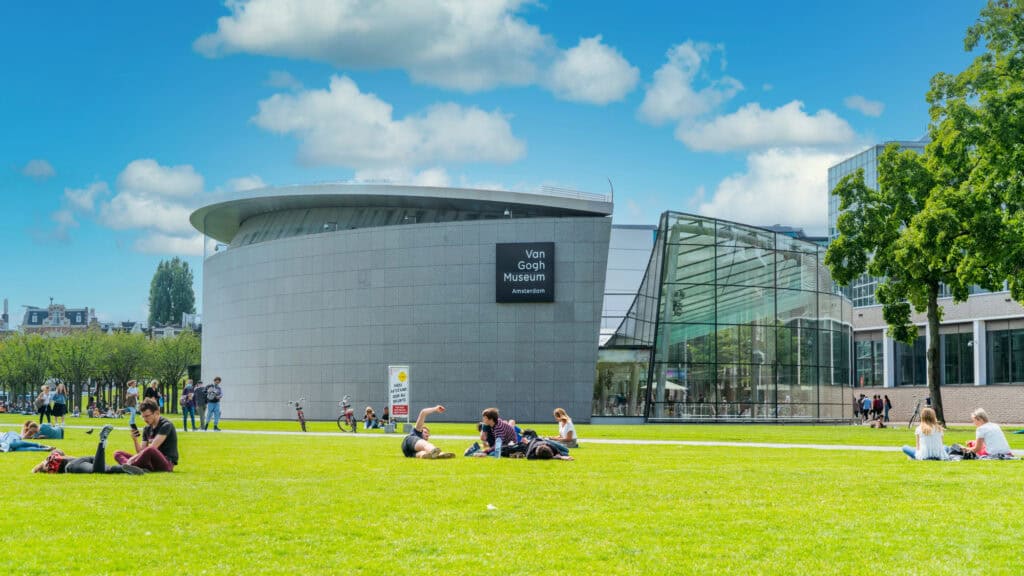
Don’t miss lounging outside the Van Gogh Museum when the sun is shining. Image: Depositphotos
To top everything off, the building, designed by Dutch architect Gerrit Rietveld, is a modernist masterpiece.
Tip: Tickets are only available online, and you must book a time slot in advance. Opening hours may vary monthly, so check before you visit.
📍 Location:Museumplein 6, Amsterdam 💰 Price: €24 for adults, free under 18, €11 for students ⏰ Hours: 9 AM to 6 PM daily (open until 9 PM on Friday)
3. Stedelijk Museum
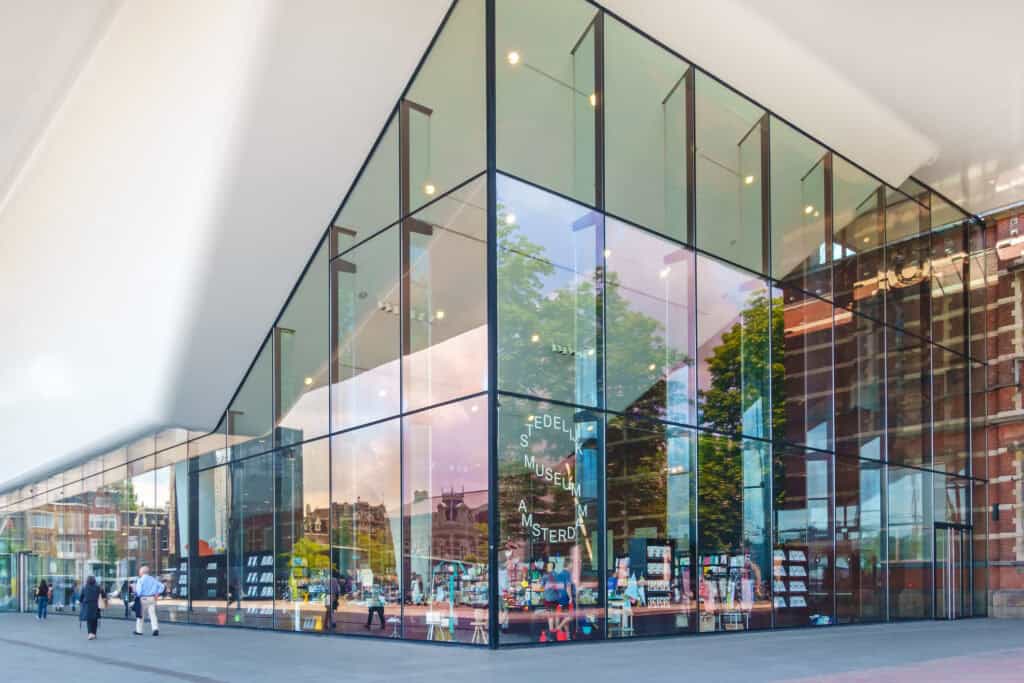
Amsterdam’s go-to museum for modern and contemporary art, the Stedelijk, stands out with its bold collection and bathtub-shaped building.
Inside de badkuip (yes, locals call it that), you’ll find works by big names like Picasso, Mondrian, and Kandinsky.
Before the art, the Stedelijk Museum building speaks. Image: Dreamstime
The temporary exhibitions? Always ready to shake things up. One might move you to tears, and another leaves you staring at a red dot, questioning everything. That’s the fun of it. 💁♀️
Tip: If you’re looking for an artsy book, a cool print or a unique souvenir, the museum shop is well worth a visit.
📍 Location:Museumplein 10, Amsterdam 💰 Price: €16.50 for adults, free under 18 ⏰ Hours: Tuesday to Sunday from 11 AM to 5 PM
4. Moco Museum
Set inside a historic villa near Museumplein, the Moco Museum brings street and contemporary art to the heart of Amsterdam.
Banksy steals the spotlight with works like “Girl with Balloon’’ and “Laugh Now,’’ but you’ll also spot pieces by Basquiat, KAWS and a rotating cast of bold, thought-provoking artists.
The best part? The setting. With rooms that feel like a very cool private home, Moco keeps things fresh, fun and accessible. 😎
Tip: This museum is hugely popular, so it’s best to book in advance — plus, booking online gives you a discount.
📍 Location:Honthorst 20, Amsterdam 💰 Price: €19.95 for adults, €17.95 for ages 7 to17, €17.50 for students ⏰ Hours: 9 AM to 8 PM, Monday to Sunday
5. Rembrandt House Museum
This historic house, where Rembrand lived and worked during the height of his career, has been faithfully recreated to show how it looked between 1639 and 1658.
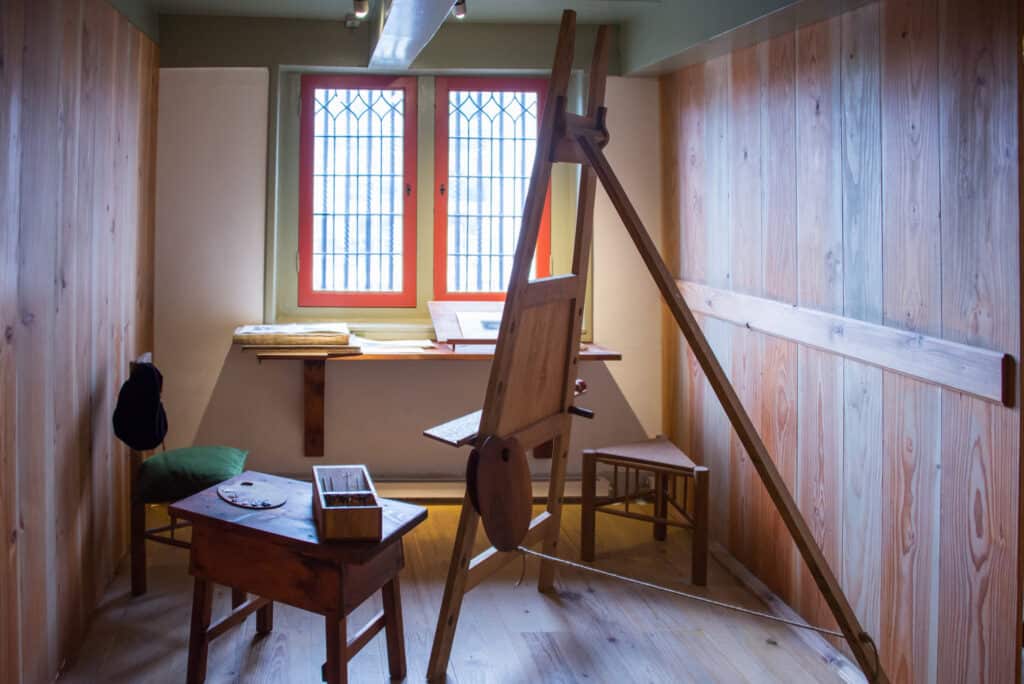
Stand where Rembrandt mixed genius with pigment. Image: Dreamstime
You’ll see his box bed, painting tools, and a sleek set of etchings. There’s even a live demo on how he made his own paint — because, of course, he did.
It’s a surprisingly intimate and effortless museum experience: small, fascinating, and perfect if you’ve only got an hour to spare.
Tip: Check the website before you go, as opening hours may vary depending on the time of year of your visit.
H’ART Museum, once the Hermitage Amsterdam, has rebranded with a bold new focus and a more independent spirit.
Housed in a grand neo-classical building by the Amstel, it presents major exhibitions with global art and socially relevant themes, in collaboration with leading museums. 🌍
But that’s not all. The building also houses the Amsterdam Museum and Museum of the Mind | Outsider Art, making it a unique cultural hub.
Tip: The Grand Café serves up seriously good coffee, and the museum keeps things lively with painting workshops, live jazz, and other artsy happenings
📍 Location: Amstel 51, Amsterdam 💰 Price: €27.50 for adults, €17 for students, and free for visitors aged 17 and under ⏰ Hours: 10 AM to 5 PM daily
7. Royal Palace Amsterdam
Once Amsterdam’s city hall, the Royal Palace became a palace for royalty when Napoleon’s brother decided he needed something a bit more… majestic. 👑
Imagine calling this your office. Goals. Image: Dreamstime
Today, it still hosts royal events but opens to the public when the royals are off duty. While not technically an art museum, it does feature impressive artworks, including pieces by Rembrandt’s pupils and Ferdinand Bol.
Nxt Museum in Amsterdam Noord is all about the future of art — digital, immersive, and seriously interactive.
Set inside a former warehouse, the space comes alive with video, VR, and tech that moves with you.
Some exhibitions are all about the wow factor, while others ask big questions about technology, privacy, and what it means to be human in a hyper-connected world. 👾
Tip: Prices vary by time slot, so plan ahead. Want the best deal? Wednesdays are your friend.
📍 Location:Asterweg 22, Amsterdam Noord 💰 Price: €19.50 to €24.50 for adults, €15 for students ⏰ Hours: 11 AM to 8:30 PM Sunday to Thursday, 11 AM to 10:30 PM Friday to Saturday
9. Eye Filmmuseum
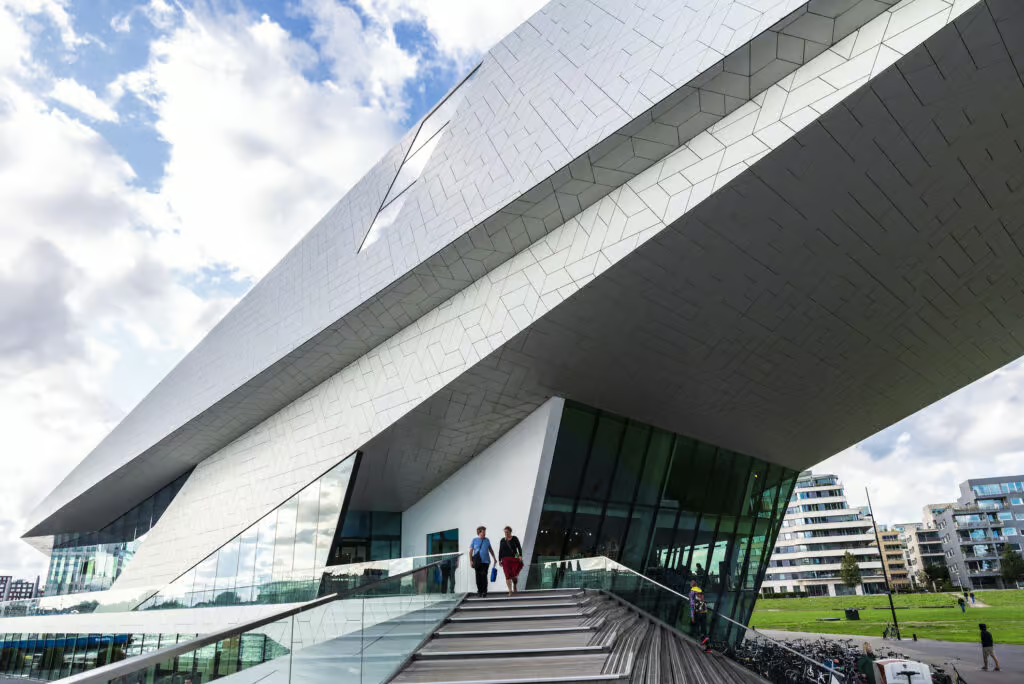
This white icon, located across from Amsterdam Centraal Station, is all about cinema.
Did you know the Eye Filmmuseum is named after its eye shape and the Dutch ‘IJ’? Image: Dreamstime
You’ll find rotating exhibitions and a permanent showcase on the history of film, along with fun activities for kids, including flipbook making, animation tables, and audio benches.
The Eye Filmmuseum features four cinemas, offering screenings for all tastes, from family favourites to arthouse highlights.
Tip: The Eye Bar & Restaurant serves up stunning panoramic views — and one of the best broodje kroketjes in the city.
📍 Location:IJpromenade 1, Amsterdam Noord 💰 Price: €13.50 for adults, €11 for children up to 11 years ⏰ Hours: Sun-Thurs 10 AM to 10 PM, Fri-Sat 10 to 11 PM
10. STRAAT Museum
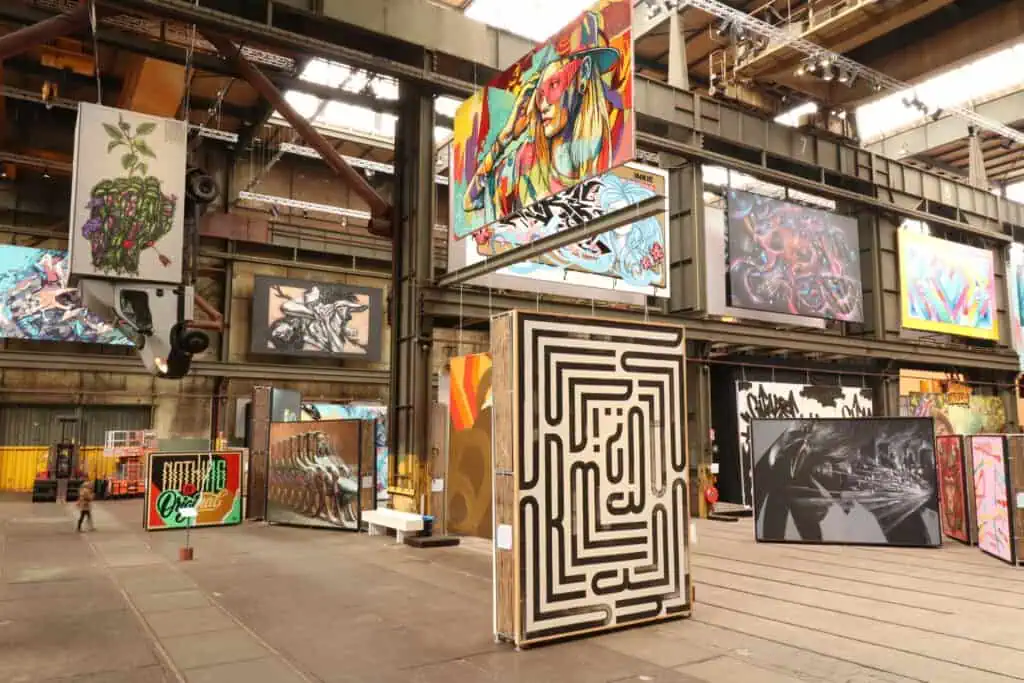
Catch the free ferry to Amsterdam Noord and find yourself surrounded by bold, unfiltered street art in a massive industrial warehouse.
The Straat Museum isn’t your average museum. It’s raw, loud, and proudly rooted in the streets, with work by legends and rising stars alike.
World’s largest graffiti museum? Yep, right here. Image: Dreamstime
We’re talking 7,000 square metres of graffiti, massive murals, and wild installations that don’t hold back.
Tip: Feeling inspired? Sign up for a workshop and leave with your masterpiece.
📍 Location:NDSM-Plein 1, Amsterdam Noord 💰 Price: €19.50 for adults, €9.50 for anyone under 18 ⏰ Hours: Mon 12 PM to 5 PM, Tue to Sun 10 AM to 5 PM
11. FOAM
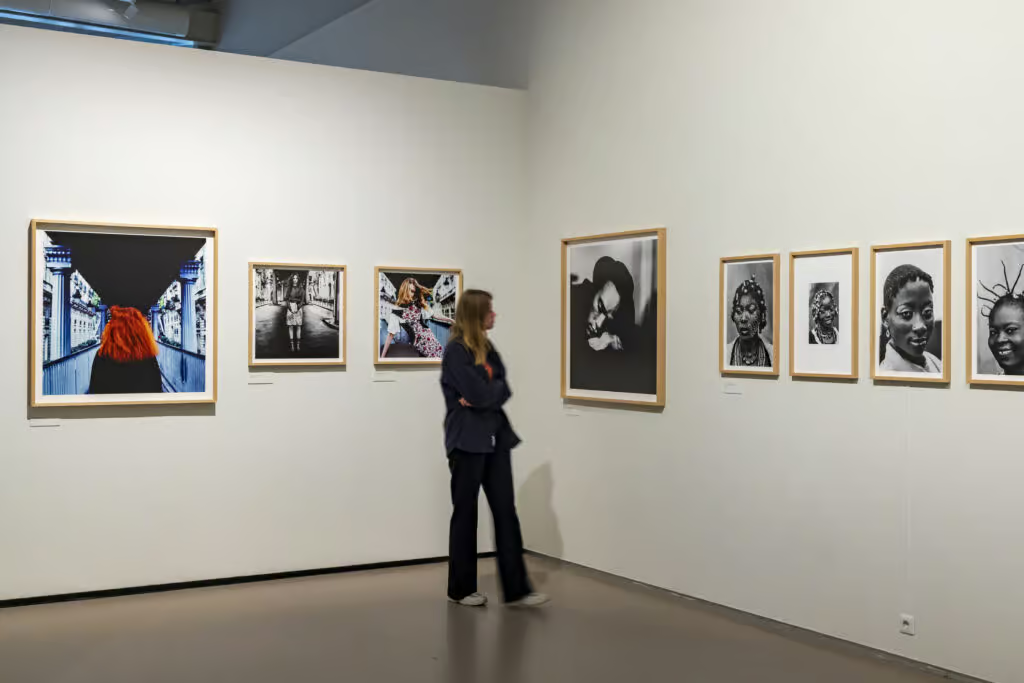
FOAM is a must for photography lovers, all inside a dreamy canal house that’s almost as photogenic as what’s inside. 📷
If you love photography, Foam hits deep. Image: Dreamstime
Expect exhibitions that range from historical icons to new voices, with a strong focus on documentary photography that isn’t afraid to get political or personal.
It’s not huge, which means exhibitions are thoughtfully curated and easy to connect with.
Tip: The lineup changes often, so check the website before you go. And don’t skip the gift shop — the photo books and prints are seriously tempting.
📍 Location:Keizersgracht 609, Amsterdam 💰 Price: €16 for adults, free for children up to 12 years old ⏰ Hours: 10 AM to 6 PM Monday to Wednesday, 10 AM to 9 PM Thursday to Friday, 10 AM to 6 PM Saturday to Sunday
12. Huis Marseille
Huis Marseille has been capturing Amsterdam’s attention since 1999, when it opened as the city’s very first photography museum.
Housed in a 17th-century canal house at Keizergracht 401, it expanded in 2013 to include its neighbour at number 399. The result? Fourteen unique exhibition spaces.
The museum hosts a rich and varied program that changes about four times a year, showcasing photography that zooms in on today’s social and political issues.
Tip: Don’t miss Huis Marseille’s garden, and its quiet little library.
📍 Location:Keizersgracht 401, Amsterdam 💰 Price: €12.50 for adults, €6.50 for 65 + ⏰ Hours: 10 AM to 6 PM daily, Thursday open until 9 PM
13. Cobra Museum
Take the number 5 tram to Amstelveen and explore a museum packed with bold colour, raw emotion, and a fearless break from tradition.
Cobra was never just an art movement — it was a radical break from convention, grounded in creativity, international solidarity, and a belief that art belongs to everyone.
Cobra is just outside the city and totally worth the detour. Image: Dreamstime
Here you’ll find works by Karel Appel, Constant, and Corneille, alongside contemporary artists who carry that rebellious spirit alive.
📍 Location:Sandbergplein 1-3, Amstelveen 💰 Price: €20 for adults, €5 for teens 13 to 18, free for kids under 12 ⏰ Hours: 10 AM to 5 PM Tuesday to Sunday
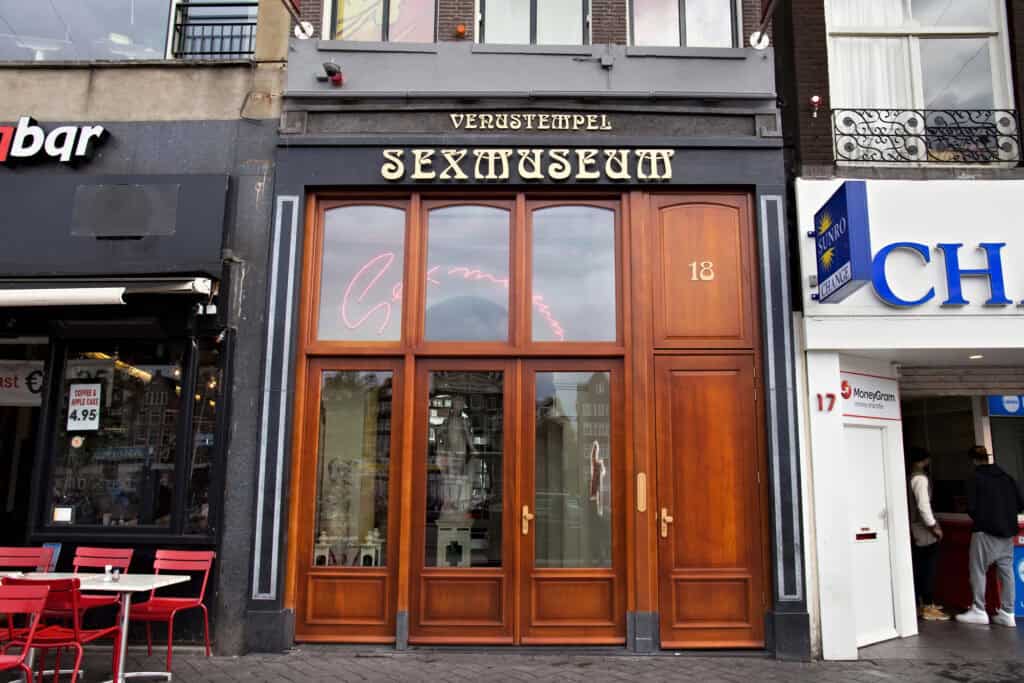
14. Sex Museum
Although this isn’t your typical art museum, this cheeky little spot on Damrak has been exploring Amsterdam’s open attitude toward sex since 1985.
Amsterdam’s Sex Museum is more than giggles; it’s a walk through centuries of erotic history. Image: Depositphotos
The collection goes global, featuring erotic art from anonymous stone carvings to big-name artists, all proving one thing: sex has always been part of the cultural conversation.
Sure, it’s touristy — but don’t roll your eyes just yet. You’ll find everything from ancient fertility symbols to vintage porn and stories of sexual liberation.
📍 Location:Damrak 18, Amsterdam 💰 Price: €10 for adults (16+) ⏰ Hours: 10 AM to 6 PM daily
15. KattenKabinet
A museum entirely dedicated to cats in art — exactly as wonderful and weird as it sounds.
The collection stretches across centuries, with paintings, drawings, sculptures, and even works by big names like Picasso and Rembrandt. Yes, even the greats couldn’t resist a good cat muse. 😻
Tucked inside a beautiful canal house, the museum comes with a bonus: real cats. These furry residents wander through the galleries like they own the place, and honestly, they do.
📍 Location:Herengracht 497, Amsterdam 💰 Price: €12.50 for adults, €7.50 for 65+ ⏰ Hours: Tuesday to Sunday from 12 AM to 5 PM
16. Het Schip
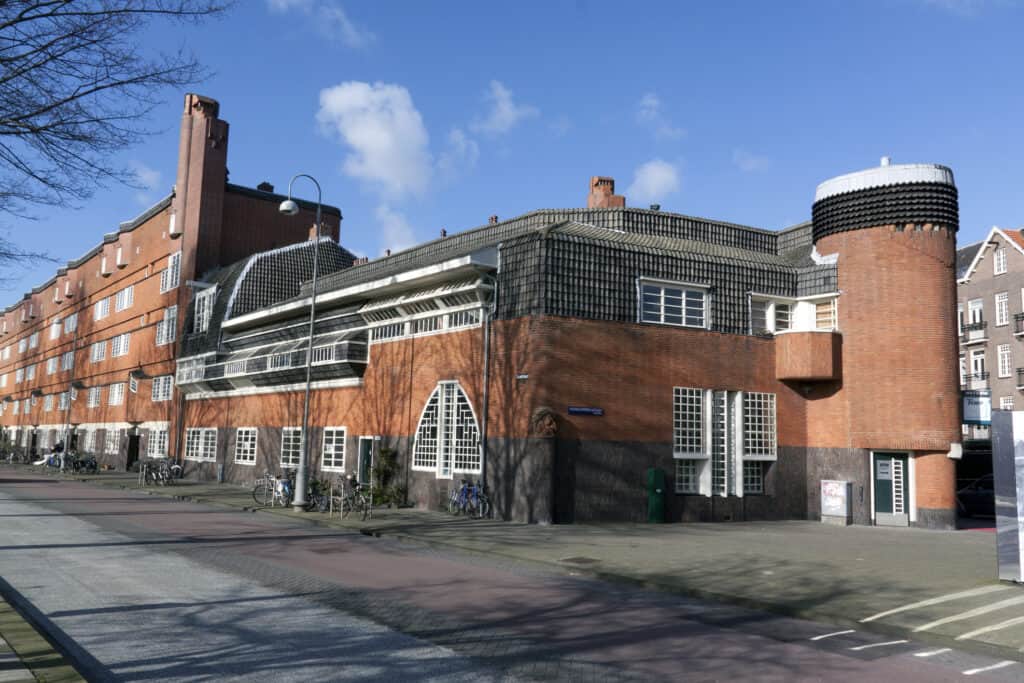
Museum Het Schip lives in a legendary Amsterdam West complex by Michel de Klerk, better known as “The Schip.”
This striking brick building, which resembles a ship, is one of the finest examples of the Amsterdam School style.
A bit hidden, wildly original. That’s Het Schip. Image: Dreamstime
An expressionist masterpiece that proves social housing can have just as much flair as any building.
Expect permanent exhibitions featuring vintage street furniture, as well as rotating art exhibitions to keep things interesting.
📍 Location:Oostzaanstraat 45, Amsterdam 💰 Price: €16.50 for adults, €5 for children 5 to12 ⏰ Hours: 11 AM to 5 PM Thursday to Sunday
FAQ: Art museums in Amsterdam
What’s the difference between the Museumkaart and the I amsterdam City Card?
The Museumkaart costs €75 and gives access to 400+ museums across the Netherlands, including all the big names in Amsterdam. Visit just four and it’s paid for. It often skips the lines, which is a lifesaver in busy seasons. You can buy it online or at participating museums. Live here or visit often? This one’s for you.
The I amsterdam City Card is built for short stays. It covers public transport, 70 museums, a canal cruise, bike rental and even some restaurants. Prices start at €65 for one day and go up to €135 for five. You can get it online or at the I amsterdam Store in Amsterdam Centraal.
Do I need to book museum tickets in advance in Amsterdam?
For top museums like the Van Gogh Museum, booking tickets online in advance isn’t just smart — it’s mandatory. Others, like the Moco Museum, don’t require it, but booking ahead is strongly recommended, especially during weekends, holidays, or the summer rush.
Many other museums allow walk-ins, but you may encounter queues and higher prices. Booking online usually means a discount or faster entry.
When is the best time to visit museums in Amsterdam to avoid crowds?
Early mornings or late afternoons are your best bet. Tour groups usually flood between 10 AM and 4 PM, so the best times to visit are between 9 AM and 10 AM and after 3 PM.
Weekdays, especially Tuesday to Thursday, are way calmer — your chance to enjoy the art without elbowing through a crowd.
How can I combine multiple museum visits in one day?
Stick to the Museumplein area. You can easily walk between the Rijksmuseum, Van Gogh Museum, Stedelijk, and Moco.
Are photos allowed in any Amsterdam museums?
Most Amsterdam museums allow photos, but flash and filming are usually restricted. It’s always best to check the website or ask the staff when you get there.
If you plan a commercial shoot or work in media, make sure to contact the museum in advance for permission.
Do Amsterdam museums offer audio guides or guided tours?
Many museums offer audio guides, though they’re not usually included in the ticket price. Some provide apps or QR codes for your phone, so it’s best to bring your headphones — just in case.
Are Amsterdam’s museums wheelchair accessible?
Many Amsterdam museums are wheelchair-accessible, featuring elevators, ramps, and accessible toilets.
That said, a few older buildings can be less straightforward. It’s a good idea to check the museum’s website or contact them in advance to make sure everything you need is available.
Still not sure where to begin? Start with one big-name museum and pair it with something smaller and a bit quirky to keep things interesting.
Mix and match based on your mood, your energy level, and whether you remembered to book ahead (we’ve all been there). 😌
Enjoyed the guide? Share it with a friend, save it for later, or use it to plan your perfect museum day. Got a favourite we missed? Drop it in the comments — we’d love to hear it. 💬
A 42 year-old-woman who allegedly threw her 5-year-old son from the balcony of their fifth-floor apartment in Zuptphen last November has fronted the court.
According to RTL Nieuws, the prosecutor argued Adriana P. was entirely under the influence of a mental disorder at the time.
Her lawyer is pushing for acquittal, or TBS, claiming that while she committed the act, her disorder makes her not punishable for it.
Some offenders have reduced responsibility due to psychiatric or personality disorders. To protect society, they can instead receive a terbeschikkingstelling (TBS) sentence. This alternative to prison gives them psychiatric help with the intention of helping them re-enter society.
A miracle survival
The boy fell about 15 metres, suffering a collapsed lung and other injuries, but was discharged from the hospital just days later. He is now living with a foster family.
Speaking to RTL Nieuws, the prosecutor describes his mother as a ”woman with two faces. ” — battling schizophrenia, PTSD, and substance abuse, yet still caring for her son.
Seeing a risk of the incident repeating, the court ruled that long-term treatment was necessary, imposing TBS with conditions.
Mental health at the centre of the case
P. told the court she acted under instructions from voices in her head and was in a trance-like state at the time of the incident.
”I took him in my arms and said, ‘The time has come Marwan,’ I gave him lots of kisses and then I let him fly. I said, ‘Fly up like a butterfly.”’
Police had visited her apartment about an hour earlier after hearing her screaming from the balcony, but left when she calmed down; an hour later, she allegedly threw her son off the balcony and confessed to police.
Her lawyer argued for acquittal, saying headlines risk painting a false picture of a violent mother. If found guilty, he urged for conditional TBS.
In her closing words, P. told the court she wants to recover and be ”a healthy mother” to her son. The court’s final verdict is expected on August 28.
Police believe they have found the body of a missing 24-year-old Syrian woman from Almere.
The discovery was made yesterday by a bystander in the forest near Almere’s De Kiem car park, roughly one kilometre from where she was last seen. Police say there is strong evidence she was killed.
Her travelling companion, 34-year-old Omar Almahad, is a suspect. Officers are still searching for him, along with his car, a grey Peugeot 307 SW with the licence plate 36-LH-RN.
Police are looking for the suspect and his car, pictured above. Image: Politie
Anyone who sees the suspect or the vehicle is urged to call 112 immediately. For any other information relating to the investigation, contact police on 0800 0600.
How’s everyone doing these past few days? Sleep deprived due to the oppressive wall of heat? Constantly dehydrated? A bit irritable?
Well, just be thankful you don’t live in one of these five Amsterdam neighbourhoods.
According to Het Parool, a simulation study carried out by W/E consultants identified which parts of the capital are most affected by heat. The study comes after Amsterdam set aside €2.5 million to protect neighbourhoods from the sun.
Who are the hotties?
Congrats, you’re literally one of the hottest people in Amsterdam if you live in the Elandsgracht neighbourhood.
According to the study, this one neighbourhood has a whopping 1,715 addresses based in super heat-sensitive buildings.
Runners up in second and third place were the Sarphatipark neighbourhood in De Pijp and the western part of the Scheldebuurt respectively.
Both neighbourhoods have more than 1,500 homes that experience sweat-inducing temps.
In fourth and fifth place, we have the Van der Pekbuurt neighbourhood in the north and the Weesperbuurt in the centre.
So, if your friends start giving you flack for complaining about the heat and you live in one of these unfortunate postcodes, just flash them this article in self-defence.
How are the hottest neighbourhoods determined?
You may be wondering how exactly the experts reached this conclusion. It wasn’t as simple as knocking on doors and standing around in attic rooms while holding ijsjes.
When determining the hottest neighbourhoods, the study looked at factors such as:
Whether the surrounding area was urban or green.
Whether temperatures inside the home would exceed the heat standard that has been in effect for new build homes.
What type of buildings were in the neighbourhood.
The orientation of the buildings relative to the sun.
Whether monumental status would hinder the installation of sunshades.
Whether noise pollution would prevent people from opening their windows at night.
Whether the neighbourhood houses many people in belonging to vulnerable groups.
So, are you one of the unlucky few? If so, sorrows, sorrows, prayers.
One person died last night in a hot air balloon accident in De Hoeve, Friesland, while five others were rushed to the hospital.
According to RTL Nieuws, a sudden gust of wind hit the large balloon carrying 34 people, which later landed in a field.
Sudden gust caused people to fall
A spokesperson for the Royal Netherlands Aeronautical Association (KNVvL) tells RTL Nieuws that the balloon took off from Joure, Friesland, just after 8 PM.
About an hour later, while searching for a landing spot, the wind suddenly picked up.
”A sudden gust of wind caused the balloon to fly forward. With a strong wind, this can reach speeds of 20 to 30 kilometres per hour,” a KNvvL spokesperson says.
The balloon — registered as PH-GPH — carried 32 passengers as well as a pilot and co-pilot.
”Some of them apparently couldn’t hold on properly due to the force and fell out of the basket,” the spokesperson adds.
Ambulances, helicopters, and investigators on the scene
Emergency services were called around 9:00 PM, with two trauma helicopters and at least fourteen ambulances rushing to the scene.
The Friesland Safety Region confirmed the operation was escalated to ”code 10,” mobilising a medical team, two medical officers, the Dutch Red Cross, and a medical van.
Five people are in the hospital with injuries whose severity is still unclear. The other passengers were taken by bus to a shelter.
Lighting has been installed in the field to allow aviation to investigate through the night, with the inquiry continuing today to determine exactly what went wrong.
So, you live or study in one of the Netherlands’ best student cities, and you’re looking for places to work or study in Groningen. Well, lucky for you, we have the low-down.
Steaming cups of coffee, sweat-induced pre-exam stress, and celebratory muffins; cafés, libraries, and coworking spaces are great places to work or study in this beautiful Dutch city. ✍
Got finals coming up? Or are you a freelancer who likes to find a home-away-from-home in the corner of a coffeeshop? (No, not those kinds of coffeeshops! 🌿). Say no more.
The Forum in Groningen offers free access to all, and with long opening hours, it’s a warm and welcoming haven to find a comfy seat and bang out that 3,000-word essay. ✍
While you will need a membership to borrow books, there’s a rooftop you can access for free.
Tip: If you’re under 18, you can get a library membership free of charge.
The library has lots of events, so if you’re looking to hone your writing skills, be sure to check them out (though you will need to buy a ticket!)
There’s even a café on site to get that chai latte fix, and, with free Wifi and lots of places to charge your five-year-old laptop with a bad battery, the library is sure to be a place to spend the day studying or working.
🏢 Type: Library 💰 Price: Free ⏰ Opening hours: 9 AM to 12 AM from Monday to Saturday, and 10 AM to 11 PM on Sunday 📍 Location: Nieuwe Markt 1, 9712 KN Groningen
2. Get in your study time at Hoogkerk library
Got a group project to work on? Hoogkerk is a great spot to get those tasks done and dusted! 💅 Image: Freepik
Another member of the Forum group of libraries here in Groningen, Hoogkerk library is a brilliant place to set down your laptop and study the day away.
This library offers free Wifi, comfortable places to sit and study, and it is completely free to access!
🏢 Type: Library 💰 Price: Free ⏰ Opening hours: 8:30 AM to 5:30 PM from Monday to Friday (closed on weekends) 📍 Location: Jan Ensinglaan 29, 9744 GP Groningen
3. Grab a coffee and sit on a cosy couch at Uurwerker
‘The Clock Worker’ in English, De Uurwerker, is a combination of a café, bar, and restaurant. Most importantly, it has lots of cosy couches to plop down on and work to your heart’s content.
Grab yourself a coffee, and if you’re staying for the day, you can even treat yourself to some lunch. With options for all diets, even those vegans (because you go to art college, right?), this is a great spot to work or study in Groningen.
🏢 Type: Café 💰 Price: €3.30 for an Americano ⏰ Opening hours: 12 PM to 11 PM from Monday to Thursday, 11 AM to 12:30 AM on Fridays and Saturdays, and 12 PM to 10 PM on Sundays 📍 Location: Uurwerkersplein 1, 9712 EJ Groningen
4. Work away at Coffee Break
Prefer a quiet nook to yourself and your book? Dat kan ook! Image: Freepik
Got a freelance job that needs some extra love? Well, you’ll find a cosy seat at Coffee Break, another lovely, laptop-friendly café in Groningen.
Here, you can stay for the whole day, sipping away on your mocha, using up all that free electricity (because we are in an energy crisis, after all).
With a good Wifi connection to top it all off, you won’t be sitting looking at that infamous dinosaur on Google’s error page.
🏢 Type: Café 💰 Price: Starts at €3.10 for an espresso ⏰ Opening hours: 8:30 AM to 5:30 PM from Monday to Friday, and 11 AM to 5:30 PM on Saturday and Sunday 📍 Location: Gedempte Zuiderdiep 158, 9711 HN Groningen
5. Stay for the day at Cappunvino (and enjoy a delicious lunch)
Looking for a café to make your home-away-from-home? Cappunvino can offer comfy seats, excellent coffee, and a place to work, study, or procrastinate your heart out.
Plus, the café becomes a vibrant and vintage-looking bar in the evening, so if that essay is particularly stressful, don’t pull your hair out, just close the laptop and grab a glass of vino with friends. 🍷
🏢 Type: Café 💰 Price: €3 for an Americano ⏰ Opening hours: 10 AM to 5:30 PM on Tuesday, 10 AM to 9:30 PM on Wednesday, 10 AM to 10:30 PM on Thursday, 10 AM to 11:30 PM on Friday and Saturday, and 12 PM to 5:30 PM on Sunday 📍 Location: Vismarkt 1, 9712 CA Groningen
6. Study like a straight-A student at Selwerd
It’s the perfect place to sit down, tune out the chaos, and amp up your productivity! ⚡ Image: Freepik
Yet another location part of the Forum group of libraries, at Selwerd you can grab a seat, make use of the books onsite as sources for that history essay, and study away.
If you’re looking to take a short break away from the endless work and study, there are also exhibits at Selwerd. Usually showcasing artwork and photography by local artists, you can take a mental break with a bit of art enjoyment while you work.
Let op: Selward is currently closed from September 1 to October 26, 2025, due to renovations.
The Koffiestation is a café in Groningen that offers some incredible things: wonderful, expertly made coffee and English books to sit and read in between study breaks!
With a calming exterior of beige and wooden undertones, you can find a comfy seat and work away for hours.
You can also enjoy their coffee during your leisure time. You’ll find them, with an on-the-go coffee truck, so you can catch the Koffiestation at markets in Groningen.
Tip: The cinnamon buns in this café are to die for 😍
Are you a student in Groningen? Then drop the fake stethoscope; there’s no need for you to pretend to be a medical student to enjoy the use of Groningen’s Central Medical Library.
The library grants open access to all students in the city, so you can borrow books and make use of their facilities.
Studying with a friend? You can book a study room for two ahead of time and spend the day chatting, ahem, working. 😬
Let op: This library is only open to Groningen University students.
Got exams coming up, or just a remote worker sick of staring at the same old walls? Well, we hope that this list of wonderful places to work or study in Groningen will give you a welcome escape from your stress-riddled desk.
There’s nothing like stressing in a gezellig environment! 😏
Have you checked out any of these spots? Let us know in a comment below! 👇
Dreaming of learning a new language but not sure where to start? Taalhuis Amsterdam might just be the perfect fit.
Located in the heart of Amsterdam, Taalhuis Amsterdam offers a welcoming space where students can dive into new languages and cultures.
But what makes the school so special? To find out, I spoke to Myrte, the founder, and Meredith, a student.
Want to find out for yourself? Taalhuis Amsterdam’s free Open Day on August 30, 2025, is the perfect opportunity to get to know the school. Whether you’re curious about a new language or ready to advance your skills, the Open Day is a great chance to dive in.
Why Taalhuis Amsterdam?
Taalhuis translates to “house of languages” in English — and that’s exactly what it is: a place for language learning, cultural exchange, and, most importantly, fun!
Myrte started the school with a simple yet powerful idea: language learning should be interactive, enjoyable, and deeply connected to culture.
“I’ve loved languages since I was very young,” says Myrte. “I studied Latin and Greek, opened Taalhuis Amsterdam, and then it all kind of got out of hand,” she explains with a laugh.
Today, Taalhuis Amsterdam is a community where people of all ages and nationalities learn the languages they’ve always wanted to learn.
11 language courses
From its humble beginnings of teaching just Greek and Dutch, Taalhuis Amsterdam now offers courses in 11 languages, all taught by passionate teachers. You can choose between:
Dutch
Italian
French
Farsi
Arabic
Turkish
Greek
Hebrew
English
Spanish
Catalan
For children, there are lessons in French, Arabic, Turkish, Hebrew, and English.
In each class, there is a unique international vibe, where people get to share their differences and diversity. And, most importantly, each class gets the students talking. 💪
What do the students say?
Meredith, originally from the United States, has been taking Dutch lessons with Taalhuis Amsterdam for three years. Having previously tried private lessons at another school, she found group courses to be the best fit for her.
“Sitting in a classroom with people from all over the world has expanded my worldview, and there’s a real sense of camaraderie when we don’t understand a difficult concept,” she laughs.
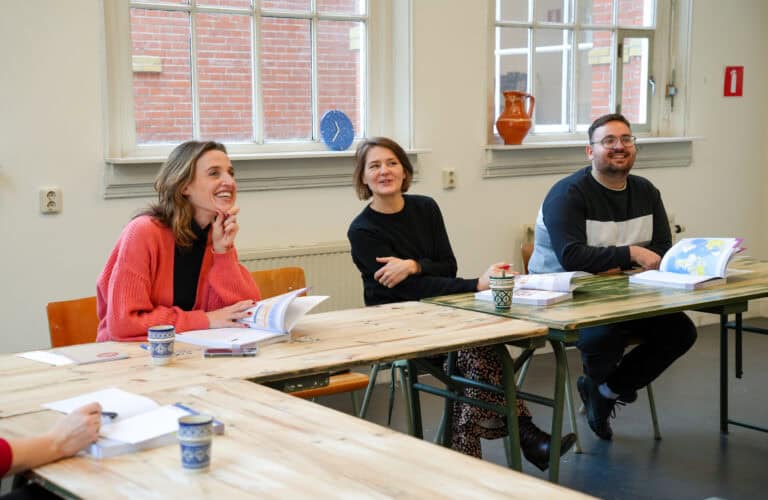
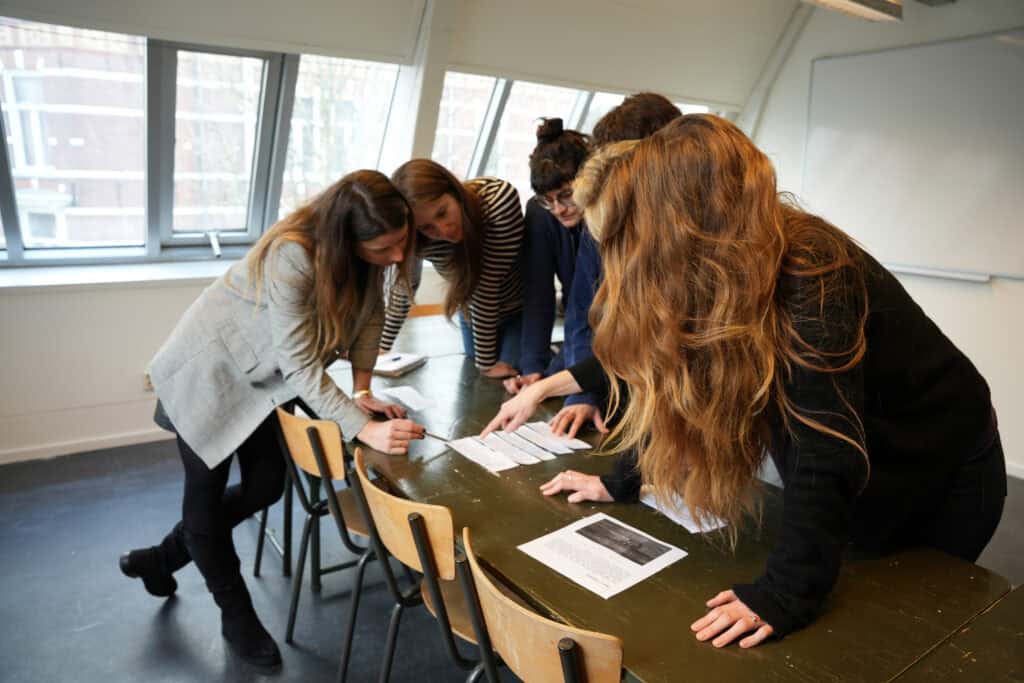
All in this together. 🙌 Image: Taalhuis Amsterdam
“I also really enjoy that the teachers are lifelong students of languages themselves, so there’s a lot of understanding of what the learning process looks like.”
Thinking back to her first lesson, she recalls: “It was full-on in Dutch, and I remember thinking, ‘…is nobody going to give me a little tip here?’ But it’s great that they hold to that.”
“I’ve learned so much because they let you make mistakes and learn from them — and they celebrate your wins.”
Learn by doing, not by cramming grammar
It’s this immersive approach, with a focus on communication from day one, that sets Taalhuis Amsterdam apart.
Each class is taught in the target language, helping you pick up the language naturally as you go. “We don’t talk about the language; we talk in it,” explains Myrte.
By learning this way, “students don’t have to take that intimidating leap from classroom to real life, because they’re already used to speaking and listening.”
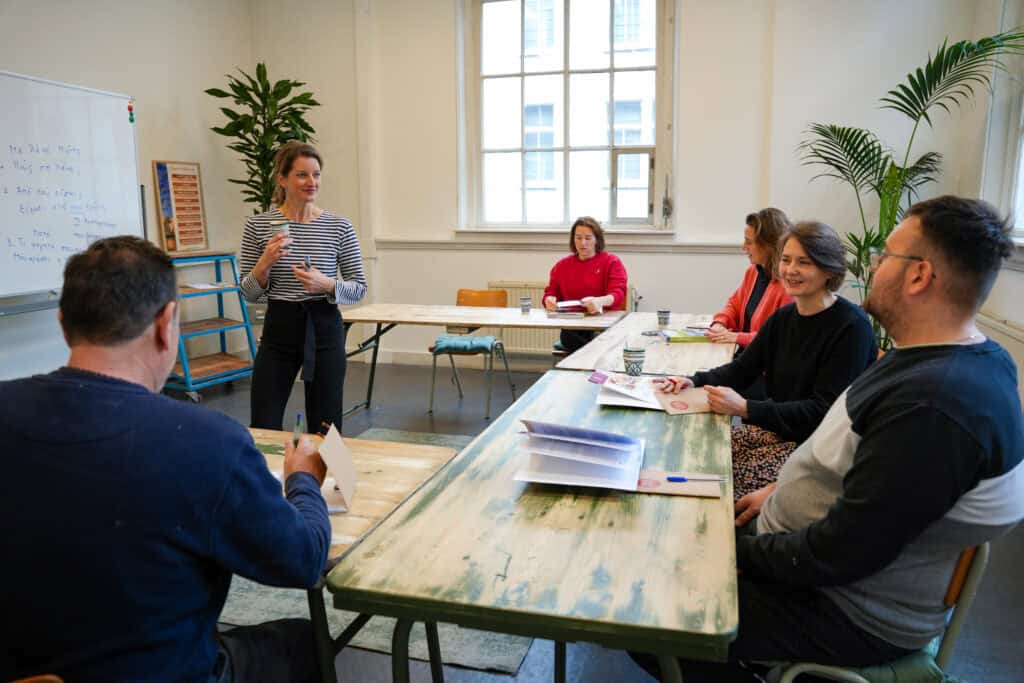
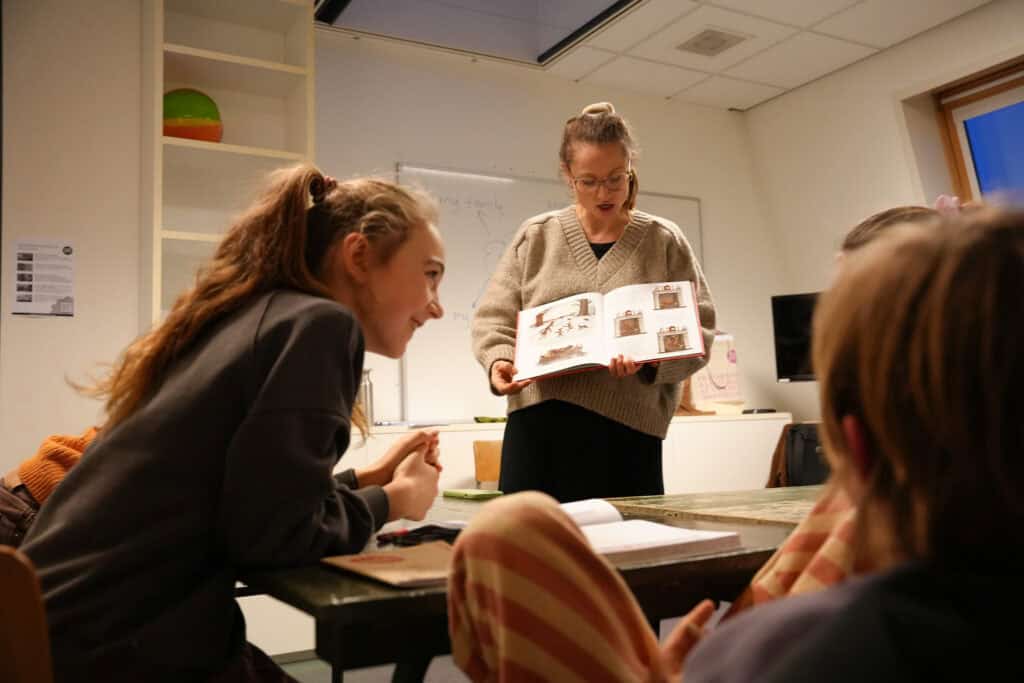
Taalhuis Amsterdam takes a conversational approach to language learning. Image: Taalhuis Amsterdam
This method also shifts the focus to what students can do, rather than what they can’t. “It’s important to focus on the words you understand instead of the ones you don’t,” Myrte stresses.
“Similarly, our classes aim to help you do things — like ordering a coffee — rather than getting stuck on complex grammar rules. But, of course,” she adds, “you’ll need the grammar to order your coffee, so the two go hand in hand.”
In other words, practical communication and grammar aren’t separate skills, and you learn them together at Taalhuis Amsterdam by using the language in real-life situations.
The perfect course for everyone
When asked about the typical Taalhuis Amsterdam student, Myrte says that “the one thing everyone has in common is their motivation.”
“Nobody studies a language without a reason,” she says, ”whether you’re trying to integrate, you love travelling, you’re learning for your partner, or to communicate with family.”
Taalhuis Amsterdam has a class for everyone. Image: Taalhuis Amsterdam
To accommodate this diverse group of people, Taalhuis Amsterdam offers classes to suit everyone, from group classes to private and children’s lessons.
Of course, different levels are offered for each language and a choice between intense courses (twice per week) or regular courses (once a week).
A vibrant community in the heart of Amsterdam
At the beginning of 2025, Taalhuis Amsterdam moved to the vibrant neighbourhood of De Pijp, where the language school finally put all its classes under one roof.
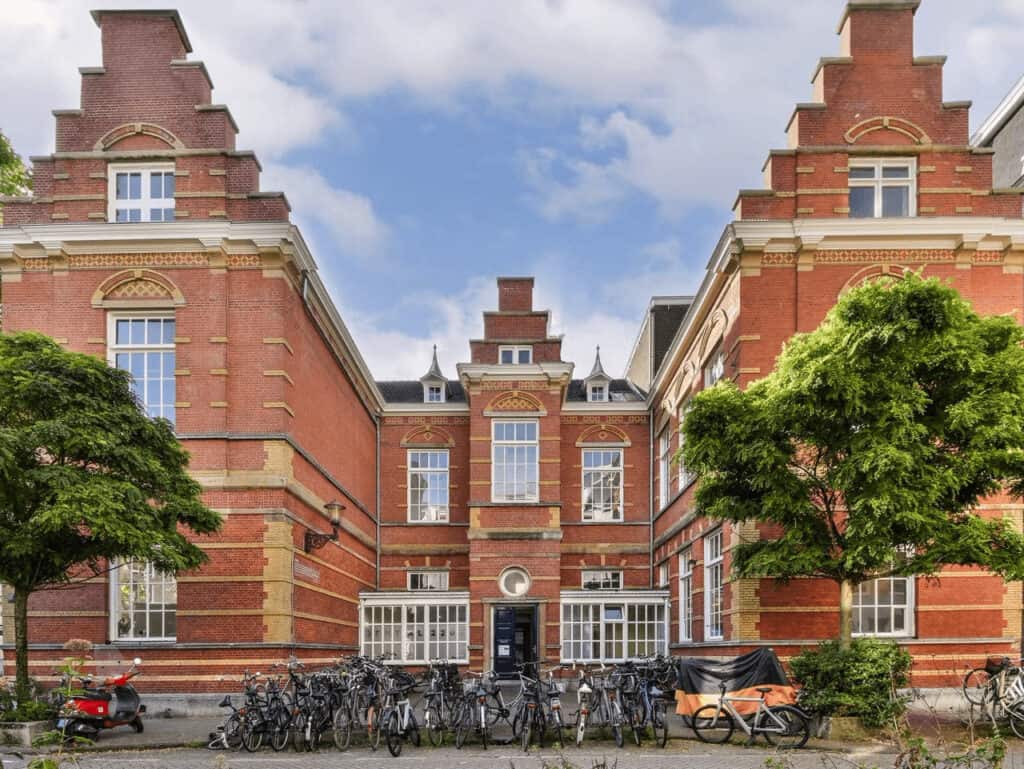
Now housed in a historic school building, the old gym has been transformed into a welcoming café, library, and bookstore.
Welkom! Image: Taalhuis Amsterdam
“It has always been our dream to bring the community together in one space where we can all communicate with each other,” Myrte smiles.
The location in De Pijp, just around the corner from the famous Albert Cuyp market, is also an advantage for language learners, says Myrte.
“While the international vibe of Amsterdam can sometimes make it hard to learn Dutch, the city is a great place to practice other languages we teach. You can just walk around the corner and practice Arabic with the Lebanese pita seller, or Italian at one of the many Italian restaurants.”
Get to know Taalhuis Amsterdam at its upcoming Open Day
Want to know more about Taalhuis Amsterdam? Dat kan! (That’s possible!)
Taalhuis Amsterdam’s Open Day on August 30, 2025, is the perfect opportunity to explore the school, meet the community, and experience the learning environment firsthand.
You can even take part in a trial lesson, ask questions, and find the right course to match your goals.
Whether you’re curious about a new language or ready to take the next step in your learning journey, this event is a great time to ask questions and find your perfect course.
It’s also the ideal moment to enrol, with free trial lessons on August 30!
The Netherlands is about to turn into a sauna again, so get ready to sweat through your lunch break and your evening Netflix binge.
For the next few days, the entire country will swelter under one of the KNMI’s code yellow weather warnings for extreme heat. (So wherever you are, prepare to feel the heat!)
Let’s see what it’s all about. 👇
Get ready to bake today
While lucky ducks in Zeeland and South Holland may start the day with low clouds and fog, this will clear by late morning.
The sun will then push the south to 30 degrees by lunchtime, reports RTL Nieuws, with 25 to 29 degrees elsewhere.
This afternoon will be pure summer, with some cloud in the west and southeast but dry conditions everywhere. Inland, it can heat up to 35 degrees, while the coast enjoys a slightly more civilised 25 degrees.
Even the Wadden Islands will reach 29 degrees, which is perhaps the perfect excuse for a brave dip in the Noordzee. 🌊
With humidity turning the air into a sauna, the southwest of the country might even see a late-evening thunderstorm. Tonight is expected to stay warm, with temperatures above 20 degrees.
With all this heat, a National Heat Plan has been in effect since 10 AM yesterday, urging everyone to stay hydrated, seek shade, and check on the vulnerable.
Milder weather? Not till the weekend
Helaas, if you think we’re getting a break tomorrow, we’ve got some bad news for you. 👇
Thursday will keep the heat rolling, with the west enjoying dry, sunny weather, while the east experiences a mix of sunshine and the odd shower or thunderstorm.
And, though the rain might provide some relief, a high of 34 degrees means the air might still feel muggy.
Friday is predicted to be another scorcher, but by the weekend, we can all breathe easier.
Temperatures will settle at a pleasant 22 to 26 degrees — perfect for enjoying drinks on a terrace or going to sleep without feeling like you’re stuck to the sheets.
Just don’t get too comfortable, because early next week, the heat will be back to remind you who’s boss. 😅
How will you survive this round of tropical Dutch weather: beach towel and BBQ, or blackout curtains and ice cubes? Tell us your thoughts in the comments below!
The Netherlands is known for many amazing things like windmills, bicycles, and cheese! But the Netherlands is also notorious for its (let’s be honest) crappy weather.
If you’ve ever been to the lowlands, you know that it’s rainy, windy, and cold most of the year.
There’s even an app — Buienradar — that the Dutch use just to check when exactly it will rain and how much. 🌧