Almost one and a half years after the Russian invasion of Ukraine, the Netherlands has confirmed that it will support Ukraine by supplying F-16 fighter jets.
After paying a visit to the air force base in Eindhoven, Ukrainian President Zelensky and outgoing Dutch Prime Minister Mark Rutte announced a new deal at a press conference, reports the NOS.
The first countries to supply F-16 jets
Along with the Netherlands, Denmark will also provide Ukraine with F-16 fighter aircrafts.
The Ukrainian President has been pleading for these aircrafts since the start of the war, but the Netherlands are the first to take the lead and put the pledge on paper.
It’s expected that the Dutch actions will inspire other countries to follow suit.
Uncertainty over some details
Some details of the deal still need to be ironed out between the Netherlands and Ukraine.
Though the Dutch Ministry of Defence has avoided giving an exact number, Zelensky seems to be expecting all 42 jets of the Dutch collection.
In celebration of the agreement, Zelensky posted on social media thanking the Netherlands for the whole fleet of fighter jets.
However many fighter jets make it to Ukraine, it will be a while before they can all be fueled up and put to use. Training to fly an F-16 fighter jet takes about six to eight months, and some spare parts still need to be collected for the entire fleet to work.
Lieutenant General of the Royal Netherlands Army, Mart de Kruif, doesn’t expect them to be in action in Ukraine before the winter, writes the NOS.
What do you think about the Netherlands’ contribution to Ukraine? Tell us your thoughts in the comments below!
Hopefully, you took advantage of the sunny weather this past weekend because the weather in the Netherlands is soon returning to its usual miserable self.
Before we all start mourning the end of a hot summer, we will get one last kiss of sunshine and warm temperatures this week. After that? Unpredictable Dutch summer weather.
The last hurrah of sunshine
To help us get through the beginning of the work week, the weather will bless us with dazzling sunshine and pleasant temperatures between 25 and 28 degrees Celsius.
But this summery perfection will last until Wednesday, reports NU.nl — so lap up as much of the sun’s rays as you can before then. Anyone for a quick beach trip after work? 🙋♀️
From Thursday onwards, things will take a change for the worst. (Okay, maybe not the worst, but definitely not the best.) Hot summer weather is abandoning us and leaving us at the mercy of typical Dutch weather. Pause for tears.
Here comes the rain
Thursday might start with balmy temperatures of up to 26 degrees Celsius, but the chance of rain showers will increase throughout the day. Guess it’s time to start carrying our raincoats around again. 😔
Will Friday and Saturday get better? Helaas, the answer is no. There will be a daily chance for rain and temperatures that don’t get higher than 20 degrees Celsius. Echt niet leuk!
How do you feel about the hot summer weather coming to an end? Tell us in the comments!
We hear about it all year round because the student housing crisis in the Netherlands is quite literally a crisis. Here’s how it’s impacting students coming to the Netherlands.
The Netherlands, being one of the most densely populated countries and all, already struggles to house its permanent population. Add to that, thousands of students coming to the Netherlands to study temporarily, and it’s a recipe for disaster.
In 2021, the housing shortage was so bad in Groningen that tents were erected with rows of beds for students to sleep in until they found somewhere more permanent.
Groningen is far from the only city that has had to resort to tents, but what’s put this specific case in the spotlight is that they charged €12,50 per night (ouch!).
The housing crisis in the Netherlands is leaving many students desperate and homeless. Image: Unsplash
The price was later reduced to €6 per night — but that’s still almost €200 per month for the privilege of sleeping in a large tent, uncomfortably close to the next bed. Definitely not an ideal situation…
Of course, it’s better than nothing at all, but it stands as a threatening example of how bad the situation can be.
2. Students are being offered rooms for sex
Some people turned into total creeps when they became aware that students were at risk of being homeless.😳 Specifically, stories have spread about people offering students spare rooms in exchange not for money, no, but sex.
Not only is such behaviour creepy and disgusting, but it’s also a crime. Exploiting people for sexual favours in exchange for shelter is appalling, and just another scary face of the Dutch housing crisis.
Thankfully, not everybody is like this — but if you do come across it, make sure to report it to the police as soon as possible!
3. Scammers are leaving students out of pocket — and still homeless
Again, when some people are aware that students are vulnerable to homelessness, they turn into total scammers.
As we all know, scamming is certainly not a new thing in the housing market, but they come out in full force when the market is tight.
Foreign students are often subject to scammers when looking for a room online. Image: Pexels
International students searching for a room from abroad are also more at risk as they’re unable to view the room in person. The news is full of stories of people paying large deposits, and arriving in the Netherlands only to find out that the apartment doesn’t even exist.
4. Foreign students are met with ‘Dutch only’ requirements
It’s a massive struggle for many international students to find accommodation, and it’s not making it any easier that rooms often have labels such as “no internationals” and “Dutch-speaking only”.
As a result, many international students find themselves homeless, for no good reason.
On top of that, name discrimination is a massive issue too. Even if some rentals aren’t outright saying it, they could still be rejecting foreigners disproportionately. So, many international students might find themselves applying for over 100 rooms, with no luck.
5. Staff are housing students in their own homes
The issue of homeless students is so great, that the University of Groningen even asked staff to house students in their spare rooms.
Couch surfing has become all too common while students look for a room in the Netherlands… Image: Depositphotos
Imagine sharing a house with your lecturer, because you got scammed and ended up landing in the Netherlands completely homeless! The whole situation is literally just mad.
Quite a few members of staff have agreed to allow a student to stay in their home — but this temporary solution only makes a small dent in the mounting number of homeless students.
Of course, many students have also found housing, yet this requires searching very early and intensively — and being aware of the realities of the crisis.
Regardless, Dutch universities are under fire for encouraging so many foreign students to come to the Netherlands, knowing full well that no matter what, many of these students will never find a home.
What are your thoughts on the student housing crisis in the Netherlands? Tell us in the comments below!
Editor’s Note: This article was originally written in August 2018, and was fully updated in August 2023, for your reading pleasure.
Good news, the train network between the Netherlands and other European cities is about to grow even more, with lots of changes for Dutch travellers coming up!
A brand new agreement was made with the main Dutch railway company (NS) and the Dutch government. From 2024, there will be many changes for train travellers, reports AD.
One of these is that there will be more railway companies offering routes to top-European destinations — hoera!
More trains for day trips, off we go!
With the new deal, the NS will lose exclusive rights over international train routes from Amsterdam to popular European cities such as: Berlin, London, Paris, Frankfurt, Basel, Vienna, and Innsbruck.
What does this mean? Since the NS will no longer hold a monopoly over these routes, other companies can also offer their services — meaning ticket prices should be more competitive for us consumers.
Last minute travel to Germany for work.. Train is close to €300 and flights are just over a €100 plus way faster. 🙃
International train services between Netherlands and Germany are not good, and we're neighbours, but sure, trains can compete with planes across Europe 😆
And it seems that other railway companies are not about to back down in the fight. In fact, they seem to be buzzing with eagerness. Arriva, Flix, and Qbuzz have already submitted plans!
Helaas, the one route that the NS will maintain exclusive rights for is the route to Brussels, Belgium.
On the bright side, the NS has announced plans to make the connection even quicker, making it that much easier to pick up and enjoy some crunchy waffles.
More changes coming up
The new deal will bring many more changes for Dutch train travellers starting in 2024. Here’s a brief rundown of these:
Travellers will get to Brussels quicker: services will increase to two intercity trains every hour
Train ticket prices to increase by 3.5% on January 1, 2024 and again in January 2026 (ouch!)
A possible additional rush-hour surcharge on train tickets (but also lower prices off-peak)
Apart from this, the NS will not have to change much compared to how it’s running today — to the disappointment of many…
Yep. They will maintain control over domestic rails (in violation of European rules), there will be no increase in the number of trains outside the Randstad, and they won’t have to promise to be more punctual than they usually are.
Don’t let the cloudy morning fool you — the hottest day of the week is here and it’s going to be a toasty one!
This Friday morning in the Netherlands starts with clouds blocking that glorious sunshine that we all need. Well, don’t worry because soon we’ll get way more than we bargained for.
The clouds will dissipate throughout the morning and the sun will make a dazzling appearance, amping temperatures up to a sizzling 29 degrees Celsius, reports NU.nl. 🌞
It’s a sunny Fri-yay!
During the afternoon, there will be a battle between the sun and clouds. Which one will win?
It seems that the odds are in the sun’s favour as a warm easterly wind chases those pesky clouds away and brings in sweltering temperatures. Hoera! Let’s head to the beach!
We’ll definitely be searching for somewhere to take a refreshing dip to cool down, with the mercury rising to a maximum between 23 degrees Celsius on the Wadden Islands and 29 degrees in Limburg.
Helaas, the clouds will make a comeback at night time, with cloud cover increasing into Saturday. This means there is a chance for rain and even thunderstorms, especially in the west of the country.
How will the balmy temperatures affect your Friday plans? Tell us in the comments!
If the outgoing cabinet doesn’t take new measures, every one in 17 people in the Netherlands might be living in poverty by 2024.
Today, 4.8% of the Dutch population lives in poverty. However, the Central Planning Bureau (CPB) crunched the numbers and warned that if the Dutch cabinet doesn’t take action, this number will rise to 5.7% by 2024, reports the NOS. This includes a rise to 7% of children living in conditions of poverty.
What does this mean? In total, one million people in the Netherlands are likely to be living without enough money for basic needs such as food and shelter.
Point the finger at energy prices
The skyrocketing energy prices of the past several years are partly to blame for the increase of people at risk of poverty. Prices for heating up homes and electricity had more than doubled at one point, emptying many families’ wallets.
Zonder nieuw beleid loopt de #armoede op van 4,8% van de bevolking dit jaar tot 5,7% in 2024. Onder kinderen stijgt het percentage dat in armoede leeft van 6,2% naar 7,0%. Dit blijkt uit de CPB-raming die vandaag is verschenen. Zie: https://t.co/YHvFnC7o0Apic.twitter.com/yijvQJQv7d
Translation: Without new policy, poverty will rise from 4.8% of the population this year to 5.7% in 2024. Among children, the percentage living in poverty will increase from 6.2% to 7.0%. This is evident from the CPB estimate that was published today.
Although energy prices have slowly fallen, energy companies warn that they might spike right back up in the coming winter. Not only that, but government measures to curb shooting energy prices are expiring this year.
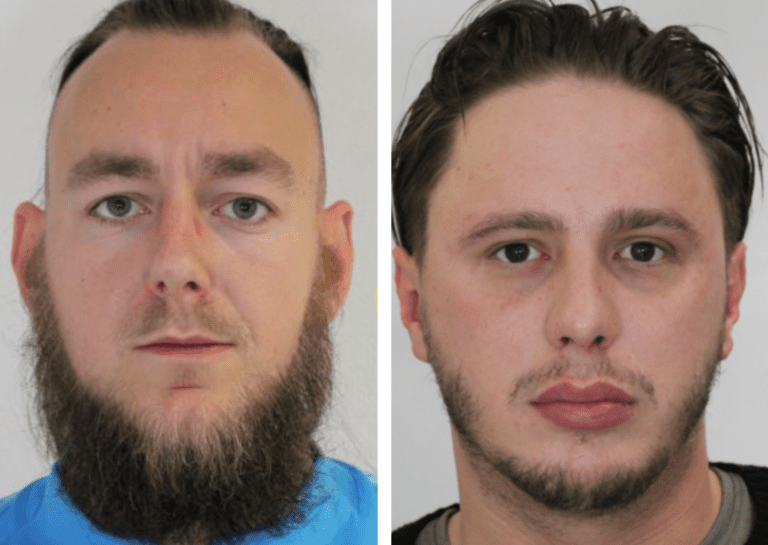
Police in northern Italy are on high alert looking for a 21-year-old Dutchman suspected of stabbing two other people while on holiday.
The Dutchman, who is believed to have psychological problems, is suspected of stabbing his own father and a family friend to death in the Italian town of Montaldo di Mondovì.
Italian police are searching for the suspect between houses and farms, reports the NOS. They warn residents in the area to be wary and report any sightings.
A guest on holiday
According to the Italian news agency ANSA, the Dutch suspect was a guest at the house of his father’s friend. An argument broke out where it is alleged that he attacked his father with a knife. The latter died from the injuries.
While trying to intervene, the 60-year-old owner of the house was also seriously injured. He later died in a hospital in Turin.
An extensive manhunt
The suspect is believed to have run off into a nearby forest. A helicopter was used for a long time in an attempt to find the suspect after he fled, and dozens of police officers are still searching for him.
The manhunt is continuing through the heavily wooded area of Montaldo di Mondovì and the surrounding villages of Roburent, Monastero di Vasco, San Giacomo di Roburent and Vicoforte.
The suspect is about 1.75 meters tall, and is wearing shorts and a shirt. Police are urging people to call 112 if they see him.
If you couldn’t tell from the news about bankruptcies and inflation: the Dutch economy has been shrinking in the past two quarters. This means that the Netherlands has officially entered a recession.
The Central Bureau of Statistics (CBS) has found that the Dutch economy contracted by 0.4% in the first quarter of 2023 and 0.3% in the second quarter, reports the NOS.
But before you start panicking, take a second to breathe. CBS chief economist Peter Hein van Mulligen says there is no need to be worried over the scary “recession” word.
Just a “period of stagnation” — not a crash
There’s no need to adopt all the frugal Dutch ways just yet. This recession is not an economic crash with people fighting for jobs and companies falling bankrupt like dominoes. Rest assured: there are still more jobs available than unemployed people in the Netherlands.
Rather, this is just a “period of stagnation” of a growing economy, according to Van Mulligen.
Why the slowdown?
One of the main reasons for the sluggish growth is that people are spending less money compared to right after the COVID-19 pandemic. As soon as restrictions eased, people scrambled to catch up on missed holidays, shopping trips, and meals at restaurants.
And now? People are done making up lost time, and are back to keeping a close eye on their cash.
Besides the relative dip in post-pandemic spending, a decline in Dutch exports has also contributed to the slowdown in growth.
In response to the numbers, the Dutch cabinet will now have to tip-toe the line between being an outgoing caretaker cabinet and still bringing enough stability to avoid falling off the economic cliff.
How do you feel about the news that the Netherlands has entered a recession? Tell us in the comments below!
If you thought the Netherlands was the worst place to go on holiday, think again. Tourists from around Europe are coming to the Netherlands more and more frequently due to rising temperatures in their home countries.
The south of Europe has historically been a haven from the gloomy Dutch weather, but now the heat is becoming a bit too intense.
The result? People are travelling up north for their holidays: not only to the Netherlands but also Scandinavia and Brussels.
Particularly, tourists from Spain and Italy are coming to these destinations. That being said, they’re not coming here in the summer, as you’d expect. Instead, they travel in the autumn or springtime, possibly because ticket prices are higher in the summer.
Their favourite Dutch destination to visit? Amsterdam! (Surprise, surprise.)
Why travel up north?
Basically, people are leaving the south of Europe because it’s just too damn hot. And that’s not really going to stop anytime soon.
Meteorologists predict that these seasons of extremely high temperatures are going to get longer and more intense, according to Metro Nieuws.
We’ve recently seen the implications of extreme temperatures in Greece, when travel company TUI had to evacuate 8,000 travellers from Rhodes because of forest fires.
Forest fires and floods are becoming more frequent in many warm countries, so people are vacationing in places like the Netherlands, where these natural disasters are less likely to happen.
Trains are better than planes
Travelling by train is also becoming more and more popular, and only 35% of travellers chose to travel by plane in the past year. At the same time, flights are becoming more expensive (party because fewer people choose them).
As a result, people vacation closer to their homes, making use of Europe’s extensive international train network.
Where is your favourite way to spend your holidays? Tell us in the comments!
Thought COVID-19 was gone for good? Think again. Traces of the virus have been detected in Dutch sewage water (and it’s the highest amount since May), more people are being hospitalized, and a new variant is upon us.
Despite these alarming new developments, the National Institute for Public Health and the Environment (RIVM) assures us that the odds of getting corona are only “rising from very, very low to slightly less, very, very low”, RTL Nieuws reports.
Why now?
So why has the old ‘rona decided to come back to bite us at this moment? The answer is not entirely known.
Susan van den Hof of the RIVM suspects the months of vacationing that happened this summer contributed to the spread of the disease.
Here’s a gross but possibly reassuring fact: the amount of COVID particles in sewage is increasing at a faster rate than the hospital cases.
This means that even if they technically have the virus, many (mainly vaccinated) people have manageable symptoms that don’t require urgent care, and therefore won’t put a strain on the healthcare system. Hoera! 🌈
New variant in town
A new COVID variant has also been making its rounds lately — and it’s the problem that has no name. Wait, actually, it does. They’re calling it EG.5, and apparently, it’s a variation of the common XBB strain.
Luckily, this new subvariant doesn’t appear to make people more ill than other corona types.
Also, when people get the updated vaccination next autumn, they will be protected against XBB and all its subvariants (EG.5 too).
In the meantime, remember to wash your hands, and try not to drink sewage water if you can help it. 😬
Are you worried about the emergence of a new COVID-19 strain? Share your thoughts in the comments below.