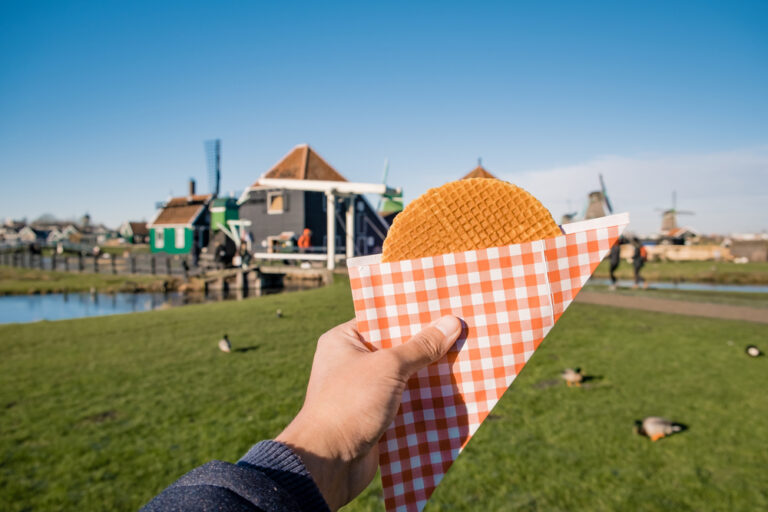
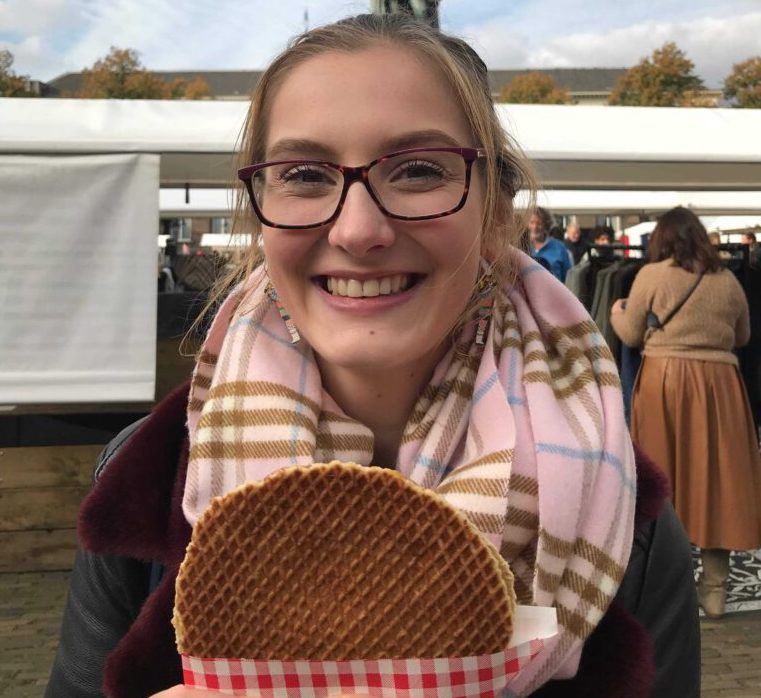
Out here, on planet Nederland, there is your usual stroopwafel on top of a coffee cup on one side of the coin, and then there are freshly made (and warm) market stroopwafels eyeing you from the flip side.
As a reminder and a disclaimer, we at DutchReview pride ourselves on being a hand-selected foodie community.
Therefore, we decided it’s only appropriate for us to address this food phenomenon: Dutchies eating warm market stroopwafels. 🤤
What is it?
Going to an open-air market has its own hype in the Netherlands, mainly for all the exclusive treats you experience from market stands and food carts.
One such sweet, and a superior one at that, is the freshly made stroopwafels that tickle your nostrils from miles (or kilometres) away. 🪶👃
Unlike its store-bought counterpart, market stroopwafels are tinkered and made to warm you up on these cold, grey days and guarantee a smile on your face — just like a toasty hug for your soul.
Why do they do it?
The Netherlands presents a perfect environment for such an invention. It’s cold, wet, and grey for the majority of the year, so a pick-me-up in the form of feel-good food is never a bad idea, to be honest.
Also, think of it this way: Why not take a Dutch food staple, magnify it to three times its size and serve it warm to pedestrians, rain or shine?
Check out the size of that! Image: DutchReview
It’s a business model for the history books if you ask me!
Why is it quirky?
There’s a lot to cover here. ✍️ For starters, the gigantic size of market-stroopwafels, which (not to be a party-pooper) poses some health questions about normal sugar intake.
Additionally, the setting itself is quirky. Imagine standing in a narrow market line, eyeing the stroopwafel being made for the person in front of you while a colony of opportunistic seagulls looms overhead. 👀
In case you didn’t know, making those warm market stroopwafels requires an insanely impressive amount of technicality — we’re talking razor-sharp slicing and timing. 👇
An additional perk to this quirk is the possibility of stroopwafel add-ons, which are offered on a vendor basis, such as a market-stroopwafel dipped in chocolate. 🍫
Should you join in?
Oh absolutely. You won’t regret it. 🧇
Waistline concerns aside, we say go for this wholesome treat: it’s warm and delicious!
What do you think of this Dutch quirk? Have you experienced it? Tell us in the comments below! 👇
This week, Dutch civil servants might find their lunch looking a little more local. The House of Representatives has voted for ministries to “set an example” by serving only Dutch food.
Or at least, food made entirely from Dutch ingredients.
The result? A week-long culinary campaign called (H)eerlijke Hollandse Hap (“Delicious Dutch Bites”), where all six government caterers are dishing out food from Dutch soil.
That means a temporary “doei” to imported avocados and Italian tomatoes, and “hoi” to homegrown kale, potatoes, and apples.
But don’t expect the menus to look like a stroopwafel parade or a sad field of cucumber.
It’s not really that “Dutch”
While traditional favourites such as stamppot and Limburg’s zoervleisj make an appearance, civil servants are also being served “Dutch” versions of international dishes.
Think: Thai red curry soup made with Dutch peppers, Hungarian goulash with Dutch beef, and Greek filo pie filled with local cheese and spinach.
A spokesperson for outgoing Agriculture Minister Femke Wiersma explains to De Telegraaf that the goal isn’t to turn canteens into museums of traditional cuisine, but to highlight how much can actually be produced within Dutch borders.
Normally, ingredients come from the likes of Spain, Ukraine, and South America. This week, everything is Dutch-grown.
“Food imports definitely play a role. But not this week.” The spokesperson explains. “We hope to set a standard with this and challenge everyone to get started. It’s also more sustainable: local food, also linked to the seasons, means less transport.”
For the civil servants, but not the House of Representatives
The House of Representatives itself isn’t fully committing just yet, it’ll join in properly during next year’s World Food Day, serving “a few Dutch bites” this week as a teaser.
However, Minister Wiersma hopes the experiment will ripple beyond the government canteen.
She states in a government press release: “We often buy our food thoughtlessly in a supermarket without any idea where it comes from.”
A noble message, though it seems the ministers themselves aren’t quite ready to swap their imported ink squid spaghetti from Italy for Dutch potatoes and meatballs just yet.
Would you do the same, or would you prefer to stick with your avocado toast? Tell us in the comments below.
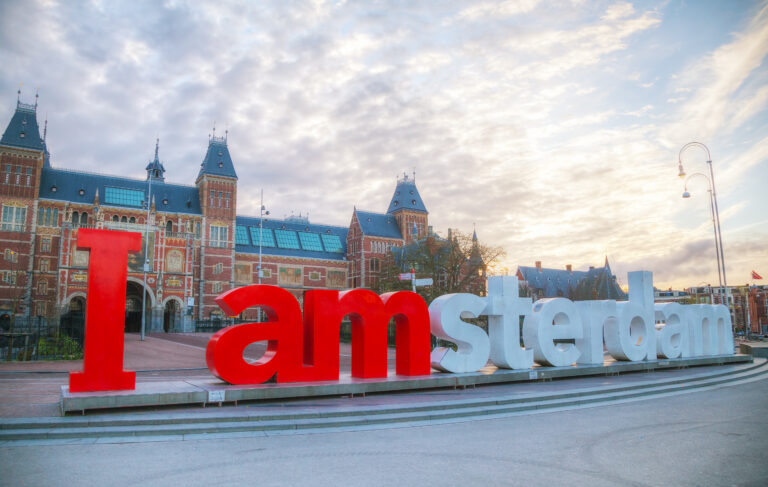
They’re iconic, they’re hated. The controversial “I amsterdam” letters are making a comeback to Amsterdam city centre, but they’ll be rocking a slightly new look.
Instead of an “I”, the lettering will consist of a giant pencil. Why? Not to deter tourists from climbing on top of it, but to encourage people to come and vote.
And how would this be encouraging? Well, according to De Telegraaf, Mayor Femke Halsema is hoping young voters will be drawn to the square and its two polling stations in order to take a selfie with the letters.
Finally putting that giant pencil to use
Believe it or not, Halsema has been waiting six years to use her giant pencil.
The pencil was initially made back in 2019, and Halsema hoped to display it together with the letters on the Museumplein during the Provincial Council elections.
However, this was met with opposition from D66, PvdA, and SP, who argued that the costs would be better invested in encouraging voter turnout in other districts.
Well, the pencil ended up costing €5,850, and was ultimately shelved anyway due to the 2019 tram attack in Utrecht, which halted campaigns at the time.
No opposition, but not much enthusiasm
This year, the return of the pencil/I amsterdam remix was met with about the same amount of enthusiasm as your boss’s suggestion to make broodjes for lunch.
According to De Telegraaf, the Green Left (GL) took the attitude of “if it helps, it helps.”
Meanwhile, the Socialist Party wasn’t present, and SP council member Jim Haijen tells the paper that while he feels the letters would be better off in a different part of the city, the SP will not be preventing the return of the letters.
If you’ve been counting down the years until you can apply for Dutch citizenship, you may soon have to add another five to that tally.
Why? The Dutch cabinet has announced that it wants to double the naturalisation period from five to ten years, making that coveted burgundy passport feel even more distant.
The proposal, approved by the cabinet on September 26, would require most applicants to have lived continuously and legally in the Netherlands for a full decade before they can apply to become Dutch citizens.
In the press release, Junior Justice Minister Arno Rutte explains that the extension aims to ensure Dutch citizenship is reserved for people who have developed a “durable connection” with the Netherlands.
Because apparently, five years of dealing with the Belastingdienst and mastering the art of cycling in the rain isn’t quite enough to prove your commitment.
But will this change actually happen?
Here’s the crucial bit that might ease some anxiety: this proposal still needs to pass through parliament, and with elections coming up on October 29, 2025, the political landscape could shift dramatically.
The current proposal comes from a caretaker government formed by the PVV, VVD, NSC, and BBB coalition. However, that coalition has already collapsed, with both the PVV and NSC having left earlier this year.
Several opposition parties have opposed the extended period, including D66 and GroenLinks-PvDA. And if progressive parties gain enough seats in the upcoming election, this proposal could be shelved entirely.
In fact, back in 2017, the Senate rejected a similar proposal to extend naturalisation from five to seven years.
What you should do now
If you’re currently eligible for naturalisation or close to meeting the five-year requirement, you might want to consider submitting your application sooner rather than later, ideally before the end of the year.
However, even if the proposal is fast-tracked and brought into law, it is unlikely to take effect before 2026.
And again, if progressive parties perform well in the elections, the Netherlands could potentially scrap this proposal altogether.
The consultation period for the draft proposal runs until December 1, 2025, meaning anyone can submit a response. One thing you can do right now is submit your opinion on the proposal.
What are your thoughts on this proposal? Let us know in the comments below.
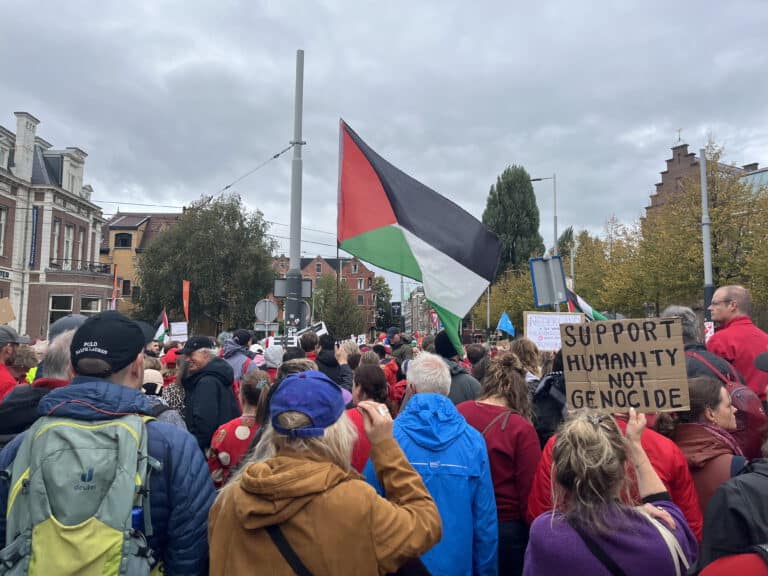
Amsterdam turned red on Sunday as an estimated 250,000 people filled the streets for the third Red Line for Palestine protest, demanding more action from the Dutch government to stop the war in Gaza.
Organisers say it was the largest pro-Palestine demonstration in the Netherlands so far, drawing supporters from across the country.
Dressed in red to symbolise the “red line” that must not be crossed, protesters called for the Dutch government to cut ties with Israel and push for an immediate end to the violence.
Third march
The movement, now in its third edition, has grown rapidly.
The first protest in May saw around 100,000 people take to the streets of The Hague, followed by 150,000 at the second a month later.
This time, with 134 organisations involved, including Amnesty International, Oxfam Novib, Pax, Save the Children, and The Rights Forum, the scale was unprecedented.
Several Jewish groups also joined, emphasising that Israeli government policies do not represent the views of the Jewish community.
“We must honour our international agreements. All countries must do everything they can to stop the genocide in Gaza. The Netherlands is a major investor in Israel; we can send a message that truly matters. And the government must do so.”
Despite the enormous turnout, the NS said the situation was “busy but manageable” after deploying extra and longer trains to Amsterdam.
Attendees making their way to the march at Amsterdam-Zuid station. Video: DutchReview/Supplied
The march began early, around 1:30 PM, due to the size of the crowd. More than an hour and a half later, people were still waiting at Museumplein for their turn to move.
The government’s answer
Prime Minister Dick Schoof responded on X, saying he understands “the anger, concerns and sense of powerlessness” expressed by demonstrators.
But, speaking with the NOS, Oxfam Novib director Michiel Servaes urged the government to do more:
“It announces measures but doesn’t follow through. It cheers on a so-called peace agreement, which still leaves no room for the Palestinians. That’s not what those 250,000 people here today are saying. I think he should listen more carefully to the real message from the people here.”
The Red Line movement has now grown into one of the most significant protest waves in recent Dutch history, with over 1% of the full population present.
Were you at the protest? Tell us about your experience in the comments below.
Are you a tourist eager to soak in Dutch culture but short on time? Or a local without plans on an autumnal weekend?
No matter who you are, Madurodam might just be the perfect way to spend your day, letting you explore the country of tulips and windmills without the hassle of travelling across the nation.
A small Netherlands with a big spirit
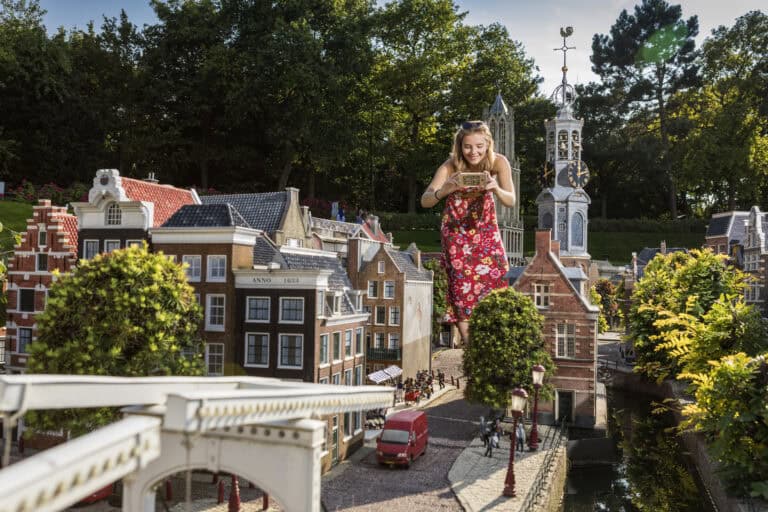
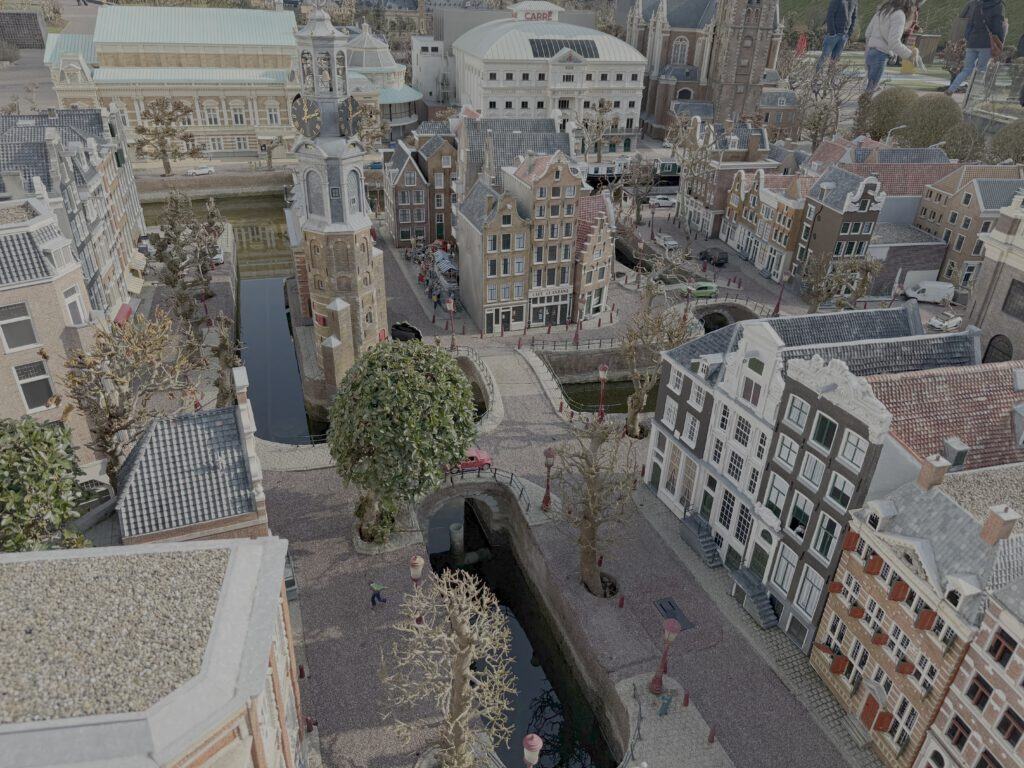
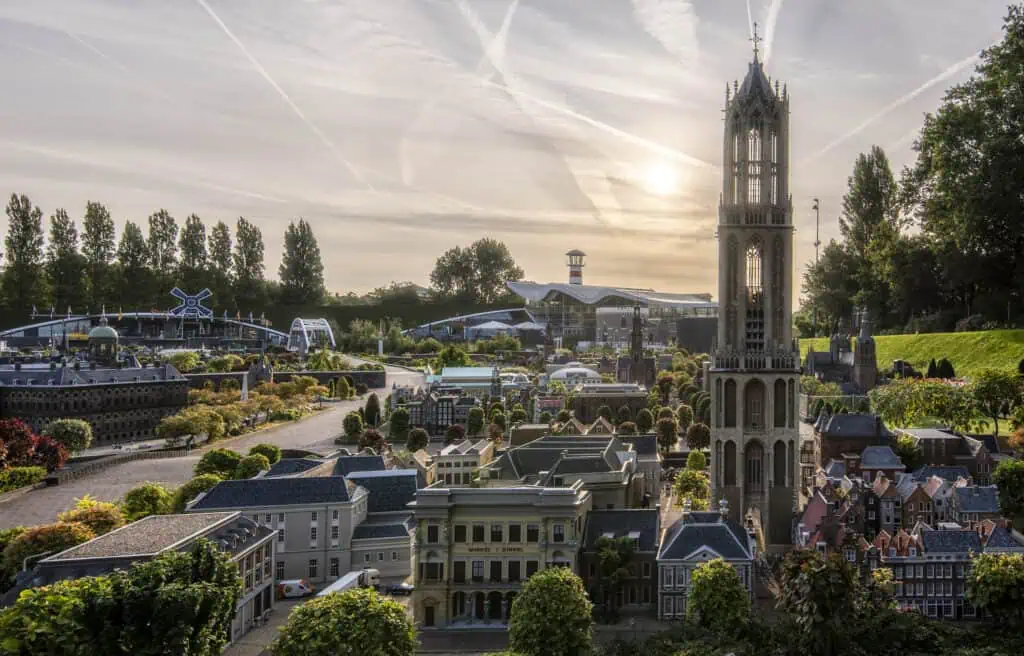
Madurodam is an attraction park in The Hague that brings together the country’s stunning architecture, rich history, and cultural icons — all brought to life in 1:25 scale miniatures.
Yes, you read that right! This unique theme park lets you explore the Netherlands in incredible detail through miniature replicas of the country’s iconic buildings, cities, and attractions.
We could spend hours exploring the impressive details. Image: DutchReview
From the Rijksmuseum to the Royal Palace of Amsterdam and from the windmills of Kinderdijk to Schiphol Airport, Madurodam lets you get up and close to the Netherlands like never before.
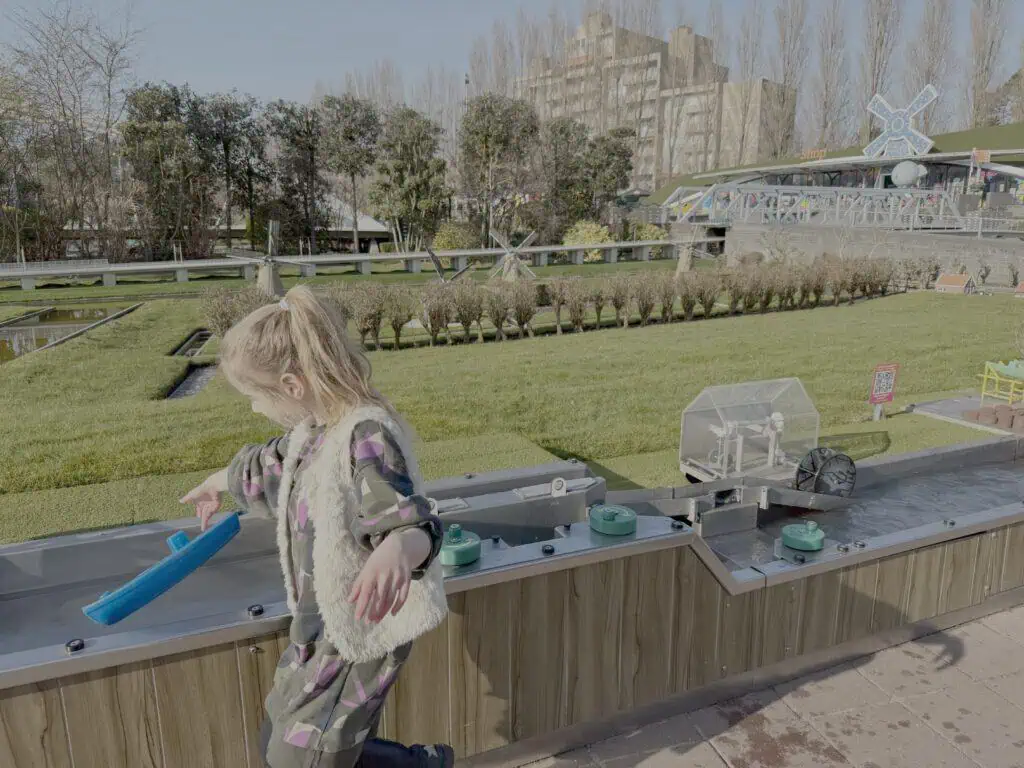
It’s not just about tiny buildings, though. Madurodam is packed with interactive experiences that captivate kids, inspire adults, and allow everyone to immerse themselves in Dutch culture.
If you’ve ever wanted to feel on top of the world, this is your chance — or well, at least on top of the Netherlands! 👀
Attractions you don’t want to miss
Madurodam has a wide range of attractions that showcase different facets of Dutch history, innovation, and creativity.
Here are a few highlights that you won’t want to miss:
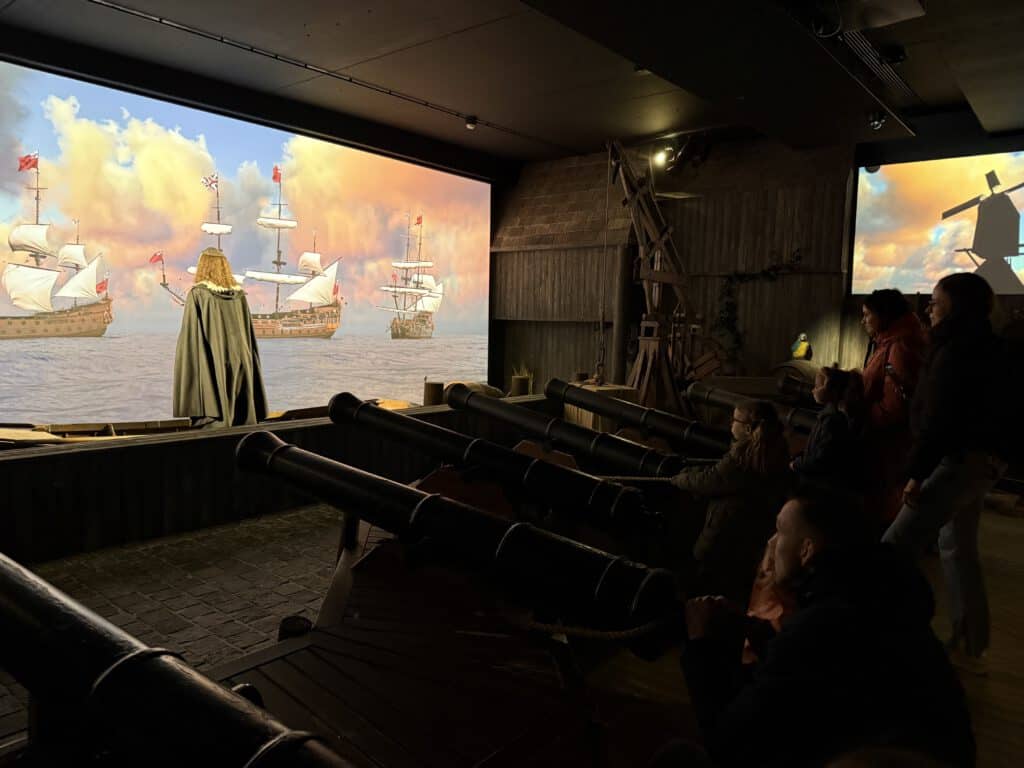
Nieuw Amsterdam offers an interactive experience where you travel back to the 17th century and witness how a Dutch settlement transformed the city we now know as New York.
In De Hollandse Meesters (The Dutch Masters), you walk inside the paintings of iconic Dutch artists. This is art coming to life — literally.
The Flying Dutchman is one of the last Dakota planes in the Netherlands, and it lets you discover the wonders of the Netherlands through flight.
The perfect family outing! Image: DutchReview
And the best part? These attractions are available in both Dutch and English.
A glimpse into the history
The idea for Madurodam came in 1952 when Boon van der Strap wanted to create a fundraising project for students with tuberculosis. A miniature city seemed like the perfect way to do it.
At the same time, as the Netherlands was rebuilding after World War II, the park was built alongside it, becoming a symbol of national pride and hope for the future.
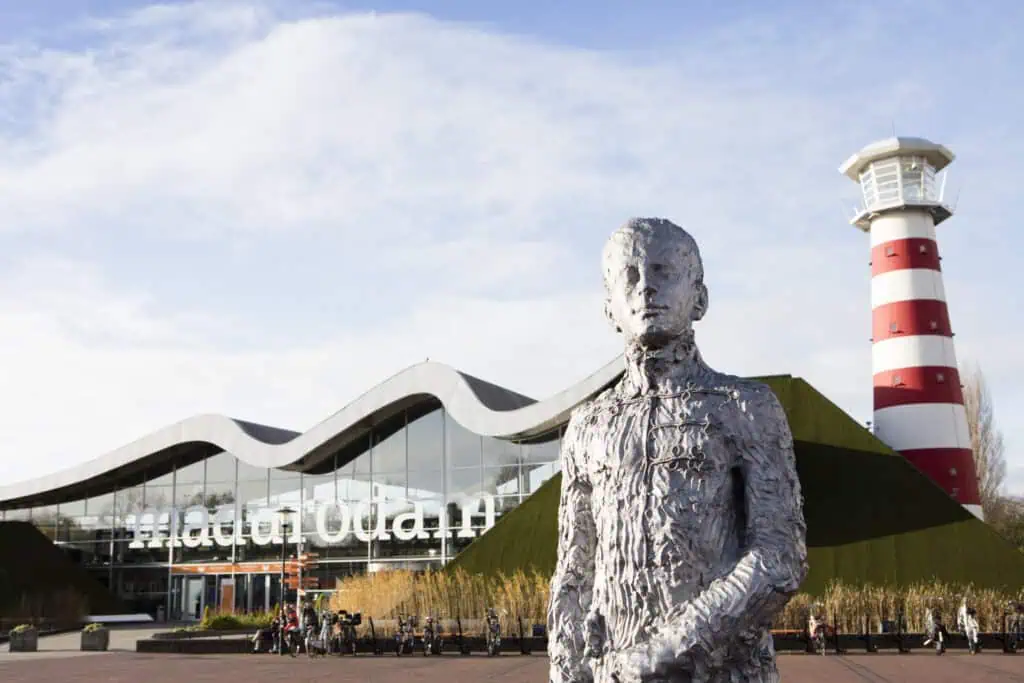
It was named after George Maduro, a heroic soldier who fought bravely during WWII, making Madurodam not just a fun attraction but also a meaningful tribute.
George greets you at the entrance of Madurodam. Image: Madurodam
Since then, tens of millions of visitors have walked through its tiny streets, exploring the whimsical world of Dutch culture and heritage. 🌷
Planning your visit
Let’s be real — the Netherlands isn’t the most predictable regarding the weather. But that’s not a problem at Madurodam.
While the miniatures are outside, the park has plenty of indoor attractions to keep you entertained, even if the skies turn grey unexpectedly.
Of course, visiting during nice weather makes for the best experience, letting you explore freely without opening an umbrella every other minute (though that would be the true Dutch experience). ☔️
Yep, these are all replicas. Image: Madurodam
TIP: The park’s website conveniently shows real-time weather conditions for your planned visit, so be sure to check before booking your tickets!
When should you go?
Madurodam is open daily as early as 9 AM, but opening times vary depending on the time of year. Be sure to check out Madurodam’s detailed schedule to plan your visit.
You’ve just arrived in the Netherlands, eager to experience the local cuisine. At 7 PM, you confidently stroll into a restaurant expecting the dinner crowd. But to your surprise, the place is nearly empty.
Welcome to one of the Netherlands’ most bewildering cultural quirks: dinner time that would make your Spanish friends weep and your Italian grandmother question everything she knows about civilised society.
The Dutch typically eat dinner between 5 PM and 6 PM, having already finished their evening meal while you were still answering work emails. Why? Let’s dissect the Dutch dinner eating habits.
Why is dinner so early in the Netherlands?
To understand the origins of the early dinner tradition, we must look back to the Industrial Revolution. Factory work meant working-class people no longer had time to go home for midday meals, which fundamentally reshaped Dutch eating patterns.
The Protestant work ethic also played its part: life was centred around work, and food was meant to fill you up quickly so everyone could get back to being productive. No lingering over wine here — dinner was fuel, not entertainment.
What makes up a Dutch dinner?
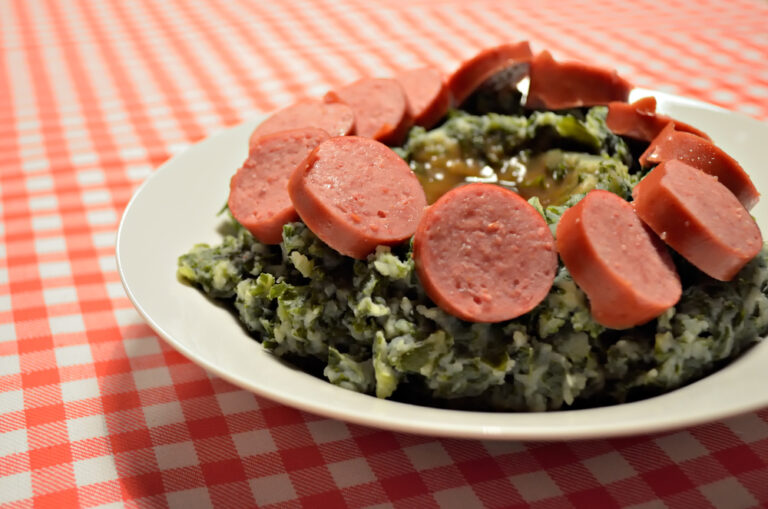
Traditional Dutch dinners follow the sacred AVG formula: aardappelen, vlees, groente (potatoes, meat and vegetables). This practical, one-course approach reflects Dutch efficiency — why complicate things with multiple courses when you can get all your nutrients on one plate?
Even better, these sacred ingredients are often mashed together into the beloved stamppot. Is this hearty approach what has contributed to Dutch height supremacy? We don’t know. Perhaps some research will one day support this theory.
If the Dutch are feeling particularly fancy, you might find a soep (soup) as a starter and vla (custard) as dessert on the dinner table.
Dinner as a public performance
Here’s where things get properly surreal for newcomers: those famously open Dutch curtains mean everyone can see inside during dinner time.
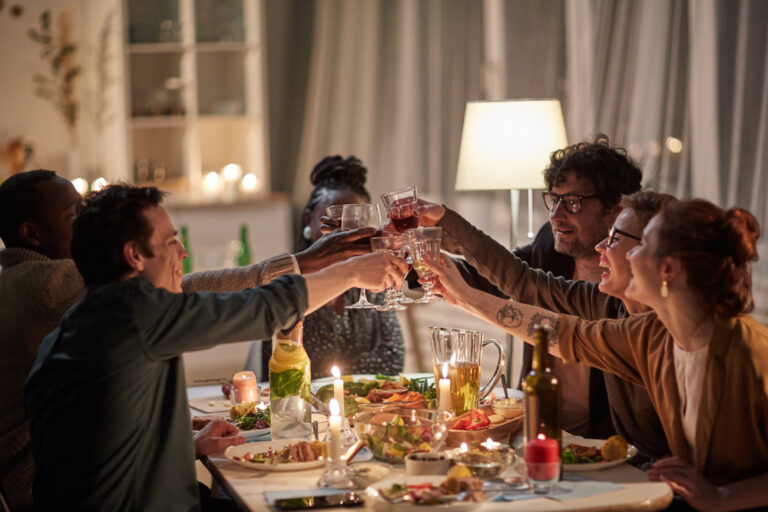
Walk through any residential neighbourhood at 5:30 PM and you’ll witness dozens of families gathered around their dining tables.
This visibility isn’t accidental. The Dutch obsession with transparency also has its roots in Protestantism. There’s nothing to hide about a good, honest family meal. But for internationals used to privacy during dinner, it might seem like dining in a fishbowl.
Early dinner leaves time for evening family activities. Image: Freepik
The speed at which these meals disappear is equally mesmerising. Dutch dinners are efficient affairs, often wrapped up in 30 minutes or less. No dawdling, no lengthy conversations over multiple courses — just efficient nutrient consumption before moving on to evening activities.
It is no surprise that international newcomers face culture shock when it comes to Dutch dinner habits. As one confused expat noted online: “Won’t you be hungry again at like… 11 PM? And when is lunch then?”
The logic seems backwards when 5:30 PM could just as well be late afternoon coffee time in many cultures. Besides, you’re not just adjusting to new timing; you’re adapting to a completely different philosophy around food and privacy.
Changes in Dutch dinner habits
All that being said, times are slowly changing. Dinner time has gradually moved to 6 PM in many households, and Dutch restaurants typically serve dinner between 5 PM and 9 PM.
Urban areas, in particular, exhibit this shift, as international influence and changing work patterns create a need for greater flexibility.
The traditional pattern, where everyone still gathers around the dinner table at precisely the agreed-upon time, still persists in many families, though. Dinner plans are scheduled well in advance, ensuring everyone synchronises their day around that sacred family moment.
Dutch restaurants typically serve dinner between 5 PM and 9 PM. Image: Depositphotos
And the menu? That is slowly evolving, too. You’ll find Dutch households venturing beyond the AVG formula, occasionally adding a proper starter or extending dessert beyond vla or yoghurt (revolutionary!).
Is early dinner actually better?
Here’s the plot twist: the Dutch might actually be onto something brilliant. Early dinner creates a genuine work-life balance, as family time happens before evening activities, not instead of them.
There’s more time for cycling, organising (a Dutch passion), blowing some savings at an online casino (ok, maybe not; the Dutch love their savings as much as an extra early dinner) or simply enjoying gezelligheid without the pressure of late-night digestion.
From a health perspective, earlier eating aligns better with natural circadian rhythms. Additionally, as every savvy international traveller discovers after a while, Dutch restaurants often offer better value during those “awkwardly early” dinner slots.
The efficiency extends beyond timing. When meals are straightforward and quick, families spend more quality time together without the stress of elaborate preparation or lengthy cleanup.
So how do you survive this as a bewildered international? Embrace the schedule completely. Book restaurants for 5:30 PM without shame. Learn to appreciate stamppot. Accept that the classical 9-to-5 work schedule naturally leads to 6 PM family dinners.
And most importantly, remember that this isn’t stubbornness, it’s cultural logic. When work ends early, families eat together promptly, and evenings become genuinely free, the Dutch 5 PM dinner reveals itself as perhaps the most practical life hack in Europe.
Have you mastered the art of Dutch dinner timing, or are you still struggling with the 5 PM culture shock? Share your early dining adventures in the comments below!
“Autumn is really here now, isn’t it?” We’ve been saying it all week, but this weekend is going to remind us what autumn in the Netherlands can really look like.
Thanks to a storm depression that goes by the name of Amy, we’re probably all going to be feeling a bit depressed.
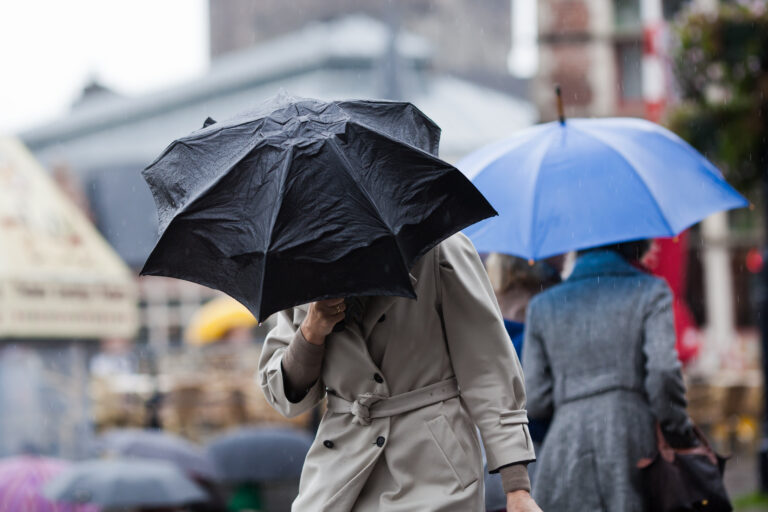
According to the NOS, we can expect wind gusts of up to 100km per hour in some areas. And, of course, rain. Lots and lots of rain.
It starts on Friday evening
Unfortunately, for many of us, the bad weather should kick off just as we clock out of work this evening.
According to RTL Nieuws, by the late afternoon, almost the entire country (aside from some lucky ducks in the southeast) should be under a cloud of rainfall.
Temperatures will be equally autumnal, lingering around 14 degrees Celsius. And during the night? Those winds are going to pick up.
And it will continue on Saturday
While there will be some respite from the rain during the night, the second heavy wave will hit on Saturday morning, moving from the northwest to the southeast.
These showers will turn chilly on Saturday afternoon, and they may even bring some thunderstorms with them. The evening? Not much different, with even more rain expected.
But don’t worry, if you’re along the coast, you’ll probably be too distracted by winds of up to force 8 to notice that you’re soaked.
The NOS reports that winds along the coast will continue to blast us on Sunday morning, as will the rain (especially for those in the west, northwest and Wadden Sea).
However, there will be more frequent spells of sunshine between the downpours, which are expected to bring around 30 to 50 millimetres of rain between Saturday afternoon and Sunday night.
The good news? By the time we all return to work on Monday, things should have calmed down. 😑
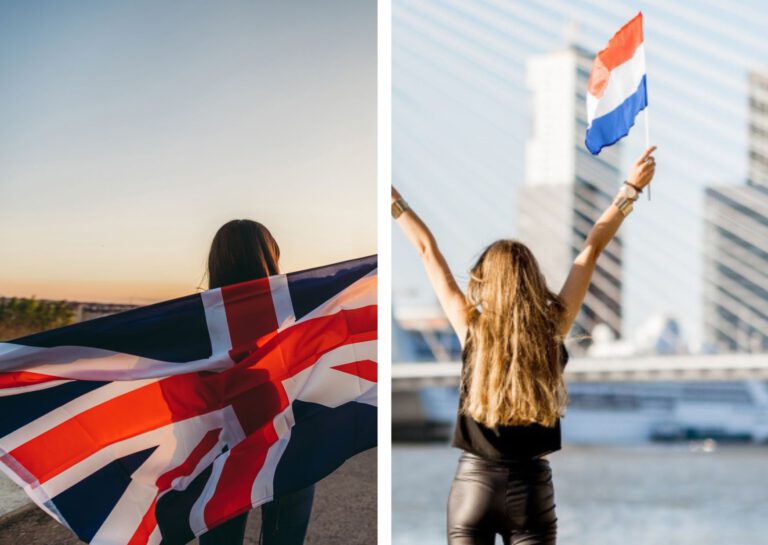
Royal families, English language and football fanatics —Brits and Dutchies have lots in common. But as for cultural differences? Yeah, there’s a fair share of those too. 🇬🇧⚡️🇳🇱
When I first landed in the lowlands way back in 2016, I thought I was in tune with the ways my beloved homeland differed from the not-so-distant Netherlands I now call home.
That was only a few months in. And boy, was I wrong.
Brit attempts Dutchification
Before we dive into the cultural clashes, let me set the scene for my initiation into Dutch culture.
I was busy dealing with the big culture shocks at hand: getting on a bike for the first time in 15 years and navigating city cycling without injuring myself or anyone else. Succes!
And after initially being taken aback by the infamous Dutch directness, I soon came to love and appreciate it. I even incorporated stamppot, bread, cheese, and copious amounts of stroopwafels into my diet (adjusting my gym routine accordingly).
It’s safe to say I was feeling like a Dutchified pro — until my parents came to visit.
Sure enough, showing them around my new home revealed nuances that had escaped my attention as I focused on mastering bigger obstacles like biking and cuisine.
Three of these are among the most (stereotypically) important institutions of British culture. So here’s how they differ, for better or worse, from the way things are done in the Netherlands.
Differences between Britain and the Netherlands
1. To queue or not to queue?
🇬🇧 What the British do
Queueing is what the British do best. It gives us a sense of order and civility, and we’ll be damned if someone jumps the line we love oh-so-very much.
Especially in the midst of the drama that is Christmas shopping, expect scorn and shame if you mistakenly join the queue at the incorrect point. One smug shopper will no doubt “politely” show you the “proper” end of the line.
🇳🇱 What the Dutch do
It’s a very different tale in the Netherlands. Take the buses, for example. Everyone mooches around the stop in an attempted queue-like fashion: personal space is maintained and there is a distinct acknowledgement of who arrived first.
But when the bus pulls in, it’s a free-for-all.
Often the last person to join the crowd gleefully steps aboard, with confused Brits left in a daze. They shuffle on last, completely bewildered by the savagery that had just occurred.
2. Fish and Chips vs. Kibbeling
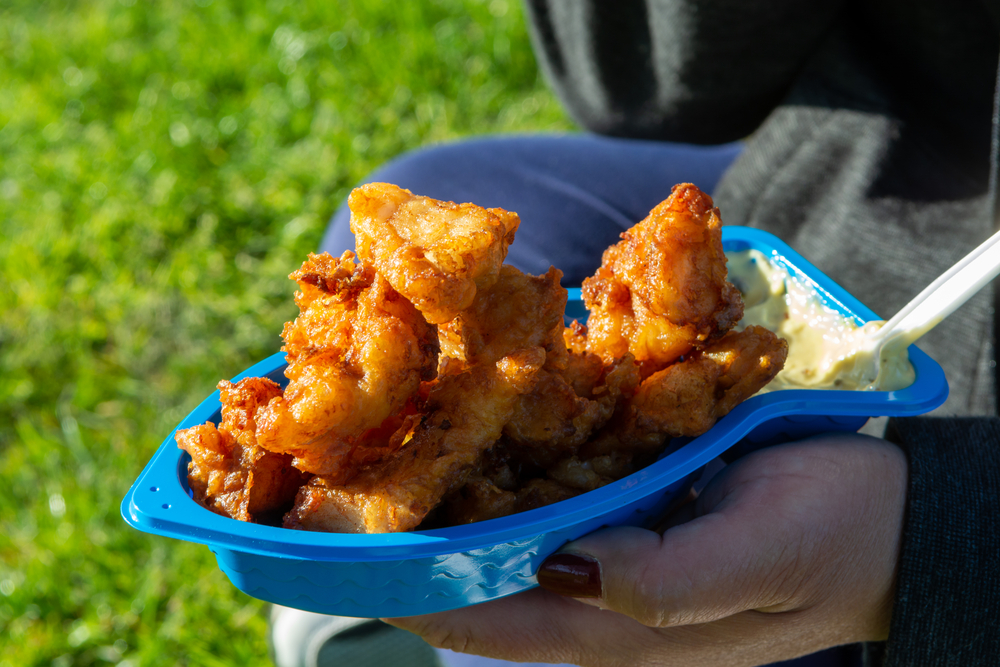
Is it the British Fish and Chips, or the Dutch kibbeling? Image: Depositphotos
🇬🇧 What the British do
As far as being quintessentially British goes, fish and chips are up there with the King, talking about the weather and having a pint in a pub.
The only food not subjected to rationing in WWII, paper-wrapped fish and chips have been a familiar go-to dinner in Great Britain since the mid-19th century. 🐟
Typically flavoured with salt and vinegar, the nation’s favourite is often consumed on rainy days by the seaside, at lunchtime for the rebellious teenagers straying from school, and of course for Friday supper after work!
🇳🇱 What the Dutch do
For the most part, the principle is the same: battered fish cooked before your eyes and served to the masses.
But having travelled far and wide, I never encountered a dish that rivalled the sentimentality attached to fish and chips back home. That is until I stepped foot in Groningen.
Now, I genuinely look forward to queueing (of course) at the counter of the Dutch fish truck just to place my order: “Een portie kibbeling met saus, alstublieft“.
The main difference is the smaller pieces of kibbeling that are dusted with some mysterious spice, served on a tray instead of in paper and with a nice space for some garlic-based sauce. Delicious!
3. Tea vs Thee
Black tea with a splash of milk — an English national treasure. Image: Pexels
🇬🇧 What the British do
Confession time. I am a Brit who was not always a tea-lover. 🪦
I know, I’ve burst many ideas of what it means to be a true Brit by forgoing a lovely brew for a good ol’ glass of water. My parents, on the other hand, are staunch tea supporters and rarely travel without their treasured Tetley Teabags or Yorkshire’s finest.
The classic brew (though widely debated) involves said teabag, hot water, removal of the teabag and the addition of milk and sugar to taste. In that order.
🇳🇱 What the Dutch do
While the Dutch also have thee in abundance, it is normally fruity, green, or minty. This was something I immediately got on board with — who doesn’t love a good cup of Bosvruchten (forest fruit) in the morning?
My poor father, however, found this fundamental difference out the hard way.
After leaving his beloved Yorkshire Gold behind when visiting, I offered him a cup of thee. Unfortunately, my favourite Yorkshireman could not find peace with his citrusy cup of steaming Pickwick.
In an attempt to improve things (against my advice), he followed the institutional method and removed the lemony tea bag to add a splash of milk. As one can imagine, this didn’t go down well — unless you count the sink.
Parting wisdom for incoming Brits
Such differences may be futile, but when your national stereotype is largely centred around these three things, any small alterations become significant.
Incoming Brits, beware: bring your own tea bags, take Valium when embarking on public transport, and prepare to take a step back. Most importantly, swallow your pride and accept that the Dutchies do battered fish way better than we do.
Were there any other noteworthy differences between Britain and the Netherlands I left out? Leave ’em in the comments!
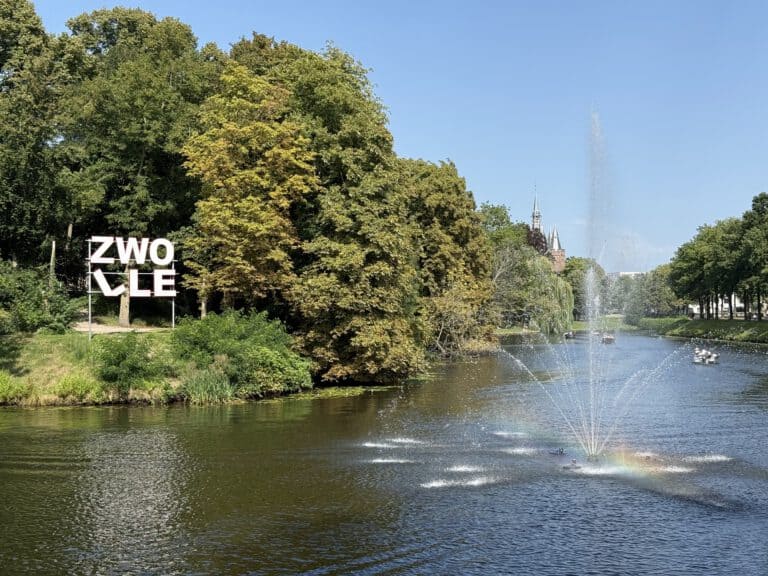
Here’s the thing about Zwolle: whilst Amsterdam and Rotterdam were still muddy villages, this star-shaped city was already busy making serious bank as one of Europe’s most powerful trading centres.
Fast-forward 800 years, and most internationals still haven’t cottoned on to what locals have always known: Zwolle is an absolute gem that deserves way more attention than it gets.
Located just an hour by train from Amsterdam, this former Hanseatic League powerhouse offers everything you want from a Dutch city break without the selfie-stick-wielding crowds.
We’re talking medieval architecture, world-class museums, a bookstore housed in a 15th-century church, and the Netherlands’ only three-Michelin-starred restaurant. Not too shabby for a place most expats can’t even pronounce correctly (it’s “ZVOL-luh,” by the way).
Short on time? Find the perfect activity for you in the list below 👇🏼
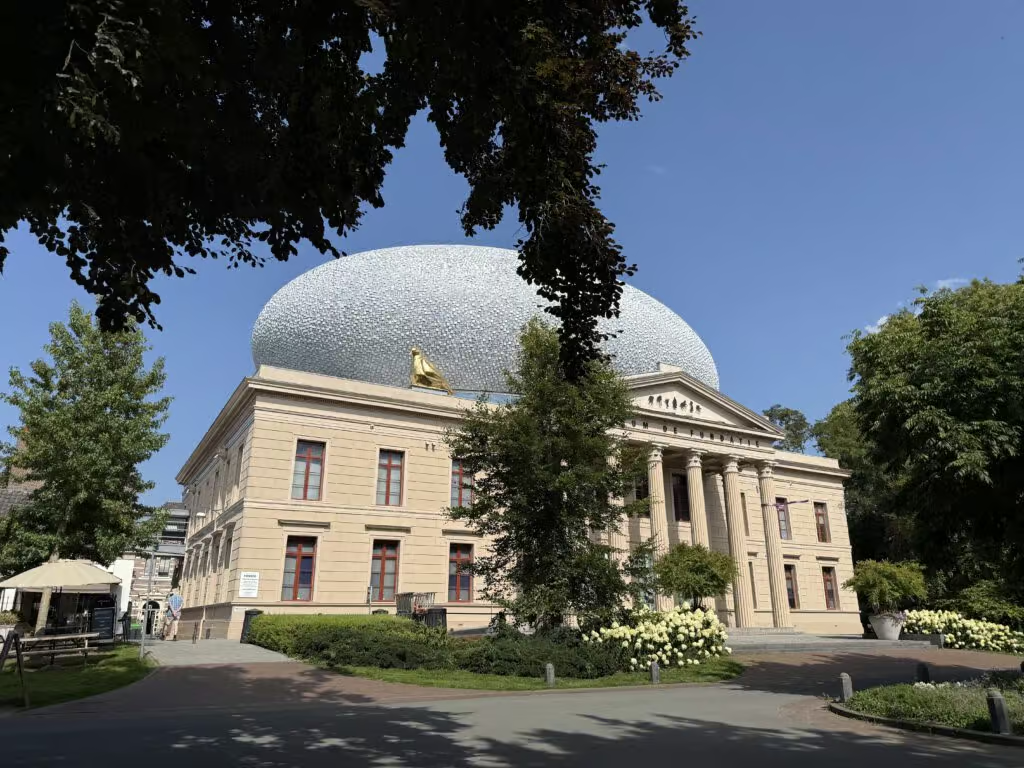
The controversial “cloud” of Museum de Fundatie. Image: Abuzer van Leeuwen/Supplied
Let’s start with Zwolle’s most Instagram-worthy attraction. Museum de Fundatie sits in a neoclassical building that’s impressive enough on its own, until you notice the bizarre egg-shaped addition perched on top like a giant metallic cloud.
This architectural oddity houses one of the Netherlands’ premier art collections, with works by Van Gogh, Mondrian, and Chagall alongside rotating exhibitions. That controversial “cloud” offers spectacular 360-degree views over Zwolle’s historic centre. All in all, a must-see from all angles.
💰 Price: €15 for adults, €7.50 for students ⏰ Opening hours: Tuesday to Sunday, 11 AM to 5 PM 📍 Location: Blijmarkt 20, 8011 NE Zwolle
Van der Velde in de Broeren has transformed this Gothic stunner into what many consider the most beautiful bookstore in the Netherlands, with soaring ceilings, original stone columns, and stained glass windows creating an almost ethereal atmosphere for book browsing.
Don’t miss the Leeshemel (Reading Heaven) café, where you can sip coffee surrounded by books and contemplate the beautiful absurdity of it all. Even if you’re not much of a reader, this place is worth visiting just for the “only in the Netherlands” factor.
💰 Price: Free to browse ⏰ Opening hours: Monday to Saturday 9 AM to 6 PM, Sunday 11 AM to 5 PM 📍 Location: Broerenkerkplein 13, 8011 TW Zwolle
3. Conquer the mighty Peperbus tower
De Peperbus offers great views of the city. Image: Abuzer van Leeuwen/Supplied
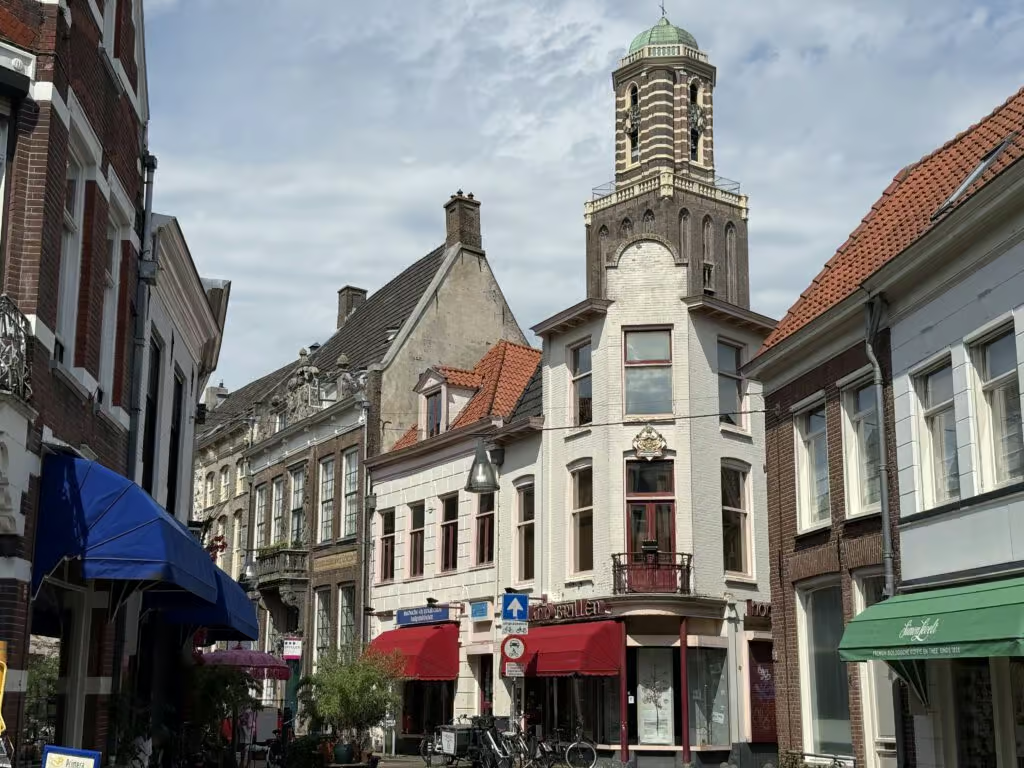
The 75-metre tower of the Onze Lieve Vrouwe Basilica dominates Zwolle’s skyline, and locals have nicknamed it De Peperbus (the pepper pot) because of its distinctive copper dome.
Built in the 15th and 16th centuries, the tower survived a fire in 1815 that destroyed its original spire. The current copper dome is where the fun nickname comes from.
The 236-step climb to the first gallery at 51 metres is no joke, but the panoramic views over the city and surrounding Overijssel countryside are worth every wheeze.
💰 Price: €7 for adults, €4 for children ⏰ Opening hours: Tuesday to Saturday 2 PM to 5 PM 📍 Location: Ossenmarkt 1, 8011 MJ Zwolle
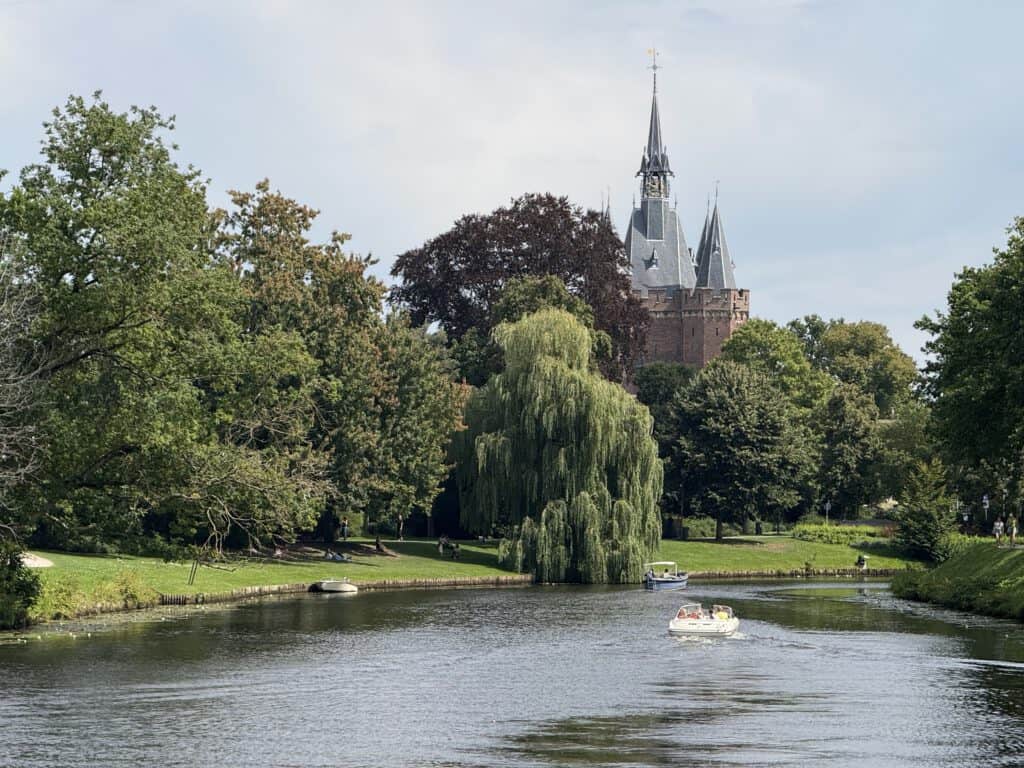
4. Step into the Middle Ages at the Sassenpoort
Step into the Middle Ages in Zwolle. Image: Abuzer van Leeuwen/Supplied
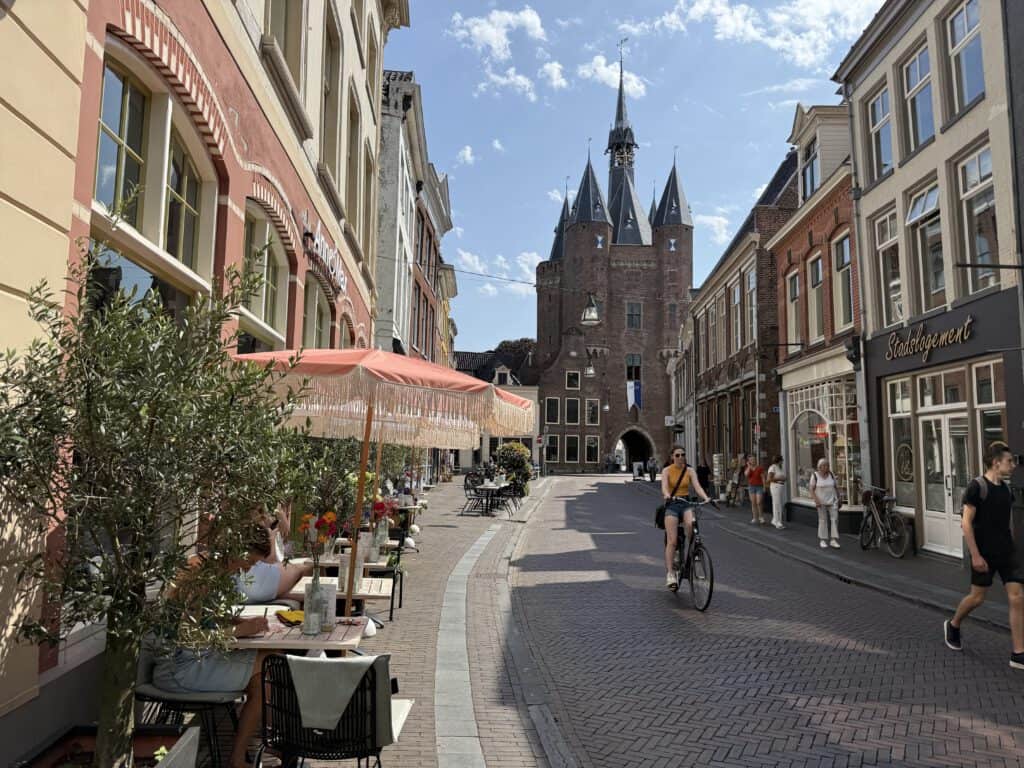
The Sassenpoort isn’t just Zwolle’s most photographed building; it’s also a legitimate piece of European heritage that’s earned its place in the top 100 Dutch monuments (Rijksmonumenten).
This 14th-century city gate is the crown jewel of Zwolle’s star-shaped fortifications, built when the city was serious about keeping unwanted visitors out.
Walking through its Gothic arches feels like stepping into a medieval film set, except this is the real deal. The gate originally formed part of a defensive system with 23 towers, though only three survive today.
💰 Price: €5 for guided tours ⏰ Opening hours: Tuesday to Sunday 11 AM to 5 PM 📍 Location: Sassenstraat 53, 8011 PB Zwolle
5. Dive into Zwolle’s Hanseatic trading glory
Between the 13th and 16th centuries, Zwolle was a major player in the Hanseatic League — medieval Europe’s most successful trading network, basically.
While other Dutch cities were still figuring out how to drain their swamps, Zwolle was already dealing in international commerce and wielding serious political influence. You can follow a Hanseatic city walk to see the key sites, or just wander the historic centre with this context in mind.
💰 Price: Free to explore ⏰ Opening hours: Always accessible 📍 Location: Historic city centre
6. Dine like royalty at De Librije (if you can get in)
De Librije is not just the best restaurant in Zwolle, it’s arguably the best restaurant in the entire Netherlands. This three-Michelin-starred establishment has been setting the standard for Dutch fine dining since the 1990s, and it’s housed in a former women’s prison (because apparently the Dutch can’t resist a good conversion project).
Lovely experience, but getting a reservation requires planning (think months ahead), and the tasting menu will set you back around €200 per person without wine.
💰 Price: €200+ per person for tasting menu ⏰ Opening hours: Wednesday to Saturday, lunch and dinner 📍 Location: Spinhuisplein 1, 8011 ZZ Zwolle
7. Take a canal cruise around the star-shaped city
A perfect place for a canal cruise. Image: Abuzer van Leeuwen/Supplied
Zwolle’s unique star-shaped layout is best appreciated from the water, and canal cruises here are blissfully free from the tourist boat traffic that plagues Amsterdam’s waterways.
The city’s defensive moat system has been converted into a scenic route that offers perspectives you simply can’t get on foot. The most fun option has to be the round boats that you can rent for yourself.
They might look like floating bathtubs and handle about just as gracefully, but they’re perfect for a leisurely afternoon exploring at your own pace. Summer evenings are particularly magical when the setting sun lights up the historic buildings.
💰 Price: From €15 for boat rental, €12.50 for guided tours ⏰ Opening hours: April to October, weather dependent 📍 Location: Various departure points around the city centre
8. Hunt for the “Blauwvingers” legend
Zwollenaren (people from Zwolle) are known as “Blauwvingers” (Blue Fingers), and the story behind this nickname is peak Dutch pettiness.
Legend has it that in 1682, Zwolle’s church tower collapsed, and they sold their church bells to the neighbouring town of Kampen at an extortionate price. Upon accepting, Kampen discovered that the bells were too damaged to be used.
Kampen’s revenge? They paid in the smallest denomination coins available, forcing Zwolle authorities to count thousands of tiny copper coins. After meticulously counting every last one, their fingers had turned blue from handling all that copper. The nickname stuck, and it’s still used today with a mixture of pride and mild embarrassment.
💰 Price: Free entertainment ⏰ Opening hours: Anytime you fancy a bit of local culture 📍 Location: Throughout the city (ask locals for their version)
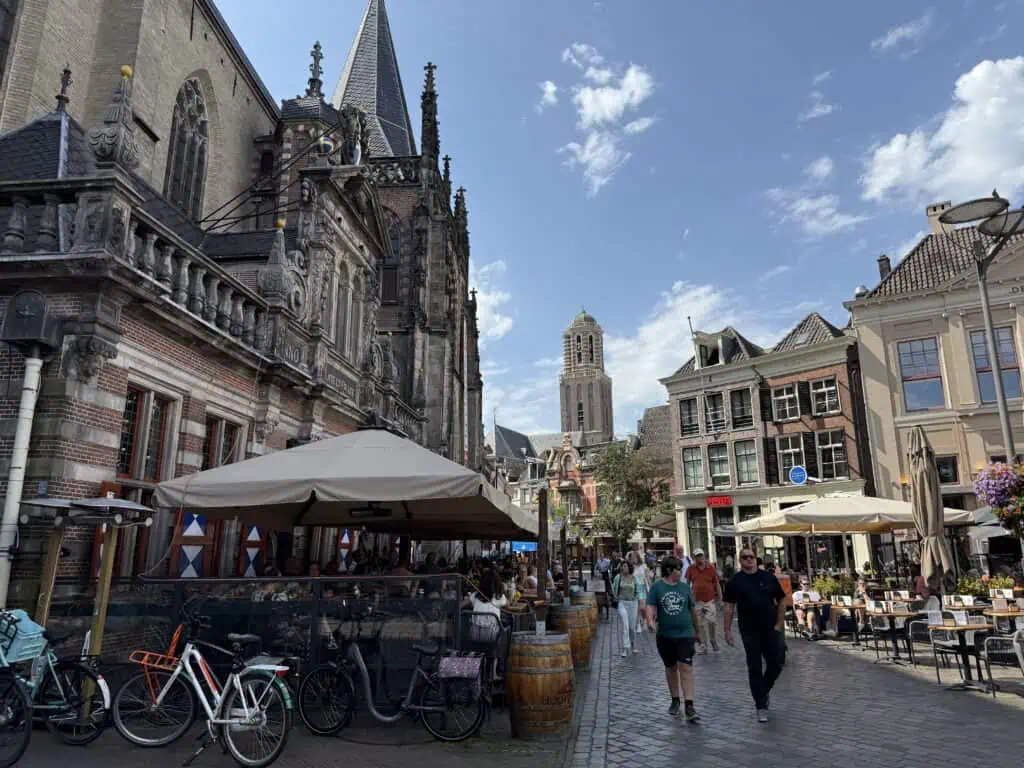
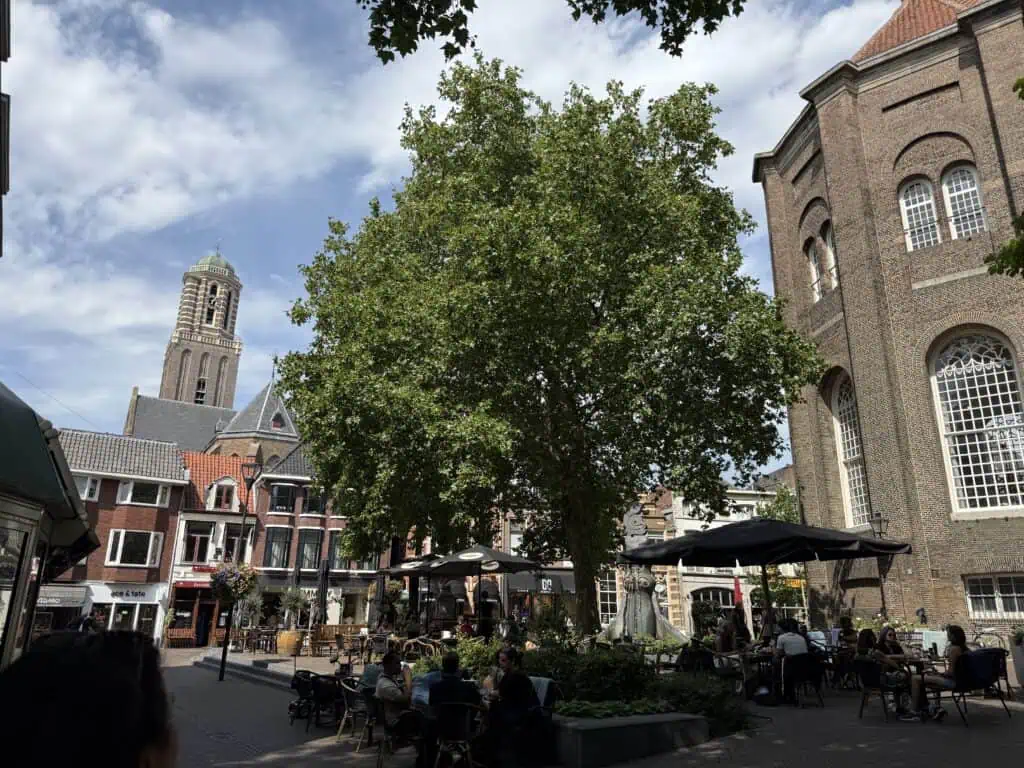
9. Wander the medieval city centre
Zwolle’s charming historical centre. Image: Abuzer van Leeuwen/Supplied
Zwolle’s historic heart is a masterclass in urban planning that somehow manages to feel both grand and intimate. The Grote Markt forms the traditional centre, surrounded by patrician houses that scream: “We made serious money from international trade.”
The Saturday market on Grote Markt brings the space to life with local vendors selling everything from Dutch cheese to seasonal produce. Unlike Amsterdam’s tourist-packed centre, you can actually wander these streets without having to dodge selfie sticks every three steps.
💰 Price: Free ⏰ Opening hours: Always accessible 📍 Location: Grote Markt and surrounding streets
10. Have a roaring good time at Dinoland
Dinoland Zwolle is a well-executed family theme park that manages to be educational without being boring, and fun without being completely chaotic.
Set in a forest location just outside the city centre, the park combines indoor and outdoor attractions that work regardless of the weather, which is crucial in a country where “four seasons in one day” is considered normal meteorology.
The dinosaur theme is carried through with enough scientific accuracy to keep adults engaged, whilst the interactive elements and playground areas prevent younger visitors from getting bored. Perfect for families with kids aged two to 12.
💰 Price: €18.50 for adults, €16.50 for children ⏰ Opening hours: Daily 10 AM to 5:30 PM 📍 Location: Willemsvaart 19, 8011 AK Zwolle
11. Get your retro gaming fix at Bonami Games & Computers Museum
You can play almost anything at Bonami in Zwolle. Image: Freepik
The Bonami SpelComputer Museum houses one of Europe’s most comprehensive collections of vintage games, computers, and arcade machines. The best part? Almost everything is playable.
For €17, you get unlimited access (so don’t worry about bringing guldens for the slots) to over a hundred arcade games, pinball machines, and vintage computer systems spanning from the 1970s to the early 2000s.
Located in a former church (because Zwolle is really committed to the whole “repurposed religious buildings” thing), the setting adds an extra layer of surreal charm to the experience.
💰 Price: €17 for unlimited play and museum access ⏰ Opening hours: Tuesday to Sunday 10 AM to 6 PM 📍 Location: Nieuwstraat 6, 8011 TK Zwolle
12. Follow the footsteps of Thomas à Kempis
Follow the footsteps of Thomas à Kempis in Zwolle. Image: Abuzer van Leeuwen/Supplied
Thomas à Kempis might not be a household name, but his book “The Imitation of Christ” is one of the most widely read Christian texts after the Bible. Why should you care? He spent most of his life in Zwolle!
This 15th-century monk and mystic was part of the Modern Devotion movement, which emphasised personal piety over institutional Christianity — a stance that was pretty radical for its time.
His remains were moved to the Onze Lieve Vrouw ten Hemelopneming Basilica in 2006, where you can visit his shrine. There’s something appealing about a religious figure whose motto was “Everywhere I have sought rest and not found it, except sitting in a corner by myself with a little book.”
💰 Price: Free to visit the shrine ⏰ Opening hours: Church open daily 📍 Location: Ossenmarkt 1, 8011 MJ Zwolle
13. Explore the remaining medieval towers
Of the 23 towers that once protected Zwolle’s walls, only three remain: the Zwanentoren (Swan Tower), Wijndragerstoren (Wine Carriers’ Tower), and Pelsertoren (Furriers’ Tower).
The Wijndragerstoren is your best bet for a visit, as it now houses Het Beugeltje, a brown café that serves local beers in medieval surroundings.
There’s something deeply satisfying about having a drink in a 14th-century defensive tower. It’s the kind of casual historical experience that makes living in Europe feel properly magical. Walking the approximate line of the old city walls also gives you a sense of how compact medieval Zwolle was.
💰 Price: Free to view externally, café prices for Het Beugeltje ⏰ Opening hours: Always visible, café hours vary 📍 Location: Various locations around the old city perimeter
14. Shop and snack at bustling local markets
Zwolle’s Saturday market on the Grote Markt is everything a Dutch market should be: unpretentious, good value, and filled with locals who treat it as a social event rather than just shopping.
You’ll not only find Dutch cheese that’s actually worth getting excited about, but also fresh stroopwafels that put supermarket versions to shame, and seasonal produce that changes with the calendar.
What makes markets like this essential for expats is the cultural education that comes with every purchase. This is where you learn that there are approximately 847 different types of Dutch cheese, that haggling is absolutely not done, and that bringing your own shopping bag isn’t just environmentally conscious, it’s expected.
💰 Price: Varies by vendor ⏰ Opening hours: Saturday 8 AM to 5 PM (main market) 📍 Location: Grote Markt, 8011 LV Zwolle
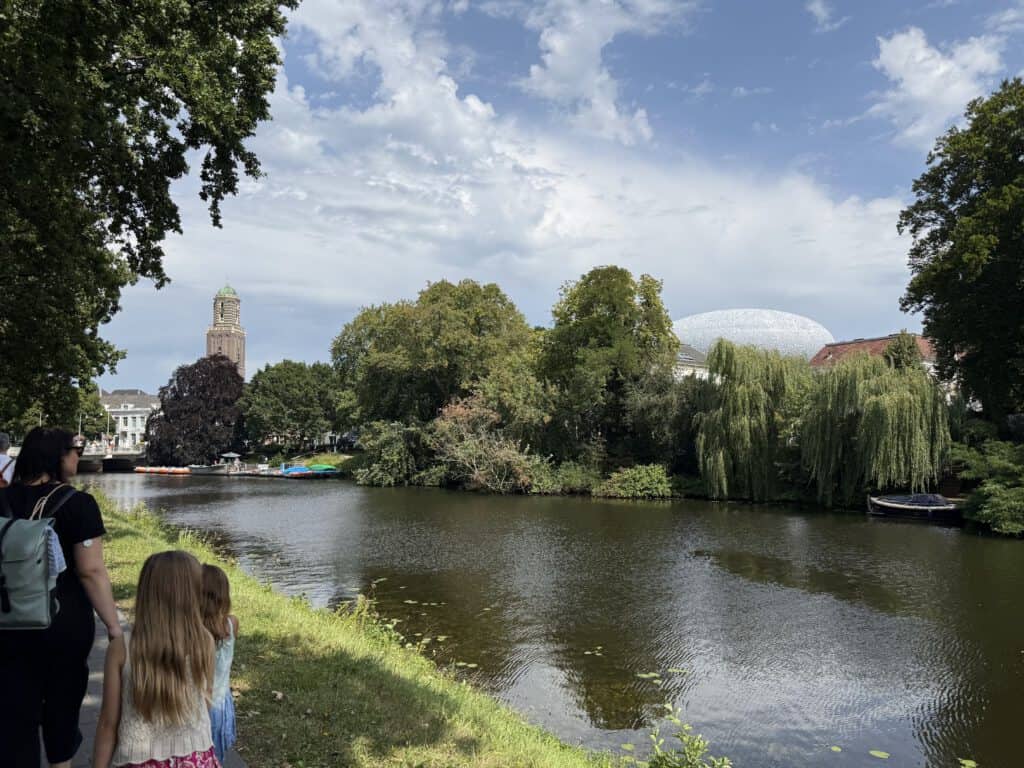
15. Embrace the green city life
Perfect place to escape the bustle of the city. Image: Abuzer van Leeuwen/Supplied
In 2017, Zwolle was named Europe’s greenest city. Once you start exploring its parks and green spaces, you’ll understand why.
Park de Wezenlanden, for example, hosts the Netherlands’ largest Liberation Festival every May 5. However, it’s worth visiting year-round for its combination of manicured gardens and wilder natural areas along the river IJssel.
Park Het Engelse Werk combines forest walks with riverside views, and it’s popular with locals for everything from morning jogs to family picnics.
For expats coming from more densely urbanised countries, Zwolle’s green spaces offer a glimpse of how Dutch cities prioritise quality of life alongside economic development.
💰 Price: Free ⏰ Opening hours: Always accessible 📍 Location: Various locations around the city
16. Explore the local food scene beyond De Librije
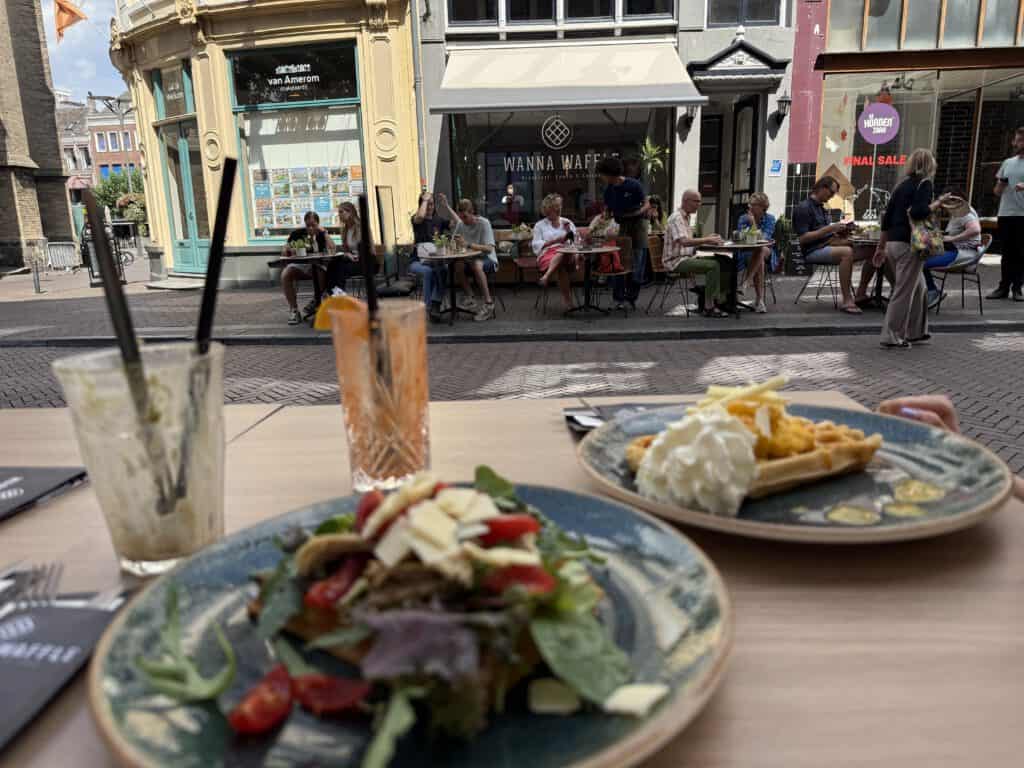
Wanna Waffle serves amazing waffles with unique toppings. Image: Abuzer van Leeuwen/Supplied
Zwolle’s restaurant scene punches well above its weight, offering everything from international street food to traditional Dutch cuisine.
Wanna Waffle serve incredible waffles with crazy toppings like pulled pork, ice cream combinations, and creative sweet and savoury options that’ll make you question everything you thought you knew about waffles.
For a more traditional Dutch experience, hunt down one of the city’s brown cafés (bruine kroegen) where locals gather for beer and conversation. Local specialities include Zwolse mustard, which has protected designation status and makes an excellent souvenir for food-loving friends back home.
💰 Price: Varies widely ⏰ Opening hours: Restaurant-dependent 📍 Location: Throughout the city centre
17. Use Zwolle as your Overijssel base camp
One of Zwolle’s greatest assets is its location as a gateway to the beautiful Overijssel province.
Giethoorn, the famous “Venice of the Netherlands,” is just 30 minutes away by car, whilst the Weerribben-Wieden National Park provides hiking, cycling, and boat tours through landscapes that feel almost prehistoric.
Other nearby Hanseatic cities like Kampen and Deventer make for excellent day trips, each offering its own take on medieval Dutch architecture and trading history.
Having Zwolle as your base means you can experience both urban culture and natural beauty without constantly changing accommodation.
💰 Price: Transport and attraction costs vary ⏰ Opening hours: Plan according to destinations 📍 Location: Throughout Overijssel province
Zwolle isn’t just another pretty Dutch city trading on canal-side charm. It’s a place with genuine depth, outstanding food, fascinating history, and enough character to keep you entertained for days rather than hours.
The best part? You can experience all of this without fighting through crowds of tourists or paying Amsterdam prices for everything. Zwolle offers the authentic Dutch experience that many expats are searching for, a place where you can actually imagine living, working, and becoming part of the community.
Have you discovered Zwolle’s charms, or are there hidden gems we’ve missed? Share your own experiences in the comments!