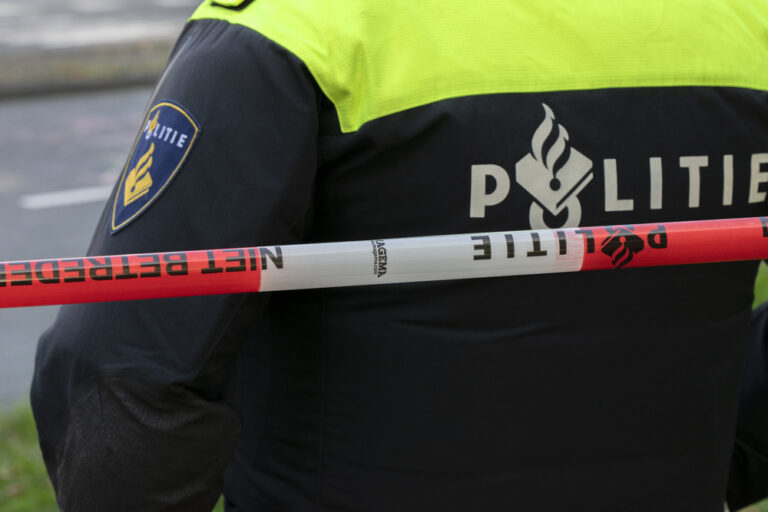
A quiet neighbourhood in Utrecht was jolted awake by sirens and flashing lights late last night, as an incident that began with a routine car chase ended in the discovery of dangerous explosives.
Following the discovery, authorities were forced to evacuate two large apartment buildings near Utrecht’s Beneluxlaan and close off the surrounding area for several hours.
Chase, discovery, and evacuation
At around 8 PM the previous night (July 22), a black car caught police attention after it recklessly drove onto a bike path. Following a brief pursuit, officers stopped the vehicle and found several fuel canisters in the trunk.
Their suspicious nature was enough to bring in the Explosive Ordnance Disposal (EOD) service to assess the situation, reports RTV Utrecht.
As a precaution, around 160 residents were evacuated from two nearby apartment complexes.
A resident of the evacuated building said she heard multiple sirens around 8 PM. When she looked outside and saw a black car speeding down the bike path with a police car in pursuit, she realised that something was wrong.
She watched the antics from her balcony before being startled by her doorbell ringing. Speaking to RTV Utrecht, she said, “there was a woman from the police who said that we had to leave the building because of the security situation.”
From hotel to gym hall
The displaced residents were initially brought to the Van der Valk hotel on Winthontlaan. However, as the night dragged on and the situation remained unclear, some were later moved to a gymnasium with camp beds.
Flat in Utrecht ontruimd wegens politieonderzoek, mogelijk gevaarlijke stoffen in autohttps://t.co/JwrsZFVWUD In een briefing in het Van der Valk hotel laat een woordvoerder van de gemeente Utrecht weten dat er tot 01.00 uur geen nieuws naar buiten wordt gebracht.#Telegraafpic.twitter.com/FiLYDqsYva
Translation: Utrecht apartment evacuated due to police investigation, possible hazardous materials found in car. In a briefing at the Van der Valk Hotel, a spokesperson for the municipality of Utrecht announced that no news would be released until 1 AM
As if that wasn’t enough, a similar fuel canister was found the same evening in Nieuwegein, at the Sportpark Galecop parking lot. Authorities are still investigating whether the two incidents are connected.
Safe ending in the early hours
By around 2:30 AM, the EOD team had safely removed the explosives for neutralisation at another location. Shortly after, the all-clear was given, and tired residents were finally allowed to return home.
However, a police presence still remains in the area, as investigations are ongoing.
All traffic along the Beneluxlaan and Europaplein is being diverted, and no trams are currently running.
Here’s what you need to know to travel smart and avoid nasty surprises. 👇
Fake visa websites are booming
Criminals are taking full advantage of the new rules. The Fraud Help Desk reports a rise in fake websites where travellers from the Netherlands think they’re applying for an ETA, but end up with no visa and an empty wallet.
Some charge outrageous fees and deliver nothing. Others do send a visa, but at a much higher cost than the official price.
“We also see forms of phishing, where reporters believe they are applying for a visa and enter credit card information, among other things, after which money is debited,” a spokesperson for the national reporting centre told De Telegraaf.
Last year, there were only 12 reports of visa fraud, totalling around €4,000. So far in 2025? 189 reports and more than €32,000 lost — and it’s only July. 😬
A slick-looking website? Be suspicious
While a sleek and polished site might seem trustworthy, tourism expert Isabel Mosk says it can be a red flag.
Government sites are often clunky and unclear, so if something looks too perfect, stay alert. 🤨
Meanwhile, visa expert Hilde Cevaal warns that many people Google something like “visa for England” and click the first link, often a paid ad or shady provider, while the real government site is further down.
She also flags the price as a clue. An official ETA costs around €16, but some promoted sites charge €178 for the same thing.
How to apply without the stress
The safest option is to use official sources. Government sites end in .gov, and trusted names like ANWB or TUI are reliable. Prefer help in person? You can visit an ANWB store.
For extra certainty, you can check NederlandWereldwijd.nl for official visa information and the right application links. In some countries, you can also apply at the airport, and although it’s not the fastest, it’s a safe option.
To help travellers protect their personal information and reduce the risk of identity theft, HandleVisa has created a practical guide on staying safe and preventing visa fraud, which you can read here.
Have you already submitted sensitive information, or are you unsure about a payment? Contact the Fraud Help Desk for personal advice. 📞
Have you or someone you know nearly fallen for a travel scam? Share your story below and help others stay safe this summer. 💬
This is the one and only time we will encourage you to shove yourself onto a rush hour train — at least if you plan on travelling between Leiden, The Hague, and Rotterdam tonight.
The tracks between the cities need to be repaired, and as a result, there will be no trains running between them after this Tuesday’s rush hour.
So pack your things and say doei to your coworkers, it’s time for you to enjoy some time as a sardine on a Dutch train.
Won’t start again until after 11 PM
The NOS reports that the track between Delft Campus and Schiedam Centrum has been damaged since this morning.
In order to fix this, the tracks are closed between 7:30 PM and 11:15 PM.
Which routes specifically?
According to the NS and ProRail, this means that all trains between Leiden and Rotterdam and The Hague and Rotterdam will come to a standstill.
However, according to NU.nl, the NS is running buses between Delft and Rotterdam. The NS also suggests that passengers between The Hague and Rotterdam detour via Gouda.
This month, a 23-year-old Swedish man was sentenced to 12 years in prison in Luxembourg for planning a terrorist attack at the 2020 Eurovision Song Contest in Rotterdam. Dutch authorities and festival organisers were completely unaware of the planned attack.
As reported by Het Parool, Alexander H. was arrested at his home in Luxembourg in early 2020. There, police found a document, titled “Fun time for Eurovision 2020 – For a better and less over-accepting future.”
The document detailed the then 17-year-old’s plans for the attack.
According to the Luxembourgish news outlet RTL Today, the document was written by H., who co-wrote it with a then 18-year-old Dutch accomplice, whose identity remains undisclosed.
However, what is known is that the pair’s plans were very disturbing.
Cyanide, explosives, and chaos
The NOS reports that the document revealed plans to poison attendees of the contest with either cyanide or ricin.
The document also mentioned the use of chlorine, gas in the ventilation systems and explosives. And these weren’t just words on paper; preparations for the production of chlorine and explosives were found in H.’s house.
Luxembourgish media reports that H. had been a member of the neo-Nazi paramilitary organisation The Base since 2019. The Base aims to establish a white ethnostate.
Dutch authorities had no idea
This is all news to Dutch authorities, with the Dutch Public Prosecution Service telling Het Parool that they knew nothing about the case.
This was the same for the producers of the show, with The NPO and broadcaster AVROTROS releasing a joint statement to ANP:
“We only became aware of this case after recent media reports. We were unaware of this threat at the time. We are awaiting further legal action.”
The 2020 Eurovision Song Contest was ultimately cancelled. However, it took place in Rotterdam the following year.
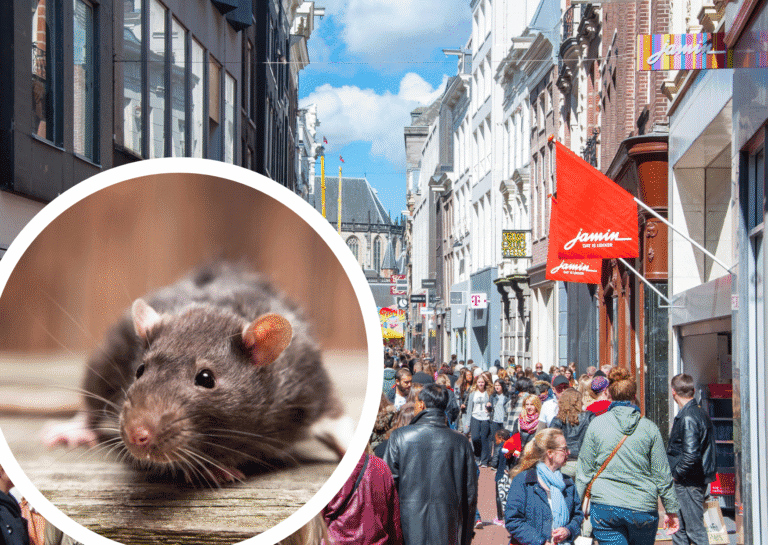
Amsterdam’s famous shopping street, Kalverstraat, is no longer just a tourist hotspot. It’s become a paradise for rats and a total nightmare for locals.
As reported by De Telegraaf, the heart of the city crawls with furry freeloaders, and no one seems to be able to stop them.
Shop owners are desperate, residents are horrified, and the rats? They’re living their best lives. 👀
Rats on fries and window seats
They’re not even hiding anymore. Rats are rummaging through French fry containers, lounging by garbage bins, and even sneaking into people’s homes.
One was spotted climbing into a house on Voetboogstraat and casually washing itself in the window, tail swaying outside. No shame whatsoever. 😳
Café owner Willy White has had enough. “I don’t even sell food, but they still come right into my place,” he tells De Telegraaf. “Under the bar, crisscrossing the customers. They’re terrified.”
And it gets worse. The rats chewed through the cords of his beer tap. “I’d really like a cat,” White said, “but according to hospitality rules, that’s not allowed because a cat is unhygienic.” The irony? Chef’s kiss. 😒
Fries, garbage and a perfect rat buffet
The infestation isn’t just bad luck — humans are laying out the welcome mat. Every day, TikTok-snack lovers queue for fries, eat right on the street, and leave behind a salty trail of leftovers. 🍟
But the fries are just the appetiser. Trash bins are too few and too small, so bags pile up beside them. During the day, “deposit hunters” tear them open for bottles, leaving a mess that rats happily claim.
Restaurant owner David Stapel told De Telegraaf the situation is out of control. Poison is no longer allowed, rats are multiplying, and customers are vanishing.
“In the evening, you literally hear people running out of the alley screaming. This way, not one dares to come and have a drink with me anymore.”
Amsterdam’s plan to stop the squeaking
The city says it’s aware things are getting hairy — or in this case, furry. Instead of launching a full-blown rat offensive, Amsterdam is tiptoeing around the issue with a prevention plan.
A city spokesperson tells De Telegraaf that the plan focuses on reducing food waste, improving waste collection, and educating people on how not to invite rodents into their lives.
Big businesses must now use proper containers, and soon, garbage bags will be banned from the streets altogether.
However, the city also expects residents and shop owners to contribute. Because nothing says ”public health crisis” like a shared group project. 🙃
Should Amsterdam be doing more to clean up this furry disaster? Or is it time to arm the locals with cats and steel wool? Tell us what you think — before the rats claim the comments section. 👇
Yesterday, the Dutch Minister for Foreign Affairs, Casper Veldkamp, co-signed a document calling for a ceasefire in Gaza. At the same time, recent research has outed the Netherlands as the EU’s largest investor in Israel.
It’s about as contrary as calling for an unnervingly loud barrel organ to stop playing, while simultaneously slipping coins into its cup.
So what’s happening here? Let’s break this all down.
A call for a ceasefire
Minister Veldkamp, along with 24 other foreign ministers signed a joint statement concerning the occupied territories in Palestine. The statement begins with a simple message:
“We, the signatories listed below, come together with a simple, urgent message: the war in Gaza must end now.”
“The suffering of civilians in Gaza has reached new depths,” it continues. “The Israeli government’s aid delivery model is dangerous, fuels instability and deprives Gazans of human dignity.”
It also rejects Israel’s proposal to relocate Palestinians to a “humanitarian city”, calling it “completely unacceptable. A Permanent forced displacement is a violation of international humanitarian law.”
However, the letter also made sure to point to the hostages held by Hamas since October 7:
“The hostages cruelly held captive by Hamas since 7 October 2023 continue to suffer terribly. We condemn their continued detention and call for their immediate and unconditional release.”
Signing a statement like this marks a shift in the Netherlands’ approach to taking a stance against Israel. Aside from calling for investigations, so far, politicians have been careful not to indicate a position on the genocide.
However, this call for a ceasefire contradicts where the Netherlands’ cash is flowing…
Largest EU investor in Israel “by far”
A recent investigation by SOMO has revealed that while politicians may be saying one thing, the money says another.
After analysing EU trade and foreign investment into and from Israel, SOMO concluded that the European and Israeli economies are deeply intertwined.
However, it had to point to the Netherlands in particular as it is “by far the largest investor in Israel and is responsible for two-thirds of EU investment in Israel.”
In fact, in 2023, the Netherlands invested no less than €48.9 billion. In comparison, the second largest investment after this amount was €7.7 billion from Luxembourg.
SOMO explains that this data is based on FDI stock. “The total value of the loans and equity investments from companies from a particular country into the Israeli economy in a given year.”
While FDI data for 2024 will not be released until December 2025, SOMO points out that according to UNCTAD’s 2025 World Investment Report, FDI investments into Israel increased in 2024.
Remember, the Netherlands is a tax haven
However, there is one important thing to consider when looking at these stats. SOMO points out that the Netherlands’ position as a tax haven could be distorting these figures.
For example, according to De Nederlandsche Bank, 12% of Dutch investment into Israel comes from “shell companies” — companies that serve no purpose other than as tax havens.
How heavily these figures are distorted, however, is unknown.
Israel also investing in the Netherlands
However, the Netherlands is also benefiting from investments from Israel. In 2023, the country received €47.3 billion from Israel.
In fact, economic relations between the EU and Israel seem to have remained relatively happy in spite of the start of a genocide.
SOMO points out that according to data from the EU Commission, the total trade in goods between the EU and Israel actually increased by €1 billion between 2023 and 2024.
And what does that mean? SOMO lays it out in black and white:
“Since the beginning of the genocide, the EU has actually increased its supply of resources to Israel’s economy, providing the country with essential resources to sustain its economy of genocide and occupation.”
What do you think of these findings? Tell us your thoughts in the comments below.
Plenty of countries celebrate someone’s 50th birthday as a huge milestone, but the Dutch do it differently.
Yes, yet another weird tradition when it comes to celebrating the golden birthday in the Netherlands.
Namely, calling the celebrant “Abraham” for men or “Sarah” for women and filling their home and/or office with very questionable decoration. 🤨
What is it?
Indeed, Dutchies love to wish you a happy birthday, and bestowing the name Abraham or Sarah upon anyone who turns 50 is just one way of celebrating.
The wild home or office decorations might include funky inflatables and possibly embarrassing posters.
One of my colleagues turned 50 today! In the Netherlands, this means she is Sarah(the male version is Abraham) Here’s what we teased her with pic.twitter.com/tN2tC99QpV
Once you turn 50, you’re old enough to be “visited” by Abraham or Sarah, who pass on their wisdom from old age.
That is to say, you’ve become a wise person through years of experience. And because it’s so important to the Dutch, they go all out with the decorations.
Turning 50 is worth all the congratulations and decorative excitement, so they don’t shy away from the potentially embarrassing decor.
Overall, it’s a sweet sentiment — you’ve lived long enough to gain all this wisdom and experience, and it’s a milestone worth celebrating. 🥳
Why is it quirky?
It’s interesting that the Dutch still use Bible stories as part of a tradition for a non-religious celebration.
Granted, the Netherlands was known for being a Calvinist country in the past, but religion is not as important for a majority of Dutch people as it used to be.
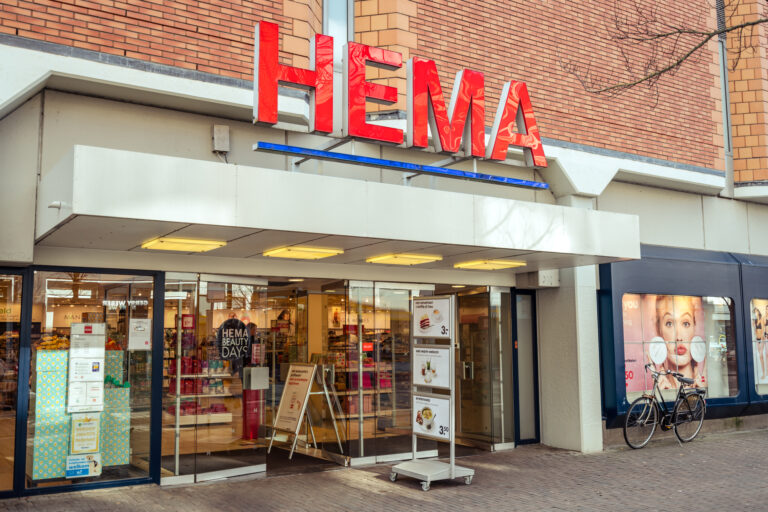
Ah, yes, the Netherlands! The land of cheese and bicycles…and HEMA? Indeed, this Dutch chain store is an integral part of the Netherlands.
We can’t help but adore this quaint variety store, but it is also a hidden gem outside of the Netherlands.
What is it?
HEMA, which stands for Hollandsche Eenheidsprijzen Maatschappij Amsterdam (Hollandic Standard Prices Company Amsterdam), is a variety-store chain founded in Amsterdam.
It was set up by the luxury department store De Bijenkorf in 1926 (nearly 100 years ago!).
This beloved establishment sells generic household goods at a low price.
HEMA has a few locations outside of the Netherlands, including Belgium (of course), the UK, France, and even Mexico!
Why do they do it?
Dutchies are known for being a little stingy, so a variety store where they can get pretty much anything for standard prices is an appealing deal.
While products don’t cost 10 to 25 cents anymore, you can buy relatively good products for cheap.
Not to mention, HEMA has all kinds of cute products. From fashion and beauty to office supplies and home goods, you can find almost anything you need at HEMA.
They even have a small grocery section and offer photo services, such as printing pictures or creating posters.
At certain locations in the Netherlands, HEMA stores come with a take-away restaurant, so you get to enjoy delicious fresh snacks and drinks on a budget, too (just like the iconic IKEA). 💁♀️
Why is it so quirky?
HEMA is a great representation of the Dutch spirit — practical in both money and time; it’s no wonder that everyone in the Netherlands would defend HEMA till death.
Texel is an island located just five kilometres north of Den Helder across the Wadden Sea. It has seven villages, is home to about 13,500 people, and over a quarter of it is made up of the Dunes of Texel National Park.
With lots of beautiful nature, countless cycling paths, and, of course, the sea, Texel is the perfect place for a Dutch summer escape.
Even better? With the most sunshine hours in the whole of the Netherlands, it’s your best bet if you want to escape the dark and dreary weather. 😉
Taking the TESO ferry to Texel
You can reach Texel by an hourly ferry from Den Helder, which takes roughly 20 minutes.
A return ticket costs only €2.50 for pedestrians and €5 if you take your bike or moped. ⛴️
To take your car across the Wadden Sea, you’ll pay €31.00 for a return ticket if you travel on Tuesday, Wednesday, or Thursday, and €46.50 if you travel on one of the other days of the week.
There’s a café on board, a couple of gift shops and a lovely outside deck to enjoy the views.
We have to warn you, though — if you venture out on the deck, you’ll be sharing it with hungry seagulls that like to tag along for the ride, too.
Getting around Texel
The traffic on the island is minimal, which, together with the numerous cycling paths across the island, makes it the perfect place for a relaxing bike ride.
If you aren’t keen on taking your bike, bike rental shops are located all over the island.
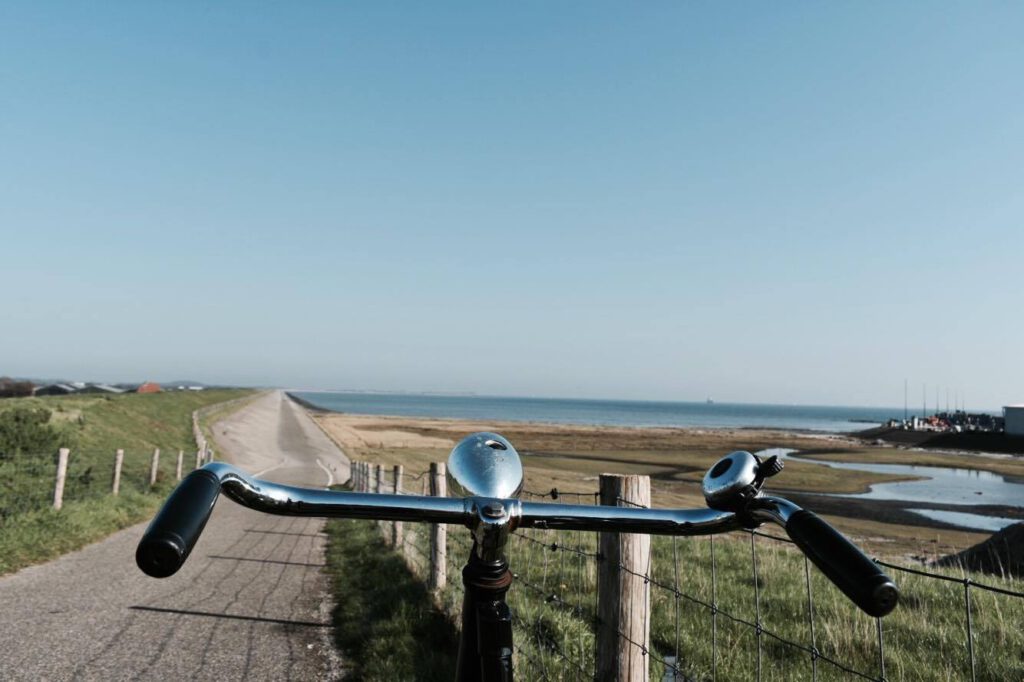
Texel offers countless scenic cycling routes.📷 Image: Emma Brown/Supplied
One is right across from the ferry port, so renting a bike on Texel involves minimal effort.
If bikes aren’t your thing at all, make use of the bus service that runs over the island or take your legs for a long stretch.
Oudeschild port harbour
One of the most popular bike routes on Texel is 23 kilometres long, taking you along the island’s coast to the famous lighthouse in De Cocksdorp.
You’ll cycle past pretty beaches where you can stop, sit down, and take it all in, arriving at one of seven villages on Texel, located less than halfway along this route: Oudeschild.
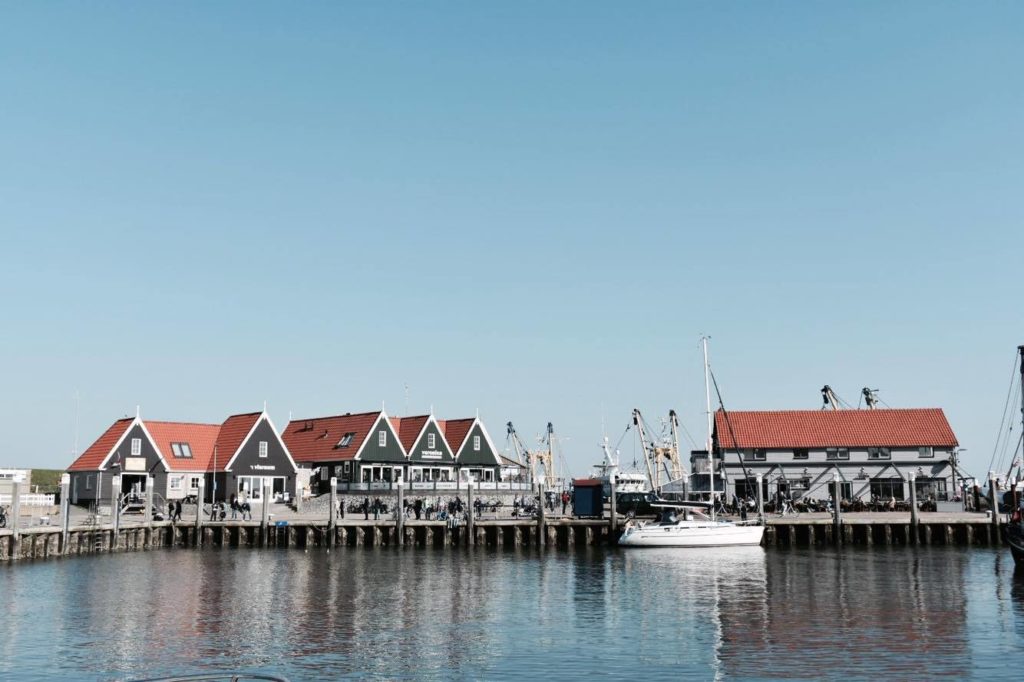
Its picturesque harbour has lots of nice little boutique shops, bars, and restaurants, with plenty of outside space to enjoy your beverage. 🍷
Enjoy a glass of wine or a beer in the picturesque Oudeschild harbour. Image: Emma Brown/Supplied
If you’re looking for something a bit more adventurous than a classic bike ride, you can rent Tuk Tuks for €150 per day from Monday to Friday, and €160 per day on weekends.
Eierland lighthouse
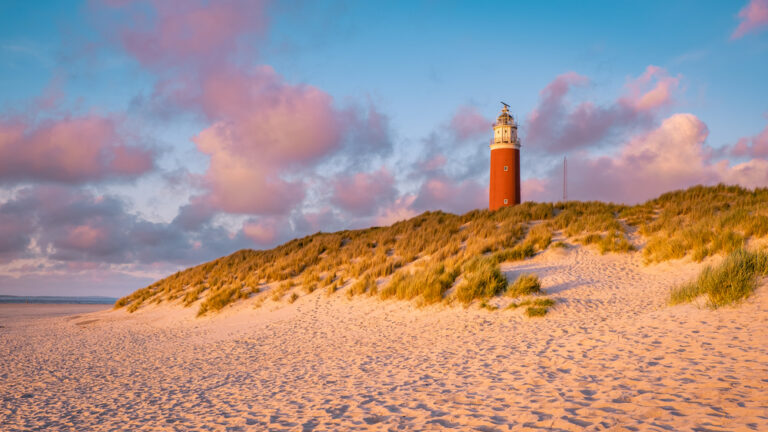
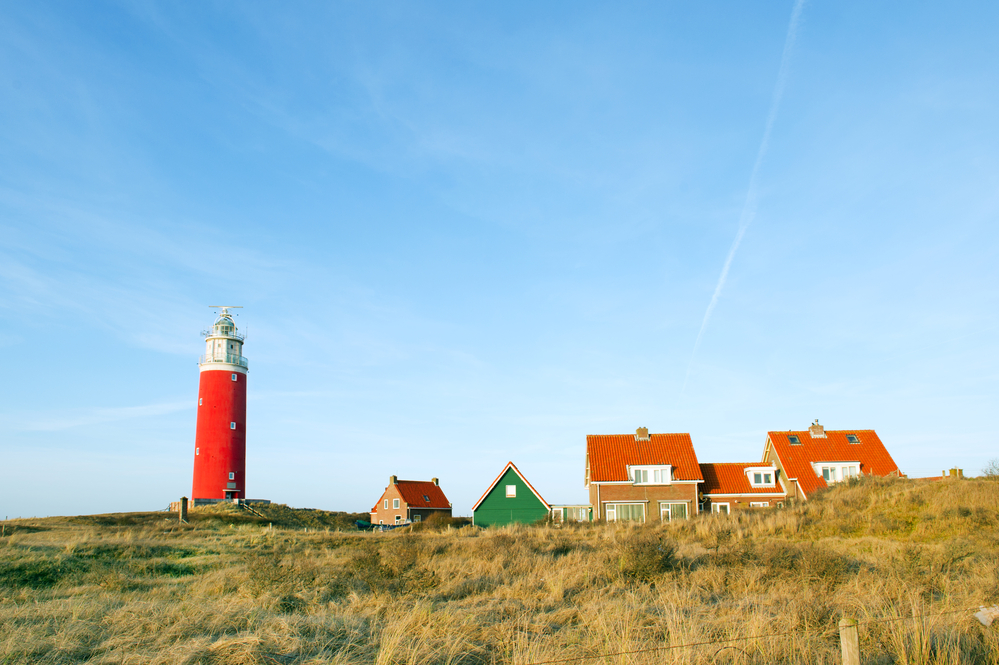
Once you reach the other end of the island, you get to the Eierland lighthouse.
With its cheerful red and white appearance, it stands out against Texel’s dunes and grass. Image: Depositphotos
This lighthouse is a massive tourist attraction on the island and can be visited for a small fee of €6.
Just below it, you’ll find vast sandy beaches and beautiful restaurants overlooking the sea. 🌊
Vuurtorenweg Texel beach
Vuurtorenweg Texel Beach is a beautiful beach that stretches north of the island.
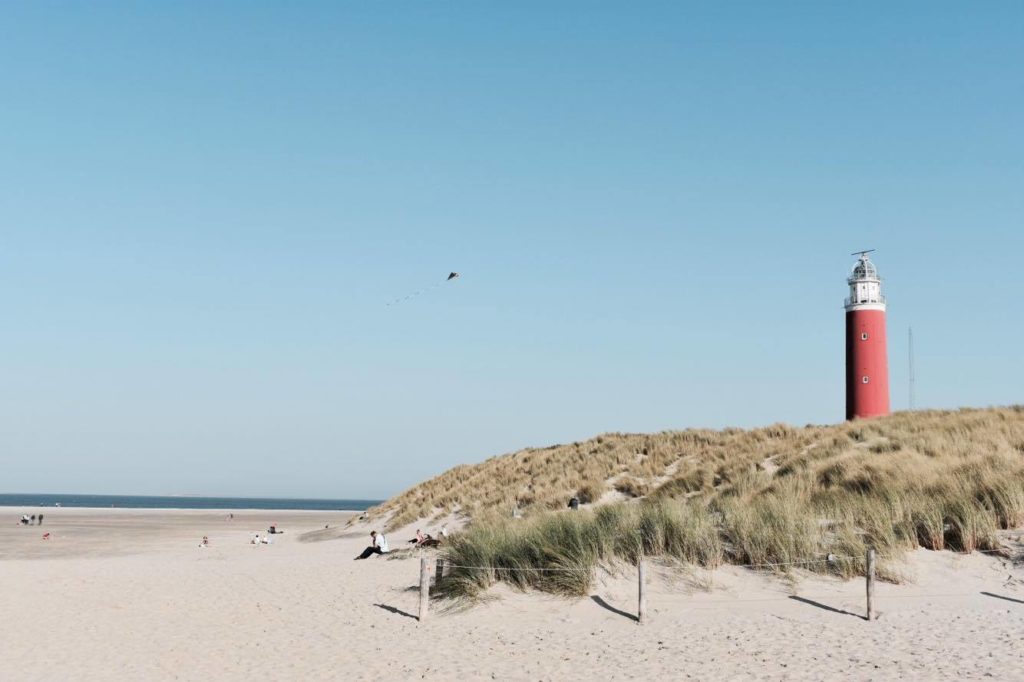
Located just below the lighthouse, it is the perfect spot for taking photos. The dunes that are part of the Dunes of Texel National Park also begin here.
They stretch for miles, so there is always ample space for you to enjoy, no matter how busy it is.
The north of the island tends to be windier, making it great for kite flying.
Explore Texel’s most famous lighthouse and its surroundings. Image: Emma Brown/Supplied
However, beware — the wind can also pose a challenge when you cycle back to the ferry port, and a “quick” cycle back from the beach can take you three times as long as you expected.
If you’ve been living in the Netherlands for a while, you’ve probably noticed the Dutch have a very thorough approach to taxes. And if you own Bitcoin, Ethereum, or any other digital currencies, you’re about to discover just how thorough they can be.
While the Netherlands isn’t cracking down on digital asset ownership, the tax rules are quite different from what many internationals expect.
Unlike countries that only tax you when you sell, the Dutch tax office wants to know about your holdings every single year, regardless of whether you’ve touched them or not.
Digital assets aren’t legal tender, but they’re definitely taxable
We’ve got crypto nieuws for you perhaps, as you can’t pay your rent or taxes with Bitcoin here, and the Belastingdienst treats digital currencies as taxable assets. This means they go into Box 3 of your tax return. This is the section for savings and investments.
Here’s the part that catches many internationals off guard: the Netherlands taxes you on a presumed return from your assets, not your actual gains or losses.
That’s right, your presumed assets, not the actual assets. Image: Freepik
Think of it as the tax office saying, “We assume you made money from your digital assets this year, so we’re taxing you on that assumption.”
One way you can stay on top of what’s happening is by keeping up with the latest crypto news to ensure you don’t miss any changes.
There’s always news, updates, and guides available online that help digital asset owners trade and stake digital assets the right way while declaring their holdings.
Currently, you’ll pay 36% tax on the deemed return from your total Box 3 assets (which includes digital currencies, savings, and other investments). The good news? There’s a tax-free allowance of €57,000 per person, so you only pay tax if your total assets exceed this amount.
Box 3 rules apply even if you never sell
This is the big surprise for many internationals. Even if your digital assets just sit untouched in a wallet, you still need to declare their value on January 1st every year.
It doesn’t matter if your portfolio crashed 40% during the year — the tax calculation is based on the value on New Year’s Day.
You also can’t deduct trading fees or offset losses like you might in other countries. The Dutch system assumes a standard return on your entire Box 3 portfolio, and digital currencies are just part of that calculation.
When digital assets move to Box 1
Not all digital currency activities stay in Box 3. If you’re earning digital assets as salary, actively day trading, or mining as a business, these activities fall under Box 1 — regular income taxation with rates between 37% and 49.5%.
The key question is whether your activities constitute “normal asset management” or cross into professional trading territory. If you’re aiming for returns that exceed what’s reasonable from normal asset management, or if it’s part of a professional activity, the income goes to Box 1.
Discuss filing your income tax return with a tax consultant who can help you determine whether you should file digital asset profits under private or corporate income.
You need to determine what falls under box 1 and box 3. Image: Freepik
The consultant can also help you figure out whether you must use Box 1 or 3 to avoid unexpected back taxes.
For mining specifically, if you mine as a hobby (and likely make losses after costs), your mined coins go to Box 3. If mining consistently profits, that income gets taxed in Box 1.
New arrivals and the M-form
If you moved to the Netherlands partway through the year, you’ll file an M-Form with your tax return. Here’s the important bit: your Box 3 obligations only apply if you were a Dutch resident on January 1st.
New arrivals should avoid making common financial mistakes, one of which is paying wealth tax that may fall under the tax threshold.
The 30% ruling reality check
Here’s where things get more complicated for many expats. The partial non-resident status that previously exempted 30% ruling holders from Box 3 taxation is being phased out.
This means that as of January 1, 2025, new 30% ruling recipients can no longer claim exemption from Box 2 and Box 3 taxes.
If you had the 30% ruling in December 2023, you can still use the exemption until 2026 under transitional rules. But after that, everyone pays Dutch tax on their worldwide assets, including digital currencies.
Regulatory changes you need to know
The regulatory landscape is shifting too. Since December 2024, digital currency companies can no longer register with De Nederlandsche Bank (DNB). They now need licenses from the AFM under new European rules.
Things have changed when it comes to licensing. Image: Freepik
For users, this means checking that your exchange or wallet provider has proper licensing. Companies providing services without the required registration face hefty fines.
In fact, recent enforcement measures were put in place after Peken Global Limited offered crypto services without registering with the DNB.
European regulations (MiCA) are standardising rules across the EU, which should bring more clarity and consumer protection. But don’t expect this to change Dutch tax obligations anytime soon.
Foreign wallets still count
One misconception that gets expensive quickly: you must declare all digital assets, regardless of where they’re held. Whether your Bitcoin is in a US exchange, a hardware wallet in your home country, or a Dutch platform, it all needs to be reported.
The Dutch tax office has access to financial data sharing agreements that make tracking foreign assets increasingly straightforward. Failing to report can result in significant penalties.
You can face penalties if you don’t declare all foreign assets. Image: Freepik
Bottom line: plan ahead
Digital currency taxation in the Netherlands follows local rules, not blockchain principles. Your assets might be borderless, but once you’re a Dutch resident, they’re subject to Dutch tax law.
Here are some key takeaways:
Track your holdings’ value every January 1st
Expect to pay tax on presumed returns, not actual gains
Consider how the changes to the 30% ruling affect your situation
Keep records of all your wallets and exchanges
Get professional advice if you’re actively trading or mining
The rules aren’t simple, but they’re clear about one thing: digital currencies have a definite place in the Dutch tax system, and that place is front and centre on your annual return.
Remember: Tax rules change frequently, especially for digital assets. Always consult the latest guidance from the Belastingdienst or a qualified tax advisor for your specific situation.
What has your experience been with this? Tell us about it in the comments below.