With its rich history, lively culture, and captivating architecture, the Belgian town of Leuven offers a perfect weekend getaway from the Netherlands.
From the bustling Grote Markt to the awe-inspiring Sint-Pieterskerk, Leuven is a destination that promises a memorable experience for every visitor.
In this Dutch-but-actually-Flemish-Review, we’ll take you on a virtual tour of Leuven, showing you all the most captivating sights to see. Ready? Let’s go! 👇
Grote Markt: the heart of Leuven
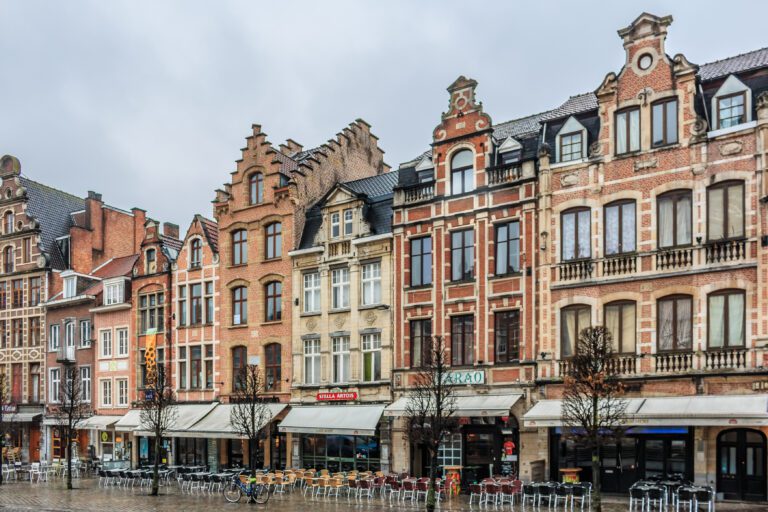
Your journey through Leuven should undoubtedly begin at the Grote Markt, the town’s buzzing central square. This historic market square is surrounded by charming cafés, restaurants, and centuries-old buildings with impressive facades.
The bustling student community — Leuven boasts the oldest university in the low countries — turns every square into a lively affair. If you’re looking for any kind of night-time fun, this is the place to be! 🍻
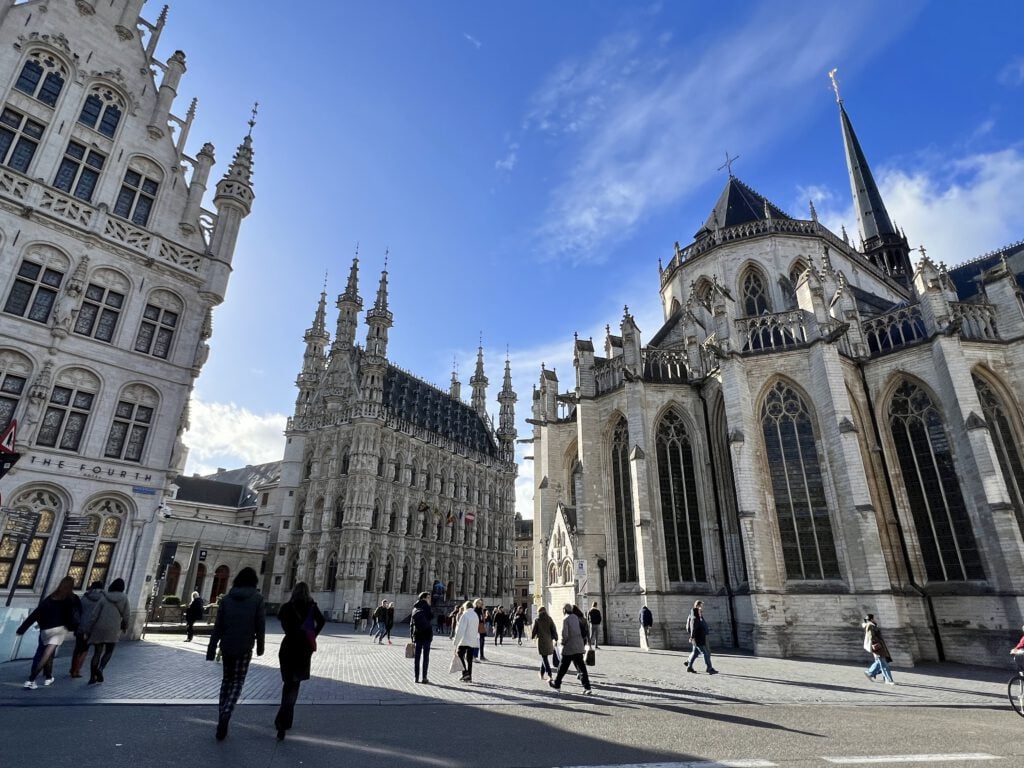
After a night of drinking, it’s time to sober up with a long stroll through the city. 😉 You’ll be happy to see that Leuven is home to many awe-inspiring churches — but none can match the grandeur of Sint-Pieterskerk.
Visiting is free of charge, and you can normally also view the famous The Last Supper by painter Dieric Bouts there.
Breathtaking! Image: Abuzer van Leeuwen/Supplied
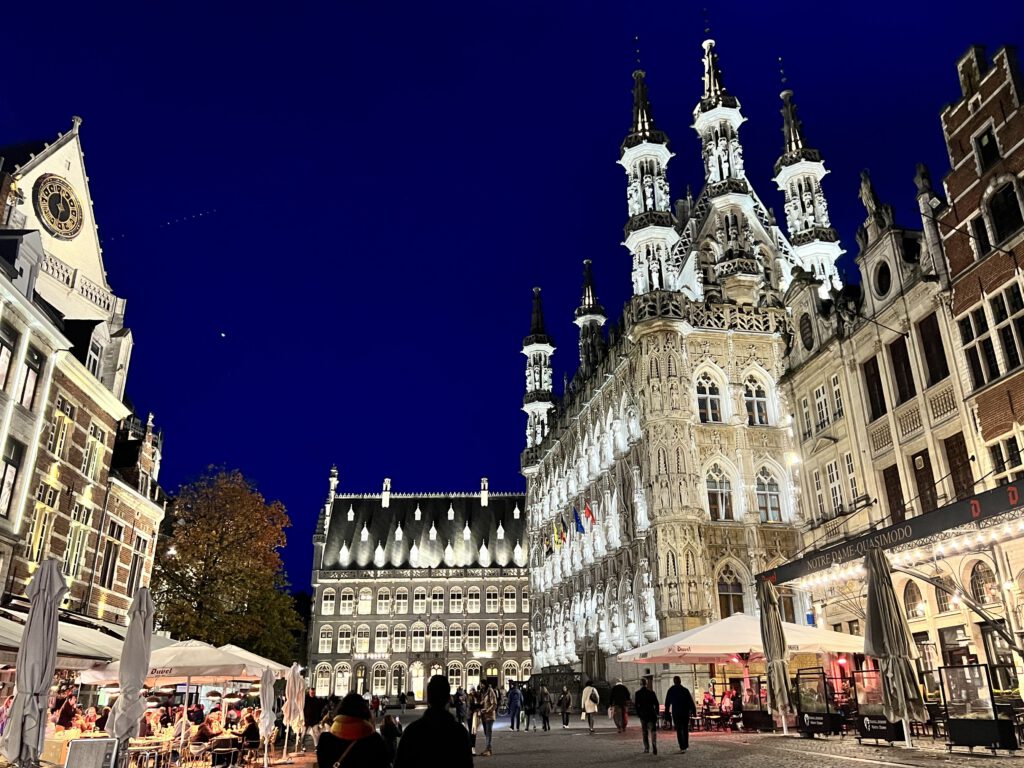
The magnificent town hall: an architectural masterpiece
The most gorgeous building in Leuven is the town hall. It’s really hard to miss as well! It comes as no surprise that this is one of the best-known Gothic town halls in the world.
While many other buildings in Leuven were rebuilt once or twice after the World Wars, this one has been intact since its completion in 1469. Until 14 January 2024, you can tour the interior and see Leuven as Dieric Bouts and his contemporaries saw it in the 15th century.
The University Library and the Tower of Leuven: true hidden gems
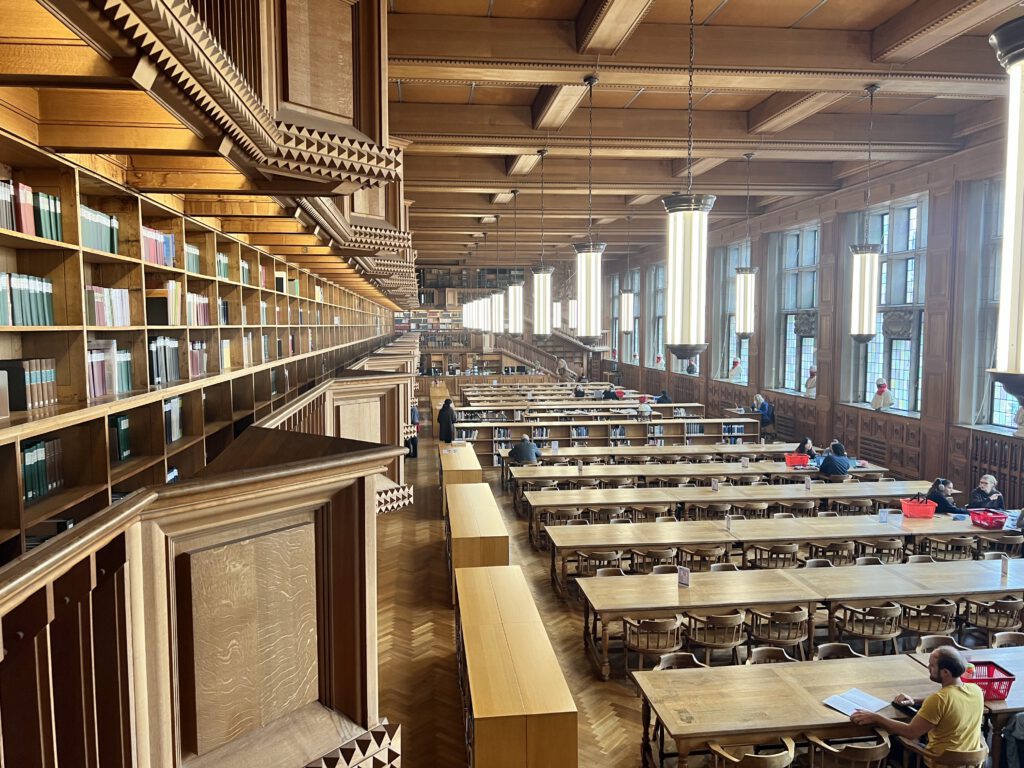
Visiting the University Library in Leuven pretty much felt like stepping into a fairytale. The exterior of the library is quite impressive, but the real beauty is hidden inside the building. Here, you’ll find a grand study hall that’ll have you wishing you were backing your student days. 📚
They don’t make ’em like this anymore. 😉 Image: Abuzer van Leeuwen/Supplied
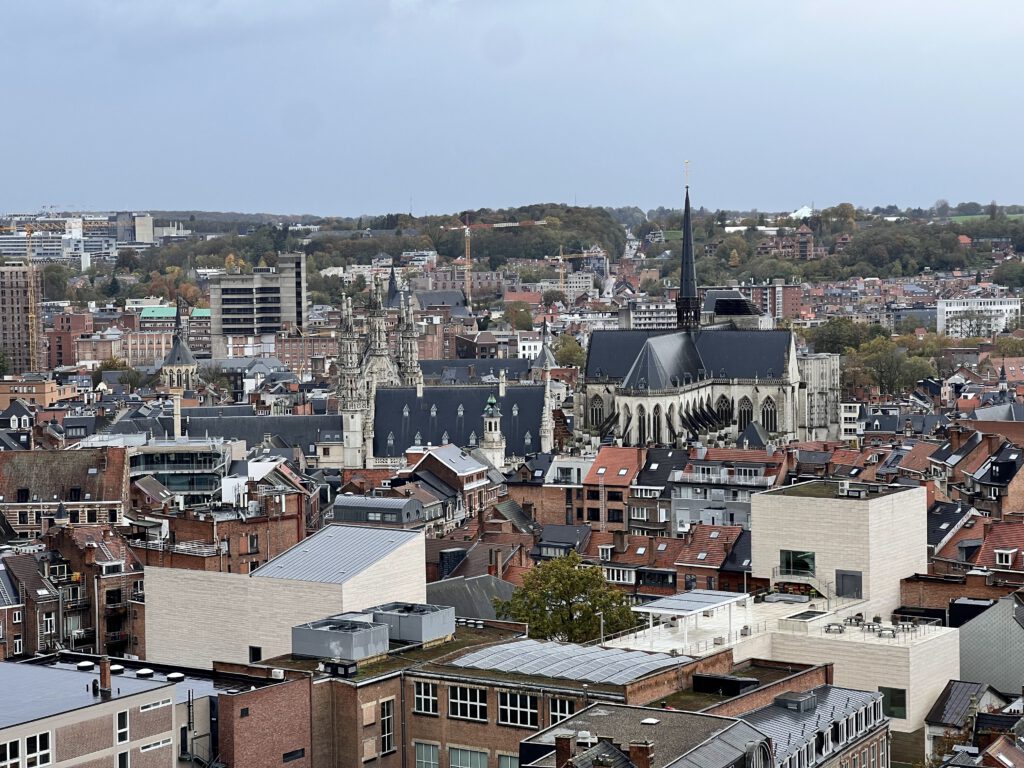
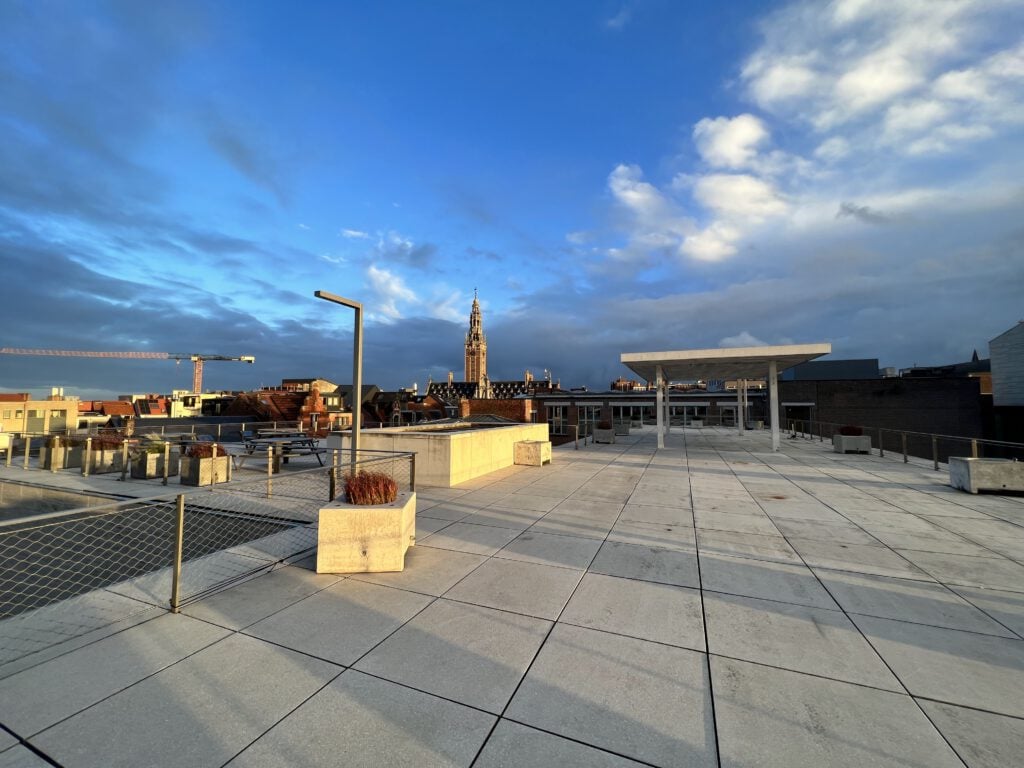
Wanna see some of the best views Leuven has to offer? You’ll find them here too! Just head on up the tower of the library and you’ll see the city in all its glory.
A very historical skyline! Image: Abuzer van Leeuwen/Supplied
Museum M: a cultural haven
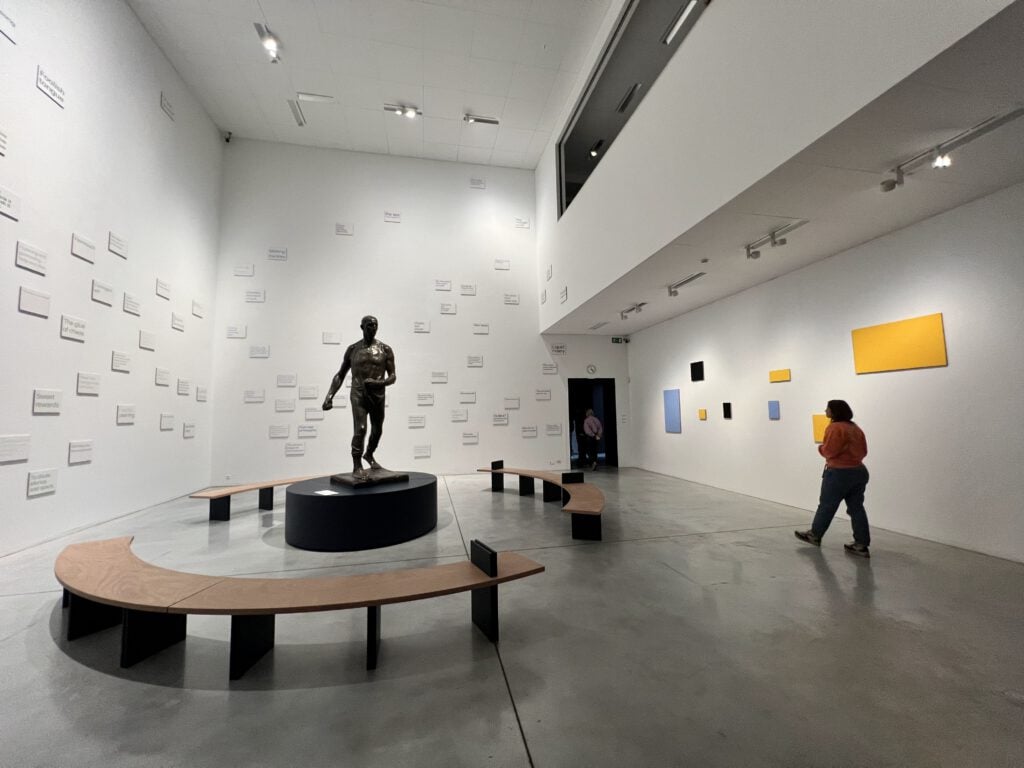
If you’re an art enthusiast, be sure to visit M Leuven, Leuven’s contemporary art museum. Housed in a modern building, it seamlessly blends the old with the new.
Art buffs, you’ll love this one! Image: Abuzer van Leeuwen/Supplied
Inside it, you’ll find an impressive collection of both historic and contemporary art, including works by Flemish masters such as Jan van Eyck.
Pssst… a great hidden gem. 💎 Image: Abuzer van Leeuwen/Supplied
Getting to Leuven from the Netherlands
Ready to see Leuven for yourself? The city’s convenient location just before Brussels makes it easily accessible from the Netherlands.
🚅 By train
To reach Leuven from Amsterdam, you can take a direct train from Amsterdam Centraal Station to Leuven Station. The journey takes approximately two and a half hours. Once you arrive at Leuven Station, the town’s attractions are just a short walk away.
The city has a bustling nightlife! Image: Abuzer van Leeuwen/Supplied
🚗 By car
Got a car? If you prefer driving to Leuven, then it’ll take you around 2 hours and 20 minutes. Since this doesn’t save you that much time, we recommend taking the train and skipping those pesky parking costs. 😉
Have you ever been to Leuven? Do you have any more tips or suggestions? Share them in the comments!
People often think of the Netherlands as a small, prosperous, forward-thinking country. But beyond the picturesque bikes, windmills, and tulips lays a dark underbelly — this tiny country is home to some serious and disturbed Dutch criminals.
Some of the most famous Dutch criminals include murderers, gangsters, and a criminal of war.
Polish your magnifying glass — it’s time to dive into some of the most notorious criminals in Dutch history! 🔍
1. Joran van der Sloot: the disappearance of Natalee Holloway, and the murder of Stephany Flores Ramírez
On the surface, Joran van der Sloot seemed like a normal guy. He grew up in Arnhem and moved with his family to Aruba in 1990, where he became an exceptional student and star athlete on his football team.
However, the facade was quickly broken. At just 18 years old, Van der Sloot was named a prime suspect in the disappearance of an American girl named Natalee Holloway in Aruba.
Van der Sloot was the last person who saw Natalee, but there was just one problem — Natalee’s body was never recovered, so Van der Sloot was never charged.
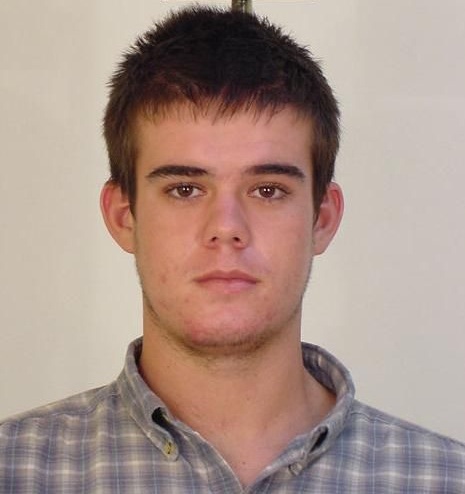
The prime suspect in the Holloway case was never charged with the crime. Image: Aruba Police Force/Wikimedia Commons/Public Domain
Okay, so that’s just one case — perhaps Van der Sloot was just in the wrong place at the wrong time? Except, five years later — to the day that Natalee went missing — 21-year-old Stephany Flores Ramírez was found beaten to death in a hotel room in Lima, Peru.
Whose name was the room under? None other than Joran van der Sloot. 🤷
In due process, justice was served. Following Van der Sloot’s capture, a Peruvian judge gave the then 25-year-old a sentence of 28 years imprisonment. In 2023, Van der Sloot also confessed to the murder of Natalee Holloway, for which US authorities sentenced him to 20 years.
He’s still locked up in a Peruvian jail to this day.
2. Willem Holleeder: the kidnapping of Freddy Heineken
Willem Holleeder is one of the most notorious Dutch criminals and gangsters from Amsterdam. His nickname was De Neus (The Nose) because of his large — well, you get it. 👃
Holleeder is held responsible for a series of five murders, one of the victims being his own brother-in-law and accomplice, Cor van Hout. Echt?
However, his most notorious crime — and one of the most famous in Dutch history — was the kidnapping of Freddy Heineken, the CEO of Heineken, and his driver in 1983.
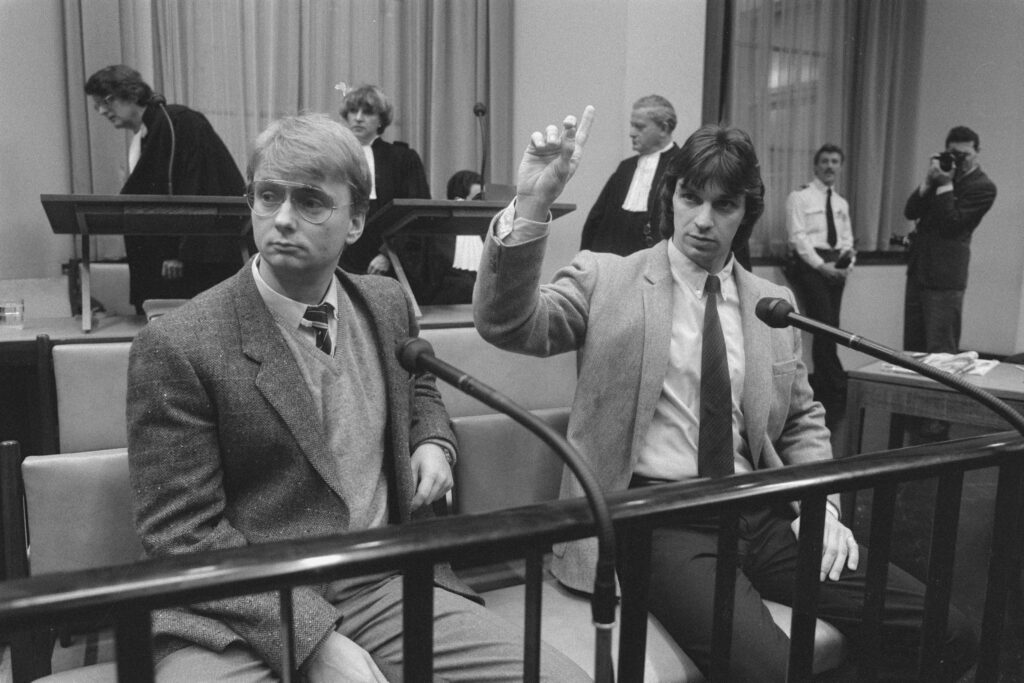
Willem Holleeder (right) murdered his accomplice/brother-in-law Cor van Hout (left). Image: Rob Bogaerts/Wikimedia Commons/CC0 1.0
Holleeder demanded a ransom for the release of the men — but in a sudden twist, he and his men grabbed the money and ran without releasing their prisoners. Luckily, the two captives were eventually set free by the police. 🍻
In 1983, Holleeder was sentenced to 11 years imprisonment for the kidnapping. In 2019, he was sentenced to life imprisonment for five murders and one count of manslaughter.
3. Thijs H: the dog-walker serial killer
Most people who knew Thijs H. never thought of him as anything but a nice guy. He was described as quiet but sweet.
However, in May 2019, the Netherlands was shocked when the then 27-year-old murdered three dog walkers in Den Haag and Limburg in a chaotic spree.
On May 5, 2019, the brutalised body of a 56-year-old woman who had been walking her dog was found in the Scheveningen Bosjes.
Just two days later, two more bodies were discovered — this time all the way in Limburg. And guess what? The two victims had also walked their dogs at the time of the attack. What a strange coincidence! The dogs were also believed to be harmed during the attack.
Detectives in Limburg connected the crimes to the one in Den Haag, and H. was thrown in the slammer. On July 31, 2020, a judge laid down the verdict: 18 years in prison with compulsory TBS treatment.
4. Frans van Anraat: the Dutch war criminal
This case makes us question if anyone can be truly trusted. Can you imagine finding out that your colleague at work is actually a war criminal?
Well, that’s exactly what happened with Frans van Anraat. He was a Dutch businessman before he was convicted of war crimes. In the 1980s, Van Anraat started his own company, which supplied large quantities of mustard and nerve gas to Saddam Hussein’s regime.
The gases were used against citizens in Iran and Iraq in 1987 and in the military attack against the Kurds in 1988, which killed 5,000 people.
The US requested his arrest in Italy in 1989, but he was released pending his trial and fled to Iraq. There, he became an Iraqi citizen and stayed for 14 years. 😲
However, on December 6, 2004, he was arrested by Dutch authorities on war crime and genocide charges and sentenced to 17 years imprisonment. The Court of Appeal in The Hague also ruled that he must pay a compensation of €25,000 each to 16 victims of gas attacks in Iraq and Iran.
5. Volkert van der Graaf: the murder of Dutch politician Pim Fortuyn
Okay, so we’ve heard about crimes that had to have taken some guts to commit. Another pretty ballsy crime on our list is a guy who murdered a politician in broad daylight.
Volkert van der Graaf is a guy with some pretty passionate views about the environment and animal rights. On top of that, he harboured intense animosity towards Dutch politician Pim Fortuyn, who held controversial opinions about Islam, immigration, and multiculturalism.
On May 6, 2002, Van der Graaf decided that he had enough of the polarising politician. He grabbed a gun and went to a radio station in Hilversum where Fortuyn was giving an interview.
When he came out of the station into the car park, Van der Graaf shot the politician point-blank in the head and ran away. He was immediately caught by Van der Graaf’s driver, who held him until the police arrived.
Van der Graaf went through a criminal trial, and the judge laid down a sentence of 18 years imprisonment. However, he was released in 2014 on parole after having served just 12 years in jail. 😶
6. Ridouan Taghi: the most wanted criminal in the Netherlands
Meet the Dutch-Moroccan version of Walter White, Ridouan Taghi. He is suspected of ordering at least 10 murders related to organised crime, and he is allegedly the head of one of the largest drug rings in the world.
Until his arrest in 2019, he was the most wanted criminal in the Netherlands.
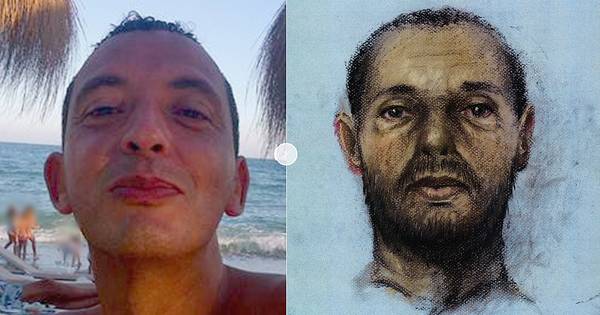
Taghi is suspected of ordering at least 10 liquidations. Image: Politie
Taghi is suspected of organising the murder of lawyer Derk Wiersum, as well as the brother of a key witness in a trial against Taghi. He is also alleged to have ordered the recent murder of Dutch journalist Peter R. de Vries. Both Wiersum and De Vries were shot in the street in broad daylight.
In early 2024, after a trial of nearly six years, Taghi was sentenced to life in prison, and sentences were also imposed on 17 of his co-criminals.
7. Michael Panhuis: the murder of Anne Faber
This case may just frustrate you and make you question the criminal justice system.
Before 2017, Michael Panhuis already had a bad rap sheet. He was convicted in 2012 of raping two underage girls, a crime for which he was receiving treatment at an in-patient psychiatric clinic.
However, on September 29, 2017, he was granted permission to leave the grounds, and that’s when he committed his most terrible crime of all.
Verdachte Michael Panhuis reed al eerder opzettelijk fietsers aan. De fiets van #AnneFaber miste het achterlicht. Mogelijk schade aan auto? pic.twitter.com/FPrf3b8dWt
Anne Faber was taking a bike ride in Soest, near Utrecht, when Panhuis suddenly abducted the 25-year-old student. He then assaulted, raped, and murdered the girl before dumping her body in the woods, where she would be discovered two weeks later.
DNA evidence on Faber’s jacket revealed that Panhuis was responsible for the crime.
Panhuis was sentenced to 28 years imprisonment with compulsory TBS treatment for assault, rape, and kidnapping.
So that was our list of the seven most notorious Dutch criminals! Who knew that this little country had such crazy people running around? We’re just glad that most of these guys are paying, or have paid, the price for their crimes.
What did you think of these Dutch criminals? Which one shocked (or scared) you the most? Tell us in the comments! 👇
A few years ago, I moved to Rotterdam to start my master’s degree at Erasmus University. As I come closer to ending my journey here (bar a few submissions), I can’t help but remember all the things I found unique about Rotterdam.
As soon as I lugged my suitcases off the train from Schiphol Airport and made my way to the trams, I could sense this would be the beginning of an arduous adventure in this Dutch city.
As I got on the tram, the attendant must’ve noticed my bags and my look of fascination as I was taking in the sights of the city and picked up a conversation with me.
He got so excited when I told him that this was my first day and I was here to stay awhile. With fervour and enthusiasm, he pointed out the amazing street art and the buildings and gave me a bit of history along the way.
Rotterdam is unlike any other Dutch city. Image: Depositphotos
Like all Rotterdammers I’ve had the pleasure of knowing, he started with the history of the bombing, sort of trying to explain why the city looks and feels so different from other Dutch cities. He swore by Rotterdam’s eclectic nature and good city vibes.
As time went on, I wasn’t able to find a place I liked to call home, but I did feel fortunate to have had the experience of living in Rotterdam.
If I could do my journey all over again, I wouldn’t pick any other city — because it is truly like no other European place I’ve ever been to.
So, without further ado, here are 10 unique things about Rotterdam!
1. The red lights around Rotterdam
When you’re walking around, you rarely ever look down at the street’s path unless you have something stuck underneath your shoe or if you want to avoid eye contact with strangers.
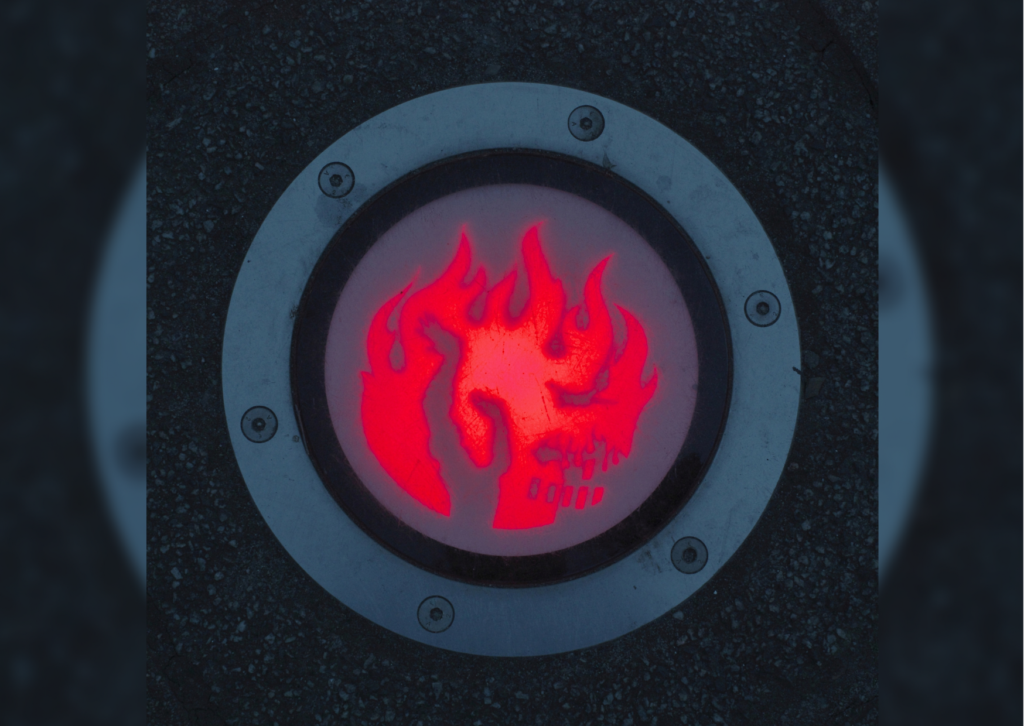
One unique thing about Rotterdam is the red lights that you find everywhere. Image: Smial/Wikimedia Commons/CC1.0
But when you’re walking around the city of Rotterdam, if you happen to look down, you might be able to find a small red light with flames on it. There are 400 of these spread across the city, and they are used to mark the line where the city was bombed during WWII.
2. Rotterdam is the birthplace of the Kapsalon
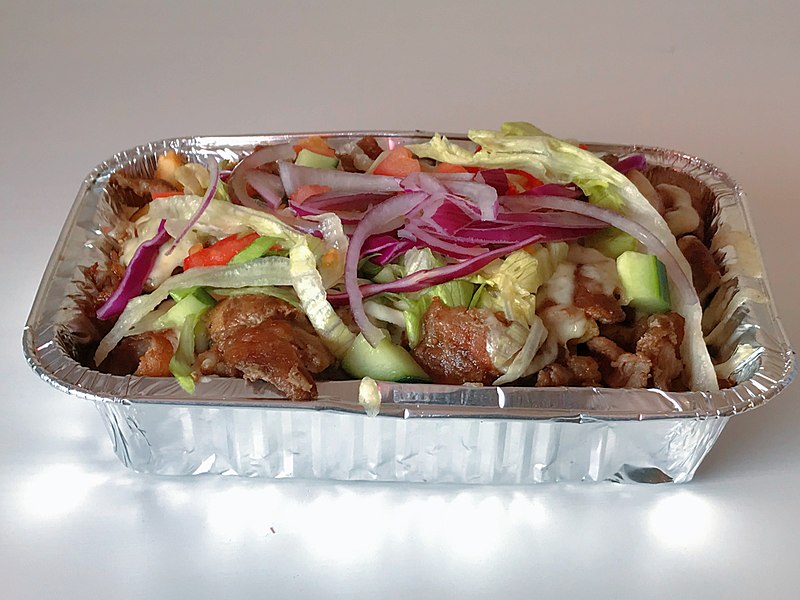
So why are the names of Kapsalon — the fast food — and your local hairdressing salon called the same? A product of Rotterdammer diversity, the popular dish was invented by — you guessed it — a hairdresser.
It combines Cape Verdian hairdresser Nathaniël Gomes’s favourite ingredients into one disposable metal takeaway container. It has a layer of patat (or frietjes?), topped with a whole lot of shoarma meat, melted Gouda cheese, and finished off with some salad, garlic sauce, and sambal.
Did you know that Rotterdam was the birthplace of the Kapsalon? Image: Amin/Wikimedia Commons/CC4.0
The hairdresser frequented a kebab shop in Delfshaven, El Aviva, and asked for this to be made for him. Other people started taking notice, and they wanted to jump on the calorie wagon as well.
It quickly grew in popularity and can now be found in almost every snack bar and kebab shop in the Netherlands and Belgium.
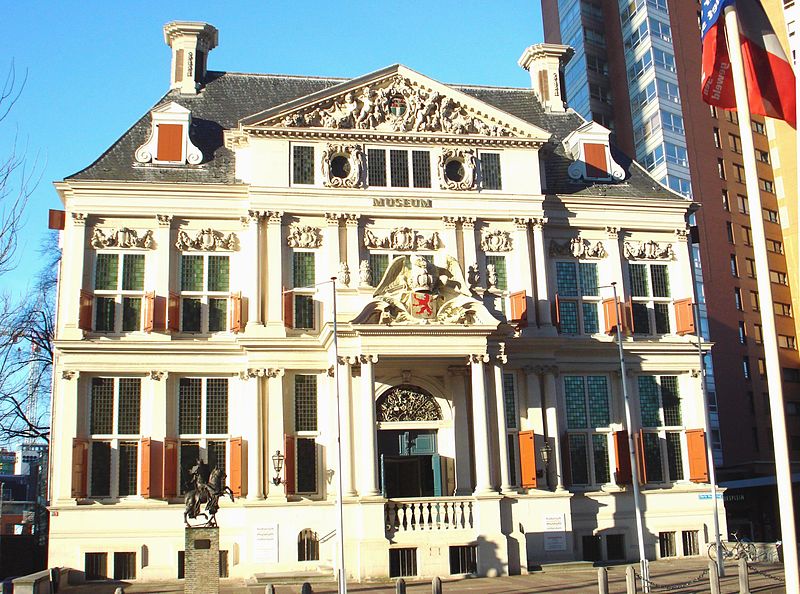
Napoleon and his wife stayed in the Schielandshuis in Rotterdam in 1811. Image: F.Eveleens/Wikimedia Commons/CC3.0
His plan was to control every seaport so that he could go to war with England. During his visit to strategise, he, of course, ended up in Rotterdam with his wife in the Schielandshuis.
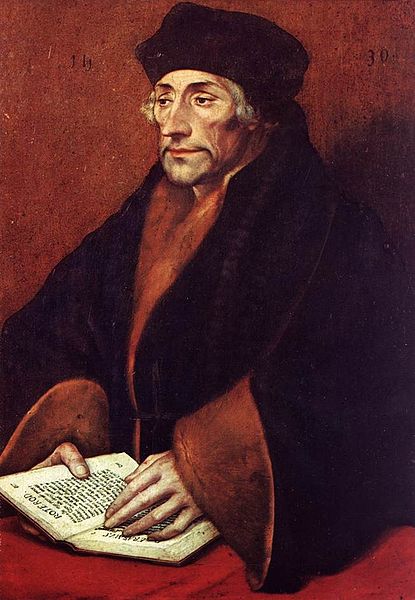
4. Erasmus is a Rotterdam native!
The scholarships and the university (yes, the university is different from the Erasmus+ program) get their name from Desiderius Erasmus or Erasmus of Rotterdam — a Dutch philosopher, humanist, and former Catholic Priest.
He is said to be one of the greatest philosophers of the Northern Renaissance and the first person ever to edit the New Testament. He was born in Rotterdam in 1466 but lived there very briefly. He moved around Europe, teaching, lecturing, and collaborating with the thinkers of his time.
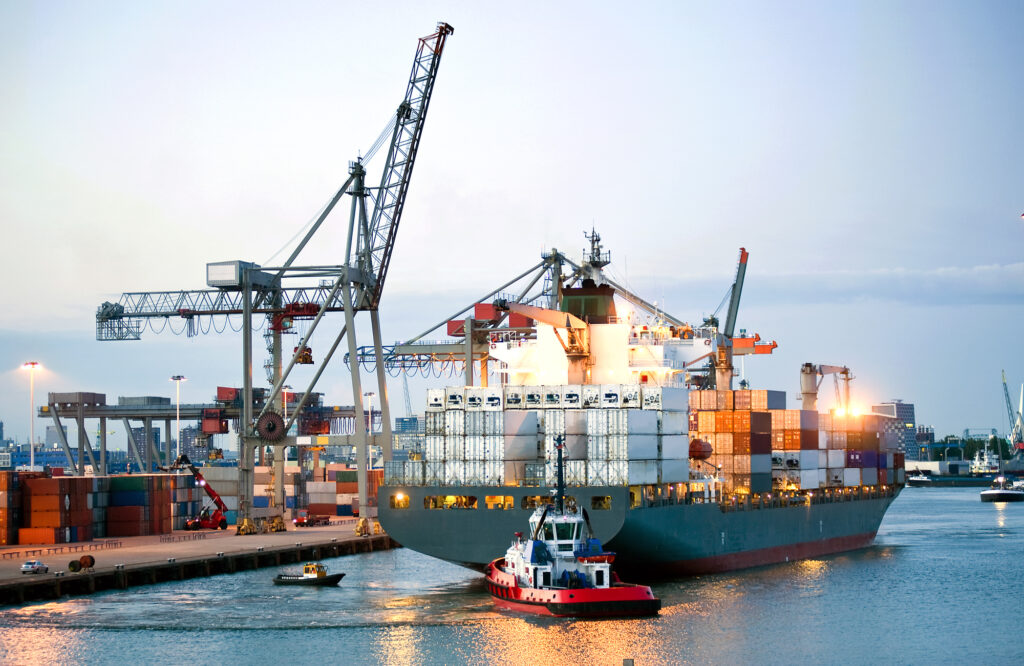
5. Rotterdam has the largest port in Europe
Rotterdam is famously known to many people outside of the city as the place where the largest port in Europe resides. As port cities go, it has a well-equipped and connected port with a long-standing history of maritime activities.
The Rotterdam port has a surface area of over 126 square kilometres. Image: Depositphotos
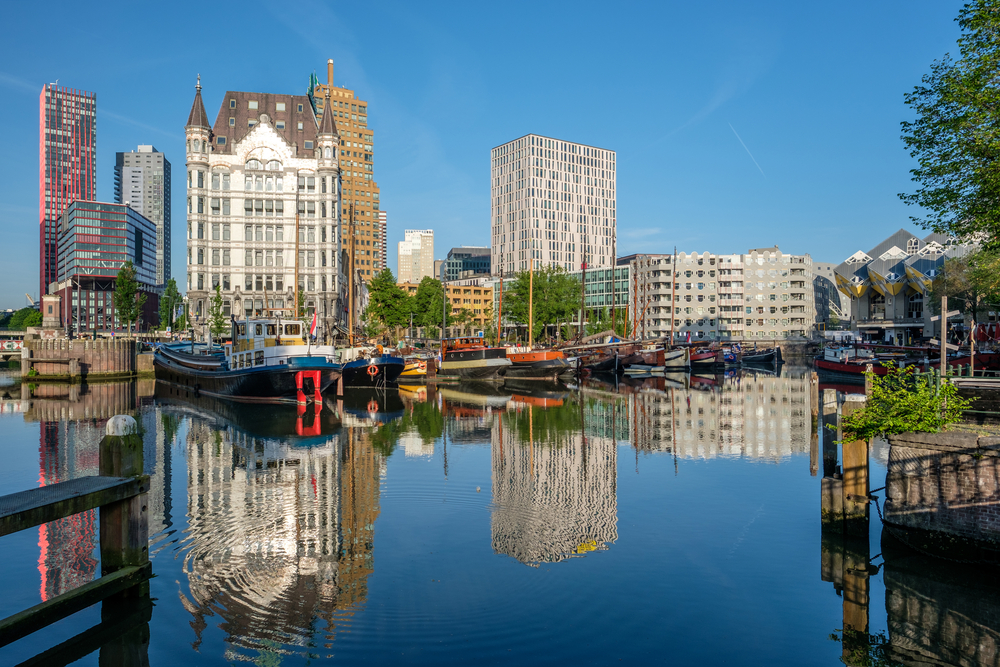
There’s even an open and free-for-all part of the Maritime Museum where you can go into old boats and explore how they look from the inside. These boats are docked at the Oude Haven (Old Harbour), a nice place to get a biertje and gaze at the Willemsbrug by the water.
6. Rotterdam is home to 174 nationalities
Rotterdam is home to many different ethnicities, with only 50% of the populous being Dutch. It attracts a huge international community as it is the base for large multinationals and world-renowned universities like Erasmus University, Willem de Kooning Academy, and Codarts.
It has its own China Town at West-Kruiskade, restaurants offering cuisines from all around the world, festivals dedicated to its growing international populace, and ease of integration as almost everyone speaks English.
7. Rotterdam is filled with modern and surreal architecture
Is an article about unique things about Rotterdam complete without mentioning its architecture? Post-WWII, this city had to start rebuilding from almost nothing.
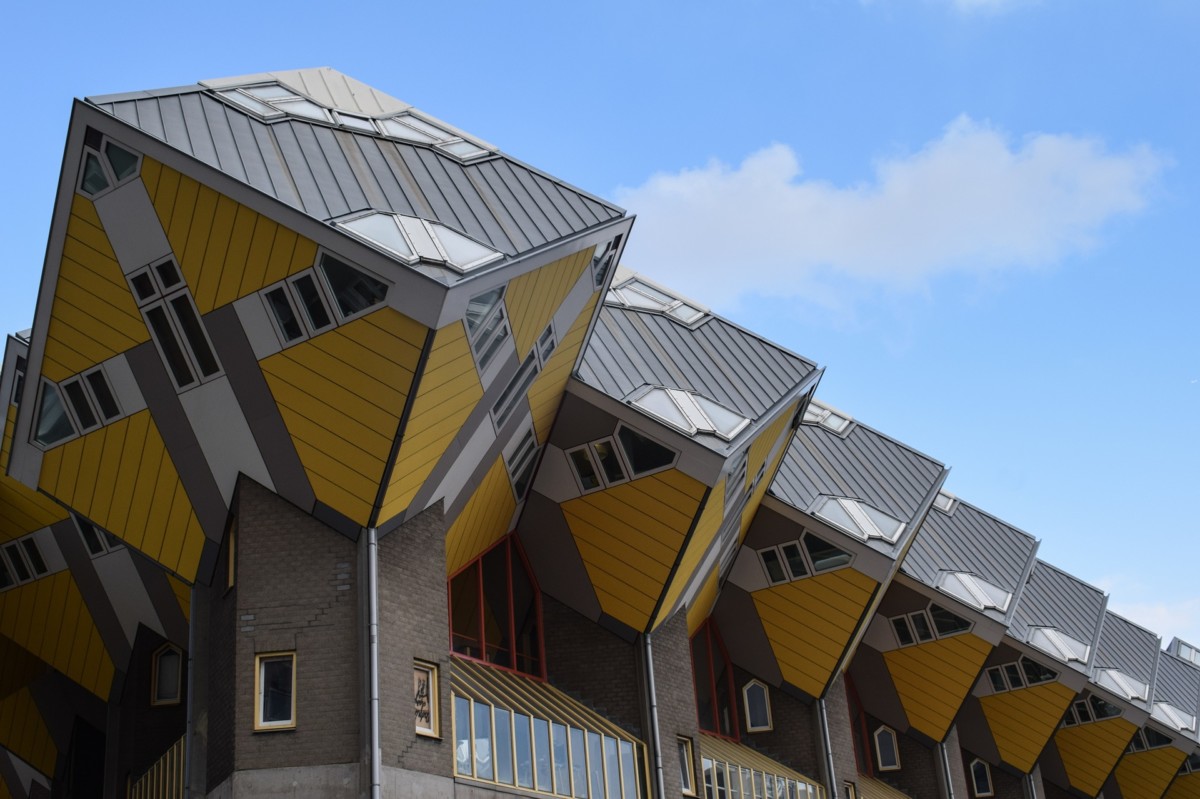
The Cube Houses are just one example of Rotterdam’s unique architecture. Image: Pixabay
This means that outside of the historical Delfshaven, you won’t find many quintessentially Dutch buildings. Instead, you’ll find unique cube houses, colourful buildings, and modern architecture adorning the city.
8. It’s the only city in the Netherlands to have a skyline
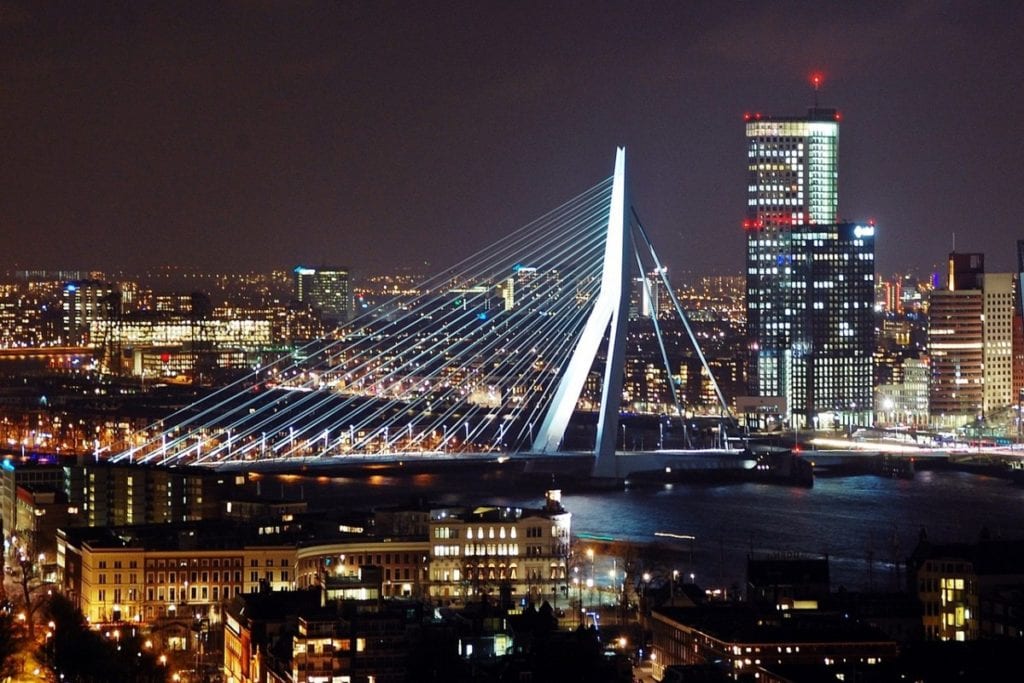
With its modern architecture comes the title of being the only city in the Netherlands to have an actual skyline. It is home to 352 high-rises, the tallest (in the Netherlands and the Benelux) being the Zalmhaven at 203 metres.
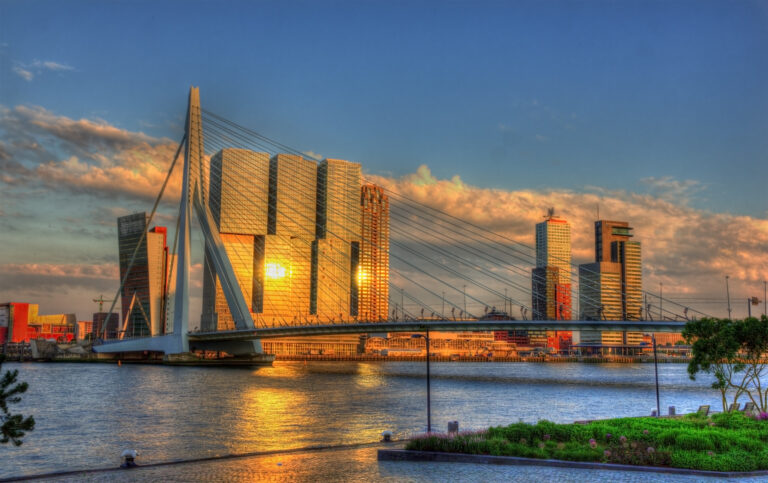
An aerial view of The Netherlands’ only skyline. Image: Pixabay
You will find many of these skyscrapers along the river Maas in the Kop van Zuid district. It’s also called the ‘Manhatten on the Maas’ because of all these high-rises constantly coming up. The skyline of Rotterdam is certainly a sight to behold!
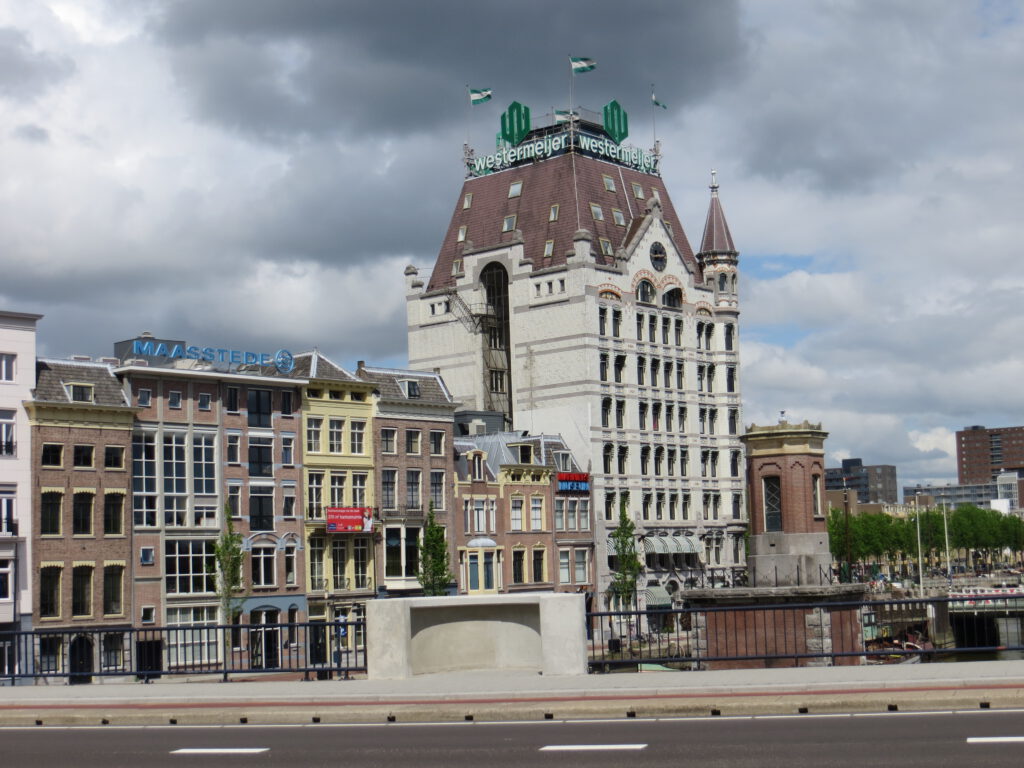
9. Het Witte Huis was once the tallest skyscraper in Europe
Did you know that Rotterdam had the tallest building in Europe in 1897? It’s the office building of Het Witte Huis. You wouldn’t know if you looked at it today, though.
The first skyscraper in Europe. Image: Racingfreak/Wikimedia Commons/CC3.0
Just over 43 metres high with 10 floors, this building built in the Art Nouveau style has seen many people come and go from the city of Rotterdam. You can see this also from the Oude Haven or walk by it and admire its architecture from up close.
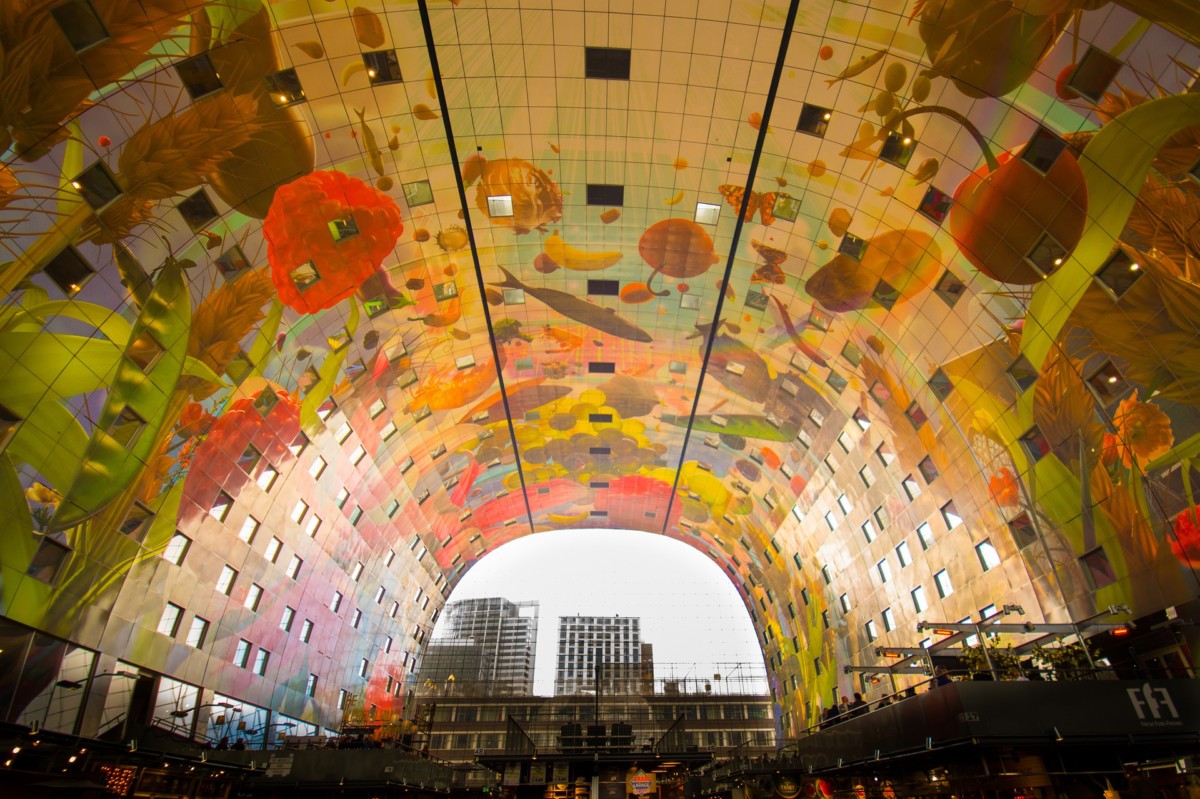
10. Rotterdam’s Markthal has the largest artwork in the world
The Markthal of Rotterdam is an iconic piece of architecture for the city of Rotterdam. It’s dome-shaped, with offices and apartments in the building itself and shops and stores on the inside of the dome.
Markthal is not just a place to go for great food. It’s also a place to admire incredible artwork. Image: Pixabay
It’s the brainchild of Arno Coenen and Iris Roskam, and it’s a whopping 11,000 metres squared. It’s also known as the Sistine Chapel of Rotterdam!
You will see fruits, flowers, and insects inside the building, home to many restaurants, grocery stores, and bars.
Some stores give out free samples, so walk around and try the best cheeses, stroopwafels, olives, fruit salads, and more!
There are many more unique things about Rotterdam that are just waiting to be discovered. But besides that, Rotterdam is also bursting with hidden places, nature spots, and day trips you can take around the city!
Do you have any favourite spots? Let us know in the comments below! 👇
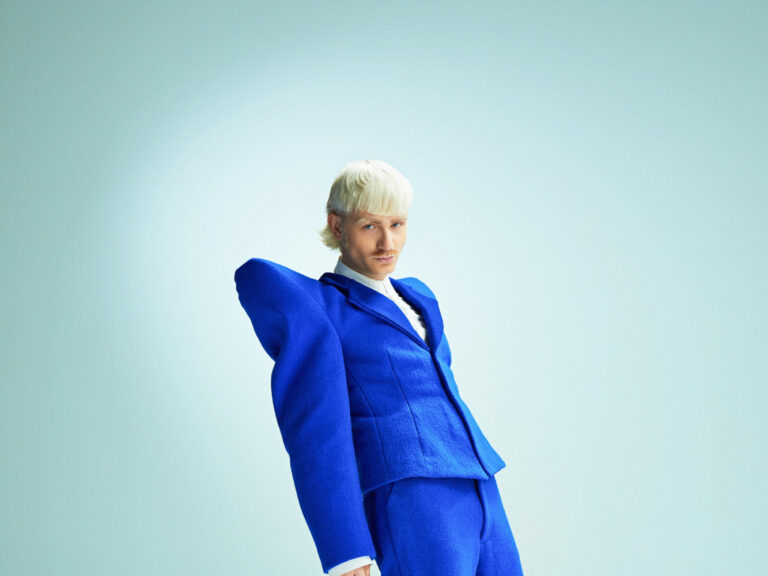
Everyone was shocked when Dutch contestant Joost Klein was disqualified from the 2024 Eurovision Song Contest. In light of harsh criticism, the European Broadcasting Union (EBU) has now issued a statement confirming that it fully supports its earlier decision.
The EBU says the decision was made unanimously and quickly, which raises the question of what really happened in Malmö and how serious the yet unspecified “incident” was.
As Swedish media and police have revealed more information, let’s have a look at what we know so far. 👇
An accelerated police procedure
Swedish police have told local media that they are currently investigating the incident in an accelerated procedure.
This sped-up procedure is necessary because there is “strong evidence” against Klein. However, as the NOS states, Swedish police have not specified what this evidence could be.
A decision on whether Joost will be prosecuted is expected to be made by the beginning of June.
Contradicting statements
Dutch broadcaster AVROTROS, who managed Joost’s participation in the contest, issued a statement on Sunday arguing that Joost’s disqualification was disproportionate.
The EBU has now responded by saying that AVROTROS’s version of the story does not match statements from witnesses, the police, and EBU staff.
Fans around the world were disappointed by Joost’s disqualification. Dutch satirical show Even Tot Hier created a parody of Europapa summarising the general consensus of the Dutch audience:
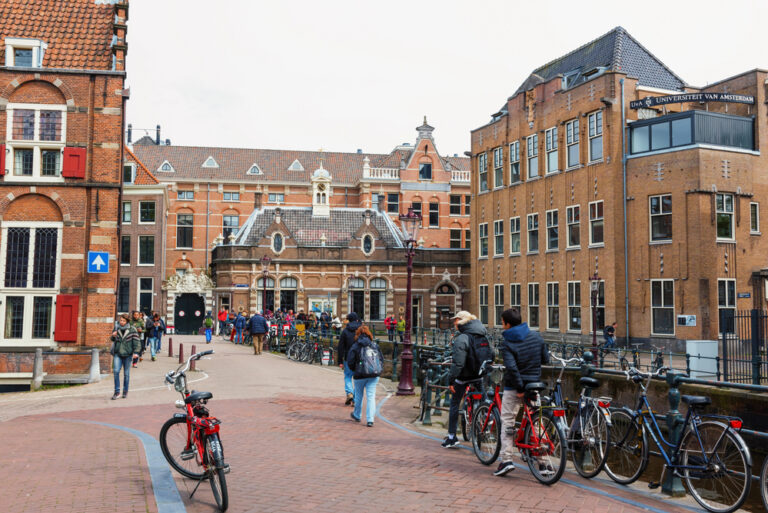
Students of the Universiteit van Amsterdam (UvA) will not have any classes for the next two days due to the ongoing Pro-Palestine protests.
According to the university’s website, its buildings will remain closed on both Tuesday and Wednesday as the university “cannot now take responsibility for the safety of everyone on campus.”
A change in atmosphere
The university made this decision following yesterday’s demonstrations on campus, during which a “walk-out” by staff and students took place.
According to the university, this part of the demonstration took place in an “orderly manner due to the intention of the participants and the organisers.”
However, once the “walk-out” was complete, the university claims “the atmosphere immediately changed” as people began to arrive dressed in black and wearing face coverings.
Translation: It wouldn’t surprise me if there are agitators who deliberately want to put the demonstration in a bad light.
These protesters then began to occupy university buildings on Roeterseiland. As part of the occupation, entrances and exits, including emergency exits, were barricaded.
And this is where the problem lies for the university.
Cannot take responsibility for student and staff’s safety
The university has announced that with this change in atmosphere, it cannot guarantee the safety of staff and students.
“For this reason, there will be no teaching at the UvA on Tuesday and Wednesday,” it announces.
The university also cites the destruction caused by the occupation of university buildings as part of the reasoning behind the decision.
The university does not expect its staff to move their teaching online, given the lack of notice. Instead, it simply points its students to the Canvas portal to get updates on their lectures.
Signing the dotted line and buying a house in the Netherlands involves a number of costs aside from the purchase price.
So where can you and can’t you save money?
In this article, we will cover the costs that you really can’t avoid when buying your own Dutch home.
In the Netherlands, these costs are referred to as the kosten koper, meaning buyers’ costs. In total, you can expect to spend approximately 4% and 6% of the purchasing price of the home on these costs — let’s break them down.
Pssst! It’s worth noting that many of the mortgage-related costs involved in buying a house in the Netherlands are tax deductible.
Mortgage advisor fees
A mortgage advisor will guide you through the process of securing a Dutch mortgage, covering everything from your borrowing power to which bank you should choose.
Mortgage advisors will help you navigate the entire process. Image: Freepik
Some mortgage advisors (hypotheekadviseur) charge a portion of their fees right after their first meeting with you, others may require you to sign a binding contract.
However, there are also advisors who won’t expect payment until afteryou have successfully found yourself a home.
What will I pay? This varies from expert to expert, but you can expect to pay between €1,500 and €3,000.
Appraisal fees
A taxateur is an appraiser who must carry out an inspection of the house you’re interested in buying.
For non-Dutch-speaking clients, the notary also hires a registered interpreter to ensure that everyone involved understands the content of the deeds.
What will I pay? Depending on the range of required services, a notaris in the Netherlands can cost between €700 and €2000.
Real estate agent fees
While real estate agents (makelaar) are not technically mandatory, many house hunters require these experts in order to be successful.
In the Netherlands, a real estate agent will usually cost between 1% or 2% of the purchase price. Image: Freepik
Dutch real estate agents have access to new houses on the market before they hit sites such as Funda, which greatly increases your chance of becoming a homeowner.
What will I pay? Usually a commission of between 1% and 2% of the purchasing price (including VAT). You should establish their rate before you buy a home.
Transfer tax
When buying a home in the Netherlands, you must pay transfer tax (overdrachtsbelasting). This is a government tax that applies when you become owner of “immovable property” — like a house.
However, if you’re aged between 18 and 35 and buying a house worth less than €510,000 in 2024, congratulations! You can get an exemption if you meet the conditions.
What will I pay? These taxes are 2% of the property’s price.
NHG application fee
In the Netherlands, you can take out a mortgage with the Nationale Hypotheek Garantie (National Mortgage Guarantee) for houses worth up to €435,000. This offers protection against any remaining debt if you can’t pay your mortgage due to unforeseen circumstances.
Strolling along Dutch streets, you’re often greeted with a sweet floral scent. Now, you have to thank not just the markets but also the world’s first LEGO florists, made especially for adults.
LEGO’s botanical collection, including rose and wildflower bunches for around €59.99 each, has been delighting kids and adults alike for years now.
‘The Botanical’ in Utrecht is the first pop-up shop in the world selling their lifelike bouquets, the AD reports.
Scan for a bunch
If you fancy some spontaneous sunflowers or last-minute lilies, you won’t be cycling home with a bouquet right away.
Last night we experienced the strongest geomagnetic storm in 20 years! The Northern Lights were visible to the naked eye all the way down in the Netherlands. It was so beautiful 😍 pic.twitter.com/ioP9ituSts
Auroras occur when charged particles from solar flares pass through the Earth’s atmosphere and collide with each other, usually in the north and south poles where the magnetic field is strongest.
Energy is released, creating colourful patterns in the sky that we see as the northern lights. ✨
The aurora borealis is usually seen further north in Scandinavia, but it can be visible in the Netherlands a few days a year.
Want to spot the aurora? Go to an area with little to no light pollution on a dark night with a clear sky — and enjoy the sights!
Did you see the Northern Lights this weekend? Have you seen them before? Tell us in a comment below!
Dutch artist Joost Klein has officially been disqualified from performing at the Eurovision Song Contest final in Malmö, Sweden, following a “backstage incident”.
A complaint was made to the Swedish police after Klein allegedly threatened a female member of the production crew, reports the NOS.
This is the first occasion in which a contestant has been disqualified from performing after the start of the five-day event.
Absent for rehearsals and jury show
Joost Klein was suddenly absent during the Friday rehearsal for the grand finale, and he was not allowed to participate in the jury show on Friday evening when the professional jury awards points to the artists.
Swedish police confirmed on Saturday that they had opened an investigation into the Dutch contestant and that the case was being passed on to the Swedish prosecution, reports the BBC.
The European Broadcasting Union (EBU) has since confirmed that Klein will not be allowed to return to perform at the grand finale.
Many have come to his defence, including Dutch broadcaster AVROTROS, arguing that his disqualification is disproportionate.
Joost Klein was a favourite to win Eurovision 2024 with his pro-Europe techno song “Europapa”.
The 26-year-old had dedicated the song to his father, who he lost to cancer when he was 12. Klein promised his father he would one day make it to the Eurovision stage.
Today’s grand final will go forward with 25 entries instead of 26.
Will you be watching the Eurovision Song Contest finale tonight? Tell us in the comments!
At the beginning of this week, things began to change on Amsterdam’s Universiteit van Amsterdam (UvA) campus. Students gathered to peacefully protest against the war in Gaza, calling on UvA to cut its ties with Israel.
As we come to the end of this week, however, things have escalated with students creating barricades against police, arrests made, and blows dealt.
However, on Wednesday, the situation escalated when the University called in the police due to “insecurity in and around the occupied buildings”, according to UvA.
The police action included the use of a bulldozer to take down the barricades.