Dutch insurance companies paid up record sums for extreme weather cases last year. The damage, worth €465 million in insurance cash, is caused by a rapidly changing climate.
Climate change has taken over headlines all year, with storms and other forms of extreme weather getting more frequent. Last year was no exception, as floods, droughts, and wildfires dominated the weather picture, writes RTL Nieuws.
Nearly half went to one incident
Hundreds of deaths and damage to homes and belongings dominated the summer of 2021, which became a costly affair.
The dangerous effects of climate change won’t get any less devastating. However, according to the Dutch Association of Insurers, Dutchie can do more to prevent damage.
In the Netherlands, a land literally built on canals, there was an official water shortage last week.
With appropriate preventative measures, it’s possible to avoid up to 20% of all damage. Naturally, this is not a recipe for solving the climate crisis, but it is an important part of preparing for what’s to come.
Have you been affected by climate change? Tell us your experience in the comments below!
Looking for a job is tough no matter what — but when you’re an international looking for work in the Netherlands, the challenge can feel even more, well, infuriating.
Unless you have a technical background, then you probably have an unopened Linkedin message with a job offer you should go look at right now. 😉
Nevertheless, we’ve thought about some steps you can take to make sure you stay sane and healthy as you push through this stage of your life. You got this!
1. Set your objectives and expectations straight
Set realistic goals for yourself when looking for a job in the Netherlands. Image: Depositphotos
Think about how many jobs you’ll have applied to by the end of the month and work towards that every day. Know that around 50% of the companies will never get back to you and expect to hear “NO” on a daily basis.
Give yourself time to understand the market, the jobs you’re applying to, and keep up the work.
2. Invest time in activating your network
Networking is an essential but tedious aspect of job hunting. Image: Unsplash
Work your network, not your CV. This is not to say that your CV is not important, because it obviously is (in case you need some help on how to create a resume).
But think about the fact that many jobs never get posted because they’ve filled it internally or by finding someone through recommendations.
Reach out to people over coffee, Facebook messenger or LinkedIn and tell them you’re available for new opportunities. List what kind of roles you’re interested in and your favourite industry.
It’s always a nice surprise when people recommend you further on, and, personally, I’ve found that most friends and acquaintances are more than happy to help where they can.
Good to know: a lot of companies offer bonuses to their employees when a job is filled in via recommendation so it’s a win-win situation.
3. Go out with friends and work out
Don’t forget to take a break from the job hunt. Image: Depositphotos
Think about getting a job as a full-time job. So if you’re into to it 24/7, you’ll soon feel overwhelmed and unaccomplished.
Make a routine that works for you, make it your crunch time to find the best opportunity out there that fits you and then try to detach from it at the end of the day.
Make sure you keep your social life alive so you can get out of your head and share your struggles with people around you. A lot of the time, you’ll get a bit of inspiration for extra things you can tweak to improve your search.
If you can, work out just to lower your stress levels. Even if it’s just a long walk in the park or a bike ride around the city, let your brain breathe in and breathe out before you get back to work. Don’t underestimate the power of endorphins.
4. Learn how to be patient
Patience is a virtue when job-seeking. Image: Freepik
This might have been my biggest learning curve in looking for a job in the Netherlands. Sadly, getting a job doesn’t happen overnight. Or better yet, finding the best opportunity for you doesn’t happen overnight.
Ask others in your field how they found their job, and get a vibe of how fast things move. I found out that anything between three and six months is normal for job seekers in Marketing/Communication.
That sounds like an awfully long amount of time to me but it also allowed me to relax a little two weeks into my job search when it felt like it was the end of the world for not getting a job yet.
If anything, it’s a great thing to be looking for a job in the Netherlands, where most companies are not bureaucratic and a lot of hiring processes move fast enough.
5. Looking for a job in the Netherlands: don’t take it personal
Most people face a number of rejections before they finally score the job — and that’s completely normal. Image: Depositphotos
When a company says no, it’s not saying no to all of you. Beyond skills and qualifications, it could be a million other things that are not a good fit.
Whenever possible, try to get feedback but understand it’s not you versus the world. You’re not less of a good professional because one or five or 20 companies said no, it just means it’s not a match yet. Chin up, eyes on the prize, you got this.
How have you found the job hunt in the Netherlands? Tell us about your experience in the comments below!
This article was originally published in January 2020 and updated in October 2022 for your reading pleasure.
If you, like thousands of other Dutch residents, have been tearing your hair out over high rent prices and never-ending inflation, this measure may just be the thing to solve some of your problems! 😫
The Dutch government has put plans in place to help ease the rising pressure of rents for residents starting in 2023. How? By setting a maximum percentage that the rents can rise by, reports the NOS.
How does the rent cap work?
In the past, the Dutch government has used rent caps to help citizens in times of financial struggle, such as during the pandemic. As a result of the maximum increases, rents rose by the smallest amount since 1960 in July 2021.
Before, landlords in the free sector, aka with property rented out at over €763 a month, could increase rents without restriction.
With this new law, landlords will be confined to a new law that will take into account the tenant’s wage development.
With the new law, rather than rent increases being dependent on inflation rates, they will instead be dependent on a tenant’s wage increases for the year — meaning that rising inflation doesn’t necessarily mean rising rent anymore!
The 1% rule
A law that is already in legislation is the 1% rule, which means that regardless of whether rents increase based on inflation or wage figures, an extra 1% will be added to the cost of the rent.
For example, in 2022, tenants had to cover a 3.3% maximum increase in rent prices — 2.3% of which was based on inflation rates, with an extra 1% added on the top.
If tenants feel they are being charged more than this extra 3.3%, they can start a dispute with their landlord via the Rent Tribunal.
Here in the Netherlands they have a maximum they set per year and if you raise above it, you are breaking the law. For the free sector it's 3,3% this year and 2.3% for social. If you don't make any rules people will do crazy stuff, I know because I'm people and I hate rules. 🤫 pic.twitter.com/qgOdp57FzA
The Dutch government will the exact details of the wage development in December, but this new law will affect a grand total of 648,000 homes. Over half a million people!
Has humanity really gone to the dogs? That remains to be seen, as Amsterdam might have a serial poisoner on the loose! 😠
Three dogs in Amsterdam’s Heemstedestraat died under mysterious circumstances in the past two days, reports AT5.
The story of two of these dogs has been released to the public.
Lelie
Margreet van Dam knew something was wrong when she woke up one morning and saw her bedroom empty.
Her beloved Lelie — who was usually by her side — was nowhere to be seen.
Going downstairs, her worst fears were confirmed when she found Lelie’s body. Stiff and covered in vomit, it was clear that something evil was at play.
But, sadly, Lelie would not be the only fatality.
Pelle
Only four years old, Pelle was in good health and had plenty of life in his body.
However, after coming back from a walk, his owner Sofie Coronel noticed that his condition was quickly deteriorating.
She raced him to the vet, who immediately asked Sofie what postcode she lived in. The vet had already received several similar cases and had begun to see a suspicious pattern forming.
Unfortunately, it was too late for Pelle, who also succumbed to his strange illness.
Were the dogs really poisoned?
Although two of the three furry victims were rushed to the same veterinary clinic, the vet is hesitant to make a diagnosis on the matter.
They can’t be 100% certain that they are dealing with the victims of poisoning.
Tumours or epileptic symptoms aren’t yet ruled out, but the vet notes that the quick succession of attacks is very suspicious.
Margreet, on the other hand, blames it on rat poison. She tells AT5 that the area where she lives has a lot of rats, so rat poison could have found its way to the street.
Sofie, meanwhile, thinks that it may be drug-related. Whilst walking Pelle, she says that she didn’t notice anything on the street, but there were shelters nearby.
An ongoing issue
Another resident of the same neighbourhood tells AT5 that two cats have also died under mysterious circumstances.
The vet that handled two of the three cases also echoes this sentiment. They say that they want the matter to be further investigated, as the emotional damage to owners is beyond repair.
Although the police and municipality are taking this problem seriously, it remains unclear what actions will follow.
Do you think we have a poisoner at large, or is something else going on? Tell us all about it in the comments below!
While euthanasia is legal in the Netherlands, Cooperative Last Will (CLW), an organisation that wants people to have the ability to end their life, believes that the freedom of assisted suicide is being threatened.
The cooperative helps people by providing those who want to end their life with the correct resources and information.
While it’s illegal to assist someone in terminating their life, it can be done in the Netherlands if they’re dealing with unbearable suffering, due to illness or other related causes.
Euthanasia in the Netherlands is allowed under certain conditions and solely at the request of the patient.
Euthanasia is performed by doctors who administer a fatal dose of a suitable drug, which puts the patient in an unconscious sleep with pain-reducing drugs, followed by natural death.
Assisted suicide in the Netherlands, on the other hand, is done with a lethal drug dose, which the patient administers themselves.
Are you thinking about suicide? You are not alone. Contact 113 Suicide Prevention via www.113.nl or call 113 (local rate) or 0800-0113 (free).
Freedom of euthanasia is threatened
According to CLW, the rules and protocols of assisted suicide are deterring doctors to help those looking to be euthanised, reports NU.nl.
In cases of assisted suicide, doctors must go through all six due care requirements to follow through with it.
CLW believes these measures to be intimidating as many doctors don’t dare to help someone as they may be prosecuted if they don’t properly meet all the requirements of the procedure.
“The next of kin are so intimidated and criminalized that they are afraid of the consequences.” says CLW chairman, Jos van Wijk, to Nu.nl.
CLW also points out the fact that there are other medicines that also make euthanasia possible. But, since these medicines are illegal, they remain out of reach.
“We have the right in the Netherlands to kill yourself, but you cannot exercise that right because the government is against it,” says Jos van Wijk.
Lawsuit against the government
As a result, the cooperative is filing a lawsuit against the Dutch State because everyone has the right to self-determination about life and the end of life according to European rules.
According to them, the Dutch government threatens the liberty of euthanasia and is, therefore, acting unlawfully. Though, this will be deliberated in more detail in court.
What do you think about the cooperative’s lawsuit against the Dutch State? Fair or unfair? Tell us in the comments below!
Most of us have spent the past two years indoors, meaning that for some, a nice stack of savings may be growing in our back pocket. With many of us locked out of the Dutch housing market, it’s time to consider other ways of building up wealth.
While you could try your hand at investing in something like Bitcoin, it may be worth your time looking into the stock market instead.
Why should you invest in stocks?
It’s always a bit scary taking your hard-earned savings and handing them over to something else. But it’s important to understand that with the current inflation, those hard-earned savings are slowly and surely decreasing in value if you just leave them to sit in your bank.
In order to keep your money powerful, you need it to grow — and what’s one accessible way to give it the potential to do this? Stocks. While cryptocurrency and NFTs are new to the world, investing in stocks is a tried and tested method. On top of that, there are many services that can help guide you through the process.
What stocks should you consider investing in in 2022?
Ok, so where do you even begin? We’ve compiled this list of promising and exciting European companies to give you some ideas.
1. ASML: a Dutch favourite
Let’s start with the Dutch. ASML is an Eindhoven-based company that plays a very important role: namely, they make the machines that make computer chips! As a result, the company is sitting comfortably with a low debt burden and financial stability.
Company officials expect ASML earnings to rise from €11 billion to anywhere between €15 and €25 billion, marking it as a promising investment.
2. Heineken: because nature is healing
In 2022, Heineken is already sitting quite comfortably as the Netherlands’ fifth-largest company and you know what could be about to make it all the more comfortable? The end of lockdown.
With nature healing throughout the world and a life of lockdowns long forgotten, frat boys in the Netherlands are returning to carting trollies full of Heineken cases and many of us have returned to the bars for a biertje or two. And as it so happens, even lockdown proved to serve the company well, with Heineken seeing its market capital increase to €65 billion in 2021.
3. Orderchamp: a promising newbie
Another Dutch innovation, Orderchamp is a wholesaler consisting of brands from independent retailers — and it’s all online! As of November 2021, the company was doing very well for itself, having raised €19.5 million.
This is definitely one to consider if you are interested in supporting independent businesses — and you love the Dutch!
4. Adidas: critical to Dutch fashion
What’s one thing (aside from windmills, cheese, and tulips) that you are almost guaranteed to see when exploring the Netherlands? Adidas.
Think about it, no matter where you go in this country, you’re bound to come across at least one person who is sporting something from this brand. Sure, the company is not Dutch — but it’s certainly a success, so why not get behind it?
5. Adyen: an Amsterdam-based investment
Listen, you’re reading DutchReview, so of course, we’re going to point to the Dutch companies — and with good reason! Let’s talk about Adyen.
Completed a transition recently? Chances are you could have made use of this Amsterdam-based company’s product. Known for its payment processing services, Adyen is expected to see its profit double in the coming years — marking it as a company to keep your eyes on in 2022.
How have you invested before? Tell us about your experience in the comments below!
Disclaimer: Investments in securities always involve the risk of capital losses, and past results do not guarantee future returns.
If you’re a student in the Netherlands, it seems like your luck has run out as the waiting list for student rooms lasts nearly half a decade on average.
The housing crisis in the Netherlands is reaching a seemingly ridiculous peak, with students now waiting for a room longer than they would be studying for the actual degree.
And, if you want to study in Amsterdam, Leiden, or The Hague, you’ll be waiting nearly seven years, reports RTL Nieuws.
Students who want to study in Leiden are waiting up to six years and eight months for rooms from housing associations.
We’ve known for yonks that there was a severe lack of student housing, and this year, universities took the stance of simply telling students who hadn’t found rooms to just not come to Amsterdam.
Great solution, lads.
While Leiden is the city with the longest wait time, cities such as Delft, Amsterdam and Wageningen fall shortly behind, with students waiting up to five and a half years for a room.
Is someone in my network who can rent a room for a student in or close to Amsterdam, Netherlands? A friend's of mine daughter is a student and seeks long-term accommodation in Amsterdam or within a commuting distance. It could be a room in a shared apartment or so. Pease, PM.
Parents of students in the Netherlands are often found to be searching for housing on their child’s behalf.
Sure, in that time, a student could not only have finished their Bachelor’s degree but be well into their Master’s – all before they’ve even stepped foot into a room! 🥴
Lack of affordable student housing
The lack of student housing, especially affordable student housing, is creating year-long waiting lists.
In Utrecht, some students waited up to ten years to become eligible for a room. With rents for student accommodation rising as high as €1,400 per month, it seems hopeless that students would wait for a third of their lived experience just to rent out an uber-expensive room in a massive building.
Lottery rooms becoming the new trend
Housing associations such as SSH& have chosen to move away from long registration periods and towards lottery systems. This way, each student is given an equal chance to get the room.
However, the major issue with lottery systems is that thousands of students can sign up to avail of one room, and, of course, this room will go to one person only.
Other student housing associations, such as OurDomain, have also chosen to avoid long waiting periods. Instead of registering for rooms, the website has timed windows in which available rooms are posted.
This gives students the riveting, not at all anxiety-inducing, chance to race through the application process. Basically, whoever can fill in the online form first gets it.
Get those typing hands ready, folks, for speed is of the essence!
What do you think of the long wait times? Tell us your thoughts in a comment below!
A dead whale got washed up on the beach in the Netherlands this weekend. The versatile carcass will be used as both a museum attraction, a research sample, and for producing green energy.
It’s not every day your morning walk on the beach involves seeing a 14-metre-long, young adult whale lying on the sand. Well, the inhabitants of the village Westkapelle, south of the Netherlands, got quite the surprise this Sunday.
Wat gebeurt er met een aangespoelde walvis, zoals de dode vinvis bij #westkapelle? Voordat zo'n enorm dier wordt weggehaald is er nog een hoop werk te doen. Lonneke IJsseldijk legt bij @Jeugdjournaal uit wat voor soort onderzoek er wordt uitgevoerd: https://t.co/2NUhEL6DzM
Translation: What happens to a whale washed ashore, such as the dead fin whale at #westkapelle ? There is still a lot of work to be done before such a huge animal is removed. Lonneke IJsseldijk explains at @Jeugdjournaal what kind of research is being carried out:
Let’s chop it up!
The whale is, naturally, of great interest to scientists, who’d love to learn more about its life, lifestyle, and journey, writes NU.nl.
Today, the carcass will be chopped up, and sent around to the many researchers who are interested in taking a closer look.
The universities in Utrecht and Leiden are only a few examples of the authorities that will get a chance to study the massive animal.
Unfortunately, the dead whale is already quite far gone down the road of decomposition, meaning the benefits of researching its body are limited. Still, its skeleton can be used as interesting museum artefacts — these scientists won’t just let it go to waste.
What else are we supposed to do?
Once the nerdy scientists have had their fun with the carcass, it’s regular peoples’ turn. Well, at least kind of.
The whale will be disposed of in a waste incinerator, which ultimately will convert it into electricity. How? Through combustion, of course! Yep, some of us will be running on “whale power”, so to speak.
The next time you postpone turning the heating up in your house (we know, it’s extremely pricey), you can at least be comforted by the fact that there’s a slight chance you’re giving a young dead whale a second life.
What do you think we should use the washed-up whale for? Tell us your ideas in the comments below!
With less money in the pockets of Dutch people, the blame is being placed on the backs of Jewish people in the Netherlands.
As the cost of living rises in the Netherlands, apparently, so does anti-Semitism. Experts say that this is already becoming visible, with the number of anti-Semitic incidents rising in 2021 by 58%, according to reports by NU.
It seems like we haven’t learned from the past about this one. 🙄
Panic over loss of control
When there are major crises, such as the coronavirus pandemic, when anti-Semitism also rose drastically, people seek ways to understand the loss of control. The result of this? Anti-Jewish sentiment.
The Netherlands is an anti-Semitic country, everyone knows. When a Jew is forced to remove his Kipa at the airport and an Islamic woman passes freely with her veil. The Netherlands is a risky country for Jews, I'm afraid. @MinPres @Marechaussee @EU_Commission
“There is even anti-Semitism when there are not even Jews present,” explains social psychologist Ron van Wonderen, from the Verwey-Jonker Institute.
This can even occur for things like football chants at major matches.
For example, fans of Amsterdam’s football club Ajax are nicknamed super-joden (Super Jews). Rivals have taunted Ajax in the past with songs like “Hamas, Hamas, Jews to the gas” and “Let’s go Jew hunting.”
These chants and sentiments can carry over into the workplace and offices, explains Van Wonderen, making them an intimidating and uncomfortable place for Jewish people to be.
However, these kinds of chants, even if hidden behind the motivation of ‘country pride’ or simply a joke, are still going against the rule of law.
History repeats itself
This level of anti-Jewish sentiment is worrying, especially as we are now reaching inflation levels higher than those seen during World War II. In a similar way that blame was placed on the “rich” Jewish during the 1930s and 40s, this is happening again.
From strong to latent anti-Semitism is observed, according to new data, in the majority of the population of Greece, Poland and Austria. In Germany, this figure is 28 percent of the population. In Sweden and the Netherlands – from 8 to 10 percent. pic.twitter.com/qi0rgDcqy9
In fact, in a survey conducted by the European Union Agency for Fundamental Rights (FRA), 73% of Jewish people in the Netherlands considered anti-Semitism to be “a very big or a fairly big problem in their country.”
Utrecht University found that over 200,000 messages, including posts on social media sites, such as Tweets, that express anti-Semitism were shared in 2020, making online hatred a big problem.
According to UU, it is now estimated that some form of anti-Semitic content is published on social media every 83 seconds.
However, the cabinet has proposed to introduce new measures to prevent anti-Semitism online.
Included with the plan to have new measures to prevent the spread online, the government will also have better education for students about anti-Semitism.
This includes raising more awareness about Judaism, its teaching, and customs, lessons for students about the Holocaust, and funding for anti-Semitism projects to promote capacity building and resilience.
What do you think about the rise of anti-Semitism? Tell us your thoughts in a comment below!
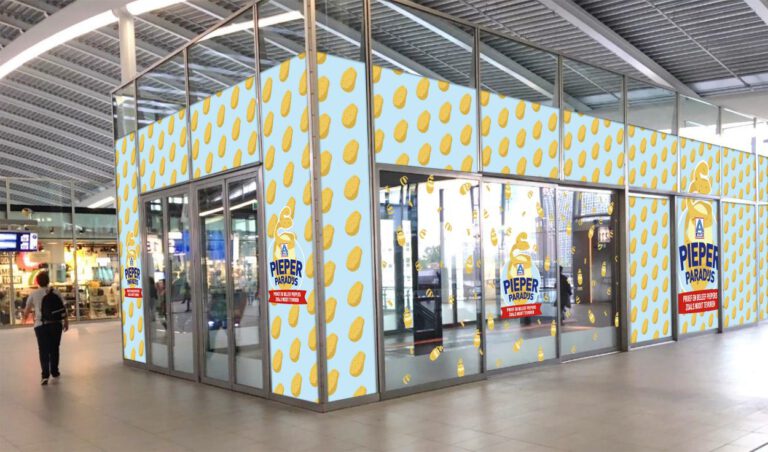
Utrecht Centraal’s Pieper Paradijs (Potato Paradise) answers the question no one’s bothered asking: “What if Willy Wonka’s Chocolate Factory were a thing…for potatoes?” 🥔
Famous German supermarket ALDI will be opening a pop-up store dedicated solely to the beloved Dutch staple in Utrecht Centraal next Wednesday, October 12.
As for what’s on the menu…well, let’s just say that you’d better LOVE potatoes of all shapes, sizes, textures and forms!
The real meat and potatoes: the menu
The pop-up store will be treating customers to three tater dishes popularised by TikTok and Instagram.
There’s the ironically-named “15 Hour Potato” that takes 30 minutes to cook.
Then the “Crispy Smashed Potato”, where — you guessed it! — mashed potato bits are put into an oven to crisp up.
And, finally, ALDI’s “Hutsbol” with applesauce (yes, APPLE sauce) and caramelised onions. Lekker! 😋
They can get into a tub full of them (mashed potatoes in your pants anyone?), have their picture taken on a throne of chips, and sit in a giant neon shopping trolley.
Will any of you be heading off to Pieper Paradijs to try their tater-loving confections? Tell us all about it in the comments below!