Knee pain, ear infections, and heavy painkillers. All these ailments can be found in a Top 30 list of things Dutch doctors shouldn’t do when treating their patients. Say again?
Researchers from the Radboud University Medical Centre together with the Dutch College of General Practitioners (NHG) have reviewed a total of 92 General Practitioner guidelines.
The results?
The researchers clocked a whooping 385 recommendations of what better NOT to do when treating a patient, the Volkskrant reports.
This list of ‘useless’ treatments is rooted in the belief that a lot of interventions do more harm than good.
How did they make this list?
Dutch doctors are known for their laissez-faire ‘paracetamol-only‘ approach — and this recent study really lives up to the stereotype.
About a hundred Dutch GPs have been asked to rank the list of ‘not-to-do’ recommendations according to how often they encounter them in their practice.
As a result, a list of ‘Top 30 things’ to avoid as a Dutch GP will be published later this week. Ever heard a more Dutch thing?
Knee pain, ear infections, and painkillers
Curious about some of the recommendations on the list? We’ve got you.
Knee pain
Turns out, four out of the 30 recommendations are about knee pain — and all the things that just don’t quite seem to help.
Amongst those useless treatments: X-rays, MRI scans, tapes, and knee supports. But wait, there’s more! What also doesn’t seem to work are hyaluronic injections or transferrals to a sports doctor.
What usually works? Well, apparently, a lot of complaints pass over time. 🤷♀️
Ear and lung infections
Another not-to-do recommendation concerns the prescription of antibiotics, particularly in relation to ear and light lung infections.
Not only do the majority of infections heal by themselves, but this recommendation is also wary of potential antibiotic resistance. Now, that makes sense!
Painkiller prescriptions
This one is interesting: Dutch GPs are asked to stop automatic repeat prescriptions for heavy painkillers such as opioids.
One glance across the great pond tells us that opioid addiction is already a major problem in the US. Again, not doing anything is considered much more beneficial for the patient in the long run.
What do you think of this Dutch approach to treatment? Tell us in the comments!
Whether you’re looking for something entertaining, exciting, educational, or just plain gezellig to do in Amsterdam during those rainy days (i.e. most of them) — we’ve got you covered. ☔️
Let’s face it, nobody comes to Amsterdam for the weather. Since rain can be expected on most days of the year, it’s good to have a list of indoor activities in your back pocket.
Fortunately, this list is a long one. We’ve collected a whopping 29 of the best things to do in Amsterdam when it’s raining.
Have a spa day
Amsterdam has a handful of public saunas and a locals’ favourite is definitely Sauna Deco. This spa offers pools and a steam bath in addition to two saunas. In a breathtaking 1920s art deco setting, it’s the perfect place to relax and keep warm on a rainy day.
However, if you’re squeamish about going naked, don’t fret, this one has special swimwear days. 👙
Borrel at a brown bar
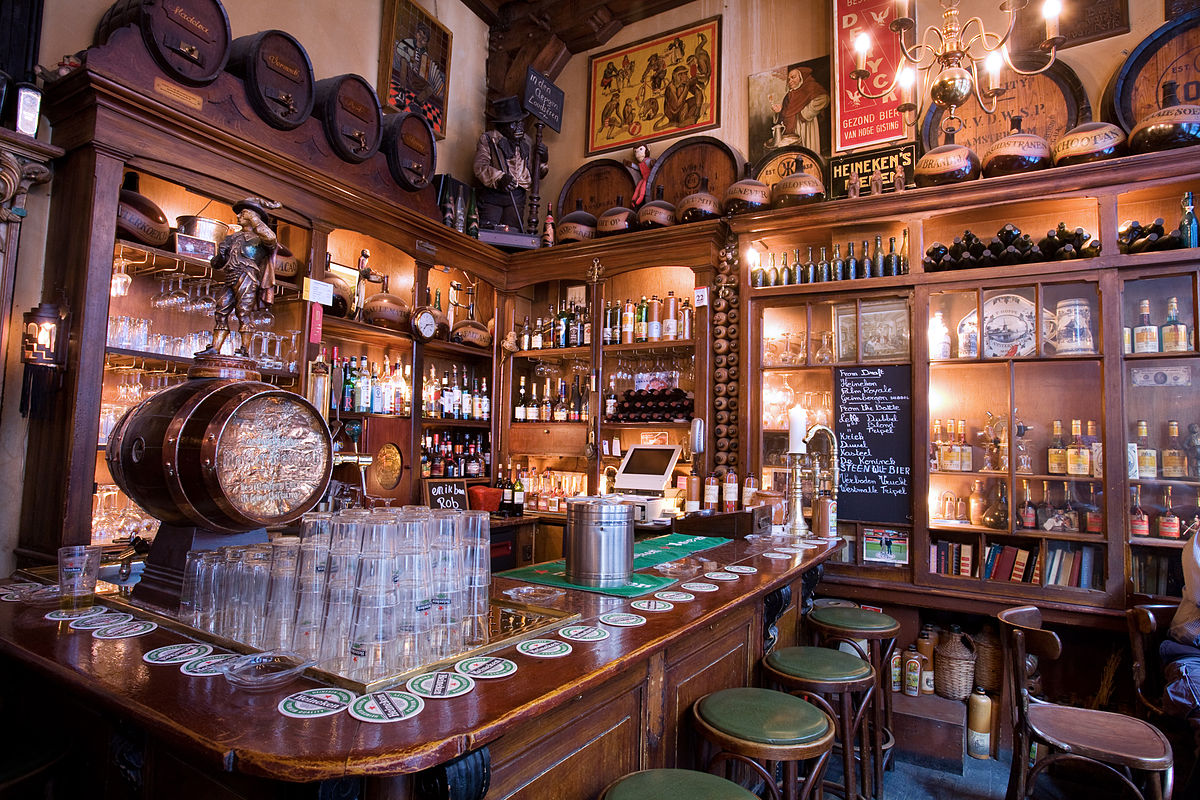
Dutch brown cafés or bruin cafés are lovely to visit year-round, but there’s something particularly gezellig about a brown café in the winter. If you’re not familiar, these are bars that have maintained their traditional old Dutch charm, and they are quite literally brown. It’s like taking a time machine back to the 1600s when wood panelling and brown leather were apparently quite en vogue. 🕰
A bruin cafe in Amsterdam screams 1600s chic. Image: Jorge Ryan/Wikimedia Commons/CC3.0
Brown bars are easy to find, seeing as there are some 500 or so in Amsterdam. You’ll find the largest selection of them in the old working-class Jordaan neighbourhood. Don’t miss Cafe Chris, Café de Pels, Het Bruine Paard, and Cafe de Doktor (in De Pijp).
Some of the regulars you’ll meet at these bars have been around as long as the fixtures, but don’t be intimidated, just sidle up and say hoi. 👋 Don’t forget to order your bitterballen from the golden-aged bartender, grab some glühwijn, and proost!
Explore Amsterdam’s food scene
This international city can offer cuisine from all corners of the world, so in addition to Dutch classics like stamppotand erwtensoep, you can find excellent Indonesian, Surinamese, Mediterranean cuisine and much more.
If you’ve struck out with Amsterdam’s restaurants one too many times and need some guidance, take a food tour. Hungry Birds, Secret Food Tours Amsterdam, and Munchies Food Tour are a few local companies that will ensure you’re well-fed, well-informed, and happy. 🤤 Bear in mind, tours may involve a bit of walking between stops, so probably best to bring your umbrella.
Solve an escape room
Do you like puzzles, mysteries and immersive gaming experiences? Escape rooms will transport you from a rainy Amsterdam into a world full of riddles, secrets, and adventures!
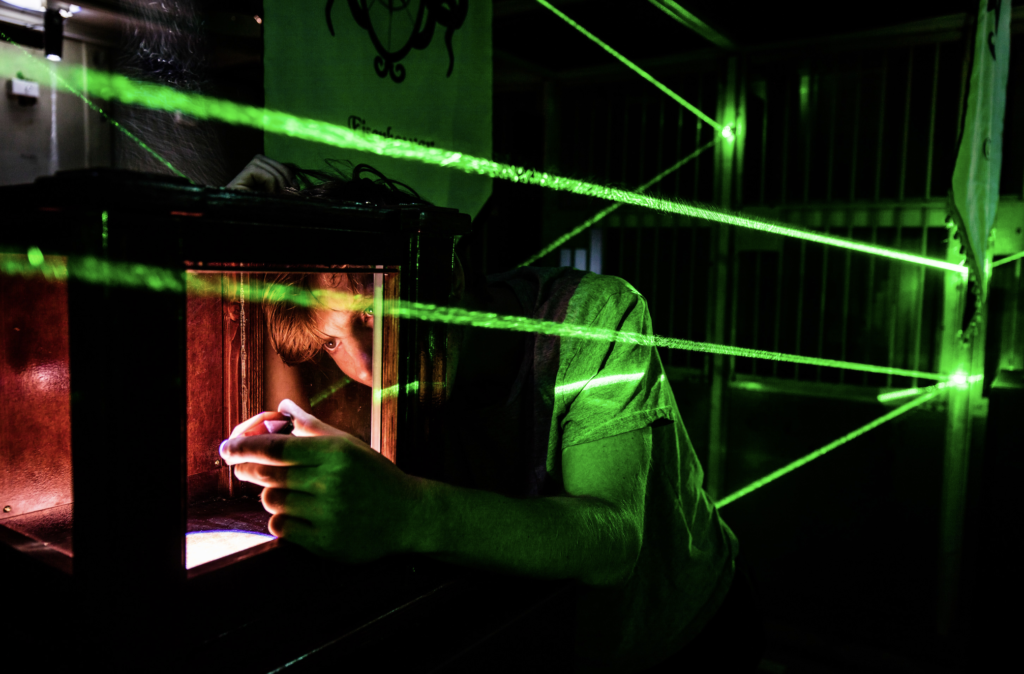
We can recommend Sherlocked, an award-winning company with two carefully crafted escape rooms that guarantee a 100% boredom-free afternoon. In fact, DutchReview had the chance to drop into the role of master thieves for a day and break into a safe down in The Vault.
Don’t make a wrong move now, my friend! Image: Sherlocked/Supplied
If you simply can’t decide what to eat, it’s okay, you don’t have to! The Foodhallen is the ultimate crowd-pleaser when it comes to eating out. It’s a massive and lively food court, offering a wide range of cuisines. Whether you’re after pizza, bitterballen, dumplings or a little of everything, you’ll find it here.
The Foodhallen is set in the greater De Hallen complex, a historic tram depot turned cultural hotspot. It’s home to the Filmhallen cinema, a boutique hotel, independent shops, a library, and a weekly craft market.
Check out the cinema
There’s more to stare at than a movie screen at Pathé Tuschinski, which we’d argue is one of the most beautiful cinemas in the city. The 1921 building is a stunning amalgamation of styles, with art nouveau influences and all-around 1920s pomp and splendour. Grab some popcorn and choose from their wide selection of films and showtimes. 📽
If you want to get even deeper into the cinema, head to the Eye Filmmuseum. It’s a film archive and museum housed in architectural wonder, where they show both Dutch and foreign films. 🎞
Amsterdam’s Royal Theater Carré also offers a range of live performances often geared toward English speakers. Situated alongside the Amstel River, you’ll find everything from cabaret and musicals to comedy and acrobatics in this Amsterdam landmark.
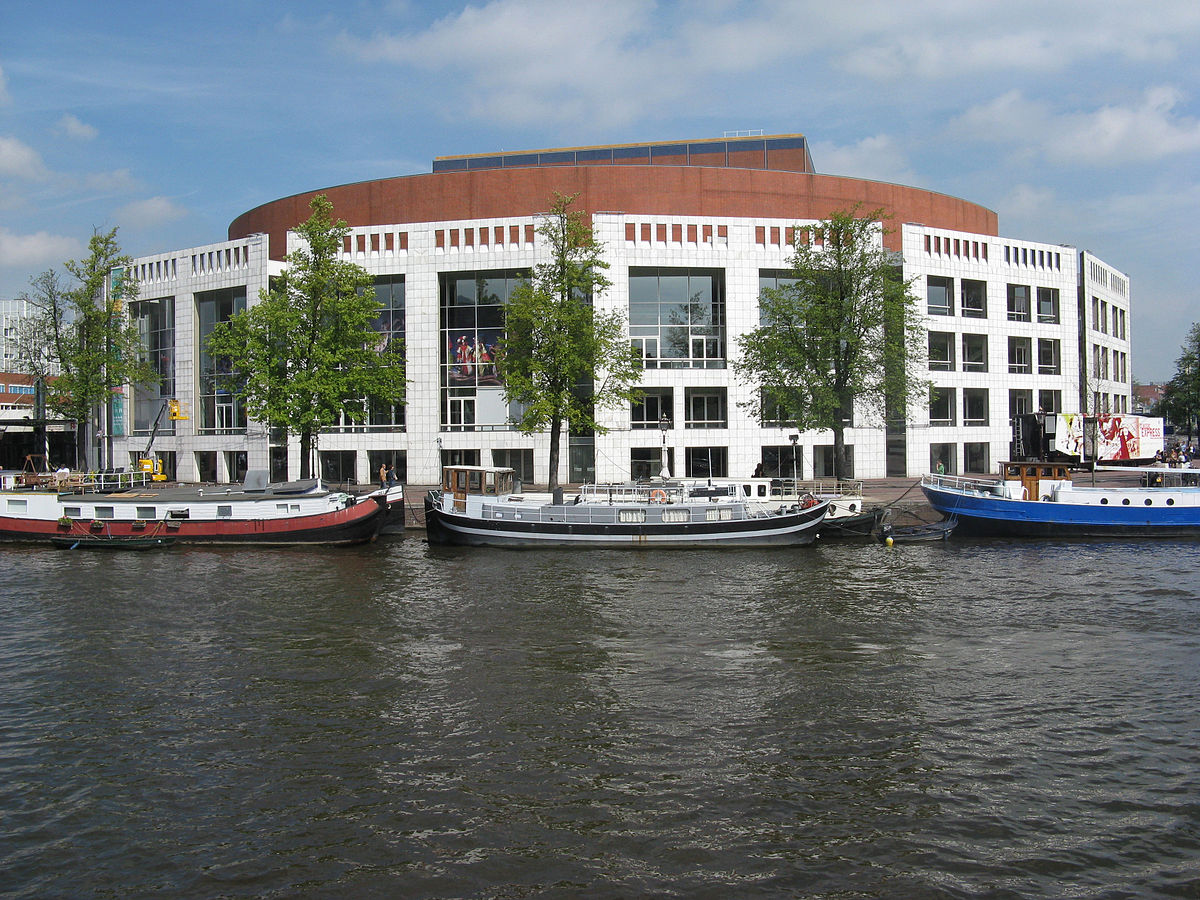
Also, check out the National Dutch Opera and Ballet located nearby. While the building itself isn’t known for its beauty, the performances there are sure to inspire.
The Nationale Opera & Ballet is located in the large, white building that Amsterdammers love to hate. Image: Yair Haklai/Wikimedia Commons/CC3.0
Roll the dice at a casino
If you’re feeling lucky, head to one of Amsterdam’s casinos. Holland Casino is the true koning, with the legal monopoly on gambling in the Netherlands. As a matter of fact, profits go directly to the Dutch treasury. Conveniently, they have two Amsterdam locations, each equipped with Bingo, Blackjack, you name it. 🎲
Another winning option is Jack’s Casino, located in Leidseplein, in the heart of Amsterdam. Gamble the night away (responsibly, of course) with slot machines and roulette, or opt for dinner and a movie. 🎰
Get climbing
It doesn’t matter if you’re an athlete, it’s always a good idea to get those endorphins flowing on these short, dark days. Plus, you’ll warm up in no time at any of Amsterdam’s four indoor climbing gyms. 🧗♀️
Klimmuur is the most centrally located and has a lovely sunny terrace to relax after your hard work. Mountain Network is one of the Netherlands’ largest gyms, located in Amsterdam West.Monk is strictly for bouldering, which means you’re less far off the ground and not using any ropes. They have two locations: one in Amsterdam North and their new ‘Monk Club’ in the east.
You’ll need quite a bit of arm strength for this one! Image: Depositphotos
Be dazzled by a drag show
If you’re absolutely ready to have a fabulous time, a drag show is the place to go. Just behind the Royal Place, you’ll find the theatre restaurant ‘t Sluisje, where you can enjoy a three-course meal in combination with a sensational show. 🍸
Dragshowbar Lellebel, just around the corner from Rembrandtplein, is another spectacular spot to see a drag show. Finally, The Queen’s Head, right on Zeedijk near Central Station, is another local’s favourite where any of the shows are sure to entertain. Slay, Queens! ✨
Relax with a canal cruise
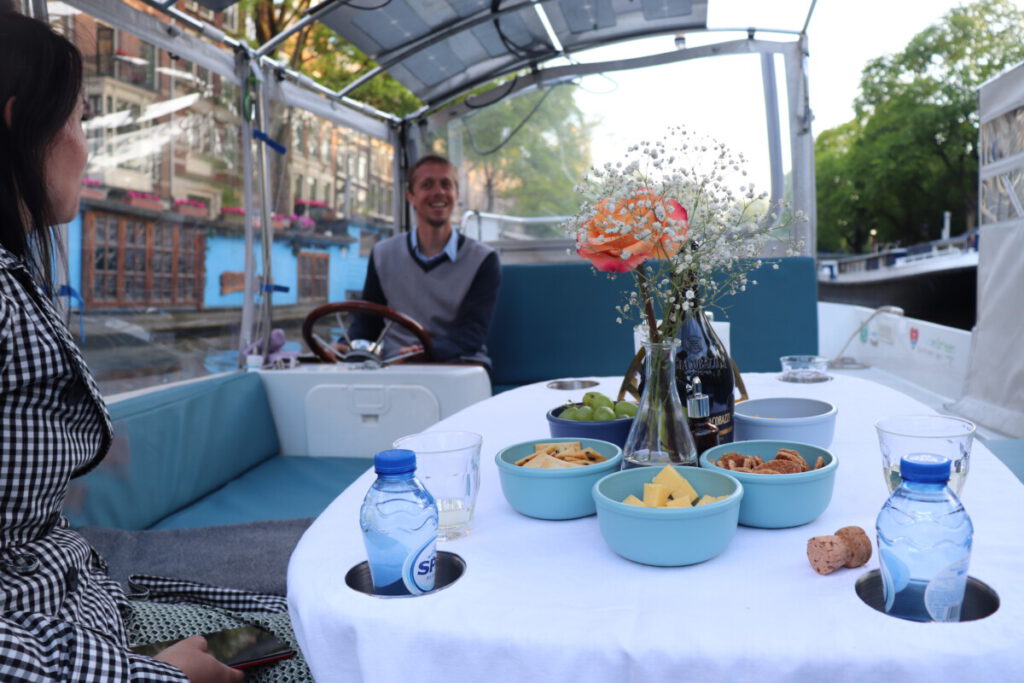
Any day is a nice day for a cruise through Amsterdam’s canals. Fortunately, boat companies are well acquainted with the Dutch weather and they’ve got you covered, quite literally. ☔
Most companies have boats with roofs and blankets on board. You can snuggle up with some hot coffee or a glass of wine, and watch your winter woes drift away.
There’s a wide variety of cruises and companies to choose from. You can find romantic, historical, boozy, or foodie, and that’s just the tip of the iceberg. Romantic Tours Amsterdam is a lovely DutchReview favourite. 🌹
A sunset cruise with Romantic Tours Amsterdam. Image: DutchReview/Supplied
Go to a jenever tasting
A jenever tasting is the best way to get to know the Netherlands’ signature spirit. There are several places that offer a great sampling experience in Amsterdam.
Wynand Fockink is a very cool (albeit often crowded) liquor store and jenever tasting room (the oldest in the city, in fact!). It has that exact old-timey feeling you want when slurping back traditional Dutch spirits, and I do mean slurping. 🍹
Learn something at the library
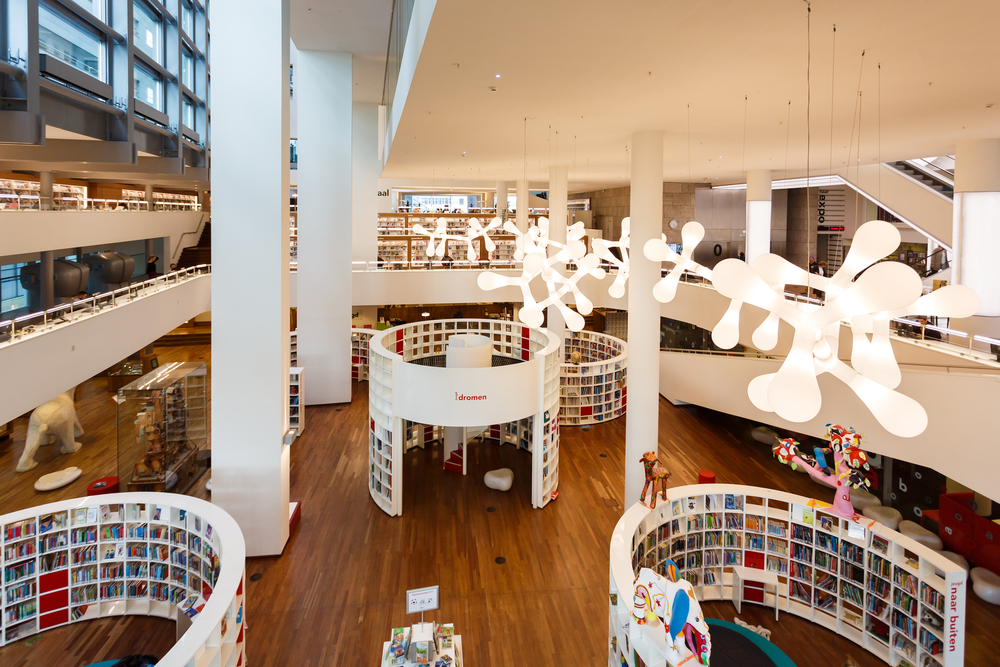
Amsterdam’s public libraries (the OBAs) are sprinkled all throughout the city. With 25 neighbourhood branches, there’s never a library too far away.
The largest and most central library is on Oosterdok, right next to Central Station. It’s an enormous building with over 10 floors. The café at the top has marvellous city views and a sunny terrace that can feel warm even on a cold day. It’s the perfect place to relax with your new reading material and a cup of tea.☕📚
Sure, writers are biased, but what better way to spend a rainy afternoon? Image: Depositphotos
Go out for drinks
There are infinite spots to drink in this city, but how better to drown your rainy-day sorrows than with a well-mixed old-fashionedglass of cabernet? Just a couple of Amsterdam’s great places for wine are GlouGlou (De Pijp) or Shiraz Jardin des Vins (canal belt).
You can keep it classy by heading to one of Amsterdam’s many charming cocktail bars. Hiding in Plain Sight (city centre) and Rosalia’s Menagerie (Jordaan) will certainly do the trick. Once you’ve wrapped yourself up in a nice whiskey blanket you’ll forget all about the zero-degree weather and sideways rain.
Admire some cats
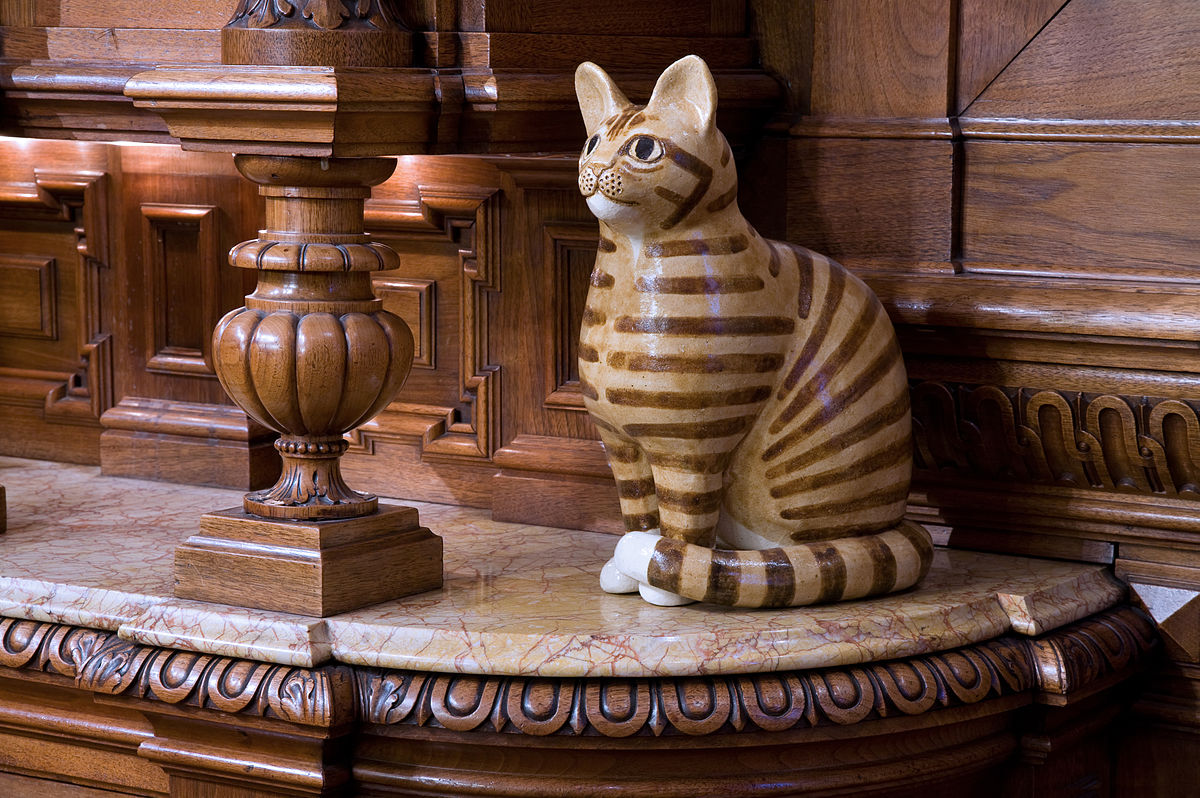
When it’s raining cats and more cats, go see some cats — Amsterdam loves them. 🐈 The KattenKabinet is a museum for all things cats, where you can ponder the influence of cats throughout the ages.
For another kind of cat fix, head to the Kattencafe Kopjes. It’s the Netherlands’ premier cat cafe, where you can pair cats with your cake and coffee.
If those don’t scratch your itch, you can visit De Poezenboot, a floating cat shelter. It’s the best place to visit if you’re interested in adopting a cat, though they also have specific visiting hours just for cat lovers. Do keep in mind it’s not a tourist attraction, and they welcome donations.
Cats are the star of the show at the KattenKabinet. Image: Jorge Ryan/Wikimedia Commons/CC.3
Mix it up with microbreweries
Believe it or not, there are more varieties of beer than Heineken in this country. Don’t get me wrong, there’s a time and place for a nice crisp Heineken, but sometimes colder weather begs for something darker, heavier, maltier, hoppier…well, just more, really. So head to one of Amsterdam’s great microbreweries! 🍺
You also won’t want to miss the brewery and tasting room Poesiat & Kater in Amsterdam-Oost for its sheer gezelligheid. And then, of course, there’s Brouwerij ‘T Ij, which is in a windmill — need I say more?
See live music
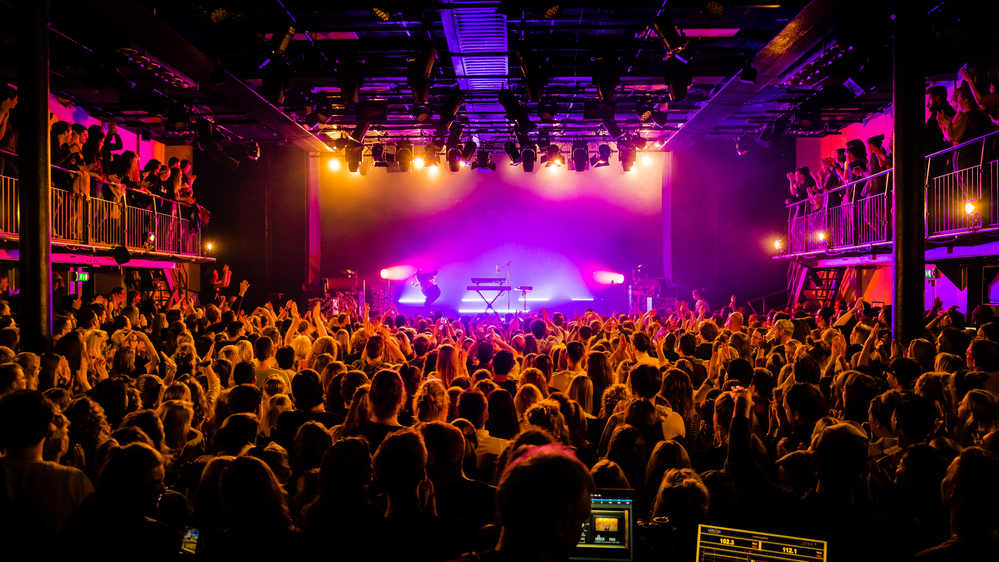
Don’t want to be the only one singin’ in the rain? Head to one of Amsterdam’s many well-loved music venues. Melkweg is a large and locally-adored non-profit venue in the heart of the city. Its name, means ‘Milky Way’ in English and comes from the building’s former purpose as a milk factory. 🎶
Paradiso also consistently maintains an impressive events calendar, and it’s situated in a former church. For something more low-key, Schaakcafe Het Hok will give you the all-cosy neighbourhood acoustic vibes you could ask for. If you’re feeling jazzy, try Bimhuis, an internationally recognized cultural institution for the jazz genre. 🎺
Dance the rain away at Melkweg in Amsterdam. Image: Depositphotos
Indulge in the nightlife
If a wild night on the town is what you’re after, you’re in luck. There are bars and nightclubs all over the city, but you’re going to find the greatest and most raucous concentration in the Red Light District. While you’re there, there is, of course, plenty of other mischiefs you can get yourself into.
For example, maybe you’d prefer it were raining men — go to Magic Mike night, or, for something quite different but just as spicy, pay a visit to Amsterdam’s oldest erotic theatre, the Casa Rosso.
Get playful
Games aren’t just for kids. If you’re looking for adult-friendly amusement outside the Red Light District, never fear, Amsterdam has its fair share of PG-rated activities. For one, escape rooms are always a hit. So is laser tag, glow mini-golf, and the old classic, bowling (Aloha has all three). 🎳
For even more action, hit the arcade. At TonTon Club and Blast Galaxy, you can keep your coins in one fist and a drink in the other.🕹
Hang at a coffeeshop
Feeling stumped for creativity? Open your mind to the marvels of marijuana. 🚬 Pass a dreary day by paying a visit to one of Amsterdam’s many coffeeshops — you can find over 160 of them scattered throughout the city.
Hang out for a smoke, or get an edible to-go and see where it takes you. Got questions about smoking weed in Amsterdam? We’ve got the answers.
For a very different kind of high, spend an afternoon in elegance with tea and delicacies. Many lovely cafes and hotels serve a traditional high tea that will leave you thinking you’ve died and gone to…well, England. ☕
A few that stand out are The Duchess Tea Room (in the W Amsterdam hotel) for its sheer exquisiteness; Anne&Max (several locations), with lots of savoury snacks and cheeses incorporated into their platters; and, Koffie ende Koeck (near Westerpark), which offers vegan and organic treats.
Laugh it off at a comedy show
There’s no better way to shake off a grey and rainy Amsterdam day than to have a laugh at a comedy show. Amsterdam has several great locations for English comedy. The best known are Boom Chicago, Comedy Cafe, and De Prael. Each venue hosts English-speaking comedians that know how to reach an international audience. 🎤
Check out museums and galleries
This one is a no-brainer. There are around 75 museums in Amsterdam. Of course, you don’t want to miss the big ones, like the Rijksmuseum, Van Gogh, and the Anne Frank House, but there are also many great lesser-known museums.
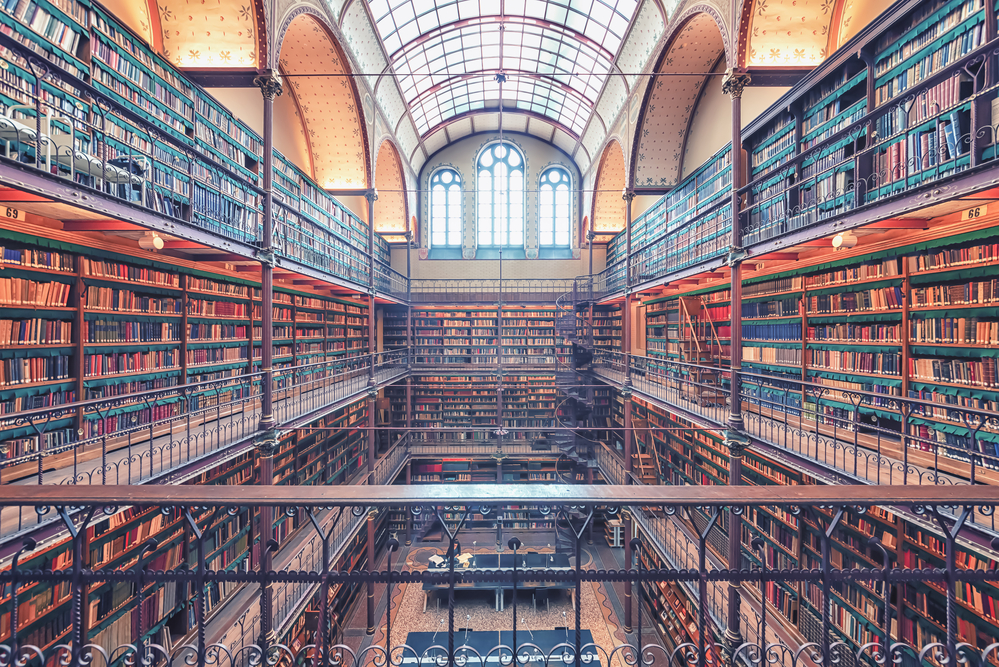
Top tip: hidden inside the Rijksmuseum is this stunning library. Image: Depositphotos
Take a guided tour
There are many places to take a guided tour indoors in Amsterdam. For starters, most museums have the option of booking a guide, as do places like the historical concert hall Royal Concertgebouw and the remarkable Molen van Sloten, the only still-functioning windmill in Amsterdam or even city wine tours. 🍷
Visit the city archives
Amsterdam’s City Archives is the largest city archive in the world. It’s located in De Bazel, a beautiful monumental building. You can visit the Treasure Room for free, which houses a collection of old photos, drawings, documents, and maps. Stroll down Amsterdam’s memory lane and ponder the changes over time. You can even catch a historical film in the building’s theatre.
Sample Dutch cheeses
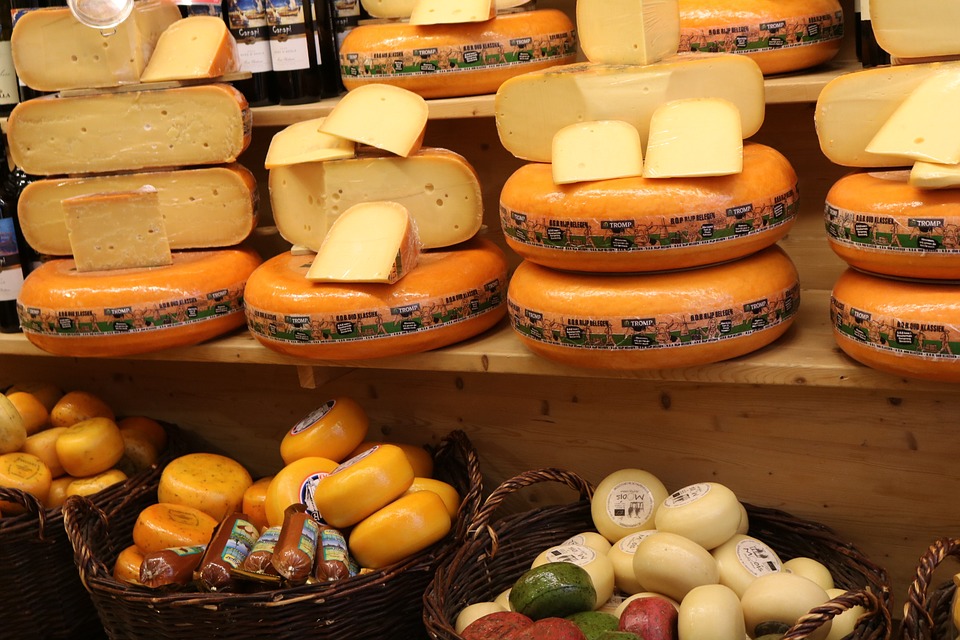
Dutch cheese is a true taste of the Netherlands, and by going to a tasting you’ll even learn a thing or two.
Abraham Kef offers a sampling experience of their finest Dutch cheeses with a nice pairing of wine, beer, or cider. Another cheese whiz is Henri Willig, whose ‘trial attic’ offers an exquisite array of homemade cheeses, and they don’t skimp on the mustard.
If you love to shop, you’re in luck. There’s plenty of indoor shopping in Amsterdam. Magna Plaza is located right next to the Royal Palace in a grand neo-gothic style building, formerly a post office. It has all the modern shops you’re after, plus an excellent food department that’s alone worth a visit.
Close to Magna Plaza is de Bijenkorf (The Beehive) on Dam Square. Once a small haberdashery, established in 1870, it’s now Amsterdam’s leading department store.For even more shopping, the Kalverpassage (formerly Kalvertoren) is an indoor shopping centre located on the bustling Kalverstraat. A wide range of stores are situated in the steel and glass tower, tucked away from the street, with excellent panoramic views.
Head to Ijhallen, the ultimate flea market
For a completely different type of shopping experience, Ijhallen is the place to go. It’s the largest flea market in Europe, with 750 stalls in the warmer months, and 500 when they move indoors from October to March. It only takes place one weekend a month, so you have to time it right. Take Amsterdam’s free ferry to Amsterdam Noord — it’s totally worth the trip.
Browse the bookstores
There’s nothing like a stack of new books to wash away the rainy day blues. Image: Abhi Sharma/Wikimedia Commons/CC2.0
When the weather is bad, there’s nothing like curling up inside with a good book. For new material, Amsterdam has several excellent bookstores: Athenaeum, American Book Center, and Waterstones, to name a few. The first two are located conveniently across from each other on Spui near the flower market, and Waterstones is right on the main shopping drag, Kalverstraat.
If you still need more, stay up-to-date with the happenings by checking Amsterdam’s events calendar. There’s always something weird and wonderful to get up to. And if all else fails, try a walk in the rain.
What are some of your favourite indoor activities in Amsterdam? Let us know in the comments below!
Editor’s Note: This article was originally published in October 2020, and was fully updated in June 2022 for your reading pleasure.
An Amber Alert was issued by the Dutch police on Thursday afternoon after Gino van der Straeten (9) was reported missing.
The boy was last seen on Wednesday between 7:30 PM and 8:30 PM on a playground in Kerkrade.
No explanation has been found as to the whereabouts of the boy. However, the police believe he could be in life-threatening danger, reports NU.nl.
In #kerkrade about 65 veterans are searching with the Veterans Search Team @veteranensearc1 for #Gino The 9-year-old boy has been missing since Wednesday evening. The police fear for his life. At 5:15 pm and at 10:30 pm in #hvnl and of course more online. https://t.co/HlYPEDHEb5
According to his sister, Gino had a black scooter with red handles and a red footboard with him at the time of his disappearance. You can also use these visual descriptions to identify him:
1.30 metres tall,
blond hair,
red Nike Jordan jacket with black sleeves,
red Nike cap,
light gray jeans,
green shoes with a white sole.
Do you have a tip for the police? The police are asking anyone who has seen Gino or has information about his disappearance to call 112.
What’s being done so far?
The police are currently speaking with residents and witnesses in the area to try and get more information.
They have also asked locals to come forward with any camera footage they might be in possession of in the hope that it’ll reveal more about what happened to the boy during his disappearance.
Meanwhile, German police have also been informed about Gino’s disappearance considering that Kerkrade is located on the German border.
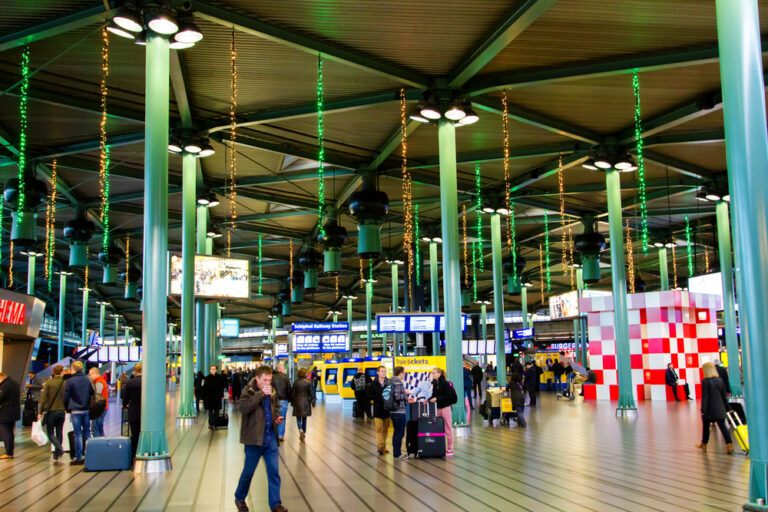
Travellers have been subjected to incredibly long queues that cram the departure halls, and back-to-back flight cancellations — just in time for the holidays (yikes!).
In response, travellers were arriving incredibly early to get through the lines in time for their flight, but the airport’s decision will put a stop to this.
New measures implemented
Schiphol is expecting extra-large crowds with a long weekend just around the corner.
The airport has advised people to travel by train. They have also asked travellers to only bring one piece of baggage with them to ensure a smooth flow through security.
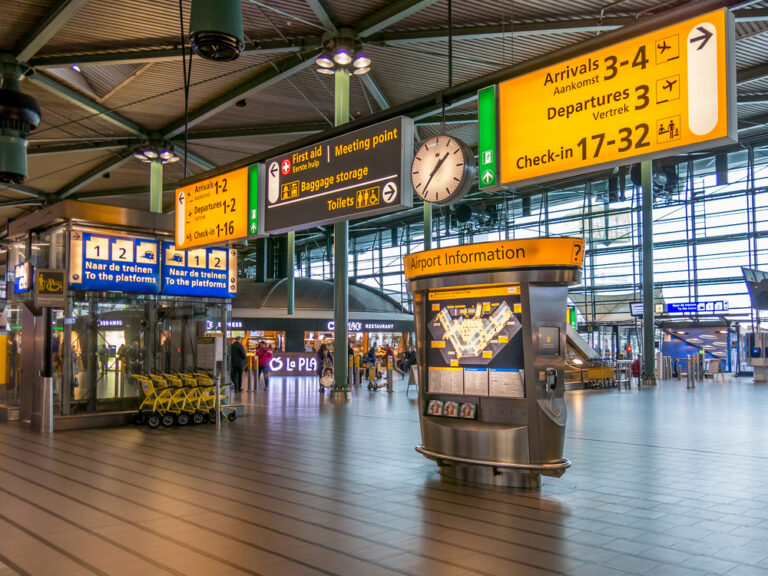
To enforce the new four-hour rule, Schiphol staff will be stationed at lifts, stairs, and conveyor belts from Schiphol Plaza to the departure halls to actively check tickets, the NOS reports.
Extra summer cash for Schiphol staff
Holiday chaos was expected as trade unions planned strikes to protest low wages and terrible working conditions.
As an action plan to ward off any more strikes, Schiphol and the trade unions have agreed to provide security guards, cleaners, and ground handling employees with a wage hike of €5.25 per hour during the busy summer period.
Planning a holiday trip away from the Netherlands this summer? Well, you might want to take a look at this forecast first.
As you’ve most likely read in recent news — staff shortages, delayed flights, and long queues have met Schiphol in the past month.
Fortunately, Schiphol’s Airport Operation Center (APOC) has offered a forecast of how busy the Dutch airport will get based on the number of departing passengers, RTL Nieuws reports.
A colour coded forecast
While the swarming long lines are expected to continue throughout the summer, the airport can still indicate which days will be worse than others.
Journalists at RTL Nieuws received a forecast for the expected crowds at Schiphol this summer. Using colour codes, the calendars indicate the number of departing passengers the airport expects each day:
White and yellow (60,000 to 65,000)
Orange (65,000 to 70,000)
Red (70,000 to 75,000)
Dark red (more than 75,000)
Curious about specific dates? You can check out the calendars here. Let’s offer you a general breakdown of the next three months.
June is still in the yellow
As of right now, June will be the least busy month of the summer — and considering the current headlines, this is slightly worrying.
There’s no relief in sight either. Over the course of this weekend, Schiphol will take another chaotic turn as the airport will run short of security guards.
It’s likely that this will be a common issue during June as it’s expected there will be even more days when security occupancy will be labelled as ‘critical.’
July will see the peak
According to the APOC forecast, the peak season for Schiphol flights only really gets going in July.😳 Holidaymakers and business travellers alike will likely be left waiting in long queues.
Of course, these expectations can always change — but unless heap loads of travellers cancel their vacations, almost all weekends in July will be heavily crowded at Schiphol. 😭
Things will calm down in August
August is predicted to be less swamped than June and July.
However, that doesn’t mean it’s going to be all plain sailing. The airport will still be busier than normal and according to the APOC forecast, it will still have to process at least 65,000 departing passengers every day.
Are you planning a trip for the summer? If so, make sure to follow DutchReview on Facebook for the latest news on Schiphol.
There are many things that you’d imagine are on the average royal’s to-do list: shake hands, cut ribbons, attend speeches — but jumping out of a plane? Well, that’s what sat on Queen Máxima’s list yesterday.
On June 1, Queen Máxima went on a working visit to the Defensie Para School (Defense Para School) in Breda. Pretty standard.
Actually no, not standard
According to a press release, the visit started as one would expect. The queen spoke with military personnel about their training, and she listened to a briefing on the work of the DPS.
Next on the agenda was a demonstration on folding the parachutes — oh, and how to jump.
Why? Because the queen was there to get the full experience, and that included jumping out of a plane. 😳
Before you go imagining the queen free falling through the air above Breda, we’ll add that she did this in tandem with a supervisor.
And here’s the video
But let’s say no more, please enjoy this video of the queen of the Netherlands jumping out of a plane:
To be fair to the queen, she seemed quite happy to be falling from a plane. While some weaker souls may pass out as soon as their feet left the cockpit, Máxima was smiling and waving during her descent.
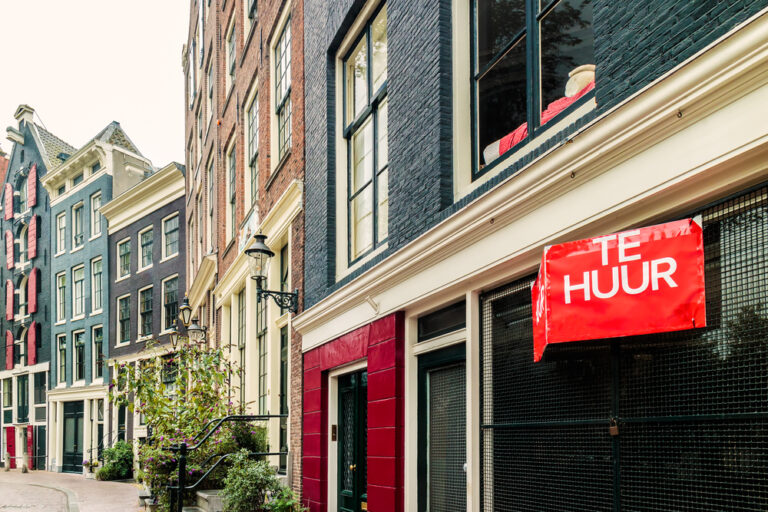
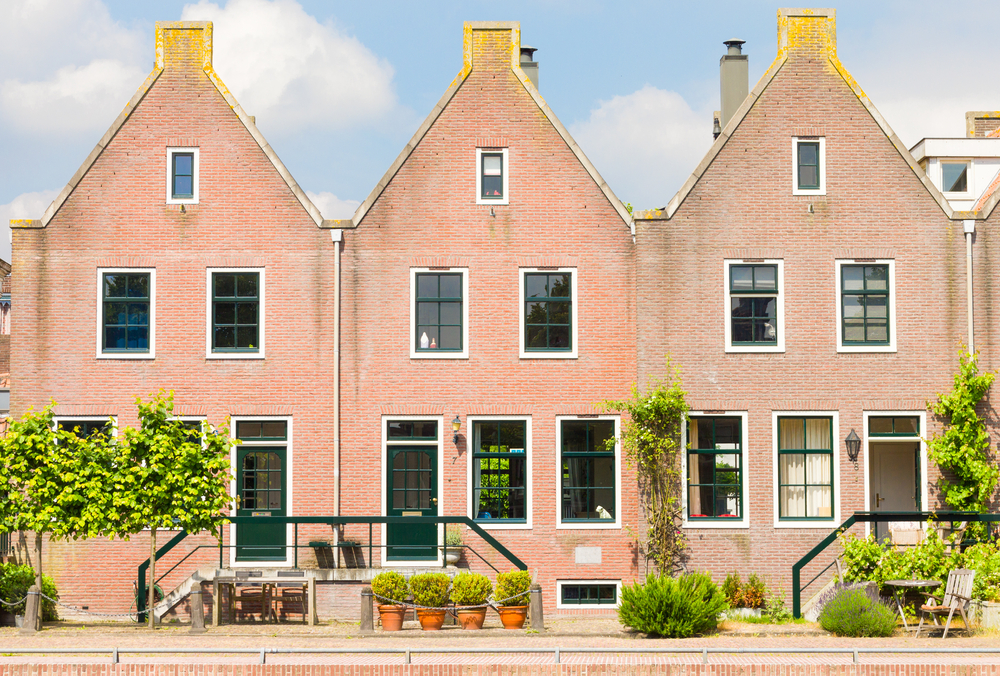
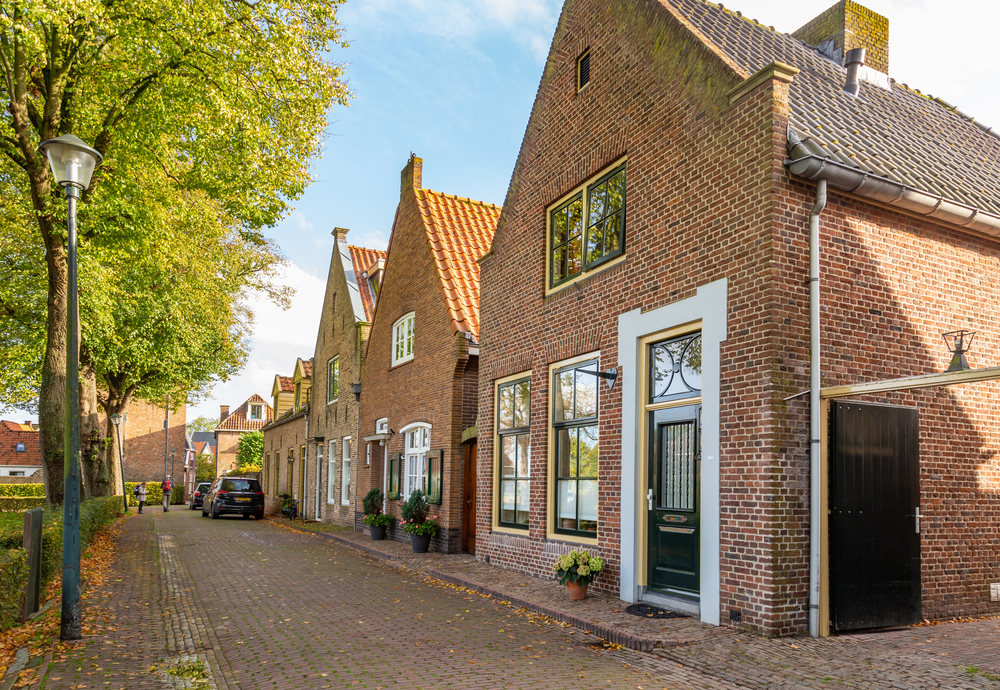
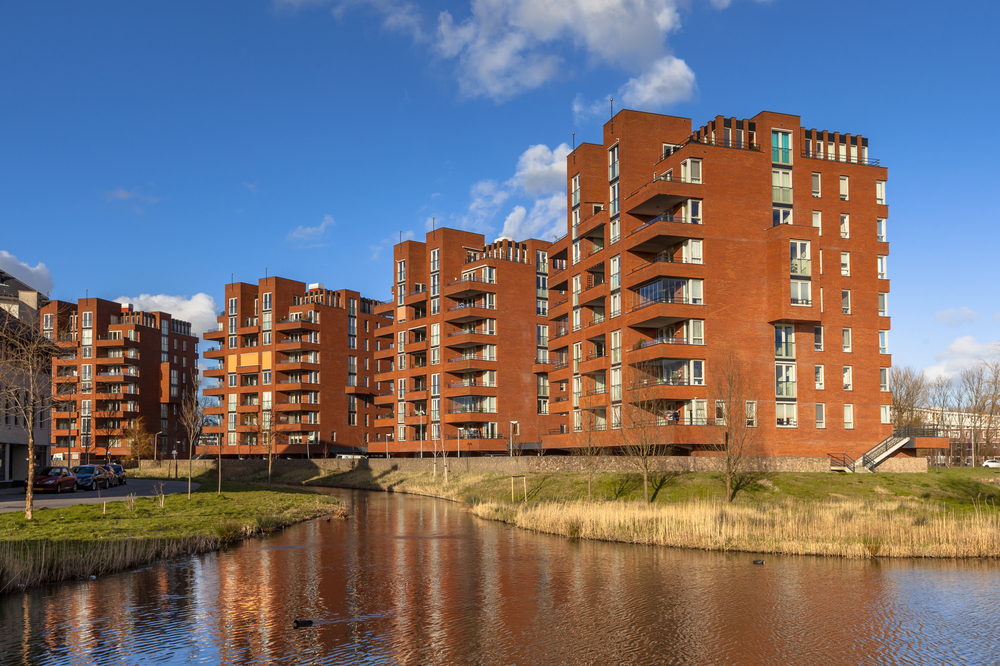
When you first move to the Netherlands, a rental property is ideal for finding your footing. However, there comes a time when you’re hoping to settle down. At this point, you’re probably wondering whether it’s best to rent or buy a house in the Netherlands.
And it’s a fair question with many elements to consider: inflation, rising rents, and increasing interest rates, to name a few — let’s tackle it together, shall we?
2022 may be the year to buy a house in the Netherlands
And we’ll waste no time. One look at the current state of the Dutch rental and housing market tells us that if you have the chance to buy a home in the Netherlands, you should probably take it.
Why do we say this? There are a number of reasons. 👇
Dutch mortgage interest rates are rising
We wish we could say that you should consider buying a home in 2022 because it’s easy — but in reality, one reason why we’re saying this is because it’s becoming increasingly difficult.
Dutch mortgage interest rates have been at an all-time low for the past few years. However, 2022 is a year that loves to surprise us — so ta-daa, they’re rising once again.
Mortgage interest rates are on the rise — but that doesn’t mean you shouldn’t consider buying a house in the Netherlands. Image: Depositphotos
The rate of increase depends on the mortgage term, but some long-term mortgages have seen their interest rates rise by as much as nearly 2%. If you have to pay more interest throughout the term of your mortgage, then your borrowing power is going to be lower.
Meaning that in 2022, your borrowing power was worth less than it would have been in 2021.
Experts expect that interest rates will continue to rise for the time being. In this case, the longer you put off buying a house in the Netherlands, the more your borrowing power may decrease.
Inflation is reducing your borrowing power
Speaking of borrowing power, another bully picking away at it is the high inflation that’s currently battering the Netherlands.
Since the beginning of 2022, the cost of living in the Netherlands has risen by a whopping 12%. So, unless your boss plans on giving you a raise to match this amount, your money is going to be worth less this year, meaning that, once again, your borrowing power will decrease.
House prices in the Netherlands are continuing to rise
Okay, we know things aren’t exactly looking promising. Lower borrowing power plus higher house prices equals a market where hopeful homeowners are in a pinch.
But while house prices in the Netherlands are increasing, they’re not increasing as rapidly as they used to. Hey, we’ve got a nugget of hope here!
There’s some good news to consider when you’re determining whether to buy or rent in the Netherlands. Image: Depositphotos
Since the fourth quarter of 2021, house prices in the Netherlands have risen by 13.7%. While this increase is certainly daunting, it’s worth noting that in 2021, prices rose by 20%!
At least that means things are going in the right direction.
Nevertheless, prices are continuing to rise. This means that if you want to give yourself a better chance at securing a home in the Netherlands, you should take the plunge sooner rather than later. 🏊
Rents are also rising
You’re probably thinking how in the hell is buying a home in the Netherlands supposed to be appealing to me right now? And listen, we get it — but have you seen the Dutch rental market?
As of the fourth quarter of 2021, the average rent in the free sector rose by 5.3% — making those mortgage rates look a lot more appealing.
Why you should consider renting in the Netherlands in 2022
This being said, we understand that for many internationals who arrive in the Netherlands, the first thing you do is find yourself a room or house to rent — not put down roots.
And this is a logical move. After all, you’re new to the country, you don’t know how long you’re going to stay for, whether or not you’ll like the area you’re in or which living situation is preferable for you — so why buy a place yet?
There’s no need to fret if you see yourself staying in the rental sector for the foreseeable future. While it’s a bit of a dogfight out there, it’s not all bad news in 2022.
Rent increases are capped
While it’s true that rent in the Netherlands is at its highest ever, the good news is that once you do manage to snag a rental, you won’t face massive hikes in your rent, regardless of inflation.
The Dutch rental market is hot at the moment. Image: Depositphotos
This is because rent increases are capped in the Netherlands. If you’re renting in the free sector (i.e., you’re not in social housing), the maximum amount that your landlord can raise your rent by in 2022 is 3.3%.
If you’re living in social housing, you can breathe a sigh of relief for now, as rent cannot be increased at all until July 2022. After July, your landlord could potentially increase your rent by 2.3% if you are paying more than €300 per month in rent or a maximum of €25 if your rent is less than this.
The moral of the story, your rent in the Netherlands is not going to jump by €300 all of a sudden — and that’s a win in our books!
Tip: In the Netherlands, there is a housing benefit called the huurtoeslag. This can help cover the cost of your rent if you meet certain requirements.
Buying or renting in Amsterdam
If there’s one thing that we know we need to address in an article like this, it’s Amsterdam. After all, this is where many internationals first plant their feet upon arriving in the Netherlands. So, what’s it like to buy or rent in Amsterdam in 2022?
Buying a house in Amsterdam
Due to two years of a pandemic and the current ongoing war in Ukraine, times are feeling uncertain for potential homebuyers in the Netherlands — and this is reflected in the latest buying trends in Amsterdam.
As of April 2022, 42.5% fewer homes were sold in the Dutch capital compared to this time last year. While this may sound discouraging, it seems the lowered demand has had an effect on house prices, with the average price per square metre dropping slightly in the fourth quarter of 2021. 🙌
This was especially the case in the North of Amsterdam, so perhaps this is where you should start your hunt.
What is erfpacht when you buy a house in Amsterdam?
Unlike the rest of the Netherlands, when you buy a house in Amsterdam, you must also buy a leasehold for the land that the home is situated on. This is called the erfpacht and you can think of it as a long-term rent that you pay to the municipality.
It’s important to consider the additional cost of the erfpacht when you decided to buy a home in Amsterdam as this will influence your borrowing power.
Note: It is possible to find a house in Amsterdam that doesn’t come with erfpacht — but you have to be lucky!
Renting a house in Amsterdam
The forecast isn’t looking so sunny for those who want to rent in Amsterdam, however. As is the case across the country, the average rental price per square metre has risen in the Dutch capital.
However, not as much as in other regions. In Amsterdam, you now pay an average of €22.45 per square metre, which is a rise of 1.7% compared to 2021. Compared to the average national rise of 5.3%, that’s something.
Amsterdam rents are continuing to rise but not as much as in other regions. Image: Depositphotos
Buying vs renting a house in the Netherlands: the pros and cons
Unsure what to make of this information? Fair enough! It’s a lot to digest. There are many pros and cons when it comes to buying vs renting in the Netherlands. So here’s a neat little table for you to consider:
Buying
Pros
Cons
Your mortgage and other housing costs are often less expensive than renting.
Your monthly payments might go up when your interest rate period has ended.
Mortgage interest and one-time costs of closing a mortgage are often tax-deductible.
You will be responsible for maintenance and repairs yourself.
You build equity by making monthly payments and the property will become yours once the mortgage has been repaid.
You may lose equity if the property value declines.
You can find a home that matches your wishes (location, architecture, building type).
You have to pay property tax and other communal taxes.
You can renovate the property however you want.
You’ll have to arrange insurance yourself (not applicable when buying an apartment, instead you are a member of the owner’s association and pay a monthly fee).
You don’t have to worry about your landlord selling the property on.
It’s more difficult to move country if you own a house.
Renting
Pros
Cons
You can terminate your rental agreement at any time.
Rental prices are high and increase each year (sometimes even up to 10%).
The landlord is responsible for maintenance and insurance.
You have limited choice/supply.
You have a high level of rent protection.
Options to renovate the house/room by yourself are very limited or non-existent.
You don’t have to pay property tax.
When you move, you may have to return the property to its original state.
You don’t have to worry about losing money if housing prices drop.
If the landlord decides to sell the property you could lose your home.
In the long run: buying a house in the Netherlands is financially wise
If you’re planning to stay in the Netherlands for a couple of years (and you know, care about your money like the rest of the world), buying a house will be of interest to you.
Of course, the future isn’t always guaranteed. You also need to think about the risk of value loss that occurs when your total mortgage is higher than the house’s market value.
The risk of buying a house, as well as your eligibility to do so, can be discussed with an expert mortgage advisor. Together, you can make the best decision for your personal situation.
Still doubting about renting or buying a home in the Netherlands? Tell us your thoughts in the comments below!
Buses and trams are unavailable in The Hague on June 2 because workers from the public transport carrier HTM are on strike for the entire day.
This strike was organised by the trade unions FNV (Federation of Dutch Trade Unions) and CNV (Christian National Trade Union Federation). They want two things for HTM workers:
A wage increase of 5%
The retention of purchasing power for HTM employees
You’ll find that other buses are present in the political capital, provided by EBS transportation services — their employees went on strike on Wednesday. 😭
Why is there a strike?
Before the strike was announced, the transport company said they would increase wages this year. However, only by 3.1%, reports NU.nl.
Tension rose between workers and employers when they refused to raise the rate of the increase to 5%.
The company explains that the pandemic really set them back economically — everyone worked from home for about two years without needing to commute anywhere.
As long as buses and trams aren’t running, the strike by HTM workers could cost the company as much as €125,000.
One of the perks of living in the Netherlands is that the country is sandwiched between both Belgium and Germany —making weekend, or even day trips, a more than easy option.
In fact, with your heart set on visiting Belgium, you can get from capital city to capital city in a mere 2.5 hours!
If you’re coming from the south of the Netherlands, the drive is much shorter and it’s completely doable in a day. If you’re heading there from the north, you might want to consider a weekend trip.
Whatever the case, here are three things to see and do in three Belgian cities: Brussels, Ghent, and Bruges. 🇧🇪
Three brilliant things to do in Brussels
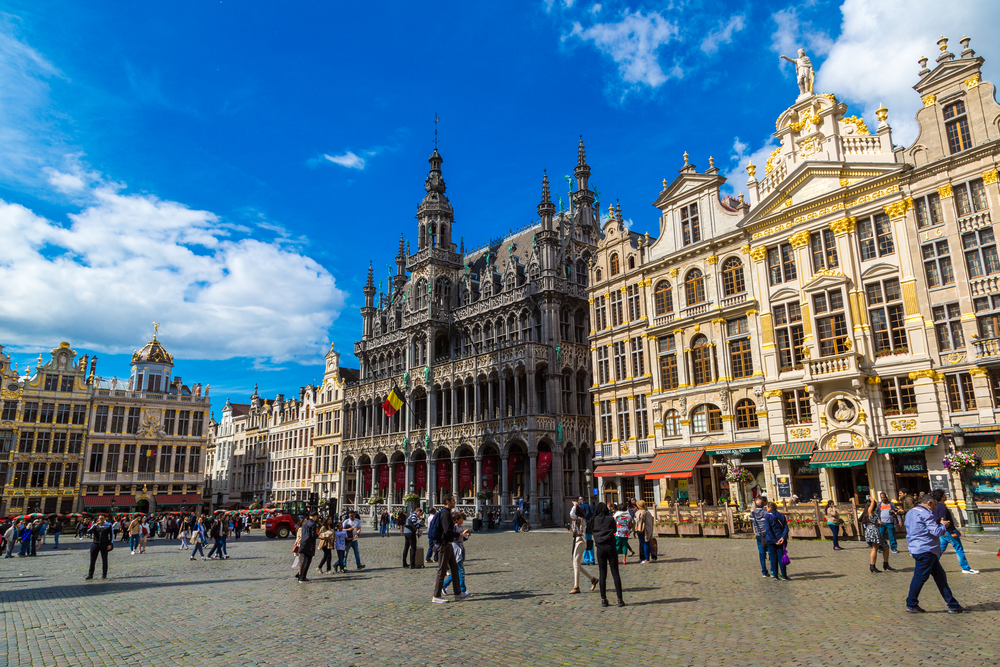
So much stunning architecture on Brussels’ central square — the Grand Place! Image: Depositphotos
Visit Mini-Europe. It’s like Madurodam (but of course, that’s much better), but for the whole of Europe. They have quite a few miniaturised Dutch cities but I won’t tell you which — you’ll have to find out for yourselves!
Go to the Atomium. It’s pretty cool to see from the outside and you can even go inside it, for amazing views over the city. Plus, it’s right next to Mini-Europe, so you can kill two birds with one stone.
Visit the Grand Place. It’s the most beautiful part of the city (in my opinion). The architecture is incredible and it’s always bustling with loads of people.
Three great things to do in Ghent
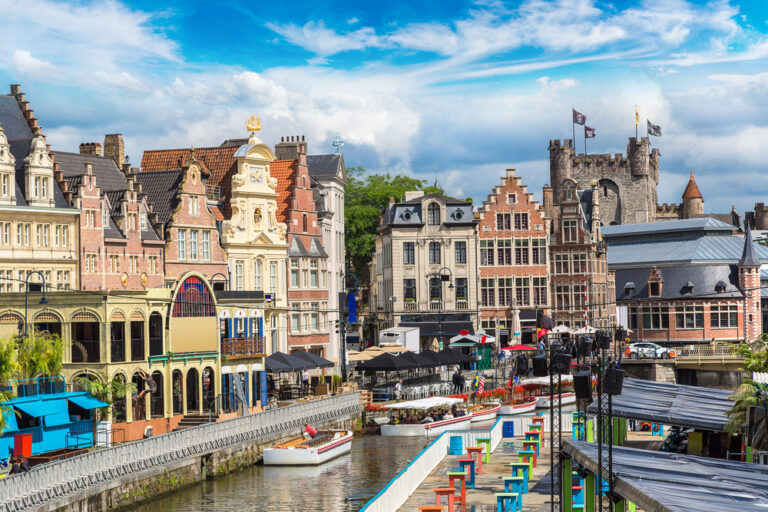
See the historic city centre of Ghent from the water. Image: ixuskmitl@hotmail.com/Depositphotos
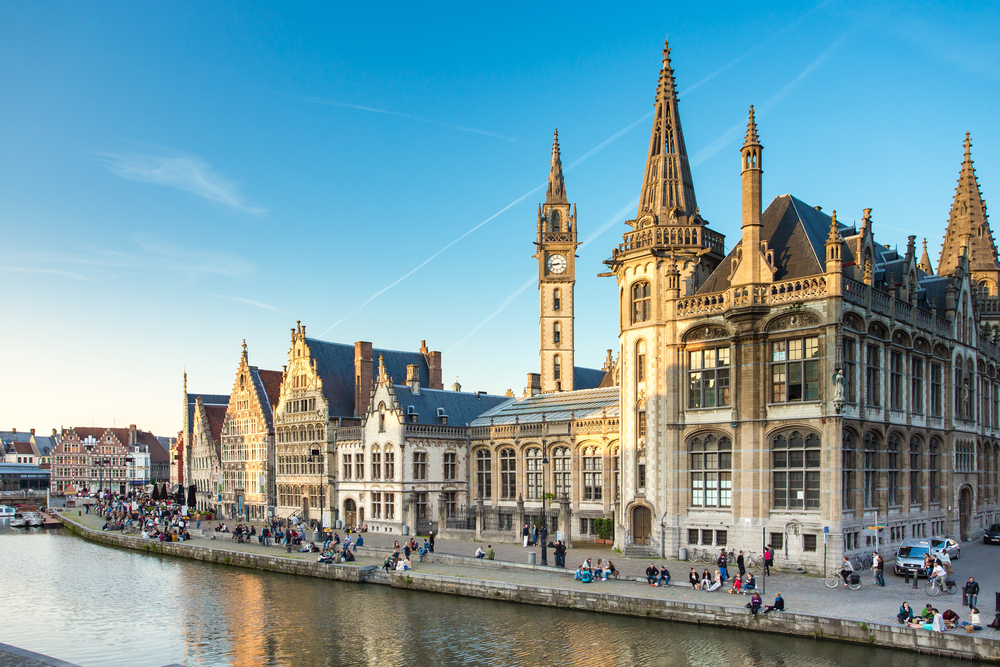
Visit Ghent town hall. The town hall is wonderful for Instagram lovers, and for anyone who just admires a great bit of architecture. The surrounding areas are beautiful too so make sure to give yourself enough time to enjoy a stroll around.
Take a boat ride through the city. There are plenty of boat tours that take you around the many canals and rivers of Ghent. This way you get to see the city from a different perspective and learn a lot about it too. Plus, they are not too expensive!
Visit Gravensteen Castle.This castle looks as impressive inside, as it does outside. In fact, most people don’t even go inside, as they are pretty satisfied with simply looking at the stunning façade. If you do want to go inside, the entrance is not too expensive as it has great displays in there.
Three beautiful things to do in Bruges
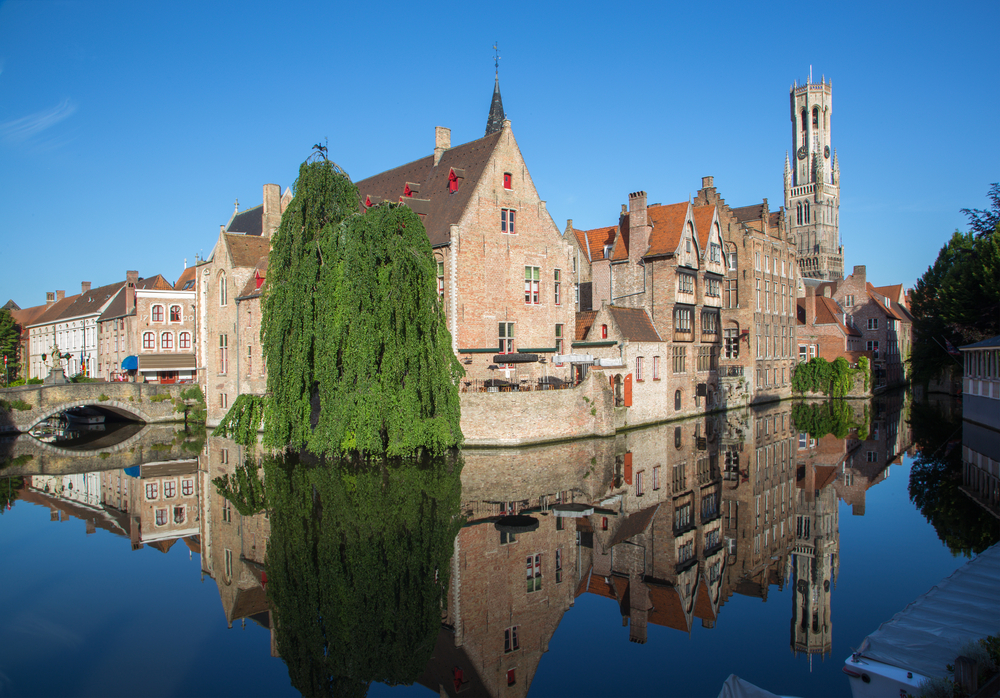
Spot the Belfry of Bruges! Image: Sedmak/Depositphotos
Walk around the centre of Bruges.The very heart of Bruges is beautiful. In fact, so is Bruges in general but there is something just magical about the centre of the city — especially if you wander around when the sun begins to set.
Visit the Markt (market square in Bruges).The Markt has been compared to the Grand Place in Brussels (only less impressive, but still pretty rad all the same).
Climb the Belfry of Bruges. The medieval bell tower in the centre of Bruges is an absolute must-see. You can climb all 366 steps to the top of the tower, which then provides you with sights all over the city!
Of course, there are many more places to visit in Belgium, such as the charming cities of Leuven and Mechelen. With this quick overview though, we hope we’ve given you a starting point for what to explore in Brussels, Gent, and Bruges!
Where is your favourite place to visit in Belgium? And what are your absolute must-sees? Tell us in the comments below!
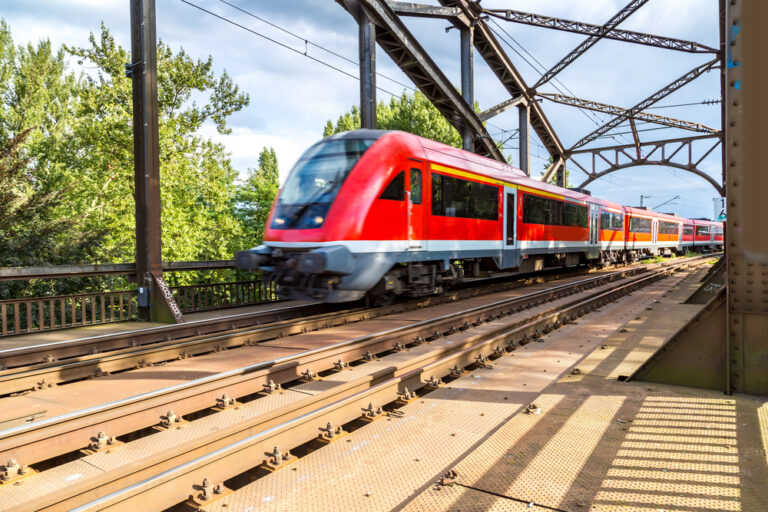
Going to Germany for the summer? During June, July, and August, €9 train tickets will be provided for those travelling by train in Duitsland. 🚂
This, however, doesn’t include intercity trains, (i.e the trains that travel between the Netherlands and Germany) so if you’d like to enjoy a low-cost train ride in Germany, you have to get there first.
According to Deutsche Bahn, the national German railway service, these €9 tickets went on sale on May 23, 2022.
They can be bought from any ticket machine at stations, or via the Deutsche Bahn website.
Even better, people of any nationality can buy these tickets. So travelling in Germany just got much cheaper for Dutch and other international travellers! ✨
The cheap fares are part of an attempt by the German government to encourage people to travel by train instead of relying on petrol and driving everywhere, reports RTL Nieuws.
However, the transportation Olympics are not that simple. As petrol prices are currently dropping in Germany, travelling by car seems much more attractive.
For that reason, German gas stations on the Dutch border expect a high influx of Dutch motorists, as they can fill their tanks and save 50 cents per litre of petrol. ⛽️
Something for the Dutch to consider
With the current chaos at Schiphol airport, it’s a good idea for the Dutch to take notes from their German neighbours and start implementing alternative routes for passengers.
As massive crowds continue to overtake the Dutch airport during the summer, wouldn’t having cheap train tickets lift some weight off Schipol’s shoulders? 🤔
Will you be taking a €9 train in Germany this summer? Tell us in the comments below!