What does it take to get people to stop smoking? The State Secretary for Health, Welfare and Sport, Maarten van Ooijen, seems to think the answer is to increase the price of cigarettes — quite considerably!
Van Ooijen did his homework. According to a recent study, smokers are more likely to give up their dangerous habit if they’re faced with terribly unaffordable cigarette prices.
That’s why the state secretary wants to make sure that the price of a pack of those delicious health hazards goes up, the NOS reports.
To what exactly? Just a casual €40 by 2040! 🤯
What’s the plan?
The plan is to make it a slow but steady process toward what the Dutch cabinet has called “a smoke-free generation” within the next 20 years.
To achieve this ambitious goal, it has already been decided that the price of a pack of cigarettes in the Netherlands first will increase from €8 to €10 by 2025.
However, Van Ooijen wants to add to this plan. He suggests that the price for a pack should increase by €2 every single year.
The end goal is simple: prices would then rise until we reach the aesthetic “€40 by 2040” benchmark. 💶
Whether or not this will actually happen, however, is yet to be decided. The Council of Ministers has yet to consider Van Ooijen’s ambitious additions.
It is no secret that smoking is bad for you, so it’s quite puzzling that 20% of Dutchies still do it. If his freshly developed master plan is realised, Van Ooijen hopes that this number will have fallen to as low as 7% by 2040.
It would also look good for the Netherlands if Van Ooijen gets his way. Implementing such strict price regulations would put the country in the EU lead when it comes to smoking laws.
Will it work?
It’s not easy to say how effective van Ooijen’s plan will be. A previous study already established that the price of a pack of cigarettes needs to be as high as €60 for the most persistent smokers to change their lifestyles.
But who knows, perhaps it will help guide some people in the right direction — or at least influence a few more to lean further into their caffeine addiction instead. ☕️
If nothing else, being strict on smoking is a good optic for a State Secretary of Health, Welfare, and Sports, so the law won’t be totally useless either way.
Is €40 for a pack of cigarettes too much to be worthwhile? Let us know your thoughts in the comments!
Do you have a lot of spare time but still can’t find the motivation to learn Dutch? Or have yousat down with your textbook — only to end up browsing DutchReview for a bit of light-hearted procrastination? 😉
Don’t worry, there’s no judgement from us. We’ve all been there.
Luckily, avoiding your textbook may just have helped you out this time, because the following article is for you. It includes five super-simple avenues you can explore to increase mindfulness. And hopefully, it’ll inspire you to not necessarily study harder, but to do it with a lot more purpose.
Drop the “I’m just not good at learning languages” excuse
Yes, we’re taking aim at native English speakers here.
When we take our first breath outside the womb we don’t immediately strike up a conversation with our parents, fluently, in our mother tongue:
“Hello, there. An absolute pleasure to finally meet you both.”
No, we learn it as a child. Now, you can bring up neuroplasticity and why it’s easier as an infant, but let us ask you this: have you ever met a child before? They often have an attention span that makes a goldfish look like a veteran scholar.
If they can do it, then you can too. So do yourself a favour, and stop believing that excuse.
Find your reason
If someone asks you why you are learning Dutch, and you cannot come up with an answer that convinces even yourself, then there’s your problem.
A lot of our procrastination comes from our emotions. You can procrastinate learning Dutch by drawing up an amazing, structured weekly plan (again), but if your heart isn’t in it then you will go around in unproductive circles.
So, as cliché as it sounds — you need to find your reason.
To speak to your Dutch boyfriend’s/girlfriend’s family? For work? It is usually for pragmatic reasons rather than pure love for the language, so the trick is to find a way to do it because you want to, not because you feel you have to.
Try to find passion in the process of learning a new language, acquiring a new skill, or from challenging yourself — these are all things for you. Just be honest with yourself.
Finding someone to study with can also work like a charm for finding the motivation to learn Dutch! Image: Depositphotos
Set the benchmark low
Yes, you read that correctly.
People usually start by jumping into the deep end — being ultra-enthusiastic and unrealistic. It works for some people but is often not sustainable at all. Learning a language requires consistency.
However, expert Tim Pychyl says, “Once we get started, we’re typically able to keep going. Getting started is everything.”
Well, sort of, Tim.
Picture this: you set yourself half an hour with your textbook and after five minutes time seems to slow down in a way that even the most gifted of quantum physicists can’t explain. Oh look, you’re on Instagram — how did that happen?
So why not five minutes (no, seriously) every day on Duolingo. If Tim is right, five minutes may turn into a relatively painless ten, or fifteen. If you feel like doing more — do more. If you don’t, then it is only five minutes of your day. Power through it. 💪 After all, thirty-five minutes a week (plus the consistency of daily learning) is more than nought minutes per month.
22 x 5 minutes = more than nothing. Image: James Bogué/Supplied
Cultivate some self-awareness
Let us be clear: there are many, many brilliant and inspiring teachers out there, and a variety of incredible courses. But everyone learns differently and has different motivations.
For many of us, school did a great job of stunting any passion or confidence for languages, and the main consequence was to grow up believing that there was only one way to learn them. Which just so happened to be incredibly slow and dull. 🙃Taking two months to be able to say you wake up at six and clean your teeth just isn’t going to cut it when living abroad.
So experiment, explore, and find what works best foryou.
Likewise, be aware of when you are most likely to lose motivation. Identify the cue for a bad habit, and change the routine slightly to avoid it and keep on track with your session. (For more on that, we highly recommend introducing yourself to Charles Duhigg!)
Practice, practice, practice
Simply put: use the Dutch you’ve already learned.
If you’re putting time aside to learn a language and then not using it, then what’s the point? We all sound stupid at first, we all make mistakes. Get used to it — but you really are not alone.
If you genuinely can’t summon up the confidence, then while washing the dishes or brushing your teeth have little conversations in your head. Link up new words, practice that quick formation of sentences and being creative with limited vocabulary. It sounds absolutely crazy, but you can build up that fluency without the anxiety and embarrassment.
Additionally, try reading articles online, listening to the radio or podcasts, using Dutch subtitles on Netflix, and looking at memes — it doesn’t matter what it is as long as it’s in Dutch! Surround yourself with it as much as you can.
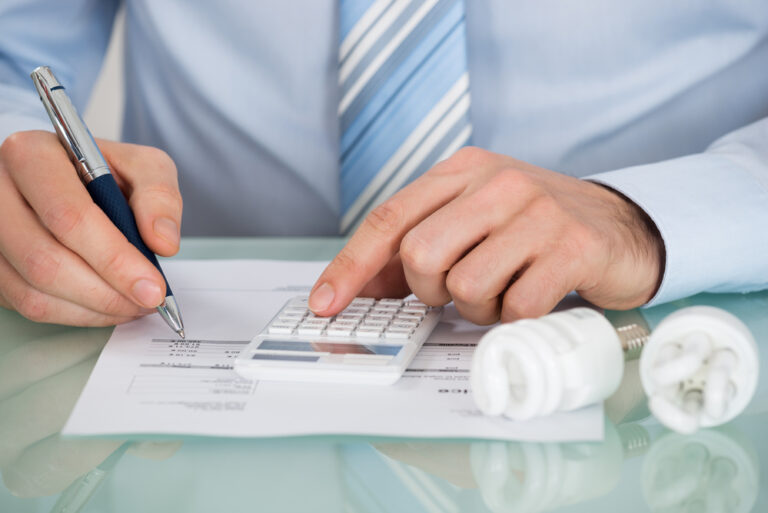
In the first three months of 2022, energy prices rose by 20%in the Netherlands. Now, Dutch residents can expect yet another price hike.
In July, the Dutch energy company Essent will increase variable rates by another 20-30%, reports the NOS. In practice, that means an energy bill will rise by between €25 and €90.
What the other two major suppliers, Eneco and Vattenfall, will do is not clear yet. But one thing is for sure — energy is not getting any cheaper.
Getting a new energy contract is more expensive
“It is expected that consumers who have been paying a variable rate for a longer period of time can expect an increase,” Sanne de Jong from the energy price comparison website Gaslicht.com tells the NOS.
Will you be closing a new contract? Then the price increase will be even higher for you.
This is because energy suppliers purchase energy long in advance and they base your contract entirely on the current purchase price of energy.
Higher increase for singles
According to Milieu Centraal, single individuals have to take into consideration relatively higher energy price increases than families.
While the increase is about 33% for a multi-person household, for singles, this is 38%.
What can you do?
Switching suppliers might not be the most beneficial. “People have nowhere to go because all suppliers are raising prices,” Joyce Donat from the Consumentenbond tells the NOS.
Her proposed solution is “cut back on energy consumption, insulate, and hope for better times.”
To counter the high prices, the government is also planning to introduce a VAT reduction in July.
In addition, municipalities are allowed to give subsidies of €800 to low-income households. However, these measures are not nearly enough to keep things affordable.
Have you been affected by the rising energy prices? Let us know in the comments below!
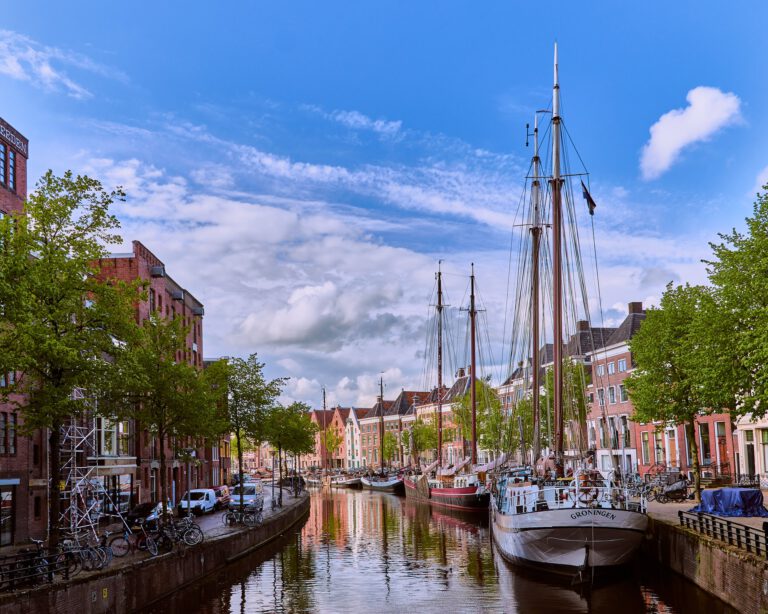
The city motto of Groningen, a city in the very north of the Netherlands, is ‘Er gaat niets boven Groningen’ (there is nothing above Groningen).
This rings true in two ways! For one, the provinces of ‘the North’ (Groningen, Friesland, and Drenthe) are three of the top five least populated provinces in the Netherlands — so it really can feel like the middle of nowhere sometimes.
On the other hand, it’s absolutely beautiful up there! So we encourage you to take a trip off the beaten path and explore Noord Nederland. (You’ll discover that there’s way more to see than just Bourtange and Giethoorn, we promise you.)
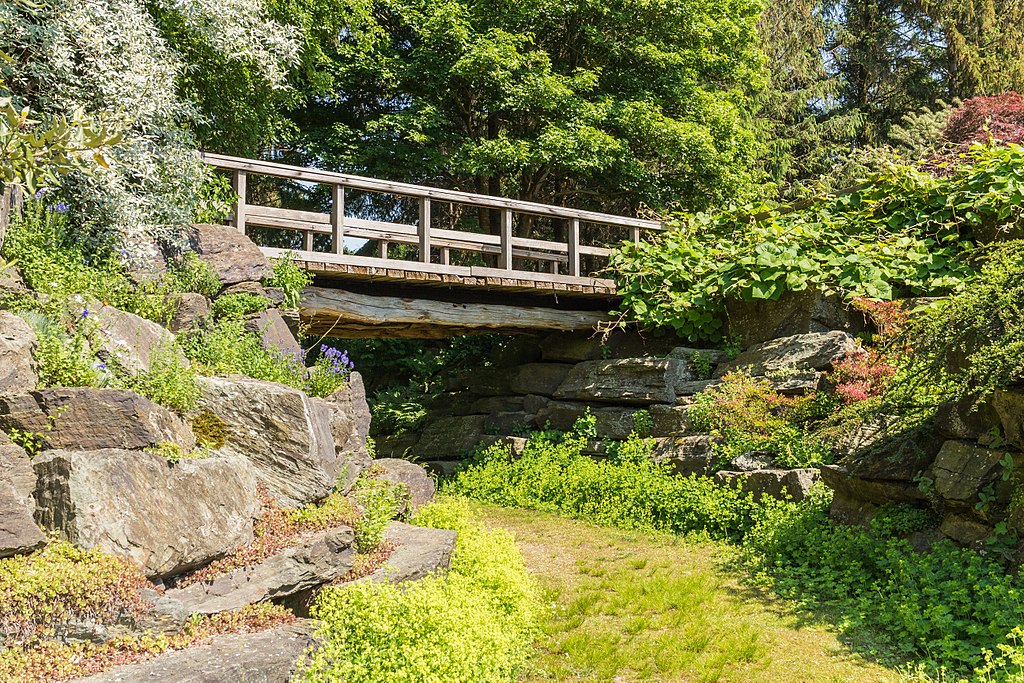
This botanical garden, located just south of Groningen, was created in 1626 and is the largest in the country! While it has been struggling for some years with increasing costs for maintenance and decreasing numbers of visitors, it’s still worth a visit on a sunny day. Its Chinese garden and Celtic garden can be absolutely magical!
One-day trip to Friesland: explore Franeker and its 18th century planetarium
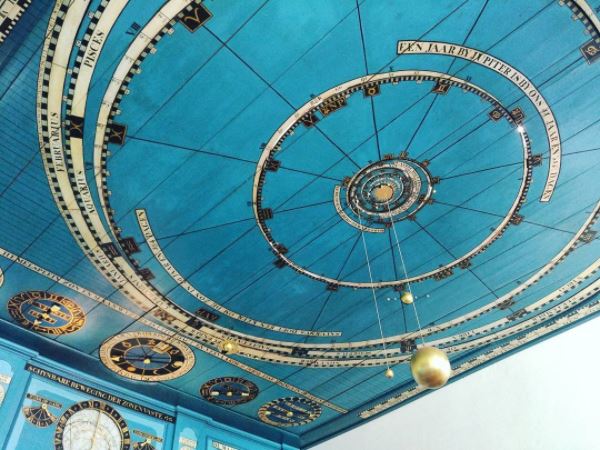
Eisinga’s side hustle. Image: Aurora Signorazzi/Supplied
When talking about trips to the north of the Netherlands, we can’t leave out Friesland of course!
The city of Franeker was founded around 800 as a Carolingian stronghold and its name probably derives from Froon-acker (meaning “country of the king”). Franeker used to be one of the most important cities in the area and between 1585 and 1811, it housed the second oldest university in the Netherlands.
What makes Franeker a must-visit today is the Royal Eise Eisinga Planetarium with its still-functioning 18th-century orrery.
Good to know: Ready for a little history lesson? This guy, Eisinga, had a wool shop while studying autodidact mathematics and astronomy on the side. Meanwhile, there was a fear that three planets were about to collide and the people in his town really believed this event would happen — and be the end of them. So, to show that the planets were actually very far apart, Eisinga started building a planetary model on the ceiling of his house. Fast-forward till today and Eisenga’s model is the oldest functioning orrery in the world!
One-day trip to Friesland: visit the Woudagemaal in Lemmer
For the geeks among us, this pumping station is the largest, still operational, steam-powered pumping station in the world!
When Woudagemaal opened in 1920, it was used to pump excess water out of Friesland. Today, it’s used only as an aid to more modern pumping stations in case of exceptionally high water levels in the province.
A celebration of technology and the Dutch mastery of the water, Woudagemaal is one of the UNESCO World Heritage Sites in the Netherlands. So when making your trip to the north of the Netherlands, you shouldn’t disregard this interesting industrial wonder!
One-day trips during easter: fires in Groningen, Drenthe, and Overijssel
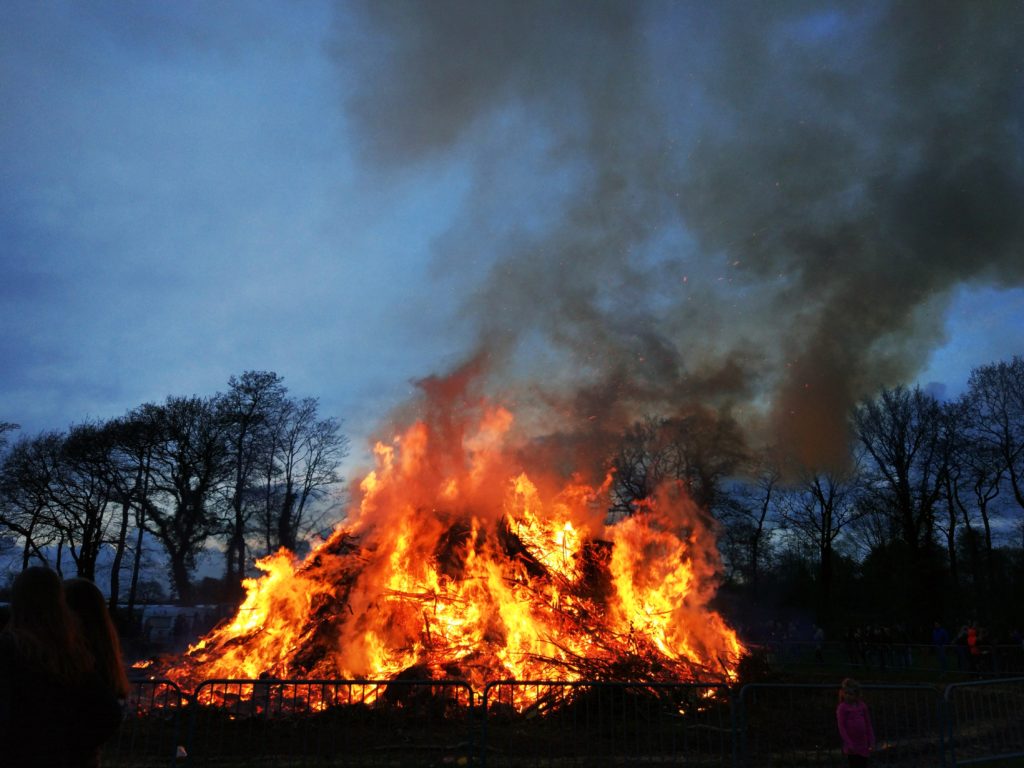
What a way to end the day! Image: Aurora Signorazzi/Supplied
Paasvuurs (Easter fires) usually take place on Easter Sunday. In these provinces, the fun tradition symbolises spring taking over from winter (and the fires conveniently enrich the soil with their ashes).
In many open fields you’ll see enormous piles of wood, trees, and basically, anything that can guarantee some spectacular fire, surrounded by flocks of families and kids (literally) having a field day.
These are, of course, just some small suggestions for you to discover the wonderful north of the Netherlands!
What are your favourite places in the north of the Netherlands? Do you have any recommendations? Tell us in the comments below!
The largest Dutch airport is struggling to make ends meet for its travellers and with the summer holidays just around the corner, they’re hoping to reduce travelling crowds.
What is more, the airport expects its staff shortage to continue until at least August, according to RTL Nieuws.
This situation will largely affect flights throughout the summer and bring disappointment to many travellers from the Netherlands.
Summer measures
To prevent overcrowding, Schiphol plans to implement stricter measures for airline slots. A slot is a time-stamp in which an aircraft is allowed to take off or land.
Between June 1 and August 28, the airport plans to reduce these slots from the usual 126,000 to 90,000.
What does this mean in practice? Schiphol will have to dismiss countless passengers who want to fly out of the country for the summer.
Roel Elshout, who’s in charge of travel services and traveller’s rights, estimates that about one million travellers are going to be affected by this measure.
Attempts to fix the situation
Regardless of the current staff shortage, Schiphol expects to deal with large crowds this summer.
A job fair is being held on June 11 to recruit new security officers to ensure a safer and a more pleasant experience for passengers.
However, Elshout explains that it’s already too late for that — since the training process for security guards takes at least 12 weeks.
Even if Schiphol does something to help the situation now, it seems that many travellers will face disappointment during the summer holidays.
Have you been affected by the Schiphol chaos? Tell us in the comments below!
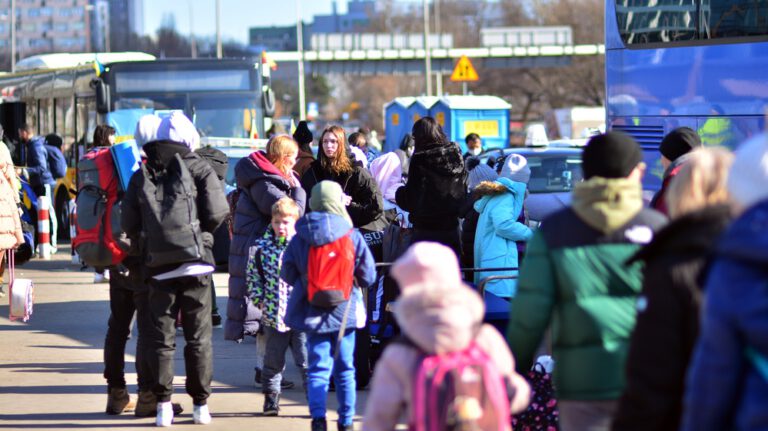
Men, women, and children have resorted to sleeping on plastic chairs and the floor in Ter Apel due to a severe lack of beds in the refugee centre, the NOS reports.
Two emergency reception locations recently closed in Breda and Nijmegen, where some 200 refugees were seeking shelter.
Due to this, many refugees had to move back to the asylum seekers’ centre in Ter Apel, which is struggling to offer enough beds.
Plastic chairs or the floor
People in the waiting area of the Immigration and Naturalisation service have been forced to snooze on the plastic chairs glued to the ground, or worse, the cold floors on the site.
According to the Central Agency for the Reception of Asylum Seekers (COA), 120 people were left to sleep in these conditions on Sunday night.
Some refugees were taken from Ter Apel to a different emergency shelter in Heerenveen, however, there was not enough room for everyone.
The result? People have fled their hometowns to seek protection and a better life in the Netherlands but are now faced with more worry — and no comfortable place to get some shut-eye.
More emergency shelters set to open
The application centre in Ter Apel has been overcrowded for quite some time. However, from June 1, four Dutch security regions will arrange for 150 extra emergency shelters.
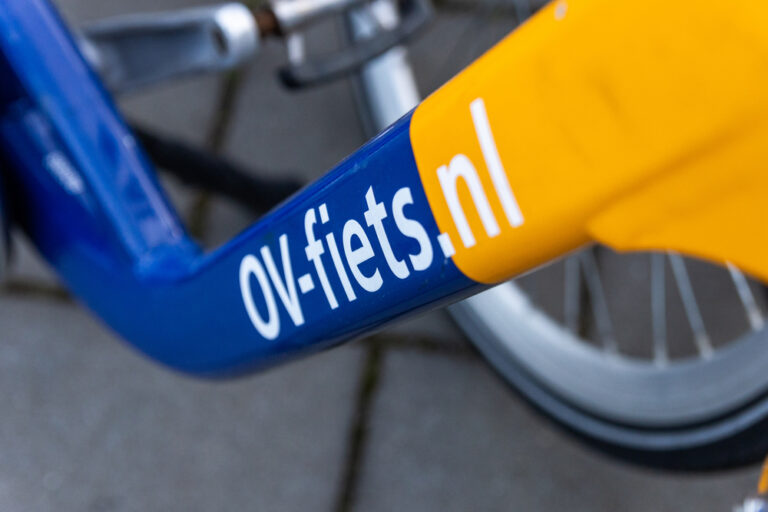
The E-bikes come in three modes of electric assistance: eco, normal, and high.
On a full battery, you can bike up to 110 kilometres in the eco mode, 70 kilometres in the normal setting, and 50 kilometres in the highest mode. Pretty good for a single day’s use!
Each E-bike is equipped with its own GPS tracker. Meaning it can easily be found by tracking down its location in case the e-bike ever gets stolen.
According to AD, the personal data of those using the e-bikes and the location data of the bike itself are stored separately, so the privacy of consumers isn’t threatened in any way.
Why is NS doing this?
The Head of Mobility Services — Marise Bezema — explains that they want to add e-bikes to make it easier for those travelling further distances after reaching the stations.
If the E-bikes end up being popular among travellers, the NS will consider permanently adding them to their normal stock of public transport bikes. 👀
Will you be trying one of the e-bikes this summer? Tell us in the comments below!
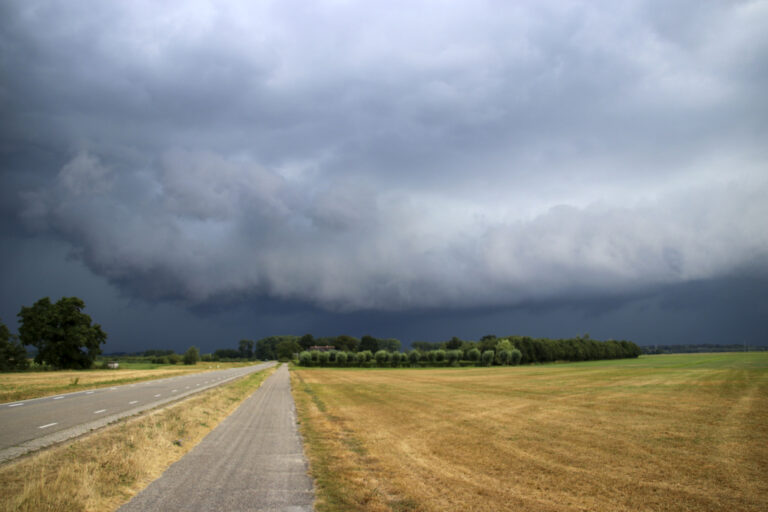
Wait, what?! Yes, you’ve read right. It might be all sunny and blue skies right now, but later in the day there’s a thunderstorm incoming. ⛈
Ugh, and we’re here with our sunglasses on. The bad weather is sweeping over from the British Isles towards the lowlands, says Buienradar.
Code yellow for the North-East
From early noon onwards, clouds will begin building up over the North-Eastern part of the Netherlands. Here, rain and strong winds of up to 70 km/h can be expected.
Phew, that’s pretty strong! This is why a code yellow has been issued for the North-East of the country. (Meaning: stay inside and try to avoid being swept off your fiets by a strong gust of wind!)
Temperatures here will be around the 17-degree mark. In the South-East of the country, it’s a bit warmer and temperatures can reach up to 20 degrees. ☀️
Let op: The code yellow warning does not apply to the regions Friesland, Groningen, Drenthe, and the Wadden Islands, says RTL Nieuws.
Things will calm down in the evening
After a stormy afternoon, the winds and rain will start to ease up towards the evening. It can get misty on the coast tho — and pretty cold.
Temperatures at night might even drop to 5 degrees. 🌡
How are you gonna avoid this incoming thunderstorm? Tell us in the comments!
The Russian gas company Gazprom will stop supplying gas to the Dutch company Gasterra as of today.
Gasterra is the largest gas trader in the Netherlands, owned by Shell, Esso Nederland, and the Dutch government.
Payment disagreements
Russian President Putin drew up a decree that requires companies to pay for the gas in rubles, which Gasterra does not want to comply with for two reasons.
First, paying in rubles would violate the EU’s sanctions against Russia. Second, the Dutch company would have to open bank accounts in Moscow which is too risky as the accounts would fall under Russian law.
Gasterra will not receive any gas from May 31, 2022, until September 30, 2022, but intends to purchase gas elsewhere.
“No consequences for Dutch households”
Minister of Climate and Energy, Rob Jetten, says he understands Gasterra’s decision to not comply with the payment demands. According to Jetten, their decision will not affect Dutch households.
Jetten also does not expect any effect on the company. He says the cabinet will continue to monitor the situation closely.
Filling gas reserves
A spokesperson for Gasterra said they are continuing to fill the gas reserves “according to plan.”
The company did not disclose the annual volume of gas Gazprom supplies to them nor the amount of gas they will lose when Gazprom stops its supply.
The spokesperson said Gasterra planned to end their activities with Gazprom and their contract will not be renewed.
Car ownership in the Netherlands can be confusing — road tax, yearly car maintenance, roadside assistance, the list goes on.
If you’re thinking about becoming a car owner in the Netherlands, we’re here to help break down one of the first steps: car insurance. These are seven commonly asked questions about car insurance in the Netherlands.
Yes, car insurance is compulsory in the Netherlands. To legally drive any vehicle here, you need to have the proper insurance for the car.
Why do you need car insurance in the Netherlands?
Car insurance is one of the biggest insurance markets in the country — and for a good reason. Taking out car insurance not only protects you but also ensures the safety of drivers across the whole country.
In the financial sense, it covers any damages drivers otherwise might not be able to pay for, and it also motivates other drivers to drive around safely and avoid paying insurance claims!
In the Netherlands, drivers make several thousands of claims per year to help compensate for the costs of damages or injuries caused by cars.
What are the requirements for getting car insurance in the Netherlands?
To take out car insurance in the Netherlands, there are a few requirements.
Firstly, you need to be a Dutch resident (so no car insurance if you don’t have a place of residence in the country). 🇳🇱
Secondly, you must have a Dutch car or an imported foreign car with a valid Dutch licence plate.
Thirdly, you can’t take our car insurance on a car before you’ve gotten a licence to drive it so make sure you have a valid driving licence.
How does car insurance in the Netherlands work?
This might come as a surprise to internationals and expats, but in the Netherlands, car insurance covers the car itself and not the driver.
This means that anyone with a valid driver’s licence can legally drive your car. However, the person whose name is on the car insurance is legally responsible for any damage done by the car, regardless of who drives it at the time of the accident.
What are the different types of car insurance in the Netherlands?
There are three main types of car insurance in the Netherlands.
Third-party liability (WA verzekering)
This is the minimum, mandatory level of car insurance (or any vehicle, really) in the Netherlands. It covers any damage done by your car to other vehicles, property, and even injuries to other people.
It provides coverage if you have an accident where you were at fault. This type of insurance is perfect if you aren’t a frequent driver or if you drive an older or inexpensive car model.
Extended liability (WA beperkt casco)
Extended liability car insurance is a little more inclusive. Apart from covering all of the third-party damage caused by your car, it also covers damage to your own vehicle for circumstances out of your control.
This includes incidences like:
Theft of your car
Vandalism
Fire damage
Storm damage
Collision with animals
All-risk insurance (Allriskverzekering)
This is the most comprehensive form of car insurance. It covers any damages done by your car and damage done to your car by other vehicles.
All-risk insurance is the best choice if you drive a new or expensive car, where the cost of replacing the car yourself in an incident would be too much.
Other types of insurance
There are other types of situational car insurance. You might not necessarily need them but it’s good to know they exist.
Breakdown insurance: Breakdown insurance covers any costs to tow and repairs your car in case it breaks down while you’re travelling.
Personal accident insurance: This type of insurance covers any medical costs and potential compensation for disability or death.
Legal insurance: Legal insurance covers any legal fees that follow a vehicle incident.
No-claim insurance: No-claims insurance insures against the first incident that might affect your no-claims bonus.
Where can you get car insurance in the Netherlands?
Because car insurance is one of the biggest markets in the country, there are plenty of companies that offer car insurance for every occasion.
Some insurance companies include ANWB, Aegon, Hema Verzekering, FTBO, Centraal Beheer, even the bank ABN AMRO offers car insurance.
It can be tough to find which car insurance matches your situation perfectly, but there are websites like Independer that allow you to compare car insurance plans. You can also use it to find an estimate for the yearly costs.
Is car insurance expensive in the Netherlands?
In short, yes, car insurance is expensive in the Netherlands. But your yearly costs depend on a number of factors like driving history and experience, your age and health, as well as vehicle value and weight.
Generally, your insurance will be cheaper if you are considered a low-risk driver.
Curious if you check the boxes? Low-risk drivers are usually drivers who:
haven’t previously had to make any insurance claims or been in any incidents with their car,
and who take their car for maintenance service often to make sure their vehicle doesn’t cause any nuisances or problems for other people.
There are other factors that affect car insurance premiums such as age, how long you’ve had your licence, how many kilometres you drive, and the initial cost of your car.
On average, car insurance costs about €75 per month, but can also range between €30 and €90.
Once you’ve read about these seven questions, you can consider yourself a near-expert in Dutch car insurance! Go forth and insure that sweet ride of yours!
Got any tips when it comes to finding the right car insurance for you? Share them in the comments below!