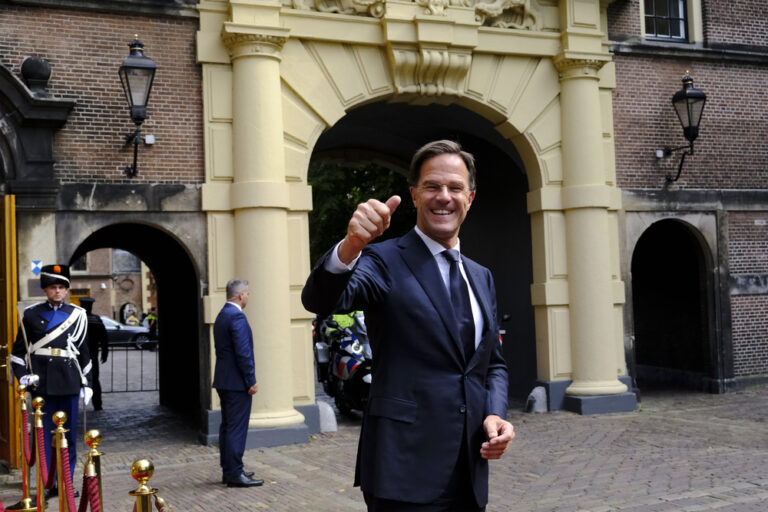
Hip, hip, hoera, another three cheers to the Dutch crown princess! In honour of Princess Amalia’s 18th birthday, the royal family held a party in the palace gardens to celebrate — but it seems like they had trouble following coronavirus rules.
Prime Minister Rutte spoke of 21 guests who were invited to the party, but some sources have told De Telegraaf that closer to 100 people attended. At the time, the cabinet’s advice to only have a maximum of four people in the home applied. 😬
So what’s going on here? Will the royals get a slap on the wrist? You can probably guess the answer.
In the clear — some would say
The Rijsvoorlichtingdienst (RVD, Government Information Services) stated that this party was well-within coronavirus prevention measures — all invitees were vaccinated and tested, and the party was held outside despite to rain so everyone could maintain a distance.
The royal family were convinced that these precautions were enough to deal with the coronavirus responsibly.
Royal exemptions?
As it turns out, even King Willem-Alexander had second thoughts about whether it was a good idea to host the party on the royal residence — and yep, it probably wasn’t.
It is without a doubt that many Dutch people have been affected by the coronavirus measures. Unlike the princess, many young people who turned 18 over the past two years and were forced to celebrate with limited invitees.
It seems the government has a lax interpretation of coronavirus measures when it comes to the royal family.
This isn’t the first time the royal family has come under fire for breaking coronavirus rules; from celebrating during the European Championship in the streets to the family holiday in Greece, some may wonder how seriously the royal family is taking these precautions. 🤷
What do you think about this birthday party blunder? Tell us in the comments below!
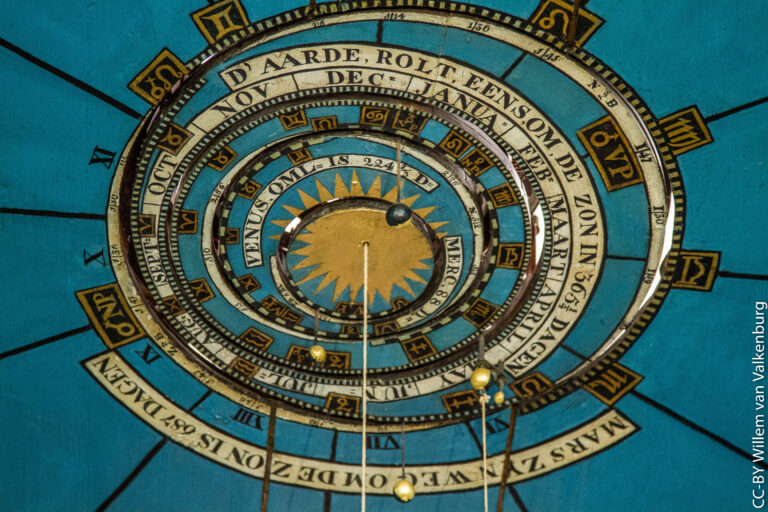
The Netherlands may have yet another fabulous heritage site to offer. Eise Eisinga Planetarium is the world’s oldest-working planetarium — and it has been nominated for the UNESCO World Heritage List.
The planetarium is located in Franeker, Friesland and was manufactured between 1744 and 1781 by Frisian wool manufacturer and businessman, Eise Eisinga.
Where does one find the space to build a planetarium in the 1700s? You may be wondering. Well, fun fact, he built the planetarium in his own house! 🔨🏠
Already a national monument
According to the UNESCO Nederlandse Commissie, it has been considered a national monument since 1967 and has an always up-to-date and realistic picture of the sun, the moon, earth, and the other five planets that were known at the time. ☀🌍
“A registration on the World Heritage List is a worldwide recognition of the special value of this planetarium,” says the outgoing cultural minister Van Engelshoven.
Let’s wish this planetarium succes that it gets picked as a world heritage site! 👍🏼
Have you visited the planetarium before? Tell us your thoughts in the comments below!
After nine months of deliberation, the Dutch government has finally reached a coalition agreement — and with that, VVD, D66, CDA, and ChristenUniepresented several new plans and ideas for the Netherlands.
First of all, just a few names are known for the actual upcoming coalition. Rutte is obviously clinging on to his prime-ministership for dear life, Hoekstra from the CDA is also returning at some ministry, and Kaag of D66 is still doubting what she’ll do with her political life.
However, we will learn more about who’s who in the new cabinet in the upcoming weeks.
Humble beginnings
The impression the coalition leaders left today was actually quite humble and constructive with a touch of upbeatness. This makes sense seeing as overall confidence in the Dutch government is at its lowest.
So, what can we expect from this new coalition and what will change?
Climate plans🌍
The new government intends to create a new climate fund of €35 billion within the next years (there’s a lot to fix in the Netherlands now — but at least the Dutch government is finally throwing money at this issue.) Climate action has been an underlying theme throughout the whole agreement process.).
According to the NOS, the government intends for the Netherlands to be at the forefront in combatting global warming by cutting CO2 emissions by 55% and reaching climate neutrality by 2050.
As it is, the Netherlands is lagging behind the European climate requirements, so the government is working hard to reach these goals.
Childcare allowance
To turn over a new leaf, the government plans to bump up childcare allowance to 95% of the costs, with ambitions to increase it to 100% in the future. 👶🏻
In doing so, the new government wants to show that they learned their lesson from the childcare allowance scandal two years ago.
Rutte’s new coalition agreement: Big investments in climate transition, more housebuilding, reform of student loans/grants, a higher minimum wage, more generous subsidies for childcare, more nuclear power
As most people know, the Netherlands is notorious for its housing crisis — but the Rutte IV cabinet has some serious plans.
Up to 100,000 homes will be built throughout the Netherlands, both in and outside the city. They will make “binding performance agreements” with housing agencies to ensure flexible housing, affordable rental housing, sustainability, and the overall quality of life in these neighbourhoods.
It seems like an impossible task, but perhaps this cabinet will be the first to do what no other cabinet has done before.
What do you think about the new plans but the Rutte IV cabinet? Let us know what your thoughts are in the comments!🤔
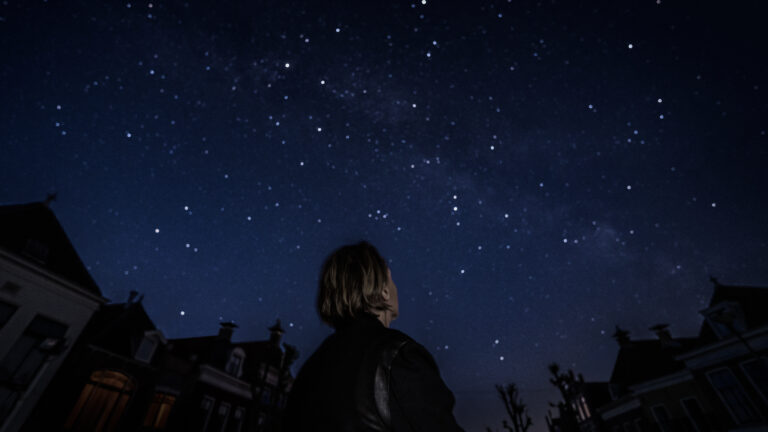
In the eyes of Daan Roosegaarde, we’re all living underneath a magnificent glimmering light display — but we’re too blinded by light pollution to see it.
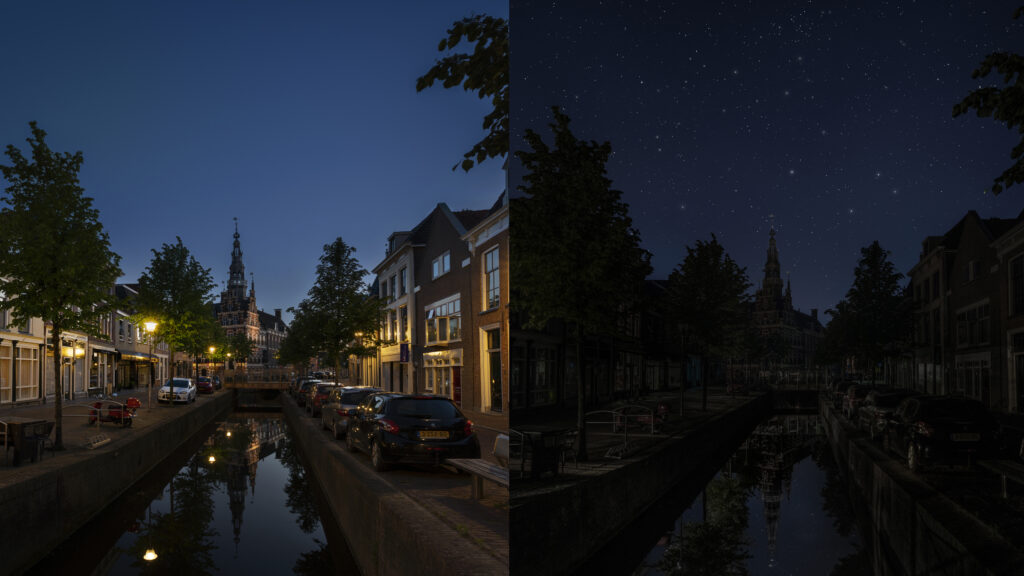
That sad reality changed on December 14 for the city of Franeker, when Roosegaarde and Unesco Netherlands brought the stars back into the residents’ twinkling eyes by switching off the city lights for their Seeing Stars project.
In an effort to create a sense of connection, an absent element in the times of COVID-19, Unesco Netherlands aims to recognise seeing stars as a form of universal heritage. Hear that Elon Musk?
Eye of the beholder
Seeing Stars is a collaborative project between Franeker’s residents, government, and businesses, alongside the preparation and execution of UNESCO Netherlands and Studio Roosegaarde.
“I am so proud to switch off all the lights in our city, to see the stars and feel connected with each other,” says Mayor of Franeker, Marga Waanders in a press release by Studio Roosegaarde.
All non-essential household lights were switched off for the project, including those of billboards, and street lights to create the perfect atmosphere to witness and connect under the biggest light show on the planet. 🌃
A hertige
With more than 80% of the world’s population living under light-polluted skies, more Dutch cities are encouraged to follow in a city-wide stargazing night.
UNESCO, Earth Hour, and the International Dark-Sky among others all have previously advocated for moments of darkness with the purpose of increasing human and animal well-being.
Would you be in favour of switching off the lights of your city to observe stars with your fellow residents? Let us know in the comments!
Many people are counting down the days to Christmas with advent calendars, but those who got the Tony’s Chocolonely calendar might not be feeling so sweet this year. The Dutch chocolate company intentionally left one box day empty, sparking anger from some consumers.
They have apologised for purposefully leaving one of their advent calendar days empty.
Why did they do this? It was not to break the tiny hearts of children across the world. It was actually in an attempt to point out the inequality in the chocolate-making industry, reports the BBC.
Tony’s Chocolonely aimed to start a conversation about unethical practices in the chocolate industry. However, they failed to consider how some neurodivergent children and adults would react to not getting their advent chocolate like promised.
The result? Many people were left, not feeling enlightened, just mad. 😤
Choc-full of disappointment🍫
To make up for the lack of chocolate, two days of the calendar were filled with two chocolates instead of one — but the damage was done. 🙅🏼♀️
The company was hit with several complaints from parents whose children were upset that they didn’t get any chocolate that day.
One customer remarked how many young children aren’t buying their own chocolate, so upsetting them to prove a point about the chocolate industry was an unsettling thought.
It’s not all waving fists and pitchforks, however. Other customers remarked how the advent calendar stunt sparked the exact conversation Tony’s was hoping for, calling it a brave act by the company. 😊
How would you feel about a missing treat in your advent calendar? Tell us your thoughts in the comments below!💭
So you’ve started working in the Netherlands. Great!
You’ve landed a job in the fifth happiest country in the world but chances are that you, being an outsider, don’t know all that needs to be done once you start living/working/saving in the Netherlands, and might miss out on a few benefits.
No worries! Here’s what you need to do to get started working in the Netherlands. ✅
1. Get a BSN, open a bank account, and get health insurance
Yep — you won’t get far without these items. First up you’ll need to go to the municipality and register your address to receive your BSN — your citizen service number.
Once you have your BSN (or in some cases before) you can open up a bank account (so you can receive your super Dutch salary) and get health insurance — that’s mandatory if you’re living in the Netherlands.
Your DigiD is a service that helps you securely access several government websites (and apply for facilities/benefits).
Get your DigiD sorted and you’ll have the world in your hands! This can save you a fortune if you’re struggling to make ends meet so don’t forget to research what you may be entitled to (more on this below!)
3. Check if you qualify for the 30% rule
If you come to work in the Netherlands, you can possibly get a reimbursement from your employer for the costs that you incurred when moving (such as plane tickets).
Also, your employer may provide you with 30% of your wage tax-free; this “30% facility” rule applies if you were recruited outside of the Netherlands, and meet certain conditions:
You work for an employer that is registered with the Dutch tax office and pays payroll tax;
You did not reside within 150 km from the Dutch border for the last 18 out of 24 months at the time of hiring;
Your salary meets the minimum requirement for the year.
You can apply for the 30% facility at the Dutch Tax Office (Belastingdienst). You’ll also need your employer to agree, of course.
3. Apply for any allowances
If you have a low income and meet the requirements, you can request a government allowance for several things, like your rent, your health insurance, and your child care.
To apply for these allowances, you’ll need to access Mijn Toeslagen with your DigiD — told you it would come in handy!
If you’re not that fluent in Dutch, I suggest getting Google Translate in your browser to translate the website as it is only available in Dutch.
4. Prepare for the dreaded tax declaration
Chances are that, if you have an employer, you might get a tax return.
Your first tax return is usually a nice one — so more money will hopefully come in (don’t forget to file for it, it’s worth it)!
How? You’ll also need a DigiD. You can do your declaration online, or — even easier — you can use an app! Available for Apple and Android.
What else?
There are some other deductions and discounts, like study deductions, travel expenses, and mortgage deductions.
That’s it! Hopefully, you’ll be a pro at working in the Netherlands (and saving some money along the way).
So, how was working in the Netherlands for you when you first started? Don’t forget to share your experiences with us in the comments!
Feature Image: Bernardbodo/Depositphotos Editor’s Note: This article was originally published in April 2018, but was fully updated in December 2021 to bring you the most up-to-date information.
Are you thinking of moving to Rotterdam? Great choice! Rotterdam is the city-of-cool in the Netherlands as it’s filled to the brim with modern and funky architecture and certainly is unique compared to the rest of the country.
There’s plenty to do and see, and if you’re addicted to food like us, then you’re going to love living and moving to Rotterdam.
Moving to Rotterdam: why, when, how?
Rotterdam is a popular place for internationals as it’s one of the most diverse cities in the Netherlands. With so many different nationalities living in the same region, it attracts even more internationals to its door.
So if you’re looking for somewhere modern, interesting, and diverse, then moving to Rotterdam will be the right choice for you.
The following sections will cover registering and moving to Rotterdam, things to do, how and where to live, getting around, sorting your health insurance and bills, etc. Let’s get started!
First things first: finding a place to live in Rotterdam
Finding a place to live can be a struggle when moving to Rotterdam. If you are new to the Netherlands, then it’s important to know that there is a housing shortage throughout the country, which means that finding a place can be a struggle no matter where you go.
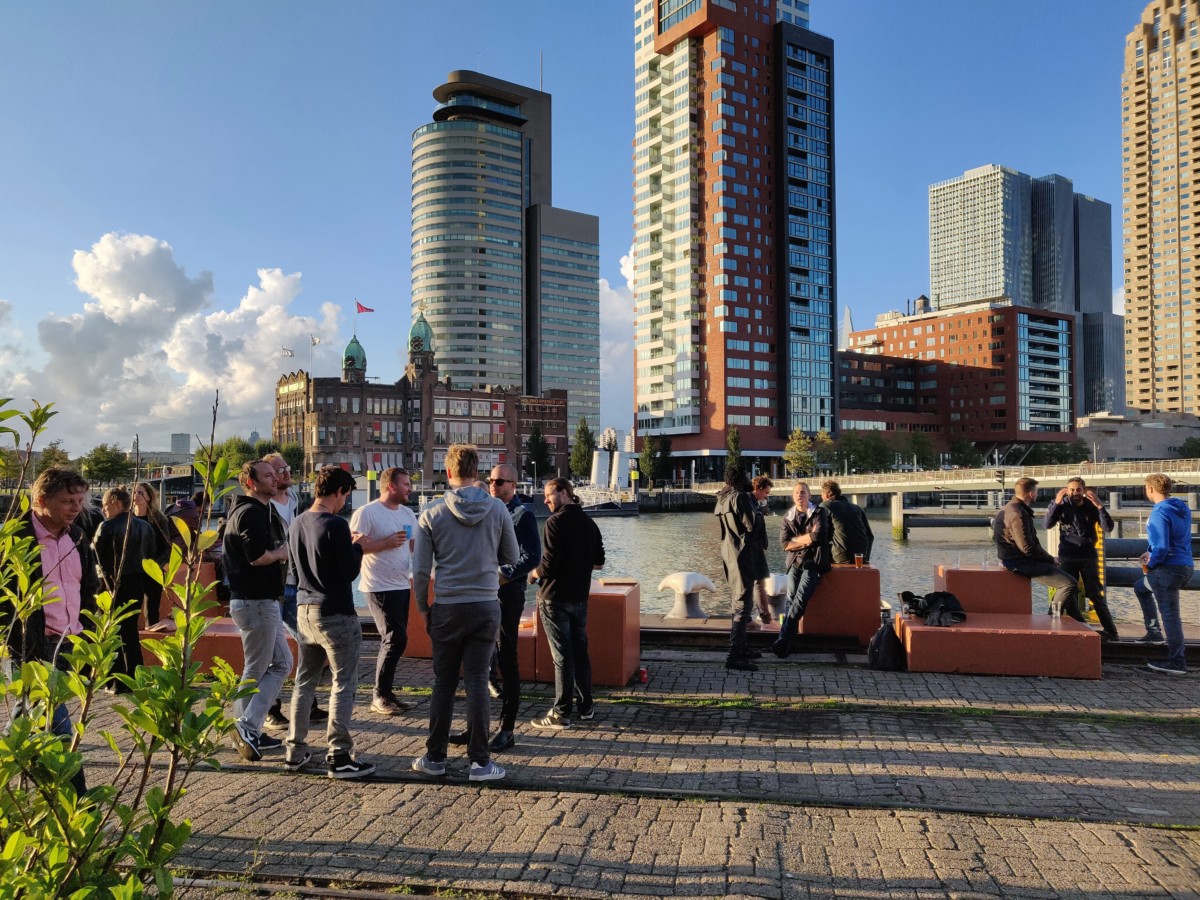
Have drinks with this view; how can you resist moving to Rotterdam? Image: DutchReview/Supplied.
In general, the second that places go on the market, they are quickly snapped up, and it’s a huge struggle to find somewhere that hasn’t already been taken yet.
If you’ve just arrived in the Netherlands, you’ll find that many places ask for you to earn at least double the rental price, which can be impossible if you’ve not sealed the deal on that job yet or if you are on a low salary. Some rentals are also “Dutch only”, making it hard for internationals to find their home.
However, it’s not impossible. Rotterdam is an extremely diverse and multicultural city, and two of us here in the DutchReview managed to land in Rotterdam on our feet (with a roof over our head) despite it all.
Tips for finding housing in Rotterdam
Here are a few tips on how to find your new humble abode in Rotterdam:
Look well in advance and don’t leave it till the last minute like I did. Not cool, not clever, really damn hard.
Try and secure some sort of job first — this will help when you try and find a place in Rotterdam because then you will be eligible for more properties.
Be informed about how people scam you out of money when looking for an apartment — sadly, it does often happen (it almost happened to me).
Don’t just look in the centre! You will likely find more properties closer to the outskirts, and they’re cheaper.
Also, don’t forget to sort your utilities (such as getting Dutch internet) once you have your house sorted.
Where is Rotterdam located?
Rotterdam is located in South Holland. It’s only 40 minutes from Amsterdam via high-speed train, 24 minutes from The Hague and 37 minutes from Utrecht.
It’s only 50 minutes to the border of Belgium via car and 1 hour 30 to the German border. Rotterdam also has an airport: Rotterdam-The Hague airport, but you’ll find that it’s much cheaper to fly into Amsterdam if you need to get here.
How to register in Rotterdam
When moving to Rotterdam (or anywhere in the Netherlands), you must register at the local Gemeente. In Rotterdam, you will need to register at the town hall (catch the metro to the stop Stadhuis to do this if you’re stuck).
You need to register so your information will be on file. Where you live also determines what taxes you need to pay and how much they’ll be. You will receive a BSN (Citizen Service Number) when you register. You will need this number when it comes to opening bank accounts and starting work in the Netherlands.
Bringing your pet to Rotterdam
People love their pets in the Netherlands, which doesn’t stop in Rotterdam. Bringing your pet is no issue; however, be aware that many properties won’t allow you to have a pet in them (ask first). Cats are popular in the Netherlands, and you’ll find that there are more indoor cats here than you may be used to.
Although it’s a bit of a concrete jungle, there are plenty of parks around. For many people in Rotterdam, getting a pet isn’t practical.
Not all areas have adequate green spaces, and living in high-rise apartment blocks aren’t really suitable for dogs (and the landlords aren’t a fan either). You have to pay dog taxes in Rotterdam too, and they aren’t cheap.
Getting health insurance in Rotterdam (and the Netherlands)
Once you arrive in the country, in most cases, you will need to register with a health insurer within the country. For example, if you work in the Netherlands or live here for more than four months, you will have to take out insurance.
Health insurance is mostly compulsory in the Netherlands. Image: Artur Tumasjan/Unsplash
However, if you are an international student studying in the Netherlands, you will not have to take out insurance until you finish your studies. This is also the case if you are completing an internship (that pays below minimum wage.)
Finding a huisarts (GP) in Rotterdam
You can find a local GP in your area through a quick Google search. Once you have found the closest practice, you will have to register with a GP there.
To do this, you should go to the practice and ask the person at reception if there is any space for you to register there (sometimes you can online, but it depends on the practice!)
In some cases, it may be full, so you will have to try the next closest place. Once you are accepted, you will be presented with a form to fill in, and you will have to show some ID and your health insurance details.
You will be issued with a GP, and every time you call up to make an appointment, it will be with that GP. The whole process is really quick and usually painless.
Finding a job in Rotterdam
Finding a job in Rotterdam and throughout the Netherlands isn’t known for being easy, but it’s not impossible. As Rotterdam is the second-biggest city in the Netherlands, there is a large job market compared to if you moved to a small town, so you’ve got quite a large variety of options here.
A quick google search will bring up jobs within Rotterdam (Indeed and Glassdoor are popular sites).
What sort of jobs can I get in Rotterdam?
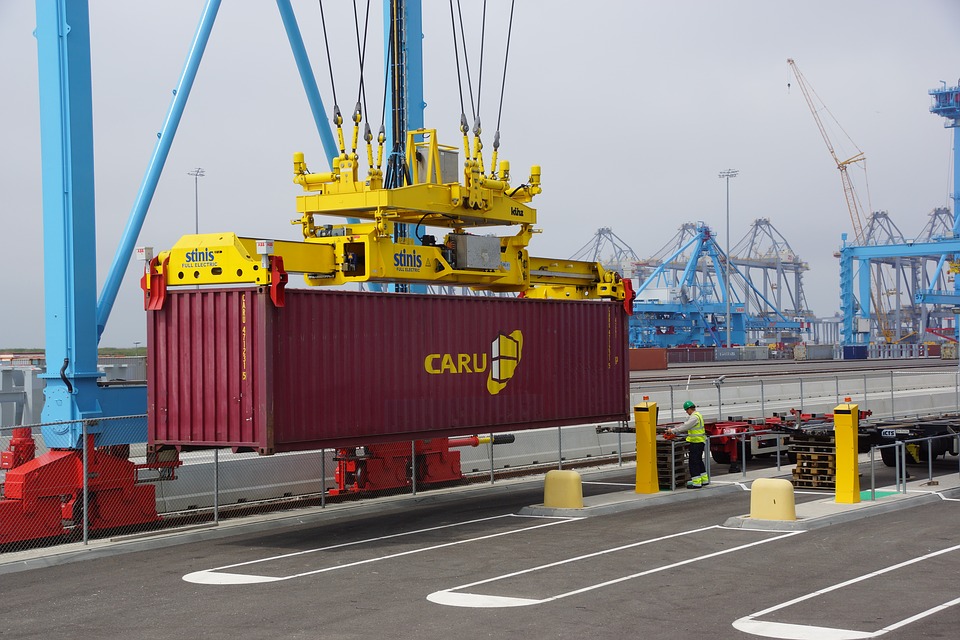
Rotterdam has the biggest port in Europe, so if you work in trade, this city is the perfect place. There are a few major energy providers in Rotterdam, so you’re in luck if you work for that industry.
In short, if you’re looking for work in any sort of industrial and logistical environment, then Rotterdam is the place. There are also other jobs such as catering, customer service, and secretarial work.
Moving to Rotterdam for work. Image: HesselVisser/Pixabay
Things to do in Rotterdam
Rotterdam, being the second-largest city in the Netherlands, has plenty going for it and so much to do:
Rotterdam Centraal Station — An architect lovers dream. It’s modern, it’s impressive, and it’s a must-see if you’re in Rotterdam (not like you could miss it if you’re living here and commuting)
The Cube Houses — Literal houses shaped like cubes — what’s there not to see and love!?
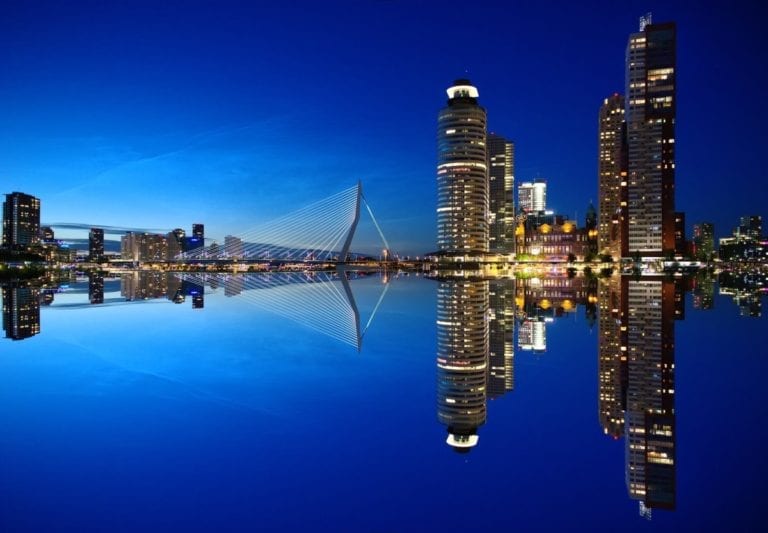
The Erasmus Bridge — The pride of Rotterdam, this bridge, also known as ‘The Swan’, dominates the skyline in Rotterdam.
Markthal — This modern food market in Rotterdam is the perfect place to be if you like architecture and food. The artwork on the ceiling is so cool!
Euromast — The Euromast is a 185-metre high building in Rotterdam, and it gives you some of the best views of the city (360 degrees of it, to be precise)
Buying a bike, or getting your public transport in order
The public transportation system in the Netherlands is easy to navigate, and this is especially true in Rotterdam. Throughout Rotterdam, you can navigate around the city in many different ways: on foot, by bicycle, by car, by metro, by bus, by boat and by using the tram.
I’ll give you a brief outline of all of these different forms of transport in Rotterdam:
On foot
Rotterdam is a huge city, so going around on foot is not recommended if you’re looking to go from one side to the other.
However, especially if you’re near the centre, it’s easy to get around on foot. Rotterdam is modern, with large roads and plenty of space for pedestrians to walk (it’s not like the main streets of Amsterdam, for example!), you won’t be queuing here.
By bicycle
Getting around Rotterdam by bicycle is one of the best ways to go. Cycling in the Netherlands is just part of the culture, and it’s something that you should get used to once you arrive.
Buying a bike is easy and inexpensive. As I said before, Rotterdam is modern, so the roads, bike paths and pedestrian sidewalks are all in great condition with a lot of space — so no worries about cycling through narrow, extremely busy and cobbled streets.
By car
The Netherlands is trying to resist an influx of cars because, frankly, the country isn’t big enough. Congestion in Rotterdam is pretty bad — not because it’s busy, but mainly because the roads just aren’t designed for lots of cars, so you end up sitting at red traffic lights constantly.
Moving to Rotterdam and taking your car? Image: Neufal 54/Pixabay
By metro
The metro in Rotterdam is a lot more modern than many of us are used to in other cities in the world. The metro is also incredibly easy to use (once you see the madness of the London underground, Rotterdam’s looks basic as hell).
The rule of thumb is, the shorter the journey, the more it costs in general. For example, travelling for three stops will hardly differ from travelling for just one. This is because there is a standard fare price that the journey’s start with.
When catching the metro, get yourself an OV Chipcard — this will save you a fortune in the long run as you cannot buy tickets for individual journeys (you can only buy a 2-hour or a day ticket).
Travelling through Rotterdam via bus is fairly easy. In general, buses are only really used at night (once the metro has stopped) and get to places where the metro doesn’t go. Once you get off the metro and straight onto the bus, your journey price continues, so it ends up being pretty inexpensive overall.
By boat
You can catch a boat around Rotterdam for leisure and commute. You can catch the Spido, which will take you on tour around the Rotterdam harbour, a classic in Rotterdam.
To commute or for fun, you can catch one of Rotterdam’s water taxis that will talk you up and down Rotterdam across the Maas river.
You can also take a Water Bus, a bus that drives on the road and can float like a boat in the water. Honestly, it’s one of the weirdest things seeing a large yellow bus floating past.
By tram
Trams also operate in Rotterdam, which is another good way to get around the city. The trams only tend to be around the middle region of Rotterdam and are a great way to get between neighbourhoods within the town. It’s also much faster than going by car or bus because they don’t have to sit in traffic.
Rotterdam is a great place to live if you’re an international or just a Dutchie looking for city life. It’s easy to navigate around, there are lots to do, and it’s just a vibrant and up-and-coming city.
Why are you thinking of moving to Rotterdam? Or have you just moved? Let us know your thoughts on Rotterdam in the comments!
Feature Image: 3093594/Pixabay Editor’s Note: This article was originally published in April 2019 and was updated in December 2021 for your reading pleasure.
Students of Leiden University did not think they would be dealing with an Orwellian reality, but protests from the last few days say otherwise.
Leiden University installed nearly 400 smart cameras in classrooms and lecture halls during the lockdown in 2020 without telling students and staff, Omroep West reports.
I spy with my little eye 👁
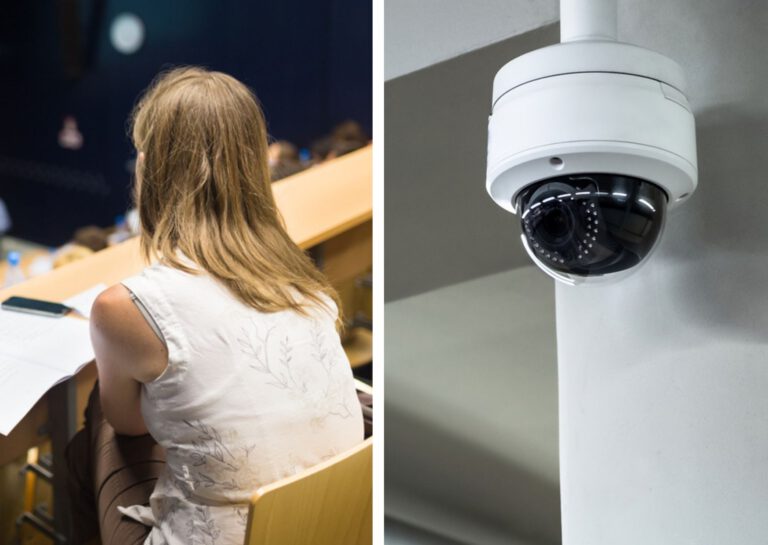
You may be thinking, what’s so bad about them? These cameras were installed to count students in lecture halls but can do much more, including recognising students by gender and whether they’re wearing a mask or not.
As you can imagine, this did not go down well with students and staff, sparking protests in Leiden and the Wijnhaven campus in The Hague.
The board of Leiden University has since temporarily turned off the cameras, but students are suspicious of what “temporary” means.
Fears of surveillance 😟
Despite the reassurances that the cameras are safe and pose no privacy or security threats, students are concerned that the university will reactivate the cameras once unrest has subsided.
Given what these cameras can do, students are more than dissatisfied that the university hasn’t been transparent about their instalment. What’s more, it seems the institution never intended to be — at least, not until students found out about them.
After last week's protest in Leiden, this afternoon there was also an action in the Hague part of Leiden University against the installation of 371 cameras.
To add to this unrest, cameras are only the tip of the iceberg. Students feel as though their input is hardly taken into account by the university council. For example, students have been pointing to a deterioration in teaching quality, out-of-date facilities, and the controversial disbandment of a sexual harassment support group.
Professor of privacy at Nijmegen University, Dr Bart Jacobs, has advised the removal of the cameras — the cameras have created a precedent of mistrust and unequal power relations among students and the board.
An investigation into the safety of the cameras has been opened and Leiden University intends to keep the cameras off until the results of the investigation emerge. But until then, the cameras may be here to stay.
What do you think about using smart cameras in universities? Tell us your thoughts below!👇
Ever feel like somebody’s watching you? 👀A vulnerability has been found in the anti-cheating software Proctorio — which exposed tens of thousands of students in the Netherlands to hacks.
The software is used by universities and colleges to identify cheating, via webcam and microphone, during at-home exams. However, through the leak hackers could peer into students’ webcams and access their online accounts, RTL Nieuws reports.
Ethical hackers to the rescue
The hack was discovered by ethical hackers from Computest who examined the software and found the leak. They found that malicious hackers could also make secret recordings through the person’s webcam and even access payment accounts. 😱
The leak was reported to Proctorio on June 18 and it was fixed a week later. However, while higher education students in the Netherlands have been vulnerable to hacks for months, Proctorio has not disclosed whether any hacks occurred.
Popular among many institutions
Proctorio is popular with many Dutch universities and colleges including the UvA, Vrije Universiteit Amsterdam (VU Amsterdam), Erasmus University Rotterdam (EUR), Tilburg University, and more.
Students from multiple universities, such as the University of Amsterdam (UvA) and Leiden University, have protested the use of these types of proctoring software because they believe that it violates their privacy.
The UvA student council even filed a case with the university for the use of the software, but the judge ruled that UvA should continue to use it. Yikes.. 😐
What do you think about anti-cheating software? Tell us your thoughts in the comments below! 👇🏼
With only ten days to go until we should all be stuffing ourselves full of sugar and alcohol under the haze of Christmas tree lights, many of us are wondering whether we will have the luxury of doing this in the company of our families this year.
And tonight, Rutte and De Jonge have answered that question — yes. But under strict conditions.
To begin, Rutte explained that yep, it’s no surprise but the current measures will be extended — and this time, until January 14, 2022.
Whilst Dutch coronavirus infections may be decreasing, he explained that with the Omicron variant spreading across the country, and healthcare barely holding on, the cabinet has decided to be cautious this Christmas.
So, what will Christmas in the Netherlands look like this year?
First, the good news
We thought we’d get things started with the good news this time round. So what do we have to feel somewhat happy about?
Schools wil be closing early for the Christmas holidays
Well, it’s good news for the kids at least. Schools and afterschool care in the Netherlands will be closing for early Christmas holidays this year.
Schools will close from Monday, December 20, however, they may also close on Tuesday so that they have more time to organise emergency care for vulnerable children and children whose parents have vital jobs. They will open again on January 10, 2022.
However, parents with young children can breathe a sigh of relief, daycare will remain open. Afterschool care will open once again during the period of the school Christmas holidays.
For those who will be keeping the kids at home, Rutte advises that they avoid playdates if they plan on seeing their grandparents this Christmas. 👵🏻
Coronavirus infections are going down
This week, the Netherlands marked a notable drop in coronavirus infections — meaning we’ve finally summited the peak and are now on the decline. However, it’s not smooth sailing just yet. The Omnicron variant is proving to be more infectious and this has health experts worried.
The Netherlands is expanding its booster campaign
Yesterday, Outgoing Minister for Health, Hugo de Jonge, announced that the Netherlands will be ramping up its booster vaccine campaign. He claimed that they want to enable everyone to receive one by mid-March.
However, tonight, the foot is on the accelerator again. Now, De Jonge expects that by the second week in January, those over the age of 18 will be able to book a booster appointment. They must have received their second dose more than three months previous.
With this strategy, the hope is that everyone who wants a booster in the Netherlands will have received it by February. 💪
The cabinet is looking towards a long-term strategy
It may come as a shock for some, but the cabinet is indeed self-aware. Rutte points out that, yes confidence in the Dutch coronavirus policy is lower than ever. However, the cabinet will now be turning its attention towards long-term policy.
Now, the bad news
Ok — checks our Christmas sack — that’s all we have in good news folks. Now it’s time to talk about some of the measures that’ll be following us around the festivities this year.
Extended evening lockdown
The first runny-nosed, sticky-fingered cretin that will be tugging on our sleeve for the next few weeks is the evening lockdown. Shops, restaurants and all other non-essential establishments must continue to close after 5 PM, with other essential businesses closing at 8 PM.
The evening lockdown will remain in place not just throughout the Christmas celebrations but also through to New Year’s Eve and right into 2022.
Celebrate with a limited number of family members
It looks like this year’s Christmas celebrations will also consist of shouting at your mom’s 10-year-old iPad in the hopes that your elderly relatives can perhaps decipher one word of what you’re saying.
The advice to only receive a maximum of four guests in your household remains with Rutte adding that everyone should self-test, wash their hands and keep their distance when visiting other households. He also points to grandparents, saying that younger family members have to keep their safety in mind.
However, this is just the Dutch government’s advice at the moment and not a hard rule, meaning you will not be penalised for having more than four guests.
While these certainly aren’t the Christmas celebrations we had hoped to have as we enter into 2022 — at least the chances of one particularly sticky, annoying, and lingering virus attending will be significantly reduced. ❤️
Follow DutchReview on Facebook for the latest coronavirus news and updates.