Home Blog Page 464

Bike stores or coffee shops? What counts as essential in the Netherlands

A hard lockdown has started once again in the Netherlands. 😭 Among other things, non-essential stores must close their doors, and essential stores can only open from 5 AM to 8 PM. But what counts as an essential store this time around?

Some stores have remained essential throughout the pandemic, like pharmacies and supermarkets which carry essential products (who remembers the hamsteren (hoarding) of pasta and toilet paper at the start of the pandemic?). 

What is “essential” during the Dutch lockdown? 

According to the Dutch government, opticians, hearing care professionals, home care stores, and pet stores are considered “essential” so those with eye checks and pet check-ups can still make those appointments. 👀 

Further, gas stations, pharmacies, and shops at the airport will also remain open without any specific closing times, reports NU.nl. 

And there are places with essential services, places that have important jobs to do for other people like town halls, libraries, veterinarians, funeral supplies stores, dry cleaners, car rental companies, and service points for post and parcels. 

Weirdly enough, bicycle repairs are open, but the shops themselves are closed (a bit unexpected for a country with more bikes than people). 🤔

An exception for… Christmas trees? 

Finally, shops that only sell Christmas trees at this time of year will stay open until 5 PM instead of 8 AM — so for any of those who procrastinated on their Christmas decorating, you’ll still get your chance to set up. 🎄

What do you think of what the Netherlands considers “essential stores”? Tell us your thoughts in the comments below.👇

Feature Image: Kristaps Grundsteins/Unsplash

Dutch children with underlying health conditions receive their first jab invite

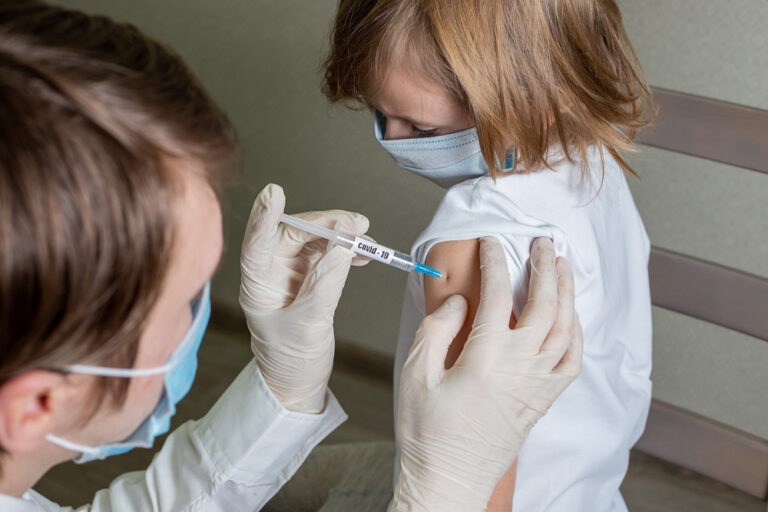
Young children with severe medical risks received invites from their paediatricians to get their first coronavirus jab at a GGD location starting today.

Kinderen aged five to 11 with acute medical conditions such as severe asthma, congenital heart defect, or Down syndrome are the first to be invited to receive their vaccine, reports RTL Niewus.

The total number of children in this group to be covered by vaccines administrated by the Municipal Health Service (GGD) is estimated to be around 40,000, according to the NOS.

Very few children in this age group become seriously sick from coronavirus. However, “children who do end up in ICUs with coronavirus are children with underlying conditions,” says paediatric immunologist Emmeline Buddingh. “Vaccination therefore mainly helps these children,” she adds.

Child-size dosage

This group was cleared to receive the coronavirus vaccine from Pfizer and BioNTech in a child-sized modified dose.

The children’s injections contain 10 micrograms compared to the regular 30 micrograms received by adults. The first jab will be followed by a second one at least four weeks later.

If all goes as planned by the Dutch government, by January, the rest of the children in the Netherlands (aged five to 11) outside this at-risk group will qualify to receive the coronavirus vaccine as well.

Follow DutchReview on Facebook and Instagram for the latest coronavirus vaccination news from the Netherlands! 💉

Feature Image: galinasharapova/Depositphotos

Press conference: the Netherlands is officially going into a hard lockdown

It’s official, five days before Christmas, the Dutch cabinet has decided that the Netherlands needs to go into a hard lockdown. Why? One word: Omicron.

On Friday, the Dutch Outbreak Management Team (OMT) made it clear that they were worried about the rapid spread of the new coronavirus variant. As a result, the cabinet held an emergency meeting at the Catshuis this morning.

READ MORE | The Netherlands may be about to go into a hard lockdown

The OMT advised the government to adopt a number of strict measures which would ultimately bring the Netherlands into a hard (actual) lockdown for the holiday season — and the cabinet has listened.

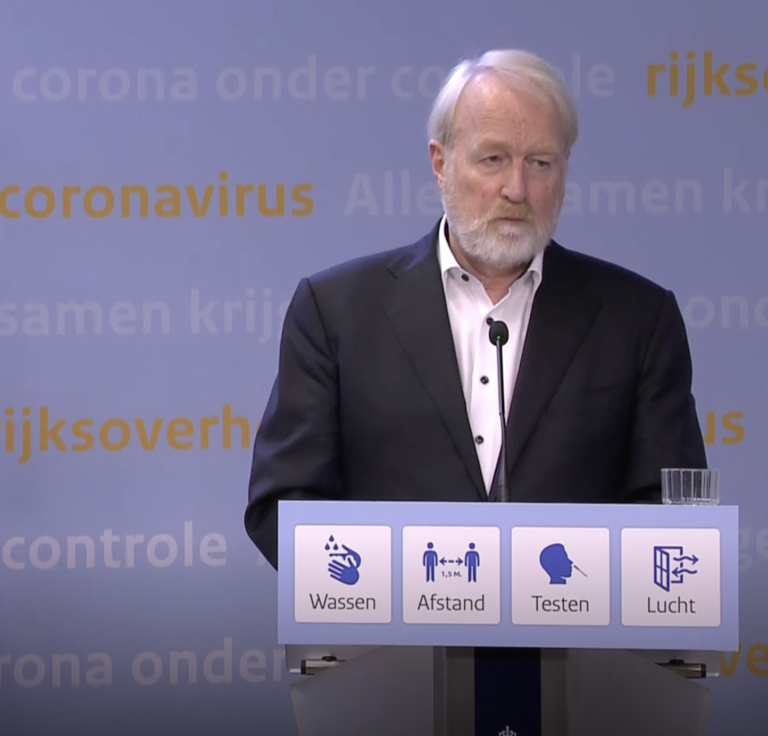
At tonight’s press conference, Prime Minister Mark Rutte and Minister for Health, Hugo de Jonge were not alone. This time, standing with them was the Head of Infectious Disease and Control at RIVM, Jaap van Dissel.

So, what’s our Christmas and New Year going to look like? As Rutte says, “put simply: as of tomorrow, the Netherlands will go once again into lockdown.”👇

Everything considered non-essential will close

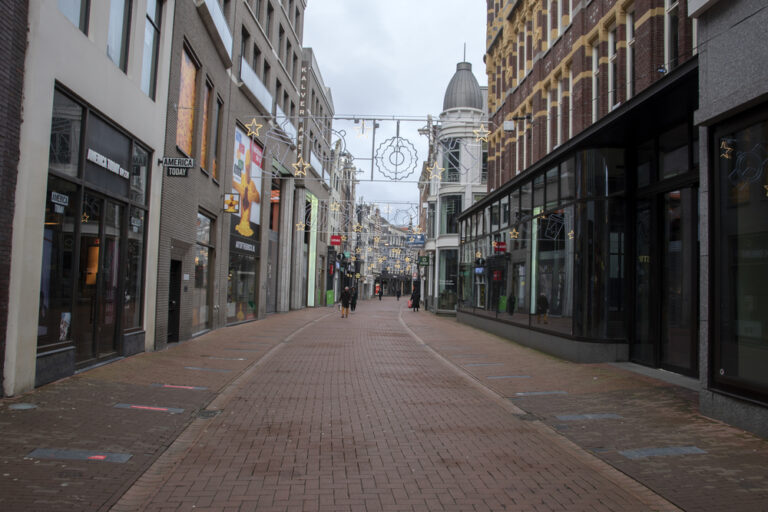
It looks like there will be no going out for dinner with your family, or hitting the shops for a pre/post-Christmas shopping spree. Restaurants, cafés, shops, theatres, museums, and all other establishments that are considered ‘non-essential’ will shut their doors.

However, while the doors may be shut, pickup will still be available at shops and in the catering industry.

Only essential establishments such as pharmacies and supermarkets will be allowed to remain open. They must close at 8 PM.

School’s out

The entertainment and cultural industries will not be the only sectors to shut their doors, however. While it was announced earlier this week that primary schools will be giving the kiddies some early Christmas holidays and finishing this Monday, school is now out for all levels of education.

This means that those in secondary school and third-level institutions (yep, that’s you uni students) will also be asked not to return (physically) to the classroom this week. On January 3, the cabinet will meet again to decide on whether schools should reopen on January 10.

A maximum of two visitors

The number of visitors allowed in your home per day will be reduced from four to two. However, there will be an exception on Christmas day, then, you may have a maximum of four guests inside.

This is only an exception on Christmas day though, so if you were hoping to have a few guests round on New Year’s Eve, you need to start cutting names.

This restriction will also apply to the outdoors. Now, a maximum ‘group’ of two people will be allowed outside (if you can even call it a group.) This does not apply if you are all from one household.

Bye bye, gyms 👋

If you were hoping to hit the gym as part of your New Year’s resolution, think again. All indoor sports establishments will close, except for swimming lessons. For adults, a maximum of two people may exercise outdoors between 5 AM and 5 PM. Children may play as part of teams outside.

Travellers from outside the EU/Schengen area must test before arrival

Speaking with a journalist, De Jonge dropped another bomb, saying that anyone travelling from a country outside the EU/Schengen area who wishes to travel to the Netherlands, will now have to test.

However, he does not elaborate on this. 😤

When does this all come into effect?

If you weren’t certain of just how worried the Dutch government is about the Omicron variant — perhaps this will bring it home. All of the above measures will go into effect as of tomorrow morning at 5 AM.

Yep, not much notice has been given — and this has been done on purpose. The worry is that, if given time, there will be a rush on shops, restaurants, and other establishments, ultimately leading to more cases of Omicron.

Preventing another wave

Why is this all happening now? While the Netherlands may be seeing a slight drop in coronavirus cases, the OMT is worried by the speed at which the Omicron variant is spreading through cities such as Amsterdam.

Van Dissel was present to explain why this lockdown is necessary. He began by explaining, that the Omicron variant is proving to be more infectious than the Delta variant and also more powerful against vaccines. “The immune system cannot recognise the Omicron variant,” he explained.

As a result, he explained that the Netherlands needs to act now in order to prevent a fifth wave by New Year’s.

He gives us some hope, however, explaining that a booster shot of the coronavirus vaccine does help battle against the bad symptoms brought about by the variant.

“We know that booster vaccinations refresh the immune system. This means that protection against omikron increases after the booster, not only against infection but also against serious disease.”

Booster jab invites for everyone by January 7

Yet again, De Jonge has brought forward the date by which everyone over the age of 18 will be invited to receive a booster jab. Now, as of January 7, everyone should be able to book themselves in for an appointment.

De Jonge asks that everyone books online instead of calling so as to help ease the pressure on the GGD. The aim is that by the second half of January, “we will have finished the booster-offensive.”

How do you feel about the hard lockdown? Tell us your thoughts in the comments below!

Feature Image: Press conference/Screenshot

The Netherlands may be about to go into a hard lockdown

Tonight at 7 PM, the outgoing Dutch cabinet will announce new coronavirus measures. It is expected that the Netherlands will go into a “hard lockdown.”

Prime Minister Rutte and Minister of Health Hugo de Jone will be in attendance, as usual. However, the Head of Infectious Disease and Control at RIVM, Jaap van Dissel, will also be present.

An emergency meeting is taking place this afternoon to discuss the measures before tonight’s press conference, reports the NOS.

Outbreak Management Team advises hard lockdown

The OMT has advised the cabinet to implement strict lockdown measures to combat the spread of the Omicron variant.

So what does this mean? This means that there is a possibility that all non-essential shops such as gyms, restaurants, cafes, museums, cinemas, theatres should close. Only essential shops like the supermarket should remain open.

READ MORE | The Netherlands expects booster shots for everyone by Mid-March

The experts also say that schools and other educational institutions should also close down.

Omicron a serious concern

The Omicron variant has shown to be highly infectious — two to three times more so than the Delta variant. Amsterdam is already seeing a spike in infections due to the new variant.


We’ll just have to wait and see what the cabinet says tonight, but we should probably prepare ourselves for another winter at home. 😞🏠

Follow DutchReview on Facebook for the latest coronavirus news and updates.

Feature Image: PhotographerFromAmsterdam/Depositphotos

An industry in flux: licensed Dutch brothels and sex work on the decline

After 21 years of legalization, the sex work industry in the Netherlands is on thin ice – the number of registered sex businesses has declined by 80%. Are municipalities to blame or have the fruits of legislation been underwhelming at large?

In 2000, the year the brothel ban was abolished, there were 1,350 registered sex businesses — today, just 250 remain.

As part of the legalization process, authority over the sex work industry was delegated to individual municipalities, with the hopes that licensing and taxation would “clean up” the sex industry.

However, many have been underwhelmed with the results of legalizing the industry, as concerns about the involvement of human trafficking and organized crime remain, reports the NOS.  

Municipal red tape 

Municipalities across the Netherlands have increasingly proposed policies that limit the activities of and even further stigmatize the industry. 

For instance, some municipalities only allow such businesses to obtain a permit for three to five years, without any guarantee that this will be renewed. A risk most business owners find far too high. 

Changes to the Red Light District

In addition, window prostitution, a prefered option for many sex workers for the safety, visibility, and autonomy it provides, is being cracked down on.

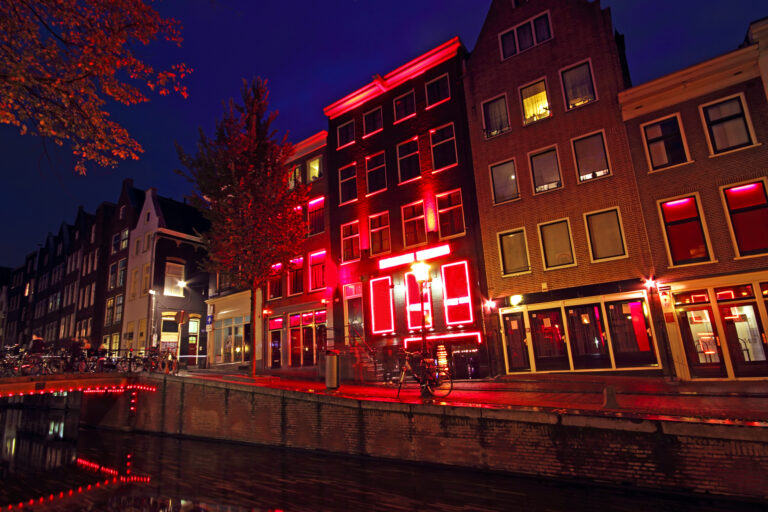
Today, window prostitution is only legal in 10 of the Netherlands’ 12 municipalities and most recently, Amsterdam’s mayor, Femke Halsema, proposed a plan to relocate de Wallen’s Red Light District to the suburbs. 

The city council announced that they’ll begin closing Amsterdam’s famous brothel windows as part of its plan for a “tourism reset”, which also holds the potential for a ban on tourists buying cannabis from the city’s cafes. This, despite the fact that 93% of sex workers in de Wallen are against the move.

Sex workers in the shadows 

All the while, sex workers have faced the most severe restrictions of all contact occupations amidst the pandemic, in addition to being excluded from most worker compensation schemes. But excluding sex workers has only served to increase the risk of falling victim to human trafficking and precariousness in the workplace. Since the start of the pandemic reports of illegal prostitution doubled according to Report Crime Anonymous. 

As we’ve seen countless times through attempted closures due to coronavirus or red tape, in the absence of legal sites of sex work, individuals facing economic hardship are forced to take greater personal risks. 

What’s your opinion on the decline of the sex work industry? Tell us in the comments below.

Feature Image: nilaya/Depositphotos

Fossils: the North Sea’s gift to the Netherlands

Nederland, a land underneath sea level with outstanding views and rich history on the North sea that left behind some treasures in the form of fossils.

Before we embark on this journey, an important question comes to mind. What is a fossil? And what’s so special about them, aren’t they like ‘rocks’? Isn’t there usually a cartoonish character dusting bones in a distant desert pit in khaki shorts, which then turns out to be (gasp) a fossil. 🦴

Well, it’s much more than that. By definition, fossils are the geologically altered remains of living organisms and their behaviour. Through fossils, not only do we get to know what creatures looked like back in the day, but the remains could also tell us how and why they behaved in a certain way.


And you know what comes with being a country that is partially reclaimed from the sea? Fossils. Lot’s of them actually!

Did you know: sourced and real fossils are not limited to museums and exhibits anymore and can be obtained by hobbyists and aspiring adventurers from trusted networks to keep around as collectable items or even as nifty gifts.

Doggerland: the before times land

Let’s take a step back in history to when glaciers and ice filled the area where the North Sea is today in a vast tundra that connected Britain and Europe, also known as Doggerland.

That ice-age era left the Netherlands fossil-rich. It was a natural fridge, if you may, where “lots of water from the sea became great ice sheets and the land between the Netherlands and the UK was joined up, so megafauna could just walk around.”

Creatures like mammoths, bison, wolves, and ancient deer migrated back and forth across this icy route — and when the creatures breathed their last breath the conditions were perfect intact for preserving their remains.

Great woolly discoveries

We can only count so many, but over the years, the North Sea area brought many revelations, discoveries, and treasures to the surface in the Netherlands.

In 2014, Dutch fossil hunters in Rotterdam collected and assembled the skull and (almost) a full skeleton of a 40,000 years mammoth that once roamed the icy tundra.

Another team of Dutch-German scientists led by Prof. Dr Jelle W.F. Reumer of the University of Utrecht was also able to locate and study several fossil teeth from the North Sea that are 126,000 to 115,000 years old.  They are believed to have originated from a creature that carries a striking resemblance to modern-day macaques, a.k.a, old-world monkeys.

Perhaps the greatest discovery so far happened earlier this year off the coast of Zeeland, where an amateur palaeontologist discovered a fragment of a North Sea fossil that once belonged to a 50,000 to 70,000 years old Neanderthal.

The next time you’re floating in the North Sea, or chilling in Scheveningen, think of all the creatures that once lived underneath your feet and keep an eye out for a fossil as you build your next sandcastle.

Follow DutchReview on Facebook and Instagram for more North Sea discoveries from the Netherlands! ⚓

Feature Image: wrangel/Depositphotos

Bye-bye sugar addiction: price of soft drinks to rise in the Netherlands

You’ll soon notice soft drinks and juices becoming more expensive in the Dutch market — that’s all part of the new cabinet’s healthy food vision.

New year, new diet with the new cabinet. The People’s Party for Freedom (VVD), Democrats 66 (D66), Christian Democratic Appeal (CDA), and Christian Union (CU) all made “binding agreements with the industry about healthier foods” according to RTL Nieuws.

In an effort to combat obesity in the Netherlands by reducing the percentage from 50% overweight Dutch individuals to 38% by 2040 — the government wants to encourage healthier food choices. 🍎

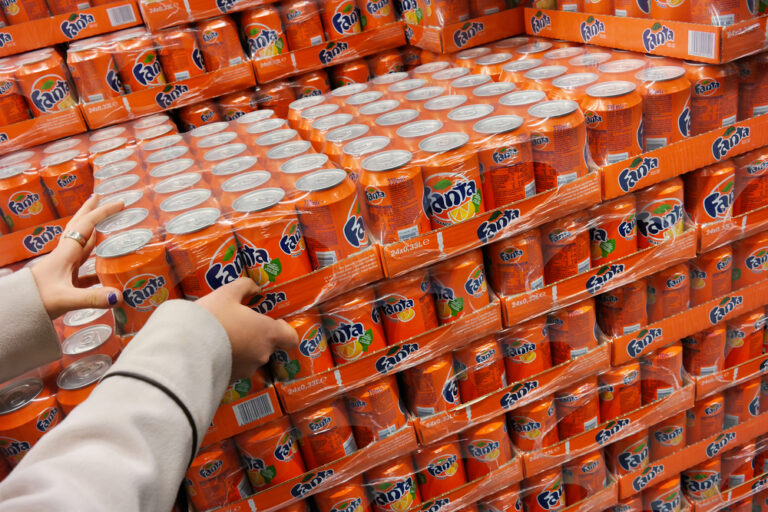
How would their plan exactly work? While the fine details still have to be worked out, the plan will mainly consist of increasing the tax on sugary drinks such as soft drinks and juices, along with reducing VAT on fruits and vegetables to 0%. Sweet deal!

Applause

The sugar tax news was met with overwhelming applause as the topic of weight loss has become more urgent in light of the coronavirus crisis given that many health problems occur in people who are overweight — not to mention the expenses that go along with an unhealthy lifestyle.

“That combination of making sugary products such as soft drinks more expensive, and making healthy food cheaper, is the best. The greater the discrepancy, the better,” says nutrition and behaviour expert Liesbeth Velema.

READ MORE | ID, please — age limit being demanded for Dutch energy drinks

Consumer organization Foodwatch is happy that the government is finally taking steps in the right direction. “The shelves are full of unhealthy soft drinks, and healthy food is often more expensive than unhealthy food,” says Foodwatch.

Tried and true

Although we’ll personally be missing our occasional can of diet soda, a form of the sugar tax is already implemented in many countries and has shown signs of success. This is the case in the United Kingdom, France, Norway, Mexico, South Africa, Chile, and the Philippines.

According to a National Institute for Public Health and the Environment (RIVM) report, the sale of taxed soft drinks is declining as healthier alternatives are introduced in UK’s and Norway’s markets — some manufacturers even adjusted their recipes as a result of such measures.

What do you think of the Netherlands introducing a sugar tax on soft drinks? Tell us in the comments below!

Feature Image: defotoberg/Depositphotos

KLM fined for not refunding cancelled tickets

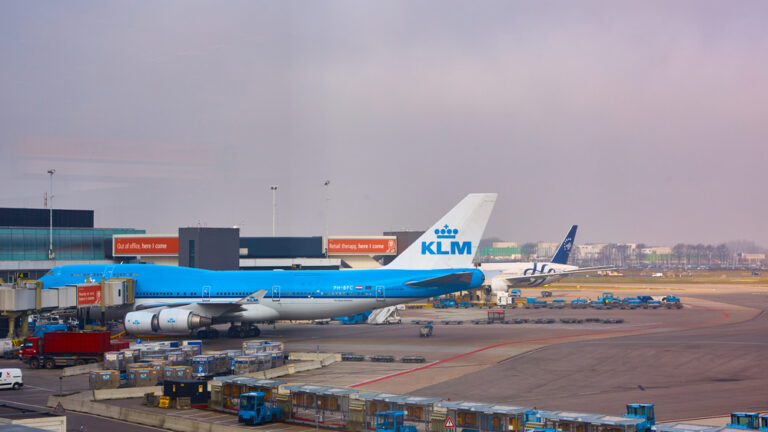
The Dutch Human Environment and Transport Inspectorate (ILT) gave KLM a proper slap on the wrist yesterday as it decided to fine the royal airline for non-refunds of cancelled tickets during the corona crisis.

Over the past year, the ILT scrutinised the practices of 14 different airlines amongst which not only KLM but also Cathay Pacific, Singapore Airlines, and Air Arabia Maroc are now in for a fine. Exactly how much it’ll cost the airlines is not yet known, reports the NOS.

Violation of passenger rights

As many people who’ve had to cancel a long-awaited trip during the pandemic may recognise, the investigation of airlines treatment of passenger rights revealed that “The refund of tickets purchased from a travel broker or online platform is not going well.”

Amongst others, the inspectorate found that “passengers actually never receive the ticket money back within seven days” — excuse us?

To make matters worse, passengers aren’t always offered the choice of getting their money back or receiving a voucher for another flight.

Different treatment if you book through a travel agent

The inspectorate also found that passengers who book via third parties are worse off in the case of a cancelled trip than those who get their ticket directly with the airline.

Although the airline is ultimately responsible for the direct reimbursement, nine out of 14 airlines refer passengers back to the travel agent — leaving them to deal with an exhausting amount of phone calls and confusion. The ILT has now reminded airlines of this fact. 🙃

KLM response

According to the NOS, the CEO of KLM, Pieter Elbers, says he’ll look carefully at the report by the ILT and talk to them. Elbers emphasises that the past two years have been hard on KLM but that they’ve always aimed to treat their customers as best as possible.

What’s your experience with getting your money back for a cancelled flight? Tell us in the comments below!

Feature Image: sarymsakov/Depositphotos

Dreaming of a white Christmas: forecasts predict possible snowfall at last

Fret not, weather forecasts show signs of snowfall in the Netherlands just before the holidays hit! From Tuesday onwards, temperatures are expected to drop and remain around freezing for a number of days. ❄️

Does this mean that we won’t have to wait until February this year for snow? Dutch meteorologist Marc de Jong of Buienradar tells RTL Nieuws that, “There may be a few snow showers on Christmas morning.” 

But before you start jumping with excitement and taking your ice skates out of the closet, we have some slightly disappointing news. 

Let it snow?

De Jong warns that we shouldn’t be too hopeful. As the current forecast predicts, there won’t be much precipitation in the coming days — this means no rain (hoerra!) but also no snow. 😔

“But if something falls at Christmas, it can certainly be snow showers,” De Jong added.

After all, a proper snowcovered holiday season would require snow to stick in De Bilt — a municipality in the province of Utrecht where the Royal Dutch Meteorological Institute (KNMI) is located — for at least two days. An occurrence de Jong says, “has only happened eight times since 1901.”

Still too warm for ice-sakting

As it stands, it’s still too warm for natural ice skating as well. Bummer! We may just have to wait for an icy spring to whip out our dusty skates. 😪

But…If we do get the chance make sure you know all the ins and outs of natural ice skating in the Netherlands! 

What do you think about the possibility of a white Christmas? Tell us your thoughts in the comments!

Feature Image: FamVeldman/Depositphotos

From minimum wage to childcare: a roundup of Rutte IV’s proposal

It’s official, the newly formed Dutch coalition has laid out their plans in a 50-page document, tackling everything from climate change and the housing shortage, to a much-needed increase to the minimum wage — and more! 

This “recovery cabinet” is one of reconciliation and public spending, brandishing the motto: “Looking after each other and looking ahead to the future,” the NOS reports. 

While the leaks that broke earlier this week appear to have been right on the money, the proposal is even more generous than anticipated. Looks like the wait was well worth it! 

Getting down to the specifics:

The rather frail four-party coalition of Rutte’s VVD, D66 (Democrats 66), CDA (Christian Democratic Appeal) and ChristenUnie (Christian Union) have indicated that their proposal will amount to €13 billion in spending, and take up until at least 2023 to be implemented.

READ MORE |3 big takeaways from the new Dutch coalition agreement 

Let’s talk about some of the highlights of Rutte IV’s plan. 

Climate change

Climate change has been at the forefront of the negotiations and the new government intends to create a climate fund of €35 billion within the next few years — better late than never! 

This plan has set ambitious targets for the government to combat global warming by cutting CO2 emissions by 55%, with the aim of reaching climate net neutrality by no later than 2050. To facilitate this process, a Minister of Climate and Energy will be appointed for the first time. 🤗

And that’s not the only new position that will be created. The new government also strives to tackle emissions from the agricultural sector, particularly the issue of nitrogen which has long been under public debate. 

A National Program for Rural Areas will be created in order to aid the transition to “circular agriculture”. This means that another €25 billion will be made available until 2035. 

According to the plan, gas extraction in Groningen will finally be phased out, but operations in the North Sea are still under consideration. Additionally, the plan details various airline and motor vehicle taxes to be rolled out in the near future.

Nuclear energy

Going hand in hand with climate policy is nuclear energy. Nuclear energy has reemerged as means of reaching climate neutrality across Europe. So how will the Dutch cabinet approach this issue?  

The answer is simple: power plants. The cabinet is already making plans for the construction of two new nuclear power plants, as well as maintaining the existing Borssele plant.

While renewable energies remain costly and somewhat unattainable, many governments are returning to the idea of absolution through nuclear energy. We’d all like to believe that we’ve learned a thing or two since Fukushima & Chernobyl.😳

Taxes

Spelling good news after two years of pandemic malaise, a tax relief of €3 billion will be provided for low and middle incomes brackets, and workers and families. However, the plan includes an overall tax increase of €1.8 billion and a sugar tax?

Yep, a sugar tax. To combat “diseases of affluence”, a tax on sugar will be introduced and existing taxes on sugary drinks and tobacco products will also see an increase. On top of this, the VAT on fruit and vegetables will be reduced to 0%! 🍉🍇

Education

The education sector is getting fully revamped! The coalition parties have set aside €800 million for primary and secondary education, meaning that primary school teachers will earn considerably more. In addition to reducing class sizes by employing more teachers to better the quality of education.

Wave goodbye to student loans

Higher education is also getting a much-needed makeover! This year headlines circulated after news broke that the average dutch student debt reached €15,000, reaching a combined €24.4 billion. 

This has become a real concern for many dutch students whose siblings studied nearly debt-free just a few years ago and whose university experience is starkly different from their German or Nordic neighbours. 

The new government has guaranteed that the loan system will disappear and the basic grant will return at last, hoera! This will also apply to current students who couldn’t access the basic grant in recent years: “They are given the choice between a discount on their student debt or a study voucher. An extra €1 billion is earmarked for this,” as stated in the agreement.

Housing

The government aims to develop more flexible housing, affordable rental housing, renovation, sustainability and lessen the power of landlords and housing associations. In addition to building up to 100,000 homes per year.

The so-called jubelton will also be thrown out. This allowed parents to donate large amounts of tax-free money to help their children buy their own home — who knew? 

Digitization  

An algorithm supervisor will be appointed to monitor that algorithms are legally checked for transparency, discrimination and arbitrariness, in addition to ensuring that facial recognition is not applied without strict legal control. Watch out Leiden University. 

The coalition also wants to tackle the power of the large tech and platform companies, as the EU (and now even the US government), has been trying to do for years. 

Cultural sector 

The cultural sector will be receiving a much needed structural investment of €170 million, (about the same amount paid for a single Rembrandt 😉) to enable growth, innovation and recovery to the pandemic-stricken industry. 

Healthcare 

In a somewhat controversial move, the forthcoming cabinet will curb healthcare expenditure in the coming years. Specifically, the coalition wants to structurally curb growth by €4.5 billion. 

Some have called this decision an incomprehensible backstab to the healthcare sector. Additionally, there are several proposals to broaden the options for abortion and euthanasia, such as amending the embryo law. 

Minimum wage 

The fairly low Dutch minimum wage will be gradually increased by 7.5%, woohoo! Not to mention unemployment is at its lowest point since 2003, now just 2.7%. 

READ MORE | Salaries in the Netherlands: the ultimate guide to Dutch wages

Childcare 

In a plea to remedy the scandal that continues to plague the new government, childcare allowance for working parents will cover 95% of the cost, with the intent to eventually cover 100%. 

The plan is intended to lessen the burden on lower-income families and decrease bureaucratic red-tape that prevents people from accessing welfare. 


Phew! That’s a lot of information to take in — but the more you know! 

What do you think of the new Dutch government’s plans? Tell us in the comments below!

Feature Image: Ale__Mi/Depositphotos