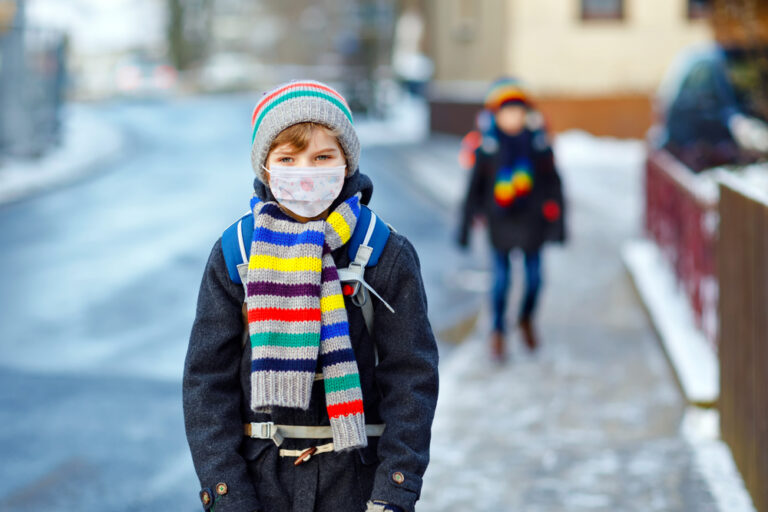
Good news! The Netherlands has turned orange (our colour!) on the European coronavirus map. Orange is the second-lowest warning colour behind green. 🥳
Every Thursday, the European Centre for Disease Prevention and Control (ECDC) publishes a coronavirus map with the number of positive tests per 100,000 people in different European countries.
The map has four colours, from the lowest risk rate to the highest: green, orange, red, and dark-red. The Netherlands has taken a step in the right direction, changing from red to orange — meaning we’re not high-risk anymore!
We may soon have some green provinces
And unlike Kings’ day, the plan isn’t to wear only orange. The ECDC reports that Groningen, Drenthe, and North Brabant are on the edge of being green — which indicates low-risk.
Friesland improving and Limburg struggling
This week, the number of positive tests has decreased by 23%, the largest decrease in the Netherlands.
This is reflected in Friesland where just over 1,000 residents have tested positive for coronavirus in the past two weeks, RTLNieuws reports. This means that there are 159 new cases for every 100,000 Frisians.
However, the southern province of Limburg is not doing as well. In the last two weeks, Limburg has had almost 2,000 positive tests, which amounts to 175 cases per 100,000 people.
The amount of positive cases is also increasing in Gelderland and Zeeland.
What do you think about the Netherlands turning orange? Let us know in the comments below!
Any international who arrives in the Netherlands has experienced the struggle of trying to find housing. It’s a battle we’ve all fought — but if you were on the hunt in the past year, that battle was significantly harder.
Just how much harder? This year, there are 26,500 homes too few, the National Monitor for Student Housing revealed. This number stood at around 22,000 last year, Kences reports.
This means that in just one year, the Netherlands saw its housing shortage increase by 20%. And why? You won’t like the answer.
International students
It seems that too many internationals have decided that studying in the Netherlands is a great idea. While we can’t blame them for that decision, the report does blame international students for this increased housing shortage.
The report spares no feelings, stating that the student housing shortage boils down to an increasing number of students. And where are these extra students coming from? Abroad.
Yep. According to the report, international students are “the main explanation” for this increased pressure on the student housing market.
What does this mean?
Unfortunately, nothing too good. The increase in demand has in turn resulted in an increase in housing prices. In 2021 students now spend 46% of their income on rent, this is an increase of 3% compared to two years ago. “Without the 2021 rent freeze, this effect might have been even greater,” the report claims.
It also means that many Dutch students choose to live with their parents rather than facing the heat of the housing market. This in turn determines where they choose to study.
For those who do choose to brave the student housing crisis, the chance of finding a room in a house is decreasing, with more and more landlords offering studios to students. In the past nine years, the number of studios has doubled.
Why? Because this a financially attractive option for landlords. And while a studio may sound like a glamorous concept, this often leads to increased loneliness for students who are looking to make new friends while studying.
How have you been affected by the student housing crisis in the Netherlands? Tell us about your experience in the comments below!
With almost one million new donors recorded between 2020 and 2021, there’s been a leap in the number of people agreeing to organ donation in the Netherlands, reports the NOS.
As of July 2021, the number of people who agreed to organ donation in the Netherlands showed a 4.8 million increase compared to 2020 — that’s 75% of the Dutch population 18 and older.
This remarkable increase was contradictorily faced with a surge in numbers of people who explicitly do not give permission for organ donation, with a jump from 2.3 million people to 4.3 million between 2020 to 2021.
The reports also indicate that 3.3 million Dutch people did not fill in their own choice — opting for this default choice indicates that they have ‘no objection to organ donation’, whereas 1.5 million Dutch people chose to have relatives decide on the matter.
Laws and territories
In 2020, a new donors law was passed where individuals over 18 years old will be entered on the Dutch Donor Register as having ‘no objection to organ donation’ if they don’t explicitly record their donation choice after receiving a letter and a reminder from the government. ✉
Since the new law was introduced, nearly 11 million adults officially recorded their choice. That’s 75% compared to 49% recorded answers from the previous year.
Notably, individuals between the ages of 20 and 70 gave more consent for organ donation than no consent, whereas, 40% of people between the ages of 18 and 20 did not record an explicit choice through the Dutch Donor Register as of July.
RTL Nieuws published a graph indicating that certain Dutch locations and municipalities show more willingness to donate, where Rozendaal and Oost Gelre residents made up for 46% of the donors, whereas Urk showed the least number of donors.
What do you think of the Dutch organ donors law?Tell us in the comments below!
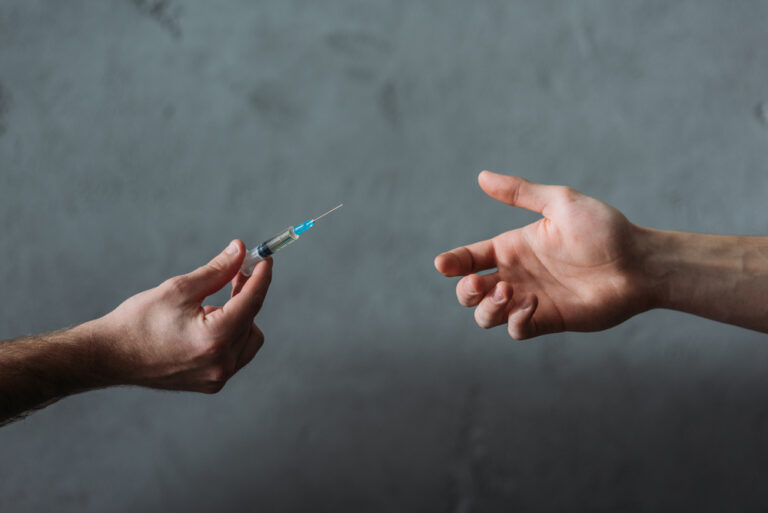
As of this Wednesday, Dutchies who have a serious immune disorder will be invited to receive a third coronavirus shot. The process of booking a jab will be the same as it was for the first two. 💉
For the time being, booster shots will only be administered to Dutch people with serious immune disorders, such as people who’ve had a transplant. According to GGD GHOR Nederland, between 200,000-400,000 Dutchies are currently eligible for a third shot, Nu.nl reports.
These people will receive their invitation by email or through the post. They can also make an appointment over the phone or simply walk into a vaccination site with their invitation in hand.
Will healthy people need a third shot?
For the time being, the Health Council doesn’t consider it necessary for the rest of the population to receive a booster shot. However, this could change if it turns out that protection against Covid-19 offered by the vaccine declines significantly over time.
According to a spokesperson from the GGD GHOR, if the Health Council and politicians think that more residents should be given a booster, the Netherlands will be able to make this happen quickly. The spokesperson told Nu.nl that “Our vaccination locations will remain open. If necessary, we can expand quickly. The basis remains the same.”
An important note is that the vaccine still prevents nine out of ten hospitalisations and deaths in the first six months. A booster shot would primarily prevent new infections.
What are your thoughts on the Netherlands giving booster shots? Tell us in the comments below!
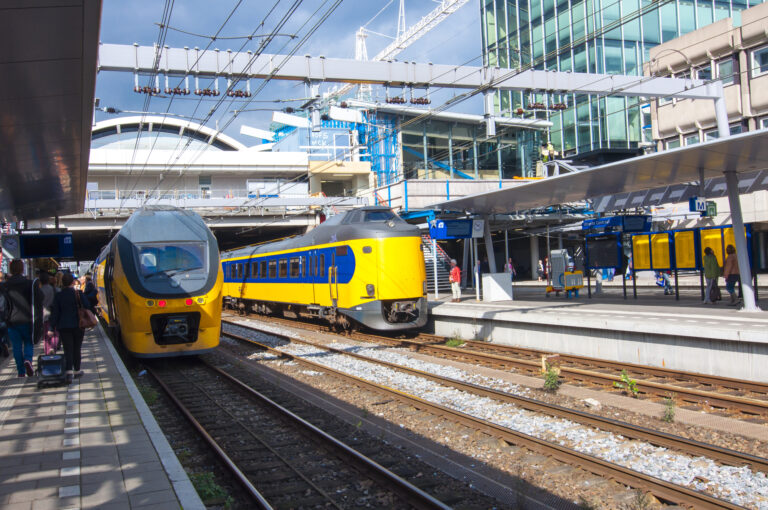
High-speed train companies Thalys and Eurostar move forward with their 2019 merge plans, expected to be complete within two to three years.
Bouncing back from halted merger plans due to the coronavirus pandemic, the French-Belgian railway company Thalys and the London based high-speed train company Eurostar are going forward with submitting a finalized proposal by their shareholders to the works council and trade unions.
So, get your train tickets ready and wave doei from the platform to the Thalys name, 🙋♀️ as both companies will be running under Eurostar with a shared headquarters in Brussels.
This merger announcement is not only seen as a network expansion opportunity but also as a step forward in sustainable travel in facing the increasing challenge of climate change. 🌍
According to NRC reporting, a one-way ticket from Amsterdam to Paris by train produces 3.5 kg of CO2 emissions per passenger whereas a car trip produces roughly 12 times as much CO2, and a plane trip generates nearly 20 times as much.
Hit by crisis
Both railway companies were financially hit by the coronavirus crisis and the resulted travel restrictions — the pandemic truly threw a punch on everyone. 🥊
Back in May 2021, bankruptcy reports were looming for Eurostar in a scenario that was prevented by an emergency package.
Similarly, Thalys had to borrow money to navigate through the crisis, which also affected the company’s decision regarding the merge at the time according to RTL Niews.
What do you think this merger news will carry for travel in the Netherlands? Let us know in the comments below!
Concerns about the Dutch gas stocks for next winter have caused prices to rise yet again — and this time the influx is drastic.
Yesterday morning, the most important gas contract to the Netherlands surpassed the limit of €100 per megawatt-hour for the first time, reports the NOS.
By the end of the day, the contract stood at almost €118 per megawatt-hour which is almost eight times higher than last year.
Where are the price increase felt?
The rapid increase in the price of gas in the Netherlands is mainly affecting the industry.
Due to the high prices, the industry is scaling down production to cut costs. Meanwhile, other companies warn that their products are becoming more expensive as a consequence of higher production costs.
However, it’s not just producers that notice the higher gas prices. Depending on how you’ve set up your utilities, the heightened gas prices might affect your household’s energy bill as well. 😅
Researchers warn of high prices and potential shortage
Following the decision to shut down the Groningen gas fields, the Dutch government has put full trust in the market. 📈
However, researchers warn that there’ll be a “big gap” between the full closure of the gas production in Groningen and the realisation of sufficiently large scale sustainable energy production in the Netherlands. As a consequence, they say the country could become susceptible to extreme gas prices and energy shortages. 😳
While working on a long-term and potential EU solutions to the continuously rising prices, the Dutch government has made half a billion euros available for reducing various energy taxes in the Netherlands.
What do you think of the developments in Dutch gas prices? Tell us in the comments below!
The RIVM has released its weekly coronavirus figures from September 28 to October 5. The number of hospitalisations and deaths have remained stable compared to the previous week.
Over the past week, the RIVM has reported 12,016 new infections in the Netherlands. This is a marginal increase compared to last week’s report of 11,760 infections.
The percentage of positive tests also increased slightly to8.1% compared to 7.5%the week before.
Deaths
The number of patients who have died from coronavirus-related complications has decreased. This week, 29people passed away, compared to 34 people the previous week.
Hospitalisations
The number of hospitalisations increased marginally this week, while admissions to the ICU decreased. The past week saw 189new admissions to the nursing ward and 46 new patients in the ICU. The week before, there were 177 and 59, respectively.
International students struggle to enter clubs and bars with foreign QR codes
Holidaying has got more expensive as PCR tests for travel are no longer free
As of Friday, October 1, holidaying has got that bit more expensive. Over the summer, having a swab stuck up your nose so that you could go on vacation was gratis (free). However, you now have to pay for your PCR tests again — wat jammer!
The Netherlands will be donating 27 million vaccines abroad
The Dutch Minister of Health, Hugo de Jonge, says that their goal this year is to donate as many vaccines abroad (27 million) as have been used in the Netherlands (25 million). The Netherlands’ new motto about donating vaccines is, “Get one, give one.” 🤝
Follow DutchReview on Facebook for the latest news and coronavirus updates.
Let’s face it, moving to a new city is stressful, even if it’s just for a short period of time. Add to that the housing crisis in the Netherlands, trying to find furniture — and getting it up those narrow stairs. But there’s a solution: Homelike’s furnished apartments.
What is Homelike?
Homelike is an online booking platform for furnished apartments. The apartments are available for periods upwards of 30 days — so anywhere from one to six months. They’re ideal for digital nomads, new arrivals, and people who have to travel for work projects because they’re instantly bookable and everything is set up for you.
There are a number of reasons why this is the ideal option for someone who is looking to feel at home as soon as possible. Let’s break them down.
1. Skip the queue and get settled in straight away
The first challenge that any international will face when trying to feel at home in the Netherlands is actually finding a home. Homelike offers a great solution to this.
Homelike’s apartments are instantly bookable — meaning you get to skip the queue and avoid all the stress of finding a place, having to view it, compete with others, and wait to hear back. Only to find out that you didn’t get it. Wat jammer. 😕
Booking with Homelike is easy, quick, and stress-free. You simply select your move in and move out dates, request the apartment, and after the landlord has approved it, you confirm your booking by paying the first month’s rent.
Wait, that’s not all. The platform also has a wide selection of apartments with “free cancellation” up to a certain date. In these turbulent and uncertain times with coronavirus restrictions and last-minute travel changes, this policy is great and will relieve a whole lot of stress.
2. Modern apartments equipped with all of the essential amenities
Homelike apartments are ideal for working from home. Image: Vlada Karpovich/Pexels
Homelike apartments are equipped with all of the amenities you need to live happily and efficiently. With working spaces in each apartment, they’re ideal for working from home — digital nomads, this is for you.
Each apartment has Wifi, which in today’s online world seems more important than ever. But the fact that it’s already installed and that you won’t have to sit on a call for hours (minor exaggeration — may have been a bit traumatised setting up my own Wifi contract) is really something to sing about. 🎉
Do you love cooking and feel at home in the kitchen? The apartments have everything you need to cook up a storm. Baking, frying, and blending — it’s all there.
And don’t even get us started on relaxation. Homelike’s cosy bedrooms will ensure you a restful and restorative night’s sleep. Fancy a bubble bath beforehand? You might just be in luck. 😉
3. Light and bright furnishings and decor that really fit your style
All of Homelike’s apartments are, well… gorgeous! The light and bright furnishings will keep you focused and energized, especially when you’re working from home, and on those darker winter days.
In your downtime, these beautiful spaces are perfect for having family and friends over, or just for taking some much needed you-time. Sit back and relax.
4. Location, location, location
Live in an area that suits your needs. Image: DmitryRukhlenko/Depositphotos
A great location is the icing on the cake, taking Homelike apartments to the next level. Homelike have options to suit everyone, from properties in the buzzing city centres to quieter spots in more residential areas. Whatever you opt for, you’re guaranteed a beautiful blend of Dutch charm, proximity to green space, and interesting things to do.
As of yet, the majority of Homelike’s properties in the Netherlands are located in the four major cities: Amsterdam, Rotterdam, The Hague, and Utrecht — with a handful up north in Groningen. We’re sure this list will expand in the very near future.
5. Registration is possible
As anyone who’s lived in the Netherlands for more than two weeks will know, registering is probably the first and most important step involved in relocating to this beautiful, flat, cheese-filled country.
Homelike also offers apartments in which it is possible to register, making this a great option for new arrivals. Being able to register in your Homelike rental will help you cut the red tape that comes with moving to the Netherlands. You’ll be able to get your bank account, contracts, and phone line sorted without delay so that you can start enjoying all the perks that come with living here stress-free.
6. 24-hour support
The Homelike support team is on standby 24/7 to help you instantly sort out any problems you may have. Gone are the days of wasting loads of time and energy in a call centre waiting room trying to sort out your utilities, or scrolling for hours trying to figure out which day you need to take your rubbish out.
Any questions or concerns you have are instantly answered. It’s also just great to know that there are people there to help you if you need it — especially when you’ve just arrived in a new city.
7. Plenty of storage space to facilitate your new move
As the old saying goes: “A tidy home is a tidy mind”. With loads of great storage space, Homelike apartments help you feel organized and make settling in a dream. This is especially important if you’ve just relocated and have a huge assortment of random stuff flying around.
Having your own place to put everything — your exercise bands and collection of Jamie Oliver cookbooks, or whatever it is — will help you really feel at home, and allow you time to go out and explore.
8. Pets are welcome
Your pets will love your new apartment just as much as you do. Image: Chewy/Unsplash
Finding a suitable roof over your head is hard enough on its own — but many new arrivals have an additional challenge. Countless internationals have reported that doing this with a pet is a near-impossible task. So, if having your living room set up as a shrine to your cat makes you feel at home, then Homelike apartments are for you!
Homelike’s booking function has an additional pet-friendly filter to help you see what’s available and narrow down your options immediately. No more setting your heart on the perfect apartment, only to be told that your precious furry friend won’t be welcome to come with you.
Check out Homelike!
Homelike’s flexible living, cosy and organised apartments, and stress-free booking process are the ultimate way to find your feet in a new city. If you don’t believe us yet, you should check out Homelike for yourself.
What was finding an apartment in the Netherlands like for you? Tell us in the comments below!
This past weekend was a wet one — but the good news is that the sun is due to appear again towards the end of the week (perhaps for the last time?) before migrating for the autumn. But keep your umbrella in your bag just in case, because there will still be showers.
Have you only just dried out after getting drenched on the weekend? Us too. 🙋♀️ Luckily, today is set to start out sunny — but don’t get too excited just yet, because heavy rains are forecast for this afternoon, as meteorologist Martijn Dorrelstein of Buienradar tells RTL Nieuws.
A wet and windy Wednesday
If you were planning to meet friends on a terrace this Wednesday, we would definitely say shift those plans to Thursday — because Wednesday is going to be cold (about 14 degrees — brrr), wet, and windy. ☔️ So, enjoy an indoor day because you won’t want to be inside over the next few days. ☕️
A warmer end to the week
From Thursday, however, the weather is looking great. 🤩 Dorrelstein says that the temperature will be about 17 degrees, and “in the days after it will get a little warmer.” Some areas may even record temperatures of 20 degrees over the weekend.
Even better is that on Thursday, Friday, and Saturday it will stay dry, be less windy and the sun will shine. 🎉 Remember your raincoat when you go out on Sunday though because there’s a chance of a shower then.
What are your plans for these last summery days? Tell us in the comments below!
The village of Zeerijp in Groningen had an — should we say eventful — day yesterday: residents experienced not one, not two, but three earthquakes.
Yup. Shortly before 9 PM, KNMI registered a quake of 2.2 with a depth of three kilometres, reports the NOS.
The third earthquake was slightly smaller than the first one but a resident of Zeerijk told regional news that “it gradually creates an anxious feeling.”
“Recent earthquake in the Netherlands: on 04-10-2021 at 20:47:42 UTC (22:47:42 NL) an #earthquake took place near #Zeerijp with a magnitude of 2.2.”
Morning, afternoon, and evening
All three earthquakes occurred in or near the village of Zeerijp. In the morning, the first one measured 2.5 and at around 3.30 PM, a 1.8 quake was felt in the nearby town Appingedam.
The KNMI (the Royal Netherlands Meteorological Institute) has confirmed that the second earthquake wasn’t an aftershock of the morning’s quake in Zeerijp but an entirely separate one — oh nee.
A resident described the experience to RTV Noord: “Suddenly it started to vibrate, then a huge bang.”
It hasn’t been clarified whether the last earthquake of the day, again occurring in Zeerijp, was an earthquake proper or an aftershock.
Gas extraction makes earthquakes a regular phenomenon
For decades, the Netherlands has extracted gas in Groningen which makes the ground more susceptible to earthquakes.
Earlier this year, two quakes of 2.3 and 2.0 were measured in June. The strongest earthquake to date occurred in 2012 in the village of Huizinge with a magnitude of 3.6.
What do you think of these earthquakes in the Netherlands? Tell us in the comments below!