Home Blog Page 471

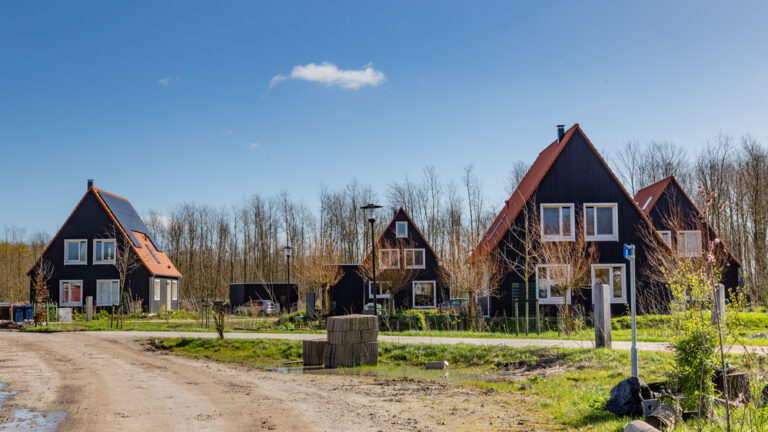
Sustainable housing: Dutch companies want to build more wooden houses

The Dutch construction industry emphasises that more houses will need to be built using wood if the Netherlands is to achieve its climate goals, reports the NOS.

Some smaller companies with a focus on sustainable construction have advocated for wooden houses for a long time but now the big players are finally jumping on the sustainable bandwagon. ๐Ÿ’ƒ

The Royal BAM Group (the largest construction company in the Netherlands based on revenue) are building a factory that’ll produce 1,000 wooden homes per year in 2025.

Heijmans โ€” another major construction company with headquarters in the Netherlands โ€” is also planning to increase its production of wooden houses.

Better late than never

Tony Mol from the construction company Startblock tells the NOS that even though their support comes rather late, “it’s fantastic that the big builders are now also joining in.”

According to Mol, the move towards wooden houses has been happening slowly over the past 15 years, so the sustainable innovation didn’t come from the large construction companies (are we surprised?). Nevertheless, he now sees them as “partners who can help solve the need.”

What need is that? Well, the Netherlands has to invest more in timber construction to build a more sustainable future. ๐Ÿก

Why should we move to wooden houses?

According to TU Delft researcher, Pablo van der Lugt, the production of concrete and cement releases “an insane amount of CO2” and resultingly, “about 7% of global emissions come from cement production.”

However, “wood stores CO2 during growth. And during production, there are much fewer emissions than with concrete.” ๐Ÿ™Œ

The downside to timber production is that it’s more expensive than concrete due to increases in the price of wood. Van der Lugt is nevertheless optimistic. He expects the prices of wood to fall again soon since “the wood we use in the Netherlands comes from sustainably managed coniferous forests in Europe. More is being added quickly, about 300,000 football fields per year.”

Additionally, he mentions the possibility of taxing concrete production to make it less attractive. ๐Ÿ’โ€โ™‚๏ธ

Before we all pack up and move to Swedish log cabins, ๐ŸŽ’ it’s important to know that one: wooden houses don’t have to look like cabins, and two: concrete houses won’t completely vanish from the Dutch cityscape. Rather, Van der Lugt explains that “about half of the housing construction can eventually be made with wood.”

What do you think of this move by Dutch construction companies? And would you move to a wooden house? Tell us in the comments below!

Feature Image: photoweges/Depositphotos
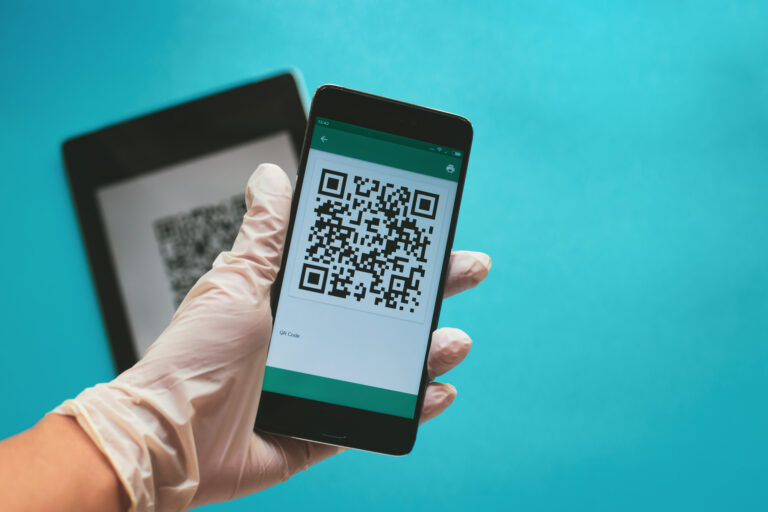
Caught coronavirus? Your QR code will now be valid for a year in the Netherlands

Suffering from coronavirus? We have one piece of good news to cheer you up โ€” your proof of recovery QR code will now be valid for an entire year in the Netherlands.

When you have recovered from coronavirus in the Netherlands, you are given a QR code that can be used as a corona pass. Up until recently, this code could be used for up to 180 days.

Now, this has been extended to 365 days based on the Outbreak Management Team’s (OMT) latest advice.

In October, the OMT clarified that coronavirus antibodies are effective in 90% of people who were previously infected within one year after their recovery. Meaning, it made sense for the issued coronavirus certificates’ expiration date to be extended as well.

Only valid in the Netherlands

This year-long extension is only valid within the Netherlands, however, so don’t be running to the airport just yet! The recovery QR codes will maintain a 180 day validity period outside the Netherlands in accordance with the current European policy, RTL Nieuws reports.

Do you already have the old 180 day QR code? You can now extend its validity through the CoronaCheck App.

Re-infection?

But as we all know by now, just because you got the virus (or were vaccinated) doesn’t mean complete and utter immunity, while we wish it wasn’t the case โ€” breakthroughs can still happen.

According to the Dutch National Institute for Public Health and the Environmentย (RIVM), the possibility of reinfection is still on the table, however, it is not as common.

The percentage of reinfection is about 1% to 2% and “people who get re-infected generally seem to get less seriously ill,” says the RIVM.

What do you think of the latest extension on the Dutch QR code? Tell us in the comments below!

Feature Image: artliyc@gmail.com/Depositphotos

Dodging restrictions: Dutch youths are crossing the German border to party

People will do whatever it takes to get a good feestje on! Dutch youths are crossing the border into Germany on the weekends to party.

These youths will rent party buses from the Twente area and go into Germany on the weekends because the clubs are open longer there, reports the NOS.

In the Netherlands, going to a club or a discotheque is not possible right now because of the evening lockdown. The solution? Just cross the border, apparently! ๐Ÿ™„

German clubs open until 4:00

“We like to go out and we can go out late, until 4:00. We have a QR-code so we believe that we’re prepared and that’s responsible enough,” said one Dutch partygoer. ๐Ÿคก

Local bus companies don’t seem to have an issue with taking the kids to Germany.

Mike Mensik, a bus driver from Fietex, said that giving bus rides to these kids is his only form of income at the moment, apart from a few day rides until 20:00.

The Twente security region are pissed

The Twente security region is not happy with the Dutch youth or with the bus drivers who are willing to take them across the border.

“You have a societal responsibility. You know what the situation is at this moment with the virus. If you want to earn income, I would say not right now, and not like this,” said the chairman of the security region.

What do you think about Dutch youths going to party in Germany? Tell us your thoughts in the comments below!

Feature Image: pressmaster/Depositphotos

4 things that are hard to find in the Netherlands

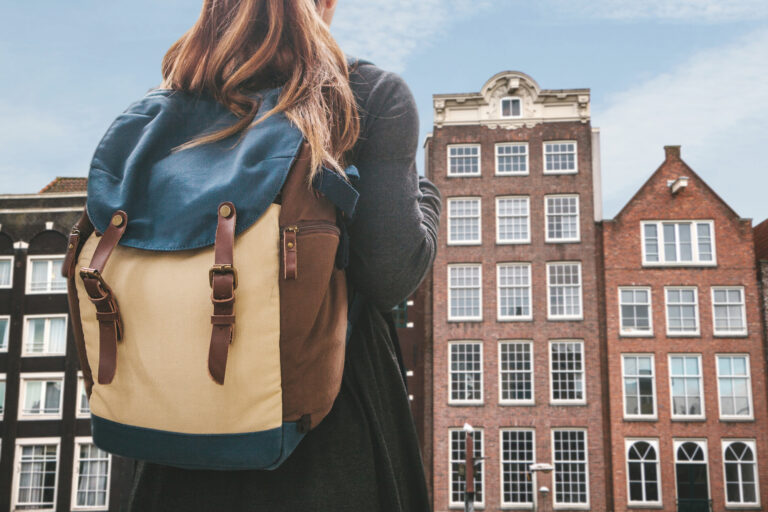
Do you ever arrive in a new place and expect things to work just as you’re used to? Yes, I’ve made that mistake as well. Things that may seem simple, like the opening and closing hours of shops, we often take for granted.

In day-to-day life, this means you sometimes end up searching and searching for certain things that seem normal to you, but with no success on the horizon. Especially in the Netherlands, there are just some things that are harder to find here. ๐Ÿ”Ž Here are a few examples:

1. A cafรฉ that’s open before 9 AM

Picture this: you’re ready to start yet another home office day and fancy a nice cup of coffee. I mean the really good kind of coffee โ€” the kind that you donโ€™t get from your own coffee maker perhaps. โ˜•

Well, the possibility of a nice cafรฉ being open (yes, the one that says โ€œcoffee roastersโ€ and has eight different kinds of beans from pretty much all across the world) before 9 AM might prove to be a bit tricky.

READ MORE | Dutch coffee culture โ€” is there such a thing?

Unless you are ready to conform to a pretty average cappuccino in the typical franchise place, you’re out of luck! I have nothing against them, but they might not even have the barista oat milk you like. Oh, the horror! ๐Ÿ˜ฑ

As a result, you are left with no caffeine in your system for the first couple of Zoom meetings.

2. A convenient place to print stuff

Another great mystery: why is it that if you donโ€™t own a printer, you have to walk for what seems like a lot (but is probably just two kilometres) to the one and only copy place available in a 10-kilometre radius?

Okay, I might have really bad luck, but I just find it weird. I live pretty much in the centre of The Hague and my only option for printing is definitely not nearby. Although for a minute there I was sure I had another place closer, only to be rejected because they only cater to businesses who buy in bulk.

READ MORE | Living in the real capital of the Netherlands: The Hague

Um…did I miss the memo where regular people donโ€™t need photocopies or printers anymore? ๐Ÿค”

3. Closing stores after 6 PM

Okay, this one is not entirely true. On Thursdays, for example, shops, along with other unrelated establishments such as the local municipality (gemeente), do close later than 6 PM (about 8 or 9 PM). What is it about Thursdays? ๐Ÿ“†

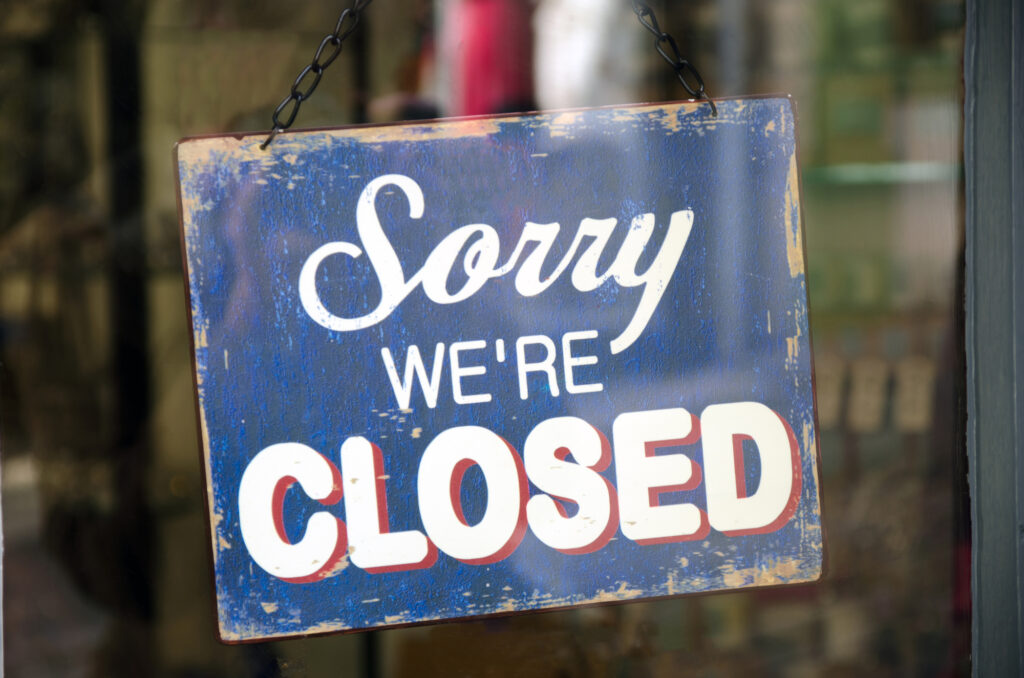
sorry-we're-closed-sign
Everything closes after 6 PM in the Netherlands. Image: pitamaha/Depositphotos

Bottom line, if you donโ€™t plan your shopping for that specific day or for the weekend, you will find yourself running towards the store the minute you sign off your daily work-related duties, which end around 5 PM for most people.

If you somehow manage to make it before closing time, you end up rushing through your optionsโ€ฆ and, honestly, who wants to shop like that? ๐Ÿ™„

4. A place open before noon on Monday

I have to say, I donโ€™t know if I feel envy or admiration for these folks โ€” maybe a combination of both?

Most of the retail businesses, convenience stores, hairdressers, and pretty much everyone else are either closed on Mondays (which is fair enough, when they are open on Saturdays and/or Sundays), or they decide to only open at noon.

Yes, noon. I guess opening your store early on a Monday is simply too traumatic after a long weekend? ๐Ÿคท๐Ÿผโ€โ™€๏ธ

Maybe this is just another memo I didnโ€™t get, but when you grew up in a country where the supermarket opening hours are Monday to Sunday from 7 AM to 11 PM, 365 days a year (itโ€™s called shifts, friends), wellโ€ฆ this kind of stuff comes as a bit of a surprise.


While it’s fun to โ€œcomplainโ€ about these things that feel so different from our home countries, I feel like it goes without saying that little details like these are irrelevant in the grand scheme of things. Especially with the stressful pandemic, we’re all going through a lot right now.

I encourage you to always see the positive side of the circumstances life throws at you, at all of us really. We got this! Keep holding the light wherever you go. โœจ

What do you struggle to find in the Netherlands? Tell us in the comments!

Feature Image: fransz/Depositphotos

Omicron in the Netherlands: What we know so far

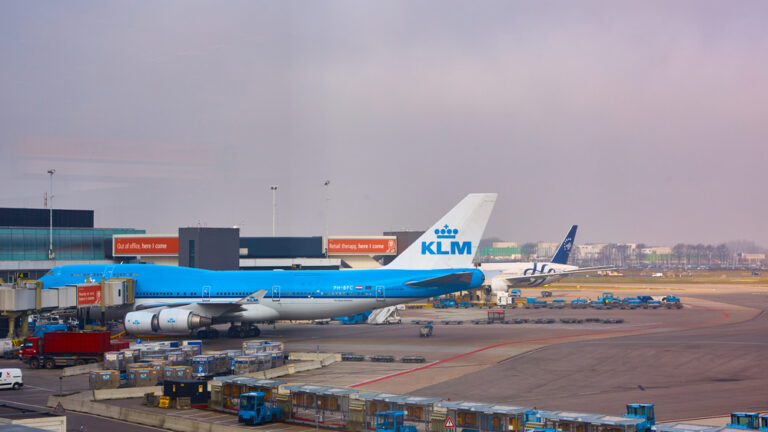
The latest of the coronavirus variants reached the Netherlands last Friday, onboard two KLM flights carrying 624 passengers from South Africa to Amsterdam’s Schiphol Airport.

The official recognition of this new variant on Wednesday, which remained nameless until the weekend, prompted a worldwide panic and restrictions on flights coming from South Africa.

The same flights ban in the Netherlands however, grounded two incoming jets from South Africa at Schiphol for additional passenger testing.

So far, 61 passengers from both flights tested positive for coronavirus โ€” 13 of which had the Omicron variant, according to RTL Nieuws.

Now

Currently, everyone who tested positive for coronavirus (whether they had Omicron or not) on the two flights is in quarantine at a hotel near Schiphol or at home, says the NOS.

As for travelling, the NOS reports that all passengers over the age of 13 flying from South Africa to the Netherlands must now show a negative rapid test taken in the last 24 hours. This is regardless of whether the passenger is vaccinated or not.

READ NEXT | Couple says โ€˜nahโ€™ to Dutch hotel quarantine, try to escape to Spain (but fail)

Extending their measures, KLM flights are only allowing EU citizens to fly from South Africa at the moment. ๐Ÿ™…๐Ÿผโ€โ™€๏ธ

A concern?

For now, that’s a maybe. “The WHO has labelled it a ‘variant of concern’. We are concerned, but how much we should be concerned will become clear in the coming weeks,” Dutch Health Minister Hugo de Jonge explained last week.

While the World Health Organization (WHO) research shows that this particular mutation is spreading much faster than other known variants, it is still unclear how sick people can get from Omicron, and whether our current vaccines are effective against it.

Follow DutchReview on Facebook and Instagram for the latest coronavirus news from the Netherlands.

Feature Image: sarymsakov/Depositphotos

Spotted: The Dutch are testing a weirdly cute robo-dog in Rotterdam Centraal

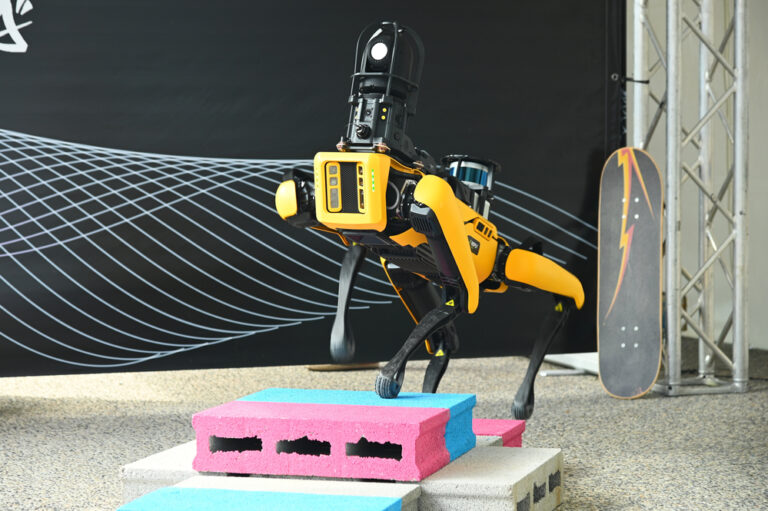
If you happen to be walking through Rotterdam Centraal last Thursday, then you may have seen something strange: a yellow machine walking around on four legs like a dog! ๐Ÿค–

At the request of the NS, students from TU Delft and Erasmus University Rotterdam have been testing out a programmed dog to perform chores and tasks in and around Rotterdam Centraal, reports AD.

A nice way to get labour without paying staff, right? Well not quite: the robot still costs a whopping โ‚ฌ100,000! ๐Ÿ’ธ

The not-so-furry friend was invented by Boston Dynamics who call their creation ‘Spot’. ๐Ÿถ

Doing jobs that humans can’t

The canine-like robot can do inspection work on tight crawl spaces and on the roof. It can also detect any obstacles or debris on the blind guide strip.

It comes with sensors and a 360-degree camera and gives off an occasional flash of light. It could also be potentially programmed to follow its owner, open doors, etc.

READ MORE | Hop on the hyperloop! Dutch hyperloop receives โ‚ฌ15 million funding boost

โ€œWe are curious about the possibilities modern technology can offer. This is not to replace human work, but to support it. It remains an interaction” station manager, Marijke Ris, told AD.

*Trump voice* the robots are stealing our jobs! ๐Ÿคก

What do you think about the NS trialling a robot dog? Tell us your thoughts in the comments below!

Feature Image: Wirestock/Depositphotos

Couple says ‘nah’ to Dutch hotel quarantine, try to escape to Spain (but fail)

In a daringly (dumb) escape, a couple has fled the quarantine hotel that houses travellers from South Africa who have tested positive.

The Spanish man and Portuguese woman jumped ship yesterday but only made it to Schiphol Airport before they were arrested.

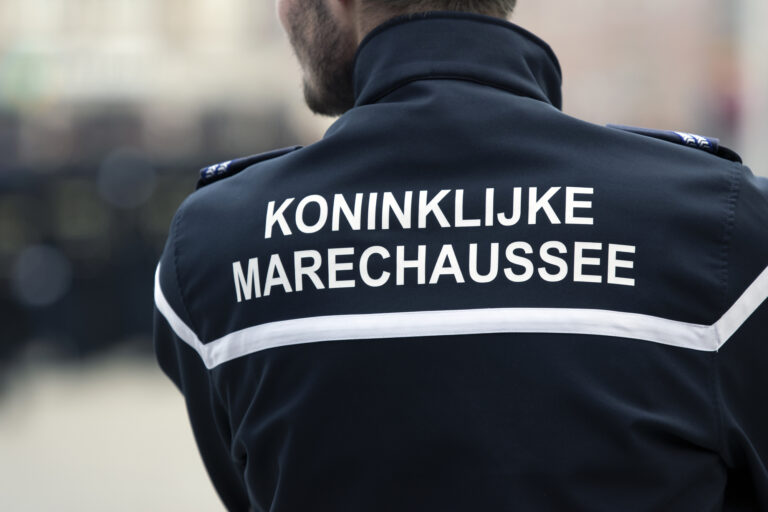
The two were about to board a plane for Spain when the Royal Netherlands Marechaussee (one branch of the national police) made the arrest, reports the NOS.

A Houdini escape

However, a spokesperson for the Marachaussee has confessed that they have no idea how the couple escaped the quarantine hotel.

“Various parties ensure that no one can enter or leave the hotel, including the police and the Marechaussee. It is not known how this could have happened,” said the spokesperson.

Law and order

The travellers, caught red-handed, now have bigger problems than wanting to get to sunny Spain. Because it’s a crime to violate quarantine obligations, their case will be sent to the Public Prosecution Service for the next steps.

Worth it? Nah. Stay in hotel quarantine, kids. ๐Ÿจ

Want the latest Dutch news to come zooming through the internet to your inbox? Dat kan! Subscribe to DutchReview’s weekly roundup ๐Ÿ“ฎ

Press conference: even earlier closing hours, travel advice and more new measures

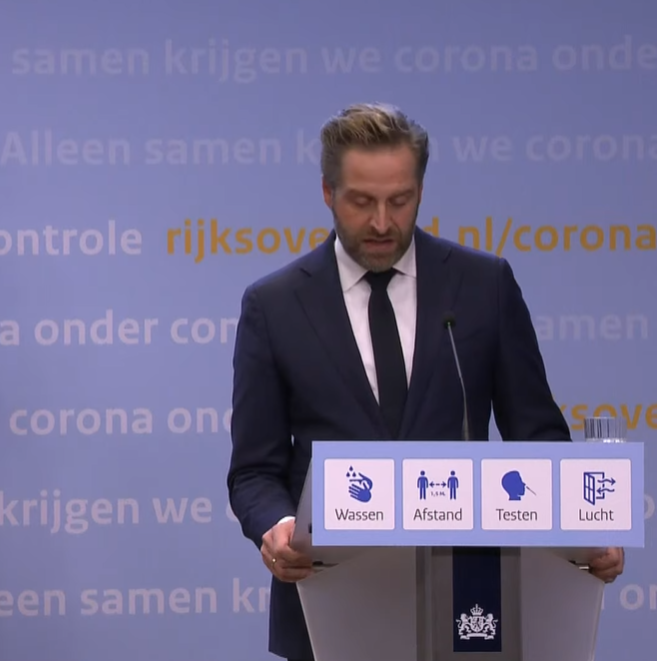
A week earlier than planned, Dutch Prime Minister Mark Rutte and Minister for Health Hugo de Jonge have manned the podium at a respectable distance to announce โ€” yep โ€” even more new coronavirus measures for the Netherlands.

The government’s optimism since the “restriction-free summer” is long gone, with only stern warnings to be given about keeping distance, working from home, and following the new measures.

Rutte began the press conference with some reminiscing about last year, and how, just like then, hospitals are becoming overwhelmed. But there are two main differences. One: less people are ending up in intensive care. Of those who are, 70% are unvaccinated.

And difference two: we thought that once people were vaccinated, we would be able to shed coronavirus measures. However, we see now that the reality is different.

Rutte also took a moment to acknowledge that the Dutch government’s handling of coronavirus has seen some mistakes. “We are not deaf to criticism,” he said, “but we won’t run from mistakes.”

So what’s in store for you (and what does it mean for living your best Dutch life)? Here’s the rundown. As of this Sunday, November 28, the following measures will be in place until December 19.

An evening lockdown

Were you enjoying the gezellig vibes in the restaurants and cafes in the evening? Making use of the gym after work? Planning on catching Kirsten Stewart in ‘Spencer’ on the silver screen? Not anymore.

As of this Sunday, November 28, only essential shops (think supermarkets and pharmacies) will be allowed to be open after 5 PM. However, food deliveries and professional sports may continue past 5 PM.

That means a whole slew of closures across other businesses, including:

  • restaurants,
  • cafes,
  • cinemas,
  • theatres,
  • museums,
  • amusement parks,
  • gyms,
  • and amateur sports.

Rutte claims that there will be governmental support for industries, explaining that the cabinet is working towards long-term solutions with trade unions.

Essential services may also keep their regular opening times. These services include: notaries, or lawyers, mortgage advisors, and medical contact professions.

Masks in schools

Meanwhile, students from Group Six (approximately nine years and older) will now be required to wear masks when walking between classes. They will also self-test two times per week.

Rutte explains that while infections are high in schools, the impact of closing them would be too great.

Masks and distancing in venues that require QR codes

Masks will also return in places that require a QR code. When you are up and walking you must wear a mask and a 1.5-metre social distance must be kept. This will apply to venues such as in the catering industry, cinema and theatres.

This will also mean that there will be fewer visitors allowed in order to allow for proper distancing.

Stay home as much as possible

The advice remains that people should work from home as much as possible. On top of this, the government also encourages people to only travel when it is absolutely necessary. If you do have visitors, make sure to restrict that number to a maximum of four people.

Check in with each other

In a surprising turn, Rutte also brought up the topic of violence against women during this conference. He explained that yesterday saw many reports of violence against women. “There are horrible situations behind closed doors”, he said, urging that people keep an eye on one another.

Flights from southern Africa cancelled

Technically not announced in tonight’s press conference, but dominating the headlines today, is the cancellation of flights from South Africa, Botswana, Eswatini (Swaziland), Lesotho, Namibia and Zimbabwe.

A new variant first detected in South Africa has scientists concerned. Hugo de Jonge made the announcement of the flight closures earlier this morning, citing the need to buy time. โ€œWhat we need to do now is act as a precaution.โ€

Why are new measures needed?

A flood of new coronavirus infections, more or less. In the 24 hours preceding 10 AM this morning, 21,350 positive tests were reported in the Netherlands.

This is a number that has been increasing. Over the past seven days, 19% more positive tests were recorded compared to the previous week, with an average of 22,258 positive tests registered each day.

Boosters starting from next week

The initial plan was that only over 60’s would be able to receive a third booster vaccine in January 2022, however this is no longer the case.

The Dutch government has decided to hit the gas pedal on the booster vaccination effort. Additional workers from defence and from secondary education will now help administer a third vaccine shot to non-mobile elderly people from this age group starting next week.

Want the latest Dutch news to come zooming through the internet to your inbox? Dat kan! Subscribe to DutchReview’s weekly roundup ๐Ÿ“ฎ

Feature Image: Screenshot/Press Conference.

Netherlands will have an evening lockdown for three weeks from Sunday

Prepare your banana bread pans, ladies and gents: the Netherlands lockdown is about to get a whole lot more intense.

As of Sunday 28 November, restaurants, cafes, non-essential shops, cinemas, theatres, museums, amusement parks, gyms, and amateur sports will be forced to close after 5 PM. The reports come from inside sources close to The Hague to the NOS.

The new measures are planned to last for three weeks โ€” but we all saw how that went last year.

Schools will be allowed to stay open under the incoming measures, although Group Six and higher will need to wear a mask in the hallways.

Why new measures?

Well, it’s not for fun. Dutch coronavirus numbers have been on a steady increase, with over 153,000 infections reported over the 7-day period until last Tuesday.

All the measures will be formally announced at tonight’s press conference from 7 PM. Want to know what happened? Follow DutchReview for all of the latest Dutch coronavirus news, as it happens.

Want the latest Dutch news to come zooming through the internet to your inbox? Dat kan! Subscribe to DutchReview’s weekly roundup ๐Ÿ“ฎ

Feature Image: Romrodinka/Depositphotos

Netherlands bans all flights from South Africa and more in abrupt move to slow spread of new variant

The Dutch government has taken swift action on a new reported coronavirus variant found in southern Africa with all flights blocked from 12:00 PM today.

It joins the UK, Italy, Germany, and Israel in a slew of flight bans for South Africa, Botswana, Eswatini (Swaziland), Lesotho, Namibia and Zimbabwe.

Dutch people who are currently in the above countries will have the right to return home but will need to double test and quarantine upon arrival.

Minister for Health Hugo de Jonge announced the new measures today. According to him, there are still two flights en route from southern Africa.

It comes in response to the B.1.1.529 that has been detected, which one expert described to the BBC as being “the worst one we’ve seen so far.”

De Jonge told the press that uncertainty remains about the new variant. “What we need to do now is act as a precaution.”

Want the latest Dutch news to come zooming through the internet to your inbox? Dat kan! Subscribe to DutchReview’s weekly roundup ๐Ÿ“ฎ