So, you’ve landed in the Netherlands, navigated the supermarket without panic, and maybe even braved a Dutch birthday party (circle of chairs and all).
Not sure what that is or how to pass it without drowning in Dutch grammar books? No worries — we’ve got the lowdown on the inburgering exam in 2026, and the easiest way to prep for it without stress.
What is the inburgering exam — and do you need to take it?
The inburgeringsexamen is the Dutch civic integration exam. If you’re a non-EU citizen, or here on a family reunification or asylum permit, there’s a good chance you’re required to complete the integration process.
Why? Because passing the inburgering exam is often mandatory for permanent residency or Dutch citizenship.
Dutch life is great, until you realise there’s a raft of exams waiting for you. Image: Freepik
It’s the government’s way of making sure you’ve got a solid grip on Dutch language, society, and work culture so you can integrate into society more smoothly.
Even if you’re not required to take it, some people still choose to — especially if they plan to stay in the Netherlands long-term or want to improve their Dutch skills.
What does the inburgering exam look like in 2026?
The inburgering exam in 2026 is made up of a few key parts:
Dutch language: reading, writing, listening, and speaking
Knowledge of Dutch Society (KNM): think of this as Dutch culture 101
Orientation on the Dutch Labour Market (ONA): a portfolio focused on work and job-seeking in the Netherlands
Here’s where it gets a little more technical: depending on your integration path, you’ll either be tested at A2 or B1 language level.
A2 is easier and still accepted in some rare cases — but the Dutch government has been shifting some people towards B1, which is a bit more advanced. The level you need to complete depends on your situation.
The easiest way to prepare: online, flexible, and stress-free
Let’s be honest: not everyone has the time or energy to sit in a classroom after a full day of work (or parenting, or dealing with Dutch bureaucracy). Traditional courses can be expensive, inflexible, and — dare we say — a little boring.
This self-paced online platform helps you prepare for every part of the inburgering exam — on your schedule, in your own space, and with way less stress.
Study online and completely in your own time. Image: Freepik
Why InburgeringOnline.nl works
InburgeringOnline isn’t just another Dutch course with dusty grammar books and rigid lesson plans. It’s a fully online, flexible, and supportive learning platform that helps you prep for the inburgering exam — no matter your Dutch level, lifestyle, or schedule.
So what makes it so effective?
🖥️ Everything’s online — No classrooms. No textbooks. No stressful commutes. Just log in and start learning from wherever you are.
🕒 Study anytime, anywhere — Early riser? Night owl? Got a quiet 20 minutes while your toddler naps? The course works around your life.
🎯 Real exam practice — You won’t walk into the exam blind. The platform includes tons of sample questions and mock exams that reflect the real thing — so you’ll know exactly what to expect.
💸 Affordable, all-in-one packages — No need to pay hundreds for live lessons or books. InburgeringOnline offers cost-effective bundles that include everything you need.
🧘 Zero stress, total flexibility — There are no fixed deadlines or appointments. You can pause, repeat, or fast-forward as needed.
But the real magic of InburgeringOnline is in how well it adapts to you.
Whether you’re a total beginner just starting out, a professional juggling work and study, or a parent squeezing in lessons between naptime and dinner, this platform is built to fit your needs.
You won’t need to chase down teachers or attend fixed classes. Instead, you’ll have access to clear, step-by-step lessons, practical tips, and real exam prep, all designed to help you feel fully prepared when exam day comes.
Need to focus on just one part of the exam, like KNM? There’s a course for that. Want the full package with everything included? Sorted. Every course is carefully structured, regularly updated, and gets straight to what matters — helping you pass the inburgeringexam with ease.
In short: if you’re serious about getting it done in 2026, this is the smartest, easiest way to do it.
Make 2026 the year you pass the inburgering exam — the easy way
The inburgering exam doesn’t have to be a headache. With the right preparation, you can tick it off your list and move one step closer to permanent residency, citizenship, or just feeling confident in Dutch society.
So if you’re ready to crush the exam zonder stress, check out InburgeringOnline and find the course that fits your life
Are you preparing to take the Dutch integration exam in 2026? Share your experience in the comments below!
Since its proposal, the Balanced Internationalisation Bill (Wet internationalisering in balans, Wib)has been debated and adjusted, redebated and readjusted by multiple Dutch cabinets.
Jetten’s cabinet, however, is aiming for ‘balance.’
According to the Government of the Netherlands, the bill’s initial intent, when proposed by then-Minister of Education Robbert Dijkgraaf, was to ensure that higher education remained accessible to Dutch students amid high numbers of international students.
In 2022, up to 33% of first-year students were from outside the country, coming to the Netherlands to pursue English-taught university programs, according to the NRC.
In the years that followed, cabinets made multiple plans to reduce these numbers.
What did past cabinets say?
The most recent cabinet, led by then-Prime Minister Dick Schoof, was notably strict in its approach to the bill.
For the Minister of Education under Schoof, Eppo Bruins, the language of instruction was a major issue.
In a 2024 letter to parliament, Bruins argued that maintaining Dutch as the language of instruction was essential to keeping students connected to Dutch society and the workforce.
His efforts were intended to make existing measures stricter. For instance, he minimised the possibility of exemptions for the toets anderstalig onderwijs (test for foreign-language education) for Dutch university programs.
This ‘test’ allows the Minister of Education to assess and determine whether existing or proposed English-language programs can justifiably be taught in English.
Due to his lack of exemptions, many programs that appealed to internationals were under threat.
The idea was to protect Dutch as the primary language of instruction, not just to manage student numbers. This was not surprising given the general rhetoric of political leadership in the Netherlands under the Schoof cabinet.
The significant influence of the PVV and other right-leaning parties brought nationalist sentiments to the forefront. And international students were, in some ways, an easy target: keep Dutch universities Dutch.
A lighter approach
However, when Geert Wilders withdrew his party from the coalition in 2025 over immigration concerns, the Schoof cabinet collapsed. And with it, so did their plans on the Wib policy.
Jetten’s cabinet is taking a different approach. While they recognise the need to safeguard opportunities for their young Dutch students, they also see the value in internationals coming here.
Universities are breathing a sigh of relief: under Jetten, the ‘test’ for English-language programs is planned to be entirely scrapped.
English-taught programs at some universities that were set to be cancelled are now back from the brink.
As D66 MP Ilana Rooderkerk tells the NRC, “We need international talent for the future of our country.”
It’s also worth mentioning that in recent years, the number of international students enrolling at Dutch universities has declined.
However, some measures will still be brought in
While the Jetten cabinet is sure to be lighter in its implementation of the Wib, there is still a need to balance international enrollment with admission of Dutch students.
Some measures are still planned, reports NRC. For instance, the numerus fixus plan, which caps the number of students added to a program from outside the EEA (European Economic Area), will still be included.
Similarly, an ‘emergency fixus’ cap is also planned, which allows last-minute maximums for English-taught programs when application numbers are too high.
The biggest change, however, remains the removal of the foreign-language ‘test.’
Scrapping this element means that existing programmes can continue, and new English-taught programmes can be set up without ministerial sign-off on the language of instruction.
In other words, if you’re an international student, you can be cautiously optimistic that Dutch uni life is in your future!
What do you think of the Jetten cabinet’s approach? Let us know in the comments!
Let’s face it, learning Dutch is not always easy. Apparently, it takes more than just knowing how to say lekker and mooi (who knew?)
Thankfully, there’s a plethora of apps to learn Dutch available — but with all those options out there, how are you supposed to know which one is best for you?
When I first arrived in the Netherlands, I wanted to learn Dutch, but I was immediately hit with decision fatigue. I’ve tried, tested, and compared the best apps to learn Dutch. Here are the best!
How we tested the best apps to learn Dutch
No, we didn’t just scroll the App Store and pick the first seven logos that looked friendly (though that might’ve been a lot easier).
Each app had to offer a Dutch course, support beginners, and have an active user base.
We tested them on language level coverage, speaking practice, grammar clarity, price, ease of use, reviews and — most importantly — real-life practicality.
Best apps to learn Dutch
There’s no single “perfect” app — but a few consistently stand out. These are the strongest options for learning Dutch in 2026.
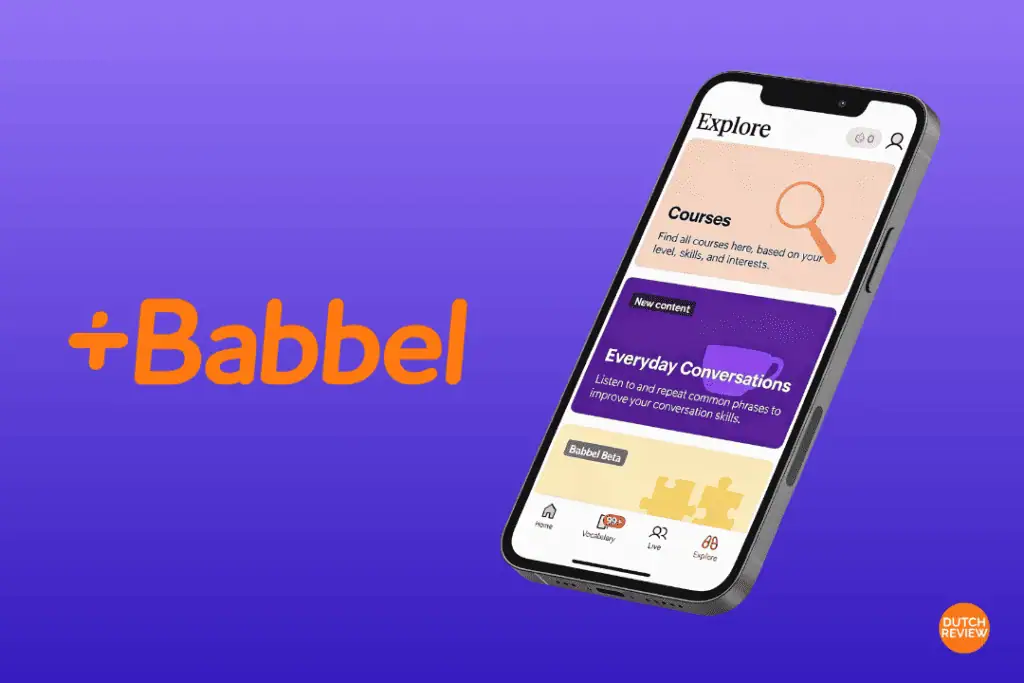
Babbel: The best paid app for learning Dutch
Learn best with Babbel! Image: DutchReview
Babbel is our choice for the top paid app to learn Dutch because it balances speaking practice, vocabulary building, and clear grammar explanations in one structured course.
When I had been living in the Netherlands for a few months, I recognised plenty of Dutch but struggled to form my own sentences. Babbel helped bridge that gap.
Instead of just drilling words, it focuses on building usable sentences and understanding Dutch word order, which can feel unfamiliar at first.
The dialogues are practical and based on everyday situations like ordering food or making plans, making it especially useful if you already live in the Netherlands.
It’s less flashy than apps like Duolingo, but that’s part of the appeal. If you want Dutch to start making sense, not just sound familiar, Babbel is a logical next step.
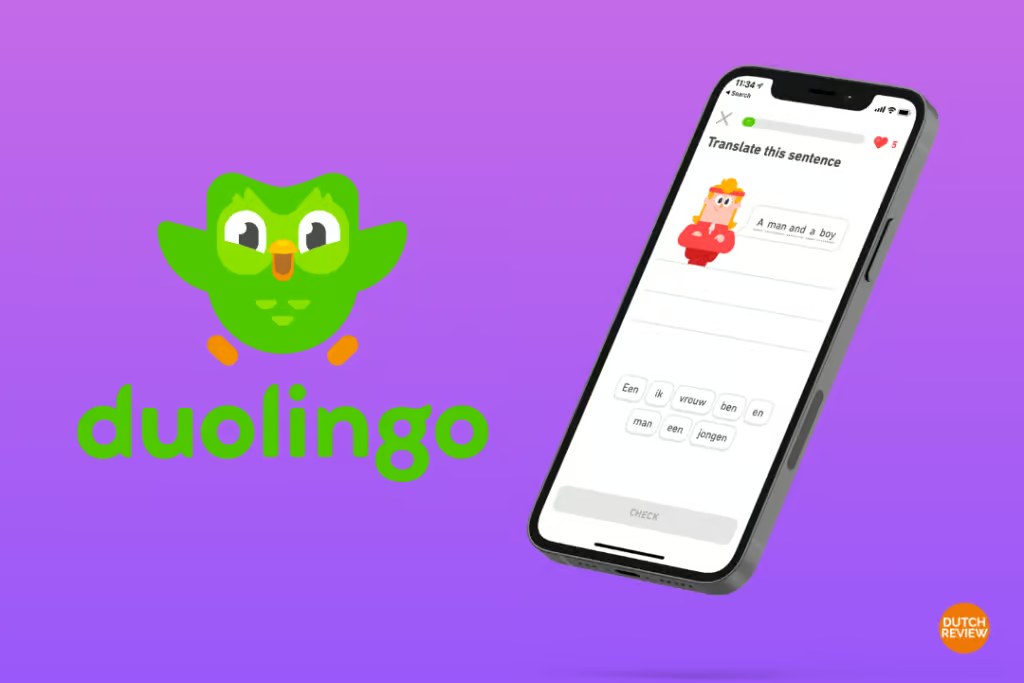
Duolingo: Best free app for learning Dutch
Don’t forget to keep Duo happy! Image: DutchReview
Duolingo is one of the easiest ways to begin learning Dutch. You don’t need prior knowledge of grammar or vocabulary — you simply open the app and start.
When I first moved to the Netherlands (with zero Dutch contacts, mind you) this was the app I downloaded. It helped me build basic vocabulary, simple sentence patterns, and get used to Dutch pronunciation without feeling overwhelmed.
However, after a few weeks, I outgrew it. While the vocabulary practice is solid, Duolingo offers limited grammar depth and minimal speaking practice. For real-life conversations in the Netherlands, I needed more structure and active output.
Still, as a free Dutch learning app, Duolingo is hard to beat. It’s accessible, gamified, and ideal for absolute beginners testing the waters before committing to a more comprehensive course.
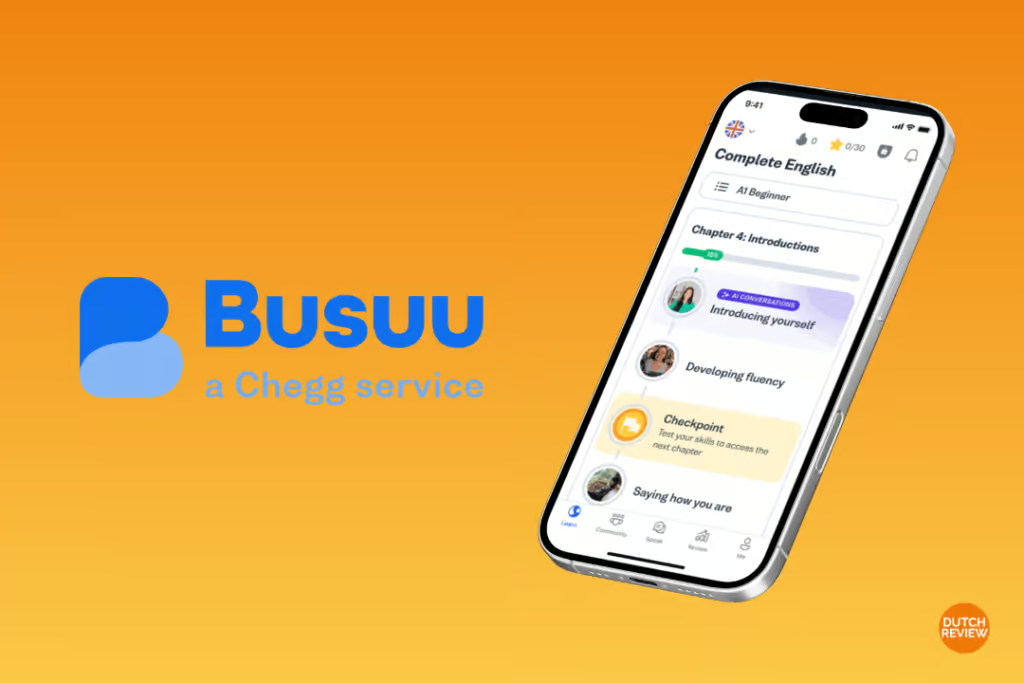
Busuu: Best app if you want to practise speaking
Busuu’s got your back! Image: DutchReview
Busuu stands out because it pushes you to speak early. Instead of relying on endless multiple choice, you record short spoken answers, which other users – often native Dutch speakers – can correct.
In testing, this felt more realistic than passive exercises but still safe enough to make mistakes. You’re actively producing Dutch, not just recognising it, which makes it one of the better apps for improving speaking skills.
The free version is limited, and full lessons with detailed corrections require a premium subscription. Feedback quality can vary, and if you’re shy about recording yourself, there’s a small confidence hurdle at first.
Compared to apps like Duolingo or Drops, Busuu focuses more on active output. It also pushes you into real interaction sooner than many traditional course-style apps
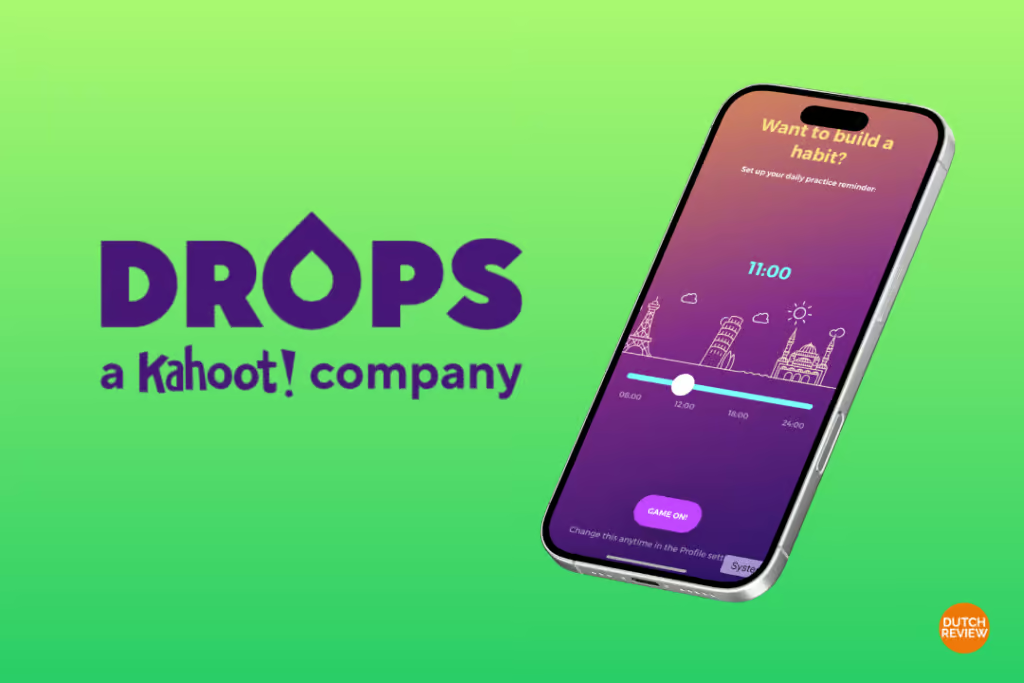
Drops: Best app for busy people
Stay consistent with Drops! Image: DutchReview
All the apps above have their strengths, but the one thing Drops does exceptionally well is keep it short.
In the age of endless scrolling and diminishing attention spans, Drops respects that you won’t be able to sit for twenty minutes at a time repeating “Hoe gaat het?” over and over.
The five-minute sessions offered by this app are focused on vocabulary and feel much more manageable.
While that might sound basic, a stronger word bank makes everything vocab-related easier, from listening to speaking and reading.
When you’re tired or having a rushed day, this app makes staying consistent feel like more of a molehill than a mountain.
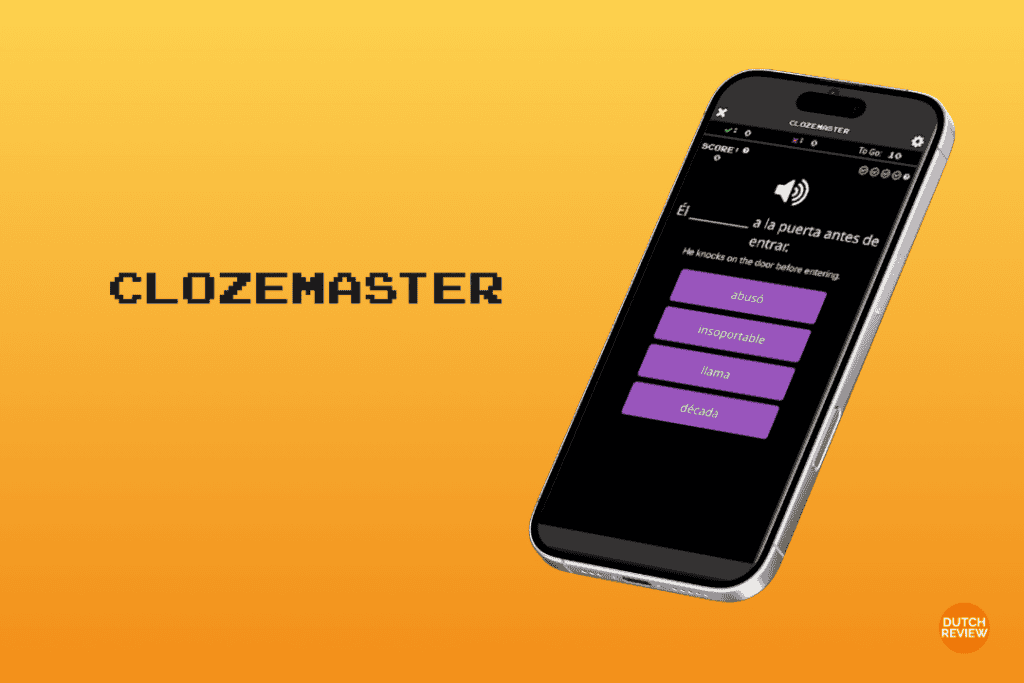
Clozemaster: Best app for grammar and sentence structure
Keep it simple with Clozemaster! Image: DutchReview
Fair warning, Clozemaster doesn’t look flashy. There are no cartoon owls. No streak celebrations that feel like you’ve just won the Olympics.
It’s a little more… serious. And that’s exactly why it works so well for certain learners.
Clozemaster is built around context: instead of teaching you isolated words, it drops you straight into full sentences. You fill in missing words and see how vocabulary behaves in real Dutch.
This matters because language isn’t a list of nouns — it’s patterns, such as word order or verb placement.
So if you’re past the beginner stage and want to get better at writing, reading, and sentence composition more generally, Clozemaster is a very useful app.
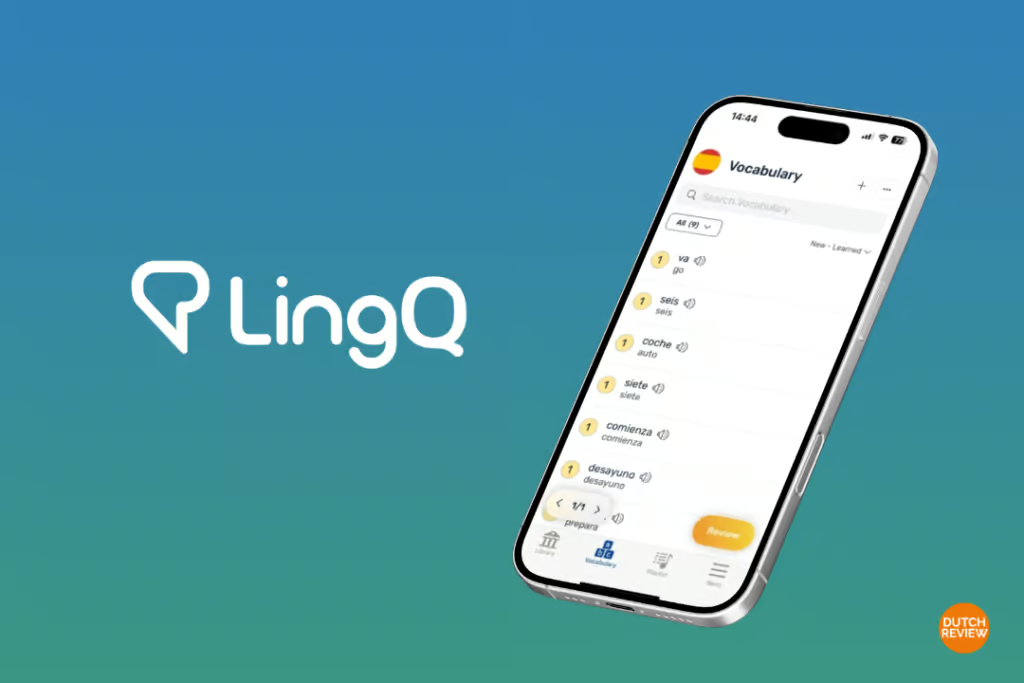
LingQ: Best app for learning through listening and reading
Listen and learn with LingQ! Image: DutchReview
If you’ve got hungry eyes and ears, this app is for you.
LingQ does two things really well: it ups your comprehension, plus it gives you real content through articles, podcasts, and natural speech.
Not only does LingQ’s exposure train your ear, but it also allows you to learn about things you actually find interesting in a Dutch context.
No more listening to audios of inane conversations about groceries — now you can learn about Dutch culture through TV shows and podcasts that are relevant in the here and now.
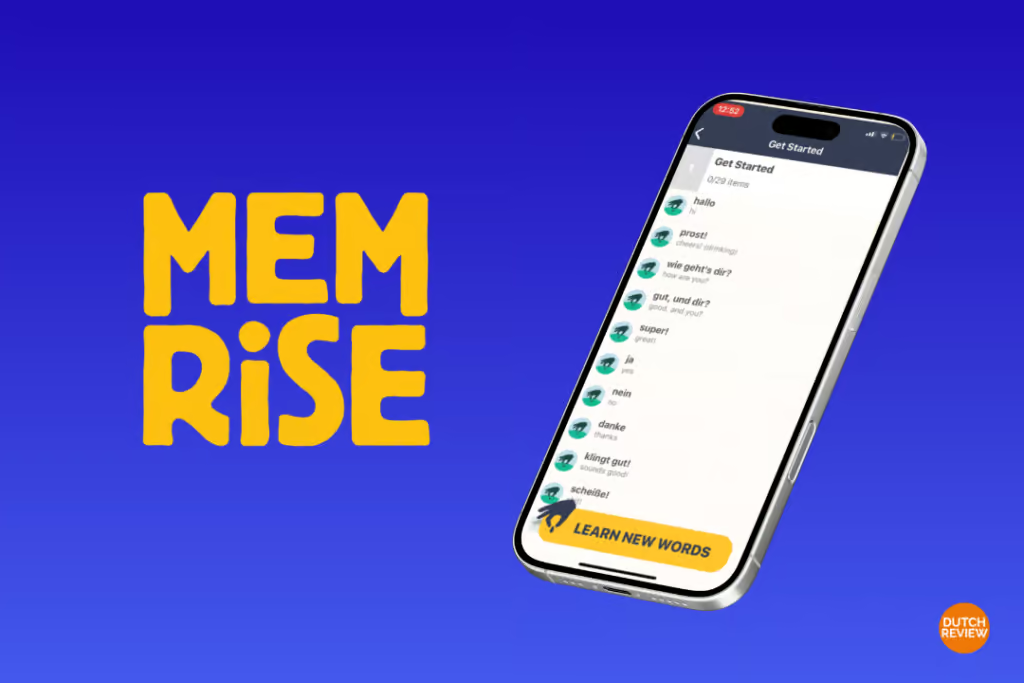
Memrise: Best app for vocabulary and listening practice
Sharpen your vocab with Memrise! Image: DutchReview
Memrise is a strong choice if you want to build Dutch vocabulary and get better at understanding spoken Dutch at normal speed.
Its biggest advantage is the use of short video clips of native speakers, so you hear real pronunciation and natural rhythm rather than scripted audio.
In my testing, this made a noticeable difference when adjusting to how Dutch actually sounds in everyday conversations.
The app uses spaced repetition to help words stick, and it now includes AI chat tools like MemBot for brief dialogue practice. That said, it remains far more focused on vocabulary than grammar.
There’s a limited free version, while the paid subscription is priced similarly to other premium Dutch learning apps such as Babbel and Busuu.
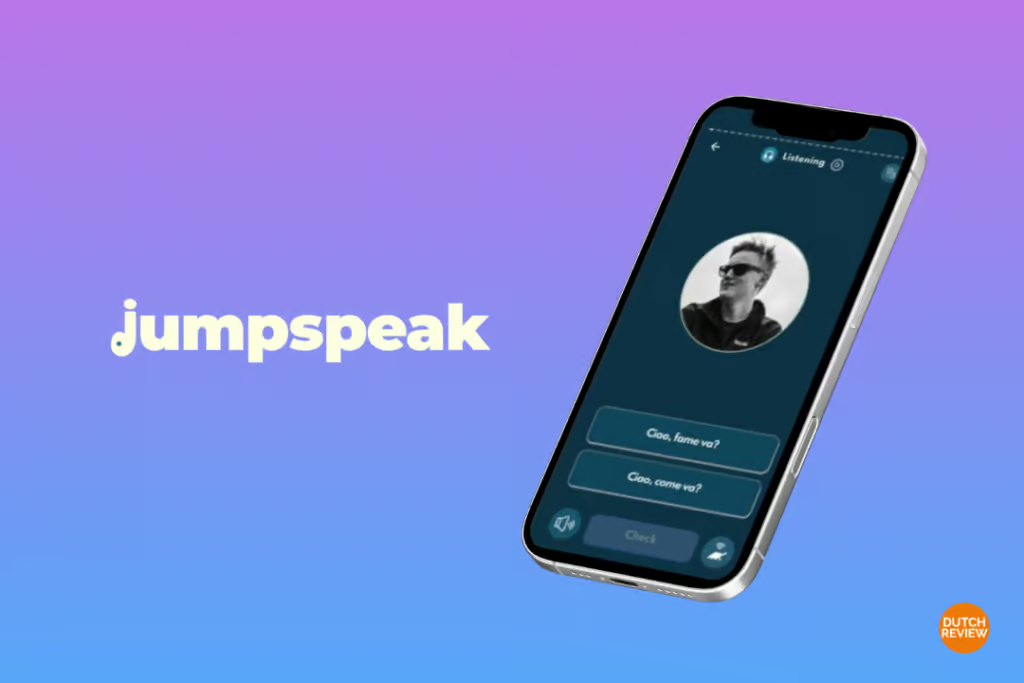
Jumpspeak: best app for fast, AI-style speaking drills
Use AI to get to your goals with Jumpspeak! Image: DutchReview
Jumpspeak is built around one clear goal: helping you speak Dutch from day one.
The app uses AI-powered conversations rather than simple word repetition. You respond to prompts in simulated real-life situations, which pushes you to think quickly and speak more naturally.
When testing it, I found this helpful for breaking the “I understand it but can’t say it” barrier.
That said, Jumpspeak is one of the more expensive Dutch learning apps, and the interaction is still AI-based rather than with real tutors. Grammar explanations are also fairly light.
If your priority is building speaking confidence fast, Jumpspeak delivers. Just don’t rely on it as your only structured Dutch course.
Comparing the best Dutch learning apps at a glance
Different apps solve different problems. Some build habits, others build confidence, and still more build comprehension.
Here’s a quick and easy breakdown of each app’s strengths:
App
Price
Level
Speaking practice
Best for
Duolingo
€
Beginner (A0–A1)
Low
Starting out, building a habit
Babbel
€€
Beginner–Intermediate
Medium
Grammar clarity and structure
Busuu
€€
Beginner–Intermediate
High
Speaking with feedback
Drops
€€
Beginner
Low
Quick vocabulary sessions
Clozemaster
€
Intermediate
Medium
Sentence structure and context
LingQ
€€€
Intermediate–Advanced
Medium
Listening and reading immersion
Memrise
€€
Beginner–Intermediate
Low–Medium
Vocabulary retention with audio
Jumpspeak
€€€
Beginner–Intermediate
High
AI-based speaking drills
Price guide:
€ = Free or low cost
€€ = Mid-range subscription
€€€ = Higher-priced subscription
How to choose the best Dutch learning app for you
There isn’t one “best” app. There’s the best app for your situation.
Your first step is to figure out what you need. If you’re starting from scratch, this broader guide to learning Dutch helps frame the bigger picture.
Start with your level. For example, if you’re A0, you need repetition and confidence more than grammar theory.
If you’re A1, A2 or B1, however, you likely understand more than you can say. That means you need output, not more mindless tapping exercises.
Then, look at your goal. Are you learning Dutch for work? For friends? For the inburgering exam? Or just to stop smiling blankly when people start Dutching it up around you?
Finally, be honest about your time. Here’s where I got overambitious. Thankfully, apps saved my bacon.
If you’re like me and don’t have the energy (or money) for evening classes three times a week, apps fit great because they slide into the gaps — transport, queues, long bike rides, and more!
Why learning Dutch with an app actually works
The main strength of apps is that they reduce friction.
Practice can be done privately, awkwardly, and as many times as you might need, which makes the whole process of language-learning far less daunting.
And, best of all, you can combine this awkward practice with your adventures in the real Dutch world.
For internationals, this is perfect. Good Dutch matters in the long term, especially for internationals trying to settle here.
Best free vs paid apps to learn Dutch
So, there are lots of apps available — but should you be paying for an app when there are free options? That’s a great question!
Fully free apps like Duolingo are excellent for habit-building, and the free aspect certainly removes room for excuses.
If you want something more advanced (or if you need to spend money to make sure you’ll follow through), though, there’s nothing wrong with that.
A good middle ground is freemiums. Freemium apps let you test before committing. That’s helpful if you’re unsure about your learning style or how much a paid version of the app can help you.
Overall, paid apps definitely add structure and guide progression more clearly. If you struggle with consistency, that can be helpful. They also tend to handle speaking and grammar more seriously.
Once again, though, it ultimately depends on your goal. Can’t swing the price? Don’t fret, there are plenty of free options that work just fine!
Can you really learn Dutch using only an app? Tips and tricks
Short answer: no. Longer answer: Apps are a strong foundation.
I, too, wish it were as simple as opening an app every day and then — poof! —- being suddenly fluent.
In reality, apps are a great help, but progress requires more. Speaking. Listening. Daily exposure. Combine apps with real life. Order that coffee in Dutch (even if they reply in English).
It sounds hard (trust me, I know), but that doesn’t mean it’s impossible. It just means consistency matters more. Here’s where apps are amazing: if you get discouraged, they allow you to pick up and try again!
It also helps to bake your app-learning into your social life. Motivation grows when language connects to people. Even flirting works — these steps to flirt in Dutch might help. 😉
The best app if you’re busy and short on time is Drops, which suits short daily sessions.
Why do Dutch people switch to English when I try to speak Dutch?
Dutch people switch to English when you try to speak Dutch because they can. It’s a habit, not a judgement.
Should I combine Dutch learning apps with classes or real-life practice?
Yes, you should definitely combine Dutch learning apps with classes or real-life practice for the best results. Real conversations accelerate progress.
As an international in the Netherlands, you might think some things the Dutch do are annoying, but have you taken a look in the mirror? We hate to break it to you guys, but sometimes we’re the problem.
Let’s face it, there are some things that internationals in the Netherlands do that we all know are annoying, and not just for Dutchies.
Thankfully, we’re not afraid of calling ourselves out. With the help of our readers, we put a list together of some of the most annoying things internationals do.
As an international in the Netherlands, something you do could be annoying enough to get this look. Image: Depositphotos
So if you’re looking for a guide on what not to do, or how to really grind your Dutch housemate’s gears, listen up.
1. Walk or stand on cycle paths
You’ll often see Dutch cyclists zooming past on their bikes, so you can imagine that when people (ahem, usually tourists 👀) walk on cycle paths, it can be dang frustrating.
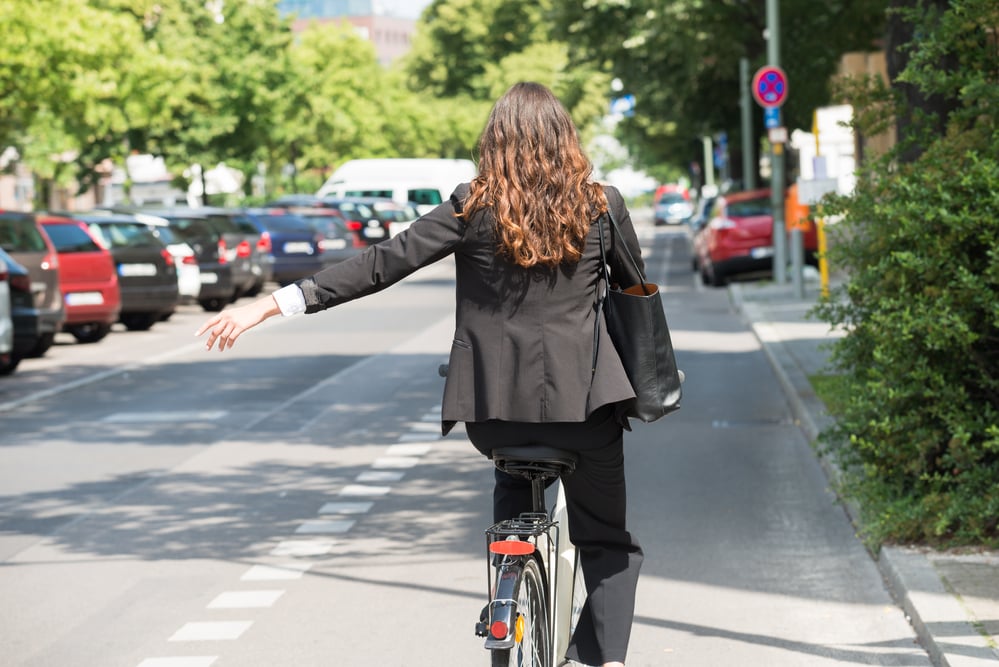
Another way that internationals can really grind a Dutchie’s gears is when they’re on bicycles themselves and abruptly turn.
No hand signal?! No care in the world!? No consideration for the people behind you!? Yes, you are the main character, but how is everyone supposed to know where you’re going?
Signalling when you’re about to turn is essential if you want to survive cycling in the Netherlands. Image: Depositphotos
While you may be self-reflecting on how far you’ve come, navigating the bike path as you cruise home, if you don’t use hand signals, you’ve got a far way to go, honey.
As you swan along, you now have some very annoyed people screeching to a halt to prevent the formation of a bike heap. Luckily, we aren’t the only ones who find this annoying; it can even get you a fine.
3. Move at normal speed while bagging groceries
It can be hard to adjust to the cashiers who scan your groceries at warp speed. Being mere mortals, we can’t keep up that same tempo while bagging our hagelslag.
Even though you’re going as fast as you can, you still won’t be fast enough for the Dutchie next in line who’s glaring at you. 😬
4. Try to pay with their international bank card when it’s not accepted
Another canon event that is sure to annoy the Dutch is when you delay everyone standing in line at the supermarket (hmm… a pattern seems to be emerging 🤔).
Why? You’re trying to use bank cards that aren’t accepted in the Netherlands, babe.
To avoid the Dutchies’ scorn, make sure you’re using the right type of card to pay at a Dutch supermarket. Image: Freepik
Dutchies are left waiting and wondering why you would want to use a credit card (“no, it’s a VISA debit!”), and you’re wondering why the machine won’t just take it.
5. Pay less tax than Dutch people
Heard of the 30% ruling? Well, Dutchies have, and they’re not fans.
What is the 30% ruling?
It’s a policy that allows highly skilled migrants in the Netherlands to receive up to 30% of their income tax-free!
Internationals find the tax ruling helpful when moving to the Netherlands, so they can, you know, afford rent and survive.
But, the Dutch are a bit jelly because they can’t get it — and we understand.
With the cost-of-living crisis looming large, we could all benefit from this ruling. So, hey, if you’re a recipient, maybe don’t brag.
6. Make food too spicy… or use any spice at all
After living in the Netherlands for a while, you’ll inevitably notice that Dutch food can be a bit, ahem, bland.
If you make food for a Dutchie and it has a spicy aroma, or even just a sprinkle of paprika, you may notice your maatje (buddy) turning beet red. 🥵 Whoops!
If you’re not accustomed to spicy food, the explosion of actual flavour — we mean burning heat! — can be quite intense.
Listen, we can understand why this might be irritating for the Dutch, but we’re just looking for something that will register with our taste buds.
7. Fail to learn any Dutch
Picture this: you’re out with your international friend when the two of you decide to order a coffee. You’ve both been living here for five years, and yet your friend proceeds to talk to the barista in English.
Why? They don’t know how to order in Dutch! Echt!?
In your home country, people may be more laid back about their plans. Well, we hate to break it to you, but that isn’t the way things work in the Netherlands.
Get-togethers are planned out well in advance. If you make plans, don’t be rude — show up on time, Dutch style.
9. Refer to “the Netherlands” as “Holland”
For those of you who don’t know, Holland is a term for two provinces in the Netherlands — it is not a second name for the Netherlands.
Not only do Dutchies get irked by this, but also. Why are you spending your time comparing the Netherlands to other countries you left to come here?
Yes, it rains a lot, and there are a lot of bikes that almost run you over. But in the words of the Dutch, “If you don’t like it, leave.” 🤷♂️
11. Complain about the head on their biertje
If you’ve ever had a Dutch beer, you may have noticed that most of your biertje (beer) is actually foam.
This is just the way Dutch beer is made, but internationals tend to complain about these groot heads of foam — and we have to admit we feel their pain.
Believe me, this is an average dutch beer. One of the reasons why i love England.. much beer, less foam. In Holland.. half beer, half foam
You’re busy, and they won’t get to the point of why they’re standing in front of you. Tiresome, right? That’s how Dutchies feel, too!
The Dutch don’t need you to beat around the bush. Just come straight out and ask, they won’t bite (even if their directness can 👀).
13. Do not say gefeliciteerd to everyone at a birthday
Going to a Dutch birthday party and not congratulating every Tom, Dick, and Harry who is loosely related to the birthday star might land you in some hot water.
It’s what everyone does, so doe normaal and memorise how to say “gefeliciteerd”, so you don’t look like a fool.
14. Fail to bring cake to the office on their own birthday
It’s your birthday, and you might expect your office friends to buy you a birthday cake. 🎂
Well, you’re gonna get a big fat surprise when you have some hungry Dutchies instead because you didn’t bring treats to the office.
Ahh the birthday fantasy that won’t come true if you work in the Netherlands. Image: Depositphotos
Nope, it’s not your day to get spoilt, it’s your day to spoil others!
15. Show up at houses unannounced
*Ding dong* “Who could that be? I don’t have anyone set to visit me according to my agenda.” 🤔
This is what we imagine the thought process is like before a Dutchie opens their front door to see you at their home unannounced. Not even a text beforehand.
Would you chatter loudly and eat your croissant from a crinkly plastic bag in the library? Nee?
Then, stop doing that in the designated shush compartment or be ready to be shushed.
How can you tell whether you’re in a stiltecoupé (silent carriage)?
There are signs on the windows of the train that say “silence/stilte”. There are also symbols at the carriage entrance identifying it as a silent carriage.
19. Talk badly about local football teams
Have you experienced the over-the-top shenanigans that happen with certain football celebrations? Well, it’s not only the celebrations that can be over-the-top.
The Dutch can be very loyal and supportive of their cities’ football teams, so join the club, don’t share your complaints, or avoid crazy football fans (if you can 😅).
It’s true, internationals can be annoying, knowingly or unknowingly. However, in a country where people embrace being direct, don’t worry, you’ll find out what makes you irritating pretty soon.
If you find yourself in a situation where a Dutchie finds you exasperating, just laugh it off because you’re not the only one. 👀
Have you ever done any of these annoying things? Or experienced someone else doing them? Tell us about it in the comments!
All humans have a tendency to be quite revolting sometimes — but we’re only here to point out some of the common gross things you’ve probably witnessed (or done yourself) in the Netherlands.
This article is not an attempt to call EVERY Dutchie gross or to generalise Dutch culture, but we’ve witnessed these actions often enough for them to earn a solid place on this comedic list. 💁
Fair warning ⚠️— we don’t recommend reading this list while eating your stamppot. 🤢
1. Spit everywhere
Oh, all the spitting I’ve seen. It happens quickly and when you least expect it.
During a stroll along a beautiful Amsterdam canal, at a train station where a group of jongeren practice their aim on the tracks, or as soon as the person in front of you gets off the bus. 💧
In short: check for mucus before you decide to romanticise your life and sit on a picturesque Dutch street.
I’ve been warned by children on the internet who hate it and noticed that the Dutch have a variety of drops sold in the market, but isn’t the idea of salty black liquorice scary enough?
Well, Dutchies love drop — as a matter of fact, they love it so much that we’ve made a whole guide to Dutch drop, so it’s as important as it is odd.
3. Pick their nose in public
A Dutch sport practised by royals while attending the Olympics — ahem — King Willem-Alexander.
A 2007 hygiene survey on the popularity of this habit in the Netherlands showed that 90% of Dutch people pick their noses from time to time, and 10% eat what they’ve found! 🤮
4. Never wash their ties
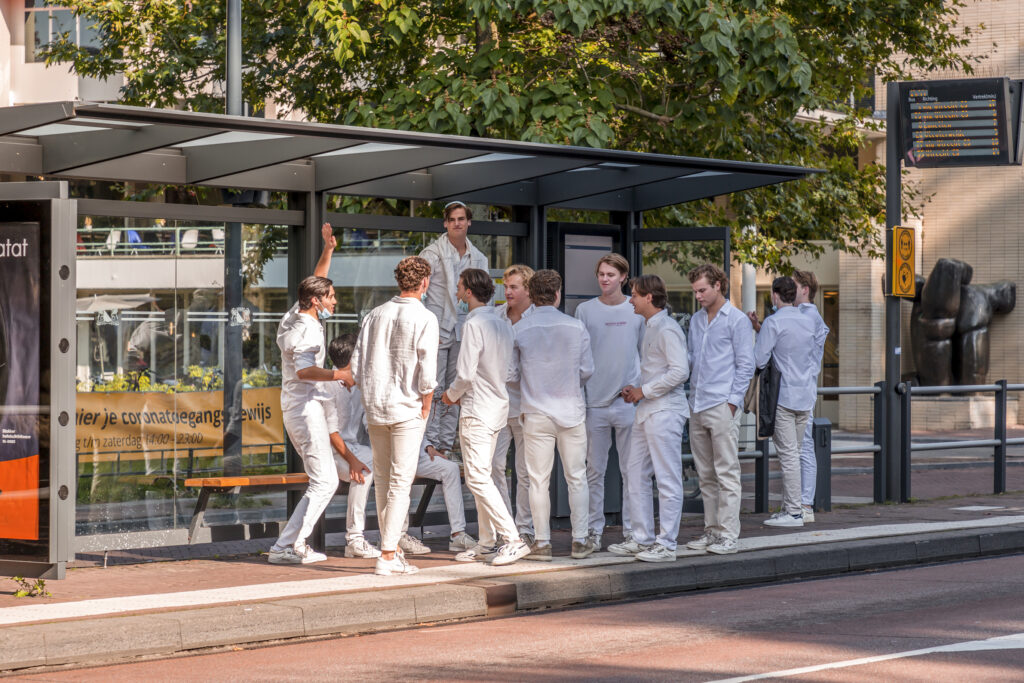
You may have heard of Dutch frats being particularly…eccentric.
Dutch frat boys tend to be pretty easy to spot (or smell). Image: Dreamstime
While it may have started as hazing, this nasty tradition continues well into membership. Perhaps it’s for luck, perhaps it for shock and awe: either way, it’s more than a little gross.
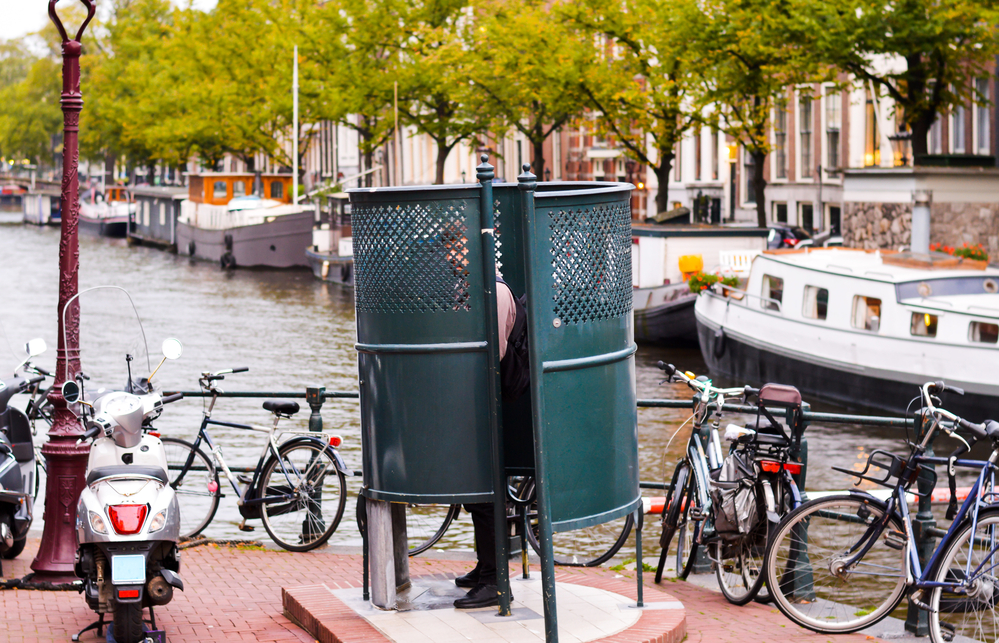
They’re curved in shape, made of iron or stone, and are raised just enough for you to make shameful eye contact with the user while seeing (and smelling) as their pee splashes on the floor below — enough said, but here’s a photo anyway.
Never make eye contact with a man inside an Amsterdam urinal. Image: Depositphotos
6. Inspect their poep
Speaking of Dutch bathrooms, have you noticed a shelf in your toilet? This is called an inspection shelf, an examination shelf, or a plateau toilet — it goes by different names.
The design dates back to many moons ago, where, in theory, the short shelf in the bowl allows for the examination of any (ahem) abnormalities in your 💩 before flushing. Useful, I guess…
Traditionally, after being salted and dipped in onion, the herring is held by the tail, hung over the mouth, and munched from below.
FYI, there’s also a herring ice cream flavour in the Netherlands — we felt you should know. 🍨
8. Lick their fingers and utensils
Even KFC dropped its Finger-Lickin’ Good cheer due to the pandemic, but the Dutchies sure haven’t.
Finger licking, followed by a spoon lick (maybe even a flessenlikker lick), then back into the family-sized pindakaas jar. Shared saliva, lekker. 😍
9. Eat filet Americain
This Dutch delicacy, in a nutshell, is an unappealing raw-meat spread that goes on bread or crackers, or can be combined with raw onions and/or boiled egg.
Suspicious raw meat spread with a lethal reputation. Source: Takeaway/Wikimedia Commons/CC3.0
You may encounter this monstrosity of a dish at a Dutch lunch or as a party appetiser. 🍞
10. Wash your hands? Never heard of it
Goes hand in hand with the finger-licking — no pun intended.
Even during the pandemic, the Dutch were stubborn on this one.
Dutchies not washing their hands is also, unfortunately, associated with visiting a particular room or space. 🚾
11. Wear outside shoes inside the house
Clogs or no-clogs, I think we can all agree on the foul things that can hang from the bottom of outside shoes — yet the Dutch don’t really differentiate between outside and inside shoes at all.
Concepts such as taking off your shoes when visiting a guest or switching to inside slippers when returning home are simply non-existent in the Dutch cultural dictionary. 👞
And those are all of the gooey, green, and gross habits the Dutch do. 🤢 At least we hope that’s all…
Got any other gross Dutch habits? Tell us in the comments below!
After several customers complained to the store about finding dead muizen(mice) in their bags of frozen green beans, Jumbo is removing the product from its shelves.
Imagine this: you’ve had a long day at work, and now that you’re home, you just want to make a quick, easy, healthy dinner for yourself before you crash face-first onto your pillow.
You open your delicious bag of green beans (your favourite veggie), pour them into the boiling pot, and — what’s that cold fuzzy thing floating in the middle?
A mouse!?
Just like that, Jumbo’s ruined your evening (and your appetite).
What happened?
Multiple customers, from Limburg to Rotterdam, called in and reported finding dead mice in the in-house brand of frozen green beans from Jumbo, reports NU.nl.
An affected couple in Rotterdam told AD that the experience made them “incredibly nauseous.” No kidding!
The mice were found in bags purchased in the last few weeks; as a precaution, Jumbo is removing all frozen green beans from its stores.
What can be done?
If you’ve purchased these green beans from Jumbo in recent weeks and have concerns, you can return the bags to the store for a full refund.
For now, it’s unclear how the mice got into the bags in the first place. Jumbo is working with the supplier for their private brand to investigate this gross mystery, reports NU.nl.
Let’s hope the future holds nothing but squeaky-clean (pun intended) bags of green beans. 😉
Have you been affected by the mouse-in-green-bean fiasco? Let us know in the comments!
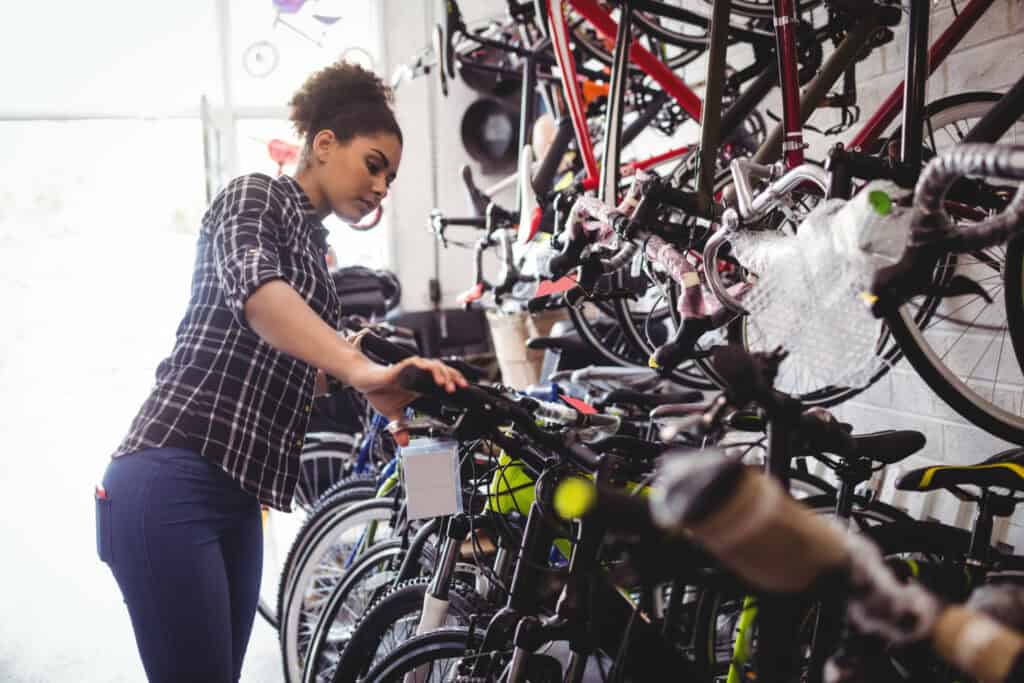
Buying a bike in the Netherlands isn’t just a transaction; it’s practically a rite of passage. You’re about to join the ranks of a cycling nation that takes its two-wheeled transport very seriously, so what should you consider?
Take it from a seasoned international, choosing the right bike can mean the difference between Dutch cycling bliss and expensive regret.
Here are some things to take into account when choosing your ride. 👇
1. Should you get a new or a second-hand bike?
Let’s be honest, that shiny new bike is going to look awfully tempting to thieves. The harsh reality is that almost everyone who lives here has had their bike stolen at one point.
So ask yourself the question: Do you really need a brand new bike? Or will a more affordable second-hand bike do?
Second-hand bikes are far less attractive to bike thieves, and if yours does get stolen, at least you have the comfort of knowing you didn’t pay €500 for it.
If you do go the second-hand route, Marktplaats and Facebook Marketplace are popular options.
However, there are also plenty of bike shops across the Netherlands that sell second-hand bikes if you want to take the more official route.
Univé’s bike insurance covers snazzy new e-bikes to second-hand bikes and everything in between. And the best part? Premiums start at just a few euros per month.
Do you plan on cycling to and from the supermarket, your friends’ houses, and the train station? Then a stadsfiets (city bike) or omafiets (grandma bike) will do you just fine. You’ll see them everywhere, and they’re perfect for casual everyday life.
Bakfietsen (cargo bikes) are brilliant if you’ve got kids to ferry around, but they’re expensive and increasingly targeted by thieves.
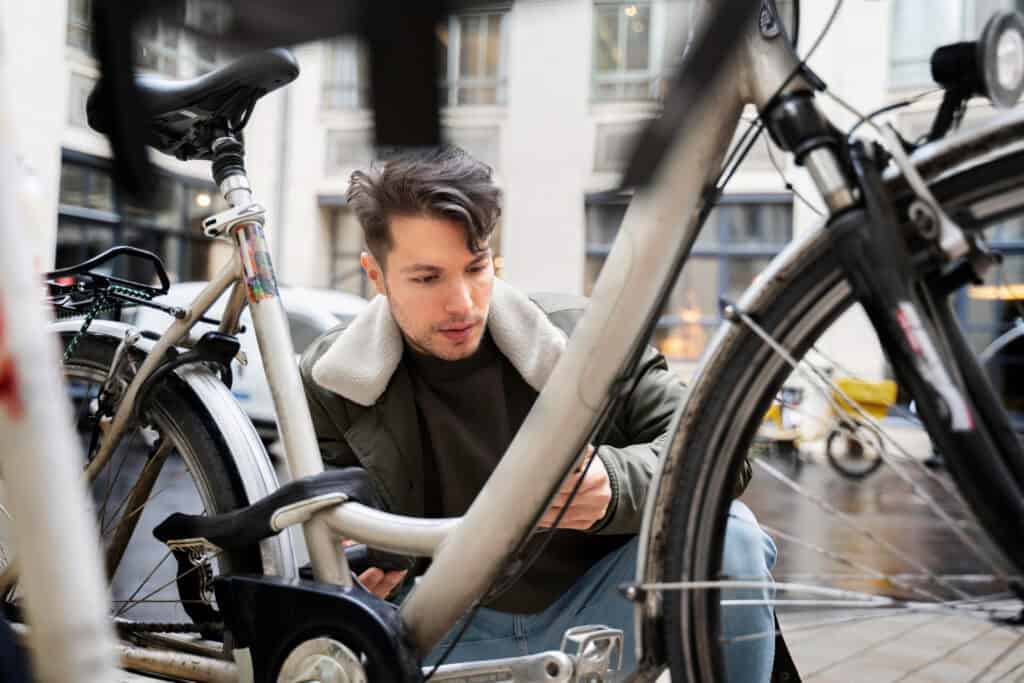
Consider what you’re going to be using the bike for. Image: Freepik
Electric bikes are fantastic for longer distances if your commute is especially tiresome, but they come with a hefty price tag.
A general rule of thumb is that, unless you’re planning cycling holidays in Limburg, you probably don’t need anything fancy. This is the Netherlands: it’s flat.
3. Do you really need gears?
Again, the Netherlands looks like someone took an iron to it. It’s super flat, which means gears have become somewhat optional, and most people ride single-speed bikes
That said, if you’re planning longer distances or live somewhere with bridges, a bike with three to seven gears offers more flexibility.
However, I will say the beauty of the single-speed Dutch bike is its simplicity. There’s less to maintain, and less to go wrong.
4. Back-pedal or hand brakes: which braking system suits you?
The terugtraprem (coaster brake) is often a shock to internationals. Why? Because you brake by pedalling backwards.
Believe it or not, it’s the standard on most traditional bikes, and once you get used to it, it’s second nature.
The advantage of this is that your hands stay free for carrying shopping bags, holding an umbrella, or just clinging onto the handlebars for dear life.
In the Netherlands, many bikes brake by cycling backwards. Image: Freepik
Hand brakes are standard on more modern city bikes and electric bikes.
However, if these are what you’ve grown up with and what you’d prefer to use, you can still find stadsfiets and omafiets with this braking system (you may just have fewer options).
5. Do you have a high-quality lock?
Let’s talk about the elephant in the bike shed: locks. With bike theft as rampant as it is, your lock choice is arguably just as important as your bike choice.
The “10% rule” (spending 10% of your bike’s value on a lock) gets thrown around a lot, and while it’s not a bad guideline, experts emphasise something simpler: buy the best lock you can afford.
In the Netherlands, look for locks with an ART rating. The ART Foundation independently tests locks for security, and many insurance companies require ART-certified locks.
An ART 2 rating is the minimum for most bicycle insurance policies.
Dutch law requires working front and rear lights when cycling in the dark or in poor visibility conditions.
Something that people often forget is that you’ll also need reflectors: a red one at the back, yellow ones on your pedals, and white or yellow reflective surfaces on your wheels.
Thankfully, many modern bikes come with dynamo lights that power themselves as you cycle, meaning you’ll never forget to switch them on.
7. Is the bike the right size for you?
Dutch bikes are designed for upright, comfortable cycling, but that doesn’t mean any ol’ bike will do.
Make sure the bike fits you properly. For example, you should be able to touch the ground with your feet when seated (not awkwardly teetering like a child who stole their big brother’s bike).
You have to make sure you fit on your bike. Image: Freepik
If you’re buying online, make sure to also ask about the frame size. A poorly fitted bike will leave you with an aching back and sore knees.
8. Which bike accessories do you need?
A basket or crate is practically essential for carrying groceries (or, as the Dutch like, basically anything, living or inanimate that will fit in there).
A bell is also legally required and culturally essential, as you’ll be ringing it constantly.
Consider side bags if you commute, a phone holder for navigation, and perhaps a rain cover for your bag. Let’s remember that the Netherlands is also extremely wet.
9. How much should you actually spend?
A functional second-hand bike from a private seller will run you anywhere from €50 to €150. Facebook and Marktplaats are the cheapest options, but you’re also taking a bit of a gamble.
Second-hand bikes from shops typically cost €80 to €180 and often come with a warranty and service check, which can be worth the extra euros for peace of mind.
Meanwhile, new bikes from shops start at around €200 and can easily exceed €500 for anything with gears or modern features.
Electric bikes are where the big bucks are spent, with prices starting at around €1,000 and going up from there.
Remember to budget for a good lock (€30-€80), lights if they’re not included, and possibly insurance. If you can’t afford to lose your bike, you can’t afford to cheap out on security.
Now, do you know what bike you want? Great. Go get your wheels, and introduce yourself to the cycle lanes, but remember to be careful and watch out for omas on surprisingly fast mobility scooters.
Did you fall for a flashy new model only to have it stolen within a week, or are you still riding the rusty €50 beauty you bought five years ago? Share your bike-buying wisdom (or horror stories) in the comments below.
Browsing for a Netflix show or film to watch on a gloomy day in the Netherlands? Maybe you’re about to visit your Dutch partner’s parentsor simply want to brush up on your Dutch skills. Well, we’ve got a treat for you!
Watching films and series in Nederlands is a great way to develop comprehension skills. This is the strategy the Dutch use to speak near-perfect English (by not dubbing English movies or series) — so they must be onto something! 🎬✨
Grab some popcorn, and let’s take a look at some Dutch films and series available on Netflix now! 🍿👀
1. Anne+: De Film
Anne+ is a two-season series about the life of a 24-year-old lesbian living in Amsterdam. After breaking up with her girlfriend, she reflects on her love life over the years and how it shaped who she is.
Sadly, this series is currently not available on Netflix — but geen paniek! We have a close enough alternative for you.
Due to its success, Anne+ was also made into a movie. The main character, much like in the series, grapples with the challenges of finding love while still growing and changing.
The movie is a lovely but realistic exploration of sexuality, relationships, and love! 🏳️🌈❤️ It’s also great if you’re looking to add a dash of Dutch to your day.
📺 Type: Film 💪 Minimum Dutch level recommended: Beginner ✅ Why it’s great to learn Dutch: If you want something easy for beginners, then this is the movie for you! The storyline is easy to follow and to the point. Sometimes, the dialogue does go fast, but the conversations are normally very short and rich in everyday vocabulary.
2. Bankier van het Verzet (The Resistance Banker)
The Resistance Banker takes place during World War II in Nazi-occupied Amsterdam.
The film tells the story of a Dutch banker who risked it all to build a secret underground bank to fund the Dutch resistance against the Nazis. How heroic!
Bankier van het Verzet is suspenseful, thrilling, and absolutely heart-wrenching. It hits even harder when you find out it’s based on true events. 😔
📺 Type: Film 💪 Minimum Dutch level recommended: Intermediate ✅ Why it’s great to learn Dutch: The actors speak quickly but clearly in this film. The phrases aren’t too difficult, but the plot is fast-paced. Some parts are also in German with Dutch subtitles. It’s definitely a film for someone who’s been studying Dutch for a while.
3. Keizersvrouwen (Women of the Night)
In the mood for a thrilling Dutch crime series with a female protagonist? Look no further! Keizersvrouwen is available to stream on Netflix.
The show follows Xandra, a woman with a stable, happy life with her husband and daughter. However, she longs for something more.
When she gets an opportunity to organise an event for her friend’s escort agency, she is drawn back into the dark underbelly of a world she thought she had escaped forever.
📺 Type: Series 💪 Minimum Dutch level recommended: Intermediate ✅ Why it’s great to learn Dutch: This series has a medium pace, with sentences that aren’t too long or complicated. The storyline can sometimes be difficult to keep up with, but the actors generally speak clearly.
4. Liefde zonder grenzen (Love without borders)
As you might have gathered, this is a movie about love — but it is no usual rom-com!
Rather, “Love without borders” explores love beyond its romantic form.
It tells the story of a recently widowed Dutchman and his children as they each navigate their love lives differently while also learning to love each other — without renouncing a touch of humour!
📺 Type: Film 💪 Minimum Dutch level recommended: Intermediate ✅ Why it’s great to learn Dutch: As an outsider, the language native speakers use in more intimate settings, such as their family and dating life, can be quite hard to access. This film is a great opportunity to get a glimpse of that while also serving as advice for your own love life. 😉
5. Undercover
Okay, so maybe you’ve already binged tons of drug-related crime series like Breaking Bad or Narcos. Good news! There’s a Flemish/Dutch drama that is worth just as much hype — AND it’s based on a true story. 🤯
Undercover follows secret agents Bob Lemmens (Belgian) and Kim de Rooij (Dutch), who are investigating a drug kingpin, Ferry Bouman.
They track him down to Limburg, the ecstasy capital of the world, and pose as friendly neighbours at a campground where Ferry spends his weekends. 👮
The series was very well received, with IMDb giving the show a 7.8/10! Who says there aren’t any good Dutch shows out there?!
📺 Type: Series 💪 Minimum Dutch level recommended: Intermediate ✅ Why it’s great to learn Dutch: If you’re looking for a slow burn to expand your Dutch accent skills and learn a little Flemish, we recommend taking on this challenge once you are at a more intermediate level. The actors speak clearly and at a moderate pace, but the plot can be complicated, so be prepared to pay attention!
6. Ares
In the mood for something scary? This Dutch horror series will definitely give you goosebumps! 👻
Ares follows the story of a first-year medical student in Amsterdam, Rosa Steenwijk. She joins a secretive Dutch student society and uncovers dark secrets and nightmarish experiences that will leave you gasping — and perhaps a little wary of your local student groups. 👀
The series also has subtitles in TONS of languages, including English, Arabic, and Korean.
Trigger warning: Sexual assault, suicide, hazing, gore. Definitely don’t watch this before bed, or if you don’t like blood or gore!
📺 Type: Series 💪 Minimum Dutch level recommended: Intermediate ✅ Why it’s great to learn Dutch: If you’re an intermediate learner and you’re looking for a Dutch series that’s suspenseful, intense and gory, then look no further than Ares. Also, if you’re a student, this is also a good place to pick up Dutch student slang, as well as the Amsterdam dialect.
7. Pietje Bell (Peter Bell)
If your childhood was shaped by classics like Charlie and the Chocolate Factory and Matilda, then this is the Dutch film for you!
Based on a book series, the story follows Pietje Bell, a shoemaker’s son in Rotterdam. Pietje is known for getting into all kinds of antics and trouble at school and in the town, much to the dismay of the townsfolk.
However, his pranks and adventures become so famous that they make the newspaper.
But when he tries to stop a criminal, nobody believes him! So it’s up to Pietjeto to save the day! ✊
📺 Type: Film 💪 Minimum Dutch level recommended: Beginner-Intermediate ✅ Why it’s great to learn Dutch: This film is great for adults and kids starting out with the Dutch language. As a children’s film, the language isn’t overly difficult, and the actors speak clearly and in an exaggerated manner. A good pick for the family! 👩👩👧
8. Mijn beste vriendin Anne Frank (My best friend Anne Frank)
Another movie set against the backdrop of Nazi-occupied Amsterdam, My Best Friend Anne Frank is the first Dutch cinema film to tell the story of the most famous Holocaust victim in the Netherlands.
It’s told from the perspective of Anne’s best friend, Hanneli Goslar, and explores themes of friendship, persecution, and resistance.
If you’re a history buff who isn’t afraid of shedding a few tears, this film is the perfect choice for you!
📺 Type: Film 💪 Minimum Dutch level recommended: Beginner-Intermediate ✅ Why it’s great to learn Dutch: Although the movie deals with a heavy subject matter, the actors speak clearly and slowly. But let op! Parts of the movie are in German, so turn on subtitles — or start another language-learning journey. 😉
9. Crypto boy
This Dutch drama deals with numerous issues that are unfortunately oh-so-relevant.
It follows the story of Amir, who can’t see eye to eye with his father about the future of their failing restaurant in a rapidly gentrifying neighbourhood.
At the brink of financial collapse, Amir sees hope for financial freedom in a cryptocurrency startup but discovers that the crypto world comes with more challenges than solutions.
The drama explores family relations and class issues while also teaching you some Dutch slang. 💪
📺 Type: Film 💪 Minimum Dutch level recommended: Intermediate ✅ Why it’s great to learn Dutch: Although the plot is easy to follow, the language used in Crypto Boy is often colloquial, and some actors have accents. It’s recommended that you’re somewhat familiar with Dutch already, but if you’re looking to speak like an Amsterdam local, this is the movie for you.
10. Toon
Do you ever feel tired of social media? So does the protagonist of this Dutch sitcom, introverted jingle writer Toon, who accidentally becomes a social media sensation after performing a song at his sister’s party.
The show hilariously portrays the absurd world of social media fame while also exploring the personal issues Toon faces due to his unwanted fame.
It’s awkward, it’s silly, and it’s a great pick if you’re looking for a show to help you unwind.
📺 Type: Series 💪 Minimum Dutch level recommended: Intermediate ✅ Why it’s great to learn Dutch: If you already have a grip on the basics of Dutch, Toon is a great way to learn some new informal phrases and language usually spoken among friends. Some actors speak fast or mumble, but the plot is easy to follow — so this is a great listening comprehension test!
Ready to leer Nederlands while sitting on the couch? With this list, you’re well on your way — succes! ✨
Which Dutch series or films would you add to this list? Tell us in the comments below!
With 2.5% interest on your cash, interest paid monthly, and no minimum deposit, Scalable’s new Overnight account is here to boost your savings.
If your savings are parked at a Dutch bank, there’s a very good chance they’re earning far less than they could be. The solution is simple: switching to a savings platform that offers you better rates.
This post might have affiliate links that help us write the articles you love, at no extra cost to you. Read our statement.
Meet Scalable Capital’s 2.5% Overnight account
With no minimum deposit, no fixed term, and no nasty surprises buried in the fine print, Scalable’s new high-interest account is a very welcome breath of fresh air.
Thanks to a generous 2.5% (versus the 1–1.5% on offer at most Dutch banks), you’re looking at a much higher return on your savings. Let’s put that into concrete terms:
If you save €5,000 with Scalable, you’ll earn €125 at the end of the year. With a regular Dutch bank, you’ll earn between €50 to €75.
If you save €10,000 with Scalable, you’ll earn around €250. With a regular Dutch bank, that figure would be around €100 to €150.
That’s a meaningful gap, especially if you’re holding even larger balances.
These are some of the highest rates we’ve seen in years! Image: Freepik
We’re also big fans of how the Overnight account lets you put uninvested cash to use. Whether you’re wary of dipping a toe in the world of investing or just want to build up an emergency fund, Scalable offers you a platform to earn high interest on that cash.
Access higher interest rates, without giving up flexibility
In the Netherlands, higher interest rates often come with additional strings attached.
Fixed-term deposits (deposito’s) can generally get you better rates than regular savings accounts, but you’ll be locking your money away for months or even years.
With Scalable Capital’s Overnight Account, you get the best of both worlds: high interest rates and unfettered access to your cash. Interest is calculated daily and paid monthly — and you can withdraw at any time, with no minimum amount required.
And if you’re not yet a Scalable Capital client, opening an account is fully digital, completely free, and takes less than a minute.
Built for modern savers (and investors)
If you thought Scalable’s generous 2.5% interest rate was its most attractive feature, you’ve barely brushed the tip of the iceberg.
In addition to its savings options, it’s a full investment platform — covering ETFs, stocks, crypto, bonds, savings plans, and more.
Access high interest rates and a plethora of investment options, all from one app. Image: Scalable/Supplied
With a cash account built right in, transfers between Scalable’s savings account and its trading wallet are instant, so your money can keep earning interest right up until the moment you need it for an investment.
In other words, you can say “doei” to idle cash sitting in a brokerage clearing account earning nothing while you decide what to do with it. 😉
This makes it an ideal fit for:
savers, who are sick of getting shortchanged by the big Dutch banks,
investors, who just want to put their uninvested cash to use,
or just someone who’d like to build a financial cushion, without sacrificing flexibility for a marginally better rate than those offered by traditional banks.
Is Scalable’s Overnight account really worth it?
Oké, let’s get to the burning question: is signing up for Scalable’s Overnight account really worth the 2.5% interest you’d receive?
As a team of internationals who’ve spent long enough watching traditional Dutch banks pay out next to nothing, we found that this account offers a straightforward, low-effort upgrade.
It’s accessible with Scalable’s free plan, with no minimum or maximum deposit limits, so we didn’t need to opt for a PRIME+ subscription.
Combining affordability with high interest rates and easy withdrawals? A piece of cake to Scalable. Image: Freepik
Safety was another factor for us to consider. However, with a statutory deposit guarantee up to €100,000, our cash and money market funds are protected by both Scalable and its partner banks.
Of course, with this being an investment account, there are a few things to know before you sign up:
The rate is variable: The interest rate can shift depending on market conditions, so it’s worth keeping an eye on it. However, that being said, the same is true of Dutch savings accounts.
It won’t replace your regular betaalrekening: You’ll still need a Dutch current account for things like direct debit payments and Tikkie. You can think of the Overnight Account as a home for your savings, not your day-to-day spending.
Are you still keeping your savings in a Dutch bank account, or have you switched to a platform that pays better? Let us know in the comments.
Current petrol prices have broken the Netherlands’ 2022 record of €2.505 per litre. As of this morning, the price of petrol sits at €2.508.
As Iran continues to block the Strait of Hormuz, oil tankers in the region are unable to reach their destinations.
According to UnitedConsumers, petrol prices are now above €2.50 a litre, higher than they were during the initial invasion of Ukraine in 2022.
Despite these worrying numbers, the Dutch cabinet has indicated that an energy crisis is not necessarily imminent.
What’s happening?
As of last week, the Netherlands has joined other member countries in contributing oil from their reserves to the collective release organised by the International Energy Agency.
This move will hopefully keep markets steady as issues regarding the Strait of Hormuz are resolved.
The Dutch cabinet has indicated that it will closely monitor developments in the region.
In the case of further escalation or disruptions, several plans to support consumers and keep energy prices from soaring are being discussed, according to Nu.nl.
For now, though, the cabinet says there are no critical fears of a gas/petrol shortage, but things remain ‘uncertain.’
What can you do?
While it’s certainly good news that the cabinet is not expecting a crisis, consumers are still stuck buying higher-priced petrol till things are sorted.
There are ways to keep your petrol expenses down, however.
Some petrol stations are cheaper than others — unmanned locations, for instance, have lower prices, reports Nu.nl.
Plus, petrol stations along highways are reportedly more expensive, so avoid them!
Smooth driving also makes a real difference. Keeping a steady speed uses significantly less fuel than stop-start driving.
And finally, though this may seem obvious, take advantage of public transport. Even if it’s a bit more inconvenient, at these prices, the bus is sure to help you out.
Have you been affected by rising prices? Let us know in the comments!