If you’re glued to your window waiting for a DHL Express delivery, here’s your sign to step away from the curtains.
Employees across the south of the Netherlands are striking today, Monday March 23, and your parcel likely isn’t coming.
Five locations are affected: Breda, Rotterdam, Eindhoven, Beringe, and Den Hoorn. The action runs from 4 AM to 11 PM, making this the third strike in eight days, following a nationwide walkout on March 16 and a follow-up in Beringe on March 18.
So what’s actually going on?
The workers’ CAO (collective labour agreement) expired on December 31, 2025, and negotiations have been deadlocked ever since.
DHL Express is offering a 3.25% pay rise from July 2026. The unions — FNV and CNV — want 4% backdated to January this year, full sick pay maintained, and overtime properly compensated.
However, DHL wants to cut second-year sick pay from 100% to 90% and quietly ditch overtime supplements through the new agreement.
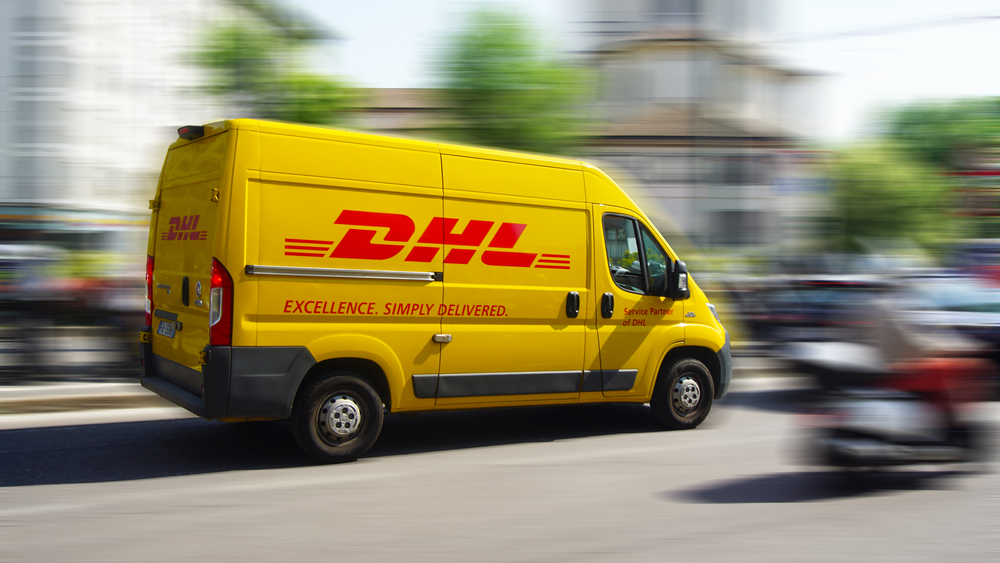
DHL Express vans will be at a standstill today. Image: Depositphotos
The union argues this leaves staff worse off in real terms, especially as wages haven’t kept pace with inflation. Meanwhile, DHL Express is posting millions in profit — and sister company DHL e-Commerce employees already got the 4% rise being denied to Express staff.
“The limit has been reached,” said FNV’s Jacqueline Lohle. “Workers are demanding respect, a decent CAO, and fair pay.” Six more depots have reportedly signalled they’re ready to join future strikes.
You can track your shipment via dhlexpress.nl. And while you wait, consider that Dutch delivery hasn’t exactly had a flawless reputation to begin with — at least today there’s a legitimate excuse for why it didn’t ring your bell.
Are you affected by today’s DHL Express strike? Let us know in the comments.
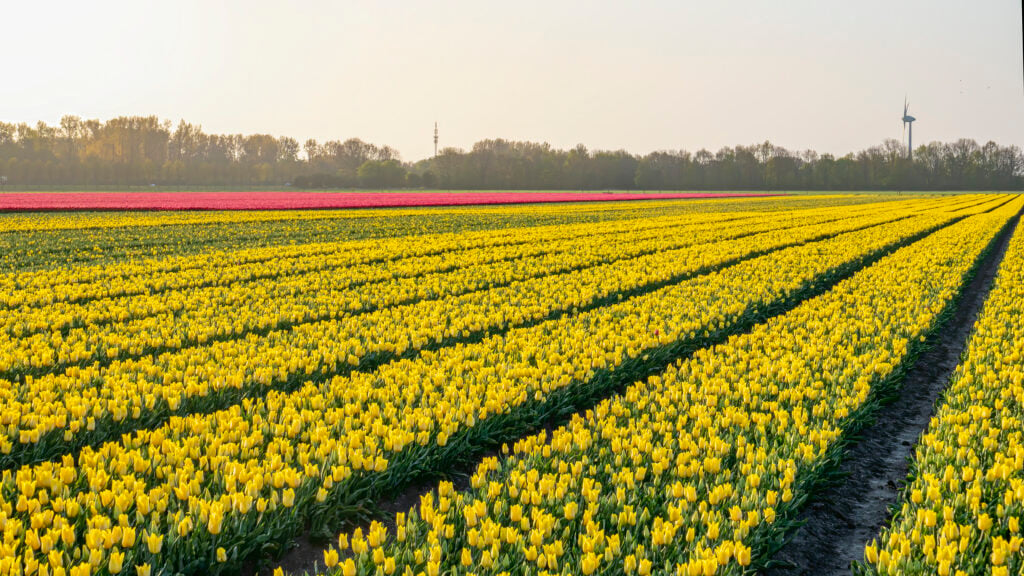
It’s finally here: tulip season in the Netherlands, that time of year when you see fields full of these colourful flowers all across the country. But where to best see them?
There are some stunning spots to see the tulips between Amsterdam and Leiden — but these aren’t the only places to walk among these gorgeous flowers. 🌷
With the weather brightening up, spring is the perfect time to get out of the house and take in the Dutch landscape. The Netherlands boasts a range of floral delights, including the famous Dutch tulip and plenty of cherry blossoms. 🌸
There are tons of top locations, but these are the best tulip fields in the Netherlands. 👇
Amsterdam Tulip Festival
The Tulip Festival has planted a tulip for everyone in Amsterdam. It’s truly a sight to behold!
The tulip festival began in January. “A tulip for every Amsterdammer” is their motto, often planting up to 25,000 tulips in November, ready for spring. In the coming weeks, people across the Netherlands will marvel at the simple beauty of the tulip.
Now, the tulip festival can be enjoyed in Amsterdam in over 85 locations, and blooming flowers can be admired in various public areas of the city, in the gardens of museums and hotels, and by notable buildings.
The blooming period of tulips in the Netherlands is one of the most beautiful sights in the world. 🌱
Usually, there are flower parades, markets, as well as long fields of flowers, and you can ride your bike around the city to see it all.
One thing’s for sure: there will be tulips everywhere.
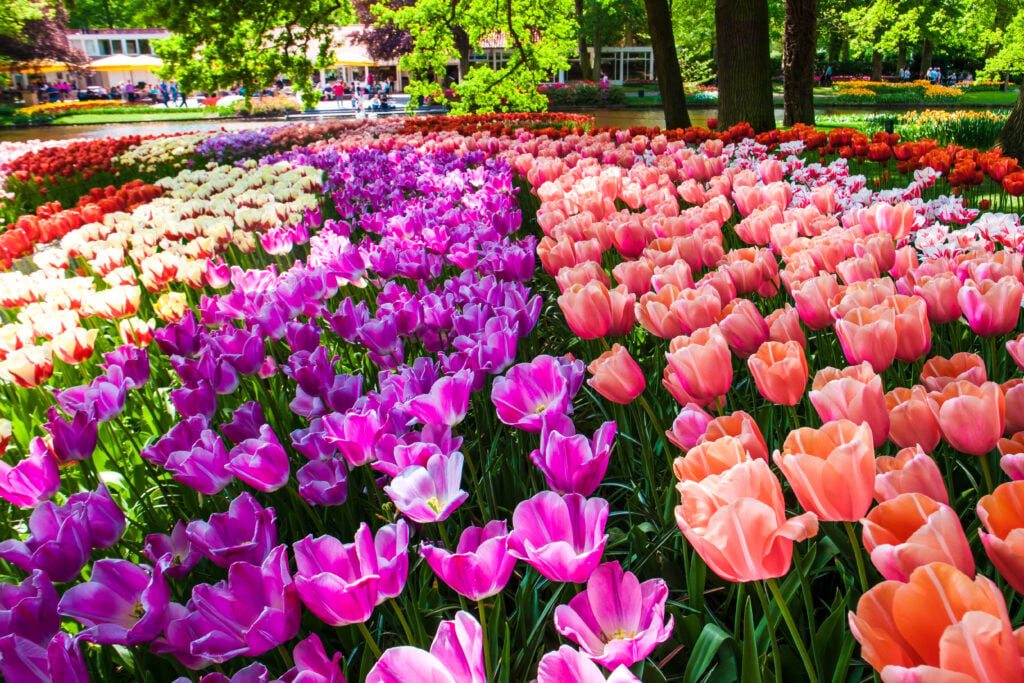
A beautiful and colourful tulip season! Image: Freepik
Tulip fields near Amsterdam
So, where can you find the most beautiful assortment of tulips during the 2026 tulip season?
All the public displays in Amsterdam are free to enjoy, although for some museum gardens, ticket pricing applies. Besides that, there are various gardens, parades, and fields that let you admire the flowers in all their glory. 👑
De Keukenhof: the Netherlands’ most famous tulip gardens
A lot of people choose to visit Keukenhof for good reason: it’s massive, and there are many separate events to check out once you make the short trip to the outskirts of Amsterdam.🚗
The park is open between 8 AM and 7 PM, and you can expect to pay €21 for adults and €10 for children from the age of four, while kids under three can enjoy the park gratis (free). Advance booking is strongly recommended. 🥳
LET OP: The park is open from the March 19 until May 10, so be sure to visit during these dates so you don’t miss it!
The Keukenhof Flower Parade (“Bloemencorso Bollenstreek”) has floats adorned with arrangements of hyacinths, daffodils, and of course, tulips. This year, the main parade will be held on Saturday, April 18.
The festivities take place just outside of Amsterdam, and the flower parade rides from the seaside town of Noordwijk via Lisse to the historic city of Haarlem.
It’s truly a sight to see, and each year, more than a million visitors from all over the world enjoy the parade. 🎊
Where to see tulips outside of the capital?
If you don’t live near Amsterdam and don’t feel like making the trip to Keukenhof, we don’t blame you.
So, other than the capital, where else can you find tulips in the Netherlands? 🤔
Noordoostpolder: escape the crowds
Noordoostpolder is located north of Amsterdam and is one of the Netherlands’ biggest tulip areas.
It’s a family favourite and there’s even a driving and cycling route you can take to enjoy the best views! There’s also a plucking field specifically for taking some keepsakes home with you. 😋
Dutch agriculture is at the heart of this part of the country. It houses the majority of tulip fields in the Netherlands, with over 1,000 hectares just dedicated to growing them.
You can reach the Noordoostpolder by car, as it is just over an hour’s drive from Amsterdam or Utrecht.
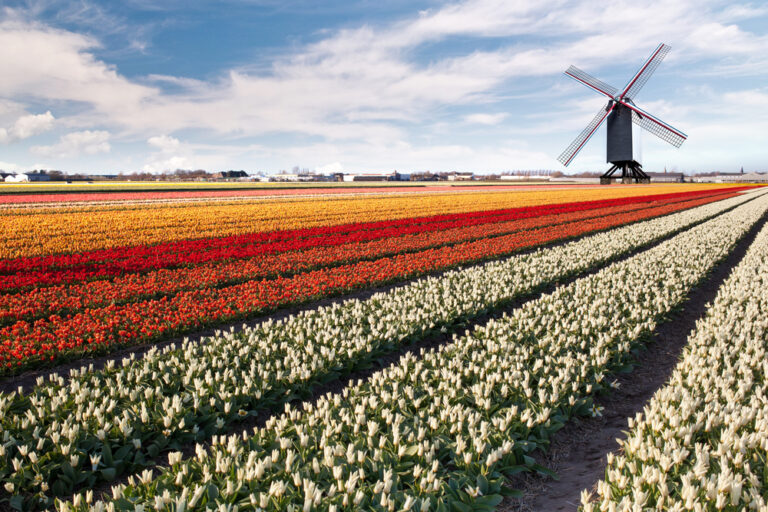
Look at those colourful beds of yellow and red tulips in Noordoostpolder! Image: Freepik
Zeeland: aka “Zeeuws-Vlaanderen”
This is tulip-hotspot is popular for those who are looking for a nice day trip from Antwerp. The fields here are a bit smaller, but they’re also closer together, meaning you’ll truly feel surrounded by tulips.
As one of the lesser-known beauties of the Netherlands, these fields are for those that are looking to go off the beaten track — after all, a little adventure never hurt anyone. 🤷♂️
The best spots to look are around the villages of Nieuw-Namen, Clinge, Koewacht, Graauw (near the Liniedijk), Lamswaarde and Absdale.
The Bulb Region near Leiden
This is where most people go if they want to see tulips in the Netherlands. Heck, it’s the tulip fields where our video plays out:
The tulips of Noord Holland and West Friesland
As you can tell, most of the Dutch tulip fields seem to be located in the west of the country — but why? Well, the secret is in the soil. 🪴
In Noord-Holland, you’ll be able to breathe in the fresh country air and clear your mind at Andijk, Enkhuizen or Bovenkarspel, with a huge array of tulip fields. 🌬️
West Friesland, which rests at the top of Noord-Holland, is also home to thousands of stunning bulbs. Kop van Noord-Holland, for example, can be reached by jumping on an inter-city train, it’s about an hour’s journey from Amsterdam.🚆
Remember, some events are ticketed, so make sure to check the websites before taking the trip!
Now go forth, and smell the flowers! 💐🌷
Know any other spots to see the tulips in the Netherlands? Tell us in the comments below!
As an American in the Netherlands, my mind is boggled, and my soul soothed by the sense of civic duty that shines through at each municipal election. Let’s talk about it.
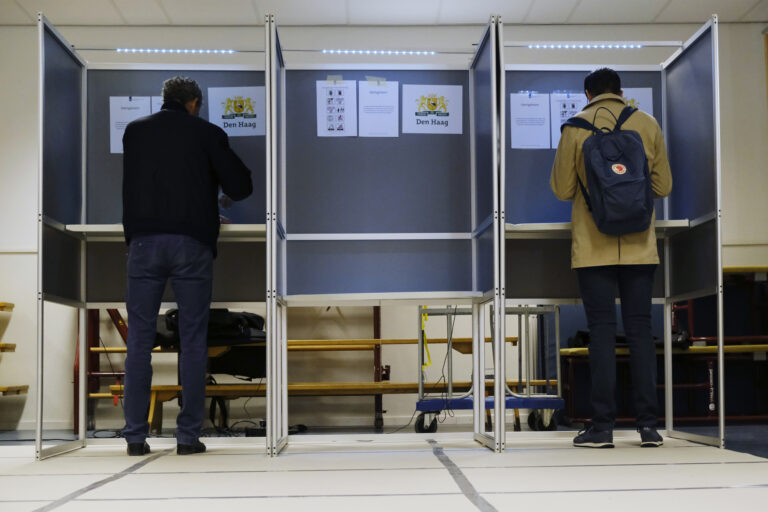
During the most recent municipal election, voter turnout in the Netherlands reached up to 53.7% in total, according to Nu.nl.
Now, to some, that might sound meagre. It’s barely more than half, after all. To me, though, it’s magnificent.
The magic of a local voting queue
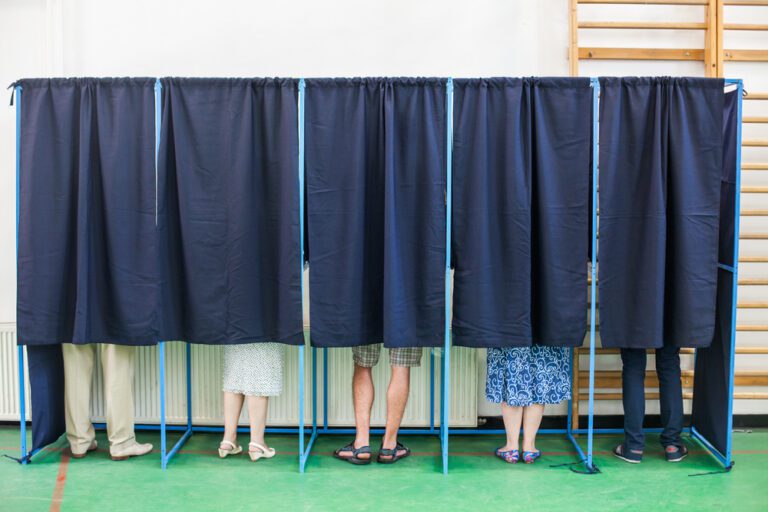
As I wandered over to the local library to place my vote on election morning this past Wednesday, I could hardly believe my eyes.
With toothpaste still on my breath, I witnessed a glorious queue – nay — a golden chain shining with engaged citizens, spilling out the sunshine-lit doors.
My feeble little American heart jumped. Could all these people really be eagerly waiting to cast their ballot? For a local election?
I witnessed, in real time, just how much people care. And it was absolute magic.
Why was it magic?
Local elections are nothing like this in the United States.
For reference, these are, in importance, the most equivalent to municipal elections in the Netherlands, where you vote not only for your leadership in the gemeente (municipality), but also in the stadsloket (city-region).
However, in America, election day for anything local (the mayor, county officials, state representatives) is often just another Tuesday, lost in the swarm of a busy life.
A few half-hearted signs grace the lawns of a rare concerned citizen, a speech is held in the auditorium of the local high school, but no one really turns up, or cares.
And it shows: for instance, in US mayoral elections, election turnout is (even in major cities like Chicago), in the 30 to 35% range. That’s astonishingly low.
Even for major presidential elections, US voter turnout hovers around 64%, according to Pew Research.
For midterms, the number dips down to around 40%. This alone is absolutely shocking: midterm elections are no small thing — they determine who controls Congress for the remainder of a President’s term.
Yet even then, Americans don’t turn up as they should.
So for me, a political science student who has been begging her American peers to vote in everything they can, seeing a percentage above 50% in a local election is absolutely invigorating.
Now, for the hope
After that mountain of depressing statistics, it’s time for some positivity.
While things are bleak in my home country, seeing regular Dutch people show up and vote for the betterment of their community and, frankly, for themselves, keeps me hopeful.
It’s not just a duty to vote. It’s an absolute privilege, and seeing how seriously the Dutch electorate takes their governance restores my faith that people care.
I lived far too long in a place where I believed people were simply too apathetic and busy to exercise their one influence on politics. For a long time, it broke something in me.
So thank you, Amsterdam, and the Netherlands at large. You’ve given me hope that when people know their rights and know they have power, they show up.
Did you vote in this last election? Let us know about your experience in the comments!
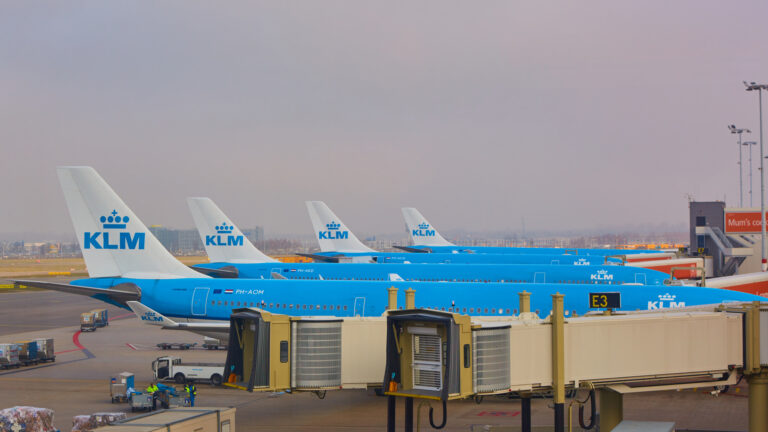
Citing safety concerns amid the conflict and unrest caused by the US-Israeli war on Iran, KLM has cancelled all flights to and from Dubai, Riyadh, and Dammam until May 17.
KLM released a statement yesterday afternoon to inform customers about the change of plans.
The airline has coordinated with the Netherlands Ministry of Foreign Affairs in recent weeks to repatriate stranded travellers in the region.
Alas, commercial flights are, for now, off the table.
What can you do?
If the cancellations affect your travel plans, you can still get your money back.
According to yesterday’s statement, affected passengers can “change their flight or request a refund on the KLM website.”
It seems, for now, that travel will be disrupted until the airline can guarantee the safety of passengers and crew.
For more information on KLM’s flights in the region, you can check out their Travel Alert page.
Have you been impacted by these changes? Let us know in the comments!
Coughs, splutters, headaches, injuries, burnout, and chronic illnesses: all things that might force you to take sick leave in the Netherlands. 🤒
But before you call in sick to your Dutch workplace, you’re probably not quite ready to give up a day’s wages just yet.
No stress! Unlike other countries (cough, the US, cough!), the Netherlands understands that part of being human is falling ill — so your time off sick is generally paid.
But how much, when, and how often? Great questions! Here’s what you need to know about sick leave in the Netherlands.
We’re lean, mean, writing machines who never get sick (right, boss?). Just kidding! But we did turn to the experts in recruitment in the Netherlands, Undutchables, to write this article. With over 30 years of experience, they’re the pros when it comes to finding a great job in the Netherlands (that will let you take sick leave).
Sick leave (ziekteverlof) in the Netherlands is surprisingly simple: if you are sick, you are paid a minimum of 70% of your wage.
If 70% of your wage would put you below minimum wage, you’ll receive minimum wage instead for the first year. After the first year, your employer no longer has to top it up to minimum wage.
However, it is common for Dutch workplaces to pay more than 70% (woo!). In fact, most of them will pay up to 100% for the first year of being sick. The amount you will receive will be detailed in your employment contract or collective labour agreement.
Tip: Are you ill because of childbirth, pregnancy, or organ donation? First, sorry you feel unwell. But also, congrats: you’ll receive 100% of your wages. That should help make you feel better!
Waiting days
Some Dutch workplaces include “no-pay waiting days” (loonvrije wachtdagen) — these are the first one or two days of your sickness when the employer is not obliged to pay wages.
This refreshes every four weeks, so if you become sick on February 1 and are sick again two weeks later on February 14, you don’t need to sit out your waiting days again.
Check your contract or your collective labour agreement to see if you have a waiting day clause.
How much sick leave can you claim?
Here’s the great thing about sick leave in the Netherlands: unlike other countries where you might have, say, 10 days of sick leave per year, in the Netherlands, you can claim sick leave from your employer for up to two years.
Of course, no one wants to spend two years sick. But it is great peace of mind knowing that if the worst does happen, losing your income isn’t something you’ll need to worry about.
If you’re still sick after two years, your employer doesn’t have to continue paying your wages. However, you will likely become eligible for a benefit from the UWV (Employee Insurance Agency). This is an autonomous government authority that deals with labour law.
You have our full permission to go back to bed if you look like this. Image: DepositPhotos.com
Who gets sick leave?
You get sick leave, and you get sick leave, and you get sick leave!
Most people are eligible for sick leave in the Netherlands. Naturally, however, it depends on how you are employed.
Not employed in the Netherlands just yet (or want a new job)? We can fix that! Check out Undutchables job search, where you can find jobs in the Netherlands based on the language(s) you speak.
Permanent contract
This is the easiest: you’ll be paid a minimum of 70% of your wages by your employer for a maximum of two years.
Temporary contract
This works the same as the above: a minimum of 70% of your wages paid by your employer for a maximum of two years.
If your contract expires while you’re sick, your employer will (naturally) stop paying your wage. Instead, you’ll be passed over to the UWV who will continue to pay your wages and help you re-enter the workforce.
If you’ve been sick for more than six weeks when your contract expires, you and your workplace will prepare a reintegration report outlining what the issue is and what they have done so far to help you reintegrate to work.
Even if you’re not a full-time employee, you should still get sick days. Image: DepositPhotos.com
On-call, zero-hour, and min-max contracts
If you work on one of the above contracts, it works a little differently. Generally, if you become ill in the middle of your shift, you’ll be paid 70% of your wages until the end of your shift.
If you remain ill after a shift, your employer won’t pay any wages unless you are on a min-max contract. Instead, you’ll be referred to the UWV.
Freelancers (ZZPers)
Gosh, it’s great being your own boss — until you fall sick, of course. If you’re a freelancer, the only sick leave you’ll generally receive is what you can afford to pay yourself.
Has your sickness gone beyond a sniffle? Then you’ll probably need a bit more time off — and that’s okay!
Provided you’re on a permanent or temporary contract, you don’t really have to stress. You’ll continue to be paid a minimum of 70% of your wages for a maximum of two years.
In the Netherlands, you won’t be forced to get back in the office before you’re ready. Image: DepositPhotos.com
After two years, you may become eligible for disability benefits from the UWV.
Returning to work after being sick
The Netherlands places a lot of emphasis on sick leave being a recovery period so you can return to work.
If you’re sick for a long period, you and your employer will draw up a reintegration plan. Yes, that means a lot of boring paperwork — but at least you’ll get paid!
The reintegration plan includes a:
problem analysis,
action plan,
first-year evaluation,
current opinion of the company doctor or health and safety service, and
final evaluation (you complete this together with your employer).
🏝️ What if I’m sick while on holiday?
Fighting the flu in France? Battling a bug in Britain? Struck down with an STI in Spain?
But have no fear: working for a Dutch company is here! And working for a Dutch company means one nifty thing: you can claim being sick on holiday as sick leave, instead of holiday leave.
Save that holiday leave for a time when you aren’t feeling like this. Image: DepositPhotos.com
That means that if you planned your holiday, flew to your magical destination, and then got sick, your planned vacation days can be converted into sick days.
To take advantage of this, typically you’ll need to:
report your illness to your employer as soon as possible and at least within 24 hours,
provide an address and/or telephone number where you can be reached,
reach out to a doctor at your holiday location and keep evidence of it,
advise if you can’t travel home due to sickness and keep evidence as to why you cannot travel,
contact your employer when you return home and potentially be consulted by the company doctor.
Rough that you’re sick on vacation — but at least you can reallocate those vacation days for later! 🏝️
👨👩👧 Maternity and partner/paternity leave in the Netherlands
Got a notification from PostNL that you have a little bundle of joy on the way? Wat leuk!
While maternity and paternity leave isn’t considered sick leave in the Netherlands, here’s a quick rundown of what you can expect.
If you’re pregnant, you have a right to at least 16 weeks of leave. This is typically taken as six weeks of pregnancy leave before the due date and at least 10 weeks of maternity leave after childbirth.
If you’re the partner of someone giving birth, you get a minimum of one week off in the first four weeks after the birth. During this time, you’ll be paid 100% of your salary.
As a partner, you can also choose to take extended partner leave. This is up to five weeks of unpaid leave in the first six months after birth.
During this time, you can claim benefits from the UWV for up to 70% of your salary.
Got a question about sick leave in the Netherlands? Discuss it in the comments below!
How many sick days do you get in the Netherlands?
There is no maximum amount of sick days you can receive in the Netherlands. You can receive sick pay for up to two years from your employer at 70% of your wages. After that, you are transferred to the UWV for disability benefits.
How do I ask for sick leave in the Netherlands?
If you’re sick in the Netherlands but need to go to work, you’ll typically need to call, email, or text a designated person. Check your contract, employee handbook, or discuss it with your manager to see/understand how it works at your company.
Can I get sick leave for burnout in the Netherlands?
If you’re burnt out, you are eligible for sick leave in the Netherlands. If a doctor, or in some cases a company doctor, can determine that you are experiencing a burn out this can count as sick leave.
Can I get sick leave if I am depressed in the Netherlands?
You can call in sick if you are depressed in the Netherlands. Depression is an illness that is recognised as making someone incapable to work. In cases of chronic depression, this can lead to long-term absenteeism from work or a move to a disability pension from the UWV.
How much do you actually know about Papua? If your answer is “not much,” you’re not alone. Wereldmuseum Leiden’s bold new exhibition is here to change that.
Tijd voor Papoea or Time for Papua is the first major showcase of the museum’s extraordinary Papuan collection in sixty years.
With 400 objects drawn from the world’s largest collection of artefacts from Western New Guinea, this unique exhibit brings together artefacts of the past and contemporary art. Why? To introduce you to Papuan culture and the challenges it faces.
Why it’s time for Papua
Papua has one of the richest and oldest living cultures on the planet, with roots stretching back some 45,000 to 50,000 years.
Papuans were among the world’s first farmers. They built sophisticated trade networks spanning hundreds of kilometres, exchanging nutmeg, pearls, bird-of-paradise feathers, and rare timber for bronze, porcelain, and textiles from as far afield as Vietnam and China.
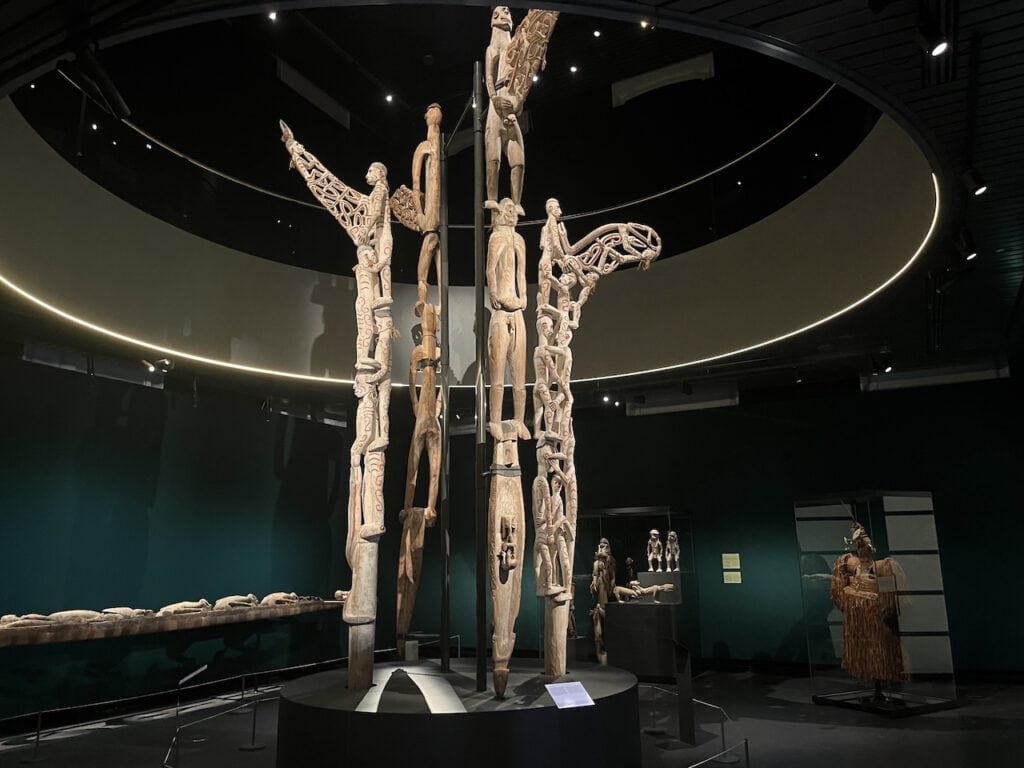
The exhibit offers a stunning look into Papuan culture and traditions. Image: DutchReview
Their woodcarving, weaving, and body ornamentation traditions have had a lasting influence on art and design worldwide.
And yet, the culture is too often reduced to a vague, “primitive” image that bears little resemblance to reality.
Tijd voor Papoea was developed in close collaboration with Papuan communities, Dutch-Papuans, filmmakers, and contemporary artists. This exhibition offers visitors a rare opportunity to experience an authentic picture of Papuan culture.
An exhibition of extraordinary breadth
The 400 objects on display at Wereldmuseum Leiden span millennia of Papuan art and craftsmanship.
From early bronze axe blades brought to the Sentani Lake region by Dongson traders from Vietnam before the first century CE, to intricately woven textiles, carved ancestor figures, and ceremonial canoes.
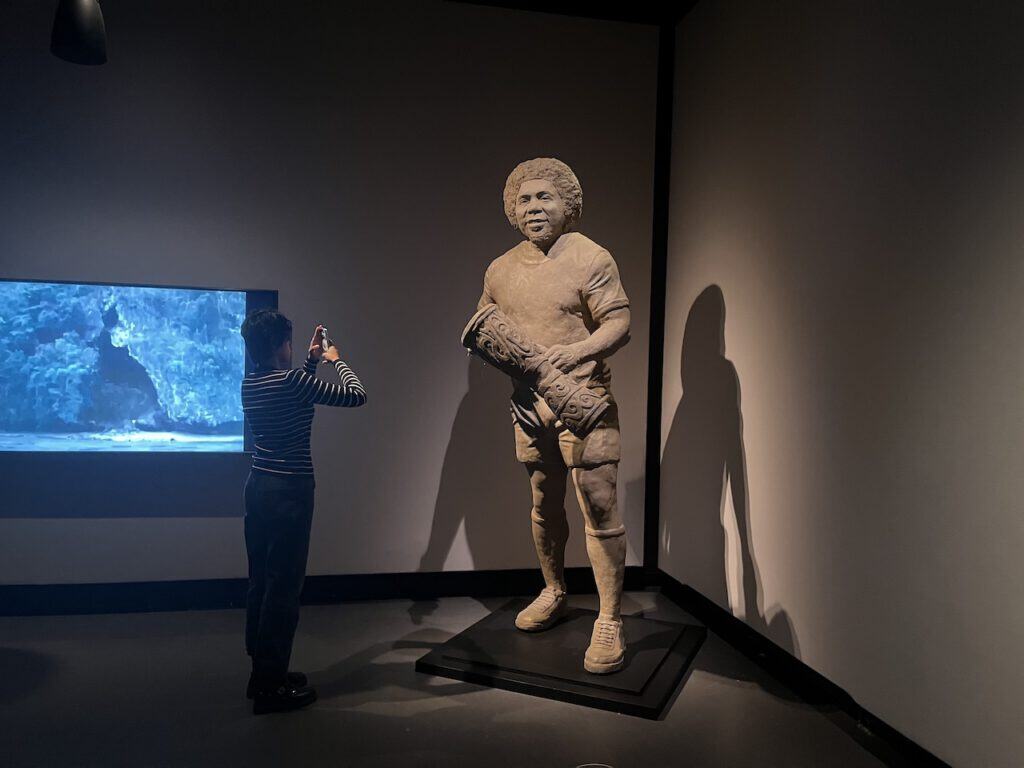
Come face-to-face with objects that span millennia. Image: DutchReview
And contemporary work sits alongside these historical pieces throughout.
For example, Papuan Voices, a network of filmmakers from Western New Guinea, produced short films for the exhibition, each exploring the theme of time from different regional perspectives.
Artist Dicky Takndare, currently a resident at the Rijksakademie in Amsterdam, created new work for the show centred on the anthropologist and cultural leader Arnold Ap.
Arnald Ap, immortalised by Dicky Takndare. Image: DutchReview
One of the most quietly affecting pieces is Voorouder uit het Vondelpark (Ancestor from the Vondelpark). Created in 2000 by Asmat artists Roman Omomá and Rufus Sati, it’s a traditional ancestor figure (kawe) carved from a fallen tree in Amsterdam’s Vondelpark.
Past and present, Papua and the Netherlands, folded into a single object.
Time, ancestors, and a different way of seeing the world
Speaking of past and present, a central thread running through Tijd voor Papoea is the Papuan concept of time. And it fundamentally reframes how you see every object in the room.
In many Western traditions, time is viewed as a straight line, with past, present, and future neatly arranged. For Papuan cultures, it doesn’t quite work like that. Time is fluid, cyclical, and alive.
Rather than being distant historical figures, ancestors are an active presence in everyday life, capable of manifesting through nature, rituals, and the objects people make and use.
In this context, a carved figure isn’t just an artwork. It’s a living link in an ongoing relationship between the living, the dead, and the world around them.
Voorouder uit het Vondelpark is a traditional ancestral figure carved out of wood from Vondelpark. Image: DutchReview
This understanding also raises a quietly provocative question at the heart of the exhibition: what happens when objects made within that cyclical view of time are removed from their context, placed in a Western museum?
Contemporary art that demands recognition
Alongside this celebration of Papuan art and its worldview, the exhibition doesn’t shy away from a harder story.
Colonisation arrived in Papua in successive waves. There were Christian missionaries, then plantation economies, then large-scale mining, including what became one of the world’s largest gold and copper mines.
Each wave brought disruption to Papuan landscapes, rhythms, and ways of life.
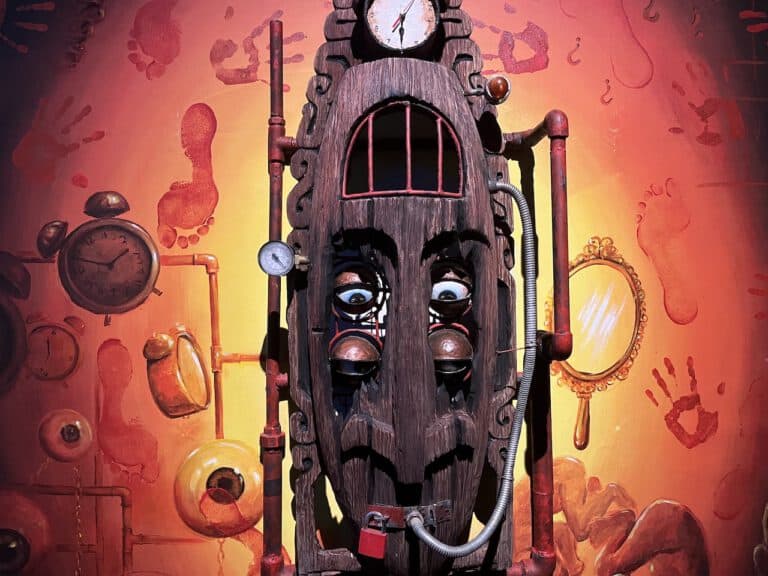
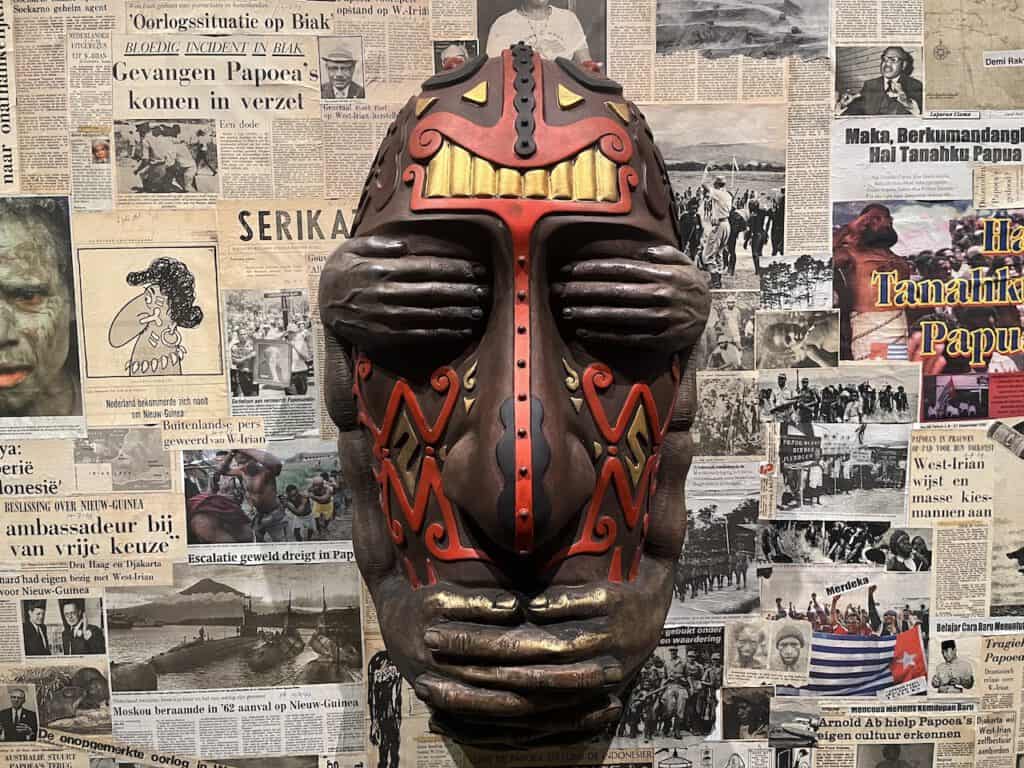
Several masks are on display throughout the exhibit as part of a series titled Hidden Faces of Papua. Image: DutchReview
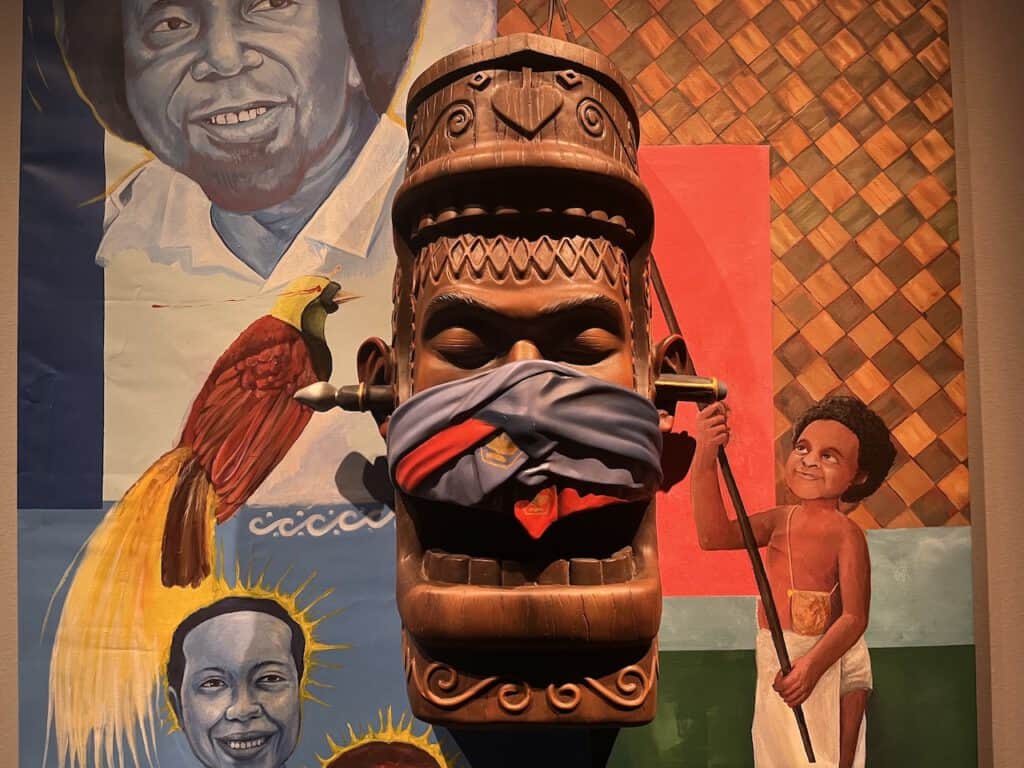
Spread throughout the galleries, and pointing to this disruption, are seven large-scale paintings by artist Kevin van Braak and the Udeido Collective from Papua. These are part of their series Hidden Faces of Papua (2025).
The recurring motif across the works is the mask, which references how issues affecting Western New Guinea tend to remain hidden from the international view.
In distributing these artworks throughout the exhibit, urgent, contemporary political art is placed in direct conversation with artefacts from the colonial era that gave rise to the crisis in the first place.
Artist Kevin van Braak and the Udeido Collective created these large-scale paintings. Image: DutchReview
But even here, the emphasis is on Papuan creativity and resilience. These works are not simply a documentation of loss. They are also evidence of a culture that demands its narrative be heard.
I’m intrigued! How can I visit?
Tijd voor Papoea is on display at Wereldmuseum Leiden from February 13, 2026, until January 3, 2027. The exhibition is available in both Dutch and English.
The museum is open Tuesday through Sunday, from 10 AM to 5 PM. During national school holidays, it’s also open on Mondays. Tickets can be purchased on the Wereldmuseum Leiden website.
And keep your eyes peeled! A full programme of events runs alongside the exhibition, including artist talks, lectures, weaving and plaiting workshops, and family activities.
Will you be making the trip to Leiden for Tijd voor Papoea? Let us know in the comments below!
Visiting the Netherlands can be as incredible as a freshly-made stroopwafel… provided you avoid these bothersome little blunders. 👀
From dodging death-by-bicycle to getting stranded in Amsterdam with no mobile data, here are the most common mistakes tourists make in the Netherlands and how to avoid them. 🙌
1. Don’t whip out cash like a 16th-century Dutch merchant
It’s true — the Dutch once dominated parts of the globe, and the ka-ching of guilders (old Dutch currency) pouring into their coffers was quite a common sound.
Nowadays, however, cash is nearly as extinct as the dodo bird. The Netherlands is more or less entirely cashless, and many supermarkets, shops, and restaurants might not accept your crisp euro bills.
✅ Do use a bank card that’s valid for international transactions
With the Dutch phasing out the usage of Maestro cards, standard debit cards are always a safe bet.
Both debit and prepaid credit cards are generally a solid choice. Image: Freepik
Credit cards, on the other hand, can be a bit of a hit-or-miss. The Dutch have an incredibly debt-averse society, so not all supermarkets or shops will accept your snazzy American Express card.
If you’re looking for a solid middle ground, prepaid credit cards combine all the handy features of credit cards with the convenience of debit cards.
2. Don’t get lost in the middle of Amsterdam with no internet
Amsterdam’s winding network of streets and canals is charming… until you’re lost, your Google Maps won’t load, or your roaming package announces it’s out of data.
Let’s face it: with data roaming packages being awfully pricey and public Wi-Fi all too often transforming into public Why-can’t-I-connect-Fi, you’re better off checking out a handier option. 👇
✅ Do opt for an affordable travel eSIM instead
Merging the large data limits you’d expect from a Wi-Fi connection with the convenience of a regular SIM card, travel eSIMs are a must-have when visiting the Netherlands.
Skip the data roaming option, when an eSIM is guaranteed to save you some major euros. 🤳 Image: Freepik
They’re often a much cheaper option than data roaming and give you instant access to local networks, without the hassle of registering for a Dutch SIM plan.
3. Don’t expect the rain to respect your travel plans
Dutch weather changes faster than a seagull zooming in to nick your patatjes (chips), so the chance of getting caught in a rain shower is pretty much 100%.
If you’re not adequately prepared, you’re likely to find yourself soaked, shivering, and questioning your life choices.
Though Dutch weather isn’t all rain, doom, and gloom, it’s always best to be prepared. Image: Freepik
Invest in a waterproof jacket, shoes that can handle sloshing through some puddles, and a sturdy storm umbrella (the cheap ones won’t last five minutes in strong winds).
Checking the weather forecast regularly also doesn’t hurt!
4. Don’t walk into a Dutch “coffeeshop” expecting a cappuccino
If you’re craving a warm, frothy latte and happen to stroll into a fine establishment named Jan de Wiet’s Coffeeshop, prepare for disappointment.
This is because “coffeeshops” in the Netherlands typically sell weed and other cannabis products, not coffee.
✅ Do head to a café for some actual coffee
So what’s a caffeine-craving international to do?
Depending on the group you’re travelling with, walking into a “coffeeshop” instead of a “café” might involve slightly more bonding than you’re accustomed to. Image: Freepik
Well, if you want some actual coffee (as opposed to a space-cake experience that’ll shock the socks off your nan! 😉), your best bet is visiting a café.
And, if you’re looking to escape the ever-present Dutch rain, you can also pop into a bruincafé (brown café) — a cosy, old-school pub where you can sip coffee by day and beer by night.
5. Don’t confuse the train’s silent carriage with a podcast studio
Most Dutch trains have a designated silent carriage (or stiltecoupé) for commuters who prefer spending their journey in relative quietude.
Needless to say, screeching to your best friend about the Tikkie your Dutch date just sent you — and ear-blasting your fellow passengers in the process — won’t be very well-received.
✅ Do use the silence to prep for yet another Dutch rail delay
As Dutch trains are often fashionably late, your best bet is to use your extra travel time wisely.
Whether you’re compiling a new Spotify playlist or working out an alternative route on the NS app, the silent carriage offers the perfect environment for concentration. 🧘🏻♀️
Quiet time = productive time. Image: Freepik
6. Don’t walk on bike lanes (unless you have a death wish!)
If you step on the faded red tarmac of a Dutch bike lane and hear a bell ringing furiously, you’ve only got a few seconds before you’re unceremoniously flattened by a blur in lycra.
Dutch cyclists don’t mess around, so avoiding the bike lane unless you’re on a fiets (bicycle) of your own is Tourist 101.
✅ Do rent a bike and explore the city instead
You know what they say: if you can’t beat ‘em, join ‘em!
There’s really no better way to explore the Netherlands than by bike. 🚲 Image: Freepik
The Netherlands is one of the most bike-friendly countries in the world, and there are a plethora of bike rental shops in Amsterdam and beyond.
And trust us, exploring the city (or the Dutch countryside) by bike is a million times more fun than being shouted at for walking on the cycle path.
7. Don’t assume the Dutch won’t bill your bladder
Let’s set the scene: you’re a woman, you’re strolling through the city after a few drinks with your pals, and you suddenly feel the urge to have a wee.
You look around for the nearest public toilet — but, to your absolute horror, there are none to be found. Frantic, you ask your friends for help, and they pipe up with, “Oké, do you have any money on you?”
Helaas pindakaas, you’ve just learnt the unpleasant lesson that there are NO free public toilets in the Netherlands. (At least, none accessible for women. 😠)
✅ Do carry some spare coins — or be prepared to hold it
In general, it’s good practice to always have your bank card or some pocket change on you if you want to avoid a UTI.
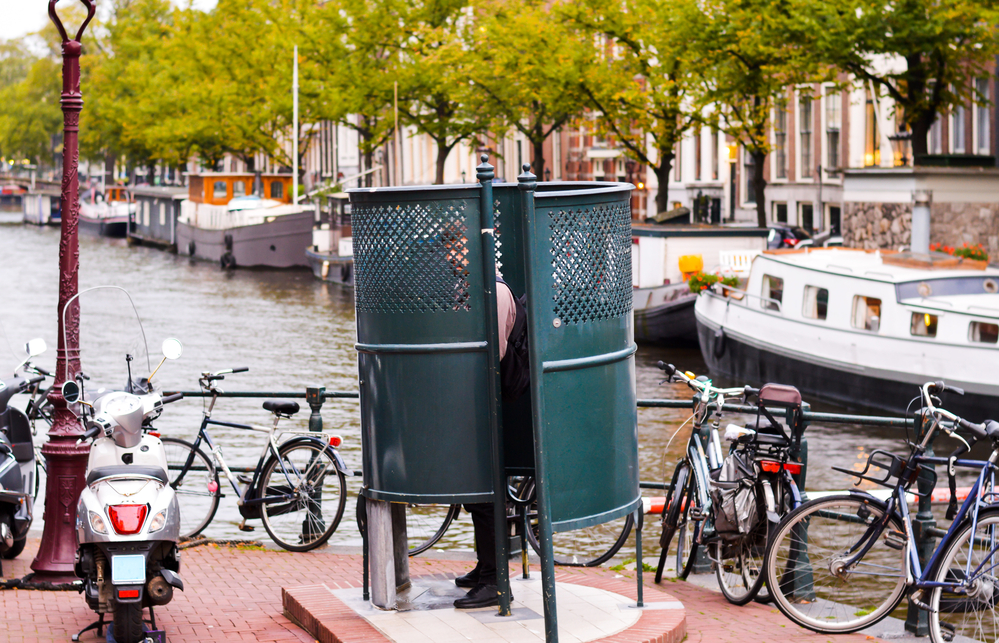
In many cities, men can opt to use the public urinals. Women, on the other hand? Let’s just say our options are limited… Image: Depositphotos
Restaurants or cafés may let you go to the loo if you’re desperate enough, but you may be required to purchase something or pay a small fee. Even in Dutch train stations, you’ll likely need to pay upwards of fifty cents to use the facilities.
Good to know: Some supermarkets let you use their staff toilets, so it’s always worth popping in and asking an employee, if the call of nature is truly urgent.
Whether you get caught blabbing in the silent carriage or a Dutch rainstorm, adding the Netherlands to your travel bucket list can be a truly rewarding experience. 💪
What are some mistakes you’d add to our list? Tell us all about them in the comments below!
After a long counting session, Amsterdam has proven yet again that it always falls to the left.
GroenLinks has topped Amsterdam’s gemeenteraadsverkiezingen (city council elections), securing ten seats in the 45-seat council.
Held on March 18, the election saw nearly 47% of all eligible voters in Amsterdam cast their vote. According to Het Parool, this is only a slight uptick from the 46.6% turnout in 2022.
With all ballots counted at the party level, Amsterdam Gemeente has published the results.
Who were in the top three?
GroenLinks took 17.9% of the vote, translating to ten seats in Amsterdam’s city council. This comes as a gain of two seats compared to the last election.
D66 came second winning 16.1% of voters and eight seats: one up from 2022.
Meanwhile, the PvdA finished third at 14.1% with seven seats, dropping two from the last municipal election.
Despite PvdA’s little dip, the top three parties have governed Amsterdam for the past four years.
Now, they collectively hold 25 seats, which is enough to maintain a working majority in the city council.
Party time
While GroenLinks and PvdA ran jointly as GroenLinks-PvdA in some municipalities, they ran separately in Amsterdam.
Combined, the two parties hold 17 seats in the capital.
Supporters of both parties had gathered at Skatecafé in Amsterdam-Noord to await the results on Wednesday night.
According to Het Parool, Zita Pels of GroenLinks declared: “Amsterdam was left, is left and will remain left.”
Leading up to election day, Pels ran a campaign against landlords in Amsterdam who charge too much rent, refuse to return deposits, and fail to carry out maintenance.
The party even opened a hotline for residents paying too much rent.
Where the rest of the council stands
The centre-right liberal party, VVD, stands as the biggest opposition party with six seats.
Partij voor de Dieren (Party for the Animals) held onto its three seats. Among smaller parties, JA21, Volt, and Denk each retained their two seats.
Meanwhile, the far-right party Forum voor Democratie (FvD) kept one seat on the city council. So did the centrist party Christian Democratic Appeal (CDA).
A full candidate-level count follows on March 21, with the definitive official result due on March 27. Stay tuned!
Did you vote in Amsterdam’s city council elections? Let us know what you think of the results.
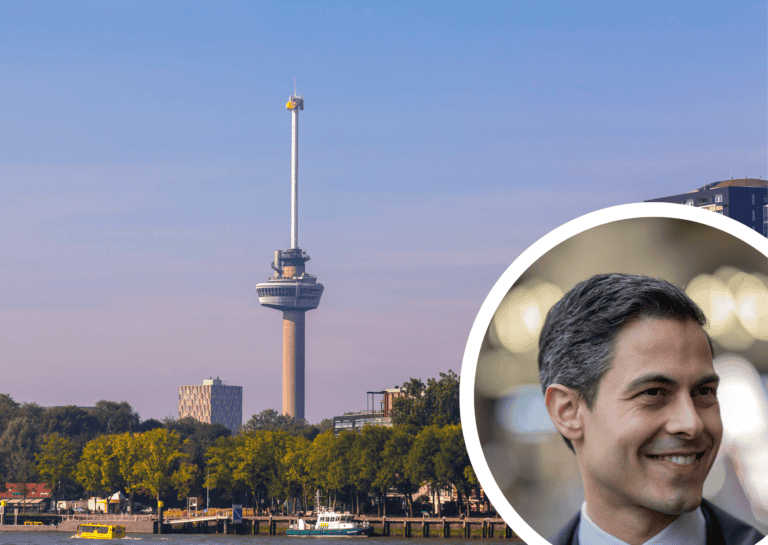
Prime Minister Jetten has offered quite a reward to the electorate: if this year’s municipal elections see a higher turnout, he will abseil down the Rotterdam Euromast with the Mayor of Rotterdam, Carola Schouten.
And this from a man who’s afraid of heights!
After Mayor Schouten initially promised to make this daring descent if turnout in Rotterdam is higher this year, Jetten has vowed to join her, reports BD.nl.
The price is higher, though: the nationwide turnout must be higher, not just Rotterdam’s. He is the incoming prime minister, after all!
Will they do it?
It’s been confirmed: turnout nationwide has reached 54.1%, more than 3% higher than in 2022, reports NOS. In Rotterdam, turnout is also higher, at 40.7%, according to Nu.nl.
Asked again today, both Schouten and Jetten have made it clear that they will be making good on their promises!
“I have a terrible fear of heights” Jetten admits to BD.nl, “but I’m a huge fan of Feyenoord, so going down the Euromast with Mayor Schouten and a beautiful view of the city, we should be able to manage that.”
Now that’s what we call a Flying Dutchman (and woman).
They’re not alone
It seems there is a Dutch political trend of whimsical, brave acts for the sake of appeasing voters.
The Mayor of Voorne aan Zee, Arno Scheepers, also promised to swim across the Haringvliet if turnout in the city exceeded 50%, reports Rijnmond.
At 50.6%, he too will have to make good on this deal.
So, even if you’re disappointed by the election results this year, you get a consolation prize: seeing your local and national politicians screech for your sake.
Do you think Jetten will truly make the jump? Let us know in the comments!
The results of the 18 March gemeenteraadsverkiezingen (municipal council elections) have been rolling in across the country.
A few clear trends are already emerging: local parties won big, and one man in The Hague is having a very good week.
Here’s what you need to know.
1. Local parties win big (again)
Among the big winners this year was the sprawling category of lokale partijen — parties that exist only in one municipality and focus entirely on local issues.
According to NOS, they took the largest share of council seats nationwide by a considerable margin.
Increasingly, migration and plans for (or better said, against) asielzoekerscentra (asylum seeker centres, or AZCs) featured heavily in these local campaigns.
2. In The Hague: De Mos is back, and voters have made their feelings clear
Richard de Mos and his party Hart voor Den Haag (Heart for The Hague) surged to a commanding victory, according to the NOS liveblog, landing 16 seats on the 45-seat city council.
That result carries extra weight given De Mos’s recent history.
After a lengthy corruption case that had shadowed him for years, he was acquitted of bribery in 2023, and the appeals court largely cleared him again in June 2024 (though he did receive a suspended fine of €2,000 for breaching official secrecy). The prosecution service decided not to pursue the case further.
Voters, it seems, were not particularly troubled by any of that. It’s a reminder that personal recognition and local credibility can matter far more in municipal politics than whatever story is circulating at a national level.
3. Big cities paint very different stories
Zoom into the major cities, and the national picture fragments quickly.
Utrecht: Groenlinks-PvdA and D66 remain triumphant
The GroenLinks–PvdA and D66 combination, which has run the city for the past four years, picked up enough seats between them to govern without needing anyone else at the table, according to RTV Utrecht.
Rotterdam: a more politically divided picture
Rotterdam’s results tell a different story entirely.
GroenLinks–PvdA and Leefbaar Rotterdam both finished with 11 seats, according to NOS, making coalition talks anything but straightforward. The city remains one of the most politically divided in the country.
Amsterdam: GroenLinks, D66, and PvdA win big
Amsterdam has now finished counting its results. According to the municipality, GroenLinks proved to be the most popular party, winning 10 seats with 17.9% of the votes.
However, they were followed closely by D66, who won 8 seats with 16.1% of votes, and PvdA who earned 7 seats with 14.1%
4. Forum voor Democratie expands locally and across the country
One of the more striking national developments is the growth of the extreme-right Forum voor Democratie at the municipal level.
The party ran in roughly twice as many municipalities as it did four years ago, and NOS reports that its total vote count quadrupled to around 300,000 across the country — making it the biggest climber of the night among national parties.
The catch: in several municipalities, other parties have already ruled out forming a coalition with FvD, citing candidates with links to far-right extremist groups.
The party’s parliamentary faction leader called that reasoning “an excuse.” Either way, winning seats and actually ending up in local government are two very different things.
5. Some of the left lost ground, some rose triumphant
Not every party had a good night. The SP and ChristenUnie lost ground across many municipalities, with seats shifting towards local parties.
The national governing parties, however, came through relatively unscathed.
According to NOS, D66 actually posted a slight gain, VVD picked up more seats, and CDA suffered only minor losses.
This is notable given the controversy surrounding recent decisions in the national coalition, including plans to raise the retirement age faster and cut unemployment benefit duration. No major backlash, at least not here.
GroenLinks–PvdA looks set to be the largest national party overall, with around 13% of the vote — though that’s down from nearly 16% in 2022.
6. Turnout rose (slightly)
Nationally, voter engagement ticked upward. NOS puts turnout at just over 54%, up from 51% four years ago — modest progress, but progress nonetheless.
Rotterdam’s mayor Carola Schouten, and even Prime Minister Jetten, who reportedly both promised to abseil down the Euromast if turnout went up, may want to start stretching.
7. Now, it’s time for coalition talks, Dutch-style
Now begins the part the Netherlands arguably does best: formeren — building coalitions out of fragmented results.
Across hundreds of municipalities, negotiations will kick off to turn these results into workable local governments.
These talks tend to move faster than at a national level, but they can still throw up surprising combinations.
Parties that wouldn’t share a table in The Hague routinely end up governing together at a municipal level.
Did you vote in Wednesday’s elections? Whether you went full local party or stuck with a national name, tell us in the comments who got your vote and why.