This morning is a cloudy one, but hold on tight. Today and Wednesday are set to be beautiful, sunny days with temperatures going up to 17 degrees.
As maart roert zijn staart (spring wags its tail), you may have already noticed that the air was milder this morning.
Aside from some lingering drizzle in the northeast, most of the country will stay dry today. According to RTL Nieuws, temperatures will start at around 5 degrees in the northeast and up to 10 degrees in the southwest.
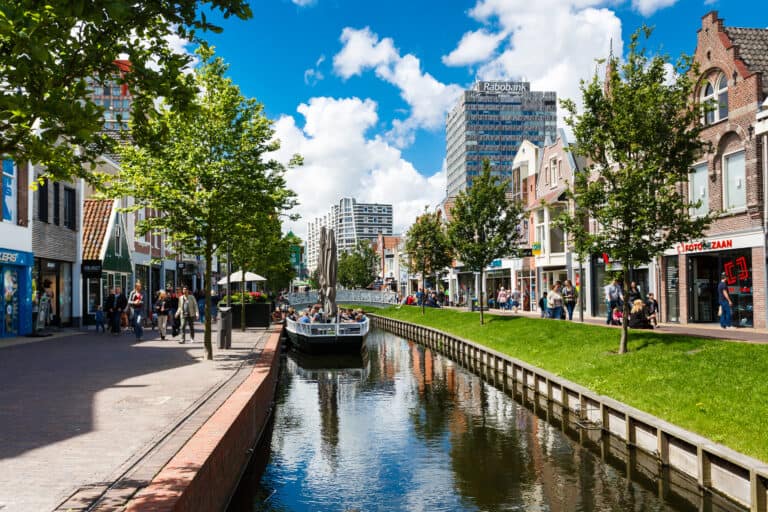
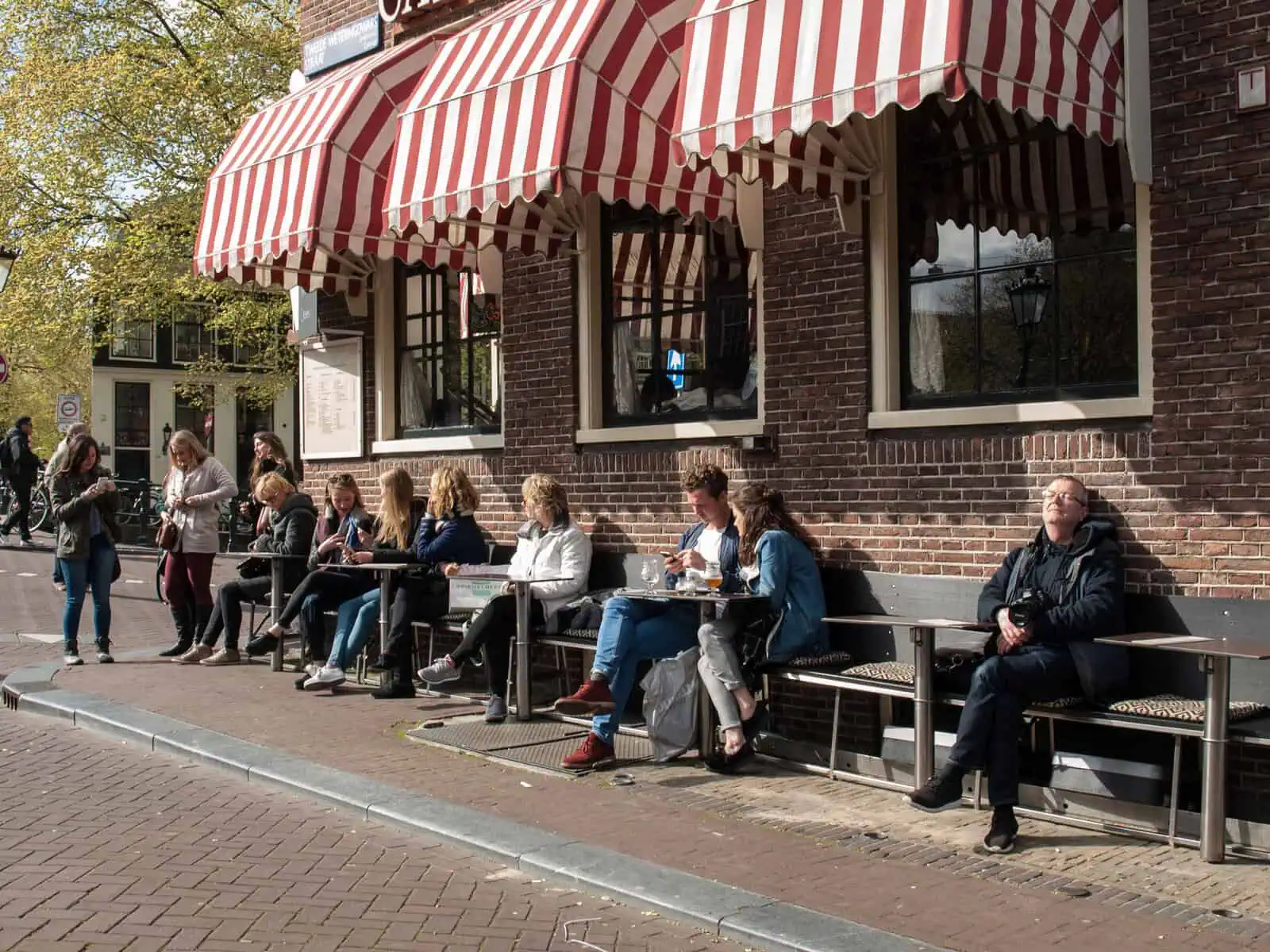
But then? It’s terrasje time.
Up to 16 degrees expected today
However, this afternoon, sunny spells will start pushing through in the southwest and west, eventually creeping into the centre of the country.
The northeast and east? Stubbornly cloudy all day, thanks to a light to moderate southerly wind.
Clouds aside, temperatures are forecast to be balmy, with the south enjoying up to 16 degrees in the afternoon, cooling to 14 degrees in the centre, and 12 degrees in the northeast.
Making way for clear blue skies, the clouds will retreat by this evening. Although Friesland and Gelderland may cling to the cloud cover a little longer.
While most of the country will remain dry, do bring some layers to the terrace. Tonight, temperatures are expected to dip as low as 7 degrees along the coast and 5 degrees further inland.
Can’t make the terrace today? Try Wednesday
Sunshine is forecast across the Netherlands tomorrow. While the northwest will experience highs of up to 14 degrees, temperatures will soar up to 17 degrees in the centre and south of the Netherlands.
Specifically, around noon is the best time to step outside and soak up some sunshine.
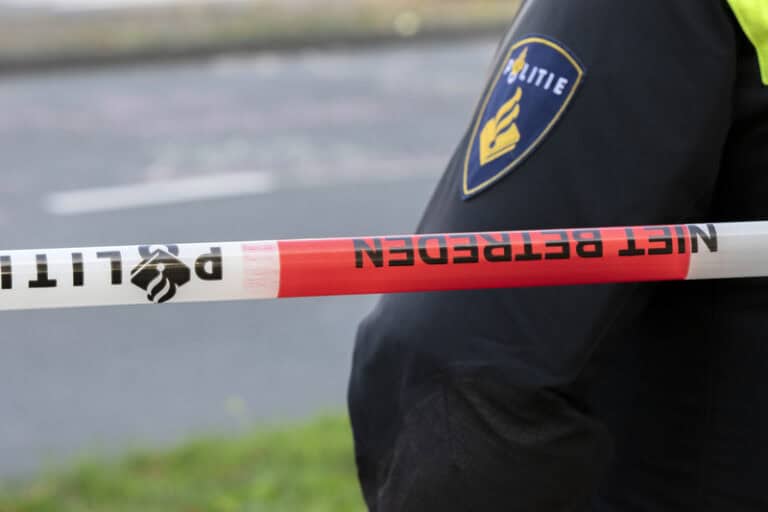
On Sunday night, an office building in the Zuidas caught fire as a result of an explosive device. Though security guards immediately extinguished the fire, this marks the third explosion that has struck the Netherlands in less than a week.
According to NU.nl, the attack was directed at the Bank of New York, an American company that operates from the Atrium.
This incident follows an attack on the Cheider Jewish School in Amsterdam on Friday night and at a synagogue in Rotterdam on Thursday night.
Who is behind the attack?
Although the footage has not yet been verified, a new Shiite group called Harakat Ashab Al Yamin Al Islamiyya (Islamic Movement for Righteous Companions) has shared a video of the most recent explosion.
Breaking.
Dezelfde sjiitische groep eist nu een nachtelijke aanslag op het Atrium op de Zuidas, in mijn stadsdeel.
The video reads, “This is a final warning to all the peoples of the world, especially in the EU.” It adds, “Distance yourselves from all American and Zionist interests.”
Luckily, no one was injured in the Atrium. However, as of now, there are no suspects for this attack.
A string of attacks
The Islamic resistance group has claimed responsibility for multiple incidents last week.
On the night of March 13, a synagogue in Rotterdam was set on fire. While there were no casualties, NU.nl reported that four suspects were arrested. All teenage boys between 17 and 19.
The night after, an explosion struck the outer wall of the Cheider Jewish school in Amsterdam.
Mayor Femke Halsema tells CNN, “This is a cowardly act of aggression towards the Jewish community.”
The group’s name also appeared in footage from an attack on a synagogue in Liège, Belgium, on the night of March 8.
“Antisemitism epidemic”
After the attacks against Jewish establishments in the Netherlands, the Israeli Foreign Ministry wrote on X, “The Dutch government needs to do much more to fight antisemitism.”
Hours before, Prime Minister Rob Jetten said he wanted to speak with the Jewish community in the Netherlands about the attacks.
Verschrikkelijk. In Nederland mag geen plek zijn voor antisemitisme. Ik begrijp de boosheid en angst en ga snel in gesprek met de Joodse gemeenschap. Zij moeten zich altijd veilig weten in ons land. https://t.co/pr2K5mfQJK
Translation: “Terrible. There must be no place for antisemitism in the Netherlands. I understand the anger and fear and will enter into dialogue with the Jewish community shortly. They must always feel safe in our country.”
Meanwhile, police are asking witnesses or anyone with more information about the explosion in Amsterdam Zuid last night to get in touch. Know something? Call 0900-8844.
Unfortunately, poor visibility during fog is a tale as old as the car. What if the road just… lit up?
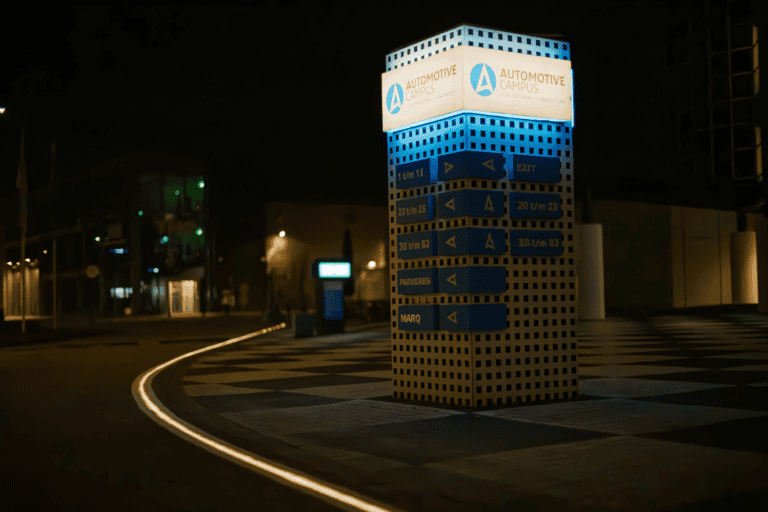
In Helmond, a tech company based in the Netherlands has installed the world’s first road markings that light up in the dark.
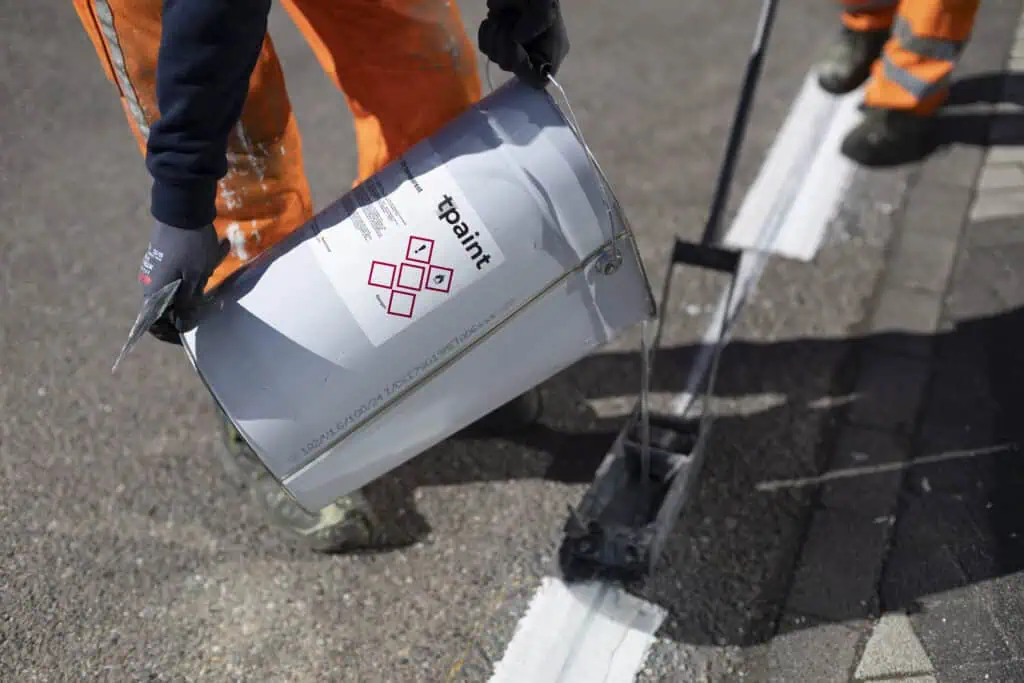
In collaboration with road marking specialist Tpaint and infrastructure company Heijmans, Luxene has successfully debuted its “Guidance Light Lines” on a stretch of road at the Automotive Campus in the Brainport Region of Eindhoven.
How it works
Most road markings only become visible when a vehicle’s headlights hit them at the right angle. However, in the heavy rain and fog that Dutch roads know all too well, that is not enough.
Luxene’s system takes a different approach. Instead of reflecting light, the markings generate their own.
These are not your usual painted road lines. Image: Supplied/Luxene
How, you ask? Optical fibres are sewn into the road marking material during its production, and a light source mounted outside the road surface feeds into those fibres. This distributes light along the full length of the road, making sure it glows in the dark, unfettered by foggy conditions.
Since the light source sits above the tarmac, the road itself needs no electronics — keeping maintenance simple.
Why it matters
The energy consumption of the Guidance Light Lines is about 30% lower than that of normal street lighting, according to Luxene.
As the light is directed at the road rather than the surrounding area, there is considerably less light pollution.
See for yourself! Image: Supplied/Luxene
Meanwhile, the camera-based systems in cars that struggle when visibility is poor find a reference point in the glowing line that is built into the tarmac, preventing the need for blind driving.
Maarten Tobias, CEO of Luxene, says, “This pilot marks a fundamental change in infrastructure. This makes roads safer, with lower energy consumption and minimal impact on the environment.”
Ready to roll out
The bigger question: will all roads now look like this? Well, it is possible.
Installation was carried out using standard equipment and materials already approved for road use, meaning roads will not need to be rebuilt for this solution to be applied at scale.
Henri Nas, Director of Road Specialities at Heijmans, says, “From an integration perspective, this pilot confirms that Luxene’s solution can be efficiently applied within existing construction and maintenance processes.”
Luxene has confirmed the system works on roads, cycle paths, industrial sites, and airports, but an official tender is yet to come.
Given the Netherlands’ track record of leading on road safety innovation, glowing bike lanes may not be as far off as they sound.
Dutch households are sitting on over €535 billion in savings, and the European Commission has a plan for all that cash: put it to work.
Under a new initiative called the Savings and Investment Union (SUI), the EU wants to shift money out of bank accounts and into investment portfolios, reports RTL Nieuws.
The long-term goal is to help companies grow faster and, in theory, give citizens better returns in the process.
Oké, but why now?
According to a report by former ECB chief Mario Draghi, battling climate change and geopolitical tensions will require around 800 billion euros in additional investment annually.
As the European Council reports, European households hold an estimated €10 trillion in bank deposits, and these funds could go a long way in tackling these challenges.
The focus is also on start-ups and high-risk ventures, as banks are generally reluctant to finance these projects, preferring to lend to larger, established companies. The EU wants citizens to step in where banks won’t.
Of course, this is easier said than done
Not everyone is convinced the new initiative will change investment behaviour overnight.
As Mark Sanders, Professor of International Economics at Maastricht University, tells RTL Nieuws, “Europeans consider it important that their savings are safe.”
With Europeans rightfully prioritising the safety of their savings, experts say that investment offers need to be genuinely attractive for the SUI to work: the best funds available across the EU, at low costs, in accessible languages.
Sanders also suggests tax incentives, such as more favourable schemes for managing your own pension pot, could help nudge more Europeans towards investing.
Meanwhile, a deadline is looming
European Commission President Ursula von der Leyen has set June 27 as a deadline for member states to show sufficient progress on the SUI.
If they don’t, a smaller group of EU countries will move ahead without the rest.
The Netherlands is feeling the strain, with Finance Minister Eelco Heinen stating that “real steps” must be taken to ensure that the country makes it across the SUI finishing line.
Do you keep your savings in a Dutch bank account, or have you already made the leap to investing? Let us know in the comments.
Sure, in the short term, you can get around by just speaking English in the Netherlands. But once you’ve stayed in this wonderfully flat, rainy land for more than a couple of weeks, you’ll inevitably get an unsettling feeling of missing out. That’s when it’s time to learn Dutch!
There’s a scary urban myth living among internationals in the Netherlands that’s trolling people into thinking that Dutch is a terribly difficult language to learn.
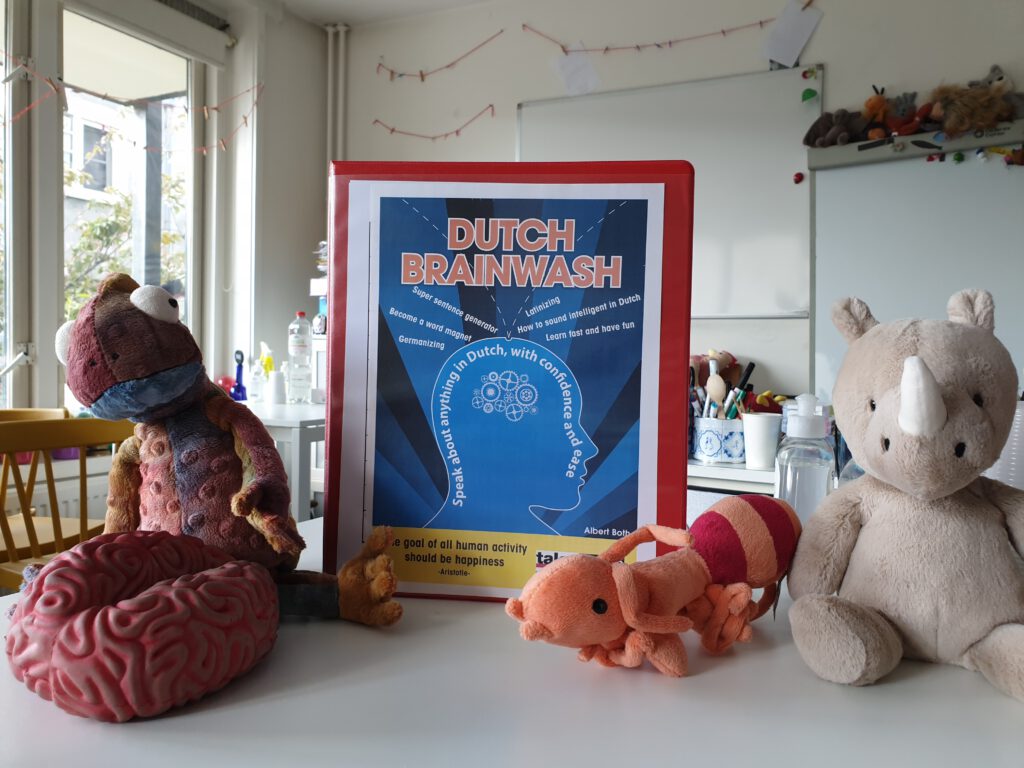
In fact, the opposite is true if you know how to learn it efficiently. The Dutch Brainwash course at Talencoach is here to bust the myth and help you seriously level up your Dutch skills — fast. Let’s talk about it. 👇
The perfect way to learn Dutch? Get brainwashed!
The Dutch Brainwash course is nothing like your average language class.
The one-week-long, intensive, and highly effective classes are centrally located in Amsterdam and open to anyone interested in boosting their Dutch skills fast.
With a conscious focus on learning the mechanics and dynamics of the language rather than mere memorisation of vocabulary and grammar, the Dutch Brainwash course is designed to give your journey to complete Dutchness a fun twist.
Who says brainwashing can’t be fun? Image: Depositphotos
Start with Dutch that you’ll actually use
You’ll learn to speak Dutch the way Dutch people actually talk, rather than meaningless textbook phrases and statements.
You’ll learn to express yourself, crack jokes, and show your personality — not just order een biertje, alstublieft (one beer, please).
Immerse yourself in more than just the language
The Dutch Brainwash course is centred around the people attending, not necessarily a certain number of textbook chapters.
Where some language classes teach you to fill out your gemeente (municipality) forms to schedule your BSN appointment, Talencoach wants you to obtain language skills you can use for the rest of your life.
If you’ve (somehow) never had a stroopwafel (syrup waffle) before, your Brainwash tutor, Albert, will ensure you do — and teach you the proper way of asking for one.
Learn Dutch, and have a good time while you’re at it! Image: Talencoach/Supplied
If you struggle to keep a conversation going with your Dutch in-laws, Talencoach will give you a crash course in Nederlandse dinner party customs and even teach you to say het is tijd om te gaan (it’s time to leave) while you’re at it.
The course will definitely get you hyped about Dutch culture. From windmills and tulips to bitterballen and borrelen, you’ll sign up for it all.
Choose to learn about the topics you’re interested in
But it’s not all about Dutch stuff. You also get to talk about what interests you the most, be it the World Cup, pancakes, or Pride and Prejudice.
How cool would it be to be able to explain, discuss, and learn more about your favourite topics, all in Dutch?
Instead of learning to say basic (and let’s face it, boring) things, like de pannenkoek is plat (the pancake is flat), you can learn to describe how much your grandmother’s famous pannenkoeken recept (pancake recipe) means to you instead!
Ever wanted to be so good at speaking Dutch that you can explain (in detail) just how awesome your dog is? Image: Depositphotos
The topic-based, creative, and personalised technique used in the course will make you an expert at speaking Dutch about the things that matter to you.
Enjoy a warm and positive group energy
Have you ever done a language class and felt like you didn’t really get to know anyone? Yeah, we know the feeling.
Learning a new language can sometimes feel like it’s a solo sport when in reality, it can be one of the most social things you do as a Dutch novice.
At Talencoach, you’ll all sit around a table together and focus on getting to know each other in Dutch. There will be no classroom-style row of desks, no headphones and no silent booths.
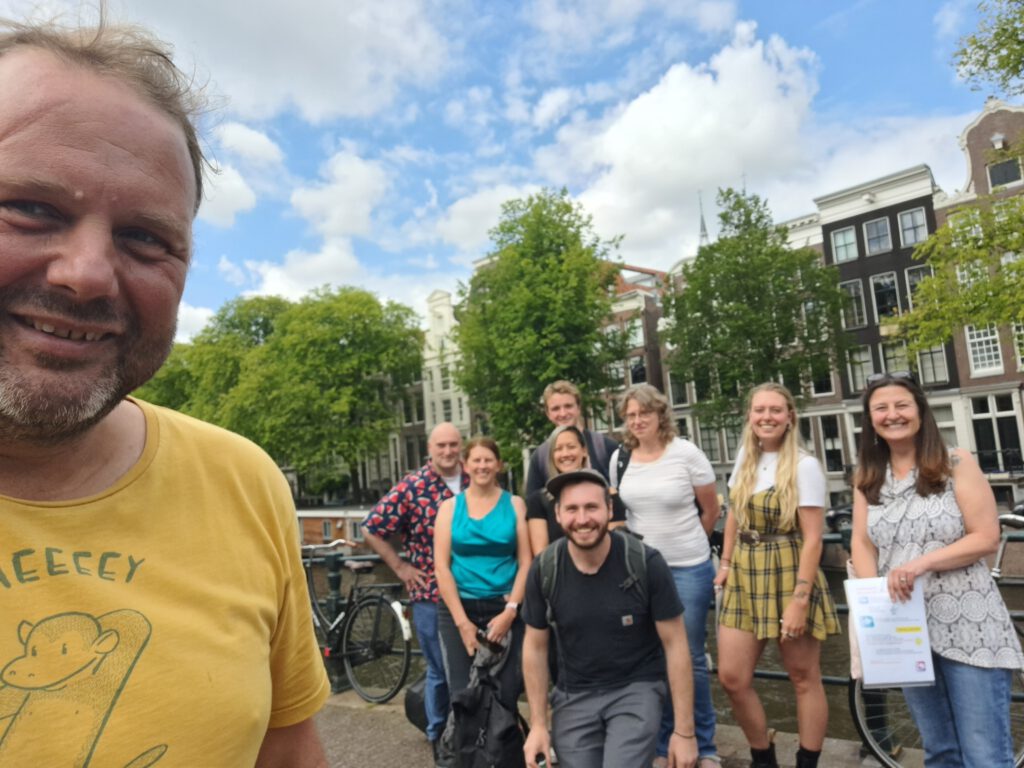
You’re guaranteed to be greeted as a friend at the Dutch Brainwash. 😊 Image: Talencoach/Supplied
The combination of small class sizes and the interesting and unique topics of conversation makes for great learning outcomes as well as great personal connections.
In other words, the approach used at the Dutch Brainwash course has positive vibes written all over it, and you’re bound to leave class with a bunch of new friends.
How the Dutch brainwash will help you learn, also outside the classroom
The Dutch Brainwash course is only seven days long, which is great if you’re down for a quick, intense immersion into Dutchness.
But what’s also great about the Talencoach approach is that with the above techniques, you’ll lay the foundation for even more learning after the course ends.
The Dutch Brainwash classes will also stay with you for a long time because of the people you’ll meet and the connections you’ll make.
Maybe you’ll make some friends for life! Image: Depositphotos
No matter how diverse the crowd is in your Brainwash class, you’re very much in the same boat: you’re all trying your best to improve your Dutch.
It goes without saying that you’re guaranteed to meet a bunch of new friends you can practise your Dutch with in the future!
Sign me up!
Ready to be able to speak about more in Dutch than just the (bad) weather? Yeah, same here. So why not go for it? There are plenty of seven-day Dutch Brainwash courses coming up this year.
And, with courses that start at 10 AM and end just before 5 PM, you’ll still be fresh and rearing to speak some Dutch!
King Willem-Alexander, who has quietly held a co-pilot role with the airline since the 1990s, has flown his last scheduled flight on a KLM Boeing 737.
The King announced the milestone on Instagram, confirming that last Wednesday, he took the controls of this particular blue-and-white jet for the final time as a KLM guest pilot.
Now, the King needs to be retrained for the newer aircraft. Doei doei, 737!
From Lapland to Ibiza, by royal appointment
The King looked back fondly on his years behind the controls of the 737. He first trained on the 737 in 2017, having previously flown Fokker 70s for KLM Cityhopper.
As RTL Boulevard reports, his journeys included flying football supporters to Prague for Europa League matches, bringing children to Lapland to meet Santa Claus, and flying holidaymakers bound for Ibiza and Malaga.
Taking to Instagram, the royal account posted a video of this important moment in the King’s career:
“Over the years, we have transported so many passengers from A to B with the 737,” the King said.
Not hanging up the headset just yet
While the King’s days in the Boeing are over, it doesn’t mean he’s finished flying altogether. The King will undergo retraining to qualify on the Airbus A321neo, meaning his co-piloting days at KLM are far from over.
As a guest pilot, he averaged roughly three commercial flights per month. Flying passengers under the understated alias “Meneer van Buren,” most of those on board had no idea just who was in the cockpit.
He hopes to see the same mix of travellers once he’s behind the controls of the Airbus — “the same colourful group,” as he put it.
The King also occasionally flies the Dutch government plane, which is also a Boeing 737. That aircraft’s eventual replacement will likely take him through another round of retraining down the line, too.
So don’t worry, you might still have a chance to be flown by the royal “Meneer van Buren” yet.
Have you ever been on a flight not knowing royalty was in the cockpit? Drop your reaction in the comments below.
Renting in the Netherlands as an expat has never been more legally protected. Yet somehow, it still feels nearly impossible to find a flexible apartment.
Helaas, the new rules are written for long-term residents — not the short- or medium-term cases most relocations are.
Here’s what’s changed, what’s still a trap, and what to check before signing.
Indefinite contracts are the new default
Since July 1, 2024, the Wet vaste huurcontracten (Fixed Rental Contracts Act) has made indefinite tenancy agreements the legal default. All new contracts offered from that date must be for an indefinite period.
However, “indefinite” here means no scheduled end date, not that you can walk away whenever you like.
The default Dutch rental contracts have changed. Image: Magnific
In practice, nearly every indefinite contract includes a minimum stay clause of around 12 months without the possibility of terminating your contract in that window. After that, you’re looking at one calendar month’s notice.
Ideal if you’re planning to stay in the Netherlands for a long time. Not so great if you’re house hunting, on a temporary assignment, or just unsure how long you’ll actually stick around.
Landlords are pickier than ever
It’s not just the default contracts that have changed. Eviction has become significantly harder for landlords with the new law, which has made the screening process tighter on the way in.
Expect income requirements of three to four times the monthly rent, and Dutch employment contracts and payslips are strongly preferred.
An international contract, a “I start in three weeks” email, or a six-month project role will often result in a polite no.
New rules mean landlords are pickier than before. Image: Depositphotos
Arriving before your start date or mid-relocation with a corporate housing budget? You’re competing for the least-served slice of an already tight market.
To get it, you need to register at a real residential address with your gemeente (local municipality). A hotel won’t work. Most Airbnb listings won’t either.
So the plan to “sort housing once I land” tends to look fine for week one, but unravels by week three.
What the law actually gets right
While the new rules might result in a headache for expats looking for shorter-term stays, they have also delivered real protections worth knowing.
There are strong protections for tenants in the Netherlands. Image: Magnific
Agency fees are also addressed. If your landlord uses a rental agency, he has to pay the fees.
For rental contracts signed on or after January 1, 2025, landlords are required to provide a written rental points (WWS) breakdown alongside the rental agreement.
Depending on the points the property scores, there is a maximum rent you can be charged per month.
If you’re being charged an unfair rent, you have six months from signing your contract to submit a complaint via the Huurcommissie.
None of this gets you a contract, of course. But once you have one, you’re in a much stronger position than five years ago.
Suitable housing without the long-term commitment
So, where does all this leave you as a short-term resident, a fresh arrival, or someone who simply cannot commit to a place for 12 months?
There’s a category most housing guides skip: registered serviced accommodation.
Serviced apartments often come fully equipped. Image: Magnific
Registered serviced accommodation operates under Dutch residential tenancy law, with formal tenancy agreements and full BSN registration support from day one. Typical minimum stays run to two months rather than twelve, with one month’s notice from the start.
Providers running flexible expat rentals in Amsterdam absorb the turnover risk individual landlords refuse to carry, and the apartments are typically move-in ready with furniture, utilities, Wi-Fi, and other household essentials in one figure.
The monthly cost is higher per square metre than a comparable private lease, but the contract fits a life in motion perfectly
Your quick checklist before you sign
Whether you’re looking at the private market or a serviced option, run through these before committing:
Contract type: indefinite, or one of the narrow legal exceptions?
Minimum stay clause: how many months before you can give notice?
Deposit: no more than two months’ basic rent?
WWS points sheet: Is it attached, and is the rent justified?
Is basic rent clearly separated from service charges?
How are agent fees handled?
Is BSN registration at this address possible?
If your landlord can’t answer those questions clearly, that’s your answer. Succes met de jacht (good luck with the hunt).
Have you run into any of these hurdles during your own Dutch housing search? Let us know in the comments.
On a more modern note, the Dutch do a terrible job at lunch.
Meaning, Dutch Lunch (it’s a thing) most probably consists of bread with cheese (broodje kaas) or anything quick, efficient, dairy-heavy, and bland. 😉
So, it makes sense that the boterham Dutchies are hungry again at 5 PM, craving a steaming hot plate of stamppot or Surinamese roti.
Why is it quirky?
Well, it just sort of gets in the way sometimes.
Firstly, you cannot callduring Dutch dinner time.
Wanna have a quick chat with your Dutch friend after work? They might get annoyed about being interrupted by your phone call when trying to gobble down some mustard soup.
The Netherlands has amazing perks (a healthy work-life balance, good public transportation, yummy fried snacks), but making friends as an international? That can be tricky.
Whether you’ve just moved to the Netherlands or you’ve been living here for some time, making a local friend isn’t always easy.
But het komt wel goed (it will be alright), here are some tips and tricks to make it easier to socialise with Dutchies and break into their circle.
1. Step out of the international bubble
Go talk to your Dutch classmates. They won’t bite! Image: Freepik
If you’re planning to stay in the Netherlands long term, it’s worth the effort to step out of the international comfort zone and invest in local friendships.
Talk to your Dutch classmates and colleagues, and attend Dutch events. Welcome them into your bubble, and they might let you into theirs — or heck, you might create a whole new bubble of your own!
2. Join Dutch social clubs
Run clubs are a fabulous way to make friends. Image: Freepik
Looking for something to do every week? While it may be tempting to join international social clubs, try to opt for one that is more local. You can go running, cold plunging, jamming, reading… The options are endless.
Plenty of websites can help you find social clubs. Meetup is great for activities, and Chillsnsip offers a social wellness community. Look for groups that welcome Dutch people, not just expats.
3. Embrace Dutch directness
Have you ever met a local who says something that sounds like an insult? Dutch bluntness can throw you off.
But that’s just Dutch people being, well, Dutch. If you can’t beat them, join them! Ask how their divorce is going, tell them their hair looks weird today — get direct, then at least you’re on the same level.
You don’t have to become fluent in Dutch (it’s a hard language to master, we know), but just understanding the basics can get you far.
By simply saying hoi or hoe gaat het (how are you), you’re proving to the Dutch that you’re trying — and you want to be friends.
5. Know the Dutch rules of body contact
Hugging someone you’re not close to? Dutchies say: not just yet! Image: Freepik
Dutch people are known to be inviting and open-minded. But showing affection? Not so much. The first rule of body contact: do not hug.
Be mindful of this guideline. While hugging is a nice way to be greeted by someone, you might lose some bonus points if you hug your potential Dutch friend.
Instead, either ask them if you can hug them or go for the common, less intense three-kiss policy to avoid any disaster. 😚
6. Invite your Dutch friend for a coffee
Invite your friend over for a nice cup of coffee on a terrace! Image: Depositphotos
Have you been acquainted with a Dutch person and want to get to know each other better? Go to a café together for some lekker koffie! ☕
After all, Dutchies love their coffee. According to recent statistics from the International Coffee Organisation (ICO), the Dutch are among the world’s 25 biggest coffee drinkers and drink up to four cups of coffee per day.
A warm cappuccino? That’ll sure draw a Dutchie or two in.
7. Become the ultimate planner
*Making plans with friends*
My Dutch Friends: “Earliest I am available should be 1/15/2038 from 6 to 7:15 because my sister’s aunt’s neighbor invited me over from 7:30 onwards”
Forget being spontaneous and meeting a Dutch friend at the last minute or arriving at their house unannounced.
The Dutch value their spare time and like to create a well-structured and balanced life, which means checking their agenda before they confirm meeting up.
Time to join in with this Dutch custom and whip out a planner of your own, trust us, they’ll appreciate it. 📔
8. Be open-minded — the Dutch love to debate!
Dutch people can be very argumentative. Join in! Image: Freepik
One of the biggest turn-offs for a Dutch person? Having a small and narrow mind. The Dutch love to debate and are always up for a good discussion, from politics to the news.
The Dutch believe in expressing your own opinion as long as you’re respectful of theirs. So, don’t be afraid to join in these debates and make some enemies — which can turn into friends as a result.
9. Join a sports club
Get active and make a friend along the way! Image: Freepik
Joining a sport is a great way to meet some Dutchies and put your Nederlands into practice. There’s no better way to forge some strong friendships than by sharing some blood, sweat, passion, and tears.
10. Be shameless and just start talking!
Don’t be afraid to practice your Dutch with someone! Image: Freepik
At the end of the day, you’re just going to have to be confident and strike up a conversation with a Dutchie — in Dutch. Oee echt eng!
The more you practice, the less scary it will be. Talk to people around you: your local barista, your neighbour, that hottie you regularly see at the gym.
So, make the effort and get to know your colleagues in a non-working environment. Less stress, more drinks, more friends. 🍻
12. Be positive about their country
Nobody likes it when a foreigner says negative things about the country they’re living in, and the Dutch are no exception.
Instead of going, “You know what the Netherlands could improve on?” or “I hate the way…” try communicating what you like about living here (hint: great social benefits, advanced healthcare, vibrant nightlife, mouthwatering restaurants).
Flattery is certainly an easy way to make friends.
13. Ask a Dutchie to come over to your place
There is nothing cosier than inviting a friend over for dinner! Image: Freepik
What better way to get to know your new Dutch friend than in the cosiness of your own home? Invite them over for an afternoon tea or a home-cooked meal.
If the Dutch love anything, it’s being gezellig. 🏡
By showing the Dutch your warm hospitality and willingness to make an effort, how could they not want to be your friend? You know you’ve made it when they invite you over to their place in return!
14. Approach them — don’t expect them to reach out first
Go text that potential new Dutch friend to hang out! Image: Depositphotos
Don’t wait around until you’re approached by a Dutchie, or else you’ll be waiting for a long time. The Dutch are not known to be conversation-starters. Instead, don’t be afraid to make the first move!
Found someone that you want to get to know better? Don’t implement the three-day rule (that’s sooo early-2000s 🙄). Text them and ask if they would be free to meet up for a drink!
The worst thing that can happen is they simply don’t reply, or they decline — you have nothing to lose here.
15. Join a taalcafé
The easiest way to practice Dutch is with a friend! Image: Freepik
Want to practice Dutch and meet a friend as a result? Try joining a taal café (language café). Important to keep in mind: you need to have a language level of at least A1.
A language café is not like actual Dutch lessons. Instead, you simply talk to each other in Dutch while sipping a cup of coffee or tea. ☕ Check out Meetup or libraries in your area to sign up!
Show that you want to fully integrate into Dutch culture by trying traditional Dutch things!
Ask your potential new Dutch friend if you can tag along!
Together, you can celebrate King’s Day, share your Hello Fresh subscription, be brave and join the Nieuwjaarsduik (New Year’s Dive), or get dressed up for Carnival! 🤡
18. Start dating a Dutch person
Want to make a Dutch friend and a little something extra? Try dating a Dutch person! Image: Freepik
If you ask us, one of the easiest and quickest ways to make Dutch friends is by dating a Dutch person.
Then you can just steal your partner’s friends and gradually become their favourite. No biggie! 😉
All kidding aside, your partner will be introducing you to their friends, so it’s the perfect opportunity to embark on some new Nederlandse friendships.
19. Cycle together
Friends who bike together, stay together! Image: Freepik
It might sound a little cliché, but Dutchies cycle every day. Why not join in, make some friends, and get some exercise as well? Cycle to work or an event with a Dutchie.
Want to explore the Netherlands by bike? Vrienden op de Fiets can help you find overnight accommodation.
Dutch hosts open their homes to travelling cyclists for a night. It’s a great way to rest after a long day of cycling — and you might make a friend for life.
20. Embrace common interests
Cooking classes are a great way to make new Dutch friends and learn about a new cuisine! Image: Depositphotos
Make a friend while pursuing a hobby.
Whether it’s a language course, comedy night, cooking classes, volunteer work in the community centre, or just tangling up some balls of wool in an attempt to make a scarf, these events will surely help you socialise with like-minded Dutchies.
21. Stay positive — it’s not easy, but it’s possible
Dutch friends aren’t easy to make, but once you make them, they’ll probably be for life! Image: Depositphotos
Making a local friend starts by integrating with the Dutch, and that’s not going to happen overnight. But eventually, it will. So geen stress (no stress) if you’re one year in and don’t have a Dutch friend yet.
The best thing about Dutch people? They’re incredibly loyal friends — once you’re in, you’re in! ✨
Remember — Rome wasn’t built in a day. And neither are new friendships. Keep putting yourself out there, and your new Dutch friend will be lucky to have you in their life!
What is your experience in making Dutch friends as an international? Tell us in the comments below!
Where to see cherry blossom trees in the Netherlands
Ready to see these stunning blossoming trees? Here’s where you can find them.
Amsterdam
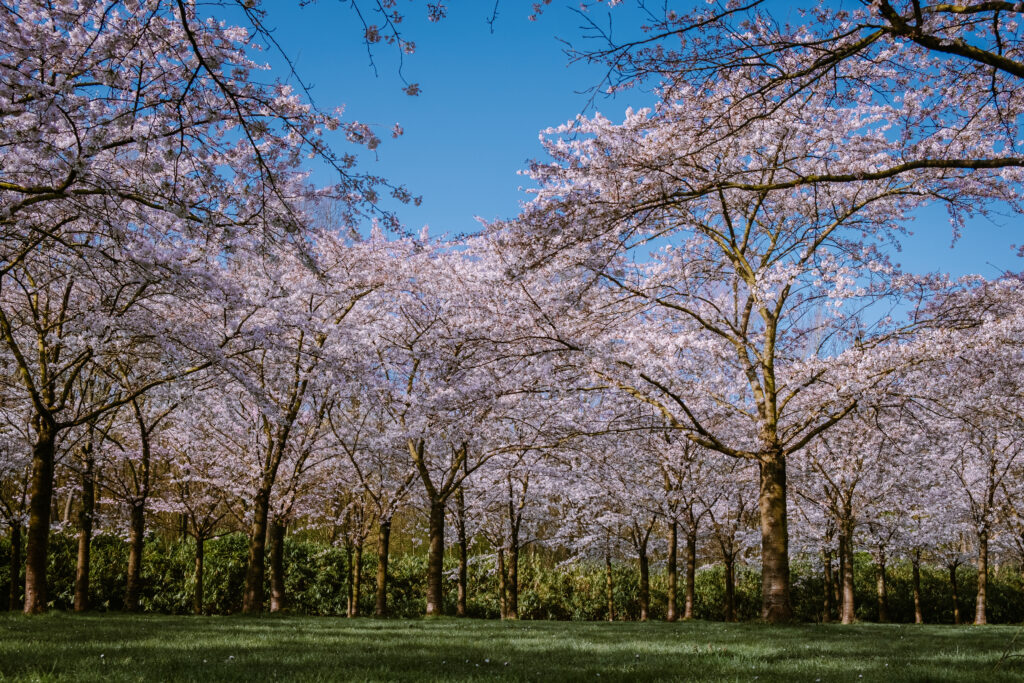
Over 400 Japanese cherry trees bloom in the Amsterdamse Bos, and it’s definitely something you won’t want to miss.
This spot is so beautiful, it was crowned the best place to see cherry blossoms in all of Europe! 🏆
The Amsterdamse Bos has a designated cherry blossom park. Image: Depositphotos
These trees were donated by the Japanese Women’s Club in Amsterdam back in the year 2000.🎁
Don’t want to trek all the way to the Amsterdam Bos? Westerpark offers a few trees to lay your lovely eyes on. Again, this is a perfect spot to get some stunning shots of the blushing beauties.
They may not all be cherry trees, but they are all breathtakingly beautiful blossoms.
Utrecht
In Utrecht’s city centre, you can head to the Valkstraat Park to see the city through rose-coloured glasses.
You can also take a bike ride up the Kromme Rijn to Wijk bij Duurstede, or head to the Troelstralaan.
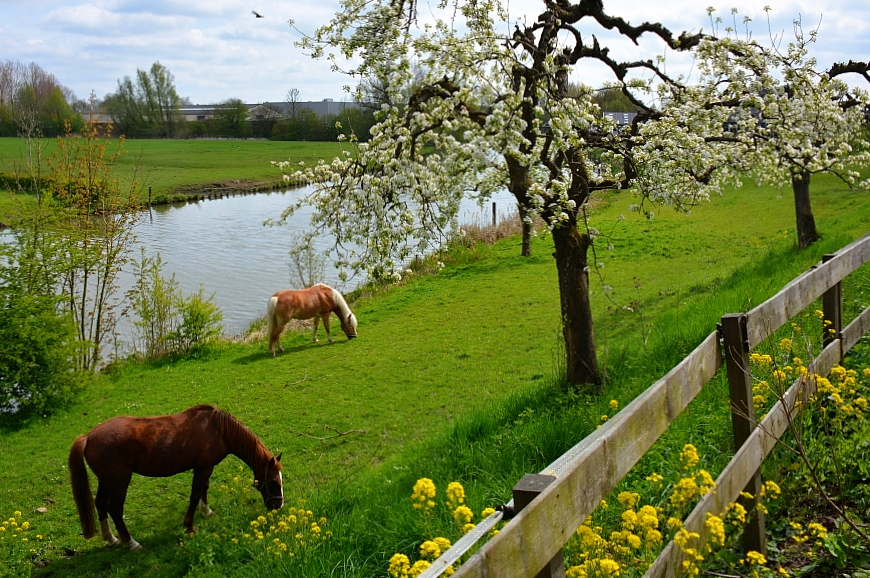
If you’re keen to move away from the centre, great news! There are many rivers around the Netherlands where you can spot blossoming trees next to the water. 🏞️
It’s not only cherry blossoms that are blossoming! Image: Myfootprints.nl/Wikimedia Commons/CC4.0
Rotterdammers can go to Statensingel in Rotterdam-Blijdorp or stroll in any park, like Vroesenpark or the park next to Euromast, for a breath of spring in the air.
If you live near Limburg, it’s worth popping over to the village of Eijsden.This town boasts some orchards where you can view the blossoms, especially around the Eijsden Castle.
Fancy a road trip? If you want to take your time and make a whole day of it, there is a 51-kilometre-long cycle route with a wealth of fruit blossoms in Zuid-Beverland in Zeeland. Just stay connected with an international eSIM so you don’t get lost.
Tips to see cherry blossom trees in the Netherlands
It’s best to visit during the weekdays so you can fully enjoy a serene moment without the weekend rush.
Like any other outdoor activity in the Netherlands, it’s best to check the weather forecast before visiting to make sure you can enjoy your flowers under a clear blue sky.
It’s important that you do not touch, snag, shake, or sit on any of the branches, as they can be rather delicate.
It is easy to spot cherry blossoms in the Netherlands. So pack a picnic, grab your camera, and make sure you don’t miss these springtime beauties.
Have you had a chance to visit the cherry blossom trees in the Netherlands? Tell us your experiences in the comments!