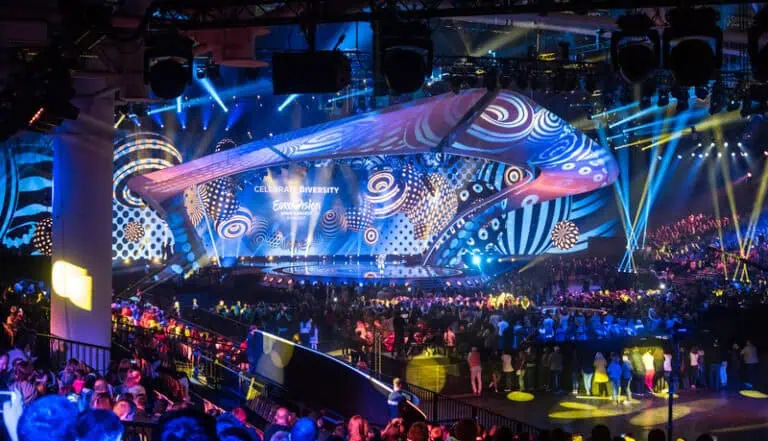
Dutch broadcaster AVROTROS is taking a strong stance against the situation in Gaza: the Netherlands won’t participate in Eurovision as long as Israel is still admitted.
In a public statement on their website, the broadcaster cited “the ongoing and severe human suffering in Gaza” as the reason they can no longer justify Israel’s participation.
They also point out that “the suppression of press freedom and political interference” are simply at odds with the values of the Eurovision Song Contest, which was founded to “bring people together after a period of deep division and war.”
The Netherlands now joins Ireland, Spain, Slovenia, and more on the growing list of countries that currently oppose Israel’s participation in Eurovision.
So, what happens now?
At present, AVROTROS states that all preparations for the song contest will “continue as planned” until the EBU (European Broadcasting Union) has made a decision on Israel’s involvement.
Should Israel be dropped from the competition, AVROTROS will “gladly take part”.
If not? The Netherlands and several other countries will follow through with their ultimatum, and the Eurovision Song Contest will have far fewer competitors in 2026.
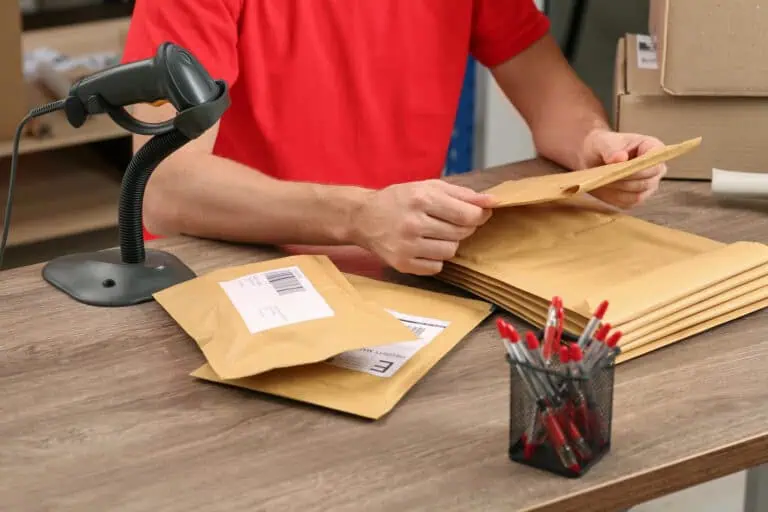
PostNL halted parcel service to the US thanks to tricky customs drama, but good news: packages are flying again from mid-September!
At the end of August, PostNL hit pause on shipping packages to the US. The culprit? Complicated new customs rules and uncertainty about how they’d be enforced.
According to the NOS, the US had scrapped its import duty exemption for packages worth up to $800 USD, saying the loophole was being abused for tariff dodging and even smuggling.
What’s changing now?
From mid-September, parcels will once again be making their way to the States.
The restart covers business mail, returns, and gift packages — but with a catch.
Each package must have a maximum value of $100, which is roughly €85. PostNL says this limit is a precaution until they have a more permanent fix in place.
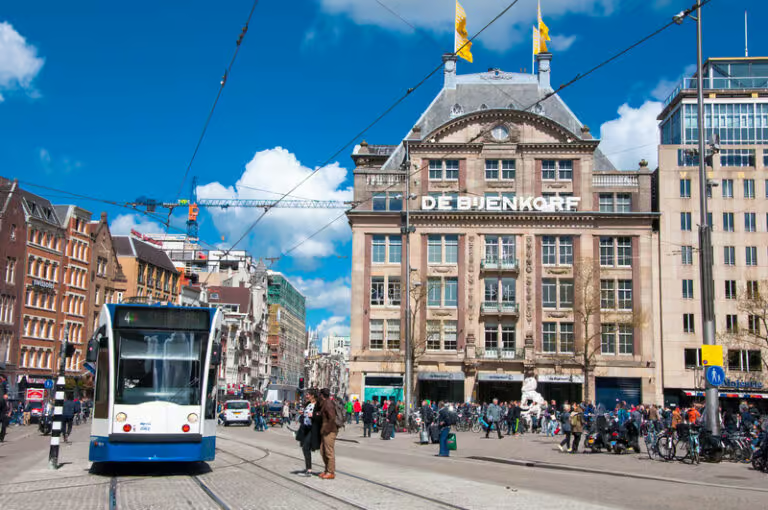
Following a surge in firearm-related incidents, various sections of Amsterdam’s city centre have now been dubbed a “high-risk zone”.
Applying primarily to the Burgwallen Oudezijde-Noord area, the high-risk zone comes into effect today (September 12) and will be in place for six weeks until Friday, October 24.
According to the municipality’s website, this measure is the result of a disturbing rise in the number of firearms found in the city centre, as well as recent incidents involving guns.
Which areas are affected?
The veiligheidsrisicogebied (or high-risk safety zone) applies to several bustling areas in Amsterdam’s city centre, including:
the Damrak,
Prins Hendrikkade,
Geldersekade,
Kloveniersburgwal,
Damstraat,
the monument side of Dam Square, and
Nieuwmarkt.
The increased security also applies to the underground metro stations that service these areas.
What can I expect?
If you’re living near or travelling to the Burgwallen Oudezijde-Noord area, you should prepare for an increased police presence.
In addition to this, police have been authorised to conduct thorough searches of all people and vehicles within the zone.
So, if you’re travelling through any of these areas, make sure to factor some additional time into your commute.
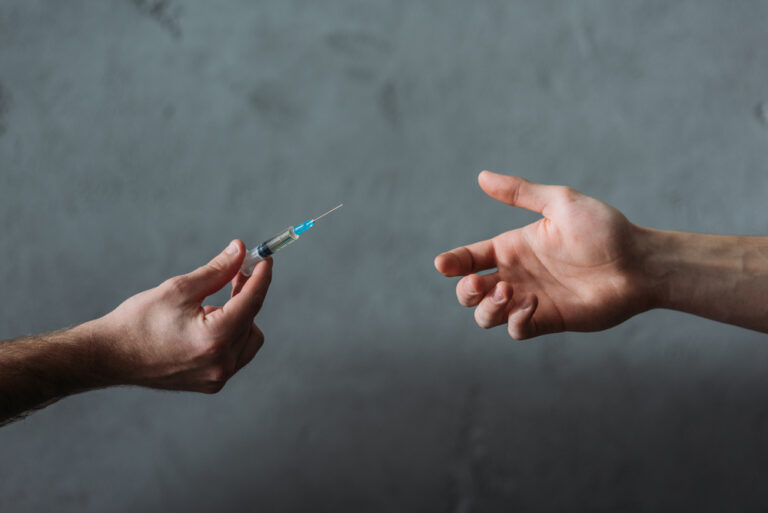
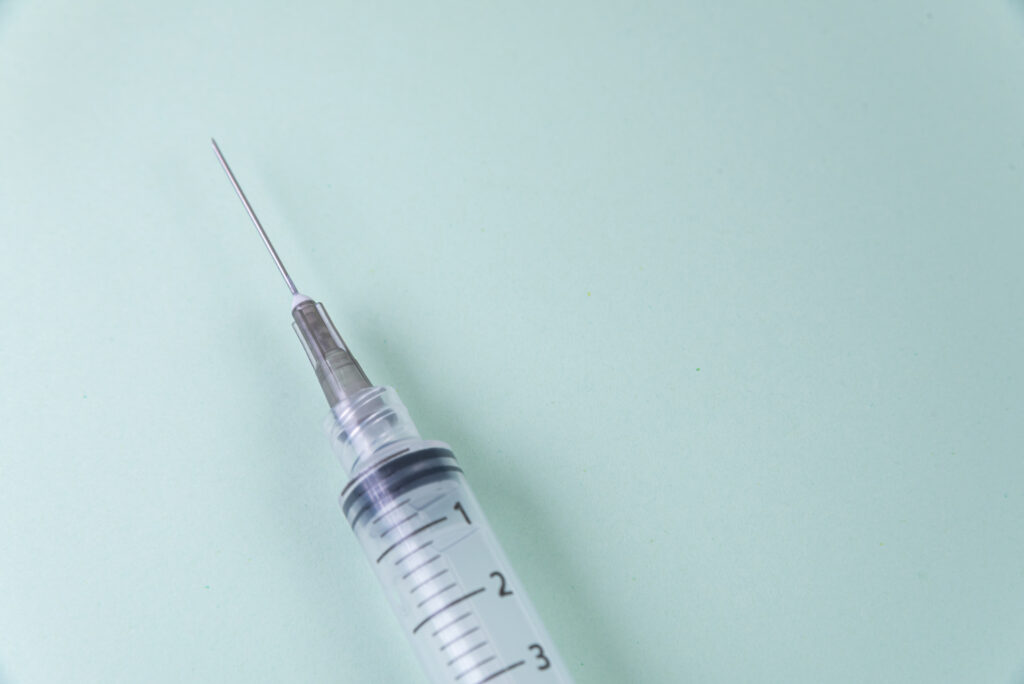
Let’s get straight to it: The Dutch prescribe free heroin to their heroin addicts. And it’s legal too. While the Dutch are (in)famous for their liberal approach towards drug use and legalisation, heroin has an especially bad rep.💉
After all, everyone knows that it is one of the most addictive substances there is, right? Free access surely won’t make the addiction problem any better.
But, hear us out — the Dutch providing heroin to heroin addicts surprisingly makes a lot of sense.
Wait, heroin is legal in the Netherlands?
Okay, heroin isn’t legal. Meaning, you can’t just walk into your local supermarket or coffeeshop to go and buy it.
Heroin still counts as a hard drug in the Netherlands, along with cocaine, amphetamine, LSD etc. and is criminalised.
As you probably know, soft drugs such as weed are handled differently, and you can purchase them without ending up in prison.
It’s decriminalised, but not yet legal: the Dutch are a bit slow on this front.
Although you won’t get in trouble for being caught carrying heroin, the use of the drug is still illegal in the Netherlands. Image: Freepik
Either way, while you’re not allowed to sell or buy hard drugs in the Netherlands, it’s technically legal to consume them.
That means that if someone is found using heroin on the streets, they won’t go to prison for it.
This brings us to the reasons the Dutch prescribe heroin to their heroin addicts.
So…heroin addicts just get heroin for free?
In the Netherlands, yes!
It’s called Heroin Assisted Treatment (HAT) and was officially introduced in 2007.
You should know that HAT is considered a sort of ‘last resort’ for heavy and chronic heroin users that did not respond to other treatment methods.
Usually, the first step is to prescribe methadone, a substance that helps to reduce withdrawal symptoms and curb drug cravings.
Registered heroin addicts also receive regular health checks from the GGD (Public Health Service) and other counselling options.
If, however, none of these treatments proves effective, the Dutch opt for prescribing medicinal heroin.
It is simply considered to be the best alternative because it offers addicts safe conditions instead of the dirty needles and spiked heroin they might face elsewhere.
You see, the Dutch are pragmatists: they know the dangers of addiction, and figure it’s better to be safe than sorry.
How exactly does it work?
So, what exactly happens behind the closed doors of heroin-giving GGD and doctors’ offices? 👀
It’s not as sketchy as it sounds. After all, the programme wants to provide an environment that is as safe as possible for the addict.
After being approved for the program and registering at the front desk, the patient has to prove that they are sober by blowing into a breathalyser.
If they pass the test, they are good to receive the heroin.
The drug is presented in entirely sterile conditions. Not only is the substance as clean as it gets, but so are the tools provided with it.
The patient then uses the drug entirely under supervision — in a private room with windows where a worker can watch in case of an overdose.
Does the Dutch approach to heroin addicts work?
Well, it depends on how you look at it. Obviously, prescribing heroin to an addict will not help them get off the drug.
But, in this case, that’s also not really the goal.
Instead, there are two main ideas behind the prescription of medicinal heroin:
To reduce crime rates for the sale, purchase and use of heroin
To make heroin use for chronic addicts as safe as possible
In that case, succes! 🎉
The Netherlands has seen a consistent decrease in heroin usage since medicinal heroin was legalised in 2007. The most recent figures show a drop from 18,000 registered addicts in 2008 to 14,000 in 2012.
Also, if you compare the number of Dutch opiate users per 10,000 inhabitants (technically, heroin is an opiate), they fare the best out of 14 other European countries surveyed.
The use of heroin to help addicts recover is very sterile and patients are always monitored. ge: Freepik
In the Netherlands, an estimated 13 people out of 10,000 use heroin. In the UK, which fared the worst, it is an estimated 74. Yay Dutchies! 🇳🇱
But — it didn’t always look so good.
How did the Dutch get here?
Time for a little history lesson! 🤓
Did you know that heroin used to be a massive problem in the Netherlands in the 70s and 80s?
The numbers were crazy. Heroin was first introduced to the Netherlands in 1972. Only two years later, in 1974, there were already 5,000 people addicted to the substance.
In 1983 (that’s only 10 years on!) that number rose to 30,000. (If this wasn’t clear already — a big ❌ to heroin, kids!)
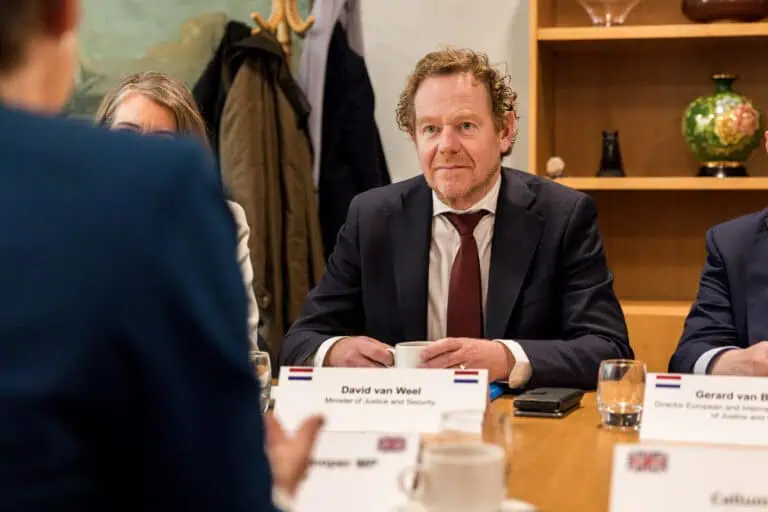
Dutch Minister of Foreign Affairs, David van Weel, plans to implement a ban on imports from illegal Israeli settlements.
In an official letter to the Dutch parliament, van Weel offered an update “on the humanitarian situation in Gaza and the implementation of the agreements between the EU and Israel on access and delivery of humanitarian aid.”
As the NOS reports, he intends to implement a national import ban “as soon as possible”.
What imports may be banned?
According to a parliamentary motion shared by D66 member Jan Paternotte, the import ban is intended to apply to goods from “Israeli settlements in Palestinian territory”.
Paternotte also adds that these settlements are considered illegal under international law.
As individual EU member states have the flexibility to establish their own trade legislation, a ban on imported goods or services “originating from illegal settlements in the occupied Palestinian territory” could be a real possibility.
A decision many weeks in the making
This move comes just a few weeks after the NSC (a Christian democratic political party) resigned from the outgoing government. The party resigned because the then-foreign minister, Caspar Veldkamp, felt there wasn’t enough support for strong measures against Israel.
In a surprising twist of fate, the VVD, which originally opposed the move, has now decided to support the proposed ban.
Meanwhile, with van Weel, speed is of the essence. In place of legislation, he intends to go the faster route: with a General Administrative Order.
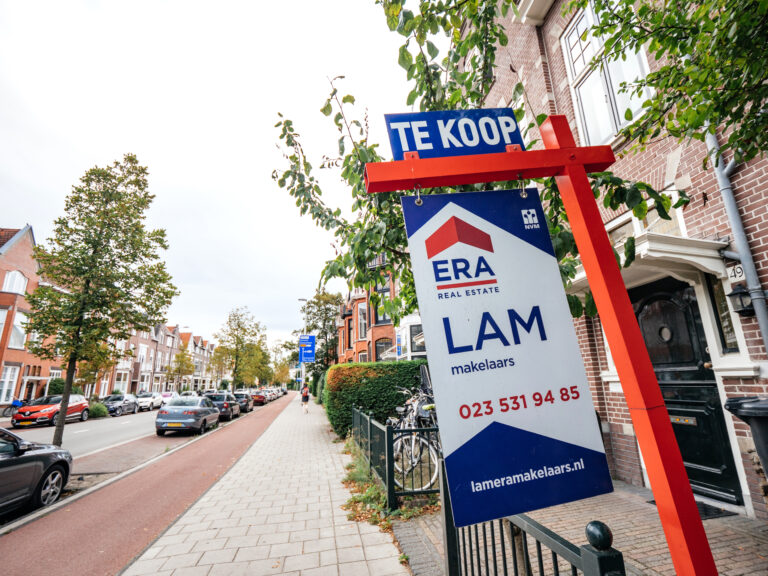
If someone turned to you and said they bought a property in Amsterdam for €250,000, you probably wouldn’t believe them. However, if they clarified that this property was actually a hallway, then suddenly it’s very believable.
Yep, this is now the reality. In Amsterdam, a “hallway house” has just hit the market.
Making up a whopping 18m2, the current owner gave RTL Nieuws a tour of the narrow hallway.
Literally, it’s a hallway
As the camera squeezed its way through the kitchen, it quickly became clear that the owner, Ootje, had been living in a hallway for the past seven years.
But don’t feel too sorry for Ootje. Since buying her “hallway house” seven years ago, the property has doubled in value, bringing the asking price up to a quarter of a million euros.
And believe it or not, as realtor Rober Stutje tells RTL Nieuws, at least 10 people have expressed interest in the property.
But wait, there’s a shed!
However, while Ootje’s hallway measures 18m2, the property is actually listed as being 26m2. Why? Well, there’s a shed, of course.
Don’t worry, if you’re feeling a bit claustrophobic in your hallway kitchen, you can always escape to the garden shed, which Ootje describes as the second living space.
While living in a hallway doesn’t sound particularly glamorous, being able to say you own a property in Amsterdam certainly does. Which is why RTL’s rent and housing expert, Erik Rezelman, believes the property will sell.
As he tells RTL Niuews, “Yeah guys, this is Amsterdam, you can buy a hallway and a shed for a quarter of a million.”
Would you live in a hallway and a shed for a quarter of a million? Tell us your thoughts in the comments below.
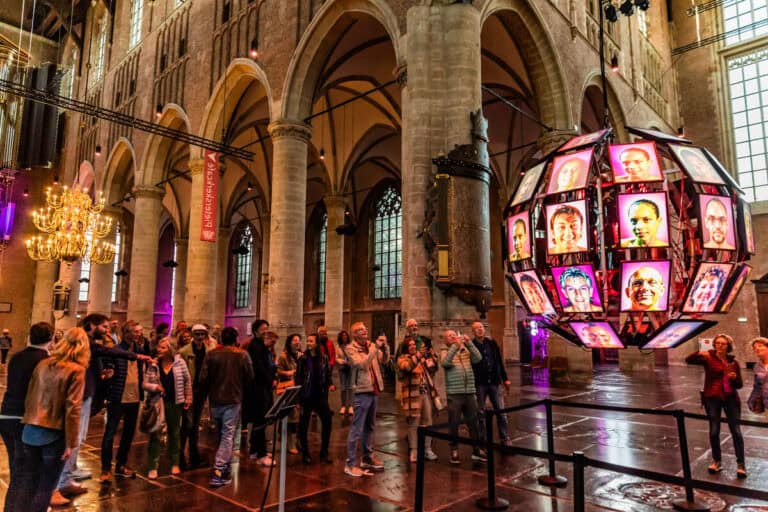
Ever wondered what happens when you throw art and science together? Magic. The Days of Art&Science festival is returning to Leiden from September 15 to 21, 2025, promising a week of mind-bending events that’ll make you question everything you thought you knew about creativity and discovery.
This annual celebration brings together artists, scientists, philosophers, and curious minds for seven days of exhibitions, workshops, conferences, and performances across Leiden.
You can watch robots learn, explore the ethics of lab-grown meat, or let your kids loose with actual university researchers. 🔬
What’s on offer?
The festival spans multiple venues throughout the city, from Leiden University’s historic Academy Building to the tranquil Hortus botanicus, ensuring there’s something for every type of curious soul.
But let’s give you a taste of some of the fascinating events on offer during this week:
💡 Night of Discoveries (September 20): The festival’s flagship event transforms university buildings into interactive wonderlands where you can explore everything from astronomy to botany after dark.
👧 Brave Young Minds (September 21): A mini-festival designed for kids, where little scientists can experiment with installations guided by actual Leiden University researchers.
🎼 Wavelength Festival (September 18): An exploration of how sound and science intersect, which is perfect for anyone who’s ever wondered about the physics of their favourite tune.
🤯 The Age of Deception (September 20): An interactive event that’ll have you questioning the information you receive.
🌎 Brave New World Conference (September 18): A deep dive into what the future holds and how it might affect your work and life
The programme also features art installations like “Androids” and “Reinforced Learning” that challenge our assumptions about AI and robotics, plus philosophical discussions about creativity in the age of artificial intelligence.
Let’s talk logistics so that you can gather all your nerd and art friends. 👇
📅 When: September 15 to 21, 2025
📍 Where: Various venues across Leiden
💸 Cost: Varies by event, but you can check individual listings for pricing
Ready to expand your mind and question everything you thought you knew about art and science? You can check out the full programme and secure tickets here.
Want to know more? Leiden is a driving force behind the #NewDutch campaign. This is a bold new initiative launched by a wide range of partners, including Leiden&Partners, to showcase the very best of Dutch creativity, innovation, and forward-thinking. From tech and sustainability to health and design, it shines a global spotlight on the trailblazing ideas and collaborations that are shaping the Netherlands of tomorrow.
What are you looking forward to the most? Tell us your thoughts in the comments below.
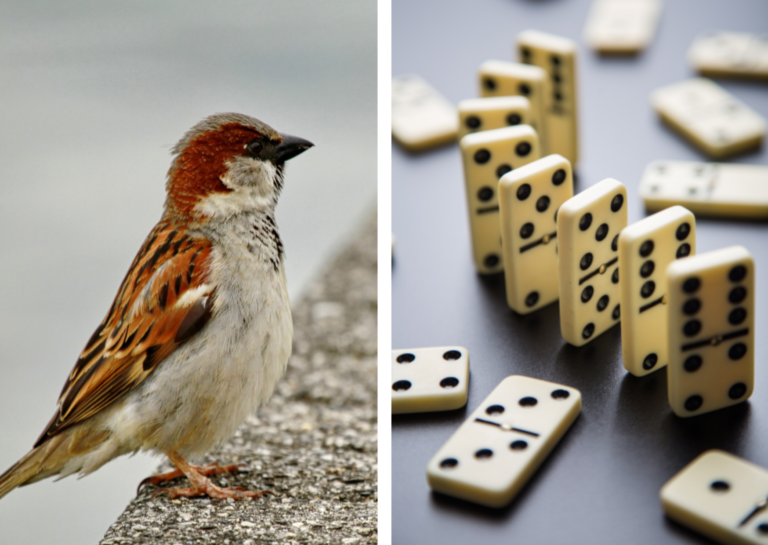
A world record attempt. Four million dominoes. A lone sparrow. And a chain of events that led to a devastating (and ridiculous) domino effect.
Ever heard of the Domino Day Sparrow? It’s a day that’s imprinted into the lives of many Dutchies in a whirling tale of twists and turns. Readers, settle in.
Now, the Dutch aren’t strangers to ridiculous events, that much we definitely know. Remember the time the Dutch team won the European football championship in the 80s and sank a bunch of houseboats in celebration?
Because Dutchies are Dutchies and love this kinda stuff, the TV show was a hit for more than two million people, airing from the late 1990s all the way to 2009.
Down came a bird…and washed the dominoes out
In 2005, they had a huge goal: to make it into the Guinness Book of World Records. The Domino Day team spent weeks assembling a whopping 4 million dominoes in a line.
But then, a cute lil’ bird came calling, and catastrophe shook the lands of Europe.
A house sparrow snuck into the Frisian Expo Centre in the northern city of Leeuwarden, where Domino Day took place, and set off a domino: leading to 23,000 of the 4 million dominos collapsing in what we’re sure was a simultaneously breathtaking and devastating event.
Of course, no one messes with the Dutchies and their world records. The domino team called in an animal expert in an attempt to catch the bird and set it free — but it was unsuccessful.
Instead, this little birdie’s crime ended with a death sentence.
An employee from Duke Faunabeheer was ordered to terminate the bird. Talk about adding fuel to the flames…
The Domino fans breathed a sigh of relief. “Succes!” they thought. Yet, the drama had only just begun…
What the producers and Faunabeheer failed to realise is that the tiny sparrow was part of an endangered species in the Netherlands.
Let’s review: Bird finds a domino event. Bird knocks over dominoes. Bird gets shot. Animal activists say — nuh-uh. 👎
The commotion that followed was so humongous that it became world news, and both companies went to court for their actions against the domino sparrow.
The official punishment? A €200 fine for illegally killing the bird. The unofficial punishment? A life’s worth of death threats for the Faunabeheer hunter. Yikes! 😬
The now taxidermied bird can be seen on display at an exhibition in the Natuurhistorisch Museum in Rotterdam, with an insane backstory that we’re sure all the other exhibits are jealous of.
What do you think about the sparrow of Domino Day? Tell us in the comments below! 👇
People in Amsterdam witnessed something straight out of a reality show yesterday, with a sleek black Mercedes cruising through the city, covered in giant white graffiti spelling one word loud and clear: CHEATER.
Far from hiding in an alley, the car boldly made its rounds through the streets like a four-wheeled walk of shame.
Online in seconds
Onlookers did what any good 21st-century citizen would: they whipped out their phones, laughed, and instantly uploaded the drama on socials.
“I LOVE this 😂 she slayed.” A user commented under the video.
“What happened? A man happened,” said another.
Maybe a clever ad?
But not everyone bought the story. A second camp suspected the whole thing was staged, with some pointing out that the driver was smiling cheerfully in the front seat.
“You sure it’s not a stunt?” Many comments like this appeared under the videos.
Others pointed out that the car was also seen driving around the city centre last Saturday.
Regardless of the truth, the Mercedes has now earned celebrity status as Amsterdam’s most talked-about vehicle this week.
Did you catch the ‘cheater’ Mercedes cruising through Amsterdam, or are you just here waiting for the tea to spill? Drop your theories in the comments!
A 26-year-old man from Katwijk, identified as R.d.J., is accused of recruiting teenagers to shoot someone in the leg; a plan that ended in tragedy when one of the boys accidentally killed himself.
On February 5 2025, a 16-year-old boy entered a bathroom at his high school in The Hague with a firearm. While handling the weapon, he accidentally shot himself.
Despite emergency services rushing to the scene, the teenager died from his injuries.
A failed plan turned deadly
AD reports that, according to the Public Prosecutor’s Office, the fatal incident was linked to a broader plan.
R.d.J. allegedly hired three teenagers — aged 15, 16, and 19 — to shoot an unknown individual in the legs for €2,500.
He is said to have provided them with money, a firearm, and vehicles. He and potentially another person gave the younger boys additional instructions on Snapchat for how the attack should be carried out.
The court cases
On Monday, September 8, the 26-year-old appeared at a preliminary hearing, where he was charged with recruiting underage boys for violent crime and also suspected of involvement in soft drug trafficking.
The trial of the 26-year-old suspect is scheduled for January 2026.
The 19-year-old, who was allegedly set to drive the getaway car, will face a hearing in October 2025.
Meanwhile, the 15-year-old, accused of arranging the escape vehicle, will be tried in juvenile court on the same day.
Beyond the courtroom, the case has sparked renewed concern about the recruitment of minors into organised crime in the Netherlands.
Authorities warn that young people are being lured by money and status into carrying out dangerous tasks.