The critically acclaimed British miniseries, Adolescence, is set to become part of the Dutch education curriculum.
Following in the footsteps of the United Kingdom, the Netherlands will use the global hit to engage students in conversations about social media and peer pressure.
The study materials will become available in Dutch secondary schools for students aged 12 and up.
A widespread discussion
Adolescence follows 13-year-old Jamie, who is suspected of murdering one of his classmates, Katie. The show goes beyond being a crime thriller and dives into darker territory.
It tackles issues such as the negative influence of certain online spaces on men, the normalisation of male rage, and the real-world consequences of misogyny and peer pressure.
Its impressive cinematography and storytelling have sparked a widespread discussion — and now, it’s becoming a conversation starter in classrooms.
From screen to syllabus
According to NOS, the decision to bring Adolescence into the school system will help shine a light on topics that parents and teachers struggle to address.
In collaboration with Netflix, Beeld en Geluid (Sound and Vision) will develop teaching material that uses the show as a mirror to open up dialogue around unspoken tensions and risks for teenagers both online and offline.
In a press release, director of Beeld en Geluid, Eppo van Nispen tot Sevenaer, describes Adolescence as “eminently suitable for starting a conversation with young people about the role of media in their lives.”
Have you seen the show yet? What do you think? Drop your thoughts in the comments below!
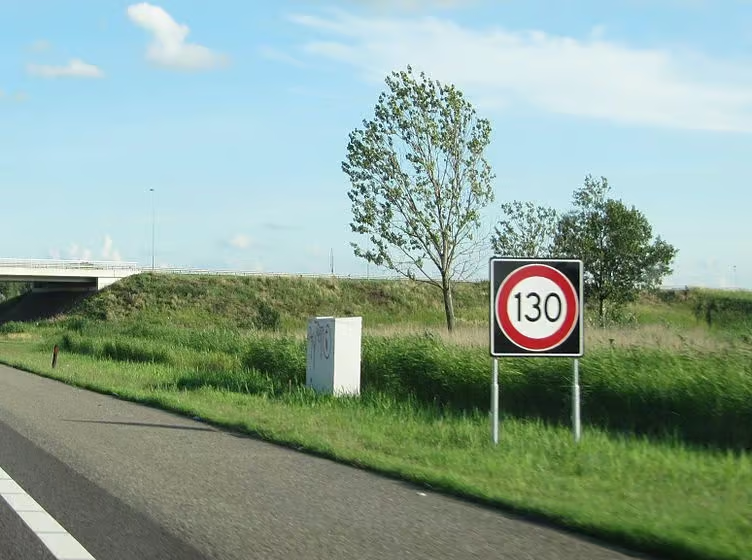
Starting today, the Ministry of Infrastructure and Water Management have announced a new 130km/h daytime speed limit on certain Dutch roads.
While there are currently only three highways with the new limit in place, there are plans to expand across the country in the coming months.
Which roads?
Some Dutch cities might be reducing speed limits, but now 117 kilometres of Dutch highway are doing the opposite. 👇
Here’s where you can legally speed up to 130km/h all day long:
A7-Afsluitdijk, between Stevinsluizen and Lorentzsluizen,
A7, between the Winschoten junction and German border,
A6, between Lelystad-Noord and the Ketelbrug.
Preparations are underway to include the A37, between the Holsloot junction and Zwartemeer junction, before the summer.
Fast and flexible
According to the Minister of Infrastructure and Water Management, Barry Madlener, this change reflects how dependent people and businesses are on cars for getting around.
“This offers flexibility, speed and comfort,” says Madlener. He also emphasises that “you do not have to drive 130, you are also allowed to drive 100 in the right lane.”
Op 3 stukken snelweg is de maximumsnelheid overdag verhoogd naar 130 kilometer per uur! Het is de eerste stap, maar houden de vaart erin: we werken door aan de invoering van 130 km per uur. 🚗https://t.co/yg1zDT1ITTpic.twitter.com/iqhYAVPWR6
Translation: On 3 stretches of highway, the maximum speed during the day has been increased to 130k/h! It is the first step, but keep up the momentum: we are continuing to work on the introduction of 130km/h.
What about the environment?
The gradual speed build-up is intentional as the government makes considerations for noise and nitrogen emissions.
They want to gather more research on the environmental impact of the increase before expanding to other highways in the country.
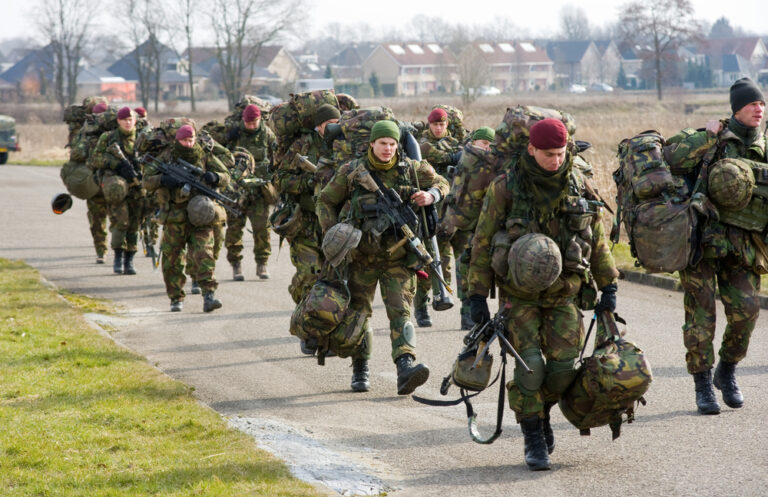
Over 76,000 Dutch defence employees received an ‘Order of the Day’ (Dagorder) last week, which outlined the military’s newest goal —to be ready for deployment faster.
The order was written by the Netherlands’ highest military officer, Onno Eichelsheim, and is meant to “emphasise urgency once again”, reports the NOS.
Civilians will notice a change, with more uniforms and military transport in the streets.
Preparing for action
Busy weeks are ahead for Dutch soldiers, with urgent calls for educating and training all units to the required level to be a priority.
Soldiers must “examine their personal readiness”, for example, checking if their vaccinations are in order, and what shape their basic skills are in.
Purchasing drones, weapons, combat clothing and comms equipment is also picking up speed.
Eichelsheim recognises that faster deployment is a challenge, but believes the times call for it. ⏳
Why the acceleration?
The order mostly responds to Russian aggression in Ukraine, aimed at deterring Russia and ensuring the Netherlands stays on alert.
Eichelsheim explains, “nothing has changed drastically” regarding the Russian threat, “but I have seen that we can accelerate.”
He outlines two possible scenarios for the Dutch army. First, if a ceasefire is reached between Russia and Ukraine, the Netherlands must be ready to help facilitate peace.
The second, much gloomier scenario, would include an “operational plan” in case NATO territory is threatened — the concern here is mostly for the Baltic states.
How do you feel about the plans for faster Dutch military deployment? Let us know your thoughts in the comments below.
If you’re an international who is looking to settle down and get a mortgagein the Netherlands, you’ve probably come across the term Nationale Hypotheek Garantie (NHG). While you may not know what it means, trust us: it’s very important.
Especially if you want to take the leap and buy a home with a few extra safety nets attached. What do we mean? Let’s get into it.
What is the Nationale Hypotheek Garantie or NHG?
The Nationale Hypotheek Garantie translates to the National Mortgage Guarantee.
The NHG is a guarantee on your mortgage that’s available in the Netherlands. It offers protection against any remaining debt if you can’t pay your mortgage due to involuntary unemployment, divorce, or an inability to work.
What is the NHG? The National Mortgage Guarantee will help you protect yourself should you be unable to pay your mortgage. Image: Freepik
Should anything like this happen, the people at the NHG and your bank will try to find solutions so that you are able to stay in your house (instead of selling it).
If you are forced to sell your house and have to sell it for less than your mortgage balance, the NHG will cover the debt that’s left. Phew! 😅
In 2024, the NHG will cost you 0.6% of the mortgage amount. However, it comes with great benefits and is a popular option among hopeful Dutch and international homeowners in the Netherlands.
Good news! In 2025, taking out a mortgage with the NHG will cost you 0.4% of the mortgage amount instead of 0.6%.
What are the requirements for taking out a mortgage with the NHG?
It’s important to know that the NHG is not available to everyone. In fact, there are a number of requirements that need to be met in order to benefit.
Whether you are eligible for a mortgage with the NHG depends on a number of personal factors:
There are a number of requirements you need to meet in order to benefit from the Nationale Hypotheek Garantie (NHG). Image: Freepik
What type of employment contract do you have?
If you have a permanent contract, your gross annual income will be taken into account. If you have a temporary contract, you must be able to show a letter of intent for an indefinite contract from your boss.
If, however, you have a flexible contract or you can’t get the required intent for an indefinite contract, the average income over the past three calendar years will be taken into account. Hopeful buyers should also note that a probation period must have been passed first.
That’s right, you do not need a permanent contract in order to qualify for the Dutch National Mortgage Guarantee (NHG)!
Are you a freelancer?
If you own a freelance business, you must prove that you have earned an income from the business over the past three calendar years, and you must be registered at the Dutch Chamber of Commerce.
However, there are also other ways to meet this requirement.
Sometimes it’s possible to show just one calendar year of your business’s earnings plus showing the earned income from the same type of work as an employee in the two years before.
There is a price cap on mortgages that you can get an NHG on. Image: Freepik
Do you have any debt?
Debt can also have an impact. If you have a personal loan, credit line, overdraft or any other financial obligation such as a private lease car or mobile phone contract, your loan-to-income range will be affected. Ground lease and leasehold payments will also be taken into account.
The purchase price of the house, including renovations, must not exceed the NHG limit. 👇
What is the Dutch NHG limit?
When it comes to applying for an NHG mortgage, it’s important to note that there’s a price cap on the expense of the home you wish to take out a mortgage on.
There is a limit to how high of a mortgage you can take out with the Dutch National Mortgage Guarantee. Image: Freepik
In 2024, the NHG is only available for houses that sell for a maximum of€435,000. However, in 2025, the NHG limit will increase to €450,000.
That being said, there is one exception to this rule: if you want to take measures to make the home more sustainable, then the mortgage value can be raised to 106% of the value of the home.
This means that, in 2024, if you want to get an NHG mortgage on a house worth €435,000 but want to take measures to make it more sustainable, then the borrowing limit will be raised to €461,100.
In turn, this means that in 2025, this borrowing limit will increase to €477,000 if you plan on making sustainable renovations to the home, such as installing solar panels or better insulation.
Are internationals in the Netherlands eligible for the NHG?
In short, yes! If you are eligible for a mortgage in the Netherlands and meet the above requirements as well as the following, then you are just as eligible for a Dutch mortgage as a born and bred Nederlander.
So, what extra steps must internationals take to be eligible for a mortgage with the NHG?
If you’re from the EU
As always, it’s a bit easier if you’re from the EU. In this case, the NHG doesn’t discriminate based on nationality, just whether or not you are able to finance the loan.
Internationals can also benefit from the Dutch National Mortgage Guarantee. Image: Freepik
If you’re not from the EU
If you’re a non-EU citizen — including someone from Switzerland, Norway, Iceland and Liechtenstein — you will need a permanent residence permit.
However, it’s not end-game if you don’t have this.
You can also be eligible for a Dutch mortgage if you have an EU residence permit for long-term residents, or a ‘Permanent Residence Permit for Citizens of the Union’, or a residence permit in the Netherlands for a purpose of stay that is not temporary within the meaning of Article 3.5 of the Aliens Decree.
For instance, being a highly-skilled migrant (so-called kennismigrant) is considered a non-temporary stay.
Why should you opt for a mortgage with the NHG?
There are many reasons why you should consider taking out a National Mortgage Guarantee (NHG) as an international in the Netherlands.
Firstly, lenders offer much lower interest rates if you opt for the NHG when sealing the deal on your Dutch mortgage. Lower interest rates mean lower monthly payments — leading to more money in your back pocket.
There are many reasons why you should consider a mortgage with the National Mortgage Guarantee. Image: Freepik
On top of this, the 0.6% of the housing cost that goes towards the NHG is tax deductible. In this case, you’re not only getting back some of your money but also spending less each month due to lower interest rates.
In short, with the NHG, your monthly mortgage costs will be lower, you’re protected in the worst-case scenario, and you can deduct the cost from the taxman!
Will you be making use of the NHG in the Netherlands? Tell us your thoughts in the comments below!
What is the NHG? Frequently asked questions
What is the Nationale Hypotheek Garantie (NHG) limit?
In 2024, the NHG can be used to take out a mortgage on a house worth up to €435,000. However, in 2025, this limit will rise to €450,000.
If you intend on making sustainable renovations to the home, 106% of the value of the house can be borrowed, increasing the limit to €461,100 in 2024, and €477,000 in 2025.
Can internationals take out a mortgage with the NHG?
Yes, internationals may also be eligible to take out a mortgage with the Dutch National Mortgage Guarantee (NHG). You must meet a number of requirements, however if you meet these, you are just as eligible for the NHG as a Dutch person.
Is taking out a mortgage with the NHG mandatory?
No, taking out a mortgage with the NHG is not mandatory. However, if you are eligible for it, there are many benefits to taking out a mortgage with the NHG.
Do I need a permanent work contract to qualify for the NHG?
No, you don’t need a permanent work contract to qualify for the Dutch National Mortgage Guarantee. Instead, your average earnings over the past three years can be calculated and used to determine whether or not you are eligible for the NHG.
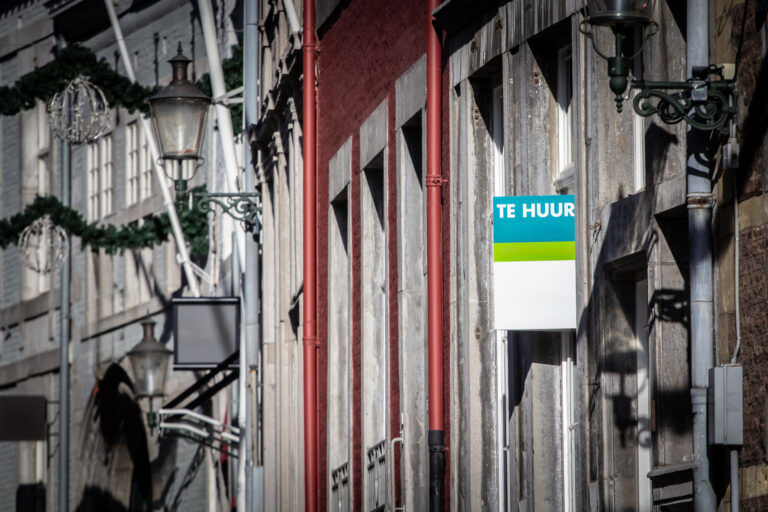
If you think your rent is already high, brace yourself. The Dutch cabinet has new plans for calculating maximum rent in the Netherlands, and they come at a price.
Relaxations to current rules that would allow landlords to charge higher rent could take effect on January 1 next year, NOS reports.
Why, just why?
It all goes back to last summer, when the government introduced new rent control rules, alongside scrapping short-term rental contracts and increasing taxes.
Since then, many small landlords have sold up and quit the market.
Now, the cabinet needs them back. Housing Minister Mona Keijzer wants to adjust the points-based system used to set maximum prices, enabling landlords to charge higher rent.
Their focus is on rentals in popular cities: “With these measures I want to make mid-range rent more attractive to landlords, so that they do not sell their homes,” Keijzer explains.
What’s new?
As part of Keijzer’s proposal, there are three key changes:
Firstly, if a home lacks a balcony or garden, the current rules state that the rent will be lower. These deductions could be scrapped, causing the rent to rise for such properties.
Keijzer also wants more temporary rental contracts for students, so that landlords can sooner and more frequently increase the rent.
And what’s more, to those who masterfully snatched a beautiful old rental home — watch out. Landlords of small monumental homes would also get more flexibility to charge higher rents. 😤
Criticism from all sides
The proposal is receiving backlash from both tenant and landlord groups.
Tenant organisation Woonbond disagrees with Keijzer’s goals. They argue that if the real aim is to make renting out homes more appealing, “the minister should do something about the tax that landlords have to pay her.”
Interestingly, even the landlords themselves aren’t fully on board. The Vastgoed Belang organisation also points out the flaws, calling the measures “insufficient.”
“If the government wants to ensure that there are sufficient affordable rental properties, then the tax burden really needs to be reduced. This helps landlords and tenants.” the organisation expresses.
Ahh, Maastricht. The metropolis of Limburg. You’ll find plenty there! This beautiful city is the ultimate marriage of classic Dutchness and that southern European vibe.
Cute cobbled streets, pretty parks, and medieval monuments — Maastricht has a little bit of something for everyone.
Having been ruled by French, Spanish, Prussian, and Austrian powers throughout history, the province of Limburg has a distinct character compared to its northern Dutch counterparts, making for a truly unique experience when visiting Maastricht.
Whether you’re looking for a fun day out on the Maas River, exploring the mysterious Fort Sint Pieter caves, or just want somewhere pretty to walk around, Maastricht is the perfect destination for a casual day trip.
It’s one of the first areas you hit when walking towards the centre from the station, and it’s a rather stunning first impression.
Sint Servaasbridge: an ancient beauty
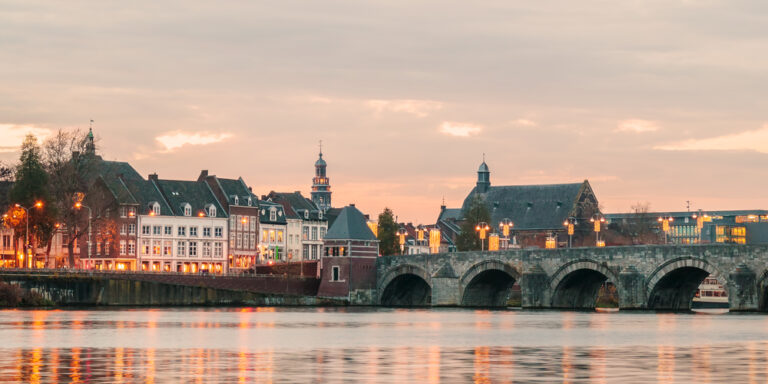
This is quite possibly the oldest bridge in the Netherlands, dating back to the 13th century.
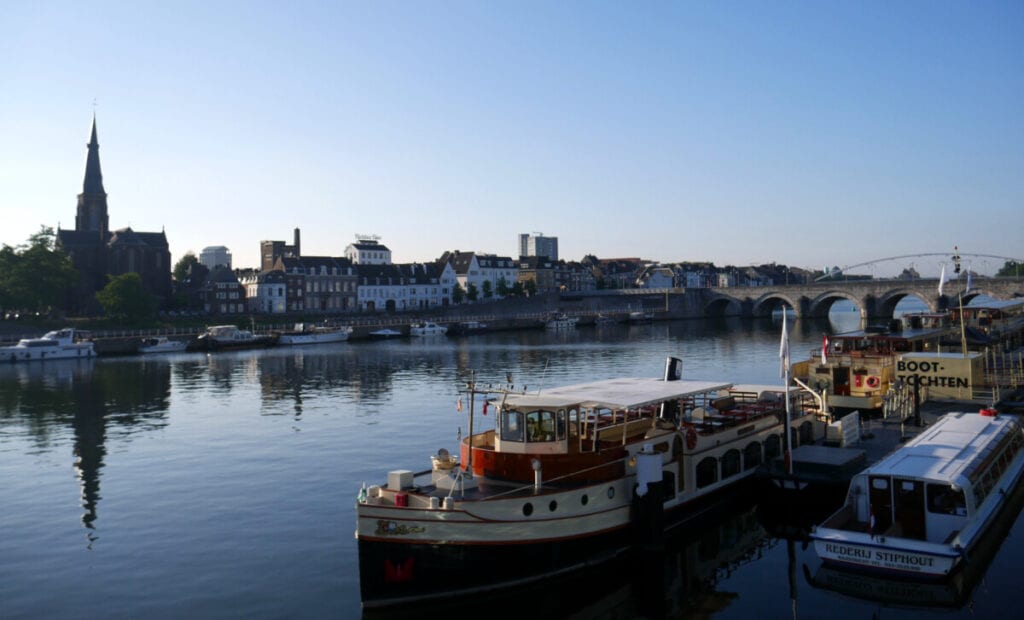
Spanning over the Maas River, this old beauty connects the two halves of Maastricht, whereby you can walk straight from Wyck into the old town.
When the weather is good, this spot is perfect for taking pictures with the Maastricht skyline behind you, as it offers a great view of both sides of the city.
Boekhandel Dominicanen: a bookstore built into a church
This 700-year-old Gothic church was converted into a bookstore in 2006 — and what a bookstore it is! Over 50,000 books are packed in the stone walls and shelves.
The nave is dominated by what is essentially a two-story bookcase that you can climb and walk around. Here, timeless literature blends perfectly into the living history of the church.
Books in English and other languages are also available, and a cafe sits snugly at the back — gezellig!
AlleyCat: bikes and coffee in one
If you find yourself in need of a coffee break AND a bike part, look no further than the Alley Cat Bikes & Coffee.
They pride themselves in serving ethical, speciality coffee, as well as anything to do with bikes really. Homely wooden tables, fresh cakes, and the cutest dogs are always there to welcome you when you enter.
If you’re not in the mood for a coffee, they also have a delectable dirty chai latte which we highly recommend.
Helpoort: the old city gate
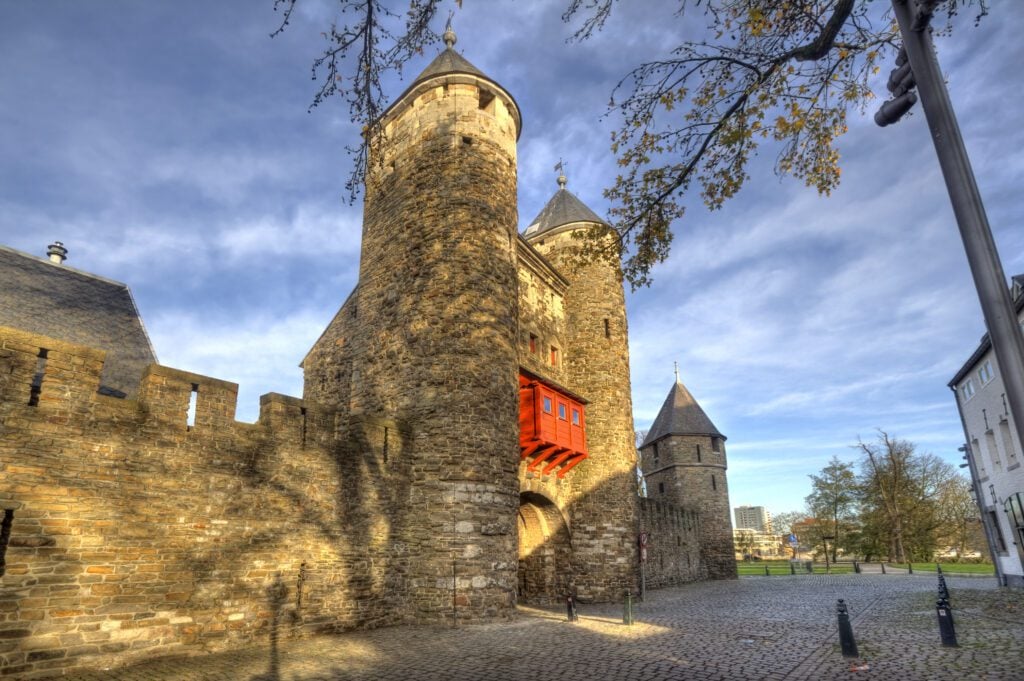
Helpoort was the city gate of Maastricht during medieval times, and it still stands remarkably well-preserved today.
A day trip to Maastricht is not complete without a visit to the glorious city gate, which dates all the way back to 1229! Image: Depositphotos
Dating back to the 13th century, as many things in Maastricht do, this is the oldest surviving city gate in the Netherlands.
Take a stroll through the gate and along the old wall for a scenic walk and a taste of Limburg history.
Stokstraat: fancy stores and eats
Known for its historic appearance, Stokstraat is one of the oldest streets in Maastricht.
Today, it hosts luxurious fashion and interior design stores. Traditional Burgundian restaurants with the finest wines and quality food can also be found along this street.
Burgundian food is typical in Limburg and is where the French influence comes through. This cuisine is from the region of Burgundy and tends to be meaty and full of rich flavours.
In Maastricht, you’re never far from a cafe, so of course, Stokstraat is a treasure trove of delicious cakes, teas, and coffees.
It’s within the pedestrian zone, so wandering along this street is a relaxing feast for both the eyes and stomach.
Bonnefanten Museum: the place for art
If you’re craving some visual art but want something different from the museums in the north, Maastricht’s Bonnefanten Museum is ideal for you.
Their collection spans from medieval right through to modern, contemporary, and conceptual art — and there’s always an interesting new exhibition taking place!
The museum even sometimes hosts international events and travelling art worth checking out. 😍
Onze Lieve Vrouwe Sterre de Basiliek: iconic Catholic church
In English, this means “Church of Our Lady, Star of the Sea”. This Roman Catholic church is still active today, which is impressive considering it dates back to the fourth century!
Its beautiful Romanesque architecture is definitely worth seeing and is another reason why the culture and aesthetics in Maastricht are visually unique to the rest of the Netherlands.
Outside the church, you can find charming restaurants and a wonderful ice cream shop.
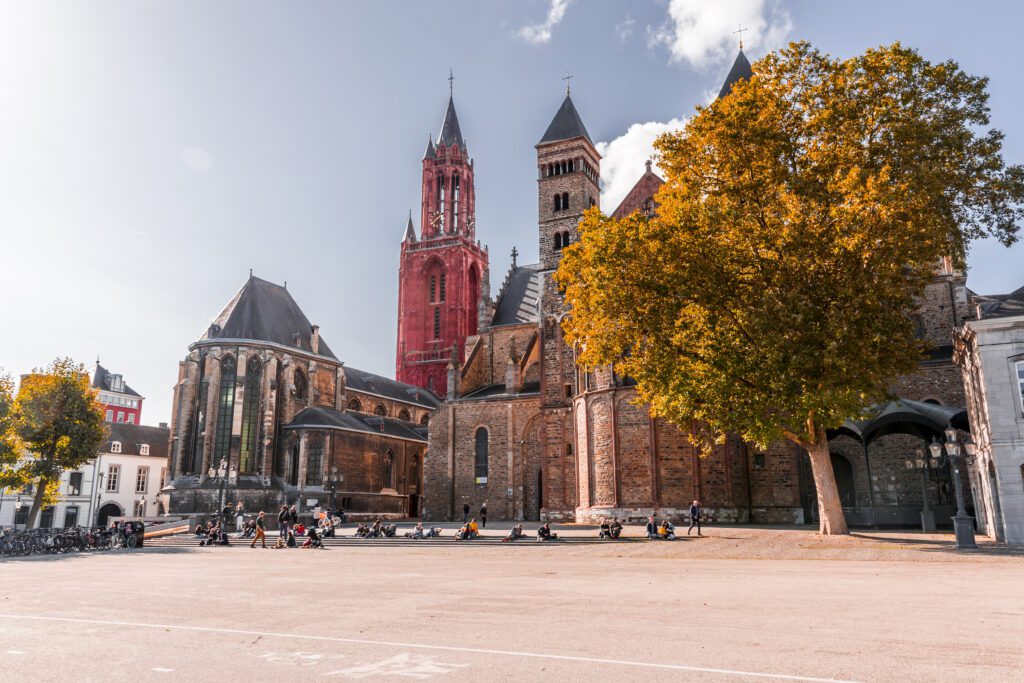
Basilica of St. Servatius: the church Maastricht is known for
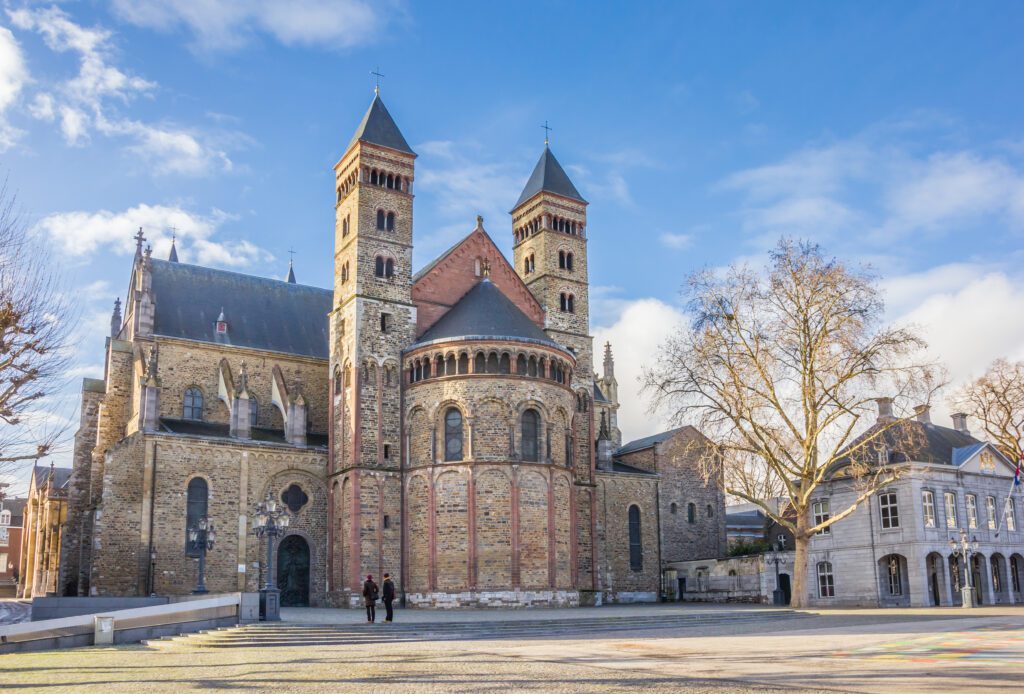
The broad chest of this magnificent church stands tall along the edge of the Vrijtof and is a recognisable feature of Maastricht which draws visitors from far and wide.
The mostly Romanesque style of this Catholic church contrasts the red Gothic structure of Saint Jan’s to its right.
For just a few euros, you can enter St. Servatius and climb the tower of Saint Jan’s for a great view of Maastricht.
Lichtenberg ruins: the castle on the hill
The “mountain of the Netherlands”, as locals call it (a hill, really), known as St. Pietersberg, is home to the Lichtenberg Castle ruins.
Just outside Maastricht, the ruins overlook the Maas River, and the walk up there is a scenic trail frequented by picnickers, dog walkers, and runners.
As the oldest castle ruins in the Netherlands, this is not one to miss for history buffs. Entrance is free with a voluntary donation, and the ruins are usually open from the end of April to the start of November each year.
In the summer, a restaurant opens up amidst the ruins, and it’s quite a lovely spot to sit and eat.
But if you’re looking for something a little unusual, try laying your blankets on the grass of an abandoned fort!
The perfect spot to take a break and enjoy nature! Image: Depositphotos
The varying levels and heights of the fort sections make for an interesting maze to wander through — and also provide more privacy than the usual picnic spots. Very popular with the kids, this one.
Food and drink to try in Maastricht
The Dutch aren’t exactly famous for their food, but the interesting mix of European influences has created some delectable delicacies you don’t want to miss on your day trip to Maastricht.
Hearty stews, local brews, and oh-so-sweet desserts are all on the menu here.Lekker!
Zoervleesj
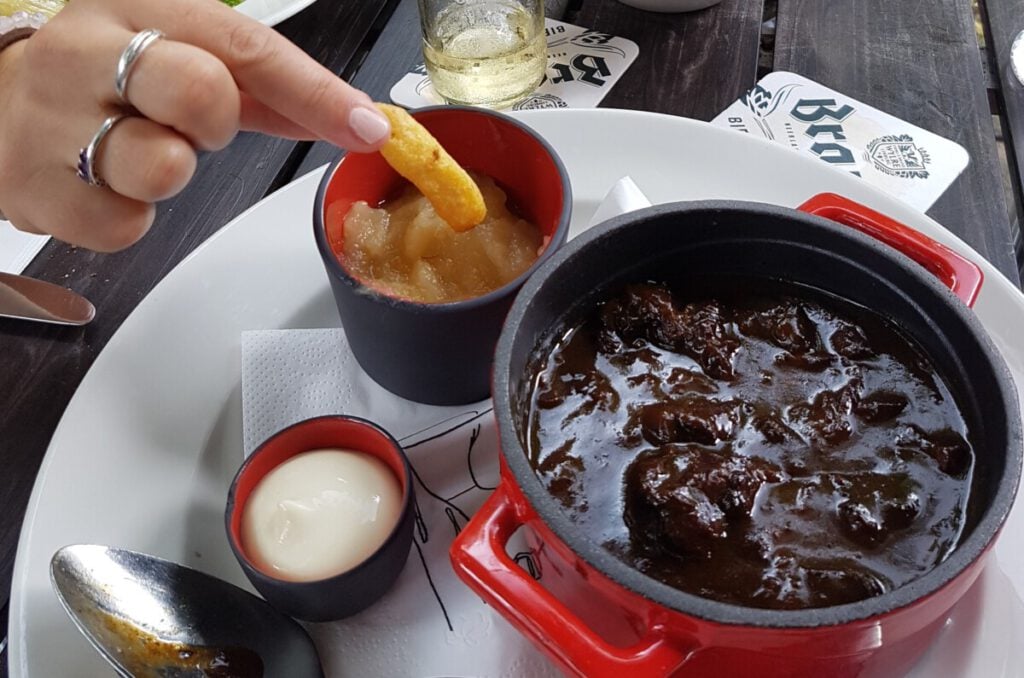
Zoervleesj is Limburgian for “sour meat” or zuurvlees in Dutch.
It’s a sweet and sour kind of flavour in what is essentially a beef stew. The unique taste results from marinating the meat in vinegar, and adding apple sauce and gingerbread.
Perhaps not one for the vegetarians, but definitely a must-try for the omnivores! Image: Abuzer van Leeuwen/Supplied
Sounds weird, we know! But trust us, it’s great. Locals eat it with fries, and if you enjoy hearty meals with rich flavours, you will absolutely love it!
Maltese beer
Any good meal needs a tasty beer beside it, and for that, Maastricht has a special treat. The historic Maltese beer is a full malt Dortmunder style beer and was one of the first speciality beverages in the Netherlands.
It has a dark colour with a rather strong taste and is very popular amongst tourists.
Through the grapevine, it gives you the power of the gods, the wisdom of Aristotle, and oh yeah — a throbbing hangover in the morning. But don’t take our word, give it a try yourself!
The local brewery, called the Maltezer, has been crafting the beer at its current location since 1954. You can find it on the Maas in the Wyck district, not far from the Sint Servaasbridge.
Vlaai: the Limburg pie
If you enjoy apple crumble or cherry pie, this is kind of similar — but also definitely not the same.
Vlaai is a traditional pie or tart-like dessert from the province of Limburg, where Maastricht is situated, with a yeast-dough crust and usually a fruity filling.
Who wouldn’t want a piece of that pie?😍 Image: Unsplash
Variations of it exist, including in the surrounding Belgian and German regions, but typical flavours include cherry, apricot, strawberry, and plum.
Eating a warm slice of vlaai with ice cream or vla (custard) is truly heaven. 🥧
The best vlaai bakery in Maastricht is the Bisschopsmolen, where you can also take part in workshops and learn how to make your own.
Using local wheat, they grind their own flour with the watermill, which is in itself a tourist attraction.
Walking past their bakery window is enough to make your mouth drool, trust us. You won’t regret stopping by!
Fun tours and activities in Maastricht
Done with the tourist attractions, and ready to see a different side of the city?
Geen probleem, there are many fun tours and activities for you to do on your day trip to Maastricht!
Boat tours on the Maas River
There are all kinds of sailing options for the Maas River, depending on the company you go with.
Bubbly brunch or dreamy sunset cruise? Take your pick! Image: Emily Burger/Supplied
There are basic riverboat tours, but also breakfast, pancake, and Saturday night dinner cruises.
You can even sail into Belgium and back if you want to! Tours are in Dutch, English, and German, and can be combined with other tours in Maastricht.
Cave tour at Fort Sint Pieter
The underground caves beneath Fort Sint Pieter have a fascinating history. The 60-kilometre-long tunnel system was originally a mine but was later used for shelter by locals during WWI and WWII.
Since then, artists of all kinds have left their marks on the stone, and remnants of life underground can still be seen.
The caves are cool, refreshing, and extremely tall, and the guides that can take you are very knowledgeable. It’s definitely an adventure you wouldn’t want to miss!
Soak up the dialect
As you may have noticed, Limburg has its own dialect that differs a little from standard Dutch. It’s considered a mixture of German and Dutch and is referred to by locals as plat.
For example, they would say boeten instead of buiten (outside), and sjoon rather than schoenen (shoes). The Maastricht catchphrase is haw pin! Which means houd moed or “stay strong”.
Of course, different towns and cities have different variations of this dialect.
About 750,000 people speak plat, although in Limburg they also speak general Dutch, and many people speak English well.
Locals in Maastricht are known for being friendly, so don’t be shy to say hello and have a go at plat!
Kringloop: second-hand steals
If you’re a shopaholic and love a good bargain, or maybe you’ve started a more sustainable fashion lifestyle, Maastricht has many good-quality second-hand stores (kringloop winkelen) for you to browse through.
You can find anything from classic radios, record players, and type-writers to timeless fashion pieces and vintage furniture.
Take some time to wander through these shops, and you might be surprised by the gems you’ll find.
How to get to Maastricht
You can get to Maastricht fairly easily by train, bus, or car. From Amsterdam, the train trip is about three hours and by car, it’s two hours.
The NS Dutch railway often has travel offers for those planning a day trip to Maastricht, such as a return day ticket to Maastricht for €25.
Of course, there are many stunning places in the Netherlands to explore, and each one has its own unique character. But if you’ve already seen the major Dutch cities like Amsterdam and Rotterdam, why not try Maastricht next?
Its charm will leave you wanting more!
Do you have more hot tips for Maastricht? Tell us in the comments below!
There’s no denying that cancer sucks. And cancer therapy? Just as much. But there is one Dutch company that hopes to make the whole experience more manageable: Imuno Therapeutics.
Instead of relying on one-size-fits-all treatments that often come with tough side effects, Imuno Therapeutics is working hard on developing an alternative that targets a patient’s cancer more specifically.
I sat down with CEO Jan-Jaap Verhoef to learn more about their impressive mission.
What does Imuno Therapeutics do?
Imuno Therapeutics‘ goal is simple: “We want to make great therapies for patients with cancer,” says Jan-Jaap.
But unlike traditional treatments that often come with severe side effects, Imuno Therapeutics focuses on creating highly targeted therapies. What does that mean, you ask?
Well, currently, most cancer drugs are a bit of a one-size-fits-all, Jan-Jaap explains. “They hit all the organs in our body, but only slightly more aggressively target the cancerous tumour. That’s why cancer patients often suffer from significant side effects.”
As we all know, cancer treatment is hard on the body. Image: Freepik
Imuno Therapeutics’ approach is different. “We identify elements unique to the tumour, allowing us to create a highly aggressive drug that remains safe because it only recognises the tumour.”
Sounds complicated? Here’s a simple analogy: “All our cells put their dirty laundry outside — and [Imuno Therapeutics] figure out what the dirty laundry of the tumour cell is. Once we know that, we can build something to specifically target it.”
How did Imuno Therapeutics get started?
Imuno Therapeutics was born out of a passion for precision medicine and the advancements made by companies like BioNTech and Moderna, which you probably know best for their COVID-19 vaccines.
Jan-Jaap spent eight years in a lab at different Universities around the world, and he “got really excited about making drugs that could have a real impact on patients’ lives,” he says. “I felt that oncology needed a more tailored approach rather than a one-size-fits-all treatment”.
With nothing more than ambition and a 12-slide pitch deck, Imuno Therapeutics became operational in 2021.
“I came out of an academic career but had no invention or patent or anything. I just wanted to do something for cancer patients,” Jan-Jaap smiles.
“I found one crazy guy who believed in it and invested, and then he brought on a friend. Then, almost out of our garage, we started building the company.”
What major milestones has Imuno Therapeutics reached?
Since the company’s early days, it has achieved multiple major milestones. One of them, as Jan-Jaap recalls, was when two great people came on board: “Leo Price — he was the founder of OcellO — and Mark Throsby, who’s a big guy in biotech. That brought a lot of expertise and knowledge into the team.”
Since then, Imuno Therapeutics has successfully developed a drug to treat cancer by targeting a well-known mechanism of the disease. “It’s extremely safe and works extremely well.”
The hard work has paid off. Image: Freepik
“We’ve now proven that our approach can lead to effective and precise therapies. We’ve shown that in academic conferences, and we’re talking to bigger pharma to actually bring it to patients.”
Essentially, Jan-Jaap says, “We have made a drug, we have validated the drug — and that just proves our whole platform. Now, we can show that we can hopefully make people better.”
How has the Leiden ecosystem contributed to Imuno Therapeutics’ success?
With the wonderful city of Leiden being a hotspot for health and life sciences, being based here has played a big part in the company’s growth.
“One of the reasons we initially landed here is the support for biotech startups,” Jan-Jaap shares. “The Bio Science Park ecosystem and programs like unlock_ (PLNT’s start-up incubator), have been incredibly helpful.”
“The sense of community in Leiden has just been great. You’re surrounded by like-minded people who are just as excited to do something valuable in the world.”
What impact does Imuno Therapeutics want to make in the future?
Of course, the company’s immediate goal is to develop cancer therapies that are both effective and safe, improving the quality of life for patients.
But the long-term goal is to revolutionise the way drugs are made: “I truly believe that in the future, it will become much more efficient to make drugs cheaper and there will be fewer mistakes. We’re moving towards on-demand precision therapy, and eventually, we’ll be able to make on-demand precision therapy for patients.”
What motivates you to keep going?
For someone who is literally working on a cure for cancer, the answer to this question is obvious.
But beyond this mission, Jan-Jaap says he’s driven by the opportunity to solve complex problems with a talented team.
“It’s incredibly fun working with a smart, diverse team — some in the lab, some focused on computational tools. Every day is like solving a new puzzle. It’s not just about the end goal, but also about enjoying the journey.”
And while competition is emerging, especially in the US, Jan-Jaap sees this as a positive sign. “When I started, no one was really doing this. Now, others are joining in. That proves people believe in this way forward.”
“Now we just have to outsmart the others and be just as successful — or even more successful,” he smiles.
With a more precise approach to cancer treatment, the future looks brighter — and we can’t wait to see how Imuno Therapeutics will make life a whole lot easier for patients in cancer care.
What do you think of Imuno Therapeutics’ journey? Share your thoughts in the comments.
One minute you’re clutching your chest in agony, the next you’re drinking tea and popping a paracetamol just like the doctor ordered. We’ll never get over classic Dutch healthcare tales.
Content creator Matheus Santana recently asked his Instagram followers for the wildest things Dutch doctors have told them — and the replies did not disappoint.
Similarly, user lmvds was told to try “walking around and singing a song” for chest pain and shortness of breath.
Because nothing says medical expertise like chanting the pain away. 🧘
Insomnia is a myth
Struggling to sleep? Dutch doctors say: fake it till you make it.
It seems many users have received the simplest of advice when it comes to sleepless nights: dxlly.e was told “you have to close your eyes”, and h.evelyn_ recalls, “Me: Can’t sleep, have insomnia. GP: Try smoking and close your eyes”.
That’s the first time we’ve heard a huisarts recommend nicotine. 🚬
Symptom? What symptom?
Turns out Dutch GPs have a talent for casually gaslighting your symptoms into oblivion. 👀
User tintiniee’s doctor said straight up: “That PCOS is not real & it’s just in my head.”
So if chronic illness is in our imaginations now, should we stop pretending? Mayara.ldm discovered how:
“I had been coughing for many days, and the doctor said that in order to stop coughing, I had to force myself not to cough. I was so shocked that the doctor told me: ‘Yes, it sounds stupid, but to stop coughing, you need to stop coughing.’”
Doctors who consult the oracle… or Google
Yes, your doctor did 8+ years of medical school — and yet, they’re googling your symptoms just like you did at 2 AM last night. 😅
The doctors tending to mibracomila and carolccrr3 summed up this reality: “Let me check on Internet”, “They checked what I had in google”.
Comforting, right? Just you, your symptoms, and your GP’s search history.
After assaulting at least 30 people over four years in South Holland, a 57-year-old male cyclist was finally convicted on Wednesday.
He was sentenced to two years in prison, one of which is conditional, reports NU.nl.
Four years, 30 women
Between May 2019 and August 2023, dozens of women could hardly enjoy walking around South Holland in peace.
The reason? A man cycling through various outdoor areas, groping their private areas. He inappropriately touched at least 30 women, one of whom was a minor.
Randomly selected, but purposeful
During Wednesday’s court verdict in the Hague, the judge determined that the man acted purposefully: he committed assaults without any witnesses around.
The victims could not have known that only intended to touch them briefly, causing them further distress.
“It is precisely these kinds of facts that make women feel restricted in their freedom of movement,” explains the judge.
He claimed he never intended to touch a minor or the women’s genitals. But since he groped the women while cycling past them at high speed, the judge decreed he accepted that chance.
A psychologist diagnosed the cyclist with frotteurism disorder — a condition where someone gets aroused when touching people without permission.
On top of his sentence, he must seek treatment for this and pay around €500 to eight victims.
Turned himself in
The man was caught on camera committing one of his heinous acts, and when the footage circled in his cycling club, he turned himself in.
He was previously convicted in 2009. If he commits another offense within three years, he will serve the conditional part of his sentence as well.