When MPs initially agreed to slash the expat scheme last year, a storm of protests broke out among some of the largest Dutch companies. Now, the Dutch parliament could reverse the decision.
The 30% ruling used to be the major benefit attracting talented expats to work in the Netherlands — until it was reported earlier this year that the scheme was to be scrapped.
What is (or was…) the 30% ruling? This refers to the Dutch tax credit scheme, which previously meant that 30% of an eligible expat’s salary untaxed for the first five years of their stay in the Netherlands. This has now been reduced to 30% for the first 20 months, 20% for the following 20 months, and then 10% for the final 20 months.
A new scaled arrangement — phasing out the amount of tax-free income over a period of 5 years — was also announced this year, to heavy criticism from across the Netherlands.
Companies like ASML, desperately in need of these highly skilled employees, made it extremely clear that scrapping such an enticing arrangement would be disastrous.
However, the question on everyone’s lips at the moment is: how are MPs responding to the industry giants’ threats of taking their business elsewhere, if the Netherlands chooses to scrap the 30% ruling?
The House of Representatives has regrets
While parties like the CDA and BBB had previously supported the proposed cuts, they are now reconsidering their vote, EenVandaag reports.
It sounds like the parties would have liked the decision to have been less rushed and are now expressing disappointment that major actions were taken in such a short time.
This U-turn could be a sign that the expat scheme as we once knew it is not gone for good.
📢 Want to have your say? You can share your opinion in these surveys conducted by SEO Amsterdam Economics.
What happens next with the 30% ruling?
We’ve all heard the saying “if it ’aint broke don’t fix it” and it seems that a majority is in favour of keeping the expat scheme as it was.
But hold your sighs of relief — this could still be a while away.
Despite some members being open to alternatives, an important sticking point remains the PVV. As often is the case, what they really want in the end is unclear.
So, at the Senate’s insistence, the (demissionary) cabinet will revisit options for developing tax schemes differently in the run-up to the Voorjaarsnota (the Spring Memorandum).
Voorjaarsnota (the Spring Memorandum): Voorjaarsnota refers to the forecast shared by the Dutch government regarding the status of their income and expenditures. It tracks whether these are still consistent with what the ministries agreed in the annual national budget, as well as provides a preview of plans for next year.
This means we can expect a re-evaluation of the expat scheme in a few months. And with the current negotiations for a new cabinet, reversing last year’s proposed cuts is definitely on the table.
BBB leader Van der Plas informed the NOS that this is under discussion within the “financial framework” being agreed between the four parties, so she cannot yet answer questions about the arrangement.
With all these re-evaluations, reversals, and reductions, the future of expats’ tax could use a bit of that infamous Dutch directness… 🙄
What do you think of the House of Representatives’ decision to reverse the 30% ruling? Are you affected? Let us know in the comments below.
On the 7th floor of De Rotterdam, you’ll find Elvy Gastrobar (part of the Nhow Hotel there).
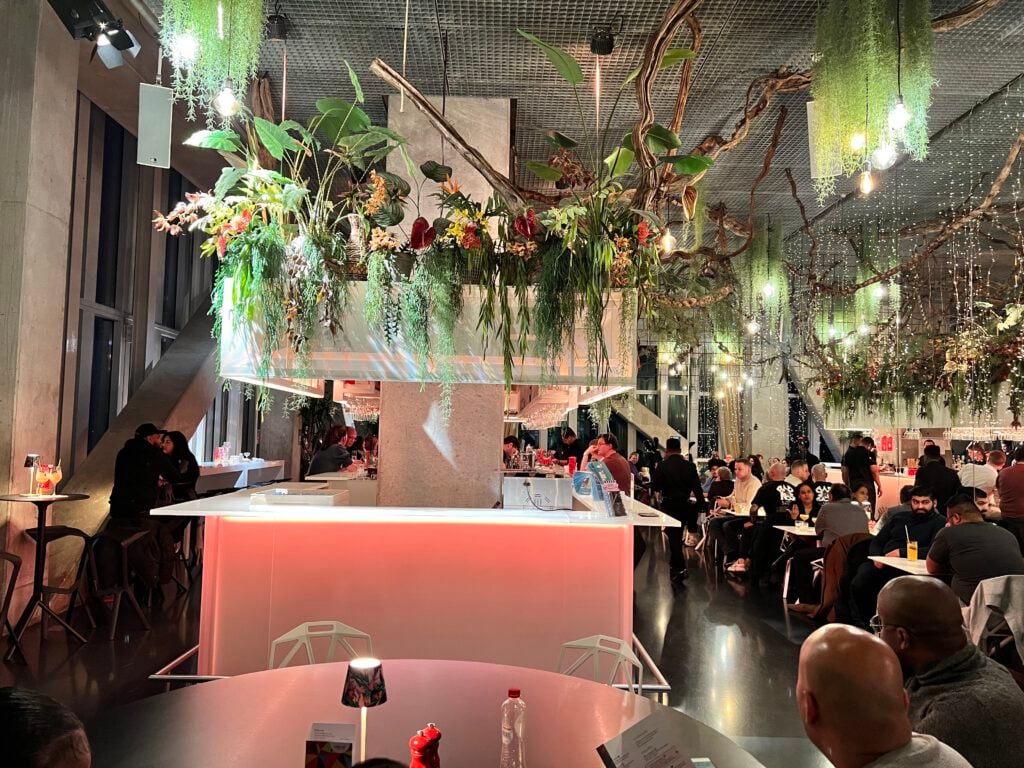
From the moment I stepped into this stylishly chic establishment, I knew I was in for a fun night.
The ambience exuded a trendy yet inviting vibe, perfect for a memorable dining experience.
We love a modern interior. Image: Abuzer van Leeuwen
It’s the perfect spot for enjoying cocktails, funky beats, good (and affordable!) food, and, of course, dazzling views of the Rotterdam skyline, especially around sunset. So don’t forget to take a moment and enjoy the splendid Rotterdam panorama.
The menu has something there for everybody, conveniently with little icons for vegans or those especially looking for guilty pleasures.
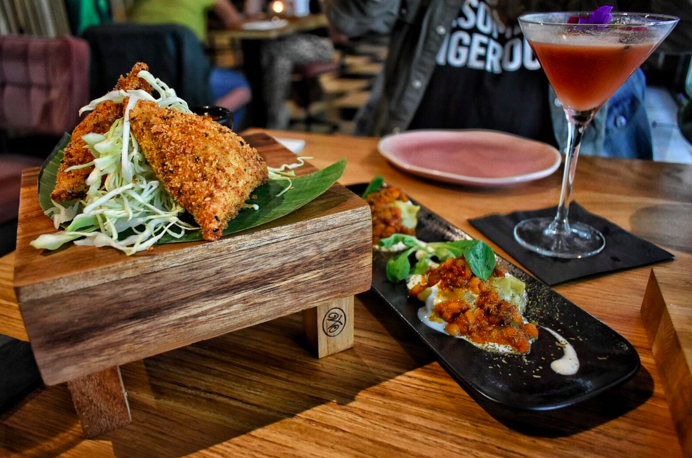
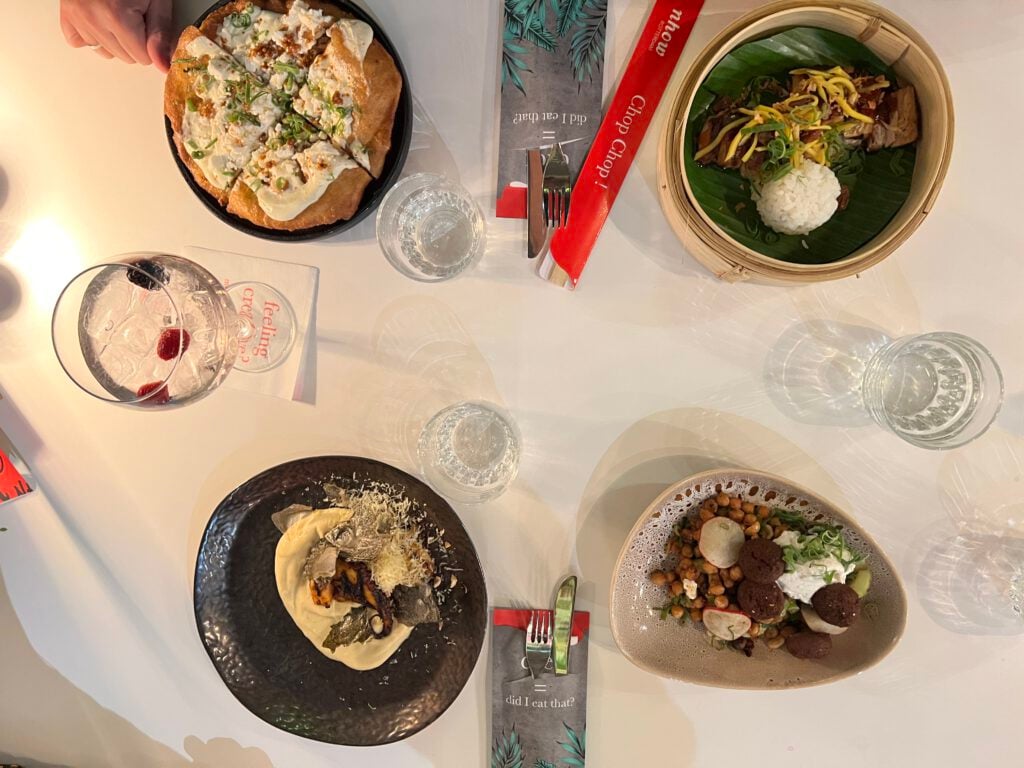
I can thoroughly recommend the Langos, the pork belly and the pulpo as possible starters.
The food was simply delightful. Image: Abuzer van Leeuwen
Looking forward to returning here on a nice summer night and enjoying the outside experience with one of their nice cocktails (the peach cobbler!)
In a sidestreet of the bustling Meent you’ll find the new and fancy Savor&Nosh. What to expect? Well, amp up your expectations, it only gets better from there.
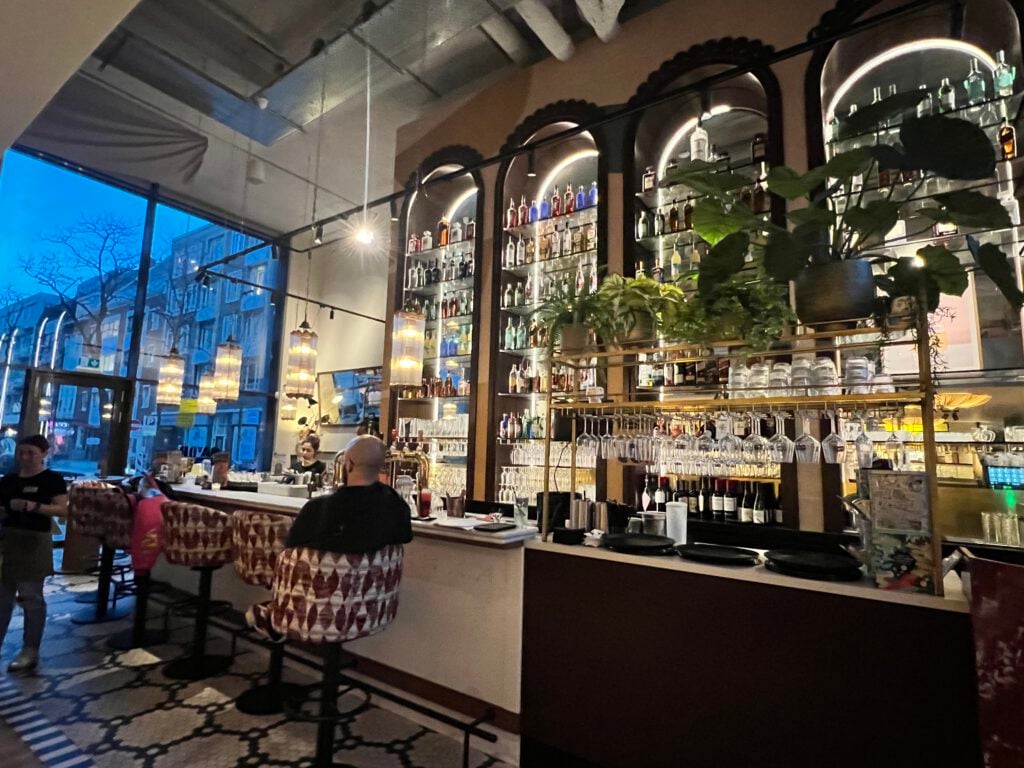
The decor steals the show right away, what an addition to the trendy scene of Rotterdam.
Sleek and modern is the way we go. Image: Abuzer van Leeuwen
As you can see, it also has the vibe for evening cocktails with friends, but at the same time, Savor&Nosh welcomes people who want to work there during the day and those looking for a delish brunch.
Never short of food! Image: Abuzer van Leeuwen
But we were there in the evening, and then it was fine dining time.
They’ve got some smashing flammkuchen, which were pretty solid. You can’t go wrong with the steak tartare, and especially the Korean fried cauliflower, which I recommend for everybody.
It was a good night and brunch here is now on my to-do list!
If you want to combine comfort and delicacy, go some authentic Pugliese food made by Italian chefs at Panzerò!
Located near Rotterdam Blaak Station, the restaurant is very cosy and offers some amazing dishes that you won’t find at your regular ol’ Italian eatery.
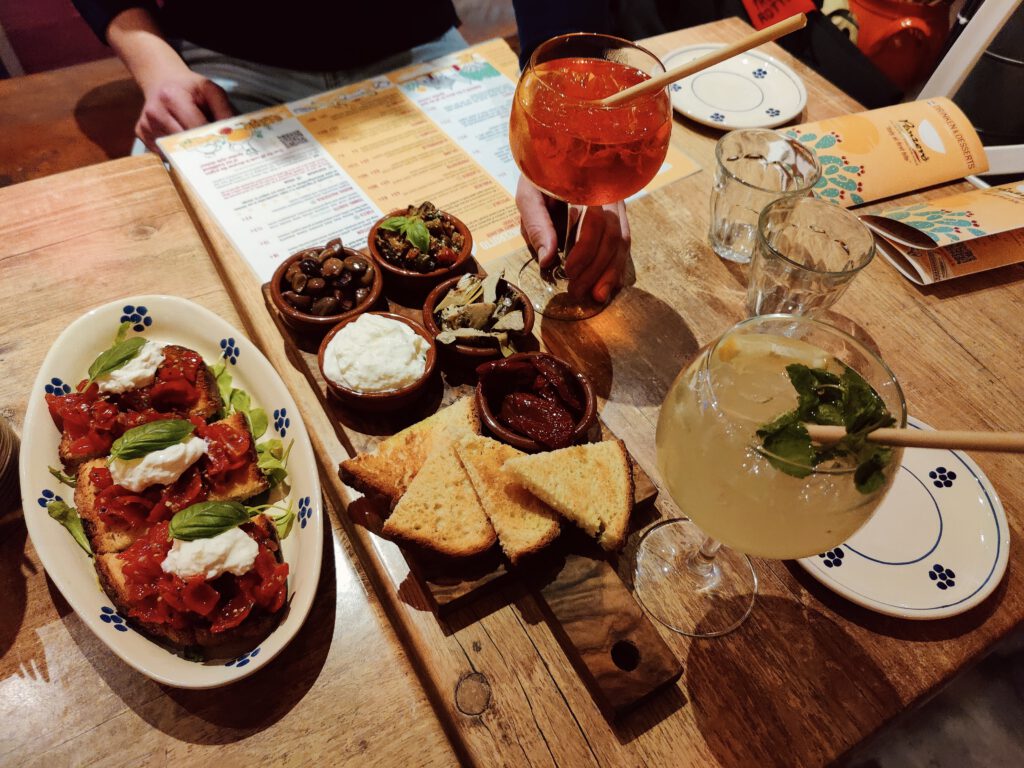
We started with appetizers of burrata, tomatoes, and olives and tasty Aperol Spritz and Limoncello cocktails to go with the food. Cheers! 🥂
Pure Italian authentic cuisine in Rotterdam! Image: DutchReview
We were spoiled when the main dishes came to our table: Panzerotti, Polposition, and Parmigiana! The panzerotti came with fresh bread, which was baked to perfection. The polposition was also a great pick for all the seafood lovers out there. 🐙
Did we mention this place is also suitable for vegetarians? The Parmigiana, filled with eggplant and layered with fresh tomato sauce, was my friend’s favourite! 🥘
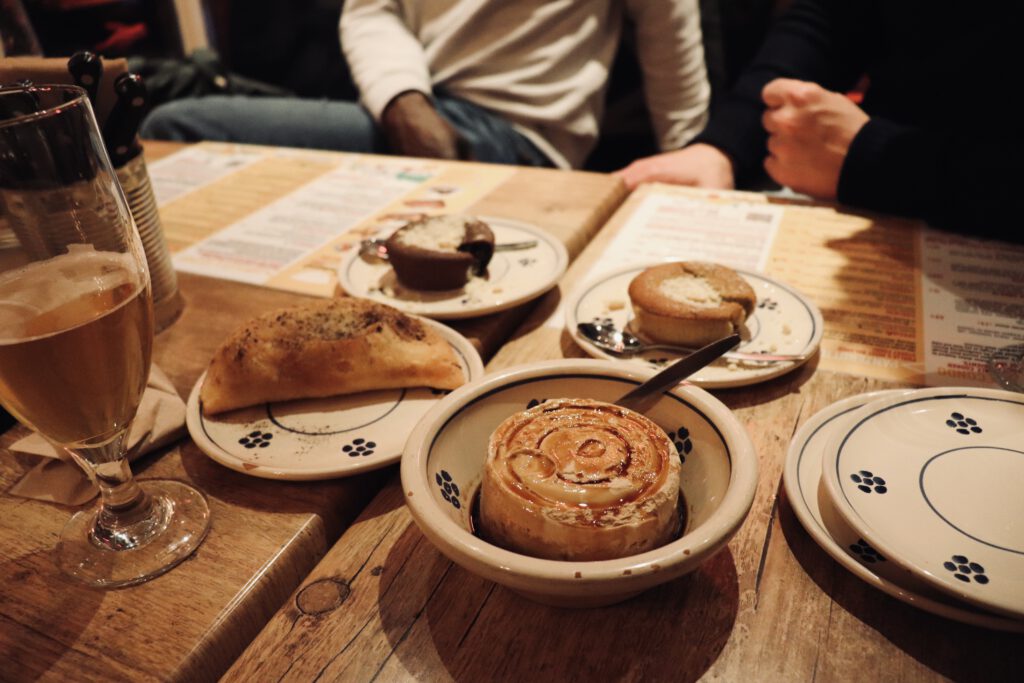
After indulging in all that cuisine, we got the sweet pistachio puff pastry bun, the chocolate and pistachio lava cake, and even our dessert stomachs were satiated by the end of the night!
Dessert never looked so good. 😌 Image: DutchReview
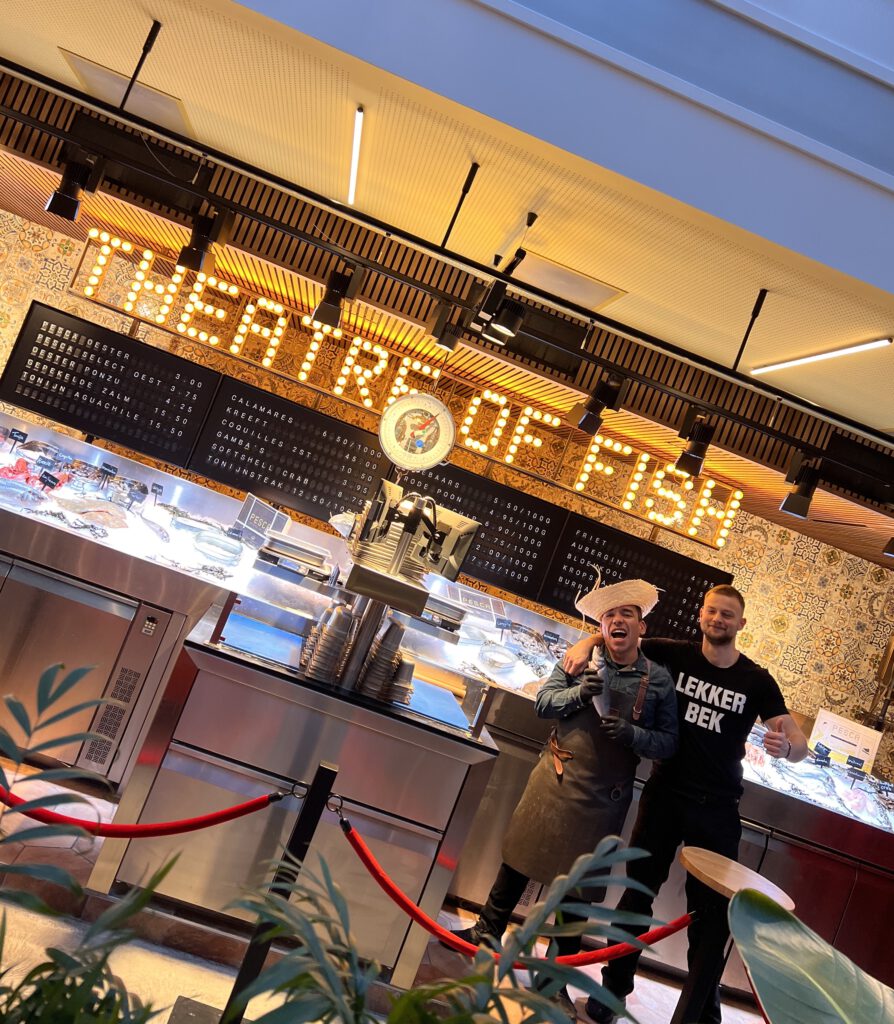
Pesca had been making a name for itself in Amsterdam. People flocked to the new concept of a live fish auction where you get to pick your fish food before it gets served to you. Their new Rotterdam location is no different: creative concept, playful atmosphere, and of course, delicious seafood!
Luxury touches, classy interiors, a ginormous fully stocked bar and funky music, set the scene for a night out in the theatre of fish.
Ever seen a theatre of fish? Image: DutchReview
When your sardine case number (it will make sense when you’re there) is up, you can have your pickings at the fish auction.
Prices are on display, and the upbeat Pesca staff happily presents you with all the possible options for three rounds of seafood: cold, warm and big complete fish. After selecting all that, it’s time to pick your wine!
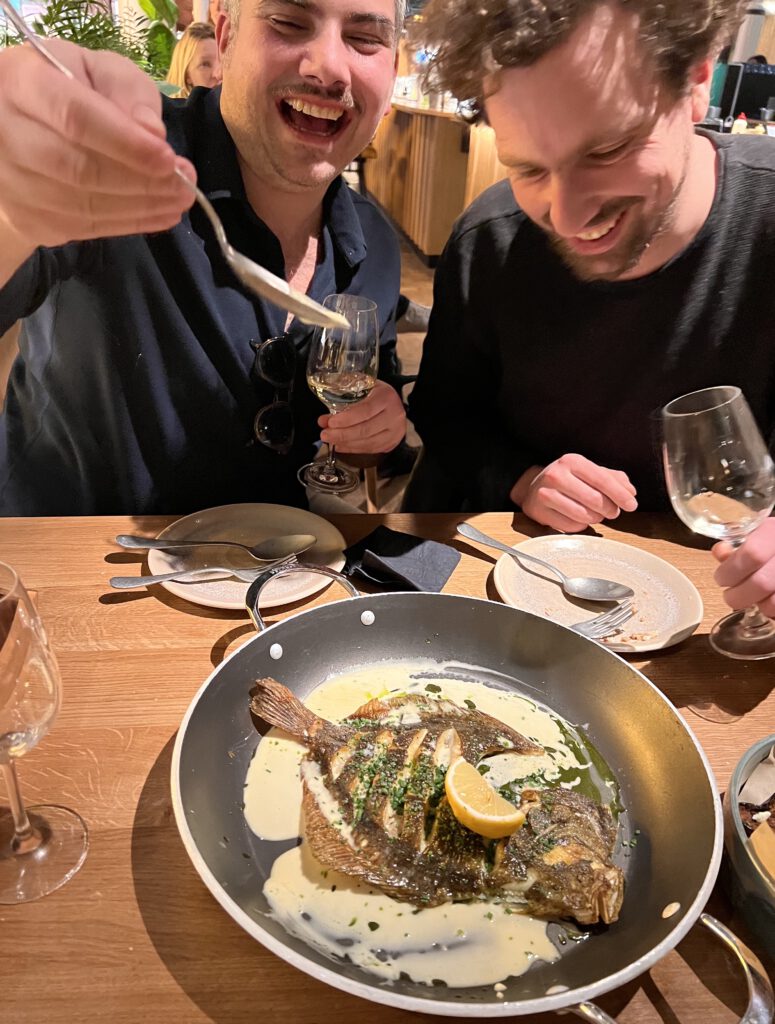
It all comes together for a fun night out, some real winners among our choices were the oysters, the scallops and definitely the turbot in butter sauce.
Hold on, we are drooling over this fish! Image: DutchReview
Just this summer, this classy hotel and restaurant opened up in the Mathenesserlaan, a short walk from the mesmerizing Depot Boijmans Van Beuningen.
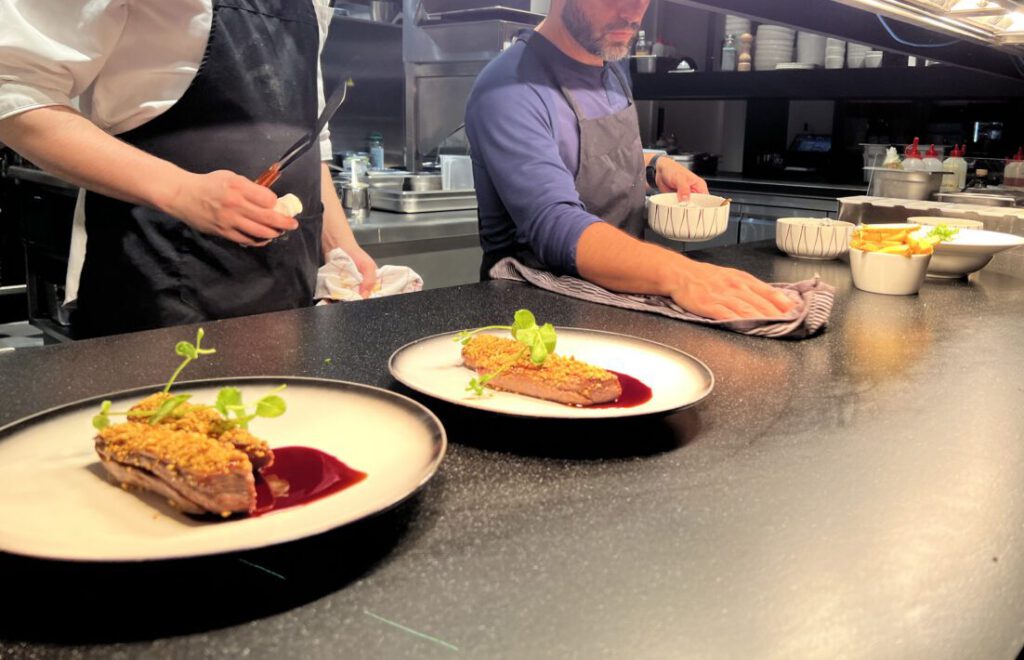
They’ve got a nice terrace, so it’s suitable for summer dinners — but if you have the choice, check out the open kitchen!
Watching the chefs prepare your food will make your mouth water! Image: DutchReview
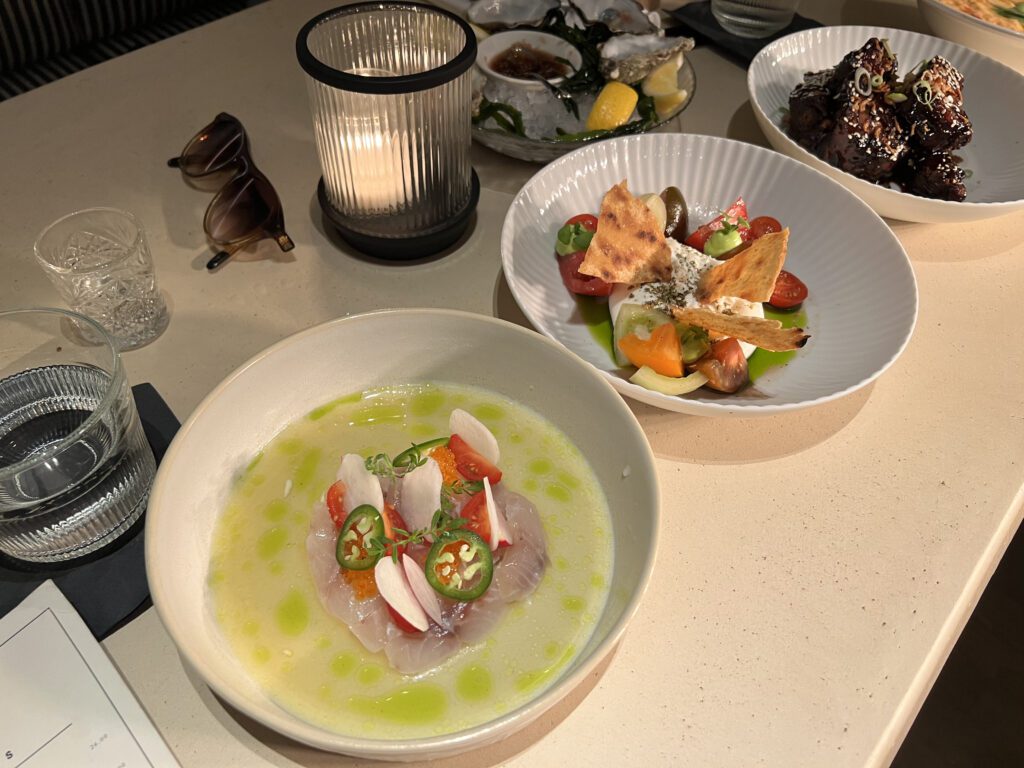
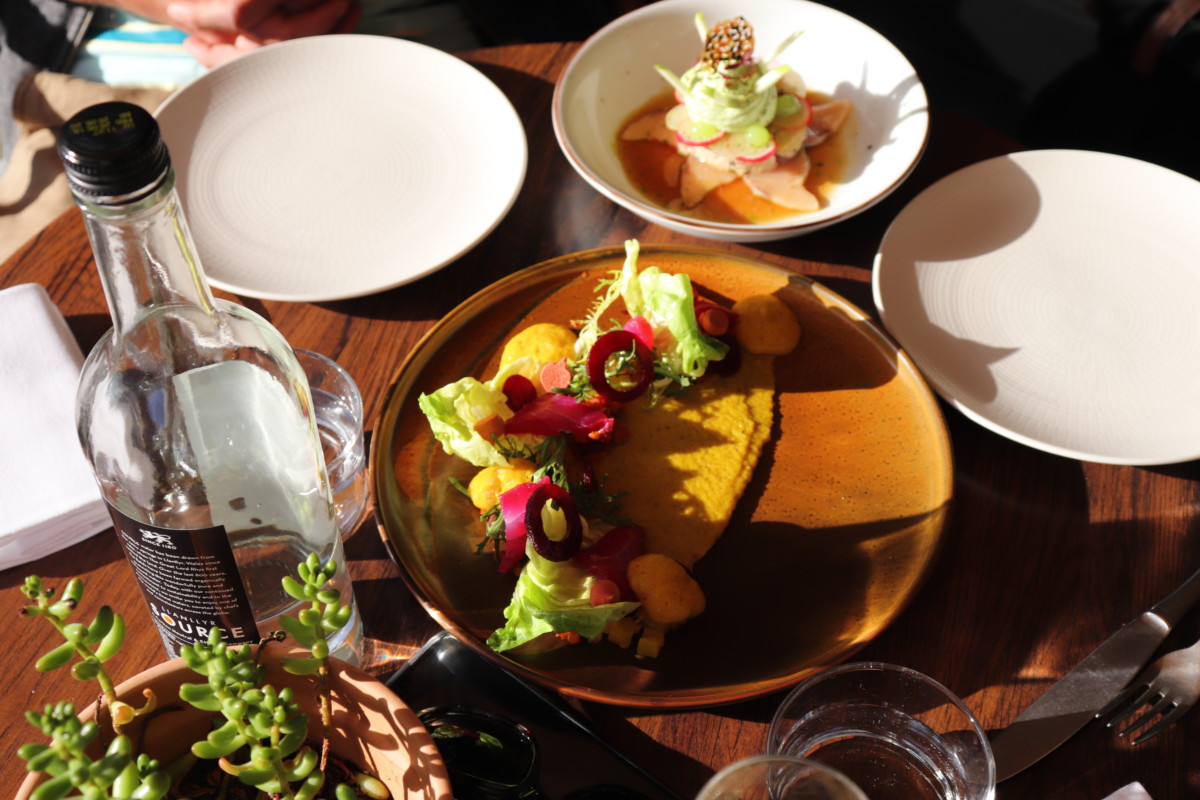
Two dishes were a feast for the eyes (and tastebuds joined the party too), and in this case, I’ll let the picture do the talking for the burrata and ceviche.
We simply can’t say no to a refreshing Burrata. Image: DutchReview
The menu is simple, but with complex dishes with deep flavours. You can choose to share the merry food or just have a bunch of courses for yourself.
By Ami is the brainchild of Ahmed Baglari (Ami for friends). He has 20 years of experience in the hospitality industry under his belt. So when this much-wanted spot opened up at the Kop van Zuid he jumped on it.
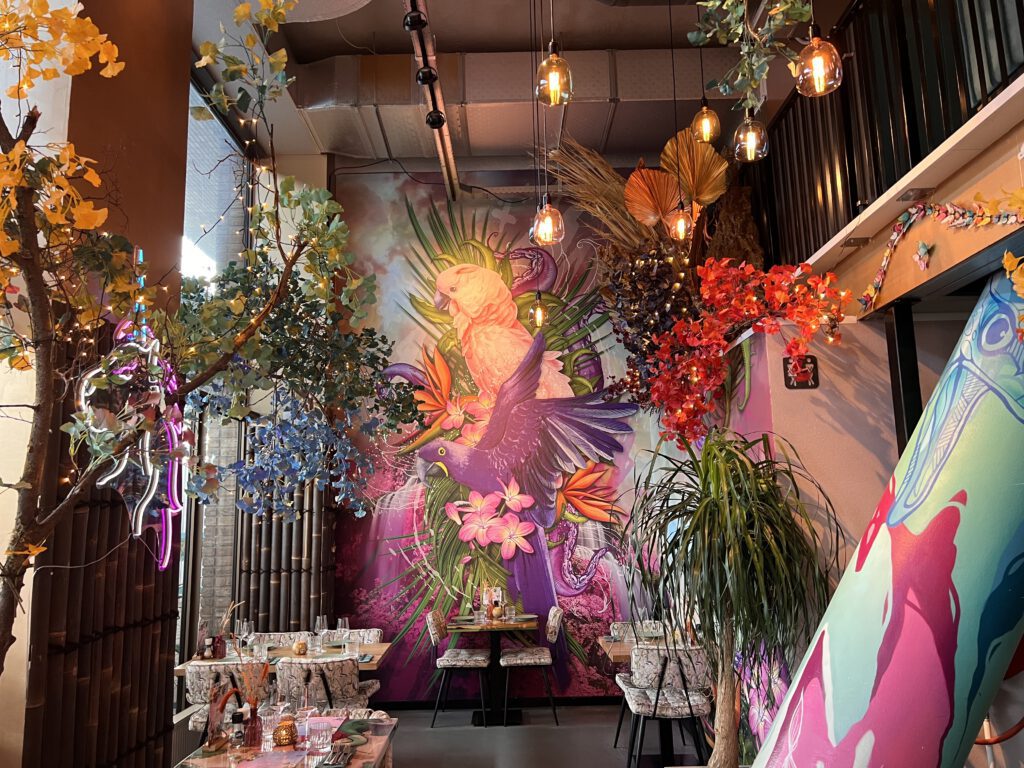
Wow, this colourful interior is a huge mood boost! Image: DutchReview
By Ami has a diverse menu with tons of things to choose from, and most of it is pretty affordable, too. The menu also includes extremely fancy and colourful cocktails in case you want to get your booze on (guilty!).
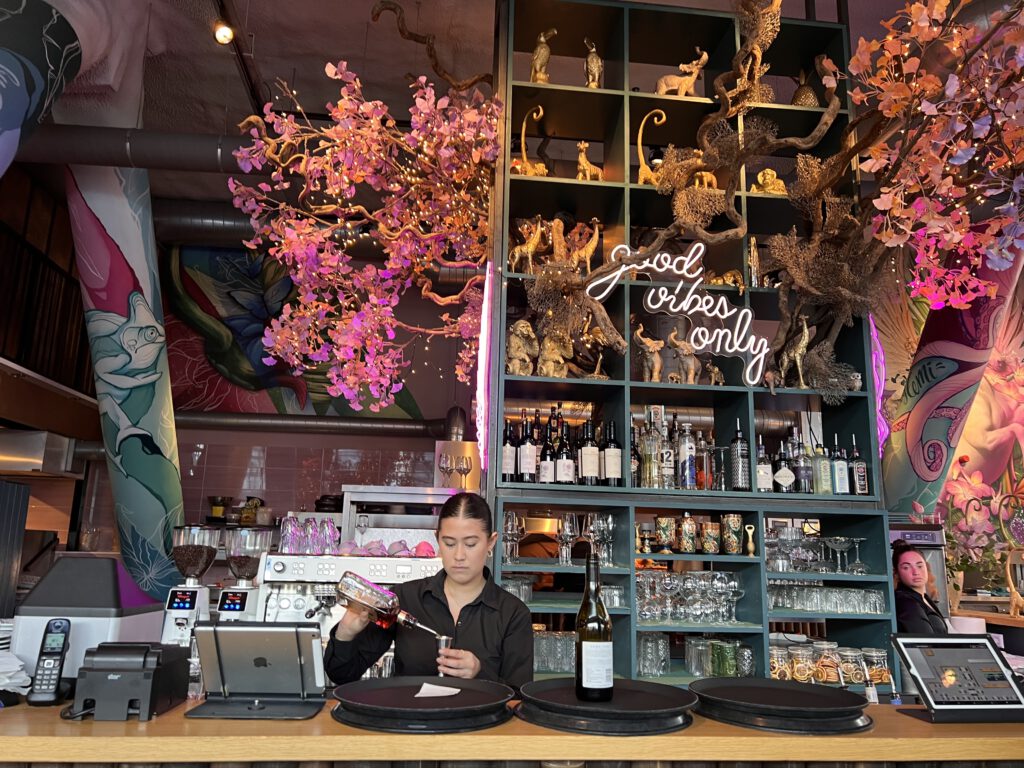
Good vibes only indeed! Image: DutchReview
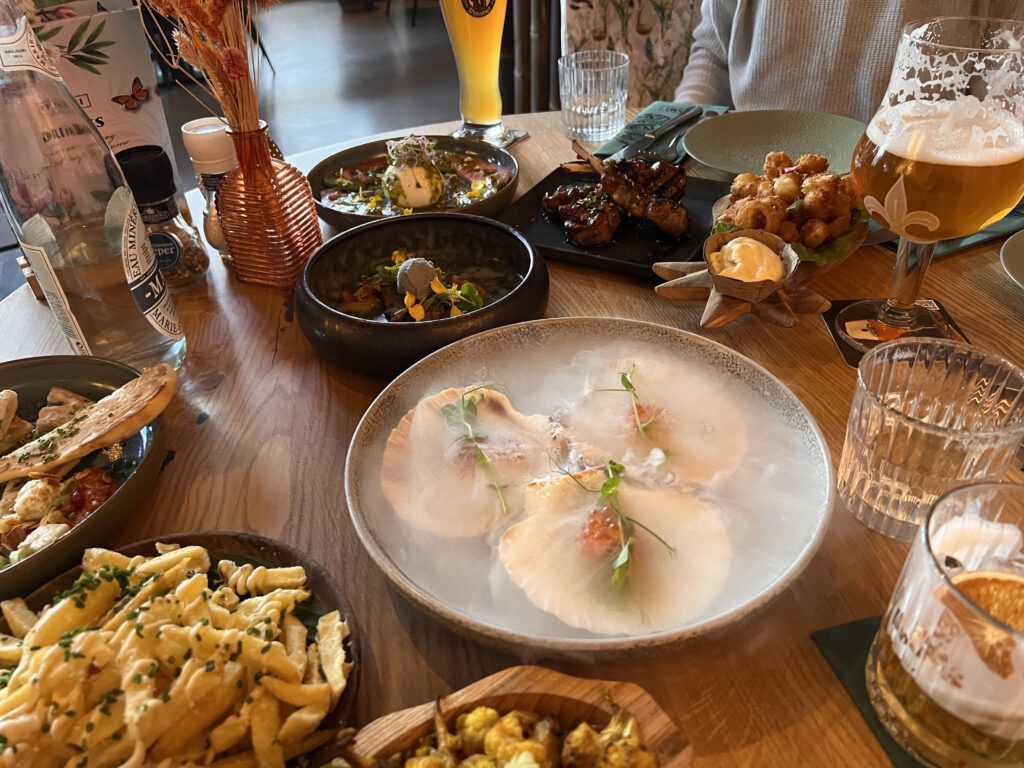
We had the scallops, which were literally smoking. The cauliflower and lamp chops were delicious too, and well, EVERYTHING looked the part.
Does the food taste as good as it looks? The answer: YES. Image: DutchReview
It’s not very often that you come across a place like By Ami: Urban Bistro that checks all the boxes. Eetsmakelijk!
📍 Address: Antoine Platekade 983, 3011 BN Rotterdam 🌐 Website:BY AMI 👍 Socials:Facebook, Instagram
7. Atithi Restaurant
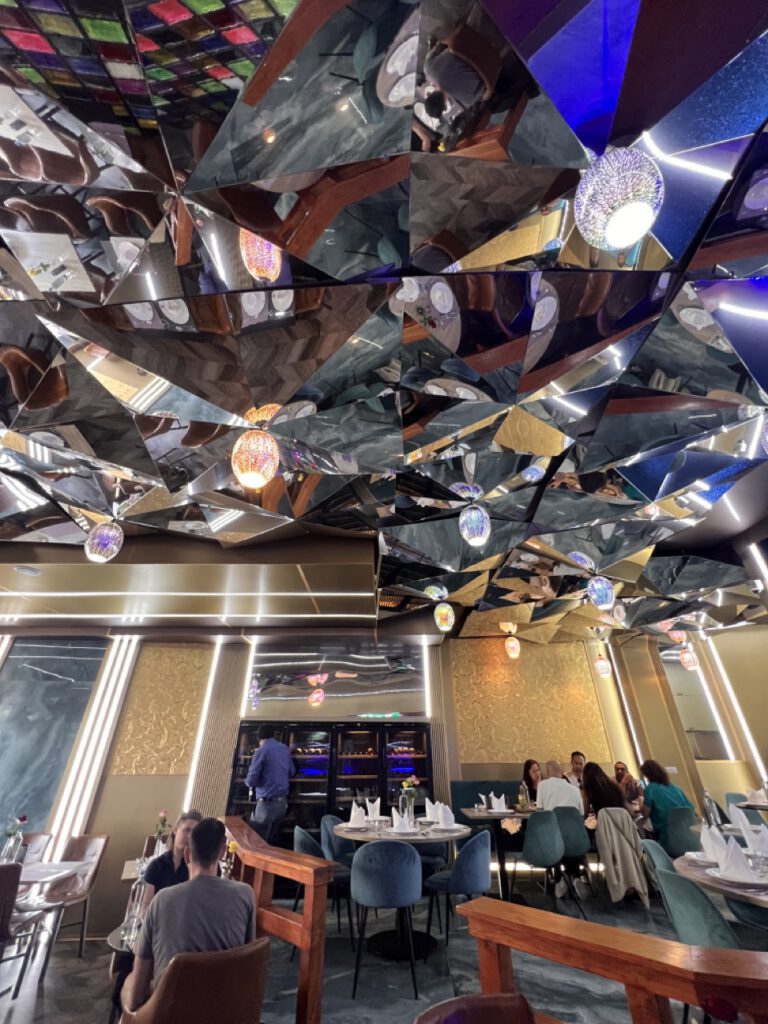
Since the summer of 2023, Atithi has boasted a new spectacular interior and reinvigorated menu.
That ceiling! Image: Abuzer van Leeuwen
The staff is super friendly and speaks exclusively English and the place was packed with Dutchies and internationals (and Indian people, always a good sign).
They’re bringing an extensive menu to the figurative and literal table, and what stood out immediately was the GINORMOUS selection of vegetarian and vegan options. Three things caught our eye especially:
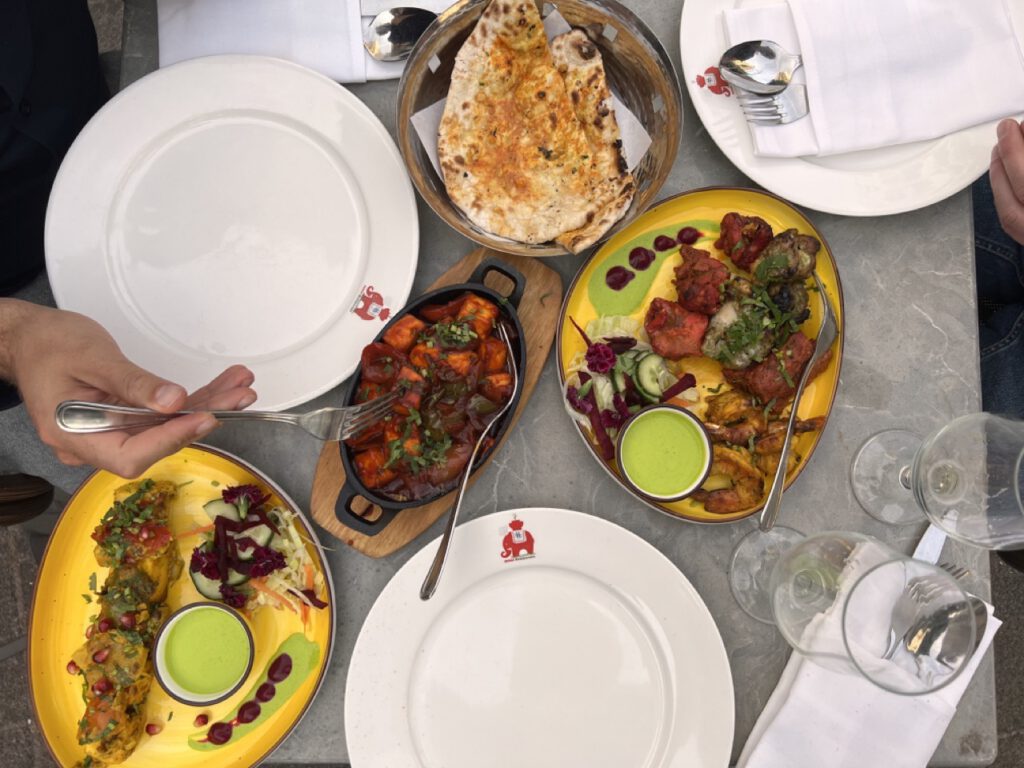
The paneer: This young, marinated Indian cheese was very smooth, making it a nice starter
The butter chicken: Can’t go wrong with this classic, and they certainly got it right
The Josh Rogan Lamb: My favourite of the night: a must-have!
The food is also really pretty and colourful, and that’s always a good thing! Image: Abuzer van Leeuwen
It was moderately priced and not that spicy at all! (but I’m sure they can accommodate awesome levels of spiciness). There’s also a terrace there if you want to dine outside in the summertime!
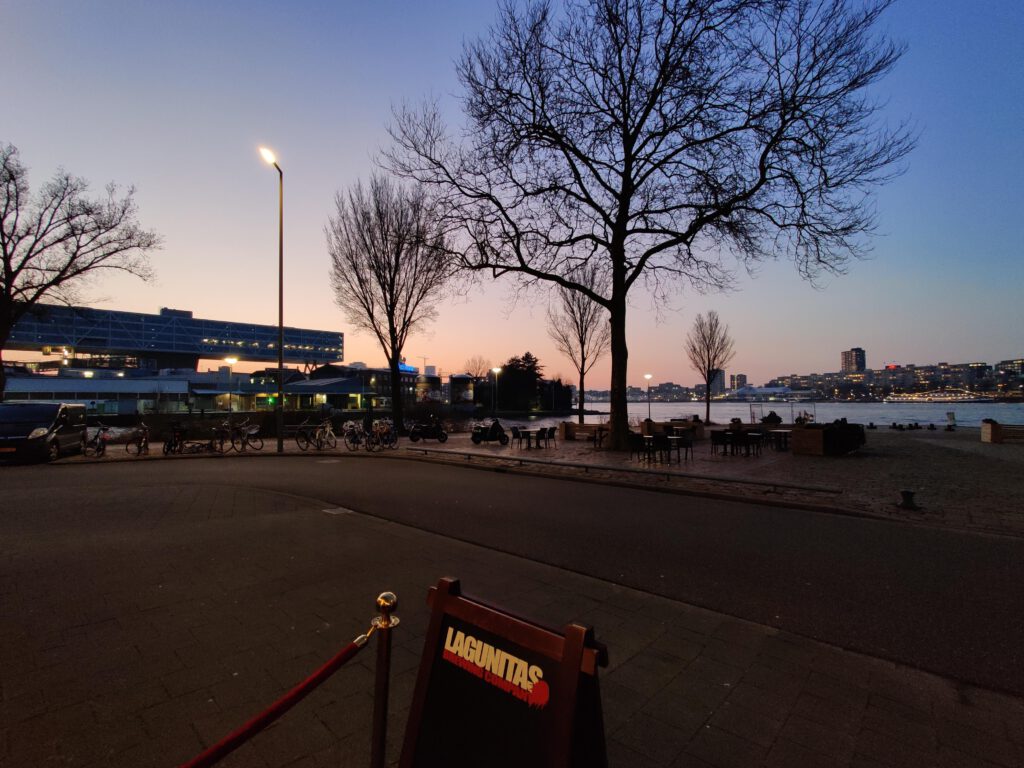
Sometimes a fancy name might just cover up what you’re in for when you’re visiting a restaurant. Rotterdammers are straight talkers and get to the point — even more than other Dutchies. And what you read is what you get right here: unlimited gorgeous views of the Maas!
How could you say no to a view like this? Image: DutchReview
We visited MAAS on a chilly March evening and the views were to die for. The skyline basking in the sunset, Rotterdam’s water taxis speeding past, and the big ships passing by — all good entertainment and MAAS’ terrace in the summer is surely a must-do.
They’ve got a solid and affordable menu with a couple of items that I can recommend.
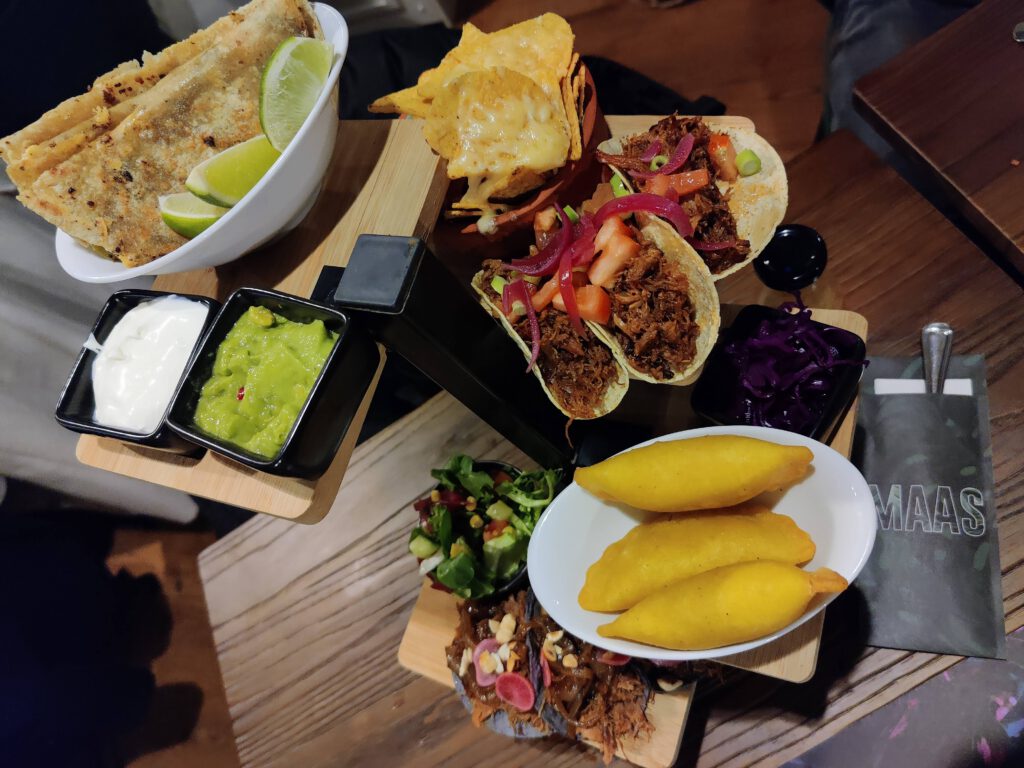
As the main course, they had a Latin-American sharing platter (which was a tower). The empanadas stood out — made in-house and crispier than a certain fried chicken joint.
Not all food is Instagram-worthy, but we can certainly say this food tower is. Image: DutchReview
And of course, dinner is incomplete without a dessert: the butter cheesecake was off-the-charts delicious — you definitely don’t want to miss out on this one.
They’ve also got a nice menu of local Rotterdam craft beers to choose from; the ‘Je Moeder’ (Your Mother) was both funny and delicious. So plenty to enjoy while you’re “sitting on the dock of the bay, watchin’ the tide roll away”.
Being a fussy eater, I was intrigued about trying Afghan food, and it did not disappoint. We rocked up and found restaurant KITE near Witte de With, the life and soul of Rotterdam.
When we arrived we had a set menu, which was perfect for two people who were completely new to the cuisine (but don’t worry, on the menu you can pick whatever you want!).
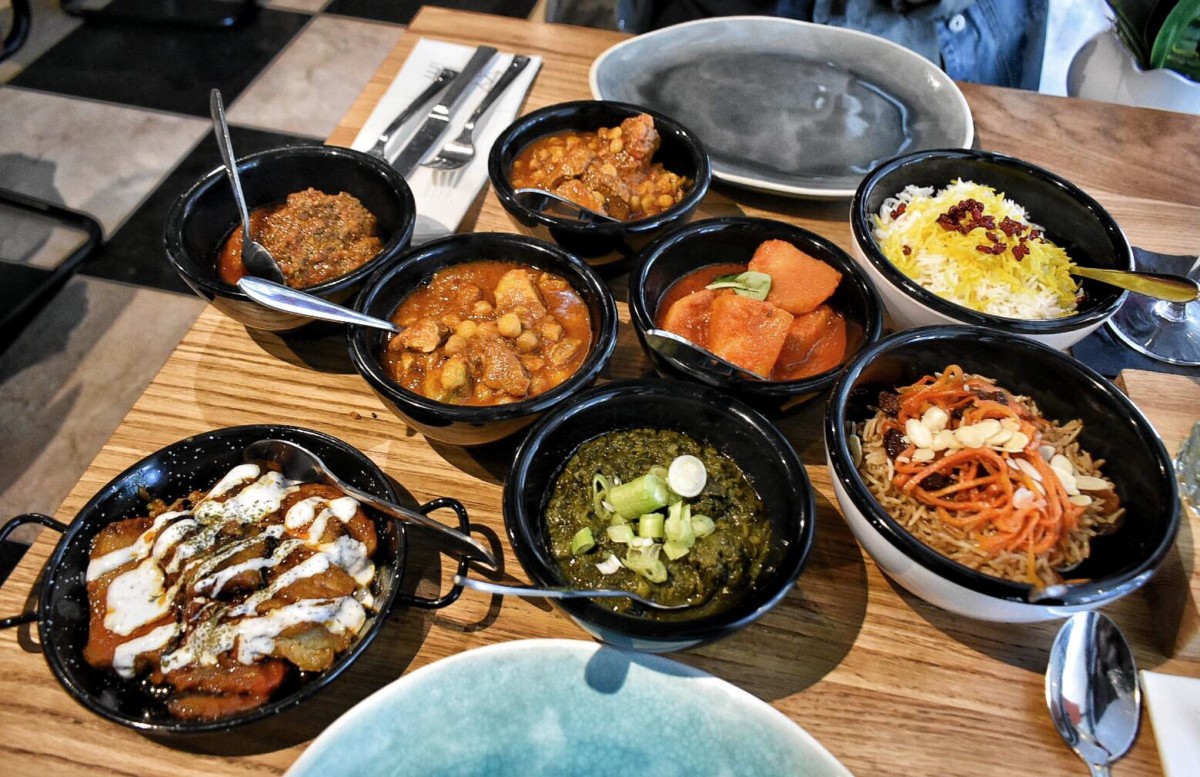
We started with a delicious crispy samosa, along with a steamed dumpling that had an onion-mince filling and covered with a sauce of tomatoes and split peas. Yeah… it really did taste as good as it sounds and looks.
Next came lots of different dishes to try, which included curries, meatballs ‘kofta’, fried eggplant ‘banjan’, and potatoes in a tomato and garlic sauce, all with white and brown rice.
Food to die for! Image: DutchReview/Supplied
The food was so good that despite being full we tried our hardest to try and eat it all. But of course, you’re never too full for a dessert…
We both went for the creme-roll and lava cake, and they were delicious. It was so well presented that we almost felt guilty tucking into it.
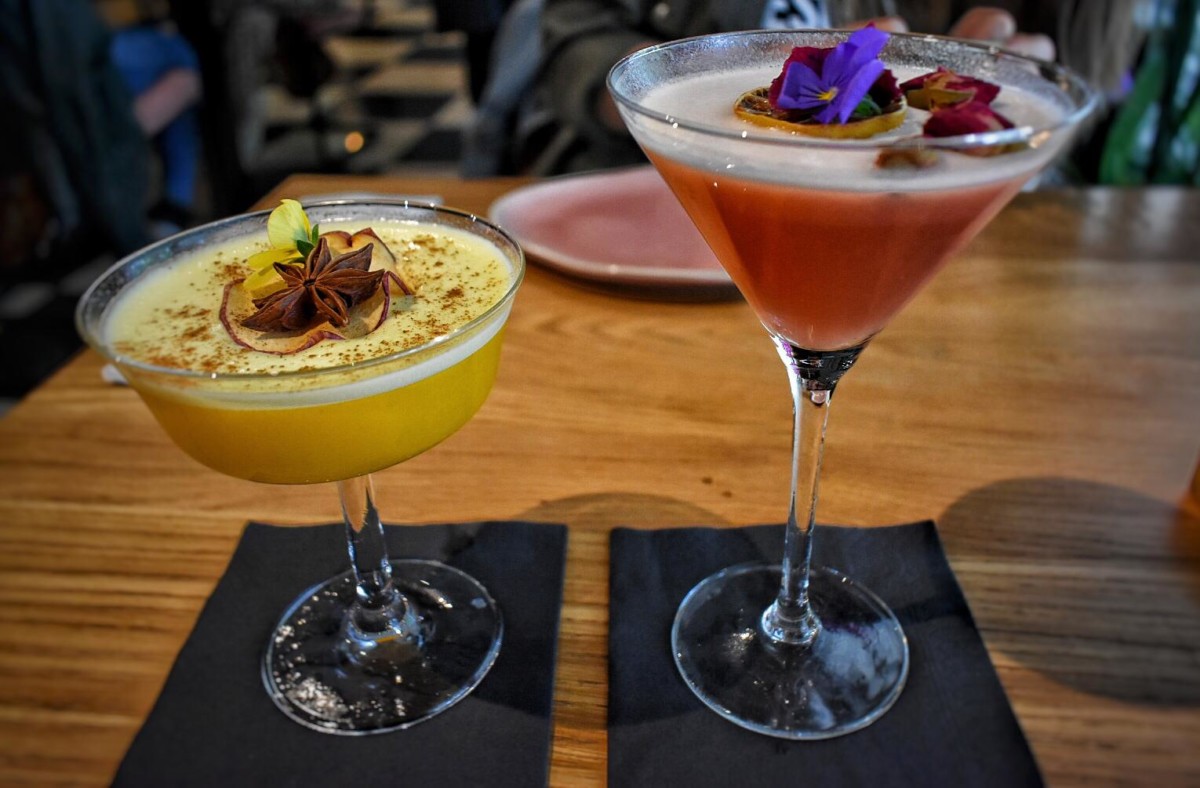
We tried a variety of cocktails and honestly, hand on heart, they were some of the best cocktails I’ve ever tried (and I love my cocktails).
Image: DutchReview
If you’re looking for an authentic and trendy restaurant with amazing cocktails, the most lekker food and friendly staff, all in a great location in Rotterdam, this is the place to try.
Aji is located in the ‘Pannekoekenstraat’ which is on the verge of being the new Witte de Wit when it comes to its offerings of restaurants.
Chef Pelle Swinkels, young and talented, teamed up with Mario Ridder, who is something of a celebrity in the restaurant world of Rotterdam.
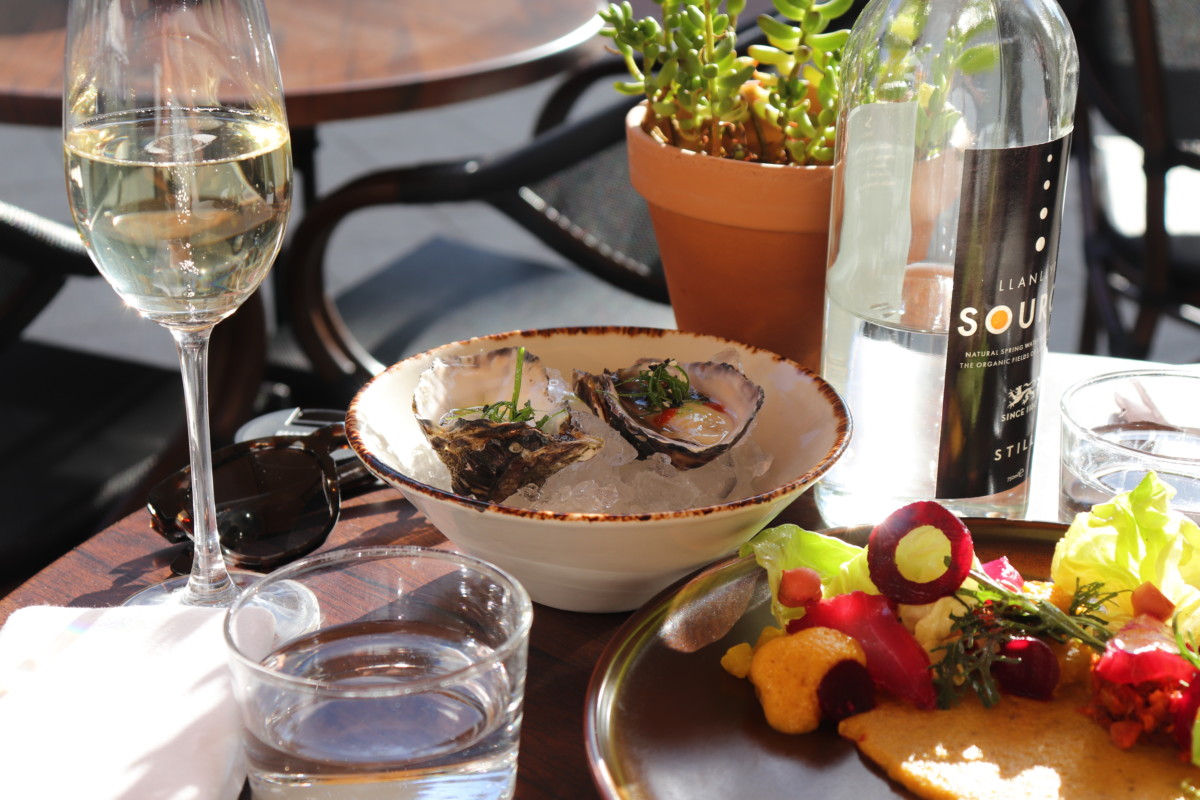
We started outside on their nice terrace — it was a joy to watch the street life pass by and enjoy those oysters, of course.
Served to perfection! Image: DutchReview
When it comes to the food, Aji refuses to fit neatly into one box. There are Asian influences, European gourmet food, and Latin American touches. I guess you could call it ‘fusion’, with an abundance of seafood on the menu too.
We can say that the level of cuisine and cooking is absolutely great when you compare it to the prices. All dishes were well-crafted and combined many flavours for roughly €10 to €25.
Let us ticket your tastebuds with this picture. Image: DutchReview
If you’re looking for a place to eat in Rotterdam that is trendy and relaxed and serves up some delicious and refined dishes, then you can’t go wrong with Aji.
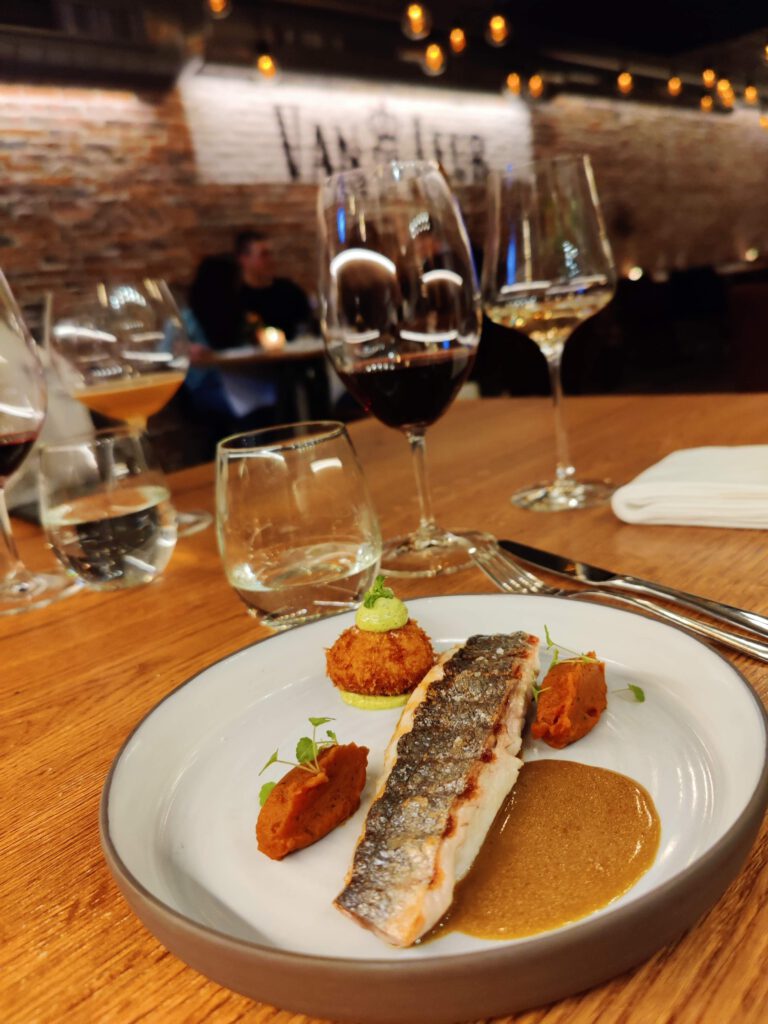
Welcome to Restaurant Van de Leur in Rotterdam, where we enjoyed a fab seven-course meal. It’s one delicious dish after another, paired with elegant wines in a fairytale decor.
Just take a look at that this dish. 😍 Image: DutchReview
Van de Leur serves a few courses in a sitting; you can choose between four courses (€60) up to seven (€105).
The menu is updated frequently, so the food is always fresh, and if you’re not into meat or fish, you can indicate that, and they will adapt accordingly — no probs for your veggie/vegan friends. 🤗
They also offer paired wines and beers for every course, which developed into an excellent culinary and alcoholic adventure for us. 🍷
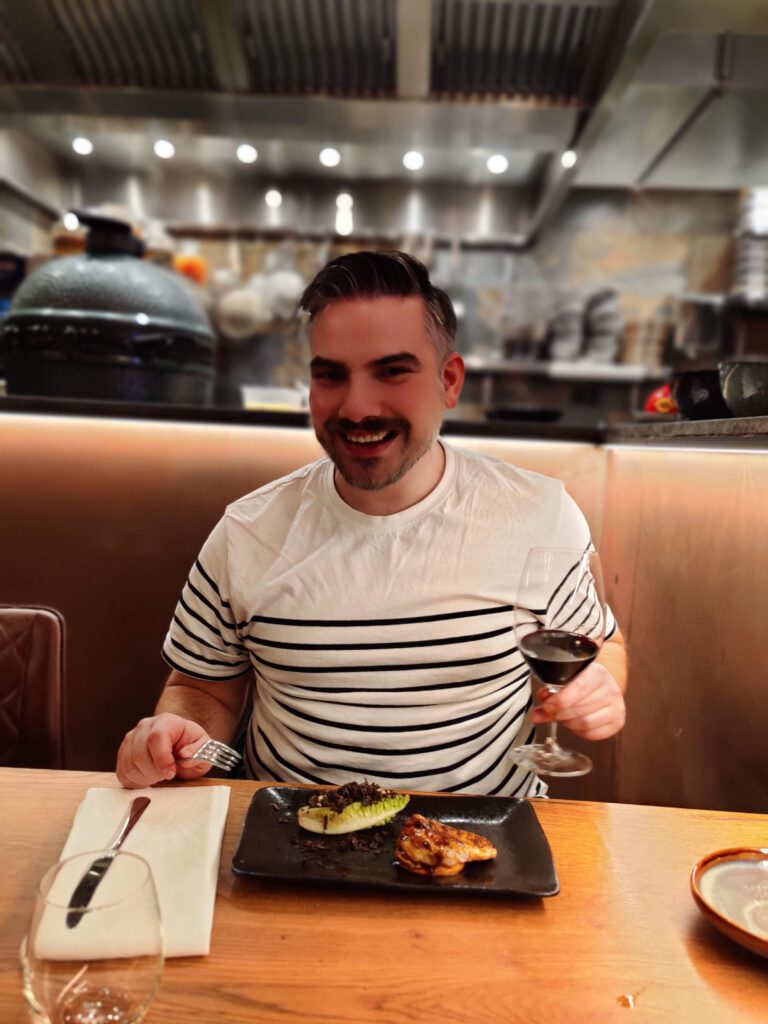
Who doesn’t love a good ‘ol red? Image: DutchReview/Supplied
You should take your time as well, as you see the dishes are little works of art, and it takes some time to serve them out. We were there for four hours, and it’s not a quick bite before you see a movie or a play. Totally worth it, though. 💁🏻♀️
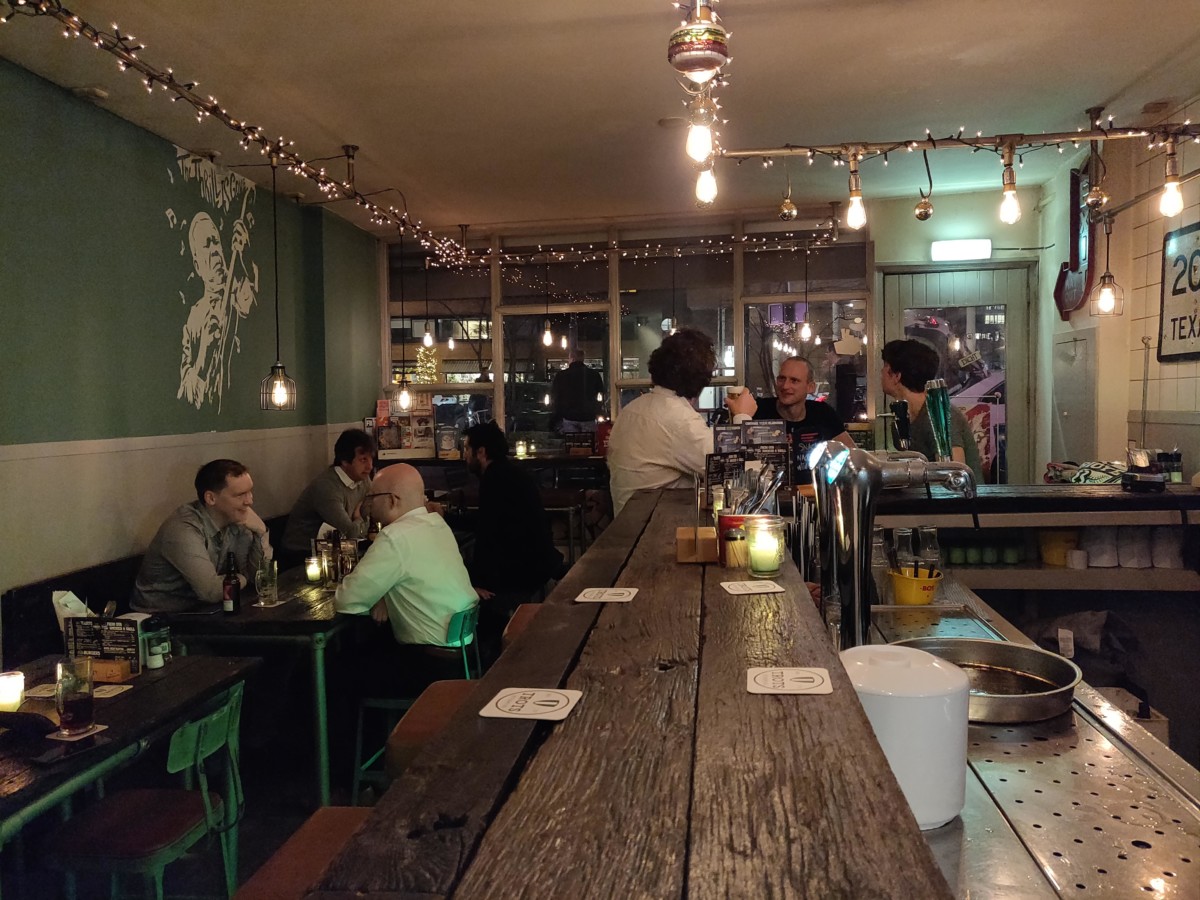
This one was on my to-feast-at list for a long time. BBQ meat, smoked specialities and craft beers from Rotterdam? Sign me up! So together with a few friends, we went to Roffa.
We love a dark and cosy interior. Image: DutchReview
Now, there are three things you should know about this one. One: “Roffa” is slang for Rotterdam, and it goes without saying that the Rotterdam-vibe is definitely there. Two: they’ve got two equally tasty locations in the Foodhallen Rotterdam and Rotterdam North. Three: this place does meat really, really well.
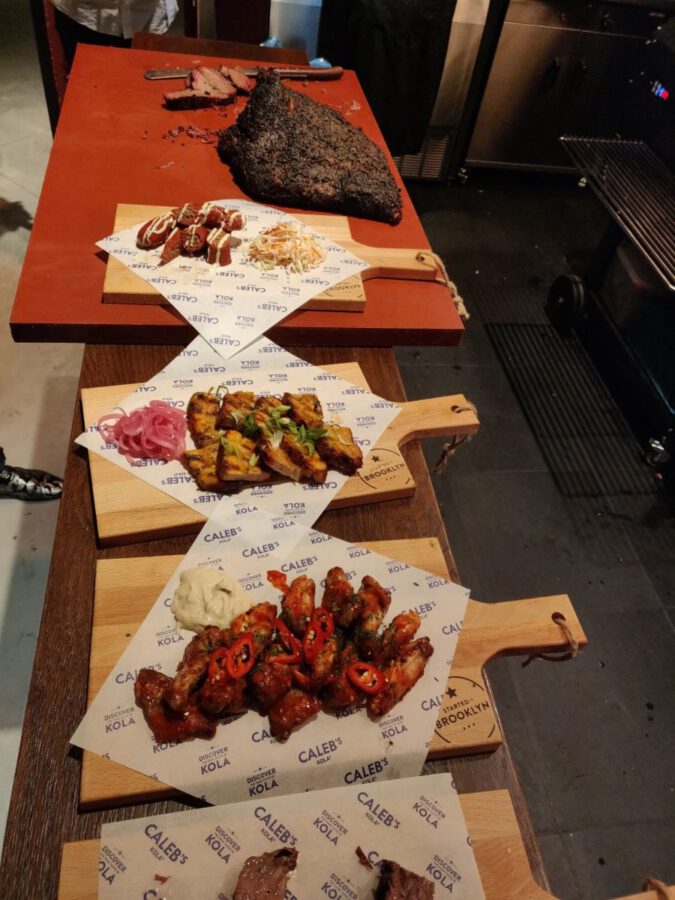
They’ve got an epic smoker and all those great BBQ specialities such as brisket, spicy chicken wings, pork belly and some of the best smoked sausage I ever tasted.
They’ve got an epic mixed meat platter — mix it up with some of these crafted beers from Rotterdam, and you get one happy DutchReviewer.
Wings for daaays. Image: DutchReview
If you’re looking for a place to eat some great bbq-meat (don’t worry, they’ve got some vegetarian options for you too), then we can definitely recommend the Roffa street food bar.
Not in the market for all that meat? This one is for you.
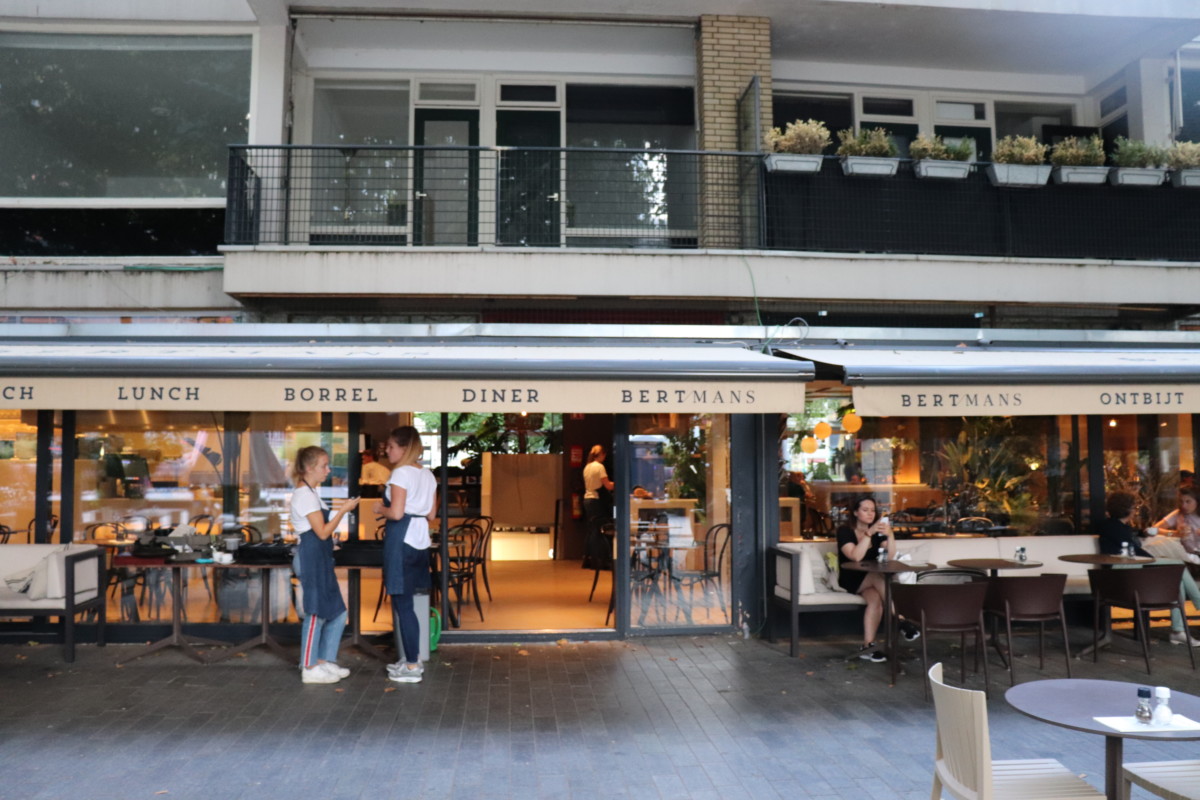
Bertmans has two locations, one in Rotterdam Noord and one in downtown Rotterdam at the Schouwburgplein (just a short walk from Central Station).
We’re a sucker for gezellig terraces! Image: DutchReview
Out go stuffy establishments, and in come the funky and delicious hotspots of Rotterdam. So sit down on their nice (and heated) terrace and watch the colourful people walk by.
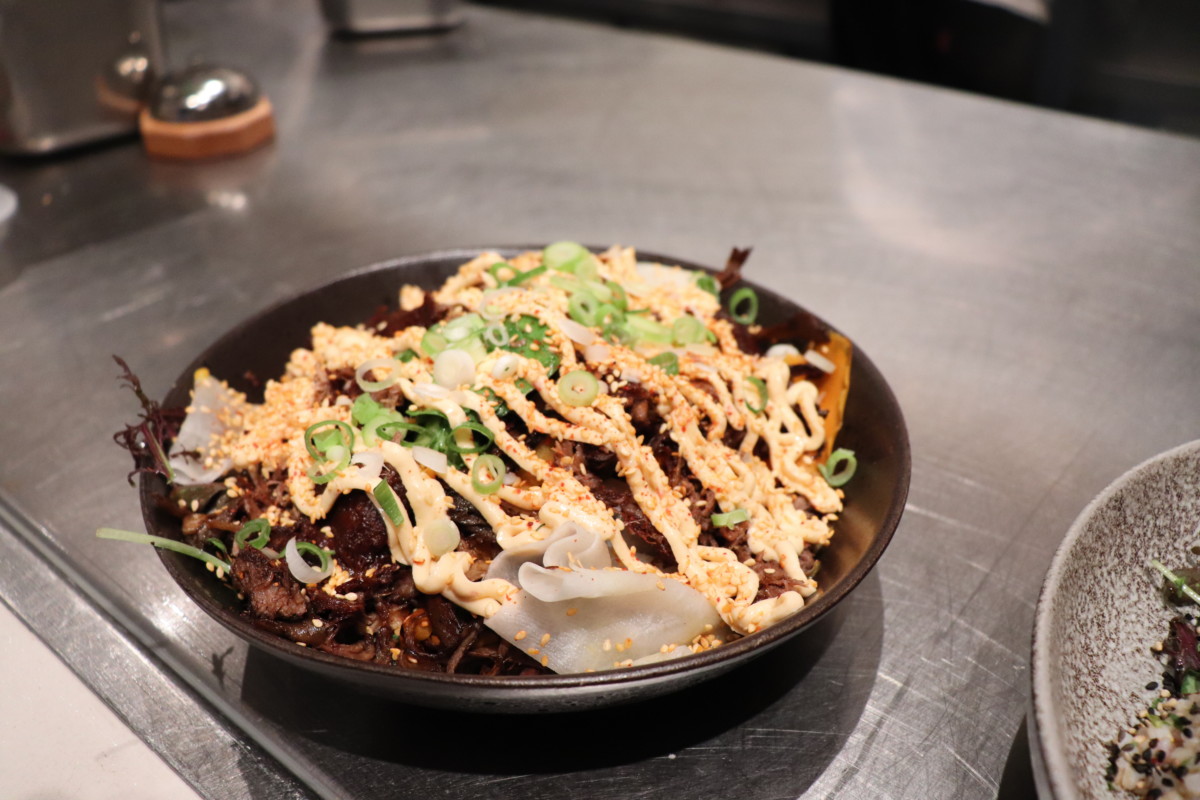
Bertmans is not a vegetarian restaurant by definition, but if you’re a veggie or just into healthy and organic food then you definitely came to the right place. They boast an awesome selection of healthy dishes and make them look good too; plenty of choice!
We can’t resist. Image: DutchReview
They change the menu every now and there’s bound to be something new there for you. Portions were pretty big, which is great, considering prices were fairly modest too.
If you’re searching for a hip and healthy spot to eat in Rotterdam, Bertmans is a solid choice!
📍 Address: Karel Doormanstraat 292, 3012 GP Rotterdam 🌐 Website:Bertmans 👍 Socials:Facebook, Instagram
14. Vessel 11
DutchReview made it to Vessel 11 in Rotterdam to try out their new spring and summer menu! The restaurant is hard to miss because it’s a refurbished red boat, fully equipped with a deck that overlooks the water.
They have an assortment of beers, great choices in meals, and delicious desserts. They are a British gastro-pub, so you can expect traditional British dishes and alcohol.
We tried their V11 Indian Pale Ale and V11 Golden Blonde beers. The atmosphere is relaxed but lively, with everyone happily chatting away with each other over a few pints.
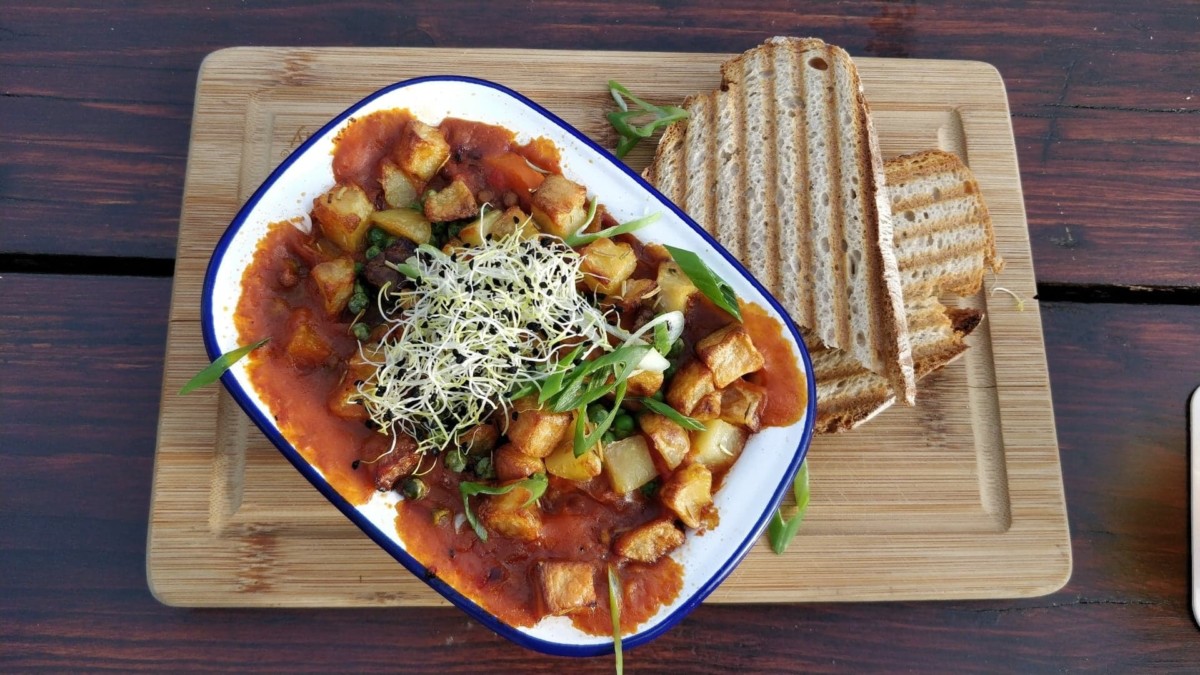
We didn’t have to wait too long before our main courses arrived: their Vegan Hot Pot and their Herefordshire Hamburger.
The Vegan Hot Pot came in a small dish, but I was positively stuffed! It came with a side of sourdough toast, with lentils, some good ol’ veggies and topped with chives.
It was perfect for one person, and it ticked all my boxes for nutrition, deliciousness, and presentation.
Love us a colourful meal. Image: DutchReview
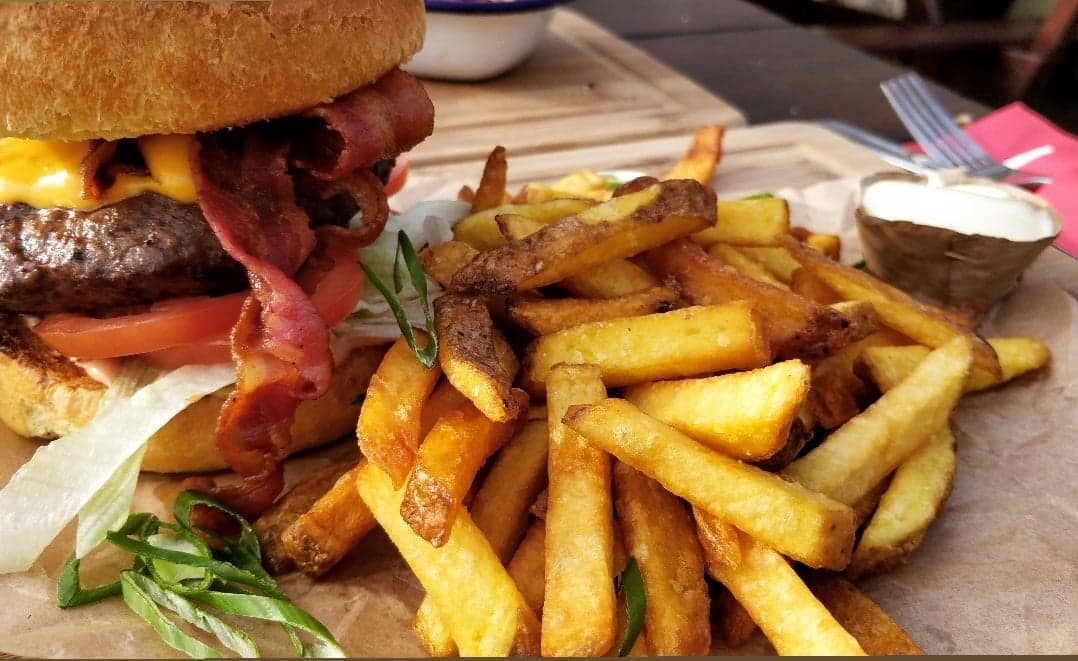
The hamburger was equally delicious, with a generous portion of fries (chips, as the British call them). They get their meat from the local butcher Beter Leven, known for their ethical practices.
Doesn’t get crispier than this! Image: DutchReview
No meal is complete without a dessert to end it with. On recommendation from the staff, we tried their cheesecake and it was the perfect way to end the meal, with its biscuit base and sweet top.
All-in-all it was a positively enjoyable experience for us! They also host many live musical acts. Unfortunately, there wasn’t one scheduled for the evening we were there, but their agenda for the coming months looks promising!
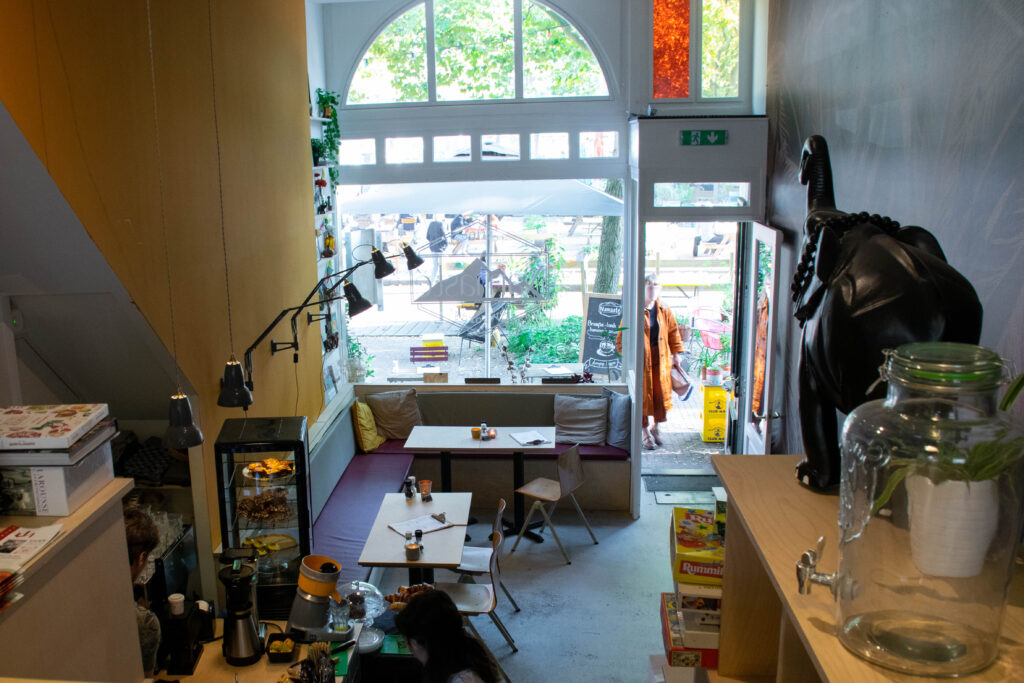
Founded by the friendly Dutchie Jordy, Koffiebar Namasté opened its doors in May 2020. Located in the hip area of Katendrecht, it’s the perfect place for a weekend brunch.
The cosy interior of Koffiebar Namasté in Katendrecht. Image: Jana Vondráčková/Supplied
Next to delicious coffee from a local coffee roaster, Namasté offers a wide selection of teas and homemade beverages. Their menu boasts dishes from all across the world — from Rotterdam toasties to Middle Eastern foods.
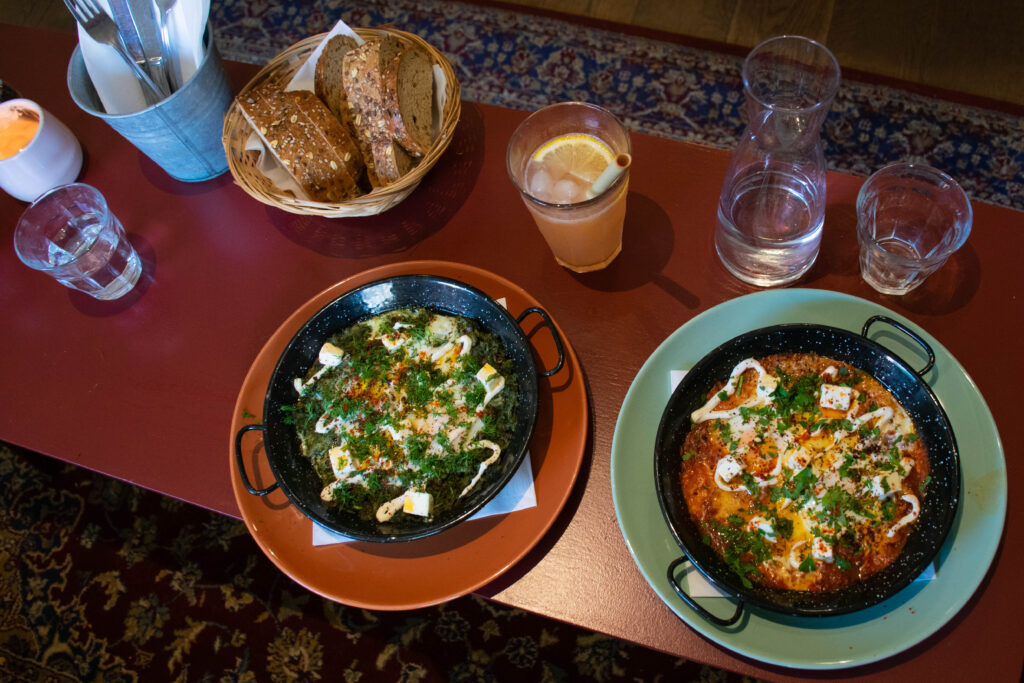
Our personal recommendation is the delicious shakshuka. You can either go for the classic one with tomatoes and roasted paprika or the green one with spinach, lentils and dill — with some feta cheese on top. 😍
You can’t go wrong with the delicious shakshuka. Image: Jana Vondráčková/Supplied
To satisfy your sweet tooth, there’s a generous selection of homemade cinnamon buns, muffins, brownies and cheesecake.
The café has a spacious outside terrace, perfect for warm sunny days. Come with your family or friends for lovely moments spent together or by yourself for a little study session.
Hot on the heels of last week’s wet and windy weather is… yet more rain. 🤨💦 Thankfully, however, you can also expect longer periods of sunshine and dry weather this week.
Things are forecast to stay pleasantly dry and sunny this morning (March 26) — hitting a max of 10 to 12 degrees Celsius by noon, according to Weeronline.
By evening, however, clouds will flock to the southwestern parts of the country, carrying with them the increased chance of a nighttime drizzle.
Pack your umbrella for Wednesday, Thursday, and Friday
If sipping a summery cocktail on a terrasje (as you bask in the sun 😎) was part of your midweek plans, this week’s weather forecast might just throw a spanner in the works.
The country will likely wake up to a cloudy, windy, and rainy Wednesday, with morning temperatures of around 8 to 11 degrees Celsius.
Come afternoon, things will dry out significantly, and some regions in the western part of the country may even see some sun. Wednesday night will stay dry, but temperatures are expected to drop to a chilly 5 degrees Celsius.
Thursday will also see a few rain showers, though these will be interspersed with far more clear spells.
The cloudiest day of the week is expected to be Friday — with unexpectedly warm daytime temperatures of 12 to 15 degrees Celsius.
Sunshine or rain this Easter? Uncertain, says Dutch weather
With weather that’s more changeable than an NS timetable, it’s no surprise that the forecast for the coming weekend is still uncertain.
However, Weeronline does note a chance of rain. (Quite the surprise! 👀💦)
How are you enjoying the sunnier weather we’re having this week? Shoot us your thoughts in the comments below!
Hi there, skater! Are you looking to go skateboarding in the Netherlands but don’t know where to start? We feel you—with so many skateparks and spots to offer, it’s hard to choose!
Before you start grinding those ledges and scratching that deck, it’s good to know that there are so many amazing skateparks in the Netherlands. 🛹
This writer has been skateboarding in the Netherlands for about four years now, so you’re sure to get some TRUTH!
Let’s drop in, shall we? 😉
Best skateparks in the Netherlands
While there are plenty of skateparks in the Netherlands, some skateboarders prefer certain obstacles over others.
And, it’s quite rare for a skatepark to have everything a skater dreams of. So, which one works best for you? 🧐
Best skateparks in Amsterdam
This is what usually comes up in people’s minds when they think of Amsterdam, so where are all the skateparks? Image: Freepik
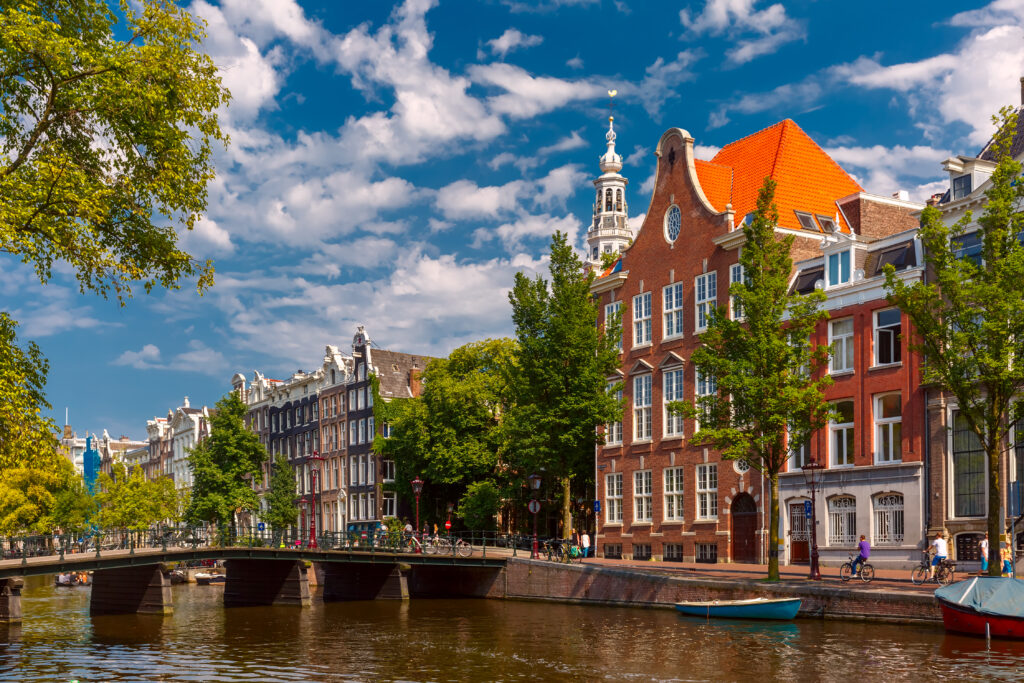
Amsterdam has a huge skateboarding community. And with that comes a wide range of skateparks. Though not all of them are the same — let’s take a look at what sets them apart from one another!
Olympiaplein Skatepark (“Oly”)
Starting in Amsterdam South, we have Olympiaplein Skatepark or just “Oly”. If you’re into skateparks with loads of flat ground space, this is the perfect place for you!
Unlike the lowlands, it isn’t all flat! The park features a long round rail, ledges, manual pads, and other miscellaneous skateable objects.
Speaking of the summer season, when the sun comes out, the B.Y.O.B.S skate event is organised at Olympiaplein Skatepark every Wednesday evening. If you’re ever on an Amsterdam summer skate trip, it’s the place to be!
Middenmeer skatepark
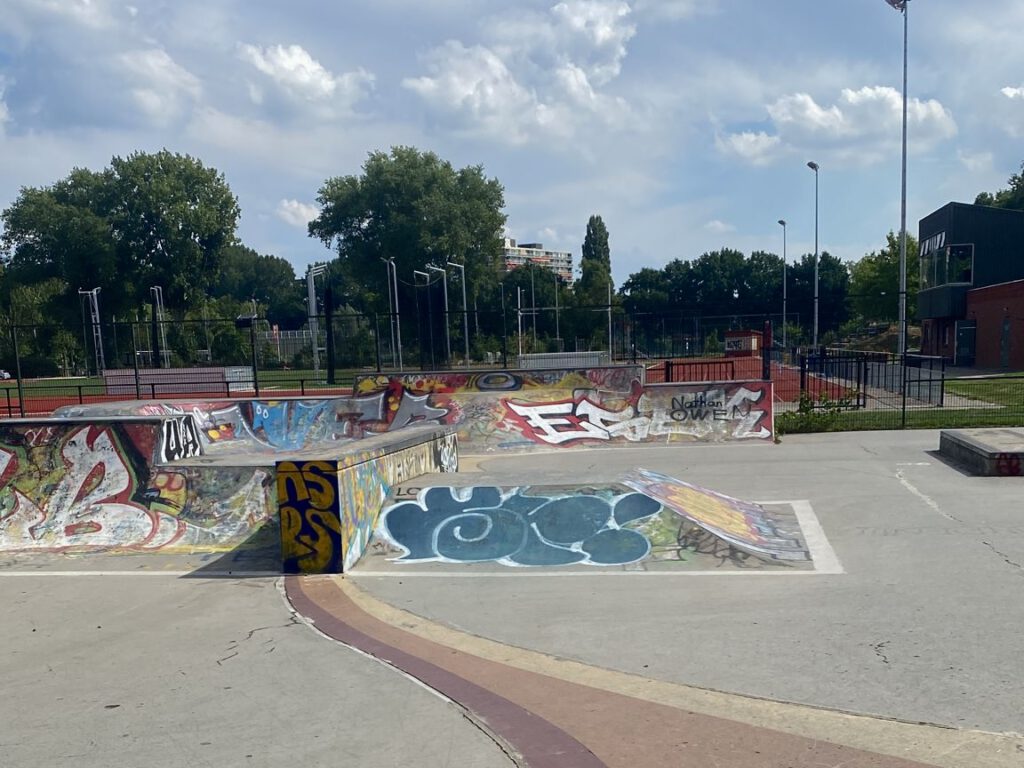
Moving on to the eastern side of Amsterdam, there’s Middenmeer skatepark, typically known as Veldje 14, literally meaning 14th field. 🧐
Fun Fact: The name Veldje 14 actually refers to the football field next to the skatepark. The number 14 belonged to the famous Dutch football player Johan Cruijff.
This skatepark consists of a large bank, a couple of rails (round and square), two manual pads and a quarter. There’s also a running track next to it if you need a little warm-up! 😉
Keep an eye out for some local graffiti tags at Veldje 14. There’s loads of ’em! Image: DutchReview/Supplied
Oosterpark Skatepark
Staying in the East, the Oosterpark skatepark also offers many unique obstacles, thanks to its unique architecture. It’s got a mini bowl with a spine in the middle, as well as some stairs!
It’s also located in the middle of the Oosterpark, so you get to enjoy a nice stroll through the trees on your way there!
Tip: Oosterpark skatepark also works as a school playground during teaching hours. So, if you want to skate there, you must come after 4 PM during the weekdays, or simply enjoy it at any time during the weekends!
Ijburg Skatepark
Moving on further north, the Ijburg skatepark is a small, recently-renovated park. It’s also great for those looking for a swim after their skateboarding session since it’s right next to the Blijburg beach. 🌊
Zeeburg Skatepark
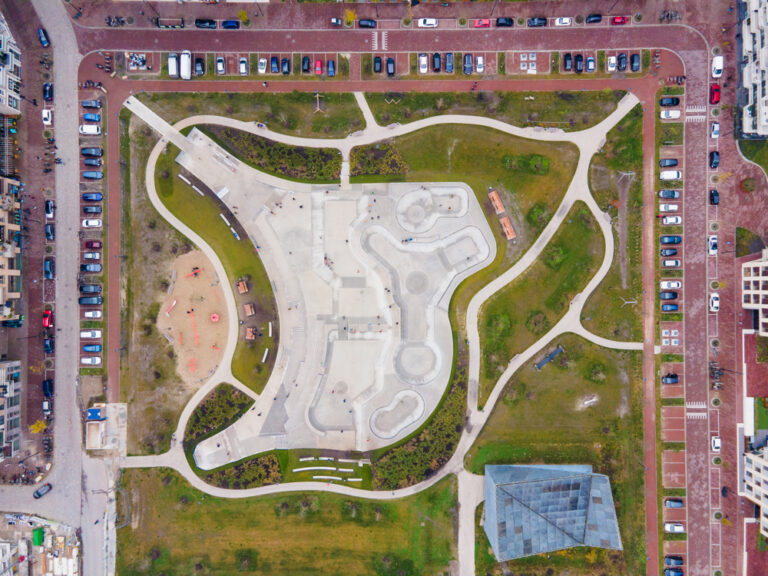
Near Ijburg is Zeeburg Skatepark, a massive skatepark which features several bowls as well as a street section. Zeeburg is actually the largest park in the entire Benelux area — put that in your history books! 🤓
It’s a great park if you prefer skating in bowls, but I personally believe that the rest of the park has got quite an odd design. That being said, to each their own! 🤷🏻♀️
Buikslotermerplein Skatepark
Finally, we have Buikslotermeerplein Skatepark, also known as “De Flipperkast” (meaning pinball machine)!
This skatepark is located in Amsterdam Noord, so to get to it you’ll have to cross the Ij river using the Buiksloterweg ferry at Centraal Station.
But it’s worth the ride! Thanks to its diverse list of obstacles: round rail, hip, manual pad, quarters, and banks. It’s not the largest skatepark, but its diversity in obstacles compensates!
Best skateparks in Rotterdam
While it’s known for its massive seaport, Rotterdam also has some stunning skateparks up its sleeves.
Westblaak Skatepark
In the skateboarding community, Rotterdam is best known for the Westblaak Skatepark, located right in the heart of Rotterdam Centrum.
Renovated in 2016, it’s now a full concrete skatepark and provides lots of skateboarding space. You’ll find many hips, banks, slappy curbs, and two down rails over there.
Skatepark Nesselande
Staying in the port city, there’s also Skatepark Nesselande, a massive skatepark right by the Zevenhuizerplas lake!
Once you get tired from all those gnarly tricks, you can take a nice cool dip into it! We do suggest you not do it in the middle of winter, though. 🥶
If you’re looking for a chill skateboarding session, this is your go-to skatepark! The ground is extra smooth, and the obstacles are generally low compared to your other options.
Best skateparks in The Hague
Heading down to the political capital? You’ll be glad to know that it has several great skateparks to offer as well.
De Kuil Skatepark
Calling all the bowl skaters! De Kuil Skatepark has a couple of ledges and several banks. But, it’s known for its huge bowl, with a nipple at its centre (yes, that’s the real technical term for it 😇).
It’s also right next to the Scheveningse Bos! What’s better than a skateboarding session followed by a walk in the woods? 🤩🌳
These next two skateparks aren’t entirely in Den Haag, but can be found in its outskirts, in Leidschendam!
Leids Skatepark
The Leids Skatepark is a must-visit, no matter what type of skater you are, thanks to its massive size and uninterrupted flow.
This park is not only huge but will also satisfy all your obstacle desires — that is, unless you prefer strictly skating bowls.
Kavel K
At last, we have Kavel K, a skatepark that finds itself next to a youth facility and a sports centre!
It’s great for bringing your baby brother there when you’re stuck being the babysitter, thanks to all the nearby playing areas. With that being said, beware of the scooter kids!
Amazing indoor skateparks in the Netherlands
In the Netherlands, a country that has an average of 189 days of rainfall, it’s likely that your skateboarding desires will get stunted by the many, many rainy days.
So, in times of wet and slippery skateparks, it’s time to take things indoors!
Skatepark Noord in Amsterdam
At the top of our list, we have Skatepark Noord in Amsterdam (you guessed it) Noord.
This indoor skatepark has so many obstacles to choose from; banks, a quarter pipe, hips, down rails, stairs, you name it!
Inside the skatepark’s bar, you can also find Matto Noord, where you can get pizza right out of the pizza oven, so go get yourself a slice! 🍕
The skatepark does have an entry fee of €7.50, but there’s no time limit as to how long you can skate there — that is, if it’s within their opening hours, from 2 PM to 10 PM.
Tip: Skatepark Noord is closed on Mondays and Tuesdays. And, their opening hours are subject to change when they organise events there. Check their website or Instagram to stay up-to-date with their opening hours. 🗓
Pier15 in Breda
Then, we have the Pier15 Skatepark in Breda, which has loads of banks and even more rails! If you can’t skate the wet streets, Pier15 has quite the street-like obstacles!
They have fluctuating opening times, so make sure to check out their website for more information!
Skatepark Sweatshop
One of your options to avoid skating in rain is by going to Sweatshop Skatepark in Den Haag!
This green-floored park has got many wooden obstacles, as well as rails and other ever-changing objects.
Tip: It’s open from Tuesday to Friday from 10:30 AM to 10:30 PM, and Saturday to Sunday from 11 AM to 6 PM.
Other honourable mentions
Now, we couldn’t possibly fit all the skateparks in the Netherlands in just one article. But, there are still quite a few who haven’t been mentioned yet, but definitely deserve a shoutout!
Industrieplein skatepark in Hengelo — It’s right by Hengelo Centraal, so it’s only a two-minute walk away from the train. 🚂
Skatepark Almere-Buiten in Almere — A very spacious skatepark! 🛹
Skatebaan Jaarbeursplein in Utrecht — This one’s right by Utrecht Centraal. How convenient! 🥳
Flevopark vert ramp in Amsterdam — The half-pipe is located under a bridge, so it’s perfect for those rainy times! 💦
As a skateboarder myself, I couldn’t possibly forget to mention where you can find some local skate spots in the Netherlands.
Fortunately, hardworking skaters over at Flatspot Magazine compiled a map featuring all the best spots in the Netherlands (shown in light blue). Be sure to check it out for a lovely Dutch street skateboarding session!
Can I skateboard on the cycle path in the Netherlands?
Now that you know where all the best skateparks in the Netherlands are, it’s time to learn a thing or two about skateboarding in the wild (AKA, the city streets). 🏙
If you’re skateboarding in public areas, no one really bats an eye, as it’s very customary for skateboarders to roam the streets nowadays. 🛹
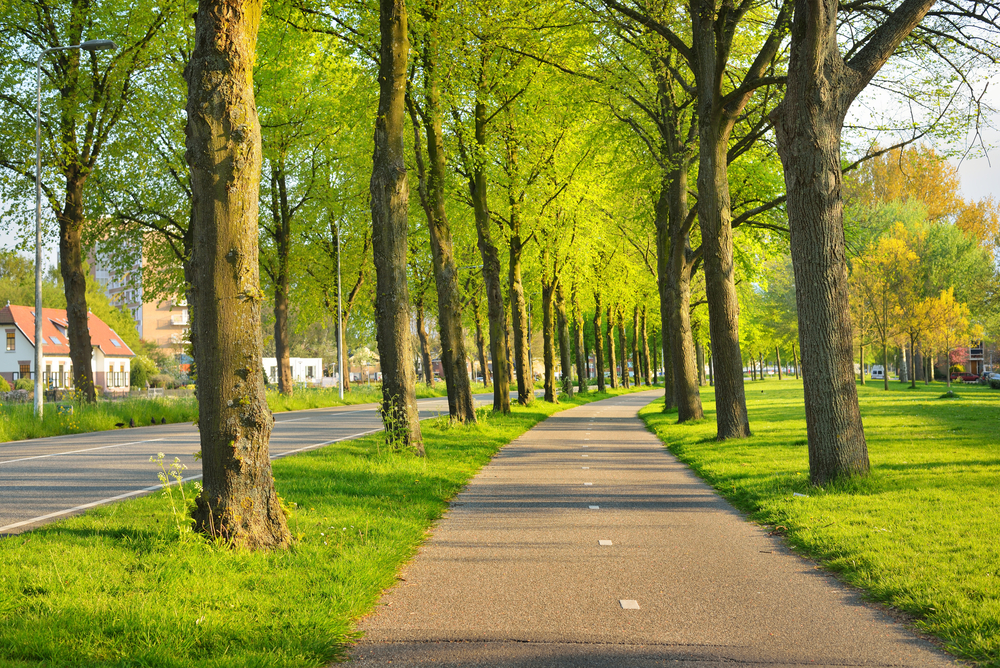
But, while you may spot some skateboarders on the bike lanes, it’s not advised to do so as you may be risking the safety of other cyclists.
Yes, we know the ground looks very inviting to skate on, but be careful of incoming bikes! Image: Depositphotos
So basically, as long as you’re skateboarding on the sidewalks and in non-crowded areas, everything should turn out just fine!
That being said, it’s always possible to run into someone who’s probably going to have an issue with you having fun on your skateboard. Stay away, haters!
Which skatepark are you most excited to visit in the Netherlands? Tell us in the comments below!
Ready to go full Dutch and spend a weekend camping? Nee?! If you’re worried about crawly bugs, cold showers, and things that go bump in the night — don’t be. There’s a much better way to get close to nature.
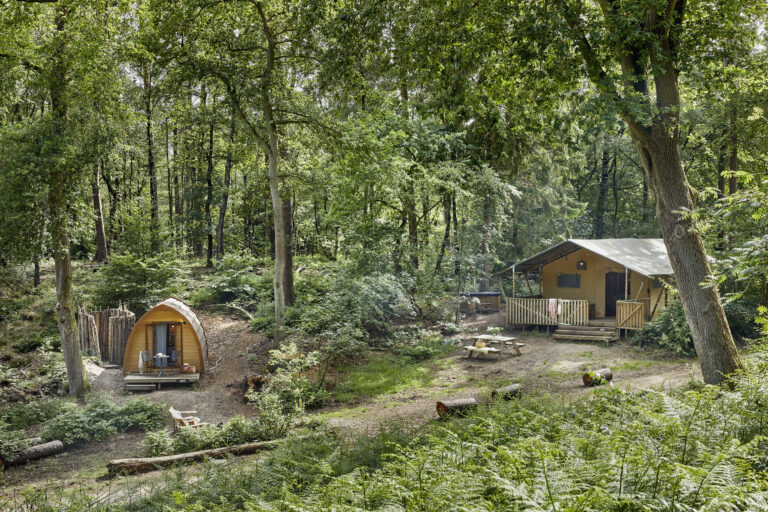
Enter Buitenplaats Beekhuizen — a park in the midst of the untouched nature of National Park Veluwezoom, and the perfect alternative for all of us ‘not-quite-there-yet’ campers.
Rather than sleeping on the floor of a mildewy tent, you’ll here be staying in modern lodgings, finally able to unwind completely. 🌳
This unique stay has got all the good stuff that we love about staying in nature but also much, much more (yup, even WiFi)! Leave those worries and deadlines at home, and enjoy the rather hill-like park (it’s un-Dutch!), countless fun activities, lekker food, and even a steaming hot tub or two.
📍 Location:Bovenallee 1, 6881 AJ Velp 💸 Prices: Start at €165 per night ❤️ Best for: Those who want to get up and close with nature
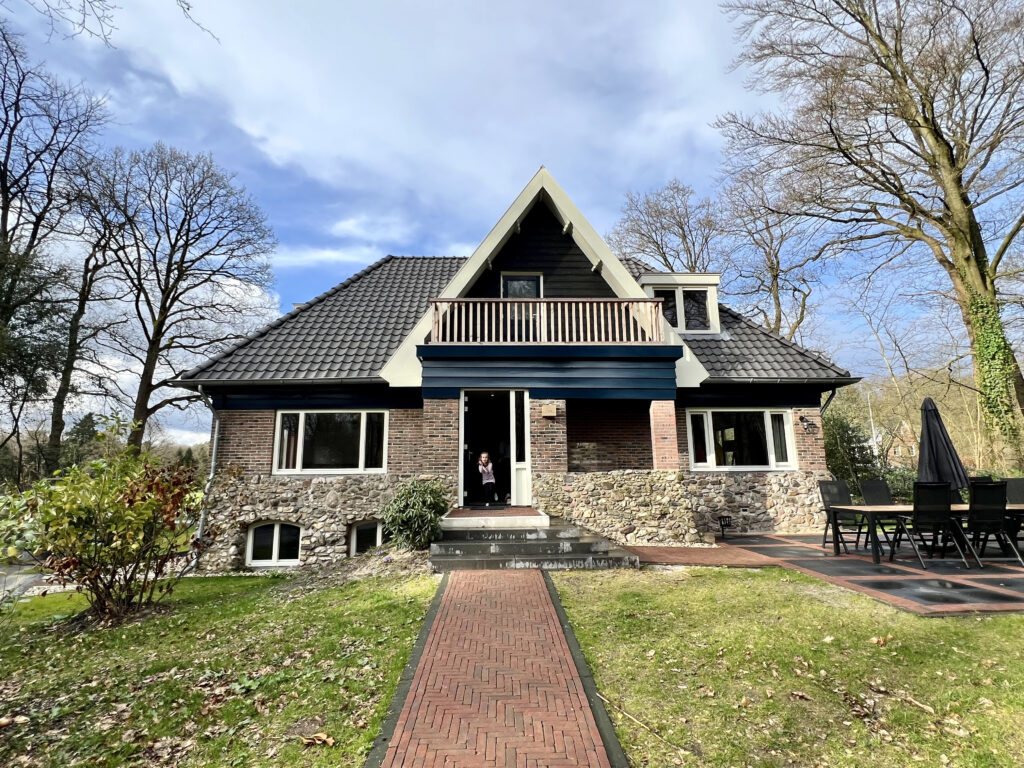
Looking for a grand family retreat with everything there for the kids, lush nature, and plenty of things to do? Then this grand bungalow (well, villa) at Landal’s Rabbit Hill is the way to go.
If you want, gather your extended family and book their epic 10-person retreat, complete with a sauna and your very own arcade machine. Want something smaller? Geen problem, Rabbit Hill has plenty of other cabins which are just as fabulous.
The perfect place to unwind. Image: Abuzer van Leeuwen/Supplied
Located at the Veluwe, this park has heaps for the whole family to enjoy: from a playful indoor pool and a ginormous indoor playground, to tons of fun activities for young and old.
Just a 15-minute drive away, you’ll find the best Dutch nature has to offer, including Radio Kootwijk, Kootwijkerzand (the Dutch desert), and het Aardhuis and its park. In addition to nature, there are also must-visit attractions like the Apenheul, Julianapark, and Paleis het Loo.
📍 Location:Grevenhout 21, 3888 NR Uddel 💸 Prices: Start at €264 per night ❤️ Best for: Those who want a laid-back family retreat
Tiny homes? We’ve seen them. FLOATING tiny homes? Now we’re intrigued. Yup, at Wikkelboat, you’ll sleep in your very own tiny house, which floats effortlessly on the waters of Rotterdam and Den Bosch.
Docked to the mainland only by a tiny walkway, your house gently rocks you into sleep, and you can relax knowing that your accommodation is not just stunning, but also sustainable! 🌱
Wanna explore the neighbourhood or go ashore for dinner? Dat kan! Just hop on a boat or a water bike, and off you go. The centres of Rotterdam and Den Bosch are just a short walk away!
📍 Location: Two locations in Rotterdam and one in Den Bosch 💸 Cost: Starts at €165 per night ❤️ Best for: Those who want to vacay sustainably
At Cuber Suites, the team’s goal is to blow your mind. The bar is set high — but don’t worry, they’ll live up to their promise.
Away from the city, nestled neatly in the forests of the hilly (!) Veluwe region, you get to take in breathtaking views of the unspoilt nature and the fresh, crisp air. 🌲
You’re given a choice between three types of accommodation, varying in features and price, but all equally as sensational. Dreaming away in a private hot tub or sauna? How about hiking through the tranquil woods? The choice is yours.
We mean it when you say you don’t have to worry about anything here, because through Cuber’s app, their team of guides will be at your disposal 24/7 and answer any questions you may have. 📲
📍 Location: Krimweg 140c, 7351 Hoenderloo 💸 Cost: Starts at €300 for two nights (minimum two-night stay) ❤️ Best for: Travellers who appreciate five-star service
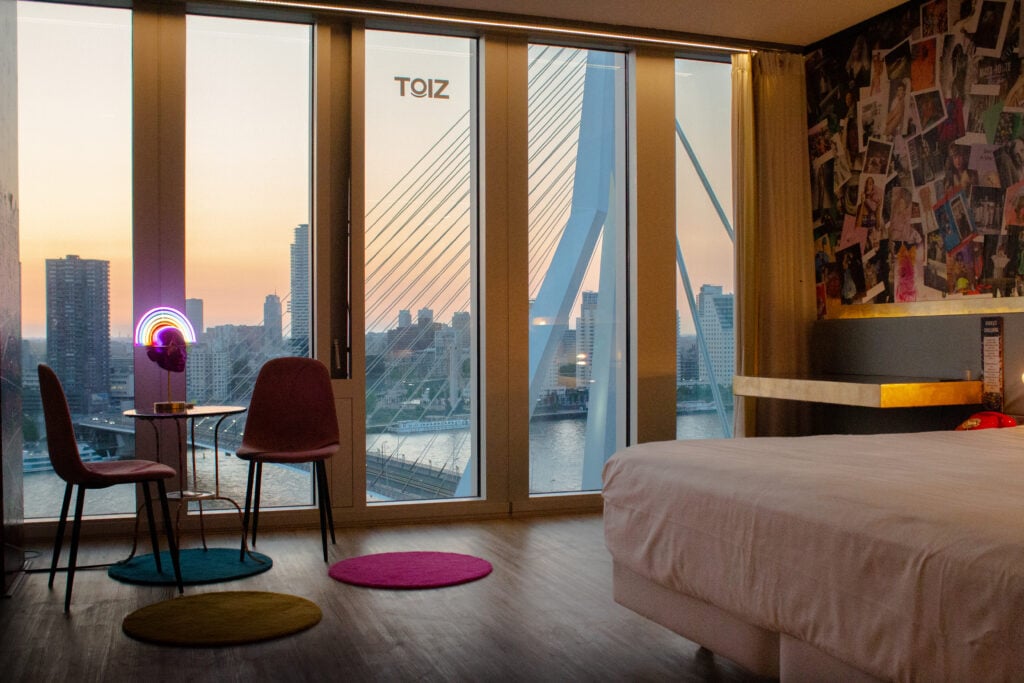
The nhow Hotel in Rotterdam is big and has plenty of excellent rooms offering sweeping views of the Rotterdam skyline. But there’s one unique room here that truly brings a one-of-a-kind experience: the TOIZ room!
It’s full of art, special gimmicks, and playful features (such as a marble run!). Your stay there will never be boring as long as you keep exploring all nooks and crannies of this special room.
The stunning views are the cherry on top! Image: nhow Rotterdam/Supplied
If that isn’t enough, there’s still the gorgeous view to admire (I probably spent over an hour looking out of this window, and it is absolutely mesmerising), the good food at the Elvy bar or everything else that the Kop van Zuid neighbourhood has to offer.
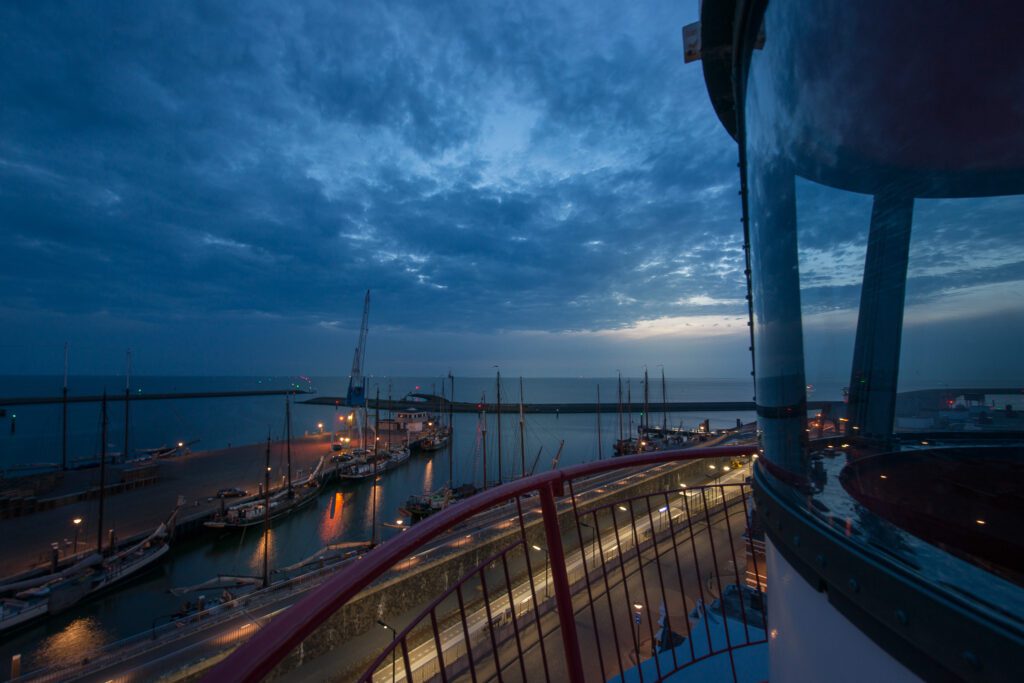
If you’re looking for an experience that will (quite literally) light up your life, this might be it! In Harlingen, a small city on the coast of the Wadden Sea, you’ll have the unique opportunity to spend the night in a historic lighthouse.
The stunning landmark was built in 1920, and has helped countless sailors find their way to the country of clogs. Today, it hosts three stunning suites for two people, all while preserving its signature 360-degree view.
Now that’s what we call sleeping with a view! Image: Vuurtoren Harlingen
Soak in the beauty of the surrounding landscapes, feel the ocean breeze on your face, and create unforgettable memories. Whether you’re a nature lover, a history enthusiast, or simply seeking tranquillity by the sea, this is a must-visit destination.
📍 Location: Havenweg 1, 8861 XH Harlingen, Netherlands 💸 Prices: Start at €349 per night, including breakfast ❤️ Best for: Those who want the best views of the Wadden Sea
During this unique camping experience, you get the chance to get away from EVERYONE — your schoonmoeder (mother-in-law), your boss, your dog, and even the ground! How? By staying on a raft atop a river or lake, only accessible via a canoe. 🛶
At two different locations, one in the province of Utrecht and one in Noord-Brabant, Kampeervlot’s Canadian-style canoe is waiting to take you to your suite (tent) for the night.
Now, bear in mind that this stay is a real adventure. Hungry? Time to hop into the canoe. Need to pee? Get on the canoe (unless you want to use the provided “emergency bucket” 👀). In return, however, you get the best views, and a truly unique adventure!
Always dreamt of sleeping in a treehouse, but your parents said nee? Well, you’re a grown-up now, so it’s time to take matters into your own hands. Where? At Boomhut Tolhek.
At this unique location in Drenthe, you’ll find yourself surrounded by trees, birds and squirrels — in a modern treehouse, all for yourself. As you look out from your balcony at the vast greenery, you can keep an eye out for the occasional deer or rabbit. How dreamy! 😍
Thanks to the countless walking and biking routes in the area, this treehouse getaway can turn into the perfect active nature holiday. So what are you waiting for? Grab up to five of your friends, and wave doei to the city life, hallo to thetreehouse!
📍 Location:Nijend 28, 9465 TR Anderen 💸 Prices: From €130 per night ❤️ Best for: Those chasing their childhood dreams
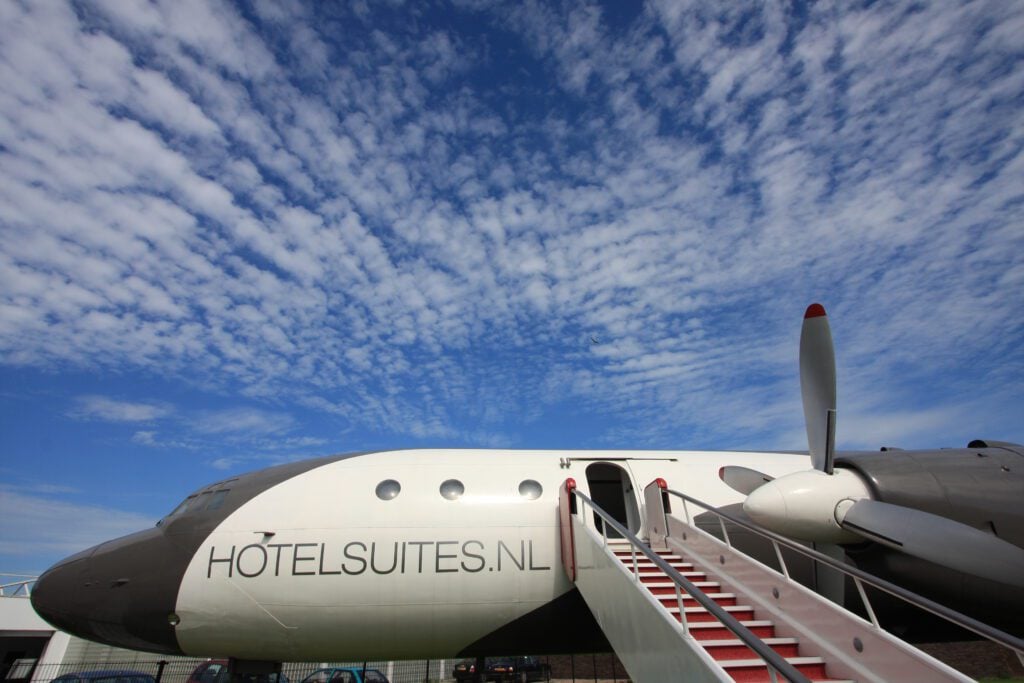
We know what you’re thinking: Sleeping on a plane means crying children, cold feet, niet zo lekker microwaved food, and mediocre movies. Well… not at Vliegtuigsuite Teuge!
This unique place to spend the night in the Netherlands offers a truly extraordinary experience by letting you sleep inside a 1960 aeroplane. Converted into a luxury suite for two guests, Vliegtuigsuite Teuge is anything but a plain ol’ plane. 😉
Now that’s what we call an entrance! Image: Hotelsuites.nl/Supplied
Check out of the stress and check in to a night of pure relaxation, featuring a jacuzzi, an infrared sauna, and three flat-screen TVs. Whaddaya say, ready for take-off? ✈️
📍 Location:De Zanden 61b, 7395 PA Teuge 💸 Cost: From €395 per night ❤️ Best for: Those who want a story to tell later
Yes, the bustling Dutch city life is exciting, but it can also get tiring. The best way to recharge? By escaping to your very own little nature house. 🛖
One of the best places to find unique stays in the Netherlands’ nature is through Natuurhuisje. Whether you want to stay in a teepee tent, an all-glass tiny home, or a luxurious villa, this is where you’ll find your perfect spot for the weekend.
The website features not just homes from the Netherlands, but also across Germany, France, Italy and Belgium.
And the best part? You’re doing something good by treating yourself to a getaway, since 2% of Natuurhuisje’s total turnover goes to local nature projects. 💚
📍 Location: Various locations across the Netherlands 💸 Cost: Varies per location ❤️ Best for: City dwellers looking to reconnect with nature
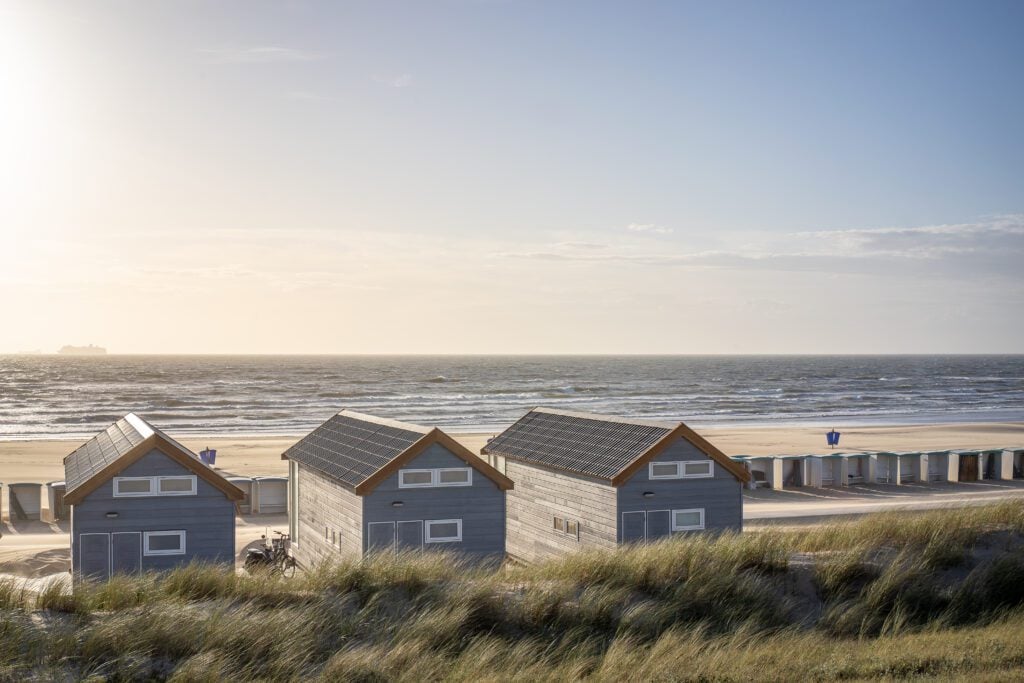
How you structure your day has endless possibilities, from surfing to walking along the beach, or exploring the best local eateries (fresh haring, anyone?). 🏄♂️🌊
📍 Location: Noord-Holland, Zuid-Holland and Zeeland 💸 Cost: From €241 per night ❤️ Best for: Those who want to wake up to an ocean breeze
Ah, the Netherlands, such a gorgeous country — and so many ways to explore it. Which of these unique stays will you book next?
Do you know any more extraordinary places to spend the night in the Netherlands? Tell us in the comments!
Measures deterring international students might be good news for some overcrowded Dutch universities in bigger cities, butnot for Limburg — and institutions in the province were sure to let the Minister of Education know. 👀
Last Friday, various educational institutions in Limburg sent a warning letter to the Dutch parliament, expressing concerns about the economic impact of restrictions on the number of international students. 💸
Resisting the push for Dutch-only programmes
The Netherlands is a world-renowned provider of English-language degrees, but a move to increase the number of Dutch-only courses could change that.
Minister Dijkgraaf proposes, among other measures, that only one-third of bachelor’s degrees will be taught in a language that is not Dutch. Sounds like a literal language barrier… 🤨
Reducing the accessibility of studying for non-Dutch speakers shifts the international focus of places like Limburg, home to major institutions like Maastricht University.
The Netherlands wants a cap on international students. Bad idea. Denmark did the same a few years ago and paid a heavy price. Now, the Danes make a U-turn.
Danish minister calls for international student u-turn amid labour shortages https://t.co/6WH8NsCZlN
Limburg institutions worry about the survival of universities and colleges in the face of these changes, as they are likely to deter so many students that some courses may no longer be taught.
Have you ever had a student serve your bitterballen, deliver your groceries, or pour your pint?
These won’t be the only jobs lost when international students are turned away — if courses become too exclusive, institutions could be forced to close. ❌
Different rules for different regions?
In their letter, the institutions stress the region’s unique need to maintain a large international student population.
Sharing 76% of its border with surrounding countries, Limburg’s international environment is “essential to increasing the quality of life in the region”, a Zuyd University professor told the NOS.
So why aren’t their cries of resistance being heard? Well, the big cities are shouting louder. 🗣
Limburg institutions believe that the push to limit international students unfairly reflects the issues experienced by their fellow institutions in the Randstad, from overcrowded lecture halls to the student housing crisis.
“We don’t have those problems in Limburg”, insists the professor — showing they do not share the negative attitude of more central Dutch unis towards their international population.
This isn’t the first time institutions outside the Randstad have taken a different stance in the foreign student debate, but will this be the challenge that makes a difference?
What do you think about the measures to limit the number of international students in the Netherlands? Let us know in the comments below.
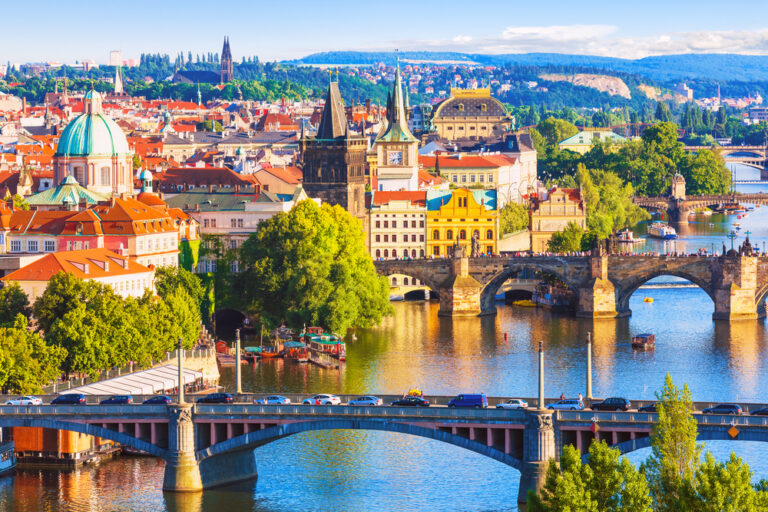
Rail company European Sleeper first announced a route extension of its Brussels to Berlin line ten months ago. Now, travel enthusiasts finally have a chance to check it out! 🚆
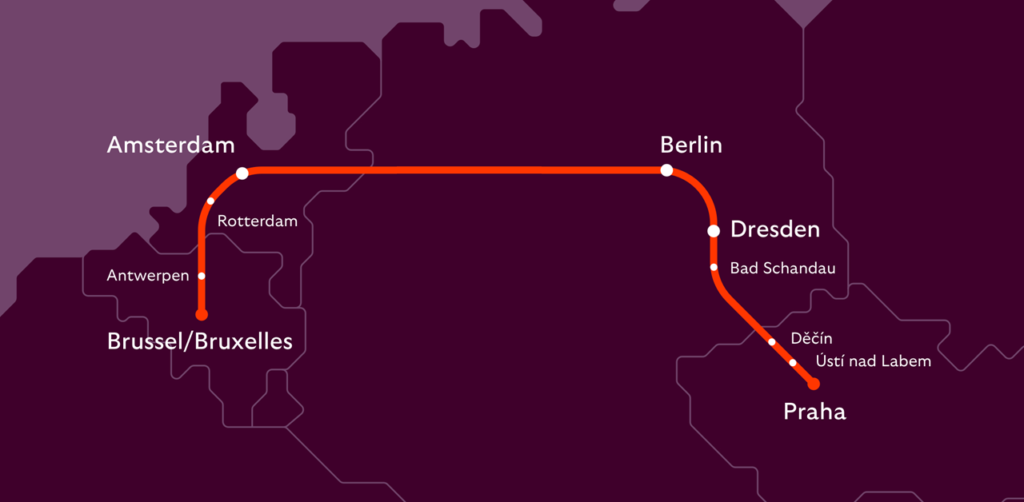
Starting today, March 25, European Sleeper’s existing Brussels-Amsterdam-Berlin line will chug on to two further destinations: Dresden (Germany) and Prague (the Czech Republic).
The full route, from Brussels to Prague (Praha). Image: European Sleeper
This post might have affiliate links that help us write the articles you love, at no extra cost to you. Read our statement.
Gimme all the details!
Do you prefer a mid-week jaunt to clear your head, or would you rather spend a relaxing weekend away (preferably in the company of some delicious foreign beer 👀🍻)?
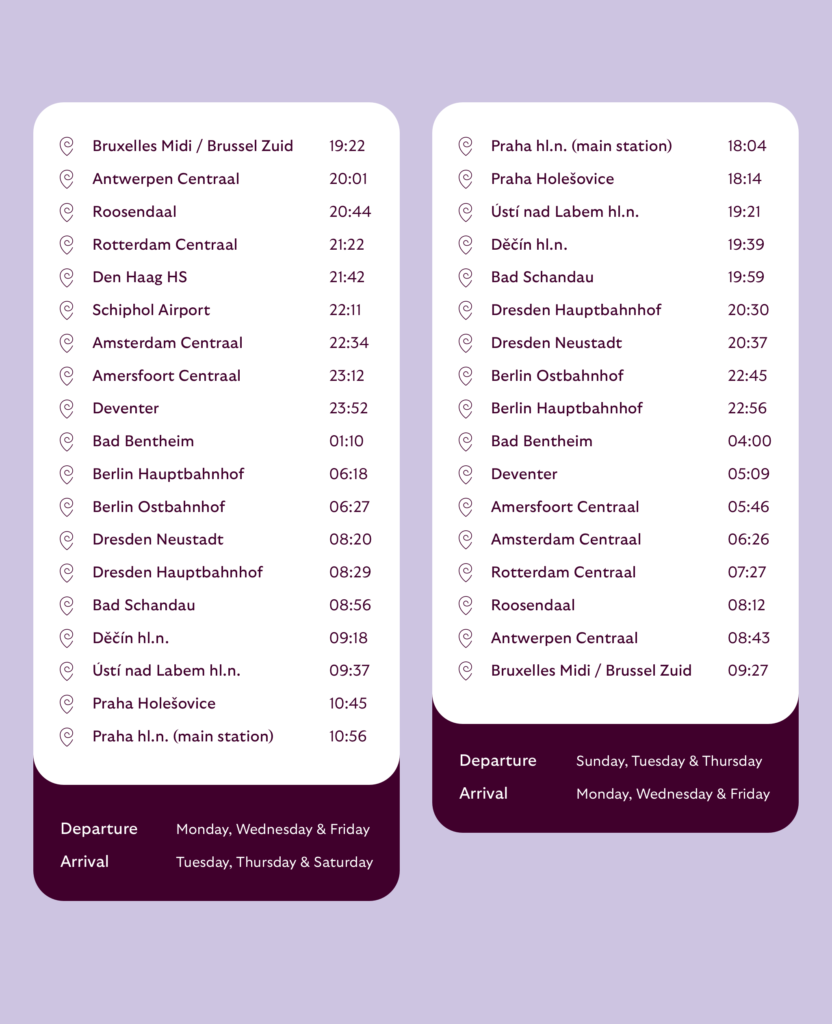
Either way, European Sleeper has you covered, with trains scheduled to depart every Monday, Wednesday, and Friday evening and planned arrivals every Tuesday, Thursday, and Saturday morning.
For the full timetable, you can refer to the infographic below — or check out the European Sleeper website. 👇
The full timetable for the Brussels-Amsterdam-Dresden-Prague route. Image: European Sleeper
Depending on your preferred level of comfort and privacy, you can choo-choose from a seat in a shared compartment, five or six-person couchettes, or even luxurious sleeper cabins!
Will you be checking out European Sleeper’s new route? Tell us all your thoughts in the comments below!
Perhaps, like us, you’ve been enjoying the brief period of sunny weather and warm, terras-friendly temperatures. Maar helaas… it looks like rainy Dutch weather is set to return with a vengeance! 😮💨☔️
Be sure to pack your brolly when you head off to work this morning, as Weeronline reports that there’ll be showers in the north and northwest of the country.
Unless, of course, you’re lucky enough to live in Limburg or east of Brabant! These regions will largely remain dry — and may even see some sun.
Expect more rain this weekend
All of this means, unfortunately, that you may also need to shelve those epic weekend plans of yours — or, at least, pop some waterproofs and wellies on them. 😉
Male-dominated student associations in the Netherlands appear to have a track record of questionable (disgusting) sexist behaviour — and it seems like no matter how often they are condemned, they just don’t get the memo.
In Utrecht, the Utrechtsch Studenten Corps (USC) student association is now under scrutiny after the NOS got ahold of their so-called “bangalijst” — a list that slut-shames, sexualises, and objectifies female students from the university.
A banga-what? According to the Dutch police, “banga” is Dutch slang for “slut”, and bangalijsts are lists “young people send to each other via email and social media with rankings of girls who they think are the biggest sluts.”
Sensitive personal details shared
In a PowerPoint document, the group of male students is said to have compiled details such as names, photos, addresses, and phone numbers of some 30 young female students to share their opinions on them.
The women were each “rated” with repulsive descriptions like “quite horny”, “nice and ordinary”, “needs to wear make-up”, and “lekker ass”.
At the same time, a second list circulated with details of women the USC “wants nothing to do with” — who were ridiculed for their appearance and weight.
Both lists — comments, photos, and addresses included — were allegedly sent out thousands of times online.
Suspensions, sanctions, and legal action
According to the student association, “those responsible have been suspended immediately for an indefinite period, and they have been denied participation in the planned ski trip”.
The USC also states that it “distances itself from this abhorrent action” — but too little, too late.
Utrecht University’s Rector Magnificus, Henk Kummeling, told the NOS that “what happened is repulsive and exceeds the limits of the permissible”.
As a result, Utrecht University has temporarily stopped subsidising the association and banned USC representatives from university events for the rest of this academic year.
A group of parents of the affected girls is also preparing to take legal action to hold the responsible men liable for the psychological and social consequences for their daughters.
dutch students in frats scare the living hell out of me like why would you ever wanna be like that omg
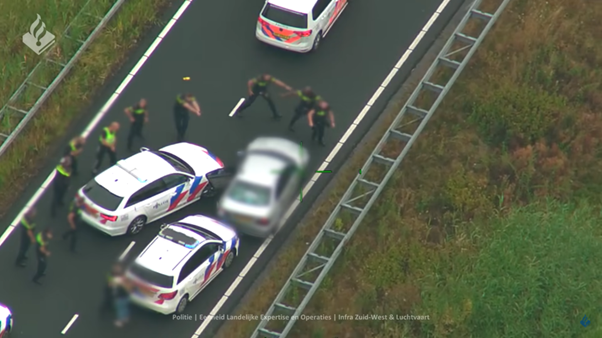
Police have published images from the insane hot pursuit involving 10 police cars, multiple gunshots, knifepoint threats, traffic collisions AND a helicopter in August 2022.
The culprit? A 25-year-old Dutchman — and just wait till you hear the punishment he received. 🤯
The driver, a man from Hoogeveen in Drenthe, kidnapped his ex-girlfriend after their relationship ended. He could not accept her moving on, according to Eindhovens Dagblad.
After forcing her into the car at knifepoint, he hit the gas while she hit 112.
Speeds of up to 200 km/h were measured as the police chased the man from Belgium across the Dutch border. 🚨
Wanna see how it all played out? (Pssst… jump to (04:00) to see the action. 🤫)
In a Hollywood-style chase, two warning shots were fired, a police helicopter was deployed, and one of the police vehicles was involved in a collision.
After all this, the man was finally trapped and arrested. Fortunately, his ex-girlfriend was unharmed in the chaos.
So he served his time, right?
Technically, yes. But that “time” only amounted to one and a half months in prison and 240 hours of community service.
Oh, and he owes his ex-girlfriend €1,500 in damages. Sure, that covers the stress of the ordeal. 👀