Don’t change out your summer wardrobe with autumn clothes just yet — your favourite summer shorts could come in handy this week!
The calendar says it’s autumn, but the Dutch weather disagrees. While we have all made our peace with the end of our favourite season in the Netherlands, summer weather is giving us one last hurrah.
This week will be warm, sunny, and dry — so put those raincoats away and grab your sunglasses. We could even experience some tropical temperatures above 30 degrees Celsius, reports the NOS.
It’s getting hot in here
Monday starts our weeks off with sunshine and a few clouds that will disappear as the day goes on. We can enjoy our lunch outside on terrasjes again, with temperatures reaching a balmy 24 degrees Celsius in coastal areas and up to 27 degrees in the southeastern parts of the country.
You’ll be running to your local pools and beaches after work, with temperatures getting hotter every day as the week continues. According to Weerplaza, we can expect spicy temperatures of between 25 and 30 degrees Celsius until the end of the weekend. 🌶
Summer in autumn?
“That is far above what you would normally expect in September,” says Peter Kuipers Munneke, NOS weatherman. “On average, it is 20 degrees at the beginning of September. We will be almost ten degrees above that in the coming week.”
This type of weather is rare for September, but we have seen a large variation in the Dutch weather this summer. There were a record number of dry, warm summer days in June, while June and August gave us many rainy days.
Despite the temperamental weather, this summer is in the top 10 warmest summers since measurements began. We hope that means the winter coming will be warmer too!
Are you happy to have one last bout of summer weather? Or are you ready for autumn to begin? Tell us in the comments!
CBD in the Netherlands is hyped, affordable, and widely available.
Chances are that you have heard of CBD before. Or, at least, you know that it has something to do with cannabis — and aren’t there tons of health benefits too?
Well, my friend, we’re happy that you’ve surfed the digital waves right into our arms because we’ve got the ABC of CBD in the Netherlands for you: what it is, how it’s made, the laws surrounding it, the health benefits and uncertainties.
Read on!
What is CBD?
CBD products come in all shapes and sizes. You can apply it to your skin as oil or inhale it by smoking a CBD-heavy joint. Image: Freepik
CBD is one of two main chemical components, called cannabinoids, found in the marijuana plant. It stands for ‘cannabidiol‘ and has seen a sudden rise in popularity since the mid-2010s.
Why? Because, allegedly, CBD is a miracle cure-it-all substance that can help with issues as minor as mosquito bites up to anxiety, sleeplessness, or even cancer and Parkinson’s disease (more on that later).
Because of these hailed health benefits, CBD products have been popping up all over the place. There are CBD-infused oils, chocolates, coffees and even face masks. In some especially hip cafés (or coffeeshops here in the Netherlands), you can order CBD-infused cakes or drinks.
What is the difference between THC and CBD?
While CBD is a chemical component present in the cannabis plant, it’s not the stuff that makes you high. 😮💨 In layman’s terms, CBD does not alter your brain chemistry — so you won’t be seeing any pink elephants after putting a couple of drops of CBD oil in your morning smoothie.
That’s the doing of CBD’s bigger and flashier brother THC. (We really don’t recommend throwing that in your mixer instead of spinach.)
THC stands for Tetrahydrocannabinol, and it’s the component in cannabis that has the psychoactive effects.
Is CBD legal in the Netherlands?
There are many misconceptions about the legality of selling, buying or using CBD in the Netherlands. That’s probably because there is already quite a bit of confusion regarding the legality of cannabis in the Netherlands more generally.
The rule of thumb is that cannabis in the Netherlands is decriminalised and tolerated, but it’s not legal. This includes CBD and all CBD products.
What does that mean? Well, no one will bother you if you smoke or buy weed or CBD products in the Netherlands, but there is no law officially legalising the substance.
Good to know: CBD falls under the Dutch Opium Act, which distinguishes between soft and hard drugs. Drugs like ecstasy, cocaine, or LSD are considered hard drugs (List I) in the Netherlands.
Cannabis, on the other hand, alongside sleeping pills or sedatives such as Valium, is considered a soft drug (List II). Meaning, that it’s tolerated by the Dutch government and can be sold in specialised stores or coffeeshops — and this includes CBD products.
How does CBD work?
So, let’s talk science for a minute. The reason why CBD and THC affect your body and brain is that their chemical structure can bind to something called the endocannabinoid system (ECS).
The ECS is a cell-signalling system that runs throughout your body and influences a range of processes such as sleep, mood, appetite or memory. It is basically composed of a number of receptors that can send signals to your brain, such as “you’re sleepy” or “you’re hungry.”
Both CBD and THC can bind to the receptors present in the endocannabinoid system. CBD actually turns off the receptors that THC would usually bind to.
So, instead of making you high, CBD tends to have calming effects on your ECS. The messages your brain receives are somewhere along the lines of “I am calm” or “I am at peace.”
Is CBD a miracle cure-it-all?
Okay, let’s get into the good stuff. While it’s not yet super well researched, there are many testimonies and a couple of studies that hail the alleged health benefits of CBD.
This magic cannabinoid supposedly helps with a whole range of diseases and disorders.
Most popularly, CBD is meant to help with anxiety and depression. But there are many more alleged health benefits.
CBD oil can even help out with allergies like hay fever, for example! It might. Image: Supplied
Here’s just a rough list of the conditions CBD might (or might not) help with:
Epilepsy
Chronic pain
Inflammation
Arthritis
PTSD
Diabetes complications
Skin health
Concentration issues
Sleeplessness
Long-COVID symptoms
Some (non-scientific) testimonies really seem like miracles. Just watch this video of a woman suffering from a developed case of Parkinson’s disease that compares CBD to her regular medication.
Okay, but what does the science really say?
Research on CBD and its potential health benefits is still in its early stages. This means that we don’t quite know yet whether or not CBD treats all the disorders and diseases that it’s praised to do — but the evidence is piling up.
Here are just some scientific studies and insights that’ll hopefully spark your curiosity.
Anxiety
CBD might lessen the churning anxiety feeling in your stomach. Image: Depositphotos
The New York Times says that out of 5,000 surveyed CBD users, 60% of them took the cannabinoid to help with anxiety.
Okay, but does it? Well, a 2011 study first hinted that CBD can help people with social anxiety disorder. Study participants took a public speaking test, whereby the control group was given a placebo and the other group was prepped with CBD oil.
The results were promising, showing that participants who took the CBD showed significantly reduced anxiety levels and improved the quality of their public speaking.
A review of eight recent studies on CBD and anxiety reported that overall the substance was ‘well-tolerated’ and there minimal ‘adverse effects.’
So, does CBD help with anxiety? Science says it might and in either case, there don’t seem to be any notable harmful side effects. So, why not try it out?
Epilepsy
One of the most promising findings is that CBD might help significantly reduce epilepsy seizures. Especially in infants, children and young adults that show resistance to other, commonly used drugs.
According to Healthline, one study found that the group who received the CBD experienced a 44% reduction in seizures. Conveniently, the control group also experienced a 22% reduction.
A second study also found that the amount of CBD seems to make a difference in the frequency of seizures. With a daily dosage concentration of 20 mg/kg, patients experienced a 43% reduction in seizures. With 10 mg/kg epilepsy seizures were reduced by 37%.
These results are very promising and ongoing studies continue to investigate epilepsy treatment with CBD.
Pain reduction
Arthritis is a progressive conditions causing chronic pain in the joints. CBD might be able to help with that! Image: Depositphotos
Last (but certainly not least), CBD seems to help people who are dealing with chronic pain. From arthritis to easing the side-effects of chemotherapy or neuropathic (nerve) diseases — several studies seem to suggest that CBD can significantly reduce inflammation and constant, chronic pain.
However, more research is needed on this front. It will be interesting to see which insights on CBD this new field of research will bring to us in the future. 👩🏽🔬
Sports
Little did you know that CBD can also help you become a better athlete! That’s because of CBD’s anti-inflammatory properties, which can help you recover more quickly from this post-workout muscle pain.
While concrete evidence is still lacking, a targeted 2020 review of scientific studies and trials hint that CBD might be beneficial for athletic performance. Aching muscles? Applying CBD oil internally or externally might soothe your sore limbs. The same goes for minor injuries.
Is CBD safe?
One of the reasons why CBD is so promising is that the side effects are very minimal to non-existent. In the worst case, negative side effects reported were dizziness, nausea, dry mouth and low blood pressure. But usually, the substance seems to be agreeable with most people.
If you buy CBD products, be it oil, chocolate or coffee, just read the instructions carefully or check in with the person who sells it to you about how much you should take at a time.
Where can you buy CBD products in the Netherlands?
Getting your hands on CBD products in the Netherlands, including CBD oil, is not an issue. You basically have two options: buying CBD products online or walking into one of
the multiple shops that advertise them for sale.
In the Netherlands, it’s not only coffeeshops that are allowed to sell CBD. As long as the THC level is kept below 0.5%, you can buy CBD legally across counters all over the country.
Don’t be fooled, these CBD chocolates won’t get you high but they might soothe your headache. Image: Depositphotos
It’s important to know that there aren’t yet a lot of mechanisms in place that control and enforce the quality of CBD in the Netherlands, so it’s important to find a reputable company that you trust.
Do you have any experience with CBD oil or other products in the Netherlands? Tell us in the comments below!
Editor’s Note: This article was originally published in August 2019 and was fully updated in August 2023 for your reading pleasure.
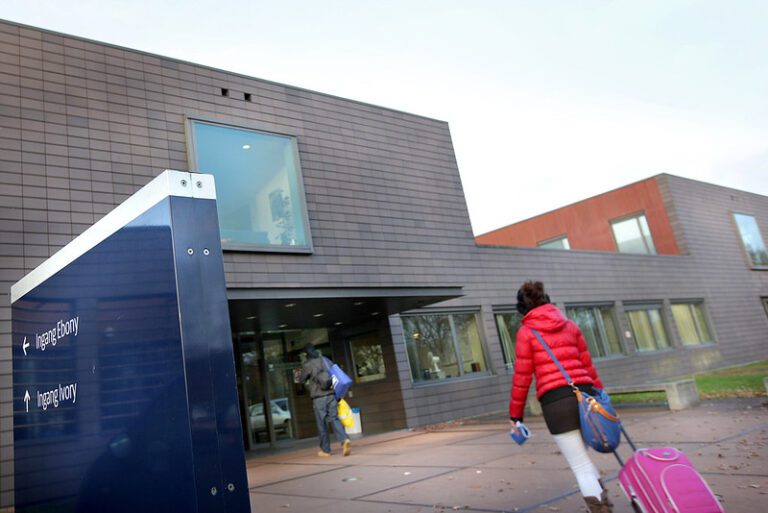
If you want to live in the Netherlands, you have to deal with Dutch bureaucracy. The latest challenge? New students have to wait in line for an entire day to register their new address.
It’s not exactly the warmest welcome, especially considering that many students are missing their university’s Intreweek (introduction week) for this.
How many students exactly? Oh, you know, just 500. And it doesn’t stop there: according to Het Parool, Amsterdam expects up to 8,000 new students when university starts next week.
Biking around the city is about the get a lot more stressful — and unless something changes, queues are about to get long.
Why are people waiting for hours?
Why are the queues so long? You guessed it: staffing shortages. Classic.
So far, the registration centre at Amsterdam’s Bos en Lommerplein hasn’t been this busy, but six of their employees are currently ill — which doesn’t bode well for future queuers.
On top of that, students can only visit the centre on one of 20 different days. To make this easier for students, two of the main universities in Amsterdam (UvA and VU) have divided these days among themselves to bring back some sense of order.
However, this means that instead of spreading out the demand, students are arriving en masse on the designated registration days. The result? Queues. Long ones.
Registration? What does that mean?
If you’re confused about this whole situation, let us clarify it for you.
If you want to live in the Netherlands, you have to register your address at your local municipality.
Once you do this, you’ll receive a burgerservicenummer(citizen service number) or BSN for short — and you need this to do basically anything.
Only after you have this BSN can you open a Dutch bank account and take out Dutch health insurance.
This has to be done within five days of your arrival in the Netherlands, which explains why so many people are waiting in line in the rain and missing their Intreweek: they don’t have a choice.
But it gets worse: you can’t register for a BSN online, and you can’t schedule an appointment in advance. You just have to show up and hope for the best.
(Quick question: is the Dutch bureaucratic system trying to create chaos? Because it’s really good at it).
Unwavering spirits
In their time of having to deal with this lovely, welcoming, and very easy process to get a mandatory legal document, students have started to bond.
Walking through the line, it’s possible to see new friendships budding, students playing cards and eating marshmallows with each other, and exchanging phone numbers.
Way to be adaptable, huh? Truly making the best of a bad situation. These students will fit in the Netherlands just fine — once they make it to the top of that queue.
What has been your experience registering as a Dutch citizen? Tell us in the comments below!
Hoera!You no longer have to switch your phone every two years for a new one that costs an arm and a leg. Not only is this Dutch smartphone good for your wallet in the long run, but it’s also better for the environment. 🌎
That’s right, just when we thought the Dutch couldn’t get any more innovative, Fairphone, a Dutch smartphone manufacturer, recently presented their newest smartphone: Fairphone 5.
It’s fair, high-tech, environmentally friendly, and it can last up to eight years. 💪
The better choice for you — and the planet
“Most smartphone brands only make money selling phones, so they want you to come back for a new one as soon as possible,” Fairphone CEO Noud Tillemans tells NU.nl.
“But we still want to show that things can be done differently.” And Fairphone has done just that!
With other smartphones, you can expect to pay more than €100 to have your phone repaired. Why is that? Because you can’t easily remove elements such as the battery, repairs are difficult and duur (expensive).
How is the Fairphone 5 different? You can carry out the ten most common repairs all by yourself.
You don’t even need your tech-savvy friend to help you. The phone has been designed in such a way that technical knowledge isn’t necessary, you just need to know how to use a screwdriver. Zo makkelijk!
Despite the government’s protests, the Netherlands is being flooded with new international students. So how should universities fend them off — or should they not fend them off at all?
Overcrowded lecture halls, too many papers to grade, and an unsettling lack of student accommodation are some of the main reasons why the House of Representatives voted to reduce the influx of international students back in 2019, de Volkskrant reports.
Not to mention what they called the “anglicisation” of Dutch universities. 🥴
Internationals are here to stay
But three and a half years later, did this decision pay off? Heck no.
On the contrary, The Immigration and Naturalization Service (IND) is receiving more non-EU student applications than ever.
At the moment, there is a shortage of about 27,000 student rooms. This means rooms that are available have ballooned in rent, with the average being a startling €715 euros per month. 😳
So how would one go about staving off students from abroad? Well, by cutting back on the number of courses taught in English, for a start.
Universities want the “best academic staff” from abroad
The universities themselves, however, aren’t as eager to drive away their international newcomers.
Universities of the Netherlands (UNL) spokesperson Gijs Kooistra highlights the importance of a diverse, multi-cultural environment for all university attendees. Plus, teaching in English “can attract the best academic staff” from overseas.
Even the University of Amsterdam (UvA), which has been trying to halt the “uncontrollable growth” of its student body for years, doesn’t support the idea of lessening the number of English courses.
Don’t forget there are also Dutch students who want to study or learn English while at university, and this wouldn’t bode well for them.
The only part of the country that remains unbothered by this dilemma? The North.
Places like Friesland and Drenthe have plenty of accommodation to spare, and besides, internationalisation would only improve their labour market.
Do you agree with the House of Representatives’ attempt to prevent more internationals from moving to the NL? Share your thoughts in the comments below!
As if students aren’t using every cent to survive in the Netherlands already, Dutch landlords are taking advantage of the housing crisis to make bank for themselves.
Wondering if your rent for one room is a bit too high? That’s probably because it is. According to the NOS, landlords throughout the Netherlands are dodging the points system like they’re in a game of dodgeball.
Why are they doing this? To make more money off the backs of students, natuurlijk. By staying out of the points system, they can charge more rent with a ‘group contract’.
Young students are easy pickings
So what is a ‘group contract’, and how does it work? With this type of contract, housemates are on one contract together, and they all pay their share of the rent to one ‘main tenant’ who then transfers the entire rent to the landlord.
Landlords use this type of contract by renting out an entire house as an independent residence, which lets them charge a ridiculously high rent. The worst part? This also prevents the tenants from lowering the rent through the rent assessment committee. Echt niet leuk!
Young students will often still sign these rental agreements. In fact, a quarter of room tenants in the Netherlands say they have a contract for an entire house, while in Amsterdam and Rotterdam, this rises to 50% of renters.
Some may not know what they’re getting themselves into, while others simply don’t have a choice — ahh, the student housing crisis rearing its ugly head again. 😬
Shifty or necessary?
Some people have the opinion that landlords need to opt for group contracts instead of room rentals. “The points system for rooms is outdated, so you barely cover the mortgage, let alone other costs,” real estate lawyer, Huib Hielkema, tells the NOS.
This can also give students more freedom, apparently. Helaas, that’s not the experience one student had.
Marc (not his real name) has three housemates whom he shares a living room, kitchen, and bathroom with. They each have their own room and pay €830 each — yep, a whopping €3700 in total.
According to his rental agreement, he rents a house with a group, not a room. The contract also states that he can choose his housemates, but in the real world, the landlord chooses. Uhmm, that seems a bit unfair… 🤔
What do you think of group rental contracts? Tell us in the comments!
Who knows how to speak Dutch besides, well, the Dutch? Students at a University in Poland, apparently!
That’s right — students of Dutch studies may have “halved” in the NL over the last decade, but meanwhile, programmes in Eastern European countries (including Poland, Hungary, and Romania) are overflowing with young people keen to learn the guttural language.
In fact, The University of Wrocław in Poland says they sometimes have 250 Bachelor’s and Master’s students participating in their Dutch studies programme, de Volkskrant reports.
That’s even more than the average 200 students studying Dutch in the NL!
Knowing Dutch could be a cash grab 💸
So what has possessed the youth of Eastern Europe to learn Dutch, a dialect used by a mere 25 million people worldwide?
Apparently, the Dutch language’s newfound popularity has a lot of its basis in economic promise.
Considering how rare Nederlands is compared to, say, English or German, many students hope to work for well-paying multinationals that continuously recruit Dutch speakers.
A survey among Budapest’s Eötvös Loránd University graduates revealed that every student in Dutch studies had landed a job by the end of the summer. 👀
The Dutch language is… “very nice”? 😳
Even so, plenty of the undergraduates don’t appear to be just money-hungry…
One first-year student says their passion for Van Gogh’s work is what drove them to study the Dutch artist’s mother tongue. Others reference the fact that they have relatives who live in the Netherlands.
Several of the students interviewed by de Volkskrant have even managed to find beauty and charm in the taal (language) that sounds as tough as nails. 😮
A Budapest-based student describes the Dutch word for umbrella (which is paraplu) as “very nice” and French-sounding, while an undergraduate in Wrocław admires how “logical” the Dutch word regering (government) is.
Still, we can all agree that the word “grachtenrondvaart” (canal cruise) is indeed “impossible to pronounce”. 🤷♀️
Do you believe more people abroad should study Dutch? Share your thoughts in the comments below!
As the Black Eyes Peas said: “Tonight’s gonna be a good night.” Why? Because a special phenomenon called a blue supermoon will happen — and we can observe it from our very own Dutch windows!
You won’t want to miss this spectacle because, according to Weerplaza, it’s very rare.
How rare, you ask? Well, the next time one of them will be visible will be all the way in 2037 (for those who are bad at maths: that’s 14 years from now!).
How can I see it?
To try and spot this stunning spectacle, experts recommend that you try not to wait too late into the night. The early evening skies will be especially clear, and provide us with perfect conditions to see the supermoon. 🔭
If you live in a coastal area, some clouds might, unfortunately, rain on your parade and block the moon a little bit. That’s because we’ll have some rain coming in from the west.
But don’t worry! Either way, the moon won’t be completely invisible. (And hey, maybe watching it from the beach will even add the extra charm to it?)
What even is a blue supermoon?
Let’s start with the blue moon: every second full moon in one month is called a blue moon. We had a full moon on August 1, and tonight we’ll have the second one, so we have a blue moon!
And what’s so “super” about it? Easy: It’s big and bright as hell. When there’s a supermoon, it appears much larger and brighter than what we’re used to. 🌕
This happens because the moon doesn’t move around us in a perfect circle but in an egg-shaped orbit. So, sometimes it’s closer to us — and that’s when we get a supermoon.
Combine that with it being the month’s second full moon, and we have a blue supermoon! 🌚
Will you be catching the blue supermoon tonight? Tell us in the comments!
Are you folding up the parasols (to swap them out for umbrellas) and hiding away your bathing suit? Stop right there, because summer. Is. Not. Over. 😮
Granted, for those who live in the Randstad and are in the midst of a thunderstorm at the moment, sunshine may feel like a distant memory. 🌧
However, Buienradar meteorologist Martijn Dorrestein claims that the sun will take centre stage for a good portion of the afternoon today, RTL Nieuws reports.
Blowing hot and cold
The weather expert notes how “disappointing” summer in the Netherlands has been — especially throughout August.
People taking their final holidays this week were expecting 20 degrees Celsius, but instead are greeted with a bleak and cloudy 18.
Even though it’ll become drier and warmer later today, some rain showers will reportedly keep crawling back to haunt us throughout tomorrow and Friday. Make sure an umbrella is close to hand! 🌂
But at least on Thursday and Friday, the skies will be more typisch of Dutch summer, rising to up to 21 degrees with sunshine. ☀️
A promising forecast for the weekend
Saturday, on the other hand, will bring what Dorrestein calls a “classic distribution” of Dutch weer across the country, with some areas, such as Wadden, being five degrees colder, while places like Limburg could shoot up to 25 degrees Celsius.
Sunday is also looking promising, with a forecast of 20 degrees Celsuis, giving everybody one last hurrah before Summer 2023 breathes its last breath. 🏖
So, you’ve managed to secure your dream home in the Netherlands and bravely fought the bitter fight of setting up your power, gas, water, and more — but now you need to switch your utility provider for whatever godforsaken reason. 😭
Don’t fret! Whether you’re moving house, want to switch to green energy, or have spotted a better deal on your utilities that will hopefully save some money on your energy bill, switching utilities in the Netherlands isn’t as hard as you think — you just need to know how!
TIP: This guide is for all those who have already mastered the art of navigating the bureaucratic jungle of Dutch utility providers and are looking to switch their current contracts. We have a complete guide on setting up your utilities from the ground up if that’s what you’re looking for! 👈
Is it possible to switch your Dutch utility provider?
Yes, absolutely! The utility market in the Netherlands is privatised. That means, in theory, you can switch your gas, electricity or mobile contract as much as you like.
However, there are some things to look out for so you’re not running into unwanted costs — and to avoid locking horns with your old utility provider.
To make things harder, you can choose from a bazillion companies, many of which only offer their services exclusively in Dutch. 😭
So, before diving straight into the how of switching your utilities, we probably have to address why you’d want to do that in the first place.
Reasons to switch your utility provider(s)
From learning Nederlands to trying ambiguous (mostly fried) Dutch foods, it is always good to know your ‘why’ before facing another hurdle on your expat journey in the Netherlands.
Moving house in the Netherlands? You’ll most likely end up switching one of your many utility contracts. Image: Pexels.
Luckily, when it comes to utilities, there are a couple of solid reasons why you might want to switch your provider that will keep you going.
🚚 You’re moving
Whether you’re moving down the street or all the way from Maastricht to Groningen, moving is probably one of the main reasons you’re considering switching your utility providers.
You’ll sometimes be required to change your utility company because they don’t provide for you now that you’ve moved out of their target areas. For example, water is provided by 10 different suppliers in the Netherlands that supply to pre-determined regions only.
Sorting your utilities in advance will save you lots of stress when moving. Image: Depositphotos
In other cases, some internet providers might not be able to supply internet to your new home because it’s not connected to the proper cable, but others will. Or you might notice that your current electricity company is much more expensive where you’re moving than before.
Either way, should you move within the Dutch country, you’ll most likely be looking at ways to switch up your current utility providers.
🌱 You want to go green
Although the Netherlands could also be called the ✨land of a thousand windmills ✨, most Dutch energy providers still source their power from non-renewable and unsustainable sources. Disappointing, right?
Getting solar panels is becoming more popular in Dutch households. Image: Depositphotos
There is room for improvement, and, luckily for you, the Dutch government subsidises green energy so that the price difference is minimal on the consumer level.
But not all energy providers are created equal, and some are greener than others. If you’re thinking of living a more eco-friendly lifestyle, perhaps it’s time to reconsider where your energy provider is getting its power from.
🇬🇧 You’re tired of dealing with all the Dutch
Oh, we love the Dutch language. But when it comes to topics beyond the casual ‘Hoe gaat het’ or ‘Lekker, hoor’, this throat-scratching language quickly becomes a pain in every expat’s backside.
When you’re trying to figure out your utilities in Dutch. 😬 Image: Pexels
But don’t worry, there are options to get your utility services entirely in English! So you can dodge the waterleveranciers, gasaansluitingen and internetaanbieders to jump immediately onto water suppliers, gas ports and internet providers! Easier, right? 🙌
💰 You want to save money.
Aren’t we all dreading that nasty energy bill coming in every month? 😓 While paying for your utilities is a necessary evil, there are ways to make your utility consumption more budget-friendly.
Of course, you can opt for energy-saving measures like turning your heating off at night or ensuring your home is properly insulated. 🏡
Saving a bit of extra money with your utilities is really gratifying. Image: Freepik
But one of the most efficient ways to save money on utility expenses is to choose your provider wisely. Try to determine which contracts are offered and what works best for your situation.
For example, a one-year contract with fixed rates ensures that you will always pay the same irrespective of fluctuating energy prices. Or perhaps you spot a deal that gives you 50% off the first 12 months of a 24 months internet contract.
So, if you’re smart about switching, you can save a proud sum of cash in the long run. Cha-ching! 💰
How to switch your utilities in the Netherlands
Need to swap only one of your utilities? Geen problem! (No problem!), here’s a breakdown of switching your utilities!
💧 Water
Luckily, water is one of the easiest utilities to sort out. You won’t have to tackle many choices, as water providers are determined by region.
In total, ten different companies have divided the Netherlands geographically amongst themselves:
You can hop onto this useful tool to determine which water provider is responsible for you by inserting your (new) postcode or address.
How to switch your water provider in the Netherlands
Is a new water provider necessary for you? Switching it up is relatively simple:
1. Communicate your move to your old waterleveranciers. Typically, this can easily be done online. 🧑💻Look out for these tabs on the respective websites:
Verhuizing doorgeven (register your move)
Wooning aan- of afmelden (register or deregister your home)
Aanmelden/Opzeggen (register/cancel)
2. Register your new address with your new or current provider
3. Choose the date on which you want your new water services to begin
4. Check your new water meter and advise the reading to your provider
Caution: Your first water bill in a new house will be based on estimates. So, you might be reimbursed some money at the end of the year! (Or, you’ll have to pay it back.) 😅
Tap water in the Netherlands is completely safe to drink! Image: Pexels
⚡️ Energy
Usually, you’ll say these two in one breath: gas and electricity. 💡
You’re likely already relying on a package deal to keep your showers warm, and lights are shining throughout the gloomy Dutch weather.
There are over 50 energy providers in the Netherlands, so you’re best off looking for another package deal when considering a switch. This is the most common way to get you hooked up to gas and electricity cheaply and simultaneously.
Switching utility providers might make your energy bills a whole lot cheaper! Image: Depositphotos
Looking to make your home more environmentally friendly? 🌏 That’s an excellent reason to take a closer look at where your utility provider is sourcing their gas and electricity from.
Another reason is to save some money! 💰 Especially during winter, your energy costs can quickly rise to unforeseen heights.
Most companies offer a calculation tool on their website that can give you a rough estimate of the costs you’re facing with their service.
How to switch your Dutch energy provider
When looking to switch your utility provider; generally, you’ll have to move in a two-step fashion:
De-register from your old provider.
Apply to the new provider by providing the following information:
Registering your new address
Providing an estimate of your monthly or annual usage
Good to know: don’t worry about momentarily living in the dark (literally and figuratively) when switching your energy provider! Your old company is legally obliged to cover you until you’re hooked up and running on (hopefully) greener and budget-friendlier power. 💥
🧑💻 Internet
Life is online nowadays, who can deny it? Unfortunately, switching your internet provider in the Netherlands can be a real hassle sometimes.
For example, you might have a problem when moving that your old internet provider can’t supply to your new household.
With all of us working remotely, you’ll need a stable (and affordable) internet connection at home! Image: Unsplash
Generally, KPN and Ziggo are the most dominant players in the Dutch cable market, and both come roughly at the same price-to-service ratio.
The main difference is that KPN offers a DSL connection, while Ziggo can hook you up on cable. You can search your new address on their respective websites if you want to know whether either of the two can fuel your remote working sessions or hour-long Netflix marathons!
How to switch internet providers in the Netherlands
Here’s the step-by-step guide for you to switch internet providers while avoiding any unnecessary confusion:
Check the cancellation policy of your old utility contract. Generally, you will have to announce your switch a month before to avoid extra costs.
Choose and contact your new internet provider at least a month in advance. Sometimes they will have to send a technician to install a new contact or cable.
Sign up online or arrange a new contact via phone call. Professional advice on the best package deals is readily available through customer service.
Receive a package with a router, cables and instructions to install your new internet connection via mail (if required).
And there you go! You’re all hooked up and ready to surf the web! 🏄♂️
Some buzzwords and phrases to look out for when navigating the website of any Dutch internet provider:
Overstappen met internet (switch your internet)
Abonnement opzeggen/wijzigen (cancel your registration)
If you want to switch your internet provider because you’re looking for a bargain, we’re afraid to disappoint. Compared to other European countries, the Netherlands has some of the highest internet prices. 📈
📱 Mobile
You might want to switch your mobile contract for many reasons: maybe you’ve just moved to the Netherlands and want a Dutch SIM card, you’re looking to change from prepaid to SIM-only, or you’ve just been recommended a better deal than your current one.
Whatever the case, you should be aware that there are three mobile contracts in the Netherlands available to you: a mobile-phone contract, a SIM-only contract or a prepaid subscription.
You might also have problems trying to get out of your previous contract. Typically, you’ll have either chosen a subscription that you can cancel monthly (maandelijks opzegbaar) or annually (jaarlijks).
In the latter case, you have to stick it out until the 12 months are over, or you’ll have to pay for both subscriptions simultaneously. 👎
How to switch your mobile contract in the Netherlands
Once you’ve figured out which of the three mobile phone contracts you’re willing to subscribe to — sim-only, prepaid or mobile-phone contract — you can follow these easy steps:
Terminate your current contract up to two months in advance to avoid extra costs.
Sign up for your new contract online, selecting preferences such as monthly data usage or internet speed.
Enter your preferred payment option.
Wait for your new sim card or phone to be delivered. (This usually takes less than a week.)
Let op: you might need to set up a Dutch bank account for your contract provider to withdraw your monthly payment.
Some extra tips for switching your utility provider
To close this guide on how to switch your utilities in the Netherlands, we’ve compiled a little list of things to keep in mind to avoid unnecessary stumbling blocks along the way:
✅ Want to switch your utilities? Especially when it comes to the internet and mobile phone contracts, try to think ahead: you might be locked into a contract for another couple of months.
✅ Not sure whether you require a cable or DSL internet connection? Most internet providers have a tool on their website to figure it out!
✅ Looking to set up your utilities from the ground up? We have the complete guide that’ll have you hooked up to water, power, internet and a phone line in no time!
Do you have experience with switching your utility provider in the Netherlands? Tell us in the comments!
Editor’s Note: This article was originally published in February 2022, and was fully updated in August 2023 for your reading pleasure.